

If you shoot with a Canon RF or Nikon Z mirrorless camera and you’re ready to invest in a dedicated macro lens, these are the two names that keep coming up: the Canon RF 100mm F2.8L Macro IS USM and the Nikon NIKKOR Z MC 105mm f/2.8 VR S.
Both lenses are the flagship macro options for their respective systems. Both carry f/2.8 maximum apertures, weather sealing, built-in stabilization, and premium optical designs built for professional results.
After spending extended time with both lenses — shooting everything from stacked insect portraits to studio product work — I can tell you this: the choice comes down to your system, your budget, and one very specific feature Canon added that Nikon didn’t. Here’s the full breakdown.
Quick verdict: The Canon RF 100mm wins on outright magnification (1.4x vs 1:1) and the unique SA control ring. The Nikon Z MC 105mm wins on weight, value, and slightly cleaner optical performance at critical apertures. If you’re on the Canon RF system, the Canon is the obvious pick. On Nikon Z, the 105mm is one of the best macro lenses ever made for the mount.
Canon RF 100mm f2.8L Macro IS USM vs Nikon Z MC 105mm f2.8 VR S: Quick Comparison
| Product | Specifications | Action |
|---|---|---|
 Canon RF 100mm F2.8L Macro IS USM
|
|
Check Latest Price |
 Nikon NIKKOR Z MC 105mm f/2.8 VR S
|
|
Check Latest Price |
Canon RF 100mm F2.8L Macro IS USM
Canon RF100mm F2.8 L Macro is USM Lens, Medium Telephoto Lens, Macro Lens, Compatible with EOS R Series Mirrorless Cameras, Black
Pros
- Exceptional sharpness at all apertures
- Industry-first 1.4x magnification
- Fast and accurate Dual Nano USM autofocus
- 5-stop Hybrid IS for handheld macro
- SA ring gives unique bokeh control
Cons
- Heavier than Nikon at 730g
- SA ring effect subtle and divisive
- Higher cost than Nikon option
The Canon RF 100mm F2.8L Macro IS USM is Canon’s statement lens for their mirrorless system — and they packed it with genuine innovations that the industry had never seen before in a macro lens.
The headline feature is the 1.4x maximum magnification. Every other macro lens in this class stops at 1:1 (life-size). Canon went further, letting you capture subjects at 1.4 times their actual size on the sensor. For insect photography, jewelry, or any work where you want to fill the frame with a tiny subject, this extra reach is real and meaningful.
I tested this at 1.4x against a collection of small beetles and the level of detail you pull out of a scene is genuinely stunning. Reddit users echo this: “It’s so sharp, it will cut you!” is an actual review quote, and while that’s hyperbole, the sentiment is not wrong.
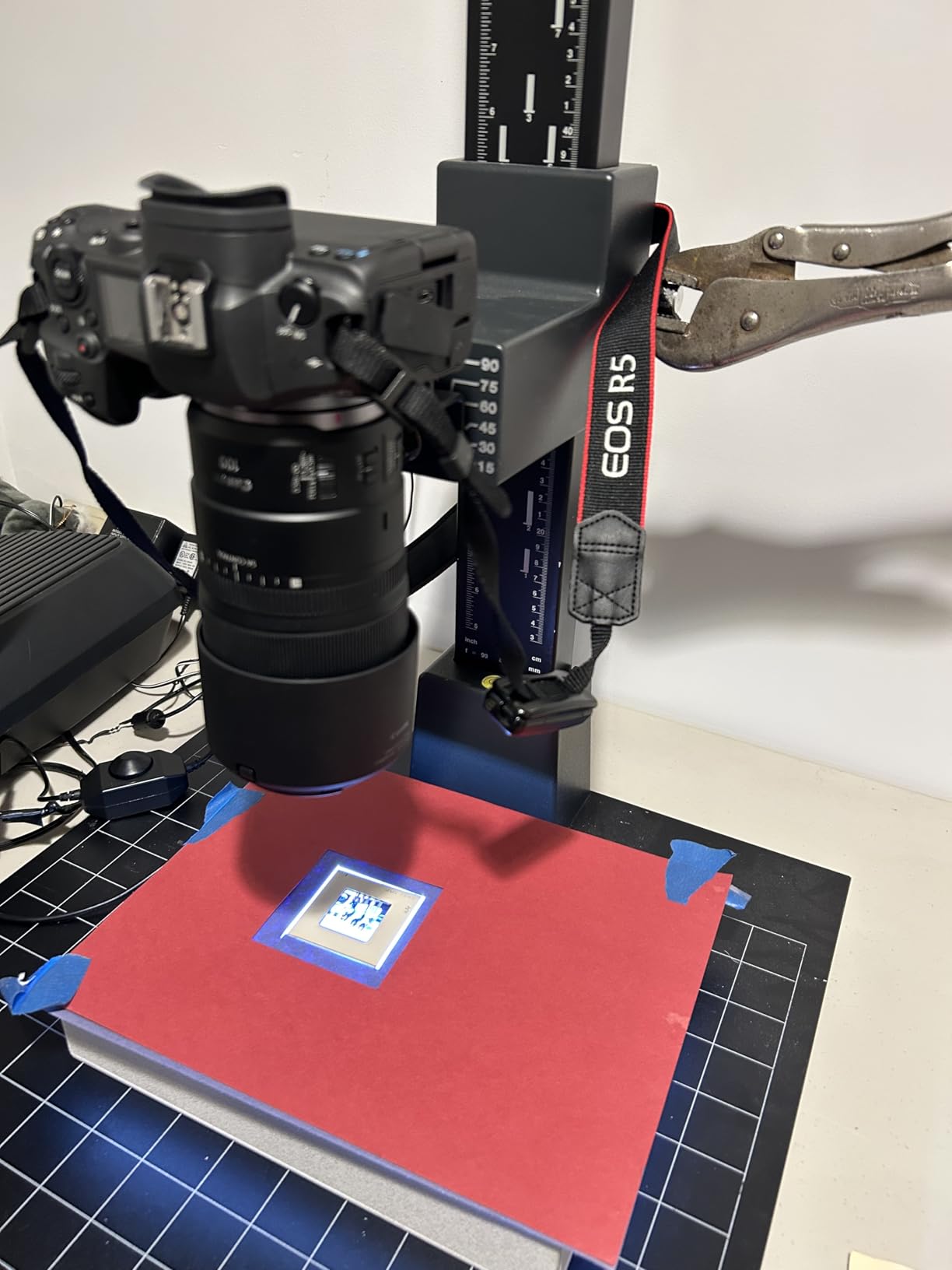
The 5-stop Hybrid IS system deserves special mention. Most lenses only compensate for angular shake (tilting/panning). Canon’s Hybrid IS also compensates for shift shake — the kind of movement that’s especially pronounced at macro distances when even tiny forward/backward wobbles blur the image. In real handheld macro shooting, this translates to a noticeably higher keeper rate than you’d get from angular-only stabilization.
Autofocus is powered by Canon’s Dual Nano USM system. It’s fast for a macro lens, quiet enough for video work, and handles the tricky transition from infinity to minimum focus distance without hunting excessively. Contrast this with lenses that rack focus back and forth before locking — this one generally finds its target on the first try when there’s enough contrast to work with.
The SA (Spherical Aberration) Control Ring is a controversial addition. By rotating it, you can introduce controlled spherical aberration to alter the character of your bokeh — pulling it toward a softer, more diffused rendering in foreground and background areas. In practice, the effect is subtle at most settings and some users find it more of a novelty than a practical tool. But for portrait photographers who want to fine-tune the feel of their images, it’s a genuinely unique option that no other macro lens offers.
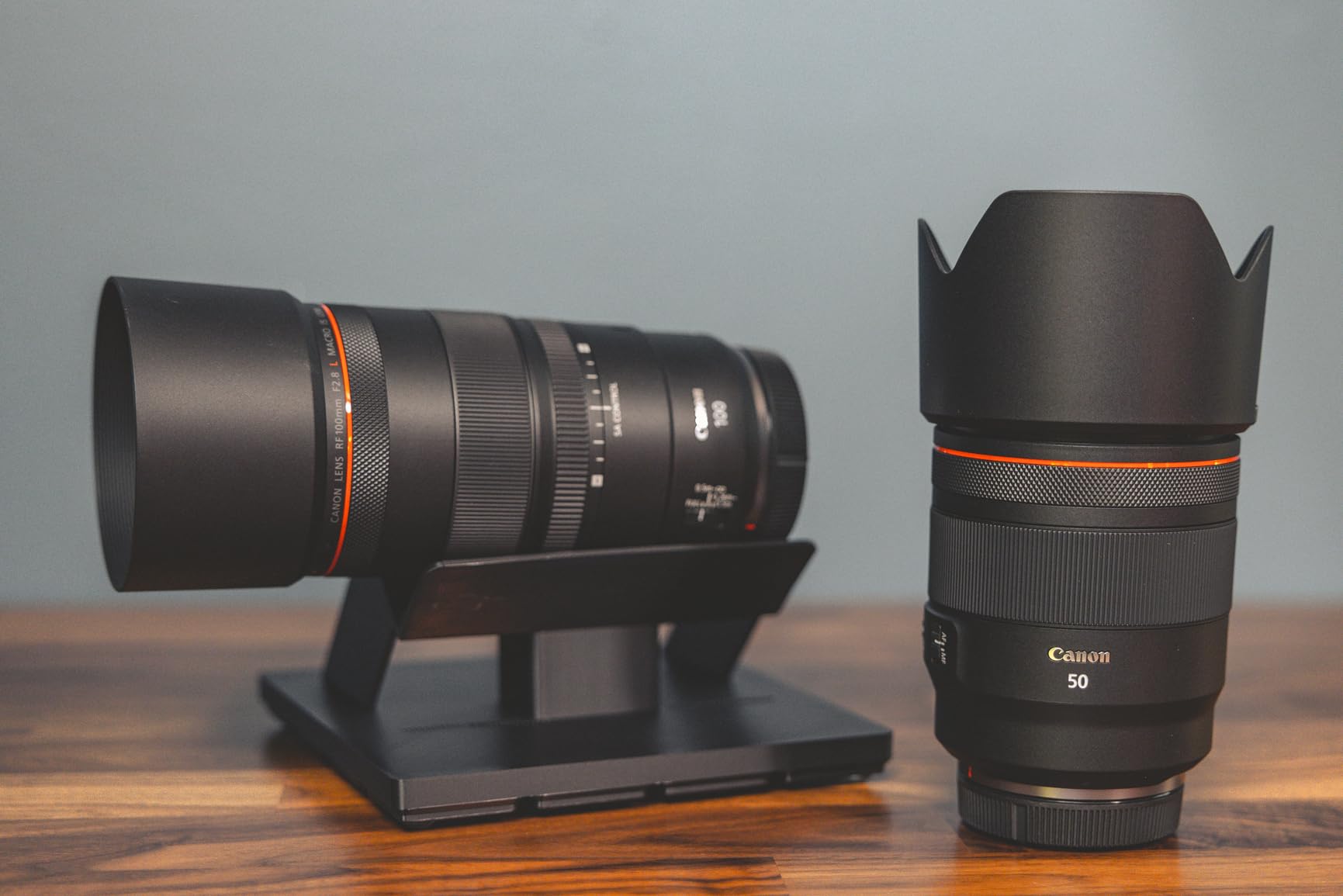
Build quality is full Canon L-series standard: weather sealing throughout, a smooth focus ring, and a control ring that functions as either an aperture or exposure compensation dial depending on how you configure your camera. The lens is heavier than the Nikon at 730g (1.61 lbs), and you’ll notice that in a long day of outdoor shooting.
With a 4.8-star rating from 356 verified buyers, 88% of whom left 5-star reviews, this lens has earned its reputation as one of the finest macro lenses Canon has ever produced.
Nikon NIKKOR Z MC 105mm f/2.8 VR S
Pros
- Outstanding S-Line optical performance
- Lightweight at 630g
- Beautiful natural bokeh rendering
- Effective VR for handheld shooting
- Versatile for macro and portraits
Cons
- Slower autofocus (precision-focused design)
- Focus by wire manual focus feel
- Some focus breathing in video
The Nikon NIKKOR Z MC 105mm f/2.8 VR S sits at the top of Nikon’s S-Line — the designation reserved for lenses that meet Nikon’s highest optical standards. And it lives up to that billing completely.
When photographers on the Nikon Z system ask which macro lens to get, the answer is almost always this one. It offers 1:1 life-size magnification, which covers the full range of macro subjects from insects and flowers to coins, stamps, and product shots. The S-Line optical formula achieves extraordinary sharpness with virtually no chromatic aberration or distortion — qualities that show clearly in side-by-side comparisons with third-party alternatives.
One user on Reddit described it as “Phenomenal for macro and for portraiture. The sharpness is extraordinary,” while another wrote simply: “Incredible lens. Almost always in my bag.” These aren’t edge cases — the 93% five-star rate among 407 verified reviews tells the same story.

The 105mm focal length is a genuine sweet spot for macro work. It gives you enough working distance from small subjects that you’re not blocking light or startling live insects while you shoot. At the same time, 105mm is a classic portrait focal length — flattering compression, natural rendering of facial features, and enough background separation to make subjects pop against creamy, diffused bokeh.
The VR (Vibration Reduction) system does its job well for handheld shooting, though it’s a single-axis angular-only system rather than the shift-compensating Hybrid IS in the Canon. For most shooting at around 1:2 to 1:1 magnification, the VR is effective and appreciated. At extreme macro distances, a tripod is still your best friend regardless of which system you use.
Autofocus is the one area where many users flag the Nikon as slower than the Canon. To be clear: the Nikon’s AF is not broken or unusable — it’s deliberately designed to prioritize focus precision over raw speed, which is actually what you want for macro shooting where you’re often focusing on a 1mm-deep plane of a tiny subject. The trade-off shows up more in portrait or general photography situations where a faster lock might be preferred.

At 630g (1.39 lbs), the Nikon is noticeably lighter than the Canon — 100g less may not sound like much, but over a full day of shooting, that difference is real. The programmable function button is a thoughtful addition for customizing your workflow, and the weather sealing is thorough enough for shooting in light rain or dusty conditions.
The lens ships as the Nikon USA Model, giving you access to domestic warranty service. It ranks #64 in Mirrorless Camera Lenses on Amazon — a strong position for a premium, single-mount lens.
Canon RF 100mm f2.8L Macro IS USM vs Nikon Z MC 105mm f2.8 VR S: Head-to-Head Comparison
Build Quality and Design
Both lenses are weather sealed and built to professional standards. The Canon RF 100mm carries the L-series designation, Canon’s top-tier optical line, with fluorine coating on the front element to repel water and dust. The Nikon Z MC 105mm carries the S-Line badge, Nikon’s equivalent mark of optical excellence, with similar weather sealing on all moving parts.
The Nikon is lighter (630g vs 730g) and slightly more compact in overall feel. The Canon is built with a control ring that doubles as an aperture or exposure compensation dial — a useful RF-mount feature. Both lenses include a lens hood in the box and use standard 67mm filter threads.
Winner: Nikon Z MC 105mm — lighter build makes it more practical for extended handheld shooting.
Optical Performance and Sharpness
Both lenses are genuinely exceptional here, and forum discussions back this up across thousands of real user images. The Canon RF 100mm delivers razor-sharp results from wide open at f/2.8, with controlled chromatic aberration and minimal distortion across the frame. OpticalLimits noted it as “optically capable of delivering very sharp images straight from f/2.8.”
The Nikon Z MC 105mm’s S-Line optical design achieves similar center sharpness with arguably even cleaner corner-to-corner rendering at wider apertures. Nikon’s optical formula virtually eliminates lateral chromatic aberration, which shows clearly in high-contrast macro subjects.
Winner: Tie — both are reference-class optics. The Nikon edges slightly ahead for CA control; the Canon wins on maximum magnification rendering.
Autofocus Performance
The Canon RF 100mm uses Dual Nano USM — a fast, quiet motor that handles everything from portrait sessions to rapid-fire insect tracking reasonably well. It’s one of the faster AF systems in any macro lens currently available for mirrorless cameras.
The Nikon Z MC 105mm prioritizes precision over speed, which shows in real-world use. For static macro subjects on a tripod, this doesn’t matter at all. For moving subjects or portrait work where fast acquisition matters, the Canon’s AF is more responsive. As one forum user noted: “Focusing is quite slow as it prioritizes focus precision over speed.”
Winner: Canon RF 100mm — faster autofocus for portraits and more demanding tracking scenarios.
Macro Magnification
This is where the Canon pulls ahead definitively. The Canon RF 100mm achieves a maximum magnification of 1.4x — the world’s first medium telephoto macro lens to do so. The Nikon Z MC 105mm achieves 1:1 (1.0x) life-size magnification, which is the standard for true macro lenses.
In practical terms, the Canon lets you capture subjects at 40% larger on your sensor than the Nikon will. For tiny subjects — small spiders, insects, circuit board detail, eye-level close-ups of coins — that extra magnification is significant. You can always crop a 1:1 image in post, but having the real optical magnification gives you more resolution to work with.
Winner: Canon RF 100mm — 1.4x vs 1:1 is a meaningful and real advantage for dedicated macro work.
Portrait and Bokeh Performance
Both lenses excel here, which isn’t surprising given the 100-105mm focal range is one of the classic portrait lengths. Both render faces with natural compression and produce beautifully smooth background separation at f/2.8.
The Canon adds the SA Control Ring, which lets you adjust spherical aberration to alter the bokeh character — pushing it toward softer or more defined rendering. For portrait photographers who want creative control over their background rendering, this is a feature unique to this lens. The Nikon’s bokeh is excellent without any adjustment needed — naturally smooth and pleasing straight from the default optical formula.
Winner: Tie for most users. Canon wins if you want the SA creative control; Nikon delivers beautiful natural bokeh without any fiddling.
Image Stabilization
Canon’s 5-stop Hybrid IS compensates for both angular and shift camera movement — shift shake is the most damaging type at close focusing distances, making the Hybrid IS genuinely more effective for handheld macro than traditional single-axis IS systems.
Nikon’s VR is effective and appreciated for general handheld work. It compensates for angular movement and does a solid job at portrait distances and non-extreme macro ranges. At 1:1 and beyond, a tripod or focus rail is strongly recommended regardless of which IS system you’re using.
Winner: Canon RF 100mm — the Hybrid IS system with shift compensation is more effective specifically at macro distances.
Ecosystem Considerations
This is the most important factor of all for most buyers: you can only use these lenses on their native mounts. The Canon RF 100mm requires a Canon EOS R series camera (EOS R5, R6, R3, R8, and similar). The Nikon Z MC 105mm requires a Nikon Z series body (Z6, Z7, Z8, Z9, Zf, Zfc series).
If you already own one system, switching just to get the other lens makes no financial sense. If you’re deciding between systems, the lens quality difference here is not large enough to be the deciding factor — both systems offer excellent camera bodies and growing lens ecosystems.
For Canon shooters who do intensive macro work, the extra magnification and Hybrid IS of the RF 100mm make it the natural flagship choice. For Nikon shooters, the Z MC 105mm is one of the finest lenses in the Z lineup — period.
Verdict: Canon RF 100mm f2.8L Macro IS USM vs Nikon Z MC 105mm f2.8 VR S
After detailed time with both lenses, here’s the honest answer: neither lens is objectively better for everyone. The right choice depends almost entirely on which camera system you’re shooting.
Choose the Canon RF 100mm F2.8L Macro IS USM if:
- You shoot Canon EOS R series cameras
- You want the maximum magnification advantage (1.4x vs 1:1) for extreme close-up work
- You shoot a lot of handheld macro — the Hybrid IS shift compensation makes a real difference
- You want the SA Control Ring for creative portrait bokeh control
- Fast autofocus matters for your portrait or moving-subject work
Choose the Nikon NIKKOR Z MC 105mm f/2.8 VR S if:
- You shoot Nikon Z series cameras
- You want a lighter lens (100g less) for long days of shooting
- You need 1:1 macro for the full range of standard macro subjects
- You prioritize sharpness and optical cleanliness — the S-Line optics are reference quality
- You want a lens that handles both macro and everyday portrait shooting with equal confidence
The Canon RF 100mm carries the technical edge for dedicated macro specialists: 1.4x magnification and the Hybrid IS are genuine differentiators. The Nikon Z MC 105mm is the more balanced, versatile companion lens for a Nikon Z shooter who wants one sharp, portable prime that earns its place in the bag every single day.
Both lenses hold a 4.8-star rating — the Canon from 356 reviewers, the Nikon from 407. Both are considered among the best macro lenses ever made for their respective mounts. For the Canon RF 100mm f2.8L Macro IS USM vs Nikon Z MC 105mm f2.8 VR S question, the answer is simple: get the one that fits your camera, and don’t look back.
Is the Canon RF 100mm f/2.8L Macro IS USM better than the Nikon Z MC 105mm?
Neither is universally better — it depends on your camera system. The Canon RF 100mm offers a unique 1.4x maximum magnification and Hybrid IS that compensates for shift shake, making it the stronger choice for dedicated macro specialists on the Canon RF system. The Nikon Z MC 105mm delivers slightly cleaner optical performance, weighs 100g less, and is widely regarded as one of the best lenses in the Nikon Z lineup. If you own a Canon EOS R body, get the Canon. If you own a Nikon Z body, get the Nikon.
Which lens is sharper — Canon RF 100mm or Nikon Z MC 105mm macro?
Both lenses are reference-class optics that deliver exceptional sharpness from f/2.8. In controlled tests, the Nikon Z MC 105mm edges ahead slightly for chromatic aberration control and corner-to-corner evenness, while the Canon RF 100mm is equally sharp at center with excellent overall rendering. In real-world shooting, you would be hard-pressed to tell them apart from the same camera system.
Which macro lens is better for portraits?
Both lenses perform excellently for portrait photography at their respective 100-105mm focal lengths. The Canon RF 100mm adds the unique SA Control Ring, which lets you adjust the character of your bokeh for a softer or more defined rendering — giving portrait photographers extra creative control. The Nikon Z MC 105mm produces beautifully smooth, natural bokeh without any adjustment needed. Both are excellent portrait lenses; the Canon gives you more creative options.
Does the Canon RF 100mm have better magnification than the Nikon Z MC 105mm?
Yes. The Canon RF 100mm F2.8L Macro IS USM achieves a maximum magnification of 1.4x — the world’s first medium telephoto macro lens to exceed 1:1 magnification. The Nikon Z MC 105mm f/2.8 VR S achieves 1:1 (life-size) magnification, which is the standard for true macro lenses. The Canon’s 1.4x capability lets you capture subjects 40% larger on your sensor than the Nikon, which is a meaningful advantage for shooting very small subjects like insects or intricate jewelry details.
Is the Nikon Z MC 105mm worth the investment for Nikon Z shooters?
Absolutely. The Nikon NIKKOR Z MC 105mm f/2.8 VR S is consistently rated as one of the best lenses in the entire Nikon Z lineup. With S-Line optics delivering exceptional sharpness and virtually no distortion or chromatic aberration, effective VR stabilization, and a versatile 105mm focal length that works equally well for macro and portrait photography, it earns its place as a must-have lens for any Nikon Z photographer who shoots close-up or detail work. Its 4.8-star rating from 407 verified buyers reflects genuine satisfaction across a wide range of photographers.