
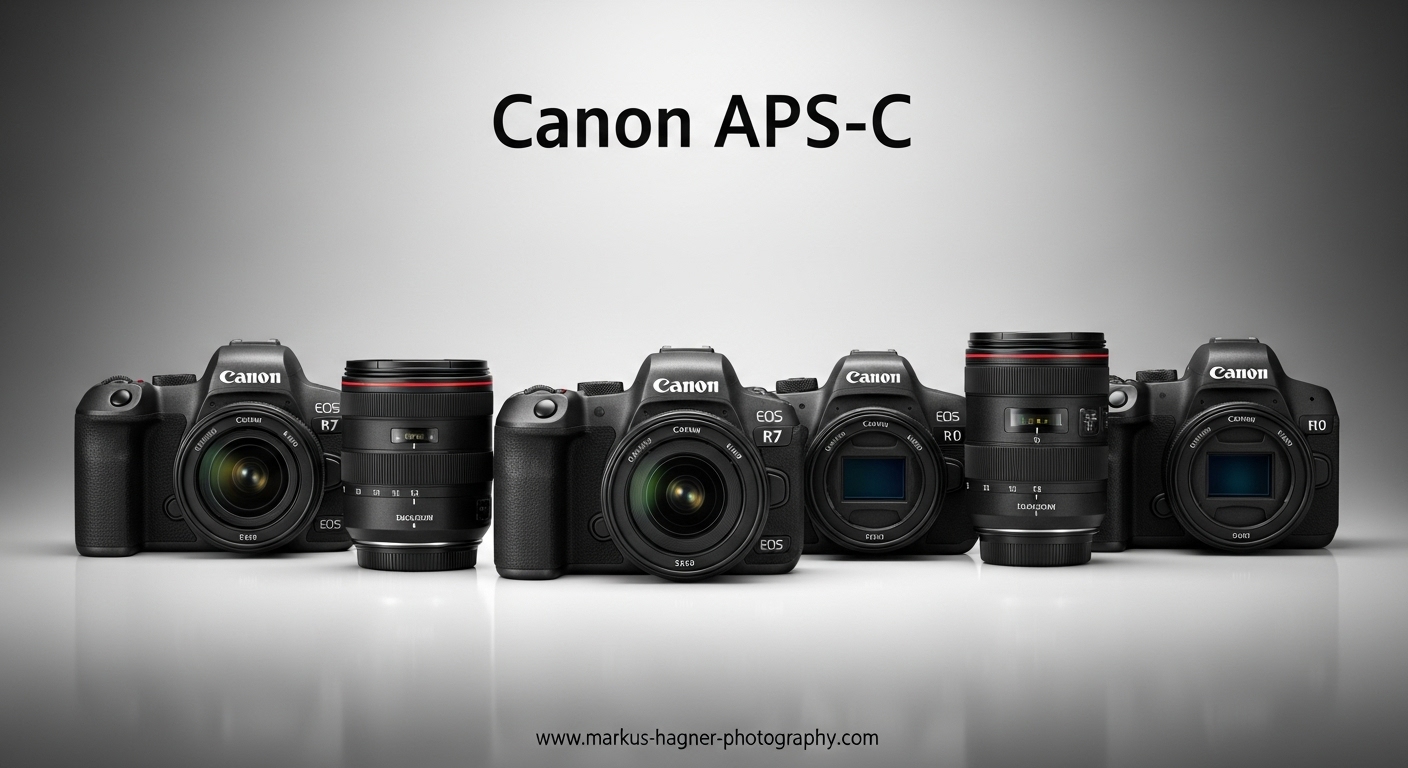
Canon’s APS-C camera lineup stands at a critical juncture in 2026. With aging models and increasing pressure from Sony and Fujifilm, photographers everywhere are wondering what Canon has planned for their APS-C system.
Based on industry rumors, market analysis, and Canon’s typical release patterns, we predict the EOS R7 Mark II and EOS R10 Mark II will lead Canon’s APS-C refresh in 2026, bringing stacked sensors and enhanced video capabilities to close the gap with competitors.
After analyzing the current market situation, user feedback from photography forums, and Canon’s recent technology trends, it’s clear that 2026 will be a make-or-break year for Canon’s APS-C strategy. The company needs to address key weaknesses in their lineup while leveraging their superior autofocus technology and color science.
This comprehensive prediction guide covers everything you need to know about Canon’s expected APS-C releases, including detailed specifications, release timelines, and the critical lens ecosystem developments that will determine their success in the competitive mirrorless market.
Current Canon APS-C Landscape: Where We Stand
Canon’s current APS-C lineup consists of the EOS R7, R10, R50, and R100, each positioned for different market segments. However, these models face significant challenges in 2026‘s competitive landscape.
The EOS R7, released in 2022, remains Canon’s flagship APS-C camera but struggles with rolling shutter issues in video and lacks a battery grip option that professionals expect. Despite these limitations, its Dual Pixel CMOS AF II system continues to impress users with subject tracking capabilities that rival more expensive cameras.
For entry-level shooters, the EOS R100 feels underpowered compared to Sony’s A6000 series, with limited features and a disappointing 4K crop that frustrates content creators. The camera represents Canon’s attempt to compete at the budget end, but many users feel it falls short of expectations.
Canon’s ergonomics and user interface continue to receive praise across all models. Long-time Canon users appreciate the familiar control layouts and intuitive menus that make the transition to mirrorless easier compared to competitors.
The most significant challenge facing Canon’s APS-C system remains the limited RF-S lens ecosystem. With only a handful of native APS-C lenses available, users often resort to full-frame RF lenses, negating the size and weight advantages of the APS-C format.
Predicted 2025 Releases: What’s Coming In 2026
EOS R7 Mark II: The Professional APS-C Revolution
The EOS R7 Mark II represents Canon’s most critical APS-C release for 2026. Industry sources suggest this camera will address the original model’s shortcomings while introducing groundbreaking technology previously reserved for full-frame cameras.
At the heart of the R7 Mark II will likely be a new 32-megapixel stacked CMOS sensor, eliminating the rolling shutter issues that plagued its predecessor in video mode. This sensor technology will enable faster readout speeds, allowing for 4K 120p video recording without significant crop or quality compromise.
Stacked CMOS Sensor: A sensor design where processing circuitry is layered beneath the photodiodes, enabling dramatically faster readout speeds and reducing rolling shutter in video.
The autofocus system will receive a significant boost with Canon’s next-generation Dual Pixel CMOS AF III technology. This enhanced system will feature improved subject recognition for birds, animals, and vehicles, building on Canon’s already class-leading tracking capabilities.
Video creators will appreciate the addition of internal RAW video recording, a feature that has become standard in competing models. The R7 Mark II is expected to offer 10-bit 4:2:2 recording internally across all frame rates, along with improved heat management for extended recording sessions.
Critically, Canon is rumored to finally address the battery grip demand with a dedicated accessory for the R7 Mark II. This addition will make the camera more appealing to professional photographers who require extended battery life and vertical shooting controls.
EOS R10 Mark II: The Enthusiast Favorite Evolved
Building on the success of the original R10, the Mark II version aims to deliver professional features at an enthusiast price point. This camera targets photographers who want advanced capabilities without the bulk and expense of flagship models.
The R10 Mark II will likely feature a 26-megapixel sensor with improved low-light performance, borrowing technology from Canon’s full-frame lineup. Dynamic range is expected to increase by at least one stop, addressing a common complaint about the original model’s limited exposure latitude.
Burst shooting capabilities will receive a major upgrade, with rumors suggesting 15fps mechanical shutter and 30fps electronic shutter with full autofocus tracking. This performance will put the R10 Mark II in direct competition with Sony’s A6700 for sports and wildlife photography.
The camera’s video capabilities will see significant improvements, including uncropped 4K 60p recording and the addition of focus breathing correction. Canon is also expected to include their C-Log3 profile, providing greater flexibility for color grading in post-production.
Ergonomically, the R10 Mark II will feature improved weather sealing and a deeper hand grip for better handling with larger lenses. These improvements address user feedback about the original model’s comfort during extended shooting sessions.
EOS R50 V: Content Creator Specialized
Canon recognizes the growing content creator market and plans to position the R50 V as their premier vlogging camera. This model addresses specific needs of YouTube creators and social media influencers who have largely gravitated toward Sony’s ZV-E10.
The R50 V will feature a fully articulating touchscreen with improved brightness for outdoor use, addressing a common complaint about the original R50’s screen visibility in bright conditions. The vari-angle design will make it easier for creators to frame themselves while recording.
Audio capabilities receive major attention with the inclusion of a directional microphone array and dedicated headphone jack. Canon is also expected to include their intelligent audio processing, which can automatically reduce background noise and enhance voice clarity.
Live streaming features will be built directly into the camera, allowing direct broadcasting to platforms without additional hardware. The R50 V will support clean HDMI output and simultaneous recording, meeting the demands of professional content creators.
Battery life receives significant improvements with a larger capacity battery and more efficient power management. Canon claims the R50 V will record continuously for over 90 minutes, addressing the overheating and battery life issues that limited earlier models.
EOS R100 Mark II: Accessible Excellence
The R100 Mark II represents Canon’s answer to critics who called the original model underpowered. This entry-level camera aims to provide legitimate competition to Sony’s A6100 and Fujifilm’s X-T200 in the beginner market.
Despite its entry-level positioning, the R100 Mark II will feature a 24-megapixel sensor borrowed from higher-end models, ensuring excellent image quality for newcomers to photography. The camera will include Canon’s latest DIGIC X processor, providing responsive performance and improved noise reduction.
Autofocus capabilities receive a significant upgrade with the inclusion of Dual Pixel CMos AF technology across the entire frame. This represents a major improvement over the original R100’s limited autofocus points, making it easier for beginners to capture sharp images.
Video features see substantial improvements with uncropped 4K 30p recording and the addition of movie servo AF with smooth subject tracking. Canon is also expected to include creative assist features that help beginners achieve professional-looking results.
The camera’s design emphasizes simplicity with an improved user interface and guided mode that explains camera settings in plain language. These features aim to reduce the intimidation factor that often prevents beginners from advancing beyond automatic shooting modes.
Retro Styled Camera: Niche Opportunity
Rumors suggest Canon is developing a retro-inspired APS-C camera to capitalize on the vintage design trend popularized by Fujifilm. This model would combine classic aesthetics with modern technology, targeting photographers who value both style and substance.
The retro camera would feature physical dials for shutter speed, ISO, and exposure compensation, reminiscent of classic film cameras. These tactile controls appeal to photography enthusiasts who prefer direct control over their settings rather than menu-based adjustments.
Despite its vintage appearance, the camera would include modern technology including Canon’s latest autofocus system and 4K video capabilities. The combination of classic design and contemporary performance could create a unique niche in Canon’s lineup.
Quick Summary: Canon’s retro camera would combine vintage design elements with modern technology, featuring physical controls and advanced specifications to appeal to photography enthusiasts who value both aesthetics and performance.
However, industry experts give this prediction a low confidence level, as Canon has historically been conservative about adopting retro designs. The camera’s development may depend on the success of similar models from competitors and market demand for vintage-styled equipment.
RF-S Lens Ecosystem: The Critical Component
Canon’s RF-S lens ecosystem represents the biggest challenge and opportunity for their APS-C system in 2026. The current lineup of only six native lenses severely limits the appeal of Canon’s APS-C cameras compared to competitors with extensive lens catalogs.
Industry sources suggest Canon plans to address this deficiency with at least eight new RF-S lenses scheduled for release throughout 2026. This expansion includes critical focal lengths that photographers have been requesting since the system’s launch.
Prime lens development receives priority with rumored releases of RF-S 23mm, 33mm, and 56mm f/1.4 lenses. These fast primes will provide APS-C shooters with excellent low-light capabilities and beautiful background blur, addressing a significant gap in the current lineup.
Professional zoom options are also in development, including an RF-S 15-45mm f/2.8 standard zoom and an RF-S 55-210mm f/2.8-4 telephoto lens. These constant aperture zooms will appeal to enthusiasts and professionals who require versatile, high-quality optics.
Canon is expected to introduce an RF-S Z series of compact, affordable lenses designed to match the portability of APS-C cameras. This new product line will include a pancake zoom and several small prime lenses optimized for travel and everyday photography.
Third-party lens support remains limited, but rumors suggest Canon may relax restrictions on licensed third-party manufacturers in 2026. This development could dramatically expand the lens ecosystem with options from Sigma, Tamron, and Tokina.
Market Strategy: Canon’s APS-C Game Plan
Canon’s APS-C strategy for 2026 reflects a renewed commitment to competing seriously against Sony and Fujifilm in the mirrorless market. The company plans to leverage their technological advantages while addressing historical weaknesses in their APS-C offerings.
Pricing strategy plays a crucial role in Canon’s 2026 plans. Industry analysts predict Canon will adopt more aggressive pricing for their APS-C cameras, particularly the R100 Mark II and R50 V, to better compete with Sony’s value-oriented models.
The professional market receives special attention with the R7 Mark II positioned as a legitimate alternative to full-frame cameras for certain applications. Canon plans to emphasize the size and weight advantages of APS-C for wildlife and sports photographers who require long telephoto lenses.
Content creators represent another key target demographic for Canon’s 2026 strategy. The company recognizes the importance of the vlogging and social media market, leading to specialized features in the R50 V and improved video capabilities across the lineup.
Canon’s color science and autofocus technology remain key selling points that differentiate their APS-C cameras from competitors. Marketing efforts in 2026 will emphasize these advantages while demonstrating improved capabilities in response to user feedback.
| Market Segment | Target Camera | Key Differentiator | Expected Pricing |
|---|---|---|---|
| Professional | EOS R7 Mark II | Stacked sensor, advanced AF | $1,800-2,200 |
| Enthusiast | EOS R10 Mark II | Performance value | $1,200-1,400 |
| Content Creator | EOS R50 V | Vlogging features | $800-1,000 |
| Beginner | EOS R100 Mark II | Accessibility | $600-800 |
2025 Release Timeline: When to Expect Updates
Canon’s 2026 release schedule follows a predictable pattern based on historical announcement cycles and product development timelines. Industry insiders suggest a strategic rollout beginning mid-year and continuing through Q4.
The EOS R7 Mark II leads the schedule with a probable announcement in May 2025, coinciding with the camera’s two-year update cycle. This timing allows Canon to address professional photographer needs before the summer photography season begins.
June brings the EOS R10 Mark II, positioned as the enthusiast upgrade option. The staggered release prevents market cannibalization while giving Canon time to ramp up production for their highest volume APS-C camera.
August sees the introduction of the EOS R50 V, targeting the back-to-school market and content creators preparing for year-end projects. This timing maximizes holiday sales potential for Canon’s most consumer-oriented APS-C model.
The EOS R100 Mark II announcement comes in October, just in time for the holiday shopping season. This entry-level camera represents Canon’s most important volume seller and receives prime positioning for gift-giving purchases.
Lens announcements are distributed throughout the year, with new RF-S optics introduced alongside camera releases. Prime lenses lead the schedule in spring, followed by zoom options in summer and specialty lenses in fall.
⏰ Important Note: These release dates are based on industry patterns and rumors. Canon’s actual announcement schedule may vary due to production constraints, market conditions, or competitive pressures.
Frequently Asked Questions
When will Canon release new APS-C cameras in 2025?
Canon is expected to announce the EOS R7 Mark II in May 2025, followed by the EOS R10 Mark II in June. The EOS R50 V will likely arrive in August, with the EOS R100 Mark II scheduled for October announcement.
Will the EOS R7 Mark II fix rolling shutter issues?
Yes, the EOS R7 Mark II is rumored to feature a stacked CMOS sensor that dramatically reduces rolling shutter. This technology enables faster readout speeds, eliminating the video distortion issues that affected the original R7.
What APS-C lenses will Canon release in 2025?
Canon plans to release at least eight new RF-S lenses in 2025, including 23mm, 33mm, and 56mm f/1.4 prime lenses. Professional zoom options like a 15-45mm f/2.8 and 55-210mm f/2.8-4 are also expected.
Will Canon release a retro APS-C camera?
Rumors suggest Canon is developing a retro-inspired APS-C camera with physical controls and vintage styling. However, this prediction carries low confidence as Canon has been conservative about adopting retro designs historically.
Is Canon serious about competing in the APS-C market?
Canon’s 2025 plans suggest renewed commitment to APS-C with significant camera updates and lens ecosystem expansion. The company recognizes the importance of this market segment and plans to address previous shortcomings.
Should I wait for 2025 releases or buy now?
If you need a camera immediately, current models offer excellent value. However, if you can wait until mid-2025, the upcoming R7 Mark II and R10 Mark II will provide significant improvements in sensor technology and video capabilities.
Final Recommendations
Canon’s 2026 APS-C lineup represents their most serious effort yet to compete in the mirrorless market. The combination of advanced technology, improved features, and expanded lens options addresses most user concerns about the current system.
For professional photographers, the EOS R7 Mark II offers compelling features that could make it a viable alternative to full-frame cameras for certain applications. The stacked sensor technology and improved video capabilities position it as a serious tool for hybrid shooters.
Enthusiast photographers will find the EOS R10 Mark II particularly appealing with its balance of performance and value. The improved specifications and features address the original model’s limitations while maintaining accessible pricing.
Content creators should consider waiting for the EOS R50 V if vlogging and video are primary priorities. The specialized features and improved ergonomics make it Canon’s most serious entry into this growing market segment.
While these predictions are based on industry analysis and historical patterns, only Canon knows their actual plans for 2026. However, the competitive pressures and market demands make this predicted lineup both logical and necessary for Canon’s success in the APS-C market.