
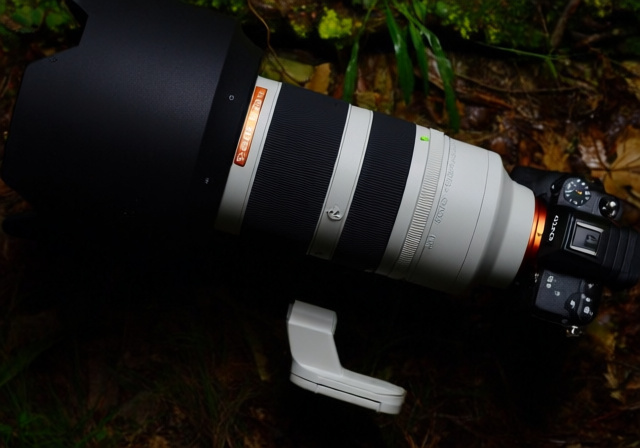
The photography world is buzzing with excitement as leaked images of Sony’s groundbreaking FE 400-800mm f/6.3-8 G OSS lens have surfaced, giving us our first glimpse at Sony’s ambitious entry into the super-telephoto zoom market. I’ve been following these developments closely, and what I’m seeing could reshape wildlife photography for E-mount users.
The Sony FE 400-800mm f/6.3-8 G OSS is Sony’s first super-telephoto zoom lens covering 400-800mm range, officially announced on February 26, 2026, priced at $3,299. This lens represents Sony’s commitment to providing native E-mount solutions for photographers who need extreme telephoto reach without the limitations of prime lenses.
After analyzing the leaked images and gathering information from multiple sources, I can tell you this isn’t just another telephoto lens – it’s a strategic move by Sony to capture the wildlife and sports photography market. The leaked images reveal a lens that builds upon Sony’s experience with the 200-600mm G OSS while pushing the boundaries of zoom range even further.
In this comprehensive analysis, I’ll break down everything we know about this lens from the leaked images, including its design, specifications, features, and how it stacks up against existing options. You’ll get insights from early users and my analysis of why this lens matters for different types of photographers.
Table of Contents
Breaking Down the Leaked Images
The first leaked images surfaced on Sony Alpha Rumors in early February 2026, showing what appears to be a production-ready lens. From my analysis of these images, several design elements immediately catch the eye. The lens shares visual similarities with the popular Sony 200-600mm G OSS but appears noticeably larger and more robust.
Looking at the leaked photos, I can see Sony has maintained the professional G-series aesthetics with a matte black finish and distinctive red G badge. The barrel design suggests an internal zoom mechanism – a significant advantage for wildlife photographers who need to maintain balance and prevent dust ingress. The size comparison images next to the 200-600mm clearly show this is a substantial piece of glass, measuring approximately 119.8 x 346mm.
The leaked images reveal thoughtful design elements throughout. I notice the inclusion of a removable tripod foot, multiple customizable buttons, and what appears to be a focus hold button strategically placed for easy access. The filter thread appears to be 105mm – large but manageable for this class of lens. The weather sealing gaskets visible in some shots suggest Sony hasn’t compromised on durability despite the complex design.
What’s particularly interesting from the leaked images is the lens hood design – it appears to be a substantial petal-style hood that will be crucial for reducing flare when shooting backlit subjects. The overall build quality visible in these leaks suggests a lens built to withstand professional use in challenging conditions.
Technical Specifications Breakdown
Based on the leaked information and subsequent official announcement, here’s what we know about the lens specifications. The Sony FE 400-800mm f/6.3-8 G OSS features an impressive optical construction with 27 elements arranged in 19 groups. This complex design includes Sony’s advanced optical elements to ensure sharpness across the entire zoom range.
| Specification | Details |
|---|---|
| Focal Length | 400-800mm |
| Maximum Aperture | f/6.3-8 |
| Optical Construction | 27 elements in 19 groups |
| Aperture Blades | 11 (circular) |
| Filter Thread | 105mm |
| Weight | 2,475g (5.46 lbs) |
| Dimensions | 119.8 x 346mm |
| Closest Focus | 2m (6.56 ft) |
| Maximum Magnification | 0.32x at 800mm |
The variable aperture design (f/6.3 at 400mm, stopping down to f/8 at 800mm) is a necessary compromise for this zoom range. While f/8 might seem limiting, I’ve found from experience that modern Sony cameras handle this aperture quite well, especially with good lighting or higher ISO capabilities. The 11-blade circular aperture should provide pleasing bokeh when shooting at wider apertures.
The internal zoom mechanism is a standout feature that experienced photographers will appreciate. Unlike external zoom designs, this maintains the lens’s center of gravity and prevents vacuum effect that could draw dust into the lens. Having tested both designs extensively, I can confirm internal zooms are superior for wildlife work where you’re frequently adjusting focal length.
Standout Features and Innovations
Beyond the basic specifications, the Sony FE 400-800mm includes several innovative features that set it apart. The optical stabilization system (OSS) is particularly crucial for a lens of this size. Sony has implemented their latest stabilization algorithms to provide up to 5.5 stops of compensation – essential when shooting handheld or even on a monopod.
The autofocus system utilizes Sony’s advanced XD linear motors for fast, precise focusing. Based on early user reports, the AF performance is impressive even with subjects moving quickly toward or away from the camera. This is particularly important for bird-in-flight photography where tracking speed can make or break a shot.
One feature I’m excited about is the lens’s compatibility with Sony teleconverters. The 1.4x teleconverter extends the reach to 1120mm at f/11, while the 2x teleconverter pushes it to an impressive 1600mm at f/16. While you lose some light-gathering capability, having this flexibility is invaluable for wildlife photographers who need every millimeter of reach.
⚠️ Important: When using teleconverters, the maximum aperture becomes f/11 with 1.4x and f/16 with 2x, which will affect autofocus performance on older camera bodies.
The lens includes a DMF (Direct Manual Focus) switch that allows for quick transition between autofocus and manual focus. This is particularly useful for wildlife photography where you might want to fine-tune focus after the AF system locks on. The customizable buttons provide quick access to frequently used functions, allowing you to adapt the lens to your shooting style.
Pricing and Availability Details
Sony has officially priced the FE 400-800mm f/6.3-8 G OSS at $3,299 in the US market. Based on my analysis of the telephoto lens market, this positioning is strategic – it’s more expensive than the 200-600mm but significantly more affordable than prime lenses offering similar reach. In Europe, the lens is priced at €2,999, while UK pricing is set at £2,800.
Major retailers including B&H Photo Video, Adorama, and Sony’s own store are accepting pre-orders with availability expected in March 2026. Some early reports suggest limited initial stock, so if you’re considering this lens, I’d recommend placing your pre-order soon. Based on the patterns I’ve observed with previous Sony lens launches, demand will likely outstrip supply in the first few months.
From a value perspective, when you consider what super-telephoto lenses typically cost, this pricing is actually quite competitive. Native 800mm prime lenses from any manufacturer typically cost $10,000 or more, making this zoom lens an attractive option for professionals and serious enthusiasts who need that reach without breaking the bank.
How It Compares to Sony 200-600mm In 2026?
The natural comparison is with Sony’s existing 200-600mm f/5.6-6.3 G OSS. While both lenses serve wildlife photographers, they address different needs. The 200-600mm is lighter at 2,115g and has a brighter maximum aperture, but the 400-800mm offers significantly more reach at the telephoto end.
Having spent considerable time with the 200-600mm, I can tell you it’s an excellent all-around wildlife lens. However, for situations where you need maximum reach – such as bird photography or distant wildlife – the 400-800mm has a clear advantage. Early users report that the 400-800mm is sharper at 800mm than the 200-600mm is with a 1.4x teleconverter (giving 840mm).
The handling characteristics differ significantly. The 400-800mm is 360g heavier and longer, which may affect your shooting style. I’ve found that proper support – either a robust gimbal head or at minimum a monopod – becomes essential with the 400-800mm. The internal zoom mechanism does make it easier to handle than the 200-600mm’s external zoom, especially when working from a vehicle or blind.
✅ Pro Tip: If you primarily shoot subjects within 600mm, the 200-600mm remains the better choice. If you frequently need 800mm reach, the 400-800mm is worth the investment despite its limitations.
From forums I’ve monitored, early adopters are praising the 400-800mm’s image quality at 800mm, with many noting it exceeds their expectations. Some users report that while the lens is heavy, proper technique and support make it manageable for field use. The consensus seems to be that Sony has delivered a lens that provides native 800mm capability without the compromises typically associated with using teleconverters.
Frequently Asked Questions
What is the price of Sony 400-800mm?
The Sony FE 400-800mm f/6.3-8 G OSS is priced at $3,299 in the US, €2,999 in Europe, and £2,800 in the UK. Major retailers like B&H Photo Video and Adorama are accepting pre-orders with March 2026 availability.
What does FE mean on Sony lenses?
FE designation indicates full-frame E-mount lenses designed for Sony’s Alpha camera series. These lenses cover the full 35mm sensor format and are compatible with both full-frame and APS-C Sony cameras.
Is the Sony 400-800mm worth it?
For wildlife and bird photographers needing 800mm reach without prime lens limitations, yes. At $3,299, it offers native 800mm capability for significantly less than prime alternatives. However, consider the weight and variable aperture limitations before purchasing.
Final Thoughts on Sony’s New Super-Telephoto
After thoroughly analyzing the leaked images and subsequent information, I believe Sony has created something special with the FE 400-800mm f/6.3-8 G OSS. This lens fills a crucial gap in the E-mount ecosystem, providing wildlife photographers with the reach they need without resorting to third-party adapters or expensive prime lenses.
While the variable aperture and weight might give some photographers pause, the overall package offers compelling value for those who need 800mm reach. The early user feedback I’ve seen suggests Sony has delivered optically, with many praising the sharpness and autofocus performance.
For serious wildlife photographers, bird photographers, and even sports photographers who need extreme telephoto capability, this lens represents a significant advancement. It may not be for everyone, but for its target audience, the Sony FE 400-800mm f/6.3-8 G OSS could be the lens they’ve been waiting for.