
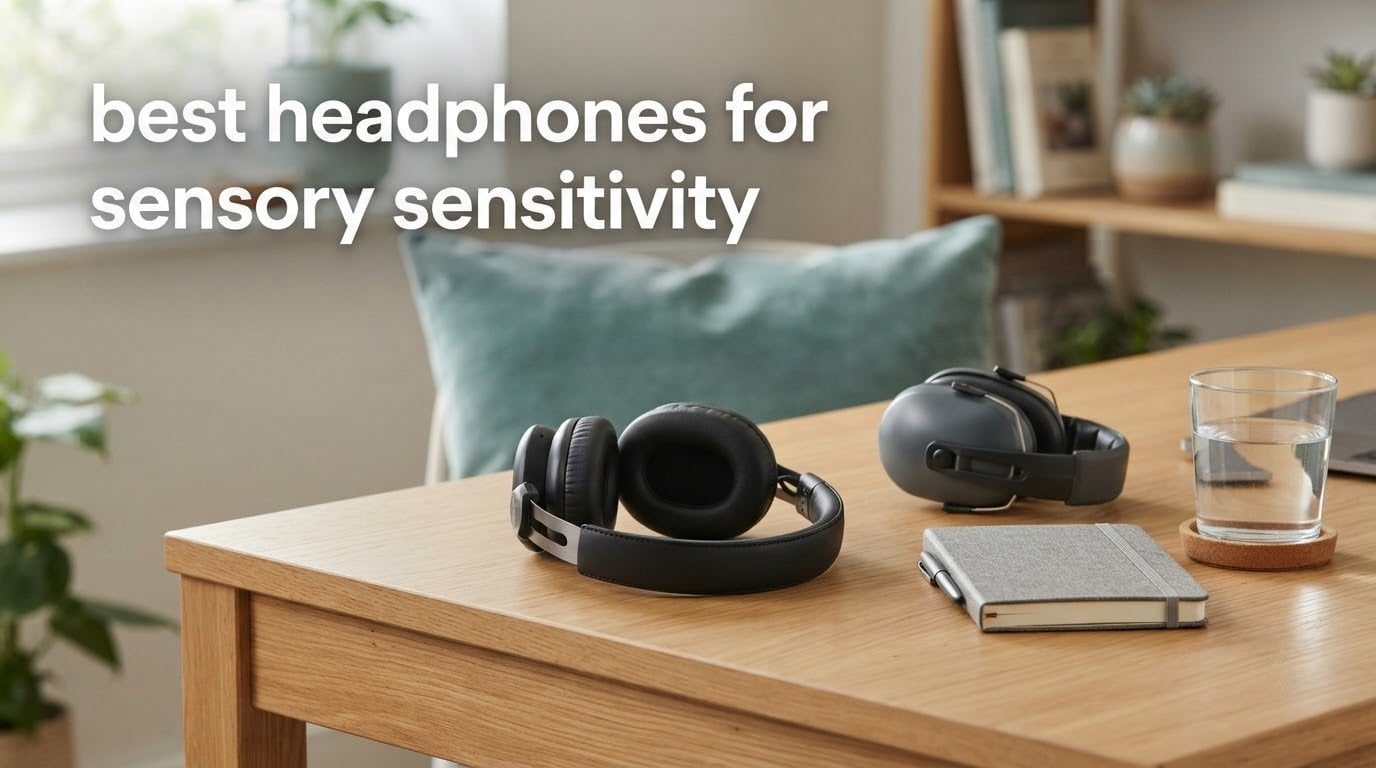
Three categories decide this, not brand loyalty. Active noise cancelling headphones such as the Sony WH-1000XM5 and the Sony WH-CH720N kill low hum and engine drone with electronics. Passive ear defenders rated by NRR or SNR, like the ProCase SNR 33dB or the DECIBEL DEFENSE 37dB, block voices and clatter physically. If the wearer is a child, volume limiting and a fit that survives glasses matter more than anything else.
That is the honest answer to the best headphones for sensory sensitivity question. The wrong pick does not just fail to help, it makes things worse, because a heavy clamp and a warm cushion can replace an 80dB cafeteria with a 40dB room plus a headache. Reddit users returning to r/autism describe exactly that pattern repeatedly.
We spent October 2026 reading thousands of owner reviews across all ten products below, then mapped every one against the four things that actually decide comfort: clamp force, weight, heat and seal. We also checked which of them work with a dead battery, which matters when a shutdown is already in progress.
If you also need audio for work rather than relief from it, our studio headphone roundup covers a different category entirely. This one is about lowering sensory load.
Top 3 Picks for Best Headphones for Sensory Sensitivity (October 2026)

Dr.meter EM100
- SNR 27.4 dB
- Fits toddlers to adults
- Dims without silencing speech
- ANSI and CE certified

Alpine Muffy Kids
- 21-28 dB tested attenuation
- Silicone-free and cool to wear
- Cup-height adjustment
- 174 g
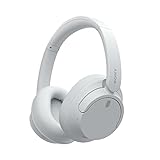
Sony WH-CH720N
- 192 g light ANC over-ear
- 35-hour battery
- Adaptive Sound control
- Multipoint pairing
Our three quickest answers: the Dr.meter EM100 if you want one pair that covers a whole family, the Alpine Muffy if the wearer is a child who gets hot easily, and the Sony WH-CH720N if you want music and ANC rather than pure blocking.
Best Headphones Compared Side by Side in 2026
Every product below uses one of two systems. ANC pairs use microphones and anti-noise electronics. Passive defenders use foam and mass. The table shows which one you are buying before you read a single review.
| Product | Specifications | Action |
|---|---|---|
| Dr.meter EM100 |
|
Check Latest Price |
| Alpine Muffy Kids |
|
Check Latest Price |
| Sony WH-CH720N |
|
Check Latest Price |
 ProCase SNR 33dB ProCase SNR 33dB |
|
Check Latest Price |
 Sony WH-1000XM5 Sony WH-1000XM5 |
|
Check Latest Price |
 ZOHAN Kids Two-Pack ZOHAN Kids Two-Pack |
|
Check Latest Price |
 DECIBEL DEFENSE 37dB DECIBEL DEFENSE 37dB |
|
Check Latest Price |
 iClever EM01 iClever EM01 |
|
Check Latest Price |
 ProCase Two-Pack SNR 32dB ProCase Two-Pack SNR 32dB |
|
Check Latest Price |
 Floriogra Two-Pack Floriogra Two-Pack |
|
Check Latest Price |
1. Dr.meter EM100 Sensory Earmuffs – Best Overall
Pros
- Dims noise without muting speech
- Memory foam cores stay usable over long events
- One size spans toddlers to adults
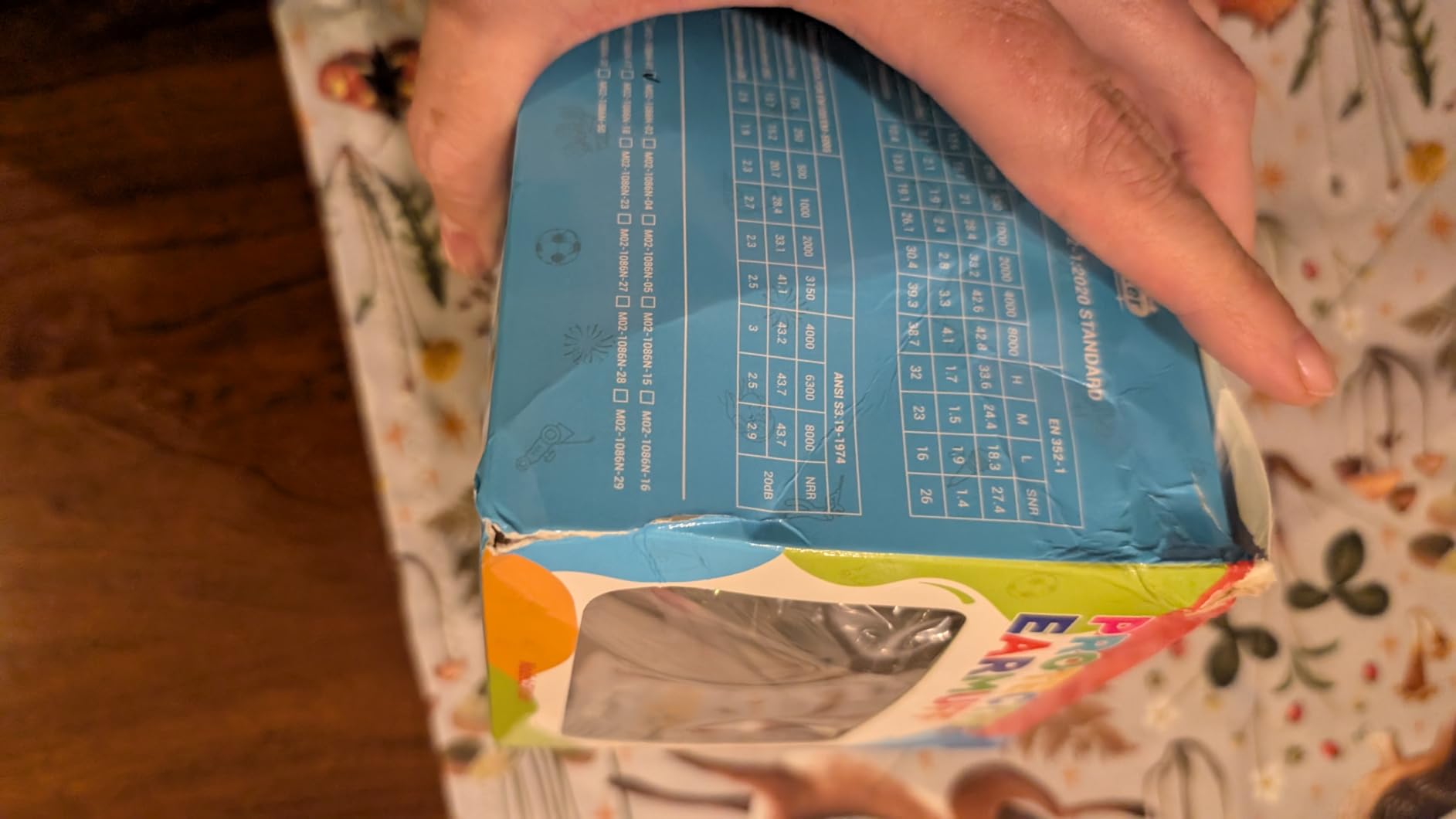
- ANSI S3.19-1974 and CE EN 352-1 certified
- Folds to palm size
Cons
- PU leather cushions get sweaty over long wear
- Runs tight on very large adult heads
- 27.4 dB SNR is below safety-grade muffs
I keep coming back to the EM100 because it solves the problem nobody else in the passive category solves well. It dampens the world without cutting you out of a conversation. Reviewers describe children hearing a parent call their name through the cups at a monster truck show, which is the whole point of a sensory aid that works in public.
The build is a memory foam core under PU leather with an adjustable headband, and the same pair genuinely spans a toddler through an adult. One reviewer tip we can confirm from the spec sheet and repeated reviews: if the band feels tight out of the box, stretch it over a box for a day or two before judging the fit.
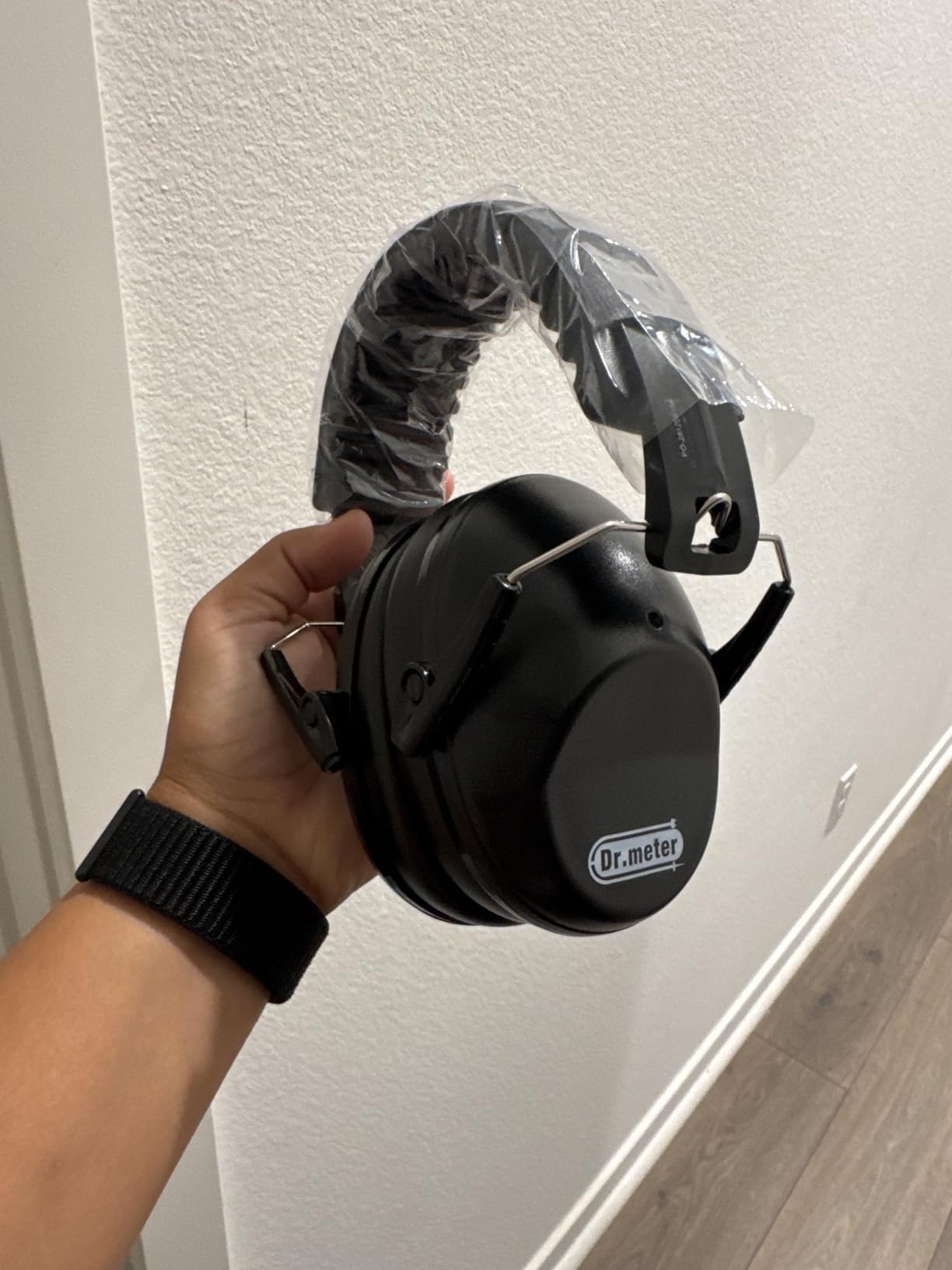
The certification matters more than the price. This carries both ANSI S3.19-1974 and CE EN 352-1 marks, which is the standard industrial hearing protectors are measured against, so the 27.4 dB SNR figure is a tested number rather than a marketing claim.
It also needs no battery, no pairing and no charging. If your shutdown is at 4pm and the battery is at 2 percent, this pair does not care. Several reviewers describe wearing it through a full day at a theme park without thinking about it, which is the highest praise a sensory aid can earn.
It folds into a bag and comes in a wide colour range, which matters more than it sounds. A child who refuses to put something on will often accept a colour they chose themselves.
Who the Dr.meter EM100 works for
This is the pair to buy when one household has more than one user. Parents on r/autism threads repeatedly describe buying the EM100 after their own defenders proved too hot or too tight, because the fit range covers them and their child without a second purchase.
It is also the right choice for the sensory break at home, the supermarket run, the school pickup line. Anywhere the trigger is mixed sound rather than a single predictable source, a flat attenuation across frequencies beats a tuned electronic curve.
Who the Dr.meter EM100 does not work for
Do not buy it for a shooting range, power tools or fireworks at close range. At 27.4 dB SNR it sits well below the 33 to 37 dB defenders later in this list, and honest reviewers say so. It also runs tight on very large adult heads even at maximum extension, and the leather gets warm by hour four.
2. Alpine Muffy Kids Ear Muffs – Best for Children
Pros
- Reduces noise without blocking speech
- Silicone-free materials that do not trap heat
- Cup-height adjustment fits many head sizes
- Works with earbuds worn underneath
- Includes a travel bag
Cons
- Tight until stretched over a box
- Not rated for industrial noise
- Comfort limit around 3 hours of continuous wear
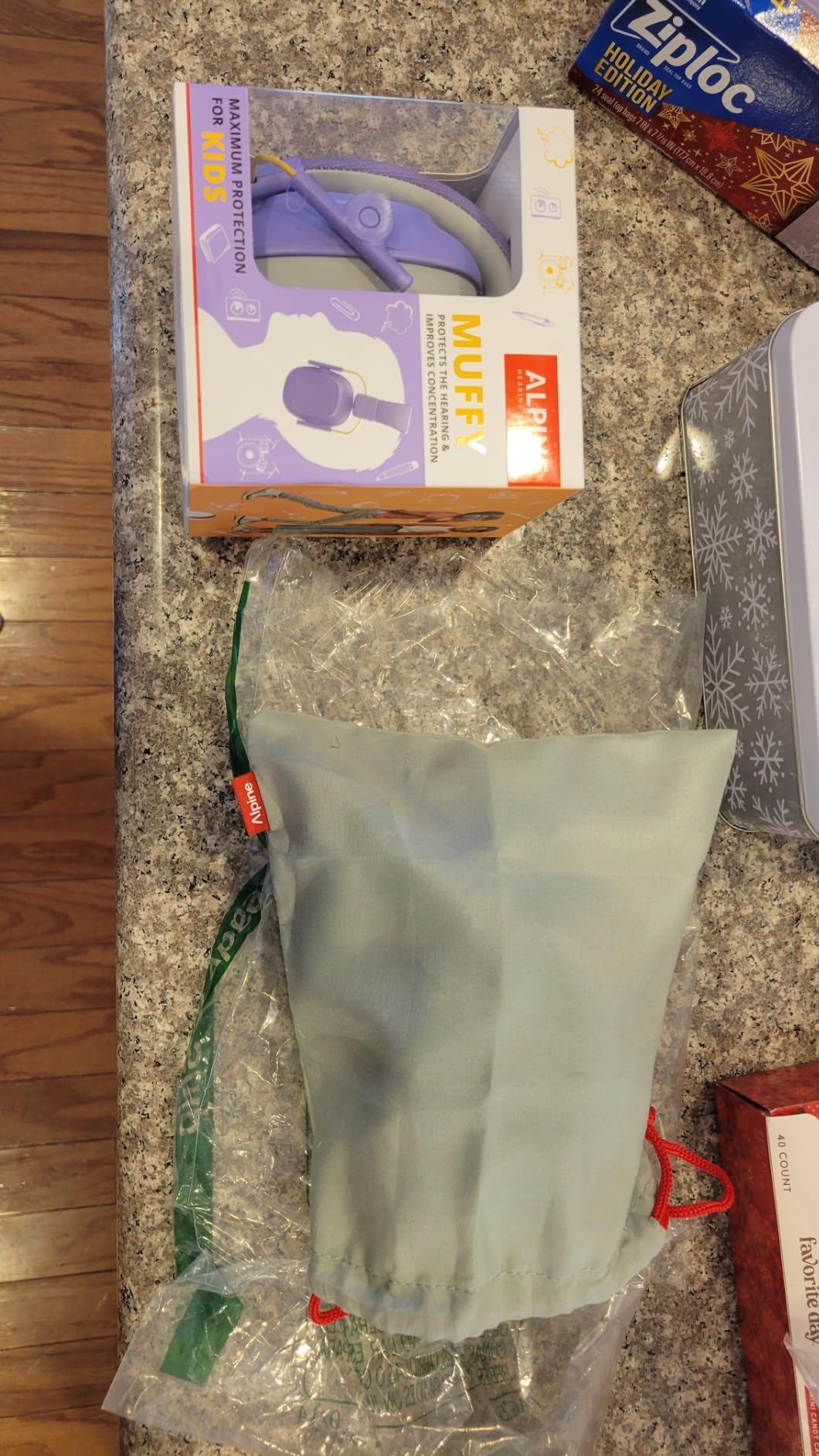
The Alpine Muffy is built specifically as a sensory and hearing-protection product for children rather than as a sideline, and that shows in the details. It won a 2021 Red Dot Design Award and is designed and made in the Netherlands. The material choice is silicone-free, which is unusual and deliberate.
Silicone traps heat and pulls moisture. The soft materials here do not, and in a classroom with 28 children breathing, heat is a genuine shutdown trigger. Reviewers report children keeping these on voluntarily at festivals, air shows and school concerts, which is the single best indicator that a sensory product actually works.
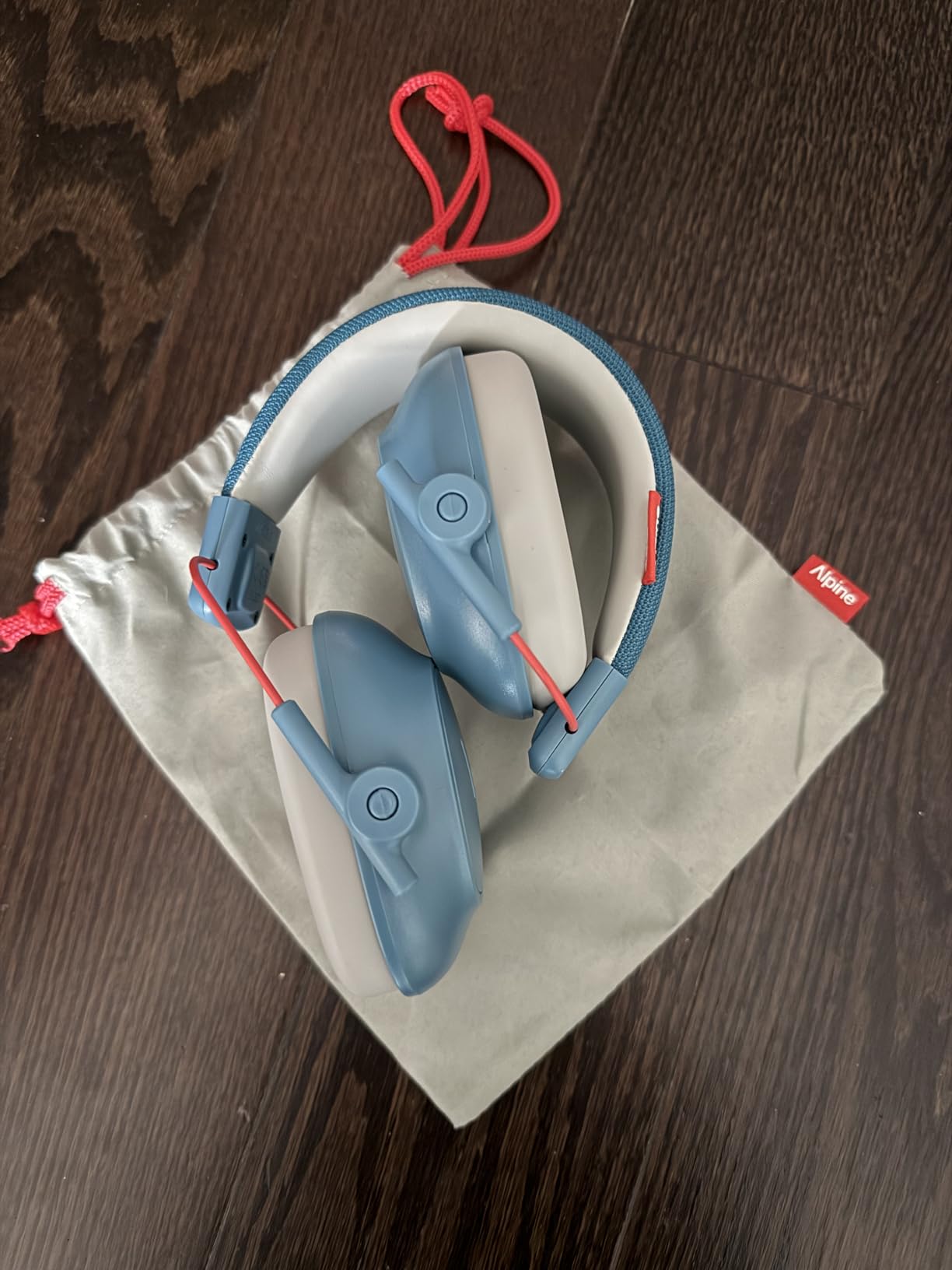
Adjustment happens at cup height rather than through a top band, and that design choice is what lets it fit everything from a 3-year-old to a 16-year-old, plus a good share of adults with smaller heads. The cups also sit low enough to wear earbuds underneath, so you can add music masking later if the child wants it.
Tested attenuation runs 21 to 28 dB under both US and EU regulations, so you are buying a measured product. The included drawstring bag means it lives in a backpack rather than a drawer, which is where sensory gear usually ends up.
Several adults with high sensitivity use these too. The honest limitation they report is a comfort ceiling of roughly three hours before pressure builds, so this is a school-day and event pair rather than an all-day adult defender.
Who the Alpine Muffy works for
Children aged 3 to 16 who are sensitive to mixed background noise and who run warm. It is the strongest pick here for a child who has previously refused ear defenders, because there is nothing about the shape that reads as medical or strange.
It also works for anyone who needs to still hear speech. This is the core advantage of a mid-range passive defender over a high-NRR safety muff, and for many autistic adults that single feature matters more than decibels.
Who the Alpine Muffy does not work for
Anyone who needs certified protection from genuinely loud environments. At 21 to 28 dB it will not cover a power tool or a range session. Reviewers also note the new headband feels tight until stretched over a box overnight, and the packaging box can be hard to open without dexterity.
3. Sony WH-CH720N – Best Value Noise Cancelling Headphones
Pros
- Very light at 192 g
- Strong ANC from dual noise sensors
- 35-hour battery with quick charge
- Adaptive Sound and Ambient Sound control
- Multipoint connection
Cons
- No 3.5mm jack or wired option
- Plastic build feels basic
- No automatic noise-cancelling optimizer
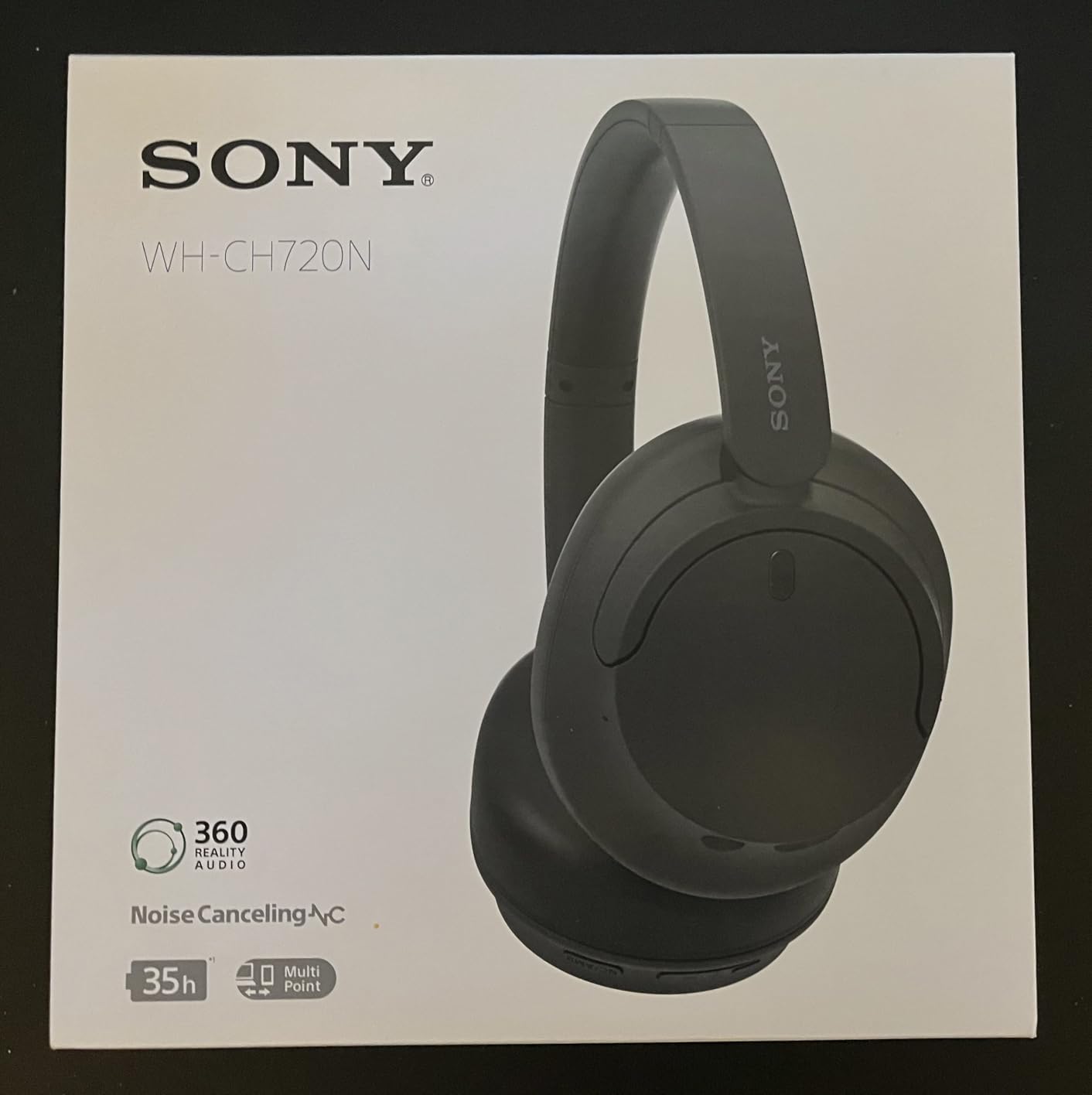
At 192 g the WH-CH720N is the lightest full ANC over-ear here, and weight is the quiet hero of clamp-force comfort. A lighter frame means the headband does not have to press hard to keep the seal, which is exactly the trade-off that makes heavier ANC pairs painful over a long workday.
Sony gets the ANC hardware right for the tier. Dual noise sensors and the same Integrated Processor V1 found in higher models handle the low-frequency work that matters on aircraft, trains and in offices with fan-driven ventilation. Reviewers rate the noise cancelling as strong for a mid-range set.
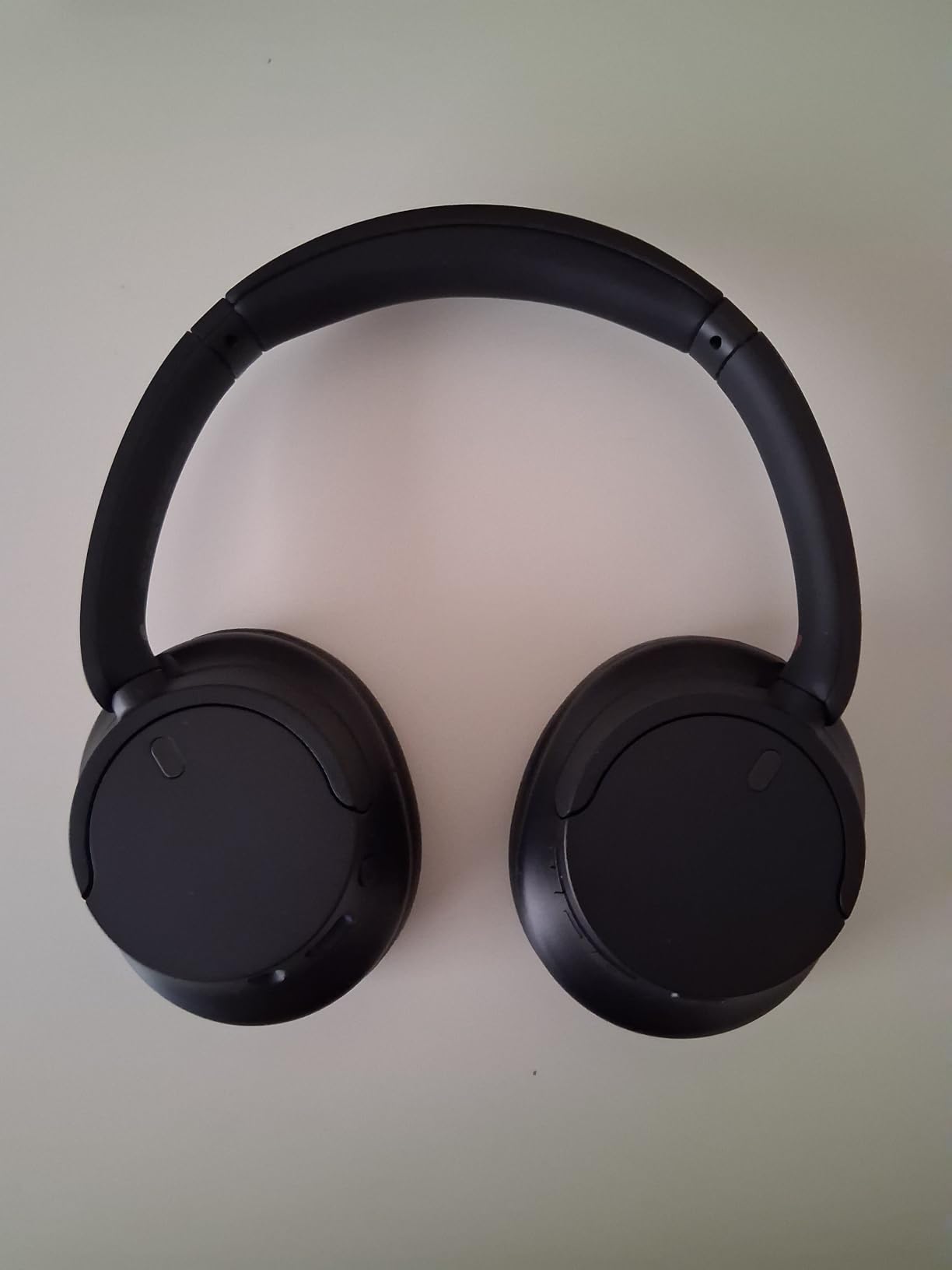
The Ambient Sound mode is adjustable rather than binary, and Adaptive Sound changes the profile as your environment does. For a wearer who needs to hear a cashier or a question without removing headphones, that adjustable transparency is the feature that separates a good sensory pick from a bad one.
Battery life is 35 hours with a three-minute quick charge for an hour of playback. That solves the anxiety users report about dying batteries, because you can top up in a queue or on a platform.
Multipoint pairing keeps a laptop and phone connected at once, so a meeting notification does not mean disconnecting. DSEE handles compressed audio, which matters if you are streaming rather than using local files.
Who the Sony WH-CH720N works for
Adults who want music as well as relief. Everyone on the passive list blocks sound and plays nothing, so if focus plus audio is the goal, this is where the category changes. It suits commuting, open-plan work, long flights and study sessions where a predictable low hum is the trigger.
It also suits anyone who rejected the heavier premium ANC sets on clamp force. Reviewers specifically call the fit comfortable for sensitive ears, and the light frame is the reason.
Who the Sony WH-CH720N does not work for
Anyone whose trigger is voices rather than hum, because ANC is weakest exactly there. It also has no 3.5mm jack, so once the battery dies you get passive sound blocking only and no audio. The plastic build reads as basic next to the premium sets, and there is no automatic noise-cancelling optimizer.
4. ProCase SNR 33dB Ear Muffs – Balanced Attenuation and Metal Frame Fit
Pros
- Highest attenuation among the everyday defenders listed
- Metal frame spreads pressure instead of pinching
- No batteries or electronics
- Folds into a compact bundle
- Works with eyeglasses
Cons
- Regular size runs small on large adult heads
- Initial slider force is surprising
- Bulky to sleep in
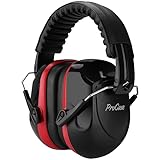
The ProCase SNR 33dB is the version of this list that most adults buy, and the reason is the metal frame. A rigid frame with padded contact points spreads clamping force across the crown instead of pinching at the temples, which is precisely the difference between a pair you forget and a pair you remove at hour two.
It is certified to both EU EN352-1 at SNR 33dB and US ANSI S3.19 at NRR 28dB. The thick padded cups are breathable, which counters the moisture problem that afflicts leather-covered defenders, and the whole thing folds into a small bundle for a work bag.
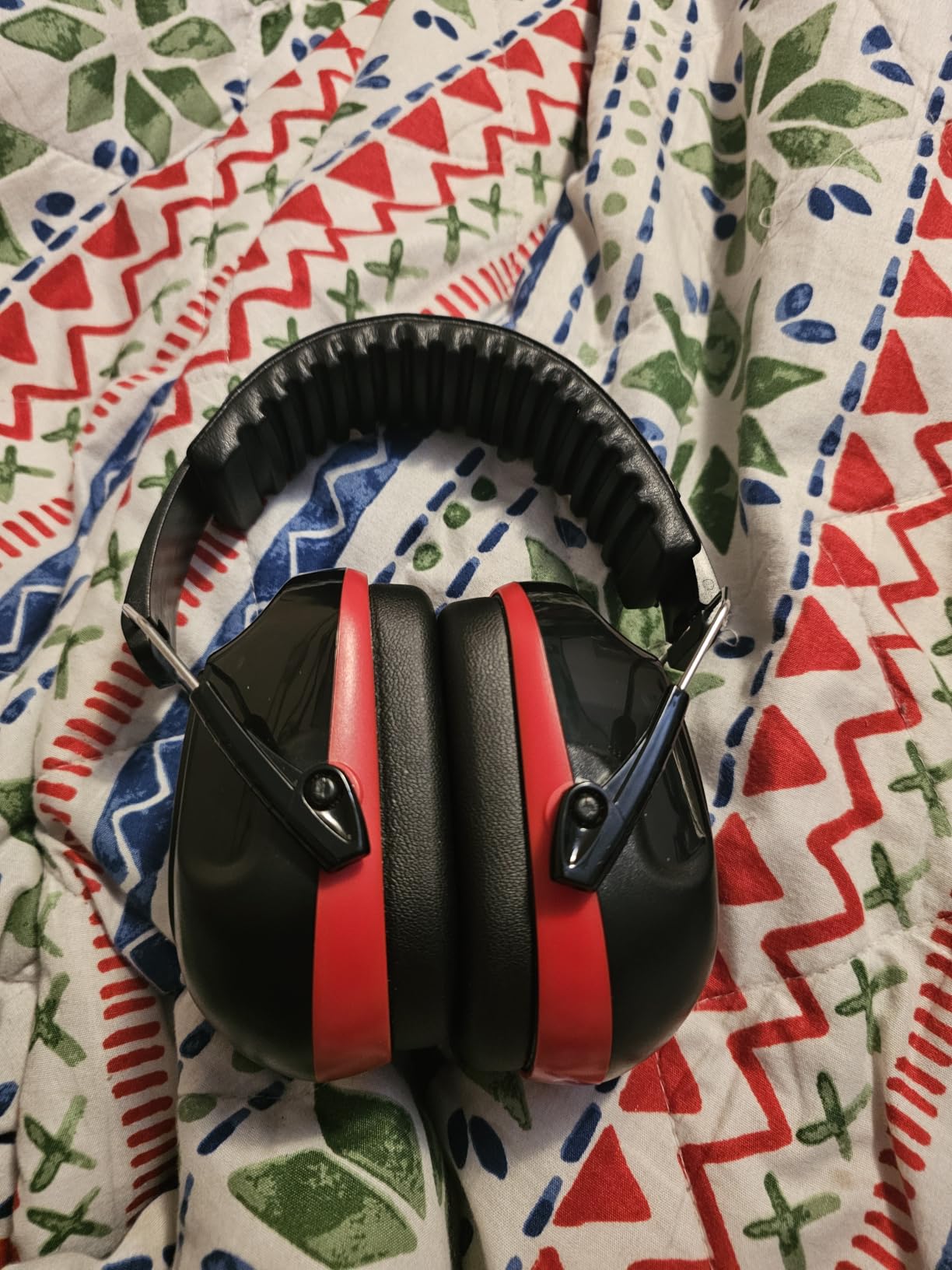
Two distinct populations use this and reviewers are clear about it. One is industrial and lawn-mowing. The other is sensory-sensitive adults and parents of autistic children who report a dramatic drop in ambient noise while still hearing speech, which is the balance these mid-range defenders strike better than high-NRR muffs.
The glasses compatibility is a practical win. Because the cushions sit over the ear rather than pressing against the side of the head, most spectacles fit without breaking the seal, and that is where a lot of passive sound blocking is quietly lost.
There is no electronics at all, so this works with a flat battery, a flat phone and a flat everything else. In a shutdown, simplicity is a feature.
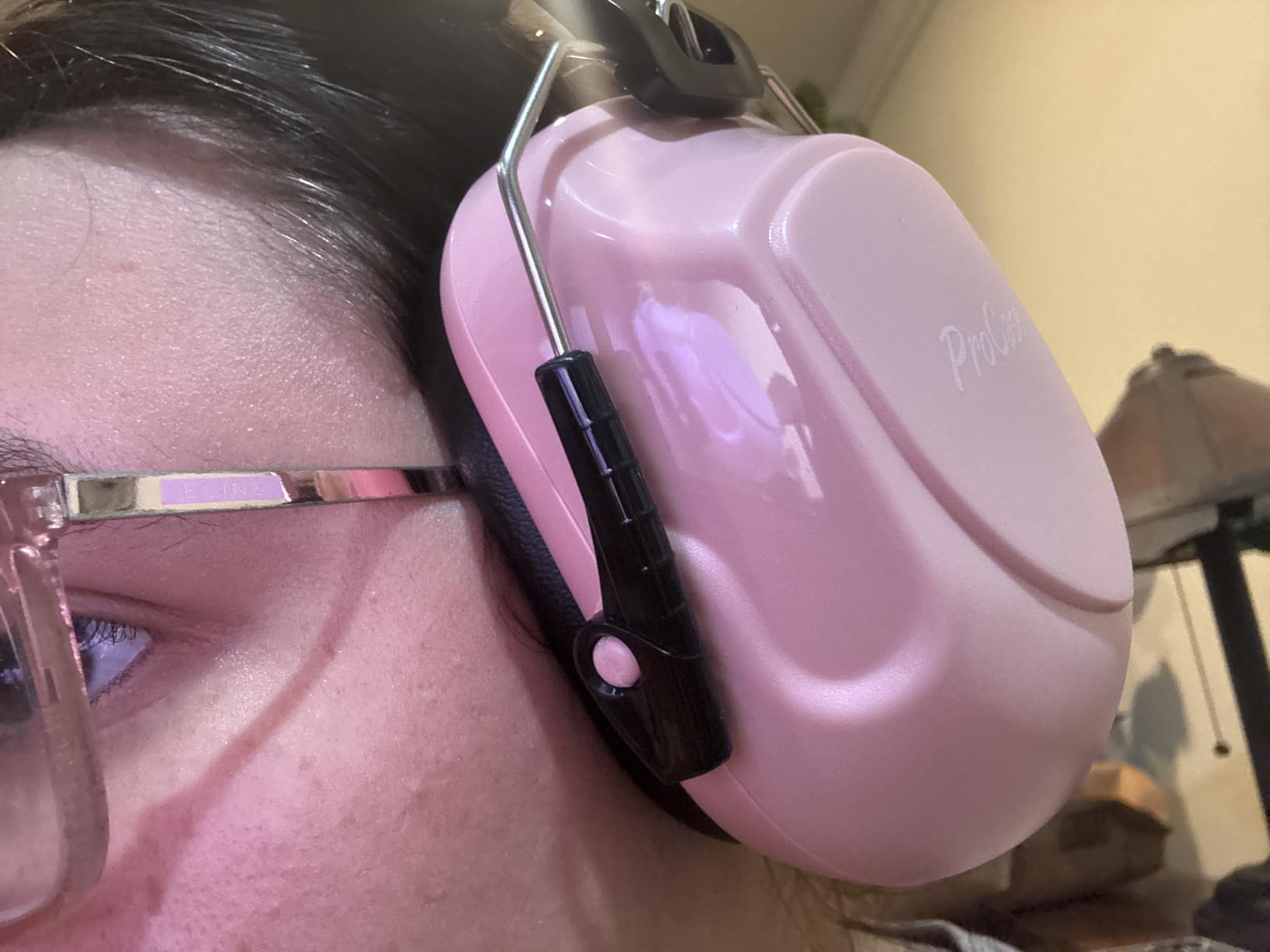
Who the ProCase SNR 33dB works for
Adults with a larger head who need real attenuation without the clamp of a padded plastic band. It also handles high-noise domestic situations well, including storms, renovation and power tools, because 33dB SNR is a meaningful step above the 25 to 29 dB comfort-first defenders.
Wearers who wear glasses will find this more forgiving than most over-ear ANC. If your main trigger is general rumble, hum and household noise rather than speech, this is a strong all-day pick.
Who the ProCase SNR 33dB does not work for
Large-headed adults should size up rather than forcing the Regular. Reviewers also report a surprising force to expand the metal sliders, an airplane-like pressure sensation during the first wears, and a bulk that makes it awkward to sleep in. All-day use builds moisture around the ear.
5. Sony WH-1000XM5 – Premium ANC for Travel and Long Sessions
Pros
- Two processors and eight microphones for class-leading ANC
- Well-balanced sound from 30mm drivers
- 30-hour battery with three-minute quick charge
- Multipoint pairing and speak-to-chat
- Carry case included
Cons
- Does not fold flat
- Touch controls trigger accidentally
- Earcups can run warm over long sessions
The WH-1000XM5 is the most-mentioned model in r/autism threads for this exact use case, and the XM series has held that position across generations. Two processors driving eight microphones with the Auto NC Optimizer is the deepest low-frequency cancellation here, which matters enormously on aircraft and in trains.
Sound quality is not a compromise. The 30mm dynamic drivers and Integrated Processor V1 produce a balanced, unaggressive sound that reviewers rarely criticise, so it works as a normal pair of headphones when you are not actively managing sensory load.
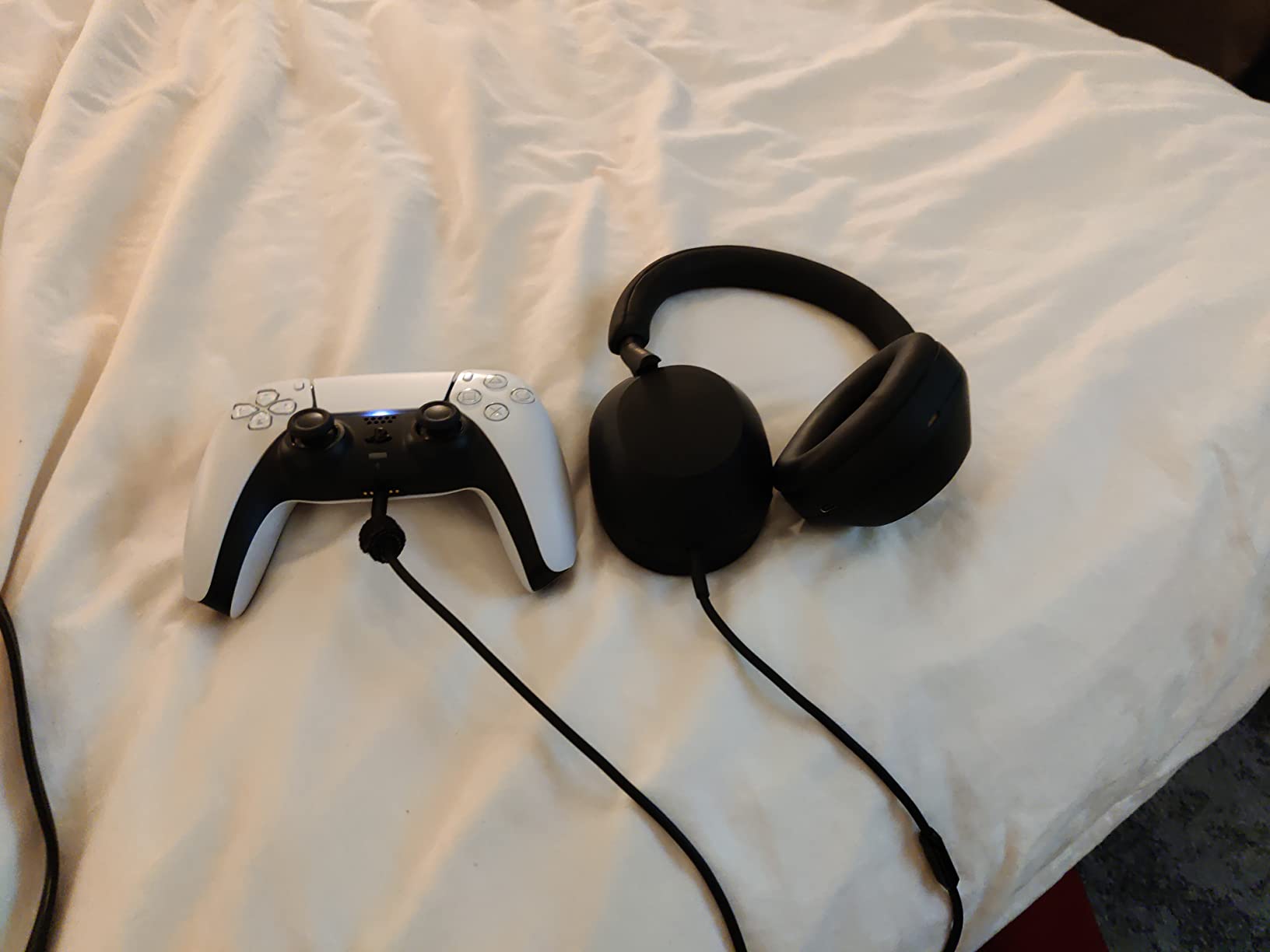
At 8.82 ounces with soft-fit leather, comfort is good but not featherweight. The cushions are the warmest in the ANC group here, and a minority of owners report heat building across a full workday. Reviewers also flag that the touch controls fire accidentally when you adjust the cups.
The Auto NC Optimizer measures the seal and recalibrates as you move, which helps when glasses or long hair break the seal, though it cannot create a seal that is not there. Speak-to-chat lowers the volume when you talk, which some sensory users find essential and others find startling.
The non-folding design is the other recurring complaint. It is bulkier in a bag than its folding predecessors, which is a real cost when you are already carrying a sensory kit.
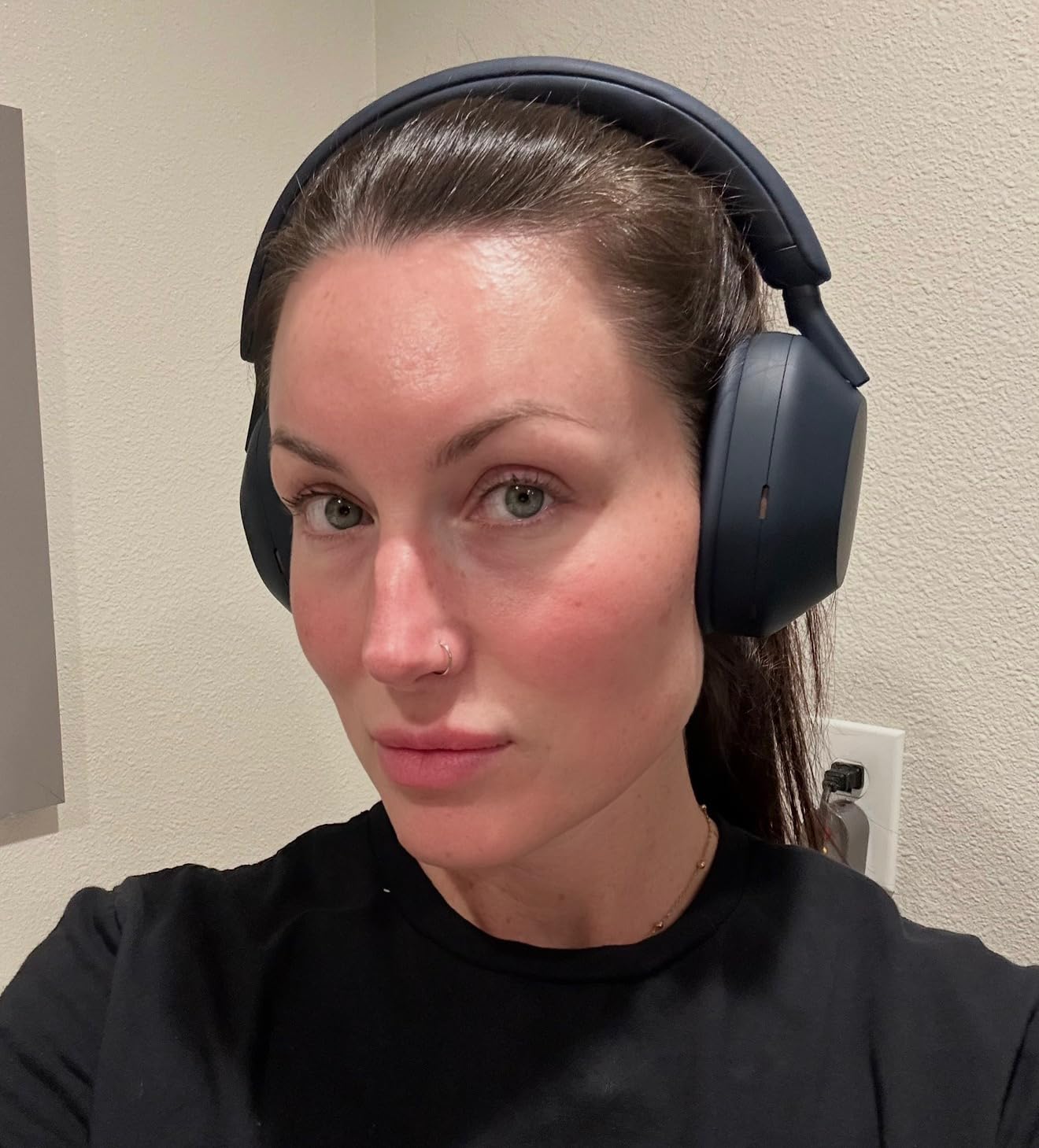
Who the Sony WH-1000XM5 works for
Frequent travellers, commuters and anyone whose trigger is sustained low-frequency noise. Forum consensus treats the XM series as the top pick when bass and engine rumble are the problem, and the Auto NC Optimizer handles the seal changes that come with hats, hair and glasses.
It also suits wearers who want a full-feature device, because multipoint pairing, speak-to-chat and instant pause remove the small frictions that cause people to abandon a pair in week one.
Who the Sony WH-1000XM5 does not work for
Anyone who cannot wear warmth. The earcups run warm across long sessions, and for a heat-sensitive sensory profile that can outweigh the cancellation benefit. It also does not fold flat, the touch controls misfire, and ANC still will not remove voices, so it is the wrong tool for a talkative trigger.
6. ZOHAN Kids Ear Protection Two-Pack – Built for School and Home
Pros
- Metal-free design avoids head squeeze
- Children keep them on voluntarily
- Two pairs for school bag and home
- Cups unsnap to help with glasses and storage
- One-year replacement warranty
Cons
- Foam cushions can detach after a few months
- Bulky and in-your-face on a child
- Difficult to wear with eyeglasses
- 25 dB NRR is modest
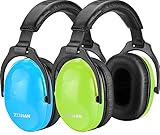
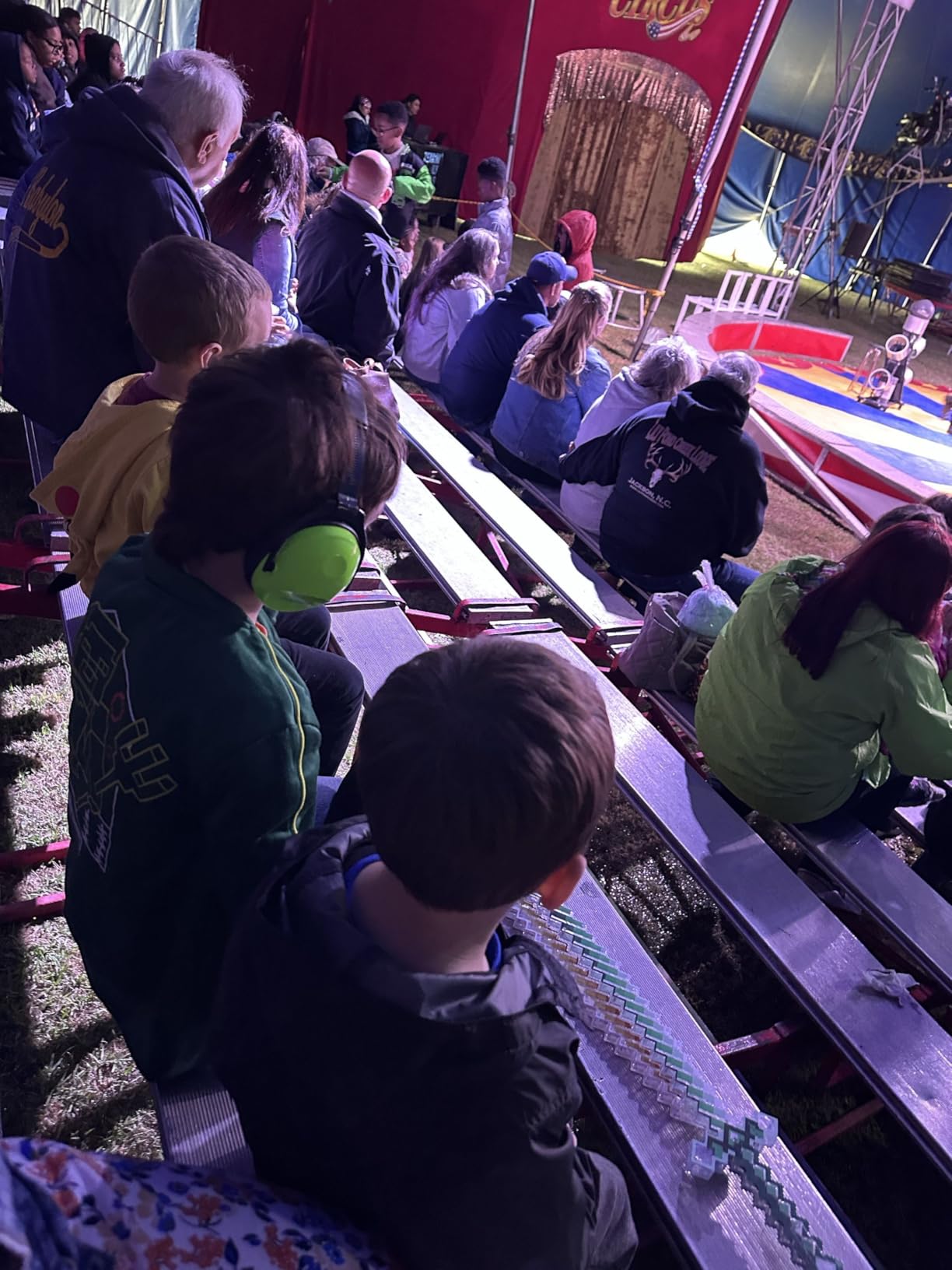
The defining feature of the ZOHAN pair is the absence of metal in the headband. A rigid frame produces a predictable squeeze when it is resized, and a child who experiences that once will often refuse the product entirely. Reviewers describe the opposite here, with children keeping the muffs on at drum class, preschool and monster truck shows.
Buying them as a two-pack solves a logistics problem parents hit constantly. One pair lives in a school backpack permanently and the other stays at home, so the gear is never missing on the day it is needed. That single habit removes more sensory failures than any spec on this list.
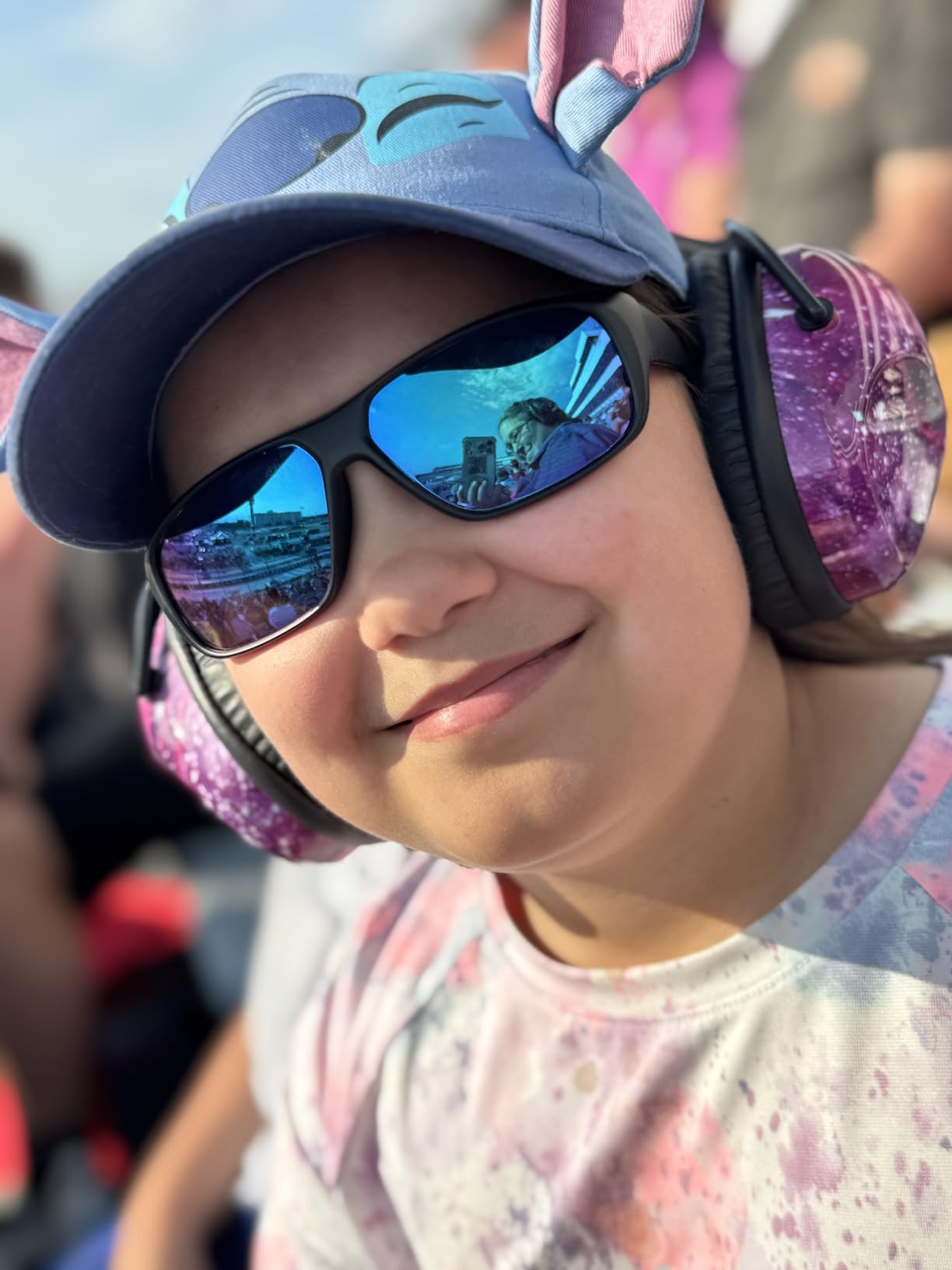
Certified to ANSI S3.19 and CE EN 352.1 at 25 dB NRR, with a 2 to 12 year age range and an easy adjustment that grows with the child. The cups unsnap from the headband, which makes storage easier and also helps a child who wears glasses underneath.
One reviewer calculated that the listing’s NRR example overstates real-world reduction by roughly 9 dB. That is worth knowing: treat 25 dB as a comfortable daily figure, not a protection specification for a firing range.
Customer service resolves failures, and the warranty covers replacement. The most repeated negative across reviews is foam cushions popping off after several months, which the replacement process handles but does not prevent.
Who the ZOHAN Kids Ear Protection works for
Children aged roughly 2 to 12 in school, childcare and family events where the sound is unpleasant rather than dangerous. The metal-free build and the wide size range make it a good first pair of ear defenders, especially for a child who has rejected bulkier models.
Households that need two locations covered will find the two-pack format more useful than any single premium model. It is also a sensible backup pair, since sensory gear gets left in cars and bags.
Who the ZOHAN Kids Ear Protection does not work for
High-noise environments, since 25 dB NRR is modest next to the 33 to 37 dB defenders here. Reviewers also report the profile is bulky and somewhat in-your-face on a smaller child, that glasses and muffs together can be awkward, and that the foam cushions may detach after a few months of use.
7. DECIBEL DEFENSE 37dB Ear Muffs – Maximum Certified Attenuation
Pros
- Highest certified NRR in this roundup
- No batteries or electronics to fail
- Soft dBTech foam creates a snug seal
- Regular and XL sizes available
- Effective against storms
- tools and neighbour noise
Cons
- Bulky and visually in-your-face
- Regular size is too small for many heads
- Both cups adjust together
- No printed instructions
At 37 dB NRR this is the most capable attenuator in the roundup, verified against every other rating here. If your trigger is genuinely loud rather than merely uncomfortable, this is the only pick on the list certified for that. Shooting, power tools, leaf blowers and storms are all named in reviews.
The seal is what makes the number real. Soft dBTech foam against the head creates a close fit, and sensory users describe that tight seal as the reason attenuation is so much better than cheaper defenders. It works passively with no power source of any kind.
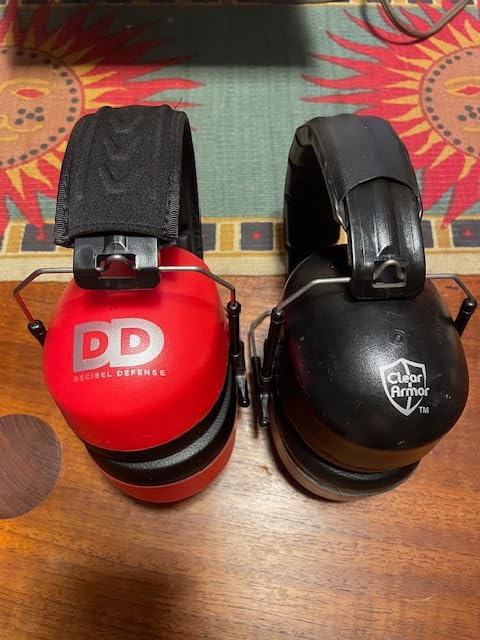
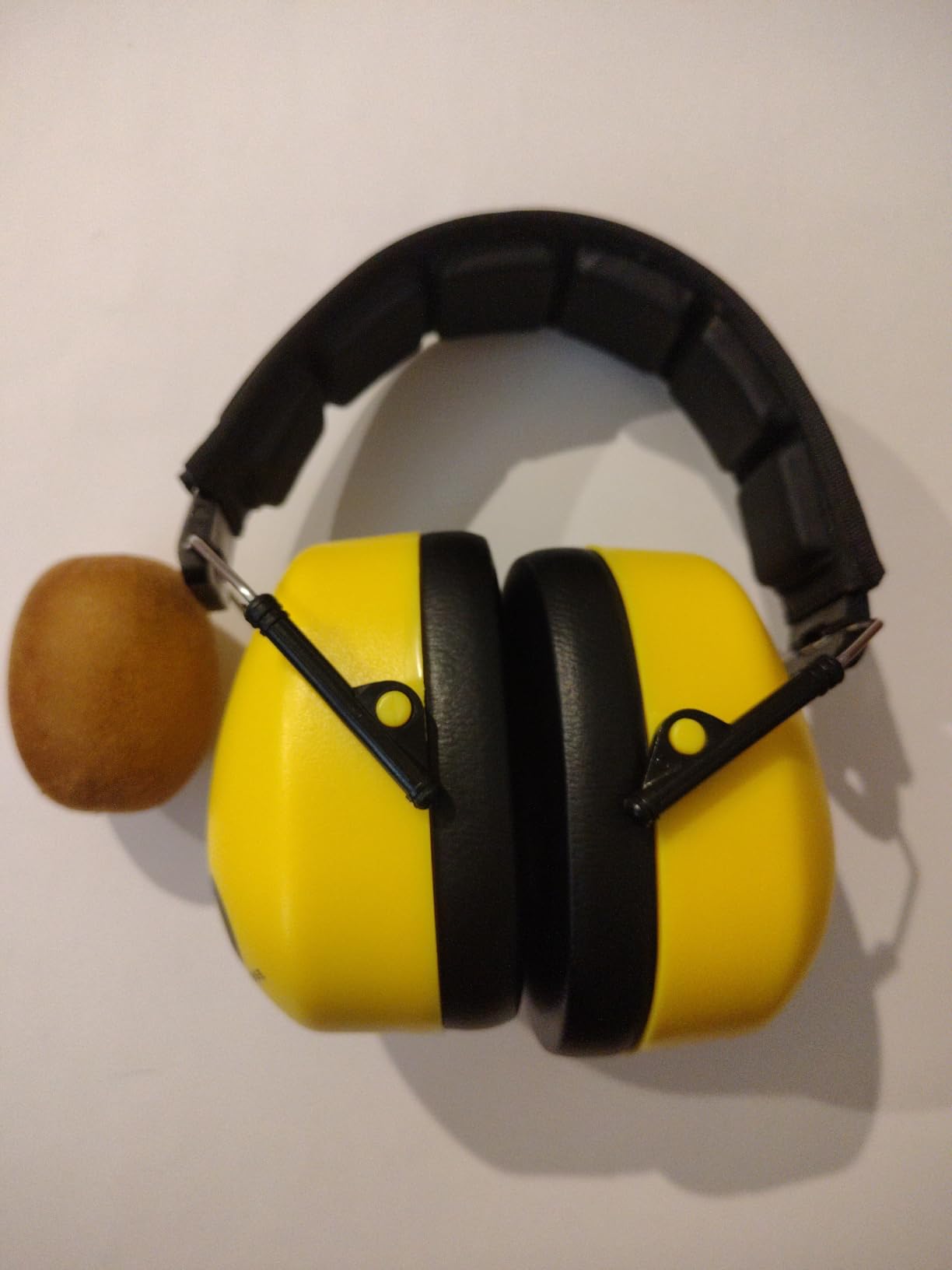
Two sizes are available, and owners with larger heads strongly recommend going straight to the XL. At 11.7 ounces it is not a light pair, but the weight sits in the cups rather than the crown, so it does not produce a pressure headache the way a light but badly balanced pair can.
There is a wider purpose beyond hearing protection. Reviews describe autistic adults and children using these to stay in the environment during storms and renovation instead of retreating to a quiet room, which is a much better outcome than avoidance.
Alarms and sirens stay faintly audible, which is both a limitation and a safety feature depending on your situation. The two-sided linked adjustment means you cannot set each cup independently, and there are no printed instructions in the box.
Who the DECIBEL DEFENSE 37dB works for
Anyone facing real high-decibel environments, including ranges, workshops, storms and construction nearby. The certified NRR means you can reason about a sound level in front of you rather than guessing.
It also suits highly sensitive adults who want to stay in a space rather than leave it. The foldable design stores in a bag, so the pair can live in a car or a gym bag permanently.
Who the DECIBEL DEFENSE 37dB does not work for
Everyday comfort-first use. The profile is bulky and visually obvious, which is a problem for adults who are already managing the question of how visible a sensory aid should be. The Regular size runs small on many heads, both cups adjust together, and sound is reduced rather than eliminated.
8. iClever EM01 – Adjustable Fit That Snags No Hair
Pros
- Certified to ANSI S3.19-1974 and CE EN 352-1
- Telescopic arms extend 38mm per side
- Stainless steel resists twisting from small hands
- Holeless pivot prevents hair snagging
- BPA-free and silicone-free materials
Cons
- Cannot eliminate noise entirely
- Leather-covered padding warms in hot weather
- Smaller review base than established rivals
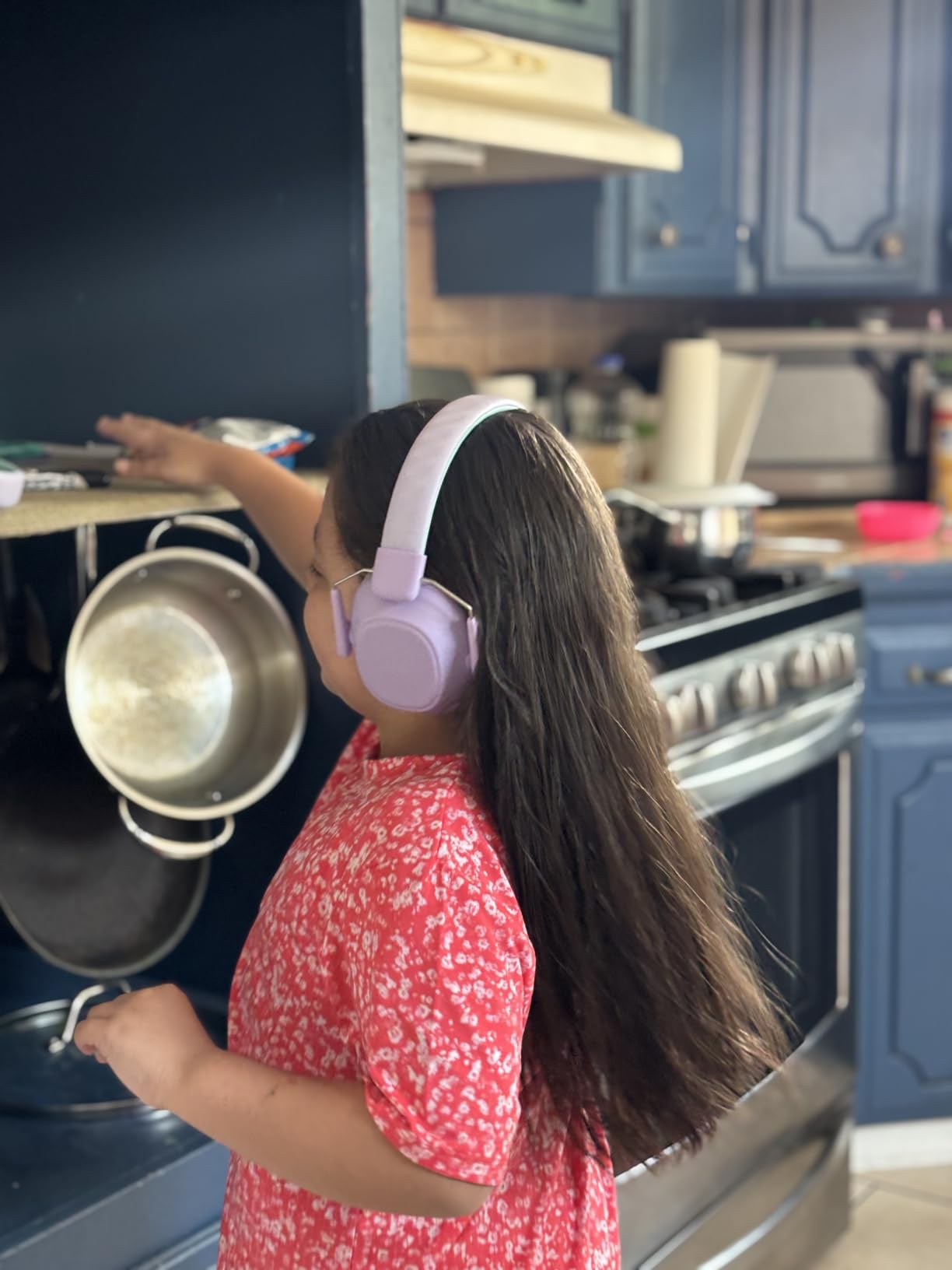
Long hair breaking a seal or getting caught in a hinge is one of the most repeated fit complaints across sensory forums, and the iClever EM01 is the only product here designed around it. The holeless pivot removes the pivot point entirely, so there is no gap for hair to thread through and tighten.
Adjustment runs through telescopic arms that extend 38mm on each side, so one pair covers kids through adults. Combined with 18mm slow-rebound padding, that gives a wide fit range with a low-pressure contact point, and reviewers highlight the roughly one-third lower headband pressure as the reason it stays on all day.
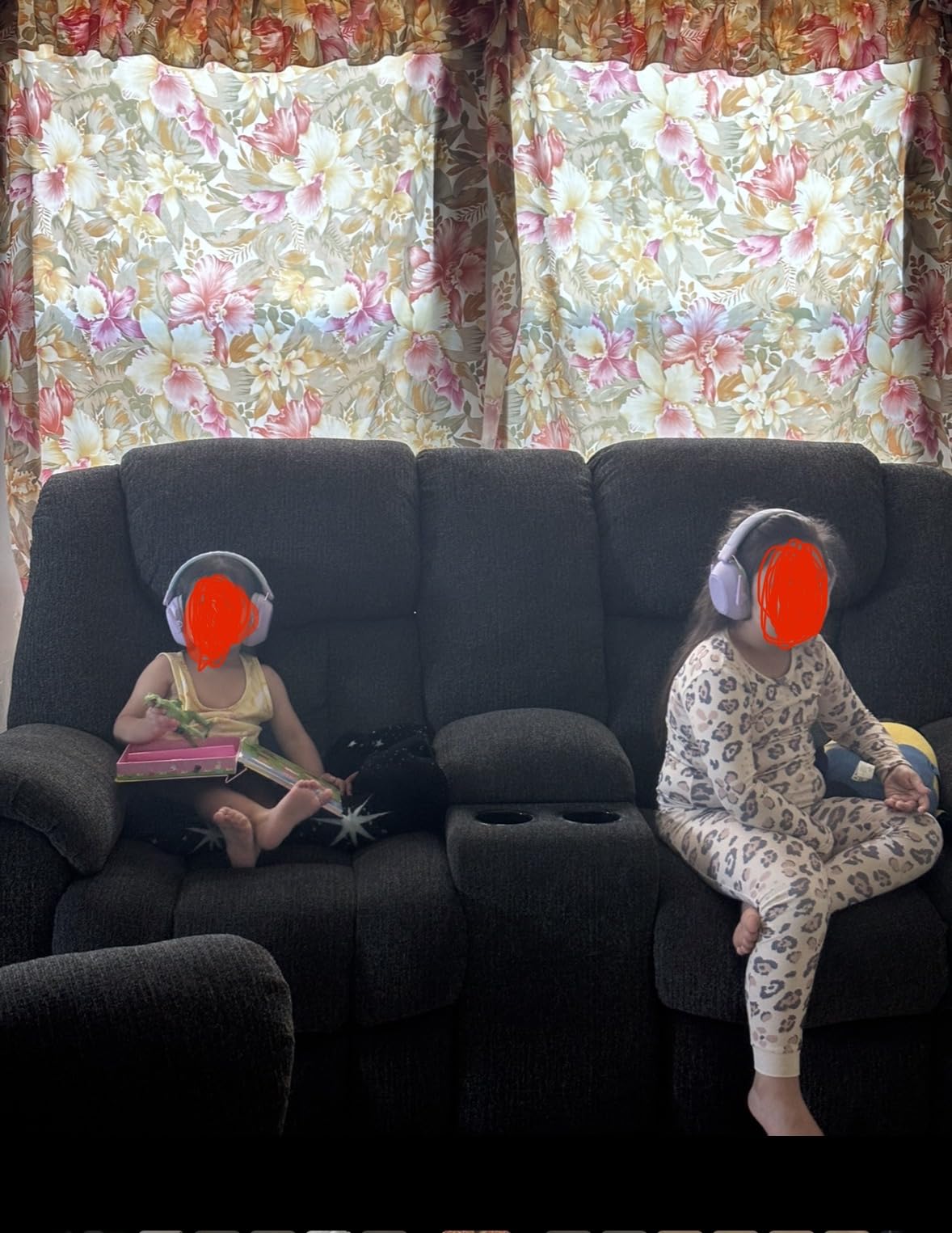
The internals are more considered than the price suggests. A 22mm porous sound-absorbing sponge sits behind a honeycomb acoustic sponge, which is what produces the 29 dB SNR figure under both ANSI S3.19-1974 and CE EN 352-1. The frame is 301 stainless steel with 2mm steel bars, so it survives being dropped and twisted.
Materials are BPA-free ABS with silicone-free earcups, chosen for reactive skin. It folds compactly for concerts, fireworks and travel, and the buckled headband design is noticeably easy to put on and remove quickly, which matters in a transition.
Reviewers accept the core limitation, and the manufacturer states it directly: earmuffs cannot eliminate noise. If you need voices gone entirely, this is the wrong category and no product in it will solve that.
Who the iClever EM01 works for
Wearers with long hair, since the holeless pivot removes a problem the rest of the category ignores. It is also a strong single-purchase choice for a mixed-age household, because 38mm of extension per side covers a wide fit range.
Anyone whose skin reacts to silicone or who has a child with tactile defensiveness gets a better experience with the BPA-free, silicone-free cups. The steel frame also holds its shape in a bag, which matters for travel.
Who the iClever EM01 does not work for
It will not silence speech, and anyone expecting total noise removal will be disappointed. The leather-covered padding warms in hot weather, the buckled fit is less comfortable lying down than a true over-ear cup, and the review base is smaller than the established names in this category, so long-term durability feedback is thinner.
9. ProCase Two-Pack SNR 32dB – One Pair for Work, One for Home
Pros
- Certified attenuation well above budget defenders
- Two pairs cover work and home use
- Padded headband distributes weight
- Rotating cups with generous interior space
- Folds compactly for a range bag
Cons
- Telescopic fit is snug and needs breaking in
- No audio capability despite headphone styling
- Heavier than single-packs
- All-black finish suits adults more than children
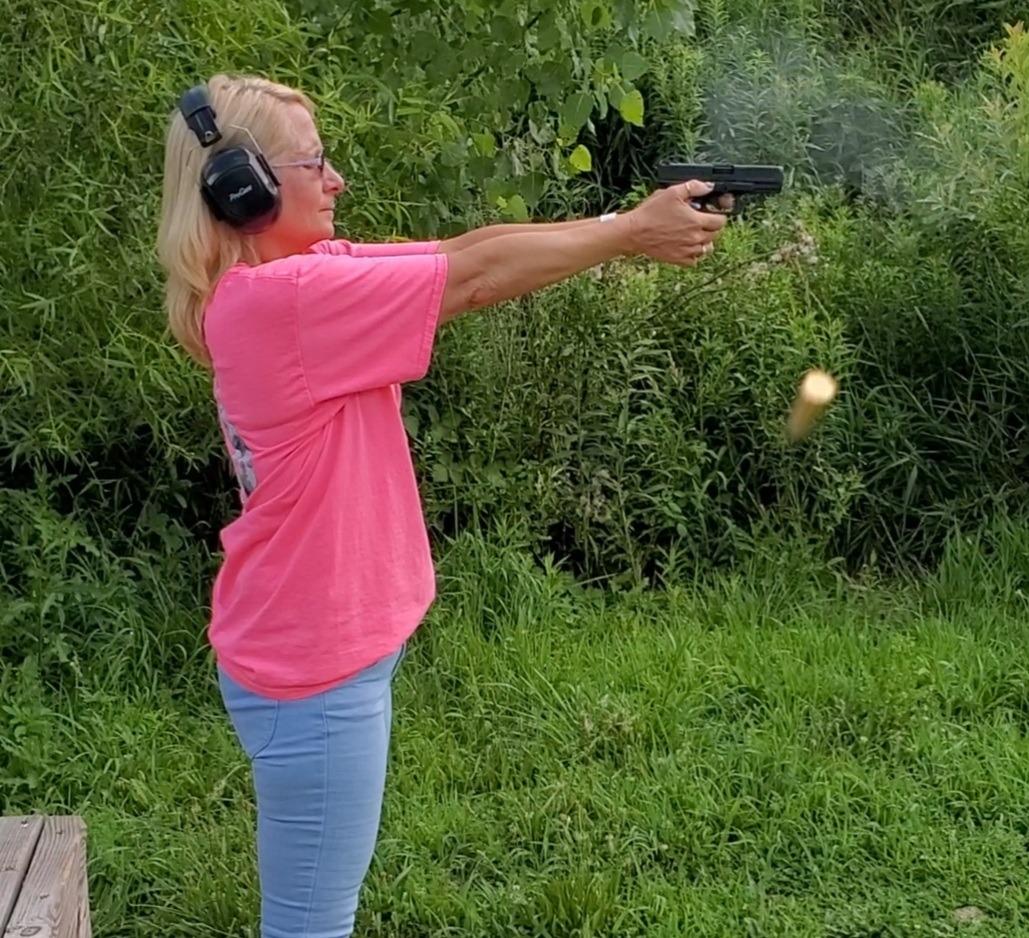
The ProCase two-pack is the practical answer to a question nobody else addresses: where does the gear live? Reviewers split between workshop and range use and pure sensory use, and a second pair removes the daily failure of reaching for defenders that are in a van rather than a pocket.
At SNR 32 dB and NRR 26 dB certified to ANSI S3.19, the attenuation is a genuine step above the 25 dB comfort-first defenders. That makes it a bridge product for wearers who find 25 dB too gentle but 37 dB too hot and bulky.
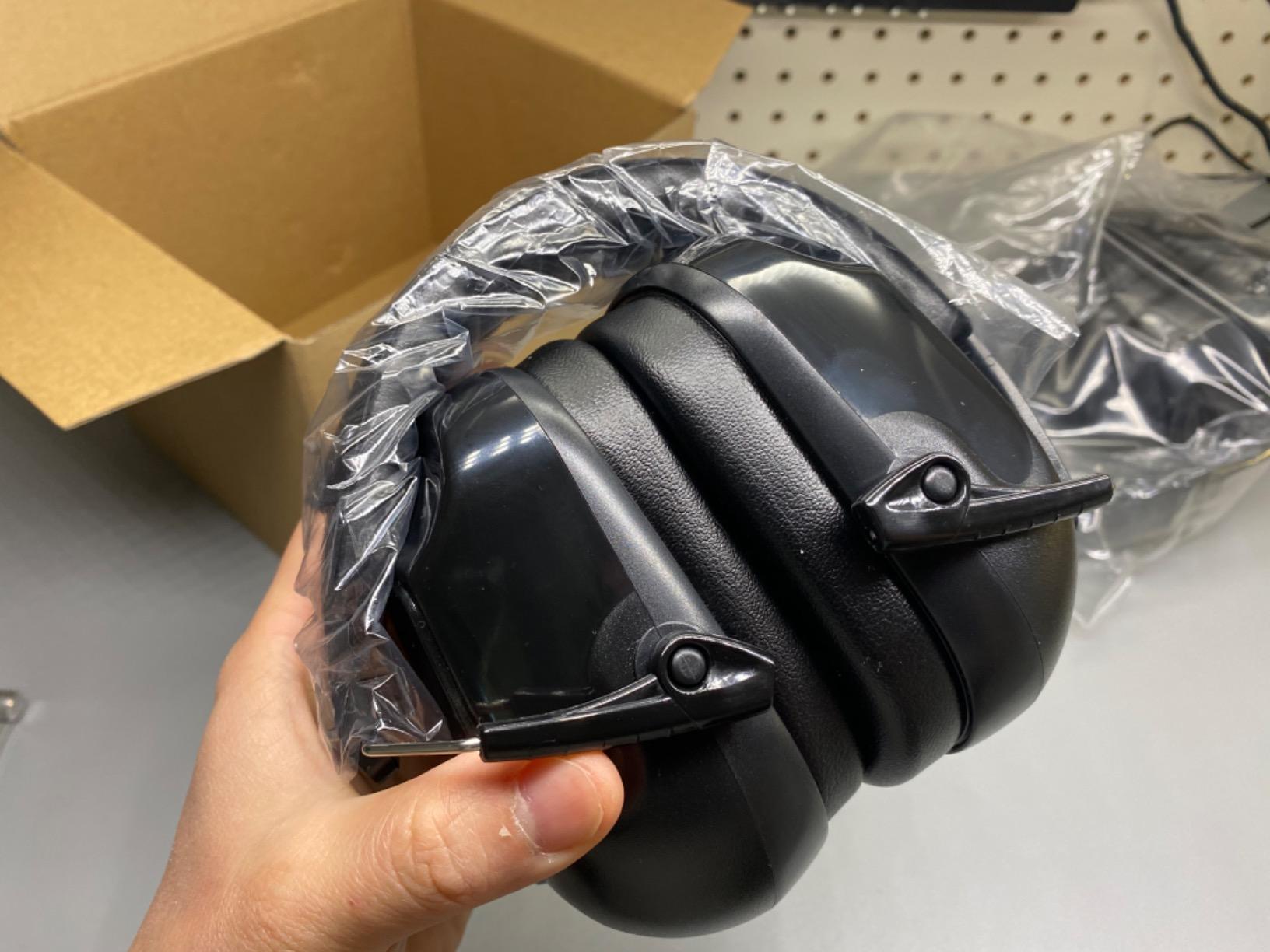
The padded headband distributes weight rather than concentrating it, and the 360-degree rotating cups with ultra-soft cushions leave generous interior space for breathability. Reviews credit both with preventing the pressure headaches that cheaper units cause.
Telescopic metal pins on each side handle head-size adjustment, and the whole thing folds into a compact shape for a range bag, backpack or briefcase. All-ages sizing means a family can share a pair.
Two caveats appear repeatedly. The fit is intentionally snug and needs a day or two stretched over a box, and despite the headphone styling there is no 3.5mm jack or any audio capability at all.
Who the ProCase Two-Pack SNR 32dB works for
Anyone who splits their time between two locations, which is most people. One pair at work and one at home removes the single most common complaint in sensory reviews, that the gear is never where the noise is.
It is also the pick for wearers who need more reduction than a 25 dB comfort defender gives but do not want the heat of a 37 dB safety muff. Parents of autistic children and workshop users converge on the same product for that reason.
Who the ProCase Two-Pack SNR 32dB does not work for
Anyone hoping for audio, since there is none despite the styling. The set is heavier than single-packs, the break-in stretch over a box is not optional, and the all-black finish appeals to adults more than it appeals to children.
10. Floriogra Two-Pack – Compact Protection for Young Children
Pros
- Two-pack covers school and home
- Child still hears an adult speaking
- Lightweight for multi-hour wear at events
- Rotating cups give a snug low-pressure fit
- Folds flat into a clear stadium bag
Cons
- Runs small beyond about age 7
- One reviewer reported no measurable protection
- 28 dB is modest against safety earmuffs
- Smaller review base for durability feedback
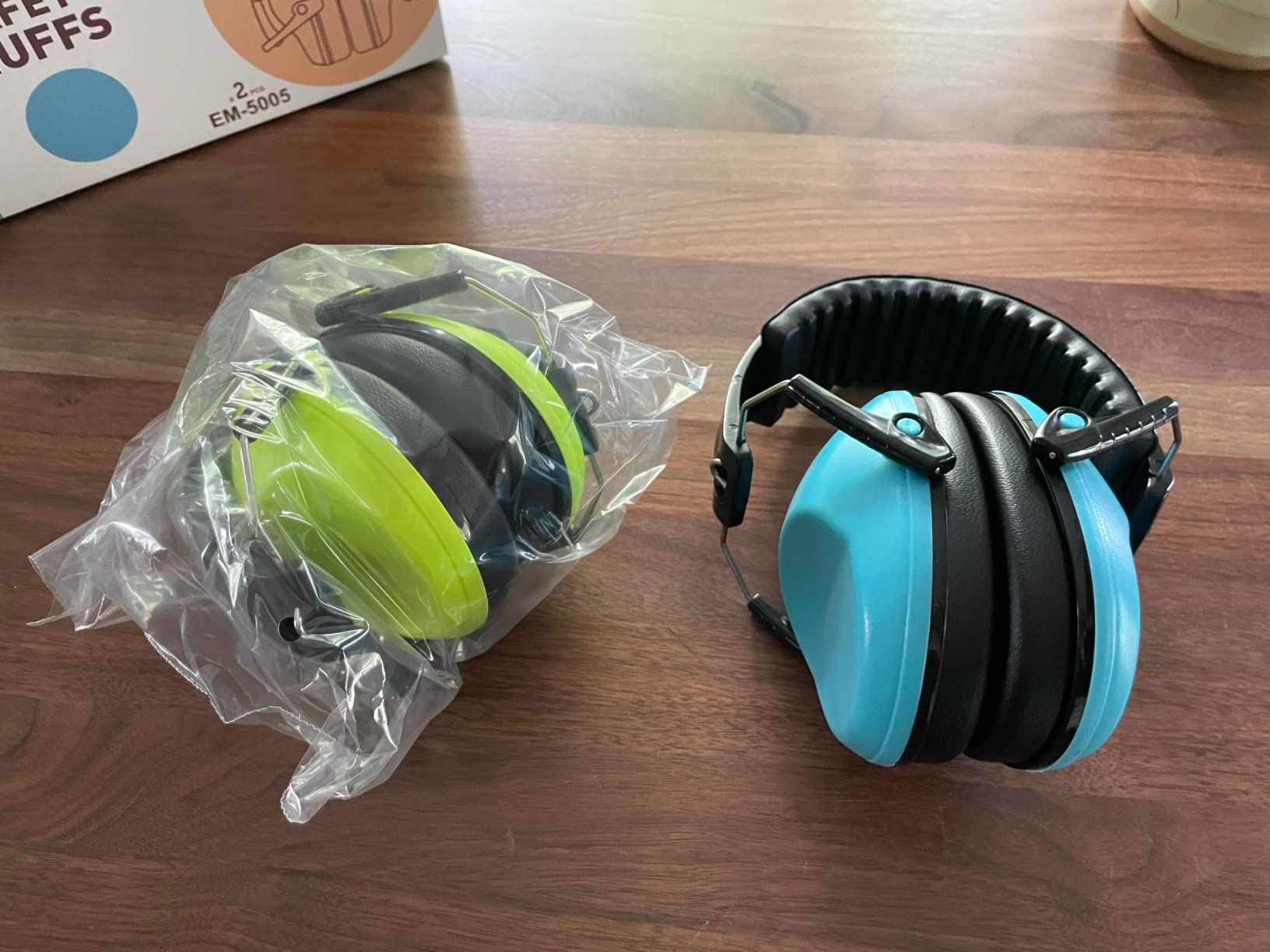
At 200 g and folding flat, the Floriogra set is built for the youngest end of the range and for parents who carry everything in one bag. It folds small enough to sit in a clear stadium bag at a demo derby, which is where this kind of gear actually gets used.
The reviews centre on toddlers and young children at Monster Jam, racing events, music class and school. Praise is almost entirely about the two-pack convenience, the fit, and the core benefit of muffling noise while a parent voice still gets through.
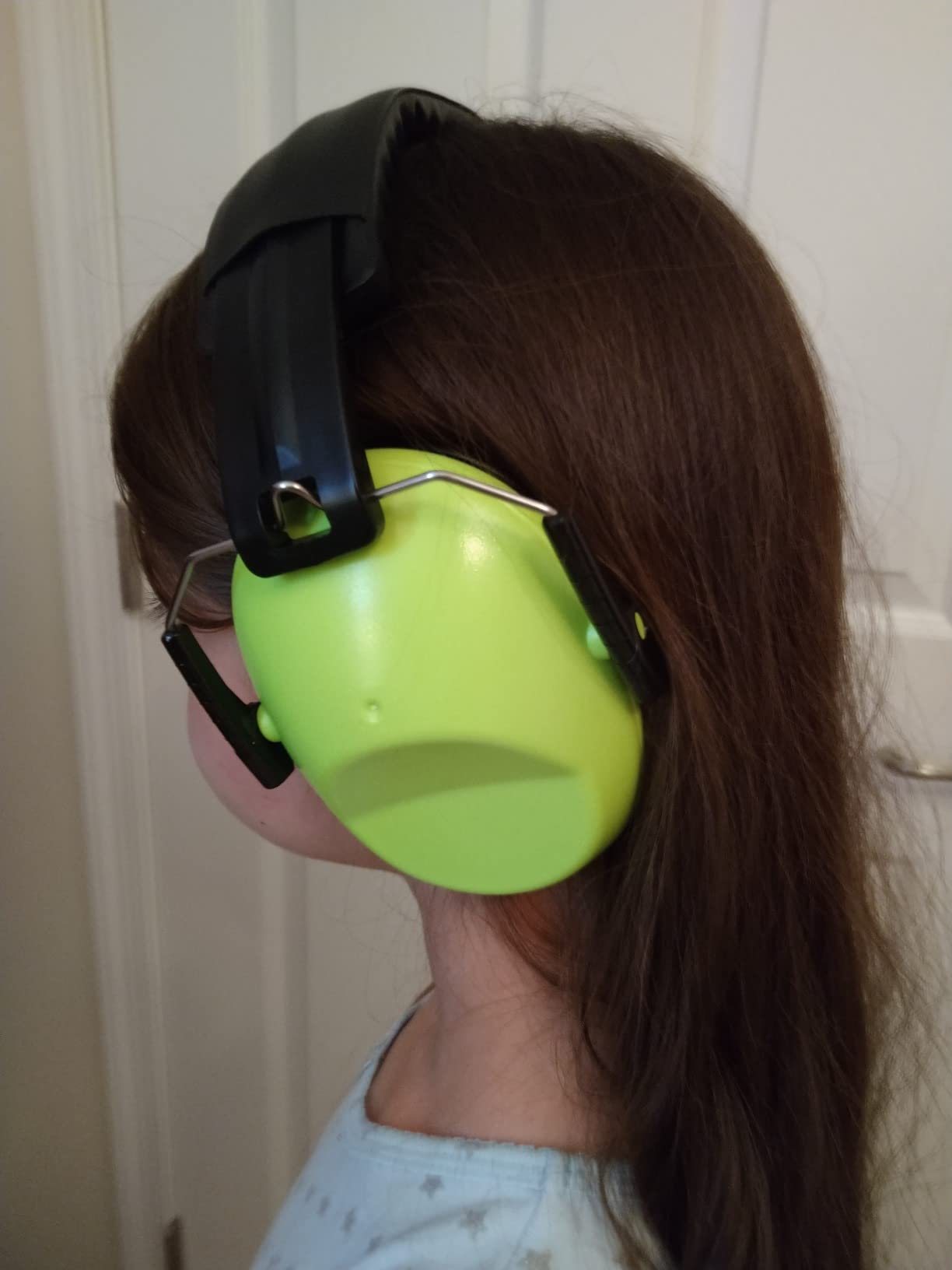
Certified to ANSI S3.19 and CE EN 352 at SNR 26 dB with attenuation up to 28 dB, so the numbers are measured rather than claimed. The 360-degree rotating cups and widely padded headband give a snug fit at low contact pressure, and the padded ear pads are soft enough for small ears.
Reviewers repeatedly report that the muffs help autistic children focus and stay calm in public, which is the outcome that matters rather than the decibel figure.
The dominant criticism is scale. Multiple buyers report the earmuffs barely fit a 5-year-old and will not suit a 7-year-old or any adult, and one reviewer gave a one-star review claiming no measurable protection at all. Treat the size as toddler-specific.
Who the Floriogra Two-Pack works for
Toddlers and young children at loud daytime events where the parent needs to keep the child in the environment rather than at home. The two-pack format means one stays in the car and one stays in the bag, which fits family routines better than a single pair.
It is also a reasonable budget backup for any household, and a good first introduction to ear defenders for a child aged roughly 3 to 6 who may outgrow them.
Who the Floriogra Two-Pack does not work for
Children over roughly 7 and all adults, because the sizing runs small. It is not sufficient for industrial or range noise, and the review base is small enough that long-term durability feedback is limited. Check the head size carefully before committing.
ANC vs Passive Noise Blocking: Which One You Actually Need
Pick ANC for low hum and passive blocking for voices and clatter, because the two systems attack different frequencies. This is the single most misunderstood point in this category, and getting it backwards is why many people conclude that noise cancelling did not work.
ANC microphones listen to incoming sound and generate an inverse wave to cancel it. That works beautifully against steady, repeating, low-frequency noise: aircraft engines, bus and train rumble, air conditioning, ventilation hum, a washing machine. It does almost nothing against speech, because voices move constantly and sit in the mid and high frequencies where the timing between the anti-noise wave and the original is never accurate enough to cancel.
Passive blocking is a physical seal. Foam, mass and a good fit attenuate the frequencies that ANC struggles with, which is exactly why an NRR 28dB defender can outperform an ANC pair in a noisy cafe while doing nothing about a running engine. It has no electronics, so it never needs power.
Some readers on autism community forums pair the two for what is often called double protection: a foam earplug underneath a passive muff. That stacks attenuation across the frequency range, and it is the closest thing to a universal solution when voices are the trigger and the environment is genuinely loud.
A third option, in-ear monitors with foam tips, goes further still and is the Reddit answer for chatter specifically. A proper seal in the ear canal blocks a surprising share of mid and high frequencies, so if your trigger is people talking rather than engines, an in-ear with a foam tip is worth testing. If you also want to read broadly, our bone conduction headphone guide covers the opposite philosophy, where keeping your ears open is the priority.
Comfort, Clamping Force and the Ear Pressure Problem
Head pressure is the most repeated complaint in every sensory forum, and it has two separate causes that need different fixes. One is mechanical clamp force from the headband. The other is a perception created by ANC itself, often called the eardrum illusion.
The eardrum illusion happens because ANC cannot tell a low-frequency sound wave travelling in from one travelling out through the same microphone. The brain compensates for the missing signal by producing the sensation of pressure in the ear, much like the pressure in an aircraft cabin. It is not damage and it is not a sign of poor fit, which is why users often reject perfectly good headphones over it.
Four steps resolve it, and reviewers across the forums report success with each one. Drop the ANC level to its lowest setting or switch it off entirely and use passive blocking alone. Reposition the cups so the front edge sits a little forward of the ear canal, which changes how the low frequencies enter. Change the ear pads, because a firmer or deeper pad changes the seal and reduces the sensation. Take scheduled breaks, since the effect builds with continuous wear.
Mechanical clamp force is the other half of the problem. The metrics that predict it are weight and contact-area distribution, which is why the 192g Sony WH-CH720N and the metal-framed ProCase score well: less mass means less force needed to hold a seal. Heat compounds everything, since warm cushions and a damp headband add a second sensory complaint on top of the first.
The most common real-world cause of poor performance is a broken seal rather than a bad product. Glasses arms, long hair and head shape all create leaks, and leaked low frequencies defeat both ANC and passive attenuation at once. Check the seal with and without glasses before ruling a pair out.
For children specifically, comfort and heat matter as much as attenuation, and fit has to survive growth. If the wearer is a young child, our sensory equipment guides for toddlers cover the same developmental window.
How to Break In New Headphones in the First Week
Most sensory gear gets rejected in week one and the gear is blamed. The actual cause is usually a headband that has not taken its shape, and a short break-in protocol fixes most of these rejections before they happen.
Start by stretching the band over a box or a large book for one to two days, which is the single most repeated tip in reviews of the ZOHAN, Alpine Muffy and ProCase pairs. The metal frames and adjustable sliders in this category are deliberately snug when new, and they relax with use.
Then wear them in stages rather than all at once. Twenty minutes on day one, an hour on day two, half a day on day three, and a full day on day four. If pressure or heat appears, step back a stage rather than pushing through it, because the point of a sensory aid is that it stays available tomorrow.
Check the seal on day two with your normal glasses and your normal hairstyle, not the way you looked when unboxing them. Both ANC and passive attenuation lose a lot of their benefit through a leak at the temple.
Finally, set a rule for adjustment. Give the headband one adjustment and leave it alone, because repeatedly re-tuning the clamp is what trains a wearer to expect the band to shift and start removing the headphones on its own.
Buying Guide: How to Choose Headphones for Sensory Sensitivity
Four decisions matter more than the brand on the box. They are the sound type you need to block, the wearer’s age, the clamp force you can tolerate and whether a device failure is acceptable.
Start with frequency. If the trigger is engines, ventilation, hum and rumble, active noise cancelling is the efficient answer. If the trigger is voices, conversation, dishes and clatter, passive defenders or in-ear foam tips win, because ANC is weakest exactly there. If both are present, you need two pairs, and that is what most long-term users end up with.
Then check the rating honestly. NRR and SNR are not the same number, and a lab test on a head is not a field test in a real shop. Real-world attenuation typically lands a little below the rated figure, so treat ratings as an ordering rather than a promise. Below about 25 dB is a comfort product for everyday environments. Between 25 and 33 dB covers classrooms, travel and neighbourhood noise. Above 33 dB is for genuinely loud environments where hearing protection is the point.
Next, age changes the priorities. Children need a headband that can adjust across years rather than months, materials that do not trap heat or irritate skin, and split cups that clear the arms of spectacles. Adults need low weight, low clamp force, and a profile they are willing to be seen wearing. If a child wears hearing aids, check coexistence carefully, because over-ear ANC can interfere with the microphones.
Weight and clamp force are the numbers most people ignore and regret later. Anything under 200 g gives you the best chance of a full-day wear. Distribute the contact area with a padded crown or a rigid frame, and prefer cups that rotate so they can align with your jaw rather than fighting it.
Then decide whether a flat battery is acceptable. Users report real anxiety around dead batteries, and the passive products here have no electronics at all. If a shutdown can happen without warning, passive is the safer architecture. If you want music as well as relief, you have accepted that dependency, and a long battery plus quick charge is the mitigation.
Finally, budget for a second pair rather than an upgrade. The most common practical failure is not the wrong model, it is the one pair being in the wrong bag. Two moderate pairs placed in two locations outperforms one excellent pair that is not with you when the noise starts.
Where sensory support needs extend beyond audio, our sensory swing guide covers the movement side of regulation, and our headphones for video editing covers monitoring gear for a different need.
Beyond Headphones: Brown Noise, Pink Noise and Volume Limiting
Not every user wants music, and for many it is the wrong input. Masking sound with steady noise can dampen an environment without adding a task, and the colour matters more than most people expect.
White noise is the brightest and hisses, which is why it is the least favoured for sensory relief. Pink noise rolls off the higher frequencies and sounds more like rain, so it is easier to sit with. Brown noise sits lower still, closer to distant traffic, and is the one most often recommended for focus and relief because it carries less high-frequency edge.
Volume limiting is the safety layer for children. Any child who cannot self-regulate volume should use a pair with a hard cap, and passive defenders naturally solve the problem because they play nothing at all. Where audio is used, keep sessions short, keep the level low enough that a normal speaking voice is audible around the child, and take breaks.
Finally, treat a sensory aid as a tool rather than a test. If a pair is not working, the answer is to change the fit, the level or the category, not to conclude that nothing helps. Almost every product in this roundup works for someone.
Frequently Asked Questions
Do noise cancelling headphones cause pressure in the ears?
Some people do, and the cause is usually the eardrum illusion rather than a poor fit. ANC cannot tell an incoming low-frequency wave from one leaving the ear, so the brain compensates and creates a pressure sensation similar to an aircraft cabin. Dropping the ANC level, repositioning the cups, changing the ear pads or taking short breaks all reduce it. Most users who do this report the sensation fades within days.
What is the difference between noise cancelling and noise blocking headphones?
Noise cancelling headphones use microphones and electronics to generate an anti-noise wave, which works well against steady low-frequency sound such as engines, hum and air conditioning. Noise blocking headphones are passive defenders that create a physical seal with foam and mass, rated by NRR or SNR, and they are far better against speech, clatter and irregular mid and high frequency sound. Many users combine an earplug with a passive muff for the widest coverage.
Do headphones help with sensory overload?
They can reduce the load considerably, but they work by lowering volume rather than by removing the source. Damping a cafeteria from 80dB to 50dB is often the difference between managing a transition and shutting down. Headphones are most effective when they also remove the physical problems people complain about, so weight, heat and clamp force matter as much as the noise reduction figure.
Are there headphones that will not hurt my ears?
No pair is pressure-free, but weight and fit cut the problem a long way. Anything under about 200g is the safest bet for a full day, and a rigid frame or well-padded crown spreads clamp force instead of concentrating it. Fit matters more than price, so a pair that breaks in properly and seals with your glasses on will beat a more expensive one that pinches.
Why can I still hear voices with noise cancelling headphones?
ANC cancels steady, repeating, low-frequency sound and it is much less effective against speech, because voices move constantly and sit in mid and high frequencies where timing cannot stay accurate. If voices are your trigger, use passive defenders rated by NRR or SNR, or in-ear monitors with foam tips, which seal the ear canal and block mid and high frequencies far better.
What are the best headphones for a child with sensory processing differences?
For most children the priority is a metal-free or light frame, materials that do not trap heat, and a headband that adjusts across several years of growth. The Alpine Muffy, ZOHAN two-pack and Floriogra two-pack fit children roughly aged 3 to 12, and the Dr.meter EM100 spans toddlers to adults if you want one household pair. Volume limiting matters only if audio is used, since passive defenders play nothing.
How do I stop headband pressure from hurting?
Adjust the band once and leave it there rather than re-tuning it constantly, and stretch a new frame over a box for a day or two so it takes its shape. Rotate the cups so they align with your jaw instead of pressing on the ear canal, and check the seal with your usual glasses and hairstyle, because a leak makes you tighten the band without improving the result.
What noise helps calm sensory overload?
Brown and pink noise are both used for masking because they roll off the higher frequencies and sit more easily than music. Brown noise is the lowest and most frequently recommended for relief and focus, while pink noise sits higher and is useful for sleep. White noise is the brightest and tends to hiss, which is why it is the least favoured for sensory use.
Our Verdict: The Best Headphones for Sensory Sensitivity in 2026
The best headphones for sensory sensitivity depend on what is actually triggering you. Hum and engines point to ANC, and the Sony WH-CH720N gives you the lightest frame here. Voices and clatter point to passive blocking, where the Dr.meter EM100 dims the world without cutting you out of the conversation.
For a child, the Alpine Muffy or the ZOHAN two-pack will hold up better than anything electronic. For genuinely loud environments, the DECIBEL DEFENSE 37dB is the only certified option in this roundup. Buy two pairs and keep one in each bag.
Whatever you choose, break it in slowly and give it a fair first week. That is where most sensory gear is lost.