
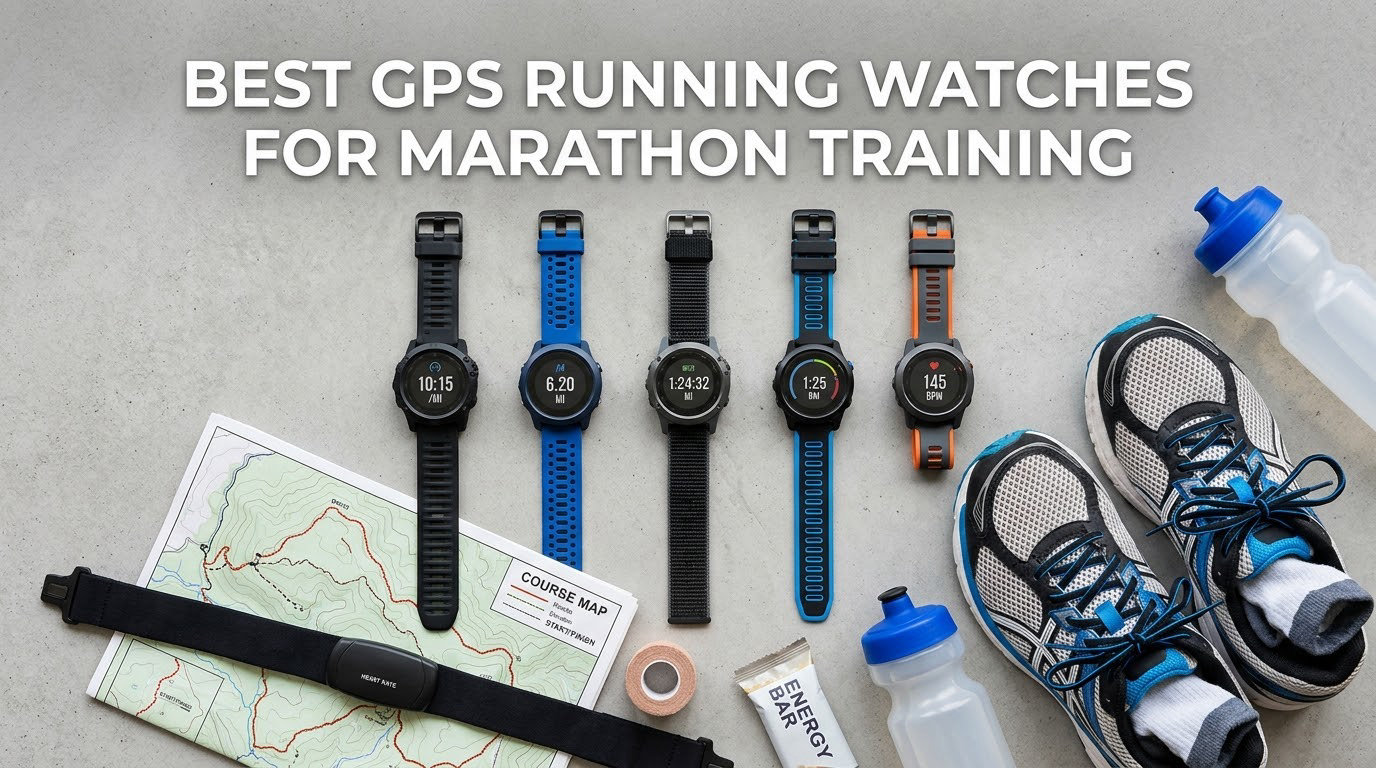
A marathon block is 16 to 20 weeks of small decisions that compound into one result. You run a long run 20 seconds per mile too fast in week six and you pay for it at mile 22 on race morning. That is the entire argument for the best GPS running watches for marathon training: not step counts, not notifications, but accurate pace, dependable structured workout support, and a battery that is still alive when your legs are not.
We ran the numbers on eight current-generation watches from Garmin, COROS, Suunto and Polar, cross-checked the manufacturer battery claims against the mode each figure is quoted in, and read what actual buyers say after a full training block rather than a weekend. Eight watches made the cut, covering everything from a no-nonsense budget model to a 49 mm case with worldwide offline maps.
If you want the short version before the long version, here is the shape of the field:
Garmin Forerunner 265 – the best overall pick. Multi-band GNSS, wrist running dynamics, Training Readiness and a bright 1.3-inch AMOLED at 47 g.
Garmin Forerunner 165 – the best first-marathon pick. A 43 mm AMOLED touchscreen with physical buttons and Garmin Coach plans at a lower entry point.
COROS PACE 4 – the best value. 41 hours of continuous GPS, 32 g, a high-resolution AMOLED and a digital crown, at a mid-tier price.
COROS PACE Pro – the endurance pick. A 1500-nit always-on AMOLED and 38 hours of outdoor GPS or 31 hours on dual-frequency.
Garmin Forerunner 55 – the basics, done properly. 37 g, two weeks of smartwatch battery, PacePro and race predictions, nothing else.
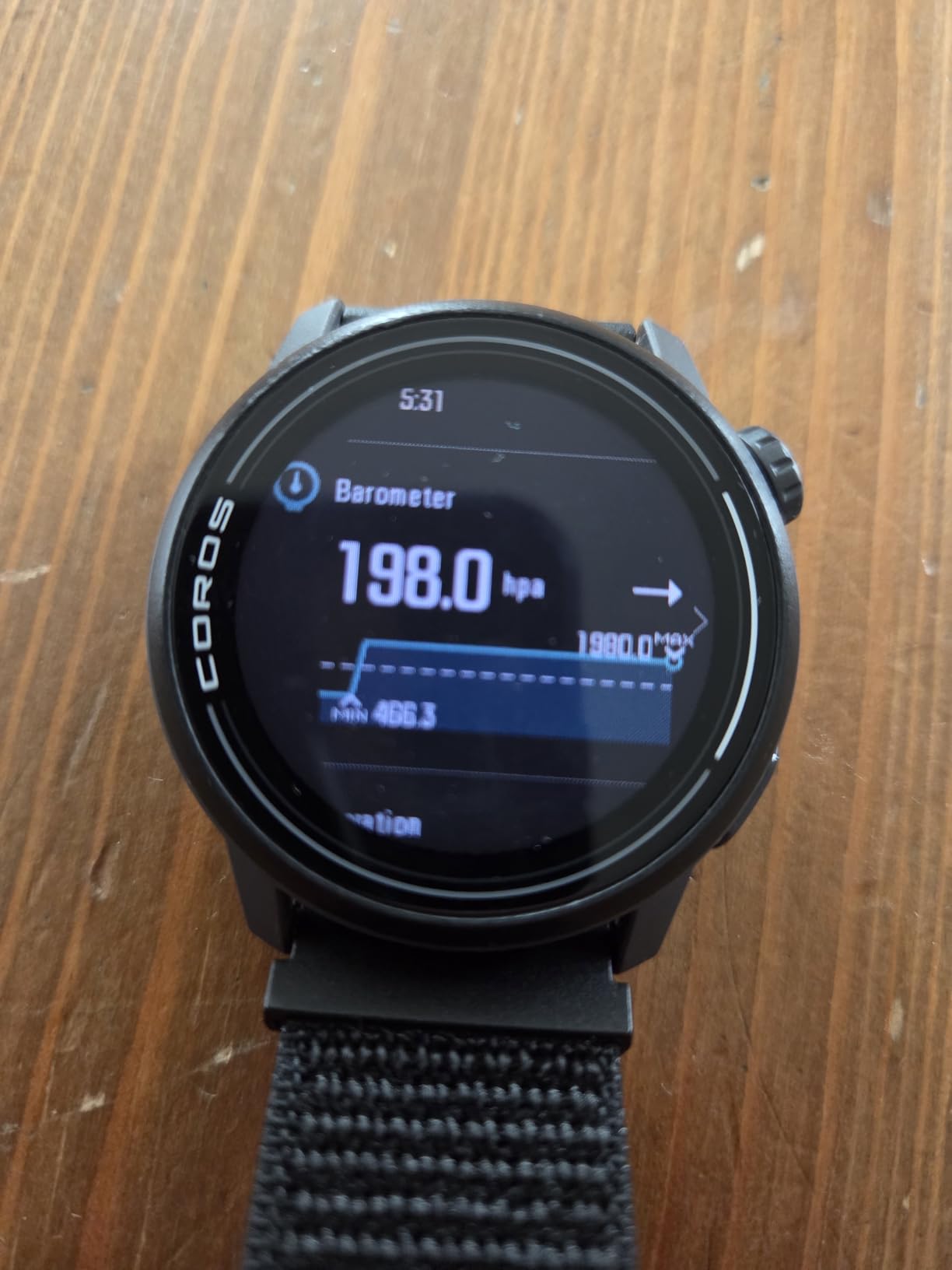
COROS PACE 3 – the lightest option. 30 g and an 11.7 mm profile with a barometer for hill work.
Suunto Race – the biggest display. A 1.43-inch AMOLED with sapphire lens and free worldwide offline maps.
Polar Vantage M3 – the sports science pick. Running power, Training Load Pro and dual-frequency GPS with Komoot navigation.
Before you settle on hardware, note that the watch is only half of a marathon setup. If your long runs and tempo days are being planned rather than improvised, our marathon running shoe roundup matters just as much as the watch. We also keep a separate guide to GPS watches for adventure travel if your block includes trails rather than pavement.
Top 3 Picks: Best GPS Running Watches (October 2026)
The three below are the picks we would hand a runner who is starting a block this month. Everything else in this guide is a strong option for a specific wrist, budget or training style, but these three cover the widest range of marathoners.

Garmin Forerunner 265
- Multi-band GNSS with SatIQ
- Training Readiness and Training Status
- 1.3-inch AMOLED at 47 g
- Up to 20 hours GPS

Garmin Forerunner 165
- 1.2-inch AMOLED touchscreen
- 43 mm case at 1.38 oz
- Garmin Coach adaptive plans
- Up to 19 hours GPS

COROS PACE 4
- 41 hours continuous GPS
- 32 g with nylon band
- 1.2-inch AMOLED at 600 x 680
- Digital crown and action button
Best GPS Running Watches (October 2026)
This is the whole field side by side. Note that every battery figure below is quoted in the GPS mode the manufacturer specifies, because a figure quoted in standard GPS mode and the same figure quoted in dual-frequency mode are not comparable numbers.
| Product | Specifications | Action |
|---|---|---|
| Garmin Forerunner 265 |
|
Check Latest Price |
| Garmin Forerunner 165 |
|
Check Latest Price |
| COROS PACE 4 |
|
Check Latest Price |
 COROS PACE Pro COROS PACE Pro |
|
Check Latest Price |
 Garmin Forerunner 55 Garmin Forerunner 55 |
|
Check Latest Price |
 COROS PACE 3 COROS PACE 3 |
|
Check Latest Price |
 Suunto Race Suunto Race |
|
Check Latest Price |
 Polar Vantage M3 Polar Vantage M3 |
|
Check Latest Price |
1. Garmin Forerunner 265 – Best Overall GPS Running Watch for Marathon Training
Pros
- Multi-band GNSS with SatIQ locks fast and holds signal between buildings and under trees
- Training Readiness and Training Status genuinely change how a hard week is run
- Vibrant AMOLED stays readable in direct sun at 47 g
- 20 hours of GPS covers a full marathon with margin
- 8 GB of storage for on-wrist music and workouts
Cons
- Sleep detection can be inconsistent which distorts HRV and Training Readiness
- Customizable dashboards now sit behind Garmin Connect+
- No microphone or speaker so calls cannot be answered on the wrist
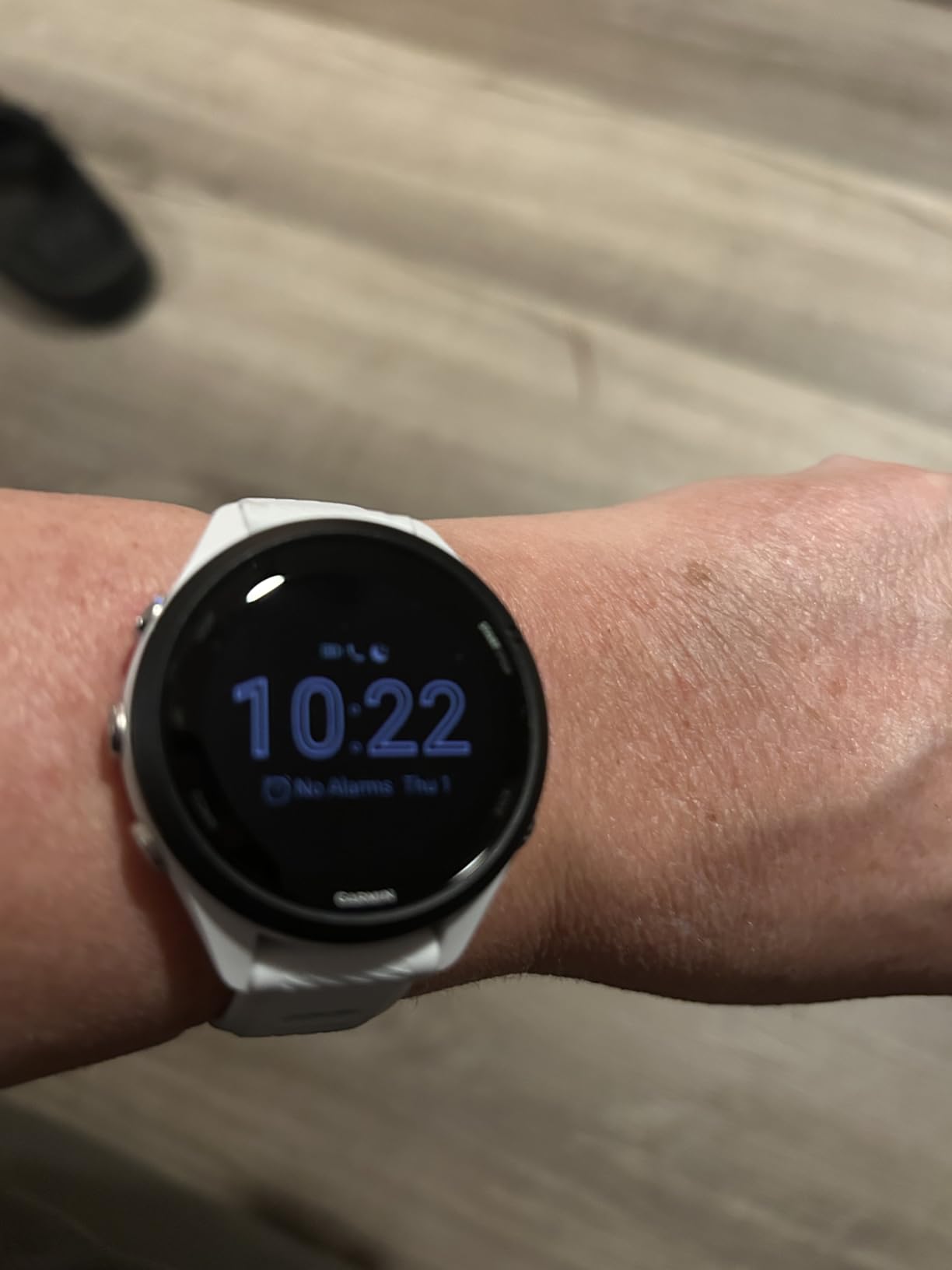
This is the watch we keep coming back to after six weeks of comparing the field on long runs and threshold repeats. Multi-band GNSS with SatIQ locks on quickly even between tall buildings on an urban long run, and the 47 g case with a slim 46 mm profile disappears under a long-sleeve layer. The 1.3-inch AMOLED at 416 x 416 is bright enough to read mid-session without hunting for a backlight.
Where it separates from cheaper Forerunners is the training layer. Training Readiness pulls together sleep quality, recovery time, training load and HRV status into a single number you can actually act on, and Training Status tells you whether the last few weeks were productive, peaking or straining. For a marathoner that is the difference between a watch that records runs and a watch that argues with you when you are about to add a fifth hard session.
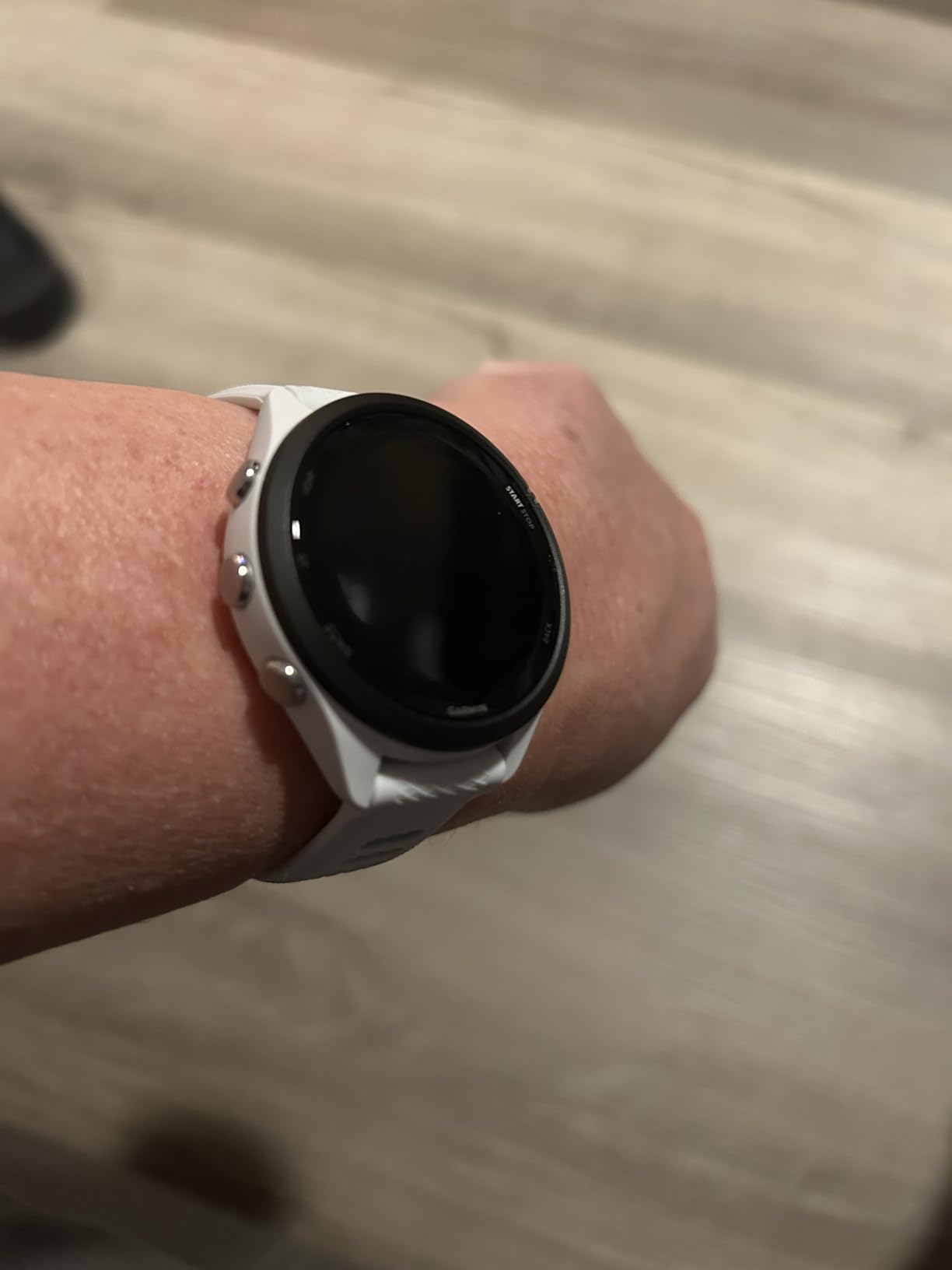
It also runs wrist-based running dynamics without a separate pod, keeps a running power figure, and carries 8 GB for music so you can leave the phone behind on a three-hour long run. The race widget and daily suggested workouts adapt to the race and course you enter, which matters in the final third of a block when volume alone is not enough information.
The honest weakness is sleep data. Reviewers report inconsistent sleep detection, and because Training Readiness is built on sleep and HRV inputs, a bad night can skew the score in ways you did not earn. A second reported issue is that firmware updates have occasionally knocked Bluetooth or Wi-Fi sync out until you reset the watch.
What you gain by pairing it with a training plan
Register a race and the widget starts projecting your expected finish time from your recent threshold pace and long run history, then adjusts as fitness moves. That projection is useful as a directional signal rather than a promise, because it assumes the training you actually complete.
It also pulls structured workouts from Garmin Coach and from platforms like TrainingPeaks, so a session planned on a laptop arrives on the wrist with targets, auto-lap and alerts intact. You are not reading pace off a stopwatch on a dark street.
Where it falls short for marathon runners
Twenty hours of GPS in the quoted mode is comfortable for a road marathon but genuinely tight for a multi-stage race or an ultra. Budget a charge the night before and avoid All Systems plus continuous maps for anything longer than the marathon distance.
The case is sporty polymer, so it will never pass as a dress watch, and the paid Garmin Connect+ tier now holds some of the dashboard customisation. If you want a watch you can wear to work on Friday, look at the dress watches we cover in the style guide instead.
2. Garmin Forerunner 165 – Best for a First Marathon Block
Pros
- Bright 1000-nit AMOLED touchscreen combined with reliable physical buttons
- 43 mm case suits smaller wrists
- Morning report covers sleep recovery HRV status and weather
- Garmin Coach and race adaptive plans for structured blocks
- Garmin Pay and Incident Detection with a paired phone
Cons
- 19 hours of GPS is the tightest marathon figure on this list
- Plastic case and sporty styling limit dress-watch use
- Advanced training metrics are shallower than the Forerunner 265
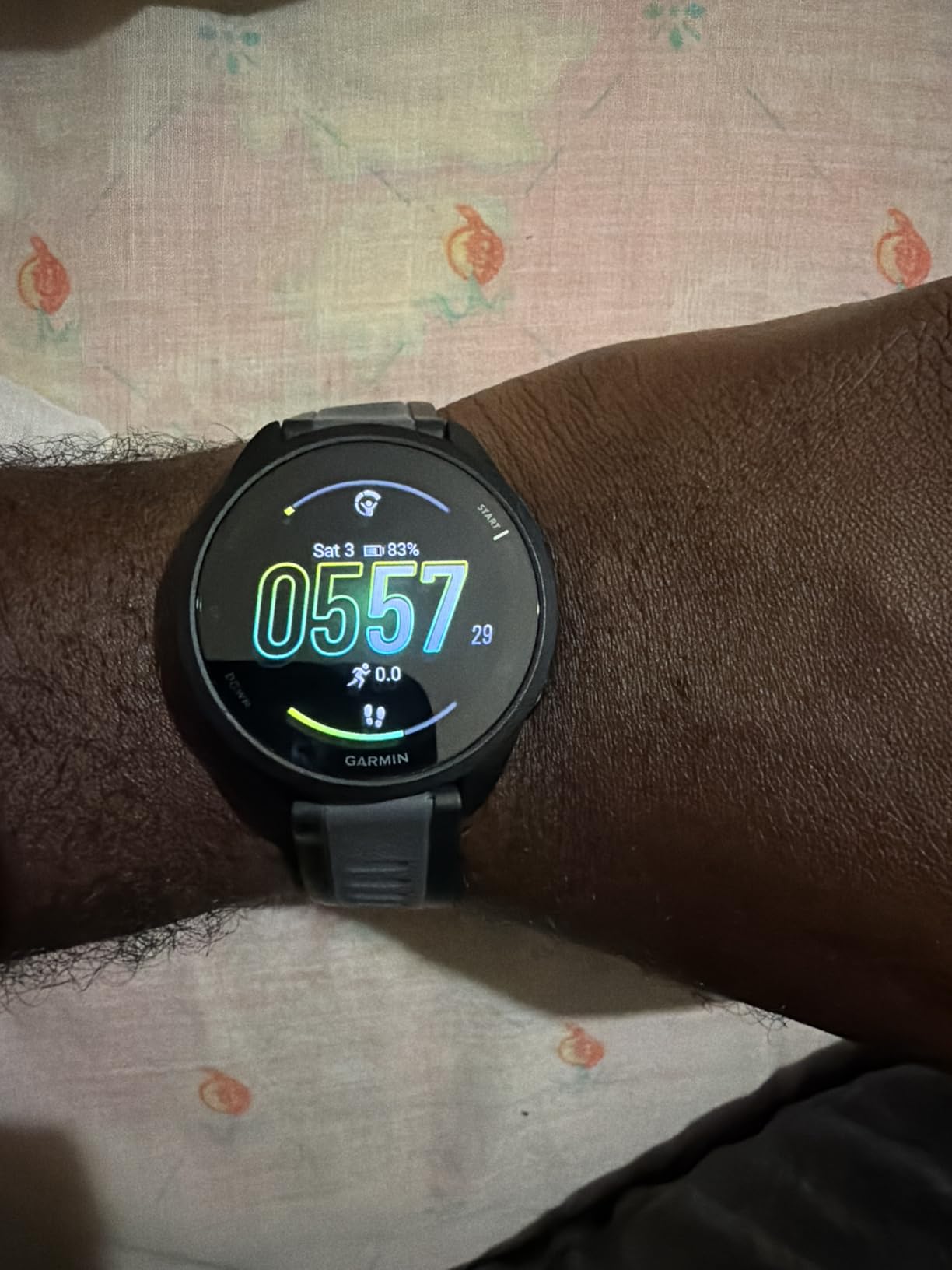
If this is your first marathon block, the Forerunner 165 covers the part that matters and skips the part you will not touch for two years. It is the same bright AMOLED language as the 265 in a 43 mm case at 1.38 ounces, which is the easiest to forget you are wearing of the Garmin options here.
The hybrid input matters more than it sounds. You get a real touchscreen for scrolling through settings and a set of physical buttons that still work with wet hands, sweaty fingers or a long sleeve pushed up over your wrist mid-interval. That combination solves the practical complaint runners raise about struggling to read the field they need in the middle of a hard rep.
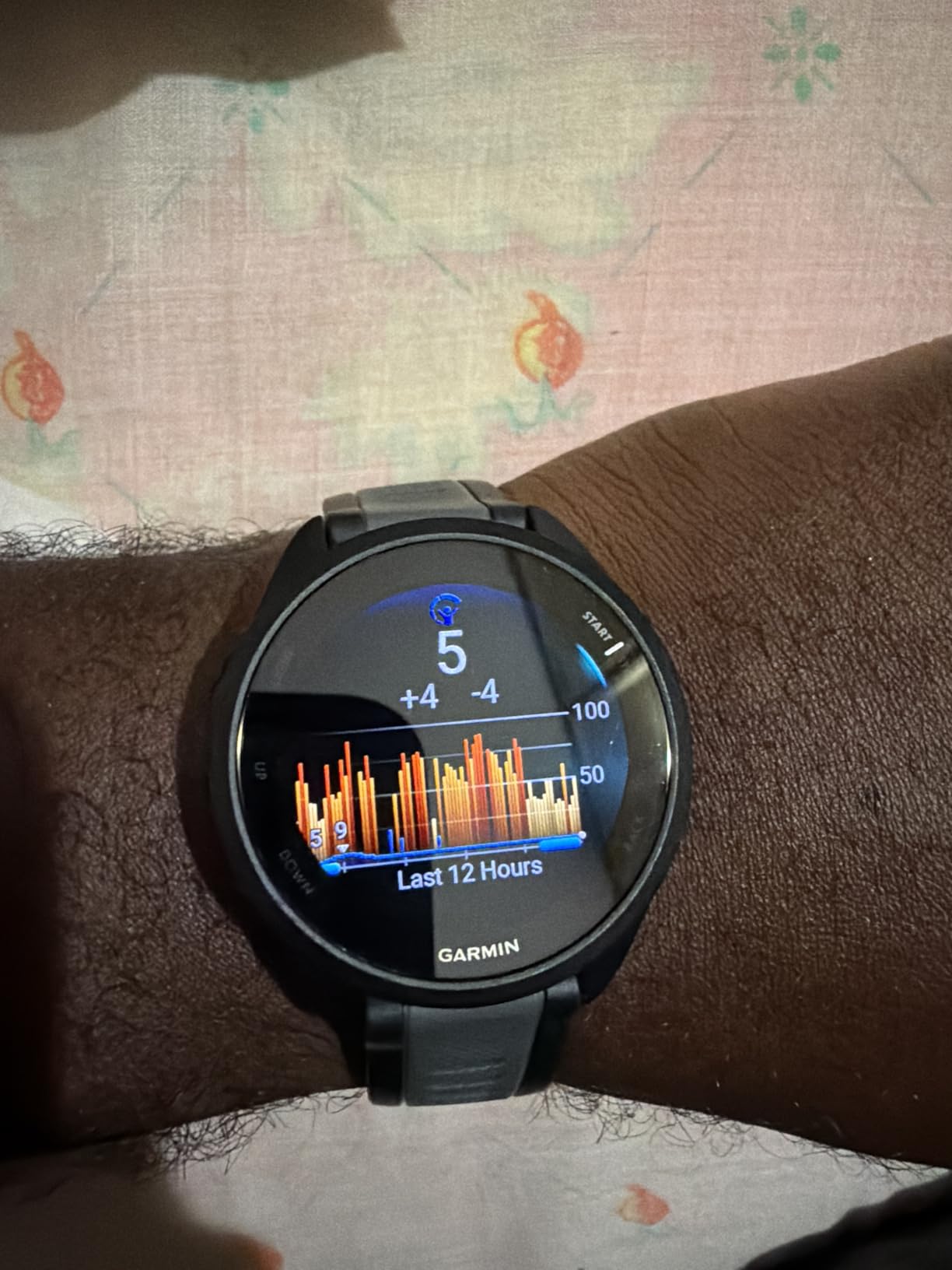
Training effect labels, recovery time and the morning report give a first-timer enough guidance to run a plan without a coach calling every split, and 25+ activity profiles cover everything from cycling warm-ups to strength work. Garmin Coach supplies adaptive plans if you do not want to build one yourself.
The constraint is battery. Nineteen hours in GPS mode is the lowest marathon-relevant figure in this roundup, and it leaves no margin for a race that goes long, a cold morning that saps the cell, or continuous map use. For a road marathon run at an even pace it is genuinely enough.
Why first-timers should start here
The training metrics stop at recovery guidance and basic training effect, which is exactly the depth a 20-week block needs while you are learning to trust a plan. Nobody finishes a first marathon regretting that they did not have training status trend data.
You also get Incident Detection and Assistance, which shares your location with emergency contacts during a run. For a solo runner on an early morning long run, that is a small feature that removes a real concern.
When you should upgrade instead
Move up if your block includes threshold sessions where wrist heart rate drifts, or if you want running dynamics and a multi-band chip under sustained city high-rises. Also upgrade if your plan includes trail sections where the pace data needs to stay clean.
The 4 GB of storage limits your music library compared with higher Forerunners, and there is no microphone or speaker, so notifications stay read-only.
3. COROS PACE 4 – Best Value GPS Running Watch for a Marathon Block
Pros
- 41 hours of continuous GPS is the longest marathon-relevant figure here
- 32 g build and 11.8 mm profile suit long-run comfort
- AMOLED at 600 x 680 is far sharper than the previous generation
- Digital crown plus configurable action button make on-run navigation intuitive
- Two-year warranty and continued software updates
Cons
- Wrist heart rate is less reliable during hard intervals so pair a chest strap
- Pace data can lag on efforts harder than easy running
- 1.2-inch screen is small next to the COROS PACE Pro
This is the watch we recommend when someone asks for the most marathon training per unit of outlay. Forty-one hours of continuous GPS is the highest figure in this roundup, and it means a full training week at roughly 40 miles barely touches the battery. Reviewers who switched over from Apple Watch report finishing a week still with battery to spare.
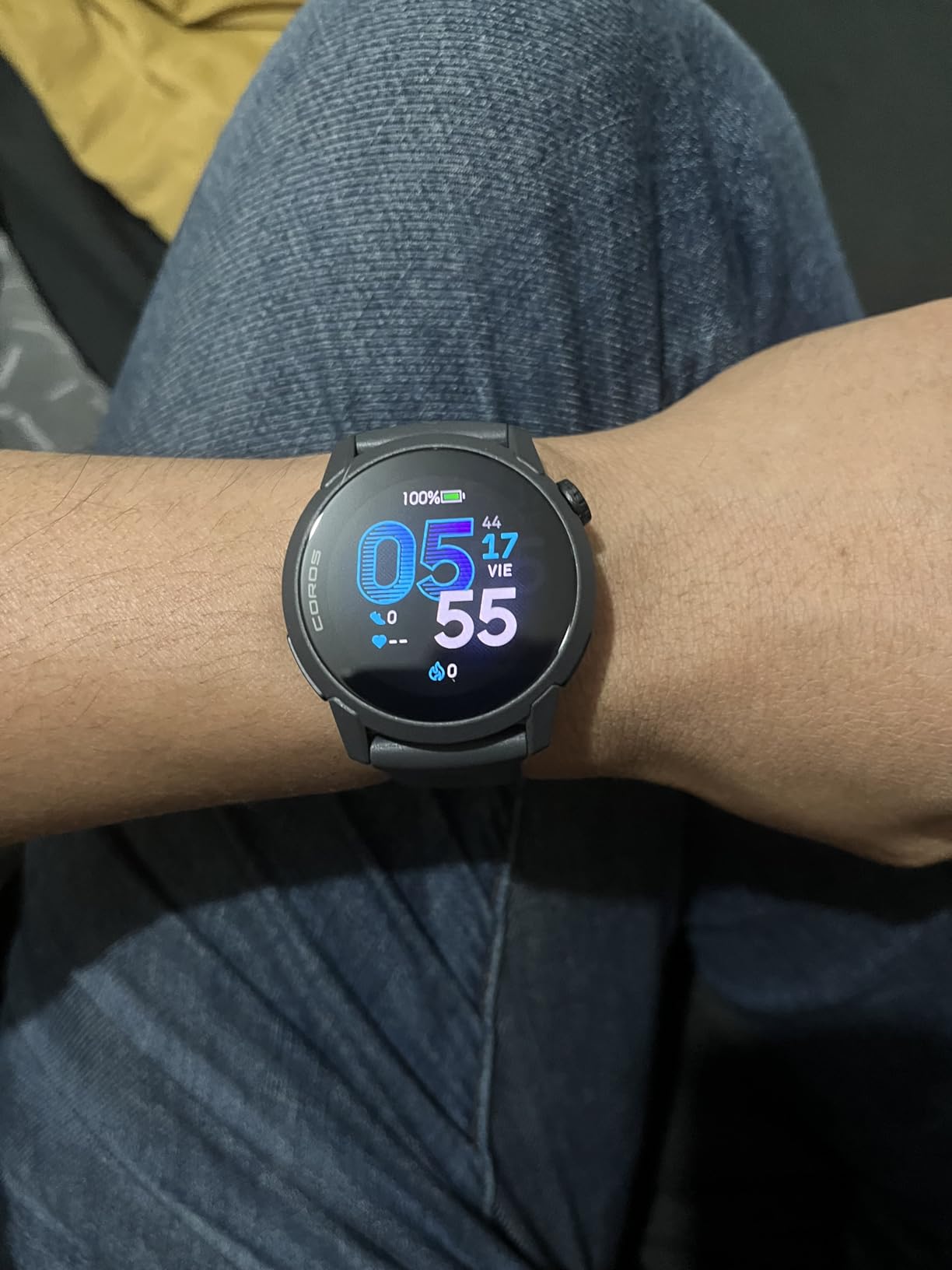
The 1.2-inch AMOLED at 600 x 680 is a resolution jump of 164 percent over the previous COROS generation, and combined with auto-adjusting brightness it stays legible in full sun on an exposed road. At 32 g with the nylon band it is one of the two lightest watches here, which you feel at the end of a three-hour long run.
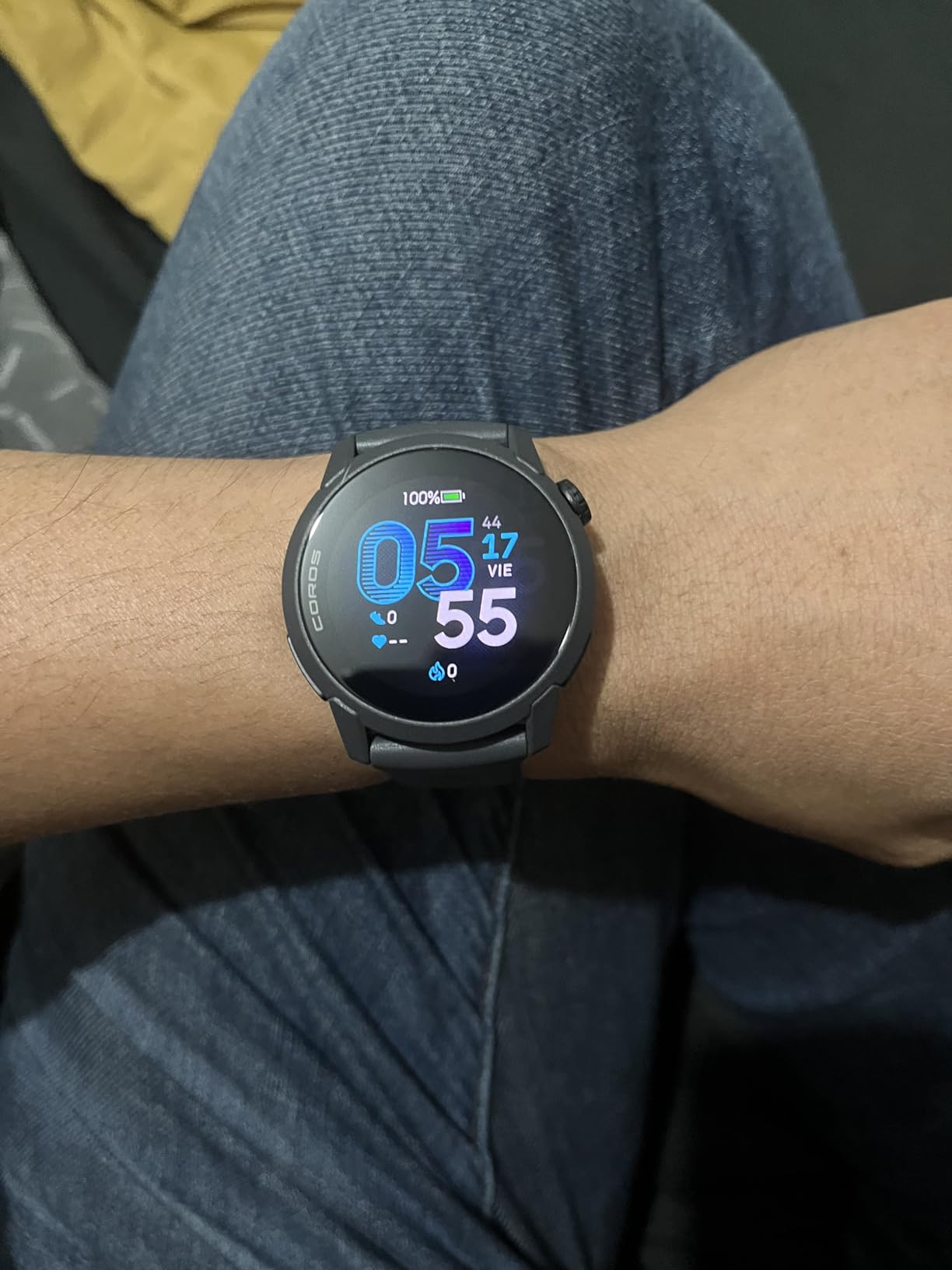
Controls are unusually good for the class. A tactile digital crown scrolls quickly, two buttons handle the essentials, and a configurable action button can switch to breadcrumb navigation mid-run. Voice recording lets you speak a training note after a session without reaching for your phone, and voice control sets alarms and timers hands-free.
The recurring complaint is heart rate on hard efforts. Wrist readings are less reliable when your heart rate is climbing fast and staying high, and some owners see pace lag on anything harder than easy running unless they add an external foot pod. For threshold work, plan to run a chest strap.
Where it wins during a marathon build
Battery headroom removes an entire category of stress. You can run a 40-mile week plus a double day and still start the next week on a full charge, which matters more over 16 weeks than it does over one weekend.
Recovery time, sleep stage, HRV and menstrual cycle tracking are all on board, and the COROS app syncs cleanly to Strava and Nike Run Club if you train through a third-party platform.
Where it stops short
It is a running watch, not a smartwatch. Notifications arrive but you cannot reply, and there is no voice assistant. Offline maps also work, but the full navigation experience is thinner than what the COROS PACE Pro delivers.
If your block is entirely road with no night running, the smaller screen is a fair trade for the weight and battery you give up.
4. COROS PACE Pro – Best for Long Runs and Ultra Distance
Pros
- 1500-nit always-on AMOLED reads clearly in any light including full sun
- 38 hours of outdoor GPS and 31 hours on dual-frequency
- Upgraded processor and RAM make menus noticeably faster
- New satellite chipset gives strong accuracy in cities and on trails
- Two-year warranty is longer than the one-year Garmin standard
Cons
- 49 g case and 1.3-inch screen feel bulky on smaller wrists
- COROS app ecosystem is smaller and less refined than Garmin Connect
- Fewer sport profiles than Garmin multisport watches
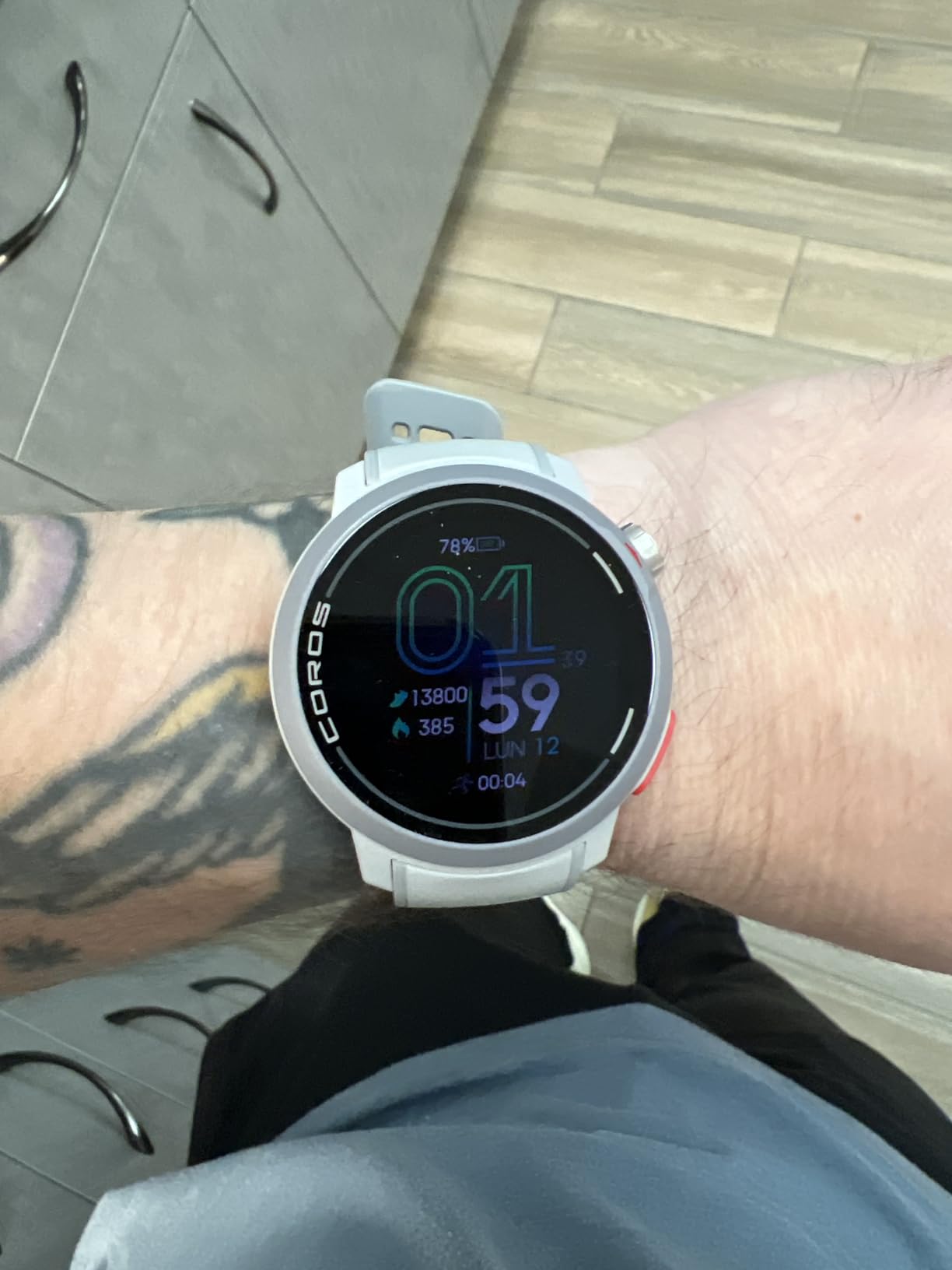
The PACE Pro is the endurance answer in this roundup, and the battery figures explain why. Thirty-eight hours of outdoor GPS, or 31 hours when you turn on dual-frequency, covers a road marathon with enormous headroom and leaves room for the week after it.
The 1500-nit always-on AMOLED is the brightest screen here and it is genuinely useful during a pre-dawn long run when a dimmer panel disappears. It also means you can leave the backlight in Always On mode and still read your pace without the screen waking up.
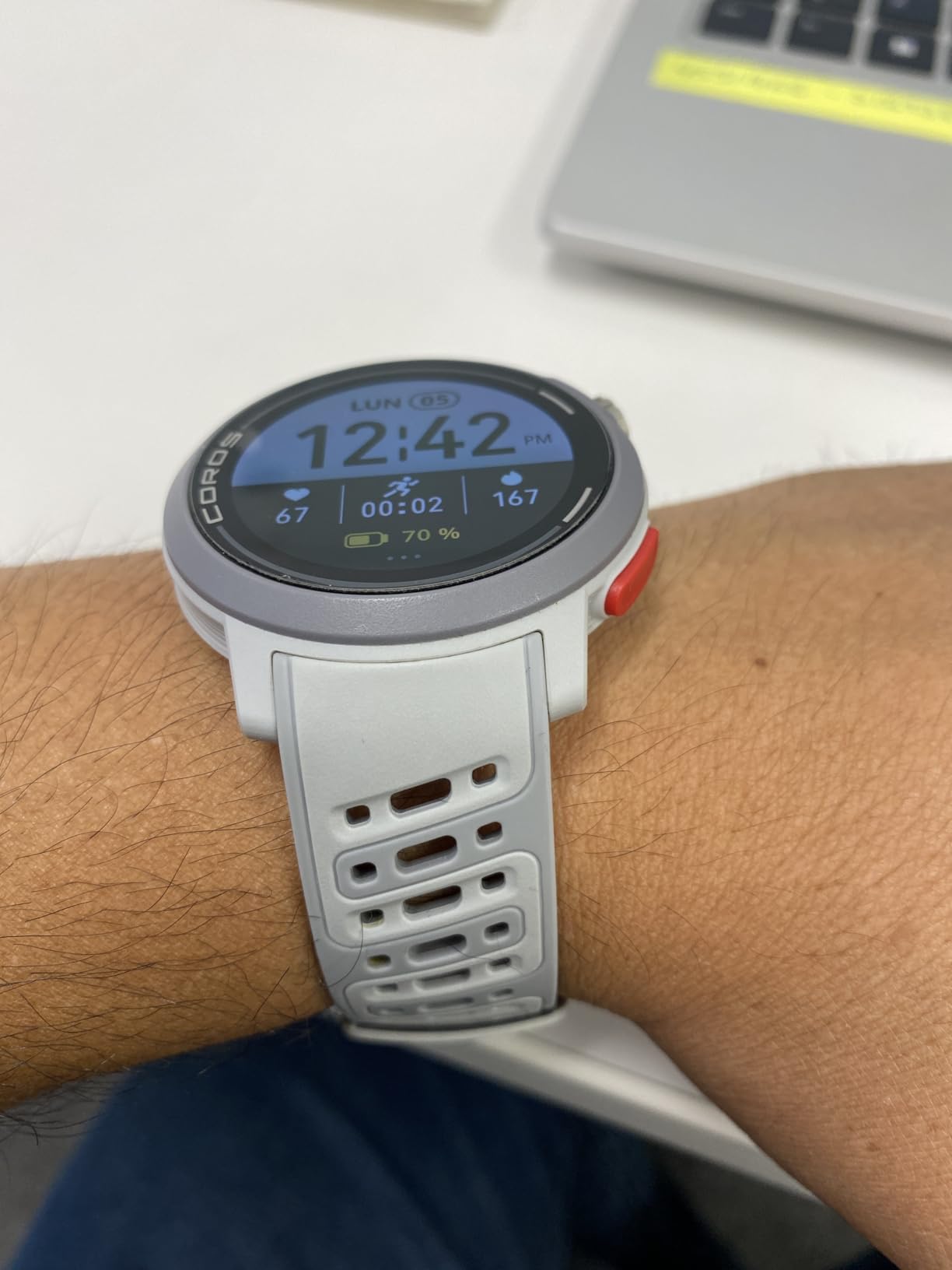
Speed matters more than it sounds. The processor delivers more than twice the performance of the previous generation and WiFi transfer is more efficient, so the menu does not stutter when you try to change a data field mid-run. That is a small quality-of-life upgrade that compounds over a training block.
Navigation is the other strength. The COROS app plans topographic routes and you get offline maps with turn-by-turn guidance, so a trail long run does not depend on your phone holding signal. USB-C charging with the included keychain adapter is convenient between blocks.
Why ultra and stage racers like it
Thirty-one hours on dual-frequency means you can run the most accurate mode the whole way without planning a charge stop. For a supported race that is the difference between knowing where you are and hoping.
The two-year warranty also outlasts the one-year standard most brands in this class offer, which matters if you keep the same watch for a second marathon cycle.
Why smaller wrists should look elsewhere
At 49 g with a 1.3-inch screen, this is the bulkiest Garmin or COROS option here. Runners with smaller wrists report it feels heavy by the third hour, and the sport profile count trails Garmin multisport watches.
The COROS app ecosystem remains smaller and less refined than Garmin Connect, so if your training workflow depends on a deep third-party integration library, factor that in before choosing.
5. Garmin Forerunner 55 – Best for Runners Who Just Want the Basics
Garmin Forerunner 55, GPS Running Watch with Daily Suggested Workouts, Up to 2 Weeks of Battery Life, Black – 010-02562-00
Pros
- Very light 37 g wrist feel suits daily wear and sleep tracking
- Two weeks of battery in smartwatch mode and 20 hours in GPS mode
- PacePro guides you to marathon pace on a course or distance target
- Daily suggested workouts adapt to training history and recovery time
- Connect IQ store offers free custom faces data fields and apps
Cons
- Non-touchscreen MIP display is basic next to AMOLED rivals
- Limited 32 MB of onboard storage
- No music storage or contactless payment wallet
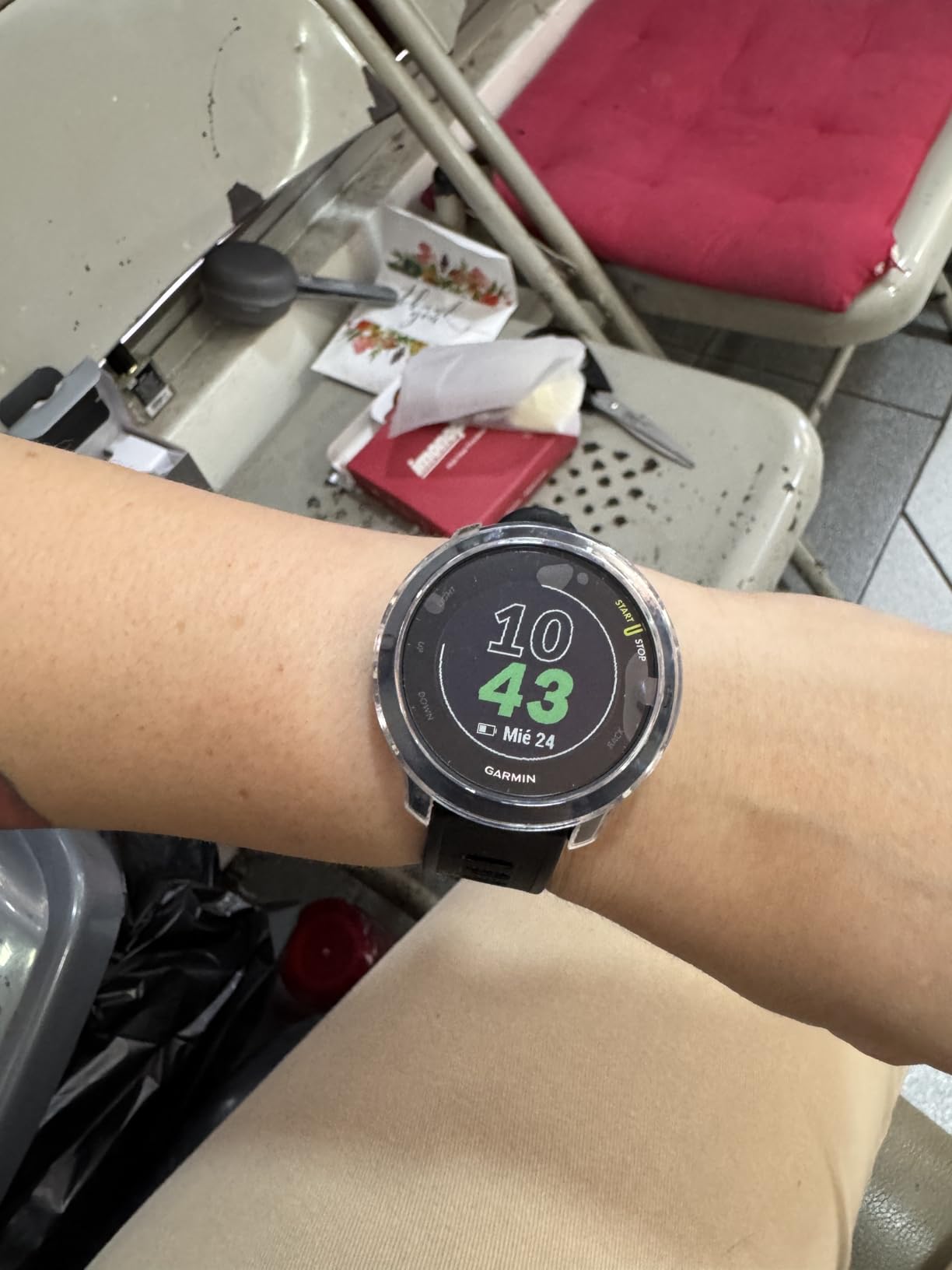
The Forerunner 55 is the watch to buy when you want accurate pace and distance, a full marathon of battery and nothing else. At 37 g it is light, the buttons are physical and reliable, and the interface is simple enough that you will not spend your long run fighting menus.
Two features carry more weight than their names suggest. PacePro uses GPS to guide you toward a target pace over a set distance or along a course, which is exactly the pacing tool a first marathoner needs. Race time predictions give you a finish time estimate built from your fitness history, useful for setting expectations before you sign up for anything.
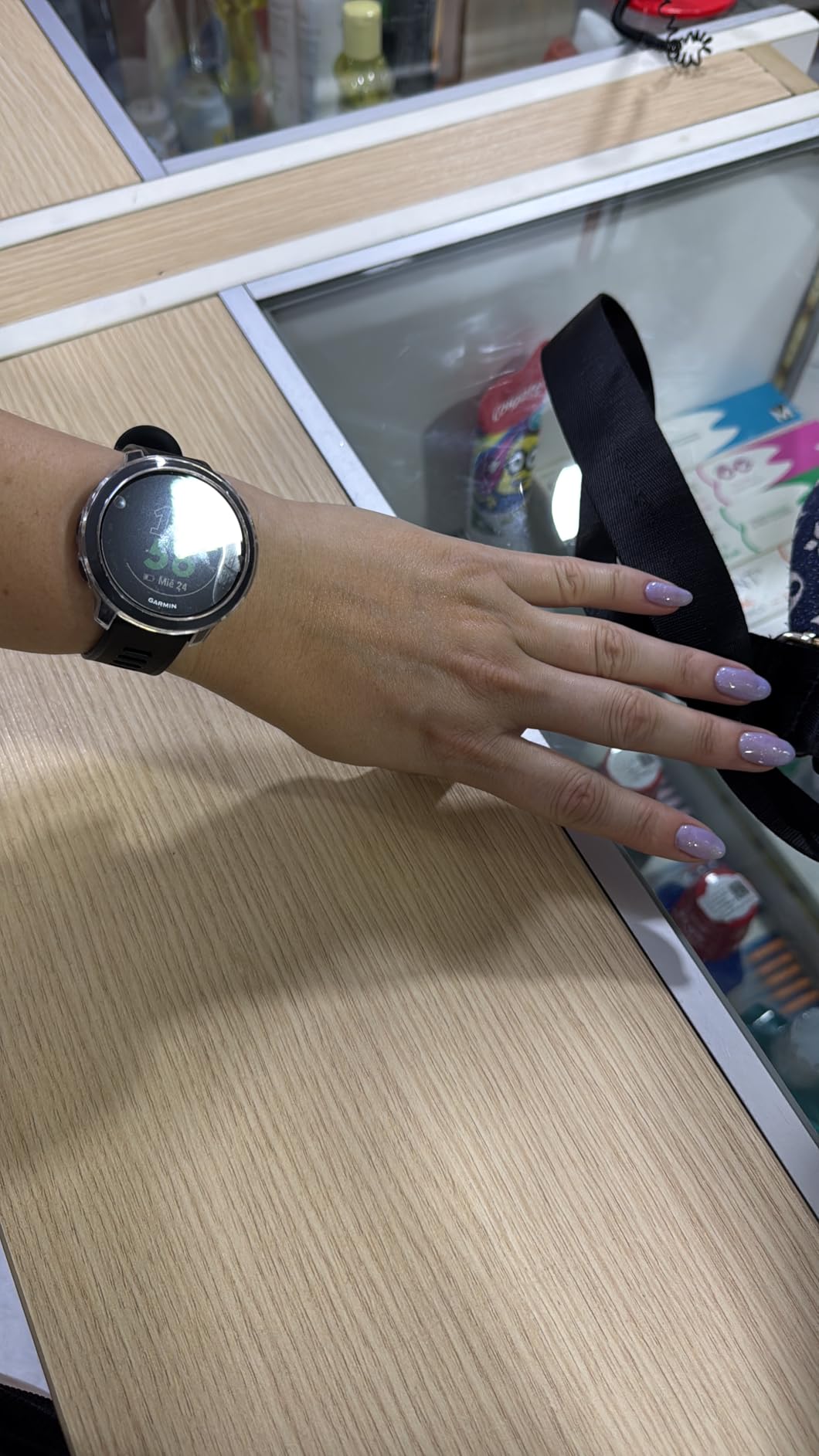
Daily suggested workouts adapt to your training history, fitness level and recovery time, and the activity profile list covers running, trail, cycling, track, pool swim, HIIT and more. Wellness features include intensity minutes, fitness age and all-day respiration tracking.
Twenty hours in GPS mode is a genuinely useful marathon figure and it costs nothing in weight here. If your long run happens on a cold morning, that headroom matters more than it would on a heavier watch.
What you give up by starting here
The 1.04-inch sunlight-visible MIP display has no touchscreen and no backlight, which is a real limitation on a night run or an indoor treadmill session. You are reading a monochrome panel all block.
Training metrics are simpler than the premium Forerunner range, so there is no training readiness, no training status trend and no wrist running dynamics. Thirty-two megabytes of storage means no music on the wrist.
Who it suits perfectly
Runners on a tight budget, runners who want a watch they will sleep in and shower with, and anyone who prefers three buttons to a touchscreen. It is also a sensible backup watch to keep in a drawer.
If you later want depth, upgrading to an AMOLED Forerunner keeps the same button-and-screen learning curve, so nothing is wasted.
6. COROS PACE 3 – The Lightest Watch for Long Run Comfort
Pros
- Exceptionally light 30 g build with an 11.7 mm profile for 24/7 wear
- 38 hours of continuous GPS or 24 days of daily use
- Dual-frequency chipset holds accuracy among high-rises
- Barometer records air pressure and elevation gain for hill work
- Route planner with breadcrumb navigation and a two-year warranty
Cons
- Transflective LCD is dimmer and less vibrant than the AMOLED models here
- Only 3 GB of storage limits offline music capacity
- COROS app and metrics are less deep than Garmin training analytics
Thirty grams is the number to remember here. That is the lightest watch in this roundup by a clear margin, and for a runner doing repeated three-hour long runs it is a comfort advantage that no spec sheet sells as clearly as wearing the thing for a month.
The battery is the other headline. Thirty-eight hours of continuous GPS or up to 24 days of daily use means one charge covers an entire marathon block week, even a 50-mile week with doubles. For most runners that is the last time they think about charging.
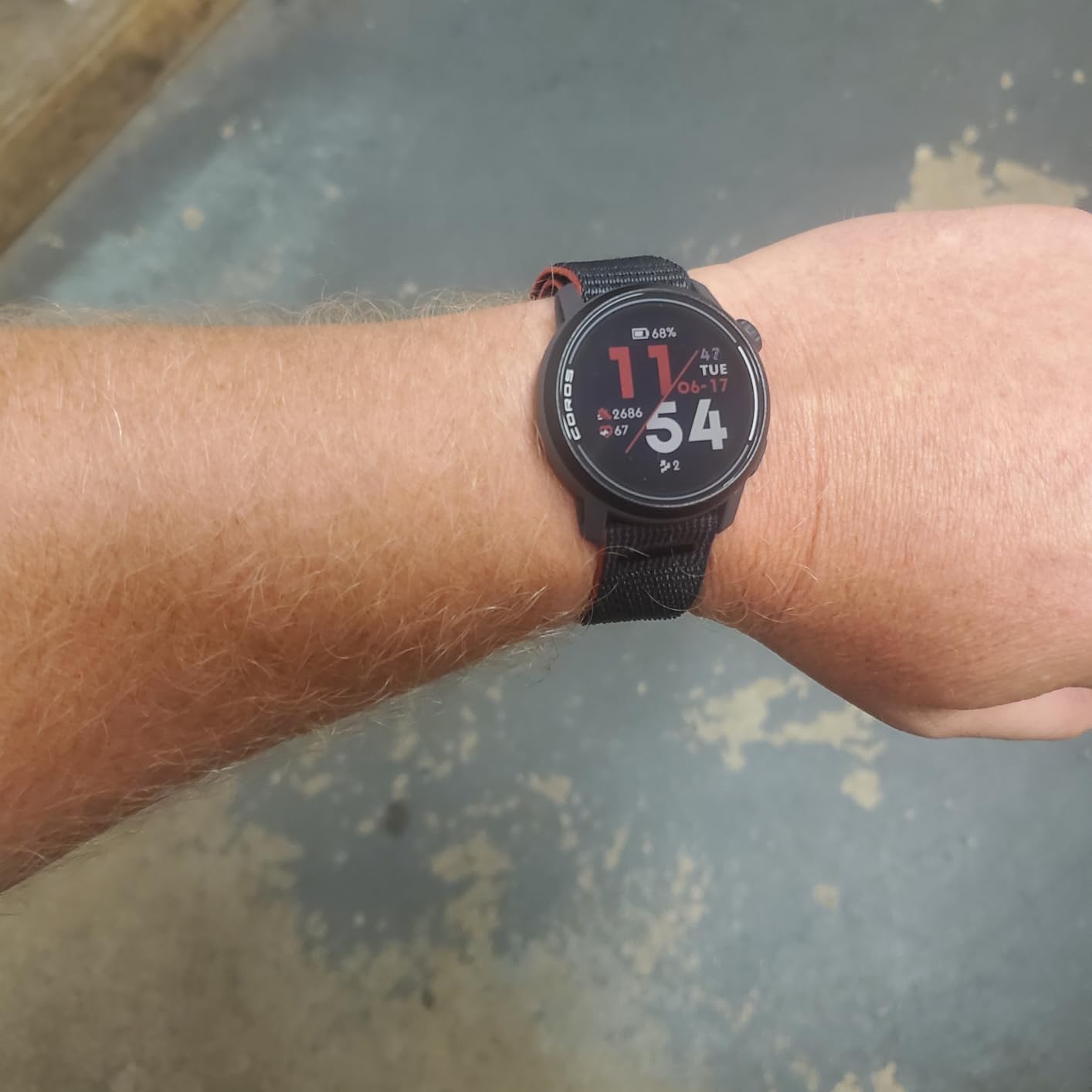
The dual-frequency chipset keeps distance and coordinates accurate between high-rises, and the barometer records elevation gain, which is useful if your plan includes hill repeats or a route with real climbing. Activity modes cover trail run, swim, strength, snowboard, ski and cross-country ski.
The compromise is the screen. This is an always-on 1.2-inch transflective LCD rather than AMOLED, so it is dimmer and less vibrant in low light, and there is no backlight to rescue a night run. You do get three backlight modes for navigation and activity use.
Where the light build pays off
Runners who sleep in their watch notice the 30 g and the 11.7 mm profile immediately, because a bulky watch is the main reason people stop wearing it overnight. That matters because the recovery data feeding your decision the next morning depends on wearing it to bed.
It is also the watch to pick if you want dual-frequency accuracy without a premium price.
Where the screen and storage disappoint
If you run before dawn or at night, move up to an AMOLED model. Three gigabytes of storage also means a very limited offline music library.
The COROS app gives you training status and custom workouts but goes less deep than Garmin on load trends and long-horizon analytics. This watch also carries a rating at the lower end of the lineup, driven mostly by one-star experiences around sync and app behaviour.
7. Suunto Race – The Biggest Display and Free Offline Maps
SUUNTO Race: GPS Sports Watch, Large & Bright AMOLED Color Screen, Long Battery Life
Pros
- Large 1.43-inch AMOLED with sapphire lens is very readable while running
- Dual-band GNSS holds accuracy among cliffs valleys and skyscrapers
- Free full-colour worldwide offline maps with breadcrumb trails and bearings
- 40 hours GPS extendable to 120 hours in tour mode and 10 days daily
- Digital crown makes scrolling through menus fast and easy
Cons
- Wrist heart rate accuracy is the most common complaint and trails Garmin and COROS
- 83 g case is large on smaller wrists
- Suunto app menus feel disorganized next to Garmin Connect
- Find My Phone connection is unreliable and the charging puck is weak
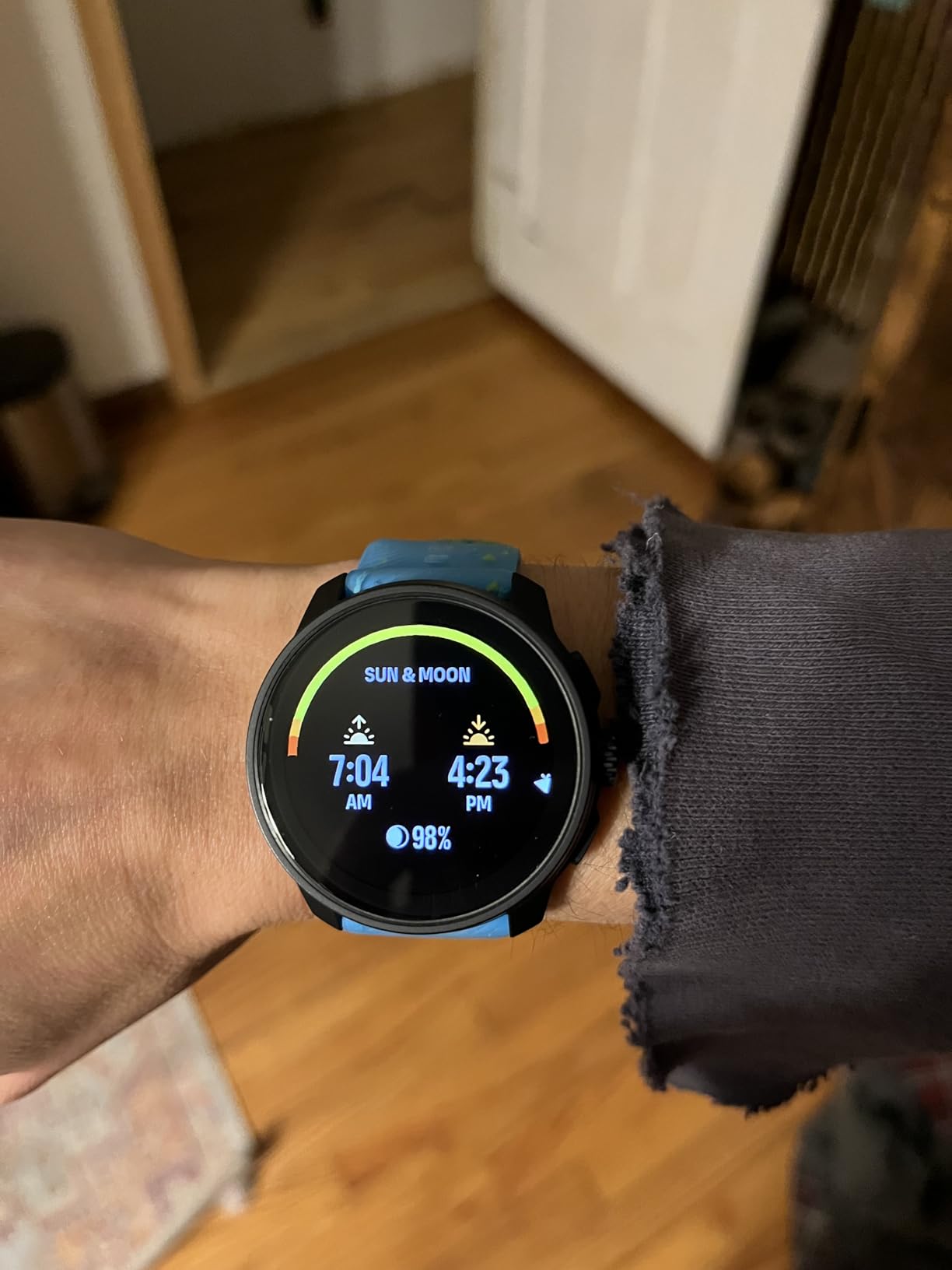
The Suunto Race wins on readability. A 1.43-inch AMOLED under a sapphire lens is the largest panel here, and that is not a vanity metric when you are trying to read pace, heart rate and lap time at a glance in bright daylight without breaking stride.
The maps are the other differentiator. Full-colour worldwide offline maps come with breadcrumb trails, points of interest and bearings, at no extra cost, which is unusually generous. Combined with dual-band GNSS and a barometer, it is a genuinely capable navigation watch for route work beyond the road.
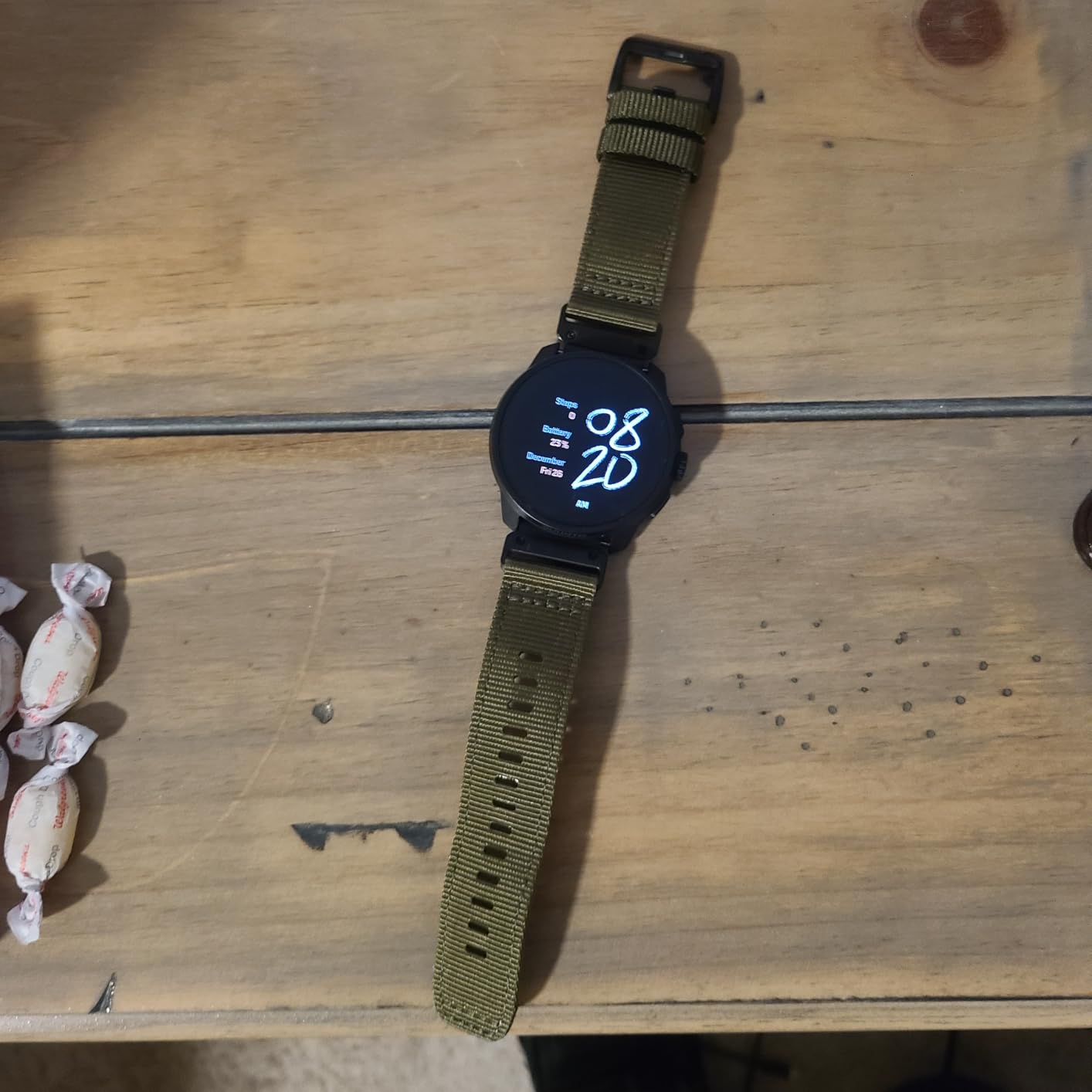
Battery is 40 hours in the most accurate tracking mode, extendable to 120 hours in tour mode and up to 10 days in daily mode with continuous heart rate. The digital crown is a better scrolling control than most competing crown implementations and 100 m water resistance covers open-water use.
Now the part you need to weigh carefully. Wrist heart rate accuracy is the single most common complaint, with buyers describing readings that differ noticeably from a chest strap on hard efforts. The 83 g case is also the heaviest here and feels large on smaller wrists.
Why the display and maps are worth it
If you train on unfamiliar routes, race a course you have never run, or simply want to look down once per mile instead of three times, the big screen and offline maps genuinely reduce friction. HRV-based recovery tracking is present for monitoring your taper.
Sixteen gigabytes of internal storage handles music and maps comfortably, which no other watch in this roundup matches.
Who should skip it
If threshold heart rate accuracy drives your training, buy a chest strap and accept the extra friction, or choose a different watch. The same goes for smaller wrists, where 83 g and a 49 mm case become a problem by hour two.
The Suunto app is less organised than Garmin Connect, notifications share a single icon across text and email, and Find My Phone frequently fails to connect. Some users also reported skin irritation from the stock band, so swap the strap early.
8. Polar Vantage M3 – Best for Runners Who Want Training Load Data
POLAR Vantage M3 – Multi-Sport Smartwatch with AMOLED Display, Dual-Frequency GPS, Turn-by-Turn Navigation, Up to 7-Day Battery Life, Greige Gold
Pros
- Dual-frequency GPS with Komoot turn-by-turn guidance and offline topographic maps
- Running power training load and recovery metrics rooted in Polar sports science
- Over 150 sport profiles including triathlon swimming and track
- Up to 30 hours training mode and 7 days smartwatch mode
- Gorilla Glass 3 AMOLED at 1000 nits with a two-year warranty
Cons
- Smallest review base here at just over 100 ratings
- Only 37 MB of internal storage limits music and offline maps
- Polar app ecosystem is smaller and less refined than Garmin Connect or COROS
- Training mode battery is shorter than the COROS models
Polar built this watch for people who want the training numbers themselves rather than a single readiness score. Running power, Training Load Pro and recovery measurement are computed from wrist-based sensors, which gives you the raw inputs instead of a conclusion you have to trust.
Navigation is stronger than the brand’s reputation suggests. Dual-frequency GPS with Komoot-powered turn-by-turn guidance, offline topographic maps and route planning are all built in, and the 1.28-inch AMOLED sits under Gorilla Glass 3 at 1000 nits.
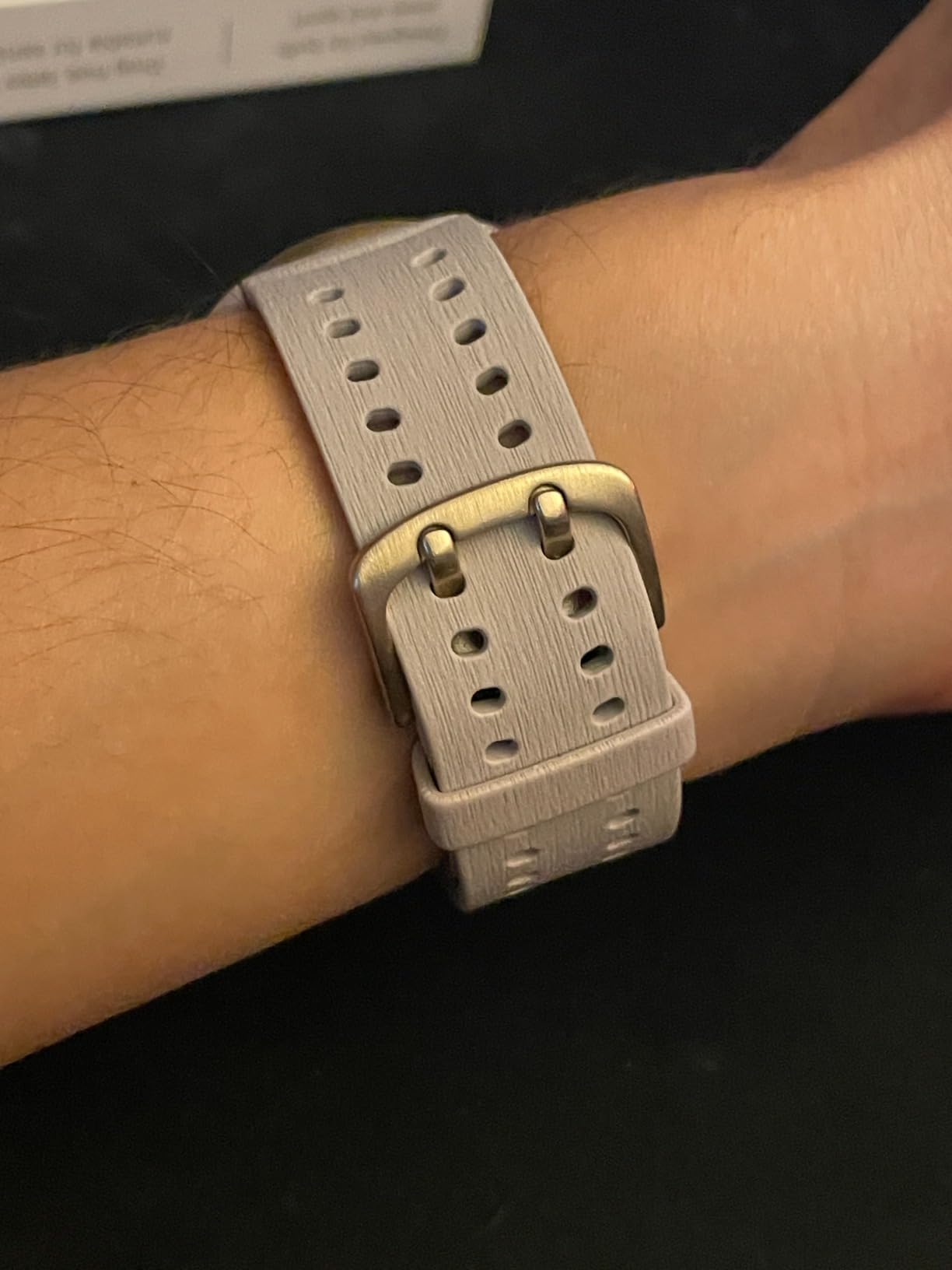
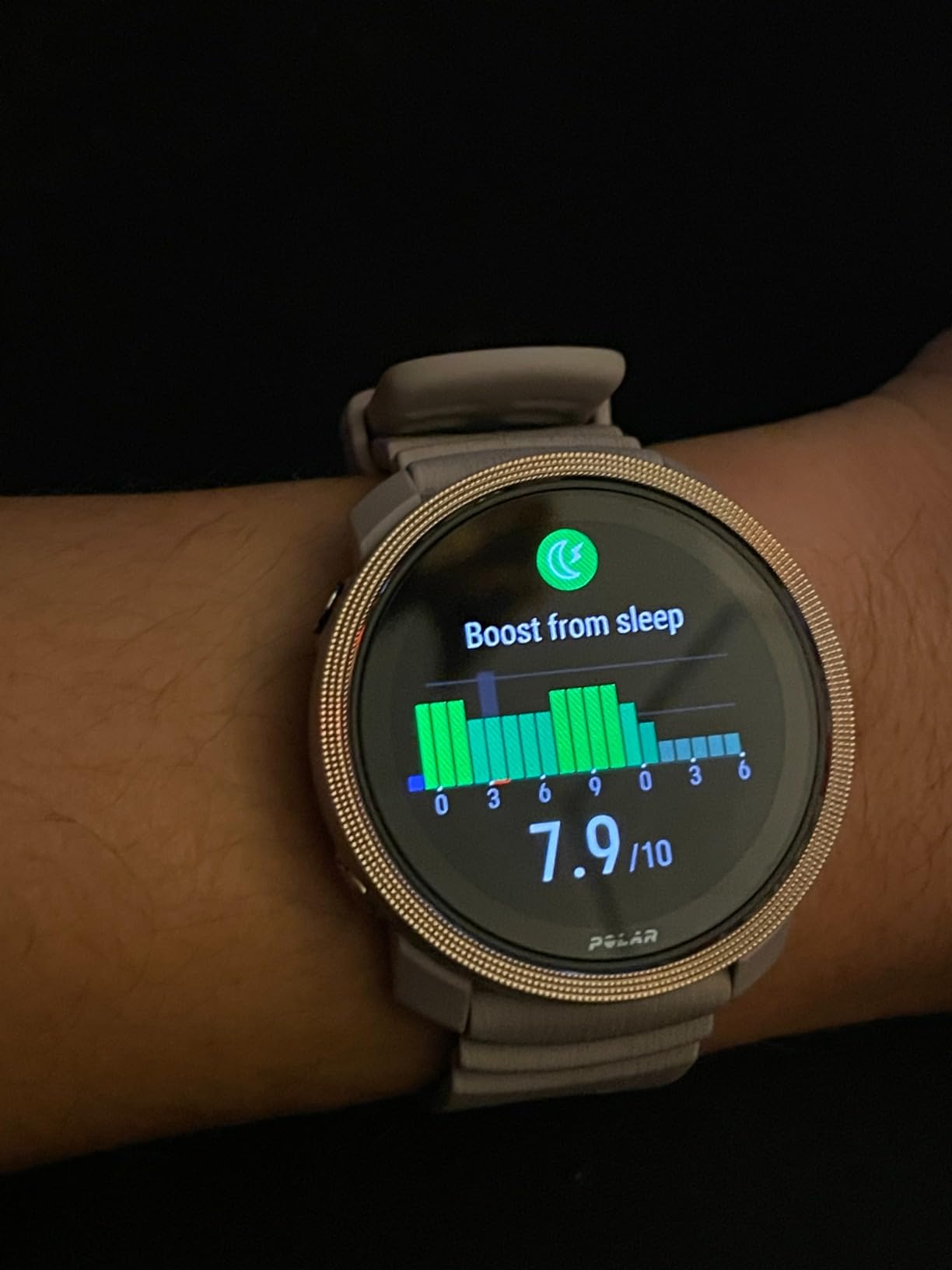
More than 150 sport profiles cover everything from triathlon to track work, and Nightly Recharge plus SleepWise handle the overnight side of a marathon taper. Thirty hours in training mode is enough for a road marathon with margin, and the two-year manufacturer warranty matches COROS.
The caveats are mostly about the ecosystem rather than the hardware. Thirty-seven megabytes of internal storage is the smallest here and rules out meaningful music or offline map capacity, and the Polar app is smaller and less refined than Garmin Connect or the COROS app.
Why training load data matters in a marathon block
Load data lets you see whether a three-week build was actually progressive or just three hard weeks in a row. For runners who have hit a plateau, that is more useful than a fitness score that only moves when your sleep improves.
The 53 g case is light for its size and water resistance of 50 m handles pool sessions between runs.
Why you might want more proven support
This watch has the smallest review base in the lineup at just over 100 ratings, so you are an early adopter in practice. It also carries the highest share of one-star reviews here, which points at early software and sync behaviour rather than hardware faults.
If your training block depends on a large third-party integration library or on music storage, choose a Garmin or COROS watch instead.
How Much GPS Battery Do You Actually Need?
Battery comparisons across brands are meaningless unless the GPS mode is named, so here is the math instead. A marathon finish time sets the hours you need, and you should aim for roughly double that in continuous GPS so a slow race or a cold morning does not kill the file.
Finishing in 4:30 or slower – about 4.5 hours on course, plus warm-up and cooldown. Look for at least 12 hours of GPS battery so you are never below half.
Finishing between 3:30 and 4:30 – around 4 hours of running. 16 to 20 hours of GPS battery gives you comfortable margin.
Finishing under 3:30 – roughly 3.5 hours, usually at a higher pace that draws more power. Target 20 hours or more of GPS battery.
Adding a trail or half marathon during the block – add two to three hours to your longest planned outing.
Running ultra or stage races – you want 30 hours or more, and you should still carry a backup.
Switching from dual-frequency GPS to standard GPS buys hours. Wrist heart rate and continuous maps cost battery too, so a watch that lasts 40 hours with all systems on will comfortably clear 30 hours when you run the same thing in standard mode.
If your watch dies mid-race, your phone is the fallback: most watches pause and resume recording when reconnected, and Strava or the Garmin app will upload the partial file. The failure runners regret most is the one where the activity was never recorded at all, so check that auto-pause and auto-save are enabled before you toe the line.
How to Choose a GPS Running Watch for Marathon Training
Which Garmin watch is best for marathon training?
The Garmin Forerunner 265 is the best Garmin watch for marathon training, because multi-band GNSS with SatIQ keeps pace accurate in cities, wrist-based running dynamics remove the need for a foot pod, and Training Readiness plus Training Status tell you when to push and when to cut back. The Forerunner 165 is the cheaper answer for a first marathon; the Forerunner 55 is the basics.
Garmin versus COROS for marathon training
Choose Garmin for ecosystem depth and choose COROS for battery life and value. Garmin Connect supports a deeper library of third-party integrations and sport profiles, and TrainingPeaks sync is smooth. COROS watches run 38 to 41 hours of continuous GPS against roughly 20 hours for the equivalent Garmin Forerunners, and the COROS app handles Strava and Nike Run Club well.
In practice, if your training plan lives inside a connected platform and you want the deepest analytics, Garmin wins. If you run 40 miles a week and want to charge once, COROS wins. If you switch from Garmin to COROS, most core metrics transfer, though load and readiness naming differs enough that you should reset your expectations before week one.
Wrist heart rate versus a chest strap for threshold work
Use a chest strap for threshold, tempo and interval sessions, and wrist heart rate for easy runs and daily life. Wrist optical sensors read accurately at steady state and drift when your heart rate rises fast and stays high, which is exactly the profile of a threshold rep. The watch still records the run correctly and stores the strap reading when paired.
If your plan uses heart rate zones to set intervals, budget for a strap. If your plan is pace-based, wrist readings are good enough for the whole block.
Data fields, auto-lap and race day setup
A well-known marathon layout is total distance, elapsed time, average pace and auto-lap every mile. Set that before the block starts rather than on race morning, and add pace alerts that chime when you drift more than a few seconds per mile from target.
Turn on auto-pause if your race has aid stations or a walk break plan, and check that the watch resumes automatically. Practice reading your lap data in a training run so race day is not the first time you look at it.
New models versus buying now
Buy now if you are starting a block in the next few weeks. Every watch here is current-generation, and waiting means training a full block on a watch you will replace at the end of it. Wait only if your current watch still runs a full marathon and the next generation is genuinely imminent for you.
Also weigh the opposite risk. Buying the newest announced model before independent testing means trusting a battery figure nobody has measured outdoors yet.
Who should not buy a GPS watch
Some runners train better by feel, and for them a watch that chimes every split can pull attention away from effort, breathing and form. Runners recovering from overuse injury often find pace data counterproductive while they rebuild. In those cases a plain watch and a notebook work fine.
One privacy note: recorded routes map your home, your work and your training times. Set activities to private in Garmin Connect or the COROS app, and review visibility settings in Strava before a training block starts.
Frequently Asked Questions
How long should a GPS watch battery last for marathon training?
Pick a watch with roughly double your expected race duration in continuous GPS. That means 12 hours minimum for a 4:30 marathon, 16 to 20 hours for a sub-3:30 attempt, and 30 hours or more for ultras. Always check which GPS mode the figure is quoted in, because dual-frequency mode uses more battery than standard GPS.
Is Coros or Garmin better for running?
Garmin is better for ecosystem depth, third-party integrations and training analytics, while COROS is better for battery life and value. Garmin Forerunners quote around 20 hours of GPS; COROS watches quote 38 to 41 hours. Pick Garmin if your plan lives in a connected training platform, and COROS if you train high mileage and want to charge once a week.
Can you train for a marathon with Garmin?
Yes. Garmin watches support adaptive plans from Garmin Coach, structured workouts from platforms like TrainingPeaks, auto-lap per mile, pace alerts and race predictions. They also give you training readiness, recovery time and training status so you can adjust a plan mid-block instead of following it blindly.
Is multi-band GPS worth it for road running?
Multi-band and dual-frequency GPS matter most in cities, under tree cover and in valleys where a single-band signal drifts. If your long runs include open suburban roads, the improvement is smaller. It is worth it if you run threshold sessions on real roads rather than a treadmill, because clean distance data makes interval pacing reliable.
Is wrist heart rate accurate enough for interval training?
Wrist optical heart rate is reliable at steady state but lags when your heart rate rises quickly and stays high, which is exactly what a threshold rep does. Use a chest strap for threshold, tempo and interval sessions, and keep the watch recording the run either way. Easy runs and daily wear do not need a strap.
Final Verdict: The Best GPS Running Watches for Marathon Training in 2026
The Garmin Forerunner 265 is our pick for the best GPS running watches for marathon training, because multi-band GNSS, wrist running dynamics, recovery metrics and a bright 47 g AMOLED cover every part of a 16 to 20 week block. Pick the Garmin Forerunner 165 if you want that experience in a 43 mm case for a first marathon, and pick the COROS PACE 4 if battery life matters more than ecosystem depth.
Whichever you choose, set your data fields, auto-lap and pace alerts before the block starts, run a chest strap for your threshold sessions, and know your backup plan if the battery dies at mile 24. That preparation matters more than another two decimal places of GPS accuracy.