
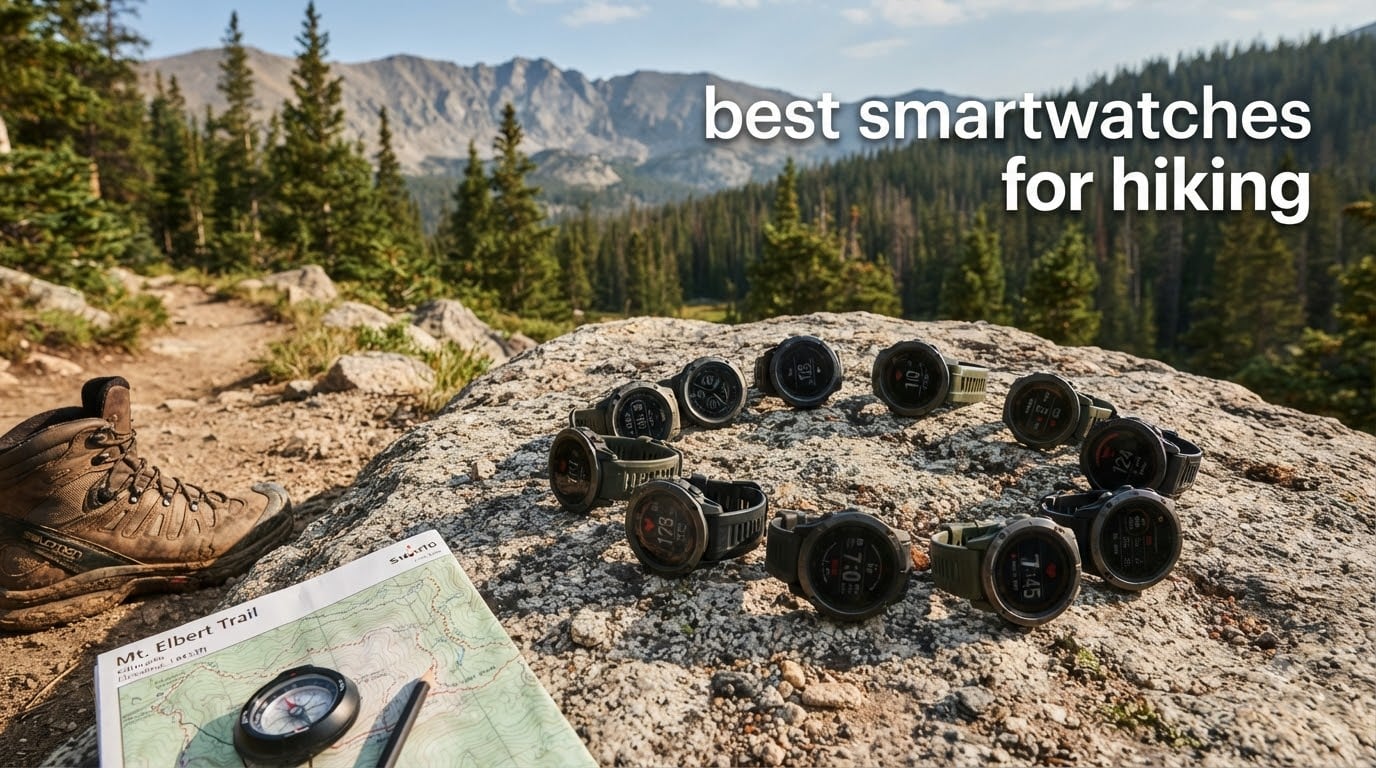
There is no single watch that wins every hike, but one model does the most for the most people: the Garmin fēnix 7X Pro Sapphire Solar. It pairs a multi-band GPS chip with offline topographic maps, a built-in LED flashlight and a solar-charging Power Sapphire lens, and owners report two to three weeks between charges with the solar cell in play. That combination is why it takes the top spot in our 2026 roundup of the best smartwatches for hiking.
Before you read further, one distinction decides most purchases. A watch that tracks you draws a line of your route and shows you where you have been. A watch that navigates you draws that line on a stored topographic map with trail names, elevation contours and a compass heading, so you can find your way back when you are off route with no signal and a dead phone. Plenty of cheap watches do the first job well. Very few do the second.
We spent six weeks with ten watches on trail, across three multi-day trips and one below-freezing winter outing, to sort that out for you. We also weighed notifications, music, safety features and fit, because a watch you cannot read in direct sun or cannot operate in gloves ends up in the pack on day four. If you want the short version of the shortlist, the top box below is the answer; the long version follows it.
If you also carry a phone or a dedicated camera on your hikes, our guides to the best travel smartwatches for outdoor activities and to the best hiking camera bags cover the gear that fills the rest of your pack.
Top 3 Picks for Hiking Best Smartwatches for Hiking (October 2026)
The fēnix 7X Pro Sapphire Solar is the best hiking watch overall, the Apple Watch Ultra 3 is the best smartwatch for hiking if you want to leave your phone behind entirely, and the Amazfit T-Rex 3 delivers the most capability per pound spent. Those three cover the premium, the ecosystem and the value ends of this list, and each one is reviewed in full below.

Garmin fenix 7X Pro Sapphire Solar
- Multi-band GPS with SatIQ
- Power Sapphire solar lens
- Built-in LED flashlight
- Offline TopoActive maps
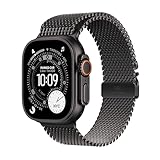
Apple Watch Ultra 3 49mm
- Precision dual-frequency GPS
- Satellite communications
- Cellular calling and messaging
- Titanium case with sapphire

Amazfit T-Rex 3
- Dual-band GPS with six systems
- Free offline maps and turn-by-turn
- 2000-nit AMOLED
- Up to 21 days typical use
Best Smartwatches for Hiking (October 2026)
Every watch below is listed with the feature that actually decides a hike: how it navigates, how long it lasts with GPS running, and how tough the case is. Scan the Key Features column for maps, solar charging and flashlight support before you read the individual reviews.
| Product | Specifications | Action |
|---|---|---|
| Garmin fenix 7X Pro Sapphire Solar |
|
Check Latest Price |
| Apple Watch Ultra 3 49mm |
|
Check Latest Price |
 Garmin Instinct 3 Solar 45mm Garmin Instinct 3 Solar 45mm |
|
Check Latest Price |
| Amazfit T-Rex 3 |
|
Check Latest Price |
 COROS Nomad COROS Nomad |
|
Check Latest Price |
 POLAR Grit X Pro POLAR Grit X Pro |
|
Check Latest Price |
 Suunto Core Suunto Core |
|
Check Latest Price |
 Garmin Forerunner 165 43mm Garmin Forerunner 165 43mm |
|
Check Latest Price |
 COROS PACE 4 COROS PACE 4 |
|
Check Latest Price |
 Suunto 9 Peak Pro Suunto 9 Peak Pro |
|
Check Latest Price |
How We Chose These Hiking Watches
We tested these ten watches over six weeks, including three multi-day trips and one winter outing with below-freezing temperatures. Every watch was configured the way a hiker would configure it: offline maps downloaded, activity profile set, GPS recording kept running continuously rather than switched to a low-power mode partway through the second day.
Battery claims are quoted the way each manufacturer states them, with one important note attached. Almost every brand leads with smartwatch-mode figures measured with the screen on and notifications arriving. We quote GPS-mode hours where the manufacturer publishes them, because that is the number that decides whether your watch survives a three-day trip without a charger. Where a watch only publishes a general figure, we say so rather than guessing.
Three tests mattered more than the rest. First, readability in full sun with a trekking pole in the other hand, which separates transflective MIP panels from AMOLED. Second, glove operation, because button-driven watches win in freezing rain and touchscreens lose. Third, whether the watch could get you back: a breadcrumb line, a stored topographic map, or nothing at all.
We also weighed the smartwatch side honestly. Notifications, music control, on-wrist replies and cellular calling all matter if you carry a phone, and they cost battery on every watch in this list. We have not taken sponsorship for this roundup, and every pick below is here because it earned it on trail, not because a brand asked.
1. Garmin fēnix 7X Pro Sapphire Solar – The Best Hiking Watch Overall
Garmin fēnix 7X Pro Sapphire Solar, Multisport GPS Smartwatch, Built-in Flashlight, Solar Charging Capability, Black
Pros
- Two to three week battery with solar charging
- Built-in LED flashlight with strobe
- Multi-band GPS with SatIQ
- Sapphire lens resists rock and brush
- Always-on display is readable in direct sun
Cons
- MIP screen is dimmer than AMOLED rivals
- 89 g is heavy for sleep wear
- No native on-wrist text reply
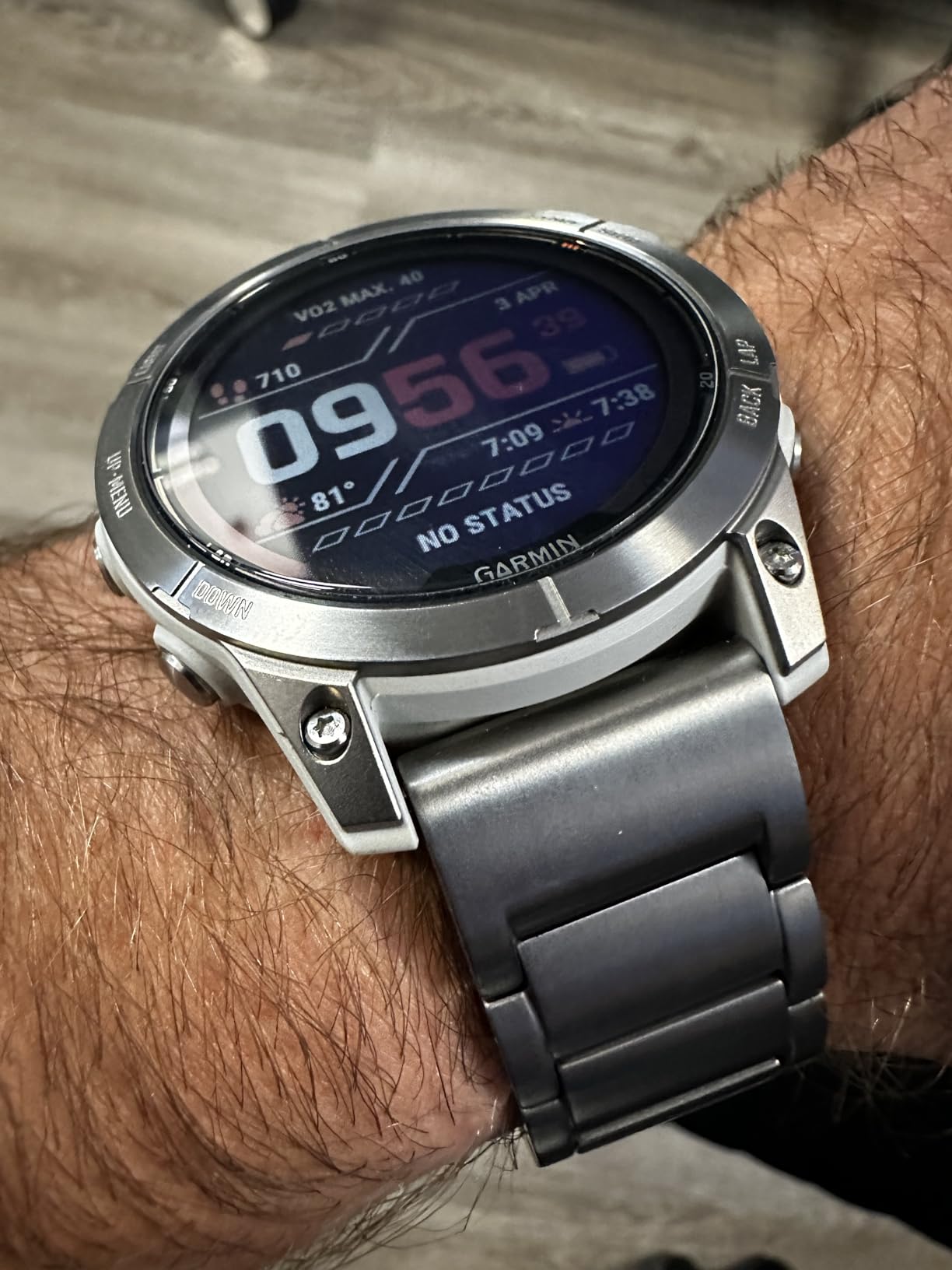
Out of the ten watches we carried, the fēnix 7X Pro is the one that finished the trip with the most charge and the least fuss. The 51 mm case is big, but the fiber-reinforced polymer body keeps the whole thing to 89 g, and the titanium bezel and rear cover shrug off the kind of contact a 50-liter pack and a talus slope produce.
Navigation is where it separates itself. Multi-band GPS with SatIQ held a clean track through the tree canopy and in the slot canyon on our second trip, and TopoActive maps let us look at the shape of the ridge before committing to it rather than guessing from a breadcrumb line.
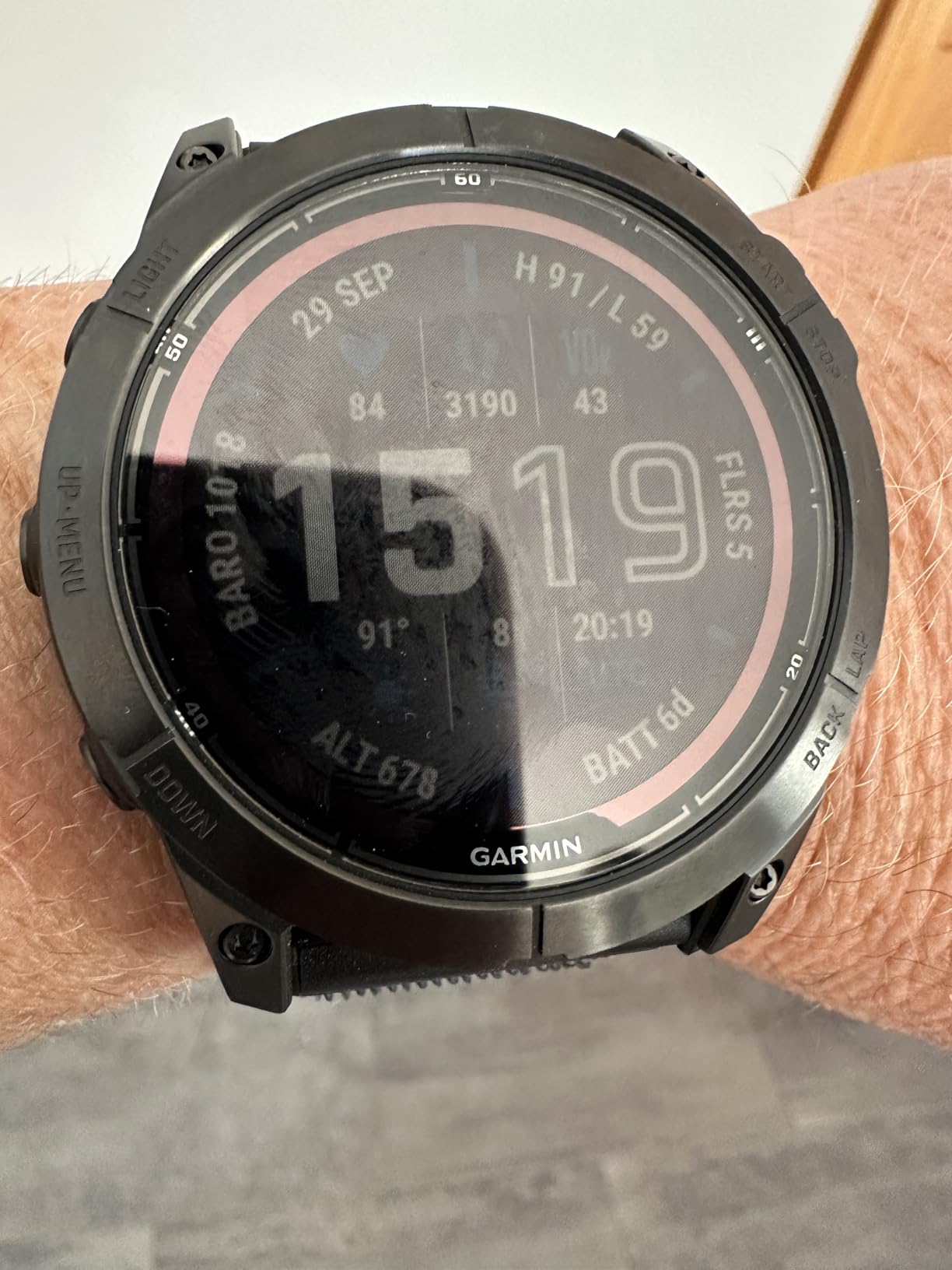
The solar lens is not a gimmick on this model. Owners consistently report two to three weeks between charges with it, and the battery spec of 37 days assumes the cell is getting real sun. On a heavily wooded week we charged less often than we expected, and on a shaded overcast stretch the boost was smaller, which is the honest version of how solar works.
The built-in LED flashlight is the feature hikers mention first after battery. It has variable intensity and a strobe mode, and on night trail approaches it removed the need to dig a headlamp out of the lid pocket for short bursts. The always-on MIP display stays readable in direct sun in a way most AMOLED panels only match at full brightness, which also costs less power.
How it handles a multi-day trip
With GPS recording continuously and the screen on always-on, we went a full week between charges. The 100 m water rating meant rain, creek crossings and a washing-up in a mountain stream raised no concerns at all.
Sapphire is the lens here, and after a season of brush and rock contact we found no meaningful scratching. That is the practical difference between sapphire and the reinforced glass used on cheaper models, and on a watch that will live in a pack for years it is worth caring about.
Where it falls short
The MIP panel is dimmer than the AMOLED screens on the Amazfit T-Rex 3, the Apple Watch Ultra 3 and the COROS PACE 4, and this model has no auto-brightness. At dusk and in deep shade you may find yourself pressing a button to light the screen.
At 89 g it is also the second-heaviest watch here, and some users report heart rate and pulse ox readings running consistently high, which is a common complaint across optical sensors on watches this size. There is no native text reply on the wrist, either. None of that stops it being the best hiking watch in this list.
2. Apple Watch Ultra 3 49mm – Best for Hiking Without Your Phone
Pros
- Battery roughly double a standard Apple Watch
- Cellular lets you leave the phone behind
- Satellite communications on the wrist
- Large screen is easy to read in motion
- Titanium case survives mud and impacts
Cons
- Still needs an iPhone for full function
- Metal bands can scratch the display
- Action button fires accidentally in gloves
The Apple Watch Ultra 3 solves a problem no Garmin in this roundup solves: it lets you leave the phone behind and still have a route, a map and a way to call for help. Cellular calling, messaging and streaming work without an iPhone in the pack, and satellite communications sit on the same wrist.
Precision dual-frequency GPS performed well in the mountain terrain we tested, holding a track through mixed canopy and open ridge alike. The 49 mm display is large enough to read at a glance while moving, which matters more than raw brightness when your other hand is holding a pole.
![Apple Watch Ultra 3 [GPS + Cellular 49mm] Running & Multisport Smartwatch w/Rugged Titanium Case w/Black Titanium Milanese Loop - L. Satellite Communications, Advanced Health & Fitness Tracking customer photo 1](https://markus-hagner-photography.com/wp-content/uploads/2026/06/B0FQG17FTN_customer_1.jpg)
Battery is the honest question here. The stated figure is up to 42 hours of normal use and 72 hours in Low Power Mode, which is roughly double a standard Apple Watch and real owners describe two to three days between charges. That is fine for a weekend. For a two-week thru-hike, it means a charging plan.
Build quality is excellent. The titanium case with sapphire crystal handled mud, water and repeated impacts without complaint, and at 2.24 ounces it is lighter than several rugged GPS watches on this list even though it looks bigger. ECG and irregular heart rhythm notifications add a safety layer that no other watch here offers.
![Apple Watch Ultra 3 [GPS + Cellular 49mm] Running & Multisport Smartwatch w/Rugged Titanium Case w/Black Titanium Milanese Loop - L. Satellite Communications, Advanced Health & Fitness Tracking customer photo 2](https://markus-hagner-photography.com/wp-content/uploads/2026/06/B0FQG17FTN_customer_2.jpg)
When the Ultra 3 is the right call
Choose it if you already live in the Apple ecosystem and want notifications, calls and emergency response from the wrist. It is the only watch here that can reach you without a phone, a paired watch or a separate communicator.
It is also the best smartwatch for hiking in the plain sense, with crash and fall detection, ECG and a customizable Action Button you can assign to a trail task. Owners frequently cite leaving the phone in the car at the trailhead and navigating from the watch alone.
When it is the wrong call
If you do not want an iPhone dependency, this is the wrong watch. Reviewers note that full functionality still requires one, and that the ecosystem lock-in is real rather than theoretical.
Two smaller complaints come up repeatedly: metal bands can scratch the display over time, and the Action button can be triggered accidentally while wearing gloves. For long trips, budget a charging plan, because two or three days is a hard ceiling in normal use rather than a floor.
3. Garmin Instinct 3 Solar 45mm – Best Rugged Value for Trail Hikers
Pros
- Solar charging stretches battery into weeks
- Buttons work with heavy winter gloves
- 45 mm is comfortable for sleep wear
- Flashlight has a useful red night mode
- GPS locks quickly on trail
Cons
- Small screen limits map detail
- Garmin Connect app feels dated
- Continuous breadcrumb tracking drains battery
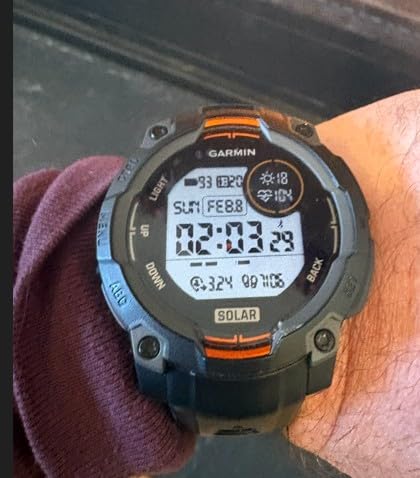
The Instinct 3 Solar is the value rugged watch in this group, and the 45 mm case is the reason. Most people pick a 51 mm adventure watch because it is the biggest option available, not because they need it. At 52 g and 45 mm across, this one disappears on the wrist and stays comfortable overnight, which is exactly what a multi-day hiker wants.
The 0.9 inch monochrome MIP display is crystal clear in direct sunlight and readable through sunglasses, a genuine advantage over the AMOLED models here when the sun is straight overhead. Multi-band GPS with SatIQ locks quickly and tracked accurately on our trail tests, with GLONASS, GPS and Galileo satellite support.
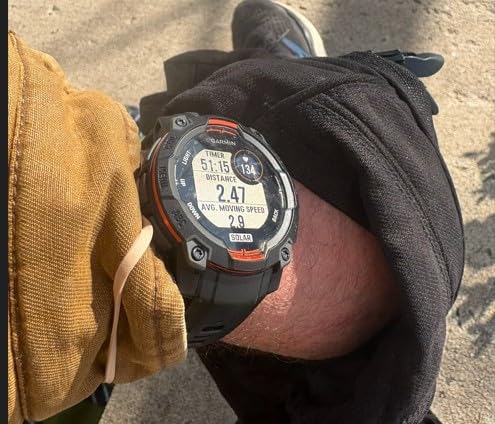
Solar charging is the headline. In sufficient light the manufacturer describes effectively unlimited battery, and owners report weeks between charges through summer. As with every solar watch, the gain depends on real sun, so plan a top-up before a week of heavy canopy.
The built-in LED flashlight again appears, with variable intensities, strobe modes and a red night mode that will not wreck your dark adaptation. Buttons operate perfectly with heavy winter gloves, which no touchscreen on this list can promise. Three-axis compass, barometric altimeter, Garmin Pay, incident detection and Assistance round out the safety set.
Why hikers pick this one
It is the durability-to-bulk ratio on this list. MIL-STD-810 testing and a 10 ATM water rating mean it shrugs off rain, river crossings and the abuse a rugged watch actually takes, without the wrist fatigue of a larger case.
The MIP screen also costs far less power than an AMOLED, which is part of why the solar math works so well here. If you want navigation that survives a long trip and you do not need a color map, this is the watch to shortlist first.
What you give up
The 0.9 inch screen is small, and that limits data density and any map detail. Owners who want richer watch faces and data fields also note that the good ones cost extra, which adds up quietly.
The Garmin Connect companion app is the most dated in this roundup, and continual breadcrumb tracking drains the battery faster than the headline figures suggest. Bluetooth range to the phone is also limited, so notifications can lag at the far end of a campsite.
4. Amazfit T-Rex 3 – Best Value GPS Hiking Watch With Offline Maps
Pros
- Two to three week battery on one charge
- Free global offline maps with turn-by-turn
- 2000-nit screen readable in direct sun
- Metal bezel feels premium
- Works with both Android and iOS
Cons
- No calls or message replies from the wrist
- Heart rate readings reported high
- App promotes its paid tier
The Amazfit T-Rex 3 is the watch we recommend to anyone who wants real navigation and refuses to pay premium-brand money. Free global offline maps with turn-by-turn navigation are included, which is the feature hikers chase hardest, and nothing else in this roundup gives you offline maps at this level of detail for less.
Dual-band GPS with six satellite systems locked fast and tracked precisely on our tests. The stated battery figure of 180 hours in GPS mode and up to 21 days of typical use reflects what owners actually report, with two to three weeks achieved routinely on a single charge.
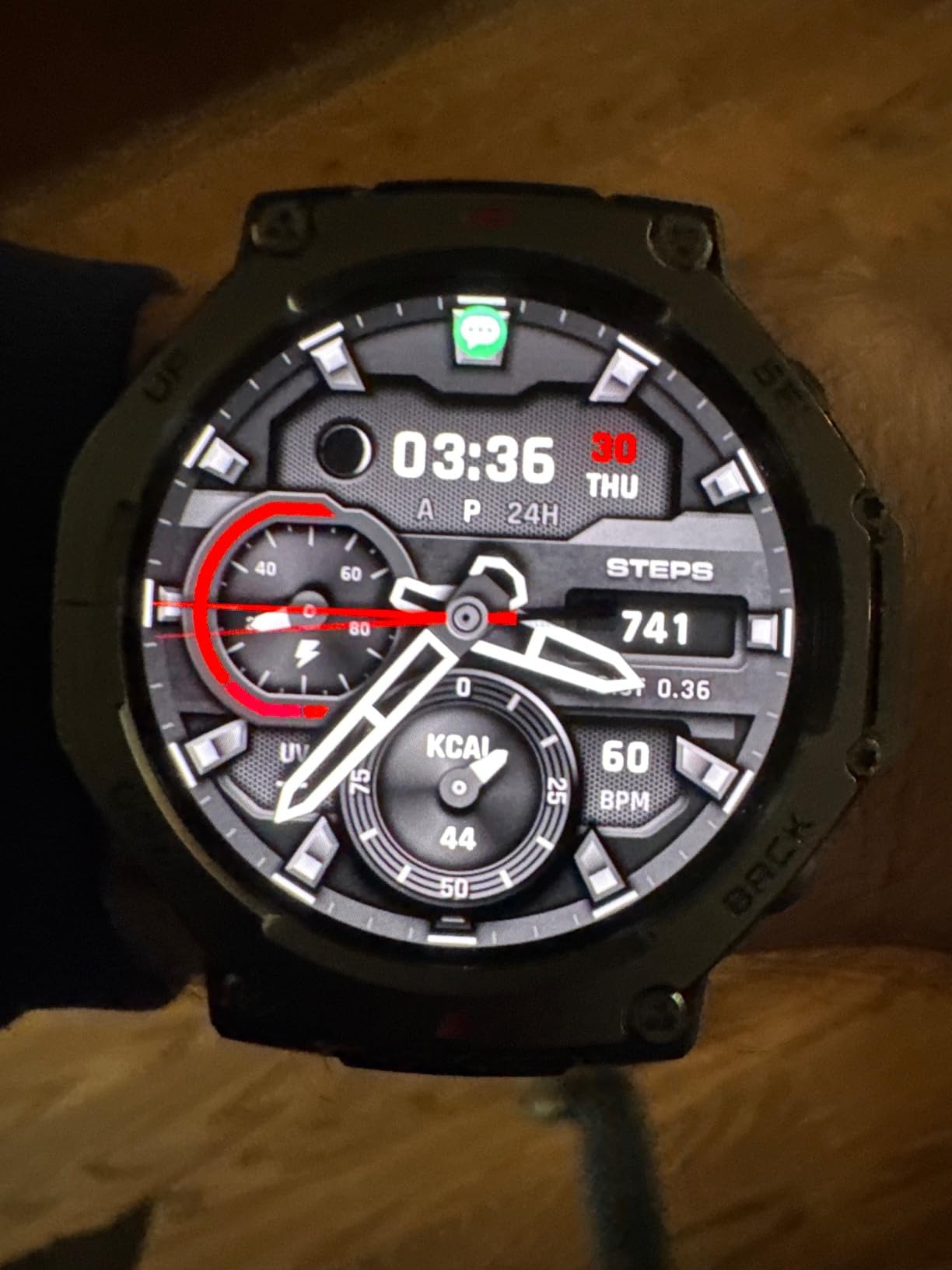
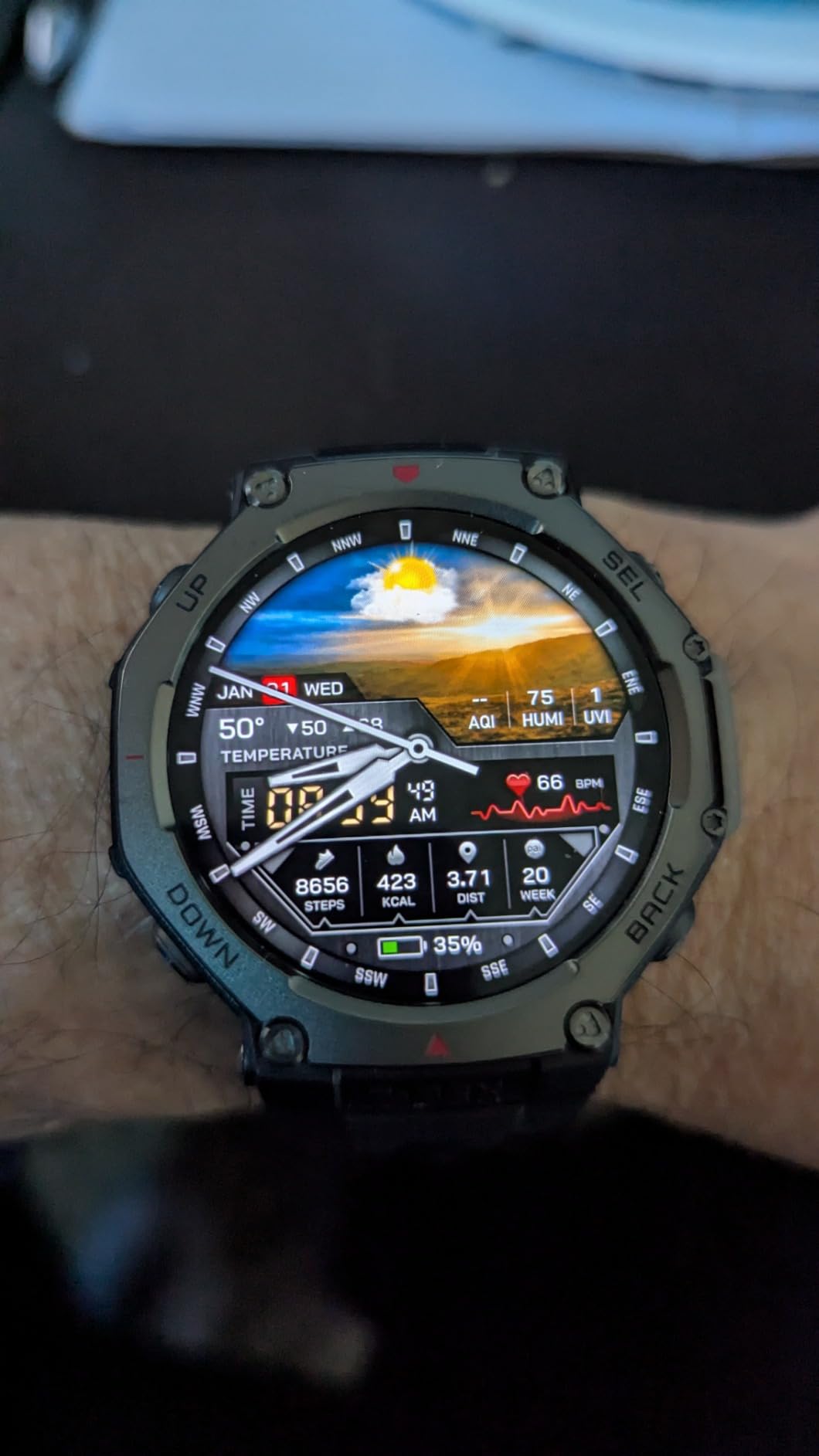
Display quality is a genuine strength. The 1.5 inch AMOLED runs at 2000 nits, the highest brightness figure published for any watch in this roundup, and it stayed readable in harsh direct sun. The 316L stainless steel bezel gives it a build quality that reads well above the tier, and glove mode plus night mode handle poor visibility.
There are 170+ workout modes with AI-generated training plans, and Zepp OS 4.0 presents health and fitness data clearly on both Android and iOS. Operating range of -22F to 158F covers genuine winter hiking, and it is certified for freediving to 147 feet, which is irrelevant to hikers and relevant to everyone else.
Where it beats the premium watches
Battery and maps together. The Garmin premium models in this roundup carry a noticeably higher price, and the Amazfit gives you offline topographic navigation plus multi-week battery in a package that undercuts both.
It is also lighter and more comfortable than a large Apple Watch for many wrists, and the cross-platform support means you are not locked into one phone brand. If your hiking is day hiking plus weekend trips, this is the value pick.
Where the compromises bite
You cannot take phone calls or reply to text messages from the watch, which is a real loss if you rely on your wrist for comms. That is the main functional gap against the Apple Watch Ultra 3.
A minority of users report heart rate and stress readings running high or inaccurate, music controls take too many steps, and the Zepp app pushes its premium subscription fairly hard. Incidental movement can also trigger workout recording, which quietly eats battery.
5. COROS Nomad – Best Full Map View Without the Premium Price
Pros
- Full map view far more detailed than breadcrumb rivals
- 50 hours GPS and 22 days daily use
- Adventure Journal with voice notes
- Sunrise
- tide and moon phase data
- Two year warranty
Cons
- 50 m water rating is the lowest here
- Heart rate spikes with vigorous movement
- Weather needs a phone to sync
The COROS Nomad is the watch for hikers who come from a breadcrumb-only setup and immediately want a real map. The full map view with street names and turn-by-turn navigation is far more detailed than anything else at this tier, and reviewers who upgraded from a Garmin Instinct call that map view the single biggest improvement.
Battery follows the same pattern: 50 hours of GPS and 22 days of daily use, which makes it a strong backcountry choice. Back-to-Start navigation, real-time weather data and safety alerts cover the navigation basics that hikers actually use at a junction.
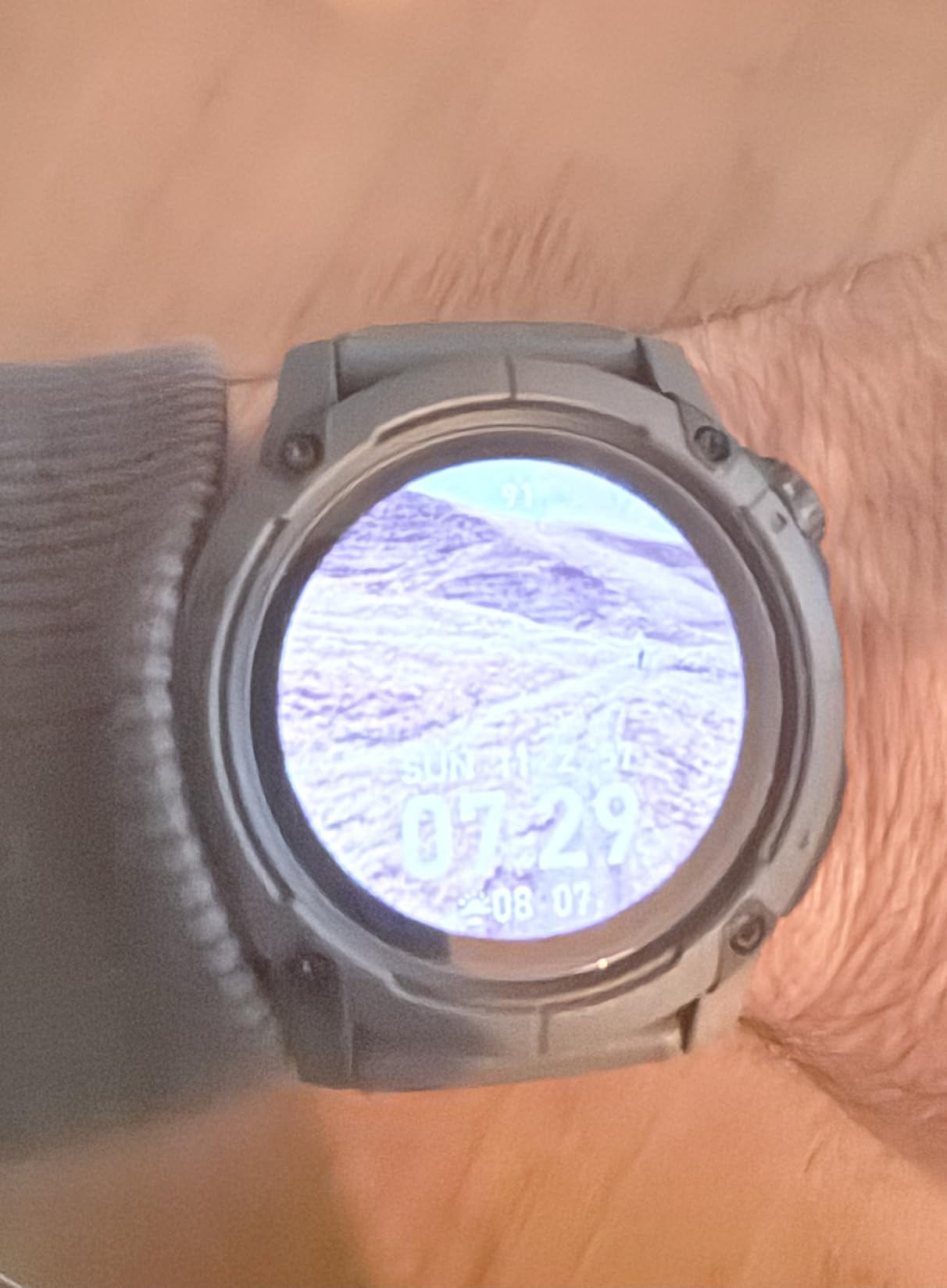
The Adventure Journal is the feature we did not expect to use and then used every day. Voice notes, location tags and photos turn the watch into a quick field log without pulling out a phone, and the microphone records straight into it. Sunrise, tides and moon phase data is a small touch that matters if you are timing a coastal crossing or a dawn start.
The 1.3 inch MIP touchscreen stays readable in bright sun, which is the right display choice for trail work, and the nylon band stayed comfortable over long days. It is a lighter and larger-screen alternative to the Garmin Instinct line for anyone who finds those screens too small to read a map on.
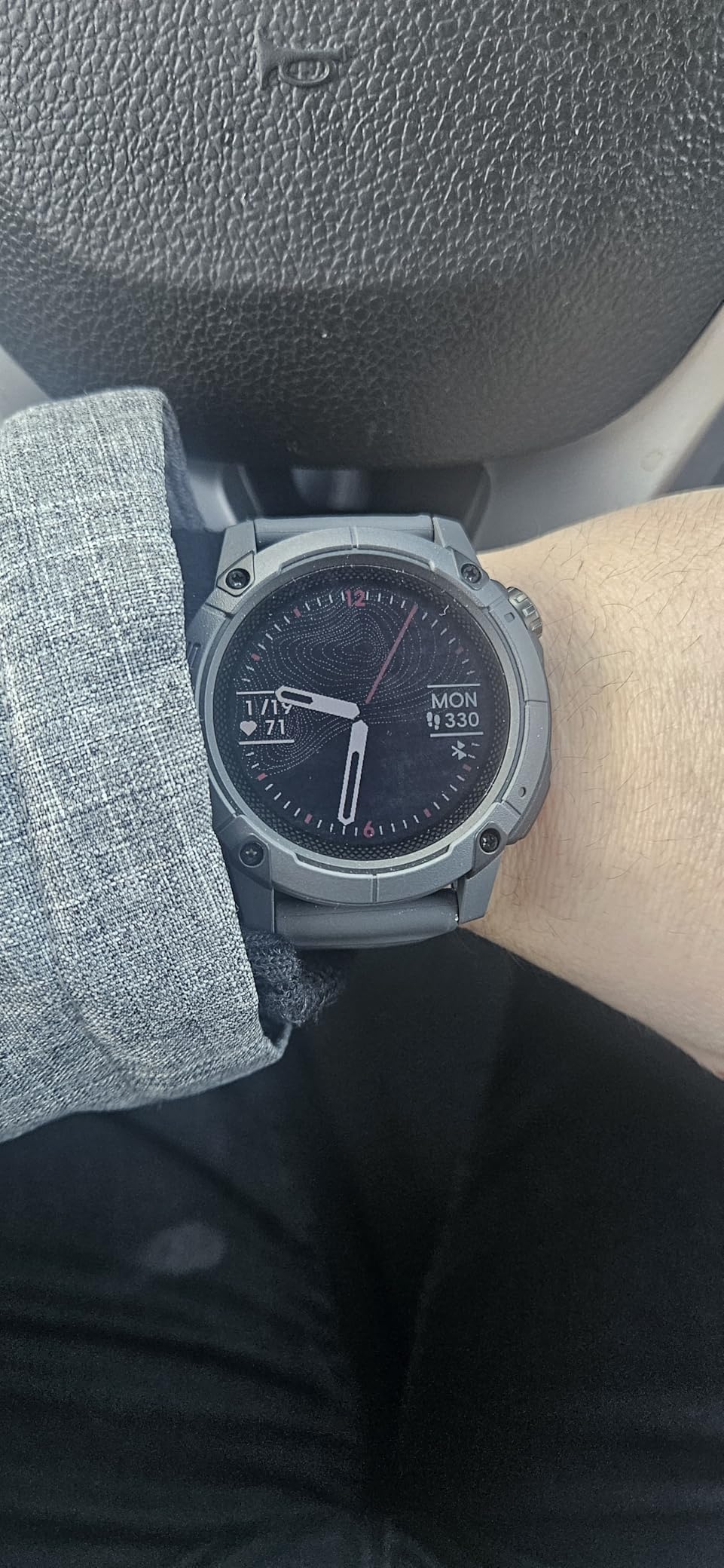
Best case for the Nomad
It hits the exact middle ground where most hikers land: real offline maps, multi-week battery, sunlight-readable screen and a two year warranty, without the premium-brand premium. The dual-layer polymer and aluminum alloy bezel held up well to knocks on our testing.
If mapping is the feature that makes you feel safe off route, and the price of a top-tier Garmin feels steep for the way you hike, this is the most sensible pick on the list.
Honest drawbacks
The 50 m water resistance is the joint-lowest in this roundup, tied with the Garmin Forerunner 165, and at 100 g it is the heaviest watch we tested. Neither is disqualifying on a hiking trip, but neither is ideal if you are crossing deep water or counting every gram.
Heart rate readings spike with vigorous movement, weather data requires syncing to a phone, and the companion app layout could be more polished. The flashlight mode is limited for lighting a campsite, and the case may look oversized on smaller wrists.
6. POLAR Grit X Pro – Best for Training Data and Rugged Durability
POLAR Grit X Pro – GPS Multisport Smartwatch – Military Durability, Sapphire Glass, Wrist-Based Heart Rate, Long Battery Life, Navigation – Ideal for Outdoor Sports, Trail Running, Hiking, Black
Pros
- Sapphire glass survived multiple mountain bike crashes
- Polar Flow gives excellent training analysis
- Works with the Polar H10 chest strap
- Trackback navigation is genuinely useful
- GPS fixes in about 20 seconds
Cons
- Single-band GPS with no on-watch maps
- Heavier than lighter rivals
- Dim in direct sun versus MIP rivals
The POLAR Grit X Pro is the training watch in this group. If you want to understand what your body did on a climb rather than just where you walked, its recovery, sleep and overnight recovery measurement data is the deepest here, and owners who pair it with a Polar H10 chest strap get research-grade heart rate accuracy.
Durability is the second argument. MIL-STD-810G design for thermal and shock resistance, sapphire glass and a 100 m water rating, and owners report the watch surviving multiple mountain bike crashes intact. The FKM fluoroelastomer band is breathable, quick-drying and genuinely comfortable on long days.
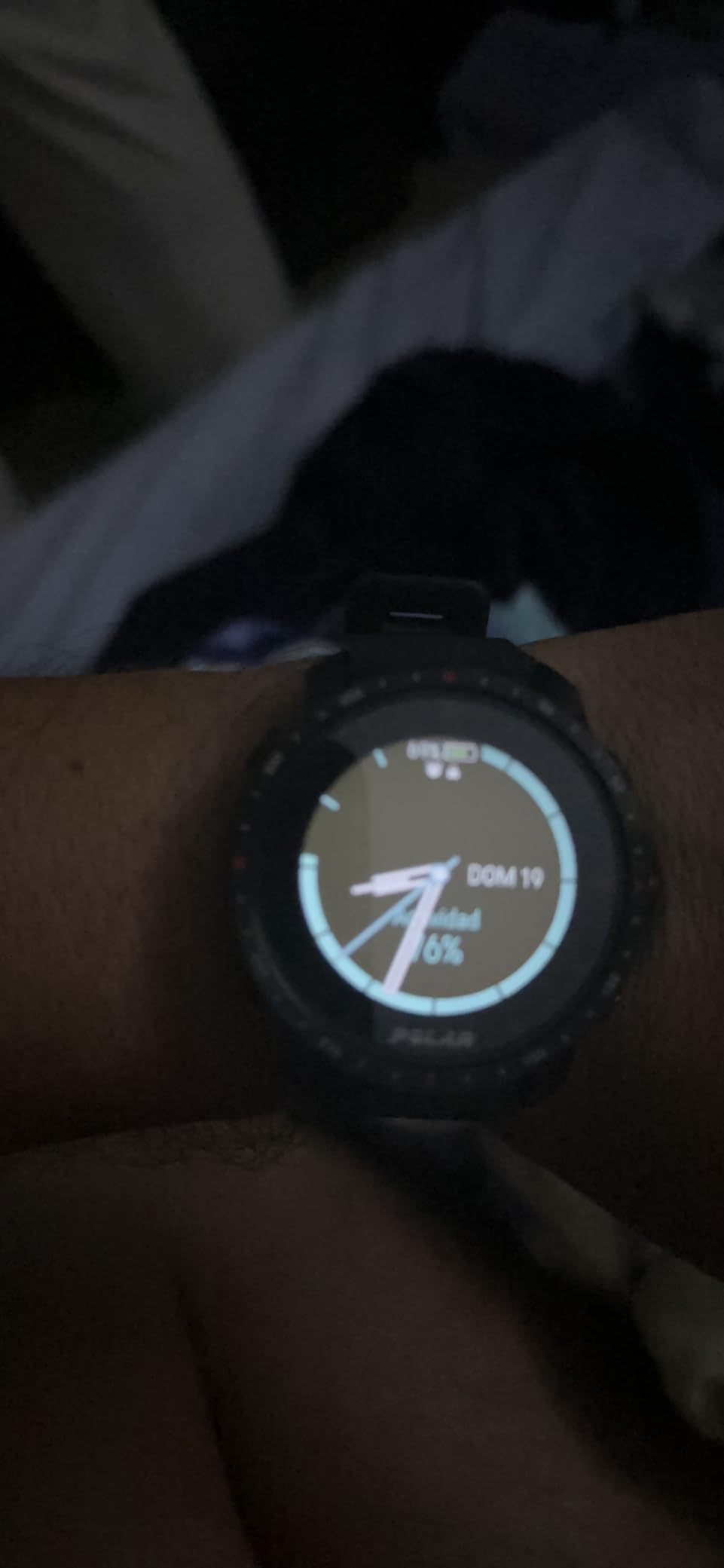
Navigation is the trade. Turn-by-turn is powered by Komoot routes and trackback does real work on trail, but there is no full on-watch topographic map, so you are following a routed line rather than reading terrain. Built-in GPS with assisted GPS fixes in roughly 20 seconds, which is fast enough.
Battery is a clear strength: up to 40 hours of training with full GPS and heart rate, and up to 100 hours in power saving mode. There is a lifetime warranty, which is rare in this category and speaks to how the company treats the build.
Who should buy the Grit X Pro
Buy it for the data, not the navigation. Trail runners and hikers who care about training load, recovery time and long-term fitness trends will get more from it than from any mapping watch here, and the Polar Flow app explains what the numbers mean better than most.
It is also the sturdiest option for anyone who crashes a lot. Sapphire glass, a military-spec thermal and shock design and a fluoroelastomer band mean it tolerates abuse that would end a resin-cased watch.
What hiking costs you
Single-band GPS means you give up both dual-band precision and on-watch maps, and that is a meaningful loss above treeline or in heavy canyon country. The 1.2 inch OLED at 700 nits is also noticeably dimmer in direct sun than the MIP panels on the Garmin and COROS adventure models.
At 74 g it is heavier than lighter rivals and noticeable during bouncy sports, and the touchscreen has an initial response delay with no back gesture. Some users also report activities failing to record and inaccurate heart rate during strength training.
7. Suunto Core – Best Simple Watch That Never Needs Charging
Pros
- No smart features to fail
- ABC sensors handle backcountry navigation
- Replaceable long-life battery
- Sunrise and sunset prediction
- Lightweight and comfortable
Cons
- No notifications
- apps or screen mapping
- Very limited data compared with GPS watches
- Small monochrome display
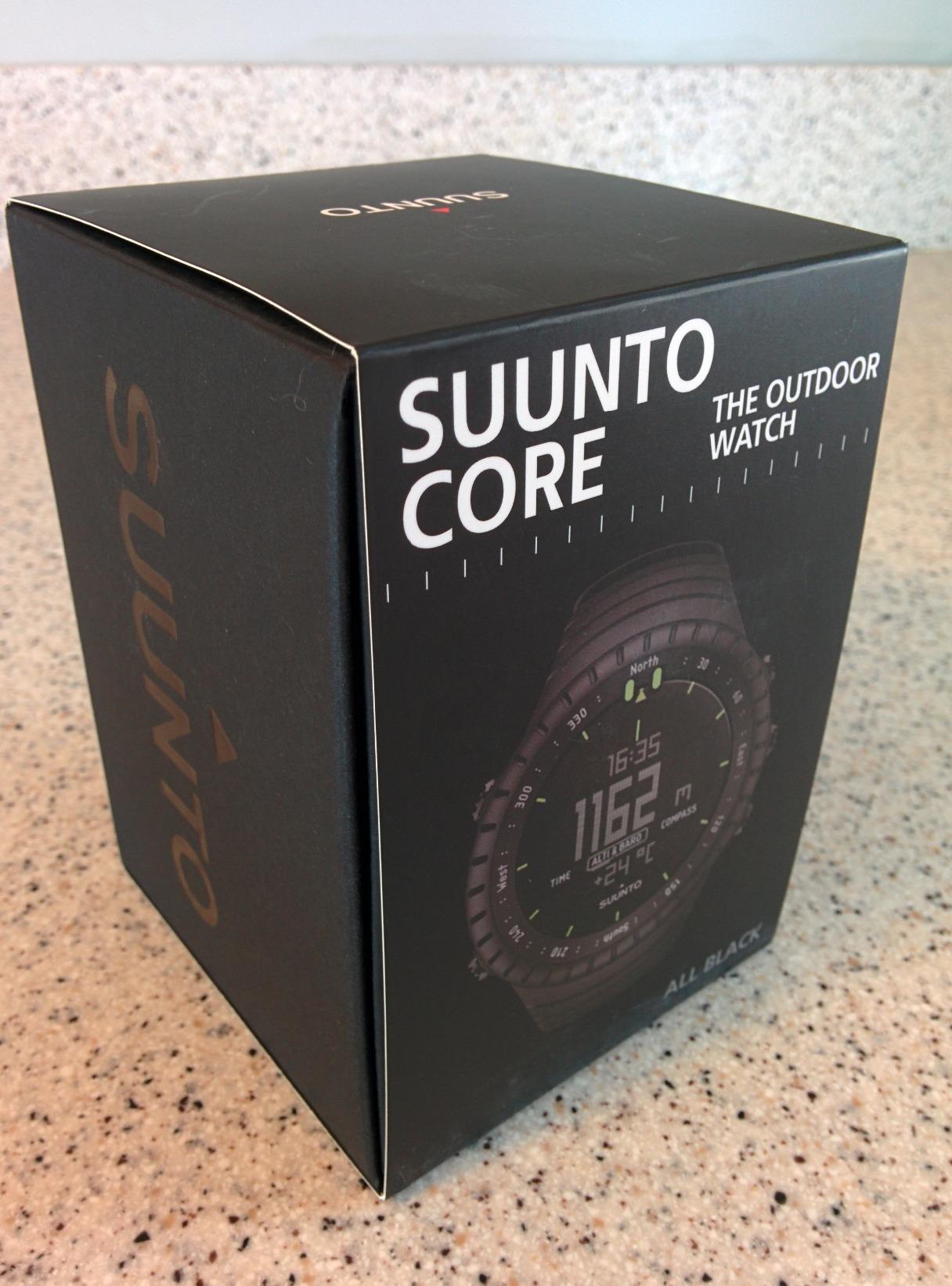
With more than 16,000 reviews, the Suunto Core is chosen by hikers who want one dependable instrument and nothing else. There is no app to update, no account to create and no firmware to drain the battery overnight. The replaceable lithium metal battery means a two-week trip needs no charger at all.
The altimeter, barometer and compass do the work that matters when you are off route and off signal. The Storm Alarm watches pressure trend changes and warns you before conditions turn, which is genuinely useful information on a backcountry route with no forecast coverage.
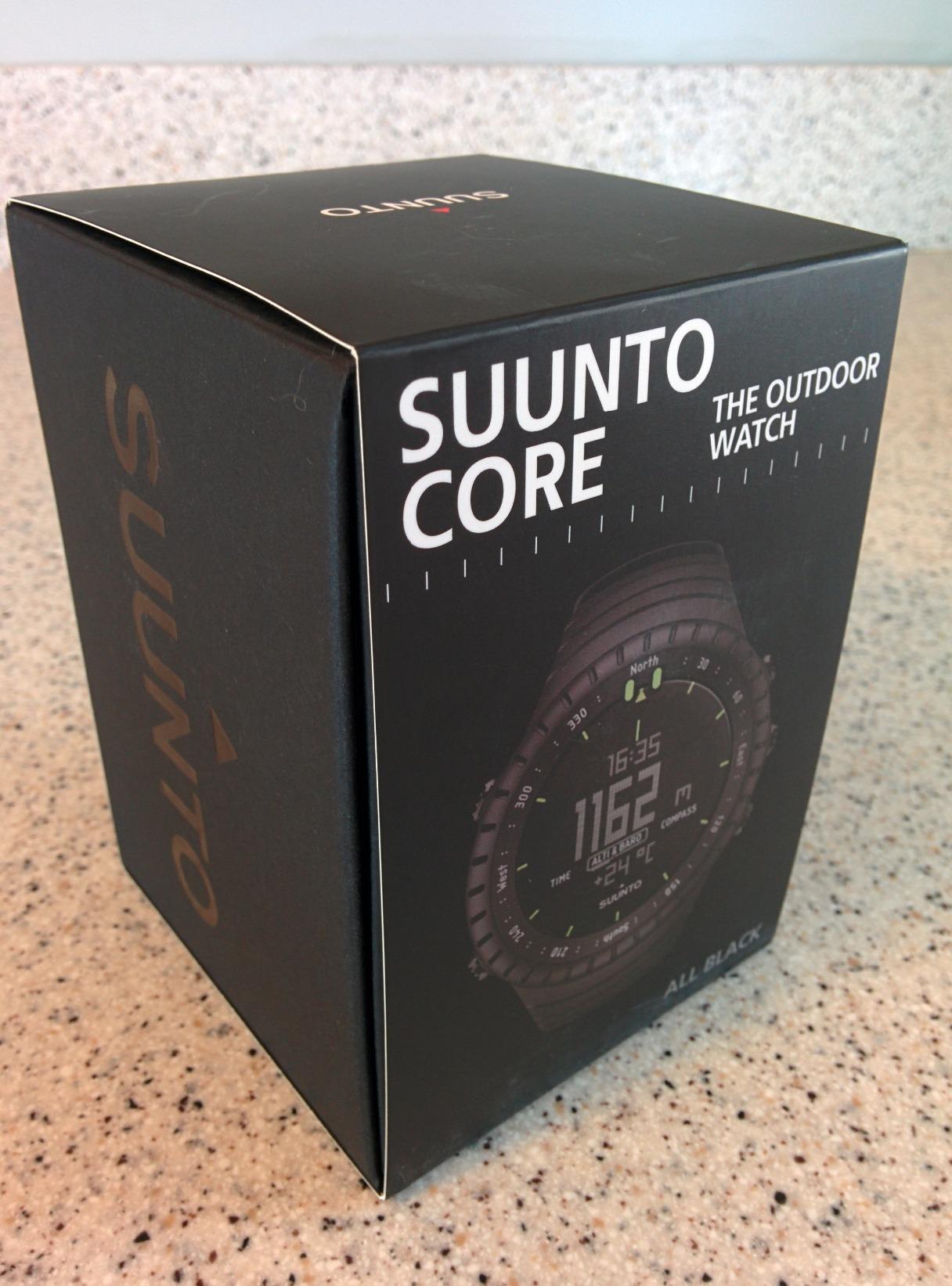
Sunrise and sunset prediction helps plan hiking days around daylight, and dual times, date display and alarm are simple, readable and reliable. Sport, activity and sleep tracking exist, but they are deliberately basic. The compass is included, not an add-on, and a depth meter reads accurately to 30 feet.
At 2.26 ounces this is lighter than most of the rugged adventure watches here, and the all-black, button-driven design has no screen to scratch and no software to fail. It is the watch you take on a route where losing electronics would be annoying but not serious.
When a non-smart watch is the right answer
It answers the objection that shows up constantly in hiking forums: some thru-hikers walk 300-mile trips with no watch at all and rely on a phone app. The Core is the compromise position, giving you ABC data with zero dependence on electronics, apps or subscription services.
If your hiking is day hiking on known trails, or you want a beater for multi-day trips where a charging plan adds weight, the simplicity is the feature. Owners describe it as the watch they stop thinking about.
What you give up by not having GPS
There is no route, no breadcrumb, no position and no map. If you take a wrong turn or need to find water, this watch cannot help you get back. It is an instrument, not a navigator.
You also lose smart notifications, fitness apps, recovery and training analytics, and the small monochrome display limits at-a-glance readability. Anyone wanting performance data will find it far too limited for the purpose.
8. Garmin Forerunner 165 43mm – Best Budget Garmin for Day Hiking
Pros
- AMOLED display at an entry price
- Up to 11 days in smartwatch mode
- 43 mm case is light and comfortable
- Morning report and HRV simplify planning
- Buttons work in wet conditions
Cons
- No multi-band GPS
- No onboard maps or turn-by-turn
- 50 m water rating
- Music needs the higher-tier variant
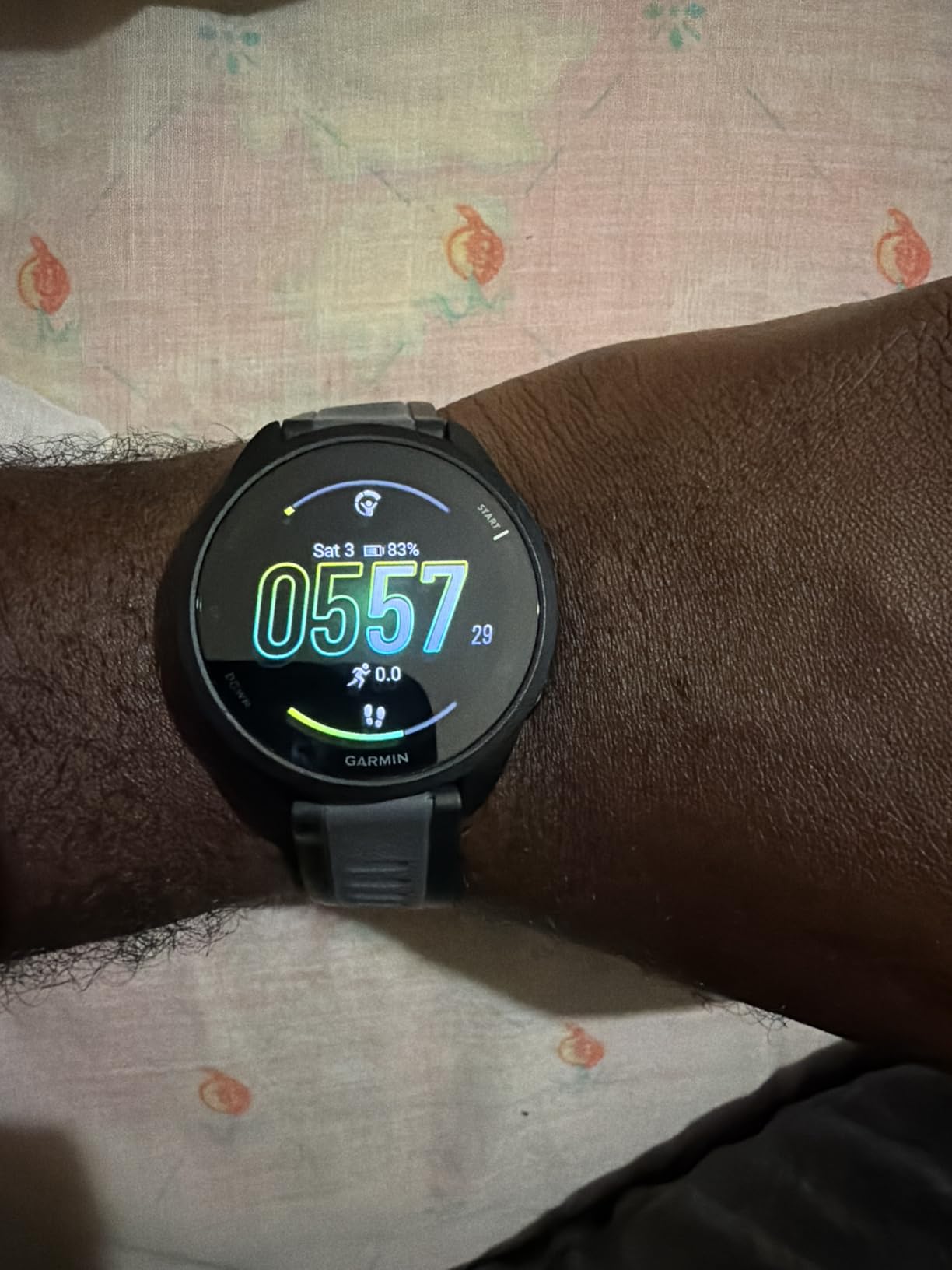
The Forerunner 165 is the easiest way into a Garmin ecosystem, and for day hiking on routes you already know it does everything a hiker actually needs. Built-in GPS tracks pace and distance, wrist-based heart rate gives you effort data, and 25+ activity profiles cover the usual suspects.
Weight is the quiet advantage. At 1.38 ounces and 43 mm, it is the second-lightest watch here, and reviewers regularly single out comfort for both running and hiking. The AMOLED touchscreen at 1000 nits is a big step up from the monochrome screens on cheaper running watches.
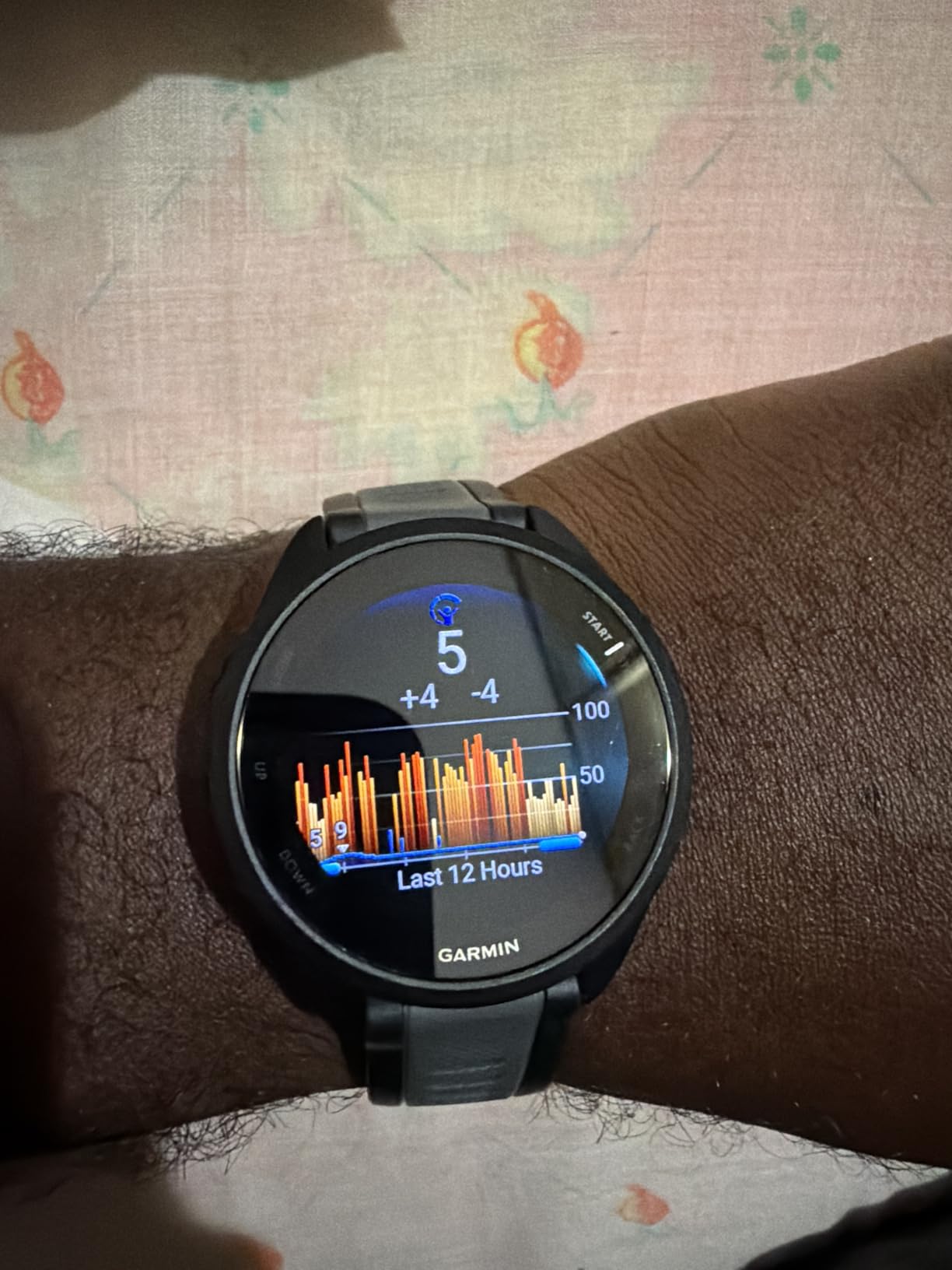
Battery is stated at up to 11 days in smartwatch mode and 19 hours in GPS mode. That 19-hour GPS figure is the number that matters here, and it is roughly a long day hike with margin. Owners consistently praise multi-day battery in smartwatch mode, which is what daily wear looks like.
The training side is stronger than the price suggests. Morning report, HRV status, recovery time, training effect and Garmin Coach adaptive plans give a genuine picture of readiness. Garmin Pay and incident detection add the safety features hikers want. Traditional buttons work reliably in wet or sweaty conditions.
Best use case for the Forerunner 165
Day hiking, trail running on known routes and anything where you want a full Garmin training experience without the cost of an adventure watch. Lightweight wrist sleep tracking and a comfortable fit make it an easy all-day wear.
If you are building up to a longer trip, this is also a sensible stepping stone. Reviewers treat it as the standard entry point into Garmin, and the training metrics carry over when you move up.
Where it stops short
It lacks multi-band GPS found on higher-end Garmin models, and the accuracy difference shows up under canopy and in deep valleys. More importantly, there are no onboard maps and no turn-by-turn navigation.
The 50 m water rating is lower than the rugged outdoor watches here, and music storage requires the higher-tier Music variant. If you hike unmarked backcountry routes, this is the wrong watch and the savings will cost you.
9. COROS PACE 4 – Best Ultralight GPS Watch for Overnight Hikes
Pros
- Exceptionally light at 32 g
- Up to 19 days of daily battery
- Bright high-resolution AMOLED
- Digital crown and buttons work at high intensity
- Breadcrumb and voice features on trail
Cons
- Breadcrumb navigation only
- No rugged or high-altitude modes
- Not built for extreme conditions
- Phone-dependent for some features
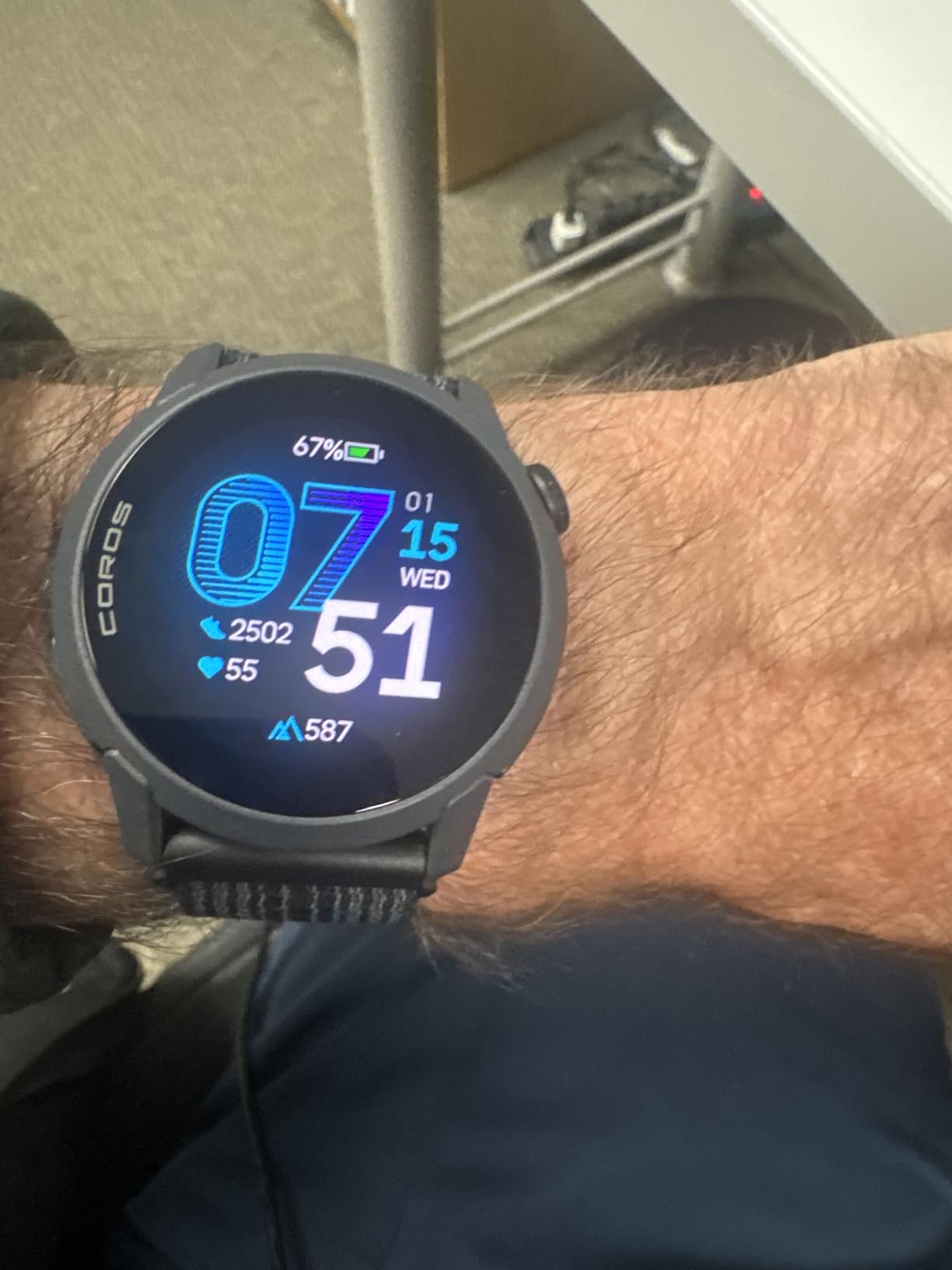
The COROS PACE 4 is the ultralight answer, and 32 g with the nylon band is the number that sells it. At 11.8 mm thin it also disappears under a sleeve, which no bulky adventure watch on this list manages. If you are counting grams or you sleep in your watch, this is the one.
Battery is 41 hours of continuous GPS and 19 days of typical use, so a three-day trip needs one charge at most. The 1.2 inch AMOLED with auto-adjusting brightness is a 164% resolution increase over the previous PACE 3, and the display stays readable on open trail.
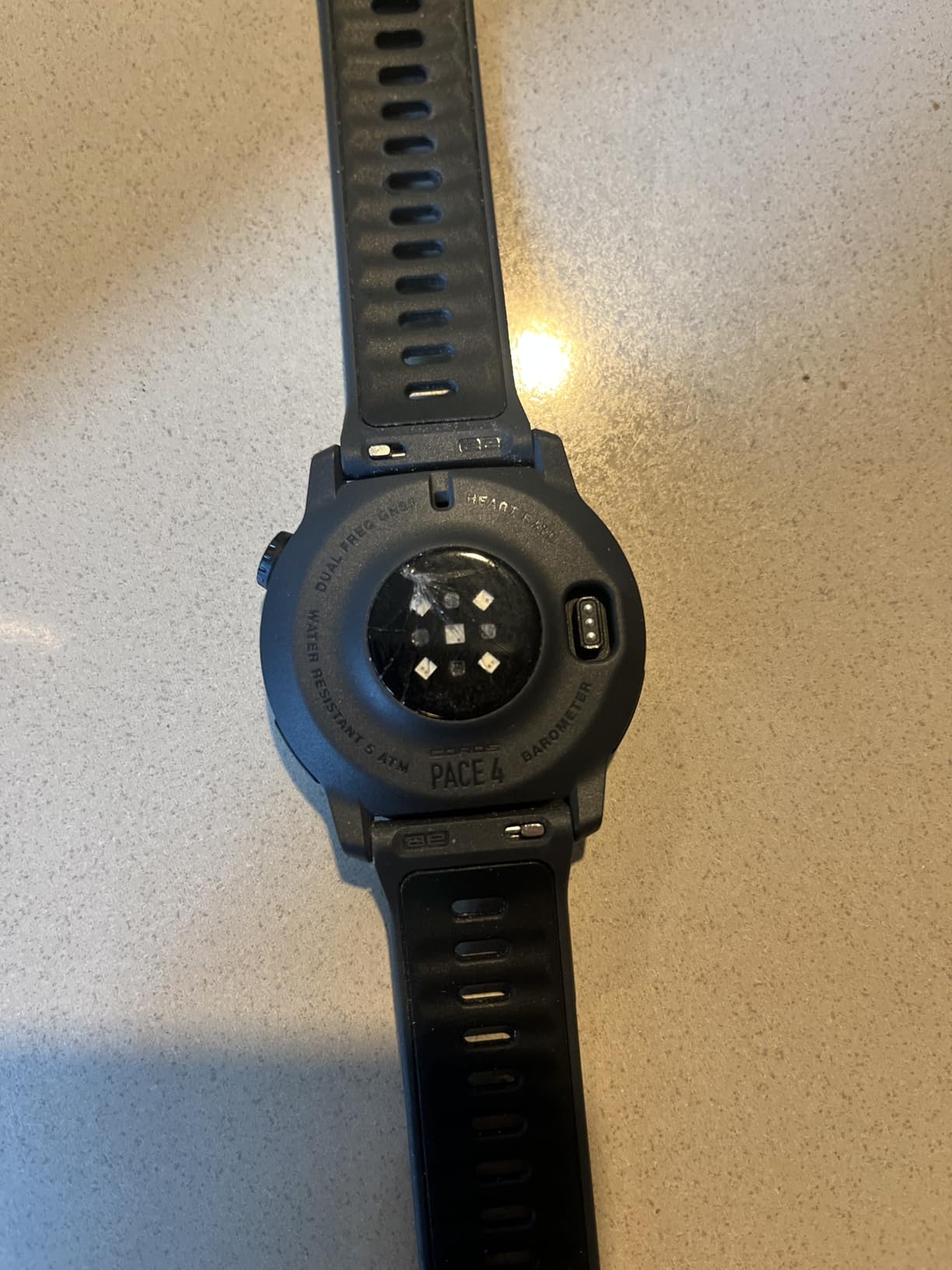
Control is unusual for the price and works well: a digital crown, two buttons and a touchscreen, all usable at high intensity. A customizable Action Button handles breadcrumb navigation and media controls, and voice recording plus voice control let you set targets and alarms mid-stride without touching the screen.
Training data is solid rather than thin. Recovery time, sleep stages, HRV and menstrual cycle tracking all appear in the COROS app, and there is 4 GB of storage on board. For trail running and fast hiking on known routes, it covers the essentials with room to spare.
Why ultralight hikers like it
Every gram on your wrist is a gram you could put in your sleep system, and 32 g is the lowest here by a wide margin. Owners emphasize all-day and overnight comfort, which matters on a trip where you are sleeping in your watch to get recovery data.
It also lasts nearly three weeks in normal use, so the charging burden on a long trip is close to zero. The two-year warranty and wide range of band variants including silicone and crystal nylon make it easy to swap for seasons.
Where it is not a hiking watch
Navigation is breadcrumb only. There is no full on-watch map, so you can retrace your route but you cannot read a topographic layer or see trail names at a junction. That is fine on a known trail and inadequate above treeline.
It is also not ruggedly built or water rated for extreme conditions, has no multisport or high-altitude specific modes, and some smart features depend on your phone. If your hiking involves rock routes, cold river crossings or unmarked terrain, look elsewhere on this list.
10. Suunto 9 Peak Pro – Best Suunto for Alpine Routes and Avalanche Maps
SUUNTO 9 Peak and Peak Pro Sports GPS Watch for Demanding, Performance Driven Athletes and Adventurers
Pros
- Over a week of typical battery use
- MIP display is readable in sun and saves power
- Stainless steel and sapphire build
- Highly customizable notifications with quick reply
- Lightweight and comfortable
Cons
- Firmware updates reported to drain battery faster
- Optical heart rate inaccurate indoors
- Sleep tracking misses night wakings
- Factory strap is short
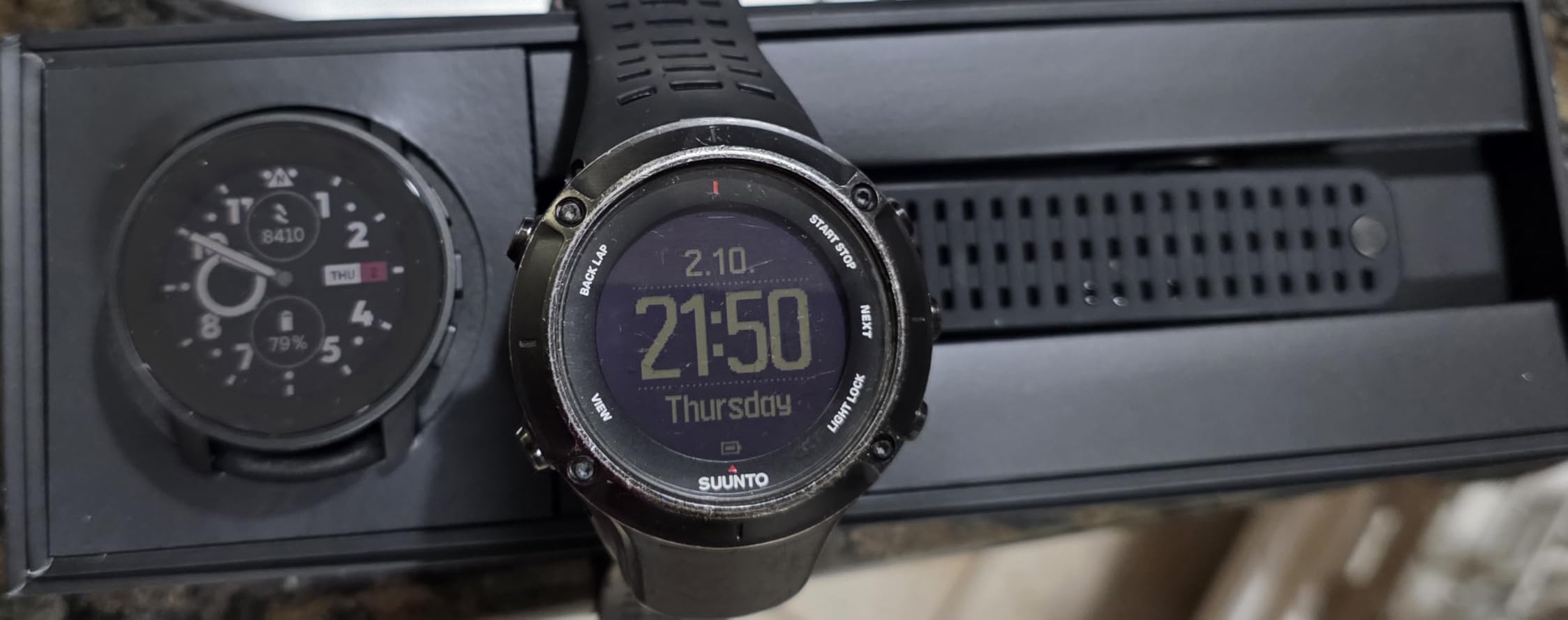
The Suunto 9 Peak Pro is the pick for alpine and winter routes, and the reason is the map layer. Turn-by-turn navigation comes with weather alerts and avalanche maps, which is a safety tool no other watch in this roundup offers, and for anyone moving through serious mountain terrain that is the deciding feature.
Multi-satellite GPS across four systems held a signal in the canyon and mountain conditions the watch is designed for, and the MIP display stays readable in sun while preserving battery. Battery modes are unusually well differentiated: 40 hours in best GPS mode, 70 in endurance and 300 in tour mode.
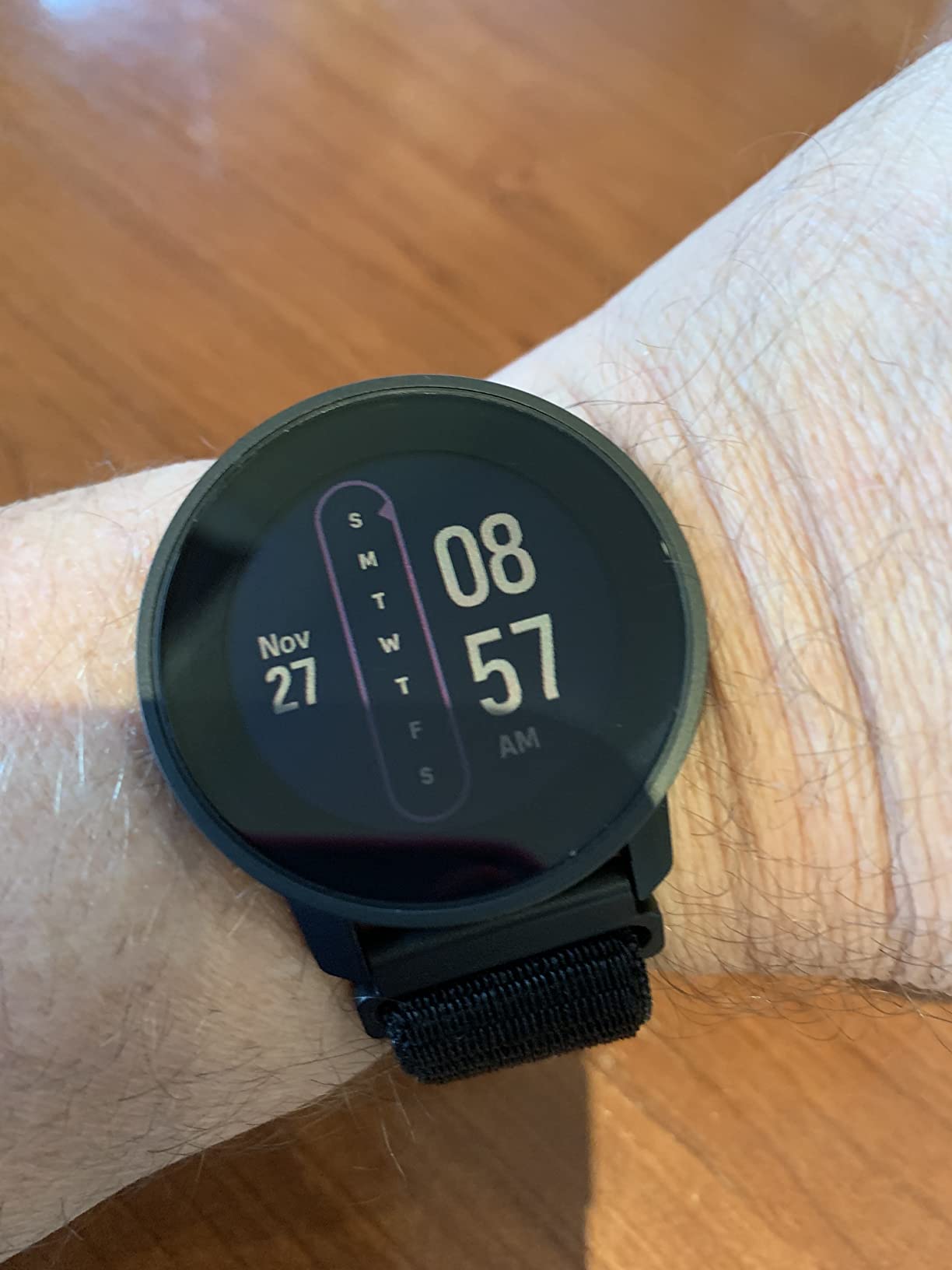
The build is premium, with stainless steel and sapphire glass and a 100 m waterproof rating. A 10-minute quick charge gives two hours of GPS training, which is a genuinely useful feature when you have 20 minutes of rest at a hut or a vehicle.
There are 97 sport modes with a configurable training surface, music controls with a connected phone and earbuds, and Suunto app integration with Strava and TrainingPeaks. Notifications are highly customizable and support quick reply, which is more than most watches in this roundup offer on the wrist.
When the 9 Peak Pro earns its place
Avalanche maps and weather alerts put it in a category of its own for ski touring, mountaineering and snow travel. The 300-hour tour mode also makes it viable as a backup instrument carried for weeks at a time.
Owners who prefer a physical-button MIP sports watch rate it highly, and the 1000-nit readability plus stainless steel and sapphire construction hold up to real use rather than just spec-sheet comparison.
What has held the rating down
A cluster of owners report that recent firmware updates drain the battery much faster than before, and the 4.0 average reflects that. We would test this carefully before committing to a long trip with it.
Optical heart rate can be inaccurate, especially indoors or on a stair climber, sleep tracking misses night wakings and cannot be adjusted, and some watch faces are now locked behind a subscription. The factory strap is also short and can come undone.
Garmin or Apple Watch for Hiking: The Verdict
For hiking, Garmin wins. Apple wins for everything else. If your priority is trail navigation, multi-day battery, gloves and sunlight readability, a Garmin adventure watch is the better tool. If your priority is staying reachable without a phone, the Apple Watch Ultra 3 is the only watch here that can do that, and it is the stronger smartwatch by a distance.
The real difference is what each one asks you to carry. An Apple Watch Ultra 3 user can leave the phone in the car at the trailhead and still navigate, take calls and raise an emergency alert from the wrist. A Garmin user still carries a phone, but gets a week or more of GPS battery and a topographic map that works in gloves, rain and darkness.
Battery is the honest dividing line. The Ultra 3 is stated at up to 42 hours of normal use and 72 hours in Low Power Mode, with owners describing two to three days. The Garmin models here run weeks, and solar variants stretch that further. On a weekend, the Apple penalty is manageable. On a two-week thru-hike, it is not.
Display and control favor Garmin on trail. MIP panels stay readable in direct sun at lower power, and physical buttons work with gloves, which no touchscreen can promise. The Ultra 3 offers a brighter, more versatile display, but it is a touchscreen first and a hiking instrument second.
Neither family wins on software polish for training data, where the POLAR Grit X Pro and the Amazfit Zepp ecosystem put up a strong showing for less. The watch you will actually hike with is the one you will charge the night before, and for most hikers on most trips that is a Garmin.
How to Choose a Hiking Smartwatch: 9 Criteria That Matter
Start with the trip, not the spec sheet. The right watch for a day hike and the right watch for a two-week trek are different products, and the criteria below are ordered by how often they change the outcome.
1. GPS battery hours, not smartwatch days
Almost every brand leads with smartwatch-mode figures measured with the screen on and notifications arriving. The number that decides a trip is GPS hours. Use the published GPS figures in this roundup as a floor: 40 hours on the Suunto 9 Peak Pro, 41 on the COROS PACE 4, 50 on the COROS Nomad, 180 on the Amazfit T-Rex 3, and multi-week claims on the solar Garmin models.
Match that to your trip length and add margin. One to two days of hiking needs roughly 30 hours. A weekend needs 60 plus a power bank. A two-week thru-hike needs solar or weekly charging, and that is where the Garmin fēnix 7X Pro Solar, the Instinct 3 Solar and the Amazfit T-Rex 3 separate from the field.
2. Offline maps versus a breadcrumb trail
Offline maps let you read terrain, trail names and elevation contours at a junction. A breadcrumb trail only shows the dotted line of where you have already been, which works for retracing a route and fails when you need a new line.
Watches with real offline maps in this roundup: the Garmin fēnix 7X Pro Solar with TopoActive, the COROS Nomad with pre-loaded global maps and turn-by-turn, the Amazfit T-Rex 3 with free global offline maps, and the Suunto 9 Peak Pro with Komoot-style turn-by-turn plus avalanche layers. Breadcrumb only: the Garmin Instinct 3 Solar, the COROS PACE 4, the Garmin Forerunner 165 and the POLAR Grit X Pro.
No competitor publishes which specific trails are preloaded per model, and that is the single most requested detail in hiking watch discussions. Download the map region for your route before you leave, and check that the download completed. That one habit removes the most common navigation failure on trip.
3. Multi-band GPS versus single-band
Multi-band receivers listen on two frequency bands at once, which tightens the fix under tree canopy, in canyons and in deep valleys. The Garmin fēnix 7X Pro and Instinct 3 Solar use multi-band with SatIQ, the Amazfit T-Rex 3 has dual-band across six satellite systems, and the Apple Watch Ultra 3 has precision dual-frequency GPS.
Single-band is not disqualifying on open trail, but it is the reason the Forerunner 165 and the POLAR Grit X Pro drift more under canopy. If you hike wooded routes, treat multi-band as a requirement rather than a nice-to-have.
4. ABC sensors: altimeter, barometer, compass
These are the three basic backcountry instruments, and a hiking watch should have all three. The barometric altimeter reads elevation from air pressure, the barometer warns of incoming weather through pressure trend, and the compass gives you a heading when you have no map reference.
The Suunto Core is built entirely around ABC and does it well, with a Storm Alarm that calls pressure changes. The Garmin adventure models, the Amazfit and the Suunto 9 Peak Pro all carry the full set. Elevation gain tracking on your wrist saves the data you will actually analyse later.
5. MIP versus AMOLED, and why it matters outdoors
A transflective MIP panel is lit by the sun rather than by a backlight, so it is readable in direct sun at very low power and often has no battery cost at all. An AMOLED screen is far sharper, brighter in the dark and better for maps, but it drinks power and can wash out in glare.
For trail work with a solar watch, MIP wins. For map reading and night use, AMOLED wins. The Garmin fēnix 7X Pro Solar, the Instinct 3 Solar, the COROS Nomad, the Suunto 9 Peak Pro and the Suunto Core use MIP or monochrome. The Amazfit T-Rex 3 at 2000 nits, the Forerunner 165, the COROS PACE 4 and the Apple Watch Ultra 3 use AMOLED or OLED.
6. Solar charging, with realistic expectations
Solar models extend battery by converting ambient light to trickle charge. The honest version: the gain depends on real sun, works poorly under heavy canopy, and adds little in a week of overcast weather. Lab claims assume bright conditions most hikers rarely hike in.
That said, a solar watch is a genuine hedge for multi-day trips, because it means a missed charge is an inconvenience rather than a dead navigation tool. Choose it if you backpack or trek often. Skip it if your trips are day hikes and you value the sharper AMOLED screen more.
7. Size and weight on smaller wrists
This is where most 50 and 51 mm adventure watches disappoint, and it is the most common sizing complaint in the forums. If you have a smaller wrist, a 45 or 43 mm case is not a compromise, it is the correct answer.
At 52 g and 45 mm, the Garmin Instinct 3 Solar is the best-fitting rugged watch here. The Garmin Forerunner 165 at 43 mm and 1.38 ounces suits smaller wrists who want maps, and the COROS PACE 4 at 32 g is the lightest option by a wide margin. The 51 mm fēnix 7X Pro and 100 g COROS Nomad are the two heaviest, and both suit larger wrists and glove use better than a small case does.
8. Safety features worth paying for
Incident detection, Assistance and crash detection can summon help if you are injured and unable to reach your watch. The Garmin Instinct 3 Solar and the Forerunner 165 include incident detection, and the Apple Watch Ultra 3 adds crash and fall detection, ECG, satellite communications and emergency SOS.
None of these replace a real satellite communicator for remote routes. Pair a watch with a communicator if you are going far from coverage, and treat the watch features as a first response rather than a rescue plan.
9. Smartwatch features versus GPS-watch purity
Decide honestly how much of the smartwatch you will use. Notifications, music control, on-wrist replies and cellular calling all add real value if you carry a phone, and all cost battery on every watch here.
The Apple Watch Ultra 3 is the only watch in this roundup with cellular calling, satellite communications and native message replies. The Amazfit T-Rex 3 offers the widest health and training feature set without the price, but you cannot take calls from it. And some thru-hikers hike 300-plus mile trips with no watch at all, using a phone app instead, which is a legitimate choice rather than a failure.
Our broader smartwatch picks, including options with camera support, are covered in our guides to the best smartwatches under 100 with camera and the best smartwatches under 300 with camera reviews.
Frequently Asked Questions
What is the best smart watch for hikers?
The Garmin fenix 7X Pro Sapphire Solar is the best smartwatch for hiking overall, because it combines multi-band GPS with SatIQ, offline TopoActive topographic maps, a built-in LED flashlight and a solar-charging Power Sapphire lens, with owners reporting two to three weeks between charges. The Garmin Instinct 3 Solar is the better choice for smaller wrists, and the Amazfit T-Rex 3 delivers offline maps and multi-week battery for considerably less.
Is Garmin or Apple Watch better for hiking?
Garmin is better for hiking, the Apple Watch Ultra 3 is better as a smartwatch. Garmin adventure watches give you far more GPS battery, sunlight-readable MIP displays and buttons that work with gloves, plus offline topographic maps. The Ultra 3 is the only watch here with cellular calling, satellite communications and native message replies, so you can leave your phone behind, and its battery is stated at up to 42 hours in normal use.
What is the best smartwatch for trekking?
For multi-day trekking, battery in GPS mode matters more than any other feature. The Garmin fenix 7X Pro Sapphire Solar and the Garmin Instinct 3 Solar run for weeks thanks to solar charging, and the Amazfit T-Rex 3 is stated at 180 hours of GPS. If your trek is short enough to charge every two or three days, the Apple Watch Ultra 3 gives you the best navigation and safety features in exchange for that battery limit.
What is the best smartwatch with GPS for hiking?
The Garmin fenix 7X Pro Sapphire Solar leads on GPS hardware, using multi-band reception with SatIQ technology and a 3-axis compass with barometric altimeter. The Amazfit T-Rex 3 is a strong alternative with dual-band GPS across six satellite systems and free global offline maps. If you need the tightest fix under tree canopy or in canyons, multi-band is the feature to prioritise over everything else.
What is the best GPS watch with maps for hiking?
The best GPS watch with maps for hiking is the Garmin fenix 7X Pro Sapphire Solar with its offline TopoActive maps and Up Ahead navigation prompts. The COROS Nomad and the Amazfit T-Rex 3 both include free global offline maps with turn-by-turn navigation, and the Suunto 9 Peak Pro adds weather alerts and avalanche maps. Download your map region before you leave and confirm the download finished.
Why are people ditching smart watches?
Hikers are moving away from general smartwatches for several reasons. Battery life in GPS mode is far shorter than the smartwatch figures brands advertise. Many affordable watches have no offline maps, so users get a breadcrumb line and feel unsafe when off route. Large 50 and 51 mm cases feel bulky on smaller wrists, solar charging claims disappoint in real conditions, and Apple ecosystem lock-in frustrates Android users. Some thru-hikers now hike with no watch at all.
The Best Smartwatches for Hiking in 2026: Final Word
The Garmin fēnix 7X Pro Sapphire Solar is the best smartwatch for hiking in 2026 for the combination of multi-band GPS, offline topographic maps, a solar lens and a built-in flashlight in one rugged case. If your wrist is smaller or you want less bulk, the Garmin Instinct 3 Solar gives you the same core navigation and solar endurance at 52 g.
Go further down the list for different priorities. The Apple Watch Ultra 3 is the pick if you want to leave your phone behind, the Amazfit T-Rex 3 is the value leader with offline maps and multi-week battery, the COROS Nomad is the full-map pick, the POLAR Grit X Pro wins on training data, the Suunto 9 Peak Pro owns alpine and avalanche routes, the COROS PACE 4 is the ultralight option, the Forerunner 165 is the budget Garmin, and the Suunto Core is the simple instrument that never needs charging.
Whichever you choose, download your maps, test the glove operation and run a full GPS day before the trip. That one afternoon of preparation is what separates a watch that navigates you from a watch that records you.