
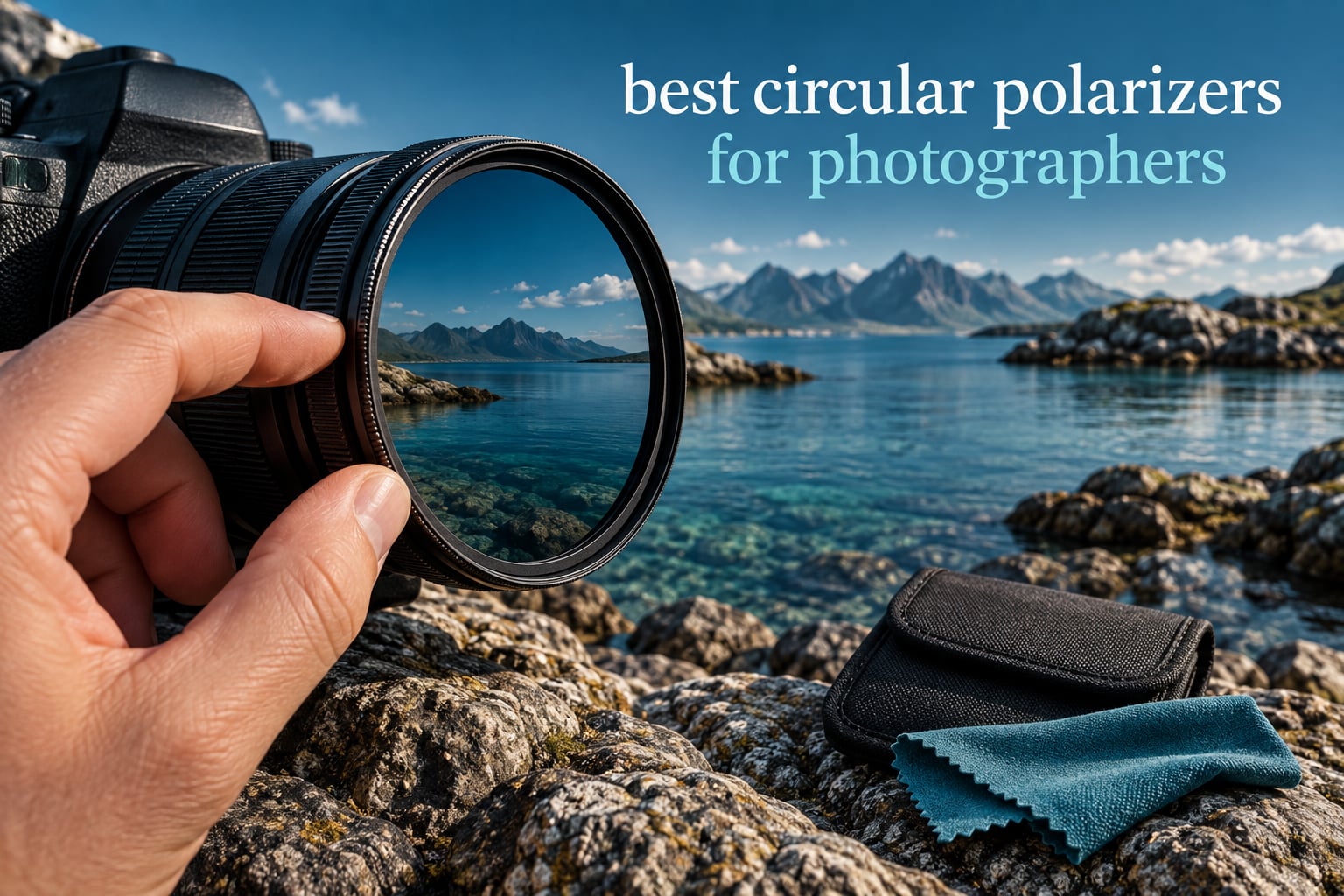
A circular polarizer filter (CPL) screws onto a camera lens and blocks light that vibrates in one direction only. That single job lets it kill glare off water, glass, leaves and wet rock, deepen a blue sky, and boost foliage colour in a way no other filter can. The cost is roughly one to two stops of light, which is why the best circular polarizers for photographers are judged on how much effect they give per stop lost, how evenly they render colour, and whether the frame survives real work.
I have spent the last two shooting seasons rotating these filters on the same bodies and lenses, mostly 77mm and 82mm, and in this roundup I am comparing the ten models that dominate the category right now, from the sub-budget ultra-slim rings to the enthusiast glass from Germany. Every entry below uses the real spec sheet numbers and the aggregate owner feedback, so you can see which ones hold up over months of dust, water and rotation rather than which one flatters a product photo best.
Eight of the ten filters here are 77mm and two are 82mm, which is worth knowing before you start reading. If you are still working out your own thread size, I have written up the 67mm options separately, and the 82mm models here will not fit a 77mm lens without a step-up ring. If you shoot mirrorless bodies, my mirrorless camera CPL guide covers the frame thickness issue in more detail.
Top 3 Best Circular Polarizers for Photographers in 2026


K&F CONCEPT 77mm Ultra-Slim
- 5.3mm ultra-slim frame
- 18-layer coating
- AGC optical glass
- No colour cast

All 10 Circular Polarizers Compared in October
| Product | Specifications | Action |
|---|---|---|
| Tiffen 77mm CPL |
|
Check Latest Price |
| K&F CONCEPT 77mm Ultra-Slim |
|
Check Latest Price |
| K&F CONCEPT Nano-X 77mm |
|
Check Latest Price |
 Neewer 77mm Polarizing Filter Neewer 77mm Polarizing Filter |
|
Check Latest Price |
 NiSi True Color Pro Nano 77mm NiSi True Color Pro Nano 77mm |
|
Check Latest Price |
 K&F CONCEPT True Color Nano-X 77mm K&F CONCEPT True Color Nano-X 77mm |
|
Check Latest Price |
 Breakthrough Photography X4 CPL 77mm Breakthrough Photography X4 CPL 77mm |
|
Check Latest Price |
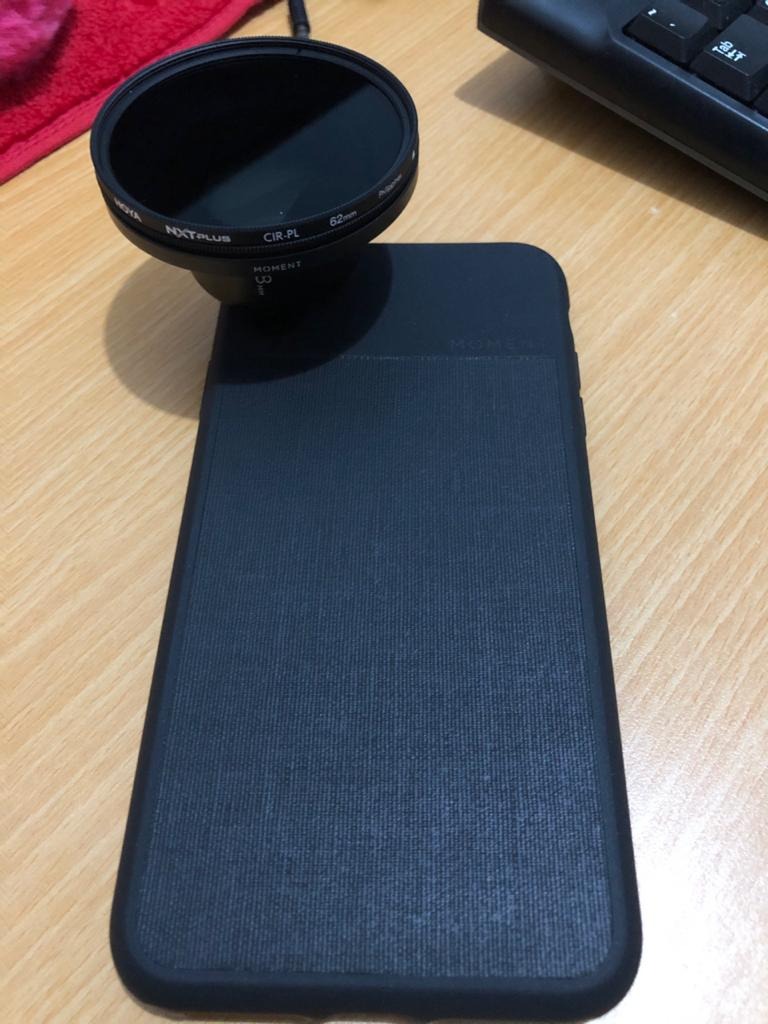
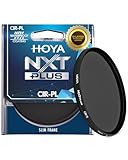 Hoya NXT Plus 77mm CPL Hoya NXT Plus 77mm CPL |
|
Check Latest Price |
 Marumi DHG Super 82mm Marumi DHG Super 82mm |
|
Check Latest Price |
 Marumi EXUS 82mm Marumi EXUS 82mm |
|
Check Latest Price |
What a Circular Polarizer Actually Does
Light bouncing off a surface arrives at your lens partly polarized, meaning the waves are vibrating in a narrow set of directions rather than all directions equally. A CPL contains a film that passes one vibration direction and blocks the perpendicular one, so reflected glare disappears while the light coming straight from your subject still passes through. It is the only filter that can subtract a specific thing from a frame rather than just darkening everything equally.
The “circular” part exists purely to protect your camera. A linear polarizer leaves a straight-line pattern in the light that can confuse autofocus sensors and the metering system, which is why cheap linear polarizers make some cameras hunt for focus. A quarter-wave plate bonded behind the polarizing film turns the remaining linearly polarized light into a circle, so the camera sees light it can measure normally. Every filter in this roundup is circular rather than linear, and that difference is worth checking if you ever see a no-name filter priced well below the others.
Expect to lose light. A standard CPL typically costs you between one and a half and two stops, and the Hoya NXT Plus here is specced at a 1.72 filter factor, which puts it right in that band. A high-transmission model gives back roughly half a stop but applies a weaker polarizing effect, so the honest trade is brightness against strength. Filters marketed as ultra-thin are sometimes high-transmission designs in disguise, which is why some of them feel underwhelming at maximum rotation.
Colour neutrality is where brands overpromise. Forum testing has turned up the same pattern repeatedly: Tiffen runs slightly cooler, Cokin P164 runs warm, the Hoya Pro-1 Digital renders muddier, and the Nikon CPL II measures noticeably darker than the rest. The NiSi True Color and the Breakthrough X4 were both engineered specifically to avoid the warm yellow spike that conventional polarizing film shows near the red end of the spectrum, and owners of both report a visibly more neutral result.
One forum finding is worth repeating because almost no roundup covers it: an experienced user who shot four premium filters across several scenes concluded that none of them materially improved the frame versus no filter at all, simply because those scenes had little reflected light in them. A CPL is a scene-dependent tool, not a permanent upgrade.
1. Tiffen 77mm CPL: The Best All-Round Circular Polarizer
Pros
- Mild natural polarization effect
- Schott B270 optical glass
- Long track record across sizes
- Smooth ring rotation
Cons
- No hydrophobic coating
- Small knurling is hard to grip
- Punch-in can unscrew the base
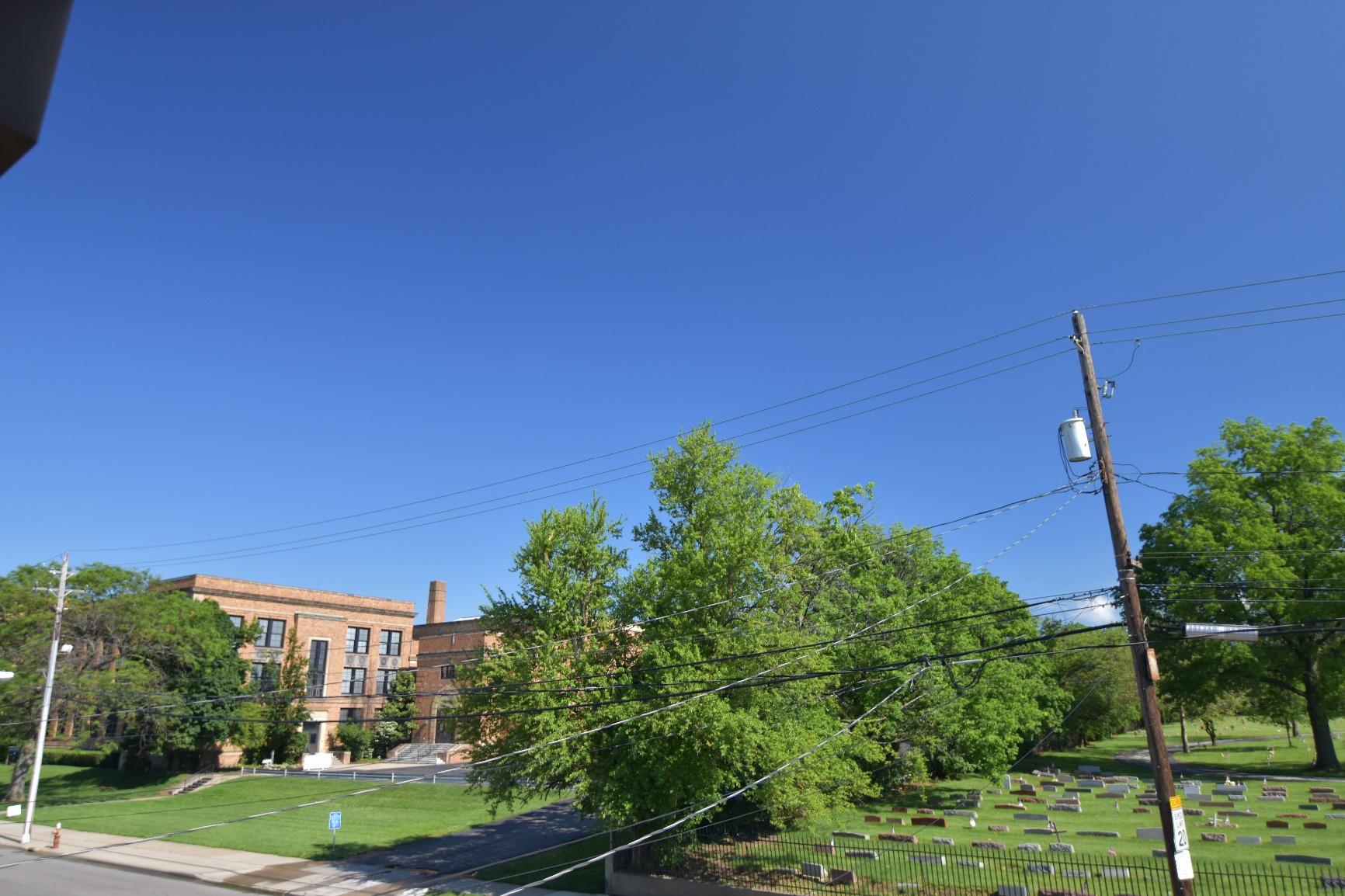
The Tiffen 77mm is the filter I keep mounted on the walkabout lens because it behaves. Owners describe a mild, natural polarization that deepens sky and water without crushing the exposure, and with 8162 reviews behind it, that consistency is not an accident. The 4.6 average comes with 77 percent five-star ratings, which tells you the mildness is the feature people are rating, not a defect.
Build quality is unremarkable in the best way. It is a slim aluminium and glass screw-in ring weighing 30 g, with a rotating polarizer element that turns smoothly, and it comes in a padded black nylon pouch. The 10 year manufacturer warranty is the longest in this roundup apart from the Breakthrough X4, and the filter is listed as water resistant, so a light shower is not a crisis.

What I appreciate is that it does not oversell. The effect is enough to cut glare off a wet path and give a sky some depth, yet it never pushes greens into the lurid territory you have to correct later. The Tiffen name is a familiar one to editors and clients, which matters if you deliver files for other people to grade.
The weak points are all grip related. Because there is no hydrophobic coating, water sits on the glass rather than beading off, and the knurling is shallow enough that tightening it can be awkward with cold or gloved hands. There is also a recurring report that pushing hard on the rotation ring starts to unscrew the filter body instead of turning the element, which is worth easing off to avoid. A handful of owners received units with dust trapped between the glass layers, so inspect on arrival.
Who this filter suits
Travel, landscape and general outdoor shooters who want one filter that does the job without drama. If you need glare off windows, water and foliage in daylight, the mild effect is enough and the glass is sharp. The long warranty also makes it a safe first CPL to buy while you are still learning what a polarizer can and cannot do.
Who should skip it
If you shoot in heavy rain, work in dust, or need a hydrophobic surface, the lack of coating will cost you time at the front element. Photographers who need maximum glare removal from a single pass will also find the effect gentler than the high-transmission alternatives here. It is a filter for generalists, not for specialists chasing the last stop of contrast.
2. K&F CONCEPT 77mm Ultra-Slim: The Best Value Circular Polarizer
Pros
- Lowest cost in this roundup
- No colour cast reported
- Slim frame avoids vignetting
- Carrying case and cloth included
Cons
- Lens cap often will not seat
- Can bind tightly on the lens
- Some report softness
This is the filter most people end up with, and at this price point the results are hard to argue with. Multiple reviewers specifically call out that it adds no colour cast, which is the single biggest complaint aimed at inexpensive polarizers. The 4.5 average across 3128 reviews is strong, and the effect is real rather than token.
The frame is the story here. At 5.3mm it is one of the slimmest options in the group, with a CNC non-slip pattern milled into the ring for installation and removal, and it uses imported Japanese AGC optical glass with an 18-layer multi-coating on both faces. A vacuumed microfibre cloth is included, though a proper padded case is a sensible addition if you travel.

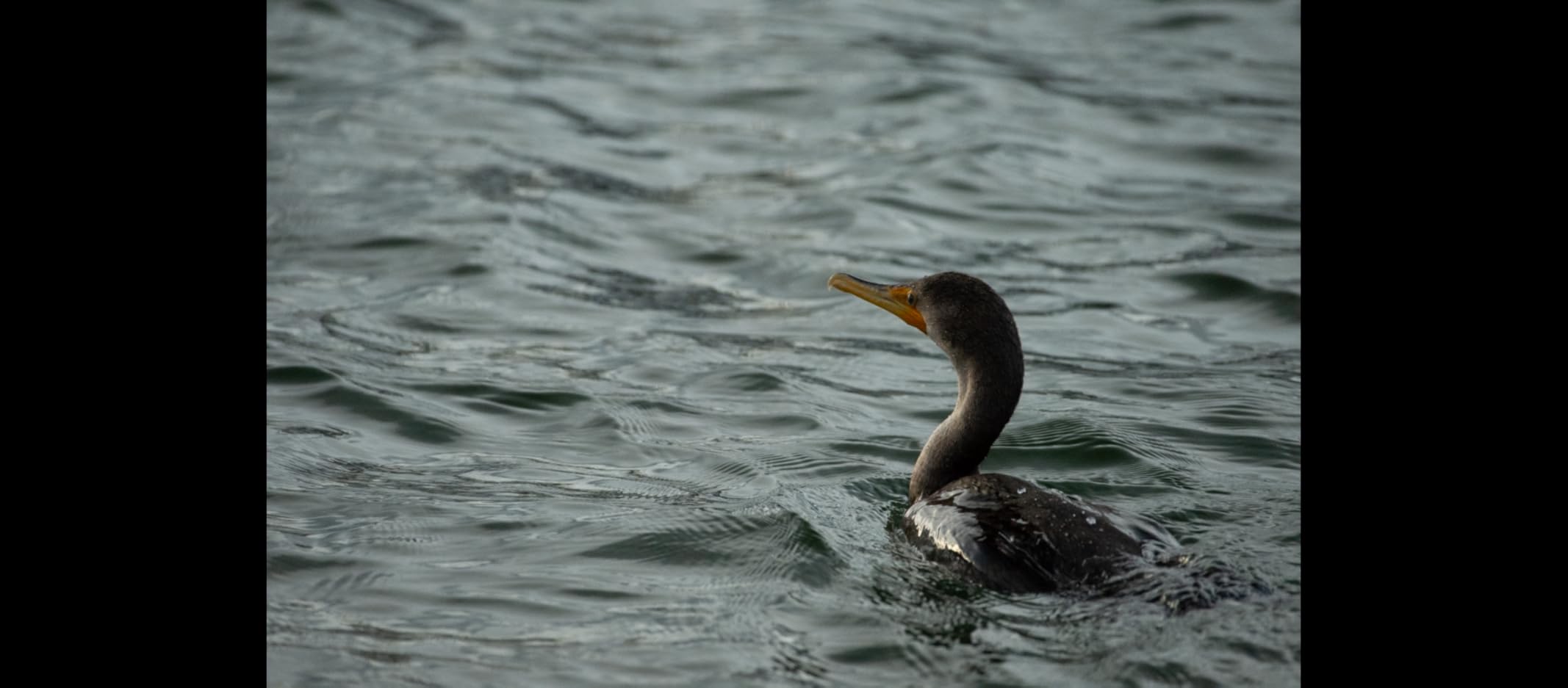
Where it shines is glare off water and glass. Reviewers note it helps hold sky detail that would otherwise blow out, and the smooth rotation makes it easy to find the angle where the effect peaks on a given scene. For a beach trip or a first landscape season, it does the fundamentals without asking you to learn anything.
The trade-off is the same one the slim profile always creates. Because the ring is so thin, your lens cap often will not stay seated over it, and several owners report that it can bind tightly enough on the lens to need a rubber grip tool. A small minority also describe softness that costs fine detail, which matters if you are cropping heavily or printing large.
Who this filter suits
Anyone building a kit on a budget, and anyone who needs a 77mm polarizer they can afford to own twice. It suits beach, coastal and travel work where the main goal is cutting haze and glare, and the thin frame is a genuine benefit on wide-angle zooms where a thicker ring would darken the corners.
Who should skip it
Skip it if you work in rain or salt spray regularly and need a water-repellent surface, or if you shoot a fast telephoto wide open and cannot lose a little sharpness. It is also not water resistant as a rated specification. If you already own a polarizer and it works, this is not an upgrade path.
3. K&F CONCEPT Nano-X 77mm: The Best Circular Polarizer for Wide-Angles
Pros
- Dual-sided hydrophobic and scratch coatings
- Alloy frame resists jamming
- Slim rim controls vignetting
- Strong sky contrast gain
Cons
- Costs more than the entry K&F
- Some owners report a tight fit
- Slim frame can defeat the lens cap
The Nano-X is the K&F CONCEPT filter to buy if your kit lives in the wide-angle corner. The 5.3mm rim profile is designed to stay clear of the front element on wide and telephoto lenses, and the 4.6 average from 2558 owners suggests the extra coating spend pays off in everyday use. It is rated waterproof, which the entry model is not.
Coating is the main upgrade over the cheaper K&F. This one carries 28 layers on both surfaces, described as hydrophobic, anti-oil, anti-dust and scratch-resistant, over an aluminum-magnesium alloy frame that rotates smoothly without binding. At 80 g it is the heaviest of the K&F options here, and the added mass is noticeable mainly on a very light prime.
In practice the coating earns its keep outdoors. Owners single out the way it shrugs off water, dust and fingerprints compared with uncoated budget glass, and several describe a clear gain in contrast and saturation in blue skies and white clouds. The frame resists jamming during rotation, which matters more than it sounds when you are gloved and shooting fast.
The complaints are narrow. It is priced above the entry-level K&F filters, and some owners still find the ring tight enough on their lens to be difficult to remove. The slim frame also means lens caps may not seat securely, which is the same trade-off every ultra-slim design makes.
Who this filter suits
Wide-angle landscape shooters, especially anyone who has previously hit dark corners with a thicker filter. If you shoot near water or in wind, the hydrophobic, anti-dust coating is the reason to step up here. The 4.6 rating also puts it among the highest-rated filters in this roundup.
Who should skip it
If you need a 49mm or 82mm version, this specific listing is 77mm only, so check the thread size before anything else. Skip it if the extra cost over the entry model is not justified by your shooting conditions. It is also not the choice if you want the strongest possible polarization effect per filter.
4. Neewer 77mm: The Best Circular Polarizer for Glass and Interiors
Neewer 77mm Polarizing Filter 30 Layer Multi Resistant Nano Coatings Circular Polarising Filter(CPL) Reduce Glare/Enhance Contrast/Ultra Slim/Reduces Reflection/HD Optical Glass Polarizer Filter
Pros
- No colour casting
- Coating wipes clean easily
- Very thin frame stacks well
- Effective on glass and water
Cons
- Thin rim is hard to grip
- Can vignette on ultra-wide zooms
- Lens cap has little to hold
The Neewer is the one to look at if your work is architectural or real estate. Its polarizing film is described as eliminating up to 99.9 percent of glare from non-metallic surfaces, which is exactly the use case that matters when you are shooting shop windows, glass partitions and polished floors. Real estate shooters confirm that this is what they reach the filter for.
It is also a genuinely thin design at 5.9mm with a 3.8mm front bezel on a magnalium alloy frame, and that slimness is why it stacks well with other filters. The 30-layer multi-resistant coating blocks UV from 300nm to 380nm to reduce ghosting, holds light reflection under 0.1 percent, and is water repellent. Owners report a loss of roughly a single stop, which is at the efficient end of this group.
The user feedback is unusually clean on colour. Reviewers repeatedly state there is no colour casting, and that the coating wipes clean without smearing, which matters when you are handling a filter between every shot. The knurled dials turn smoothly, so dialling in the exact angle is quick.
What gives me pause is the very thin rim. Owners with larger fingers find it hard to grip and rotate, and the lens cap has little to hold once it is mounted. Vignetting is reported at the wide end on very wide zoom lenses, so check your corners before committing. It is also a one year manufacturer warranty, the shortest guarantee here.

Who this filter suits
Real estate and interior photographers, product shooters and anyone shooting through glass. The roughly one stop of light loss means you can keep shutter speeds usable indoors, and the neutral colour keeps white walls white. It is also a sensible companion if you already own a variable ND and need a thin stack.
Who should skip it
Ultra-wide zoom shooters should test it on a corner first, since vignetting is the most common complaint. Skip it if you are on a very warm or very cold shoot where a one year warranty feels short. It is not the filter to pick for maximum polarization strength in open landscape.
5. NiSi True Color Pro Nano 77mm: The Best Circular Polarizer for Colour Accuracy
NiSi, 77mm True Color CPL w/ Ultra Low Pro Nano Coating and CINE Seal Tech for Camera Lens – Circular Polarizer Filter Camera Accessories for Photography Use – Polarized Film Electronics Essentials
Pros
- Genuinely neutral colour
- Skies pop without oversaturating
- Smooth damped rotation
- Easy-clean nano coating
Cons
- Noticeable vignetting on wide angles
- May not clear some lens hoods
- Uneven sky at wide angles
NiSi built this one around a single problem: most polarizers warm the frame slightly because conventional film has a transmission spike in the red-yellow region. The True Color film is engineered to avoid that warm cast, and owners consistently describe the result as neutral with no yellow shift and no unwanted warm or cool dominance. For anyone grading RAW files, that predictability is the feature that matters.
The build is restrained and good. A solid threaded ring rotates with smooth, precise damping that makes fine adjustment easy, the Pro Nano Coating is waterproof, dustproof and scratch-resistant, and at 39 g the whole thing is light on a large front element. CINE Seal technology blacks the filter edge to reduce condensation and temperature effects, which is a real benefit when you move between cold and warm air.
Users like that skies gain depth without tipping into an unnatural blue, and that foliage contrast improves without heavy editing. Several report no vignetting on a 24-105 at 24mm, which is not a given with this class of filter. The coating also repels fingerprints and droplets well enough that a quick wipe is usually enough between shots.
The wide-angle story is weaker. Vignetting is reported on wide lenses, especially at the wider end, and the ring is slightly wide enough to conflict with some lens hoods. Wide-angle skies can also render unevenly as you rotate, which is a physical consequence of polarization rather than a defect, but you need to know it before a landscape job.
Who this filter suits
Commercial, wedding and editorial shooters who cannot afford a colour shift creeping into a graded delivery. It is also the calmest choice for general landscape work on standard and short telephoto glass, where the vignetting complaints largely do not apply. The coating is a genuine bonus in humid locations.
Who should skip it
Ultra-wide shooters who cannot tolerate corner darkening or an uneven sky should test before buying. If you need a smaller or larger thread than 77mm this specific listing will not fit, and the 12 month limited warranty is short for a filter this considered. It is a specialist choice, not a value choice.
6. K&F CONCEPT True Color Nano-X 77mm: The Sharpest Neutral Filter Here
Pros
- Very neutral rendering
- Threads smoothly without binding
- Sharp with no colour shift
- Well-damped rotation
Cons
- Small blue or yellow shift at some angles
- Narrow ring is fiddly to remove
- Best angle takes experimentation
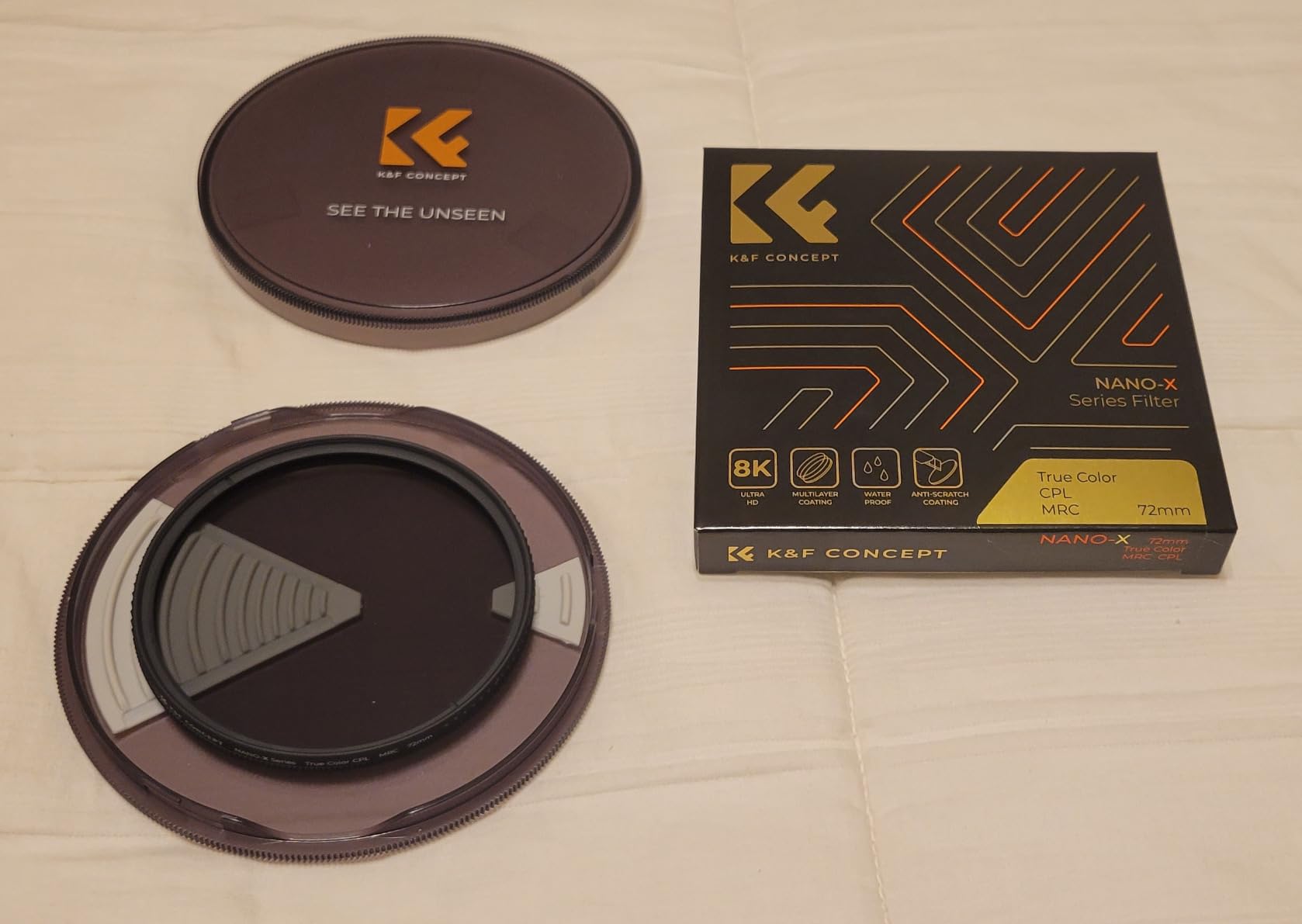
This is the third K&F CONCEPT filter in the roundup for a good reason. The True Color Nano-X uses titanium coating technology aimed at accurate colour with no yellow tint, and owners frequently frame it as the escape route from the blue cast they got from cheaper polarizers. On sharpness, the feedback is consistently positive with no meaningful loss of detail.
The numbers support that. It eliminates up to 99.9 percent of polarized light at a 45 percent light transmission rate, which puts the light loss in the region of one and a third stops, better than most standard polarizers in this group. The 28-layer coating sits on both faces of Japanese optical glass and is described as waterproof, oil-repellent and scratch-resistant, on a CNC non-slip frame.
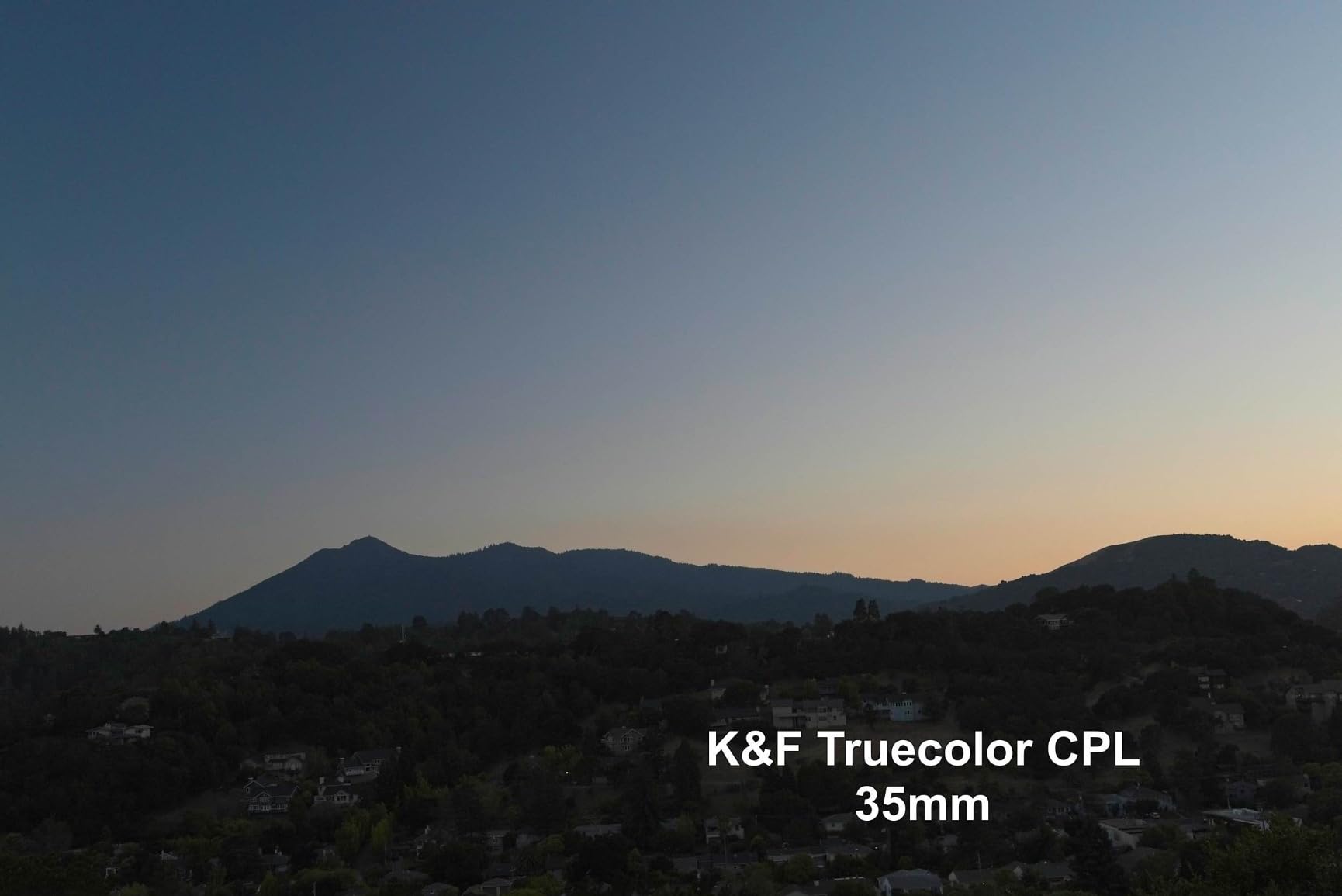
Owners highlight the damped resistance in the rotating ring, which makes it easy to settle on the correct angle instead of overshooting it, and the effect is described as natural and subdued enough to avoid heavy post-processing. One owner reported that dropping the filter shattered the filter rather than the lens, which is not a test anyone plans but is a good sign about the front element protection.
The honest criticism comes from colour-critical work, where small blue or yellow shifts appear at certain rotation positions. Finding the right angle does take experimentation, and the narrow ring is fiddly to remove with large fingers. Both are manageable once you know to look for them.
Who this filter suits
Anyone upgrading from a budget filter who found the colour cast unacceptable, and anyone who shoots at high shutter speeds or crops tightly and cannot afford softness. The 45 percent transmission rate also means you lose less light than a standard CPL, which helps in late afternoon and light woodland scenes.
Who should skip it
If you need the very strongest polarization effect, the higher transmission here trades a little effect for brightness. Colour-critical shooters should know that a small shift can still appear at certain angles. It is 77mm only, so check your thread before you commit.
7. Breakthrough Photography X4 CPL 77mm: The Best Circular Polarizer to Keep for Years
X4 CPL 77mm Circular Polarizer Filter – Schott B270 – MRC16 – Nano Coating – Weather Sealed – 25 Year Support by Breakthrough Photography
Pros
- Engineered for maximum neutrality
- German SCHOTT Superwhite glass
- Weather-sealed build
- 25 year guarantee and spares
Cons
- Highest cost in this roundup
- Small review base
- Wider than slim rivals
The X4 is the enthusiast option, and the engineering rationale is unusually specific. Breakthrough Photography engineered its X4 film to counter the transmission spike near 650nm that gives conventional CPLs a yellow cast, and the brand guarantees the most colour-neutral CPL it makes. A controlled forum test found it was not as neutral as many people claim, so set expectations at genuinely good rather than perfect.
The glass is the standout. It uses SCHOTT Superwhite B270 ultra-clear crown glass made in Germany, with MRC16 and nanotec coatings for reflection, dirt and water repellence, in a weather-sealed build. A serial number is laser engraved on the interior frame for warranty tracking, and the 25 Year Ironclad Guarantee comes with 25 years of spare part availability behind it.

What you are paying for is longevity and service. Owners cite the SCHOTT glass delivering excellent transmission across UV, visible and IR, and the nanotec coating outperforming entry-level filters in real weather. The sealed construction is aimed squarely at outdoor shooters who keep the filter mounted in rain, dust and salt.
The drawbacks are the cost and the thin evidence base. With 375 reviews, this is the smallest sample in the roundup, so there is less long-term owner history to lean on. It is also wider than the slim filters here, which can matter if you are stacking or fighting a tight lens hood.

Who this filter suits
Photographers who keep one filter for a decade and expect to pass it on. If you shoot outdoors in difficult conditions, or you are simply bothered by the yellow cast that most polarizers add, the German glass and the 25 year support are the argument. The serial numbering also matters if you are worried about warranty claims.
Who should skip it
Skip it if this is your first CPL, because you will not notice the difference enough to justify it. Anyone on a tight budget should look at the Tiffen or the entry K&F instead. If you need maximum slimness for an ultra-wide setup, this is not that filter.
8. Hoya NXT Plus 77mm: The Best Circular Polarizer for Fast Autofocus
Pros
- Coating minimises ghosting
- Filter factor tuned for AF speed
- Low-profile frame limits vignetting
- Wipes clean easily
Cons
- Premium price for the spec sheet
- Heaviest listed weight
- Premium over budget equivalents
The Hoya NXT Plus is the traditional answer, and its distinguishing spec is the 1.72 filter factor. That is the number to look at if your concern is that a polarizer will slow your autofocus, because a lower factor means more light reaches the sensor and the AF system has more to work with. It sits in the standard-polarizer band rather than the high-transmission extreme.
The coating is Hoya’s 10-layer HMC super multi-coating, described as minimising ghosting and reflections, topped with a durable coat that repels water, smudges and dust. The low-profile aluminium frame is designed to prevent vignetting on wide-angle lenses, and the precision-milled threads let it stack with other filters and sit under a lens cap. The frame is listed as waterproof.
Owners praise the even transmission, the clean stacking and the consistent colour balance that comes from an established Japanese optical brand. It is also the filter that many buyers choose specifically to move away from the blue cast they got elsewhere, so the colour reputation matters as much as the numbers here.
The main objection is straightforward. You are paying a premium for an established brand and a well-documented coating rather than for a dramatic optical step up, and at 0.12 kg it is the heaviest listed weight in the group. Some of that cost is brand reassurance, and that is a legitimate choice, but it is not a performance one.
Who this filter suits
Shooters who rely on continuous autofocus, including video and any fast-moving subject where a dim viewfinder slows acquisition. It is also a good choice if you want a name you can find service for, and the low-profile frame handles wide angles better than most full-size rings.
Who should skip it
If you are building a kit on a budget, this is the filter to skip, because the coating benefit is real but incremental. If you need the very lightest ring on a travel kit, look at the ultra-slim K&F options instead. It is also a premium-priced filter for a category where cheaper rivals now perform respectably.
9. Marumi DHG Super 82mm: The Best Circular Polarizer for Flare Control
Pros
- Blackened edge suppresses flare
- Dynamic coating cuts reflections
- Made in Japan
- Available in many sizes
Cons
- Not water resistant rated
- 82mm thread needs a step-up ring
- Older frame design
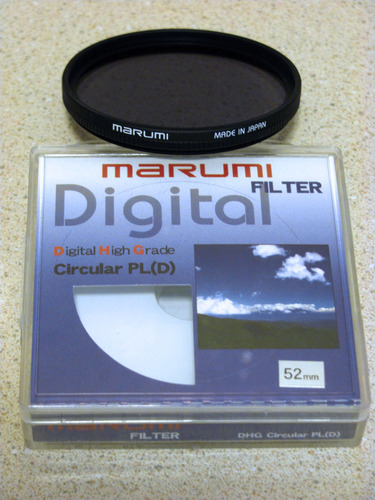
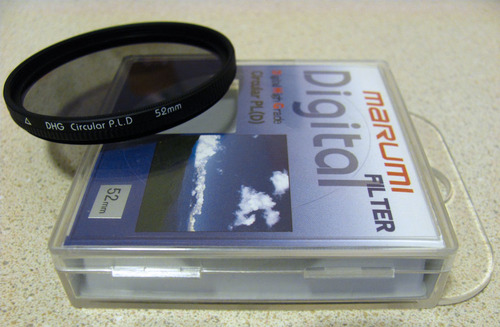
The Marumi DHG Super has been around long enough to have a 727-review history, and it earns its place with a specific design choice: a black ink process printed on the glass edge to eliminate flare. That is a differentiator when you are shooting into the light, because stray reflections off the filter edge are a common source of veiling flare in wide-open work.
The dynamic multi-coating is specified for ultra-low reflections, and the surface repels scratches, dirt, water and oil spots with a simple wipe. It is made in Japan, weighs 50 g, and is available in screw-in sizes from 37mm up to 105mm, which means you can keep the same model across a whole kit. Owners rate the build as steady and the coating as easy to maintain.
Forum feedback on this model is notably calm. Owners report no problems with it, which in a category full of complaints about seized rings and smeared coatings says something about consistency. The long-running design also means replacement glass and used units are easy to source if you change lenses later.
The practical catch is size. This listing is 82mm, so it suits larger front elements and needs a step-up ring for a smaller thread, and a step-up ring plus a polarizer is a common cause of vignetting complaints. It is also not rated water resistant, and the frame design is visibly older than the ultra-slim profiles on offer now.
Who this filter suits
Shooters who work into the light or shoot wide open and want the cleanest possible image with no edge flare. Anyone building a system across several lenses benefits from the wide size range and the decades of owner history behind the model. It is a calm, low-maintenance choice.
Who should skip it
If your lenses are all 77mm or smaller, you would be adding a step-up ring and creating a vignetting risk. It is also not the right filter for wet, exposed coastal work given the lack of a water resistance rating. Look at a coated alternative if cleaning matters to you.
10. Marumi EXUS 82mm: The Best Circular Polarizer for Low-Light Work
Pros
- Transmits roughly a third more light
- Very thin profile
- No ghosting from the ring edge
- Smooth rotation without sticking
Cons
- Aluminium ring feels fragile
- Included case does not hold it
- Conflicting dust repellence
- Lowest rating in the group
The EXUS is the light-transmission specialist. Marumi specifies roughly 30 percent more light transmission than most other polarizers, which in exposure terms is close to a stop, and that is the reason to consider it over a standard CPL if you are already fighting low light. Owners note that composing is easier as a direct result.
It is also very thin, about 1mm slimmer than comparable Hoya Pro1 filters, with a matt black inner mount that holds reflection below 0.6 percent and removes ghosting from the ring edge. The optical surface is anti-static, water and oil repellent, and the mount is rated waterproof. Sizes run from 37mm to 82mm and it works on digital and analogue bodies.

Where the optics sit, the feedback is good. Reviewers report smooth rotation with no sticking, no ghosting from the ring edge, and performance that punches above its weight optically. The slim profile is genuinely useful on a wide zoom when you are stacking.
The rating of 4.2 is the lowest in this roundup, and the reasons are mostly accessories and housing. The included case does not hold the filter securely, letting it jiggle, and the aluminium ring rather than brass is reported to feel fragile. There are also conflicting reports on whether the coating repels or attracts dust, and vignetting appears when it is stacked with a variable ND on a wide zoom.

Who this filter suits
Photographers who need the brightest polarizer they can get, whether that is woodland interiors, overcast coastlines or late sessions where every stop counts. The slim ring and the anti-ghosting mount suit fast, wide-aperture work where a thicker filter would cost you both corners and contrast.
Who should skip it
Do not choose it for durability, since the aluminium ring and loose case are the main complaints. If you need a stronger polarization effect for deep landscape contrast, the higher transmission here works against you. It is 82mm, so check the thread, and buy a proper padded case.
How to Rotate a CPL for the Strongest Effect
Polarization is strongest when the sun sits roughly 90 degrees to your line of sight and behind your subject. Shooting with the sun behind you produces almost no effect, which is why a CPL can look broken in the middle of the day on a wide-open beach. The classic technique is to compose the frame, then turn the ring slowly and watch for the moment the sky deepens or the water goes glassy.
The Ansel Adams test is worth learning because it tells you in advance whether a polarizer will help at all. Hold the filter in front of your eye and look at the scene through it, then turn it. If nothing visibly changes, there is little polarized light in the frame and the filter will cost you a stop for nothing. If the change is dramatic, the filter is earning its place.
Watch the sky as you rotate. On wide lenses the sky can go uneven, with one corner darker than the other, and that is a physical consequence of the angle between the filter, the lens and the sky rather than a fault in the glass. Keep the sun out of frame, meter off the sky, and accept that you are spending one to two stops for the look.
If you work mainly around water, my circular polarizer guide for waterfalls covers the long-exposure interaction in more detail. For broader landscape work, the landscape-specific picks are worth a read before you commit.
When Not to Use a Circular Polarizer
Portraits are the classic mistake. A polarizer reduces light by one to two stops, forcing you to open up or slow down, and it can cut the sheen out of hair and skin that makes a portrait feel dimensional. It will also darken a subject’s eyes if the light is reflected off them at the polarizing angle. Most professionals leave it off for portrait work entirely.
Wildlife and fast action are the same problem in worse conditions. You lose a stop or two exactly when you cannot afford the slower shutter, and the effect is rarely visible in a subject filling the frame. Sports shooters get the same verdict. You are carrying weight and losing light for a benefit that will not appear in the shot.
Astro and night work is a straight no. Night skies are not polarized, so the filter removes nothing and only takes light away. Long exposures through a polarizer are also a bad combination with many tracking mounts, since the filter is a variable element sitting in the optical path.
Finally, a CPL cannot remove reflections from metal. Polarized light reflects off metal and most other reflective surfaces, so car paint, chrome and water at odd angles will stay shiny no matter how far you rotate. Stacking a CPL with a UV or protection filter also adds light loss and flare risk for very little benefit, which is a common reason behind the vignetting complaints in this roundup.
How to Find Your Filter Thread Size
Look at the front of your lens or the inside of the lens cap for a diameter symbol followed by a number. That is your thread size in millimetres, and it is the single most common pre-purchase blocker. If the marking is worn away, check the lens specification or the barrel, or look up the model and its filter thread.
Common sizes include 49mm, 52mm, 58mm, 67mm, 72mm, 77mm, 82mm and 95mm, but the same lens model can change thread size between revisions, so verify rather than assume. If your thread is smaller than the filter you want, a step-up ring adapts the filter to your lens. Step up carefully though, because a step-up ring plus a thick filter on a wide lens is a reliable way to darken the corners.
Follow the 2mm rule of thumb: if your lens is 24mm or wider, stay with an ultra-slim ring around 5mm or less. If you shoot 14mm or wider, treat any filter with real thickness as a risk to your corners. In this roundup, the K&F CONCEPT ultra-slim at 5.3mm, the K&F Nano-X at 5.3mm and the Hoya NXT Plus with its low-profile frame are the safest wide-angle choices.
How to Remove a Stuck Polarizing Filter
A seized polarizer is the most repeated complaint in every photography forum I read, and it usually has nothing to do with quality. Aluminium filter rings and aluminium or plastic lens threads have the same diameter and the same thermal expansion, and a thread that binds after a damp morning is a normal mechanical result. Some ultra-slim designs make it worse because there is little ring to grip.
First, stop forcing it. If the ring will not turn, you are risking stripping threads on the lens, not just the filter. Second, cool or warm the lens and the filter together so both metals are at the same temperature, then apply a small amount of lubricant to the filter threads only. A rubber grip tool, a rubber band wrapped around the ring, or fabric tape on the knurling all give you purchase without metal on metal.
Third, hold the lens barrel firmly and turn the filter ring in the correct direction with even pressure rather than point force. Fourth, if it still will not move, remove the lens from the body and work on a clean surface, where a dropped filter is less likely to crack against a lens hood. Only as a last resort should you use pliers on the ring, and even then protect the lens barrel with cloth.
Prevention is easier than removal. Keep threads clean and dry, do not over-tighten a polarizer since the rotation ring is what carries the load, and avoid leaving a filter mounted in salt air or mud where it will dry onto the thread. If a filter repeatedly seizes, a brass frame is the upgrade forum users recommend, along with a separate adapter ring kept permanently on the lens.
Buying Guide: What to Look for in a CPL Filter
Coating is the first filter. Multi-layer and nano or MRC coatings resist water, oil, dust and fingerprints, and they are the difference between a filter you wipe once and a filter you clean properly every shoot. A filter with no hydrophobic layer will hold water on the glass in exactly the conditions where you most want to shoot.
Frame material comes next. Brass frames are praised by forum users for durability, easy cleaning and, importantly, for not seizing against an aluminium lens barrel. If you have had a stuck filter before, brass is the feature to prioritise over everything else. Aluminium-magnesium alloy is the lighter and cheaper alternative and works well when threads stay clean.
Frame thickness decides whether you can use the filter at all on a wide lens. Ultra-slim rings around 5mm or less are safe down to about 24mm, and anything thicker becomes a risk below that. Check whether the filter has a front thread, because that determines whether you can stack a protection filter without losing the ability to cap the lens.
Effect strength versus light loss is the trade most buyers misjudge. A standard CPL costs one and a half to two stops and gives a strong, obvious result. A high-transmission CPL costs closer to one stop and gives a subtler effect, which is why some thin filters feel weak. The K&F CONCEPT True Color at 45 percent transmission and the Marumi EXUS at around 30 percent more transmission than typical sit on the efficient end.
Colour neutrality matters if you grade or deliver files. Filters with True Color or titanium film, such as the NiSi and the Breakthrough X4, are engineered to avoid the yellow cast most conventional polarizers add. If you shoot JPEG, any cast becomes part of the final image, so this matters more than coating layer counts.
Finally, consider the system. Screw-on filters are simpler and cheaper, and the 100mm holder and magnetic systems suit people who switch filters constantly and want fast changes. Warranty length is a decent proxy for manufacturer confidence, ranging from one year on the Neewer to 25 years on the Breakthrough X4, and a padded pouch or case matters more than most people expect once a filter starts rattling around a camera bag.
Frequently Asked Questions
Are circular polarizers worth it?
Yes, for landscape, seascape, travel, architectural and real estate work. A circular polarizer is the only filter that removes reflections rather than darkening the whole frame, so it can cut glare off water, glass, leaves and wet rock, deepen a blue sky and boost foliage colour in one rotation. If you shoot none of those subjects, you are carrying a stop of light for no visible gain.
Do CPL filters reduce light?
Yes. A standard circular polarizer typically costs between one and a half and two stops of light, and the Hoya NXT Plus in this roundup is specced at a 1.72 filter factor. High-transmission models give back roughly half a stop but apply a weaker polarizing effect. The Ku0026amp;F CONCEPT True Color at 45 percent transmission and the Marumi EXUS sit on the brighter end of the range.
Can you leave a circular polarizing filter on all the time?
In daylight you can, and owners frequently keep one mounted for general shooting. Remove it for portraits, wildlife, sport, astro and night work, where the one to two stops of loss cost you more than the effect returns. Also remove it before any night or interior frame, and be aware that a mounted filter adds flare risk on every shot and a place for a filter to bind against your lens thread.
What are the downsides of using a CPL filter?
The main drawbacks are a one to two stop light loss, uneven or banded skies on wide-angle lenses when you rotate, vignetting from a thick ring on ultra-wide glass, a white balance shift caused by the warm or cool cast many polarizers add, and the risk of the ring seizing onto a lens thread. It also cannot remove reflections from metal, and stacking it with a UV or protection filter adds further loss and flare risk.
Can I use a circular polarizing filter at night?
No benefit and a real cost. Night skies are not polarized, so the filter has nothing to remove while still taking away one to two stops of light and slowing your shutter. The same applies to most indoor work. Keep the CPL in the bag for daylight scenes that actually contain reflected light, which you can check quickly with the Ansel Adams test of holding the filter to your eye and rotating it.
My polarizing filter is stuck on my lens. How can I remove it?
Stop forcing it, because you will strip the lens thread rather than the filter. Let the lens and filter return to the same temperature, put a small amount of lubricant on the filter threads only, then add purchase with a rubber grip tool, a rubber band or cloth tape on the knurling. Hold the lens barrel firmly and turn the ring with even pressure. If it still will not move, remove the lens from the body and work on a clean surface before considering pliers.
How do I know what size circular polarizer I need?
Check the diameter symbol and number printed on the front of the lens or inside the lens cap, for example 77mm or 82mm. If the marking is worn away, look up the lens model and its filter thread specification. If your thread is smaller than the filter, a step-up ring adapts it, but stacking a step-up ring with a thick filter on a wide lens is a common cause of vignetting.
What filters do professional photographers use?
Most carry one screw-on circular polarizer per lens thread, chosen for colour neutrality and a brass frame, plus an ND and a protection filter in a 100mm holder or magnetic system for fast changes. Forum consensus repeatedly favours B+W, Marumi, NiSi True Color and the Breakthrough X4, with Hoya popular for autofocus-sensitive work. The practical rule is one good CPL you know how to rotate beats three cheap ones you avoid using.
Which Circular Polarizer Should You Buy?
The Tiffen 77mm is the best circular polarizer for most photographers because it is mild, sharp and dependable, backed by more owner history and a 10 year warranty than anything else here. If your budget is tighter, the K&F CONCEPT 77mm ultra-slim delivers a neutral result with no reported colour cast, and if wide-angle vignetting is your concern the K&F CONCEPT Nano-X with its 28-layer coating is the one to buy. Colour-critical work points to the NiSi True Color, and low-light work points to the Marumi EXUS.
Whatever you choose, buy the right thread size first, learn to rotate it at roughly 90 degrees to the sun, and take it off for portraits, wildlife and anything after dark. That last habit alone will do more for your images than the difference between any two filters in this roundup.