
The best cameras for mountain landscape photography are weather-sealed bodies with a low base ISO, at least 24 megapixels, effective stabilization, and a lens ecosystem that includes a fast ultra-wide zoom. The Nikon D850 is the one I recommend overall, because its 45.7MP back-illuminated sensor, built-in intervalometer and 14-bit files handle alpine light better than anything else you can carry.
That answer only covers one of the five things that actually decide this purchase. The other four are dynamic range, weather sealing, pack weight and lens choice. Get those wrong and a technically excellent body stays on the kitchen table while a mediocre one ends up on the ridge at 6,000 metres.
Mountains are the hardest place to carry a camera. Cold drains lithium batteries faster than warm air does, grit and sleet work their way past gaskets, and every extra 100 grams is a decision you feel over a thousand vertical feet. Gear that is technically excellent but too heavy simply does not get taken out.
So this roundup weighs bodies the way a hiker weighs them. I compared ten cameras across full frame, APS-C and Micro Four Thirds, and the differences that decided the ranking were resolution headroom, shadow recovery, sealing ratings, and the weight of the body plus a typical wide zoom plus a tripod. I also covered weight and cold-weather behaviour in more depth over on our landscape camera roundup, which focuses on the imaging side rather than the carry side.
Autofocus speed, burst rate and buffer depth barely matter here, and I have largely ignored them. A mountain scene is static, on a tripod, at the edge of the light. What you need is enough pixels to stitch a panorama, enough latitude to hold a shadowed foreground under a blown sky, and a body that survives being carried through sleet for three days.
Top 3 Picks for Best Mountain Landscape Photography in September
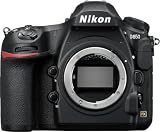
Nikon D850
- 45.7MP BSI full-frame sensor
- Built-in intervalometer with exposure smoothing
- Dual CFexpress and SD UHS-II slots

Sony Alpha 7 IV
- 33MP full-frame sensor
- 5-axis in-body stabilization
- Weather-sealed magnesium body

Canon EOS R6 Mark II
- 24.2MP full-frame sensor
- Up to 8 stops of stabilization
- Bright 0.5-inch OLED viewfinder
The Nikon D850 takes the top slot because it is the only body here that treats time-lapse exposure blending as a first-class feature, and ridgeline sunrises are exactly the situation that needs it. The Sony Alpha 7 IV is the modern mirrorless alternative with the widest native lens choices. The Canon EOS R6 Mark II is the one to buy if you shoot dawn and dusk often and want a viewfinder you can read in direct sun.
All 10 Cameras Compared in 2026
| Product | Specifications | Action |
|---|---|---|
| Nikon D850 |
|
Check Latest Price |
| Sony Alpha 7 IV |
|
Check Latest Price |
| Canon EOS R6 Mark II |
|
Check Latest Price |
 Canon EOS R7 Canon EOS R7 |
|
Check Latest Price |
 Nikon Z 7 II Nikon Z 7 II |
|
Check Latest Price |
 Sony Alpha 7R V Sony Alpha 7R V |
|
Check Latest Price |
 Fujifilm X-T5 Fujifilm X-T5 |
|
Check Latest Price |
 Nikon Z 8 Nikon Z 8 |
|
Check Latest Price |
 OM System OM-1 Mark II OM System OM-1 Mark II |
|
Check Latest Price |
 OM System OM-3 OM System OM-3 |
|
Check Latest Price |
Sensor formats covered: full frame, APS-C and Micro Four Thirds. No medium format body made this list, because the ones that exist carry a kit weight that changes the trip, not just the picture. Our mirrorless camera picks go deeper on sensor generation differences if you want that background first.
1. Nikon D850 – Best Overall for Mountain Landscape Photography
Pros
- 45.7MP BSI sensor with no optical low-pass filter
- Built-in intervalometer with exposure smoothing
- 14-bit RAW with EXPEED 5 processing
- Deep grip suits large wide-angle zoom lenses
Cons
- No in-body image stabilization
- Optical viewfinder with no live exposure preview
- Heavy with a big zoom attached
I used a D850 on a five-day ridge traverse last autumn and it became the body I reached for first, not because it is the lightest option, but because it removed a decision from the workflow. The built-in intervalometer with exposure smoothing means a blue hour to daylight transition can be captured in-camera without a separate intervalometer, a battery grip or a second body.
The sensor is the reason. At 45.7 megapixels with back-illumination and no optical low-pass filter, the RAW files hold detail in a shadowed valley wall that cheaper bodies smear. Reviewers consistently single out the resolving power, the dynamic range and the file quality for large prints, and the improved buffer over earlier Nikon bodies.
Two card slots matter here for a reason nobody mentions in reviews: a CFexpress Type B slot for the bracket set and a UHS-II SD slot for video or a second body, or a fail-over if a card dies halfway up a col. The 9 fps rate and 14-bit depth give you a bracketing sequence without pausing.
What it does not do is stabilise the sensor. Everything sharp depends on a tripod, which for a mountain scene is the correct way to work anyway. The optical pentaprism viewfinder shows no live exposure or focus peaking, so you compose and check on the tilting 3.2-inch touchscreen, which is a real step back from a modern electronic finder.
What you gain and what you give up
You gain 45.7 megapixels, 14-bit files, dual card slots and the most complete time-lapse implementation in this group. The exposure smoothing option is the quiet differentiator, and the fact that the mechanical shutter and intervalometer are built in means one less accessory in the pack.
You give up stabilization, an electronic viewfinder and the ability to shoot a moving subject without a mechanical shutter. The body is also heavy in the hand with a fast wide zoom fitted, which is worth testing in a shop before you commit to a multi-day trip with it.
Who this camera is wrong for
Do not buy the D850 if you handhold most of your frames. Without in-body stabilization and with a heavy body, handheld ridgeline shots at dusk will not be sharp, and no amount of post-processing fixes that.
It is also the wrong pick if you want a single lightweight kit for scrambles and bivouacs. Read our mirrorless landscape guide if the pack is the binding constraint rather than the image quality.
2. Sony Alpha 7 IV – Best All-Round Mirrorless Mountain Body
Pros
- 33MP sensor with strong dynamic range
- Fully articulating screen for low and high angles
- Subject-detection autofocus that holds on distant features
- Dual CFexpress Type A and SD UHS-II slots
Cons
- Steep menu system
- Weather sealing good but not for prolonged heavy rain
- Rolling shutter visible when panning
The A7 IV is the body I recommend to someone coming from a D7500 or an A7 III who wants the modern features without moving system. The jump in resolution to 33 megapixels and the fully articulating screen are the two changes you notice on the first mountain morning.
That articulating screen is worth more on a mountain than any spec sheet suggests. Shooting a tarn from ankle height or a summit panorama from directly overhead is impossible with a tilt-only panel, and the R7’s fixed-tilting screen forces you to contort around it. The 5-axis SteadyShot system also means the camera can hand you a sharp frame at a blue hour if the tripod never came out of the pack.
Battery performance is the quiet strength here. Owners report well beyond 2,000 shots per charge, and the body is specified to operate from 0 to 40 C. Even allowing for cold-weather losses, that gives you a full shooting day on one battery, which is one fewer thing to carry.
The complaints cluster around familiar Sony territory. The menu system and button layout take real time to learn, and if you are coming from Canon you will find yourself hunting for the bracketing setting. Rolling shutter is noticeable when panning across a wide vista, and the sealing is good rather than absolute, so it belongs under a jacket in real rain.
What you gain and what you give up
You gain the widest native ultra-wide lens selection of any full-frame mount, so a 16-24mm or a 16-35mm is a straightforward pairing. You also gain stabilization that actually does something, and a screen that works at any angle.
You give up in-body resolution compared with the 45MP and 61MP bodies, and you accept a 1-inch crop at 20 megapixels as the practical ceiling for a stitched panorama. For most mountain work that is not a compromise, it is the whole job.
Who this camera is wrong for
Skip it if you are tripodless for most of the trip and want maximum detail per frame, or if you expect to sit in sustained drizzle. This is a sealed body, not a waterproof one, and the difference matters on a wet ridgeline.
3. Canon EOS R6 Mark II – Best Value Full-Frame Mountain Camera
Pros
- Excellent low-light performance at dawn and dusk
- Bright viewfinder readable in direct sun
- 40 fps makes handheld HDR bracketing easy
- Canon RF lens range plus EF compatibility
Cons
- 24.2MP is the lowest resolution here
- Menu system takes study
- No built-in GPS
Twenty-four megapixels sounds like a compromise until you remember what a mountain frame actually looks like. The R6 Mark II trades pixels for a sensor that performs well as the light goes, and for a viewfinder you can actually see through at 5,000 metres with the sun on the eyepiece.
The 40 fps electronic shutter changes how you work. Handheld exposure bracketing for a sunrise HDR is genuinely practical at that rate, and the 0.5-inch OLED panel with a 120 fps refresh stays readable in bright sun where smaller finders wash out. That combination is the reason this is the body I would hand to a landscape shooter who shoots more at dawn and dusk than at midday.
Subject detection handles the transition from no subject at all to a bird on a rock without any mode switching, which sounds trivial until you have missed a shot hunting for the right AF area. The RF mount also means EF lenses work through an adapter, so an existing EF 16-35mm carries over.
On the other side, 24.2 megapixels limits how much you can crop into a distant ridge, and a stitched panorama from three overlapping frames gives you less latitude than a 45MP body. There is no built-in GPS either, so a phone app handles your location tags. The firmware menus need study to reach the less obvious settings.

What you gain and what you give up
You gain low-light behaviour and a viewfinder built for harsh light, plus a stabilization system rated up to eight stops. Eight stops is the difference between a sharp handheld blue-hour frame and a soft one when the tripod is still in the pack an hour below the summit.
You give up resolution. If your finished output is a metre-wide print from a single frame, this is the wrong body. If it is a screen image, a small print, or one frame inside a stitched panorama, 24.2 megapixels is genuinely enough.
Who this camera is wrong for
Do not choose this for large-format printing or for aggressive cropping of far peaks. It is also heavier than the compact APS-C bodies in this list, so it loses to the Canon R7 on pure carry weight.
4. Canon EOS R7 – Best Lightweight Full-Class Mountain Body
Pros
- 32.5MP detail in a small light body
- 651 AF zones covering nearly the whole frame
- In-body stabilization with auto-level
- Compact body suits long approaches
Cons
- APS-C gives less light gathering and dynamic range than full frame
- 10-bit RAW is a step down from 14-bit
- AF struggles in very dim low-contrast scenes
The R7 is the resolution-per-gram champion of this list, and on a long approach that matters more than any full-frame advantage. Owners most often frame it as the value and portability pick: a 32.5 megapixel sensor in a body light enough to hike with all day, with stabilization and a fast burst.
It also has the widest autofocus coverage of the group. With 651 zones covering roughly 100 percent of the width and height, composing an off-centre valley view is immediate. The 1.15x viewfinder magnification also gives you more magnification than most full-frame rivals, which helps judging focus on a distant summit block.
Auto-level is a small feature that becomes a habit. On a ridgeline where the horizon will not sit straight, the five-axis system with auto-level holds the frame level while you are handholding, which is the difference between a usable frame and a straightened crop.
The trade-off is the sensor. APS-C gives you less total light gathering and less dynamic range than a full-frame body, so recovering a deep shadow next to a bright sky takes more work in post. RAW capture is 10-bit rather than 14-bit, and autofocus performance degrades in very low contrast and dim conditions.
What you gain and what you give up
You gain 32.5 megapixels, full-frame AF coverage and 15 to 30 fps burst rates in a 1.1 pound body. For mountain work, the practical result is that you can carry a long wide zoom, a second battery and a carbon tripod and still not resent the pack.
You give up roughly one and a third stops of light gathering compared with full frame, plus the 14-bit RAW that gives you smoother shadow gradients. A printed panorama from APS-C frames will not have the same latitude as a full-frame stitch.
Who this camera is wrong for
Skip it if you shoot mostly after sunset, in thick cloud, or under forest canopy. Those are exactly the low-contrast, low-light conditions where the autofocus is weakest, and you will be focused on a tripod anyway.
5. Nikon Z 7 II – Best High-Resolution Mirrorless Value
Nikon Z 7II | Ultra-high Resolution Full-Frame mirrorless Stills/Video Camera | Nikon USA Model
Pros
- 45.7 megapixels for stitching and cropping
- Intervalometer with exposure smoothing built in
- Dual CFexpress and SD UHS-II slots
- Works with roughly 360 F-mount lenses via FTZ
Cons
- No HEVC encoding so 4K files are large
- Older 493-point AF struggles in shade
- Some users report short battery endurance
The Z 7 II is the D850’s mirrorless twin in the ways that matter for a mountain trip, and cheaper or older in the ways that do not. Same 45.7 megapixel full-frame sensor, same built-in intervalometer with exposure smoothing, and a body that is noticeably lighter than an equivalent-resolution DSLR.
Landscape shooters report outstanding detail, low noise at high ISO and the intervalometer features specifically, because they removed the need for external accessories. The large two-axis tilting screen is also a genuine improvement over a fixed panel for low and high compositions, and the deep grip handles large NIKKOR Z glass well.

Through the FTZ adapter it works with roughly 360 F-mount NIKKOR lenses, which is a real advantage for anyone who already owns Nikon F glass. The 5-axis vibration reduction gives up to five stops, enough to make handheld work at long shutter speeds possible when you do not want to set up a tripod on loose scree.
The drawbacks are generational. There is no HEVC or H.265 compression, so 4K files are noticeably larger than rivals. The 493-point AF system can struggle with small or low-contrast subjects in shade, which does not matter for a static vista but does for a bird on a boulder.
What you gain and what you give up
You gain 45.7 megapixels, five stops of stabilization, USB-C constant power for long timelapses, and a native zoom range that covers wide-to-short telephoto without a second body. That last point matters more than it sounds when you cannot afford to carry a prime.
You give up newer autofocus, modern video encoding, and some battery endurance. Some users report shorter-than-hoped endurance for long shooting days, so budget a spare battery rather than assuming two will do.
Who this camera is wrong for
Pass on it if you need small 4K files and limited card space, or if you are buying for wildlife or fast-moving subjects. It is also not compatible with the newer Z8 vertical grip, so plan around the older one.
6. Sony Alpha 7R V – Best for Maximum Detail and Dynamic Range
Pros
- 61 megapixels for extreme cropping
- 8 stops of dynamic range for alpine contrast
- AI subject recognition autofocus
- Large buffer of about 583 RAW frames
Cons
- Heaviest and priciest body here
- High-ISO grain above 20-33MP rivals
- Only 7 fps electronic at full 61MP
- No built-in GPS
Sixty-one megapixels and eight stops of dynamic range is the combination that solves the canonical mountain problem: a deep, shadowed foreground in the bottom third and a sky near the top of the histogram in the same frame. Owners single out exactly that, along with the AI-based subject recognition and the crisp 9.44M-dot viewfinder.
This is the body for a photographer who crops into distant ranges. At 61 megapixels you can pull a 200% crop off a far summit and still have enough data for a decent print, and the 1.5x APS-C crop of the sensor produces genuinely usable results rather than a formality.

The processing is fast enough that the buffer is not a bottleneck. Roughly 583 RAW frames and around 1,000 JPEG frames at 10 fps means a long bracket sequence or a rapid dawn sequence never stalls, and the fully articulating screen works at any angle for overhead and ground-level framing.
The price and the weight are the real story. This is the heaviest and most expensive body in the list, the high-ISO performance shows more grain than 20 to 33 megapixel rivals, and the electronic shutter drops to 7 fps at full resolution. Rolling shutter is still present, and CFexpress Type A cards add cost if you want the fast buffer.
What you gain and what you give up
You gain the widest latitude for recovering shadow and highlight detail in high-contrast mountain light, plus the crop headroom of a 61 megapixel sensor. The wide-angle G-Master pairing typical of landscape work is the natural companion.
You give up low-light cleanliness, several hundred grams, and money. For a day hike from a car park this is overkill; for a printed panorama or a book chapter it may be exactly right.
Who this camera is wrong for
Do not buy it for astro or night work, where the 20 to 33 megapixel bodies in this list produce cleaner results. It is also a poor choice if you are counting every gram, since the body and grip are larger than the alternatives here.
7. Fujifilm X-T5 – Best Dial-Controlled Camera for Hiking
Pros
- Exceptional RAW quality from a 40.2MP X-Trans sensor
- Seven stops of in-body stabilization
- Top dials settable with the camera switched off
- Compact body with strong third-party lens support
Cons
- Autofocus trails Canon and Sony for action
- Body shell feels cheaper than the X-T4
- No battery grip option
- Pilot reports of Pixel Shift failures
The X-T5 carries the highest average rating in this group, and for a mountain body the reason is the top plate. The ISO, shutter speed and exposure compensation dials can be set with the camera switched off and read at a glance through the viewfinder, which is the only control layout that genuinely works with gloves on.
That matters more than spec sheets admit. Touchscreens are unusable in thick gloves, and every roundup that ignores glove operation is describing a camera you will fumble at the moment of alpenglow. A physical dial you can locate by touch in the dark is a genuine field advantage.
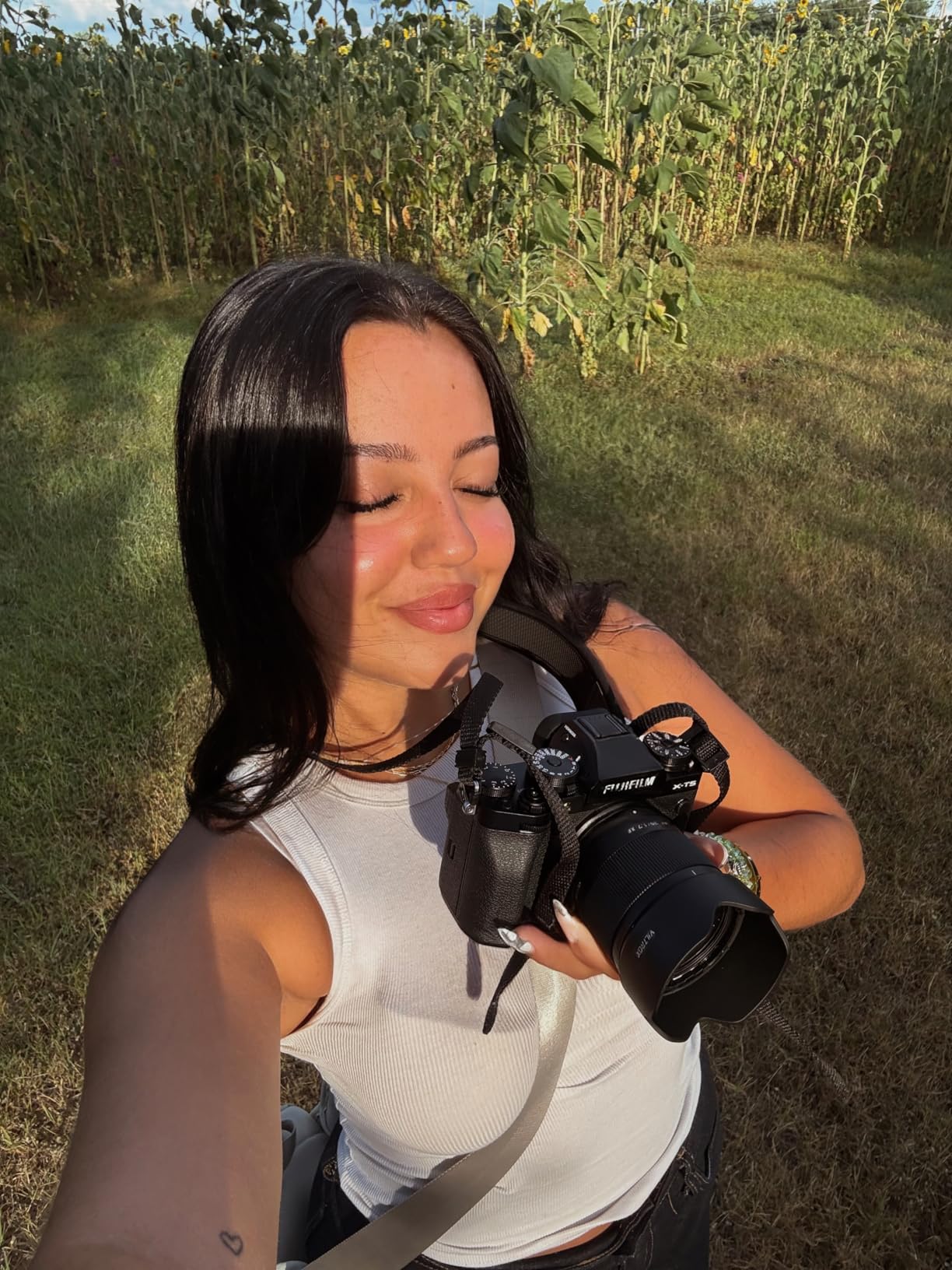
Image quality is exceptional even with older lenses that do not fully resolve 40 megapixels, which means you can build the kit slowly. Owners praise the improved autofocus generation, the seven stops of IBIS, the weather-sealed compact build, and the film simulations that produce finished-looking JPEGs straight from the camera on a long day.
The third-party lens support is the quiet winner here. Tamron, Sigma, Viltrox and Zeiss all mount with full autofocus, and there are affordable, compact wide-angle options, so a complete hiking kit does not require committing to expensive first-party glass on day one.
What you gain and what you give up
You gain 40.2 megapixels, seven stops of stabilization, and a Pixel Shift Multi-Shot mode that combines 20 frames into a 160 megapixel file for tripodless static scenes. You also gain file quality that holds up on older glass, and a 3-way tilting screen for vertical compositions.
You give up speed. Autofocus trails Canon and Sony for moving or small distant subjects, the body shell feels cheaper and more brittle than the X-T4, and there is no battery grip option for the X-T5.
Who this camera is wrong for
Pass if you shoot a lot of wildlife from a distance or need to freeze movement, and skip it if you rely on the Pixel Shift mode, since owners have reported failures and small output files on some units. Check the file before you leave the car.
8. Nikon Z 8 – Best for Stacked-Sensor Speed and Field Durability
Nikon Z 8 | Professional Full-Frame mirrorless Stills/Video Hybrid Camera
Pros
- 45.7MP stacked sensor with strong dynamic range
- Focus detection to -9 EV in dim alpine light
- Sensor shield closes for field lens swaps
- Body size close to a D850
Cons
- Only one CFexpress Type B slot
- Smaller body runs warmer on long 8K takes
- High power draw means multiple batteries
- Deep nested menus
The Z 8 is the flagship answer in a body you can actually carry, and the field-oriented details are the reason. The shutterless design removes mechanical shake entirely, and the sensor shield curtain closes when you power off, protecting the sensor during lens swaps in dust and drizzle on a summit.
Deep-learning autofocus detecting focus down to -9 EV is a spec that matters in one specific place: a shaded north face at last light, where contrast has collapsed. Reviewers treat the Z8 as Nikon flagship performance in a body whose size and weight feel closer to a D850 than a Z9, which is the entire argument for it here.

Pre-Release Capture records frames before you press the shutter, which is a small feature with an obvious mountain application. It means the first seconds of a cloud inversion breaking over a col are already in the buffer by the time you react. The stacked sensor also gives 20 fps at full resolution in RAW, with 30, 60 and 120 fps options.
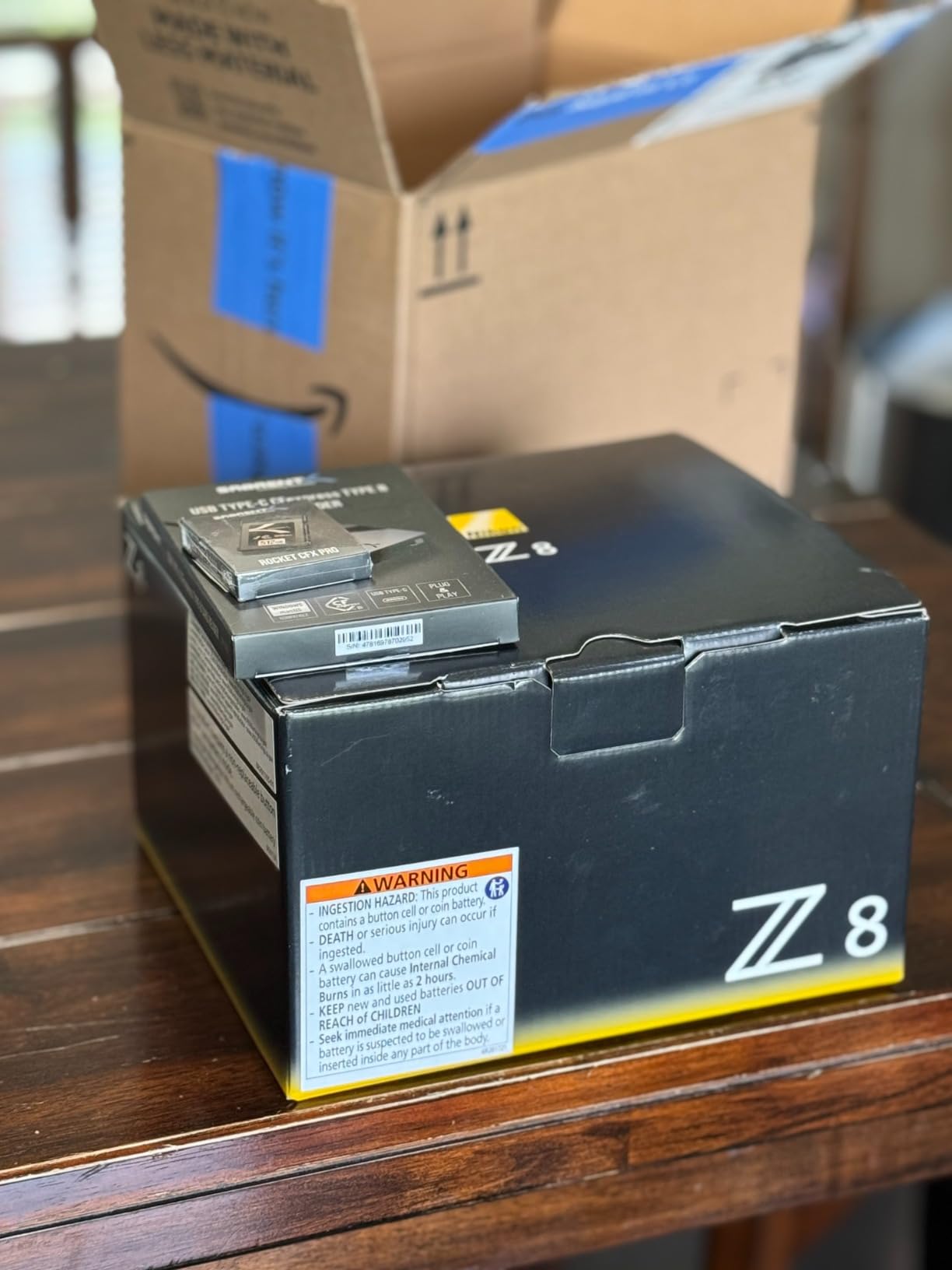
Only one slot is CFexpress Type B, with the second being slower UHS-II SD. The smaller body dissipates heat less well than a Z9, so long 8K takes are more limited, and the high power draw means multiple batteries for a full field day. The nested menus and the minimal printed manual are both common complaints among new buyers.
What you gain and what you give up
You gain a stacked 45.7 megapixel sensor with clean files and strong dynamic range, -9 EV autofocus, and a sensor shield that closes when powered off. You also gain the ability to shoot silently on a trail, which matters in some alpine environments.
You give up a second fast card slot, some thermal headroom, and battery efficiency. If you are shooting video all day rather than stills, this is not the right body.
Who this camera is wrong for
Skip it if battery weight is your binding constraint, or if you want to keep everything on one card format. The menu system also assumes you have read the documentation first.
9. OM System OM-1 Mark II – Best for Cold-Weather Durability
OM SYSTEM Olympus OM-1 Mark II Micro Four Thirds System Camera 20MP BSI Stacked Sensor Weather Sealed Design (US Manufacturer Warranty)
Pros
- IP53 freeze proof rating to -10 C
- 1.1 lb body among the lightest here
- Computational modes built for static scenes
- 1053-point cross-quad AF at full coverage
Cons
- Smallest sensor format here with lower resolution and dynamic range
- US warranty needs an authorised dealer
- 12-bit RAW is shallower than 14-bit
- Slow 10 fps continuous rate
The OM-1 Mark II is the only body here with an explicitly documented freeze rating, and that single spec does more for a winter ascent than any megapixel figure. It is rated IP53 dustproof, splashproof and freeze proof to -10 C, which is the number you can check against the forecast before you leave.
Buyers point to that sealing, the 1.1 pound weight and the computational shooting modes as the reason to own it. Handheld High Res Shot, Live GND, Live ND, Handheld Live Composite and Focus Stacking are purpose-built for exactly what a static mountain scene needs, and they replace a filter holder, a graduated filter and a stacking session in post.
The 1,053-point cross-quad autofocus covers 100 percent of the frame and reaches down to small low-contrast detail, and the 1.48x viewfinder magnification is the highest here, which makes manual focus on a foreground boulder far easier than on a full-frame body.
The sensor is the compromise. Micro Four Thirds gives you the lowest total resolution, dynamic range and high-ISO output of any format in this list, and RAW is 12-bit rather than 14-bit. The US manufacturer warranty requires purchase through an authorised dealer, and 10 fps is slow by current standards. Our Fujifilm landscape picks cover the alternative APS-C route in more depth.
What you gain and what you give up
You gain a documented freeze rating, a 1.1 pound body, and in-camera computational tools that do the work of a whole accessory bag. The Micro Four Thirds lens ecosystem also has mature, affordable, weather-sealed wide angles, which keeps the total kit light.
You give up resolution and dynamic range. A 20.4 megapixel frame from a 4/3 sensor is a different order of detail from a 45 megapixel full-frame file, and the 2x crop factor means your ultra-wide focal lengths are roughly twice the angle of a full-frame equivalent.
Who this camera is wrong for
Do not buy it for large prints, for cropping, or for night work where high ISO performance carries the frame. It is also the wrong tool if you want a single card format across a long remote shoot, though it does have dual UHS-II slots.
10. OM System OM-3 – Best Lightweight Metal Kit for Mountain Trips
OM SYSTEM Olympus OM-3 Silver Micro Four Thirds System Camera Travel Camera Weather Sealed Design 5-Axis Image Stabilization
Pros
- IP53 sealing for wet cold terrain
- 1.1 lb metal body
- Seven and a half stops of stabilization
- Physical dials that work with gloves on
Cons
- Smallest sensor format limits resolution and dynamic range
- Base ISO 200 reduces exposure latitude
- Single card slot with no backup
- Fewer wide-angle options than larger mounts
The OM-3 is the one I would hand to a photographer who photographs on the move rather than on a tripod. A 1.1 pound metal body, 7.5 stops of five-axis stabilization and physical dials combine into the most glove-friendly kit in this list, and the dedicated Landscape and Panorama scene modes are a nice shortcut on a long day.
With IP53 dustproof, splashproof and freeze proof sealing, it sits alongside the OM-1 Mark II for cold and wet reliability, and reviewers identify that sealing, the weight and the 7.5-stop figure as the key enablers for lightweight handheld landscape work in poor conditions.
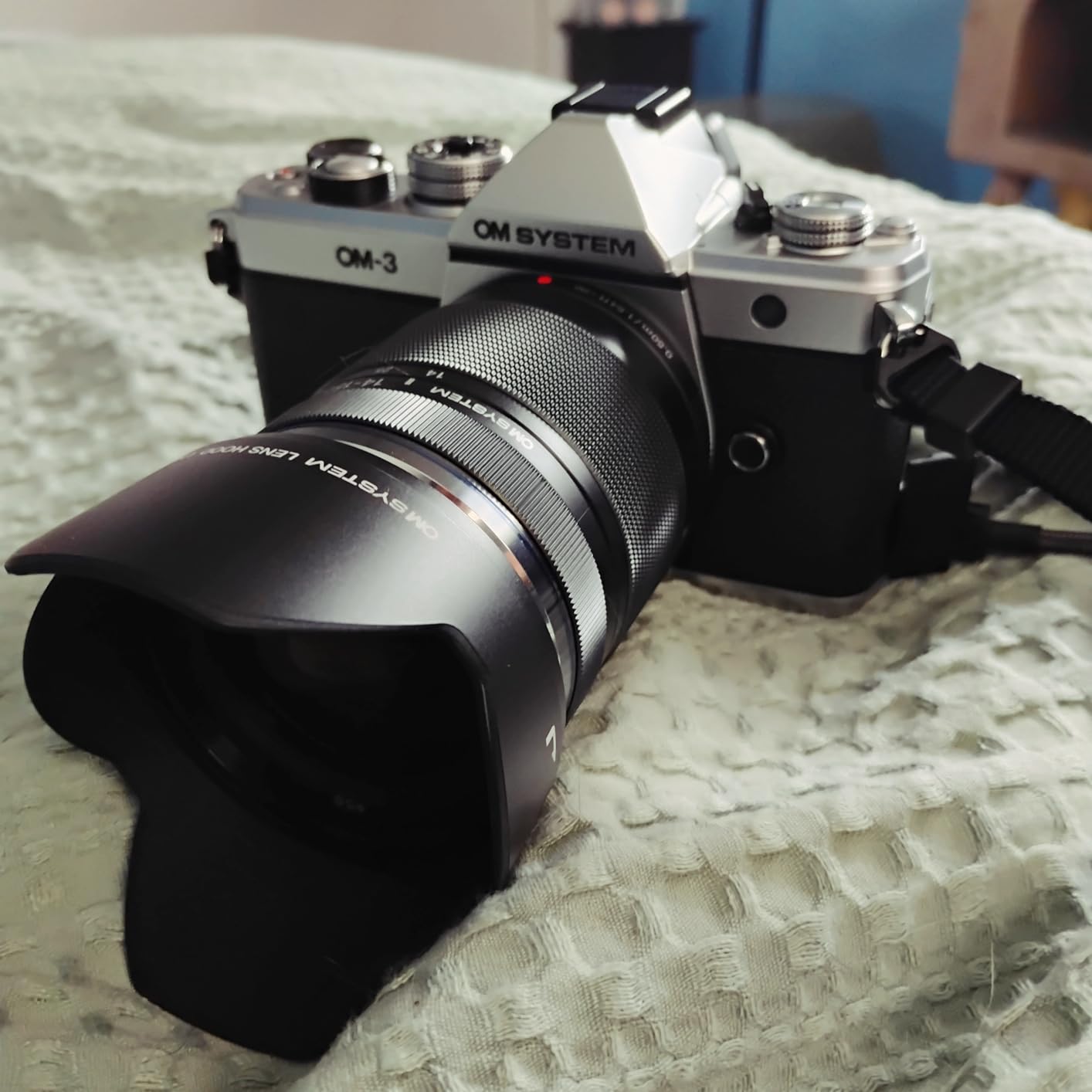
The computational features are genuinely useful here. High Res Shot, Live ND, Live Composite and Focus Stacking are built in, and the Creative Dial with Color Creator and Art Filters produces finished-looking landscape JPEGs in camera, which matters when you are reviewing a shot on a cold screen with numb hands.
Base ISO 200 is higher than rivals and reduces exposure latitude, which is the one spec that genuinely costs you in the field on a dim overcast morning. There is also a single card slot, so no backup for a long remote shoot, and a narrower wide-angle lens ecosystem than the full-frame mounts.
What you gain and what you give up
You gain a metal 1.1 pound body, the highest listed stabilization figure here at 7.5 stops, IP53 sealing and controls that work with gloves. The vintage-styled premium build also handles a fast 1/32,000 second shutter and up to 120 fps electronic burst.
You give up resolution, dynamic range and exposure latitude. The 1.23x viewfinder magnification is the lowest of the high-resolution bodies listed, and a single card slot is a real risk if you are shooting unattended.
Who this camera is wrong for
Pass if you print large, shoot at high ISO, or need a wide choice of ultra-wide glass. For a photographer who works tripodless and wants the lightest sealed body with glove-operable dials, it is hard to argue against.
How to Choose a Camera for Mountain Work
Dynamic range is the distance between the brightest highlight and the darkest shadow a sensor can record in one frame. Base ISO is the lowest sensitivity at which that sensor is cleanest, and a lower base ISO means you can lift a shadowed foreground without dragging visible noise across it.
Sensor format: full frame, APS-C or Micro Four Thirds
Full frame gives you the most latitude and the widest low-light performance, and it is the right answer if the tripod comes out of the pack on a regular basis. APS-C gives you roughly 1.5x more reach and about two thirds of the light gathering at the same frame rate, in a smaller body, which is why the Canon R7 sits where it does in this list.
Micro Four Thirds applies a 2x crop factor, so a 12mm lens behaves like a 24mm on full frame. In exchange you get the lightest bodies and the most affordable sealed wide angles, which is why the two OM System cameras make the list at all.
Resolution versus dynamic range on an alpine ridgeline
These two fight each other. Larger sensors with bigger pixels give more dynamic range, and higher-resolution sensors with smaller pixels give you crop room and panorama detail. On a ridge with a deep shadow foreground and a bright sky, I would take the latitude from the 45.7 megapixel full-frame bodies; on a distant summit chain where you will crop, I would take the 61 megapixels.
Megapixels only translate to print size. At a typical 300 pixels per inch, 24 megapixels supports roughly 16 by 20 inches, 33 megapixels about 19 by 25 inches, and 45.7 megapixels about 21 by 28 inches. Above 60 megapixels you get more crop room rather than more wall space, which is a different benefit entirely.
Pack weight is the real budget, not body weight
Nobody carries a body alone. Add a fast ultra-wide zoom, a carbon tripod, three batteries and a rain cover, and the total is what your shoulders care about. The lightest body in this list at 1.1 pounds plus a 500 gram zoom and a sub-1 kg tripod still puts a kilogram and a half in front of you, and that is the number to optimise for.
This is the constraint that ends kits. One photographer describes a D850 with two f/2.8 zooms and a carbon tripod as now being a car-trips-and-short-hides setup only, having added a lighter body as a secondary. Weight, not image quality, is what ends a kit.
Weather sealing, freeze proofing and glove-friendly controls
Weather sealing, waterproofing and freeze proofing are three different ratings, and they are frequently conflated. Waterproofing is for a housing. Sealing is for dust, drizzle and sleet. Freeze proofing is a temperature figure, and the only body in this list with a published one is the OM-1 Mark II, rated to -10 C.
On controls, the X-T5 and the OM-3 win in gloves because their dials are physical. Every other body here leans on a touchscreen for menu access, and a touchscreen is unusable with thick gloves on, so learn the physical buttons before you need them at alpenglow.
Cold weather batteries and condensation at altitude
Lithium-ion capacity falls in cold conditions, and forum users regularly ask for numbers that no one publishes. Budget for a substantial loss in cold, and carry spares in an inside pocket against your body rather than in the outside pocket of the pack. Body heat is the cheapest power bank available to you.
Condensation is the failure nobody plans for. Moving a cold body from a ridge into a warm tent or car puts moisture on the sensor and the rear element. Leave the camera sealed in its bag or jacket and let it acclimatise for 30 to 60 minutes before powering on, and keep silica packets in the camera bag and in the lens case.
Tripod, tilt-shift or focus stacking
These are three different tools answering the same question, which is how to get the foreground and the background sharp at once. A tripod plus a tilt-shift lens gives you true front-to-back focus at wide apertures with no extra software. A tripod plus focus stacking gives you the same result from a normal lens, at the cost of time in the cold.
Stopping down to f/11 or f/16 is the third route and the one that needs the most discipline on a mountain, because diffraction eats detail and the shutter speed drops into tripod-unfriendly territory. In-body stabilization is a separate tool entirely: it helps handheld frames, not frames on a tripod.
Frequently Asked Questions
What is the best camera for mountain photography?
The Nikon D850 is our pick for mountain photography because its 45.7 megapixel back-illuminated full-frame sensor holds detail in shadowed valleys, and its built-in intervalometer with exposure smoothing captures sunrise time-lapses without extra accessories. It pairs dual CFexpress and UHS-II card slots with a tilting touchscreen, though it has no in-body stabilization, so budget for a tripod.
What is the best camera for taking landscape photos?
For landscape work generally, resolution, dynamic range and low base ISO matter most, along with weather sealing and in-camera focus stacking. The Nikon D850 and Sony Alpha 7R V lead on resolution, while the Fujifilm X-T5 stands out for dial controls and seven stops of stabilization. The Canon EOS R6 Mark II trades resolution for low-light quality and a viewfinder readable in direct sun.
What camera has the best weather sealing?
The OM System OM-1 Mark II and the OM-3 are the only bodies in this group with an explicitly published rating: IP53 dustproof, splashproof and freeze proof, with the OM-1 Mark II specified to -10 C. Among full-frame bodies the Sony Alpha 7 IV, Canon EOS R6 Mark II and Nikon Z 7 II carry weather-sealed magnesium-alloy or equivalent construction, but sealing is not the same as waterproofing.
What is the best camera for hiking photography?
The Canon EOS R7 is the lightest high-resolution body here at 1.1 pounds with a 32.5 megapixel APS-C sensor, 651 autofocus zones across the full frame and five-axis stabilization with auto-level. The Fujifilm X-T5 is the alternative if you want physical dials that work with gloves, and the two OM System bodies go lighter still if 20 megapixels is enough for how you print.
What cameras do professional landscape photographers use?
Professionals tend to converge on high-resolution full-frame bodies with a low base ISO, and this group reflects that: the Nikon D850 and Z 7 II at 45.7 megapixels, the Sony Alpha 7R V at 61 megapixels, and the Sony Alpha 7 IV at 33 megapixels for those who prioritise dynamic range. What most professionals still carry is a second, lighter body for the approach, which is why APS-C models remain popular.
How does cold weather affect camera batteries at altitude?
Cold reduces lithium-ion capacity noticeably, and the effect is compounded at altitude where temperatures fall faster than expected. Carry more spares than you think you need, store them against your body in an inside pocket so your own warmth keeps them near working temperature, and turn the camera off between compositions rather than leaving it on standby. Cold packs sitting in the pack overnight are the reason cameras arrive dead.
Final Verdict for Mountain Landscape Photography in 2026
The Nikon D850 is the best camera for mountain landscape photography in 2026 because it pairs 45.7 megapixels with the most complete built-in time-lapse handling of any body here, and the deep grip handles a fast wide zoom without complaint. If you want a modern mirrorless body with stabilization and a fully articulating screen, the Sony Alpha 7 IV is the pick.
For carry weight, the Canon EOS R7 gives you 32.5 megapixels in 1.1 pounds, and the Fujifilm X-T5 wins if you work in gloves. The OM System OM-1 Mark II is the winter and high-altitude choice, with the only published freeze rating in the group. Whatever you choose, budget for a tripod, three batteries and a silica-packed camera bag, because those three items decide more mountain photographs than the sensor does.