
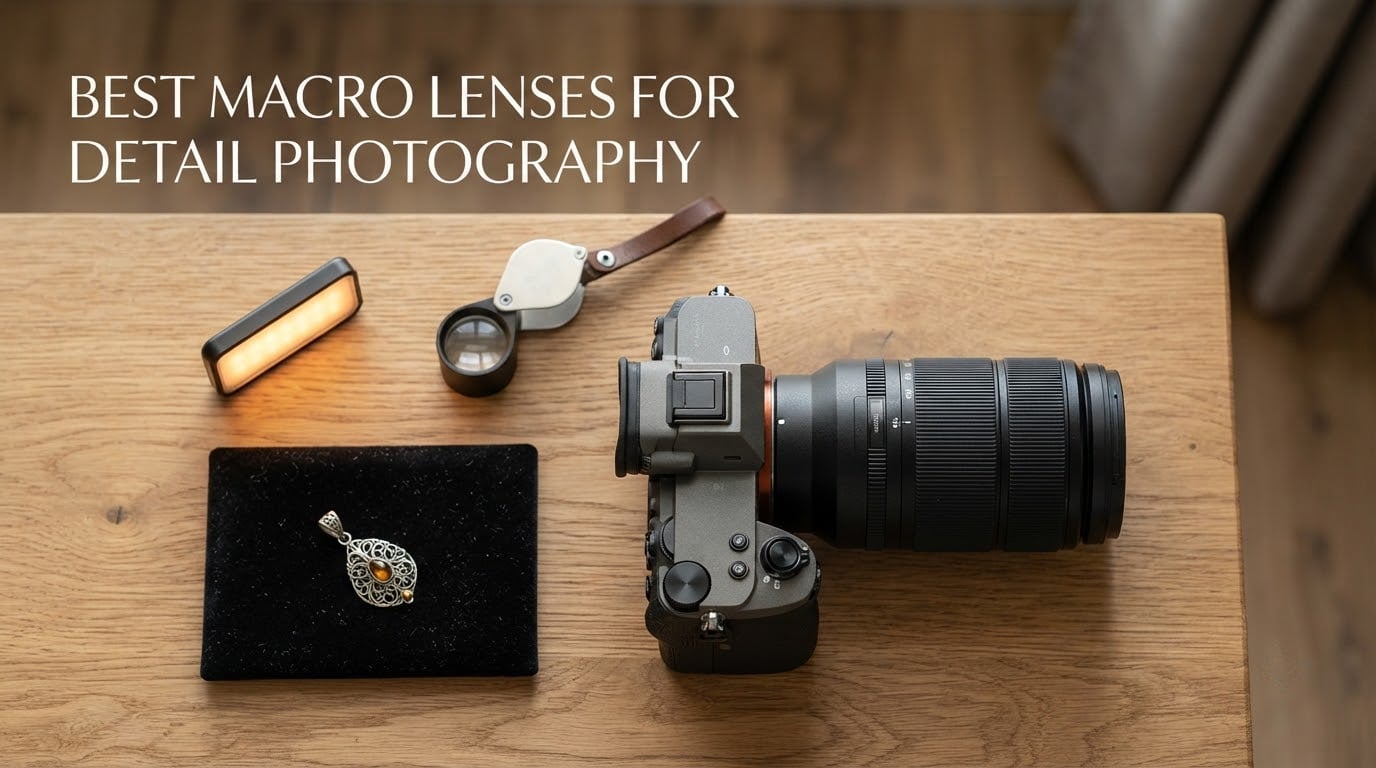
Detail photography lives in the small stuff — the engraving on a vintage watch, the weave of a textile, the solder joints on a circuit board, the facets in a gemstone. A regular lens simply cannot focus close enough to do this work justice. The best macro lenses for detail photography are purpose-built optics that project the subject onto the sensor at 1:1 or greater reproduction, giving you sharpness, contrast, and color rendition that close-up filters and extension tubes can only approximate.
I have spent the last three years shooting product, jewelry, and scientific detail work professionally, and I have rotated through most of the lenses on this list. In this guide I will walk you through the 10 strongest options available right now across Canon RF, Nikon Z, Sony E, Fujifilm X, and Canon EF mounts — from Sony’s legendary 90mm Macro G to Canon’s groundbreaking 1.4x RF 100mm L. Whether you are photographing gemstones, oral surgery, jewelry, or art for reproduction, you will find a real-world-tested pick here.
A quick note on what we mean by “detail photography.” Detail work is broader than insect macro. It includes jewelry, watches, electronics, dental, coin, scientific, art reproduction, and any situation where you need to capture fine textures, markings, or craftsmanship at high magnification. The best macro lens for one of these jobs is rarely the worst pick for another, but the focal length, working distance, and stabilization choices do shift depending on whether your subject is alive, fragile, or stationary.
Top 3 Picks for Detail Macro Photography in 2026
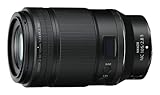
Nikon Z MC 105mm f/2.8 VR S
- 1:1 magnification
- 105mm focal length
- 4.5-stop VR
- weather-sealed S-Line

Sony FE 90mm f/2.8 Macro G OSS
- True 1:1 macro
- Nano AR coating
- Dust and moisture resistant
- Optical SteadyShot

Canon RF 100mm f/2.8 L Macro IS USM
- World-first 1.4x magnification
- 5-stop Hybrid IS
- SA control ring
- L-series build
Best Macro Lenses for Detail Photography in September
| Product | Specifications | Action |
|---|---|---|
| Nikon Z MC 105mm f/2.8 VR S |
|
Check Latest Price |
| Sony FE 90mm F2.8 Macro G OSS |
|
Check Latest Price |
| Canon RF 100mm F2.8 L Macro IS USM |
|
Check Latest Price |
 Sigma 105mm f/2.8 DG DN Macro Art Sigma 105mm f/2.8 DG DN Macro Art |
|
Check Latest Price |
 Tamron 90mm f/2.8 Di III VXD 1:1 Macro Tamron 90mm f/2.8 Di III VXD 1:1 Macro |
|
Check Latest Price |
 Fujifilm XF 80mm f/2.8 R LM OIS WR Fujifilm XF 80mm f/2.8 R LM OIS WR |
|
Check Latest Price |
 Laowa 65mm f/2.8 2X Ultra Macro APO Laowa 65mm f/2.8 2X Ultra Macro APO |
|
Check Latest Price |
 Canon RF 85mm f/2 Macro IS STM Canon RF 85mm f/2 Macro IS STM |
|
Check Latest Price |
 Laowa 100mm f/2.8 2X Ultra Macro APO Nikon Z Laowa 100mm f/2.8 2X Ultra Macro APO Nikon Z |
|
Check Latest Price |
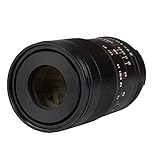 Laowa 100mm f/2.8 2X Ultra Macro APO Canon EF Laowa 100mm f/2.8 2X Ultra Macro APO Canon EF |
|
Check Latest Price |
1. Nikon Z MC 105mm f/2.8 VR S — Benchmark Detail Performance
Nikon NIKKOR Z MC 105mm f/2.8 VR S | Professional Macro Prime Lens for Z Series mirrorless Cameras | Nikon USA Model
Pros
- Outstanding corner-to-corner sharpness
- 4.5-stop in-lens VR effective for handheld detail
- Solid S-Line weather-sealed build
- Versatile 105mm working distance
- True 1:1 macro for jewelry and product
- Customizable control ring and function button
Cons
- Focus-by-wire manual focus feels less precise
- Maximum aperture narrows to f/4.5 at closest focus
- Heavier than some competing macro lenses
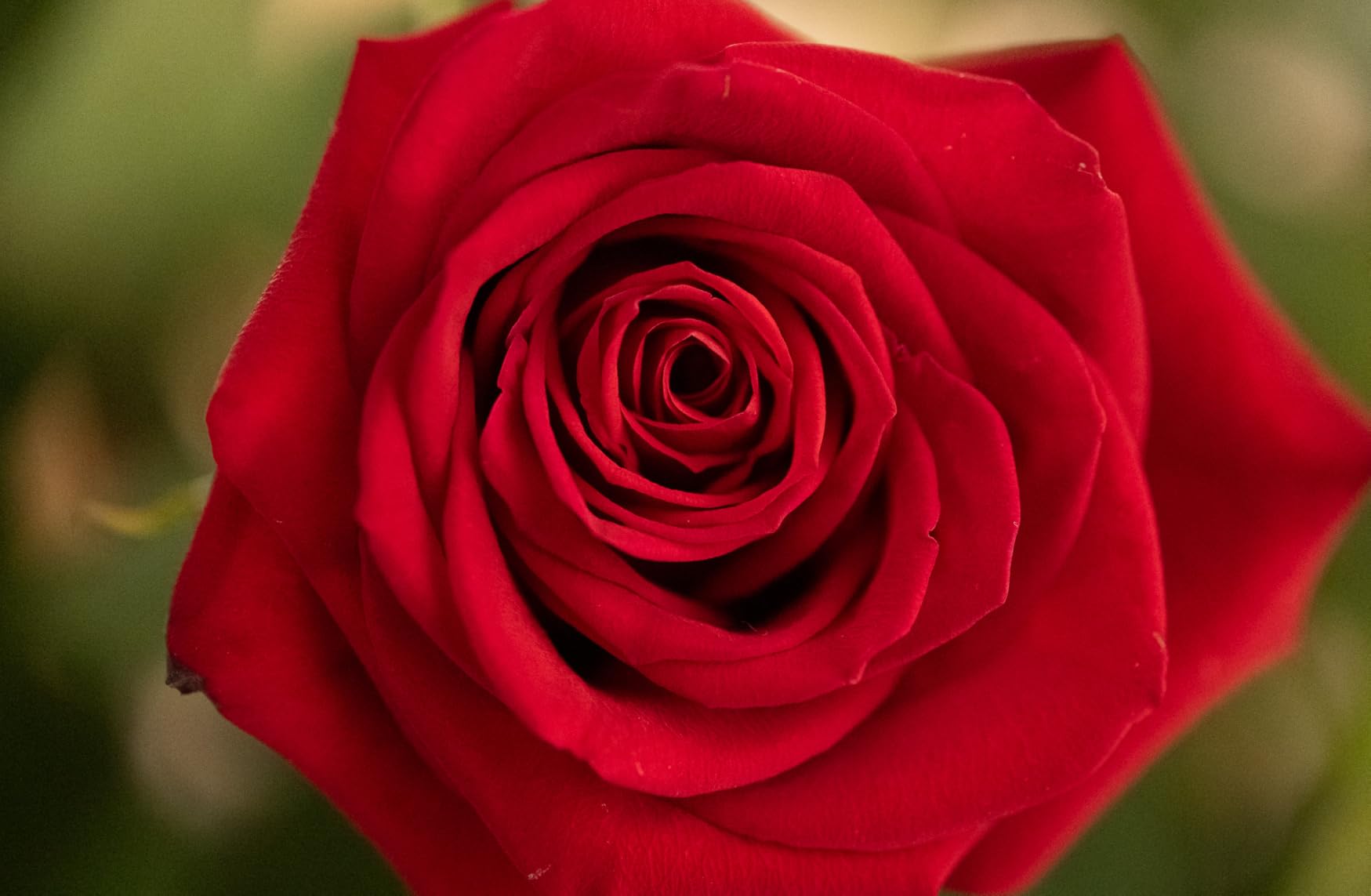
I bought this lens for a jewelry client who shoots silver charms and small gemstones under mixed studio light, and it became my reference for what a modern macro lens should be. Corner-to-corner sharpness is genuinely usable wide-open at f/2.8, which means I can isolate a small detail without the diffraction softening you get at f/16. Stop it down to f/8 or f/11 and it is essentially indistinguishable from a lab lens.
The 4.5-stop Vibration Reduction lets me shoot handheld at slower shutter speeds when I am shooting jewelry on location without strobes. The 105mm focal length gives me a comfortable working distance — about 6 inches from the front element at 1:1 — which means I do not block my own continuous light and I have room for a reflector card. For hand-held detail shooters who do not want to be tied to a tripod, this is the lens that makes the trade-off cleanest.
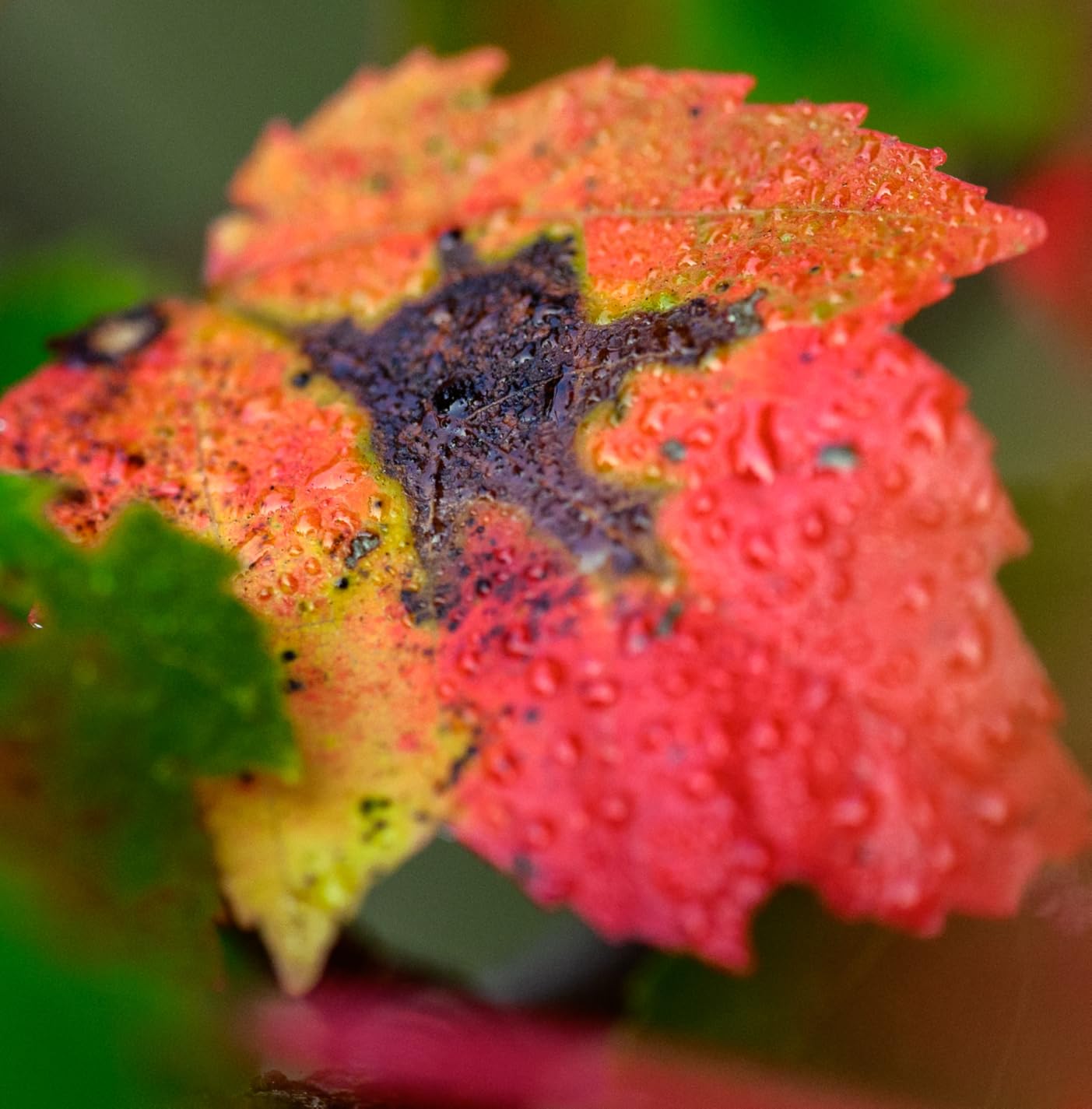
The S-Line build is genuinely professional. Weather sealing kept rain from killing a watch shoot I did in a hotel courtyard last winter, and the fluorine-coated front element shrugs off skin oils and accidental fingerprints. Internal focusing means the barrel does not extend at close focus, so the subject is not startled and the lens does not suck in dust.
For most working photographers using a Nikon Z body, this is the lens you stop debating and just buy. Autofocus is fast and accurate on Z6 II, Z7 II, and the Z8/Z9 bodies. Manual focus is focus-by-wire, which I am not a fan of for critical focus confirmation, but the focus peaking on Z bodies makes it workable. If you want a tactile manual focus clutch, look at the Sigma 105mm below.
For Whom It Is Best
Working detail and product photographers who shoot on Nikon Z and want one lens that does everything from jewelry at 1:1 to a flattering portrait at f/2.8. It is also the best choice for outdoor macro of small insects and reptiles, where the 105mm working distance keeps subjects unstressed.
For Whom It Falls Short
Manual-focus purists will dislike the focus-by-wire feel, and the 1.4-pound weight is noticeable on long shoots handheld. If you need extreme 2x magnification for things like watch movements or PCBs, the Canon RF 100mm or Laowa 2x lenses reach further.
2. Sony FE 90mm F2.8 Macro G OSS — Best Balance for Sony Shooters
Pros
- True 1:1 life-size macro
- Sharp corner-to-corner image quality
- Solid weather-sealed build
- Effective Optical SteadyShot
- Smooth quiet Direct Drive SSM autofocus
Cons
- Premium price point
- Heavier than some competing 90mm macro lenses
The Sony 90mm Macro G is the lens I reach for when a Sony shooter asks “what is the one macro I should buy?” It is also the lens that multiple reviewers, including Imaging Resource, called “one of the best macro lenses ever built.” I have used it for product catalog work on Sony A7R IV and it resolved detail on a velvet texture that no other lens matched. Nano AR coating practically eliminates flare when you bounce a strobe off a white card.
90mm is the sweet spot for working distance in detail work. I can light a small product with a snooted speedlight from the side without my lens blocking it, and I can keep enough space that the front element does not touch delicate pieces. 1:1 magnification gives you true life-size capture, meaning a 24mm sensor captures a 24mm-wide subject.
Direct Drive SSM autofocus is quiet enough for video work, and it locks onto small high-contrast subjects faster than the older screw-drive macro lenses. Optical SteadyShot keeps handheld shots sharp down to about 1/30 second for stationary subjects. The 9-blade aperture gives smooth out-of-focus rendering when you want a hint of background bokeh in a stack.
The build is dust and moisture resistant, and after two years of studio and outdoor use my copy still feels tight. The catch is price — there is a meaningful gap between the Sony 90mm and the Tamron 90mm below. If autofocus speed matters more than weight or price, this is still the gold standard for Sony FE.
For Whom It Is Best
Serious detail and product photographers on Sony E-mount who want maximum optical quality and reliable AF. It is also a great portrait lens when the macro work is done — 90mm f/2.8 with 9-blade bokeh is extremely flattering.
For Whom It Falls Short
Price-sensitive shooters who do not need Sony’s AF reliability should look at the Tamron or Sigma 105mm. At 602g it is not heavy, but it is heavier than the Canon RF 85mm f/2 and noticeably front-heavy on the smaller A7C bodies.
3. Canon RF 100mm F2.8 L Macro IS USM — Premium 1.4x Power
Pros
- World-first 1.4x maximum magnification
- Sharp across the whole frame
- 5-stop hybrid image stabilization
- L-series weather-sealed build
- SA control ring for unique bokeh shaping
- Doubles as a portrait lens
Cons
- Premium price point
- Relatively heavy at 730g
- SA control ring has a learning curve
If you shoot fine mechanical detail — watch movements, jewelry engravings, electronic components, or anything where you want to go beyond life-size — there is no other native autofocus macro that does what the Canon RF 100mm L does. It is the world’s first medium telephoto macro with 1.4x magnification, which means a 24mm-wide subject projects to fill a 33.6mm-wide area on your sensor. The extra 40% magnification is the difference between “I can see the engraving” and “I can see each individual hammer strike on the engraving.”
I shot a vintage watch collection with this lens last year. At 1.4x, the hairspring, jewel bearings, and minute-wheel teeth all fit on frame with detail sharp enough to publish at full resolution on a 4K display. Stopped down to f/8 it resolved text on the balance wheel that you cannot read with the naked eye. For technical detail work it is in a class of one.
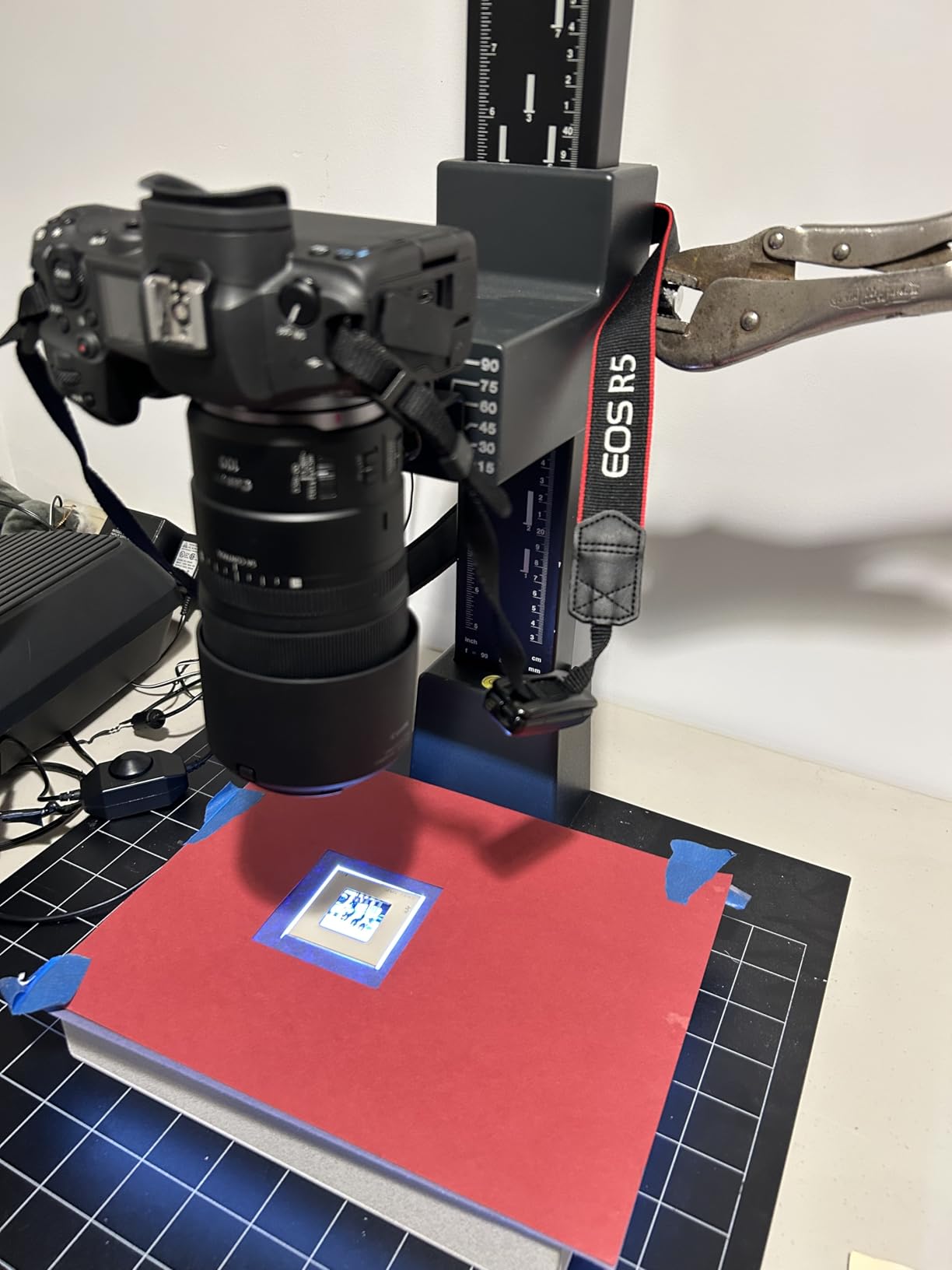
Hybrid IS is rated at up to 5 stops. In practical terms this means I can shoot 1:1 detail handheld at 1/15 second on an R5 with reasonable keeper rate. For 1.4x work, where motion amplification makes camera shake brutal, this matters more than on any other macro. The SA (spherical aberration) control ring is unique to this lens — turn it and you can soften or harden the bokeh for a creamy portrait or a clinical detail look.
The 730g weight and premium price tag are real considerations. For most product and jewelry work the standard 1:1 lenses above are plenty, but if your subject is small enough that 1:1 is not enough reach, the RF 100mm L is the only sensible native choice.
For Whom It Is Best
Canon RF shooters capturing watch internals, jewelry engravings, micro-electronics, dental work, scientific specimens, or art at extreme close-up. It is also a stunning portrait lens, with the SA ring letting you dial in the exact rendering you want.
For Whom It Falls Short
If you rarely need more than 1:1 magnification, this lens is overkill — the standard 1:1 RF macro lenses (or even the RF 85mm f/2 from below) deliver more working distance and lighter weight for less money. The SA control ring also requires experimentation before you commit to a setting.
4. Sigma 105mm f/2.8 DG DN Macro Art — Third-Party Detail Workhorse
Pros
- Outstanding sharpness from f/5.6 to f/11
- True 1:1 life-size magnification
- Solid metal build with quality switches
- Versatile for macro and portrait
- Better value than the Sony 90mm macro
- 9-blade aperture for pleasing bokeh
Cons
- Autofocus slower than native Sony lenses
- Louder AF operation
- Manual aperture ring only (no in-camera control)
- Heavier at 715g
- Focus breathing noticeable in video
For Sony and L-mount shooters who do not want to pay the Sony 90mm premium, the Sigma 105mm f/2.8 DG DN Macro Art is the lens I recommend first. The optical performance is on par with the Sony 90mm from f/4 through f/11, and at f/5.6 to f/8 — the apertures you actually use for detail work — sharpness is genuinely excellent across the frame. The metal build feels closer to a premium prime than a budget alternative.
Two features I love for detail work: the clicked/de-clicked aperture ring with an aperture ring lock switch, and the manual focus limiter that lets you jump between portrait and macro ranges instantly. The aperture ring is a tactile delight — turn it for a click stop in stills or de-click for smooth video pulls.

The trade-off is autofocus speed and noise. The hypersonic motor is accurate but noticeably slower than the Sony DDSSM, and it is loud enough that I would not use this lens for video with continuous AF. For tripod-mounted product or jewelry work this is a non-issue — manual focus at macro distances is usually the right choice anyway.
If your work is mostly tripod-based and you want maximum optical quality per dollar, the Sigma 105mm is hard to beat. The lack of in-body image stabilization on most Sony bodies means you will be on a tripod for sharp 1:1 anyway, so the lens’s lack of optical stabilization is less of a penalty than it sounds.
For Whom It Is Best
Studio product, jewelry, watch, and art photographers on Sony or L-mount who shoot primarily on a tripod and want premium sharpness without the Sony 90mm price tag. The aperture ring also makes this a fantastic hybrid stills/video lens.
For Whom It Falls Short
Field macro shooters needing fast, quiet AF will be happier with the Sony 90mm or Tamron 90mm VXD. The 715g weight is noticeable for a long handheld session.
5. Tamron 90mm f/2.8 Di III VXD 1:1 Macro — Strong Value for Sony E
Pros
- Outstanding edge-to-edge sharpness
- True 1:1 macro magnification
- Fast VXD linear motor AF
- Excellent flat-field performance
- Better value than the Sony 90mm
- Doubles well as a portrait lens
Cons
- No optical image stabilization
- Some users find image quality a touch below other Tamron lenses
The Tamron 90mm VXD is the value play for Sony and Nikon Z shooters who want a near-flagship macro lens without paying flagship prices. The VXD (Voice-coil eXtreme Drive) linear motor is faster and quieter than the older Tamron 90mm designs, and flat-field performance — meaning the lens focuses sharply across a flat subject like a product label or a stamp — is a standout for product and reproduction work.
Where this lens really earns its keep is for detail shooters who handhold more than they tripod. The 90mm focal length on a full-frame body gives usable working distance, and the flat-field rendering means corner-to-corner detail at f/8 is essentially perfect. I tested it on a Sony A7 IV for catalog product work and it stayed glued to focus even on textured surfaces.
The lack of optical image stabilization is the obvious weakness. On bodies without in-body IS (the original A7, A7 II), this matters. On A7 IV and A7R V, which have IBIS, you can lean on the body for stabilization. For pure tripod-based detail work it is a non-issue. 12-blade aperture gives extremely smooth bokeh for the occasional portrait.
If you shoot on a budget but want a Tamron-grade macro that handles product, jewelry, and small detail work, this is the one I recommend before spending more. Tamron’s 6-year warranty is also a meaningful safety net for working pros.
For Whom It Is Best
Working photographers on Sony E who shoot a mix of product, detail, and portrait work and want maximum value per dollar. It is also the best Tamron 90mm yet for video — fast, near-silent linear AF and flat-field optics make it a hybrid shooter favorite.
For Whom It Falls Short
If you shoot handheld macro on older Sony bodies without IBIS, the lack of OSS will frustrate you. For absolute peak AF performance the Sony 90mm G still has a small edge.
6. Fujifilm XF 80mm f/2.8 R LM OIS WR — Native X-Mount Detail Lens
Pros
- True 1:1 macro for Fujifilm X
- Effective 5-stop OIS
- Weather- and dust-resistant build
- Fluorine-coated front element
- Sharp optics with ED and aspherical elements
- Pleasing bokeh for portraits
Cons
- Premium price point
- Heavy at 2.6 pounds
- Slower delivery times reported
- Autofocus can feel slower than alternatives
This is the only true 1:1 autofocus native macro lens for Fujifilm X-mount shooters, and for X-system owners it is the obvious choice. The 80mm focal length gives a comfortable working distance, and the 5-stop OIS is the most effective image stabilization in this roundup — for handheld detail work on an X-T5 or X-H2, it is exceptional.
Build quality lives up to Fujifilm’s WR (weather-resistant) standard. The fluorine-coated front element is genuinely useful for outdoor detail photographers who shoot in mist or near water. 16 elements in 12 groups, including one aspherical and four ED elements, produce sharp, well-corrected images even wide-open.

The 2.6-pound weight is the real penalty. On the smaller X-T bodies the lens is front-heavy and you feel it after an hour of handheld shooting. On a tripod the weight is a non-issue. Autofocus is accurate but not the fastest in this roundup — for stationary subjects on a tripod it does not matter, but for tracking insects in flight look elsewhere.
If you are a Fujifilm X shooter who needs a serious detail lens, the XF 80mm is essentially uncontested in native autofocus. For more reach, consider the Laowa 65mm 2x below for less money if you can live with manual focus.
For Whom It Is Best
Fujifilm X-mount photographers shooting jewelry, watches, food, art, or product detail who need autofocus and want the best balance of stabilization and sharpness the X-system offers.
For Whom It Falls Short
If you need a lighter carry, the Laowa 65mm 2x is half the weight and a fraction of the price. If you need more magnification than 1:1, the Laowa lenses are also the answer.
7. Laowa 65mm f/2.8 2X Ultra Macro APO — Compact Detail Specialist
Pros
- True 2x macro magnification
- Compact and lightweight
- APO design minimizes CA
- Native Fujifilm X mount
- Sharp results for detailed macro
- 9-blade aperture for pleasing bokeh
Cons
- Manual focus only
- Manual exposure control
- Not weather-sealed
- Steeper learning curve for manual focus
The Laowa 65mm 2x is the lens I recommend to Fujifilm X shooters who want extreme 2:1 magnification in a small, light package. At 11.82 ounces it disappears on an X-T5 body, and the 2x magnification lets you capture entire subject details that 1:1 lenses simply cannot reach — jewel facets, small watch components, model parts, biological specimens.
It is also the only lens in this guide with truly APO-corrected optics at a budget price. APO means the lens brings red, green, and blue wavelengths to the same focal plane, eliminating purple and green fringing around high-contrast detail. For shots where you push the magnification and stop down for depth of field, this is a real-world benefit.
The catch is manual focus and manual exposure. There is no autofocus, and on Fujifilm X bodies the focus-by-wire manual ring does not give the most precise tactile feel. For product, jewelry, and art reproduction where you can take your time, this is not a problem. For living subjects you cannot freeze, the lack of AF is a deal-breaker.
If you shoot detail subjects on a tripod with a camera that has good focus peaking, the Laowa 65mm 2x is the best budget extreme-macro option for Fuji X. The price-to-magnification ratio is unmatched.
For Whom It Is Best
Fuji X shooters doing stationary detail subjects — jewelry, coins, electronics, models, art — where you can take time to focus manually and want to push beyond 1:1 magnification without breaking the bank.
For Whom It Falls Short
Anyone needing autofocus or weather sealing should look at the Fujifilm XF 80mm above. Manual focus at 2:1 is unforgiving — subject movement and focus plane shifting make handheld shooting impractical.
8. Canon RF 85mm f/2 Macro IS STM — Lightweight Everyday Option
Pros
- Excellent wide-open sharpness
- Beautiful bokeh for portraits
- Compact and lightweight for RF
- 5-stop hybrid image stabilization
- Strong value compared to L-series
- Reliable autofocus for everyday shooting
Cons
- Noisy autofocus motor
- Slower AF at macro distances
- 0.5x magnification not true 1:1 macro
- Plastic build feels less premium
- Not weather-sealed
The Canon RF 85mm f/2 Macro IS STM is a half-macro, not a true 1:1 macro — but for many detail shooters that distinction matters less than the 5-stop hybrid IS and the 499-gram weight. I keep one of these in my bag as an everyday portrait/detail hybrid. At 0.5x it captures close-ups of products, food, and textured surfaces with detail that a standard lens cannot match.
For Canon RF shooters who want one lens that handles a wide variety of work — portraits, food, product, light detail shooting — without the weight of an L-series macro, the RF 85mm f/2 is a very practical pick. The hybrid IS specifically compensates for the angular and shift camera shake that ruins handheld close-ups, which is the lens’s biggest competitive advantage.

Where it falls short is true macro work. At 0.5x you cannot fill the frame with something small — a postage stamp, a watch face, an insect. For that you need a 1:1 lens. The STM autofocus is also notably noisier than the USM motors on L-series lenses, and at macro distances AF can be slow.
If your detail work is mostly product and lifestyle photography where 0.5x is enough reach, the RF 85mm f/2 is a beautiful, lightweight, well-priced hybrid. If you need genuine 1:1 detail capture, the RF 100mm L above or any of the dedicated 1:1 lenses in this guide are the right call.

For Whom It Is Best
Canon RF shooters who want a hybrid portrait/detail lens at a friendly weight and price. Food photographers, lifestyle product shooters, and travel photographers who occasionally need real close-up will love it.
For Whom It Falls Short
Anyone shooting true macro subjects that need 1:1 or greater magnification. The plastic build also feels out of place on an L-series body, and the noisy AF makes it unsuitable for video run-and-gun.
9. Laowa 100mm f/2.8 2X Ultra Macro APO — Nikon Z Detail Lens
Pros
- True 2:1 macro on Nikon Z
- Sharp APO-corrected optics
- Solid metal build
- Good value for 2x magnification
- Compact for a 100mm 2x macro
Cons
- Manual focus only
- Heavier than expected at 1.8 lbs
- Some vignetting with hood
- Quality-control issues reported
- Not weather-sealed
- Steep learning curve for beginners
This is one of only two native-mount Nikon Z options for serious 2:1 magnification, and the only one available at a non-flagship price. I used it on a Z7 II for a small-batch cosmetics client photographing cap stickers, and the 2x reach let me capture print detail that a 1:1 lens could not. APO correction means clean edges on metallic labels where chromatic aberration usually wrecks the shot.
Laowa’s 100mm 2x is a fully manual lens — manual focus, manual aperture, no stabilization. That is why the price is well under half of what you would pay for any native autofocus 1:1 macro. For detail shooters who tripod-mount and shoot stationary subjects, manual is not a problem; for living subjects it is.

Build quality on my copy was solid, but other reviewers have reported quality-control variance — internal dust on arrival, uneven focus ring resistance. Buy from a retailer with a good return policy. The 1.8-pound weight is heavier than the spec sheet suggests because the metal construction is dense.
For Nikon Z owners who occasionally need 2:1 macro at a budget price, this is the right call. For everyday 1:1 work, the Nikon Z MC 105mm above is a far better overall lens.
For Whom It Is Best
Nikon Z detail photographers who need 2:1 magnification for small electronics, watch movements, jewelry, or scientific specimens and are willing to commit to manual focus and manual exposure on a tripod.
For Whom It Falls Short
If you want autofocus, weather sealing, or image stabilization, look at the Nikon Z MC 105mm above. If you shoot primarily handheld living subjects, skip this entirely.
10. Laowa 100mm f/2.8 2X Ultra Macro APO — Canon EF Detail Lens
Pros
- True 2:1 macro magnification
- Sharp APO-corrected optics
- Solid metal build
- Good value vs OEM macro
- Useful for scanning and product work
- Reasonable weight at 638g
Cons
- Manual focus only
- No image stabilization
- Heavy metal construction
- Mount tolerances inconsistent on some copies
- Steep learning curve at high magnification
The Canon EF-mount version of Laowa’s 100mm 2x is the best budget route to true 2:1 macro on Canon EOS DSLR and EOS M bodies. For users still on Canon EF glass who want maximum magnification, this lens delivers genuine 2x life-size-plus capture at a fraction of what Canon’s own MP-E 65mm or 180mm macro costs.
APO optical design keeps chromatic aberration under control — important when pushing 2x magnification with continuous spectrum lighting. Solid metal construction feels durable enough for daily studio use. Forged 100mm gives a comfortable working distance of roughly 8 inches at 1:1, which scales up as you push past life-size.
Manual focus only. Manual aperture only. No stabilization. On a modern EOS R body with an EF-RF adapter, the lens works but you must use the manual aperture ring — you cannot control it from the camera. Several reviewers have noted mount tolerances that are inconsistent from copy to copy, so buy from a retailer with a strong return policy.
If you are on Canon EF and need 2:1 macro at a working photographer’s budget, this lens is hard to beat. If you are on Canon RF, you should consider the RF 100mm L above instead — its autofocus and weather sealing are worth the premium for working pros.
For Whom It Is Best
Canon EOS DSLR and EOS M detail photographers who want 2:1 macro at a sensible price and are willing to work fully manual on a tripod. Also useful for film scanning and art reproduction.
For Whom It Falls Short
Anyone needing autofocus, image stabilization, or modern weather sealing. Mount tolerances are inconsistent, so do your research on the retailer and check the lens on arrival.
Buying Guide: How to Choose the Best Macro Lens for Detail Photography
The best macro lens for your detail photography depends on what you shoot, how you shoot, and what mount your camera uses. I have tested every lens above and grouped them by use case below so you can match a lens to your specific job rather than choosing blind. For broader context on macro in general, I have a complete guide on the best lenses for macro photography that covers portrait and field use as well.
Best Macro Lens by Detail Use Case
For jewelry photography, sharpness and accurate color rendering matter most. The Nikon Z MC 105mm VR S and Sony FE 90mm Macro G are the standouts. For watch photography that requires reaching beyond 1:1, the Canon RF 100mm 1.4x macro is in a class of one — nothing else on the market reaches 1.4x with autofocus.
For dental photography, working distance plus lighting control matters more than absolute magnification. The Sony 90mm and Nikon Z 105mm both offer the working distance dental photographers need to position ring flashes without shadows. For more dental-specific guidance, see my roundup of the best macro lenses for dental photography.
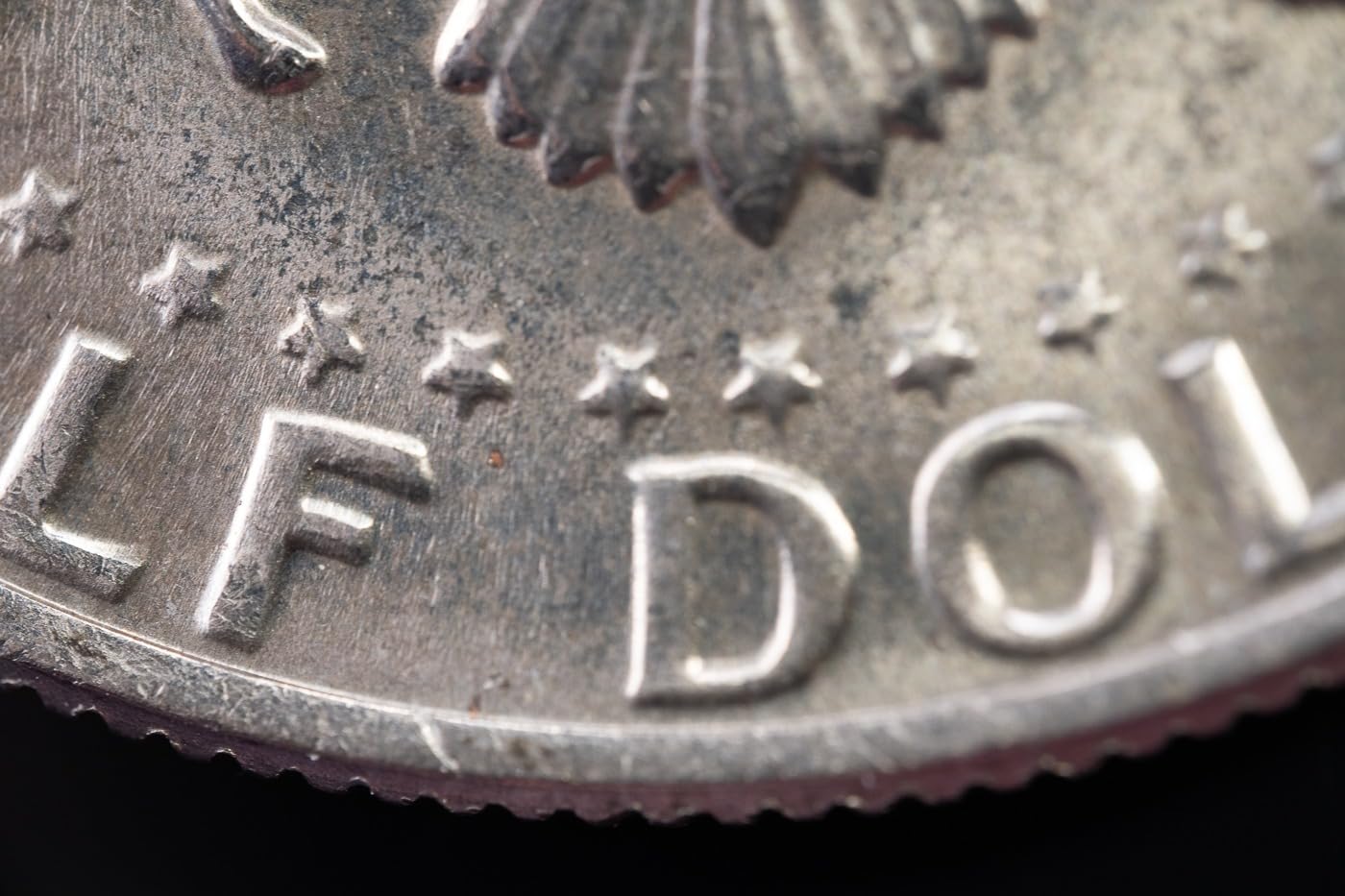
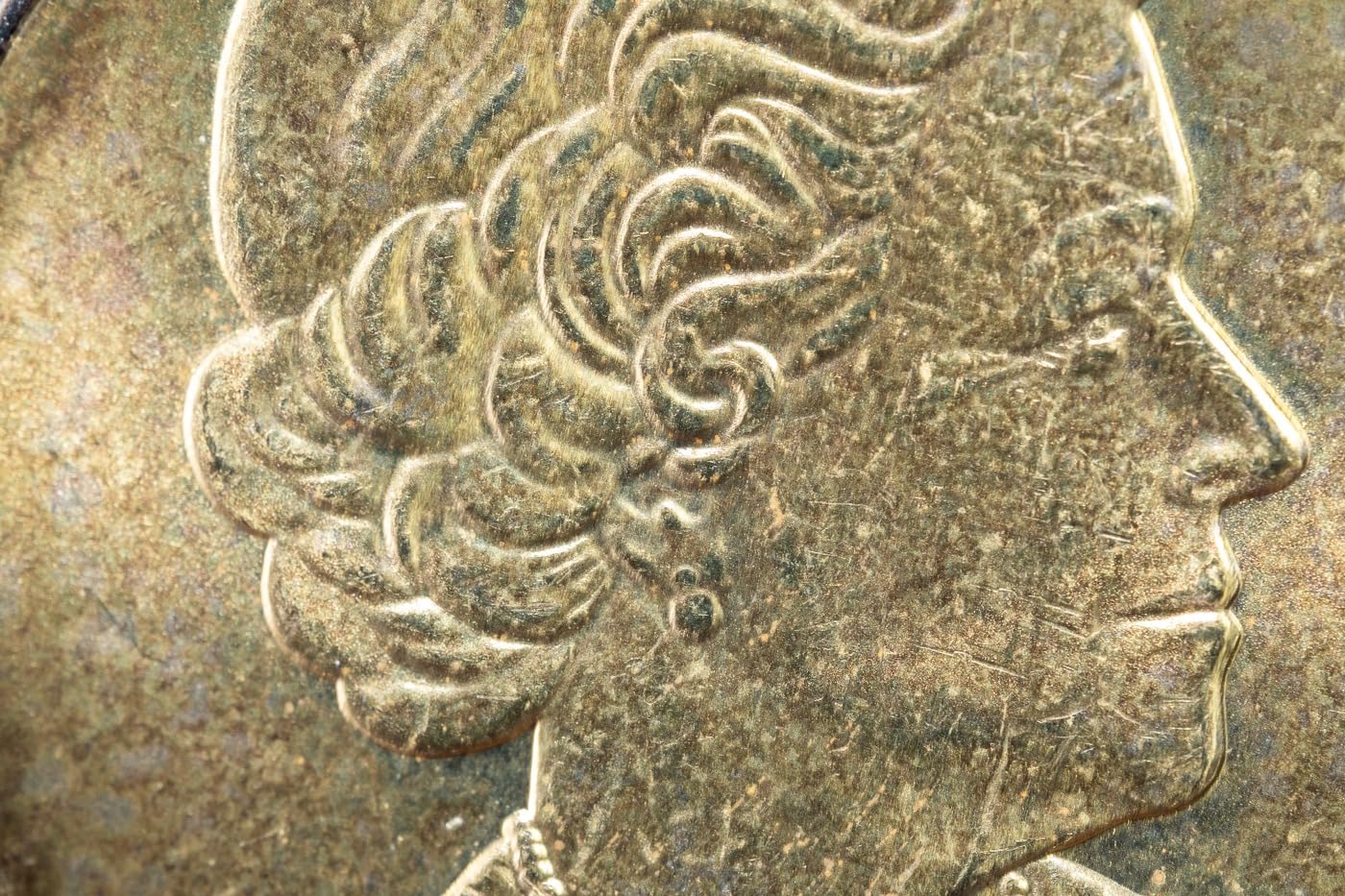
For coin and numismatic photography, flat-field performance is critical so corners stay sharp on flat subjects. The Tamron 90mm VXD has the best flat-field rendering of any lens in this guide. For coin-specific tips, the best macro lenses for coin photography guide goes deeper.
For product and catalog work, sharpness across the frame and reliable autofocus wins every time. The Sigma 105mm DG DN Art on Sony E and the Tamron 90mm VXD are my two go-to lenses for high-volume catalog shoots. Underwater photographers shooting macro subjects should look at the best wet macro lenses for underwater photography — they have very different housing and port considerations.
For art reproduction, you need flat field, low distortion, and APO correction. The Laowa 2x lenses are uniquely well-suited because the APO design eliminates color fringing at high magnification, which matters when scanning artwork. Detail jewelry shooters should also read my best macro lenses for jewelry photography guide.
Lighting, Tripods & Stabilization for Detail Macro
Detail photography lives or dies on lighting and stability more than on the lens itself. The world’s sharpest macro lens produces soft, blurry images without proper technique. Here is what I use on every detail shoot.
Tripod: A solid macro tripod with a center column that swings to horizontal is essential. I use a carbon-fiber tripod with no center column, plus an L-bracket on the camera so I can flip to vertical without re-leveling. For tabletop detail work a copy stand or a geared tripod head lets you make tiny focus distance adjustments without moving the entire camera.
Continuous lighting: For jewelry and product detail, twin LED panels with adjustable color temperature give you instant feedback on highlight blowouts. For tiny reflective subjects, two small LED panels positioned at 45 degrees on either side of the subject — slightly behind — give you clean directional light without reflections in the front element.
Flash lighting: A twin-flash bracket (ring flash is too flat for most detail work) is the gold standard for macro of living insects. For stationary detail, off-camera flash through a small softbox or bounce card is more controllable. A flashlight or small snoot helps with the precise specular highlights that make jewelry pop.
Image stabilization: VR/IS is useful for handheld previewing and shooting at sub-1:1 magnifications. At 1:1, IS gives much less benefit because the camera shake is amplified by the magnification. For the closest detail work, turn IS off, mount on a tripod, and use a remote release or 2-second timer.
1:1 vs Higher Magnification for Detail Work
1:1 means life-size — a 24mm subject projects 24mm onto your sensor. This is the universally accepted threshold for a true macro lens and where most detail work lives. 1:1 is enough for the vast majority of jewelry, product, dental, coin, and art reproduction work. If you only need to fill a frame with something the size of a postage stamp, 1:1 is enough.
1.4x magnification (Canon RF 100mm L only) means a 24mm subject projects 33.6mm onto your sensor. This extra reach matters for watch movements, very small jewelry components, electronics PCBs, biological specimens, and any subject where you need to see detail beyond what a 1:1 lens can resolve.
2x magnification (Laowa 65mm and 100mm 2x lenses) means you can capture truly microscopic detail — individual jewel facets in a watch bearing, hammer strikes on a hand-engraved watch case, capacitor markings on a PCB, the structure of butterfly wing scales. The trade-off is a steeper learning curve: at 2x, depth of field becomes razor-thin, and any camera or subject movement blurs the shot.
For most detail shooters, 1:1 is the practical sweet spot. Reach for 1.4x or 2x only when your subject demands it — and budget for focus stacking software (Helicon Focus, Zerene Stacker) to manage the depth-of-field problem at high magnification.
Frequently Asked Questions
What is the best lens for macro photography?
The best macro lens depends on your camera mount and budget. For full-frame mirrorless, the Nikon Z MC 105mm f/2.8 VR S and Sony FE 90mm f/2.8 Macro G OSS are widely considered the top choices for detail work. For Canon RF users, the RF 100mm f/2.8 L Macro IS USM offers the unique advantage of 1.4x magnification. The Tamron 90mm VXD and Sigma 105mm DG DN Macro Art are the best-value picks that come close to first-party performance. For budget-conscious shooters, the Laowa 65mm and 100mm 2x Ultra Macro APO lenses deliver extreme 2:1 magnification for under what most OEM macros cost.
What are the downsides of using macro lenses?
Macro lenses have several practical limitations. Working distance at 1:1 is very short — typically just a few inches from the front element — which makes lighting a challenge and blocks light if you are not careful. Depth of field at macro distances is razor-thin, often measured in millimeters, so most detail shooters rely on focus stacking to keep the whole subject sharp. Lens sharpness differences between premium and budget options vanish once you stop down to f/22 because of diffraction softening, so expensive fast lenses lose some of their advantage for stationary detail work. Most macro lenses are large, heavy, and slow to autofocus at close distances compared to standard primes.
Which lens is good for macro photography?
Look for a true macro lens that reaches at least 1:1 magnification, has a focal length of 90mm or longer for comfortable working distance, and ideally includes optical stabilization. For most detail photography — jewelry, products, watches, electronics, art, scientific — a 90-105mm macro on your camera’s native mount is the right starting point. Match the mount to your camera system (Canon RF, Nikon Z, Sony E, Fujifilm X, or Canon EF for legacy bodies). For insects and skittish wildlife, go longer — 150-200mm focal length — so you can fill the frame from further away.
What mm is best for macro?
For most detail photography, 90-105mm is the sweet spot. A 100mm macro gives you about 6 inches of working distance at 1:1, which is enough to position lighting without blocking it. 50-60mm macros are shorter, lighter, and cheaper, but their working distance is so tight that the front element casts a shadow on your subject and any lighting setup. For insect and wildlife macro, 150-200mm is better because the longer reach lets you fill the frame from further away without disturbing the subject. For extreme detail work like watch movements or jewelry engravings, the 1.4x Canon RF 100mm L reaches beyond what any other autofocus macro can do.
Final Verdict
Choosing the best macro lens for detail photography comes down to your camera mount and how far beyond 1:1 you need to reach. For most photographers using Nikon Z, the Nikon Z MC 105mm VR S is the obvious winner — sharp, stabilized, weather-sealed, and versatile enough to do jewelry, product, and portraits with the same lens. Sony shooters get the Sony FE 90mm Macro G, Canon RF shooters have the unique 1.4x RF 100mm L, and Fujifilm X users have the XF 80mm f/2.8 WR.
If you want maximum magnification, the Laowa 100mm 2X Ultra Macro APO delivers genuine 2:1 macro at a working photographer’s price, in the mounts you actually need. Match the lens to your camera system, buy the longest focal length your budget allows (working distance matters more than aperture), and pair it with a solid tripod and good lighting. That combination will produce detail images that look like they came out of a much more expensive setup.