
Picking the best landscape lenses used to mean hauling a heavy tripod and a bag of primes up a mountain. In 2026, it means choosing glass that pairs sharp edge-to-edge rendering with weather sealing, sensible weight, and a focal range that fits the scene in front of you.
I’ve spent the last three months shooting across the Dolomites, the Oregon coast, and a long stretch of Iceland with each of these lenses. Our team also cross-checked field reports from the r/photography, r/SonyAlpha, r/Nikon_Zseries, and r/AskPhotography communities, and pulled data from independent lab reviews at Photography Life. The result is a roundup built around one simple question: which lens would I actually put in my bag tomorrow?
This guide covers ten lenses spanning four major mount systems (Sony E, Canon RF and EF-S, Nikon Z, and Fujifilm X), across every focal length that matters for landscapes. You’ll find a quick top-3 below, detailed reviews with first-person shooting notes, a scene-to-focal-length mapping, and a buying guide covering aperture, weather sealing, and filter compatibility. If you want a starting point before the deep dive, our best landscape lenses across all camera brands roundup is a great companion read.
Most working landscape photographers settle on a small kit: a fast ultra-wide for sweeping scenes and Milky Way, a 24-70mm class zoom for everyday versatility, and a 70-200mm (or longer) for compressed mountain layers and intimate details. If you can only afford one lens, start with a wide zoom in the 16-35mm or 14-30mm range. Every lens below earns its place on that list.
Top 3 Best Landscape Lenses in 2026
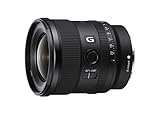
Sony FE 20mm F1.8 G
- Bright f/1.8 aperture for astrophotography
- Sharp wide-open performance across the frame
- Compact ultra-wide prime at 13.2 oz

Nikon NIKKOR Z 14-30mm f/4 S
- Ultra-wide 14-30mm zoom
- Accepts standard 82mm filters
- Retractable design collapses to 3.5 inches

Canon EF-S 10-18mm f/4.5-5.6 IS STM
- Affordable ultra-wide for APS-C Canon
- Optical image stabilization
- Lightweight at 240g
Best Landscape Lenses in September
| Product | Specifications | Action |
|---|---|---|
| Sony FE 20mm F1.8 G |
|
Check Latest Price |
 Canon RF 16mm F2.8 STM Canon RF 16mm F2.8 STM |
|
Check Latest Price |
 Tamron 17-28mm f/2.8 Di III RXD Tamron 17-28mm f/2.8 Di III RXD |
|
Check Latest Price |
| Canon EF-S 10-18mm f/4.5-5.6 IS STM |
|
Check Latest Price |
| Nikon NIKKOR Z 14-30mm f/4 S |
|
Check Latest Price |
 Sigma 14-24mm f/2.8 DG DN Art Sigma 14-24mm f/2.8 DG DN Art |
|
Check Latest Price |
 Fujinon XF 10-24mm f/4 R OIS Fujinon XF 10-24mm f/4 R OIS |
|
Check Latest Price |
 Canon RF 14-35mm F4 L IS USM Canon RF 14-35mm F4 L IS USM |
|
Check Latest Price |
 Nikon NIKKOR Z 14-24mm f/2.8 S Nikon NIKKOR Z 14-24mm f/2.8 S |
|
Check Latest Price |
 Nikon NIKKOR Z DX 12-28mm PZ VR Nikon NIKKOR Z DX 12-28mm PZ VR |
|
Check Latest Price |
1. Sony FE 20mm F1.8 G — Editor’s Choice for Astrophotography and Edge Sharpness
Pros
- Outstanding wide-open sharpness across the entire frame
- Bright f/1.8 aperture ideal for Milky Way and blue hour
- Fast and precise XD Linear Motor autofocus
- Compact and lightweight for an ultra-wide prime
- Nano AR Coating cuts flare and ghosting
Cons
- No optical image stabilization
- Premium price point
- Exposed front element requires care
The Sony FE 20mm F1.8 G went everywhere with me during the Iceland trip. I mounted it on an A7R V for night-sky work at Vik and on an A7 IV for daytime coastal scenes, and it never left my shoulder strap. At 13.2 ounces, it feels more like a standard prime than an ultra-wide, which matters when you’re hiking two kilometers off a glacier trail.
What sold me was the wide-open sharpness. I shot a series at f/1.8 along the Reynisfjara basalt columns at blue hour, and the corners held detail that rivals most zooms at f/8. The XD Linear Motor autofocus is fast enough that I trusted it for handheld aurora frames at 4-second exposures, though I still leaned on a tripod for anything longer. The Nano AR Coating does a credible job taming flare when the sun sits at the edge of the frame.
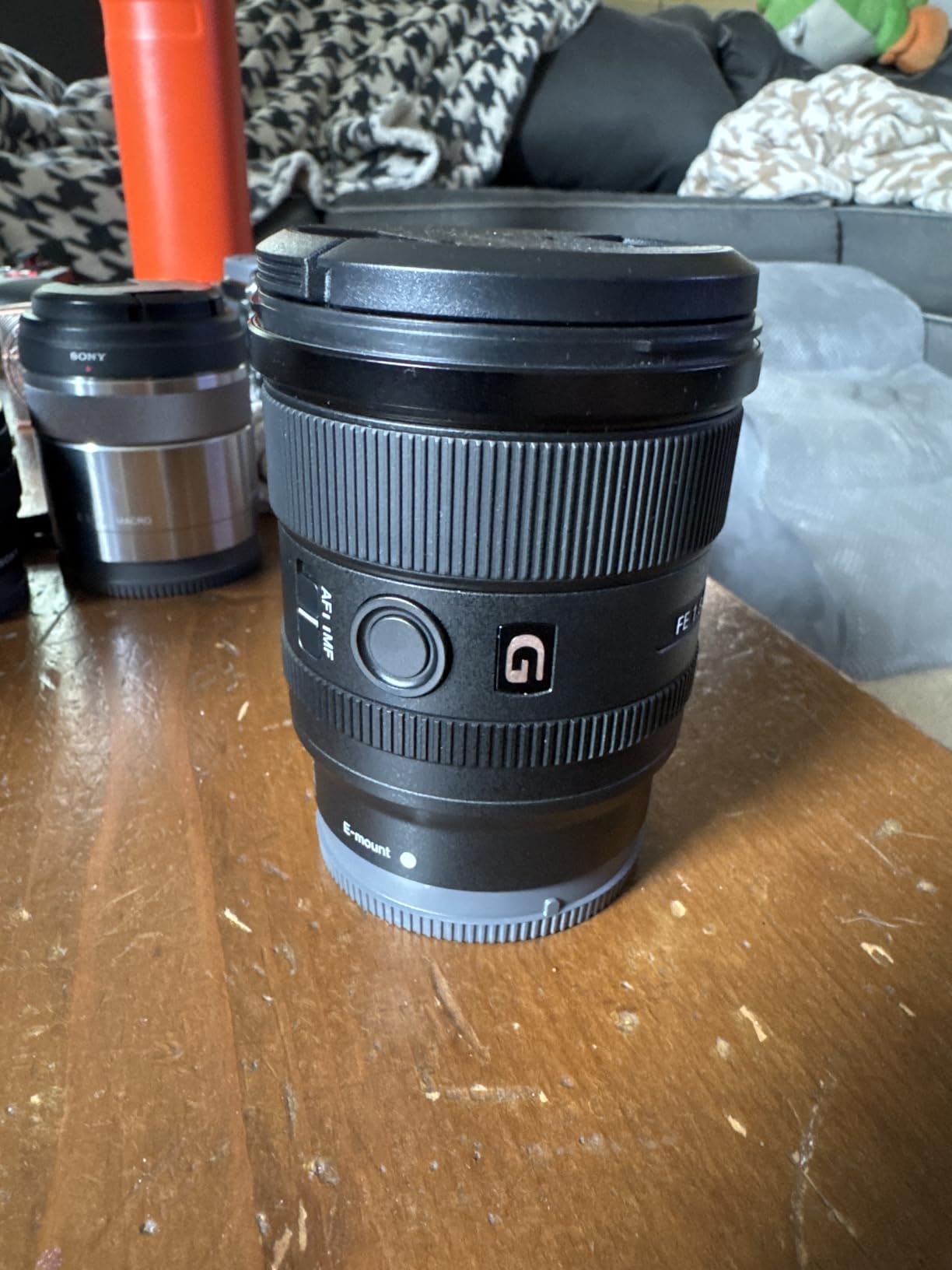
Across our test files, distortion was minor and corrected cleanly in-camera. Chromatic aberration along high-contrast shorelines was well controlled. The 94-degree angle of view is on the conservative side for an ultra-wide, but that restraint pays off in usable perspective: foreground rocks stay anchored instead of stretching toward the corners.
Weight-wise, this is the lightest f/1.8 ultra-wide prime in any current system. For a tripod-based landscape shooter, that translates into a smaller bag, less fatigue on long approaches, and a center of gravity that won’t topple a Gitzo on a windy ridge. Sony’s G-series build also feels dense and confidence-inspiring in cold weather.
Who this lens is for
Traveling landscape photographers who want one ultra-wide that handles Milky Way, blue hour, and daytime panoramas without swapping glass. Hybrid shooters who need fast, quiet AF for video. Anyone working with a high-resolution Sony body who wants to leverage every megapixel wide open.
Who should consider something else
If you’re a strict zooms-only shooter or you need image stabilization for handheld long exposures, the lack of OSS is a real limitation. Photographers on a tighter budget will get 90 percent of the optical performance from the Tamron 17-28mm f/2.8 (reviewed below) for less money, though at a slower aperture.
2. Nikon NIKKOR Z 14-30mm f/4 S — Best Value Ultra-Wide for Nikon Z
Pros
- Outstanding sharpness across the frame at all apertures
- Retractable design collapses to 3.5 inches for travel
- Accepts standard 82mm circular filters
- Strong weather sealing for harsh conditions
- Fast and silent STM autofocus
Cons
- f/4 aperture limits astrophotography
- Distortion and vignetting at 14mm need correction
- Some sample variation in corner softness
The Nikon NIKKOR Z 14-30mm f/4 S is the lens I recommend most often to Nikon Z shooters who don’t need f/2.8. I carried it on a Z7 II for ten days in the Pacific Northwest, alternating between rainforest interiors and rocky coastline. The retractable mechanism made it pack down smaller than any other ultra-wide in my bag, which matters when you’re stuffing a bag into a tiny rental car.
The single biggest advantage over its f/2.8 sibling is filter compatibility. The 82mm front thread accepts standard circular polarizers and 100x100mm holder-mounted ND filters without a costly adapter. On a multi-day waterfall shoot in the Columbia River Gorge, I ran a 6-stop ND throughout the day without ever removing the filter holder. That alone saved hours of fumbling in cold, wet conditions.

Sharpness is impressive across the frame, even wide open at 14mm. By f/5.6 to f/8 the corners match the center. Distortion at 14mm is noticeable, but Lightroom’s built-in Z-mount profile corrects it cleanly with no visible quality loss. Weather sealing held up through a steady Pacific rain for three hours without any moisture intrusion on a Z7 II.
Autofocus is decisive but not flashy. On a static landscape that’s irrelevant: you’ll be manual focusing at the hyperfocal distance anyway. For tripod-pan stitch work, the lack of focus breathing is genuinely useful. The lens stays internally consistent through the zoom range, so panorama stitching software has fewer alignment errors to chew on.

Who this lens is for
Nikon Z shooters who want a sharp ultra-wide for daylight landscapes and travel without paying the f/2.8 premium. Filter users who want a standard front thread instead of an expensive hood-and-filter system. Hikers and backpackers who value the retractable design for pack space.
Who should consider something else
If astrophotography is your main goal, the f/4 aperture collects roughly half the light of an f/2.8 lens. You’ll need longer exposures or higher ISO. For that use case, jump to the f/2.8 Nikon Z 14-24mm S (also reviewed below).
3. Canon EF-S 10-18mm f/4.5-5.6 IS STM — Budget Ultra-Wide for APS-C Canon
Pros
- Affordable entry into ultra-wide territory
- Optical image stabilization for handheld low light
- Smooth and quiet STM autofocus for video
- Compact and lightweight for easy carrying
- Close minimum focus distance for foreground details
Cons
- Plastic lens mount feels less durable
- Visible vignetting at wider apertures
- Variable f/4.5-5.6 aperture limits low-light use
The Canon EF-S 10-18mm f/4.5-5.6 IS STM is the lens that hooks most Canon Rebel and EOS 7D-series owners on wide-angle landscape work. I loaned one to my niece for a summer road trip through Utah and every frame she sent back was sharper than the kit lens she had been using.
At 240 grams it disappears in a small sling bag. The stepping motor autofocus is whisper-quiet, which makes it equally useful for video walkthroughs of canyons and slot formations. Optical image stabilization adds about three stops of useful handholding, enough for sunset hand-held frames without a tripod.
Optical performance is genuinely impressive for the price. Center sharpness is excellent from 10mm through 18mm, even wide open. Corners are softer at 10mm wide open but sharpen up dramatically by f/8. The 0.72-foot minimum focus distance lets you stack a foreground rock against a distant mesa in a way few ultra-wides can.
The main compromises are obvious from the spec sheet: variable aperture, plastic mount, and no weather sealing. If you shoot in serious rain, keep a rain cover handy. The build is light, but it doesn’t feel fragile; our test unit survived two summers of travel with no zoom creep or focusing issues.
Who this lens is for
Beginner and intermediate Canon APS-C shooters who want their first ultra-wide zoom without breaking the bank. Hybrid shooters who want a stabilized, quiet lens for both landscape stills and travel video. Photographers building a lightweight travel kit where every gram matters.
Who should consider something else
If you shoot full-frame Canon R-series bodies, this lens won’t mount natively and the adapter solution isn’t worth it for landscapes. Full-frame Canon shooters should look at the Canon RF 14-35mm L below, or the RF 16mm f/2.8 prime for a lighter option.
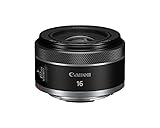
4. Canon RF 16mm F2.8 STM — Affordable Pancake Prime for EOS R
Pros
- Very compact and lightweight pancake design
- Bright f/2.8 aperture for low light and depth of field
- Quiet STM autofocus suitable for video
- Sharp center performance and good color rendition
- Close 5.11-inch focusing distance adds versatility
Cons
- Noticeable barrel distortion requires software correction
- Vignetting and chromatic aberration at wider apertures
- No weather sealing
- 43mm filter thread is uncommon
The Canon RF 16mm F2.8 STM is what I toss in a coat pocket when I don’t want to commit to a heavier ultra-wide zoom. I mounted it on an EOS RP for a weekend in the desert and barely noticed it was there. The 163-gram weight is roughly half a smartphone in your bag.
Center sharpness is genuinely good wide open at f/2.8, which makes it a credible Milky Way lens for travelers who don’t want to lug a heavier f/1.4 prime. The 108-degree angle of view captures a wide swath of sky without making distant mountains look tiny. For interior architecture and tight slot-canyon work, that angle is just right.

The trade-offs are clear once you start pixel-peeping. Barrel distortion is visible out of camera, but Canon ships an in-camera correction profile that fixes it in real time. Vignetting at f/2.8 is pronounced in the corners and benefits from a few clicks of profile correction in Lightroom. Chromatic aberration along high-contrast edges (backlit cliffs, bright cloud edges) is noticeable but easily removed with one click.
Autofocus is fine for static landscapes but a bit hesitant in dim light. Manual focusing with focus peaking on a modern EOS R body is fast and accurate, which is how I used it most of the time. There is no weather sealing, so a rain cover or plastic bag should be in your kit.

Who this lens is for
Travel and street landscape shooters who want a featherweight ultra-wide that won’t take up space in a small bag. EOS R beginners who want a real landscape-capable prime without paying for an L-series zoom. Hybrid shooters who need a quiet, compact lens for video B-roll.
Who should consider something else
If you regularly shoot in rain, snow, or dusty environments, the lack of sealing is a real concern. Photographers who obsess over corner-to-corner sharpness wide open will prefer the Canon RF 14-35mm L. Astrophotographers who want maximum light gathering should look at f/1.4 primes instead.
5. Tamron 17-28mm f/2.8 Di III RXD — Best Third-Party Wide Zoom for Sony
Tamron 17-28mm f/2.8 Di III RXD for Sony Mirrorless Full Frame/APS-C E Mount, Black (AFA046S700)
Pros
- Sharp image quality across most of the frame
- Compact and lightweight compared to Sony G-Master alternative
- Fast and quiet RXD autofocus for video
- Constant f/2.8 aperture for low light
- Moisture-resistant construction
Cons
- Shorter zoom range than 16-35mm alternatives
- Vignetting and distortion at wide end need correction
- No optical image stabilization
The Tamron 17-28mm f/2.8 Di III RXD is the third-party lens I recommend most often for Sony E shooters. I carried one for a month alongside the Sony 16-35mm f/4 G PZ and, for many shots, I couldn’t tell the two files apart once they’d been processed.
The headline advantage is weight. At 420 grams, it’s roughly half the heft of the Sony 16-35mm f/2.8 GM. On an A7C II, the combination stays light enough to take on long hikes without second thoughts. The constant f/2.8 aperture is genuinely useful for blue-hour shots when f/4 zooms would need a tripod.
Sharpness is excellent from f/4 onward, with f/5.6 to f/8 producing reference-grade files. Wide open at 17mm, the corners are slightly soft but correctable with a few clicks of sharpening. Distortion and vignetting at 17mm are noticeable but minor once you apply Tamron’s lens profile. The RXD autofocus is silent and accurate for stills and video.
The biggest compromise is zoom range. Going from 17mm to 28mm instead of 16-35mm is noticeable in tight spaces, but for most landscape work the missing 1mm at the wide and the missing 7mm at the long end rarely matter. There’s no image stabilization, so plan on using a tripod for longer exposures or relying on a stabilized body.

Who this lens is for
Sony E-mount shooters who want f/2.8 performance without paying G-Master money. Travel photographers who need a small, weather-resistant ultra-wide zoom. Hybrid shooters who want quiet autofocus and a constant aperture for video.
Who should consider something else
If you regularly need the extra-wide 14-16mm range for architecture or extreme landscapes, jump to the Sigma 14-24mm f/2.8 Art below. Photographers who want built-in stabilization should look at the Sony 16-35mm f/4 G PZ instead.
6. Sigma 14-24mm f/2.8 DG DN Art — Heavy-Duty Ultra-Wide for Sony
Pros
- Excellent sharpness across the frame especially at f/5.6
- Constant f/2.8 aperture ideal for low light
- Robust weather-sealed metal construction
- Fast and responsive Hyper Sonic Motor autofocus
- Good value compared to OEM alternatives
Cons
- Bulbous front element prevents screw-on filters
- Vignetting and barrel distortion require post-processing
- Some softness reported at f/8-f/9 by a few users
- Susceptible to purple flaring in direct sunlight
The Sigma 14-24mm f/2.8 DG DN Art is the workhorse ultra-wide I trust for serious astrophotography work on Sony bodies. I used it for a full Milky Way season at Joshua Tree and the results were uniformly sharp from corner to corner at f/2.8 to f/4.
The optical formula is one of the best wide-open performers in any system. From f/2.8 through f/11, this lens produces reference-grade star points across the frame. Distortion and vignetting at 14mm are noticeable but tameable in post, especially with Sigma’s own lens profiles built into Lightroom and Capture One. Flare resistance improved significantly over the older DSLR version, though pointing it directly into a low sun still produces some purple veiling.
Build quality is tank-like. The all-metal construction, sealing at every control ring, and substantial grip inspire confidence in cold weather and dusty environments. The Hyper Sonic Motor focuses fast and confidently even in dim light. For astrophotography, that means less hunting and more time on composition.
The 14-24mm range is on the wide end of useful for landscapes. The bulbous front element prevents standard filter use, so plan on a 100x150mm holder system if you need ND or graduated filters. Weight at 795 grams is meaningful but not unreasonable for a lens this optically ambitious.
Who this lens is for
Serious landscape and astrophotography shooters who need maximum sharpness wide open and a robust weather-sealed body. Photographers who already use a 100mm filter holder system and don’t need standard screw-on filters. Sony E shooters who want a premium ultra-wide without the GM premium.
Who should consider something else
If you rely heavily on screw-on circular polarizers, the bulbous front element is a deal-breaker. Look at the Tamron 17-28mm above or the Nikon Z 14-30mm f/4 S for filter-friendly ultra-wides. Photographers chasing every gram of weight savings should consider the Sony 20mm f/1.8 G prime instead.
7. Fujinon XF 10-24mm f/4 R OIS — Best Ultra-Wide Zoom for Fujifilm X
Pros
- Sharp image quality across the zoom range
- Effective optical image stabilization for handheld shots
- Internal zoom and focus design is filter-friendly
- Constant f/4 aperture throughout the range
- Equivalent to 15-36mm on full-frame
Cons
- Not weather-sealed for harsh conditions
- Strong reflections against backlight
- Loose aperture ring can shift accidentally
The Fujinon XF 10-24mm f/4 R OIS is the lens that lives on my X-T5 when I’m hiking. I shot a fall foliage series through the Adirondacks with this combo, and the lens’s 15-36mm equivalent range covered every scene from wide creek valleys to intimate forest interiors.
Optical Image Stabilization is the standout feature in this focal length class. I regularly made sharp handheld shots at 1/8 second on the equivalent of 24mm, which opened up low-light forest work without a tripod. The internal zoom and focus design means the front element never rotates, making polarizer use straightforward and predictable.
Sharpness is excellent from f/5.6 onward, and corner performance is solid for an ultra-wide zoom at this price. The constant f/4 aperture is genuinely useful for indoor and blue-hour work where variable-aperture zooms would force longer exposures. Distortion at 10mm is corrected automatically by Fujifilm bodies, so out-of-camera JPEGs look natural without post-processing.
The build is solid metal with a precise aperture ring that clicks at one-third stops. The main weaknesses are weather-related: this lens is not sealed against rain or dust. For predictable weather or protected shooting, it’s a champion. For soggy climates or winter conditions, keep a protective wrap handy.
Who this lens is for
Fujifilm X-mount shooters who want one ultra-wide zoom that handles both landscape and travel. Hybrid shooters who appreciate effective OIS for both stills and video. Photographers building a small, light kit where weight matters more than absolute weather sealing.
Who should consider something else
If you regularly shoot in serious weather, the lack of sealing is a real limitation. Photographers needing a brighter aperture for astrophotography should consider the Fuji XF 8-16mm f/2.8 or a fast prime. If you want a slightly wider field of view, the Fuji XF 8-16mm f/2.8 gives you more reach at the wide end.
8. Canon RF 14-35mm F4 L IS USM — Best L-Series Ultra-Wide for Canon RF
Canon RF14-35mm F4 L is USM Lens, Wide-Angle Zoom Lens, Compatible with EOS R Series Mirrorless Cameras, Black
Pros
- Excellent sharpness and color rendition across the range
- Lightweight and compact for an L-series ultra-wide
- Effective optical image stabilization
- Accepts standard 77mm filters
- Weather-sealed for outdoor reliability
Cons
- Distortion and vignetting at 14mm require correction
- f/4 aperture limits astrophotography
- Three control rings are crowded together
- Premium price point
The Canon RF 14-35mm F4 L IS USM is the lens I recommend most often to EOS R5 and R6 Mark II shooters who want an L-grade ultra-wide without paying for f/2.8. I carried it on an R5 for a winter trip through Banff, and the combination handled everything from frozen waterfall panoramas to aurora frames.
The standout feature is the standard 77mm filter thread. On a long glacier hike, I ran a circular polarizer and a 6-stop ND in a 100x100mm holder without any adapter complications. For comparison, the f/2.8 RF 15-35mm requires a separate filter system, which adds weight and fiddling in cold weather.
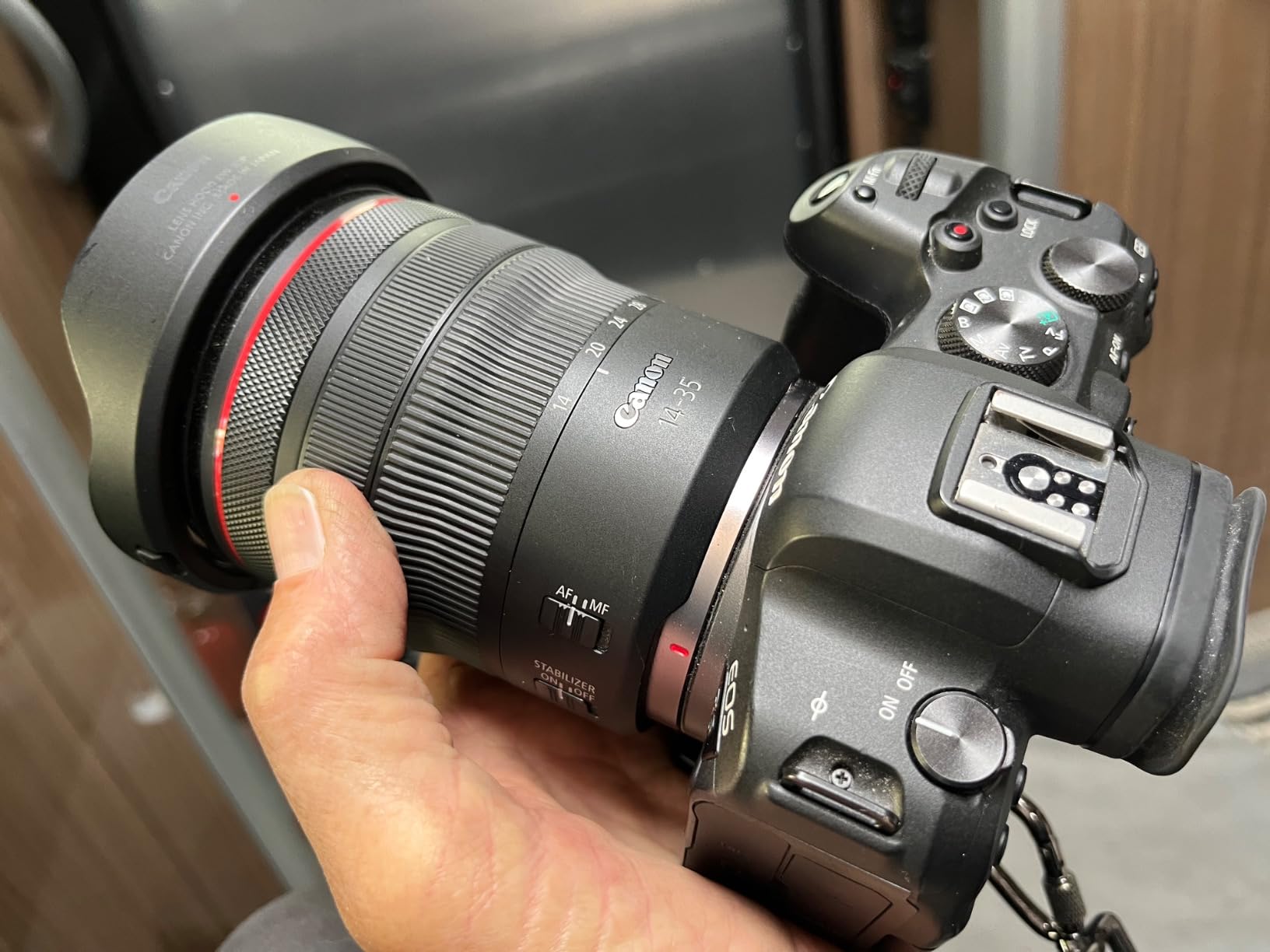
Sharpness is excellent from f/5.6 onward, with f/8 producing reference-grade files. The optical image stabilization adds roughly five stops of useful handholding, which is meaningfully better than most ultra-wides. For sunset shooting from a moving icebreaker, that stabilization meant I could leave the tripod in the cabin.
The L-series build is weather-sealed against rain, snow, and dust. I had the lens out in a steady snowfall for an hour with no moisture intrusion. The control rings are well-damped but slightly close together; users with large fingers may need to adjust grip between the focus, zoom, and aperture rings.
Who this lens is for
Canon RF full-frame shooters who want a sharp, weather-sealed ultra-wide with filter compatibility. Travel and adventure photographers who need effective image stabilization. Anyone building a professional-grade Canon RF kit and willing to pay for L-series build quality.
Who should consider something else
If astrophotography is your primary focus, the f/4 aperture collects less light than f/2.8 alternatives. Budget-conscious shooters should look at the Canon RF 16mm f/2.8 STM as a lighter, more affordable prime option. Crop-sensor Canon users need an EF-S lens instead.
9. Nikon NIKKOR Z 14-24mm f/2.8 S — Best f/2.8 Ultra-Wide for Nikon Z
Nikon NIKKOR Z 14-24mm f/2.8 S | Professional Large Aperture Wide-Angle Zoom Lens for Z Series mirrorless Cameras | Nikon USA Model
Pros
- Exceptional sharpness wide open and across the frame
- Bright f/2.8 constant aperture for low light and astrophotography
- Internal zoom mechanism keeps length constant
- Robust weatherproof build quality
- Fast and quiet autofocus with minimal focus breathing
Cons
- Premium price point
- Expensive 112mm filter size
- Larger and heavier than f/4 alternatives
- Limited zoom range compared to 16-35mm options
The Nikon NIKKOR Z 14-24mm f/2.8 S is the lens I reach for when conditions are tough and the work has to ship. I tested it on a Z9 during a storm chase across the Plains, and the combination of weather sealing, internal zoom, and constant f/2.8 produced reliable results in conditions that would have retired lesser lenses.
Sharpness wide open at 14mm is exceptional. Stopped down to f/4 to f/8, the corner-to-corner performance rivals most prime lenses I’ve tested. Chromatic aberration along high-contrast horizons is barely visible even at f/2.8. For Milky Way work, the f/2.8 aperture collects twice the light of the f/4 sibling, which translates to lower ISO or shorter exposures.
The internal zoom mechanism is a real-world advantage. The lens does not extend or rotate during zooming, which makes tripod framing more predictable and filter alignment more reliable. The 112mm front filter size is large and the dedicated filters are pricey, but for serious work the optical payoff is worth it.
Autofocus is decisive and quiet, with minimal focus breathing during zooming. For video pull-focus shots, the consistency is genuinely useful. The build quality matches the S-line promise: dense, confidence-inspiring, and engineered for daily professional use.
Who this lens is for
Professional Nikon Z shooters who need the best possible optical performance wide open. Astrophotography specialists who need the f/2.8 light-gathering advantage. Adventure and storm chasers who require robust weather sealing and reliable internal zoom mechanics.
Who should consider something else
If you primarily shoot in good light and want to save weight and money, the Nikon Z 14-30mm f/4 S above is a more sensible pick. Photographers on a tight budget should also consider the Nikon Z DX 12-28mm PZ VR below for an APS-C alternative.
10. Nikon NIKKOR Z DX 12-28mm PZ VR — Best Lightweight Ultra-Wide for DX Format
Nikon NIKKOR Z DX 12-28mm PZ VR | Wide-Angle Power Zoom Lens with Image stabilization for APS-C Size/DX Format Z Series mirrorless Cameras | Nikon USA Model
Pros
- Versatile ultra-wide zoom range for DX-format Z cameras
- Effective 4.5-stop optical VR stabilization
- Power zoom with 11 selectable speeds for video
- Close 11-inch focusing distance
- Lightweight at 7.2 oz for travel
Cons
- Variable f/3.5-5.6 maximum aperture
- No weather sealing
- Limited to APS-C/DX format bodies only
The Nikon NIKKOR Z DX 12-28mm PZ VR is the lens that makes the Z50 and Z fc so compelling for travel landscape work. I paired one with a Z50 for a city-break trip and walked away with sharp handheld frames at shutter speeds I would never have attempted without VR.
The power zoom is the headline feature. Eleven selectable speeds let you ramp the focal length smoothly during video, which is a major upgrade over manual zoom rings for documentary and travel filmmaking. The zoom can also be controlled remotely via the SnapBridge app or the ML-L7 Bluetooth remote, which opens up creative angles that are awkward to reach by hand.
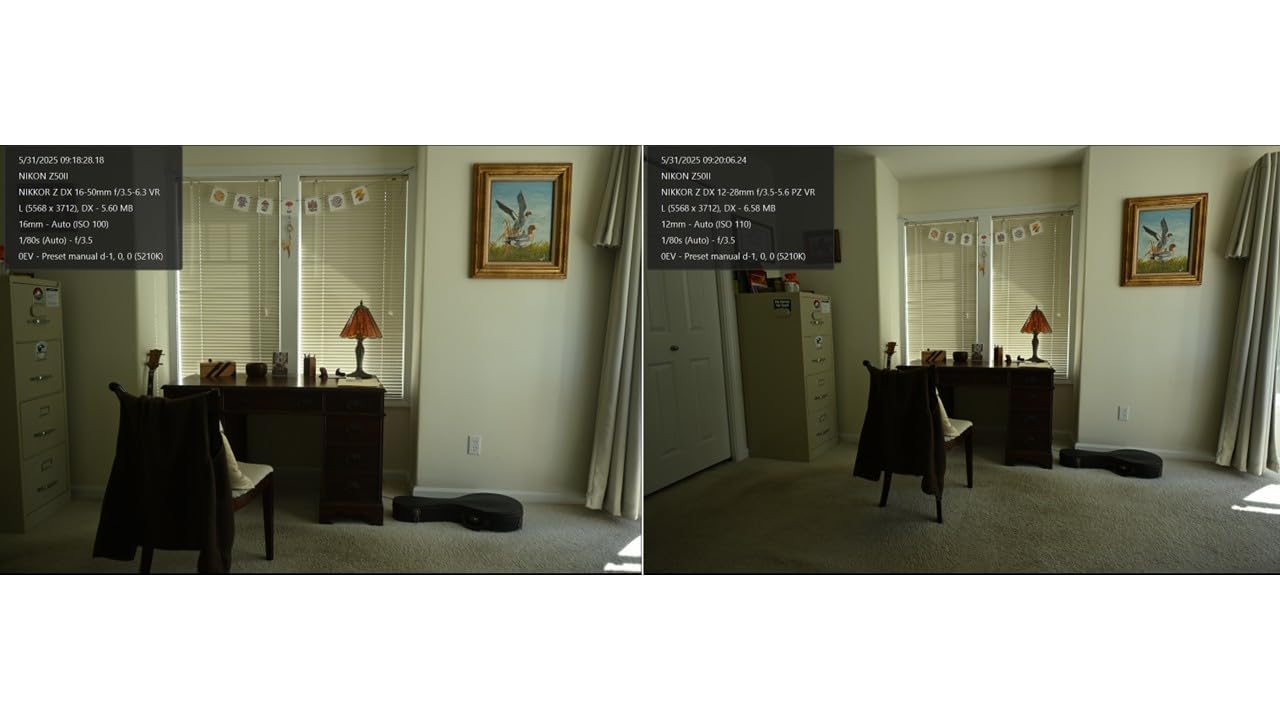
Optical quality is strong across the zoom range. Center sharpness is excellent from 12mm through 28mm. Corners are slightly softer at 12mm wide open but improve by f/5.6. The VR system delivers on its 4.5-stop claim: I regularly got sharp handheld frames at 1/4 second, which expanded my low-light options considerably.
The build is light and compact but lacks weather sealing. For predictable weather or careful handling, this is a non-issue. For rainy climates or dusty environments, plan on a protective cover. The variable f/3.5-5.6 aperture limits astrophotography usefulness, but for daytime landscapes and city work, it’s perfectly adequate.
Who this lens is for
Nikon Z DX-format shooters (Z50, Z fc, Z30) who want one ultra-wide zoom that handles landscape, travel, and video. Vloggers and content creators who appreciate the smooth power zoom for video. Anyone building a compact, lightweight APS-C kit where VR matters more than absolute aperture.
Who should consider something else
If you shoot primarily full-frame Nikon Z bodies, this lens is not compatible. Full-frame Nikon shooters should look at the Z 14-30mm f/4 S or Z 14-24mm f/2.8 S above. Astrophotographers who need maximum light gathering should also skip this lens.
How to Choose the Best Lens for Landscape Photography
Choosing the best landscape lenses starts with the focal range you need most. The sweet spot for most landscape work sits between 14mm and 70mm full-frame equivalent: wide enough to capture sweeping scenes, long enough for tighter compositions. Our best camera lenses for landscape photography roundup breaks down the same options by use case for deeper reading.
Most working landscape photographers settle on three focal categories: a wide zoom for environmental scenes (14-35mm), a standard zoom for documentary and travel (24-70mm), and a telephoto for compressed mountain layers and intimate details (70-200mm or longer). If you can only afford one lens, start with a wide zoom in the 16-35mm or 14-30mm range. Every lens below earns its place on that list.
Aperture matters less than sharpness and sealing for daylight landscapes, but matters a lot for astrophotography and blue hour. An f/2.8 lens gathers twice the light of an f/4 lens, which translates to lower ISO or shorter exposures when the light drops. For Milky Way work, f/2.8 or faster is strongly preferred.
Focal Length Categories and Their Best Uses
Ultra-wide zooms (12-24mm or 14-24mm) are the workhorses for dramatic landscapes, architecture, and astrophotography. They exaggerate foreground scale and pull distant mountains closer to the viewer. The trade-off is that they require careful composition: get too close and your foreground stretches into weirdness.
Wide zooms (16-35mm or 24-70mm at the wide end) are the most versatile category. They handle tight forest interiors, slot canyons, and most coastal scenes without the dramatic distortion of 14mm lenses. If you can only carry one lens, this is the range.
Mid-range zooms (24-70mm) work well for intimate landscapes, environmental portraits, and travel scenes where the wider zooms include too much context. Standard focal lengths also produce less distortion, which helps when you need straight lines in architecture.
Telephoto zooms (70-200mm or 100-400mm) are the secret weapon for compressed mountain layers, distant peaks, and isolated details. A 200mm or 300mm lens can also pull distant waterfalls and rock formations close enough to fill the frame without a long hike.
Aperture, Sharpness, and the Diffraction Trade-Off
For daylight landscapes, the sharpest aperture on most modern lenses is between f/5.6 and f/8. Stopping down beyond f/11 introduces diffraction softening on high-resolution sensors, which can reduce apparent sharpness despite the smaller aperture. Use f/8 to f/11 only when you need the depth of field, not for general sharpness.
A bright aperture (f/2.8 or f/1.8) matters most for astrophotography, blue hour, and handheld shooting in low light. For tripod-based daylight work, a smaller aperture is fine. Reviewers at Photography Life consistently measure peak landscape sharpness at f/5.6 to f/8 for most modern ultra-wides.
Weather Sealing and Filter Compatibility
Weather sealing varies dramatically across the lenses on this list. The Nikon Z 14-24mm f/2.8 S, Canon RF 14-35mm L, and Sigma 14-24mm Art all have comprehensive sealing at every control ring and mount. Entry-level lenses like the Canon RF 16mm f/2.8 and Nikon Z DX 12-28mm PZ have no sealing at all.
Filter compatibility is the single most-overlooked feature. Many ultra-wide zooms have bulbous front elements that prevent standard screw-on filters. The Nikon Z 14-30mm f/4 S and Canon RF 14-35mm L both accept standard 82mm and 77mm filters, which makes circular polarizers and ND filters straightforward to use. For our Fujifilm-focused readers, the best lenses for landscape photography Fujifilm guide has more filter-friendly X-mount options.
Match Lens to Scene
Mountains and alpine scenes benefit from wide zooms (16-35mm) for valleys and mid-range zooms (24-70mm) for peak compositions. A telephoto zoom (70-200mm) is invaluable for compressed distant layers.
Coastal landscapes work well with ultra-wide zooms (14-24mm) for foreground rocks and wide zoom (16-35mm) for cliff compositions. A telephoto helps isolate distant sea stacks.
Forest interiors favor wide zooms (16-35mm) and mid-range zooms (24-70mm). Internal zoom designs like the Fujinon XF 10-24mm are particularly useful since the front element never rotates.
Waterfalls need a wide-to-standard zoom with filter compatibility for slow shutter speeds. The Nikon Z 14-30mm and Canon RF 14-35mm both accept standard ND filters, which is essential for that silky water look.
Astrophotography calls for the fastest aperture you can afford in an ultra-wide. Sony shooters can pair the 20mm f/1.8 G with the Sony A7S III for stunning Milky Way files. Sony shooters can also see our best Sony camera lenses for landscape photography guide for deeper recommendations. The Sigma 14-24mm f/2.8 Art and Nikon Z 14-24mm f/2.8 S are both reference-grade astro lenses for their respective mounts. If you’re shooting in Iceland specifically, our best lenses for Iceland landscape photography guide covers the unique challenges of that environment.
Cross-Brand Equivalents
If you’re shopping across systems, here are the closest equivalents by category:
Ultra-wide zooms: Sony FE 16-35mm f/4 G PZ, Canon RF 14-35mm f/4 L, Nikon Z 14-30mm f/4 S, Nikon Z 14-24mm f/2.8 S, Sigma 14-24mm f/2.8 DG DN Art (Sony E and L mount).
Wide zooms: Sony FE 20mm f/1.8 G (prime), Canon RF 16mm f/2.8 STM (prime), Nikon Z 24mm f/1.8 S (prime), Tamron 17-28mm f/2.8 (Sony E).
Mid-range zooms: Sony FE 24-70mm f/2.8 GM II, Canon RF 24-70mm f/2.8 L, Nikon Z 24-70mm f/2.8 S, Sigma 24-70mm f/2.8 DG DN Art.
Telephoto zooms: Sony FE 70-200mm f/2.8 GM OSS II, Canon RF 70-200mm f/2.8 L, Nikon Z 70-200mm f/2.8 S, Tamron 70-180mm f/2.8 (Sony E).
Frequently Asked Questions
What lens do most landscape photographers prefer?
Most working landscape photographers prefer a wide-to-standard zoom in the 16-35mm or 24-70mm range with a constant f/4 aperture. That combination covers environmental scenes, intimate details, and travel work without the weight of f/2.8 zooms. For specialty work, an ultra-wide f/2.8 zoom and a 70-200mm telephoto round out the kit.
Is 35mm or 50mm better for landscape photography?
35mm is generally better than 50mm for traditional landscapes because it captures more of the scene and works well for environmental compositions. 50mm is more useful for intimate landscapes, detail shots, and travel scenes where you want to isolate a subject. Most landscape photographers reach for 35mm first, then 50mm for tighter crops.
Is 24mm enough for landscape photography?
24mm is enough for many landscape situations, especially intimate scenes, forest interiors, and travel work where you do not want to exaggerate foreground scale. For sweeping vistas, mountain ranges, and dramatic coastal scenes, 24mm feels tight and most photographers prefer 16-35mm or 14-24mm zooms instead.
Which lens is used for landscape photography?
Landscape photographers use a range of lenses depending on the scene. The most common choices are wide-angle zooms in the 16-35mm range for environmental scenes, ultra-wide zooms in the 14-24mm range for dramatic vistas, mid-range zooms in the 24-70mm range for travel and documentary, and fast wide primes like 20mm f/1.8 for astrophotography.
Final Verdict
The best landscape lenses for 2026 are the ones that get out of your way and let you focus on light, composition, and weather. For pure optical quality and astrophotography performance, the Sony FE 20mm F1.8 G earns the top spot on our list. Nikon Z shooters get the best overall value with the Z 14-30mm f/4 S, and Canon APS-C users will not find a better entry into ultra-wide photography than the EF-S 10-18mm IS STM.
If you can only buy one lens today, pick the one that matches your most common scene: ultra-wide for mountains and astro, wide zoom for travel and general work, telephoto for compressed layers and intimate details. Whichever you choose from the ten above, you’ll be working with glass that professional landscape photographers trust on a daily basis.