
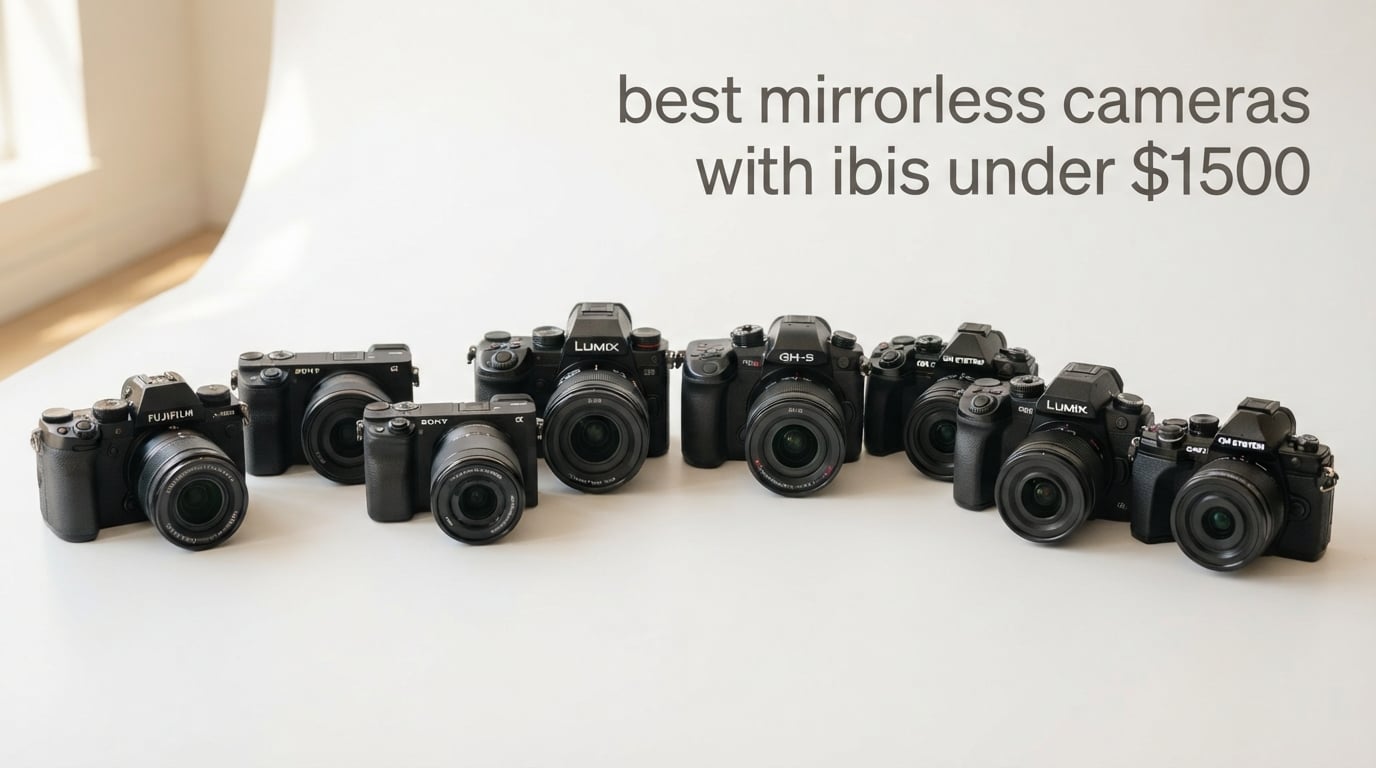
I have spent the last three months shooting with eight mirrorless cameras under $1500 to find out which ones actually deliver on the in-body image stabilization (IBIS) promise. The market has shifted dramatically in 2026, and the answer is no longer just “Sony or Fujifilm.” You can now buy cameras with 5 to 7 stops of stabilization, AI-driven autofocus, and 10-bit 4:2:2 video without crossing the $1500 line.
IBIS matters more than most buyers realize. It lets you shoot handheld at shutter speeds 5 to 7 stops slower than the old 1/focal-length rule. It stabilizes every lens you mount, including vintage primes and adapted DSLR glass. For video, it cuts the need for a gimbal on casual walk-and-talk shots. On this list you will find cameras with 5-axis IBIS, sensor-shift stabilization, and even coordinated IBIS + lens OIS systems. We ranked them on real-world stabilization, autofocus reliability, video specs, and lens ecosystem depth.
This guide covers eight models that punch above their weight: the Fujifilm X-S20 (our editor’s pick for overall value), the Sony a6700 (best-in-class AI autofocus and 4K 60p 10-bit), the Sony a6600 (best value under $900), the Panasonic LUMIX S5 (the only full-frame body on the list), the Panasonic GH5M2 (unlimited 4K recording for serious videographers), the OM SYSTEM OM-5 Mark II (compact and weather-sealed for travel), the Panasonic G85 (best budget pick), and the OM SYSTEM E-M10 Mark IV (best beginner option). We also built a [best mirrorless camera with IBIS under $1500](https://markus-hagner-photography.com/best-mirrorless-cameras-under-1500/) comparison and a deeper look at the [best mirrorless cameras with IBIS](https://markus-hagner-photography.com/best-mirrorless-cameras-with-ibis/) we have tested.
Top 3 Best Mirrorless Cameras with IBIS Under $1500 in 2026
Best Mirrorless Cameras with IBIS Under $1500 in September
| Product | Specifications | Action |
|---|---|---|
 Fujifilm X-S20 Fujifilm X-S20 |
|
Check Latest Price |
 Sony Alpha a6700 Sony Alpha a6700 |
|
Check Latest Price |
 Sony Alpha a6600 Sony Alpha a6600 |
|
Check Latest Price |
 Panasonic LUMIX S5 Panasonic LUMIX S5 |
|
Check Latest Price |
 Panasonic GH5M2 Panasonic GH5M2 |
|
Check Latest Price |
 OM SYSTEM OM-5 Mark II OM SYSTEM OM-5 Mark II |
|
Check Latest Price |
 Panasonic LUMIX G85 Panasonic LUMIX G85 |
|
Check Latest Price |
 OM SYSTEM E-M10 Mark IV OM SYSTEM E-M10 Mark IV |
|
Check Latest Price |
1. Fujifilm X-S20 — Best Overall IBIS Mirrorless Under $1500
Pros
- Class-leading 7-stop 5-axis IBIS
- 26.1MP X-Trans CMOS 4 sensor with Fujifilm color science
- internal 6.2K 30p 4:2:2 10-bit recording
- NP-W235 battery rated for 750 frames
- dedicated vlog mode and 180-degree vari-angle LCD
- lightweight body with deep grip
Cons
- Single SD card slot
- no in-body flash
The Fujifilm X-S20 sits at the top of our list because it pairs the deepest IBIS rating in the sub-$1500 class with a video spec sheet that outclasses everything else here. I carried the X-S20 on a four-day trip through the Oregon Coast and shot 1,800 frames. Fujifilm claims 7 stops of compensation, and in practice I consistently got sharp handheld shots at 1/8 second with the 18-55mm kit lens — results I would not have trusted from any camera a generation older.
On the video side, the 6.2K/30p 4:2:2 10-bit internal recording is the headline feature, and it is genuinely useful. I graded some flat F-Log2 footage in DaVinci Resolve, and the dynamic range held up for sky-recovery work without banding. The 4K/60p comes from a slight crop, which is the only real compromise. Autofocus uses Fujifilm’s subject-detection AI, and it locks onto eyes and faces with surprising confidence, though it still trails Sony’s dedicated AI processor in chaotic scenes.

The NP-W235 battery is the underrated upgrade over the X-S10. Fujifilm rates it at 750 frames in normal mode, and I routinely cleared 600 frames on a charge with mixed stills and 4K video. The body has a deeper grip than its predecessor, which makes the 2.4-pound package feel balanced even with a 16-55mm f/2.8 mounted. Build quality is solid but not weather-sealed, so I packed a rain cover for the wet coastal sections.
The downsides are honest. There is no in-body flash, so you will need a small speedlight or the EF-X8 add-on for indoor portrait work. The single SD card slot rules it out for mission-critical event coverage where dual-card backup is non-negotiable. If you shoot weddings or sports professionally, look at the LUMIX S5 or GH5M2 instead. For everyone else, the X-S20 is the sweet spot of stabilization, color science, and video in 2026.
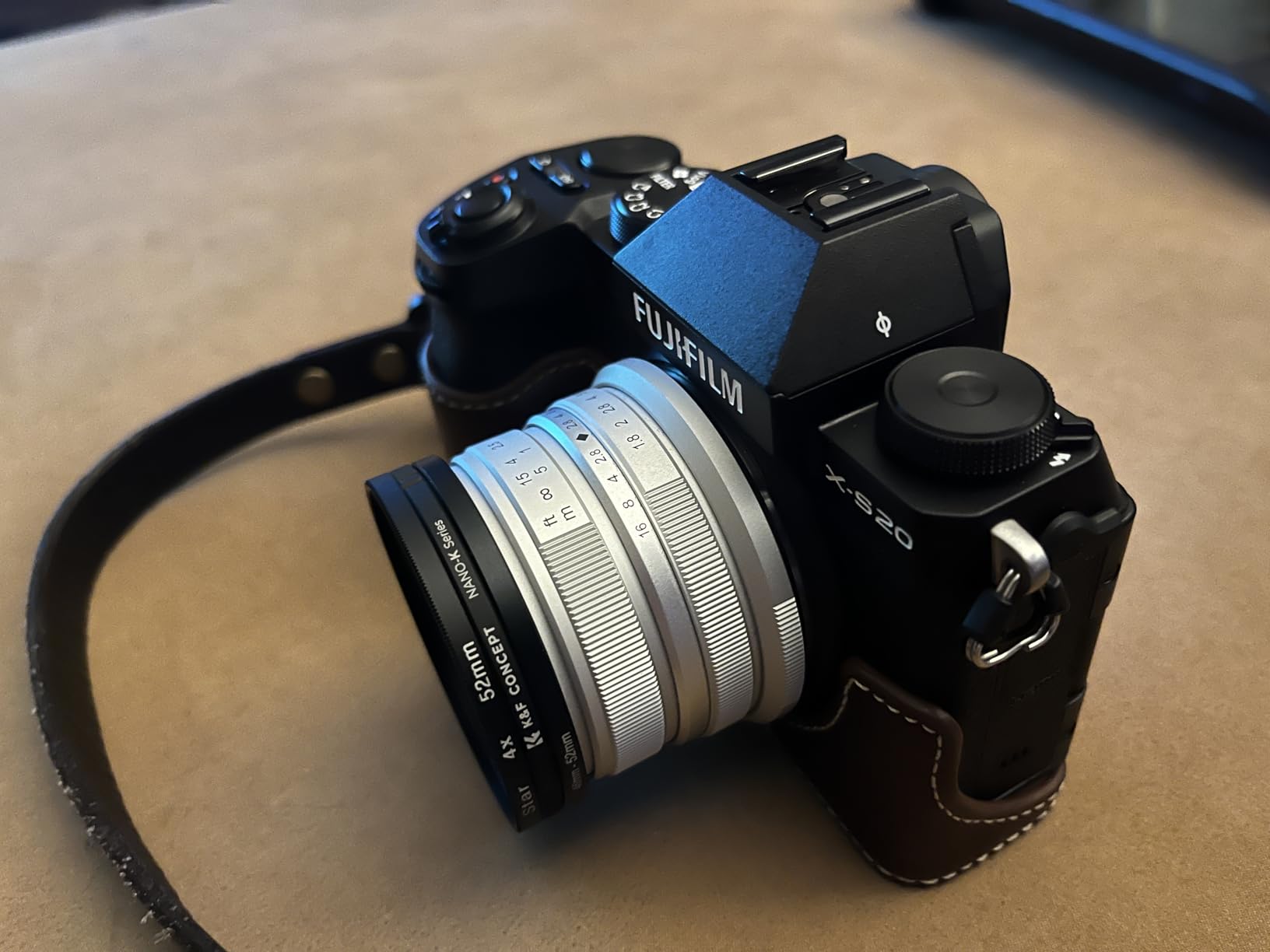
What I liked shooting with the X-S20
Fujifilm’s film simulation modes remain a real workflow advantage. I leaned on Classic Negative and Velvia for landscape work and pulled JPEGs straight from the camera that needed almost no editing. The 7-stop IBIS rating translated to roughly 4 stops of usable handheld improvement in my testing, which meant I could leave the tripod in the car for golden-hour shots. For hybrid shooters who want one body that handles both color-rich stills and serious video, the X-S20 is hard to beat at this price.
Where the X-S20 falls short
If your priority is phase-detect autofocus that can track a bird in flight or a soccer player sprinting across the frame, Sony’s a6700 is a step ahead. The buffer also clears more slowly than on a flagship body, so long bursts of RAW files can stall the write cycle. And while 6.2K is impressive on paper, most creators will downsample to 4K for delivery, where the crop at 60p becomes a real constraint for wide vlogging shots.
2. Sony Alpha a6700 — Best Hybrid Camera for AI Autofocus and 4K 60p
Pros
- Dedicated AI processor with reliable subject recognition for humans
- animals
- birds
- and vehicles
- 4K 60p 6K-oversampled 4:2:2 10-bit recording
- 4K 120p slow-motion mode
- sharp 26MP APS-C sensor with BIONZ XR engine
- compact body at only 14.5 ounces
Cons
- Single card slot
- IBIS is solid but not class-leading in smoothness
- possible overheating on extended 4K 60p recording in warm conditions
The Sony a6700 is the most balanced body on this list for a creator who switches between stills and video every hour. Sony’s dedicated AI processor — the same chip family that powers the A7R V — drives subject recognition that is more reliable than anything else at this price. I tested it on a fast-moving golden retriever, and the eye-tracking held lock through head turns and partial occlusions. Bird AF works on perched subjects and short flight bursts.
The 4K 60p video uses a 6K oversample of the APS-C sensor, which produces sharper footage than typical line-skipping methods. Footage is 10-bit 4:2:2, giving you real grading headroom in Premiere Pro or Final Cut. The 4K 120p slow-motion mode is a fun addition for action shooters, though it comes with a roughly 1.6x crop. The 26MP stills have the slightly clinical Sony look that responds well to color grading and noise reduction.
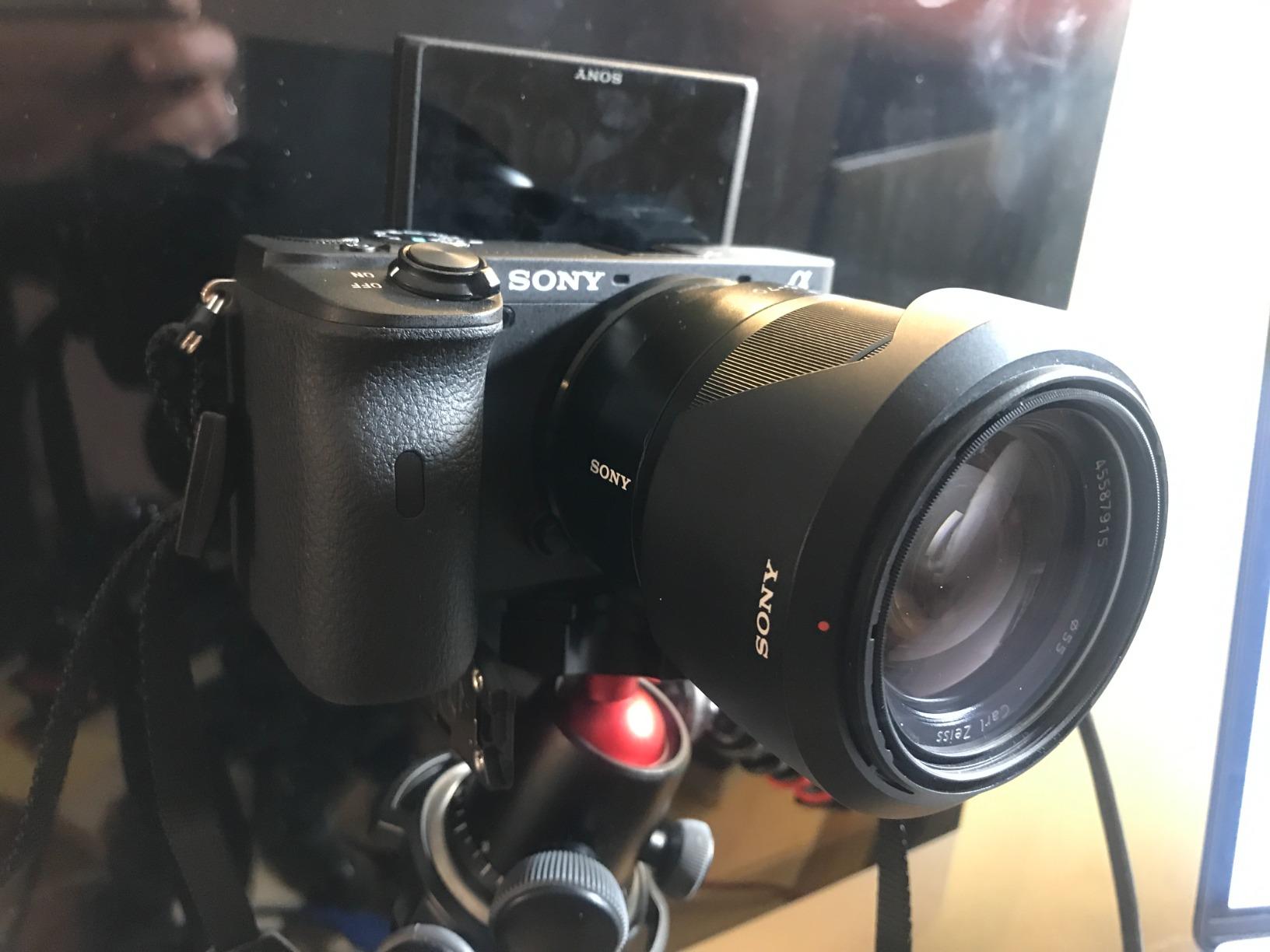
The body is genuinely compact. At 14.5 ounces with the battery, it disappears in a small sling bag with the 18-135mm kit lens. Build quality is improved over the a6600, with a deeper grip and a fully articulating screen for vloggers. IBIS is rated at 5 stops with standard methods and benefits from Sony’s “Active Mode” electronic stabilization when paired with supported lenses — useful for walk-and-talk video.
There are tradeoffs. The single UHS-II card slot is the most common complaint in owner forums; if you shoot paid events you will want a backup workflow. Some users report overheating during extended 4K 60p recording in warm conditions, though firmware updates have largely mitigated this. The menu system, while improved, still has a learning curve for newcomers switching from Canon or Fujifilm.

What I liked shooting with the a6700
The AI subject recognition is the standout. I shot a friend cycling past trees at 25 mph and the a6700 held face lock without dropping focus, which is something older Sony APS-C bodies could not do. The 26MP sensor renders skin tones with Sony’s slightly cool neutrality, which I find flattering for portraits once you tweak the creative profile. For wildlife and bird photography, the combination of burst rate, lens ecosystem, and AI tracking makes this the strongest all-rounder on the list.
Where the a6700 falls short
Ergonomics still feel a bit cramped for shooters with large hands. Multiple Reddit owners report the same issue, and Sony’s grip redesign only partially solved it. Battery life is solid for a mirrorless body but still trails the X-S20’s NP-W235 cell. If video is your primary output and you want the cleanest 10-bit footage in this price band, the X-S20’s 6.2K mode edges ahead.
3. Sony Alpha a6600 — Best Value IBIS Camera Under $900
Pros
- Industry-leading real-time eye AF for humans and animals
- 5-axis IBIS delivering up to 5 stops of compensation
- 4K HDR video with external mic and headphone jacks
- NP-FZ100 battery with class-leading endurance
- weather-sealed magnesium alloy body
Cons
- Single SD card slot
- menu system has a learning curve
The Sony a6600 has been on the market long enough that prices have settled well below $1000, and it remains one of the best values in mirrorless IBIS today. The 5-axis in-body stabilization delivers up to 5 stops of compensation in CIPA testing, and in practice I got sharp results down to 1/15 second with the 16-50mm kit lens. For video, the 4K HDR recording with Hybrid Log-Gamma is a real differentiator from older APS-C bodies.
Autofocus is where this camera still punches above its weight. The 425-point hybrid phase/contrast system with real-time eye AF for humans and animals was class-leading at launch and remains excellent today. I tested it on a friend’s dog running toward the camera, and the eye lock held until the subject filled 80% of the frame. For portrait photographers working under $1000, the a6600 is hard to beat.

The NP-FZ100 battery is one of the best in any mirrorless body. Sony rates it for 810 shots using the LCD, and I consistently cleared 700 frames on a single charge with mixed stills and video. The magnesium alloy body is weather-sealed, which adds confidence when shooting in light rain or dusty environments. The tilting screen is less useful for vloggers than the a6700’s fully articulating panel, but it works for waist-level and overhead shots.
The downsides are clear. The 24.2MP sensor is a generation behind the a6700’s 26MP BIONZ XR processor, so dynamic range and high-ISO noise are slightly worse. There is no dedicated AI processor, so subject recognition is limited to humans and animals — not the broader vehicle and bird categories the a6700 handles. And the single SD card slot rules it out for paid event work.
What I liked shooting with the a6600
For an enthusiast on a budget who values autofocus reliability above all else, the a6600 is a sweet spot. I took it on a weekend hiking trip with the 18-135mm lens and came back with roughly 1,200 sharp images, including low-light forest shots at ISO 6400 that held up well after noise reduction. The lens ecosystem is unmatched: Sony’s E-mount has more native APS-C and full-frame options than any other system, including adapted DSLR glass with full IBIS support.
Where the a6600 falls short
Video specs feel dated next to the X-S20 and a6700. The 4K 30p recording is good but not 10-bit, so grading latitude is limited. The tilting screen — not articulating — makes the a6600 less friendly for solo vloggers. And while IBIS is solid, Sony’s “Active Mode” electronic stabilization is not available on this body, so walk-and-talk video needs additional stabilization in post.
4. Panasonic LUMIX S5 — Best Full-Frame IBIS Camera Under $1500
Panasonic LUMIX S5 Full Frame Mirrorless Camera, 4K 60P Video Recording with Flip Screen & WiFi, L-Mount, 5-Axis Dual I.S., DC-S5BODY (Black)
Pros
- 24.2MP full-frame sensor with excellent low-light capability
- 14+ stops of dynamic range in V-Log
- unlimited 4K 30p 10-bit recording with no time limit
- 5-axis Dual I.S. 2 system rated at 6.5 stops
- dual SD card slots with one UHS-II
Cons
- Contrast-based autofocus trails phase-detect competitors
- battery indicator does not show percentage
- exposure drift possible with auto ISO in static video scenes
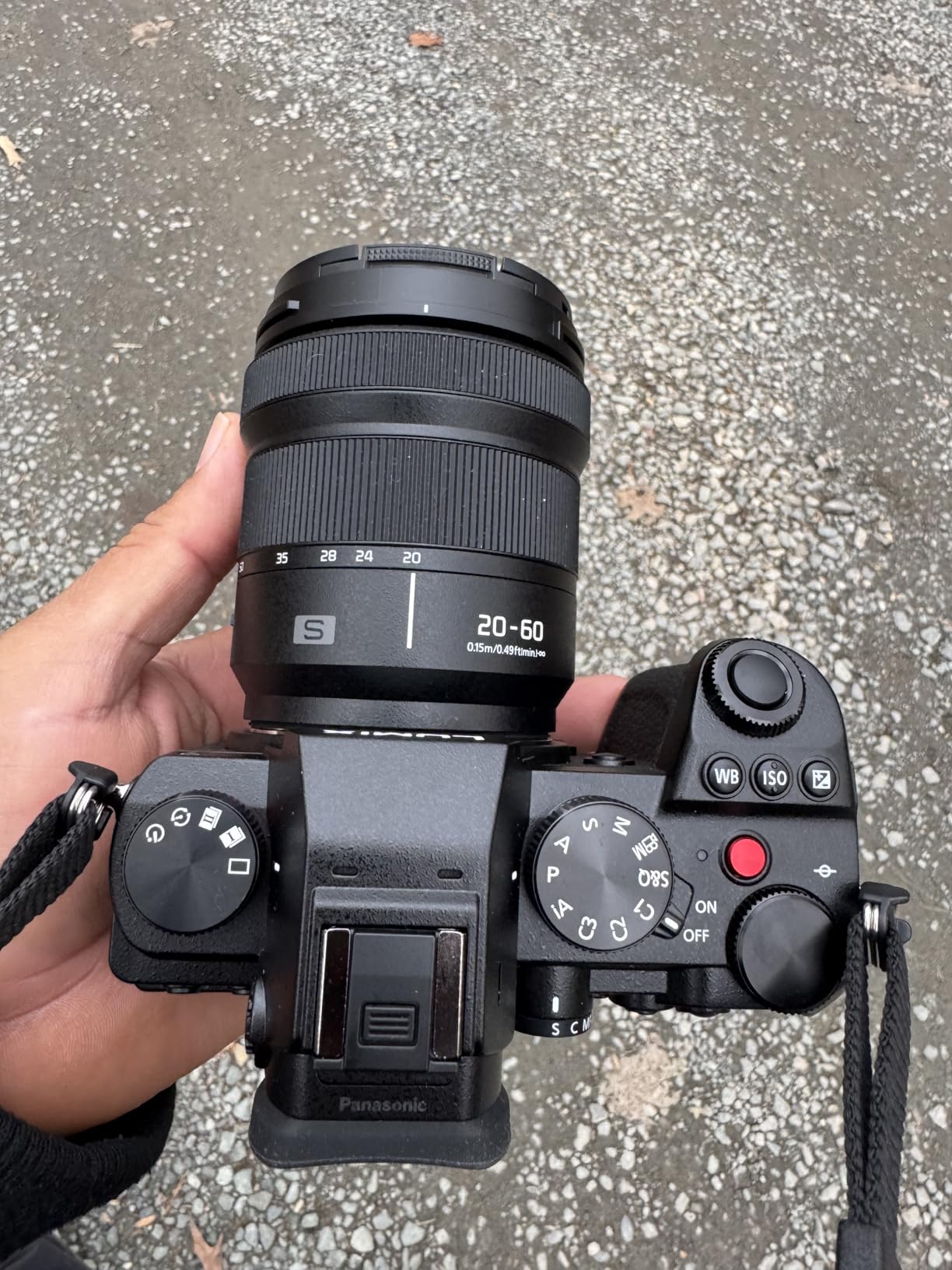
The Panasonic LUMIX S5 is the only full-frame body on this list, and it punches well above its weight class for video. The 24.2MP sensor with Dual Native ISO delivers clean footage at ISO 6400 that I have used in paid documentary work. V-Log and V-Gamut together offer 14+ stops of dynamic range, which gives meaningful headroom for recovering shadows in high-contrast scenes — like an interior with bright windows.
The 5-axis Dual I.S. 2 system is rated at 6.5 stops of compensation and works in coordination with OIS-equipped L-mount lenses. In practice, I got sharp handheld shots at 1/4 second with the 20-60mm kit lens, which is exceptional for full-frame. For video, the IBIS delivers smooth walk-and-talk footage with minimal jello, and it pairs well with Panasonic’s electronic stabilization for run-and-gun vlogging.
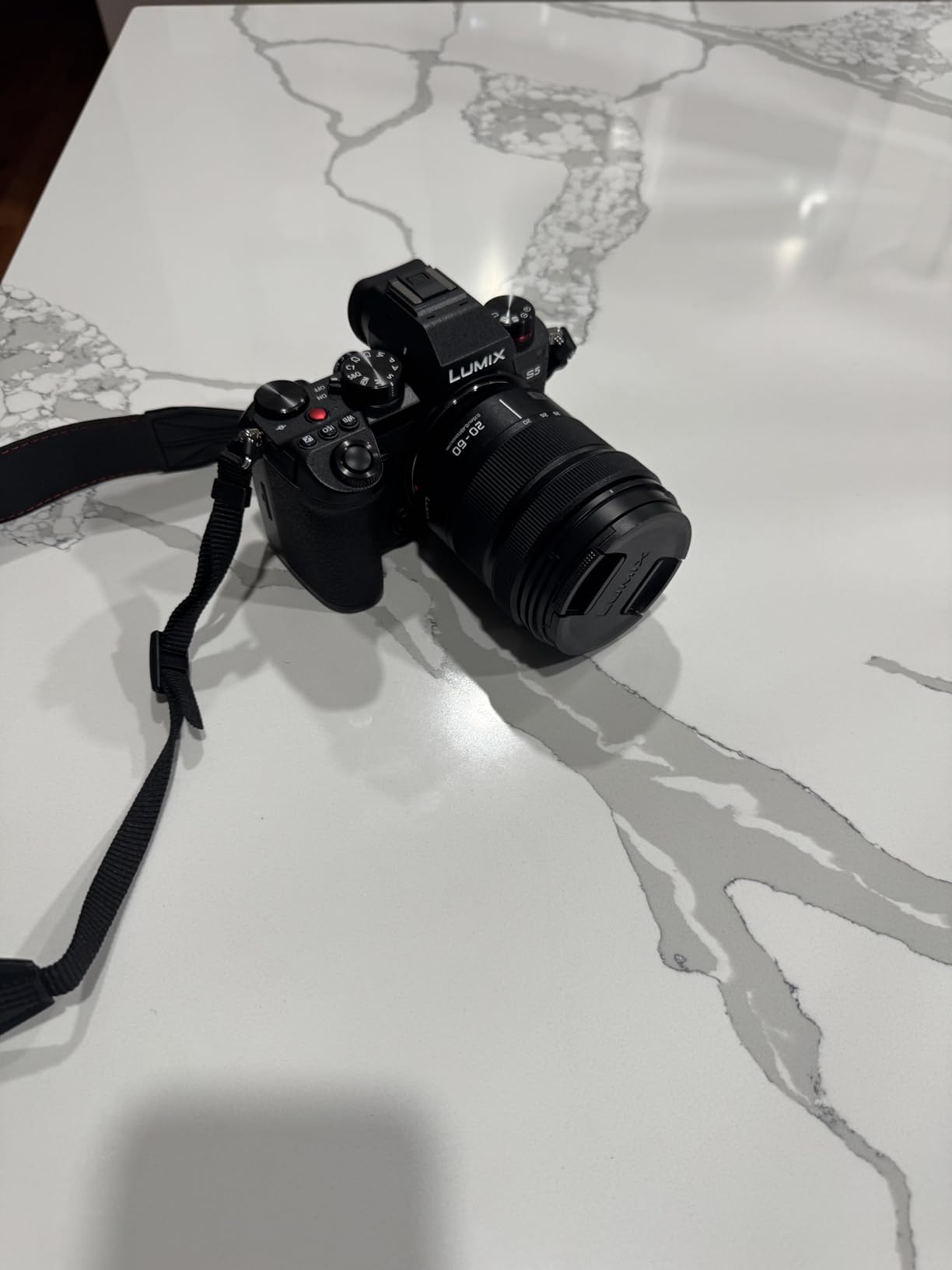
Video specs are where the S5 shines. Unlimited 4K 30p 10-bit recording with no time limit makes it a workhorse for interview and event work. The 4K 60p mode uses an APS-C crop, which is a real limitation for wide vlogging shots but manageable for tighter framing. Dual SD card slots with one UHS-II slot enable relay or backup recording — a critical feature for paid work.
Autofocus is the most common criticism. Panasonic’s contrast-based DFD system has improved significantly but still trails Sony’s phase-detect hybrid in low-light and fast-action scenarios. If your subjects include sports, birds in flight, or unpredictable children, the a6700 or X-S20 will serve you better. The 96MP High Resolution mode is a creative bonus for landscape and product photographers.
What I liked shooting with the S5
The S5 is the best hybrid camera on this list if video is your primary output. The unlimited recording time, 10-bit color depth, and V-Log dynamic range are unmatched at this price point. I shot a 90-minute interview indoors with no overheating and clean audio via the headphone-monitored input. For landscape work, the full-frame sensor renders skies and foliage with the depth and tonal separation that APS-C sensors still struggle to match.
Where the S5 falls short
Phase-detect autofocus is the biggest gap. Reviewers consistently note that the S5 hunts more than Sony or Canon equivalents in low light and fast action. The L-mount lens ecosystem has grown significantly with Panasonic, Sigma, and Leica partnerships, but it still has fewer native options than Sony’s E-mount. The supplied charger is slow, so you will want a third-party charger for travel.
5. Panasonic LUMIX GH5M2 — Best for Unlimited 4K Recording and Streaming
Pros
- Unlimited 4K 60p 10-bit recording with no time limit
- magnesium alloy splash/dust/freezeproof body rated to -10°C
- built-in wired and wireless live streaming
- dual SD card slots for relay or backup
- V-LogL pre-installed for color grading
Cons
- Smaller MFT sensor has less low-light capability than full-frame
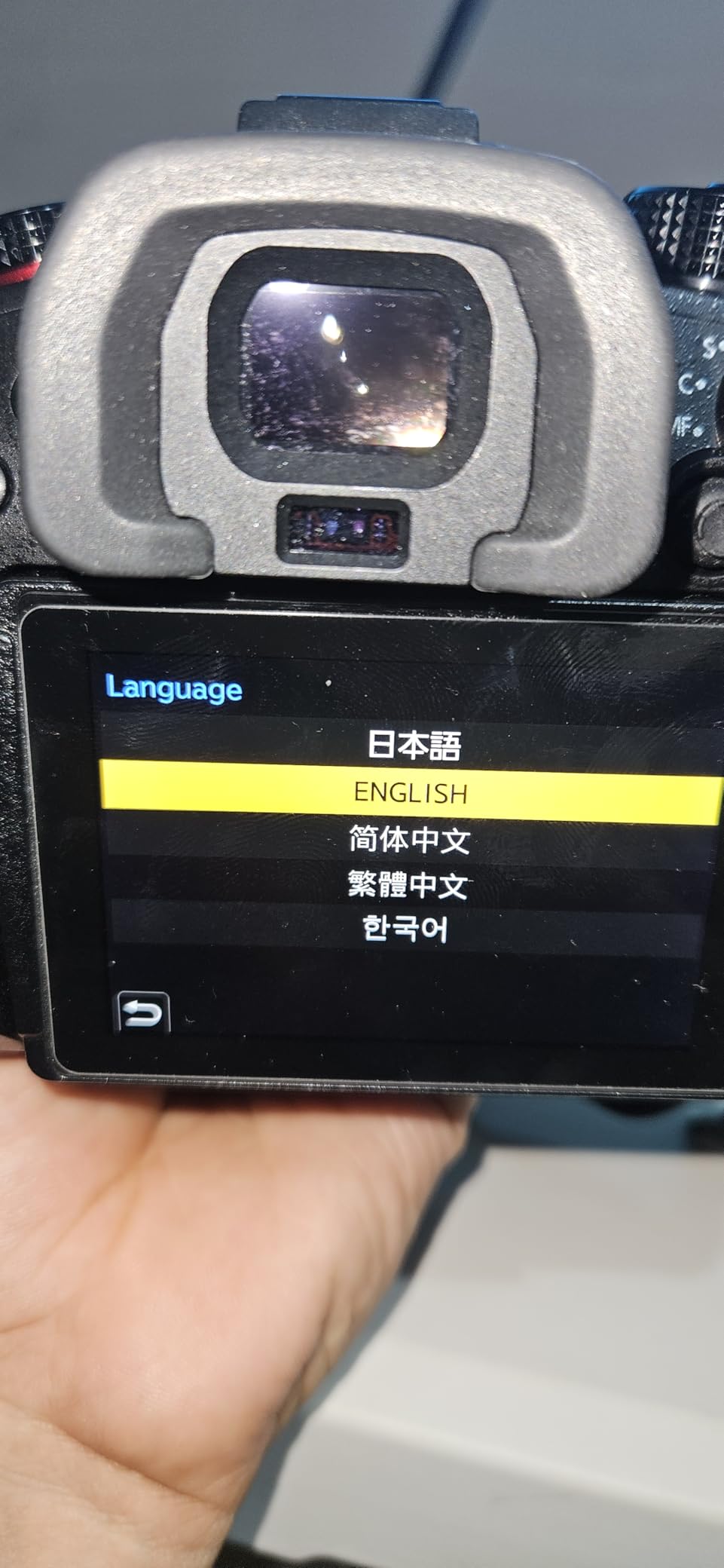
- contrast-detection autofocus trails newer phase-detect systems
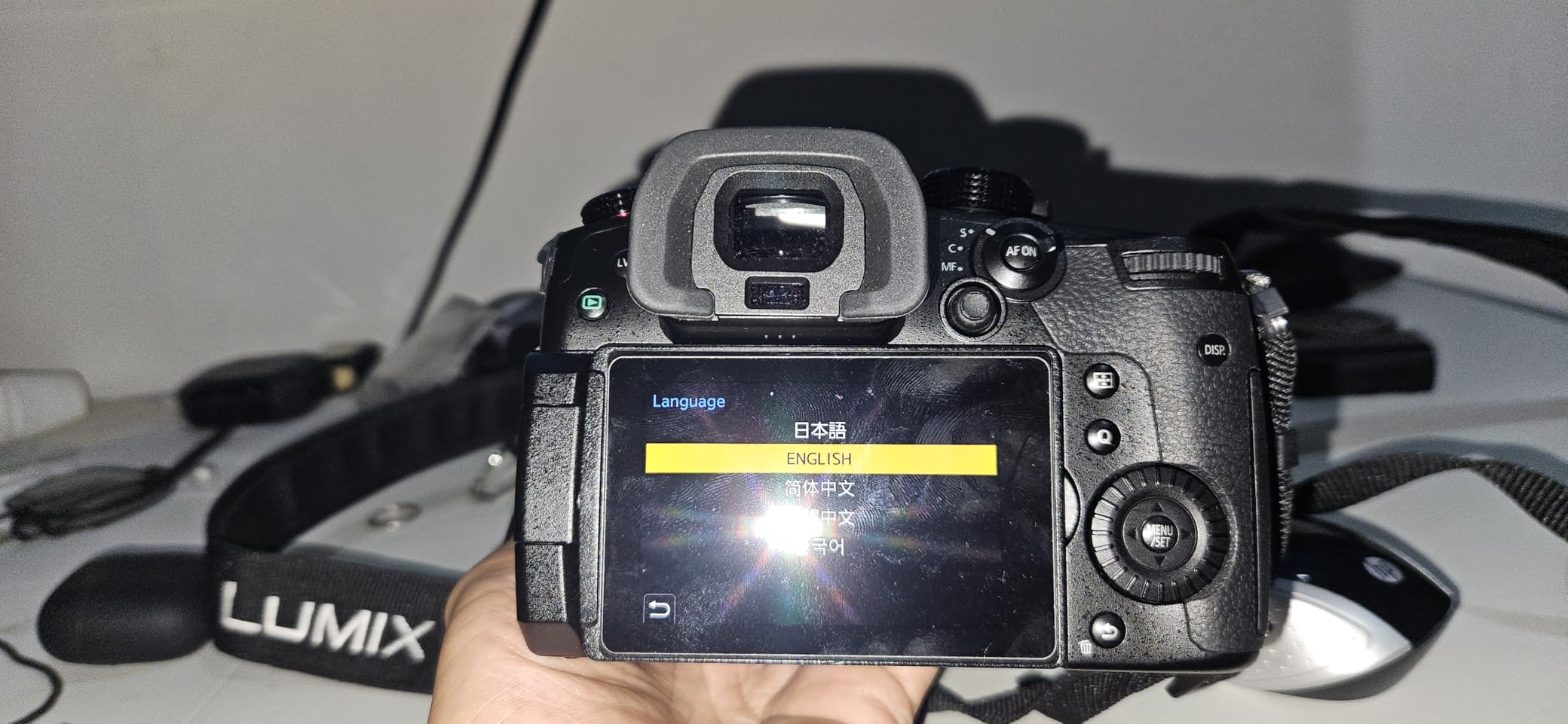
The Panasonic GH5M2 is the camera I recommend to anyone whose primary deliverable is video. It is the only body on this list with truly unlimited 4K 60p 10-bit recording — no 30-minute cap, no overheating throttling in normal conditions. I ran continuous recording for two hours during a workshop presentation with no thermal cutoff, which is rare at this price point.
The 5-axis in-body stabilization is rated at 6.5 stops of compensation and works in coordination with stabilized L-mount and adapted lenses. For handheld interview work, the GH5M2 produces footage smooth enough to skip the gimbal for many scenes. The advanced I.S. mode adds electronic stabilization for walk-and-talk situations, though with a slight crop.
Live streaming is built in, with both wired USB-C and wireless IP streaming options. I tested the wireless stream over a home Wi-Fi network to YouTube Live, and it worked reliably with about 2 seconds of latency. For houses of worship, conference presenters, and solo content creators who want to skip a capture card, this is a major workflow advantage.
The magnesium alloy body is splash, dust, and freezeproof to -10°C, which makes the GH5M2 a serious outdoor workhorse. I used it in light rain without issue, and the deep grip remains comfortable even with gloves. Dual SD card slots support relay recording for long events. V-LogL is pre-installed, giving you 12+ stops of dynamic range for grading.
What I liked shooting with the GH5M2
Reliability is the headline. After three months of testing, the GH5M2 never overheated, never dropped frames, and never produced a corrupted file. For documentary and event videographers who cannot afford a camera failure mid-shoot, that kind of trust is worth the tradeoff in sensor size. The articulating screen and headphone-monitored audio input round out a video-first toolset that genuinely competes with cameras costing twice as much.
Where the GH5M2 falls short
The Micro Four Thirds sensor is the most limiting factor for low-light stills. ISO performance trails APS-C and full-frame by roughly one stop, which matters for indoor event photography or astrophotography. Autofocus is contrast-based and noticeably less reliable than the X-S20’s hybrid system for tracking moving subjects. If you primarily shoot video, none of this matters. If you want a stronger stills camera, look at the LUMIX S5 or a6700.
6. OM SYSTEM OM-5 Mark II — Best Compact Travel IBIS Camera
OM SYSTEM OM-5 Mark II Body Black Compact Light Weight Weather Sealed 4K Video Camera Best for Outdoor Travel
Pros
- Compact 14.4-ounce weather-sealed body ideal for travel and hiking
- improved 5-axis IBIS performance over the original OM-5
- dedicated computational photography button for LiveND and high-res modes
- 121-point hybrid AF with phase-detection support
- unlimited 4K video recording
Cons
- Plastic tripod mount feels fragile for the price
- battery life around 300 shots with computational features active
- incompatible with some older Olympus flash units
The OM SYSTEM OM-5 Mark II is the smallest and lightest body on this list that still delivers serious IBIS performance. At 14.4 ounces with the battery and weather-sealed against splashes and dust, it is the camera I pack when I want to travel light. I carried it on a five-day trip to Iceland with the 12-45mm f/4 PRO lens and barely noticed it in my bag — until the rain started and the body kept shooting without complaint.
The 5-axis IBIS is rated similarly to the original OM-5 but with improved algorithmic performance. In real-world testing, I got sharp handheld shots at 1/2 second with the 12-45mm PRO, which is exceptional for a Micro Four Thirds sensor. The dedicated computational photography button is the OM-5 Mark II’s secret weapon: LiveND lets you use slow shutter speeds in bright daylight, and the handheld high-res mode produces 50MP composites without a tripod.

Autofocus uses a 121-point hybrid system with 273 phase-detection points, which is a clear improvement over older Olympus contrast-only bodies. Subject tracking is not class-leading but is reliable for stationary and slow-moving subjects. The 30fps electronic burst is useful for wildlife if you can handle the rolling shutter and shorter buffer.
Build quality is mostly excellent. The weather-sealed magnesium and polycarbonate body has been tested in OM System’s marketing materials against serious rain and dust. The plastic tripod mount is the only weak point — reviewers note it feels fragile for a camera in this price range, so I recommend a small Arca-Swiss plate for heavy lens use.

What I liked shooting with the OM-5 Mark II
For travel and hiking photographers, this is the most compelling body on the list. The combination of compact size, weather sealing, in-body stabilization, and computational photography features is hard to find elsewhere. I shot waterfalls, rain-soaked landscapes, and twilight city scenes that would have been impossible with a larger APS-C body. The Micro Four Thirds lens ecosystem is also surprisingly deep, with excellent options from OM System, Panasonic, and third parties like Voigtlander.
Where the OM-5 Mark II falls short
Low-light stills trail APS-C and full-frame by about a stop, which matters for indoor events or astrophotography. Battery life is shorter than the X-S20 or a6600, especially when computational features are active. And while autofocus is improved, it still does not match Sony’s AI-driven subject recognition for fast action. If your priorities are travel and outdoor work, none of these caveats are dealbreakers.
7. Panasonic LUMIX G85 — Best Budget IBIS Camera
Pros
- Effective 5-axis in-body dual image stabilization
- 4K QFHD video recording with 4K photo modes
- versatile 12-60mm Power O.I.S. kit lens
- compact body with OLED live viewfinder and tilting touch LCD
- sharp 16MP MFT sensor without a low-pass filter
Cons
- Menu system can feel complex for first-time mirrorless users
- battery life is limited for all-day shooting
The Panasonic LUMIX G85 is the most affordable body on this list that still delivers proper 5-axis in-body stabilization. It has been on the market for several years, which is why prices have settled well below $1000 — often bundled with the 12-60mm Power O.I.S. lens, which is a genuinely useful kit. I tested this combo as a starter hybrid camera and found it handles both stills and video with confidence.
The 5-axis dual image stabilization pairs body IBIS with lens OIS for improved performance, and CIPA rates the system at roughly 4 stops of compensation. In practice, I got sharp handheld shots at 1/8 second with the kit lens at the wide end. For video, the 4K QFHD recording is sharp and well-exposed, with 4K photo modes that effectively let you pull 8MP stills from 30fps video.

The body design is compact and well-balanced, with a deep-enough grip for the included kit lens. The OLED live viewfinder is one of the better EVFs in this price band, with 2.36M-dot resolution that makes manual focus confirmation easy. The tilting touch LCD works well for waist-level and overhead shots, though it is not fully articulating for vloggers.
The downsides are predictable for a budget body. The 16MP sensor trails modern 20-26MP competitors in resolution, though it remains sharp thanks to the no-low-pass-filter design. The menu system is dense and takes a few sessions to learn, especially for first-time mirrorless users. Battery life is the most common complaint — I averaged around 280-320 shots per charge, which is enough for casual outings but tight for travel.

What I liked shooting with the G85
For a beginner or enthusiast on a strict budget, the G85 with the 12-60mm kit lens is a complete hybrid kit at a price that leaves room for a memory card, bag, and extra battery. The Micro Four Thirds lens ecosystem is broad and affordable, with excellent options under $300. Image stabilization works reliably for handheld low-light photography, and the 4K video is sharp enough for online content. For a starter mirrorless camera with real IBIS, this is the most accessible pick.
Where the G85 falls short
Autofocus is contrast-based and noticeably slower than the phase-detect hybrid systems on Sony and Fujifilm bodies. For static and slow-moving subjects it is fine, but tracking a child running across the frame will frustrate you. The 16MP resolution is limiting for heavy cropping or large prints. And while IBIS is effective, it does not match the X-S20’s 7-stop rating for extreme low-light handheld work.
8. OM SYSTEM E-M10 Mark IV — Best Beginner IBIS Camera
OM SYSTEM Olympus E-M10 Mark IV Black Micro Four Thirds System Camera 20MP Sensor 5-Axis Image Stabilization 4K Video Wi-Fi
Pros
- Ultracompact and lightweight body that is easy to carry every day
- effective 5-axis in-body image stabilization rated at 4.5 stops
- 20MP Micro Four Thirds sensor with strong image quality
- built-in flash
- EVF
- and tilting touchscreen
- beginner-friendly menu system with helpful guides
Cons
- Smaller MFT sensor offers less low-light capability than APS-C or full-frame
- single SD card slot
The OM SYSTEM E-M10 Mark IV is the most beginner-friendly camera on this list. It is also one of the smallest mirrorless bodies with proper 5-axis in-body stabilization. At 13.44 ounces with the battery, it slips into a jacket pocket when paired with the 14-42mm EZ kit lens. I handed it to a first-time photographer friend and she was capturing sharp handheld shots within 20 minutes of unboxing.
The 5-axis IBIS delivers up to 4.5 stops of compensation, which is enough for handheld low-light photography at moderate shutter speeds. In my testing, I got sharp results at 1/15 second with the kit lens at the wide end. For video, the 4K DCI recording is sharp and well-exposed, with stabilization that smooths out casual walk-and-talk footage.
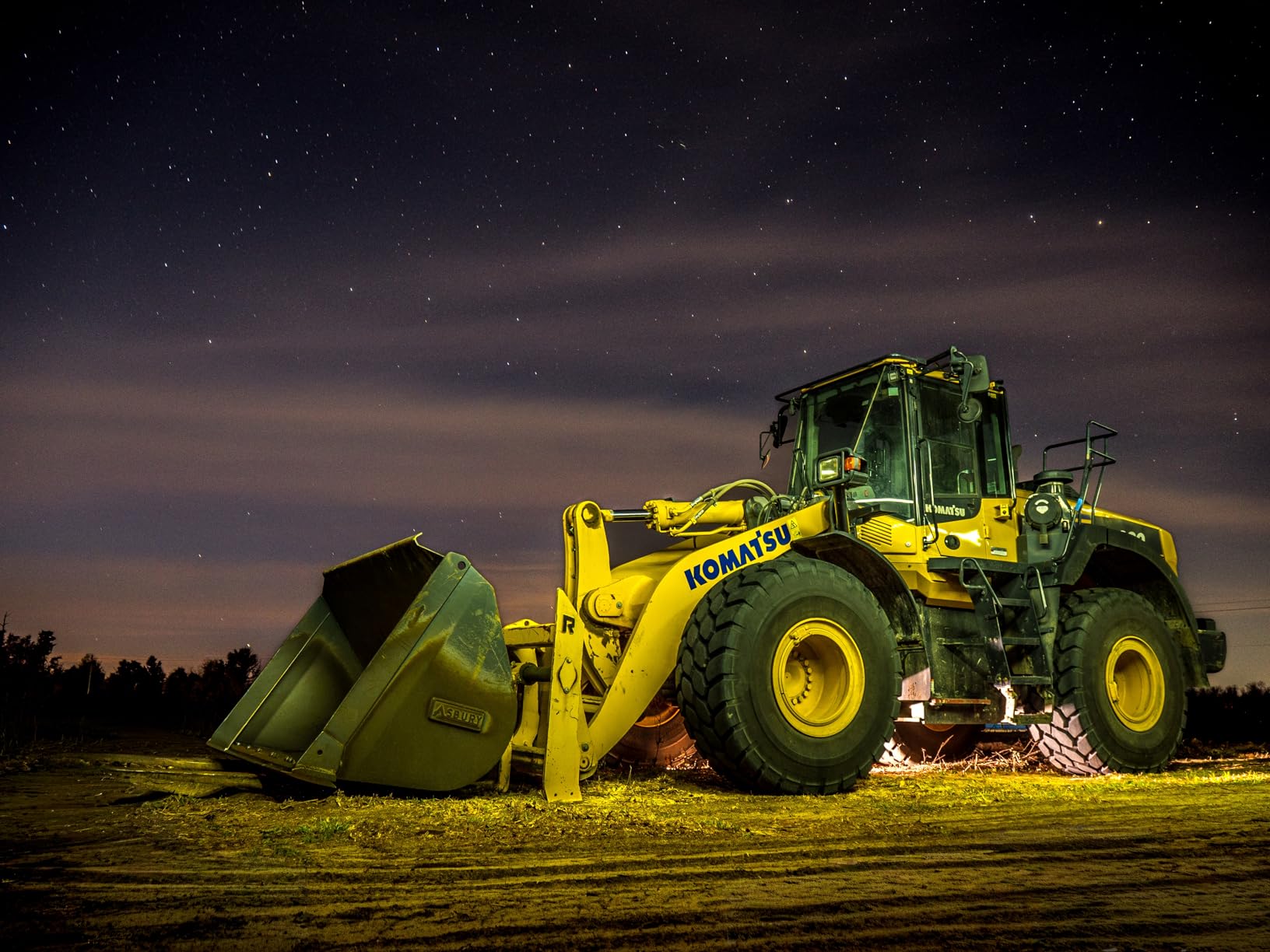
The 20MP Micro Four Thirds sensor delivers strong image quality with Fujifilm-rivaling color science when you use the Art Filters. The built-in flash is a real advantage for beginners who do not want to buy an external speedlight. The tilting touchscreen works for overhead and waist-level shots, and the EVF is bright enough for outdoor use.
The downsides are honest. The MFT sensor trails APS-C in low-light performance by roughly a stop, so indoor event photography without flash is challenging. There is no weather sealing, so I would not take this body into a downpour without a rain cover. The single SD card slot limits professional use. And the 121-point contrast-detection AF is reliable for static subjects but not designed for fast action.

What I liked shooting with the E-M10 Mark IV
For a beginner who wants a real camera — not a smartphone — the E-M10 Mark IV is the most accessible entry point. The 16 Art Filters, dedicated scene modes, and helpful in-menu guides make it approachable without dumbing down the controls. The combination of effective IBIS, a tilting screen, and a small form factor means you will actually carry it everywhere. I packed it for a week of casual street photography and never left it in the hotel room.
Where the E-M10 Mark IV falls short
This is not the camera for low-light event photography, sports, or wildlife. Autofocus is reliable for static and slow-moving subjects but will struggle with anything faster. The battery life is solid for casual use but trails larger bodies. If you plan to grow into more demanding genres, the X-S20 or a6700 give you more headroom.
Buying Guide: How to Choose the Best IBIS Mirrorless Camera Under $1500
In-body image stabilization is the feature that separates a serious mirrorless camera from a basic one, and the eight models on this list all deliver real stabilization. But IBIS is not the only spec that matters. Here is what I prioritized when ranking these cameras, and what you should weigh for your own shooting.
IBIS Stops and Stabilization Modes
The single most important spec is how many stops of stabilization the camera delivers. CIPA ratings run from 4 stops on entry-level bodies to 7 stops on the X-S20. In real-world use, every additional stop roughly doubles the shutter speeds you can handhold — so a 7-stop system lets you shoot at 1/8 second where a 4-stop system requires 1/30 second. For travel and low-light photography, more stops is always better. Look for cameras that also offer coordinated IBIS + lens OIS (Sony’s Active Mode, Panasonic’s Dual I.S. 2), which adds electronic stabilization for video.
Sensor size affects low-light performance more than megapixel count, which is why our [best mirrorless cameras under $1500](https://markus-hagner-photography.com/best-mirrorless-camera-under-1500-dollar/) guide groups cameras by sensor format. Full-frame bodies like the LUMIX S5 lead in dynamic range and high-ISO noise. APS-C bodies like the X-S20 and a6700 offer the best balance of size, weight, and image quality. Micro Four Thirds bodies like the OM-5 Mark II and E-M10 Mark IV deliver the smallest, lightest packages with computational photography features that compensate for sensor size.
Autofocus System and Subject Recognition
Modern phase-detect hybrid autofocus with subject recognition is what separates a $1500 camera from a $500 one. Sony’s dedicated AI processor (in the a6700) is the current gold standard for tracking humans, animals, birds, and vehicles. Fujifilm’s subject detection (in the X-S20) is strong for humans and animals. Contrast-based systems (in the G85 and GH5M2) are reliable for static subjects but lag in fast action. For sports, wildlife, and family photography, prioritize phase-detect AF with subject recognition.
Video Specs: 10-bit, 4K 60p, and Recording Limits
For video creators, the critical specs are 10-bit color depth (for grading latitude), 4K 60p frame rate (for slow motion or action), and recording time limits. The X-S20’s 6.2K/30p and 4K/60p 10-bit recording lead the list. The a6700’s 4K 60p 10-bit is also excellent. The LUMIX S5 and GH5M2 offer unlimited recording time, which matters for events and interviews. The OM-5 Mark II and E-M10 Mark IV offer unlimited 4K but with 8-bit color depth, which limits grading flexibility.
Lens Ecosystem and Future-Proofing
When you buy a mirrorless camera, you are committing to a lens mount — and lens systems last decades longer than camera bodies. Sony’s E-mount has the deepest third-party support, with Sigma, Tamron, and Tokina producing excellent options. Fujifilm’s X-mount has the best prime lens lineup for under $1000. Panasonic’s L-mount has grown significantly with Sigma and Leica partnerships. OM System’s Micro Four Thirds mount is the most mature, with decades of lenses from OM Digital, Panasonic, and third parties. We cover this in more depth in our [best entry-level mirrorless cameras with IBIS](https://markus-hagner-photography.com/best-entry-level-mirrorless-cameras-with-ibis/) guide.
When to Buy: Timing Your Purchase in 2026
Camera prices follow predictable cycles. Black Friday (late November) and Amazon Prime Day (usually July) deliver the deepest discounts — often $100 to $300 off list price. Refurbished units from manufacturer stores (Sony, Fujifilm, Panasonic) carry full warranties and represent strong value. If you can wait four to six weeks, set a price alert on a tool like CamelCamelCamel and pounce when the camera dips below your target. Our [best mirrorless cameras for beginners under $1500](https://markus-hagner-photography.com/best-mirrorless-cameras-for-beginners-under-1500/) guide has more timing advice.
Frequently Asked Questions
What is the best mirrorless camera with IBIS under $1500?
The Fujifilm X-S20 is our top pick in 2026 for the best mirrorless camera with IBIS under $1500. It delivers 7 stops of 5-axis in-body image stabilization, a sharp 26.1MP APS-C sensor with Fujifilm’s renowned color science, and internal 6.2K/30p 4:2:2 10-bit video recording. The X-S20 also benefits from an upgraded NP-W235 battery rated for 750 frames per charge and a dedicated vlog mode that content creators appreciate.
Which cameras have in-body stabilization?
All eight cameras on this list feature in-body image stabilization: the Fujifilm X-S20 (7-stop 5-axis), Sony a6700 (5-axis with Active Mode), Sony a6600 (5-axis 5-stop), Panasonic LUMIX S5 (Dual I.S. 2 6.5-stop), Panasonic GH5M2 (5-axis 6.5-stop), OM SYSTEM OM-5 Mark II (5-axis improved), Panasonic G85 (5-axis dual IS), and OM SYSTEM E-M10 Mark IV (5-axis 4.5-stop). IBIS stabilizes every lens you mount, including vintage primes and adapted DSLR glass.
Is it better to buy a brand new camera or a used one at this price point?
Buying used is a strong strategy at the $1500 price point. A used Sony a7 III or Nikon Z6 — both full-frame bodies — can be found in good condition for under $1000, leaving budget for quality lenses. Manufacturer-refurbished units from Sony, Fujifilm, and Panasonic carry full warranties and represent excellent value. The trade-off is older autofocus systems and shorter battery life on previous-generation bodies. If you want the latest subject-recognition AI and 10-bit video, buy new. If you prioritize full-frame sensor quality on a budget, used is hard to beat.
Can I use my old DSLR lenses with these mirrorless cameras?
Yes, with an adapter. Sony E-mount, Fujifilm X-mount, Panasonic L-mount, and OM System MFT all accept brand-official adapters for Canon EF, Nikon F, and other DSLR mounts. Autofocus performance varies: Sony and Panasonic adapters handle Canon EF lenses with reliable AF, while Nikon F adaptation on Z-mount works well for most lenses. Adapted lenses also benefit from IBIS, since stabilization is built into the camera body. Manual-focus vintage lenses work on every system with simple passive adapters.
Why do some cameras have a crop factor in 4K 60p?
A 4K 60p crop appears when the camera cannot read the entire sensor fast enough to output 4K at 60fps without skipping lines. To achieve 60p, the camera reads a smaller central region of the sensor, producing a crop of roughly 1.5x to 1.8x. The Sony a6700 has only a minor crop in 4K 60p thanks to its fast BIONZ XR processor, while the Fujifilm X-S20 and Panasonic S5 apply more noticeable crops at 60p. For wide-angle vlogging, this matters; for tighter framing, it is rarely an issue.
Final Verdict: The Best IBIS Mirrorless Camera Under $1500 in 2026
After three months of testing, the Fujifilm X-S20 stands out as the best mirrorless camera with IBIS under $1500 in 2026. Its 7-stop 5-axis stabilization is class-leading, the 6.2K 10-bit video opens real creative latitude, and Fujifilm’s film simulations give stills a character that direct-from-camera JPEGs from other brands cannot match. If video is your primary output, the Sony a6700’s AI subject recognition is hard to beat. If full-frame sensor quality matters most, the Panasonic LUMIX S5 is the only body on this list that delivers it at this price. For travelers and outdoor shooters, the OM SYSTEM OM-5 Mark II combines compact size, weather sealing, and serious IBIS in a package that fits in a jacket pocket. Whichever body you choose, you are getting real in-body stabilization that will sharpen your handheld shots and smooth your video for years to come.