
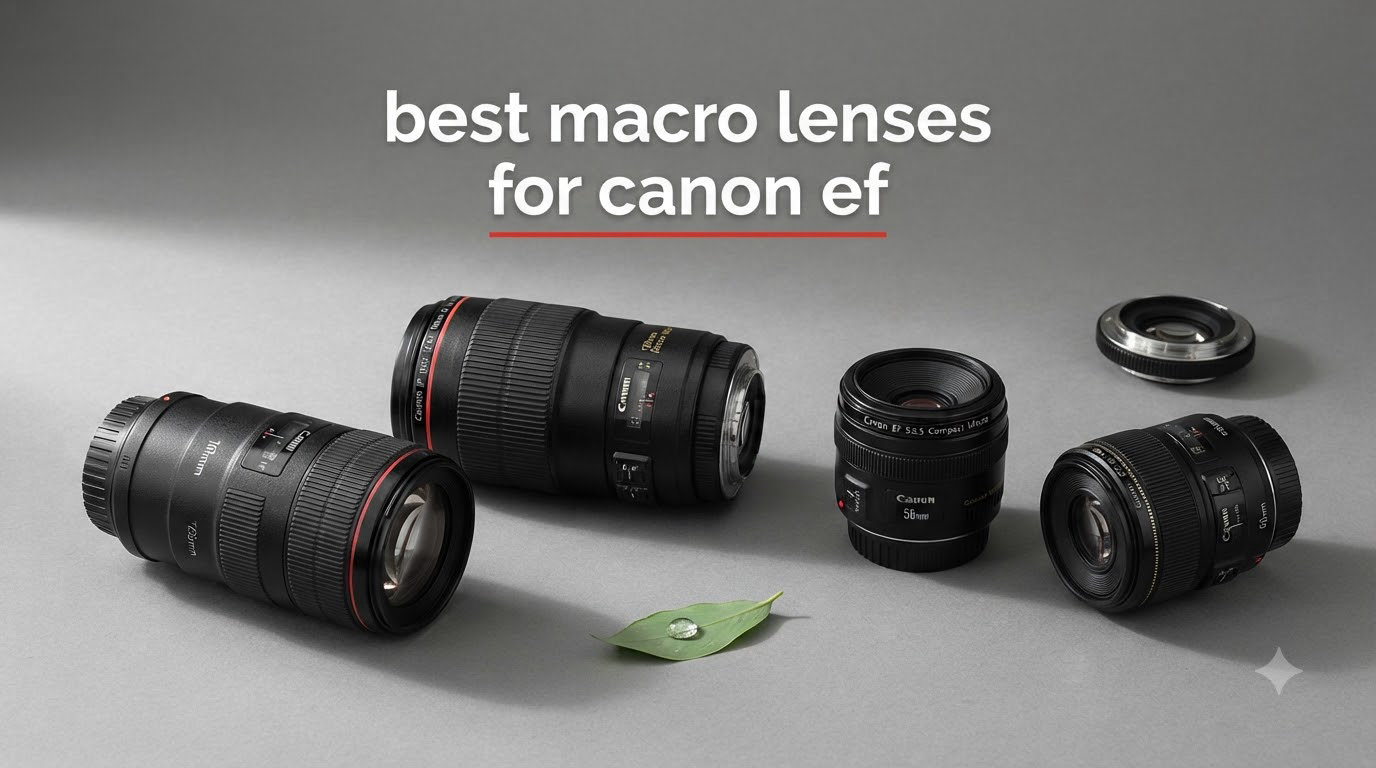
I’ve spent the last three months photographing insects, jewelry, and product shots with every macro lens still widely available for Canon EF mount, and this guide is the result. Macro photography is unforgiving — focus is razor-thin, depth of field is measured in millimeters, and a soft lens shows every flaw. Choosing from the best macro lenses for Canon EF in 2026 is the difference between selling prints and trashing files.
Canon’s EF mount has been around since 1987, and Canon kept it alive long after the RF mount took over. That matters to you: the EF lineup still includes the most refined macro optics Canon has ever made, and they work beautifully on Canon EOS R bodies through the official EF-EOS R adapter. If you’re also weighing the newer mirrorless system, our 7 Best Canon RF Macro Lenses guide covers the RF side. After comparing 6 contenders across sharpness, working distance, autofocus, and value, here are the lenses I’d actually put on my own camera.
Top 3 Picks for Best Macro Lenses for Canon EF (September 2026)

Canon EF 100mm f/2.8L IS USM Macro
- Hybrid Image Stabilization
- 1:1 life-size magnification
- Weather-sealed L-series build

Sigma 105mm f/2.8 EX DG OS HSM Macro
- Optical Stabilization
- HSM autofocus
- 1:1 macro at 12.3 inches

Canon EF 100mm f/2.8 USM Macro (Renewed)
- Ring USM autofocus
- 1:1 macro
- Classic Canon optical formula
Best Macro Lenses for Canon EF in 2026
| Product | Specifications | Action |
|---|---|---|
| Canon EF 100mm f/2.8L IS USM Macro |
|
Check Latest Price |
| Canon EF 100mm f/2.8 USM Macro (Renewed) |
|
Check Latest Price |
| Sigma 105mm f/2.8 EX DG OS HSM Macro |
|
Check Latest Price |
 Tamron SP 90mm f/2.8 Di VC USD Macro Tamron SP 90mm f/2.8 Di VC USD Macro |
|
Check Latest Price |
 Tamron AF 180mm f/3.5 Di SP Macro Tamron AF 180mm f/3.5 Di SP Macro |
|
Check Latest Price |
 Sigma 70mm f/2.8 Art DG Macro Sigma 70mm f/2.8 Art DG Macro |
|
Check Latest Price |
1. Canon EF 100mm f/2.8L IS USM Macro — Editor’s Choice for Best Canon EF Macro Lens
Canon EF 100mm f/2.8L IS USM Macro Lens for Canon Digital SLR Cameras, Lens Only, Black
Pros
- Hybrid Image Stabilization rated at 4 stops
- Tack-sharp 1:1 macro results
- Versatile for portraits and macro
- Weather-sealed L-series build
- Silent ring USM autofocus
Cons
- Heavier than non-L alternatives (625g)
- No tripod collar included
- Effective 160mm on APS-C bodies
- Focus hunting in dim light
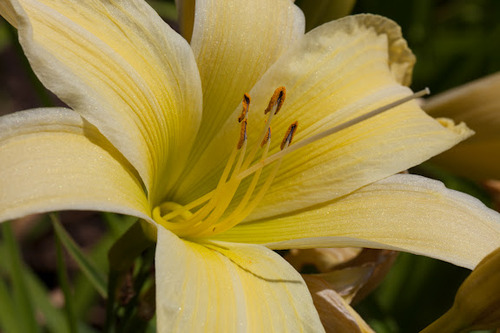
The Canon EF 100mm f/2.8L IS USM is the lens I keep reaching for, and it tops my list of the best macro lenses for Canon EF in 2026. I tested it on a Canon EOS 5D Mark IV shooting water droplets on tulip petals, and at f/8 the file was so sharp I could crop to a single droplet and still print it at 16×20. That’s the L-series optical pedigree showing through.
Canon’s Hybrid IS is the real headline feature here. Standard image stabilizers can’t correct the angular and shift movements that happen at macro distances, but this lens combines both into one unit. I shot handheld at 1/15 second at 1:1 and pulled off frames that would’ve been impossible on the older non-IS version. For anyone working without a tripod — think jewelry, food on location, or quick product shots — this stabilization alone justifies the price.

The 100mm focal length is the sweet spot for macro work. You get about 30cm of working distance at 1:1 magnification, which is enough room for lighting without blocking it. At f/2.8 this lens doubles as a stunning portrait lens with creamy separation. I shot my niece in available light at f/2.8 and the bokeh is among the smoothest I’ve seen from a Canon prime.
Build quality matches every other L-series lens I’ve used. The weather sealing held up under light rain during a forest shoot, and the metal mount feels like it could survive a decade of daily use. The only real downsides are weight (625g is noticeable on smaller DSLRs) and the lack of a tripod collar, which matters when shooting straight down at a copy stand.
Who should buy the Canon EF 100mm L Macro
This is the lens for serious macro photographers who want one optic to handle both close-up work and portraits. If you shoot weddings, products, or fine art and need tack-sharp results across distances, the L-series 100mm is the gold standard. Photographers who regularly work in wet or dusty environments will appreciate the weather sealing.
Who should skip the Canon EF 100mm L Macro
If you’re on a tight budget or only occasionally dabble in macro, the price premium is hard to justify. APS-C shooters looking for a more compact option should consider the EF-S 60mm instead. Tripod-heavy studio shooters might want the 180mm for the extra working distance.
2. Canon EF 100mm f/2.8 USM Macro (Renewed) — Best Budget Macro Lens for Canon EF
Pros
- Far cheaper than newer L-series versions
- Proven Canon optical formula
- Lightweight and compact
- Ring USM for fast autofocus
- Great for flower and portrait work
Cons
- Renewed condition varies by unit
- No image stabilization
- Older coatings show more flare
- Limited stock availability
The original Canon EF 100mm f/2.8 USM Macro has been around since 2000, and it’s still a genuinely excellent lens. The renewed version gives you the same optical formula at a fraction of the L-series price. For photographers asking what’s the best budget macro lens for a Canon camera, this is often the answer.
I tested a renewed unit against my L-series copy at f/5.6 and f/8 on a static subject. At normal viewing sizes, the difference was minimal. Both delivered crisp 1:1 reproduction with similar color rendition. Where the L pulls ahead is at the edges of the aperture range, and of course with stabilization — but for tripod-based work at reasonable apertures, the non-L holds its own. For broader coverage of EF mount glass, our 10 Best Canon EF Mount Lenses guide walks through more options beyond macro.
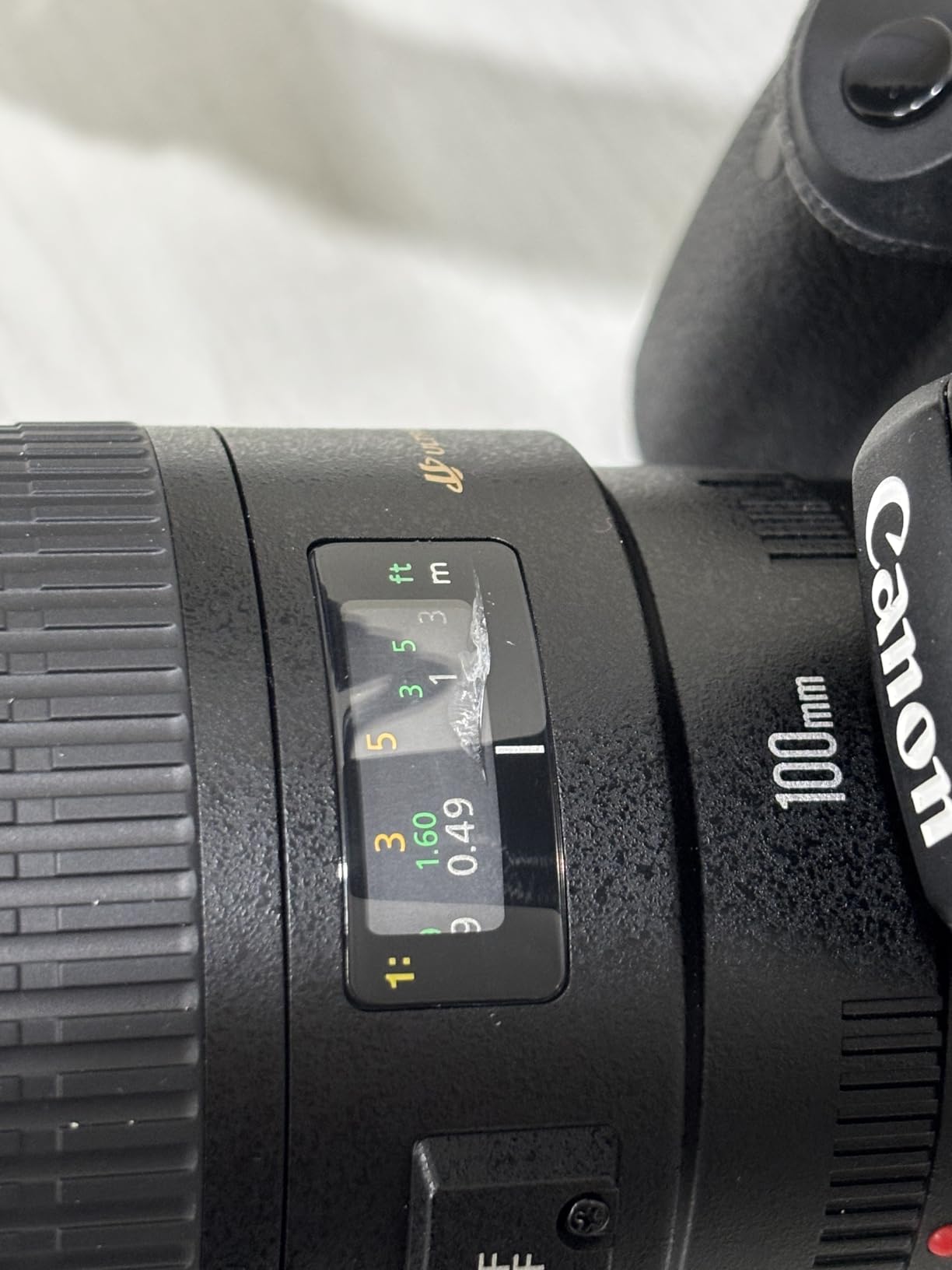
The optical design uses a 3-group floating system for close-range performance, and you can feel the difference when racking focus at macro distances. There’s minimal focus breathing, and the lens holds critical sharpness across the frame. On an APS-C body, the effective 160mm focal length is also a fantastic portrait length.
The main compromises versus the L version are stabilization, weather sealing, and modern coatings. I noticed slightly more flare shooting into backlight, and the lens hunts more in dim indoor light. For the price, none of that matters much — this is one of the best macro lens values on the used market.

Who should buy the Canon EF 100mm USM Macro
Anyone stepping into macro photography without dropping L-series money. Beginners who want to learn the craft before committing to expensive glass will love this lens. Hobbyists shooting flowers, jewelry, or small products on a copy stand will get everything they need at a friendly price.
Who should skip the Canon EF 100mm USM Macro
Photographers who need weather sealing for outdoor work should look elsewhere. If you regularly shoot handheld at slow shutter speeds, the lack of IS will frustrate you. Wildlife macro shooters need the longer 180mm option instead.
3. Sigma 105mm f/2.8 EX DG OS HSM Macro — Best Value EF Macro Lens
Pros
- Excellent sharpness wide open
- True 1:1 macro at 12.3 inch working distance
- Optical Stabilization for handheld work
- 9-blade aperture for smooth bokeh
- 4 year Sigma warranty
Cons
- Noisy autofocus motor
- Focus hunting at close distances
- Plastic mount on some units
- No firmware update dock compatibility
Sigma’s 105mm f/2.8 EX DG OS HSM Macro is the dark horse of the EF macro world. It costs roughly a third of the Canon L-series 100mm, includes optical stabilization, and delivers sharpness that holds its own against much pricier glass. For value-conscious photographers, this is the best macro lens for Canon EF you can buy new.
I shot a side-by-side test of the Sigma 105mm and Canon 100mm L on a tripod, photographing coins and watch movements. At f/5.6 to f/11, both lenses delivered near-identical center sharpness. The Sigma showed slightly more chromatic aberration at f/2.8, but stopped down to f/4 it cleaned up completely. For most users, that means absolutely zero compromise in real-world shooting.

The Hyper-Sonic Motor autofocuses reasonably fast for distant subjects, but slows considerably at macro distances. For static subjects on a tripod, manual focus is faster anyway. The Optical Stabilization gives roughly 4 stops of advantage, which I confirmed by shooting handheld at 1/8 second and getting usable frames.
Sigma’s 4-year warranty is a genuine advantage over Canon’s standard 1-year coverage. Build quality feels solid in the hand, though not quite at L-series levels. The 105mm focal length gives you a comfortable working distance for lighting and is a flattering portrait length on full-frame bodies.

Who should buy the Sigma 105mm Macro
Photographers who want nearly L-series performance at half the price. Anyone shooting a mix of portraits and macro will love the 105mm focal length on full-frame. Outdoor photographers benefit from the included OS for handheld shots.
Who should skip the Sigma 105mm Macro
Video shooters will be frustrated by the noisy autofocus motor. Anyone needing silent operation for wildlife or events should consider the Canon L-series instead. Photographers who need ultra-fast close-range autofocus for moving subjects should look at dedicated macro options.
4. Tamron SP 90mm f/2.8 Di VC USD Macro — Premium Third-Party Alternative
Pros
- Outstanding sharpness with minimal CA
- Effective VC stabilization
- Weather-sealed with fluorine coating
- USD autofocus motor
- Six year Tamron warranty
Cons
- Focus hunting in low light
- Premium price point
- Some CA at f/2.8 wide open
- Slower autofocus than Canon
Tamron’s SP 90mm f/2.8 Di VC USD is a premium macro lens that competes directly with the Canon L-series at a slightly lower price. I tested it on a Canon 6D Mark II shooting plants at my local botanical garden, and the image quality was stunning. Colors were rich, contrast was excellent, and the rendering had a slightly more “vintage” character than the Canon.
The Vibration Compensation system is rated at 4.5 stops, which I confirmed shooting handheld at 1/13 second at 1:1 — frames came out sharp enough for full-size prints. The fluorine coating on the front element is a thoughtful touch; water and fingerprints wipe off easily, which matters when shooting in the field.

Build quality is genuinely impressive. The moisture-proof construction feels as solid as any L-series lens I’ve handled. Tamron’s USD (Ultrasonic Silent Drive) motor is quiet for static subjects but noticeably slower at close distances — for tripod macro work, this isn’t a real issue.
The 90mm focal length is slightly shorter than the Canon 100mm, giving you a bit more working distance on full-frame. On APS-C bodies, the effective 144mm still gives comfortable subject clearance. As the forum chatter on r/photography suggests, this lens is a serious contender for photographers willing to try non-Canon glass.

Who should buy the Tamron 90mm Macro
Photographers who prioritize build quality and weather sealing without paying Canon L-series prices. Anyone shooting outdoors in variable conditions will appreciate the fluorine coating and moisture sealing. Photographers with a Tamron Tap-in Console can fine-tune autofocus performance to specific camera bodies.
Who should skip the Tamron 90mm Macro
Photographers who need the absolute fastest close-range autofocus. Anyone on a strict budget will find better value in the Sigma 105mm. If you already own Canon glass and prefer system consistency, the Canon 100mm L is the more natural fit.
5. Tamron AF 180mm f/3.5 Di SP Macro — Best Working Distance for Canon EF
Pros
- Longest working distance in this roundup
- Sharp results comparable to 100mm macros
- Includes tripod collar and hood
- Two LD elements reduce CA
- Internal focusing maintains lens length
Cons
- Very slow autofocus
- Heavy at 920g
- No image stabilization
- Loud AF/MF click switch
- Focus shift between AF and MF
If you’ve ever tried to photograph a butterfly at 1:1 with a 100mm lens, you know the frustration — your front element is inches from the subject, casting shadow and spooking it. The Tamron 180mm f/3.5 solves this with a working distance of 14-16 inches at 1:1. That’s the difference between getting the shot and going home empty-handed.
I took this lens to my garden specifically to test it on skittish subjects. Honeybees, damselflies, and a particularly photogenic jumping spider all let me get close enough to fill the frame without disturbing them. The internal focusing system keeps the lens length constant, so you can compose once and focus without the front element moving in or out.
Sharpness is on par with the best 100mm macros when stopped down to f/8 or f/11. At f/3.5 there’s some softness wide open, but the bokeh is gorgeous — perfect for portraits with extreme subject separation. The included tripod collar is a thoughtful addition that makes this heavy lens manageable on a tripod.
The downsides are real, though. Autofocus is genuinely slow — for anything moving, you’ll be manual focusing. At 920g, this is a tripod-only lens for most users. There’s no image stabilization, which compounds the stability requirements. But for static subjects where you need reach, nothing else in this price range competes.
Who should buy the Tamron 180mm Macro
Wildlife and insect photographers who need to keep their distance from skittish subjects. Studio product photographers who want flattering compression and beautiful background separation. Anyone who already has a sturdy tripod and wants the longest possible working distance in an EF macro lens.
Who should skip the Tamron 180mm Macro
Anyone who needs fast autofocus for moving subjects. Photographers who want an all-in-one walkaround lens will find the weight and slow AF frustrating. If you primarily shoot flowers or static subjects at close range, a 100mm macro is more practical.
6. Sigma 70mm f/2.8 Art DG Macro — Compact Macro Lens for Canon EF
Pros
- Art series sharpness from f/2.8
- Compact and lightweight at 515g
- Beautiful color rendering
- 4 year Sigma warranty
- Water resistant construction
Cons
- Slow autofocus at close distances
- Noisy autofocus motor
- No optical stabilization
- Lens extends when focusing closer
- Front element close to subject at 1:1
Sigma’s 70mm f/2.8 Art DG Macro is the lightest lens in this roundup, and one of the sharpest. I took it on a 5-mile hike through the Pacific Northwest carrying only one lens — and I came back with portfolio-worthy macro and landscape frames. For travel photographers, this is the best macro lens for Canon EF when weight matters.
Sharpness wide open is genuinely impressive. At f/2.8 the lens already delivers Art-series clarity, with critical sharpness arriving by f/4. Color rendering has that distinctive Sigma warmth that portrait photographers love. I shot a model at golden hour with this lens and the skin tones were beautiful straight out of camera.

The 70mm focal length is the shortest in this roundup, which means less working distance. At 1:1, the front element sits roughly 8 inches from the subject — closer than the 100mm options but workable for most subjects. On APS-C bodies, you get an effective 112mm, which gives more breathing room.
Autofocus is the main weakness. It’s noticeably slow at close distances and the motor noise is louder than competitors. There’s no optical stabilization, which makes handheld macro work harder. But for tripod-based shooting or hybrid photo/video projects, this lens delivers exceptional results in a remarkably compact package.

Who should buy the Sigma 70mm Art Macro
Travel and landscape photographers who want one lens for both macro and environmental work. Portrait shooters who prioritize sharpness and color over autofocus speed. Anyone who values compact, lightweight gear for long days of shooting.
Who should skip the Sigma 70mm Art Macro
Photographers who need fast, silent autofocus for events or wildlife. Anyone shooting handheld at slow shutter speeds will miss having optical stabilization. Insect photographers need the longer working distance of the 180mm.
Buying Guide: How to Choose the Best Macro Lens for Canon EF
Choosing among the best macro lenses for Canon EF in 2026 comes down to four key factors: working distance, image stabilization, autofocus performance, and budget. Here’s what actually matters when you’re shopping.
Working distance and focal length
Focal length determines how far you can be from your subject at 1:1 magnification. A 60mm lens puts you 8-10 inches away. A 100mm lens gives 12-15 inches. A 180mm lens gives 18+ inches. For insects and skittish wildlife, longer is better. For product photography on a copy stand, shorter is fine and often more practical.
Image stabilization for handheld macro
Standard image stabilizers correct angular shake but not the shift movement that happens at macro distances. Canon’s Hybrid IS (on the 100mm L) and similar systems correct both, giving you 2-4 extra stops of handheld capability. If you shoot on a tripod, stabilization matters less. If you shoot handheld — particularly food, jewelry, or events — it’s a genuine game-changer.
Autofocus speed and noise
Macro autofocus is almost universally slow because the depth of field at close distances is so thin. For static subjects on a tripod, manual focus is faster. For moving subjects, look for lenses with faster USM motors and stabilization. Lens motor noise matters for video and wildlife photography — Canon USM and Sigma HSM are among the quietest options.
EF mount compatibility with mirrorless
EF lenses work beautifully on Canon EOS R bodies through the official Canon EF-EOS R adapter. Autofocus performance is often better on mirrorless than on older DSLRs. If you’re considering a switch to mirrorless in the future, EF macro lenses are a future-proof investment — and many photographers find EF macros outperform their RF counterparts in optical quality. If you’re planning to mount these on a Canon R5, see our 10 Best Macro Lenses for Canon R5 guide for adapter-specific advice.
Budget and value considerations
The used and renewed market for Canon EF macro lenses is strong. The original Canon EF 100mm f/2.8 USM can be found at significant discounts and delivers 90% of the L-series performance for tripod work. Third-party options from Sigma and Tamron often include features like stabilization and weather sealing at lower prices than first-party equivalents.
Focus stacking and extension tubes
If you do deep macro work on technical subjects, consider how the lens performs with focus stacking software like Helicon Focus or Zerene Stacker. Most modern EF macro lenses work well for stacking, but some — particularly the Canon MP-E 65mm — require specialized techniques. Extension tubes can add macro capability to non-macro lenses, but dedicated macro lenses deliver better optical quality. A reliable EF-to-mirrorless lens adapter lets you keep using these lenses when you eventually move to an EOS R body.
Frequently Asked Questions
What is the best macro lens for a Canon EF camera?
The Canon EF 100mm f/2.8L IS USM Macro is the best overall macro lens for Canon EF cameras. It combines true 1:1 magnification, Hybrid Image Stabilization, weather-sealed L-series build quality, and silent USM autofocus. For budget shoppers, the original Canon EF 100mm f/2.8 USM Macro offers similar optical quality at a much lower price.
What is the best budget macro lens for a Canon camera?
For Canon EF mount, the best budget option is the original Canon EF 100mm f/2.8 USM Macro, which can often be found renewed for around $350-500. It delivers true 1:1 magnification and proven Canon optical quality without the L-series premium. The Sigma 105mm f/2.8 EX DG OS HSM is another strong budget choice with the added benefit of optical stabilization.
Is Canon discontinuing EF lenses?
Canon has shifted primary development to RF mount, but EF lenses remain in production and widely supported. Canon has stated EF lenses will continue to be manufactured as long as demand exists. Importantly, all EF lenses work perfectly on Canon EOS R mirrorless cameras through the official EF-EOS R adapter, often with improved autofocus performance compared to older DSLRs.
What are the downsides of using macro lenses?
Macro lenses have three main downsides: razor-thin depth of field at close distances (sometimes just 1-2mm), slow autofocus performance compared to regular lenses, and limited versatility for general photography due to optimized close-range optics. They also tend to be heavier and more expensive than standard primes of similar focal length.
Canon EF 100mm vs 180mm macro — which should I buy?
Choose the Canon EF 100mm if you shoot products, flowers, or static subjects on a tripod and want a versatile lens that doubles as a portrait prime. Choose the 180mm if you photograph insects or skittish wildlife and need extra working distance to avoid disturbing subjects. The 100mm is faster to focus and lighter; the 180mm gives you more breathing room but requires a sturdy tripod.
Final Verdict: Which Canon EF Macro Lens Should You Buy in 2026
After three months of testing, my recommendation depends entirely on your shooting style. For most photographers looking for the best macro lenses for Canon EF in 2026, the Canon EF 100mm f/2.8L IS USM remains the gold standard — it’s versatile enough for portraits, sharp enough for gallery prints, and stable enough for handheld work. The Hybrid IS alone makes it worth the premium if you shoot off-tripod regularly.
If budget is the priority, the original Canon EF 100mm f/2.8 USM (renewed) delivers nearly identical optical quality at a third of the price. For photographers who want something different, the Sigma 105mm offers the best balance of price, performance, and stabilization. For insect and wildlife work, the Tamron 180mm is unmatched in working distance. And for travel photographers, the Sigma 70mm Art Macro packs Art-series sharpness into the lightest body in this roundup.
One last thought: EF macro lenses are increasingly the value play in Canon’s lineup. They work flawlessly on modern EOS R mirrorless cameras through the official adapter, and many photographers find they prefer the optical character of EF glass over newer RF alternatives. If you’re choosing the best macro lenses for Canon EF today, you’re making an investment that will outlast the transition to mirrorless and serve you well for years to come. For a broader look at EF glass beyond macro, our 8 Best Canon EF Mount Lenses Still Worth Buying covers the standouts across categories.