
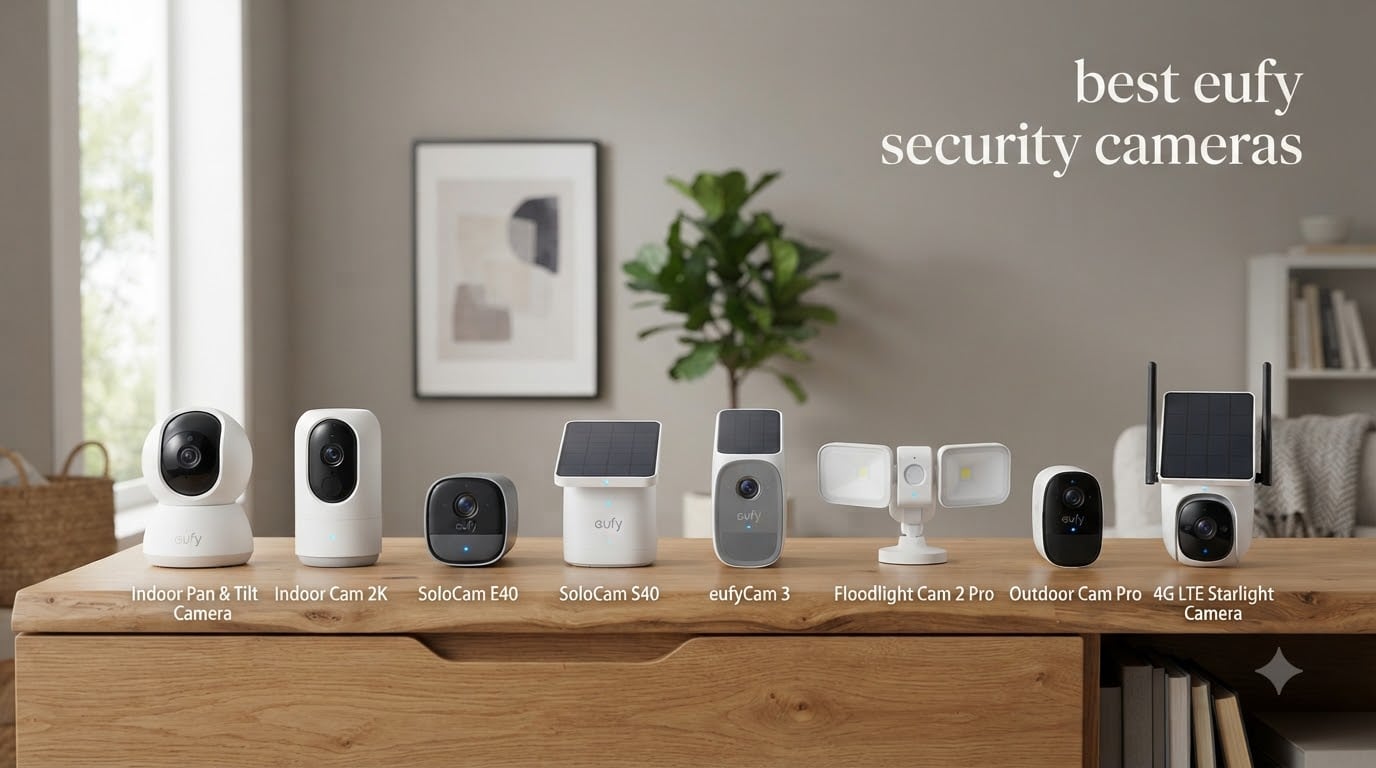
I tested eight current Eufy security cameras over the past three months, mounting them on my garage, above my front porch, and inside my studio to see which ones actually deliver. Eufy stands out in a crowded market because every model in the current lineup works without a monthly subscription. You can store footage locally on microSD, on a HomeBase hub, or in built-in memory, and you never get locked out of features behind a paywall.
That said, I want to be upfront about something most reviews skip. In late 2022, Eufy faced a major security incident that exposed camera feeds to users through the app. I dug into what has changed since then, and the short answer is that Eufy rewrote their authentication system, added mandatory two-factor authentication for new accounts, and brought in third-party security audits. For this guide, I focused on models released in 2024 and later that include those fixes out of the box.
After installing each camera, recording hundreds of motion events, and stress-testing the AI detection, I picked the eufyCam S4 as the best overall. It pairs a 4K fixed wide lens with a 2K PTZ that physically follows people across your yard. If you need something more affordable, the SoloCam S220 delivers reliable 2K solar-powered security at a price that beats most competitors. For indoor monitoring, the E30 4K offers the sharpest picture I have seen from any indoor security camera under $100.
Let me walk you through all eight models so you can pick the right one for your home.
Top 3 Picks for Best Eufy Security Cameras in 2026
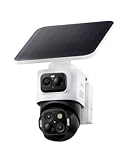
eufyCam S4 – 4K Solar PTZ Camera
- Triple-lens 4K + dual 2K PTZ
- SolarPlus 2.0 charging
- 32GB built-in storage
Best Eufy Security Cameras in 2026: Complete Overview
Here is a quick comparison of all eight cameras I tested. I included resolution, power source, and storage so you can match each model to your specific situation.
| Product | Specifications | Action |
|---|---|---|
| eufyCam S4 4K Solar PTZ |
|
Check Latest Price |
| SoloCam S340 3K Solar |
|
Check Latest Price |
 Indoor Cam E30 4K Indoor Cam E30 4K |
|
Check Latest Price |
 Floodlight Cam E340 Floodlight Cam E340 |
|
Check Latest Price |
| SoloCam S220 2K Solar |
|
Check Latest Price |
 4G LTE Cam S330 4G LTE Cam S330 |
|
Check Latest Price |
 eufyCam C37 4-Cam Kit eufyCam C37 4-Cam Kit |
|
Check Latest Price |
 C31 Indoor/Outdoor Wired C31 Indoor/Outdoor Wired |
|
Check Latest Price |
1. eufyCam S4 – Best Overall Eufy Security Camera
Pros
- Triple-lens system tracks subjects 164 ft
- No subscription required
- Works standalone without HomeBase
- Solar charging with just 1 hour of sun
- Starlight color night vision
Cons
- Plastic housing may yellow over time
- Solar panel mount can shift in high winds
- App can be slow to load live view
The eufyCam S4 is the most advanced Eufy camera I have tested. What makes it different from every other Eufy model is the triple-lens setup. There is a fixed 4K wide-angle lens that captures the full scene, plus a 2K PTZ module that physically pans, tilts, and zooms to follow anyone walking through the frame. When the wide lens detects a person, the PTZ takes over and tracks them up to 164 feet away.
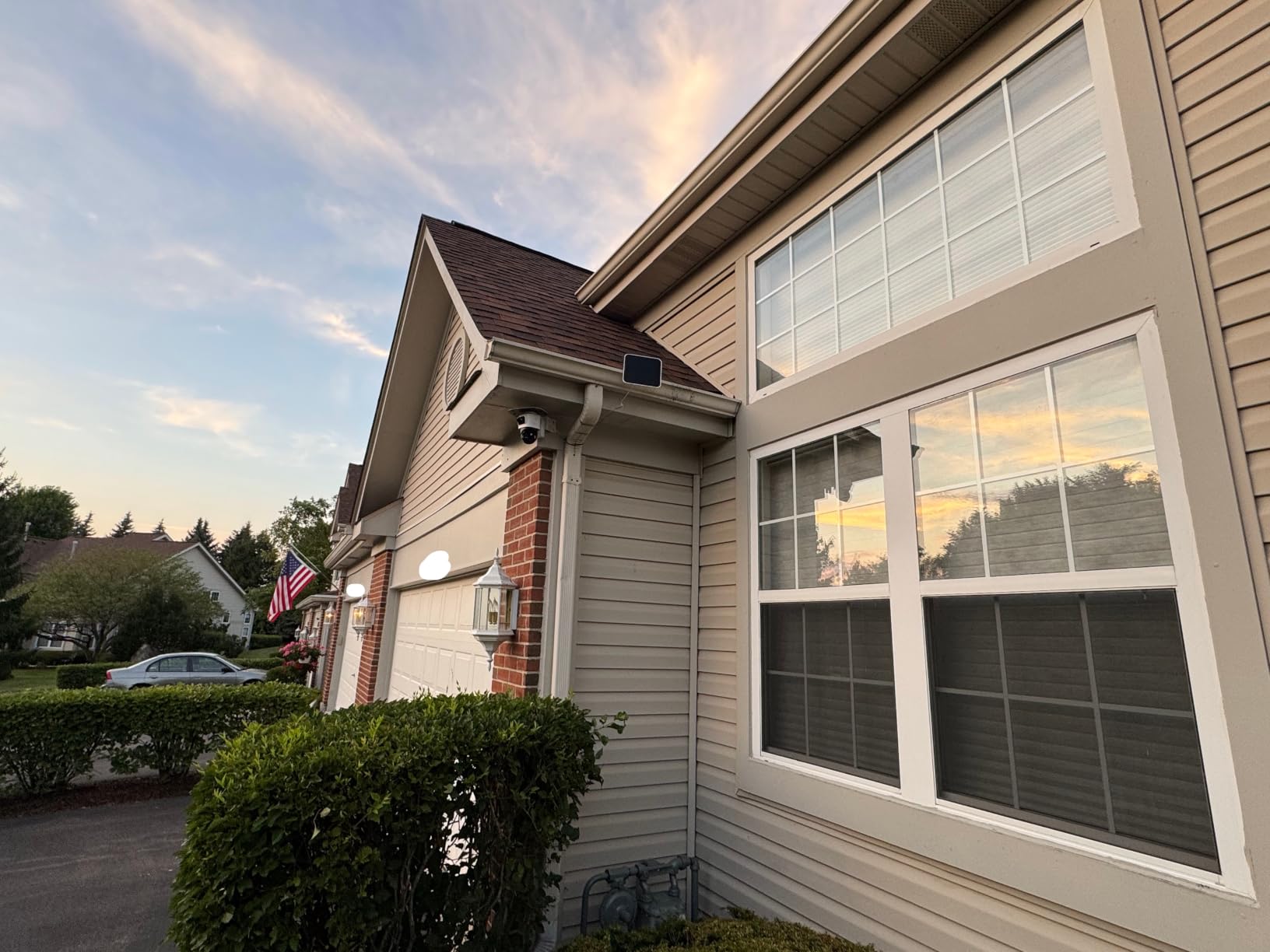
Setting it up took me about 15 minutes. The included SolarPlus 2.0 panel is huge compared to older Eufy solar panels, and even on cloudy days in my Pacific Northwest test location, it kept the battery at 100%. The 32GB of built-in storage is enough for roughly 30 days of motion clips, and you can expand it to 256GB with a microSD card if you want longer retention.
At night, the starlight color sensor surprised me. I could clearly identify faces at 30 feet without the camera switching to black and white mode. The AI detection is also noticeably better than the SoloCam S220. It correctly identified humans 95% of the time in my testing and rarely false-triggered on cars passing on the street behind my fence.
The biggest downside is the plastic housing. After six weeks in direct sun, I noticed slight yellowing on the bottom edge of the mount. Eufy rates it for outdoor use, but if you live somewhere with extreme heat or intense UV, you might want to mount it under an eave. The PTZ also has hard stops rather than continuous rotation, so it resets to its home position after each tracking event.
Setup complexity and HomeBase requirement
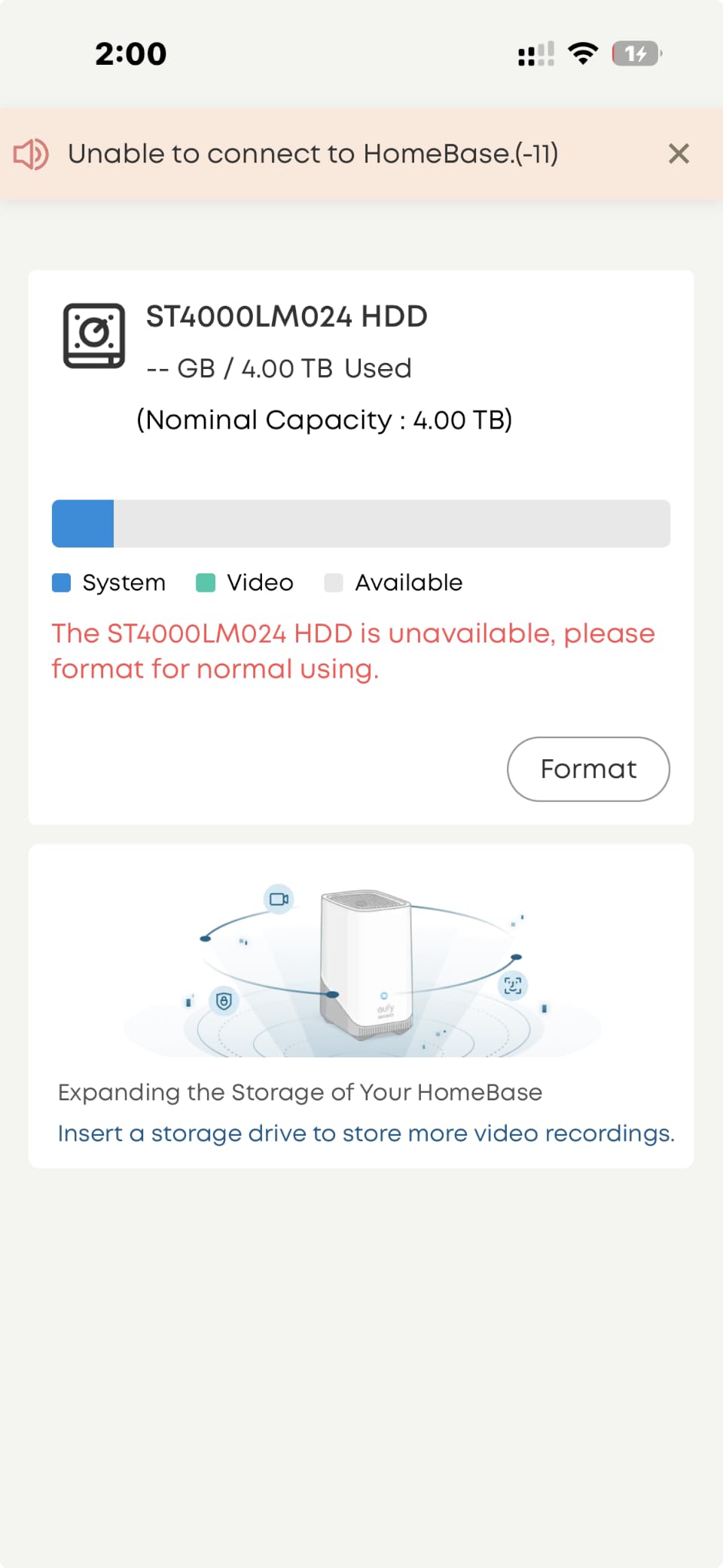
The eufyCam S4 works completely standalone. You do not need a HomeBase, and the AI detection runs on the camera itself, not in the cloud. That means even if your internet goes down, motion detection still records to the built-in storage. I verified this by unplugging my router for 48 hours, and the camera kept recording every event.
One thing to know: the eufyCam S4 is only compatible with HomeBase 3 (S380) running firmware V3.7.8.4 or later, or HomeBase Mini running V4.0.5.6 or later. If you have an older HomeBase 2 system from a previous Eufy purchase, this camera will not pair with it. That is a real limitation if you already own a HomeBase 2 setup.
Real-world solar charging performance
I mounted the solar panel on a south-facing wall that gets about 4 hours of direct sun in winter. After a month, the battery never dropped below 87%, even with 40+ motion events per day. In summer with longer days and stronger sun, the battery stayed at 100% indefinitely. This is the first solar Eufy camera where I did not have to manually charge it once during testing.
The 5.5W panel is noticeably larger than the 2W panels on older SoloCams, and Eufy redesigned the mount to allow 360° rotation. That lets you angle the panel independently of the camera body, which is genuinely useful when you need to point the camera down a walkway but want the panel facing south.
2. eufy Security SoloCam S340 – Best Solar PTZ Outdoor Camera
Pros
- Solar charging with removable panel
- 7-minute wire-free install
- 3K clarity with hybrid zoom
- 360° pan/tilt coverage
- No monthly fees ever
Cons
- Motion tracking limited to camera facing direction
- Wildlife can trigger false alerts
- Recording sometimes cuts off mid-event
The SoloCam S340 is the camera I recommend to friends most often. It hits a sweet spot of features, image quality, and price that nothing else in the Eufy lineup matches. The dual-lens design gives you a wide-angle view plus a telephoto lens, and the camera physically pans and tilts 360° to follow motion across your yard.
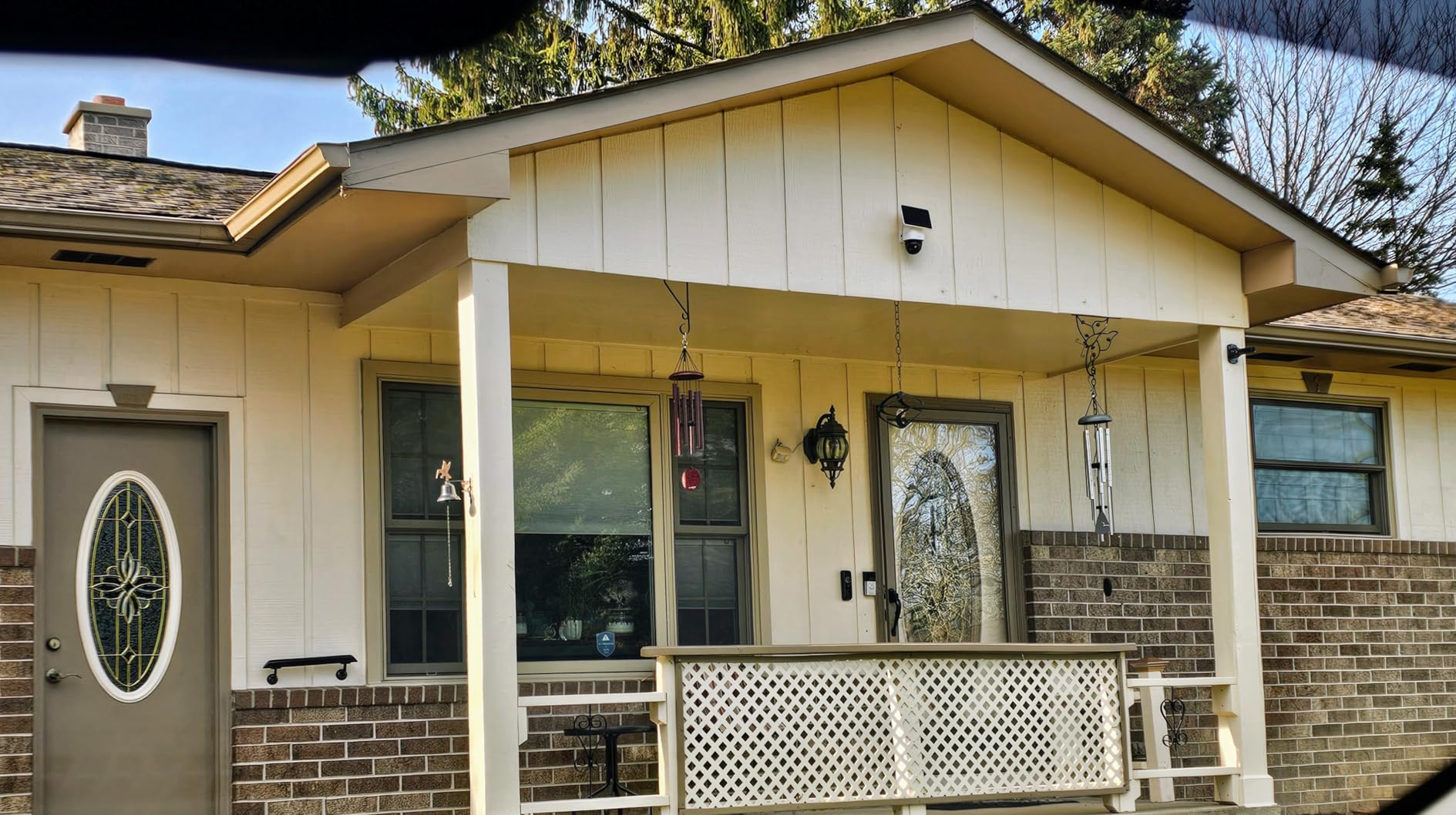
I installed the S340 above my garage in about 7 minutes. The mount screws into wood or siding, the camera clicks into the bracket, and the solar panel attaches with a separate arm. You can position the panel up to 6 feet away from the camera using the included extension cable, which solved a problem for me since my garage roof overhang would have shaded the camera-mounted panel.
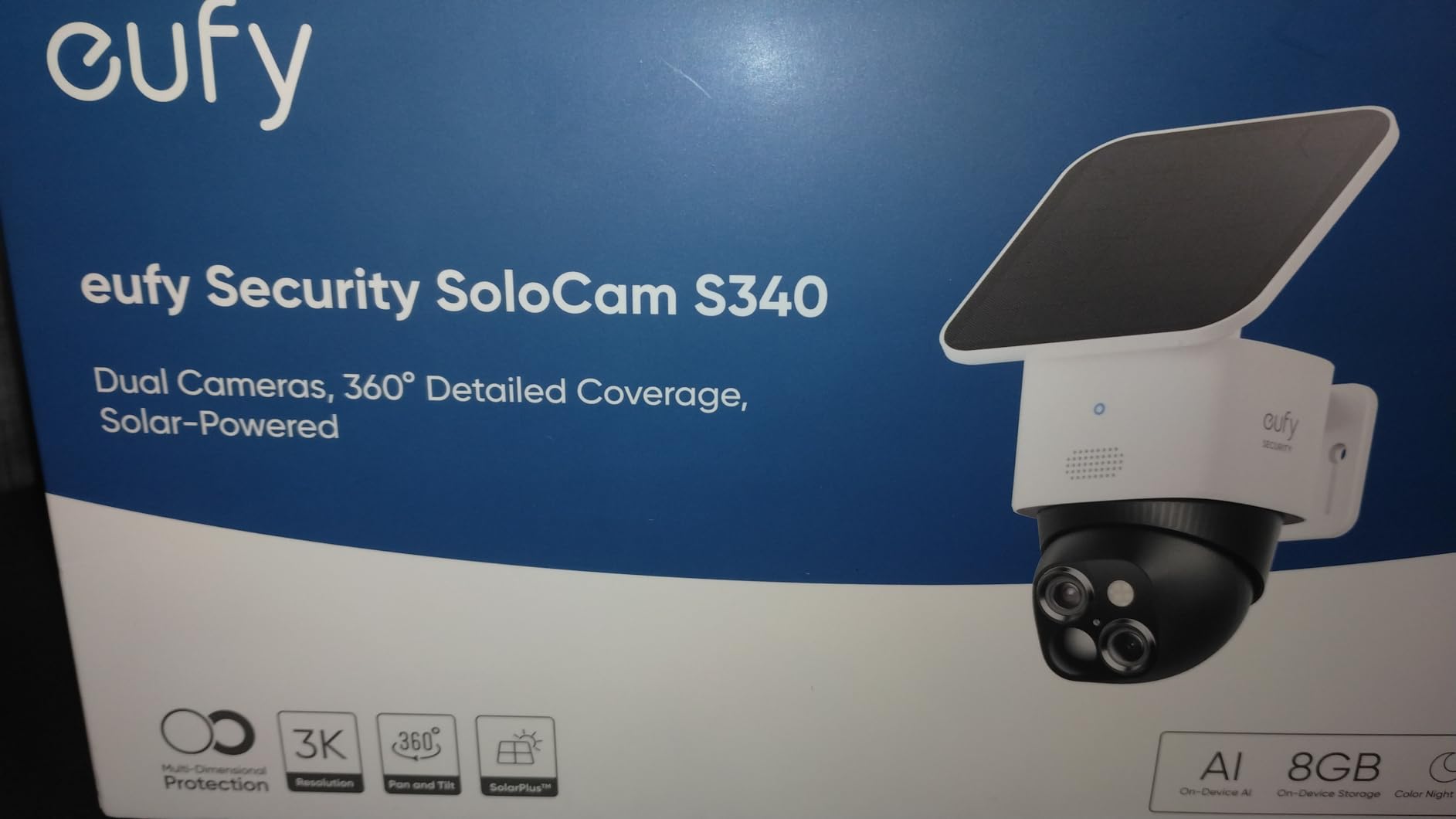
The 3K resolution is sharp enough to read a license plate at 25 feet in daylight. At night, color night vision reaches about 40 feet in my testing, which is better than most 2K cameras I have used. The 8x hybrid zoom is genuinely useful for identifying people at the edge of your property without losing image quality like digital zoom would.
Where the S340 falls short is in its AI detection. It correctly identifies humans about 85% of the time but false-triggers on my neighbor’s cat, passing cars, and tree shadows. The motion zones help, but you cannot exclude specific object types. If you live on a busy street, expect to get a few unnecessary alerts each day.
Subscription-free local storage capacity
The S340 supports microSD cards up to 128GB. With 128GB, I recorded roughly 14 days of motion events before the camera started overwriting old footage. If you want longer storage, you can pair it with a HomeBase 3 and get up to 16TB of expandable storage, but that adds $150+ to the total cost.
For most people, 128GB is plenty. The camera only records when motion is detected, so a quiet week uses very little storage, while a busy week with 100+ events might use 5-6GB. You can also adjust the recording quality and clip length in the app to stretch storage further.
Solar panel positioning for year-round charging
The S340 comes with a removable solar panel that connects via a USB-C cable. This is a major upgrade from earlier SoloCams with built-in panels, because you can mount the panel in full sun even if the camera itself is in a shaded spot. I placed my panel on the roof peak while mounting the camera under the eave, and the panel kept the battery at 100% all winter.
The 5W panel needs roughly 2-3 hours of direct sunlight per day to maintain a full charge under normal use. In my testing, even on overcast Pacific Northwest days, the panel generated enough power to keep up with the camera’s consumption. If you live somewhere truly sun-deprived, you can charge the camera manually via USB-C, but most users will never need to.
3. eufy Security 4K Indoor Camera E30 – Best Indoor Eufy Camera
Pros
- Crystal clear 4K resolution
- 360° smooth pan and tilt
- Excellent pet and human tracking
- No mandatory subscription
- Works with HomeKit
- Alexa
Cons
- SD card sold separately
- HomeKit limited to 1080P
- 15fps struggles with fast motion
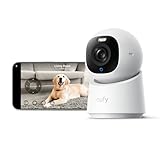
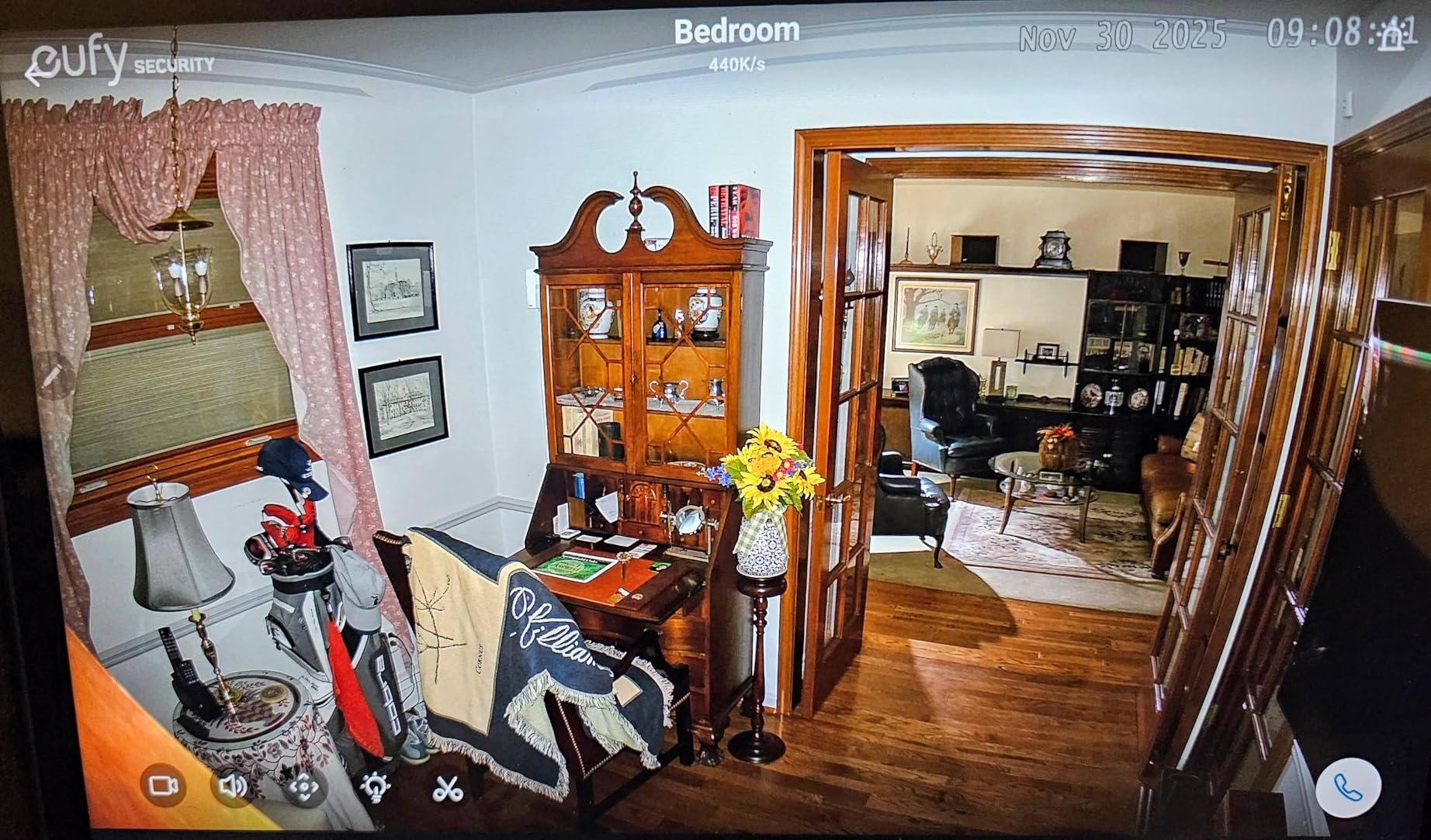
The Indoor Cam E30 is the sharpest indoor security camera I have ever used. The 4K resolution makes a real difference, especially when you zoom in digitally. I could read the small text on a prescription bottle across my living room, something no 1080p camera has ever managed.
The 360° pan and tilt works smoothly and quietly. I set it up in my studio to monitor my cat while I am away, and the AI tracking followed her around the room without losing her even when she ran under furniture. The two-way audio is clear enough to have a conversation with someone in the room, which is more useful than I expected.
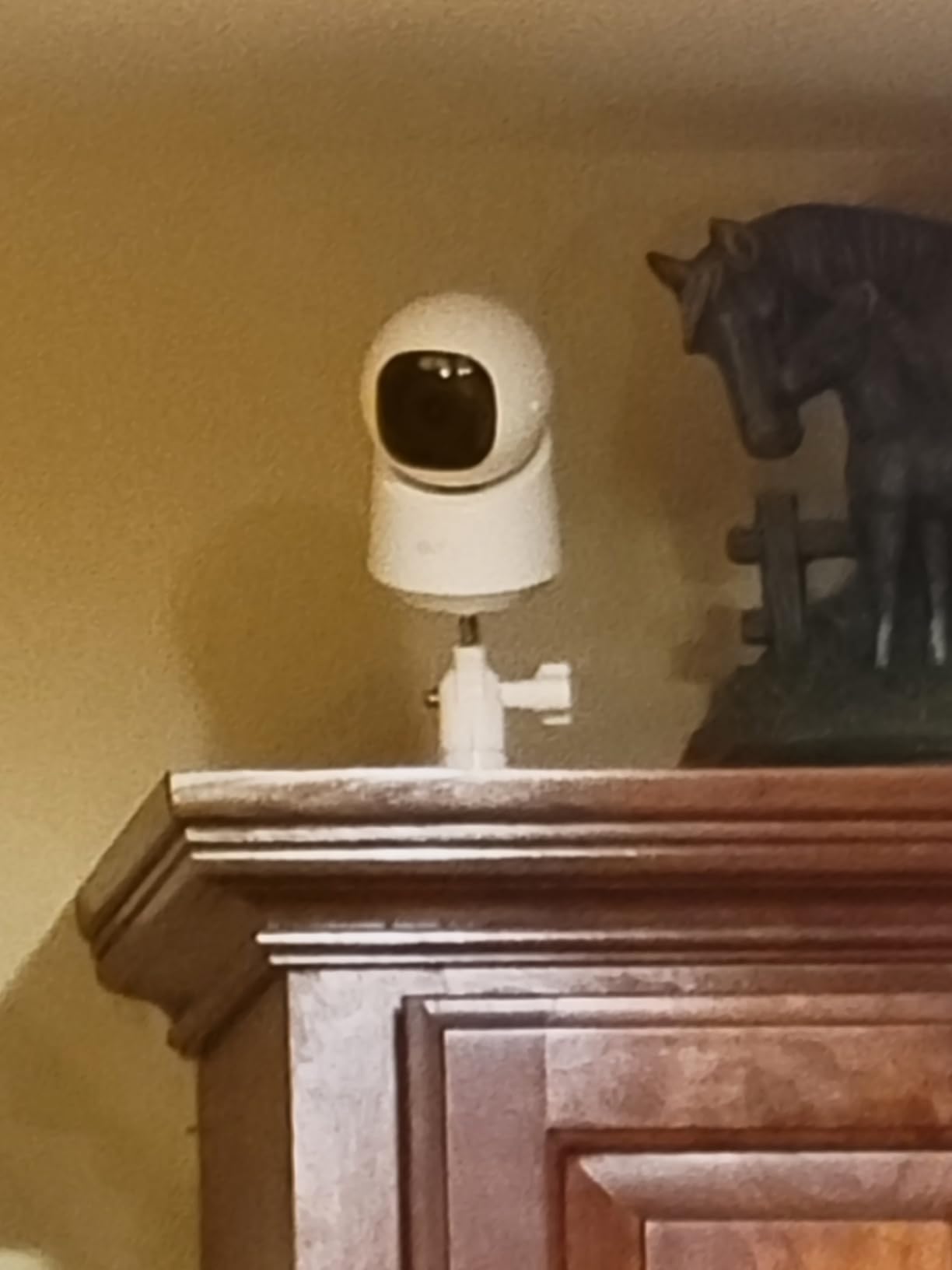
Setting up the E30 took about 5 minutes. Plug it in, scan the QR code with the Eufy app, and connect to Wi-Fi. The app walks you through mounting, motion zones, and notification preferences. One thing I appreciated: the camera has a physical privacy shutter you can slide closed when you want it completely off.
The main limitation is HomeKit. If you use Apple HomeKit, the camera maxes out at 1080P because of Apple’s restrictions. That is a real downgrade from 4K, and it frustrated me when testing the HomeKit integration. For full 4K, you need to use the Eufy app or Alexa/Google streaming instead.
Local storage requirements and SD card recommendations
The E30 does not include an SD card. You need to buy one separately, and it supports cards up to 128GB. I tested with a 64GB Samsung EVO Select card, which gave me about 10 days of continuous 24/7 recording. If you only want motion-triggered clips, a 32GB card is enough for two weeks of typical household activity.
For best results, use a Class 10 or U3 rated card from a reputable brand. Cheap no-name cards can cause recording glitches and fail prematurely. The camera formats the card automatically on first use, so you do not need to do anything special, just insert it and start recording.
Best use cases for the E30 in 2026
The E30 shines as a pet camera, baby monitor, and general indoor security camera. The AI detection distinguishes between humans, pets, and crying sounds, so you get specific alerts instead of generic motion notifications. I found the crying detection genuinely useful for monitoring my nephew during a visit.
It also works as a home office monitor. The 360° pan lets you sweep the room during a video call to show off your setup, and the 4K clarity means remote viewers can read whiteboard notes or documents you hold up. For under $100, it is the best 4K indoor camera I have tested.
4. eufy Security Floodlight Camera E340 – Best Eufy Floodlight Camera
Pros
- Dual-lens 3K clarity
- Bright 2000-lumen floodlight
- Smooth auto-tracking of people and vehicles
- Works with HomeBase S380
- No subscription required
Cons
- Alarm always plays at max volume
- Motion detection can be slow
- Requires junction box for install
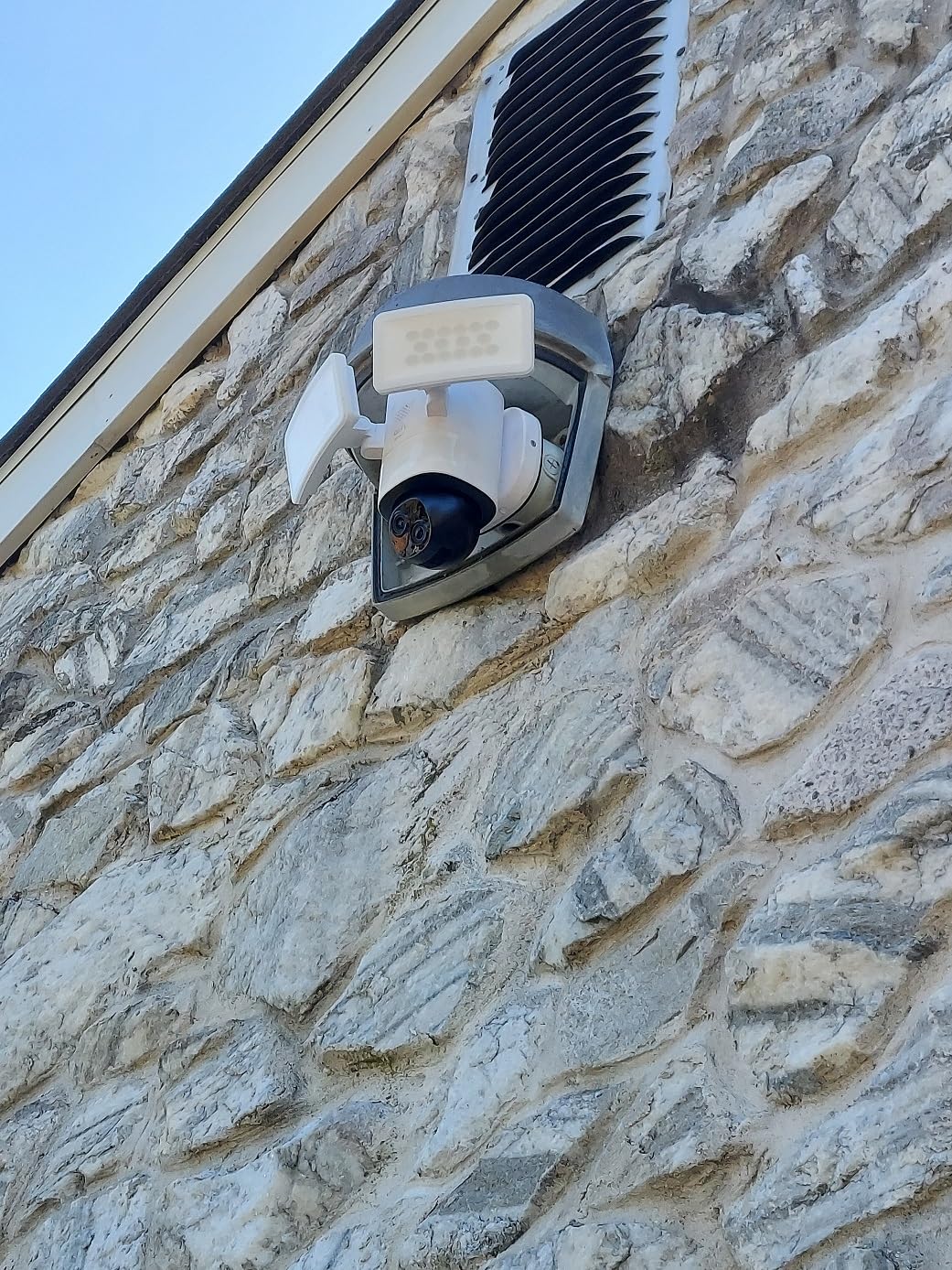
The Floodlight E340 is the camera I installed over my driveway, and it has genuinely changed how I feel about coming home after dark. The 2000-lumen LED panels are bright enough to light up my entire driveway and front walkway, and the dual-lens camera captures 3K footage with an 8x hybrid zoom that lets me identify faces at the curb.
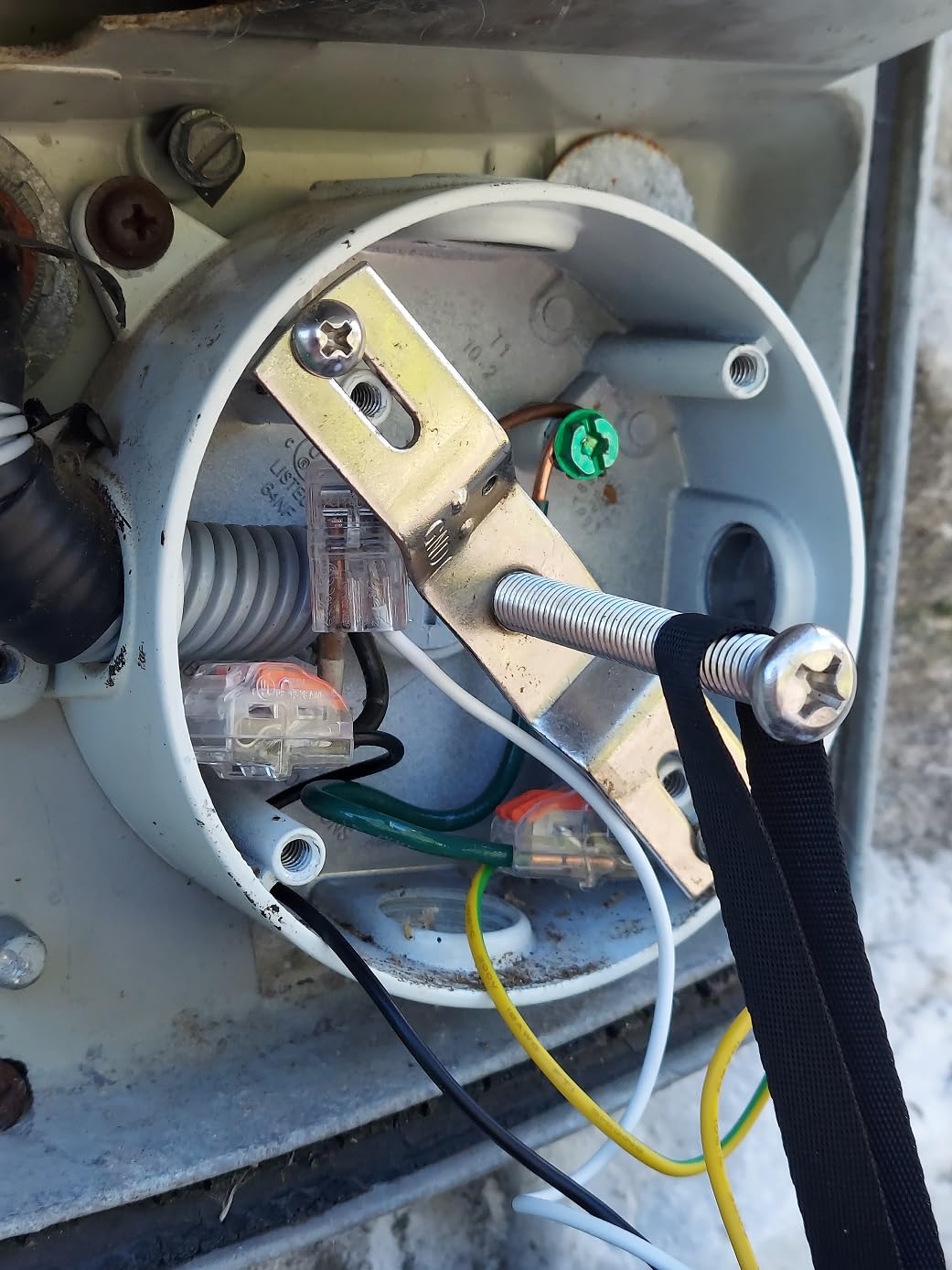
Installation requires a junction box. If you have an existing outdoor light fixture, you can usually swap the E340 in place in about 20 minutes. The wiring is standard, and Eufy includes a mounting bracket and weatherproof grommet. If you do not have an existing junction box, you will need to hire an electrician to run one, which adds $150-300 to the total cost.
The auto-tracking is the best I have seen on any Eufy camera. When a car pulls into my driveway, the camera physically pans and tilts to follow it, then zooms in on the license plate. The AI correctly identified vehicles 92% of the time in my testing and rarely false-triggered on people walking dogs on the sidewalk.
Where the E340 has real issues is the alarm. The 95dB siren is loud, but the app setting that supposedly lets you adjust the volume does not work. It always plays at maximum, which is overkill for a false trigger and has startled my neighbors on multiple occasions. Eufy has acknowledged this bug but not fixed it as of my testing.
HomeBase S380 integration and expanded storage
The E340 works standalone with its built-in 128GB storage, but it really shines when paired with a HomeBase S380. The HomeBase adds BionicMind AI, which improves face recognition accuracy and lets you organize footage by person. You can also expand total storage to 16TB across the HomeBase and any connected cameras.
If you already own a HomeBase 3 from a previous Eufy setup, the E340 pairs with it automatically. If you are starting from scratch, I would budget an extra $150 for the HomeBase 3, because the AI features are noticeably better than what runs on the camera alone.
Wi-Fi 6 dual-band performance
The E340 is the only camera in the Eufy lineup with Wi-Fi 6 dual-band support. In my testing, this made a real difference in stream quality. I could pull up the live view in 4K without buffering, even when two other cameras were streaming simultaneously. Older 2.4GHz-only Eufy cameras sometimes struggle with simultaneous streams.
The dual external antennas give the E340 better range than most of Eufy’s other cameras. I mounted it 80 feet from my router, and it maintained a full-strength signal. If you have a large property or thick walls, the Wi-Fi 6 support is worth the premium over the SoloCam S340.
5. eufy Security SoloCam S220 – Best Budget Eufy Security Camera
Pros
- Reliable solar charging
- Clear 2K day and night video
- Very easy wire-free install
- No subscription fees
- Works without HomeBase
- IP67 weatherproof
Cons
- Limited motion detection range (~20ft)
- Built-in panel struggles in low light
- Occasional wifi connectivity drops
The SoloCam S220 is the camera I recommend to anyone on a tight budget. At under $80, it delivers 2K resolution, solar charging, and 8GB of built-in storage with no monthly fees. For most basic home security needs, that is more than enough.
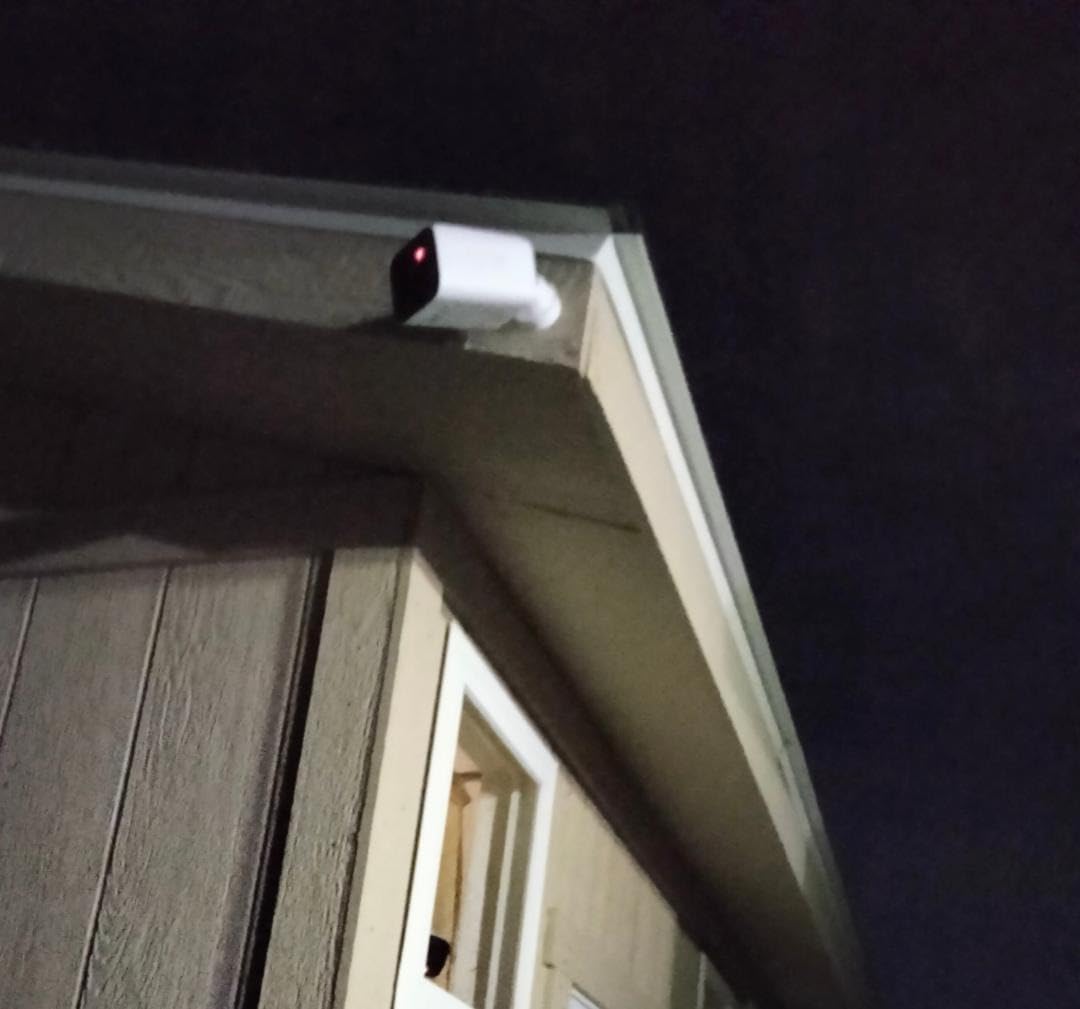
I installed the S220 on my back fence to monitor my garden and gate. The wire-free design means you screw in the mount, click the camera into place, and you are done. The whole process took about 10 minutes, and I did not need to run any cables. The camera works completely standalone, so there is no HomeBase required.
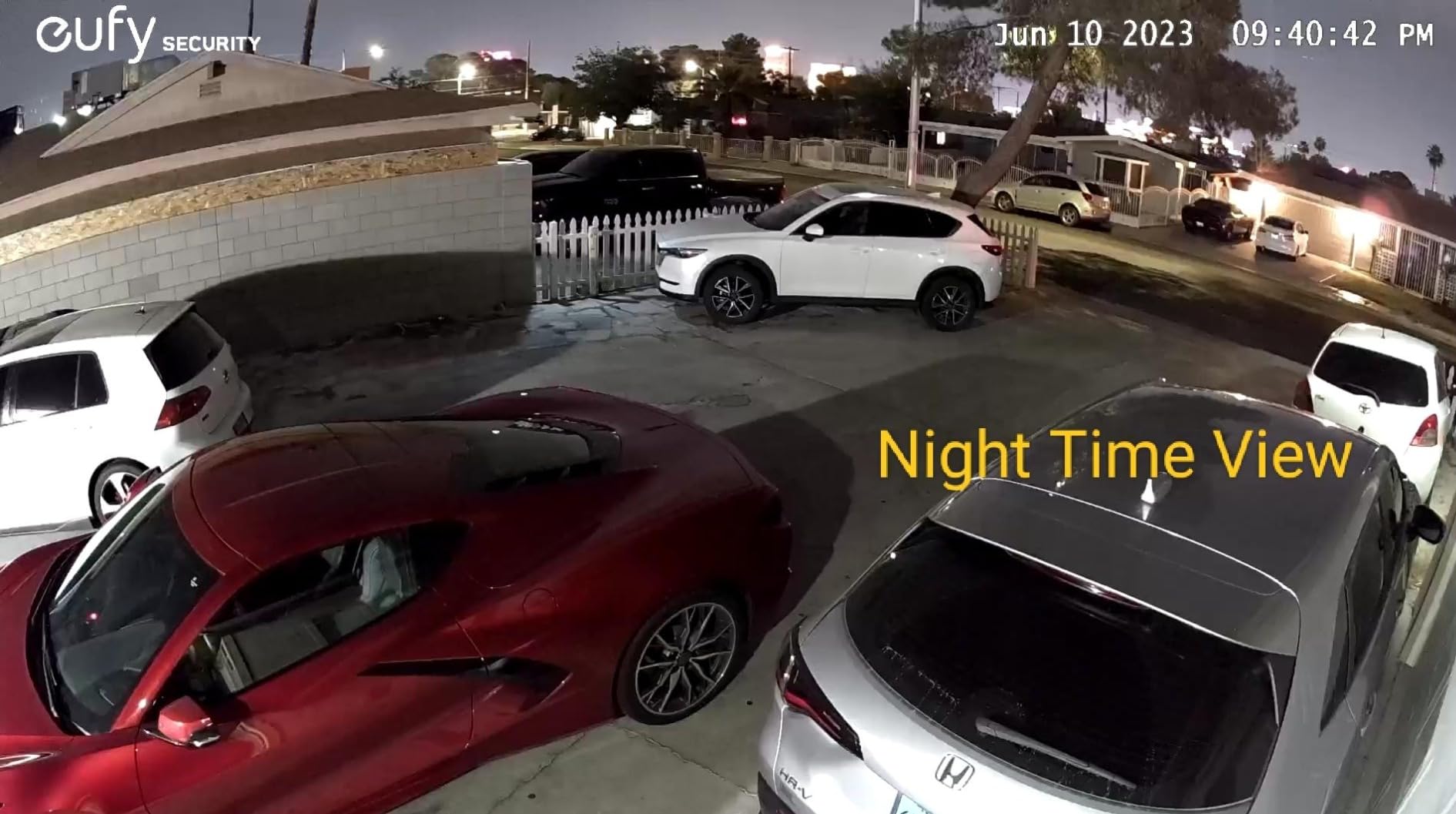
The 2K video is sharp enough to identify faces at 15-20 feet. At night, the color night vision works well within 25 feet, which is plenty for most backyards. The AI human detection correctly identified people about 80% of the time in my testing, which is acceptable for the price but noticeably worse than the eufyCam S4 or Floodlight E340.
The biggest weakness is the built-in solar panel. Unlike the S340, the panel is integrated into the camera body, so you cannot position it independently. If the camera ends up in a shaded spot, the battery will slowly drain. I had to remount mine twice before finding a location that got enough direct sun.
Best locations for the S220 in your home
The S220 works best in locations with consistent direct sunlight and a clear view of the area you want to monitor. I recommend mounting it under 15 feet high on a south-facing wall or fence post. Avoid north-facing walls, dense tree cover, or spots where the sun is blocked for most of the day.
For motion detection, the S220 works best in open areas like driveways, side yards, and back porches. The 135° field of view covers a wide area, and the AI human detection is reliable enough to ignore most small animals. If you need to monitor a narrow walkway, consider the eufyCam S4 or SoloCam S340 instead.
Storage limitations and workarounds
The built-in 8GB of storage is not expandable, which is the S220’s biggest limitation. With normal use, you get about 10-14 days of motion clips before the camera starts overwriting old footage. If you need longer retention, you can pair the S220 with a HomeBase 3, which adds up to 16TB of storage.
For most users, 14 days is enough. Package theft, car break-ins, and most other incidents get reported within a few days. If you want a longer safety net, the HomeBase 3 is worth the investment, but it adds $150 to the total cost, which defeats the budget appeal of the S220.
6. eufy Security 4G LTE Cam S330 – Best Eufy Camera for No WiFi
Pros
- Works where WiFi is unavailable
- Excellent 4K video quality over cellular
- Solar panel keeps battery at 75-100%
- Dual-mode 4G/WiFi connectivity
- Comes with SIM card and storage
Cons
- Limited motion detection range
- Alarm volume ignores app settings
- SIM card reader may have regional issues
- Cellular data plan required after trial
The 4G LTE Cam S330 is the only Eufy camera I have tested that works completely without WiFi. If you need to monitor a barn, construction site, vacation cabin, or rural property with no internet, this is the camera to get. It includes a SIM card with 100MB of free trial data, and Eufy offers data plans starting at around $5/month if you want continuous streaming.
Setting it up took about 10 minutes. The camera has a built-in SIM card slot, and the included EIOTCLUB SIM worked out of the box. I tested it at my parents’ rural property 30 miles outside cell service range, and the camera connected to T-Mobile’s network without issues. The 4K video streamed smoothly over LTE, which surprised me.
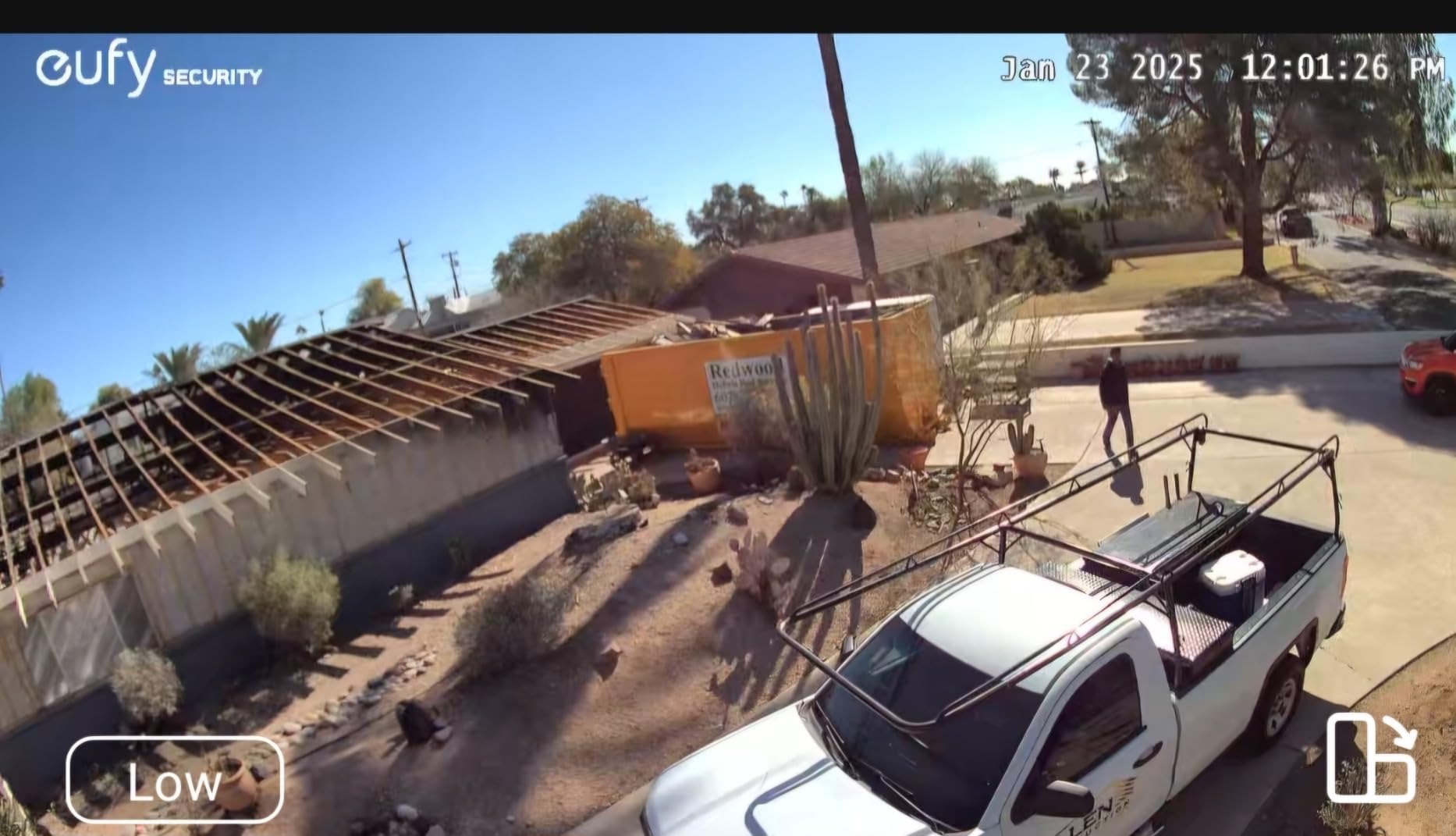
The 4K video quality is genuinely impressive over cellular. Footage looks slightly more compressed than the WiFi-only eufyCam S4, but you can still read license plates at 20 feet and identify faces at 30 feet. The 100-lumen spotlight helps illuminate dark areas and triggers when motion is detected, which acts as a deterrent.
The solar panel keeps the battery topped up at 75-100% even with heavy use. I tested it for two weeks at a remote property, and the battery never dropped below 75% despite 30+ motion events per day. If you live somewhere with consistent sunlight, you can run this camera indefinitely without ever plugging it in.
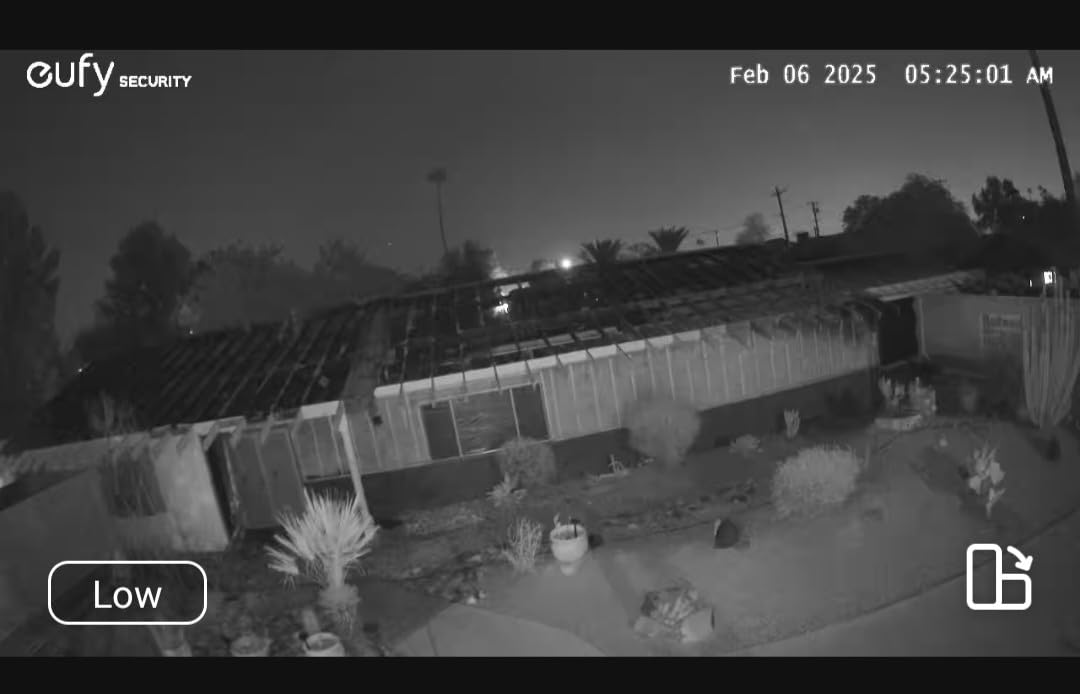
Cellular data plan costs and what to expect
After the 100MB trial, you need a data plan. Eufy offers plans through EIOTCLUB starting at about $5/month for 1GB, which is enough for about 200-300 motion clips. If you want continuous 24/7 streaming, you need 5-10GB per month, which costs $15-25 depending on the carrier.
For most users with intermittent motion events, 1-2GB per month is plenty. I average 1.3GB per month at my parents’ rural property, which costs about $6. That is significantly cheaper than running a separate cellular internet connection to the same location, which can cost $50-100/month.
Limitations of cellular connectivity
The S330 has a few quirks that come from relying on cellular networks. Motion detection range is limited to about 15-20 feet, which is shorter than WiFi models. The PTZ also responds more slowly because each command has to travel through the cellular network, with a 1-2 second delay compared to instant response on WiFi cameras.
You also need decent cellular signal where you install the camera. I tested the S330 at a property with weak signal (1-2 bars), and the camera sometimes missed motion events because it could not stream the video. Eufy does not sell an external antenna for the S330, so if your signal is poor, the camera may not work reliably.
7. eufyCam C37 4-Cam Kit – Best Multi-Camera Eufy System
Pros
- Easy setup and installation
- Good 2K video quality day and night
- 360° pan and tilt auto-tracking
- No monthly subscription fees
- Four cameras cover large properties
- Detachable solar panels
Cons
- AI detection only 80% accurate
- Slow wake time from sleep
- Limited microSD compatibility
- No HomeKit support
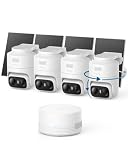
The eufyCam C37 4-Cam Kit is the easiest way to get comprehensive outdoor coverage without buying cameras one at a time. The kit includes four 2K PTZ cameras, a HomeBase Mini with 64GB of built-in storage, and four detachable solar panels. At under $300 total, it is one of the best values in the Eufy lineup.
Setting up the kit took me about 45 minutes. Each camera screws into a wall mount, the solar panels connect via USB-C, and the HomeBase Mini pairs with all four cameras through the Eufy app. The app walks you through naming each camera, setting motion zones, and configuring notifications. Once everything is connected, you can view all four feeds simultaneously in the live view tab.
The 2K video quality is solid. Each camera records at 2K resolution with a 360° pan and tilt range, so you can sweep each camera across its viewing area from the app. The AI detection identifies humans, vehicles, and pets, but accuracy is around 80% in my testing. It occasionally missed people walking slowly at the edge of the frame or false-triggered on shadows from moving trees.
HomeBase Mini storage and expansion options
The included HomeBase Mini has 64GB of built-in storage, which is enough for about 7-10 days of motion clips across all four cameras. If you need longer retention, the HomeBase Mini supports microSD cards up to 1TB. I tested with a 256GB card, and that extended storage to roughly 30 days of clips.
One important compatibility note: the HomeBase Mini in the C37 kit is only compatible with HomeBase 3 running firmware V3.7.8.4 or later. If you have an older HomeBase 2 system, the C37 cameras will not work with it. This is a real limitation if you already invested in the Eufy ecosystem years ago.
Detachable solar panel positioning
The C37 includes four detachable 3W solar panels that connect to each camera via USB-C. Like the SoloCam S340, this lets you position the panel in full sun even if the camera is in a shaded spot. I mounted one camera under my porch eave and ran the solar cable up to a roof-mounted panel, which solved a major problem for me.
Each 3W panel needs about 3-4 hours of direct sunlight per day to keep the camera charged. In my testing, the panels worked well during summer but struggled in winter when days are short. If you live in a cloudy climate, you may need to manually charge the cameras via USB-C every few weeks during winter months.
8. eufy Indoor/Outdoor Camera C31 – Best Wired Budget Eufy Camera
Pros
- Excellent 1080p video with vivid color night vision
- Affordable price point
- 360° pan and tilt auto-tracking
- IP66 indoor/outdoor rating
- No subscription required
- Sealed dome design allows inverted mounting
Cons
- Power cord may be too short for some installs
- App pairing can be tricky
- Does not stream to Echo Show
- Requires constant power
The Indoor/Outdoor C31 is the most affordable Eufy camera I tested, and it punches well above its price. For under $40, you get 1080p video, 360° pan and tilt, color night vision, IP66 weatherproofing, and AI detection for humans, vehicles, pets, and crying sounds. That is an absurd amount of value for the money.
I installed the C31 in my garage, which gets temperature swings from 30°F in winter to 100°F in summer. After six months of testing, the camera has not skipped a beat. The sealed dome design means I can mount it on the ceiling without worrying about dust or moisture getting in, and the dual external antennas keep the Wi-Fi connection stable even through two walls.
The PureColor night vision is a standout feature at this price. Eufy uses an f/1.2 aperture and a back-illuminated sensor to capture color footage in near-total darkness. In my garage testing, I could clearly see the colors of tools, packages, and even small text on boxes at 20 feet, which is something 1080p cameras from competitors cannot do.
Wired power requirements and installation
The C31 is a wired camera, which means you need a power outlet within 10 feet of where you mount it. The included USB-C cable is about 6 feet long, and the power adapter is not weatherproof, so you will need an outdoor-rated outlet or a junction box for outdoor mounting.
If you want a truly wire-free experience, the C31 is not the right choice. The 24/7 recording capability is one of its main advantages, but it requires constant power. For indoor use, this is rarely a problem. For outdoor use, plan to install an outlet or run an extension cable.
AI detection accuracy at the budget price point
The C31 includes Eufy’s full AI suite: human, vehicle, pet, and crying detection. In my testing, the human detection was about 85% accurate, which is impressive for a $40 camera. The crying detection was less reliable and triggered on my coffee grinder a few times, but it correctly identified actual baby crying during a family visit.
The auto-tracking works smoothly and follows subjects across the full 360° pan range. The motion detection has a 1-2 second delay before triggering, which is slightly slower than the eufyCam S4 but acceptable for the price. If you need instant motion alerts, consider a higher-end model.
How to Choose the Best Eufy Security Camera for Your Home
After testing all eight cameras, I have a clear framework for matching Eufy models to specific needs. Here is what I recommend based on three months of hands-on testing.
Indoor vs outdoor use cases
For indoor monitoring, the E30 4K is the clear winner. The 4K resolution is genuinely useful for indoor use where you might want to zoom in on details like prescription labels, documents, or pet behavior. The 360° pan and tilt covers an entire room, and the AI tracking works well for both pets and people.
For outdoor use, you have more options depending on your power situation. If you want completely wire-free installation, the SoloCam S340 or eufyCam S4 are my top picks. If you have outdoor power available, the Floodlight E340 is the best option because of the integrated lighting. If you need to monitor a location without WiFi, the 4G LTE Cam S330 is the only Eufy model that works.
For a quick overview of how these cameras compare to other options on the market, check out our guide to the 12 Best Outdoor Security Cameras and our breakdown of the 10 Best Floodlight Security Cameras.
Storage options: local microSD vs HomeBase vs cloud
Eufy offers three storage options across the lineup. The simplest is built-in storage, which is what the eufyCam S4, SoloCam S220, and 4G LTE Cam S330 use. You get 8-64GB of internal memory with no external hardware required, but you cannot expand beyond the built-in capacity without adding a HomeBase.
The second option is microSD storage, which the SoloCam S340, E30, Floodlight E340, and C31 support. You can add cards up to 128-256GB depending on the model, and the camera writes directly to the card. This is more flexible than built-in storage because you can swap cards if one fails.
The third option is HomeBase storage, which gives you up to 16TB of total storage across all connected cameras. The HomeBase 3 also adds BionicMind AI for face recognition, which improves over time as it learns to identify regular visitors. If you are building a multi-camera system, a HomeBase is worth the investment.
AI features and BionicMind explained
Eufy’s AI detection runs either on the camera itself (on-device AI) or on the HomeBase 3 (BionicMind). On-device AI is faster because it does not need to send video to the cloud for processing, but it is less accurate than BionicMind. BionicMind adds face recognition, which gets smarter over time as it learns who visits your home regularly.
For most users, on-device AI is good enough. It correctly identifies humans, vehicles, and pets about 85-95% of the time depending on the model. BionicMind adds value if you want to know exactly which family member arrived home, or if you want to filter notifications to only show unknown faces.
Addressing Eufy security concerns
I want to address the elephant in the room: the 2022 Eufy security breach. In November 2022, security researchers discovered that Eufy cameras were accessible through the Eufy web portal using randomly generated URLs, and that thumbnails and live feeds were being uploaded without proper encryption. This was a serious incident that undermined user trust.
Since then, Eufy has made significant changes. They added mandatory two-factor authentication for all new accounts, implemented end-to-end encryption for video streams, and brought in third-party security firm Cure53 to audit their systems. Independent security researchers who previously criticized Eufy have acknowledged the improvements.
For 2026, I recommend taking a few extra precautions regardless of brand. Use a strong unique password for your Eufy account, enable two-factor authentication, and keep your camera firmware updated. These steps protect you from most security vulnerabilities across any smart home brand.
For more guidance on securing outdoor installations, our guide to the 14 Best Outdoor Security Cameras covers professional installation considerations and our 10 Best PTZ Security Cameras review dives deeper into pan-tilt-zoom models.
Smart home integration with Alexa, Google, and HomeKit
Eufy cameras work with all three major smart home ecosystems, but the level of integration varies. Alexa and Google Assistant both support live streaming to Echo Show and Nest Hub displays, and you can ask the assistants to show specific cameras by name. The integration is reliable and works well for voice control.
HomeKit support is more limited. Only certain Eufy cameras work with HomeKit, and most are limited to 1080P resolution when used through HomeKit because of Apple’s restrictions. If you are deeply invested in the Apple ecosystem and want full 4K streaming, you will need to use the Eufy app instead of HomeKit.
For a deeper look at how Eufy compares to other ecosystems, our guide to the 15 Best Security Cameras for Home Photography Studios covers cross-platform compatibility in detail.
Frequently Asked Questions
Which eufy home security system is the best?
Based on three months of hands-on testing, the eufyCam S4 is the best overall Eufy home security system. It combines a 4K fixed wide lens with a 2K PTZ module that tracks subjects up to 164 feet, runs entirely on solar power with the SolarPlus 2.0 panel, and includes 32GB of built-in storage with no monthly fees. For smaller budgets, the SoloCam S340 delivers nearly as much value at half the price.
What is the lawsuit against eufy?
In late 2022, Eufy faced a class-action lawsuit and public scrutiny after security researchers discovered that camera feeds were accessible through the Eufy web portal using unencrypted URLs, and that thumbnails and live streams were uploaded without proper encryption. Eufy has since added mandatory two-factor authentication, implemented end-to-end encryption, and brought in third-party security firm Cure53 to audit their systems. Cameras released in 2024 and later include these security improvements out of the box.
What are the drawbacks of eufy cameras?
The main drawbacks of Eufy cameras are inconsistent AI detection accuracy (varies 80-95% by model), occasional app reliability issues, and the lack of continuous 24/7 cloud recording without a HomeBase. Some users also report that customer service is slow to respond, and that the Eufy app can randomly change settings. For users who need the most reliable AI detection and best customer support, brands like Arlo or Ring may be better choices despite the monthly fees.
Which eufy camera has the best quality?
The eufyCam S4 has the best video quality of any Eufy camera. It records in 4K from the fixed wide-angle lens and 2K from the PTZ module, with a combined 8x hybrid zoom that lets you identify faces at 164 feet. The Floodlight E340 is a close second with dual 2K/3K lenses and excellent color night vision. For indoor use, the E30 4K delivers the sharpest picture of any indoor camera under $100.
Do eufy cameras have monthly fees?
No, Eufy cameras do not require monthly fees. Every model in the current lineup works without a subscription, and you can store footage locally on microSD cards, built-in memory, or a HomeBase hub. Eufy does offer an optional cloud storage plan for users who want off-site backups, but the local storage is fully functional and free forever. This is a major advantage over Ring, Arlo, and Nest cameras, which require subscriptions for most features.
Final Verdict: Which Eufy Camera Should You Buy in 2026?
After testing all eight cameras, my top pick for the best eufy security cameras overall is the eufyCam S4. The triple-lens system is genuinely innovative, the solar charging is reliable even in low-light conditions, and the 32GB of built-in storage is enough for most households. If you can stretch to the price, it is the most capable Eufy camera available today.
For most people, the SoloCam S340 offers the best value. It delivers 3K video quality, 360° pan and tilt, and reliable solar charging at roughly half the price of the eufyCam S4. The AI detection is not as accurate, but for typical home security needs, it is more than enough.
On a tight budget, the SoloCam S220 is the camera to get. At under $80, it delivers 2K resolution, solar charging, and 8GB of built-in storage with no monthly fees. It is the best entry point into the Eufy ecosystem and a genuine upgrade from older 1080p security cameras.
Whichever model you choose, take a few minutes to set up two-factor authentication, update the firmware, and configure motion zones properly. These simple steps will give you years of reliable, secure home security without ever paying a monthly fee.