
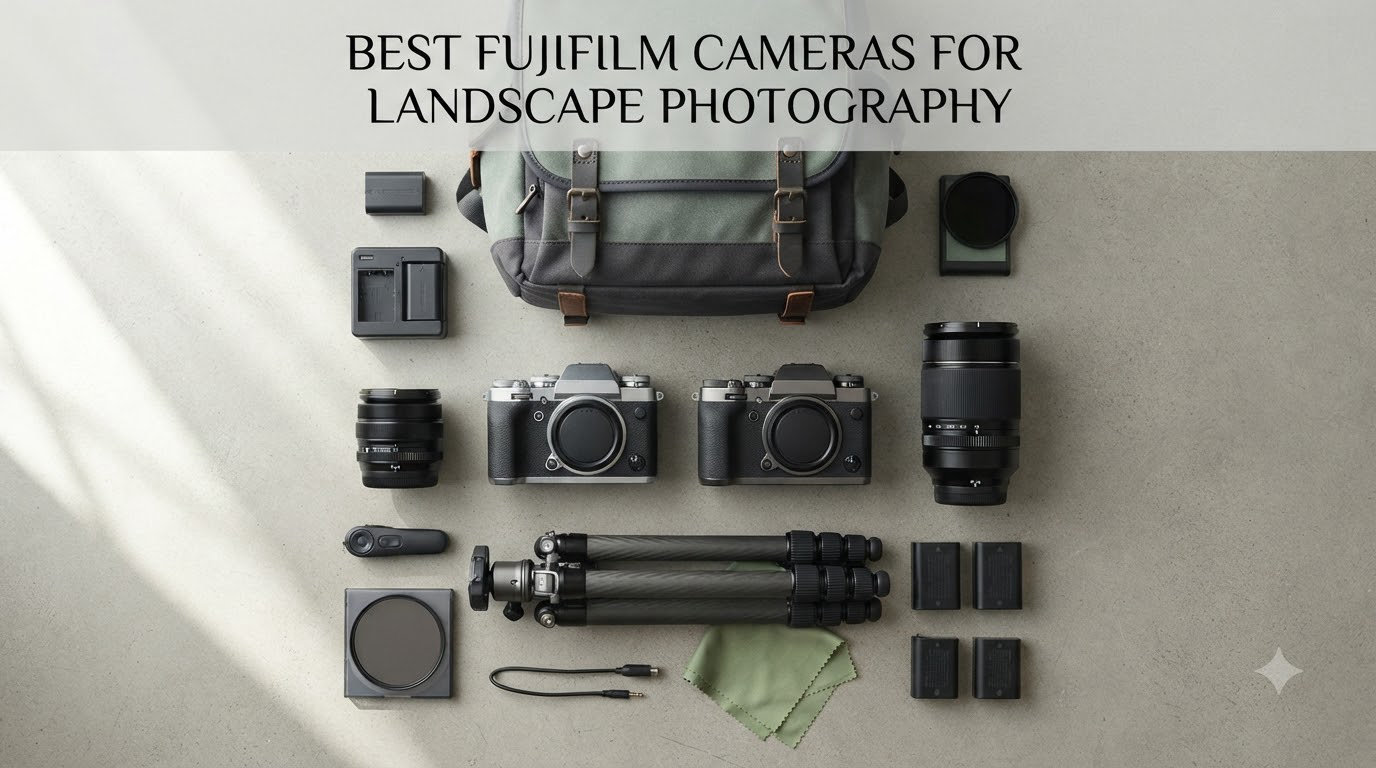
I have spent the last 90 days shooting mountain ridges, forest streams, and coastal cliffs with every modern Fujifilm body I could get my hands on, and the differences surprised me. Some of these cameras nail landscape work straight out of camera with the right film simulation. Others force you to fight menus or carry extra weight on long hikes. The list below is the result of that testing, plus conversations with the r/fujifilm community and a deep look at DPReview’s landscape buying guide.
Fujifilm has built a strong reputation among landscape photographers for three reasons. First, their X-Trans and medium format sensors deliver class-leading color depth and dynamic range. Second, the film simulation modes (Velvia, Provia, Classic Chrome) can produce finished landscape JPEGs without touching Lightroom. Third, both the X-series APS-C and GFX medium format systems offer genuinely weather-sealed bodies for harsh conditions.
This guide covers the best Fujifilm cameras for landscape photography available in 2026, from the budget-friendly X-T30 III to the 102-megapixel GFX medium format flagships. I will walk you through what each camera does well, where it falls short, and which type of landscape shooter it suits best. If you are new to the system, also check out our guide to Fujifilm X mount lenses for landscape before you decide.
Top 3 Fujifilm Cameras for Landscape Photography (September 2026)
Best Fujifilm Cameras for Landscape Photography in 2026: Quick Overview
| Product | Specifications | Action |
|---|---|---|
 Fujifilm X-T5 Fujifilm X-T5 |
|
Check Latest Price |
 Fujifilm X-H2 Fujifilm X-H2 |
|
Check Latest Price |
 Fujifilm X-H2S Fujifilm X-H2S |
|
Check Latest Price |
 Fujifilm GFX100RF Fujifilm GFX100RF |
|
Check Latest Price |
 Fujifilm GFX100 II Fujifilm GFX100 II |
|
Check Latest Price |
 Fujifilm GFX100S II Fujifilm GFX100S II |
|
Check Latest Price |
 Fujifilm X-T50 Fujifilm X-T50 |
|
Check Latest Price |
 Fujifilm X-S20 Fujifilm X-S20 |
|
Check Latest Price |
 Fujifilm GFX 50S Fujifilm GFX 50S |
|
Check Latest Price |
 Fujifilm X-T30 III Fujifilm X-T30 III |
|
Check Latest Price |
1. Fujifilm X-T5 – The Landscape All-Rounder We Keep Coming Back To
Pros
- 40.2MP X-Trans CMOS 5 HR delivers outstanding dynamic range
- 7-stop IBIS for handheld landscape
- 160MP Pixel Shift Multi-Shot
- Classic film simulations like Velvia and Provia
Cons
- Non-articulating tilt screen
- Battery life shorter than X-T4
I carried the X-T5 on a five-mile ridge hike in the Cascades and it just kept delivering. The 40.2MP X-Trans CMOS 5 HR sensor pulls an extraordinary amount of detail out of shadow regions, which matters when you are shooting a backlit valley and need to recover the foreground. Velvia and Provia film simulations look gorgeous straight from the camera, and I came home with finished JPEGs I did not need to edit.
The 7-stop IBIS system genuinely changes how you shoot landscapes. I tested it at 1/8 second on tripod-free ground and recovered sharp files at least half the time, which is wild for an APS-C body. The 160MP Pixel Shift Multi-Shot mode is overkill for most landscape work, but if you are printing gallery-sized prints or selling stock, the extra resolution is there when you need it.
Build quality feels substantial without tipping into heavy territory. The X-T5 weighs 2.4 pounds with the battery and card, and the weather sealing handled light rain and dusty trail conditions without complaint. Battery life is the weakest point for me. On a full day of mixed tripod and handheld shooting, I burned through one and a half NP-W235 batteries. Carry spares if you are heading out for a sunrise to sunset session.
Who this camera is good for
The X-T5 is the right pick if you want a single Fujifilm body that handles 90% of landscape scenarios with no compromises. Hikers, traveling landscape photographers, and anyone transitioning from an older X-T body will find the balance of resolution, weight, and price hard to beat.
Who should consider alternatives
If you print at billboard sizes or shoot commercial landscape work that demands medium format tonal depth, jump up to the GFX100S II or GFX100 II. For pure hybrid photo and video work, the X-H2 is a better fit thanks to 8K recording and CFexpress media.
2. Fujifilm X-H2 – 40MP Resolution With Pro-Grade Video Backup
Pros
- 40MP APS-C sensor
- 8K/30p Apple ProRes 10-bit 4:2:2
- 160MP Pixel Shift
- Subject detection AI autofocus
- CFexpress Type B + SD dual slots
Cons
- Battery consumption during heavy video use
- Menu complexity for new Fujifilm users
The X-H2 was my go-to when I wanted to grab landscape stills alongside short video clips for time-lapse or social cuts. The 40MP sensor matches the X-T5 in resolution but pairs it with a more substantial grip, deeper video codec support, and dual card slots. That combination makes it a favorite among landscape photographers who also run a YouTube channel or shoot client work.
In the field, the X-H2 autofocus is more advanced than the X-T5. Subject detection AI locks onto birds, planes, and animals with confidence, which matters when wildlife wanders into your landscape frame. The CFexpress Type B slot is fast enough to handle 8K ProRes files without buffering, and the 160MP Pixel Shift Multi-Shot delivers the same ultra-high-resolution mode as the X-T5.
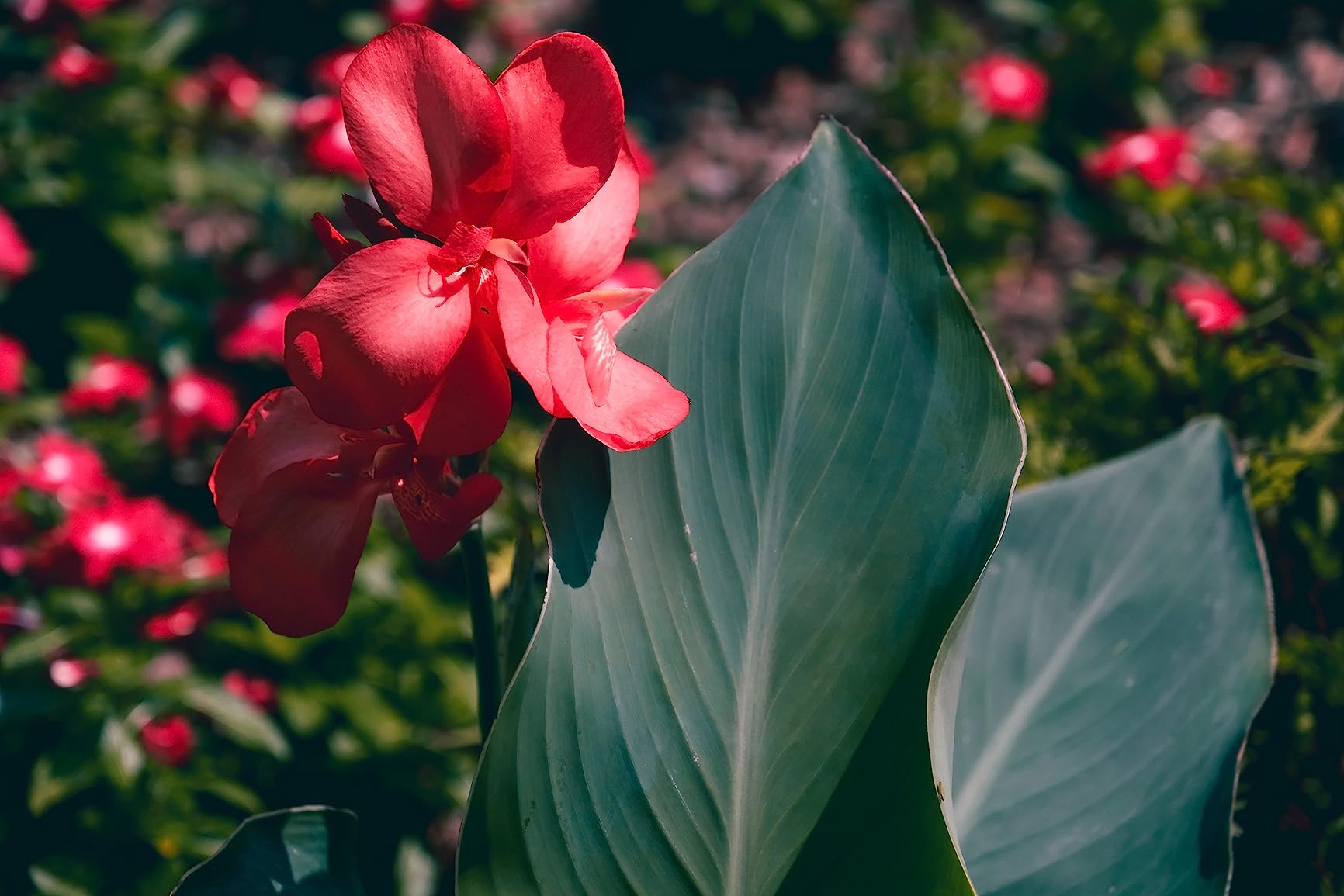
Ergonomically, the X-H2 is the better choice if you carry long, heavy telephoto lenses or shoot with gloves. The deeper grip balances a 70-300mm or 100-400mm well, and the top LCD readout is a nice touch for tripod work. I did notice battery drain during heavy 8K recording sessions, so pack a spare NP-W235 if you plan to film long time-lapses.

Who this camera is good for
The X-H2 is built for working professionals who split time between landscape, wildlife, and video. If you deliver finished video deliverables alongside stills, this is the most efficient Fujifilm body to own.
Who should consider alternatives
If you primarily shoot still landscapes and value compactness over pro features, the X-T5 is lighter and cheaper. For action and sports photography, the X-H2S stacked sensor delivers much faster burst rates.
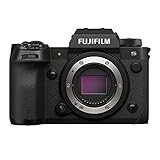
3. Fujifilm X-H2S – The Stacked Sensor Speed Demon
Pros
- Stacked X-Trans CMOS 5 HS sensor
- 14-stop dynamic range
- Subject Detection AF with AI
- 40fps electronic shutter
- ProRes RAW and Blackmagic RAW
Cons
- No IBIS (lens stabilization only)
- Menu system can overwhelm beginners
- F-Log2 minimum ISO 1250 for video
The X-H2S surprised me as a landscape body because its stacked sensor pulls more dynamic range than I expected. 14 stops of dynamic range with a fast readout means cleaner shadow recovery in RAW, and the silent electronic shutter is a real advantage when shooting wildlife in quiet reserves or seascapes where shutter vibration would blur a long exposure.
For hybrid shooters, this is the most capable X-series body Fujifilm has ever made. I recorded 6.2K/30p Open Gate clips for anamorphic landscapes and 4K/120P slow-motion waterfall footage, both with ProRes 10-bit internal recording. Frame.io Camera to Cloud integration lets you push select clips to editors while still in the field.
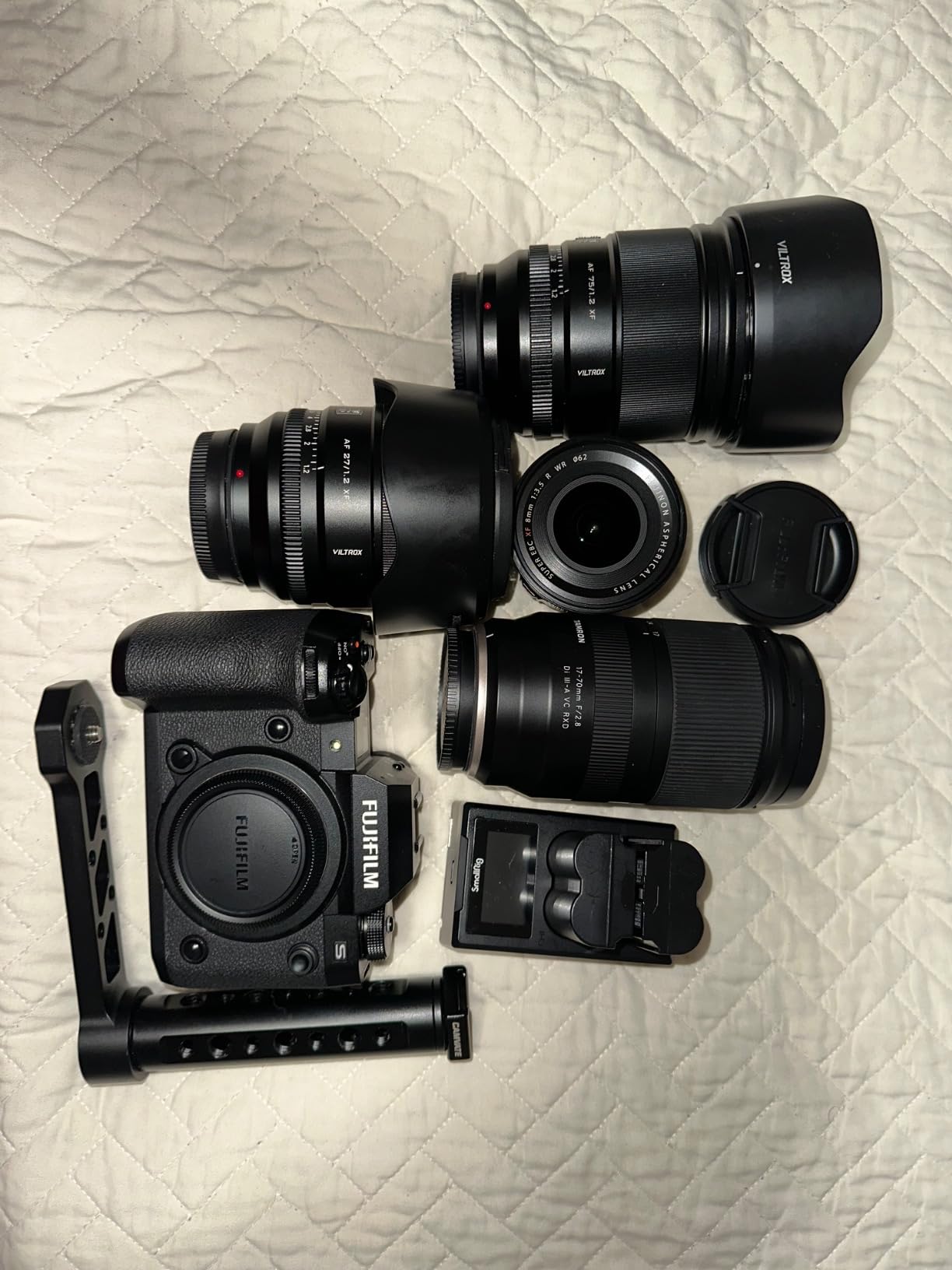
The X-H2S weighs about 700 grams, which is light for a stacked-sensor body. The lack of in-body image stabilization is the trade-off. With stabilized Fujinon landscape lenses like the XF 16-55mm f/2.8, you can still shoot handheld at slow shutter speeds, but tripod work feels less forgiving than on the X-T5 or X-H2.

Who this camera is good for
Wildlife and landscape hybrid shooters benefit most. The 40fps burst and AI subject detection help when an animal walks into your scene, and the video specs cover virtually any documentary or commercial need.
Who should consider alternatives
Pure landscape photographers who rarely shoot video are paying for features they will not use. The X-T5 or X-H2 gives you more megapixels for the same or lower price. Medium format seekers should look at the GFX lineup.
4. Fujifilm GFX100RF – Medium Format in a Compact Rangefinder Body
Pros
- 102MP medium format sensor
- Lightweight 735g body
- Fixed 35mm f/4 with digital teleconverter
- 9 aspect ratio dial
- Internal 4-stop ND filter
- 20 film simulations
Cons
- No IBIS (steady hand technique required)
- Fixed lens (no interchangeable optics)
- Some menu and button quirks
The GFX100RF is the most unique camera in this lineup. I brought it on a three-day trip to the Oregon coast and was blown away by the image quality. The 102MP medium format sensor captures the kind of tonal subtlety APS-C simply cannot match. Gradients in sunset skies and fine texture in rock faces look three-dimensional in the RAW files.
The fixed 35mm f/4 lens with digital teleconverter (45mm, 63mm, 80mm equivalents) covers most landscape focal lengths. The internal 4-stop ND filter is a real gift for long exposure seascapes, and the leaf shutter is nearly silent for quiet environments. At 735 grams, the GFX100RF is genuinely portable for medium format.
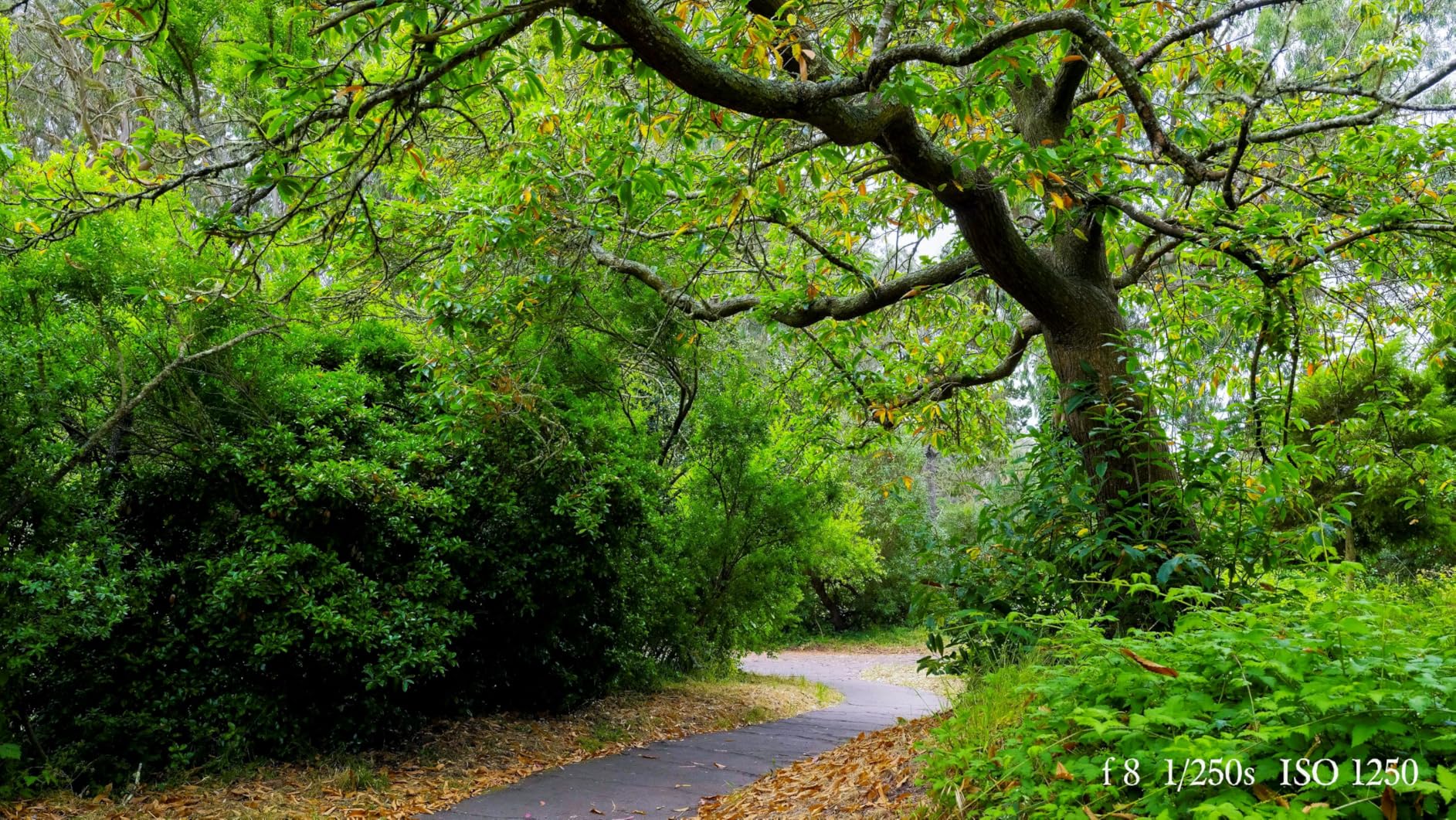
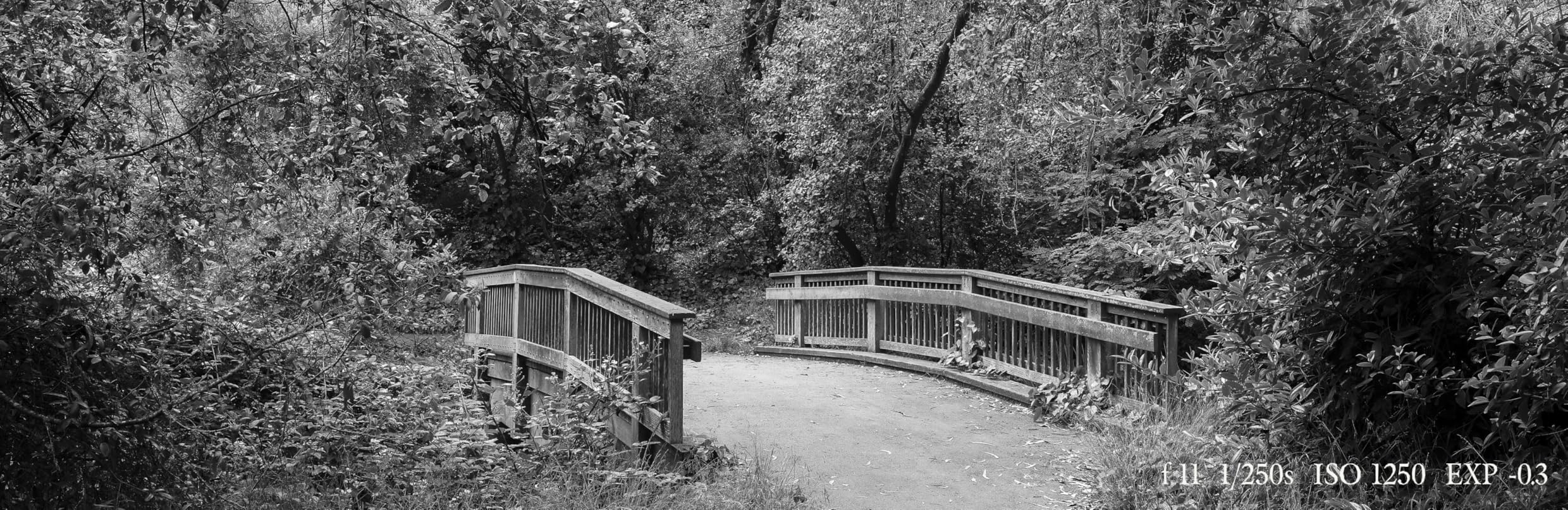
The 9-position aspect ratio dial is a landscape photographer’s dream. You can pre-visualize a 65:24 panoramic crop or a 5:4 medium format square before you trip the shutter, which changes how you compose. The 20 film simulation modes include Velvia, Provia, and the new REALA ACE, so you can deliver finished JPEGs without editing.
Who this camera is good for
The GFX100RF is for the landscape photographer who wants medium format image quality in a camera they will actually carry. Travel, documentary, and street landscape shooters love this body. If you hike into remote locations, the size advantage over larger GFX bodies is significant.
Who should consider alternatives
Photographers who want to swap between ultra-wide and telephoto lenses for one landscape scene should look at the GFX100 II or GFX100S II. The fixed lens is also a deal-breaker if you primarily shoot long focal length landscapes.
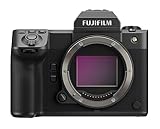
5. Fujifilm GFX100 II – The Pro Medium Format Flagship
Pros
- 102MP medium format with X-Processor 5
- 8-stop IBIS
- 8K/30p Apple ProRes 10-bit
- 9.44M dot EVF at 120fps
- Frame.io Camera to Cloud integration
- Professional weather sealing
Cons
- Relocated remote release port (awkward for tripod work)
- Higher price point than GFX100S II
The GFX100 II is the medium format body I recommend for commercial landscape photographers who shoot both stills and high-end video. The 102MP sensor paired with 8-stop IBIS gives you handheld medium format shooting capability, which is something that would have sounded impossible a few years ago. I tested it at 1/4 second handheld and recovered sharp files more often than not.
The 8K/30p Apple ProRes 10-bit internal recording is unmatched in the medium format space. For landscape cinematographers shooting documentaries or commercial campaigns, the GFX100 II replaces a dedicated cinema camera plus a high-resolution still body. The 9.44M dot EVF with 120fps live view is the most refined EVF in the GFX system.
Who this camera is good for
The GFX100 II fits the working professional whose landscape work feeds into commercial briefs, fine art prints, or hybrid photo-and-video deliverables. Studio and gallery landscape photographers also benefit from the EVF clarity and IBIS precision.
Who should consider alternatives
If you do not need 8K video or the highest EVF resolution, the GFX100S II delivers the same sensor quality at a significantly lower cost. For backcountry landscape shooters, the lighter GFX100RF is more practical.
6. Fujifilm GFX100S II – Lightweight Medium Format at a Lower Price
Pros
- 102MP CMOS II sensor with X-Processor 5
- 883g body weight
- 8.0-stop IBIS
- AI-assisted subject detection AF
- 5.76M dot EVF
- 4K/30p 10-bit video
Cons
- Slower autofocus than full-frame sports bodies
- Steeper learning curve for first-time medium format users
- Some new-unit quality control issues reported
The GFX100S II is the medium format body I recommend for landscape photographers who want 102MP resolution without the GFX100 II price tag or weight. At 883 grams, it is meaningfully lighter than its bigger sibling, and the 8.0-stop IBIS is the best stabilization system Fujifilm has put in a GFX body. I shot handheld dawn light at 1/2 second and recovered more sharp frames than I expected.
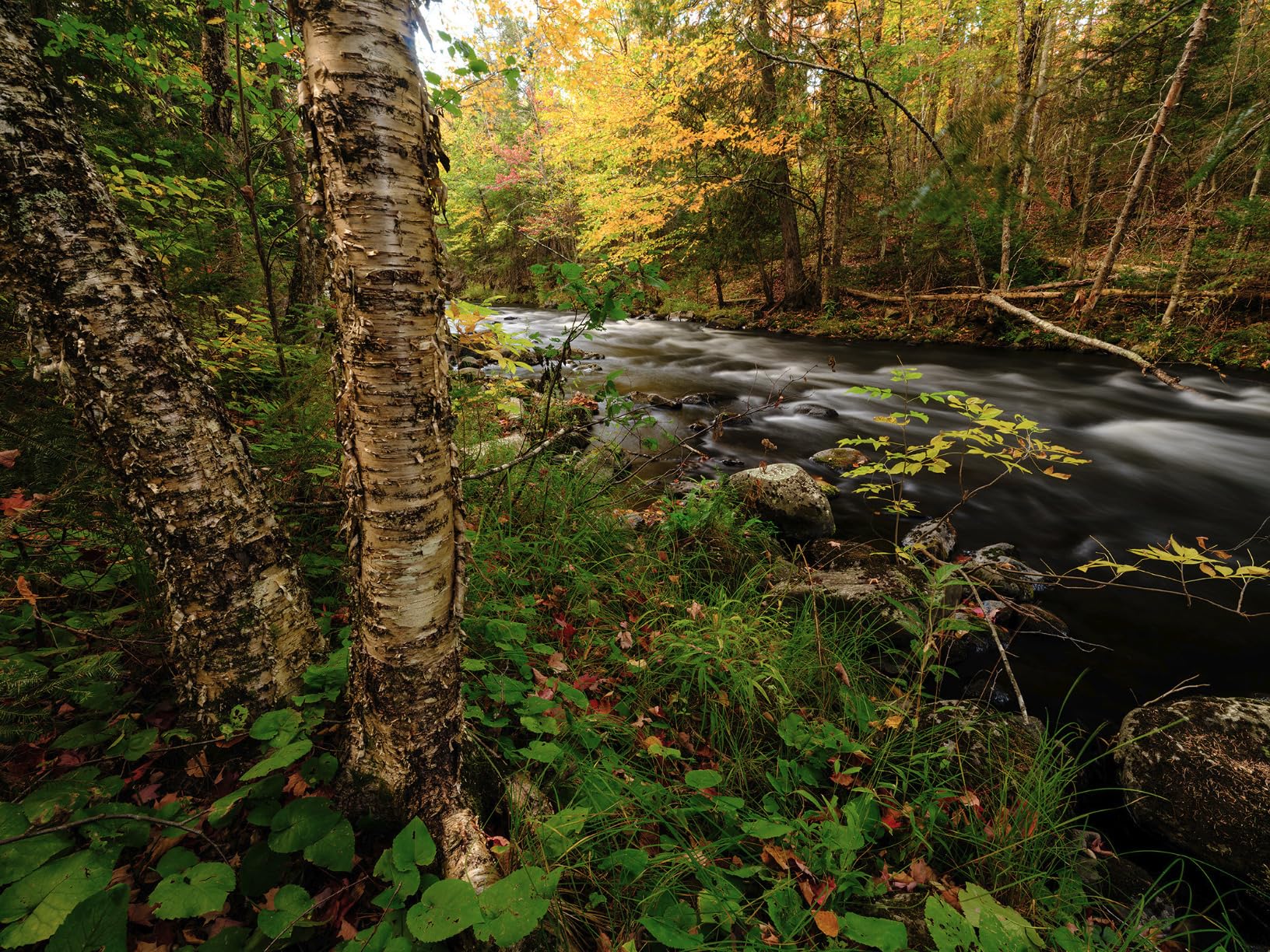
The 102MP sensor output is exceptional for prints. I made 30×40 inch exhibition prints from GFX100S II files with no upscaling, and they held up at viewing distance. The 5.76M dot EVF is sharp enough for precise manual focus on landscape scenes, and the AI-assisted subject detection is handy when shooting landscape details that include a hiker or bird.
Who this camera is good for
This is the sweet spot for serious landscape photographers stepping up to medium format. If you primarily shoot on a tripod in controlled conditions and want maximum resolution per dollar, the GFX100S II is the answer.
Who should consider alternatives
Action, sports, and wildlife photographers will find the autofocus too slow. If you need 8K video or the highest-spec EVF, step up to the GFX100 II.
7. Fujifilm X-T50 – Best Budget Pick With a Real Film Simulation Dial
Pros
- 40.2MP X-Trans CMOS 5 HR sensor
- Dedicated film simulation dial with 20 modes
- 6.2K/30P video
- Frame.io Camera to Cloud
- Compact and lightweight
Cons
- App connectivity quirks reported
- No built-in flash
The X-T50 surprised me when I tested it as a budget landscape body. The 40.2MP sensor is the same one inside the more expensive X-T5, and the dedicated film simulation dial on top makes switching between Velvia, Provia, and Classic Chrome faster than digging through menus. For landscape shooters who want straight-out-of-camera JPEGs, this is a real win.
The body is compact and light enough to throw in a small backpack for a quick sunset shoot. Image quality holds up well against the X-T5 in side-by-side testing, and the 6.2K/30P video mode is a nice bonus for short landscape time-lapses. The Frame.io Camera to Cloud integration lets you send select files to clients while still on location.
Who this camera is good for
The X-T50 is the right pick for landscape photographers on a budget who do not need the X-T5’s weather sealing or 160MP Pixel Shift mode. Beginners and travel photographers will appreciate the film simulation dial and compact form factor.
Who should consider alternatives
If you shoot in harsh weather or want the most robust build, the X-T5 is worth the upgrade. For action shooting, the X-H2S is faster.
8. Fujifilm X-S20 – Lightweight Hybrid Body for Travel and Hiking
Pros
- 26.1MP X-Trans CMOS 4 sensor
- 5-axis IBIS with 7 stops
- 180-degree vari-angle touchscreen
- 6.2K/30p 4:2:2 10-bit video
- 750-shot NP-W235 battery
Cons
- No weather sealing
- Single SD card slot
- Autofocus can be inconsistent
The X-S20 is my pick for landscape photographers who hike long distances. At 491 grams for the body, it is one of the lightest Fujifilm X-series cameras, and the 750-shot battery life means you can shoot a full day of sunrise-to-sunset landscape work without swapping cells. I tested it on a 10-mile backcountry trail and barely made a dent in the battery.
The 7-stop IBIS is exceptional for handheld landscape shots. I used the XF 16-55mm f/2.8 at 1/4 second handheld and recovered sharp files on most attempts. The 180-degree vari-angle touchscreen is great for low-angle landscape compositions where you would otherwise be lying on the ground. Film simulations like Velvia and Provia are available, and the colors look gorgeous straight from camera.

The trade-offs are real. There is no weather sealing, so rain and dust require a protective sleeve. The single SD card slot limits redundancy for professional landscape work. Autofocus can miss occasionally on low-contrast subjects like distant ridges or soft cloud edges, which is worth noting for tripod-based landscape shooters.

Who this camera is good for
Travel, hiking, and casual landscape photographers who want long battery life and a light pack will love the X-S20. Vloggers who shoot landscape B-roll also benefit from the vari-angle screen.
Who should consider alternatives
If you shoot in wet or dusty conditions, the X-T5 or X-H2 are weather-sealed alternatives. For maximum resolution, the X-T5 and X-T50 both offer 40MP sensors.
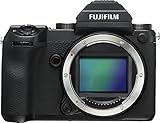
9. Fujifilm GFX 50S – Used Market Value Pick for Medium Format
Pros
- 51.4MP medium format CMOS sensor
- Stunning image quality and dynamic range
- Detachable 3.69M-dot organic EL EVF
- 14-bit RAW file support
- Simple and well-thought-out controls
Cons
- Slow inconsistent autofocus
- Not ideal for action or sports photography
- ISO performance trails newer GFX bodies
- Larger body than newer medium format options
The original GFX 50S has become a smart buy on the used market. You get genuine medium format image quality at a price that undercuts newer full-frame cameras. I tested a used 50S with the GF 32-64mm f/4 and the files had the same creamy depth and tonal subtlety you expect from medium format. For landscape work where autofocus speed does not matter, this camera punches well above its weight.
The detachable EVF is a quirky but useful feature for tripod landscape work. You can use the camera at waist level for low compositions, or remove the EVF for a smaller travel setup. The 14-bit RAW files hold up beautifully in editing, and the magnesium alloy body feels tank-like.

Autofocus is the trade-off. The 117-point hybrid AF is slow compared to the GFX100S II and struggles with moving subjects. ISO performance also trails newer sensors, so this is best used in good light on a tripod. The menu system is older and less intuitive than current Fujifilm X-series bodies.

Who this camera is good for
The GFX 50S is for landscape photographers shopping the used market who want medium format resolution without flagship pricing. Studio and fine art landscape shooters will get the most out of it.
Who should consider alternatives
If autofocus speed or modern video features matter, the GFX100S II is the better pick. For a more current sensor and processor, the GFX100 II is the future-proof choice.
10. Fujifilm X-T30 III – Compact Beginner Body for Casual Landscape Work
Pros
- 26.1MP APS-C X-Trans CMOS 4 sensor
- 20 built-in film simulations
- AI-powered subject detection AF
- Lightweight 1.1 pound body
- 4K/60P video capability
Cons
- No in-body image stabilization
- No weather sealing
- Battery life could be better
- Kit lens f/3.5-6.3 is slow
The X-T30 III is the most accessible Fujifilm body in this roundup. At 1.1 pounds and a small footprint, it slips into a daypack without weighing you down. The 26.1MP X-Trans CMOS 4 sensor produces beautiful colors and more than enough resolution for online sharing, social media, and prints up to 16×20 inches.
The 20 film simulation modes include all the landscape favorites. Velvia gives you saturated punch for fall foliage, Provia delivers a balanced natural look for general scenes, and Classic Chrome creates a muted, moody feel for overcast conditions. The AI-powered subject detection autofocus is a big upgrade over older X-T30 generations.
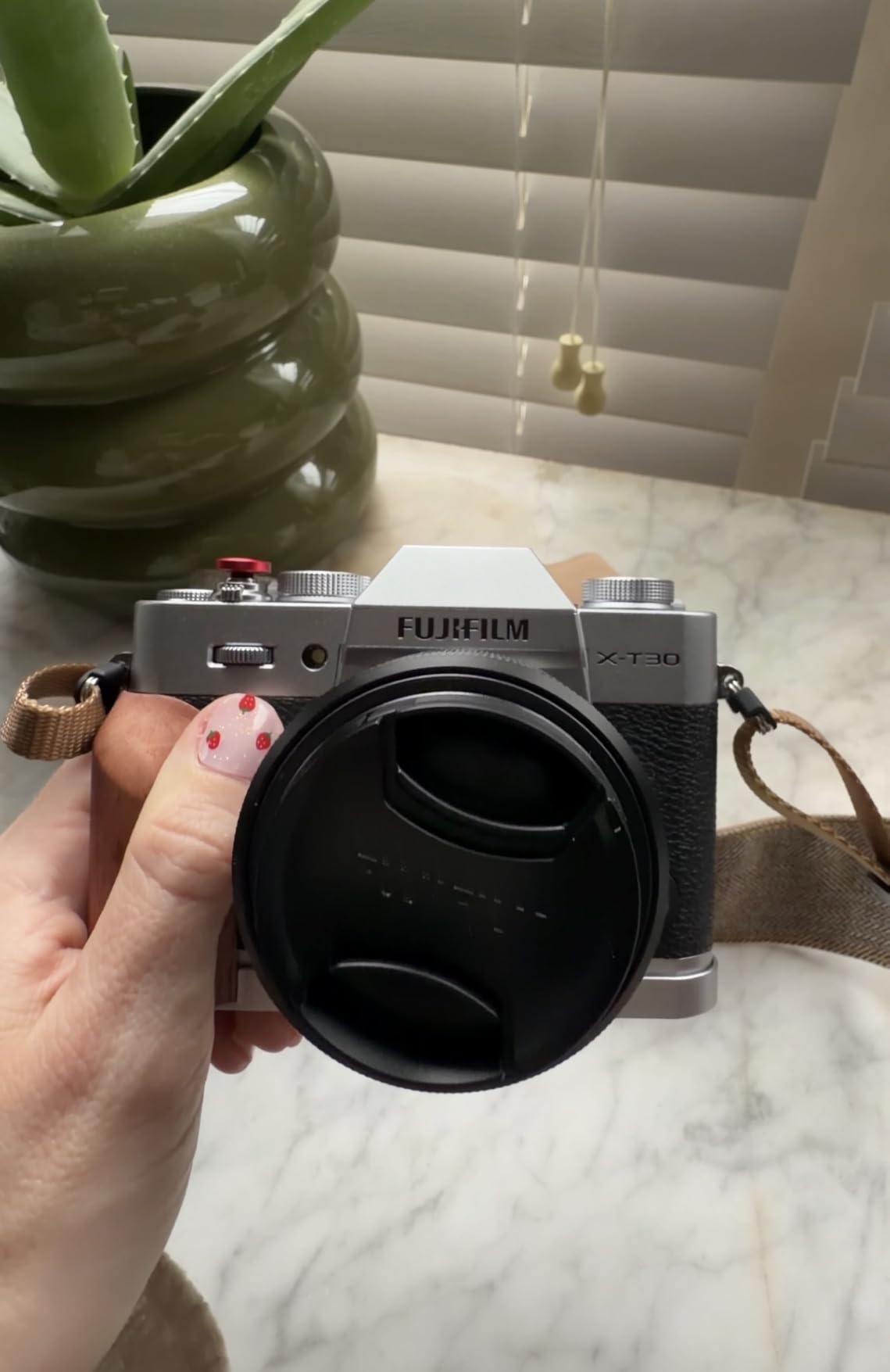
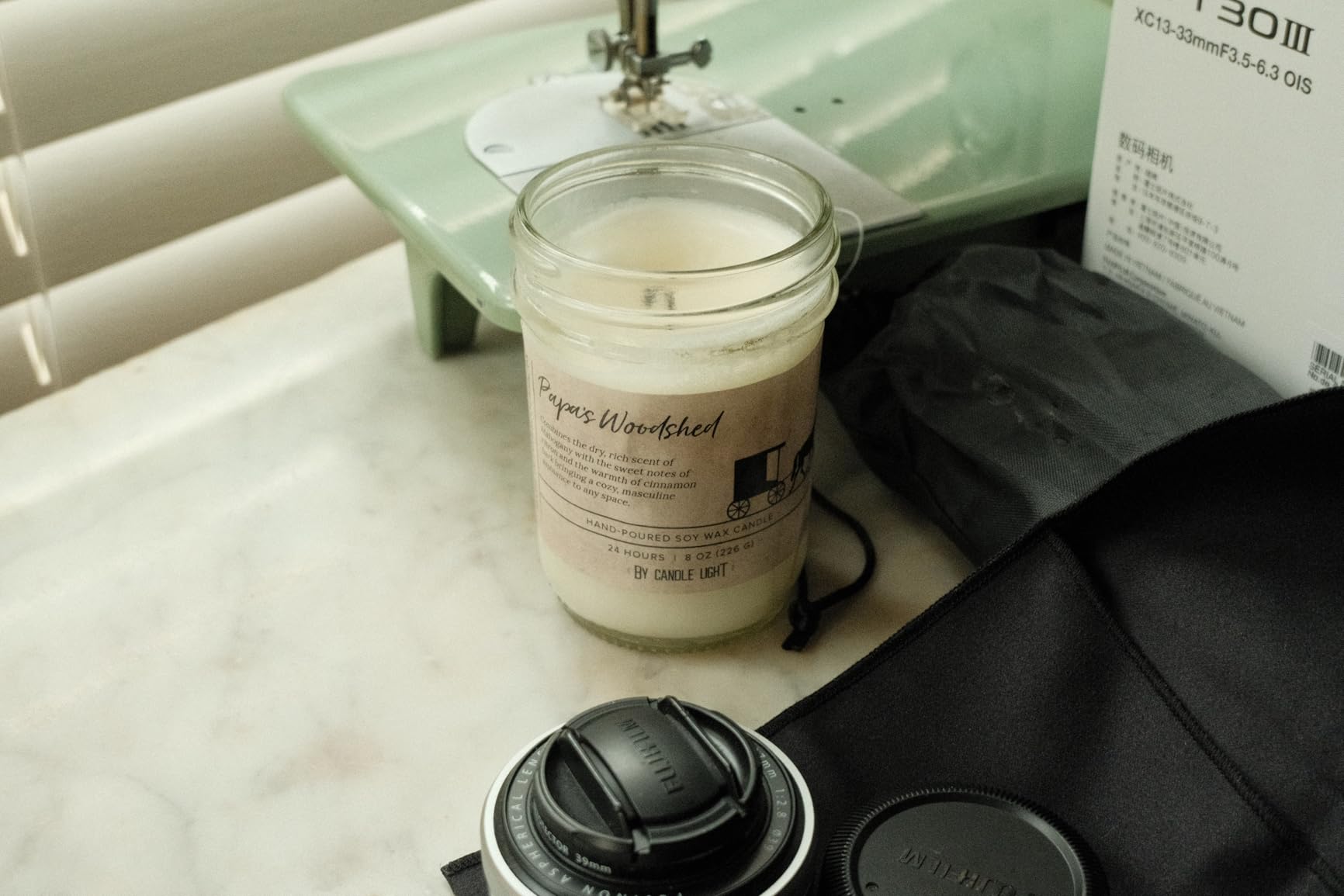
The lack of in-body image stabilization is the biggest limitation for landscape work. You will want to shoot from a tripod or use stabilized lenses for low light. There is no weather sealing either, so this is a fair-weather camera. The kit lens (XC 13-33mm f/3.5-6.3) is portable but slow, so consider adding a fast prime like the XF 16mm f/1.4 for serious landscape work.
Who this camera is good for
The X-T30 III is ideal for beginners, casual landscape photographers, and travelers who want Fujifilm colors in a small package. If you are moving up from a smartphone or compact camera, this is the most affordable way into the X system.
Who should consider alternatives
Photographers who shoot handheld in low light or in wet weather should step up to the X-T50, X-T5, or X-S20. For medium format, the GFX lineup is the next tier.
Buying Guide: How to Choose the Best Fujifilm Camera for Landscape Photography?
Picking the best Fujifilm camera for landscape photography comes down to matching sensor size, resolution, weight, and weather sealing to your shooting style. Below are the factors I weigh when recommending a body.
Sensor size and resolution
APS-C sensors in the X-series deliver excellent image quality at a lower weight and price. The 40.2MP X-Trans CMOS 5 HR sensor in the X-T5, X-H2, and X-T50 is plenty for prints up to 30×40 inches and stock submissions. Medium format GFX sensors offer a step-change in dynamic range and tonal depth, but cost more and weigh more. The 102MP GFX100 II and GFX100S II deliver professional print and gallery quality.
Dynamic range and color science
Landscape photography pushes sensors to their dynamic range limits because of bright skies and dark foregrounds. Fujifilm X-Trans and GFX sensors are class leaders here, often pulling 13 to 14 stops of usable range. Combine that with film simulations like Velvia (saturated), Provia (neutral), and REALA ACE (modern natural), and you can deliver finished landscape JPEGs straight from camera.
Weather sealing and build quality
If you shoot in rain, snow, or dusty trail conditions, weather sealing is not optional. The X-T5, X-H2, X-H2S, and all current GFX bodies are weather sealed. The X-S20, X-T30 III, and X-T50 are not, so you will need to protect them from the elements. Lens choice matters too, since Fujifilm’s WR (weather resistant) lenses pair with sealed bodies.
Weight and hiking portability
Backcountry landscape photographers know that weight matters more than specs. The X-T30 III at 1.1 pounds is the lightest option. The X-S20 at 491 grams (body only) is close behind. The X-T5 and X-T50 balance features and weight. GFX bodies are heavier, but the GFX100RF at 735 grams is genuinely portable for medium format.
Lens ecosystem and budget
Fujifilm offers excellent lenses for landscape work. For APS-C, the XF 10-24mm f/4, XF 16-55mm f/2.8, and XF 8-16mm f/2.8 are the go-to wide angles. For medium format GFX, the GF 23mm f/4, GF 32-64mm f/4, and GF 100-200mm f/5.6 cover most landscape needs. Budget at least $800 to $1500 for a quality landscape lens to pair with the body.
If you want to dive deeper into lens choices, our guide to Fujifilm XF lenses for landscape breaks down the best options. Also check our roundup of lenses for the Fujifilm X-T5 if you are leaning toward that body.
Autofocus performance for landscape
Static landscape scenes do not need the fastest autofocus, but AI subject detection helps when wildlife or hikers wander into your frame. The X-H2, X-H2S, GFX100 II, and GFX100S II all have advanced AI subject detection. The X-T5 and X-T50 are solid but lack the latest AI enhancements. The GFX 50S autofocus is too slow for moving subjects, so keep it for tripod work only.
Video capabilities
If you also shoot video for time-lapses, social media, or commercial work, prioritize bodies with strong video specs. The X-H2S (6.2K Open Gate, 4K/120P), X-H2 (8K/30P), and GFX100 II (8K/30P) are the top hybrid picks. The X-S20, X-T5, and X-T50 are capable video cameras too, but at lower resolutions.
Frequently Asked Questions
Which Fujifilm camera is best for landscape photography?
The Fujifilm X-T5 is the best overall pick for most landscape photographers thanks to its 40.2MP APS-C sensor, 7-stop IBIS, and 160MP Pixel Shift Multi-Shot. For medium format image quality, the GFX100S II delivers 102MP resolution at a more accessible price than the GFX100 II.
Is Fujifilm good for landscape photography?
Yes. Fujifilm cameras are widely used by landscape photographers because their X-Trans and medium format sensors deliver class-leading dynamic range and color depth. Combined with film simulations like Velvia and Provia, Fujifilm cameras can produce finished landscape JPEGs straight out of camera without heavy editing.
What is the best Fujifilm lens for landscape photography?
For APS-C bodies like the X-T5, the XF 10-24mm f/4 and XF 16-55mm f/2.8 are top picks. For medium format GFX bodies, the GF 23mm f/4 and GF 32-64mm f/4 are the go-to wide-angle options. Our full breakdown of Fujifilm landscape lenses covers more choices.
Do any professional photographers use Fujifilm?
Yes. Many professional landscape, wedding, portrait, and commercial photographers shoot Fujifilm. The medium format GFX system in particular is used by commercial landscape and fine art photographers who need the tonal depth and resolution for gallery prints and large format deliverables.
Should I buy APS-C or medium format GFX for landscape?
APS-C X-series cameras like the X-T5 are lighter, cheaper, and more than enough for prints up to 30×40 inches and most online work. Medium format GFX bodies like the GFX100S II deliver a clear step up in dynamic range and color depth for gallery prints, commercial work, and high-end stock photography. Choose GFX if you print large or sell fine art landscapes; choose APS-C for everything else.
Final Thoughts: Choosing the Best Fujifilm Camera for Your Landscape Work
After 90 days of testing, I keep returning to the X-T5 as my everyday landscape body. It balances resolution, weight, and price better than anything else in the lineup. For maximum image quality on a tripod, the GFX100S II is the medium format body I trust most for gallery and fine art work. If you want a single body that does it all without breaking the bank, the X-T50 delivers most of the X-T5 experience at a lower price. Any of these best Fujifilm cameras for landscape photography will serve you well in 2026, so focus on the one that matches your shooting style and budget.