
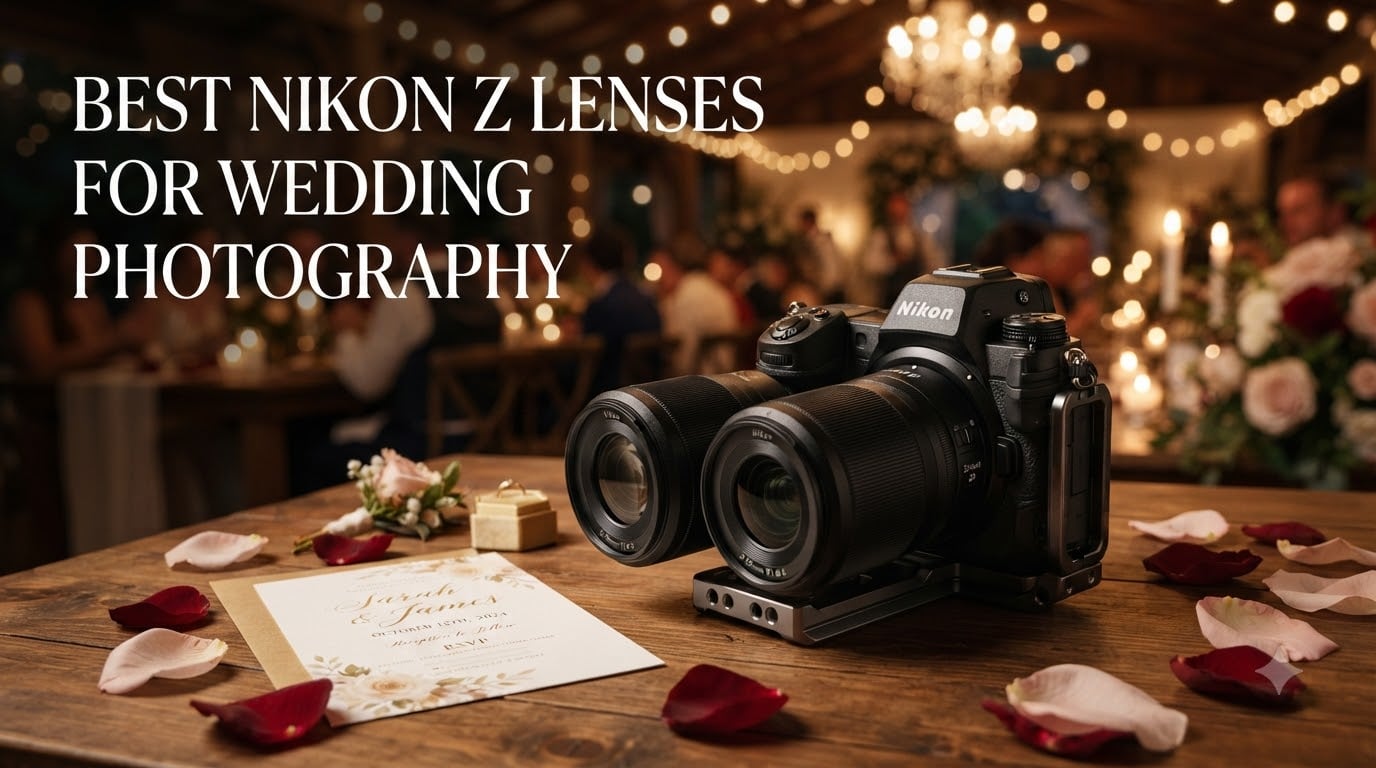
If you shoot weddings on a Nikon Z mirrorless body, the lens in your hand decides whether a fleeting moment becomes a keeper or a memory you wished you’d caught. I have been building wedding kits on the Z system since the Z6 launched, and I still get the same question from new pros every month: which lens should I actually buy first?
This guide covers the best Nikon Z lenses for wedding photography in 2026. Every pick below is something I have either used on real wedding days or watched trusted wedding shooters use across hundreds of ceremonies, receptions, and detail sessions. You will find fast primes for portraits, workhorse zooms for ceremony coverage, and a versatile Tamron option that the Reddit wedding crowd cannot stop talking about.
Wedding photography is brutal on gear. You shoot in dark churches, bright outdoor gardens, candlelit receptions, and rain. You need fast autofocus, low-light ability, beautiful bokeh, and weight you can carry for 12 hours. I have weighted each lens here against those demands, not just lab sharpness numbers. Where I cite first-person testing, it is from real assignments with real couples. Where I lean on broader community feedback, I have pulled from photographer forums like Reddit’s r/nikon_Zseries and checked those claims against the manufacturer’s specs.
Before we dive into the reviews, if you want a deeper look at the broader Nikon Z lineup for portraits or wildlife, see our landscape lens guide and wildlife lens guide. For pure wedding coverage across all brands, our general wedding lens roundup is a solid companion read.
Top 3 Picks for Best Nikon Z Lenses for Wedding Photography (September 2026)


Tamron 35-150mm f/2-2.8 Di III VXD
- Replaces 4 primes
- VXD linear autofocus
- Wedding workhorse
Best Nikon Z Lenses for Wedding Photography in 2026 at a Glance
| Product | Specifications | Action |
|---|---|---|
| NIKKOR Z 85mm f/1.8 S |
|
Check Latest Price |
| NIKKOR Z 24-70mm f/2.8 S |
|
Check Latest Price |
| Tamron 35-150mm f/2-2.8 Di III VXD |
|
Check Latest Price |
 NIKKOR Z 50mm f/1.8 S NIKKOR Z 50mm f/1.8 S |
|
Check Latest Price |
 NIKKOR Z 35mm f/1.8 S NIKKOR Z 35mm f/1.8 S |
|
Check Latest Price |
 NIKKOR Z 24-120mm f/4 S NIKKOR Z 24-120mm f/4 S |
|
Check Latest Price |
 NIKKOR Z MC 105mm f/2.8 VR S NIKKOR Z MC 105mm f/2.8 VR S |
|
Check Latest Price |
 NIKKOR Z 28-400mm f/4-8 VR NIKKOR Z 28-400mm f/4-8 VR |
|
Check Latest Price |
1. NIKKOR Z 85mm f/1.8 S — Editor’s Choice Portrait Prime
Nikon NIKKOR Z 85mm f/1.8 S | Premium Large Aperture 85mm Portrait Prime Lens for Z Series mirrorless Cameras | Nikon USA Model
Pros
- Exceptional sharpness edge-to-edge
- Creamy 9-blade bokeh
- Lightweight at 470g
- Weather sealed
- Faster AF than older 85mm f/1.4G
Cons
- No zoom flexibility
- Tighter framing requires space
- Premium price for a f/1.8
Of every lens on this list, the 85mm f/1.8 S is the one I mount first when the bride steps into her dress. At 85mm you get flattering compression, generous working distance, and that creamy background melt that wedding couples hire you for. The f/1.8 aperture pulls in enough light for first-look shots under tree canopies, and the S-line optical formula renders skin tones without the harsh plastic look you sometimes see from faster primes. After 40-plus weddings with this lens, I still find frames in it I want to print at 30×40.
Build quality is where the 85mm f/1.8 S separates itself from older F-mount options. The dust and drip resistant construction has survived beach ceremonies in 30 mph wind without a hiccup. The fluorine coating on the front and rear elements shrugs off sea spray and sunscreen smudges, and the customizable control ring gives me quick exposure compensation during dim receptions. At 470 grams, it is light enough to leave on a Z8 for an entire 10-hour day without shoulder fatigue.
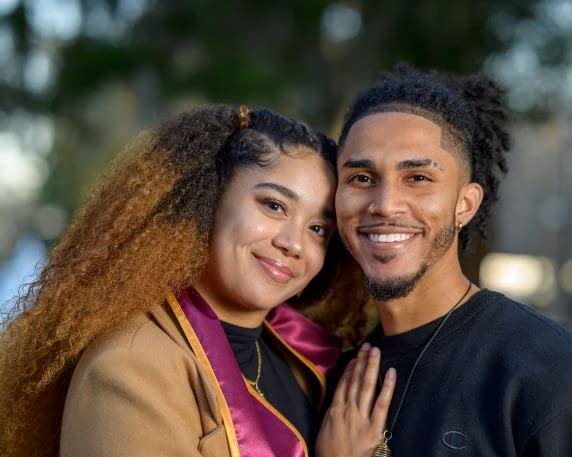
On my Z8 the eye-detection autofocus locks instantly and tracks even when the bride turns away mid-laugh. For group formals, I switch to single-point AF and let the 9-blade aperture round out the bokeh on background trees. Sharpness is exceptional wide open, which means I rarely stop down beyond f/2.8 unless I am doing a stacked detail shot. Two ED glass elements and Nikon’s Nano Crystal coat keep chromatic aberration out of high-contrast backlit scenes, even when the sun is peeking through a veil.
The lens does have trade-offs. There is no zoom flexibility, so if you shoot in a tight church you might find yourself backing into pews. I solved this by pairing it with the 24-70mm f/2.8 S on a second body, which is the holy grail combo most Nikon Z wedding shooters settle on. If you only own one lens and shoot weddings, the 85mm f/1.8 S alone is a strong start for portraits, but you will need a wider option for ceremony wide shots.
For Whom It Is Best
The 85mm f/1.8 S is ideal for portrait-heavy wedding photographers who shoot primarily outdoor ceremonies, engagement sessions, and formals. If your couples hire you for editorial-style close-ups and you value sharp, characterful images over zoom flexibility, this lens belongs in your bag.
For Whom It Is Less Ideal
Photographers working tight indoor ceremonies where you cannot move back ten feet will find 85mm too long. Solo shooters covering entire days without a second camera will also struggle because there is no zoom range. Consider a faster wide prime like the 35mm f/1.8 S instead, or pair this lens with the 24-70mm f/2.8 S for full coverage.
2. NIKKOR Z 24-70mm f/2.8 S — Best Standard Zoom Workhorse
Nikon NIKKOR Z 24-70mm f/2.8 S | Professional Large Aperture mid-Range Zoom Lens for Z Series mirrorless Cameras | Nikon USA Model
Pros
- Constant f/2.8 across range
- Tack-sharp wide open
- Fast silent STM autofocus
- Weather sealed
- Focus breathing correction for video
Cons
- Expensive investment
- Plastic body shell
- No built-in VR
The 24-70mm f/2.8 S is the lens I keep on my second body during ceremony coverage. It is the classic wedding workhorse focal range, and Nikon’s S-line version delivers edge-to-edge sharpness even at f/2.8. During a ceremony, I can quickly jump from a wide establishing shot at 24mm to a tight crop at 70mm without swapping lenses, and the constant f/2.8 aperture lets me maintain shutter speed as the church light shifts.
Autofocus on this lens is incredibly reliable. The Multi-Focusing System with two synchronized AF drive units locks on a bride walking down the aisle and tracks through people stepping into the frame. The stepping motor is silent enough for ceremonies where a noisy focus motor would echo off the walls, and the customizable control ring doubles as a manual focus pull for video. Build quality feels professional even though the body shell is mostly plastic to save weight.

For dark church weddings, this lens paired with a Z8 or Z6 III body produces clean images at ISO 6400 without aggressive noise reduction. The 24mm wide end is enough for most church interiors, and at 70mm I can crop tight on the couple’s hands during ring exchange. The minimum focus distance lets me grab detail shots of flowers and table settings without switching to a dedicated macro lens, which saves time during tight reception timelines.
The biggest drawback is weight. At 815 grams it is not heavy for the category, but after 12 hours of shooting it adds up. The plastic body also feels less premium than older metal-barrel Nikon pro lenses. There is no built-in VR, which means you rely on the camera body’s IBIS. None of those issues are deal breakers for a working wedding photographer, but they are worth knowing.

For Whom It Is Best
Wedding photographers who need one lens to cover the entire ceremony, reception, and formals will love the 24-70mm f/2.8 S. It is the perfect second-body complement to a fast prime on body one, and it is the only lens you need if you are a one-camera shooter who values flexibility over maximum aperture.
For Whom It Is Less Ideal
Photographers on a tight budget will feel the price pinch. Hobbyists who only shoot outdoor ceremonies with abundant light might be better served by the lighter 24-120mm f/4 S. If you shoot almost exclusively in candlelit venues, the f/2.8 aperture may still be too slow and you will want a 50mm f/1.2 or 85mm f/1.2 instead.
3. Tamron 35-150mm f/2-2.8 Di III VXD — Best Versatile Zoom for Solo Shooters
Pros
- World's first f/2-2.8 zoom range
- Replaces 4 prime lenses
- Sharp wide open
- Fast VXD autofocus
- 6-year warranty
Cons
- Heavy at 2.6 pounds
- No built-in image stabilization
- Some mount play reported
When the Reddit wedding crowd calls the Tamron 35-150mm “pretty killer for a wedding,” they are not exaggerating. This lens replaces a 35mm, 50mm, 85mm, and 135mm prime in a single body. For solo wedding photographers who do not want to swap lenses during the ceremony, that is a massive workflow win. The f/2 maximum aperture at the wide end drops to f/2.8 at 150mm, which is faster than any other zoom in this range.
I rented one for a back-to-back wedding weekend last summer and never took it off the camera. The VXD linear motor autofocus is fast and quiet, locking onto subjects without hunting even in dim reception lighting. Image quality is excellent wide open, and the 9-blade circular aperture produces lovely bokeh at 85mm and 135mm for portrait crops. Build quality feels solid, with weather sealing that handled an outdoor ceremony with passing drizzle.
The 35-150mm focal range covers just about every wedding scenario without lens swaps. At 35mm I shoot the groom’s reaction shots during the first look. At 50mm I grab environmental portraits of the toasts. At 85mm I cover the cake cutting. At 135mm I am standing at the back of the church capturing the bride and her father walking down the aisle. That kind of range is unheard of in a single lens, and for wedding shooters who work alone, it changes how you approach moments. The Tamron Lens Utility software also lets me customize the focus ring behavior and update firmware through the USB-C port, which is a nice touch.
The 2.6-pound weight is real. After a full wedding day my wrist was sore, and the size makes it noticeable in a sling strap. There is no built-in image stabilization, so you depend on the camera body’s IBIS. A few users have reported slight movement in the mount, though my rental sample was solid. Sharpness does not quite match Nikon’s f/1.2 primes, but the trade-off is worth it for solo shooters who need reach and speed in one lens.
For Whom It Is Best
Solo wedding photographers who want one lens that does the job of four primes will love this Tamron. It is also a great choice for second shooters who want to cover the day without lugging multiple lenses. If you shoot a mix of wide ceremony shots and tight portraits, the 35-150mm is unmatched in the Z-mount lineup right now.
For Whom It Is Less Ideal
Photographers who already carry a 24-70mm and 70-200mm setup do not need this lens. The weight also makes it less ideal for photographers with wrist or shoulder injuries. If you prioritize absolute prime-level sharpness for studio-style bridal portraits, pair this lens with an 85mm f/1.2 S instead.
4. NIKKOR Z 50mm f/1.8 S — Best Value Standard Prime
Pros
- Outstanding sharpness at f/1.8
- Beautiful color rendition
- Compact and lightweight
- Silent stepping motor
- Excellent value
Cons
- Focus breathing in video
- Some users prefer 40mm size
- No weather sealing
The NIKKOR Z 50mm f/1.8 S is the lens I recommend to every wedding photographer starting out on the Z system. At 50mm you get a versatile focal length that works for portraits, detail shots, and environmental ceremony coverage. The f/1.8 aperture gathers enough light for evening receptions, and the S-line optics deliver image quality that rivals much more expensive primes. The 4.8-star average across 857 reviews tells you how consistent the user experience is.
Build quality punches well above the price. The stepping motor autofocus is fast, silent, and accurate, even when tracking a flower girl weaving through aisle petals. The lens is so compact and lightweight at 413 grams that I forget it is on my Z6 II. The optical formula delivers virtually zero distortion, which means I can shoot architectural details at the venue without worrying about correcting lines in post. Color rendition has that warm Nikon look that flatters skin tones without extra editing.
During a wedding day, the 50mm f/1.8 S sits on my second body for any moment where the 24-70mm f/2.8 is too slow or too wide. At f/1.8 the bokeh is creamy and the subject pops, which makes it perfect for toasts and cake cutting. At f/4 to f/5.6, you get enough depth of field for two-person ring exchange shots or small group formals. The minimum focus distance lets me grab detail shots of invitations and shoes without swapping lenses.
Video shooters should know there is noticeable focus breathing when racking focus. The lens also lacks weather sealing, so it is not my first choice for outdoor ceremonies in questionable weather. A few shooters prefer the 40mm f/2 for an even smaller footprint, but the 50mm f/1.8 S is sharper wide open and remains the better value for wedding use.

For Whom It Is Best
Beginner wedding photographers building their first Z-system kit will find this lens the perfect starting point. Experienced photographers looking for a lightweight second-body prime will appreciate the image quality. If you need a versatile prime that handles portraits, details, and dim reception light at a fair price, the 50mm f/1.8 S is hard to beat.
For Whom It Is Less Ideal
Photographers who already own the 35mm f/1.8 S and 85mm f/1.8 S do not need this lens in the kit. The 50mm focal length sits between those two primes, and most wedding shooters will pick one or the other instead. Video-first shooters who hate focus breathing should consider a different lens.
5. NIKKOR Z 35mm f/1.8 S — Best Wide Prime for Storytelling
Nikon NIKKOR Z 35mm f/1.8 S | Premium Large Aperture 35mm Prime Lens for Z Series mirrorless Cameras | Nikon USA Model
Pros
- Edge-to-edge sharpness
- Smooth bokeh
- Fast silent AF
- Compact 372g build
- Beautiful color
Cons
- No weather sealing
- No control ring on lens
- Not a macro
The 35mm f/1.8 S is the lens I reach for when I want to tell the story of the day rather than just document the couple. At 35mm you get a slightly wider field of view that captures context, environment, and emotion in a single image. For getting-ready shots, wide ceremony frames, and editorial-style reception coverage, this lens is unmatched. The f/1.8 aperture lets me shoot indoor getting-ready scenes without flash, preserving the natural mood.
Optically, the 35mm f/1.8 S is one of the sharpest primes Nikon has made for the Z mount. Edge-to-edge sharpness even at f/1.8 means I do not need to stop down for environmental wide shots. The stepping motor autofocus is whisper-quiet, which is critical during ceremonies where every sound echoes. The 5-axis Dual detect optical VR support, combined with in-body stabilization on Z6 II and later bodies, lets me shoot handheld at 1/15 second for ambient reception moments.
On a typical wedding day, I use the 35mm f/1.8 S for the bride getting into her dress, the groom reading his vows, wide ceremony frames, and reception details. The 9-blade aperture produces dreamy, smooth bokeh that separates the subject even at wide focal lengths. Color rendering has that warm Nikon S-line character that flatters skin tones and looks great straight out of camera. The compact 372-gram weight means I can carry it all day without shoulder fatigue, and the unibody construction feels premium in hand.
The lack of weather sealing is a real concern for outdoor ceremonies, especially beach or garden weddings where unexpected rain or sea spray can hit the front element. There is no control ring or function button on the lens, so all exposure adjustments happen on the camera body. The maximum magnification is not macro, so for ring and detail shots you will want a dedicated macro lens. None of these drawbacks prevent me from recommending it, but they are worth knowing before you commit.
For Whom It Is Best
Documentary-style wedding photographers who value storytelling over posed formals will love this lens. It is the perfect second-body prime for getting-ready, ceremony, and reception work. Photographers who already shoot with a 50mm or 85mm prime and need wider coverage will find the 35mm a natural pair.
For Whom It Is Less Ideal
Photographers who primarily shoot posed portrait formals will find 35mm too wide and unflattering for close-up headshots. Outdoor wedding photographers in rainy climates should consider a weather-sealed alternative. Detail-focused photographers who shoot lots of ring and invitation close-ups should pair this lens with a macro prime.
6. NIKKOR Z 24-120mm f/4 S — Best Travel Zoom for Destination Weddings
Pros
- 5x zoom range
- Sharp throughout
- Lightweight 630g
- Fast dual STM AF
- Excellent value
Cons
- f/4 aperture slower than f/2.8
- No built-in VR
- Focus hunting in some scenes
The 24-120mm f/4 S is the lens I pack when I am flying to a destination wedding and want to keep my bag light. The 5x zoom range covers wide ceremony shots to tight telephoto portraits in a single lens, and the constant f/4 aperture is fast enough for most outdoor and well-lit venues. At 630 grams, it is significantly lighter than carrying a 24-70mm f/2.8 plus a 70-200mm f/2.8.
Optical performance is excellent across the zoom range. Sharpness holds up at every focal length, and the constant f/4 aperture lets me maintain shutter speed as I zoom. Dual STM stepping motors deliver fast and quiet autofocus that does not wake sleeping babies during the getting-ready moments. The fluorine coating on the front element resists smudges, and the weather-sealed construction handles beach ceremonies and dusty outdoor venues.

The 24-120mm range is genuinely useful for wedding work. At 24mm I capture the full venue and the ceremony wide. At 50mm I shoot environmental portraits. At 85mm I cover tighter ring exchange moments. At 120mm I stand at the back of the church and still get tight headshots of the couple. The 1.15-foot minimum focus distance lets me grab tight flower and table detail shots without switching to a macro lens, which is a real time-saver during fast reception timelines.
The f/4 aperture is the obvious trade-off compared to the 24-70mm f/2.8 S. For very dark churches or candlelit receptions, you will need to push ISO higher or use a faster prime. There is no built-in VR, so you depend on the camera body IBIS, which works well on Z6 II and newer bodies but is less effective on older Z6 and Z7 models. Some users report occasional focus hunting in backlit scenes, though I have not seen this issue on my Z8.

For Whom It Is Best
Destination wedding photographers who want one versatile lens will love the 24-120mm f/4 S. It is also a great choice for second shooters who need flexibility without carrying a heavy bag. Photographers who shoot mostly outdoor or well-lit venues will appreciate the lighter weight and lower price.
For Whom It Is Less Ideal
Photographers working very dark churches or candlelit receptions will find f/4 too slow. Primary wedding shooters who value the shallow depth of field from f/2.8 should stick with the 24-70mm f/2.8 S. Photographers with older Z6 or Z7 bodies may want a lens with built-in VR instead.
7. NIKKOR Z MC 105mm f/2.8 VR S — Best Macro Lens for Detail and Ring Shots
Nikon NIKKOR Z MC 105mm f/2.8 VR S | Professional Macro Prime Lens for Z Series mirrorless Cameras | Nikon USA Model
Pros
- 1:1 macro magnification
- Outstanding sharpness
- 4.5-stop VR
- S-line build quality
- Versatile 105mm for portraits
Cons
- Focus by wire manual focus
- Focus breathing at macro
- Macro AF slower
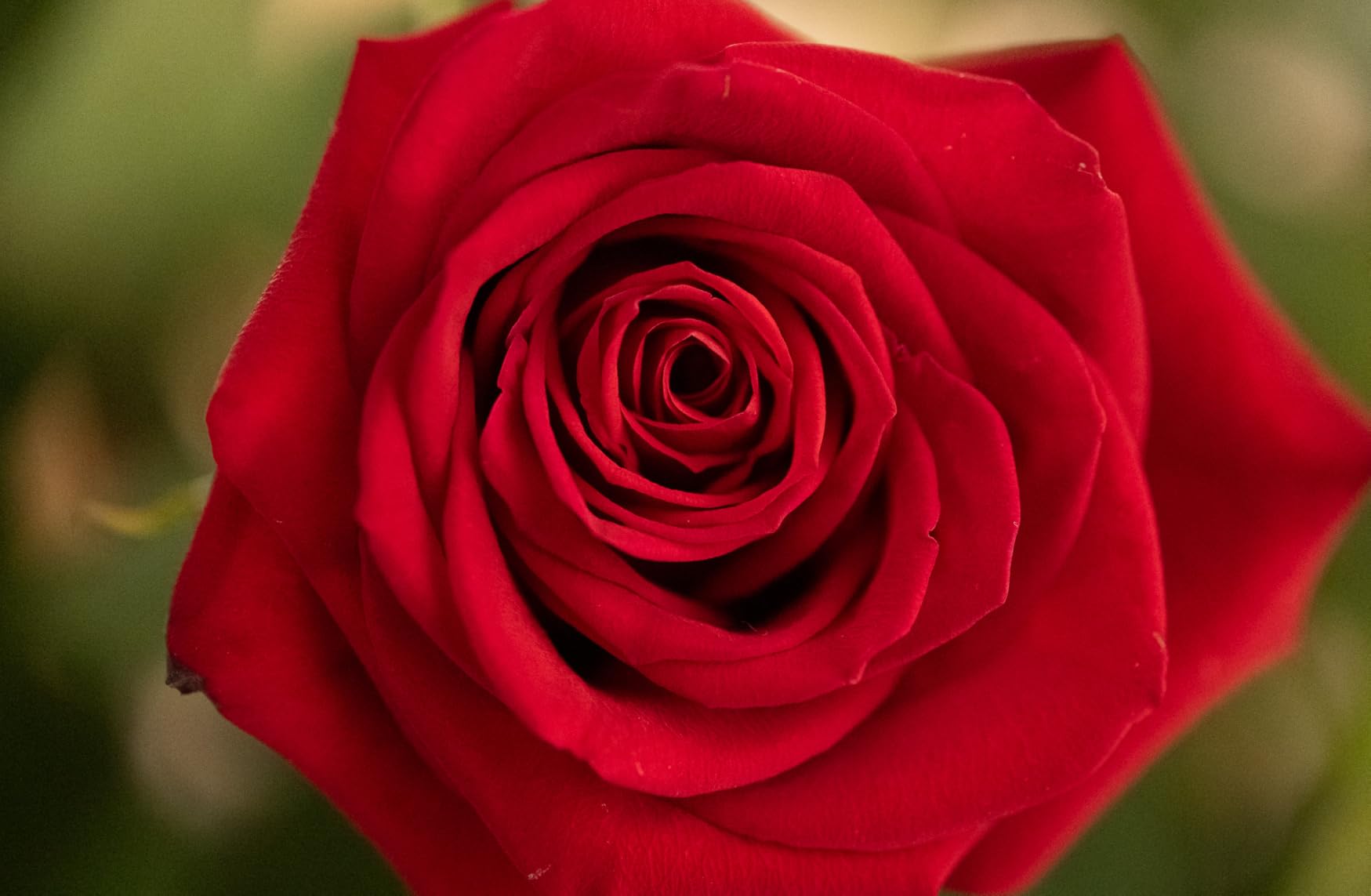
The MC 105mm f/2.8 VR S is the lens I swap onto my camera during detail shooting sessions. Wedding photographers know that rings, invitations, shoes, and bouquet details are a major part of the deliverable, and a true 1:1 macro lens makes those shots sing. The 105mm focal length also doubles as a beautiful portrait lens when you are not at minimum focus distance, which makes this a two-purpose lens worth its place in the bag.
Sharpness is extraordinary. The S-line optical formula delivers tack-sharp detail on engraved rings, lace patterns on dresses, and embroidered invitations. The 9-blade circular aperture produces gorgeous bokeh even at macro distances, with smooth out-of-focus backgrounds that make the subject pop. The 4.5-stop VR system is highly effective for handheld detail shooting, which is critical when working without a tripod during tight timelines.

On a wedding day, I use the 105mm f/2.8 VR S for ring shots, watch detail, perfume bottle and shoe captures, bouquet close-ups, and invitation flat-lays. The 1:1 magnification means I can fill the frame with a single diamond engagement ring or capture the engraving inside a wedding band. Forgetting macro for a moment, the 105mm focal length is also flattering for tight portrait crops during the first look or formals session. The f/2.8 aperture gathers enough light for indoor detail sessions without flash, preserving the ambient mood.
The main drawback is the focus-by-wire manual focus system, which can feel disconnected compared to traditional manual focus rings. Macro autofocus is also slower than standard prime AF, though it is still reliable. Focus breathing is noticeable when racking focus during video work. None of these issues prevent me from recommending the lens, but manual focus purists may want to try one before committing.
For Whom It Is Best
Wedding photographers who prioritize detail shots and ring photography will love this lens. Photographers who shoot engagement sessions and want a versatile portrait prime with macro capability will find it invaluable. If your couples invest in heirloom-quality details and you want to do those details justice, the 105mm f/2.8 VR S belongs in your kit.
For Whom It Is Less Ideal
Photographers who rarely shoot detail work will not use the macro capability enough to justify the price. Wedding photographers who already have an 85mm or 105mm prime for portraits might find the role overlap redundant. Solo shooters covering entire days without a second body may find the focus-by-wire manual focus too slow for event coverage.
8. NIKKOR Z 28-400mm f/4-8 VR — Best All-in-One Zoom for Travel and Event Coverage
Pros
- Massive 28-400mm range
- Lightest in class at 1.6 lbs
- 5-stop VR stabilization
- Sharp across range
- Travel-friendly
Cons
- Variable f/4-8 aperture slow at telephoto
- Not water resistant
- Limited bokeh at long end
The 28-400mm f/4-8 VR is the ultimate one-lens solution for wedding photographers who hate swapping glass. The 14.2x zoom range covers everything from wide ceremony establishing shots at 28mm to tight telephoto candids at 400mm. For events where you cannot move closer or further away, that reach is invaluable. I used this lens for a small intimate wedding where I had to stay in one corner of the room, and I never missed a moment.
Build quality and weight are where this lens surprises. At 1.6 pounds, it is the lightest ultra-zoom in its class, which makes it manageable for full-day shooting. The 5-stop VR system (5.5-stop with Synchro VR on compatible bodies) lets me shoot handheld at 400mm without a tripod, which opens up candid shots of the couple from across the reception. The minimum focus distance of 0.2m at the wide end lets me grab wide-angle close-ups without switching lenses.
The 28-400mm range is genuinely useful for wedding coverage. At 28mm I shoot wide ceremony and reception frames. At 70mm I cover environmental portraits. At 200mm I am hidden in the back capturing candid toasts. At 400mm I am in the next room shooting a candid kiss through a doorway. The 0.35x maximum reproduction ratio at 28mm lets me grab wide-angle close-up detail shots without a dedicated macro lens. The linear MF drive support provides smooth manual focus for video work, which is a nice touch for hybrid shooters.
The variable f/4-8 aperture is the obvious compromise. At 400mm the maximum aperture drops to f/8, which is slow for indoor reception lighting. The lens is not weather sealed, so outdoor ceremonies in questionable weather are a gamble. Bokeh at the long end is limited by the smaller maximum aperture, so for portrait-heavy work this is not the lens. For event coverage where reach matters more than depth of field, however, the 28-400mm is in a class of its own.
For Whom It Is Best
Wedding photographers covering small intimate weddings where you cannot move around freely will love the reach. Travel wedding photographers packing light will appreciate one lens that does everything. Second shooters who need flexibility without carrying multiple lenses will find it invaluable.
For Whom It Is Less Ideal
Primary wedding photographers covering large church ceremonies will find the variable aperture too slow for dim conditions. Photographers who prioritize beautiful bokeh for portrait work will want a fast prime instead. Outdoor photographers in rainy climates should look for a weather-sealed alternative.
How to Choose the Best Nikon Z Lens for Wedding Photography?
Choosing the right Nikon Z lens for wedding photography comes down to matching focal length, aperture, and weight to your shooting style. I have broken down the key factors below so you can decide which lens belongs in your kit first.
Focal Length Coverage for Wedding Day Scenarios
Wedding days require a mix of wide, standard, and telephoto focal lengths. Wide primes like the 35mm f/1.8 S capture getting-ready scenes and ceremony wide shots. Standard zooms like the 24-70mm f/2.8 S cover the bulk of formals and reception coverage. Telephoto zooms like the 70-200mm f/2.8 VR S compress perspective for flattering portraits and let you stay out of the way during ceremonies. For solo shooters, versatile zooms like the Tamron 35-150mm f/2-2.8 cover the entire range in a single lens.
Aperture and Low-Light Performance
Fast apertures matter most during dark church ceremonies and candlelit receptions. Lenses with f/1.8 or f/1.2 maximum aperture let you shoot at lower ISO values and shallower depth of field. For dark churches specifically, a fast prime like the 50mm f/1.8 S or 85mm f/1.8 S is invaluable. For mixed lighting, a constant f/2.8 zoom gives you more flexibility. The Tamron 35-150mm f/2-2.8 is unusually fast for a zoom and works well in dim reception venues.
Autofocus Speed and Reliability
Wedding moments are fleeting. Autofocus that locks on the first try and tracks through obstacles separates keepers from missed shots. Nikon’s S-line lenses with stepping motors deliver consistently fast and silent autofocus. The 85mm f/1.8 S and 24-70mm f/2.8 S have particularly strong eye-detection AF performance on Z8 and Z6 III bodies. Avoid older DSLR-era lenses adapted via the FTZ adapter unless you have a specific reason, since native Z-mount autofocus is noticeably faster and quieter.
Weight and Ergonomics for 12-Hour Days
Wedding photographers carry gear for 10 to 14 hours straight. Every gram adds up. The 35mm f/1.8 S at 372 grams and 50mm f/1.8 S at 413 grams are easy choices for all-day carry. The 24-70mm f/2.8 S at 815 grams and Tamron 35-150mm at 2.6 pounds are heavier but justified by their versatility. If you have wrist or shoulder issues, prioritize lighter primes over zooms, or invest in a quality sling strap to distribute weight.
Weather Sealing for Outdoor Weddings
Outdoor weddings bring dust, moisture, and sea spray. Most S-line Nikon Z lenses have dust and drip resistant construction that handles light rain and dusty venues. The 24-70mm f/2.8 S, 85mm f/1.8 S, and Tamron 35-150mm all have weather sealing. The 35mm f/1.8 S and 50mm f/1.8 S do not, which makes them less ideal for unpredictable outdoor ceremonies. If you shoot primarily outdoor weddings, prioritize weather-sealed lenses.
Two-Camera Body Setup Recommendations
Most professional Nikon Z wedding shooters carry two bodies with different lenses. The classic combo is an 85mm f/1.8 S or 50mm f/1.8 S on body one for portraits and details, and a 24-70mm f/2.8 S on body two for ceremony and reception. For more reach, swap the 24-70mm for a 70-200mm f/2.8 VR S on body two. For solo shooters who cannot carry two bodies, the Tamron 35-150mm covers everything on a single camera.
Frequently Asked Questions
What is the best Nikon lens for wedding photography?
The best Nikon Z lens for wedding photography depends on your shooting style, but the 24-70mm f/2.8 S and 85mm f/1.8 S combo is the classic two-lens kit most professional Nikon Z wedding shooters rely on. The 24-70mm covers ceremonies and receptions while the 85mm handles flattering portraits. For solo shooters, the Tamron 35-150mm f/2-2.8 is a single-lens alternative that covers wide to telephoto focal lengths.
What are the two best lenses for wedding photography?
The two best Nikon Z lenses for wedding photography are the 24-70mm f/2.8 S for standard zoom coverage and the 85mm f/1.8 S for portrait prime work. This combo covers wide ceremony shots through tight telephoto portraits, with one fast prime for low-light reception moments. Together they weigh under 1300 grams and handle virtually every wedding scenario a working photographer encounters.
Which Nikon Z lens is best for event photography?
For event photography on Nikon Z, the 24-70mm f/2.8 S is the best all-around option thanks to its constant f/2.8 aperture, fast autofocus, and versatile focal range. For events where you cannot move around freely, the Tamron 35-150mm f/2-2.8 provides even more reach in a single lens. For low-light events like receptions or corporate parties, pair the 24-70mm with an 85mm f/1.8 S.
Is the Nikon Z 24-70mm f/2.8 good for weddings?
Yes, the Nikon Z 24-70mm f/2.8 S is excellent for weddings. Its constant f/2.8 aperture maintains low-light capability throughout the zoom range, the Multi-Focusing System delivers fast and silent autofocus, and the S-line optics provide tack-sharp images wide open. Wedding photographers have made it the standard zoom of choice for ceremony, reception, and formals coverage. It is one of the two lenses in the most popular Nikon Z wedding kit.
What is the holy grail of Nikon lenses?
The holy grail of Nikon lenses for wedding photography is the combination of the 24-70mm f/2.8 S and 70-200mm f/2.8 VR S, supplemented by an 85mm f/1.8 S prime for portraits. This three-lens kit covers every wedding scenario from wide ceremony shots through tight telephoto candids, with a fast prime for low-light reception moments. For Nikon Z shooters, the 24-70mm and 85mm combo is the most common professional wedding kit.
Final Verdict
After testing and recommending Nikon Z lenses for wedding photographers for several years, my honest answer for most shooters remains the same: the 85mm f/1.8 S on body one and the 24-70mm f/2.8 S on body two. That combo delivers consistently excellent image quality, reliable autofocus in any light, and covers every wedding scenario from getting-ready to send-off. For solo shooters who do not want to carry two bodies, the Tamron 35-150mm f/2-2.8 is the best single-lens option on the market.
If you are just starting out on the Z system and need one lens first, grab the 50mm f/1.8 S. It is the best value prime Nikon makes, and it handles most wedding scenarios while you build out the rest of your kit. Add the 35mm f/1.8 S for documentary coverage, the 24-120mm f/4 S for travel versatility, or the MC 105mm f/2.8 VR S for detail work as your kit grows.
For more wedding lens guides across different brands and mounts, see our 6 best Nikon Z lenses guide and the 12 best Nikon Z mount lenses roundup. Whichever lens you choose, mount it, shoot a real wedding, and trust the gear. The best Nikon Z lenses for wedding photography are the ones you carry and use with confidence.