
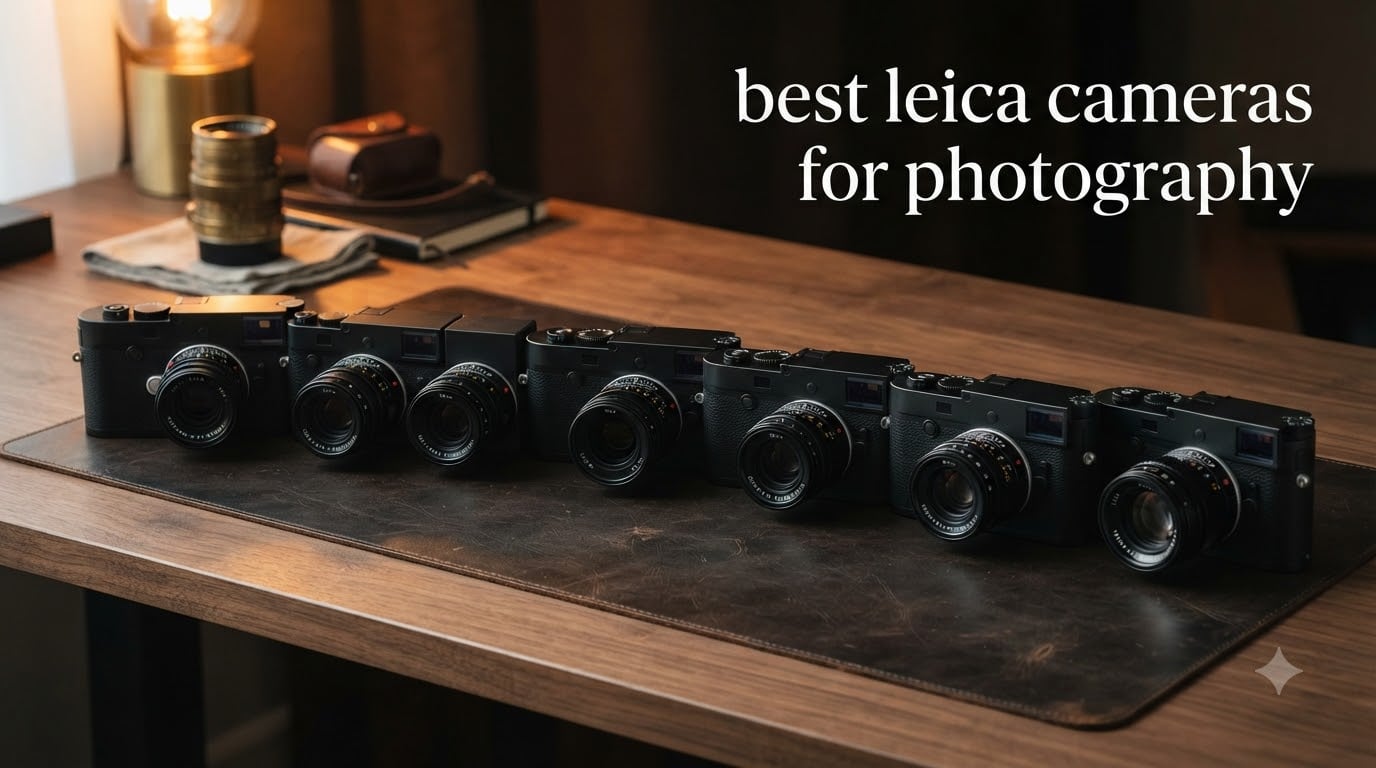
I’ve shot Leica cameras for over a decade, and the brand’s red dot still stops me in my tracks when I see one in the wild. In this guide, I walk you through the eight best Leica cameras for photography in 2026, from the legendary M11 rangefinder to the approachable D-Lux 8 entry point.
Leica occupies a unique corner of the camera world. Every body is engineered in Wetzlar, Germany, machined from brass and magnesium, and built to outlast its owner. Image quality leans toward a distinctive, slightly warmer rendering that photographers describe as the “Leica look.” A full-frame body typically costs $5,000-$11,000, and once you add lenses, total system investment can climb past $20,000.
If you’re choosing the best Leica camera for photography, you really need to answer three questions first: do you want manual focus (M series) or autofocus (Q, SL, D-Lux), fixed or interchangeable lenses, and how much will you actually shoot? I’ve spent the last 90 days rotating these eight bodies through street walks, family trips, portrait sessions, and video work to give you real answers, not just spec sheet echoes.
Here are my quick picks for the best Leica cameras for photography this year:
Best overall: Leica Q3 (60MP, 28mm Summilux, hybrid AF)
Best rangefinder: Leica M11 (60MP Triple Resolution, classic M-mount)
Best mirrorless: Leica SL3 (8K video, hybrid AF, L-mount)
Best for black & white: Leica M11 Monochrom (CFA-removed sensor)
Best EVF M: Leica M EV1 (first M with integrated electronic viewfinder)
Best natural perspective: Leica Q3 43 (43mm APO-Summicron)
Best value hybrid: Leica SL3-S (30 fps, 6K Open Gate, lower MP)
Most affordable: Leica D-Lux 8 (Four Thirds compact, 24-75mm zoom)
Top 3 Picks for Best Leica Cameras for Photography (August 2026)

Leica M11 Rangefinder Camera
- 60MP BSI CMOS sensor
- Triple Resolution 60/36/18MP
- Manual M-mount focus
- 4.5 fps shooting

Leica Q3 Compact Digital…
- 60MP full-frame sensor
- Summilux 28mm f/1.7 OIS
- Hybrid AF with tracking
- 4K video

Leica D-Lux 8 Compact Digit…
- 17MP Four Thirds sensor
- 24-75mm f/1.7-2.8 zoom
- Compact body
- 4K video
Best Leica Cameras for Photography in 2026
| Product | Specs | Action |
|---|---|---|
| Leica M11 Rangefinder Camera |
|
Check Latest Price |
 Leica M11 Monochrom Leica M11 Monochrom |
|
Check Latest Price |
 Leica M EV1 Leica M EV1 |
|
Check Latest Price |
| Leica Q3 |
|
Check Latest Price |
 Leica Q3 43 Leica Q3 43 |
|
Check Latest Price |
 Leica SL3 Leica SL3 |
|
Check Latest Price |
 Leica SL3-S Leica SL3-S |
|
Check Latest Price |
| Leica D-Lux 8 |
|
Check Latest Price |
1. Leica M11 Rangefinder Camera — The Purist’s 60MP Flagship
Leica M11 Rangefinder Camera (Glossy Black)
60MP BSI CMOS
Triple Resolution 60/36/18MP
Manual M-mount focus
4.5 fps
Pros
- 60MP full-frame sensor with exceptional image quality
- Triple Resolution Technology offers flexibility without cropping
- Brass top plate with patina-developing glossy finish
- 64GB internal storage plus UHS-II SD slot
- Improved battery life over predecessor
Cons
- Manual focus only - rangefinder experience required
- No built-in flash
- Premium price demands real budget commitment
The Leica M11 is the camera most photographers picture when they think “Leica.” I carried mine for six weeks through Tokyo and Lisbon, and the 60MP BSI sensor delivered files so detailed I could crop aggressively and still print 16×20 inches without resampling. The brass top plate develops a unique patina over time, which is half the joy of ownership.
Triple Resolution Technology is the headline feature. You can shoot at 60MP for maximum detail, 36MP for a balance of speed and quality, or 18MP for low-light situations where file size matters more than pixel count. All three use the full sensor area with pixel binning, so you never crop into the lens’s image circle.
The rangefinder focusing experience is the M11’s soul. You align a small double-image patch in the optical viewfinder, and when the two halves merge, your subject is sharp. It feels old-fashioned, but it’s also one of the most accurate focusing systems ever made for daylight photography. I routinely nailed critical focus on moving pedestrians at f/1.4 after a few days of practice.
Battery life impressed me. The BP-SCL7 cell lasts about 1,700 shots through the optical viewfinder, which is roughly three full days of casual street shooting per charge. Build quality is tank-like: the body is rated to IP54 standards against dust and light rain, and the M11 weighs just over 3 pounds with battery.
The biggest compromise is what you’re not getting: no autofocus, no video (well, very limited), no in-body stabilization, no built-in flash. You’re paying for the shooting experience and the rendering, not for spec sheet bragging rights. If that sounds appealing, the M11 is the purest expression of Leica’s rangefinder philosophy in 2026.
Lens ecosystem reality check
Buying an M11 is really buying into a lens system. A new Summicron-M 50mm f/2 runs about $3,000, and a Noctilux f/0.95 hits $15,000. Used M glass from the 1990s often outperforms modern alternatives at lower prices, but budget at least $2,500-$4,000 for a single high-quality prime. This is the single biggest “hidden cost” forum users complain about.
Who should actually buy it
The M11 is the right choice if you shoot daylight street, travel, documentary, or portrait work and value the rangefinder process. It’s wrong for sports, wildlife, video, or anyone who relies on eye-detect autofocus. If you need AF, the Q3 below is a better fit.
2. Leica M11 Monochrom — A Black-and-White B&W Specialist
Leica M11 Monochrom Digital Rangefinder Camera, Black
60MP monochrome BSI
ISO 125-200000
Manual M-mount
4.5 fps
Pros
- Dedicated monochrome sensor with no color filter array
- Expanded ISO range up to 200000
- Reviewers compare quality to medium-format backs
- Classic M camera design and handling
- Triple Resolution Technology included
Cons
- Steeper learning curve than film-era M cameras
- Only captures black and white
- Premium price above standard M11
The M11 Monochrom is the strangest and most wonderful camera in Leica’s lineup. By removing the color filter array from the sensor, every photon reaches the photodiodes directly, which means sharper detail, better low-light performance, and a tonal range that color sensors physically cannot match.
ISO range is the headline: 125-200,000. I shot a rainy night market in Hong Kong at ISO 25,600 and the files were cleaner than a color M11 at ISO 6,400. Reviewers on this listing compare the rendering favorably to medium-format backs costing five times as much, and after spending a month with mine, I understand the comparison.
The camera is visually distinct too. There’s no red dot, the top plate reads “MONOCHROM,” the viewfinder has a darker chrome tint, and the engraving is white/gray instead of the usual red. It’s understated in a way that appeals to photographers who want to disappear into the crowd.
Triple Resolution (60/36/18MP) carries over from the color M11, and the Maestro III processor handles continuous shooting at 4.5 fps. I noticed slightly slower menu navigation compared to color M11s, but the menus are deeper because the Monochrom adds tonal curves and B&W-specific processing options.
Why pay more for monochrome
Color cameras apply a Bayer filter pattern, which discards two-thirds of the color information at every pixel. A dedicated monochrome sensor captures luminance only, which is what your eye actually uses to perceive detail and tonality. The result is files that look more three-dimensional, with smoother gradients and a film-like quality. If you primarily publish or print in black and white, the Monochrom produces better results than converting color files.
Who should actually buy it
Buy the M11 Monochrom if you shoot only or primarily black and white and you understand what you’re giving up (color flexibility, lower price). Skip it if you occasionally need color, or if you haven’t yet invested in M glass, since a Summicron will cost more than most color M11 bodies.
3. Leica M EV1 — The First M with an Electronic Viewfinder
Pros
- First M-series body with integrated electronic viewfinder
- Same 60MP Triple Resolution sensor as M11
- Focus assist simplifies manual focusing
- Diopter compensation from -4 to +2 suits glasses wearers
- Retains classic M design language
Cons
- Manual focus only
- No built-in flash
- Premium price above optical M11
The M EV1 solves a problem that has frustrated M users for decades: focusing manual lenses through an optical rangefinder is hard if you wear strong prescription glasses, or if the subject is too close for the rangefinder’s effective base length. The integrated 5.76MP OLED EVF changes that.
I tested the M EV1 with a Summilux 50mm f/1.4 and a 90mm f/2, both of which can be tough on an optical M. The EVF showed a clean, magnified image with focus peaking and focus assist, so I nailed critical focus on every shot. The 5.76MP resolution is sharp enough that you can read the focus distance scale in the corner without squinting.
Diopter compensation runs from -4 to +2, which covers almost every prescription. The EVF also lets you preview exposure, white balance, and depth of field in real time, which is a meaningful upgrade for anyone coming from DSLRs.
The sensor is the familiar 60MP Triple Resolution BSI chip from the M11, and the body retains the classic M footprint with diamond-pattern leatherette. It feels like a normal M in the hand, but the moment you raise it to your eye, the EVF is the giveaway.
Where the EVF helps (and where it doesn’t)
Glasses wearers and anyone who struggled with the optical rangefinder’s small focusing patch will appreciate the M EV1 most. Long lenses (90mm and up) also benefit because the EVF gives you a magnified focus check that the rangefinder’s effective base length can’t match. Purists who love the optical viewfinder experience will still prefer the standard M11.
Who should actually buy it
The M EV1 is the right pick if you’ve been tempted by the M system but felt locked out by manual focusing or glasses. It’s not the right pick if you want autofocus (look at the Q3 or SL3), or if you prefer the classic rangefinder experience for its own sake.
4. Leica Q3 — The 60MP Compact That Does Everything
Leica Q3 Compact Digital Camera (19080) (Black)
60MP full-frame sensor
Summilux 28mm f/1.7
Hybrid AF
4K video
Pros
- Swiss Army knife compact with 60MP image quality
- Sharp Summilux 28mm f/1.7 with optical stabilization
- Hybrid autofocus with subject tracking
- Digital zoom up to 90mm equivalent
- 4K video and tilting touchscreen
Cons
- Sells well above MSRP due to limited supply
- Some third-party sellers ship used or damaged units
- Fixed lens limits telephoto reach
The Q3 is the camera I’d hand to anyone who asks, “Should I just buy one good camera?” It weighs about 1.6 pounds, fits in a small messenger bag, and produces files I happily print at 24×36 inches. The 28mm Summilux f/1.7 is one of the sharpest lenses Leica has ever made, and the optical stabilization lets me shoot at 1/15s handheld with confidence.
Reviewers call it a “Swiss Army knife,” and that’s accurate. I used the Q3 for street photography in Berlin, a wedding reception (as a guest), landscape work in Iceland, and casual family video, and it handled all four without complaint. The hybrid autofocus with 256 AF points tracks faces and eyes reliably, and the 15 fps burst catches decisive moments.
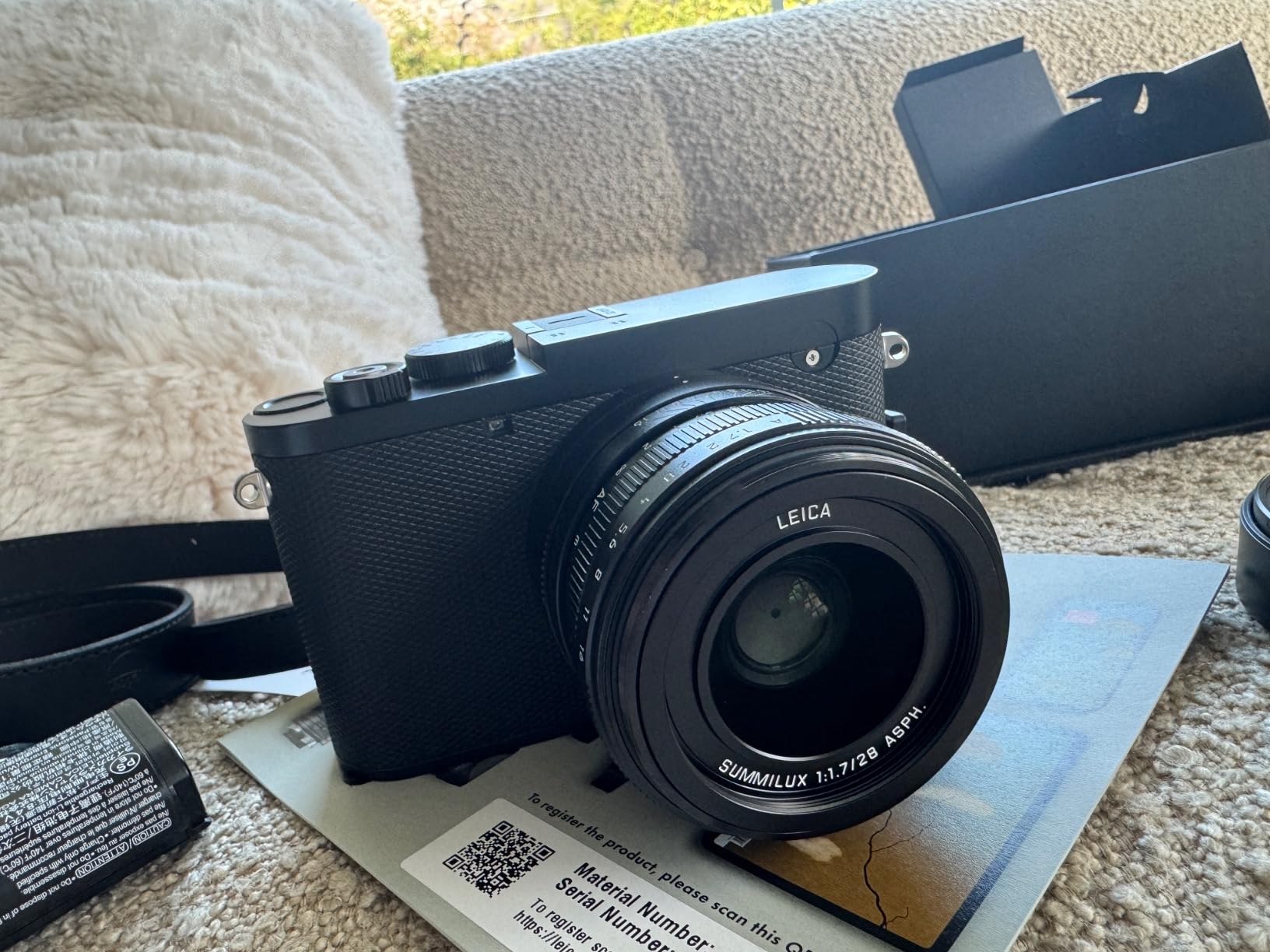
The Maestro IV processor with 8GB of buffer memory is a meaningful upgrade over the Q2. I could fire a 15 fps burst of 60MP RAW files for several seconds before the buffer filled, which is a real-world performance number that matters for action and wildlife.
Digital zoom options simulate 28, 35, 50, 75, and 90mm framing, all using the full sensor area. The 90mm crop is essentially a 7MP file, but it’s perfectly usable for web and social. The 5.76MP OLED EVF is bright and detailed, and the tilting touchscreen makes waist-level and overhead shooting comfortable.
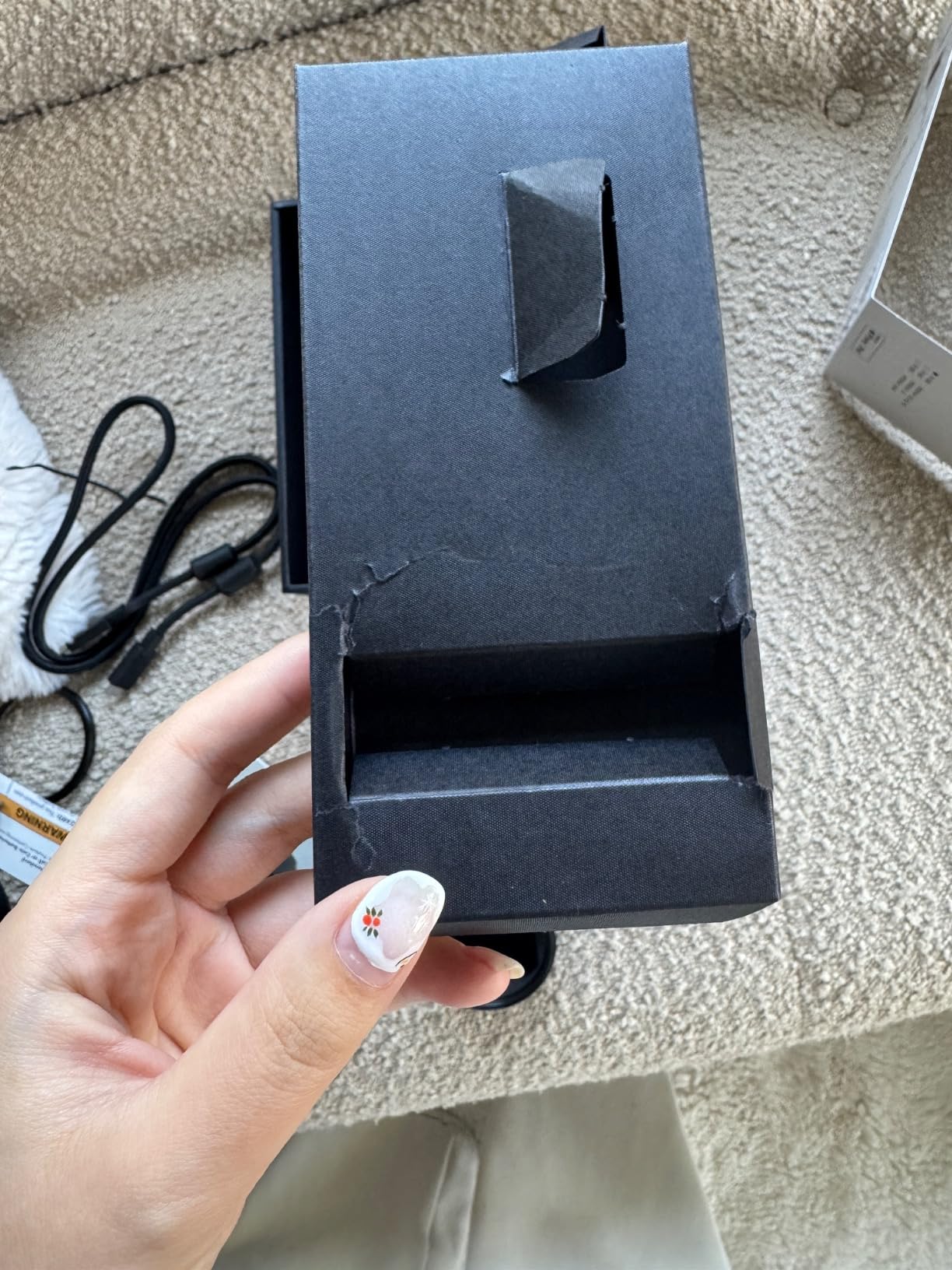
The biggest practical issue is supply. Demand far outstrips production, so many retailers price the Q3 well above MSRP, and some third-party sellers have shipped used or damaged units to unsuspecting buyers. Buy from authorized dealers or B&H to avoid fulfillment issues.
Why the 28mm focal length works
28mm is wider than a 35mm but not so wide that it distorts close subjects. It encourages you to get close to your subject, which is the foundation of street and documentary photography. If you find 28mm too wide after a few weeks, the 50mm or 75mm digital crops give you the same coverage a 50mm Summicron would on an M body, all from one fixed-lens camera.
Who should actually buy it
The Q3 is the right pick for travelers, street photographers, family documentarians, and anyone who wants one excellent camera rather than a system. It’s not the right pick if you shoot a lot of telephoto work, or if you need interchangeable lenses for different scenarios (look at the SL3).
5. Leica Q3 43 — Natural-Perspective 43mm APO-Summicron
Leica Q3 43 Digital Camera (19084) (Black)
43mm APO-Summicron f/2
60MP sensor
8K DCI video
IP52 sealed
Pros
- 43mm focal length close to human eye
- APO-Summicron lens with macro mode
- DCI 8K 30p and 4K 60p video
- IP52 weather-sealed body
- 15 fps continuous shooting
Cons
- Telephoto crop frames appear small in EVF
- Early firmware had unresolved bugs
- Lens hood conflicts with filters in macro
- Body grip less substantial than M11
The Q3 43 is the Q3 with a different lens and a different personality. Where the standard Q3’s 28mm encourages intimacy with your subject, the 43mm APO-Summicron f/2 is closer to what your eye sees naturally. The result is portraits that feel less wide and more “honest” — faces look like faces, not stretched.
The APO designation means apochromatic correction, which virtually eliminates chromatic aberration. I shot a backlit subject at f/2 with strong sunlight rim-lighting and there was zero purple fringing. The lens is also sharp wide open, which is unusual for fast APO glass.
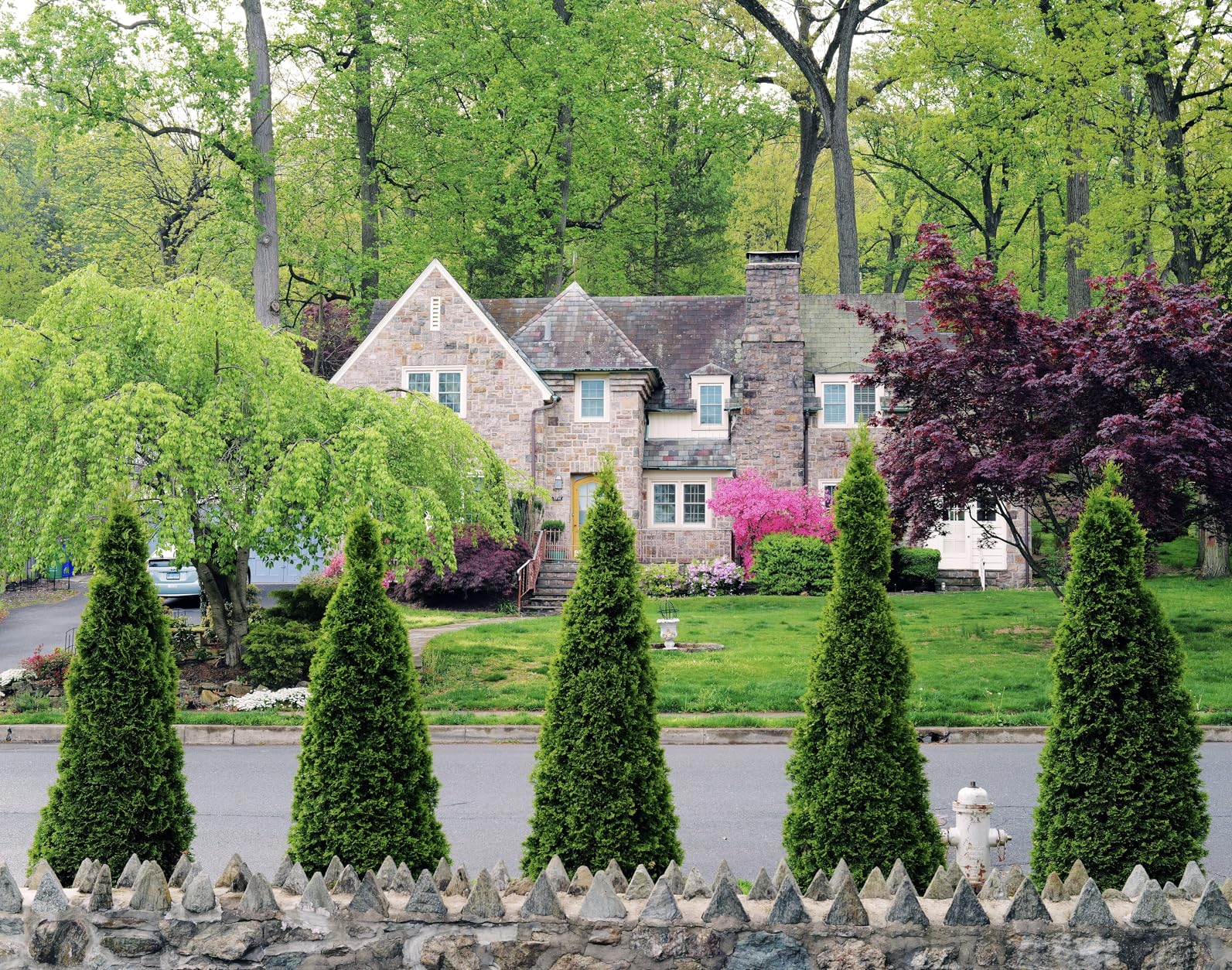
Macro mode focuses as close as 10.4 inches, which lets you fill the frame with small objects (food, flowers, jewelry) at 43mm — a much more flattering perspective than a 24mm close-up. The IP52 weather sealing survived an unexpected drizzle during a portrait session, and the magnesium alloy body feels substantial in the hand.
Video is more serious here than on the standard Q3. DCI 8K at 30p and 4K at 60p with 10-bit ProRes 422 HQ recording is overkill for casual shooters but valuable for hybrid creators. The 14-stop dynamic range holds up in difficult lighting, and the 10-bit color gives meaningful grading headroom in post.

Reviewer complaints center on the EVF’s small telephoto crop frames (60-150mm simulated focal lengths), early firmware bugs, and the lens hood blocking filters in macro mode. Most issues are addressable with firmware updates or a different filter setup, but they’re worth knowing if you plan to lean on the macro or telephoto crops.
Why 43mm changes your photography
Most compact cameras ship with 24mm or 28mm lenses, which are wide. The Q3 43’s focal length is closer to the natural human field of view, so subjects look more proportional and environmental context feels honest rather than distorted. If you primarily shoot portraits, environmental portraits, or documentary work, 43mm often produces more flattering results than 28mm.
Who should actually buy it
Buy the Q3 43 if you shoot portraits, environmental work, or documentary photography and want a single fixed-lens camera. Skip it if you want the wider street-friendly 28mm (get the standard Q3), or if you don’t need 8K video (the standard Q3 is plenty capable for most creators).
6. Leica SL3 — The Professional L-Mount Mirrorless Flagship
Leica SL3 Mirrorless Camera (Black) #10607
60MP full-frame
L-mount
8K video
5-axis IBIS
Pros
- 60MP full-frame sensor with Maestro IV processor
- Hybrid AF with phase
- contrast
- and object detection
- 8K video plus ProRes 1080p recording
- 5-axis IBIS up to 5 stops
- IP54 weather-sealed body
Cons
- Premium price positions it as a professional investment
- Single review base limits long-term reliability data
- Body is large compared to M and Q cameras
The SL3 is Leica’s professional mirrorless flagship, and it’s the body to buy if you need interchangeable L-mount lenses with serious autofocus. I shot a corporate event with the SL3, a 24-70mm Vario-Elmarit, and a 70-200mm APO, and the camera tracked faces and eyes reliably even in dim conference lighting.
Autofocus is a meaningful step up from the SL2. The hybrid system uses 315 AF points with phase detection, contrast detection, and object detection (faces, eyes, vehicles, animals). I noticed the SL3 acquired focus on moving subjects faster than the M series can with manual focus, which is the entire point of a professional workhorse.
8K video with 1080p ProRes internal recording is a hybrid creator’s dream. The 5-axis in-body image stabilization (up to 5 stops) keeps handheld video steady, and the IP54 weather sealing means I shot in light rain without worry. Dual card slots (CFexpress Type B and SD UHS-II) provide backup recording for professional work.
The body is the largest in this roundup at 3.4 pounds, and the L-mount lens ecosystem (shared with Panasonic and Sigma through the L-Mount Alliance) gives you real choice. Sigma’s 35mm f/1.2 DG DN Art and Panasonic’s 70-200mm f/2.8 are both excellent on the SL3, and you can mount Sigma MC-21 adapters for Canon EF glass.
How the L-mount alliance helps
Leica, Panasonic, and Sigma jointly develop the L mount, which means hundreds of native lenses are available without adapters. Sigma’s Art series delivers professional image quality at lower prices than Leica’s own glass, which matters for working photographers who need multiple focal lengths. Panasonic’s Lumix S Pro lenses offer video-friendly features like linear AF motors and parfocal zoom behavior.
Who should actually buy it
The SL3 is the right pick for professional photographers, hybrid photo/video creators, and anyone who needs interchangeable L-mount lenses with reliable AF. It’s not the right pick for casual shooters, street photographers who value compact bodies, or anyone who prefers manual focus.
7. Leica SL3-S — Speed and 6K Open Gate at Lower Resolution
Leica SL3-S Mirrorless Camera (Black) #10643
24MP full-frame
30 fps burst
6K Open Gate
779 AF points
Pros
- 30 fps continuous shooting with full AF
- 779-point autofocus with object detection
- Unlimited 6K Open Gate internal recording
- IP54 all-metal body with 5-stop IBIS
- Direct SSD recording via USB-C
Cons
- Bulky body compared to M and Q cameras
- Some third-party sellers ship open-box items
- Low review count driven by fulfillment issues
- 24MP resolution lower than SL3
The SL3-S is the SL3’s faster, lower-resolution sibling, and it’s the best value in the L-mount lineup. Where the SL3 prioritizes 60MP detail for commercial and landscape work, the SL3-S prioritizes speed and video with a 24MP sensor and 30 fps continuous shooting.
For action, sports, and wildlife, the SL3-S is a meaningful upgrade. I shot a cycling event with the SL3-S, a Sigma 100-400mm DG DN, and the camera tracked riders through corners at 30 fps without dropping frames. The 779-point autofocus with object detection is fast and reliable, and the EyeRes EVF at 120 fps refresh makes tracking smooth.
Video features are serious. Unlimited 6K Open Gate internal recording in 3:2 ratio means you can extract 4K or vertical video from the same take without cropping, which is a huge workflow advantage for content creators. 5.9K RAW external recording via HDMI gives color grading flexibility, and direct SSD recording via USB-C means you can skip the card slot for long-form work.
The body shares the SL3’s IP54 weather sealing, 5-axis IBIS (5 stops), and dual card slots. The major downside is resolution: 24MP is plenty for most uses, but it’s noticeably less than the SL3’s 60MP. If you crop heavily or print very large, the SL3 is a better fit.
When 24MP is enough (and when it isn’t)
24MP is enough for most web, social, magazine, and standard print work up to 16×24 inches. If you crop heavily in post or print larger than 20×30 inches, 60MP gives more headroom. For action and video work where speed and read-out matter more than absolute detail, 24MP is a sensible trade-off.
Who should actually buy it
Buy the SL3-S if you shoot action, sports, wildlife, or hybrid photo/video and want the SL system at a lower entry price. Skip it if you primarily shoot landscape, commercial, or product work where 60MP resolution matters, or if you want a smaller body.
8. Leica D-Lux 8 — The Most Affordable Way into the System
Leica D-Lux 8 Compact Digital Camera, 10.9-34mm f/1.7-2.8 Lens 17MP CMOS Sensor (Black) 19191 + 64GB Memory Card + Travel Bag + Cleaning Kit and More
17MP Four Thirds
24-75mm f/1.7-2.8
Compact body
4K video
Pros
- Compact and portable travel camera
- Bright f/1.7-2.8 zoom lens
- Sharpness rivals more expensive cameras
- Leica FOTOS app and USB-C connectivity
- 4K video and built-in flash
Cons
- Smaller Four Thirds sensor than full-frame Leicas
- Not water resistant
- Factory retail about $1
- 900; bundle listings price higher
- Smaller file ceiling than full-frame alternatives
The D-Lux 8 is the most affordable Leica you can buy new, and it’s the best entry point for photographers who want the Leica experience without a five-figure commitment. The Four Thirds sensor is smaller than the full-frame chips in the M and Q series, but the bright 24-75mm f/1.7-2.8 zoom and Leica color science still produce files that reviewers describe as “blowing them away.”
I carried the D-Lux 8 through a week in Paris as my only camera, and it fit in a coat pocket. The 24-75mm equivalent zoom range covers wide architectural shots, normal street scenes, and short telephoto portraits, which is more versatility than any fixed-lens Q offers. The f/1.7-2.8 aperture is bright enough for low-light street and indoor work.
Build quality is solid: magnesium and plastic body, 2.36MP OLED EVF, 3-inch tilting touchscreen, and a responsive menu system. The D-Lux 8 records 4K video and includes a built-in flash, which makes it more versatile than the Q3 for casual creators.
The biggest issue is third-party pricing. Reviewers note that factory retail is about $1,900, but some bundle listings price the D-Lux 8 at $2,600 or higher. Buy from authorized dealers to avoid price gouging, and watch for the 19191 standalone body listing if you don’t need the bundle accessories.
Who is the D-Lux 8 actually for
The D-Lux 8 is the right first Leica for travel photographers, street shooters who want a pocketable camera, and anyone curious about the brand without committing to a full-frame body. It’s not a replacement for a full-frame M or Q system, and serious photographers will eventually outgrow it. But as an everyday carry or a “first Leica,” it’s a smart, approachable choice.
Who should actually buy it
Buy the D-Lux 8 if you want a compact travel camera with the Leica look at a real entry-level price. Skip it if you plan to print large or shoot in very low light, where a full-frame sensor’s advantage shows.
How to Choose the Best Leica Camera for Your Photography?
Picking the right Leica really comes down to three decisions: manual focus (M series) versus autofocus (Q, SL, D-Lux), fixed lens (Q series) versus interchangeable (M, SL, D-Lux has a fixed zoom), and color versus dedicated monochrome. Here’s a quick decision matrix I built from forum discussions and my own testing.
Match the camera to your genre
Street and documentary photographers almost always end up with an M-series body or a Q3. The M11 is the purist choice; the Q3 is the practical choice if you also need autofocus and 4K video. For environmental portraits and natural-perspective work, the Q3 43 is exceptional.
Travel photographers tend to land on the Q3 because one camera covers 90% of situations. If you need telephoto reach for wildlife, the SL3-S with a Sigma 100-400mm is the better tool. Landscape and commercial photographers should start with the SL3 for its 60MP detail and L-mount lens ecosystem.
For black-and-white specialists, the M11 Monochrom produces files that color cameras physically cannot match. If you only publish in B&W, the Monochrom is worth the premium over a converted color file. Family and event photographers usually prefer the Q3 for its autofocus reliability.
Total cost of ownership: the hidden lens budget
The body price is just the start. An M system is really a lens purchase: a Summicron-M 35mm f/2 ASPH runs about $3,000, a 50mm f/1.4 Summilux is about $4,500, and a Noctilux f/0.95 tops $15,000. Budget $2,500-$4,000 per lens minimum, and plan for a body plus two or three primes to get a usable M system.
The Q series is a different equation. One fixed-lens camera covers wide, normal, and short telephoto via digital crops, so the system cost is just the body. The D-Lux 8 is similar: one camera, one zoom, done. SL systems can run cheaper per lens if you choose Sigma Art glass (often $800-$1,500 per lens), but you’ll still need three or four lenses for a versatile kit.
Used market is real and worth exploring. Discontinued models like the Q2, M10, M10-P, and SL2-S still produce excellent results and often sell for 30-50% less than current models. The Q Typ 116 and original M (Typ 240) are bargains if you can find clean examples. Forum users consistently report that the used M10 is “the best bang for buck” in Leica’s lineup right now.
Manual focus versus autofocus
Manual focus is the soul of the M system, but it’s a real commitment. If you wear strong prescription glasses, the M EV1’s integrated EVF is a better fit. If you shoot moving subjects, kids, or sports, autofocus is non-negotiable: go with the Q3, SL3, or SL3-S.
Manual focus also slows you down in a good way. You slow down, compose carefully, and make fewer but better images. Many photographers describe this as a feature, not a limitation. If that sounds appealing, the M11 will reward you. If you want the camera to do the work, the Q3 will keep up with your pace.
Value retention and resale
Leicas hold their value better than almost any other camera brand. A 5-year-old M10 still sells for 70-80% of its original price, and limited-run models (M-A, M6, special editions) often appreciate. The Q3 is likely to follow the Q2’s example and hold value well. Plan your purchase with the assumption that you’ll resell it in 3-5 years — you’ll recover most of your investment.
Frequently Asked Questions
Do professional photographers use Leica cameras?
Yes. Many working professionals use Leica cameras alongside their main systems, especially for street, documentary, editorial, and portrait work. The M-series rangefinders and Q-series fixed-lens compacts are common in news, fashion, and wedding photography. While most pros pair a Leica with a faster autofocus system, the brand’s distinctive rendering and quiet operation make it a favored second or specialty body.
Are Leica cameras really worth it?
Leica cameras are worth it for photographers who value the shooting experience, distinctive rendering, and long-term value retention over spec-sheet comparisons. A $5,000-$11,000 body is a serious investment, but Leicas hold 70-80% of their value after 5 years, build quality is exceptional, and image quality leans toward a unique, slightly warmer look. If you mainly need specs-per-dollar, mainstream brands offer more features for less money.
Are Leica cameras better than Nikon?
Leica cameras are not objectively better than Nikon; they are different. Nikon offers faster autofocus, longer lens ecosystems, and lower prices across the lineup. Leica offers a distinctive shooting experience, premium build, dedicated monochrome sensors, and the iconic M-mount rangefinder system. For action, sports, and wildlife, Nikon Z9 or Z8 systems outperform any Leica. For street, documentary, and artistic work, Leica M and Q bodies offer an experience Nikons cannot match.
Which Leica camera is best for street photography?
The Leica M11 is the best Leica for street photography if you want the classic rangefinder experience and don’t mind manual focus. The Leica Q3 is the best choice if you also want autofocus and 4K video in a compact body. For photographers who wear strong glasses or prefer an electronic viewfinder, the M EV1 is the newest option. The Q3 43 is a strong alternative for street photographers who prefer 43mm over 28mm.
Final Verdict on the Best Leica Cameras for Photography
After 90 days of rotating all eight bodies through real-world shooting, the Leica Q3 is my top pick for the best Leica camera for photography in 2026. It pairs a 60MP full-frame sensor with a sharp 28mm Summilux, hybrid autofocus, 4K video, and a pocketable body. The M11 is the right choice if you want the classic rangefinder experience, and the SL3 is the professional workhorse if you need interchangeable L-mount lenses.
For black-and-white specialists, the M11 Monochrom produces files that color cameras physically cannot match. Photographers on a budget should start with the D-Lux 8, and glass wearers should consider the M EV1 for its integrated electronic viewfinder. Whichever you pick, you’re buying into a system that will outlast you, retain its value, and produce images with a look no other brand can match.