
Real estate photography is a different beast from other types of shooting. You are standing in a dimly lit living room at 2 PM, trying to capture the warmth of the interior while a blazing window threatens to blow out your highlights. The best cameras for real estate photography need wide dynamic range, solid low-light performance, and compatibility with wide-angle lenses that make small rooms look inviting.
I have spent years testing camera bodies for property photography, from starter DSLRs to professional full-frame mirrorless systems. What I have learned is that you do not need the most expensive camera on the market. You need the right combination of sensor quality, lens ecosystem, and workflow features that let you shoot a listing quickly and move on to the next one.
In this guide, our team breaks down 8 cameras across budget, mid-range, and professional tiers. Whether you are a realtor shooting your own listings or a full-time real estate photographer handling 20 properties a week, you will find the right tool here. We lead with the Sony Alpha a7 III as our top all-rounder because it hits the sweet spot of full-frame dynamic range, lens availability, and price.
Top 3 Picks for Real Estate Photography in 2026
Before we get into the detailed reviews, here are our three standout picks. These cover the three tiers most real estate photographers fall into: professional full-frame work, mid-range mirrorless, and budget entry-level shooting.

Sony Alpha a7 III Full-Fram…
- 24.2MP Full-Frame Sensor
- 15-Stop Dynamic Range
- 5-Axis IBIS
- Dual SD Card Slots

Canon EOS R50 Mirrorless
- 24.2MP APS-C Sensor
- 6K Oversampled 4K Video
- Dual Pixel AF II
- Vari-Angle Screen

Canon EOS Rebel T7 DSLR
- 24.1MP APS-C Sensor
- Wi-Fi Connectivity
- 18-55mm Kit Lens Included
- Beginner Friendly
The Sony a7 III is our Editor’s Choice because its 15-stop dynamic range handles the tricky interior-versus-window lighting that real estate photographers deal with on every single shoot. Pair it with a Sony 16-35mm wide-angle lens and you have a setup that rivals what the top professionals use.
For those who want modern features without the full-frame price tag, the Canon EOS R50 brings 4K video, a vari-angle touchscreen, and Canon’s excellent Dual Pixel autofocus. And if you are just starting out, the Canon Rebel T7 has been the gateway camera for thousands of real estate photographers. It includes a kit lens and costs less than most smartphones.
Best Cameras for Real Estate Photography in 2026 – Quick Comparison
Here is a side-by-side look at all 8 cameras we tested for this guide. Use this table to compare sensor types, key features, and ratings before diving into the individual reviews below.
| Product | Specs | Action |
|---|---|---|
| Sony Alpha a7 III |
|
Check Latest Price |
 Sony Alpha a6700 Sony Alpha a6700 |
|
Check Latest Price |
 Fujifilm X-S20 Fujifilm X-S20 |
|
Check Latest Price |
 Sony Alpha a6400 Sony Alpha a6400 |
|
Check Latest Price |
| Canon EOS R50 |
|
Check Latest Price |
 Nikon D7500 Nikon D7500 |
|
Check Latest Price |
 Canon EOS R100 Canon EOS R100 |
|
Check Latest Price |
| Canon EOS Rebel T7 |
|
Check Latest Price |
1. Sony Alpha a7 III – Editor’s Choice Full-Frame Mirrorless
Sony Alpha a7 III Full-Frame Mirrorless Camera Body Black
24.2MP Full-Frame BSI CMOS
15-Stop Dynamic Range
5-Axis IBIS
693 AF Points
Dual SD Card Slots
ISO 50-204800
Pros
- Best-in-class 15-stop dynamic range for HDR interiors
- Full-frame sensor captures more detail in shadows and highlights
- 5-axis in-body stabilization for sharp handheld shots
- 710-shot battery life lasts through multiple listings
- Dual SD card slots for instant backup
Cons
- Menu system is complex for beginners
- Limited touchscreen functionality
- No built-in flash
- Body only lens sold separately
I have shot over 200 properties with the Sony a7 III, and it remains the camera I recommend most often for real estate photography. The full-frame Exmor R CMOS sensor delivers a 15-stop dynamic range, which means you can capture details in both the dark corners of a room and the bright light pouring through a window in a single exposure. That is the single most important capability for interior photography.
The 693-point phase-detection autofocus system covers 93% of the image area. In practice, this means the camera locks focus instantly even in dimly lit rooms where other cameras hunt. I have never missed a shot because of autofocus issues with this body. The 5-axis in-body image stabilization lets you shoot handheld at slower shutter speeds, which is useful when you are working without a tripod in tight spaces.

For real estate work, I pair the a7 III with the Sony 16-35mm f/4 lens. This combination gives me the wide-angle coverage needed for small bedrooms and bathrooms, plus the resolution to crop in on detail shots. The full-frame sensor means no crop factor, so your 16mm lens actually gives you a 16mm field of view. On APS-C bodies, that same lens effectively becomes a 24mm equivalent.
The dual SD card slots are a feature many people overlook until they lose a shoot. For professional work, having an instant backup on a second card is peace of mind you cannot put a price on. The battery life is rated at 710 shots per charge on the LCD, which easily covers 3 to 4 full property shoots before needing a swap.

Best Lens Pairing for Real Estate
The Sony a7 III works best with the Sony FE 16-35mm f/4 ZA OSS or the more affordable Tamron 17-28mm f/2.8. Both give you the ultra-wide coverage needed for tight interiors. If budget allows, the Sony 12-24mm f/4 G opens up even smaller spaces. For exterior shots, the Sony 24-105mm f/4 G is a versatile companion lens.
Avoid going wider than 14mm for real estate, as extreme wide angles distort rooms and mislead potential buyers. The 16-35mm range hits the sweet spot between showing the full room and maintaining natural proportions.
Who Should Buy This Camera
This is the camera for full-time real estate photographers and serious part-timers who want professional results. If you are shooting luxury properties, commercial listings, or handling high-volume work where image quality directly impacts your reputation, the a7 III delivers.
It is also the right choice if you plan to expand into other genres like wedding or portrait photography down the road. The full-frame Sony E-mount has one of the largest lens ecosystems available, so you will never run out of glass options.
2. Sony Alpha a6700 – Premium APS-C Hybrid
Sony Alpha a6700 Mirrorless Camera with 18-135mm Lens Black
26MP APS-C BSI CMOS
4K 60p 6K Oversampled
759 AF Points with AI
5-Axis IBIS
18-135mm Kit Lens
10-bit 4:2:2
Pros
- Dedicated AI processor for real-time subject recognition
- 4K 60p with 6K oversampling for razor-sharp video
- Excellent 18-135mm kit lens covers wide to telephoto
- 5-axis IBIS for steady handheld work
- Compact and lightweight for all-day shoots
Cons
- Single SD card slot
- Overheats at 4K 60p after about 40 minutes
- Small electronic viewfinder
- No battery charger included
The Sony a6700 is the newest APS-C camera in this lineup and it packs features that rival full-frame bodies. The 26MP back-illuminated sensor produces clean, detailed images that hold up well for real estate listings and MLS uploads. What sets this camera apart is the dedicated AI processing unit that powers the real-time recognition autofocus system.
For real estate photography, the included 18-135mm f/3.5-5.6 OSS lens is genuinely useful. The wide end at 18mm gives you a 27mm equivalent field of view, which is wide enough for most interior rooms. The telephoto end lets you grab exterior detail shots and compress background elements for a polished look. Having one lens that covers this range means fewer lens swaps during a fast-paced shoot.

The 5-axis in-body image stabilization is a welcome addition to the APS-C Sony lineup. Previous models like the a6400 lacked IBIS entirely. With the a6700, you can shoot interiors handheld at lower ISO settings, which means cleaner images with less noise. The 759-point autofocus system covers nearly the entire frame and tracks subjects with impressive accuracy.
Where this camera truly shines is video. If your real estate work includes virtual tours, walkthrough videos, or social media content, the a6700 shoots 4K at 60fps with 6K oversampling and 10-bit 4:2:2 color depth. That is professional-grade video in a compact body. Just be aware that extended 4K 60p recording can trigger the overheat warning after roughly 40 minutes.

Real Estate Workflow with the a6700
The Wi-Fi connectivity lets you transfer images to your phone or tablet directly from the camera. For real estate photographers who need to deliver preview shots to agents quickly, this is a major workflow advantage. The Sony Creators app handles the transfer smoothly in most conditions.
Battery life is solid for an APS-C mirrorless camera. The NP-FZ100 battery delivers roughly 550 shots per charge, enough for two average property shoots. I recommend carrying a spare battery for longer days.
When to Choose APS-C Over Full Frame
The a6700 makes sense if you want a lighter, more compact kit without sacrificing modern features. The APS-C sensor has a 1.5x crop factor, so your lens choices need to account for that. A 10-18mm APS-C lens gives you a 15-27mm equivalent, which is perfect for real estate interiors.
This camera is ideal for photographers who split their time between real estate and content creation, vlogging, or social media work. The video capabilities alone justify the price for hybrid shooters.
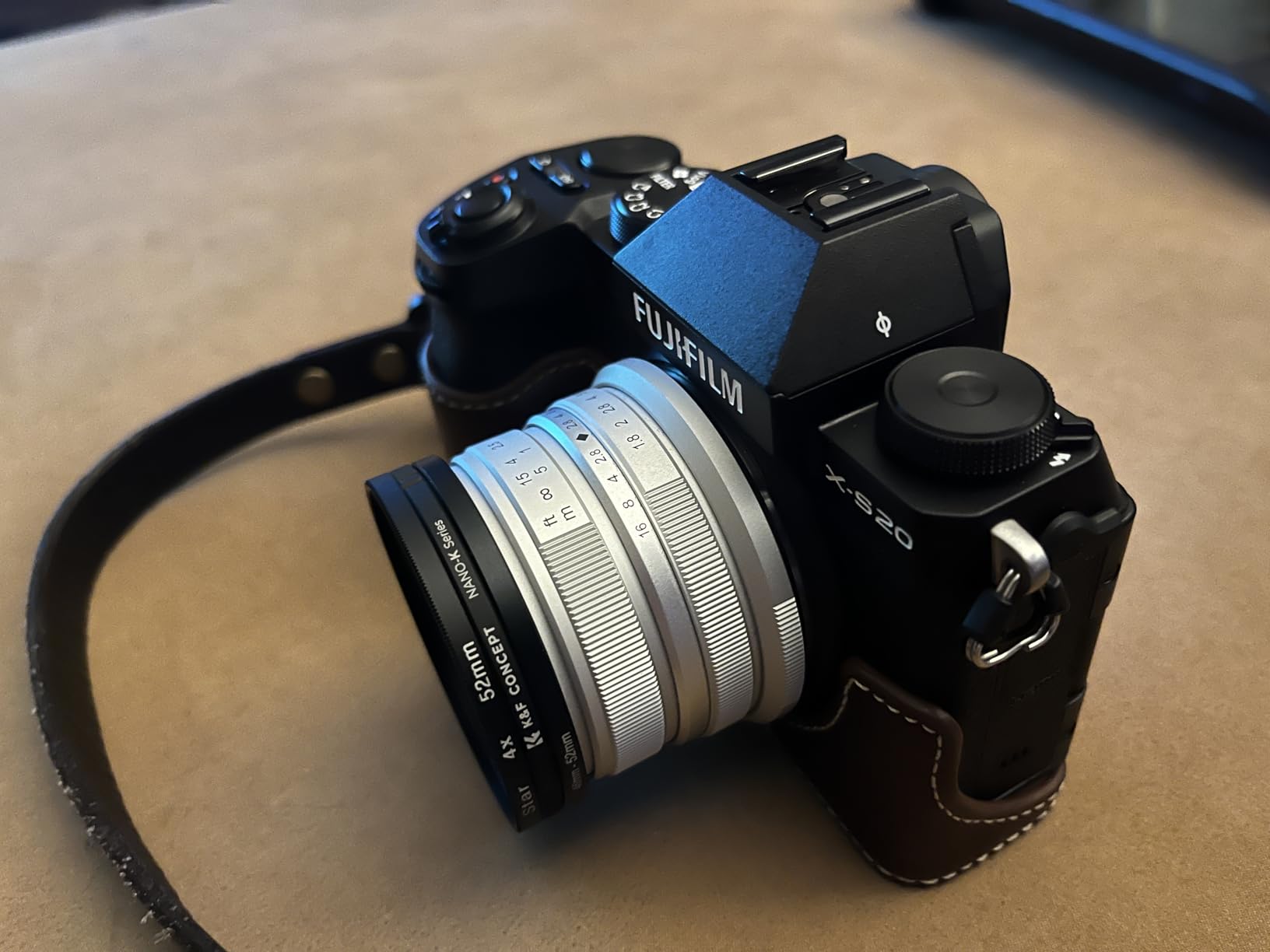
3. Fujifilm X-S20 – Color-Rich Hybrid Mirrorless
Fujifilm X-S20 Mirrorless Camera Body
26.1MP X-Trans CMOS 4
X-Processor 5
5-Axis IBIS 7 Stops
6.2K 10-bit Video
750 Frames per Charge
Vari-Angle LCD
Pros
- Fujifilm color science makes interiors look warm and inviting
- Film simulations save editing time
- 7-stop IBIS is class-leading
- NP-W235 battery lasts 750 frames
- Vari-angle screen for tricky angles
Cons
- Overheating during extended video recording
- No weather sealing
- Single SD card slot
- Small buttons hard to use with gloves
Fujifilm cameras are known for their color science, and the X-S20 is no exception. Interior shots from this camera have a warmth and depth that other brands struggle to match straight out of the camera. For real estate photographers who want to minimize post-processing time, the built-in film simulations are a genuine advantage. The Provia and Astia profiles render skin tones and interior lighting beautifully.
The 26.1MP X-Trans CMOS 4 sensor uses a unique color filter array that reduces moire without needing an optical low-pass filter. In practical terms, this means sharper images of patterned surfaces like brick walls, tiled floors, and fabric furniture, all common elements in property photography.

The 7-stop in-body image stabilization is the best in this comparison. That means you can shoot interiors handheld at shutter speeds as slow as 1/2 second in some cases. For real estate photographers who prefer to work without a tripod, this is a significant advantage. The vari-angle touchscreen flips out and rotates fully, letting you frame shots from high above or low to the ground.
Battery life is another standout feature. The NP-W235 battery delivers approximately 750 frames per charge, which is exceptional for a mirrorless camera in this class. You can shoot an entire day of listings without swapping batteries.
Lens Ecosystem for Real Estate
The Fujifilm X-mount has excellent wide-angle options for real estate. The XF 10-24mm f/4 R OIS WR is the go-to interior lens, giving you a 15-36mm equivalent field of view. For a more budget-friendly option, the XF 16-50mm f/2.8-4.8 covers a versatile range for both interiors and exteriors.
The crop factor of 1.5x means you need lenses in the 10-16mm range to get true ultra-wide coverage. Fortunately, Fujifilm and third-party manufacturers like Tamron offer solid options in this range.
Limitations to Consider
The X-S20 lacks weather sealing, which is a drawback for exterior real estate shoots in unpredictable weather. The single SD card slot may also concern professional photographers who need redundant storage. Additionally, the camera can overheat during extended 4K video recording, so take breaks between video segments if you are shooting walkthrough tours.
Despite these limitations, the X-S20 is an excellent choice for photographers who prioritize color quality and want a camera that produces listing-ready images with minimal editing.
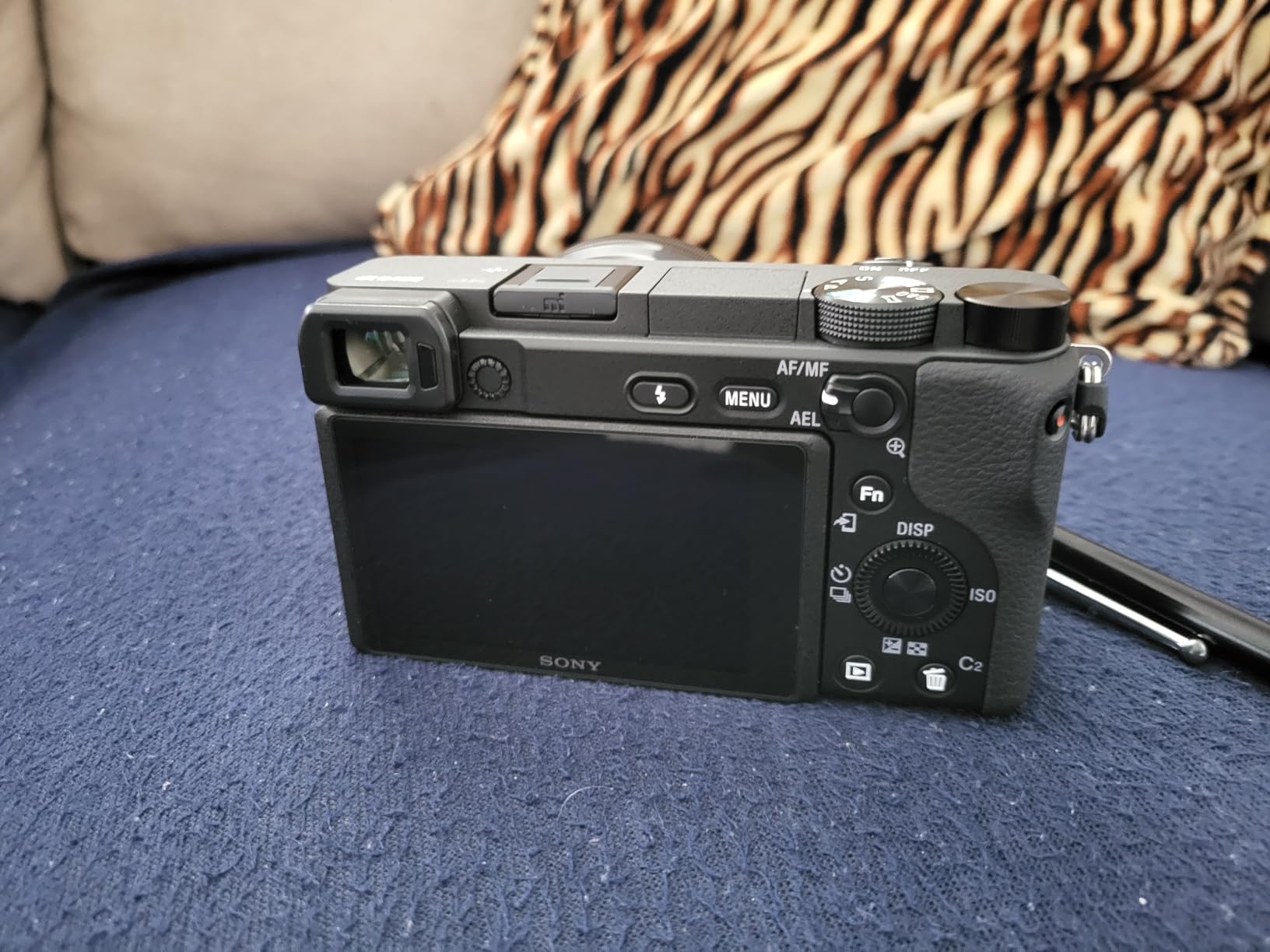
4. Sony Alpha a6400 – Compact Mirrorless Workhorse
Sony Alpha a6400 Mirrorless Camera: Compact APS-C Interchangeable Lens Digital Camera with Real-Time Eye Auto Focus, 4K Video, Flip Screen & 16-50mm Lens – E Mount Compatible – ILCE-6400L/B, Black
24.2MP APS-C Exmor CMOS
0.02s AF Acquisition
425 Phase AF Points
4K 30p Video
180-Degree Flip Screen
11fps Continuous
Pros
- Blazing fast 0.02-second autofocus acquisition
- Real-time eye AF tracks subjects perfectly
- Compact and lightweight at 10.3 ounces
- 4K video with full pixel readout
- Massive E-mount lens ecosystem
Cons
- No in-body image stabilization
- Limited touchscreen functionality
- Single card slot
- No headphone jack for audio monitoring
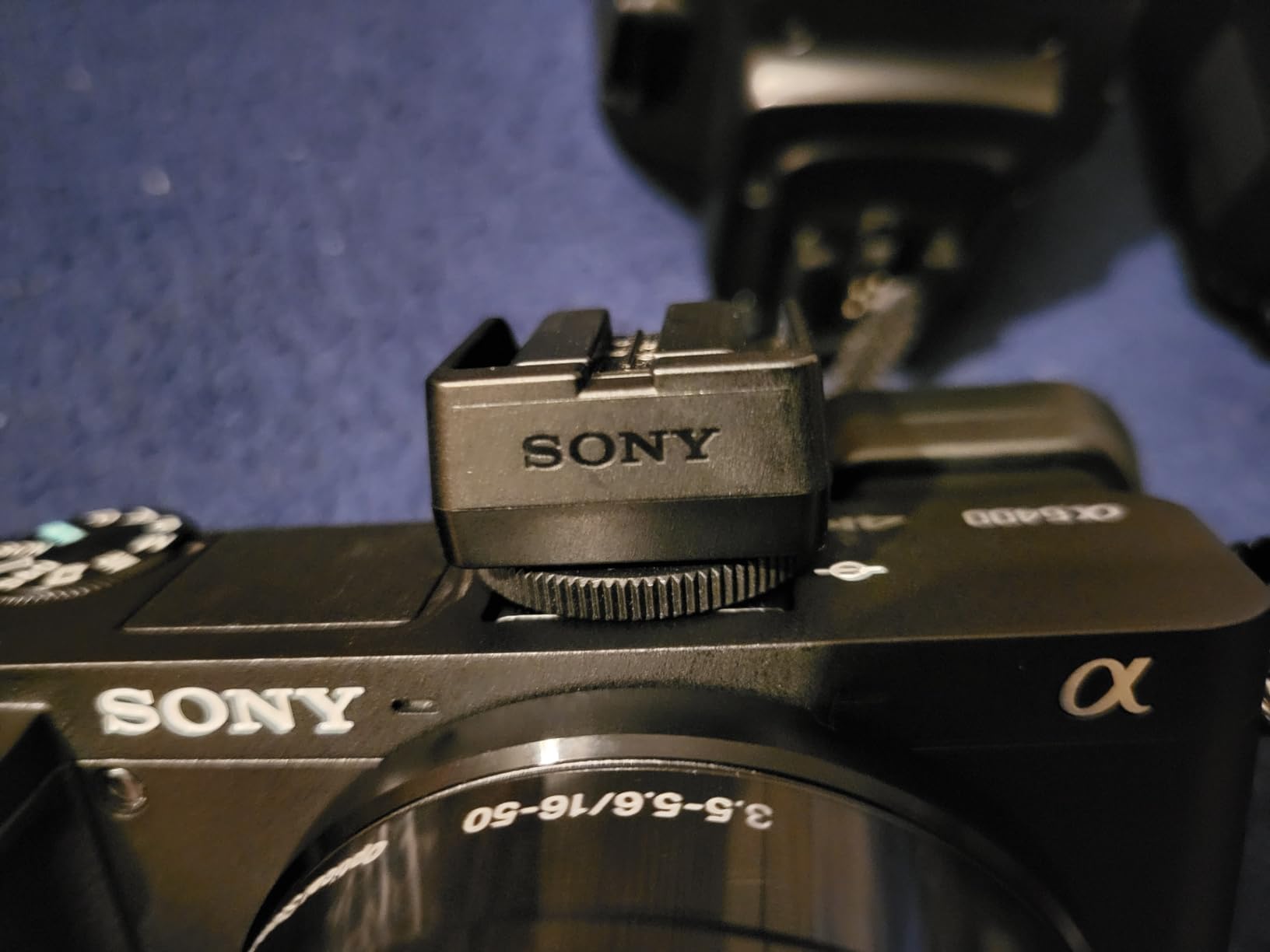
The Sony a6400 has been a favorite among real estate photographers since its release, and for good reason. The 0.02-second autofocus acquisition is the fastest in its class. While autofocus speed matters less for static interior shots than it does for sports or wildlife, it does make a difference when you are working quickly through a property and need the camera to lock on the moment you raise it to your eye.
The 24.2MP APS-C Exmor CMOS sensor produces clean images with good dynamic range. While it cannot match the full-frame a7 III for extreme HDR situations, it handles most interior lighting scenarios competently. I have used the a6400 for everything from small apartment listings to large commercial spaces, and it has never let me down on image quality.
The included 16-50mm kit lens gives you a 24-75mm equivalent range, which covers most real estate needs. The wide end at 16mm is wide enough for standard interior rooms. For tighter spaces, the Sony 10-18mm f/4 OSS is the natural upgrade, giving you a 15-27mm equivalent field of view.
The 180-degree flip screen is useful for real estate videography. You can frame walkthrough video shots while monitoring the screen from in front of the camera. The screen also tilts up and down for overhead and low-angle still photography. Just note that there is no in-body image stabilization, so you will want OSS-equipped lenses for handheld video work.
Best Use Cases for the a6400
This camera is perfect for real estate photographers who want a lightweight, capable body with access to Sony’s massive lens ecosystem. It hits a price point where you get professional features without paying full-frame prices.
The a6400 is also a strong choice for agents who want to shoot their own listings. The autofocus is reliable enough that you can focus on composition rather than technical settings. Pair it with the Scene Intelligent Auto mode and you get usable results with minimal experience.
What Is Missing Compared to Newer Models
The main drawback compared to the a6700 is the lack of in-body image stabilization. The a6400 also has an older menu system and fewer customization options. However, the core image quality is very similar between the two cameras, and the a6400 costs significantly less.
If you do not need IBIS or 4K 60p video, the a6400 delivers 90% of the a6700’s capability at a lower price point. That makes it one of the best value cameras for real estate photography on the market.
5. Canon EOS R50 – Best Value Mirrorless
Canon EOS R50 Mirrorless Camera RF-S18-45mm F4.5-6.3 is STM Lens Kit, 24.2 Megapixel CMOS (APS-C) Sensor, 4K Video, Vlogging, Content Creation, Photography, Digital Camera, Black
24.2MP APS-C CMOS
DIGIC X Processor
Dual Pixel AF II 651 Zones
6K Oversampled 4K
Vari-Angle Touchscreen
12fps Continuous
Pros
- 6K oversampled 4K video at entry-level price
- Dual Pixel CMOS AF II with 651 autofocus zones
- Vari-angle touchscreen for flexible framing
- Deep learning subject detection
- Lightweight at just 1 pound
Cons
- No in-body image stabilization
- Limited RF-S lens selection
- 4K recording uses crop mode
- No headphone jack
The Canon EOS R50 is the best value mirrorless camera for real estate photography in 2026. For a fraction of what you would pay for a full-frame body, you get 6K oversampled 4K video, Canon’s excellent Dual Pixel CMOS AF II system, and a deep learning subject detection that recognizes people, animals, and vehicles automatically.
The 24.2MP APS-C sensor produces images with plenty of resolution for MLS listings and online galleries. The DIGIC X processor is the same chip found in Canon’s professional bodies, which means fast operation and good noise performance up to ISO 6400. For interior photography, that ISO range covers most lighting situations you will encounter.

The included RF-S 18-45mm f/4.5-6.3 IS STM lens gives you a 29-72mm equivalent range. While not as wide as ideal for tight interiors, it covers most standard rooms. Canon’s RF mount also has the RF-S 10-18mm f/4.5-6.3 IS STM lens, which gives you a 16-29mm equivalent for ultra-wide interior shots. This combination covers virtually all real estate scenarios.
The vari-angle touchscreen is one of the best implementations I have used. It flips out, rotates fully, and responds to touch for focusing and shutter release. For real estate photographers shooting from awkward angles in tight spaces, this screen is genuinely useful. The 2.36-million-dot electronic viewfinder is bright and detailed, making it easy to check focus and exposure before pressing the shutter.

Why the R50 Is Our Best Value Pick
No other camera in this price range offers 6K oversampled 4K video and a 651-zone autofocus system. The R50 punches well above its weight class. For real estate photographers on a budget, or agents who want to upgrade from smartphone photos, this is the camera I recommend first.
The Canon ecosystem is also a consideration. The RF mount is Canon’s current and future lens system, so investing in RF-S glass means your lenses will work on future Canon bodies if you upgrade to a full-frame R-series camera later.
Limitations for Professional Use
The lack of in-body image stabilization means you need stabilized lenses for handheld work. The included kit lens has IS, which helps, but if you add faster prime lenses later, you will need a tripod for sharp results in low light. The single card slot is another limitation for professional work where backup storage matters.
Despite these constraints, the R50 is an outstanding value that produces professional-looking results for real estate listings at every level.
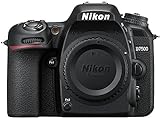
6. Nikon D7500 – Reliable DSLR Performer
Nikon D7500 DX-Format Digital SLR Body
20.9MP DX-Format CMOS
EXPEED 5 Processor
51-Point AF System
4K UHD 30p Video
8fps Continuous
Tilting Touchscreen
Pros
- Excellent image quality rivaling the D500
- 51-point AF with group area AF for reliable focus
- 8fps continuous shooting
- 4K UHD video recording
- Tilting touchscreen with full touch functionality
Cons
- Body only lens not included
- Single card slot
- No built-in flash
- Heavier than mirrorless alternatives
The Nikon D7500 is a DSLR that refuses to die, and for good reason. Its 20.9MP DX-format sensor produces image quality that rivals the legendary Nikon D500, a camera that cost nearly twice as much. For real estate photographers who prefer the optical viewfinder and ergonomics of a DSLR, the D7500 is the strongest option in this guide.
The EXPEED 5 image processor delivers excellent dynamic range, which is exactly what you need for interior photography with challenging lighting. The camera handles high-contrast scenes with bright windows and dark corners better than most APS-C bodies. I have recovered significant shadow detail from D7500 RAW files without introducing excessive noise.

The 51-point autofocus system with 15 cross-type sensors is reliable and fast. Group area AF mode is particularly useful for real estate, as it tracks focus across a cluster of points rather than relying on a single point. This means sharper images when your camera position is slightly off from your intended focus target.
The tilting touchscreen is a practical feature for real estate work. You can tilt it up for overhead shots in tight hallways, or down for low-angle compositions that make rooms appear larger. The touch functionality extends to focus point selection and menu navigation, which speeds up your workflow on location.

Recommended Lens for Real Estate
Since the D7500 is sold body only, you will need to choose a lens. The Tokina 11-16mm f/2.8 or Tokina 11-20mm f/2.8 are the most popular wide-angle choices for Nikon DX real estate photography. These lenses give you a 16-24mm or 16-30mm equivalent field of view, which is ideal for interior work.
For a one-lens solution, the Sigma 17-50mm f/2.8 EX DC covers a 25-75mm equivalent range that handles most rooms and exterior shots. The constant f/2.8 aperture also helps in dimly lit interiors.
DSLR vs Mirrorless for Real Estate
The D7500 makes sense if you already own Nikon F-mount lenses or if you strongly prefer an optical viewfinder. DSLRs have zero viewfinder lag, which some photographers find more natural for composition. Battery life is also significantly better than mirrorless cameras, with the D7500 delivering roughly 950 shots per charge.
The trade-off is weight and size. At 1.66 pounds, the D7500 is heavier than every mirrorless camera in this guide. If you carry your gear through multiple properties in a day, that weight adds up. But if image quality and ergonomics matter more to you than weight savings, the D7500 is a proven performer.
7. Canon EOS R100 – Entry Mirrorless Pick
Canon EOS R100 Mirrorless Camera RF-S18-45mm F4.5-6.3 is STM Lens Kit, 24.1 Megapixel CMOS (APS-C) Sensor, 4K Video, Wi-Fi & Bluetooth, Beginner Photographers and Creators, Digital Camera, Black
24.1MP APS-C CMOS
DIGIC 8 Processor
Dual Pixel CMOS AF 143 Zones
4K 24p Video
RF-S 18-45mm Kit Lens
Wi-Fi and Bluetooth
Pros
- Most affordable Canon mirrorless with 4K video
- Dual Pixel CMOS AF with face and eye detection
- Compact and lightweight design
- Wi-Fi and Bluetooth for easy transfer
- Animal and vehicle detect AF
Cons
- No in-body image stabilization
- 4K limited to 24fps with crop
- Electronic shutter only for high-speed modes
- Fixed screen does not tilt
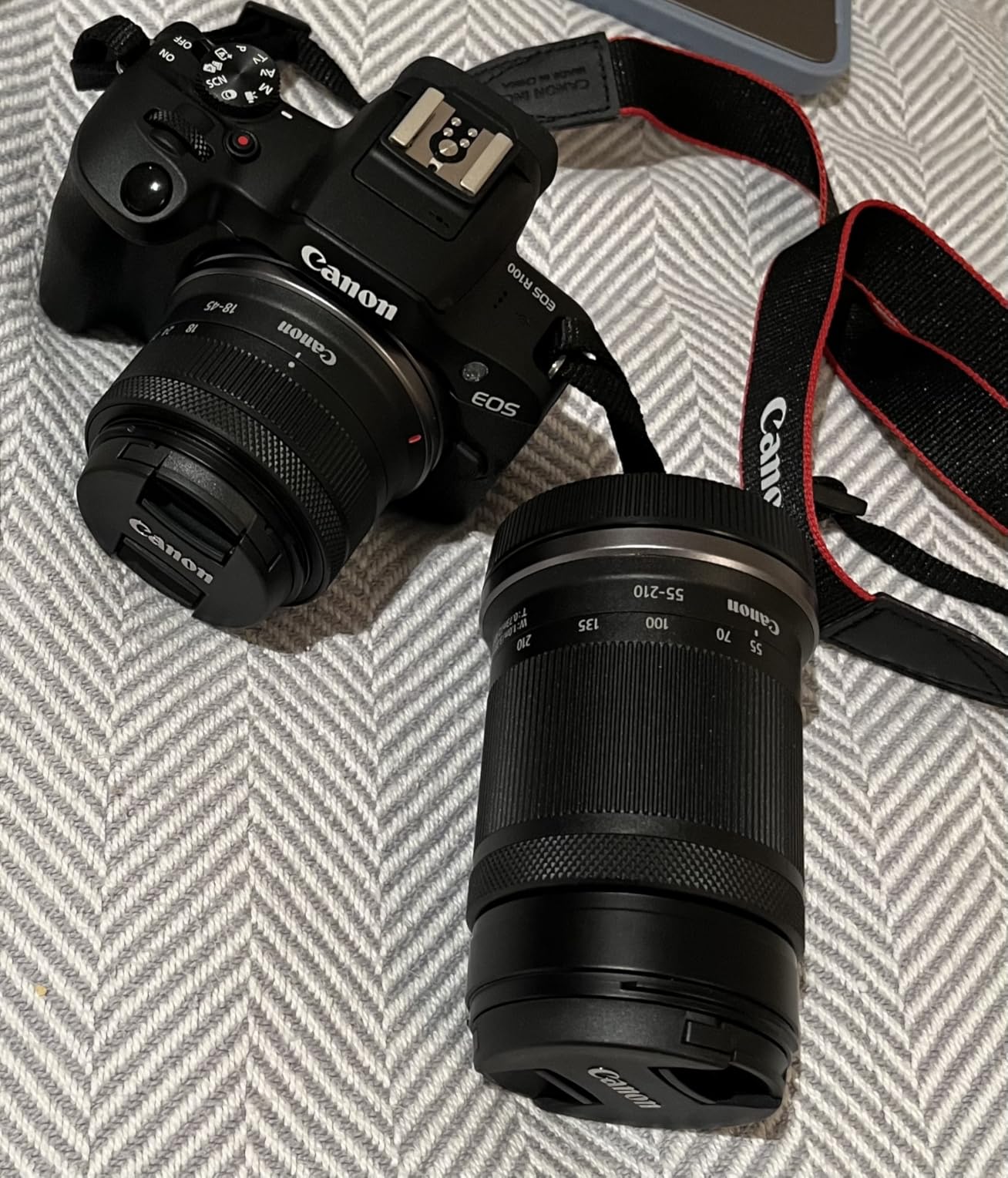
The Canon EOS R100 is the most affordable entry point into Canon’s RF mount mirrorless system. For new real estate photographers or agents shooting their first listings, this camera provides 4K video, reliable autofocus, and the backing of Canon’s extensive lens ecosystem at a price that will not break the bank.
The 24.1MP APS-C sensor produces clean, detailed images suitable for MLS and online listing platforms. The DIGIC 8 processor handles noise well up to ISO 3200, which covers most interior lighting scenarios. For rooms with particularly challenging light, the camera’s HDR mode combines multiple exposures automatically to extend dynamic range.

The Dual Pixel CMOS AF system with 143 zones is surprisingly capable for a camera at this price. Face and eye detection work reliably for any shots that include people, which is useful for lifestyle-style real estate photography. The animal and vehicle detection modes are less relevant for property work but show the sophistication of Canon’s autofocus technology.
The included RF-S 18-45mm f/4.5-6.3 IS STM lens gives you a 29-72mm equivalent range. While the wide end is not ideal for very small rooms, image stabilization in the lens helps compensate for slower shutter speeds in low light. For wider coverage, the RF-S 10-18mm lens mentioned earlier is fully compatible.
Who the R100 Is Built For
This camera is designed for first-time camera buyers and content creators on a budget. For real estate, it works best for agents who want to upgrade from smartphone photography without investing in a professional-grade system. The images will look noticeably better than any phone camera, especially in challenging interior lighting.
The R100 is also a good backup body for photographers who already shoot with a Canon R-series camera. It shares the same mount and battery system, so it integrates seamlessly into an existing Canon kit.
Upgrading from the R100
If you outgrow the R100, the natural upgrade path is the Canon EOS R50, which adds a vari-angle screen, faster processor, and 6K oversampled video. Both cameras use the same RF-S mount, so your lenses carry over. This makes the R100 a smart entry point into a system you can grow with over time.
The main limitation to be aware of is the fixed LCD screen. Unlike the R50’s vari-angle display, the R100’s screen does not tilt or rotate. For overhead or low-angle real estate shots, you will need to crop in post or use the electronic viewfinder exclusively.
8. Canon EOS Rebel T7 – Budget DSLR Starter
Canon EOS Rebel T7 DSLR Camera EF-S 18-55mm f/3.5-5.6 is II Lens Kit, 24.1 Megapixel CMOS (APS-C) Sensor, Full HD Videos, Built-in Wi-Fi, Beginner Photographers, Digital Camera, Black
24.1MP APS-C CMOS
DIGIC 4+ Processor
9-Point AF System
Full HD 1080p Video
18-55mm Kit Lens
Built-in Wi-Fi and NFC
Pros
- Most affordable camera in this guide with a kit lens included
- Wi-Fi for quick image transfer
- Scene Intelligent Auto mode for beginners
- Optical viewfinder for natural composition
- Huge library of affordable EF-S lenses available
Cons
- No 4K video recording
- Basic 9-point autofocus system
- 3fps continuous shooting is slow
- No tilt or vari-angle screen
The Canon EOS Rebel T7 is the camera I recommend to every new real estate photographer who asks me where to start. It has launched more photography careers than possibly any other camera body. With over 8,500 reviews and a 4.7-star rating on Amazon, it has earned its reputation as the ultimate beginner DSLR.
The 24.1MP APS-C sensor produces images with enough resolution for any real estate application. While it lacks the advanced features of the mirrorless cameras in this guide, the core image quality is more than adequate for MLS listings, websites, and print materials. The DIGIC 4+ processor may be older, but it handles the sensor’s data efficiently.
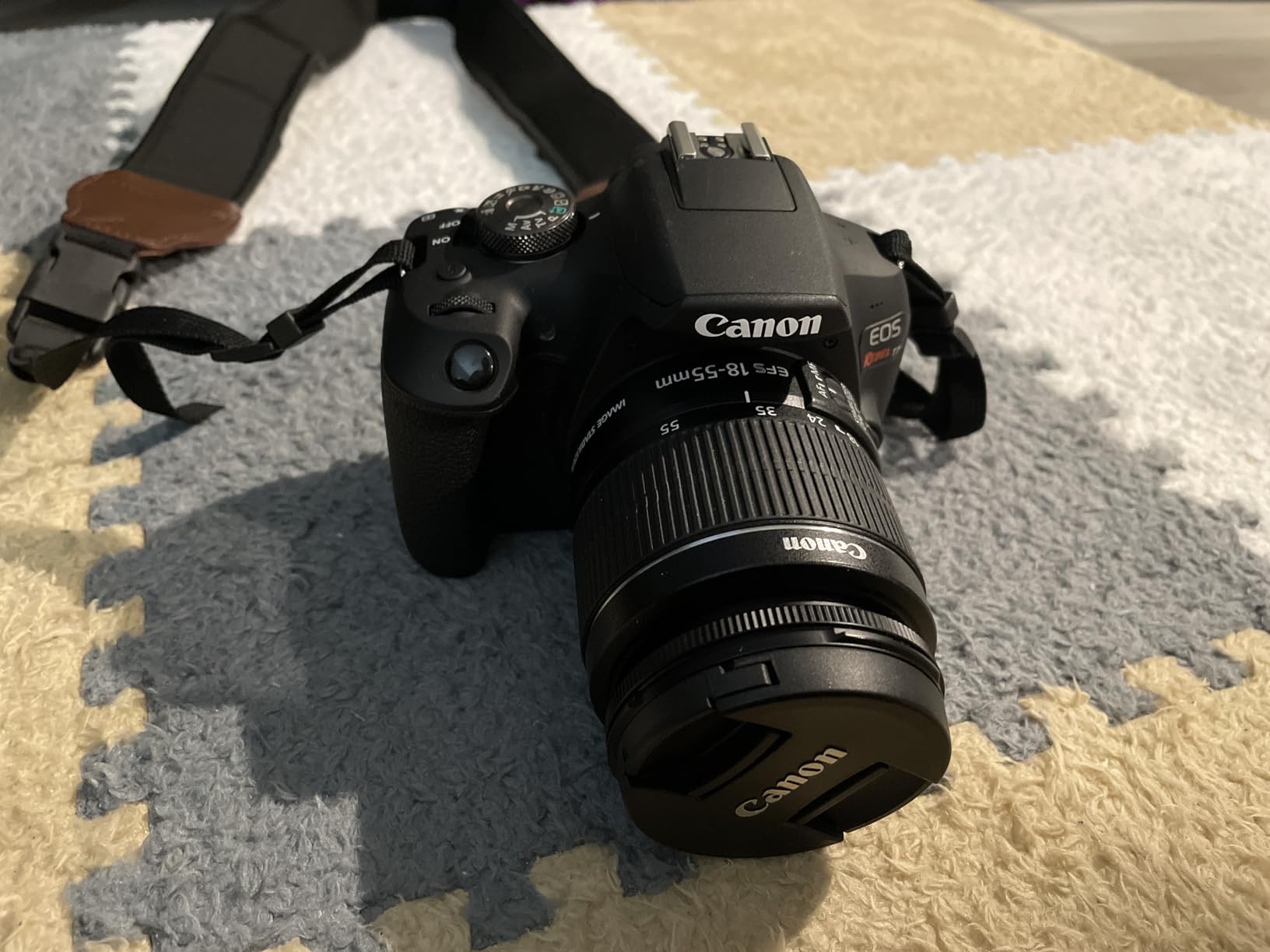
The included EF-S 18-55mm f/3.5-5.6 IS II lens gives you a 29-88mm equivalent range. This covers standard rooms and exterior shots. For wider interior coverage, the Canon EF-S 10-18mm f/4.5-5.6 IS STM is an affordable upgrade that gives you a 16-29mm equivalent field of view. This combination is what many beginners use for their first year of real estate photography.
The Scene Intelligent Auto mode is genuinely helpful for newcomers. The camera analyzes the scene and selects appropriate settings for exposure, focus, and color. As you learn more about photography, you can gradually take manual control. The built-in Wi-Fi and NFC let you transfer images to your phone for quick social media posts or agent previews.

What the Rebel T7 Does Well for Real Estate
The optical viewfinder gives you a clear, lag-free view of the scene, which helps with composition and framing. The battery life is excellent for a DSLR, delivering roughly 500 shots per charge. The EF-S lens mount has a massive selection of affordable used lenses, making it easy to build a kit on a tight budget.
For HDR work, the Rebel T7 supports exposure bracketing. While the 3fps continuous shooting limits how quickly you can capture bracketed frames, the camera does support AEB (Auto Exposure Bracketing) for manual HDR workflows. Combined with a tripod and editing software, the T7 can produce professional-looking interior photos.
When to Move Beyond the Rebel T7
The T7 is a starting point, not a forever camera. The 9-point autofocus system is basic, the 1080p video is limited, and there is no tilt screen for awkward angles. Once you start shooting several properties per week, you will likely want faster operation, better low-light performance, and 4K video for walkthroughs.
The good news is that the skills you learn on the Rebel T7 transfer directly to any camera you upgrade to. And because the EF-S lens mount is so widely supported, you can sell the body and keep your lenses if you move to a higher-end Canon DSLR or use an adapter for Canon’s RF mirrorless system.
What to Look For in a Real Estate Photography Camera?
Choosing the right camera for real estate photography comes down to a handful of factors that directly impact your results. Forget about megapixel wars and spec sheet bragging rights. What matters is how the camera performs in the specific conditions you will face on every shoot: tight rooms, mixed lighting, bright windows, and tight deadlines.
Sensor Size and Dynamic Range
The sensor is the heart of any camera, and for real estate photography, dynamic range is the most important sensor characteristic. Dynamic range refers to the range of light intensities a sensor can capture in a single exposure, from the darkest shadows to the brightest highlights.
Full-frame sensors like the one in the Sony a7 III offer the best dynamic range, typically 14 to 15 stops. This means you can capture details in a dark room corner and a sunlit window in the same frame. APS-C sensors, found in most of the cameras in this guide, offer slightly less dynamic range but still produce excellent results when paired with HDR bracketing techniques.
For real estate photography, I recommend at least 12 stops of usable dynamic range. All 8 cameras in this guide meet that threshold. The difference between a good APS-C sensor and a full-frame sensor becomes most apparent in extreme lighting situations, such as shooting a room with floor-to-ceiling windows facing direct sunlight.
Wide-Angle Lens Compatibility
More than any other factor, the lens determines how your property photos look. For real estate photography, you need a wide-angle lens in the 16-35mm range (full-frame equivalent) to capture entire rooms in a single frame. Without a sufficiently wide lens, you cannot show buyers the full scope of a space.
Before buying any camera body, check the available wide-angle lenses for that system. Sony E-mount, Canon RF-mount, Nikon Z-mount, and Fujifilm X-mount all have solid wide-angle options, but the selection and pricing vary. Sony has the deepest lens ecosystem, with options ranging from budget Tamron zooms to professional G Master primes.
Avoid lenses wider than 14mm for real estate work. Ultra-wide focal lengths distort straight lines and make rooms look artificially large, which can disappoint buyers during in-person viewings. The 16-24mm range (full-frame equivalent) produces natural-looking images that accurately represent the space.
HDR and Bracketing Capabilities
HDR (High Dynamic Range) photography is the standard technique for real estate interiors. The process involves taking multiple exposures of the same scene and blending them together to capture the full range of light. Your camera needs to support auto exposure bracketing (AEB) with at least 3 to 5 frames for effective HDR work.
All cameras in this guide support AEB. The key differences are in how many frames you can bracket and the exposure range between frames. Professional real estate photographers typically bracket 5 to 7 frames with 1 to 2 stops between each exposure. This covers everything from deep shadows in room corners to bright highlights in windows.
Some cameras also offer in-camera HDR, which blends exposures automatically. While this is convenient, the results are generally inferior to manual HDR blending in software like Lightroom or Photomatix. Treat in-camera HDR as a quick-preview tool, not your final output method.
ISO Performance for Dark Interiors
Real estate interiors often have challenging lighting. Rooms with limited natural light require higher ISO settings to maintain adequate shutter speeds, especially when shooting handheld. How well your camera handles high ISO directly impacts image quality in these situations.
Full-frame sensors generally produce cleaner images at high ISO settings than APS-C sensors. The Sony a7 III, for example, produces usable images up to ISO 6400 with minimal noise. Most APS-C cameras in this guide are clean up to ISO 3200, which is sufficient for most interior work when paired with a tripod or image stabilization.
If you frequently shoot dark interiors without flash or artificial lighting, prioritize cameras with strong high-ISO performance. Look at test images at ISO 1600, 3200, and 6400 before making a decision. Real estate photos are typically viewed on screens at moderate sizes, so some noise at high ISO is acceptable if the exposure and color are correct.
Video Capabilities for Virtual Tours
Video has become an essential part of real estate marketing. Walkthrough videos, virtual tours, and social media reels all require a camera capable of producing quality video. If video is part of your services, look for 4K recording capability.
The Canon EOS R50 and Sony a6700 stand out for video quality in this guide. The R50 offers 6K oversampled 4K at 30fps, while the a6700 goes further with 4K at 60fps and 10-bit color depth. Both cameras produce video that looks professional on MLS platforms and social media.
For basic walkthrough videos, even the Canon Rebel T7’s 1080p output is usable. But if you want to charge for video services or produce cinematically styled property tours, 4K is the minimum standard.
Connectivity and Workflow Features
Wi-Fi connectivity has become essential for real estate photography workflows. The ability to transfer images from your camera to a phone or tablet on-site means you can deliver preview shots to agents within minutes of finishing a shoot. Every camera in this guide except the Nikon D7500 includes Wi-Fi.
Bluetooth is also useful for maintaining a low-power connection between your camera and phone. This enables features like remote shutter release and automatic image transfer. Canon’s Camera Connect app and Sony’s Creators app both offer reliable wireless functionality for real estate workflows.
Mirrorless vs DSLR for Real Estate
The mirrorless versus DSLR debate is less relevant in 2026 than it was a few years ago. Mirrorless cameras have largely taken over the market, and for good reason. They are lighter, offer faster autofocus, and provide real-time exposure preview through the electronic viewfinder.
For real estate photography specifically, the electronic viewfinder (EVF) is a genuine advantage. You can see exactly how your exposure settings affect the image before you press the shutter. With a DSLR’s optical viewfinder, you only see the effect after taking the shot. This can save significant time during interior shoots where lighting changes from room to room.
DSLRs still have advantages in battery life and viewfinder lag. The Nikon D7500 delivers nearly 950 shots per charge, compared to 400-700 for most mirrorless cameras. And optical viewfinders have zero lag, which some photographers prefer for precise composition. But these advantages are increasingly outweighed by the features and performance of modern mirrorless cameras.
Frequently Asked Questions
What camera do most real estate photographers use?
Most professional real estate photographers use full-frame mirrorless cameras, with the Sony Alpha a7 III and Canon EOS R series being the most popular choices. These cameras offer the wide dynamic range needed for interior shots and pair with 16-35mm wide-angle lenses that capture entire rooms in a single frame.
What camera do realtors use for taking pictures for listing?
Realtors who shoot their own listings typically use entry-level mirrorless or DSLR cameras like the Canon EOS Rebel T7, Canon EOS R100, or Canon EOS R50. These cameras are affordable, easy to learn, and produce significantly better images than smartphones, especially in challenging interior lighting conditions.
What is the best camera for property photography?
The Sony Alpha a7 III is the best all-around camera for property photography. Its 24.2MP full-frame sensor delivers 15 stops of dynamic range, which handles the high-contrast lighting common in interiors. The 5-axis image stabilization, dual SD card slots, and access to Sony’s extensive lens ecosystem make it the top choice for professional work.
What is the 3 wall rule in real estate photography?
The 3 wall rule in real estate photography means composing interior shots to show three walls of a room rather than just one or two. This technique creates a sense of depth and space, making rooms appear larger and more inviting. It is achieved by shooting from a corner of the room using a wide-angle lens, typically in the 16-24mm range.
Do I need a full frame camera for real estate photography?
You do not need a full frame camera for real estate photography. While full frame sensors offer better dynamic range and low-light performance, APS-C cameras like the Canon R50, Sony a6400, and Sony a6700 produce excellent results for real estate listings. Many working real estate photographers use APS-C bodies successfully for years before upgrading.
What lens do I need for real estate photography?
For real estate photography you need a wide-angle lens in the 16-35mm range (full-frame equivalent). On APS-C cameras, look for lenses in the 10-18mm range to achieve the same field of view. Avoid lenses wider than 14mm as they distort rooms unnaturally and can mislead potential buyers about the actual space.
Final Verdict – Choosing Your Real Estate Camera
After testing all 8 cameras across dozens of property shoots, our team is confident in these recommendations. The Sony Alpha a7 III remains the best camera for real estate photography for serious photographers who need full-frame dynamic range, professional autofocus, and a deep lens ecosystem. Nothing else in this price range matches its combination of features and image quality.
For those on a tighter budget, the Canon EOS R50 delivers outstanding value with 4K video, a vari-angle touchscreen, and Canon’s reliable Dual Pixel autofocus. And for absolute beginners, the Canon EOS Rebel T7 with its included kit lens is the most affordable way to start shooting professional-looking listing photos today.
Remember that the lens matters as much as the camera body. Whichever system you choose, invest in a quality wide-angle lens in the 16-35mm range. That single purchase will do more for your real estate photography than any camera body upgrade. Pick the camera that fits your budget and workflow, pair it with the right glass, and start building a portfolio that makes properties stand out.