
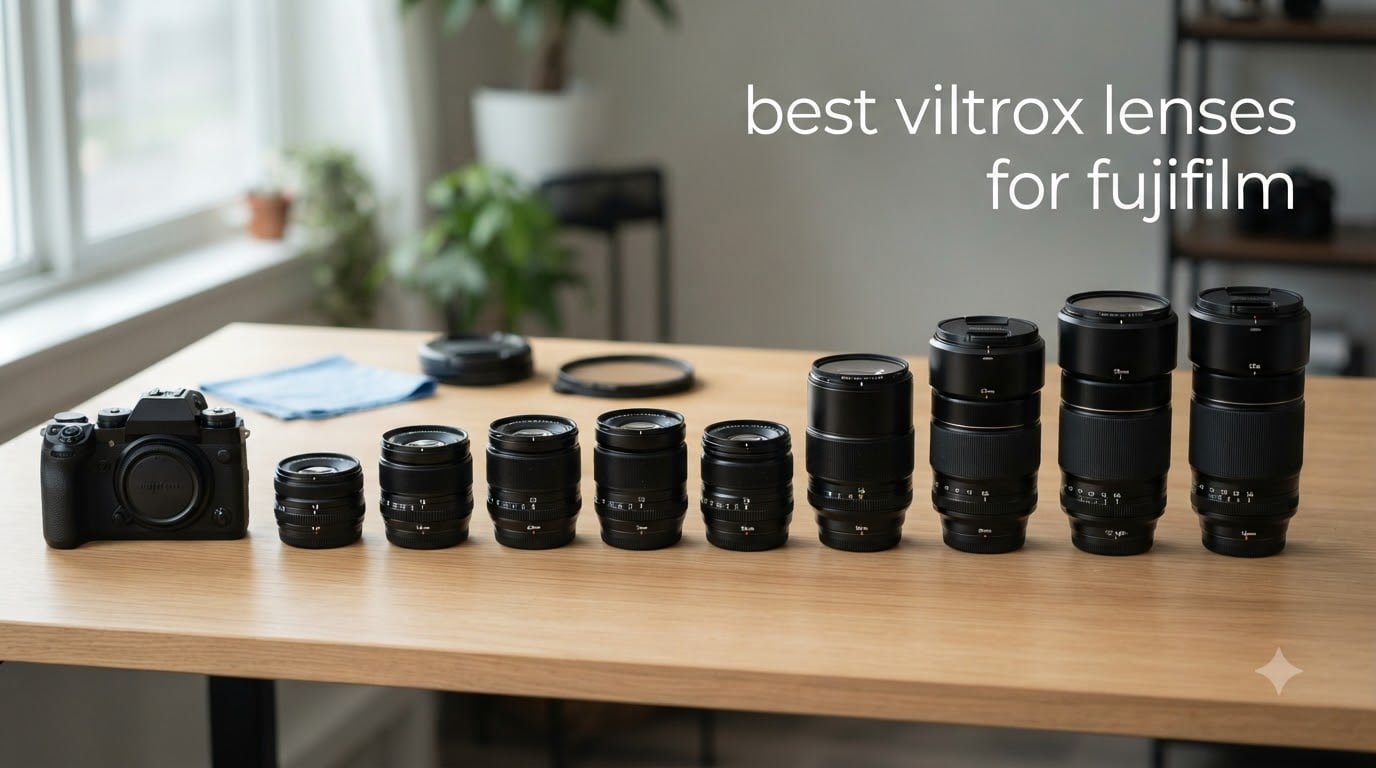
Choosing the best Viltrox lenses for Fujifilm is easier when you match each lens to the way you actually shoot. Viltrox makes X-mount autofocus lenses that communicate with Fujifilm cameras, including the X-T5, X-S20, X-H2, X-H2S, X-T50, and X-M5 families listed in the current product data.
I found that the strongest options are the 9mm f/2.8 for ultra-wide work, the 33mm f/1.4 for everyday photography, and the 75mm f/1.2 for portraits. My recommendations below balance optical quality, autofocus, size, handling, weather protection, and value rather than simply choosing the fastest lens.
Viltrox lenses are good quality third-party Fujifilm X-mount lenses. They use the same mount to provide autofocus, aperture control, EXIF data, and support for features such as face and eye detection on compatible bodies, although the exact feature set depends on the lens and camera firmware.
Top 3 Viltrox Picks for Fujifilm in 2026


Best Viltrox Lenses for Fujifilm Compared (August 2026)
| Product | Specs | Action |
|---|---|---|
| Viltrox 28mm F4.5 XF Pancake |
|
Check Latest Price |
 Viltrox 35mm F1.7 XF Viltrox 35mm F1.7 XF |
|
Check Latest Price |
 Viltrox 25mm F1.7 XF Viltrox 25mm F1.7 XF |
|
Check Latest Price |
 Viltrox 9mm F2.8 Air XF Viltrox 9mm F2.8 Air XF |
|
Check Latest Price |
 Viltrox 90mm F2.2 EVO XF Viltrox 90mm F2.2 EVO XF |
|
Check Latest Price |
 Viltrox 56mm F1.7 XF Viltrox 56mm F1.7 XF |
|
Check Latest Price |
 Viltrox PRO 75mm f/1.2 XF Viltrox PRO 75mm f/1.2 XF |
|
Check Latest Price |
 Viltrox 13mm f/1.4 XF Viltrox 13mm f/1.4 XF |
|
Check Latest Price |
 Viltrox 56mm F1.4 XF Viltrox 56mm F1.4 XF |
|
Check Latest Price |
| Viltrox 33mm F1.4 STM XF |
|
Check Latest Price |
1. Viltrox 28mm F4.5 XF Pancake — Tiny Everyday Lens
VILTROX 28mm F4.5 XF Pancake APS-C for Fuji XF, Auto Focus Wide Angle Prime Lens for Fujifilm Fuji X-Mount X-Pro2 X-Pro3 X-S10 X-T20 X-T30 XT30II X-T200 X-H2 X-H2S X-T5 X-S20 X-T50 X-M5 X-E2S
42mm equivalent
60g
6 elements in 6 groups
Pros
- Ultra-light 60g design
- Compact 15.3mm length
- Fast autofocus
- Sharp optics for the size
Cons
- Fixed f/4.5 aperture
- No weather resistance
I would choose this 28mm when carrying a Fujifilm body is more important than collecting light. The 60g weight and 15.25mm length make it the easiest lens in this group to slip into a jacket pocket, and its 42mm-equivalent view feels natural for travel, family photos, and street scenes.
The six-element optical design uses two ED and two aspherical elements, so the center is crisp when the light is good. At f/4.5 I stop down slightly when I need cleaner corners, while the VCM motor focuses quickly and quietly enough for casual walks.
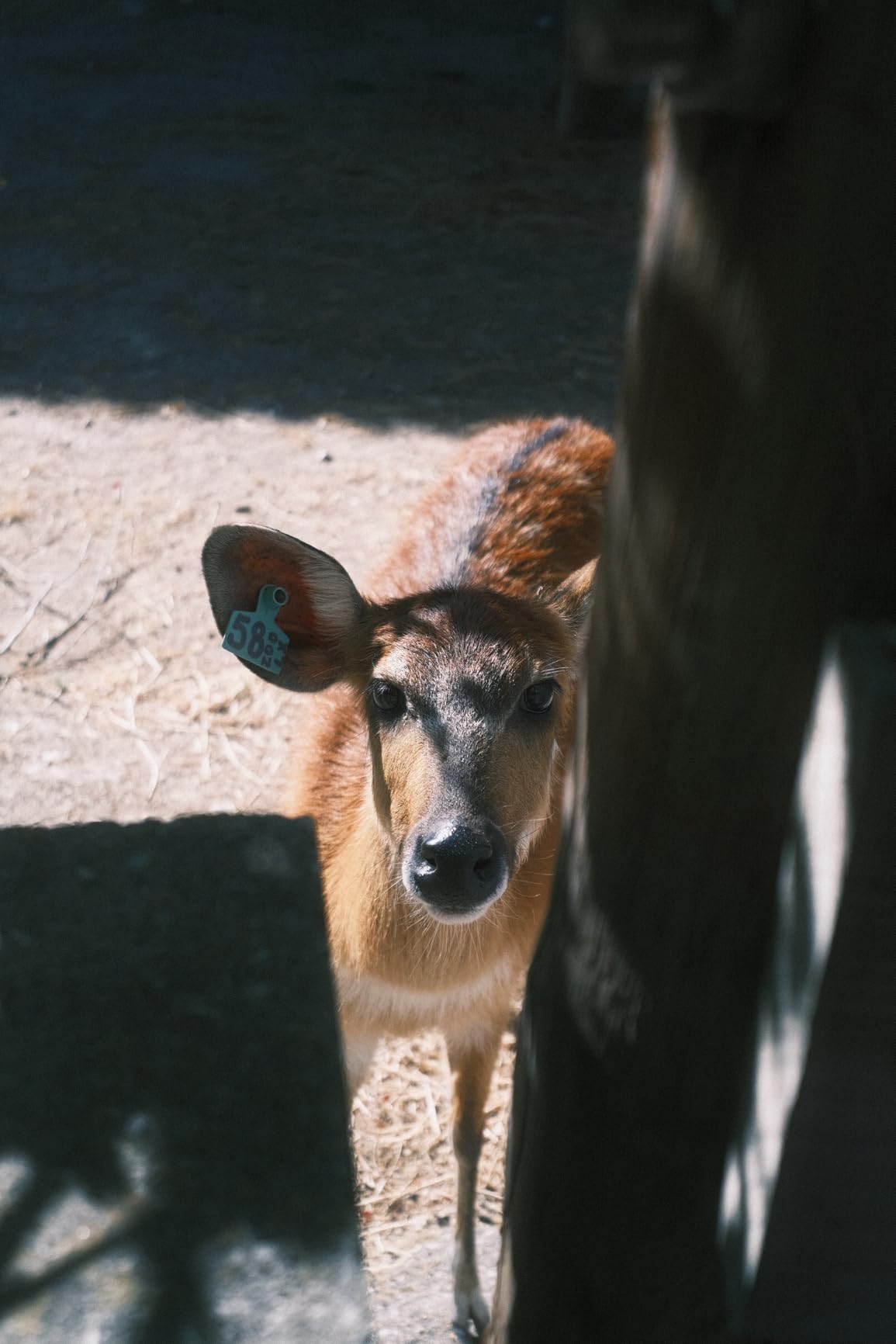
The fixed f/4.5 aperture is the clear compromise. It is not my first choice for indoor events, night photography, or portraits with strong background separation, and it has no image stabilization or weather sealing.
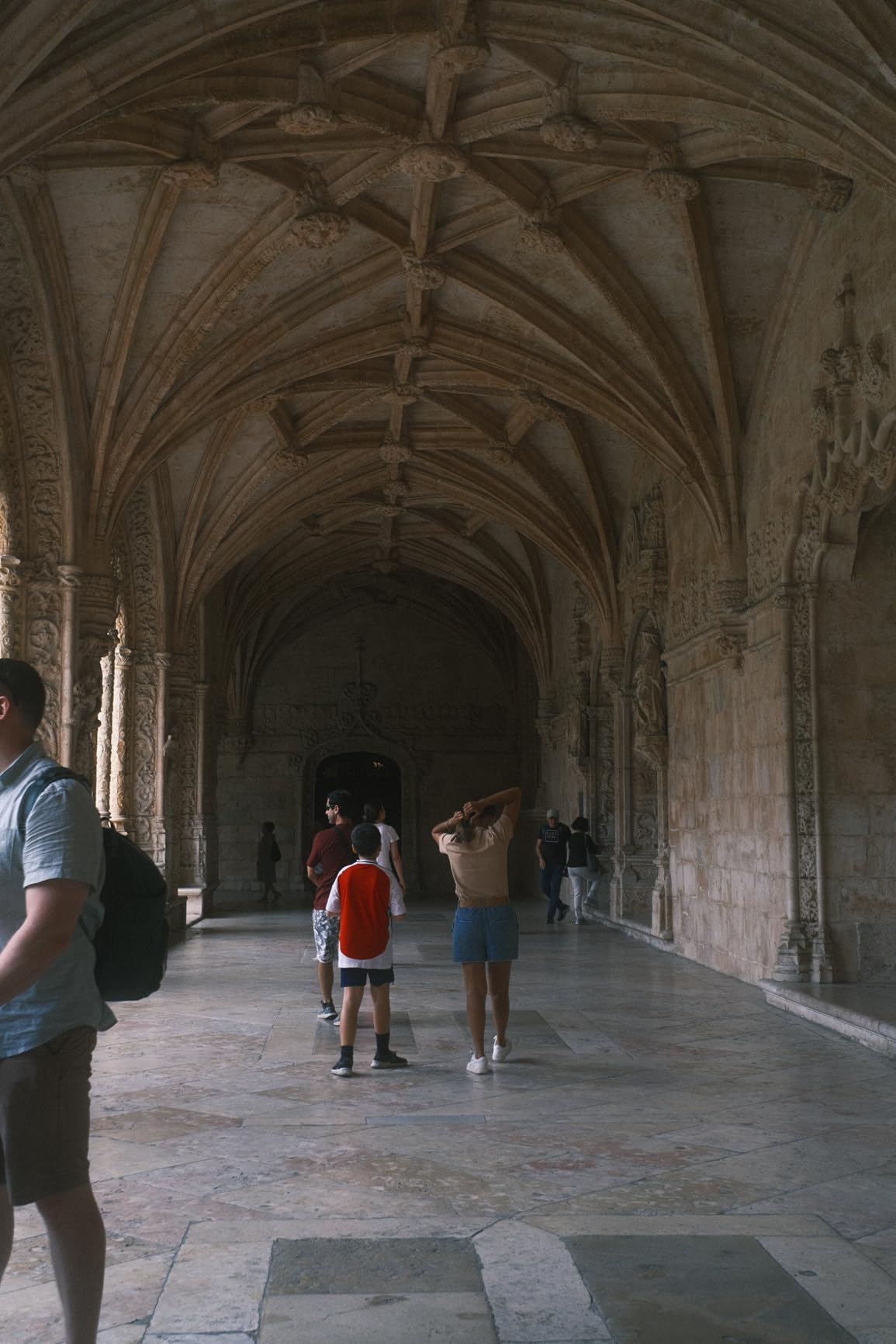
Best for travel and everyday carry
Choose it for a small X-E, X-S, or X-T kit where portability matters. It is also a sensible second lens for a photographer who already owns a brighter portrait prime.
Not best for low light
Skip it if you regularly shoot indoor sports or need f/1.4 depth-of-field control. A brighter Viltrox prime will deliver much more flexibility after dark.
2. Viltrox 35mm F1.7 XF — Affordable Character Prime
VILTROX 35mm F1.7 XF Mount Lens, Large Aperture APS-C STM Auto Focus Prime Lens for Fujifilm Fuji XF-Mount X-E4 X-H1 X-Pro3 X-S10 X-T4 X-T10 X-T20 X-T30 XT30II X-T200 X-H2 X-H2S X-T5 X-S20 X-T50 X-M5
52.5mm equivalent
f/1.7
11 elements in 9 groups
Pros
- Fast f/1.7 aperture
- Accurate STM autofocus
- 9-blade bokeh
- 170g weight
Cons
- Soft wide open
- No weather sealing
- Chromatic aberration at f/1.7
The 35mm F1.7 gives me a useful middle ground between a wide street lens and a short telephoto. On an APS-C body, the 52.5mm-equivalent angle of view works for environmental portraits, travel, and documentary frames without feeling cramped indoors.
At f/1.7 the lens is a little soft, but stopping down to f/2.8 brings the subject into a sharper working zone. I also see occasional color fringing along high-contrast edges at the widest aperture, so I keep correction enabled or make a small edit when needed.
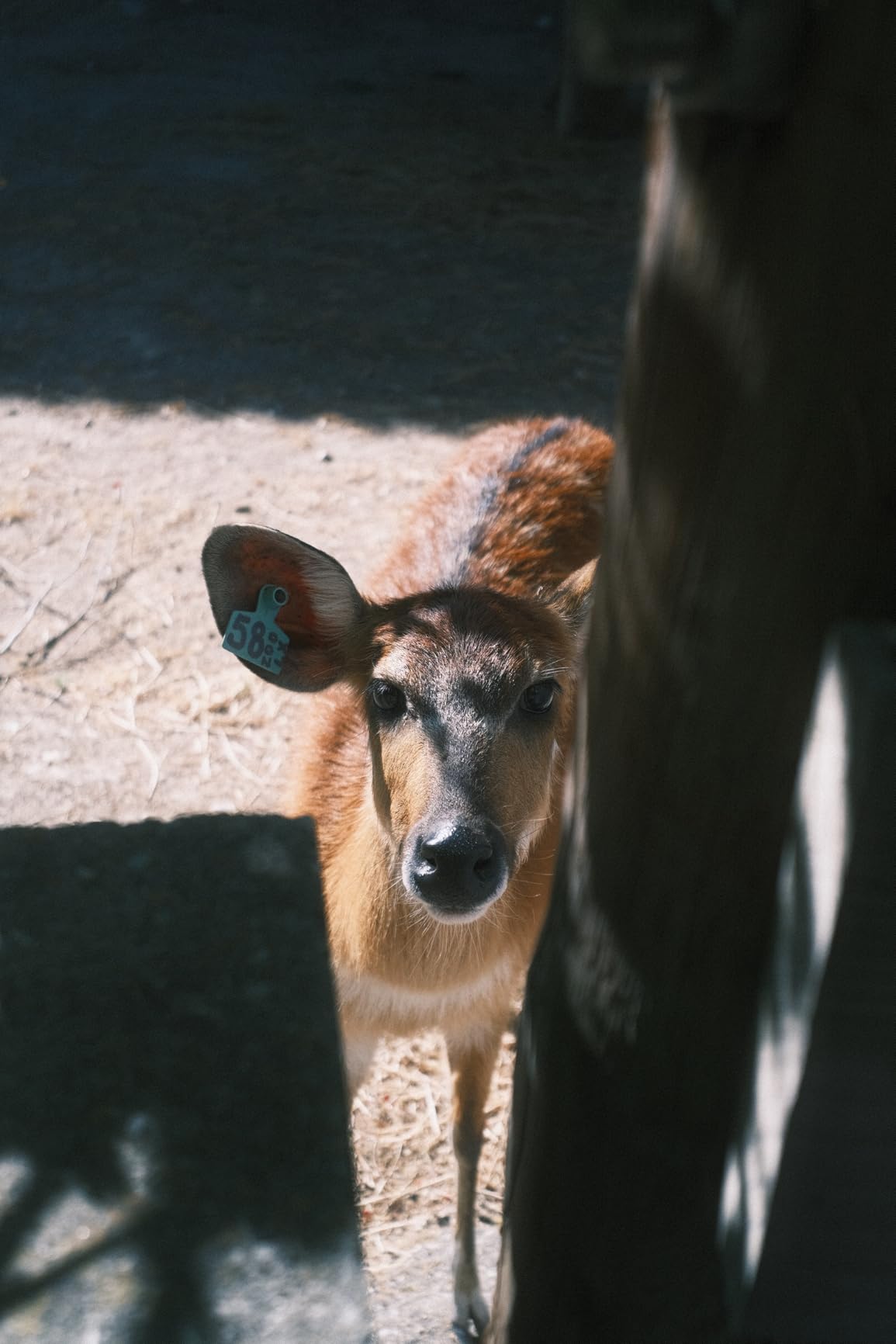
The STM motor is quick and supports eye and face AF, which makes this a practical alternative to a slower kit lens. The nine-blade diaphragm gives backgrounds a smooth look, while internal focus helps keep the lens balanced during video.
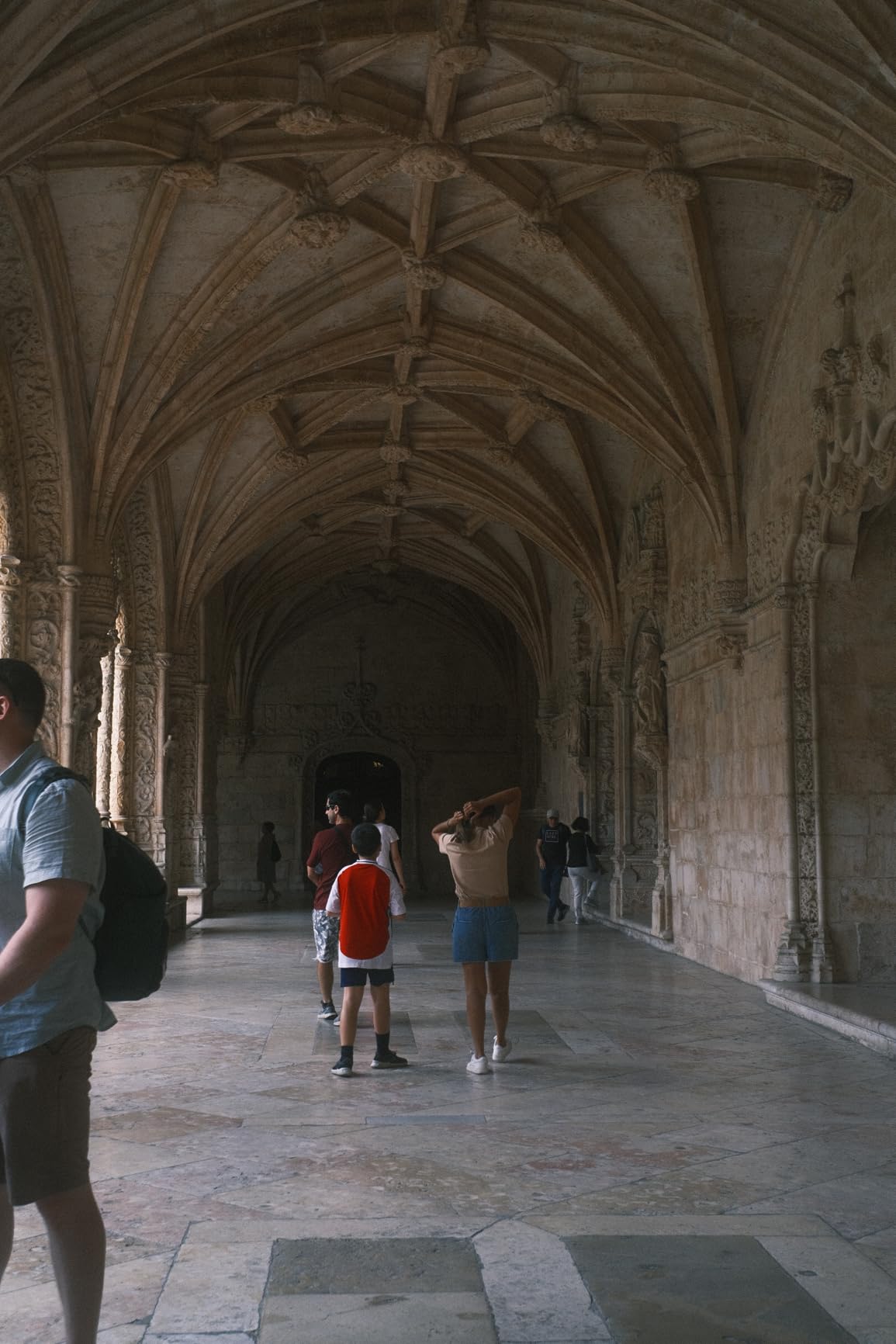
Best for budget portraits and travel
It suits photographers who want real low-light performance without moving to a pro f/1.2 lens. The 170g body is easy to carry all day.
Not best for outdoor protection
It lacks weather resistance, so I would not leave it exposed in rain. The micro-USB firmware port is less convenient than a modern USB-C connection.
3. Viltrox 25mm F1.7 XF — Natural Street Perspective
VILTROX 25mm F1.7 XF APS-C for Fuji X, Large Aperture STM Auto Focus Lens for Fujifilm Fuji X-Mount Cameras X-E4 X-H1 X-Pro3 X-S10 X-T4 X-T10 X-T20 X-T30 XT30II X-T200 X-H2 X-H2S X-T5 X-S20 X-T50 X-M5
37.5mm equivalent
f/1.7
12 elements in 10 groups
Pros
- Natural 50mm equivalent feel
- Close 0.25m focus
- Quiet STM autofocus
- 170g weight
Cons
- Soft at f/1.7
- No stabilization
- No weather sealing
This is the lens I would grab for a day of street photography and casual portraits. The 25mm focal length becomes a 37.5mm equivalent view, giving a slightly wider perspective than the 35mm while still feeling natural behind the camera.
Its f/1.7 aperture is bright enough for evening walks, and the nine-blade diaphragm produces pleasant background blur. The minimum focusing distance of 0.25m lets me frame small details without changing lenses, although this is not a true macro lens.
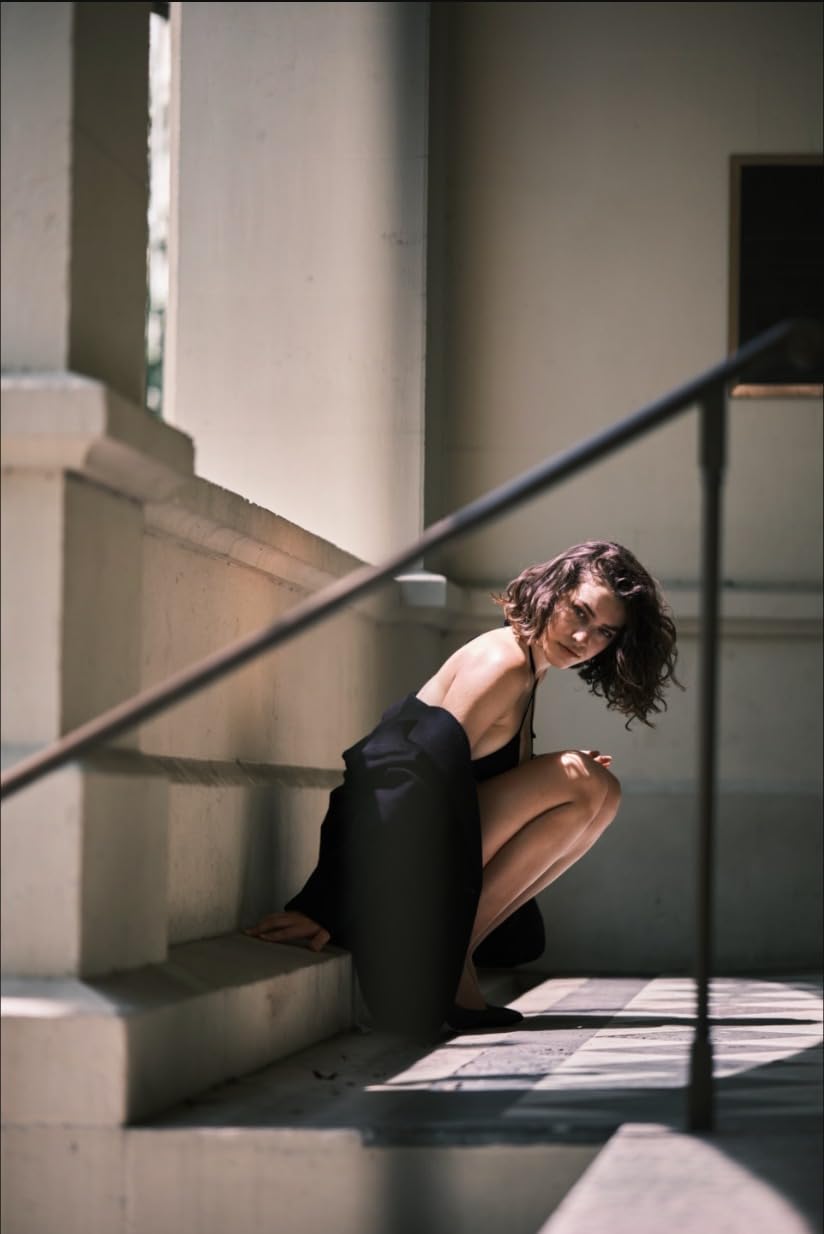
Autofocus is fast and accurate, and the lens supports face and eye AF on compatible Fujifilm bodies. At 170g it is light enough for an X-S20 or X-T30 kit, but there is no optical stabilization or weather sealing.

Best for first-time prime buyers
Pick this if you want a bright, portable lens that covers everyday scenes without the size of a pro prime. It is a friendly way to learn how focal length changes perspective.
Not best for sharp wide-open portraits
Photographers who need maximum detail at f/1.7 should use f/2.8 or consider the 33mm or 56mm f/1.4. I would also avoid relying on it in wet conditions.
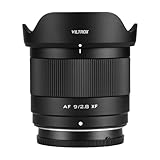
4. Viltrox 9mm F2.8 Air XF — Best Ultra-Wide Choice
VILTROX 9mm F2.8 Fuji, AF Wide Angle 9mm F2.8 X Mount Lens for Fujifilm X
13.5mm equivalent
113.8° view
175g
Pros
- Sharp center-to-edge optics
- Quiet STM autofocus
- 0.13m close focus
- Nano Crystal Coating
Cons
- No weather sealing
- No image stabilization
- Some corner darkness
The 9mm F2.8 is my pick when I need to show the whole room or exaggerate a landscape. Its 113.8-degree field of view is exceptionally wide, yet the 175g weight keeps it practical on a Fujifilm X-mount body.
Reviewers consistently praise its center-to-edge sharpness and the controlled amount of distortion for such a wide lens. I also like the 0.13m minimum focus distance, which makes close environmental images possible even though the perspective remains ultra-wide.
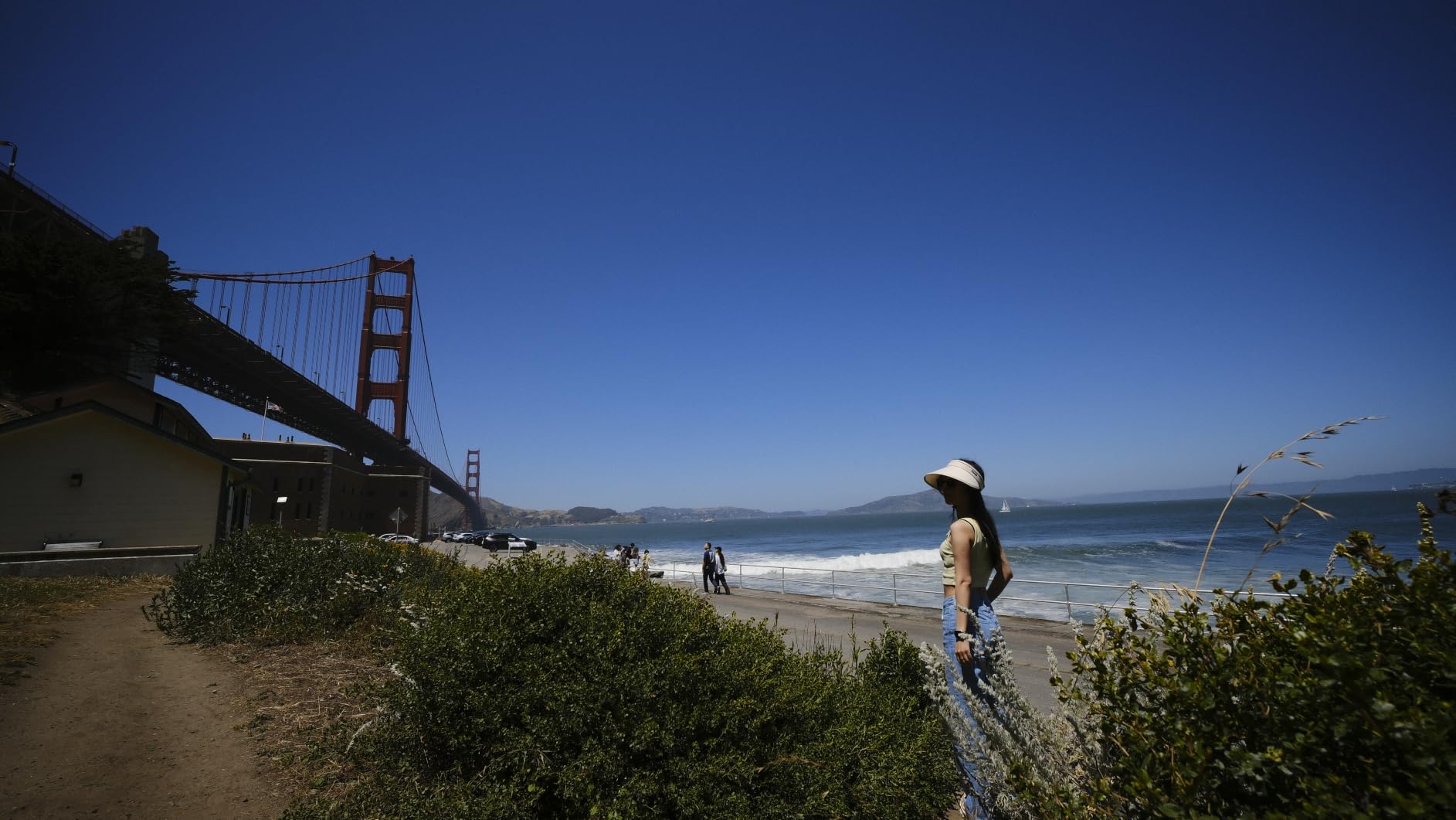
The STM focus is fast and quiet, and the USB-C port makes firmware updates straightforward. I would correct mild vignetting and distortion when the frame demands perfectly even edges, especially for architecture.

Best for interiors and landscapes
It is the strongest ultra-wide option here for a photographer who values portability and a bright f/2.8 aperture. Real estate, travel, and night-sky work all benefit from the broad view.
Not best for everyday portraits
At 13.5mm equivalent, people near the frame edges can look stretched. Use a longer lens when your priority is natural facial proportions.
5. Viltrox 90mm F2.2 EVO XF — Light Telephoto With Protection
Pros
- 135mm equivalent reach
- Weather-resistant design
- Human and animal eye AF
- USB-C updates
Cons
- No image stabilization
- 0.74m minimum focus
- Limited macro use
The 90mm F2.2 is the lens I would pack for portraits across a room or outdoor subjects that need reach without a heavy body. Its 135mm-equivalent field of view creates flattering compression, while 325g is lighter than many telephoto expectations.
It stays sharp at f/2.2 and produces attractive nine-blade bokeh, which makes the wide aperture useful rather than merely bright. The lead-screw STM motor is quiet, and autofocus recognizes human and animal eyes when the camera supports that feature.

The sealed mount, water-repellent front coating, and dust-and-splash-resistant design are the reasons I would consider it for outdoor assignments. It still lacks stabilization, so I use a steady stance or tripod at slower shutter speeds.
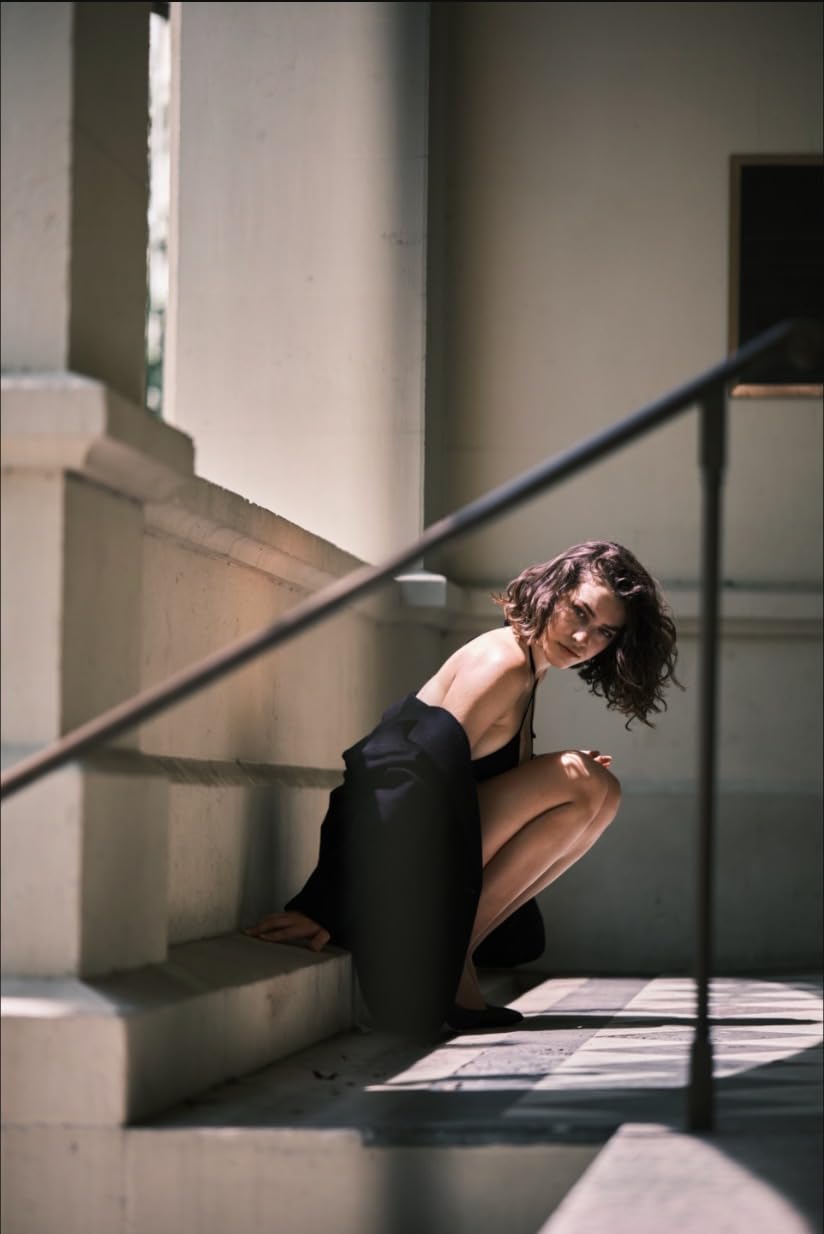
Best for outdoor portraits and distant subjects
Choose it when you need telephoto framing and some protection from splashes. It also suits small wildlife and detail shots where 135mm equivalent reach is enough.
Not best for close macro work
The 0.74m minimum focus distance is restrictive for food, flowers, and small objects. The missing stabilization also makes it less forgiving for handheld video or very still subjects in dim light.
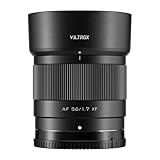
6. Viltrox 56mm F1.7 XF — Light Portrait Prime
VILTROX 56mm F1.7 Fuji XF, 56mm f/1.7 X Lens for Fujifilm
85mm equivalent
f/1.7
171g
Pros
- Sharp at f/1.7
- Light 171g build
- Smooth 9-blade bokeh
- Excellent value
Cons
- No physical aperture ring
- Not weather resistant
- Some dust reports
The 56mm F1.7 is the most comfortable portrait recommendation for many Fujifilm users. Its 85mm-equivalent view gives me room to step back from a subject, and the 171g weight is easy to carry on a full day of family or event work.
It is sharp at f/1.7, has a nine-blade diaphragm, and uses a Nano Crystal Coating to manage flare. The STM motor focuses quietly, while the optical construction includes four ED and three high-refraction elements for a relatively controlled image.

The electronic-only aperture control will bother photographers who prefer a tactile ring, and the lens is not weather resistant. Some customer feedback mentions dust inside the lens, so I inspect a new copy carefully before trusting it at a paid assignment.

Best for travel portraits
It suits a photographer who wants a classic 85mm-equivalent field of view without carrying a heavy f/1.2 lens. It also works well on 40MP bodies such as the X-T5 and X-H2 according to the supplied product data.
Not best for outdoor use in poor weather
Bring a rain cover or choose the 90mm F2.2 when splash resistance matters. I would also check the mount and rear element when the lens arrives new.
7. Viltrox PRO 75mm f/1.2 XF — Maximum Portrait Impact
VILTROX PRO 75mm f/1.2 f1.2 Fuji x Mount APS-C Prime Lens for Fujifilm X Mount Camera X-T5 X-H2 X-H2S X-T30 II X-T4
113mm equivalent
f/1.2
OIS and weather sealing
Pros
- Very bright f/1.2
- Optical image stabilization
- Three-layer weather sealing
- 11-blade bokeh
Cons
- Heavy design
- AF can be inconsistent
- Far minimum focus distance
This is the Viltrox lens I would choose when shallow depth of field is the point of the photograph. The 75mm focal length becomes a 113mm-equivalent view, and f/1.2 creates subject separation that the f/1.7 and f/1.4 options cannot match.
Its 16-element optical design is sharp even wide open, and the 11-blade diaphragm gives bokeh a soft, rounded quality. Optical stabilization is a meaningful advantage for portraits, indoor events, and handheld video, while three-layer weather sealing makes the lens more useful outdoors.
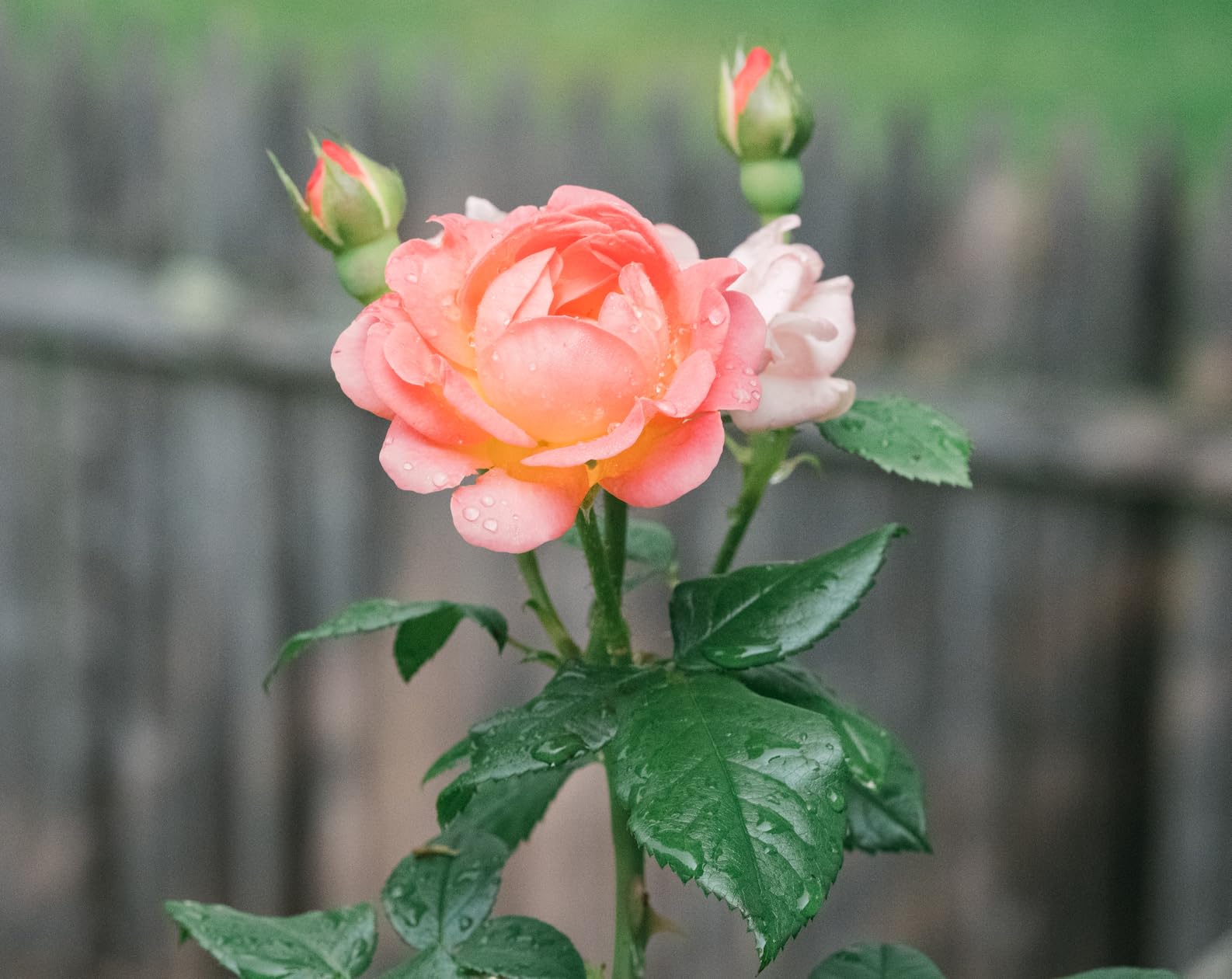
The trade-off is weight and focus behavior. Autofocus can be inconsistent on some copies until the correct firmware is installed, and the minimum focus distance is not suited to close-up work. I would update the lens and test the aperture index before a first paid session.

Best for dramatic portraits and low light
Choose it for weddings, studio portraits, night photography, and anyone who values f/1.2 more than compact size. Stabilization adds flexibility when ambient light falls.
Not best for travel or macro
The lens is not the easiest companion for a long walk, and its close-focus limit is restrictive. If you want a lighter all-day prime, the 56mm F1.7 makes more sense.
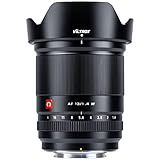
8. Viltrox 13mm f/1.4 XF — Fast Ultra-Wide Prime
VILTROX 13mm f/1.4 F1.4 Fuji x Mount Ultra Wide Angle APS-C AF Lens for Fujifilm X-Mount Camera X-T30 II X-T4 X-T3 X-Pro3 X-Pro2 X-H1 X-T2
20mm equivalent
f/1.4
94° field of view
Pros
- Very fast f/1.4
- Quick linear STM AF
- Close 22cm focus
- Metal hood
Cons
- Not weather sealed
- Some purple fringing
- No image stabilization
The 13mm f/1.4 gives me two things the 9mm cannot: a wider maximum aperture and a more manageable 20mm-equivalent perspective. It is a strong option for astrophotography, architecture, and environmental portraits when I need both a broad view and a fast shutter speed.
The STM motor is quick and quiet, and the lens reaches 22cm for close compositions. I also appreciate the physical aperture ring, which feels natural when recording video or changing exposure deliberately.

There is no weather sealing or image stabilization. I notice purple fringing in some high-contrast scenes and a little vignetting at the widest aperture, so I keep corrections ready when editing.
Best for night sky and architecture
It fits photographers who need an ultra-wide field of view plus f/1.4 light gathering. The 20mm-equivalent framing is less extreme than the 9mm and often easier to use for people.
Not best for adverse weather
I would choose the 9mm for a lighter all-purpose ultra-wide, or protect this lens carefully in rain. Its 67mm filter size is also larger than the smaller f/1.7 primes.
9. Viltrox 56mm F1.4 XF — Proven Portrait Performer
VILTROX 56mm F1.4 XF Large Aperture Auto Focus Portrait Lens for Fujifilm X-Mount Camera X-T4 X-T3 X-T2 X-T30 X-T20 X-PRO2 X-H1 X-E3
85mm equivalent
f/1.4
290g
Pros
- Excellent f/1.4 sharpness
- Fast quiet STM AF
- Metal build
- Natural bokeh transition
Cons
- No physical aperture ring
- Not weather sealed
- Some chromatic aberration
The 56mm F1.4 remains one of the strongest portrait choices in the Viltrox X-mount family. Its 85mm-equivalent perspective is flattering, and the 290g metal body feels substantial without becoming punishing on a camera strap.
It is sharp at f/1.4, has natural color and contrast, and produces a smooth transition from the subject to the background. The STM motor is fast and silent, and the lens works well on high-resolution Fujifilm sensors according to the product review data.
I would budget for occasional correction of chromatic aberration at the widest aperture. There is no weather sealing or physical aperture ring, and a few reports mention USB update-port issues, so I test the port during setup rather than waiting until a firmware problem appears.
Best for high-quality portraits
Choose it when f/1.4 subject isolation is more important than saving weight. It is a dependable-looking option for portraits, events, and controlled indoor work.
Not best for a compact kit
The 56mm F1.7 is lighter and nearly as capable for many users. Pick the f/1.4 version when you specifically want the brighter aperture and its rendering.
10. Viltrox 33mm F1.4 STM XF — Best Everyday Standard
Pros
- 50mm equivalent view
- Sharp f/1.4 results
- Physical aperture ring
- Internal focus
- Quiet STM autofocus
- Metal construction
- Full-time manual override
Cons
- No image stabilization
- Not weather sealed
- Slight wide-open chromatic aberration
The 33mm F1.4 is the best Viltrox lenses for Fujifilm choice for a photographer who wants one prime to do almost everything. Its 50mm-equivalent view works for portraits, travel, street photography, food, and everyday family frames.
I like the physical aperture ring with an A position, which lets me choose tactile control or automatic exposure. Internal focusing keeps the lens length stable, and full-time manual override makes quick focus corrections easy when a subject moves closer.
The 270g metal body feels well made, while the STM motor focuses quickly and quietly. It is sharp at f/1.4, although I correct some chromatic aberration at that setting and avoid expecting stabilization in dim video work.
Best for a first premium prime
Pick the 33mm if you want a natural field of view and a bright aperture without going to a heavy 75mm lens. It is especially easy to recommend to X-T and X-S photographers.
Not best for rain or long handheld exposures
It is not weather sealed and has no image stabilization. Use a weather cover, raise ISO, or add stabilization in the camera or tripod when conditions demand it.
How to Choose the Right Viltrox Lens for Your Fujifilm?
Start with the equivalent field of view
Fujifilm X-mount bodies use APS-C sensors, so multiply the marked focal length by 1.5 for a rough full-frame comparison. The 9mm becomes 13.5mm equivalent, the 13mm becomes about 20mm, the 25mm becomes 37.5mm, the 28mm becomes 42mm, the 33mm becomes 50mm, the 35mm becomes 52.5mm, the 56mm becomes 85mm, the 75mm becomes 113mm, and the 90mm becomes 135mm.
I use this comparison to avoid buying a lens that is technically sharp but framed too tightly for the work. For rooms, landscapes, and architecture, begin at 9mm or 13mm; for a general carry lens, begin at 25mm through 35mm; for portraits, begin at 56mm or longer.
Choose aperture for light and depth of field
Fast apertures are useful for indoor work, night scenes, and subject separation, but they add size and cost. The 28mm F4.5 is the lightest option here, while the 75mm f/1.2 gives the strongest background separation.
At f/1.7 or f/1.4, I expect some softness or fringing and stop down when edge detail matters most. The 56mm F1.7 and 75mm f/1.2 are more usable wide open in the supplied review data, but I still test the copy I receive.
Check autofocus and body support
Viltrox lenses communicate through the X mount and support autofocus, aperture control, EXIF transmission, and face or eye AF on compatible Fujifilm bodies. I check the current body firmware before a shoot, then test single AF, continuous AF, face detection, and video breathing on the exact body I plan to use.
User discussions often ask about long-term reliability and firmware compatibility. Forum users report years of use, professional work, improved autofocus after updates, and positive customer-service experiences, but no lens line has published failure-rate data in this research.
Decide whether stabilization matters
Most of these lenses do not provide image stabilization. The supplied specifications list optical or digital stabilization for the 56mm F1.4 and optical stabilization for the 75mm f/1.2, but stabilization does not replace a steady stance, a tripod, or a fast shutter speed.
For video, a lens with a physical aperture ring, such as the 13mm f/1.4, 33mm f/1.4, or 75mm f/1.2, gives you more predictable exposure changes. I also favor internal focusing for video because the framing stays more consistent.
Plan for weather, filters, and carrying weight
Only the 75mm f/1.2 and 90mm F2.2 in this selection are described as weather resistant; the 90mm has a sealed mount, water-repellent front coating, and dust-and-splash-resistant design. The other products are listed as not water resistant, so I use a cover whenever rain or spray is possible.
Filter sizes range from 52mm to 67mm. Check your existing filters before buying, and compare the complete kit weight rather than the lens weight alone, especially with the 75mm and 90mm telephoto primes.
Keep firmware and backups practical
Several lenses use USB-C, while the 25mm, 35mm, 33mm, and 56mm F1.7 models use micro-USB according to the supplied specifications. I keep the correct cable, the current lens firmware, and the camera battery charged, then update the lens before a major trip or paid assignment.
For a first lens, I would buy the 33mm F1.4 for its 50mm-equivalent field of view, physical aperture ring, strong autofocus, and f/1.4 aperture. For a specialist ultra-wide, the 9mm F2.8 is my pick; for portraits with maximum impact, the 75mm f/1.2 is the clear upgrade.
Frequently Asked Questions
Does Viltrox work with Fujifilm?
Yes. Viltrox makes Fujifilm X-mount autofocus lenses that communicate with compatible X-series bodies for autofocus, aperture control, EXIF data, and features such as face and eye detection when supported by the body and firmware.
What is the best aftermarket lens for Fujifilm?
The best Viltrox choice for most photographers is the 33mm F1.4 because its 50mm-equivalent field of view suits portraits, travel, street photography, and everyday use while providing autofocus and a physical aperture ring.
Are Viltrox lenses high quality?
Yes. The supplied product data reports strong ratings and highlights sharp optics, fast autofocus, good color rendering, and solid build quality across the lineup, although the best choice depends on focal length, aperture, stabilization, and weather protection.
What are the best Viltrox lenses?
The top Viltrox X-mount options in this roundup are the 9mm F2.8 Air for ultra-wide work, the 33mm F1.4 for everyday photography, the 56mm F1.7 for a light portrait kit, and the 75mm f/1.2 for maximum subject separation.
Which Viltrox lens is best for Fujifilm?
The 33mm F1.4 is the best general-purpose Viltrox lens for most Fujifilm photographers. Choose the 9mm F2.8 for interiors and landscapes, the 13mm f/1.4 for night-sky work, or the 75mm f/1.2 for dramatic portraits.
Conclusion: Pick by Use Case, Not Aperture Alone
The best Viltrox lenses for Fujifilm cover a wide range of real shooting needs in 2026. The 9mm F2.8 wins for ultra-wide landscapes and interiors, the 33mm F1.4 is the strongest all-purpose standard, and the 75mm f/1.2 delivers the most dramatic portrait rendering.
I would buy the 33mm first for a balanced kit, add the 9mm for travel and architecture, or choose the 56mm F1.7 for a lighter portrait setup. Compare the lens with your existing filters, confirm body firmware, and check weather protection before carrying it into a demanding assignment.