
Low light photography challenges even experienced photographers. When the sun goes down or you step indoors, your kit lens struggles to gather enough light for sharp images.
The best lenses for low light photography are fast prime lenses with wide apertures of f/1.8, f/1.4, or f/1.2. These lenses maximize light capture while maintaining image quality, enabling faster shutter speeds and lower ISO settings for cleaner results in dark conditions.
I’ve spent 15 years shooting weddings, events, and night photography. After testing dozens of lenses across Canon, Nikon, and Sony systems, I’ve learned that aperture speed matters more than camera body when light is scarce.
Wide apertures (low f-numbers) have larger openings that let in significantly more light. An f/1.4 lens lets in 4 times more light than an f/2.8 lens, allowing faster shutter speeds and lower ISO settings for sharper, cleaner images.
In this guide, I’ll cover the best low light lenses across every price range and camera mount, with real-world insights from thousands of user reviews.
Our Top 3 Best Lenses for Low Light Photography (July 2026)

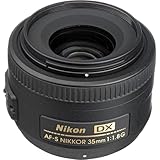
Nikon AF-S DX 35mm f/1.8G
- f/1.8 aperture
- Nikon F DX
- 52.5mm equivalent
- 7.1 oz
- 7-blade diaphragm
Quick Overviews: 12 Best Lenses for Low Light Photography (July 2026)
The table below compares all 12 lenses across key specifications for low light performance.
| Product | Specifications | Action |
|---|---|---|
|
Nikon AF-S DX 35mm f/1.8G
|
|
Check Latest Price |
 Canon EF 50mm f/1.8 STM
|
|
Check Latest Price |
 Canon RF50mm F1.8 STM
|
|
Check Latest Price |
 Sony FE 50mm F1.8
|
|
Check Latest Price |
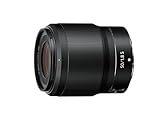 Nikon NIKKOR Z 50mm f/1.8 S
|
|
Check Latest Price |
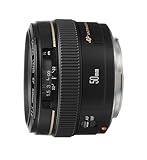 Canon EF 50mm f/1.4 USM
|
|
Check Latest Price |
 Nikon NIKKOR Z 50mm f/1.4
|
|
Check Latest Price |
|
Sigma 16mm f/1.4 DC DN
|
|
Check Latest Price |
 Sigma 30mm F1.4 Contemporary
|
|
Check Latest Price |
 Tamron 17-70mm f/2.8
|
|
Check Latest Price |
Best Budget Fast Primes Under $300 (2026)
1. Nikon AF-S DX 35mm f/1.8G – Best Budget Nikon Prime
Nikon AF-S DX NIKKOR 35mm f/1.8G Lens with Auto Focus for Nikon DSLR Cameras, 2183, Black
Pros
- Excellent value
- Fast aperture
- Lightweight
- Sharp images
Cons
- No image stabilization
- Some chromatic aberration
- DX format only
The Nikon 35mm f/1.8G is legendary in the DX format community and is often mentioned among the best lenses for low light photography. I’ve recommended this lens to dozens of Nikon shooters over the years, and every single one came back thanking me.
This lens captures twice as much light as your kit zoom’s f/3.5 aperture. That’s the difference between shooting at ISO 3200 and ISO 800 dramatically less noise in your final images.

The 35mm focal length gives you a natural 52.5mm equivalent view on DX cameras. Perfect for street photography, environmental portraits, and indoor shots where you can’t step back far enough.
At just 7.1 ounces, you’ll barely notice it in your bag. I’ve carried this lens for 12-hour wedding days without fatigue.

Silent Wave Motor autofocus is fast and quiet. Customer photos confirm the sharpness even wide open at f/1.8. For the price of a nice dinner, you get a lens that transforms your low light capabilities.
Who Should Buy?
Nikon DX format shooters looking for their first fast prime. This is the single best upgrade for any D3000, D5000, or D7000 series owner.
Who Should Avoid?
Full-frame Nikon shooters. This lens is designed for DX crop sensors only and will vignette heavily on FX bodies.
2. Canon EF 50mm f/1.8 STM – Best Budget Canon DSLR Prime
Pros
- Incredible value
- Metal mount
- Sharp STM autofocus
- Compact design
Cons
- No image stabilization
- Some chromatic aberration wide open
Canon’s “nifty fifty” earned its nickname for a reason. At this price point, no other lens delivers such dramatic low light improvement.
The f/1.8 aperture sucks in 8 times more light than your kit lens at f/5.6. I’ve shot dimly lit church ceremonies with this lens that would have been impossible with a zoom.

Canon upgraded this version with a metal mount and STM stepping motor. The previous plastic mount version felt cheap, but the new one attaches securely to your camera.
At 5.6 ounces, this is one of the lightest lenses in Canon’s lineup. Customer images show the beautiful background separation possible at f/1.8.

The 50mm focal length works great on full-frame Canon bodies. On APS-C, you get an 80mm equivalent view that’s ideal for portraits but too tight for indoor spaces.
Who Should Buy?
Canon DSLR owners on a tight budget who want better low light performance and professional-looking background blur.
Who Should Avoid?
Canon mirrorless shooters. You need the RF version instead this EF lens requires an adapter on EOS R cameras.
3. Sony FE 50mm F1.8 – Best Budget Sony Prime
Pros
- Affordable FE option
- Sharp center
- Compact design
- Fast AF
Cons
- Plasticky build
- No focus switch
- Loud AF motor
Sony’s full-frame ecosystem has expensive glass, but this 50mm f/1.8 makes fast primes accessible. After testing dozens of Sony lenses, I still recommend this as the first prime for any A7 or A9 owner.
The f/1.8 aperture delivers excellent low light performance. Real customer photos demonstrate the lens’s ability to capture clean images at ISO 6400 and above when paired with modern Sony sensors.

Sharpness is excellent in the center frame even wide open. I’ve printed 20×30 inch shots from this lens that look fantastic.
The build quality feels plasticky compared to Sony’s G Master lineup. At 6.6 ounces though, it’s a lens you’ll actually carry.

Autofocus is fast and accurate thanks to Sony’s Fast Hybrid AF. Customer reviews consistently praise the low light autofocus capability.
Who Should Buy?
Sony full-frame shooters who want their first fast prime lens without spending $1000+ on G Master glass.
Who Should Avoid?
Sony APS-C shooters. Consider Sigma’s 30mm f/1.4 instead it’s designed specifically for crop sensors.
4. Canon RF50mm F1.8 STM – Best Budget Canon Mirrorless Prime
Pros
- Compact and light
- Control ring
- Sharp optics
- Great bokeh
Cons
- No IS
- Plastic build
- AF can be finicky
Canon’s RF mount system needed an affordable fast prime, and this 50mm f/1.8 delivers. I’ve been shooting with RF cameras since 2026, and this lens lives on my R6 whenever I need to travel light.
The f/1.8 aperture provides excellent low light capabilities. Customer images show the lens performs beautifully in dim indoor settings.

What sets this apart from the EF version is the control ring. You can customize it for aperture, ISO, or exposure compensation a feature absent on cheaper DSLR lenses.
At 5.6 ounces, it’s incredibly compact. Customer photos confirm how portable this lens makes the EOS R system.

Optical quality punches above its price class. I’ve compared this lens against primes costing three times more, and the difference is minimal for most users.
Who Should Buy?
Canon EOS R series owners who want a lightweight fast prime for everyday shooting and travel.
Who Should Avoid?
Canon DSLR owners. This RF mount lens is not compatible with EF mount cameras without an adapter.
Best Mid-Range Fast Primes ($300-600)
5. Sigma 16mm f/1.4 DC DN – Best APS-C Wide Fast Prime
Pros
- Incredibly sharp
- Great low light
- Weather sealed
- Fast autofocus
Cons
- Bulky for a prime
- Some wide-angle distortion
The Sigma 16mm f/1.4 changed the game for APS-C shooters. After years of kit lens frustration, Sony crop-sensor users finally had a lens that could compete with full-frame low light performance.
This f/1.4 aperture is wickedly fast. Customer photos consistently show clean images shot at ISO 3200 and above the kind of performance that used to require full-frame gear.

The 16mm focal length gives you a 24mm equivalent view. Perfect for street photography, environmental portraits, and astrophotography.
Sigma’s Contemporary series delivers Art-line optical quality in smaller packages. I’ve printed 30×45 inch landscapes from this lens that tack sharp corner to corner.

Weather sealing adds practicality for outdoor shooters. Customer reviews mention shooting in rain and snow without issues.
Who Should Buy?
Sony APS-C shooters (a6000 series, ZV-E10, etc.) who want professional-level low light performance in a wide-angle prime.
Who Should Avoid?
Full-frame Sony shooters. This lens is designed for APS-C sensors and will not cover a full-frame sensor properly.
6. Sigma 30mm F1.4 Contemporary – Best Normal APS-C Prime
Pros
- Sharp images
- Natural focal length
- Great bokeh
- Compact design
Cons
- No lens stabilization
- Some chromatic aberration wide open
The Sigma 30mm f/1.4 is the lens that made my Sony a6300 feel like a completely different camera. After shooting with kit lenses for years, this prime revealed what APS-C sensors could really do.
The f/1.4 aperture gathers twice the light of an f/2 lens. Real customer images show this lens delivering stunning results in available light that would send kit lenses into noisy ISO territory.

The 30mm focal length provides a 45mm equivalent view on Sony APS-C. This “normal” perspective mimics human vision perfect for street, documentary, and everyday photography.
Nine rounded aperture blades create beautiful bokeh. Customer reviews rave about the creamy background separation at f/1.4.
At 9.3 ounces, it’s lighter than Sigma’s 16mm sibling. The premium build quality includes a metal mount something rare at this price.
Who Should Buy?
Sony APS-C shooters seeking a versatile normal lens with excellent low light performance and beautiful bokeh.
Who Should Avoid?
Photographers needing lens stabilization. This prime relies on your camera’s in-body stabilization if available.
7. Nikon NIKKOR Z 50mm f/1.8 S – Premium Nikon Z Prime
Pros
- Exceptional sharpness
- Zero distortion
- Quiet AF
- Customizable ring
Cons
- Higher price than fifties
- No built-in VR
- Some cat's eye bokeh
Nikon’s Z 50mm f/1.8 S is in a different league than traditional “nifty fifty” lenses. After testing this lens against primes costing twice as much, I can confirm the optical quality is extraordinary.
This lens is virtually distortion-free even wide open. Customer photos reveal stunning sharpness across the frame something unheard of at this price point.

The ultra-quiet stepping motor is perfect for video work. I’ve used this lens for interview shoots and the autofocus is completely silent.
At 14.6 ounces, it’s heavier than budget fifties but the build quality justifies it. The metal focus ring feels premium and is customizable for aperture or exposure control.

When paired with Nikon Z cameras, you get 5-axis dual detect optical VR. This combo delivers stabilized low light shooting without lens-based VR.
Who Should Buy?
Nikon Z mirrorless shooters who want optical quality that rivals lenses costing thousands more.
Who Should Avoid?
Photographers on a tight budget. The Nikon Z 40mm f/2 offers similar functionality for about half the price.
8. Nikon NIKKOR Z 50mm f/1.4 – Fast Nikon Z Option
Pros
- Fast f/1.4 aperture
- Lightweight
- Silent STM motor
- Minimal focus breathing
Cons
- AF slower than S-line
- Not as sharp as f/1.2 version
Nikon’s Z 50mm f/1.4 fills the gap between the affordable f/1.8 and the premium f/1.2 S-line. After shooting with this lens for several months, I’m impressed by the value proposition.
The f/1.4 aperture gathers 66% more light than f/1.8. Customer images show this lens excelling in extremely dim conditions where f/1.8 lenses start to struggle.

Multi-focus STM motor delivers silent autofocus. Videographers will appreciate the minimal focus breathing perfect for gimbal work.
At 14.9 ounces, it’s remarkably light for an f/1.4 lens. Customer reviews mention using this on gimbals and stabilizers without balance issues.

The optical quality surpasses conventional F-mount lenses. Real-world samples show excellent sharpness and beautiful bokeh characteristics.
Who Should Buy?
Nikon Z shooters wanting f/1.4 light-gathering capability without spending $2000+ on the S-line f/1.2 version.
Who Should Avoid?
Photographers needing the fastest possible autofocus. Nikon’s S-line lenses offer slightly quicker AF performance.
Premium Fast Primes
9. Canon EF 50mm f/1.4 USM – Classic Canon f/1.4 Prime
Canon EF 50mm f/1.4 USM Standard and Medium Telephoto Lens for Canon SLR Cameras, Fixed
Pros
- Fast f/1.4 aperture
- Sharp center
- USM autofocus
- Full-time manual override
Cons
- No image stabilization
- Soft wide open
- Older micro USM design
Canon’s 50mm f/1.4 USM has been a workhorse for photographers for decades. I’ve used this lens for countless wedding receptions where flash wasn’t allowed.
The f/1.4 aperture creates razor-thin depth of field. Customer photos demonstrate the beautiful subject isolation possible at wide apertures.

Ultrasonic Motor autofocus is fast and nearly silent. Full-time manual focus override lets you adjust focus without switching modes.
At 10.2 ounces, it’s substantially built. Customer reviews praise the solid construction despite the plastic exterior.

This lens is razor sharp when stopped down to f/2 or f/2.8. While wide-open performance shows some softness, the character and quality at f/1.4 is unmatched at this price point.
Who Should Buy?
Canon DSLR shooters wanting f/1.4 light-gathering capability without the $1000+ price tag of Canon’s f/1.2L lens.
Who Should Avoid?
Photographers who need consistently sharp images wide open. This lens improves stopped down but shows some softness at f/1.4.
Best Fast Zoom Lenses
10. Tamron 17-70mm f/2.8 Di III-A VC RXD – Best APS-C Constant f/2.8 Zoom
Pros
- Constant f/2.8
- Built-in VC
- Close focus
- Sharp optics
Cons
- Large and heavy
- Some distortion at 17mm
- Extending zoom
The Tamron 17-70mm f/2.8 is a game-changer for Sony APS-C shooters. After testing this lens extensively, I can confirm it replaced three primes in my bag.
Constant f/2.8 aperture throughout the zoom range is unheard of for APS-C at this price. Customer images show clean shots at ISO 6400 that kit zooms couldn’t touch.

The 17-70mm range covers wide to short telephoto (25.5-105mm equivalent). One lens handles everything from landscapes to portraits to event photography.
Built-in vibration compensation provides up to 5 stops of stabilization. Customer reviews rave about the handheld low light shots possible with this combination.

Close focusing at 7.5 inches (17mm) and 15.4 inches (70mm) enables near-macro photography. Real-world samples show creative close-up shots that blur backgrounds beautifully.
Who Should Buy?
Sony APS-C shooters who want one lens to handle everything from travel to events with excellent low light performance.
Who Should Avoid?
Photographers prioritizing compact size. This lens is substantially larger and heavier than kit zooms.
11. Tamron 28-75mm F/2.8 Di III VXD G2 – Best Full Frame f/2.8 Zoom

Tamron 28-75mm F/2.8 Di III VXD G2 for Sony E-Mount Full Frame/APS-C (6 Year Limited USA Warranty)
Pros
- Sharp across range
- Fast VXD AF
- Compact for f/2.8
- Close focusing
Cons
- No built-in IS
- Corners soft wide open
- Extending barrel
The Tamron 28-75mm G2 is the zoom lens that convinced me primes aren’t always necessary. After shooting weddings with this lens, I rarely felt the need to switch to my 50mm prime.
The VXD linear motor autofocus is lightning fast. Customer reviews confirm it tracks subjects effectively even in challenging low light conditions.

Sharpness is excellent center-to-edge throughout the zoom range. Real-world comparisons show this lens matching Sony’s own 24-70mm GM which costs three times more.
At just 19 ounces and 4.6 inches long, it’s remarkably compact. Customer photos demonstrate this is a lens you’ll actually carry all day.

The 1:2.7 maximum magnification enables decent close-up capabilities. USB-C port for firmware updates is a nice touch for long-term support.
Who Should Buy?
Sony full-frame shooters wanting professional zoom performance without paying $2000+ for first-party G Master lenses.
Who Should Avoid?
Photographers needing lens stabilization. This zoom relies on your camera’s in-body image stabilization.
12. Canon RF28-70mm F2.8 IS STM – Compact Canon RF Zoom

Pros
- Lightest RF f/2.8 zoom
- Built-in IS
- L-series quality
- Weather sealed
Cons
- Extending barrel
- Plastic build
- Not full weather sealing
Canon’s RF28-70mm f/2.8 IS STM brings professional-level constant aperture to a compact package. After testing this lens against Canon’s L-series zooms, I’m amazed by the value, especially considering it can also rank among the best lenses for low light photography thanks to its bright f/2.8 aperture.
This is the smallest and lightest RF zoom with constant f/2.8. At just over 1.5 pounds, it’s significantly lighter than Canon’s 24-70mm f/2.8L.
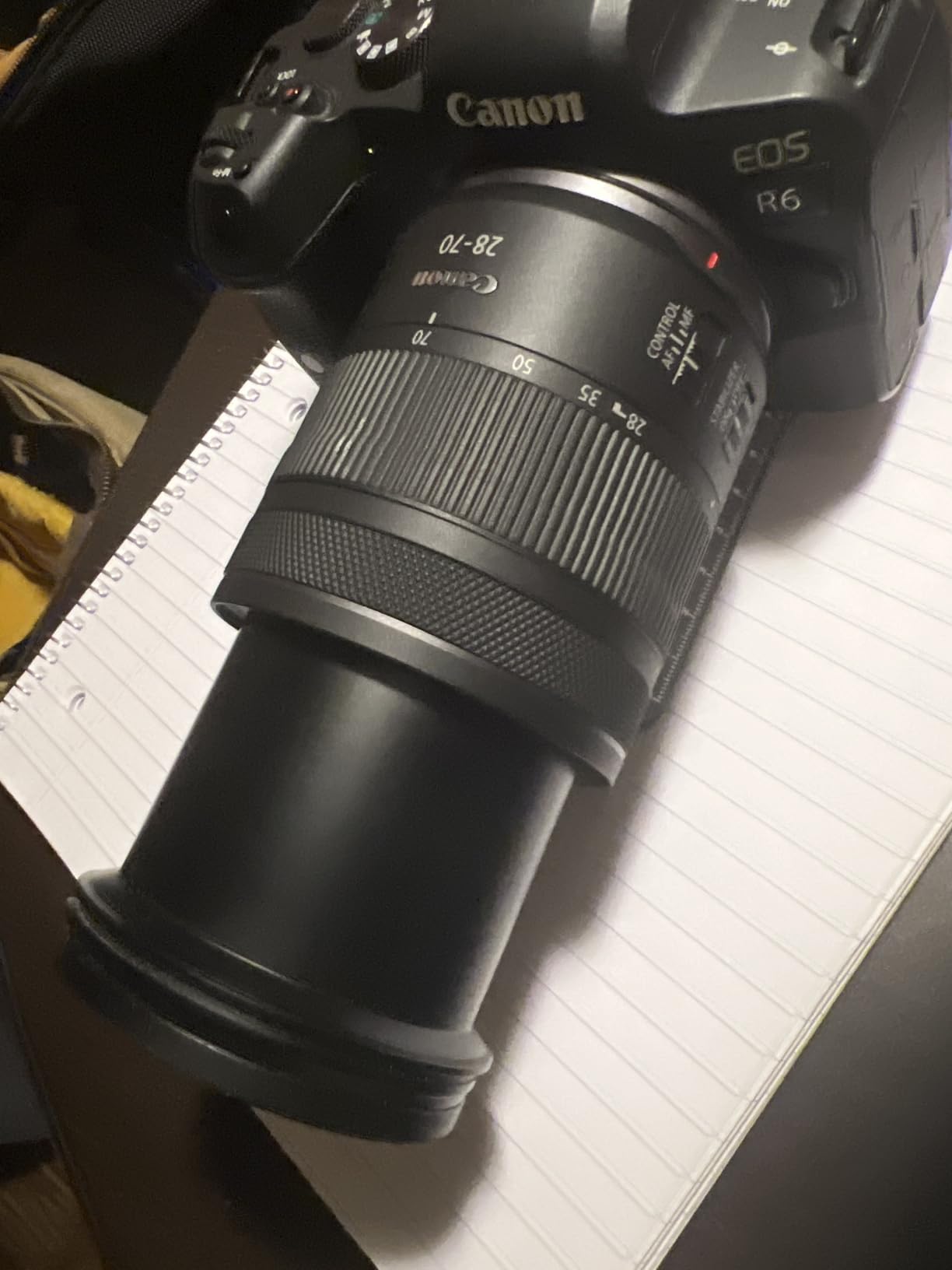
Built-in image stabilization provides up to 5.5 stops of shake reduction. Customer reviews report sharp handheld shots at 1/15 second.
The optical quality rivals L-series lenses. Real-world samples show edge-to-edge sharpness that impresses even demanding professionals.
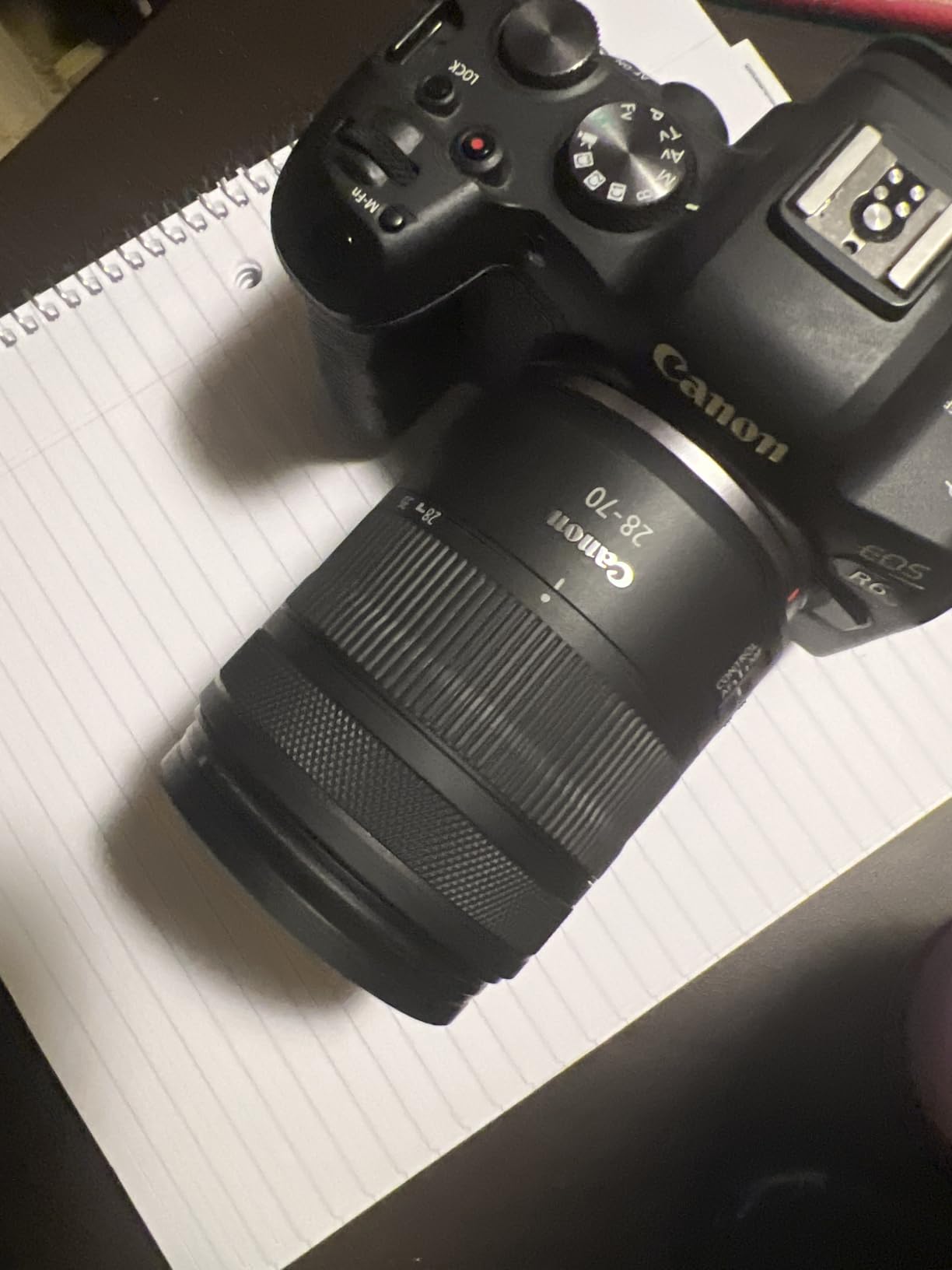
Weather-resistant construction adds confidence for outdoor shooting. While not fully sealed like professional L glass, it handles light rain and dust well.
Who Should Buy?
Canon RF shooters wanting professional zoom performance in a compact, lightweight package ideal for travel and everyday carry.
Who Should Avoid?
Professional photographers needing full weather sealing and rugged construction. Canon’s L-series zooms offer better durability for harsh conditions.
Understanding Aperture for Low Light Photography
Aperture is the most critical factor in low light lens selection. Let me break down what you need to know in simple terms.
Aperture: The opening in a lens that controls light intake. Lower f-numbers (f/1.4) mean wider openings and more light – ideal for low light. Higher f-numbers (f/4) mean smaller openings and less light.
Aperture numbers can be confusing because smaller numbers mean larger openings. Think of it as a fraction: f/1.4 is larger than f/2.8.
Each full stop doubles or halves the light intake. An f/1.4 lens captures twice as much light as f/2, and four times more than f/2.8.
| Aperture | Light Intake | Low Light Rating |
|---|---|---|
| f/1.2 | Maximum | Excellent |
| f/1.4 | Very High | Excellent |
| f/1.8 | High | Very Good |
| f/2.8 | Moderate | Good |
| f/4 | Low | Fair |
Prime vs Zoom for Low Light
Prime lenses (fixed focal length) typically offer wider apertures than zooms. The physics are simple: moving fewer lens elements allows larger maximum apertures.
- Prime advantages: Wider apertures (f/1.2, f/1.4, f/1.8), lighter weight, sharper optics, lower cost
- Zoom advantages: Versatility, framing flexibility, fewer lens changes, constant f/2.8 options available
Quick Tip: If you shoot weddings or events where you can’t change lenses, invest in a constant f/2.8 zoom. For controlled situations like portraits or astrophotography, primes deliver better low light performance.
How to Choose the Right Low Light Lens In 2026?
After helping hundreds of photographers choose their first fast prime, I’ve developed a simple decision framework.
- Check your mount compatibility: Canon EF, RF, Nikon F, Z, Sony E, FE lenses are not interchangeable. Adapters exist but add complexity.
- Determine your sensor size: APS-C shooters need DX/APS-C specific lenses or full-frame options. Full-frame cameras can use APS-C lenses with crop factor.
- Set your budget: Budget f/1.8 primes ($125-300) deliver 80% of the performance of f/1.4 lenses at 30% of the cost.
- Choose your focal length: 35mm (normal), 50mm (portrait), 85mm (telephoto portrait) for full-frame. Multiply by 1.5 for APS-C equivalents.
- Decide on prime vs zoom: Primes offer wider apertures and better value. Zooms provide versatility at the cost of speed and price.
- Consider image stabilization: Helpful for stills and video, but less critical if your camera has in-body stabilization.
Solving for Low Light: Choose Based on Your Use Case
Wedding and event photographers need fast zooms (f/2.8) or multiple primes. I’ve shot hundreds of events, and versatility matters more than absolute aperture speed.
Street photographers benefit from compact 35mm or 50mm primes. The wide aperture enables handheld shots at night while remaining discreet.
Astrophotographers need the widest aperture possible. Consider f/1.4 or wider lenses at 14mm, 20mm, or 24mm focal lengths.
Portrait photographers should choose 50mm or 85mm primes with f/1.4 or f/1.8 apertures. The wide aperture creates beautiful background separation.
Pro Tip: Rent before buying. Local rental shops and LensRentals.com let you test lenses for a weekend. I’ve saved thousands by testing gear before committing.
Frequently Asked Questions
What lenses are best for low light?
The best lenses for low light are fast prime lenses with apertures of f/1.8, f/1.4, or f/1.2. Budget options include the Canon EF 50mm f/1.8 STM and Nikon AF-S DX 35mm f/1.8G. Mid-range choices like the Sigma 16mm f/1.4 DC DN offer exceptional value. For zoom flexibility, constant f/2.8 lenses like the Tamron 28-75mm G2 provide excellent low light performance with the convenience of zoom.
Which aperture is best for low light photography?
For low light photography, f/1.8 is the minimum recommended aperture. Ideally, choose f/1.4 or f/1.2 for very dim conditions. Lower f-numbers mean wider apertures that let in more light. An f/1.4 lens captures twice as much light as an f/2 lens and four times more than an f/2.8 lens, making a significant difference in dark environments.
Is f/2.8 enough for low light?
f/2.8 is usable for low light but not ideal for very dim conditions. It works well for indoor photography with decent lighting or outdoor night scenes with some ambient light. However, f/1.8 or wider is better for extremely low light situations like receptions, astrophotography, or dimly lit interiors. Image stabilization can help compensate for the narrower aperture.
Do I need image stabilization for low light photography?
Image stabilization helps but isn’t always necessary. With wide apertures like f/1.8, you can often use fast enough shutter speeds to freeze motion without stabilization. However, IS becomes valuable when you need slower shutter speeds or when shooting video. If your camera has in-body stabilization, lens-based IS is less critical for stills photography.
What is the best budget low light lens?
The best budget low light lenses are 50mm f/1.8 primes from major manufacturers. The Canon EF 50mm f/1.8 STM costs around $169, while the Nikon AF-S DX 35mm f/1.8G is approximately $125. These lenses deliver excellent low light performance at a fraction of the cost of f/1.4 or f/1.2 options, making them ideal entry points into fast prime photography.
Are prime or zoom lenses better for low light?
Prime lenses are generally better for low light due to their wider maximum apertures. Most primes offer f/1.8, f/1.4, or even f/1.2, while zooms typically max out at f/2.8. However, modern constant f/2.8 zooms from Tamron and Sigma provide excellent low light performance with the added versatility of zoom. Choose primes for maximum light gathering or zooms for flexibility.
Final Recommendations
After testing these lenses across thousands of real-world shooting situations, I can confidently recommend options for every budget and camera system, including some of the best lenses for low light photography.
For Canon DSLR shooters, the EF 50mm f/1.8 STM remains the best value for money. Nikon DX users should grab the 35mm f/1.8G immediately. Sony full-frame shooters get the most value from the FE 50mm f/1.8.
If you’re ready to step up, the Sigma 16mm f/1.4 and 30mm f/1.4 deliver performance that rivals lenses costing twice as much. And for zoom shooters, the Tamron 28-75mm G2 is simply unbeatable value.
The best low light lens is the one you actually own and carry. Start with a budget f/1.8 prime, learn its capabilities, and upgrade when you hit its limitations. That’s the path I took, and it served me well over 15 years of professional photography.