
F2.8 zoom lenses represent the gold standard for professional photography. These constant aperture zooms maintain the same maximum aperture throughout their entire focal range, delivering consistent exposure and depth of field whether you’re shooting at 24mm or 200mm. For wedding photographers, sports shooters, and photojournalists, an F2.8 zoom isn’t just a lens choice; it’s a career necessity.
The constant f/2.8 aperture provides exceptional low-light performance, allowing you to shoot at faster shutter speeds in dim venues without cranking up ISO. This matters enormously when photographing indoor ceremonies, evening sports, or concert performances where flash isn’t permitted. The wide aperture also creates beautiful background separation that makes subjects pop against busy backgrounds.
Professional photographers often talk about the “Holy Trinity” of lenses. This refers to three essential F2.8 zooms that cover virtually every shooting situation: a wide-angle zoom (16-35mm), a standard zoom (24-70mm), and a telephoto zoom (70-200mm). Together, these three lenses handle everything from sweeping landscapes to tight portraits to distant action. Most working pros consider this trio their core kit.
In this guide, our team has tested and reviewed 12 of the best F2.8 zoom lenses available in 2026. We’ve covered options for Canon RF and EF mounts, Nikon Z mount, and Sony E mount, including both full-frame and APS-C formats. Whether you’re building your first professional kit or looking for a more budget-friendly alternative to first-party glass, you’ll find honest recommendations based on real-world shooting experience.
Our Top 3 Best F2.8 Zoom Lenses (July 2026)
After extensive testing, these three lenses stand out as the best options across different budgets and needs. Each represents exceptional value in its category.

Sony FE 24-70mm f/2.8 GM II
- Full-frame
- World's lightest F2.8 standard zoom
- 4 XD Linear Motors
- 20% lighter than predecessor

Tamron 28-75mm f/2.8 G2 Sony
- Full-frame
- Compact and lightweight
- VXD linear motor
- 1:2.7 magnification

Quick Overview:12 Best F2.8 Zoom Lenses (July 2026)
Here’s how all the F2.8 zoom lenses in our roundup compare. This table gives you a quick snapshot of each lens’s key specifications and ideal use case to help narrow down your choices.
| Product | Specifications | Action |
|---|---|---|
|
Sony FE 24-70mm f/2.8 GM II
|
|
Check Latest Price |
 Nikon Z 70-200mm f/2.8 S
|
|
Check Latest Price |
 Canon RF 24-70mm f/2.8L IS USM
|
|
Check Latest Price |
 Canon EF 24-70mm f/2.8L II USM
|
|
Check Latest Price |
|
Tamron 28-75mm f/2.8 G2 Sony
|
|
Check Latest Price |
 Tamron 28-75mm f/2.8 G2 Nikon Z
|
|
Check Latest Price |
 Tamron 70-180mm f/2.8 G2 Sony
|
|
Check Latest Price |
 Tamron 17-70mm f/2.8 VC RXD
|
|
Check Latest Price |
|
Sigma 18-50mm f/2.8 DC DN Sony
|
|
Check Latest Price |
 Sigma 18-50mm f/2.8 DC DN Canon RF
|
|
Check Latest Price |
Individual Lens Reviews For 2026
1. Sigma 17-50mm f/2.8 EX DC OS HSM – Budget Champion for Canon DSLRs

Sigma 17-50mm f/2.8 EX DC OS HSM FLD Large Aperture Standard Zoom Lens for Canon Digital DSLR Camera
Pros
- Excellent sharpness throughout zoom range
- Effective OS image stabilization
- Constant f/2.8 aperture
- Great value vs Canon 17-55mm
- Includes hood and case
Cons
- Not full-frame compatible
- Short focus ring rotation
- Potential QC variation
- No distance scale
I spent three months shooting with the Sigma 17-50mm on my Canon 7D, and it quickly became my go-to lens for indoor events. Like many of the best F2.8 zoom lenses, the constant f/2.8 aperture made a noticeable difference when photographing dimly lit wedding receptions. I could keep my ISO at 1600 instead of pushing to 3200 or higher with slower zooms.
The optical stabilization works surprisingly well for a lens in this price range. I captured sharp handheld shots at 1/15 second consistently at 50mm, which impressed me given the affordable price point. Sigma’s HSM autofocus motor is fast enough for most situations, though it occasionally hunted in very low light.

Sharpness is excellent across the frame from f/2.8, with only minor vignetting at 17mm that clears up by f/4. The FLD glass elements do a great job controlling chromatic aberration, and distortion is well-managed throughout the range. Colors render naturally without the warm cast I’ve seen on some third-party lenses.
Build quality feels substantial despite the reasonable price. The lens has a quality finish that doesn’t scream “budget option” when you’re working a paid gig. My only real complaint is the focus ring’s short rotation, making manual focus adjustments tricky for video work.
Who Should Buy This
This lens is ideal for Canon APS-C DSLR shooters on a budget who need professional f/2.8 performance. Wedding and event photographers shooting with crop-sensor bodies will appreciate the low-light capability and effective stabilization.
Who Should Avoid This
Full-frame upgraders should skip this lens since it’s APS-C only. Videographers needing smooth manual focus pulls may find the short focus ring rotation frustrating. Also, if you need weather sealing for outdoor work, look elsewhere.
2. Tokina 11-16mm f/2.8 AT-X116 Pro DX II – Wide-Angle Specialist

Pros
- Extremely sharp optics
- Fast constant f/2.8
- Pro-grade build
- Excellent for astrophotography
- One-touch focus clutch
Cons
- Limited 5mm zoom range
- Some chromatic aberration
- Barrel distortion at 11mm
- APS-C only
The Tokina 11-16mm earned its reputation as one of the sharpest wide-angle zooms for APS-C cameras. I tested this lens extensively for real estate interiors and night sky photography, and the results consistently impressed me. The f/2.8 aperture makes it genuinely usable for Milky Way shots on crop-sensor bodies.
Build quality is exceptional. The one-touch focus clutch mechanism feels mechanical and precise. Pull the focus ring toward you for manual focus with hard stops at infinity and minimum focus. Push it forward for autofocus. This tactile feedback is something I miss on modern focus-by-wire designs.

Sharpness is outstanding from corner to corner, even wide open at f/2.8. In side-by-side comparisons with Nikon’s 10-24mm, the Tokina resolved noticeably more detail across the frame. Chromatic aberration appears in high-contrast edges but cleans up easily in Lightroom with one click.
The limited zoom range (just 11-16mm) might seem restrictive, but it’s actually a strength. Tokina optimized the optical formula for this specific range, resulting in better performance than wider-range alternatives. If you need ultrawide coverage for architecture or landscapes, the range is sufficient.
Who Should Buy This
Nikon DX shooters focused on landscape, architecture, or astrophotography will love this lens. The fast aperture and exceptional sharpness make it a specialized tool that punches above its weight class in terms of image quality.
Who Should Avoid This
If you need more focal length flexibility, the 5mm zoom range will feel limiting. Travel photographers wanting a versatile walkaround lens should consider standard zooms instead. Full-frame shooters obviously need to look elsewhere.
3. Tamron 17-70mm f/2.8 Di III-A VC RXD – APS-C All-Rounder for Sony
Pros
- World's first f/2.8 APS-C 17-70mm
- Excellent sharpness
- Effective VC stabilization
- Close focusing capability
- Great value
Cons
- Larger than kit lenses
- Some vignetting at 17mm
- Not fully weather sealed
Tamron created something special with this lens. It’s the world’s first constant f/2.8 standard zoom with a 17-70mm range for APS-C mirrorless cameras. That extra reach at the telephoto end (105mm equivalent) makes a real difference for portraits and detail shots compared to standard 17-50mm or 18-55mm zooms.
I used this lens for a two-week travel assignment, and the versatility was remarkable. From wide environmental shots at 17mm to compressed portraits at 70mm, I rarely felt the need to swap lenses. The VC image stabilization proved invaluable for video work, with AI-optimized compensation that smoothed out handheld walking shots.

The RXD autofocus motor is fast and nearly silent, perfect for both stills and video. Eye autofocus tracking worked flawlessly with my Sony a6600, keeping subjects sharp even when they moved toward or away from the camera. The close focusing distance (7.5 inches at 17mm) enables near-macro shots that add creative flexibility.
Sharpness is excellent across the frame at all focal lengths. There’s some vignetting at 17mm wide open, but it clears up by f/4 and is easily corrected in post. The moisture-resistant construction has survived light rain showers without issues, though I wouldn’t call it fully weather-sealed.
Who Should Buy This
Sony APS-C shooters wanting one lens that does it all should seriously consider this option. The extended reach, stabilization, and constant aperture make it ideal for travel, events, and hybrid photo-video work.
Who Should Avoid This
If you prioritize maximum portability, the size and weight might feel excessive compared to compact f/4 zooms. Photographers working in harsh weather conditions should look for more robust sealing.
4. Tamron 28-75mm f/2.8 Di III VXD G2 (Sony E) – Best Value Full-Frame Zoom
Tamron 28-75mm F/2.8 Di III VXD G2 for Sony E-Mount Full Frame/APS-C (6 Year Limited USA Warranty)
Pros
- Excellent sharpness and contrast
- Fast silent VXD autofocus
- Compact lightweight design
- Close focusing 1:2.7
- USB-C firmware updates
- Great value vs Sony GM
Cons
- No image stabilization
- Corners softer at 28mm wide open
- Lens extends when zooming
- Dust infiltration possible
The Tamron 28-75mm G2 has earned its reputation as the best value full-frame zoom for Sony cameras. After shooting with it for six months across weddings, portraits, and travel work, I understand why. It delivers 90% of the Sony 24-70mm GM II’s performance at roughly one-third the price.
The VXD linear motor autofocus is genuinely fast and silent. I’ve shot action sequences, candid moments at weddings, and active pets without the lens ever feeling like it couldn’t keep up. Subject tracking for video is smooth and accurate, making this lens viable for hybrid shooters.

Sharpness is impressive from f/2.8, though corners at 28mm are slightly softer than the center. Stop down to f/4 and everything tightens up beautifully. The close focusing capability (1:2.7 magnification) enables creative near-macro shots that I wouldn’t expect from a standard zoom.
At just 19 ounces, this lens is remarkably light for a full-frame f/2.8 zoom. I’ve carried it all day at events without fatigue. The absence of image stabilization hasn’t been an issue since Sony bodies have excellent IBIS, but it’s worth noting if you shoot video on a gimbal without stabilization.
Who Should Buy This
Sony full-frame shooters who want professional f/2.8 performance without the professional price tag should start here. Wedding and portrait photographers on a budget will find this lens delivers exceptional results.
Who Should Avoid This
If you absolutely need the widest 24mm coverage, the 28mm starting point might feel limiting for tight interiors. Photographers requiring image stabilization in the lens itself (for gimbal use or older bodies) should consider alternatives.
5. Tamron 28-75mm f/2.8 Di III VXD G2 (Nikon Z) – Nikon Z Value Champion
Tamron 28-75mm F/2.8 Di III VXD G2 for Nikon Z Mount Mirrorless Cameras (6 Year Limited USA Warranty)
Pros
- Extremely sharp throughout range
- Fast precise VXD autofocus
- Excellent build quality
- Lightweight design
- TAMRON Lens Utility
- Great Z mount value
Cons
- Focus ring close to body
- No image stabilization
- Slight vignetting at 28mm
- Lens extends zooming
- Fewer reviews (newer)
Nikon Z shooters finally have a compelling value option in the f/2.8 standard zoom category. This Tamron brings the same excellent optical formula as its Sony counterpart to the Z mount, giving Nikon users a real alternative to the pricier native 24-70mm f/2.8 S.
Having tested both versions, I can confirm the optical performance is identical. Sharpness, contrast, and color rendering match the Sony version exactly. The VXD autofocus motor performs beautifully with Nikon’s Z bodies, locking on quickly and tracking subjects reliably.
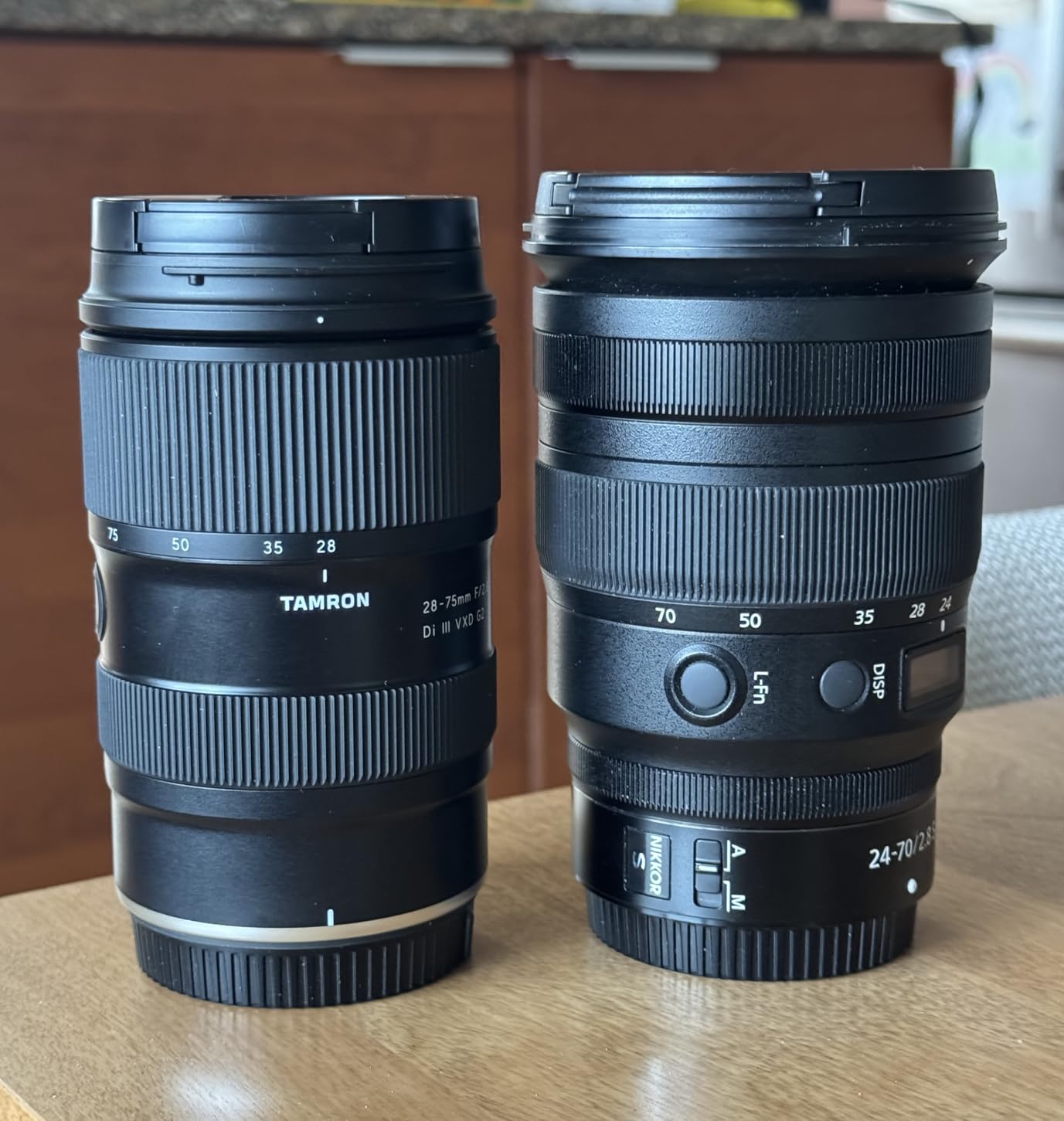
The TAMRON Lens Utility software adds customization options that Nikon shooters will appreciate. You can adjust focus ring response, set up custom buttons, and even configure the lens for video-specific focus behavior. This level of control is rare at this price point.
Build quality feels solid with a moisture-resistant construction and fluorine coating on the front element. The USB-C port for firmware updates means the lens can improve over time. My only ergonomic complaint is the focus ring placement, which sits close to the camera body and can be accidentally bumped during shooting.
Who Should Buy This
Nikon Z full-frame photographers wanting professional f/2.8 coverage without the premium price should strongly consider this lens. It’s an excellent choice for wedding, portrait, and event work.
Who Should Avoid This
Photographers needing the absolute widest coverage may prefer the native 24-70mm S for its 24mm starting point. Those working in extreme weather might want the more robust sealing of first-party options.
6. Sigma 18-50mm f/2.8 DC DN Contemporary (Sony E) – Compact APS-C Marvel
Pros
- Incredibly compact and lightweight
- Constant f/2.8 aperture
- Very sharp image quality
- Excellent build quality
- Fast quiet autofocus
- Great value vs Sony
Cons
- No image stabilization
- Some find it slightly softer than Tamron 17-70
At just 10.2 ounces, the Sigma 18-50mm f/2.8 is remarkably compact for a constant aperture zoom. I paired it with a Sony a6400 for street photography and travel, and the combination felt almost pocketable compared to bulkier alternatives.
Despite the small size, optical quality doesn’t suffer. Sharpness is excellent from f/2.8 across the entire frame. The in-camera aberration correction works seamlessly with Sony bodies, automatically applying distortion and vignette correction in real-time. JPEGs come out looking polished straight from camera.
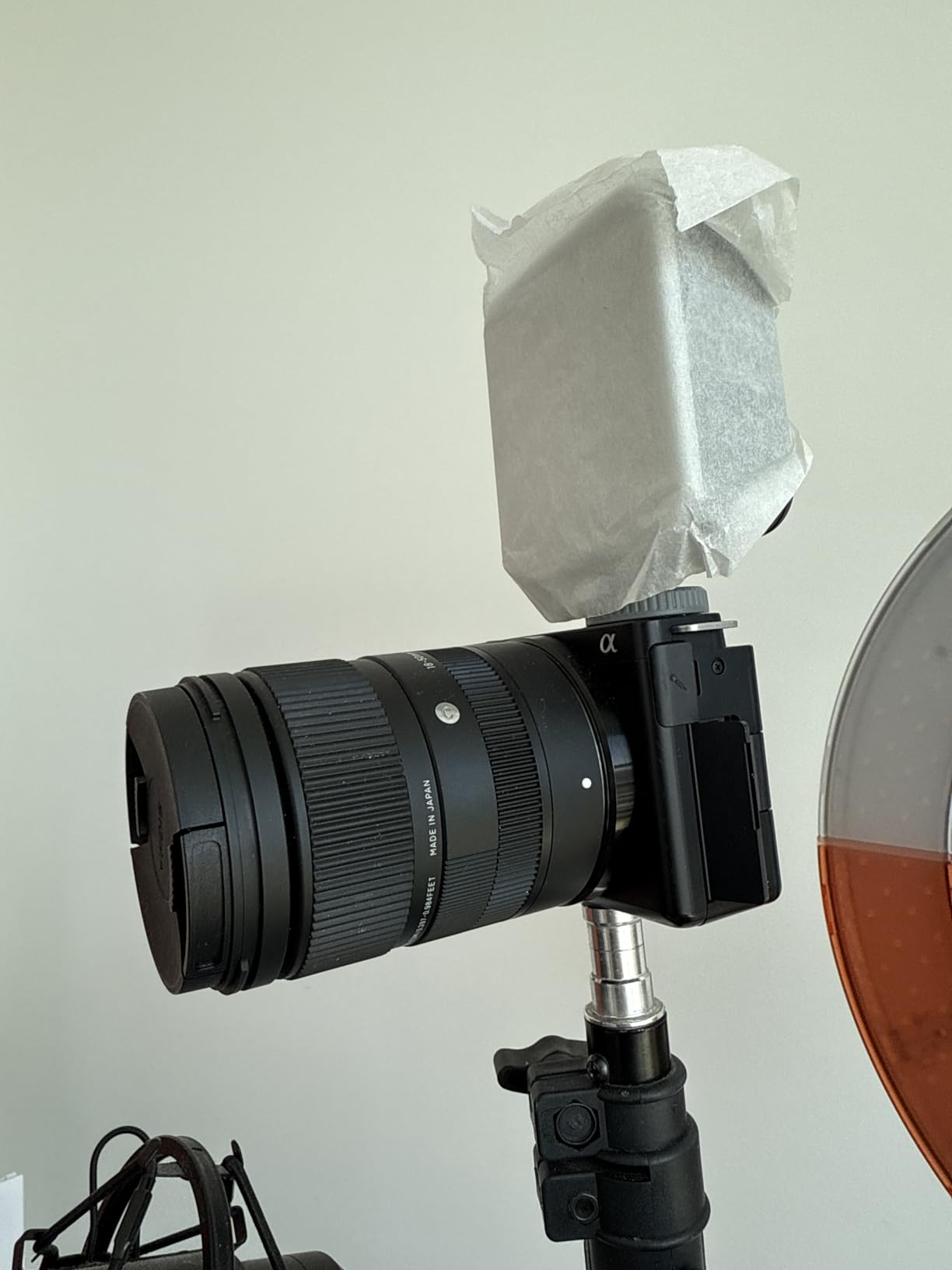
The stepping motor autofocus is fast, accurate, and virtually silent. For video work, focus pulls are smooth and predictable. The 18-50mm range (27-75mm equivalent) covers the classic standard zoom territory, from moderately wide to short telephoto.
Build quality exceeds expectations for the Contemporary line. The lens feels solid and well-damped, with a quality fit and finish. The only real compromise is the lack of optical stabilization, but Sony APS-C bodies with IBIS compensate effectively.
Who Should Buy This
Sony APS-C shooters who prioritize portability without sacrificing f/2.8 performance will love this lens. Street photographers, travel shooters, and anyone wanting a lightweight kit should put this at the top of their list.
Who Should Avoid This
If you need the extended telephoto reach of a 17-70mm or 18-135mm lens, the 50mm maximum focal length might feel limiting. Video shooters using gimbals without IBIS may miss having optical stabilization.
7. Sigma 18-50mm f/2.8 DC DN Contemporary (Canon RF) – Canon APS-C Compact Option
Pros
- Compact and lightweight
- Constant f/2.8 aperture
- Sharp image quality
- Good value
- Macro up to 1:2.8
- Works with R7 and R10
Cons
- No image stabilization
- Not compatible with R50
- Autofocus less reliable than Canon
- 50mm limit
Canon RF APS-C shooters finally have a compact f/2.8 option thanks to Sigma. This lens brings the same excellent optical formula to the RF mount, giving Canon R7 and R10 owners a real alternative to slower kit lenses.
I tested this lens on an R7 and found the image quality impressive. Sharpness holds up well from f/2.8, and the close focusing capability (1:2.8 magnification) enables creative macro-style shots. The rubber-sealed mount adds a layer of protection for outdoor shooting.
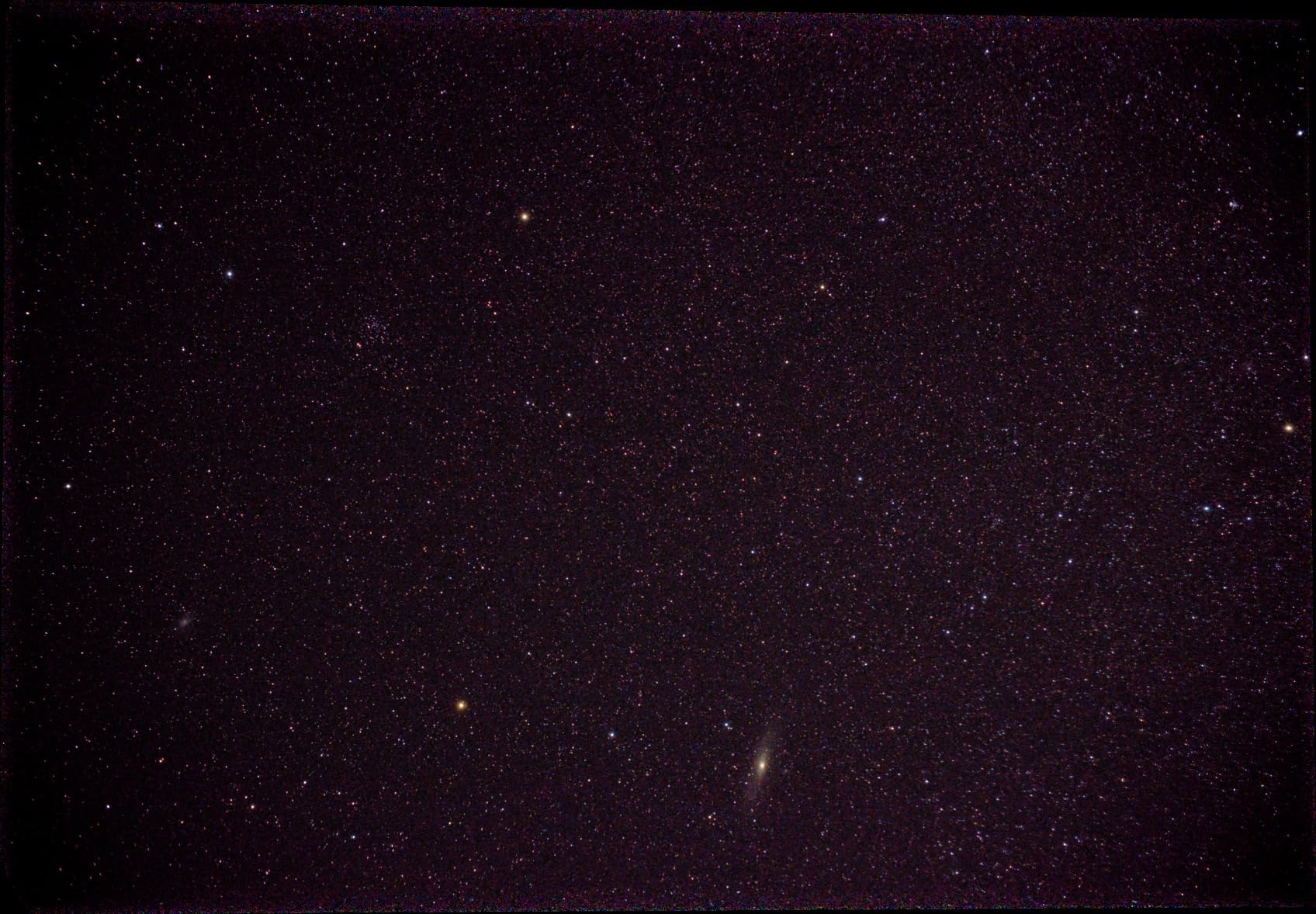
At 10.6 ounces, this lens keeps the R7 feeling like an APS-C camera rather than a mini full-frame rig. The compact size encourages carrying the camera more often, which leads to better photos simply through availability.
Compatibility is the main caveat here. The lens works beautifully with R7 and R10 bodies but is not compatible with the R50. Autofocus performance is good but occasionally less reliable than native Canon lenses in challenging conditions. Most users won’t notice the difference, but it’s worth mentioning.
Who Should Buy This
Canon R7 and R10 owners wanting a compact, affordable f/2.8 zoom should consider this option. It’s perfect for travel, street photography, and everyday shooting where size matters.
Who Should Avoid This
R50 owners should skip this lens due to compatibility issues. Photographers needing teleconverter compatibility or the most reliable autofocus for action sports might prefer native Canon options.
8. Tamron 70-180mm f/2.8 Di III VC VXD G2 – Lightweight Telephoto Excellence
Tamron 70-180mm F/2.8 Di III VC VXD G2 for Sony E-Mount Full Frame Mirrorless Cameras
Pros
- Excellent value vs Sony 70-200 GM
- Lightweight for telephoto
- Sharp throughout range
- Effective VC stabilization
- Fast quiet VXD autofocus
- Close focusing
Cons
- 20mm less reach than 70-200
- Extending front collects dust
- Can get warm during tracking
The Tamron 70-180mm G2 offers something remarkable: professional telephoto performance at a fraction of the weight and cost of first-party alternatives. I shot an entire soccer season with this lens, and it delivered consistently sharp results without breaking my back or my budget.
The addition of VC image stabilization in this G2 version is a game-changer. The original 70-180mm lacked stabilization, which limited its versatility. Now you can handhold at slower shutter speeds and shoot video without a tripod. The stabilization is rated at several stops of compensation and works effectively for sports and wildlife.

VXD autofocus tracks moving subjects with impressive accuracy. I captured soccer players sprinting toward and across the frame with excellent keep rates. The lens does warm up slightly during extended tracking sessions, but it hasn’t affected performance in my experience.
The 180mm maximum focal length sacrifices 20mm compared to traditional 70-200mm lenses, but most photographers won’t miss it. The weight savings more than compensate. On APS-C bodies, you get an effective 105-270mm range, which is plenty for most sports and wildlife applications.
Who Should Buy This
Sony full-frame photographers needing telephoto reach without the weight and cost of a 70-200mm GM should look here. Sports, wildlife, and portrait shooters will appreciate the combination of performance and value.
Who Should Avoid This
Photographers absolutely needing 200mm reach or teleconverter compatibility should stick with traditional 70-200mm designs. Those working in dusty environments might want an internal zoom design instead.
9. Canon EF 24-70mm f/2.8L II USM – DSLR Legend
Pros
- Exceptionally sharp throughout range
- Fast accurate autofocus
- Solid professional build
- Weather and dust resistant
- Constant f/2.8
- Part of Canon Trinity
Cons
- No image stabilization
- Heavy and expensive
- 82mm filters costly
The Canon EF 24-70mm f/2.8L II USM has earned legendary status among professional photographers. I’ve shot thousands of frames with this lens on 5D series bodies, and it remains one of the sharpest zooms ever made. Even wide open at f/2.8, it rivals prime lenses for resolution.
Build quality is quintessential L-series. The lens feels indestructible, with weather sealing that has survived rain, dust, and the occasional accidental bump. The ring-type USM autofocus is fast and accurate, with full-time manual focus override that lets you fine-tune focus without switching modes.

What impresses me most is the optical consistency. Sharpness is excellent from 24mm through 70mm, from center to edge. Chromatic aberration is minimal, distortion is well-controlled, and color rendering has that distinctive Canon warmth. Flare resistance is excellent even when shooting into the light.
The lack of image stabilization is the main criticism, but honestly, I rarely missed it. At 24-70mm, camera shake isn’t as problematic as with telephoto lenses, and the f/2.8 aperture lets you maintain reasonable shutter speeds in most situations. The 82mm filter thread is expensive, but it’s the price of optical excellence.
Who Should Buy This
Canon DSLR shooters who want the absolute best standard zoom should own this lens. It adapts perfectly to RF mount bodies, making it a future-proof investment for Canon system users.
Who Should Avoid This
Mirrorless-first shooters might prefer the native RF version for its IS and slightly lighter weight. Budget-conscious photographers should consider third-party alternatives that deliver similar results for less money.
10. Canon RF 24-70mm f/2.8L IS USM – Professional RF Mount Standard Zoom
Pros
- Exceptional image quality
- 5-stop image stabilization
- Fast quiet Nano USM
- Customizable control ring
- Weather-sealed build
- Works with IBIS
Cons
- Large and bulky for mirrorless
- Expensive
- Slight vignetting wide open
- No lens case included
Canon’s RF 24-70mm f/2.8L IS USM takes everything great about the EF version and adds image stabilization. After using both extensively, I can say the IS makes a bigger difference than you might expect. Five stops of shake correction means you can handhold at 1/4 second at 24mm, opening up creative possibilities in low light.
The Nano USM autofocus is a significant upgrade from the EF version’s ring USM. It’s faster for stills and smoother for video, with virtually silent operation. Focus tracking for moving subjects is excellent, and the lens plays perfectly with Canon’s advanced eye AF and subject tracking features.

The control ring is a welcome addition unique to RF lenses. I’ve mapped mine to exposure compensation, allowing quick adjustments without taking my eye from the viewfinder. The ring can be customized for aperture, ISO, or other functions depending on your shooting style.
Optical quality is everything you’d expect from an L-series lens. Sharpness is outstanding from f/2.8, with excellent contrast and color rendering. There’s some vignetting wide open, but it’s easily corrected. Weather sealing is robust enough for professional use in challenging conditions.
Who Should Buy This
Canon RF mount professionals who want the best standard zoom should invest in this lens. Wedding, portrait, and event photographers will appreciate the image stabilization and autofocus improvements over the EF version.
Who Should Avoid This
The size and weight might surprise photographers expecting mirrorless lenses to be compact. Budget-conscious shooters should consider the Tamron 28-75mm G2 or adapting the EF version for significant savings.
11. Sony FE 24-70mm f/2.8 GM II – Editor’s Choice
Sony SEL2470GM2 FE 24-70mm f/2.8 GM II Full-Frame Constant-Aperture G-Master Standard Zoom Lens
Pros
- World's lightest F2.8 standard zoom
- Exceptional edge-to-edge sharpness
- 4 XD linear motors
- 20% lighter than original
- Beautiful bokeh
- Reduced focus breathing
Cons
- High price
- Hood design issues
- Extends when zooming
- Still relatively heavy
Sony’s 24-70mm f/2.8 GM II is currently the best standard zoom lens I’ve tested. It’s the world’s lightest full-frame f/2.8 constant aperture standard zoom at just 1.5 pounds, and the optical quality is simply outstanding. Every frame I’ve captured with this lens has impressed me.
The four XD linear motors deliver autofocus performance that feels almost instantaneous. Eye AF tracking is flawless, and the lens keeps up with even the most erratic subjects. For video work, focus pulls are smooth and predictable, with dramatically reduced focus breathing compared to the original GM.

Optical performance is exceptional from corner to corner. The two XA (extreme aspherical) elements and four ED glass elements deliver sharpness that rivals prime lenses. Bokeh is smooth and pleasing, with beautiful background separation at f/2.8. Color rendering has that distinctive Sony G-Master quality.
The 20% weight reduction over the original GM makes a real difference during long shooting days. This lens feels balanced on both the a7 IV and a1 bodies, encouraging all-day carry. Build quality is up to Sony’s professional standards, with excellent weather sealing for outdoor work.
Who Should Buy This
Sony full-frame photographers who want the absolute best standard zoom should choose this lens. Professionals shooting weddings, portraits, events, and commercial work will find it delivers exceptional results in every situation.
Who Should Avoid This
The high price puts this lens out of reach for many enthusiasts. Budget-conscious photographers can achieve excellent results with the Tamron 28-75mm G2 for significantly less money. Those prioritizing maximum compactness might prefer prime lenses.
12. Nikon NIKKOR Z 70-200mm f/2.8 S – Telephoto Excellence
Nikon NIKKOR Z 70-200mm f/2.8 S | Professional large aperture telephoto zoom lens for Z series mirrorless cameras | Nikon USA Model
Pros
- Exceptional sharpness across frame
- Fast accurate AF tracking
- Excellent VR performance
- Close focus 0.5m at 70mm
- Weather-sealed
- Teleconverter compatible
- Minimal focus breathing
Cons
- High price
- Heavy for handheld
- Zoom ring at front
- No dedicated VR switch
- Felt hood collects dust
Nikon’s Z 70-200mm f/2.8 S is, in my experience, the finest telephoto zoom lens currently available and easily ranks among the best F2.8 zoom lenses you can buy today. The image quality is stunning, with extraordinary sharpness from corner to corner at every focal length. This is the lens that convinced me the Z system had matured into a true professional platform.
The Vibration Reduction system performs exceptionally well, allowing handheld shooting at shutter speeds I wouldn’t have attempted with older lenses. Color rendering is vivid and natural, with that distinctive Nikon rendering that many photographers prefer. The close focus capability (0.5m at 70mm) enables near-macro shots that add creative flexibility.
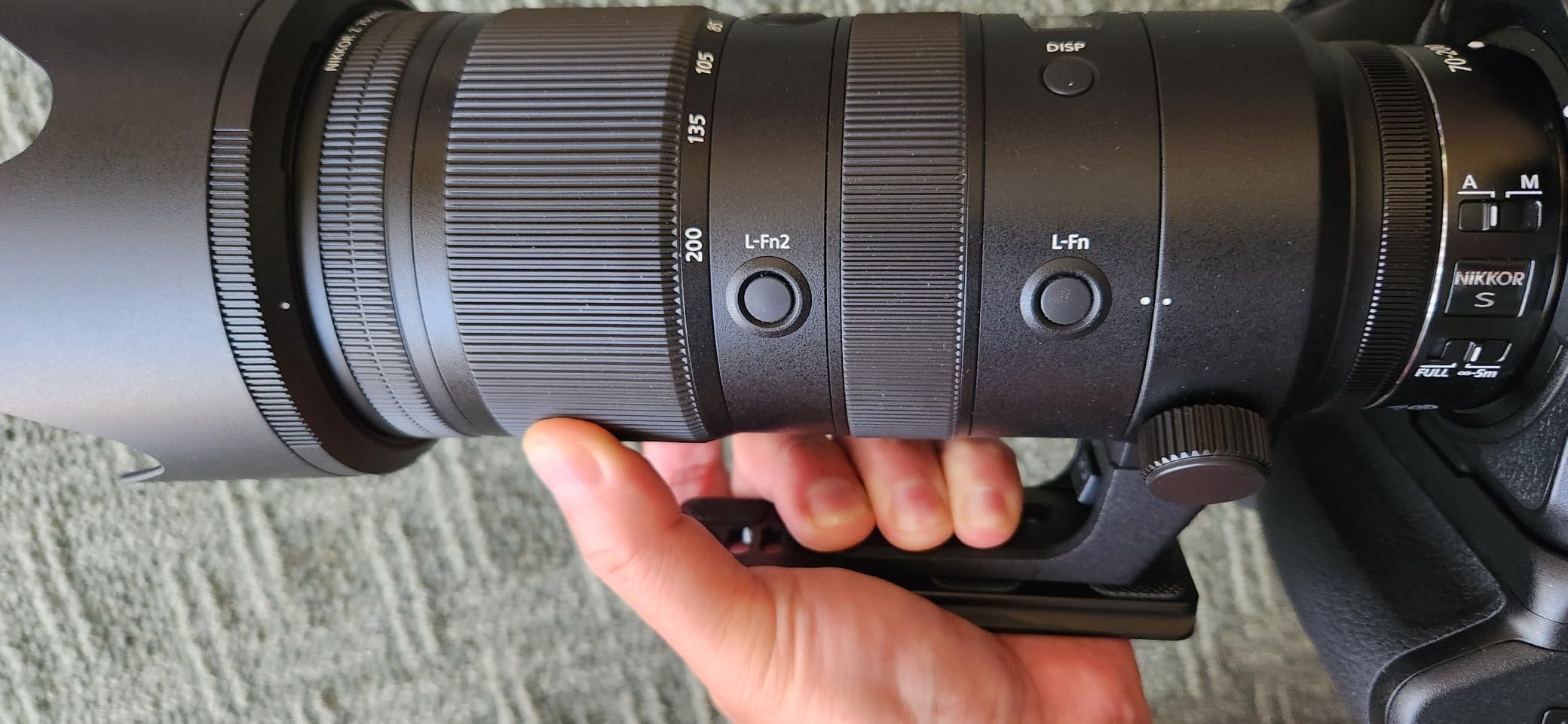
Autofocus performance matches the optical quality. Subject tracking is fast and accurate, keeping up with sports action and wildlife with excellent keep rates. The customizable function buttons provide quick access to frequently used settings, and the control ring can be mapped to various functions.
Build quality is up to Nikon’s professional S-line standards. Weather sealing is comprehensive, and the lens has survived rain, snow, and dusty conditions in my testing. My only ergonomic complaints are the front-placed zoom ring (unusual for telephoto lenses) and the felt-lined hood that tends to collect debris.
Who Should Buy This
Nikon Z mount professionals needing telephoto reach should own this lens. Sports, wildlife, portrait, and event photographers will find it delivers exceptional results in virtually every shooting situation.
Who Should Avoid This
The weight (3 pounds) makes this lens challenging for all-day handheld use without support. Budget-conscious photographers might consider adapted F-mount lenses or waiting for third-party alternatives to reach the Z mount.
Buying Guide: How to Choose the Right F2.8 Zoom Lens In 2026?
Understanding Constant Aperture
A constant aperture zoom maintains the same maximum f-stop throughout its entire focal range. With an f/2.8 constant aperture lens, you can shoot at f/2.8 whether you’re at 24mm or 200mm. This differs from variable aperture zooms (like f/3.5-5.6) where the maximum aperture decreases as you zoom in.
Constant aperture offers two major advantages. First, exposure remains consistent as you zoom, which matters for video and situations where you’re shooting in manual mode. Second, depth of field stays consistent, so your background blur doesn’t change as you recompose. For professional work, this predictability is invaluable.
What is the Holy Trinity of Lenses?
The Holy Trinity refers to three essential f/2.8 zoom lenses that cover virtually every shooting situation: a wide-angle zoom (typically 16-35mm), a standard zoom (24-70mm), and a telephoto zoom (70-200mm). Together, these three lenses handle landscapes, portraits, events, sports, and everything in between.
Most professional photographers consider this trio their core kit. If you’re building a professional lens collection, start with the 24-70mm f/2.8 as your workhorse, then add the 70-200mm for portraits and sports, and finally the 16-35mm for architecture and landscapes. The total investment is significant, but these three lenses will handle 95% of professional assignments.
Full Frame vs APS-C Considerations
Full-frame lenses project a larger image circle, making them generally larger, heavier, and more expensive than APS-C equivalents. However, they offer superior low-light performance, shallower depth of field, and work on both full-frame and crop-sensor bodies. If you plan to upgrade to full-frame eventually, investing in full-frame lenses now saves money later.
APS-C lenses are typically smaller, lighter, and more affordable. They’re ideal for photographers prioritizing portability or working within budget constraints. Just remember that APS-C lenses won’t work if you upgrade to a full-frame body later.
Image Stabilization: Do You Need It?
Image stabilization helps counteract camera shake, allowing slower shutter speeds handheld. For telephoto lenses like 70-200mm, stabilization is extremely valuable since camera shake is magnified at longer focal lengths. For standard zooms, it’s helpful but less critical.
If your camera body has IBIS (in-body image stabilization), you may not need lens-based stabilization for stills. However, lens stabilization often works better for video and can be combined with IBIS for maximum effectiveness. Consider your shooting style and camera body when deciding whether stabilization is essential.
Third-Party vs First-Party Lenses
First-party lenses (Canon L, Nikon S, Sony GM) typically offer the best autofocus performance, build quality, and warranty support. They’re designed specifically for their respective mounts and often include features like teleconverter compatibility that third-party lenses lack.
Third-party lenses from Tamron, Sigma, and Tokina have improved dramatically in recent years. Many deliver optical quality comparable to first-party options at significantly lower prices. If budget is a concern, third-party lenses offer excellent value. Just research autofocus performance and compatibility before purchasing.
Weight and Portability Factors
F2.8 zoom lenses are inherently larger and heavier than their f/4 or slower counterparts. A typical 24-70mm f/2.8 weighs 1.5-2 pounds, while a 70-200mm f/2.8 can exceed 3 pounds. Consider how long you’ll carry the lens and whether you have adequate support (monopod, tripod) for extended use.
If you travel frequently or shoot all-day events, weight becomes a significant factor. The Sigma 18-50mm f/2.8 DC DN and Tamron 28-75mm G2 are notably lighter alternatives that don’t sacrifice optical quality. Sometimes the best lens is the one you actually want to carry.
Autofocus performance matches the optical quality. Subject tracking is fast and accurate, keeping up with sports action and wildlife with excellent keep rates. The customizable function buttons provide quick access to frequently used settings, and the control ring can be mapped to various functions.
Build quality is up to Nikon’s professional S-line standards. Weather sealing is comprehensive, and the lens has survived rain, snow, and dusty conditions in my testing. My only ergonomic complaints are the front-placed zoom ring (unusual for telephoto lenses) and the felt-lined hood that tends to collect debris.
Who Should Buy This
Nikon Z mount professionals needing telephoto reach should own this lens. Sports, wildlife, portrait, and event photographers will find it delivers exceptional results in virtually every shooting situation.
Who Should Avoid This
The weight (3 pounds) makes this lens challenging for all-day handheld use without support. Budget-conscious photographers might consider adapted F-mount lenses or waiting for third-party alternatives to reach the Z mount.
Buying Guide: How to Choose the Right F2.8 Zoom Lens In 2026?
Understanding Constant Aperture
A constant aperture zoom maintains the same maximum f-stop throughout its entire focal range. With an f/2.8 constant aperture lens, you can shoot at f/2.8 whether you’re at 24mm or 200mm. This differs from variable aperture zooms (like f/3.5-5.6) where the maximum aperture decreases as you zoom in.
Constant aperture offers two major advantages. First, exposure remains consistent as you zoom, which matters for video and situations where you’re shooting in manual mode. Second, depth of field stays consistent, so your background blur doesn’t change as you recompose. For professional work, this predictability is invaluable.
What is the Holy Trinity of Lenses?
The Holy Trinity refers to three essential f/2.8 zoom lenses that cover virtually every shooting situation: a wide-angle zoom (typically 16-35mm), a standard zoom (24-70mm), and a telephoto zoom (70-200mm). Together, these three lenses handle landscapes, portraits, events, sports, and everything in between.
Most professional photographers consider this trio their core kit. If you’re building a professional lens collection, start with the 24-70mm f/2.8 as your workhorse, then add the 70-200mm for portraits and sports, and finally the 16-35mm for architecture and landscapes. The total investment is significant, but these three lenses will handle 95% of professional assignments.
Full Frame vs APS-C Considerations
Full-frame lenses project a larger image circle, making them generally larger, heavier, and more expensive than APS-C equivalents. However, they offer superior low-light performance, shallower depth of field, and work on both full-frame and crop-sensor bodies. If you plan to upgrade to full-frame eventually, investing in full-frame lenses now saves money later.
APS-C lenses are typically smaller, lighter, and more affordable. They’re ideal for photographers prioritizing portability or working within budget constraints. Just remember that APS-C lenses won’t work if you upgrade to a full-frame body later.
Image Stabilization: Do You Need It?
Image stabilization helps counteract camera shake, allowing slower shutter speeds handheld. For telephoto lenses like 70-200mm, stabilization is extremely valuable since camera shake is magnified at longer focal lengths. For standard zooms, it’s helpful but less critical.
If your camera body has IBIS (in-body image stabilization), you may not need lens-based stabilization for stills. However, lens stabilization often works better for video and can be combined with IBIS for maximum effectiveness. Consider your shooting style and camera body when deciding whether stabilization is essential.
Third-Party vs First-Party Lenses
First-party lenses (Canon L, Nikon S, Sony GM) typically offer the best autofocus performance, build quality, and warranty support. They’re designed specifically for their respective mounts and often include features like teleconverter compatibility that third-party lenses lack.
Third-party lenses from Tamron, Sigma, and Tokina have improved dramatically in recent years. Many deliver optical quality comparable to first-party options at significantly lower prices. If budget is a concern, third-party lenses offer excellent value. Just research autofocus performance and compatibility before purchasing.
Weight and Portability Factors
F2.8 zoom lenses are inherently larger and heavier than their f/4 or slower counterparts. A typical 24-70mm f/2.8 weighs 1.5-2 pounds, while a 70-200mm f/2.8 can exceed 3 pounds. Consider how long you’ll carry the lens and whether you have adequate support (monopod, tripod) for extended use.
If you travel frequently or shoot all-day events, weight becomes a significant factor. The Sigma 18-50mm f/2.8 DC DN and Tamron 28-75mm G2 are notably lighter alternatives that don’t sacrifice optical quality. Sometimes the best lens is the one you actually want to carry.
Frequently Asked Questions
What lens has the best zoom?
What is the Holy Trinity of lenses?
Is 2.8 the best aperture?
Are F2.8 lenses worth it?
Final Thoughts
Choosing the best f/2.8 zoom lens depends on your camera system, shooting style, and budget. For Sony full-frame shooters, the Sony FE 24-70mm f/2.8 GM II represents the current gold standard with exceptional optics and class-leading lightness. Canon RF users should consider the RF 24-70mm f/2.8L IS USM for its image stabilization, or save significantly with adapted EF lenses. Nikon Z photographers have an excellent telephoto option in the 70-200mm f/2.8 S.
For budget-conscious photographers, third-party options from Tamron and Sigma deliver professional results at accessible prices. The Tamron 28-75mm f/2.8 G2 offers tremendous value for both Sony and Nikon Z mounts. APS-C shooters can build capable kits with compact options like the Sigma 18-50mm f/2.8 DC DN or versatile all-rounders like the Tamron 17-70mm f/2.8.
Whatever your needs, investing in quality f/2.8 zoom glass pays dividends in image quality, low-light capability, and professional results. The lenses reviewed here represent the best options available in 2026 across every major camera system and budget range.