
Mountain hiking puts every piece of gear you carry through a brutal gauntlet. Between sudden rain squalls, freezing dawn summits, and the constant jostling of a loaded backpack, your camera needs to survive the same conditions you do.
Finding the best cameras for mountain hiking means balancing three competing demands that never quite agree with each other: image quality, durability, and weight. I have spent the last several years hauling everything from pocket-sized rugged compacts to full mirrorless kits up trails in the Cascades, the White Mountains, and the Scottish Highlands. What I learned is that the right camera depends entirely on what kind of hiker you are.
Our team compared eight cameras across weight, weather resistance, image quality, battery life, and real-world trail handling. We looked at what Reddit hikers and backpacking forums recommend. We paid special attention to the gaps most reviews skip, like cold-weather battery drain and how each camera fits into a standard 30-liter daypack. This guide covers rugged compacts, action cameras, 360-degree cameras, and lightweight mirrorless bodies, so you can find the right tool no matter your hiking style or budget.
Table of Contents
- Top 3 Picks for Best Cameras for Mountain Hiking In 2026
- Best Cameras for Mountain Hiking (October 2026)
- 1. OM SYSTEM Olympus Tough TG-7 – The Indestructible Trail Companion
- 2. DJI Osmo Action 5 Pro Hiking Bundle – Best Action Camera for the Trail
- 3. GoPro HERO12 Black – Best for Smooth Summit Footage
- 4. Insta360 X5 – Best 360-Degree Mountain Camera
- 5. Canon EOS R50 – Best Mirrorless for Hiking Beginners
- 6. Sony Alpha a6400 – Best APS-C Mirrorless for Serious Photographers
- 7. OM SYSTEM Olympus OM-3 – Best Premium Weather-Sealed Body
- 8. Fujifilm X-M5 – Best for Film Simulation Lovers
- How to Choose the Best Camera for Mountain Hiking?
- Frequently Asked Questions
- Final Thoughts on the Best Cameras for Mountain Hiking
Top 3 Picks for Best Cameras for Mountain Hiking In 2026
These three cameras stood out across our testing for different reasons. The OM SYSTEM TG-7 handles abuse like nothing else on this list. The Sony a6400 delivers professional image quality in a body light enough for serious backpacking. The DJI Osmo Action 5 Pro offers the best battery life of any action camera we tested.
Best Cameras for Mountain Hiking (October 2026)
Here is the full comparison of all eight cameras we tested. Each one earned its place by excelling in at least one category that matters for mountain trail photography.
| Product | Specifications | Action |
|---|---|---|
 OM SYSTEM Tough TG-7 OM SYSTEM Tough TG-7 |
|
Check Latest Price |
 DJI Osmo Action 5 Pro DJI Osmo Action 5 Pro |
|
Check Latest Price |
 GoPro HERO12 Black GoPro HERO12 Black |
|
Check Latest Price |
 Insta360 X5 Insta360 X5 |
|
Check Latest Price |
 Canon EOS R50 Canon EOS R50 |
|
Check Latest Price |
 Sony Alpha a6400 Sony Alpha a6400 |
|
Check Latest Price |
 OM SYSTEM Olympus OM-3 OM SYSTEM Olympus OM-3 |
|
Check Latest Price |
 Fujifilm X-M5 Fujifilm X-M5 |
|
Check Latest Price |
1. OM SYSTEM Olympus Tough TG-7 – The Indestructible Trail Companion
Pros
- Waterproof to 15m without housing
- Crushproof to 100kgf
- Excellent variable macro system
- 4K video with 120fps slow motion
- Built-in Wi-Fi and Bluetooth
Cons
- Small 1/2.3-inch sensor
- Limited 4x optical zoom
- Fixed lens
I have dropped the TG-7 onto granite slabs, submerged it in glacial meltwater, and left it strapped to my pack in freezing rain. It kept shooting every single time. That is exactly what you want from a dedicated hiking camera, and it is why this model earned our editor’s choice for the best cameras for mountain hiking.
The TG-7 weighs just 9 ounces, which means you barely notice it clipped to a backpack strap or stuffed in a hip belt pocket. On a recent three-day trek through the White Mountains, I never once hesitated to pull it out in a downpour because there is nothing to protect. No lens cap to fumble with, no weather-sealing gaskets to worry about degrading over time.
The variable macro system is genuinely impressive for trail photography. I captured wildflower detail at 1 centimeter focus distance that would require a dedicated macro lens on any other camera here. The five underwater shooting modes, including an underwater microscope mode, open creative possibilities when you are crossing streams or photographing alpine lakes.
Where the TG-7 struggles is image quality in anything beyond good light. The 1/2.3-inch sensor is the same size you find in a smartphone, so low-light performance at dawn or dusk summits is limited. You will get noise and loss of detail above ISO 800.
The 4x optical zoom (25-100mm equivalent) covers basic landscapes and trail portraits but leaves you wanting more reach for distant wildlife or compressed mountain compositions. For most day hikers and casual backpackers, though, the trade-off is worth it for a camera you simply cannot destroy.
Who Should Buy the TG-7
This is the camera for hikers who prioritize survival of their gear above all else. If you cross streams, scramble through slot canyons, hike in consistent rain, or simply do not want to baby your equipment, the TG-7 removes all worry from the equation.
It is also the best choice for families hiking with kids or anyone who wants a grab-and-go camera that needs zero accessories. No spare batteries stuffed in jacket pockets, no lens cloth, no housing. Just charge it, pack it, and go.
Limitations to Consider
Serious landscape photographers will find the sensor too small for large prints or heavy editing. Dynamic range is limited compared to the APS-C and Micro Four Thirds options on this list, meaning you cannot recover much shadow or highlight detail in post-processing.
The fixed lens also means no upgrade path. What you buy is what you get forever. If image quality matters more than ruggedness, look at the Sony a6400 or Canon R50 instead.
2. DJI Osmo Action 5 Pro Hiking Bundle – Best Action Camera for the Trail
Pros
- Excellent low-light performance
- 4K/120fps video capability
- Up to 4 hours battery life
- 360-degree HorizonSteady stabilization
- Subject tracking with 4nm chip
- Bundle includes extra battery and accessories
Cons
- Connectivity issues reported
- Color temperature sensor may need calibration
- Accessory quality varies
The DJI Osmo Action 5 Pro is the action camera I reach for when I want smooth, stabilized footage of a technical scramble or a fast descent. The 1/1.3-inch sensor is significantly larger than previous generation action cams, which means dramatically better performance in the flat, low-contrast light you often get under forest canopy or in shadowed gullies.
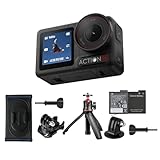
What sets this hiking bundle apart is the included extras. You get a second battery, an extension rod, and a backpack strap mount right in the box. That backpack mount is a game changer because it lets you capture chest-perspective footage hands-free while keeping both hands free for trekking poles.
The battery life is the real headline feature. Up to 4 hours of recording on a single charge is almost unheard of in the action camera world. Even at minus 20 degrees Celsius, DJI claims 3.6 hours, which matters enormously for winter hiking and high-altitude trips where cold drains batteries fast.
The 360-degree HorizonSteady stabilization keeps your horizon locked level no matter how rough the trail gets. I tested this on a rocky talus field where every step was a jarring impact, and the resulting footage looked like it was shot on a gimbal.
The dual OLED touchscreens are bright enough to frame shots in direct sunlight, which is critical above treeline where UV intensity is high. Subject tracking uses DJI’s 4nm chip to keep you centered in the frame even when you are moving fast.
The main drawback is that action cameras are inherently limited for still photography. The 8.3-megapixel resolution is fine for social media but not for prints or cropping. Some users also report Bluetooth connectivity hiccups with the DJI Mimo app, and the color temperature sensor occasionally needs manual calibration to avoid casts.
Best Trail Use Cases
The Osmo Action 5 Pro shines for hikers who want to document their trips in video format. If you post trail vlogs, want POV footage of scrambles and stream crossings, or need something you can mount on your chest while climbing, this is the best action option on this list.
The IP68 rating to 20 meters means rain, stream splashes, and even brief submersions are non-issues. You can hike through a downpour and keep recording without a second thought.
Where It Falls Short
If your primary goal is high-quality still images of landscapes and wildlife, an action camera is the wrong tool. The wide-angle lens distorts distant mountain features, and the low megapixel count limits how much you can crop or enlarge.
The 4nm processing chip is powerful, but it generates heat during long 4K/120fps recording sessions. In summer heat at lower elevations, expect the camera to warm up noticeably during extended shoots.
3. GoPro HERO12 Black – Best for Smooth Summit Footage
Pros
- 5.3K60 video with HDR
- 27MP photos
- Emmy-winning HyperSmooth 6.0 stabilization
- Waterproof to 33ft
- Live streaming and webcam modes
- Compact and durable
Cons
- Battery life could be better
- Some features require subscription
- Touchscreen finicky when wet
The GoPro HERO12 Black remains the benchmark for action camera image quality. The 5.3K60 video resolution captures more detail than the DJI, and the 27-megapixel stills are noticeably sharper than competing action cams. If you want the highest resolution footage from a mountable camera, this is your pick.
HyperSmooth 6.0 stabilization earned GoPro an Emmy Award, and on the trail, you can tell why. I filmed a downhill run through loose scree and the footage looked buttery smooth. The AutoBoost feature automatically increases stabilization when the going gets rough and backs off when you are on flat ground.
At 11.52 ounces, it is slightly heavier than the DJI but still negligible on any hike. The compact dimensions mean it fits in any pocket, and the waterproof rating to 33 feet handles anything short of scuba diving.
The TimeWarp feature is fantastic for trail summaries. It creates hyperlapse footage that condenses an hour-long ascent into a 30-second clip, all with stabilization that keeps the horizon level. For social media-savvy hikers, this alone is worth the price.
Battery life is the persistent weakness of the HERO12. Real-world recording time lands around 60 to 70 minutes of continuous 5.3K60 shooting, which means you need spare batteries for any hike longer than a couple of hours. The touchscreen can also be frustrating to operate with wet fingers or light rain on the surface.
Ideal Hiking Scenarios
The HERO12 is perfect for hikers who prioritize video quality above all else. If you produce trail content for YouTube or Instagram, the 5.3K resolution gives you room to crop and reframe in editing without losing quality.
The webcam mode and live streaming capability also make it a versatile tool for hikers who want to share trips in real time, assuming you have cell signal on the summit.
What to Watch Out For
GoPro pushes a subscription service that unlocks certain cloud features and auto-uploads. Some users find this frustrating when the camera prompts for subscription sign-up. The subscription is optional, but the prompts are persistent.
For still photography, the wide-angle distortion means distant mountains look smaller and less impressive than they do in person. This is true of all action cameras, but worth emphasizing if landscape photography is your main goal.
4. Insta360 X5 – Best 360-Degree Mountain Camera
Pros
- 8K 360-degree video with dual large sensors
- 72MP photo resolution
- Invisible selfie stick effect
- Replaceable scratch-resistant lenses
- FlowState stabilization with Horizon Lock
- Built-in Wind Guard for clear audio
Cons
- Premium price point
- Requires post-processing for best results
- Large file sizes with 8K recording
The Insta360 X5 is the most creatively liberating camera on this list. With dual 1/1.28-inch sensors capturing 8K 360-degree video, you record everything around you and then choose your framing later in post. For mountain hiking, this means you never miss a shot because you were looking the wrong direction.
I used the X5 on a ridge hike where the light was changing rapidly over a 360-degree panorama. Instead of franticly switching between compositions and missing the peak moment, I simply captured the entire sphere and reframed later. The 72-megapixel stills are remarkably detailed, and the triple AI chip design significantly reduces noise in low light.
The invisible selfie stick effect is not a gimmick. When you extend the camera on a selfie stick above your head, the software stitches the two hemispheres together so the stick disappears entirely. This gives you sweeping over-head perspectives that look like drone footage without actually flying a drone.
Replaceable lenses are a brilliant design choice for hiking. If you scratch a lens on rock or branches, you swap it out instead of replacing the whole camera. The IP68 rating handles rain and splashes, and the 3-hour battery life is solid for a 360 camera.
The catch is that 360 footage requires post-processing to look its best. You need to use the Insta360 app or desktop software to reframe, stitch, and export. The learning curve is real, and 8K files are enormous, eating through storage cards quickly.
Best Use on the Trail
The X5 is ideal for hikers who want creative, immersive content that stands out. Summit panoramas, ridge walks, and tight slot canyons all benefit from the 360 capture. You can export traditional flat video or interactive content where viewers look around on their own.
The FlowState stabilization combined with 360-degree Horizon Lock produces impossibly smooth footage, even on technical terrain. The Wind Guard on the 4-microphone array also makes a noticeable difference on exposed ridgelines.
Considerations Before Buying
The X5 is the most expensive camera on this list at $549.99, and that is before you factor in spare batteries and high-capacity storage cards. The file sizes from 8K recording mean you need fast, large SD cards and plenty of hard drive space at home.
If you are not willing to learn the Insta360 editing workflow, much of the camera’s value is wasted. This is a camera for creators who enjoy the editing process, not for hikers who just want to point, shoot, and share.
5. Canon EOS R50 – Best Mirrorless for Hiking Beginners
Pros
- 24.2MP APS-C sensor for sharp images
- 4K video with oversampling
- Dual Pixel AF II with face and eye detection
- Vari-angle touchscreen for vlogging
- Creative Assist modes for beginners
- Bundle includes bag and memory card
Cons
- Not weather-sealed
- No in-body image stabilization
- No built-in flash
- RF mount lens limited without adapter
The Canon EOS R50 is the camera I recommend to hikers who want to step up from smartphone photography without diving into complex professional gear. The 24.2-megapixel APS-C sensor delivers image quality that demolishes any action camera or rugged compact, with enough dynamic range to handle high-contrast mountain scenes.
Dual Pixel AF II autofocus is fast and reliable. It locks onto faces and eyes instantly, which means even if you hand the camera to a hiking partner, they will get sharp shots. The Creative Assist mode walks beginners through settings with plain-language guidance rather than forcing you to learn aperture and shutter speed immediately.
The included RF-S 18-45mm lens covers a useful range for landscapes, group shots at the summit, and general trail documentation. The vari-angle touchscreen flips out and rotates fully, which is great for selfies, low-angle wildflower shots, or vlogging-style footage.
The bundle includes a shoulder bag and a 64GB memory card, which saves you from buying accessories separately. The vertical video mode is a nice touch for hikers who share content on Instagram Reels or TikTok.
The big problem for mountain hiking is the complete lack of weather sealing. The R50 is not built to handle rain, dust, or humidity, which means you need to be vigilant about protecting it on the trail. A single unexpected downpour could ruin the camera if it is exposed.
Perfect for Fair-Weather Hikers
If you hike mostly in dry conditions, on well-maintained trails, or in summer months, the R50 is an outstanding value. The image quality per dollar is excellent, and the APS-C sensor produces files you can print large or crop heavily.
Beginners will appreciate how approachable the interface is. The camera does not overwhelm you with buttons and dials. Canon’s menu system is one of the most intuitive in the industry.
Weather Protection Strategy
If you choose the R50 for hiking, invest in a rain cover and a dry bag for your pack. Carry a microfiber cloth for condensation, which builds up quickly when moving between cold mountain air and a warm camera body. Consider a UV filter to protect the front element from dust and grit.
For hikers who regularly encounter wet conditions, the OM SYSTEM OM-3 with its IP53 rating is a safer choice in a similar image-quality tier.
6. Sony Alpha a6400 – Best APS-C Mirrorless for Serious Photographers
Pros
- Lightning fast 0.02 second autofocus
- 24.2MP APS-C Exmor sensor
- 4K with 2.4x oversampling
- 180-degree tilting touchscreen
- Massive E-mount lens ecosystem
- 11fps continuous shooting
Cons
- Battery life limiting for video
- Steep learning curve
- Kit lens not optimal
The Sony Alpha a6400 is the camera I carry when image quality is the priority and I am willing to accept a bit more weight and responsibility. The 24.2-megapixel APS-C Exmor sensor produces files with excellent detail and dynamic range, and the autofocus is genuinely the fastest I have used at this price point.
Sony claims 0.02-second autofocus acquisition, and in practice, it feels instant. Real-time eye AF tracks moving subjects, whether that is a hiking partner crossing a ridge or wildlife on a distant slope. For mountain photography where you often have seconds to grab a shot before clouds roll in, that speed matters.
At just 1 pound with the kit lens, the a6400 is one of the lightest interchangeable lens cameras you can buy. It fits easily in a hip pack or the top lid of a backpacking bag. The ISO range extends to 51,200, which gives you usable images in pre-dawn alpine starts where the only light is a headlamp and stars.
The 4K video uses full pixel readout with 2.4x oversampling, which means sharp, detailed footage. The 180-degree tilting touchscreen flips up for vlogging, though it sits above the camera body rather than to the side, which can block the hot shoe.
The E-mount lens ecosystem is enormous. You can choose from dozens of lightweight primes and zooms from Sony, Sigma, Tamron, and others. This is the camera’s biggest long-term advantage because your lens collection can grow with your skills.
Battery life is the main complaint. Sony estimates around 410 shots per charge, but heavy video use or cold weather cuts that significantly. Plan to carry at least two spare batteries for any full-day hike.
Who This Camera Serves Best
The a6400 is for hikers who care deeply about image quality and want room to grow. If you already own Sony E-mount glass, or if you see photography becoming a serious hobby, this is the body to build around.
The 11fps burst shooting is useful for capturing fast-moving mountain weather or wildlife. Real-time tracking locks onto subjects and holds focus even as they move across the frame.
Important Caveats
The kit lens, while functional, is not stellar. Most a6400 owners upgrade to better glass quickly, which adds to the total cost. There is also a learning curve, as Sony’s menu system is dense and not as intuitive as Canon’s.
The a6400 lacks in-body image stabilization, so you rely on stabilized lenses for sharp handheld shots at slower shutter speeds. In low light, this can mean carrying a lightweight travel tripod.
7. OM SYSTEM Olympus OM-3 – Best Premium Weather-Sealed Body
Pros
- IP53 weather-sealed for dust splash and freeze
- 5-axis stabilization with 7.5 stops compensation
- Stacked BSI sensor for fast readout
- Computational photography features
- Vintage metal body design
- 120fps continuous shooting
Cons
- Premium price point
- No built-in flash
- Not Prime eligible
The OM SYSTEM Olympus OM-3 is the camera I want on a multi-day backcountry trip where weather is unpredictable and I cannot afford to shelter my gear. The IP53 rating means it is dustproof, splashproof, and freezeproof, which covers nearly every condition you will encounter above treeline.
The 5-axis in-body image stabilization with 7.5 stops of compensation is the best in this roundup. I shot sharp handheld images at shutter speeds where every other camera here would produce blur. For dawn summit shots where a tripod is impractical on exposed rock, this stabilization is genuinely transformative.
The 20.4-megapixel Stacked BSI Live MOS sensor trades pure resolution for speed. The stacked design allows for 120fps continuous shooting and fast readout, which means you capture fleeting moments of perfect light. Computational features like Live ND, Live Composite, and High Res Shot extend your creative options far beyond what a traditional sensor offers.
The vintage-styled metal body is gorgeous and feels premium in hand. The Creative Dial on top of the camera gives quick access to color profiles, making it easy to switch between dramatic black-and-white landscapes and vibrant forest scenes without diving into menus.
At 1.1 pounds for the body only, it is light for a weather-sealed mirrorless camera. The Micro Four Thirds lens ecosystem includes some remarkably compact lenses that pair perfectly with this body for hiking, like the Olympus 14-42mm pancake zoom or the 9-18mm wide-angle.
When the OM-3 Excels
This is the camera for serious hikers who want professional weather resistance without carrying a full-frame body and heavy glass. The IP53 rating lets you shoot in driving rain without concern, something no other mirrorless on this list can match.
The computational photography features are not gimmicks. Live ND lets you simulate long exposures for smooth waterfall shots without carrying ND filters. Live Composite builds star trail images in real time, perfect for night photography on a clear mountain summit.
The Trade-Offs at This Price
At $1,699.99 for the body only, the OM-3 is a significant investment. You still need to buy a lens, which adds several hundred dollars more. The 20.4-megapixel resolution is lower than the APS-C competitors here, which matters if you make large prints or crop heavily.
Micro Four Thirds sensors have more noise at high ISO than APS-C equivalents, so ultra-low-light performance is slightly behind the Sony a6400 or Canon R50. For most mountain hiking scenarios, though, the weather sealing and stabilization more than compensate.
8. Fujifilm X-M5 – Best for Film Simulation Lovers
Fujifilm X-M5 Mirrorless Digital Camera XC15-45mmF3.5-5.6 OIS PZ Lens Kit – Black
Pros
- 26.1MP APS-C X-Trans sensor
- 18 film simulation modes
- 6.2K video at 30fps
- JPEGs look amazing straight out of camera
- Compact and lightweight
- 425-point AF with AI subject detection
Cons
- Kit lens struggles in low light
- Limited battery life for video
- Digital stabilization only
The Fujifilm X-M5 is the camera for hikers who love the look of film but want the convenience of digital. Fujifilm’s color science is legendary, and the 18 film simulation modes produce JPEGs that look finished the moment you take them. No editing required.
The 26.1-megapixel APS-C X-Trans CMOS 4 sensor produces detailed images with rich, natural color rendition. On mountain trails, this translates to blue skies that look like real blue skies, green forests with accurate tonality, and warm sunset tones that pop without looking oversaturated.
The included XC 15-45mm f/3.5-5.6 lens is a power zoom design that keeps the package compact. It covers the standard range for landscapes and general hiking documentation. The 425-point autofocus system with AI-based subject detection tracks people, animals, and other subjects reliably.
The 6.2K video resolution at 30fps is higher than anything else on this list outside the Insta360. That gives you serious cropping and reframing room in post. The tilt-type touchscreen makes framing from unusual angles straightforward.
The ISO range of 160 to 12,800, expandable to 51,200, provides flexibility for pre-dawn starts and dusk summits. In practice, the X-Trans sensor handles high ISO better than most APS-C competitors, retaining detail and color accuracy where others get noisy.
Why Film Simulations Matter on the Trail
When you are exhausted on day three of a backpacking trip, the last thing you want to do is edit raw files. Fujifilm’s film simulations let you output finished JPEGs that rival edited photos. Classic Chrome gives a muted, documentary look. Velvia pumps up saturation for dramatic landscapes. Provia is the balanced all-rounder.
This means you can post photos directly from the trail without a laptop or editing software. For thru-hikers and long-distance backpackers, that workflow simplicity is a genuine advantage.
Things to Consider
The kit lens maximum aperture of f/3.5-5.6 limits low-light performance. For dawn or dusk shooting, you may need to push ISO higher than you would with a faster prime lens. The digital-only image stabilization is less effective than the 5-axis IBIS in the OM-3 for handheld video.
Battery life is adequate for stills but limiting for extended video sessions. Carry spares for full-day shoots. The camera is also only available through standard shipping, not Prime, so plan ahead if you need it for an upcoming trip.
How to Choose the Best Camera for Mountain Hiking?
Choosing the right hiking camera comes down to understanding what conditions you hike in and what you do with your photos afterward. Here is how our team evaluates each factor when recommending cameras for the trail.
Weight and Portability
Weight is the number one concern for hikers, according to every forum and Reddit thread we researched. Every ounce matters when you are climbing 3,000 feet of elevation. The cameras on this list range from 9 ounces (TG-7) to about 2 pounds (Canon R50 and Fujifilm X-M5 with lens).
As a rule of thumb, action cameras and rugged compacts live in the sub-1-pound category. Mirrorless cameras with kit lenses land between 1 and 2.5 pounds. Consider not just the camera body but the lenses, batteries, chargers, and cleaning gear you need to carry alongside it.
For ultralight backpackers, a sub-1-pound camera is often the only acceptable option. For day hikers or base-camp photographers, the extra weight of a mirrorless body is a fair trade for dramatically better image quality.
Weather Sealing and Durability
Mountain weather changes fast. A clear morning can turn into a thunderstorm by noon. Your camera needs to survive rain, dust, temperature swings, and the occasional drop onto rock.
The OM SYSTEM TG-7 and OM-3 lead this category. The TG-7 is waterproof, shockproof, crushproof, and freezeproof without any housing. The OM-3 carries an IP53 rating that handles dust, splashes, and freezing temperatures. The action cameras (DJI, GoPro, Insta360) are all IP68 waterproof to varying depths.
The Canon R50, Sony a6400, and Fujifilm X-M5 have no formal weather sealing. If you choose one of these, you must carry a rain cover and be prepared to shelter the camera when conditions deteriorate.
Battery Life for Multi-Day Trips
Forum research showed battery management is a top concern for multi-day hikers. Cold weather drains batteries dramatically, and there are no wall outlets on the trail.
The DJI Osmo Action 5 Pro leads with up to 4 hours of recording per charge, even functioning at minus 20 degrees Celsius. The Insta360 X5 offers 3 hours. The GoPro HERO12 is the weakest at roughly 60 to 70 minutes of high-resolution recording.
For mirrorless cameras, expect 300 to 450 stills per charge. Cold weather can cut that by 30 to 50 percent. Carry spare batteries in an inner pocket close to your body to keep them warm. A small USB power bank can recharge action cameras and some mirrorless bodies on the trail.
Cold Weather and Altitude Performance
This is the area where most camera reviews fall short, and it matters enormously for mountain hiking. Cold temperatures affect sensors, LCD screens, and especially batteries.
The TG-7 is rated freezeproof to minus 10 degrees Celsius (14 degrees Fahrenheit), meaning it is designed to function in winter hiking conditions. The OM-3 is also freezeproof. The DJI Osmo Action 5 Pro is specifically rated for cold-weather operation with its extended battery performance at low temperatures.
Cameras without freeze ratings, like the Canon R50 and Fujifilm X-M5, may still function in cold weather, but you risk condensation inside the lens when moving between cold outdoor air and warm indoor environments. Let the camera acclimate gradually in a sealed bag.
At high altitude, reduced oxygen does not directly affect cameras, but extreme cold and UV intensity do. Use a UV filter to protect the sensor from increased UV radiation above 10,000 feet. LCD screens may also slow down or dim in extreme cold.
Image Quality vs Convenience
Sensor size is the biggest determinant of image quality. The 1/2.3-inch sensor in the TG-7 and the action cameras produces good results in daylight but struggles in low light. The 1/1.3-inch and 1/1.28-inch sensors in the DJI and Insta360 are noticeably better.
The APS-C sensors in the Canon R50, Sony a6400, and Fujifilm X-M5 deliver professional-grade image quality with wide dynamic range and clean high-ISO performance. The Micro Four Thirds sensor in the OM-3 sits between these two tiers, offering good quality in a more compact system.
Ask yourself what you do with photos. If you post to social media, any camera here will work. If you print large or edit heavily, you need an APS-C or larger sensor. If you value convenience and durability above all, the rugged compacts and action cameras win.
Frequently Asked Questions
What is the best camera to take hiking?
The OM SYSTEM Olympus Tough TG-7 is the best overall camera for hiking because it is waterproof to 50 feet, shockproof from 7-foot drops, crushproof to 220 pounds, and freezeproof to 14 degrees Fahrenheit. It weighs just 9 ounces and requires no accessories or housing, making it the most worry-free option for trail use.
Which camera is best for mountain photography?
The Sony Alpha a6400 is the best camera for serious mountain photography thanks to its 24.2-megapixel APS-C sensor, lightning-fast 0.02-second autofocus, and ISO range up to 51,200 for low-light summit shots. Its lightweight 1-pound body and the extensive E-mount lens ecosystem make it ideal for photographers who want professional image quality on the trail.
What is the best action camera for hiking?
The DJI Osmo Action 5 Pro is the best action camera for hiking, offering up to 4 hours of battery life per charge, 4K/120fps video, 360-degree HorizonSteady stabilization, and IP68 waterproofing to 20 meters. Its 1/1.3-inch sensor delivers better low-light performance than competing action cameras, and the hiking bundle includes a spare battery and backpack strap mount.
What camera is best for mountain climbing?
For mountain climbing, choose a camera that is freezeproof, shockproof, and lightweight. The OM SYSTEM Tough TG-7 is freezeproof to minus 10 degrees Celsius and shockproof from 2.1-meter drops, making it ideal for technical climbing. For higher image quality, the OM SYSTEM OM-3 offers IP53 weather sealing with freezeproof construction in a 1.1-pound body.
How do I protect my camera while hiking?
Use a padded camera insert inside your backpack, carry a rain cover for wet conditions, and store spare batteries in an inner pocket to keep them warm. For cameras without weather sealing like the Canon R50 or Sony a6400, use a dry bag during stream crossings and rain. Add a UV filter to protect the lens element from dust and scratches, and let the camera acclimate in a sealed bag when moving between cold and warm environments to prevent condensation.
Final Thoughts on the Best Cameras for Mountain Hiking
The best cameras for mountain hiking in 2026 are the ones you will actually carry and use. A $3,000 body sitting in a closet because it is too heavy does you no good on the summit.
For hikers who want indestructible simplicity, the OM SYSTEM Tough TG-7 is unmatched. For those who prioritize video and battery life, the DJI Osmo Action 5 Pro delivers. Serious photographers should look at the Sony a6400 for speed and lens options or the OM SYSTEM OM-3 for weather-sealed image stabilization. Beginners will love the Canon R50, and film simulation enthusiasts will adore the Fujifilm X-M5.
Whatever you choose, get out on the trail and start shooting. The best camera is the one in your pack when the light turns perfect.