
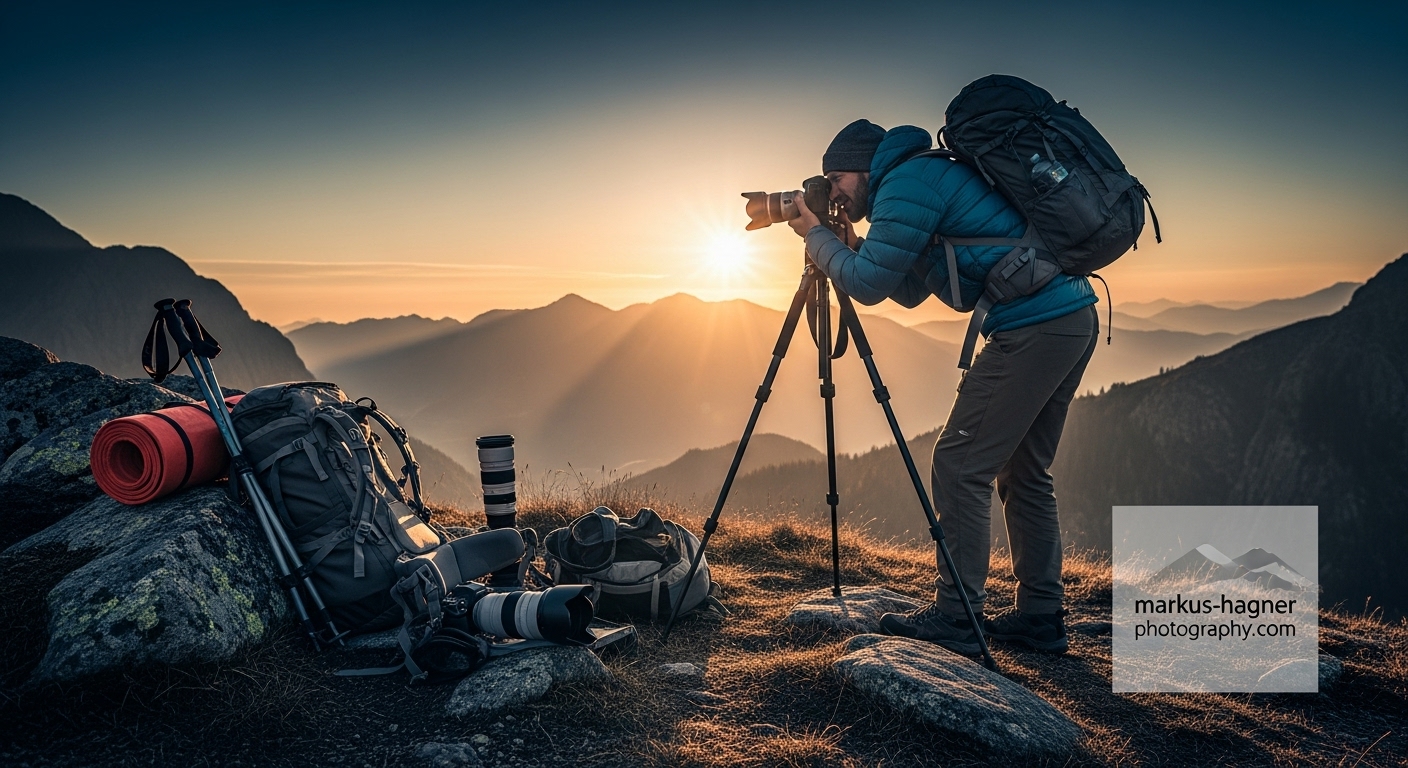
I remember my first solo adventure photography trip like it was yesterday. Standing alone on a mountain summit at sunrise, camera in hand, I felt both terrified and exhilarated. That moment changed everything for me. Solo adventure photography isn’t just about taking pictures – it’s about pushing your limits, embracing solitude, and capturing raw, authentic moments that tell powerful stories.
After years of venturing into the wilderness alone with my camera gear, I’ve learned what works, what doesn’t, and how to come back with incredible photos while staying safe. Today, I’m sharing my top 10 tips that will transform your solo adventure photography game.
Why Solo Adventure Photography is Different (and Amazing)
Before we dive into the tips, let me tell you why solo adventure photography is such a unique and rewarding pursuit. When you’re alone in the wilderness with your camera, you experience a level of freedom and connection to nature that’s hard to find when traveling with others.
I discovered that shooting alone allows me to move at my own pace, wait hours for the perfect light if needed, and truly immerse myself in the environment. There’s no one to rush you, no compromises to make, and no distractions from your creative vision. However, this freedom comes with great responsibility – you’re solely responsible for your safety, your gear, and getting the shot.
Tip 1: Master Your Gear Before You Go
This is, without a doubt, the most crucial tip I can give you. I learned this lesson the hard way on my first solo trip when I fumbled with settings and missed an incredible wildlife encounter.
Why it matters: When you’re alone in the wilderness, you don’t have a second chance. You can’t ask someone for help, and you certainly can’t Google camera settings when you’re miles from civilization.
My approach: I spend weeks before any solo adventure practicing with my gear until it becomes second nature. I can change lenses in the dark, adjust settings without looking, and troubleshoot common issues without panicking.
Essential gear to master:
- Camera body: Know every button, dial, and menu option
- Lenses: Practice changing them quickly and safely
- Tripod: Set it up and break it down in under 30 seconds
- Filters: Learn to use ND, polarizing, and UV filters by feel
- Remote triggers: Test them thoroughly before relying on them
Pro tip: Create a gear checklist and run through it before every trip. I keep mine laminated and stored with my camera equipment. It includes everything from batteries and memory cards to lens cleaning supplies and emergency gear.
My gear essentials for solo adventures:
- Primary camera (Sony A7R IV for its weather sealing and resolution)
- Backup camera (iPhone 15 Pro for emergencies and quick shots)
- Wide-angle lens (16-35mm f/2.8 for landscapes)
- Telephoto lens (70-200mm f/2.8 for wildlife and compression)
- Lightweight carbon fiber tripod (Manfrotto Element Traveller)
- Remote shutter release (with backup batteries)
- Portable power bank (fully charged)
- Weather-sealed camera bag
Tip 2: Plan Your Adventure Like a Military Operation
Solo adventure photography requires meticulous planning. I’ve learned that the difference between coming back with incredible photos and coming back empty-handed often comes down to preparation.
Research your location thoroughly:
- Study maps and satellite imagery
- Research sunrise/sunset times and angles
- Check weather patterns and seasonal conditions
- Identify potential photo locations and backup options
- Understand wildlife behavior and patterns
Create a detailed shot list: I always create a shot list before any solo adventure. This isn’t about limiting creativity – it’s about ensuring I don’t miss key opportunities. My shot list includes:
- Must-have compositions
- Specific lighting conditions I want to capture
- Wildlife or natural phenomena I hope to photograph
- Technical challenges I want to overcome
My planning process:
- Month before: Research location, create shot list, check gear
- Week before: Finalize itinerary, check weather, pack gear
- Day before: Charge all batteries, download maps, inform contacts
- Day of: Double-check everything, review shot list, head out
Real story: I once spent three days planning a solo trip to photograph a remote waterfall. When I arrived, I discovered the main access trail was closed due to landslides. Because I had researched backup locations, I was able to quickly pivot and capture incredible shots at a nearby canyon I had identified as an alternative.
Tip 3: Safety First, Always (But Especially When Alone)
This tip could save your life. As a solo adventure photographer, you’re responsible for your own safety, and there’s no one to help you if things go wrong.
Non-negotiable safety practices:
- Always tell someone your detailed itinerary: Include exact locations, routes, and expected return times
- Carry emergency communication devices: Satellite messenger, personal locator beacon, or satellite phone
- Pack a comprehensive first aid kit: And know how to use it
- Monitor weather conditions constantly: Be prepared to turn back if conditions deteriorate
- Know your limits: Don’t push beyond your skill level or physical capabilities
My safety kit essentials:
- Garmin inReach Mini (satellite communicator)
- Comprehensive first aid kit with trauma supplies
- Emergency shelter (bivy sack or space blanket)
- Water purification system
- Extra food and water (always pack more than you think you’ll need)
- Multi-tool and emergency repair kit
- Headlamp with extra batteries
- Personal locator beacon
Weather safety tips I’ve learned the hard way:
- Mountain weather changes faster than you think
- If you hear thunder, you’re already in danger
- Hypothermia can occur even in moderate temperatures
- Always have an escape route planned
I discovered that the most dangerous part of solo adventure photography isn’t the photography itself – it’s the complacency that can set in when you’re focused on getting the perfect shot. I now force myself to take regular safety breaks, even when I’m in the middle of an incredible shooting session.
Tip 4: Master the Art of Self-Portraits in Nature
Getting great shots of yourself in epic landscapes is one of the biggest challenges of solo adventure photography. I’ve spent years perfecting this skill, and I’m excited to share my techniques with you.
Essential tools for self-portraits:
- Tripod: Your best friend for solo shots
- Remote shutter: Bluetooth or wired remote
- Camera apps: Many cameras have smartphone apps for remote control
- Intervalometer: For time-lapse and burst shots
- Reflectors: To bounce light onto your face
My go-to techniques:
- The classic timer shot: Set up your composition, use a 10-second timer, and run into position. Practice this until you can get into position quickly and naturally.
- Remote control mastery: I use a small Bluetooth remote that I can hide in my hand or pocket. This allows me to take multiple shots without running back and forth.
- Camera app control: Many modern cameras have smartphone apps that let you see exactly what the camera sees and adjust settings remotely. This has been a game-changer for my solo work.
- Intervalometer sequences: Set your camera to take a burst of shots every few seconds. This gives you multiple options to choose from and increases your chances of getting the perfect moment.
Pro posing tips:
- Practice poses at home before your trip
- Use natural movements rather than static poses
- Interact with the environment (touch rocks, look at views)
- Create triangles with your body for more dynamic compositions
- Vary your distance from the camera for different perspectives
My breakthrough moment: I was struggling to get natural-looking self-portraits until I started using video mode. I would record a 30-second video of myself moving naturally, then extract the perfect frame as a still image. This technique has resulted in some of my most authentic and engaging solo shots.
Tip 5: Embrace the Golden Hours (and Blue Hours)
Light is everything in photography, and as a solo adventure photographer, you have the unique advantage of being able to chase the best light without compromising with anyone else’s schedule.
Golden hour magic: The hour after sunrise and before sunset offers the most beautiful, flattering light for adventure photography. The soft, warm light creates incredible atmosphere and brings out textures in landscapes.
My golden hour strategy:
- Scout locations the day before: I always visit potential shooting locations during the day to identify compositions and plan my shots
- Arrive early: Give yourself at least 45 minutes before the actual golden hour begins
- Stay late: The best light often comes after the sun has disappeared below the horizon
- Shoot bracketed exposures: This gives you more flexibility in post-processing
Blue hour opportunities: The period just before sunrise and after sunset offers incredible opportunities for moody, atmospheric shots. This is when you can capture stunning cityscapes, star trails beginning to appear, and beautiful twilight colors.
Night photography solo: Shooting alone at night presents unique challenges but incredible rewards. I’ve captured some of my most memorable images during solo night photography sessions.
Essential night photography gear:
- Sturdy tripod (non-negotiable)
- Headlamp with red light setting
- Extra batteries (cold drains them faster)
- Remote shutter release
- Star tracking app (like PhotoPills)
My night photography routine:
- Set up well before darkness falls
- Use live view to focus on infinity
- Shoot in RAW for maximum editing flexibility
- Take test shots and adjust settings
- Use intervalometer for star trails or time-lapses
I discovered that some of my best adventure photos come from the edges of day – those magical moments when most people have packed up and gone home. As a solo photographer, I can stay as long as I want, waiting for the perfect light.
Also Read: Sony A7Cr vs A7Rv
Tip 6: Develop Your Wilderness Photography Workflow
When you’re alone in the wilderness, you need an efficient workflow that allows you to capture great photos while staying safe and conserving energy.
My pre-shoot routine:
- Assess the situation: Weather, light, terrain, potential hazards
- Set up gear: Tripod, camera settings, filters
- Take test shots: Check exposure, focus, composition
- Refine approach: Adjust based on test results
In-the-field workflow:
- Shoot in RAW: Always, no exceptions
- Use bracketing: For high-contrast scenes
- Check histogram: Don’t trust your LCD screen
- Take multiple compositions: Variety is key
- Backup regularly: If possible, backup to a second device
Post-shoot routine:
- Review images: Delete obvious failures immediately
- Backup data: As soon as possible
- Note location details: For future reference
- Plan next shoot: Based on current conditions
Efficiency tips I’ve learned:
- Keep your gear organized and accessible
- Develop muscle memory for common tasks
- Create presets for recurring situations
- Use voice notes to remember location details
- Shoot systematically rather than randomly
My biggest workflow mistake: Early in my solo photography journey, I would get so caught up in shooting that I would forget basic needs like eating, drinking water, or checking the time. I once stayed out so long chasing the perfect light that I had to navigate back to my car in the dark without a flashlight. Now I set alarms on my watch to remind me to check in with myself and my safety.
Tip 7: Master Composition in Challenging Environments
Great composition separates good adventure photos from great ones. When you’re shooting alone in challenging environments, you need to be able to create compelling compositions quickly and effectively.
Essential composition techniques for adventure photography:
- Rule of thirds: Place key elements along the grid lines or at intersections
- Leading lines: Use natural lines to guide the viewer’s eye
- Foreground interest: Add depth with compelling foreground elements
- Framing: Use natural elements to frame your subject
- Scale and perspective: Include elements that show the vastness of the landscape
My composition process:
- Scan the scene: Look for potential compositions before setting up
- Identify the subject: What’s the main focus of the image?
- Find the angle: Move around to find the best perspective
- Consider the light: How does the light interact with the scene?
- Simplify: Remove distracting elements from the frame
Challenging environment composition tips:
- In dense forests: Look for breaks in the canopy, use tree trunks as leading lines
- On mountains: Include foreground elements to show scale, use layers to create depth
- In deserts: Use patterns and textures, play with shadows
- Near water: Use reflections, create motion with long exposures
- In bad weather: Embrace the mood, use weather as a compositional element
I discovered that some of my strongest compositions come from limitations. When I’m tired, cold, or dealing with challenging conditions, I’m forced to simplify and focus on what’s truly important in the frame. This constraint often leads to more powerful images.
Tip 8: Build Mental and Physical Resilience
Solo adventure photography is as much a mental game as it is a physical one. I’ve learned that my ability to push through discomfort, stay focused, and maintain creativity under pressure directly impacts the quality of my images.
Mental preparation techniques:
- Visualization: Before trips, I visualize successful shoots and potential challenges
- Positive self-talk: I’ve learned to be my own cheerleader when things get tough
- Embrace discomfort: Some of the best photos come from pushing beyond comfort zones
- Stay present: Focus on the current moment rather than worrying about what might go wrong
Physical preparation:
- Build endurance: Long hikes with camera gear require stamina
- Strength training: Carrying heavy equipment over rough terrain
- Flexibility: Being able to get into unusual positions for unique angles
- Balance: Essential for shooting in precarious locations
My resilience-building routine:
- Regular hiking with weighted pack
- Yoga for flexibility and balance
- Meditation for mental clarity
- Practice shoots in challenging conditions
Dealing with fear and anxiety: It’s normal to feel fear when you’re alone in the wilderness. I’ve learned to acknowledge my fear but not let it control me. I ask myself: “Is this fear keeping me safe, or is it holding me back from growth?”
My breakthrough moment: I was once perched on a narrow cliff edge, terrified to move closer to the edge for the shot I wanted. I took a deep breath, reminded myself of my safety preparations, and slowly inched forward. The resulting image was one of my most popular ever, but more importantly, I proved to myself that I could push through fear to achieve my creative vision.
Tip 9: Tell Stories Through Your Adventure Photography
Great adventure photography does more than document places – it tells stories. As a solo photographer, you have a unique opportunity to capture personal narratives that resonate with viewers.
Elements of storytelling in photography:
- Character: Even in landscapes, there can be a sense of character or personality
- Setting: The environment tells its own story
- Conflict: Challenges overcome, weather battled, distances traveled
- Emotion: The feeling you want to convey to viewers
- Resolution: The payoff, the reward for the journey
My storytelling approach:
- Think in sequences: Rather than individual images, think about how photos work together to tell a complete story
- Capture the journey: Include images that show the process, not just the destination
- Include details: Close-ups and details add depth to the narrative
- Show scale: Include elements that convey the size and challenge of the environment
- Be authentic: Don’t be afraid to show the struggles as well as the triumphs
Types of stories I love to tell:
- The journey: From start to finish of an adventure
- The challenge: Overcoming obstacles to reach a goal
- The discovery: Finding something unexpected or beautiful
- The transformation: How the experience changed me
- The connection: Relationship with nature or place
I discovered that my most powerful images often come from moments of vulnerability or struggle. When I’m cold, tired, or facing challenges, the resulting photos often have more authenticity and emotional impact than those captured in perfect conditions.
Tip 10: Learn from Every Solo Adventure
The final and perhaps most important tip is to approach every solo adventure as a learning opportunity. I’ve found that my growth as a photographer accelerates dramatically when I shoot alone because I’m forced to solve problems and make decisions independently.
Post-adventure review process:
- Analyze your images: What worked, what didn’t, why?
- Review your decisions: What would you do differently next time?
- Assess your gear: Did everything perform as expected?
- Evaluate your safety: Were there any close calls or concerns?
- Document lessons learned: Write down insights while they’re fresh
Continuous improvement strategies:
- Seek feedback: Share your work with other photographers
- Study the masters: Analyze work by photographers you admire
- Take workshops: Invest in your skills and knowledge
- Experiment constantly: Try new techniques and approaches
- Teach others: Sharing knowledge reinforces your own learning
My learning routine: After every solo adventure, I spend time reviewing not just my photos but my entire process. I ask myself:
- What technical skills do I need to improve?
- What creative approaches worked well?
- What safety concerns arose?
- What gear performed well or poorly?
- What would I do differently next time?
The mindset shift that changed everything: I used to view failed shoots or missed opportunities as failures. Now I see them as valuable learning experiences. Every “mistake” teaches me something that makes me a better photographer for the next adventure.
My most important discovery: Solo adventure photography isn’t just about coming back with great photos – it’s about the journey of growth, self-discovery, and connection with nature. The photos are the bonus, not the goal.
Also Read: Sony 400mm f/2.8 vs 600mm f/4
Essential Gear Checklist for Solo Adventure Photographers
Based on years of experience, here’s my comprehensive gear checklist for solo adventure photography:
Camera Equipment:
- Primary camera body (weather-sealed)
- Backup camera or smartphone
- Wide-angle lens (16-35mm)
- Telephoto lens (70-200mm)
- Prime lens (optional, for low light)
- Extra batteries (minimum 3)
- Memory cards (minimum 128GB each)
- Lens cleaning kit
- Camera rain cover
Support Equipment:
- Lightweight carbon fiber tripod
- Remote shutter release
- Smartphone tripod mount
- Gorillapod for unusual angles
- Bean bag for stability on uneven surfaces
Safety Equipment:
- Satellite communicator (Garmin inReach)
- Personal locator beacon
- Comprehensive first aid kit
- Emergency shelter
- Water purification system
- Multi-tool
- Headlamp with extra batteries
- Whistle and signal mirror
Navigation and Planning:
- GPS device or smartphone with offline maps
- Physical maps and compass
- Power bank (fully charged)
- Solar charger (for extended trips)
Personal Items:
- Weather-appropriate clothing layers
- Sturdy hiking boots
- Gloves (for operating camera in cold)
- Hat and sunglasses
- Sunscreen and insect repellent
- High-energy snacks
- Plenty of water
Common Challenges and How to Overcome Them
Based on my solo adventure photography experience, here are the most common challenges and my solutions:
Challenge 1: Bad Weather
- Solution: Embrace it! Bad weather often creates the most dramatic and unique photos. I’ve captured some of my favorite images in storms, fog, and rain.
Challenge 2: Gear Failure
- Solution: Always have backup plans. I carry backup cameras, multiple ways to trigger my shutter, and manual alternatives for electronic systems.
Challenge 3: Creative Block
- Solution: Change your perspective. Literally. Get low, climb high, or try a completely different angle. I also find that taking a break and returning with fresh eyes helps tremendously.
Challenge 4: Physical Exhaustion
- Solution: Know your limits and plan accordingly. I build rest stops into my photography itinerary and never push beyond my physical capabilities when alone.
Challenge 5: Fear and Anxiety
- Solution: Acknowledge your fear but don’t let it control you. I use breathing techniques and positive self-talk to manage anxiety in challenging situations.
Solo Adventure Photography FAQ
How do you stay safe when shooting alone in remote areas?
Safety is my top priority when shooting solo. I always tell someone my detailed itinerary, carry emergency communication devices, pack comprehensive safety gear, and constantly assess my surroundings. I’ve learned that the best photos come when I feel safe and in control, not when I’m taking unnecessary risks.
What’s the best camera for solo adventure photography?
The best camera is the one you know how to use and can carry comfortably. I use a Sony A7R IV for its weather sealing and high resolution, but I’ve captured incredible images with everything from smartphones to entry-level DSLRs. Focus on mastering your gear rather than constantly upgrading.
How do you get good self-portraits in wilderness settings?
Practice and patience are key. I use a combination of tripod, remote shutter, and camera apps to capture self-portraits. The secret is to take multiple shots and experiment with different poses and compositions. I’ve found that natural movement often looks better than static poses.
What’s the biggest mistake beginner solo adventure photographers make?
The biggest mistake I see is underestimating the importance of planning and safety. Many beginners focus so much on getting the shot that they neglect basic safety precautions. Always prioritize safety over the perfect photo – there will always be other opportunities to shoot.
How do you deal with loneliness during solo photography trips?
I actually enjoy the solitude of solo photography trips, but I understand it’s not for everyone. I stay connected with family through satellite messaging, and I find that being focused on the creative process keeps my mind engaged. I also use the time for reflection and personal growth.
What’s your favorite time of day for solo adventure photography?
I absolutely love the blue hour – that period just before sunrise and after sunset. The light is incredibly moody and atmospheric, and there’s something magical about being alone in nature during these transitional times. Golden hour is a close second for its warm, flattering light.
How do you carry all your gear on long solo hikes?
I’ve learned to be ruthless about gear selection. I use a high-quality camera backpack with proper weight distribution, and I only bring what I absolutely need. My rule is: if I haven’t used it on my last three trips, it doesn’t come on the next one.
What’s the most rewarding part of solo adventure photography?
For me, the most rewarding part is the sense of accomplishment and self-reliance. There’s something incredibly empowering about navigating challenging terrain, solving problems independently, and coming back with images that tell a personal story of adventure and discovery.
Final Thoughts
Solo adventure photography has transformed not just my photography, but my entire approach to life and creativity. There’s something incredibly powerful about venturing into the wilderness alone, camera in hand, and returning with images that tell a story of personal discovery and connection with nature.
Remember, the goal of solo adventure photography isn’t just to come back with great photos – it’s about the journey of growth, self-discovery, and pushing your boundaries. Every solo trip teaches you something new about yourself, your craft, and the world around you.
Start small, build your skills gradually, and never stop learning. The wilderness is waiting, and your camera is ready. The only question is: are you ready for the adventure?
Pro Tip: Bookmark this guide ([Ctrl+D] or [Cmd+D]) so you can reference it before your solo adventures. I update it regularly with new tips and techniques as I discover them!
Happy shooting, and I can’t wait to see the incredible solo adventure photos you create!