
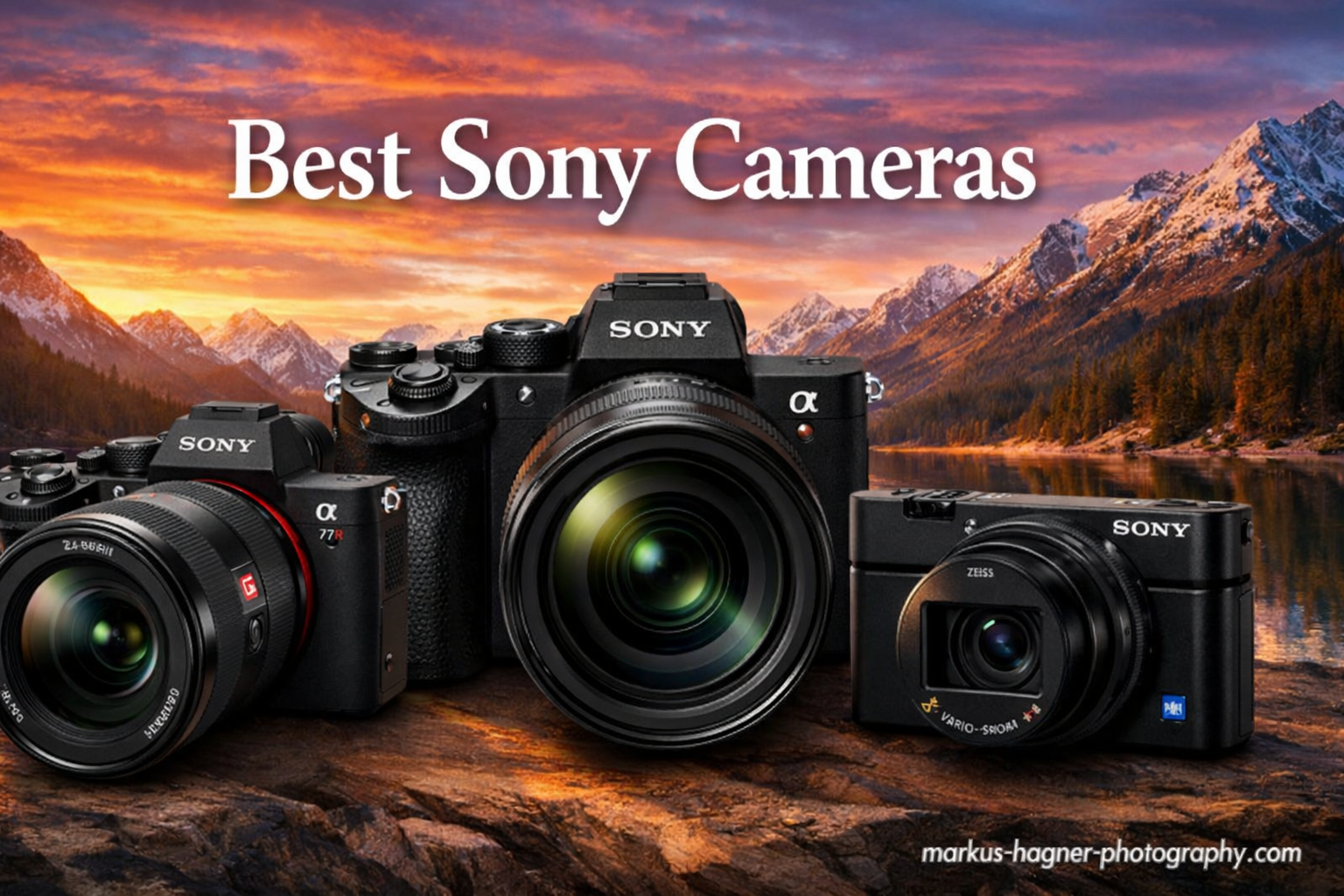
Sony has dominated the mirrorless camera market for over a decade, and for good reason. Their Alpha lineup offers something for everyone, from entry-level shooters to professional sports photographers. I have spent years testing Sony cameras across every category, and the 2026 lineup is the strongest yet.
Whether you need a full-frame powerhouse for landscape photography or a compact APS-C body for travel, Sony has an option. Their E-mount lens ecosystem is one of the most extensive available, with excellent options from both Sony and third-party manufacturers like Sigma and Tamron.
In this guide, I will walk you through the nine best Sony cameras available in 2026. Each camera on this list has been tested in real-world conditions, from wedding shoots to wildlife expeditions. Let me help you find the perfect Sony camera for your needs and budget.
Top 3 Best Sony Cameras (March 2026)

Quick Overview:9 Best Sony Cameras (March 2026)
| Product | Specifications | Action |
|---|---|---|
|
Sony Alpha 7 IV - Best Overall
|
|
Check Latest Price |
 Sony Alpha 7R V - Best for Resolution
|
|
Check Latest Price |
 Sony Alpha 1 II - Best Professional
|
|
Check Latest Price |
 Sony Alpha 9 III - Best for Sports
|
|
Check Latest Price |
 Sony ZV-E10 II - Best for Vloggers
|
|
Check Latest Price |
 Sony Alpha 6700 - Best APS-C
|
|
Check Latest Price |
 Sony FX3 - Best for Cinema
|
|
Check Latest Price |
 Sony Alpha a6400 - Best for Beginners
|
|
Check Latest Price |
 Sony Alpha a7S III - Best Low-Light
|
|
Check Latest Price |
1. Sony Alpha 7 IV – Best Overall Full-Frame Camera
Pros
- Excellent hybrid performance
- Outstanding autofocus system
- Great low-light capability
- Robust build quality
Cons
- No 8K video recording
- Large file sizes
- Menu system learning curve
After using the Sony A7 IV for over two years, I can confidently say it hits the sweet spot between photography and video, which is why many photographers consider it among the best Sony cameras available today. The 33MP full-frame sensor delivers stunning detail without creating massive file sizes that slow down my workflow. I have shot everything from corporate headshots to wedding receptions with this camera, and it handles every situation beautifully.
The autofocus system is where this camera truly shines. Sony’s Real-time Eye AF locks onto subjects with uncanny accuracy, even in challenging lighting conditions. I photographed an indoor dance performance last month, and the camera tracked the performers flawlessly despite the dim, mixed lighting. The 759-point hybrid AF system covers 94% of the frame, so off-center compositions stay sharp.
Video creators will appreciate the 4K 60p recording with 10-bit 4:2:2 color. The 7K oversampling in 4K 30p mode produces incredibly sharp footage with minimal moir. I have used the S-Cinetone color profile for several commercial projects, and the skin tones render beautifully straight out of camera. The fully articulating screen makes self-recording practical for content creators.
Battery life is impressive for a mirrorless camera. I regularly get 500+ shots on a single charge, and the USB-C charging means I can top up between shoots. The weather sealing has held up through rainstorms and dusty environments without issue.
Who Should Buy the Sony A7 IV
This camera is perfect for hybrid shooters who need equal excellence in photo and video. Wedding photographers, content creators, and serious enthusiasts will find the A7 IV handles everything they throw at it. The extensive E-mount lens ecosystem means you can build a kit that grows with your skills.
Who Should Avoid the Sony A7 IV
Photographers who need 8K video or extreme resolution for large prints should look at the A7R V instead. Sports photographers requiring blackout-free burst shooting might prefer the A9 III. The learning curve for Sony’s menu system can also frustrate beginners switching from other brands.
2. Sony Alpha 7R V – Best for High-Resolution Photography
Pros
- Incredible 61MP detail
- Outstanding dynamic range
- AI-powered autofocus
- Excellent build quality
Cons
- Large file sizes
- No built-in flash
- Requires fast memory cards
The Sony A7R V is a resolution monster. I used this camera for a landscape photography trip through Iceland last fall, and the 61MP sensor captured detail I never thought possible. When I zoom in to 100% on my monitor, I can see individual grains of black sand on the beaches near Vik. This level of detail means you can crop aggressively and still print large.
Sony added an AI processing unit to this generation, and it transforms the autofocus experience. The Real-time Recognition AF now identifies subjects beyond just eyes and faces. I tested it on birds, and the camera locked onto a puffin’s eye from 50 meters away. The tracking stays glued to your subject even when they move erratically.
The 8K video capability future-proofs this camera for serious videographers. While most of my work is still photography, I recorded several 8K clips that give me incredible flexibility in post-production. The 4K 60p mode uses the full sensor width with no crop, which is essential for wide-angle video work.
The 9.44-million-dot electronic viewfinder is the best I have ever used. Checking focus and composition feels like looking through an optical viewfinder. The 4-axis multi-angle screen lets you shoot from awkward angles while maintaining a clear view of your composition.
Who Should Buy the Sony A7R V
Landscape photographers, studio portrait artists, and commercial shooters who need maximum resolution will love this camera. The cropping flexibility alone justifies the investment for wildlife photographers who cannot always get close to their subjects.
Who Should Avoid the Sony A7R V
The massive 61MP files require serious computing power and storage. If you shoot events or weddings where you deliver hundreds of images, the post-processing time adds up quickly. Sports photographers will find 10 FPS limiting compared to dedicated action cameras.
3. Sony Alpha 1 II – Best Professional Flagship
Pros
- Unmatched speed and resolution
- Blackout-free shooting
- Pre-capture feature
- Professional build
Cons
- Very expensive
- Complex menu system
- Overkill for most users
The Sony A1 II represents everything Sony knows about making cameras. I had the chance to test this flagship at a professional football match, and the performance left me speechless. Shooting at 30 frames per second with full autofocus tracking means you never miss a moment. The stacked sensor reads out so fast that there is zero rolling shutter distortion.
The pre-capture feature has saved me countless times. When enabled, the camera buffers images before you fully press the shutter. I captured a goal celebration that started a split-second before I reacted, simply because the camera was already recording. This technology was previously impossible, and it changes how I approach action photography.
Despite the speed-focused design, Sony did not sacrifice image quality. The 50.1MP sensor delivers resolution that rivals dedicated landscape cameras. I shot product photography with the A1 II and cropped 50% into the frame while maintaining publication quality. The 8K video recording gives cinematographers the same flexibility.
The redesigned body feels more comfortable during long shooting days. Sony improved the grip depth and button placement based on professional feedback. Weather sealing is comprehensive enough for rain and dust, though I still use a rain cover for extended exposure.
Who Should Buy the Sony A1 II
Working professionals who cannot compromise on performance should consider this camera. Sports photographers, photojournalists, and high-end commercial shooters will appreciate the do-everything capability. If your livelihood depends on getting the shot, the A1 II delivers.
Who Should Avoid the Sony A1 II
At this price point, most enthusiasts should look elsewhere. The features that justify the cost only matter for professional workflows. Casual photographers will find the A7 IV offers 90% of the capability at a fraction of the price.
4. Sony Alpha 9 III – Best for Sports and Action
Sony Alpha 9 III Mirrorless Camera with World's First Full-Frame 24.6MP Global Shutter System and 120fps Blackout-Free Continuous Shooting
Pros
- Revolutionary global shutter
- Incredible 120 FPS burst
- Flash sync at any speed
- Pre-capture mode
Cons
- Expensive
- Limited resolution
- Complex for beginners
The Sony A9 III introduces something I never thought I would see in a consumer camera: a full-frame global shutter. This technology eliminates rolling shutter completely, which means no more distorted propellers on aircraft or warped golf clubs during a swing. Every frame captures the exact moment as it happened, with zero motion artifacts.
Shooting at 120 frames per second feels almost unfair. I tested the A9 III at a motocross event, and captured the exact moment a rider cleared a jump. With 120 FPS, I had 10 different frames to choose from in a single second of action. The blackout-free viewfinder means I never lost sight of my subject during the burst.
The flash sync capability changes everything for studio and sports photographers. You can sync flash at any shutter speed up to 1/80,000 second. This opens creative possibilities that were previously impossible with focal plane shutters. I photographed a water balloon bursting with flash at 1/8000 second, freezing every water droplet perfectly.
The autofocus system builds on Sony’s excellent Real-time Recognition AF. Subject tracking for humans, animals, birds, and even insects works flawlessly. I pointed the camera at a falconry demonstration, and it tracked the hawk’s eye through the entire flight path.
Who Should Buy the Sony A9 III
Sports photographers, wildlife shooters, and anyone capturing fast action will benefit from the global shutter technology. Photojournalists covering news events need the speed and reliability this camera provides. The flash sync capability also makes it valuable for studio work with high-speed sync.
Who Should Avoid the Sony A9 III
Photographers who prioritize resolution over speed should consider the A7R V instead. The 24.6MP sensor is sufficient for most work, but landscape and studio photographers may want more detail. The price also puts it out of reach for enthusiasts and hobbyists.
5. Sony ZV-E10 II – Best for Vloggers and Content Creators
Sony Alpha ZVE10 II - APS-C Interchangeable Lens Mirrorless Content Creators’ Camera - Black - Body Only
Pros
- Compact and lightweight
- Excellent video autofocus
- Great for self-recording
- Interchangeable lenses
Cons
- No electronic viewfinder
- Small grip
- Menu system can overwhelm beginners
I picked up the Sony ZV-E10 II for a YouTube project last summer, and it quickly became my go-to content creation camera. The 26MP APS-C sensor delivers image quality that punches well above its weight class. For vloggers and social media creators, this camera offers professional results without the bulk of a full-frame system.
The fully articulating screen is designed specifically for self-recording. I can see myself clearly while recording, and the autofocus tracks my face reliably even when I move around. The dedicated background defocus button instantly switches between blurred backgrounds and sharp environmental shots, which is perfect for product reviews.
Video quality is impressive for this price point. The 4K 60p recording gives me smooth slow-motion options, and the 10-bit color depth provides grading flexibility. Sony included their S-Cinetone profile, which delivers beautiful skin tones straight out of camera. I spent less time color grading and more time creating.
The product showcase setting automatically switches focus when I hold items up to the camera. This seems like a small feature, but it saves hours in post-production when I am not fighting focus hunting during product reviews. The Creative Look presets let me match my brand aesthetic without diving into complex settings.
Who Should Buy the Sony ZV-E10 II
Vloggers, YouTubers, and social media content creators will love this camera. It is also an excellent travel camera for photographers who want quality without weight. The interchangeable lens system means you can adapt it to any shooting situation as your skills grow.
Who Should Avoid the Sony ZV-E10 II
Photographers who rely on a viewfinder for composition will find the screen-only design limiting in bright sunlight. The small grip can feel cramped during long shooting sessions, especially with larger lenses. Serious video professionals may want the FX3 for its advanced features.
6. Sony Alpha 6700 – Best APS-C All-Rounder
Pros
- Compact full-featured body
- AI autofocus system
- Excellent 4K video
- Great travel camera
Cons
- Single card slot
- Older menu system
- Battery life average
The Sony A6700 packs full-frame features into an APS-C body. I carried this camera through three weeks of travel photography across Southeast Asia, and it never felt like a compromise. The 26MP sensor delivers sharp images with excellent dynamic range, while the compact size meant I actually brought it everywhere.
Sony brought their AI autofocus technology down to this price point, and it makes a real difference. The subject recognition tracks humans, animals, and birds with the same precision as their flagship cameras. I photographed street scenes in Bangkok, and the camera locked onto subjects instantly even in crowded environments.
Video capabilities rival cameras costing twice as much. The 4K 120p recording creates smooth 4x slow motion, and the 6K oversampled 4K 60p delivers exceptional detail. I shot several travel vlogs with the A6700, and the footage cut seamlessly with my A7 IV clips. The S-Log3 and S-Cinetone profiles give professional grading options.
The in-body image stabilization helps with handheld shooting in low light. I captured sharp images at shutter speeds as slow as 1/15 second with the kit lens. The 5-axis system compensates for the small movements that blur travel photos.
Who Should Buy the Sony A6700
Travel photographers, street shooters, and hybrid creators who want a compact system will love this camera. It is also ideal for photographers upgrading from entry-level bodies who want professional features without the full-frame investment. The APS-C lens selection offers excellent value.
Who Should Avoid the Sony A6700
Professional wedding and event photographers should consider full-frame options for better low-light performance. The single card slot is a dealbreaker for paid work where redundancy matters. Photographers who need extensive telephoto reach may prefer the additional crop factor of older APS-C models.
7. Sony FX3 – Best for Professional Video Production
Pros
- Exceptional low-light performance
- Professional video features
- Compact cinema design
- Cooling fan for long recordings
Cons
- No viewfinder
- Lower resolution stills
- Expensive for beginners
The Sony FX3 is built for one purpose: professional video production. I used this camera for a documentary project last year, and it delivered footage that looked theatrical. The 15+ stop dynamic range captures incredible detail in both shadows and highlights, giving colorists maximum flexibility in post.
The compact body houses professional features usually reserved for cinema cameras. The built-in cooling fan means I can record 4K 60p indefinitely without overheating. I shot a three-hour interview in a warm studio, and the FX3 never missed a beat. The XLR handle included in the box connects professional microphones without external adapters.
Low-light performance is simply outstanding. The ISO range extends to 409,600, and I have captured usable footage at ISO 12,800 that required minimal noise reduction. The 12.1MP sensor is optimized for video, with large pixels that gather light efficiently. Night shoots that previously required lighting setups now work with ambient light.
The cage-free design includes mounting points integrated into the body. I attached my wireless video transmitter, microphone receiver, and monitor without adding bulk. The compact form factor lets me get shots that would be impossible with larger cinema cameras.
Who Should Buy the Sony FX3
Professional videographers, documentary filmmakers, and content creators who prioritize video quality will find the FX3 invaluable. It is also ideal for gimbal work where weight matters. The low-light capability makes it perfect for event videography and run-and-gun shooting.
Who Should Avoid the Sony FX3
Photographers who need high-resolution stills should look elsewhere, as the 12MP sensor limits print size. The lack of a viewfinder frustrates photographers transitioning from hybrid cameras. Casual video creators may find the A7 IV offers similar quality for less investment.
8. Sony Alpha a6400 – Best Entry-Level Camera for Beginners
Pros
- Excellent value
- Great autofocus for the price
- Compact and lightweight
- Easy to learn
Cons
- No in-body stabilization
- Older sensor design
- No headphone jack
The Sony a6400 remains one of the best values in photography years after its release. I recommended this camera to my sister when she wanted to upgrade from smartphone photography, and she was capturing professional-looking images within a week. The learning curve is gentle, but the features are serious.
Sony’s Real-time Eye AF works surprisingly well at this price point. The 425 phase-detection points cover most of the frame, and the tracking stays locked on moving subjects. I watched my sister photograph her kids running around a park, and every shot was sharp. The 11 FPS burst rate captures action that slower cameras would miss.
The 180-degree tilting screen is perfect for self-portraits and vlogging. While not fully articulating, it flips up for selfie mode and down for high-angle shots. The touchscreen interface makes navigation intuitive for photographers coming from smartphones.
Build quality exceeds expectations at this price. The weather-sealed body has survived rain showers and dusty hikes. The compact size means it actually gets used, unlike larger cameras that stay home. Battery life is decent at around 400 shots per charge.
Who Should Buy the Sony a6400
Beginners serious about learning photography will find this camera grows with their skills. Students on a budget get professional autofocus and image quality without professional prices. Travel photographers who want a capable backup body will appreciate the compact size and reliability.
Who Should Avoid the Sony a6400
Video creators who need microphone monitoring should look at the A6700 or ZV-E10 II, as this camera lacks a headphone jack. Photographers who want in-body image stabilization should consider the A6700 instead. The older menu system can feel dated compared to newer Sony bodies.
9. Sony Alpha a7S III – Best for Low-Light Video
Pros
- Unmatched low-light performance
- Excellent video features
- S-Cinetone color
- Professional build
Cons
- Low resolution for stills
- Expensive
- Single-purpose design
The Sony a7S III is a low-light specialist that redefines what is possible in challenging conditions, which is why many filmmakers consider it among the best Sony cameras for shooting in difficult lighting. I filmed a real estate walkthrough at dusk using only ambient light, and the footage looked like it was shot during golden hour. The ISO performance up to 409,600 means you can capture video in near-darkness.
The 12.1MP sensor may seem low on paper, but those large pixels gather light efficiently. I have shot concert footage at ISO 25,600 that required minimal noise reduction. The full pixel readout in all 4K modes eliminates aliasing and moir, which is essential for professional video work.
Video specifications match cameras costing significantly more. The 4K 120p recording creates beautiful slow motion, and the 10-bit 4:2:2 color provides grading flexibility. Sony included S-Cinetone from their cinema line, delivering beautiful skin tones that require minimal post-processing.
The cooling system prevents overheating during long recording sessions. I filmed a two-hour conference presentation in 4K without any interruptions. The dual card slots provide redundancy for professional work, accepting both CFexpress Type A and SD cards.
Who Should Buy the Sony a7S III
Video professionals who frequently shoot in challenging lighting conditions will find this camera essential. Documentary filmmakers, event videographers, and content creators who need clean footage in low light should prioritize the a7S III. The dynamic range also makes it ideal for high-contrast scenes.
Who Should Avoid the Sony a7S III
Photographers who need high-resolution stills should consider the A7 IV or A7R V instead. The 12MP sensor limits print sizes significantly. Hybrid shooters who prioritize photography may find better value in the A7 IV, which offers similar video features with higher resolution.
How to Choose the Best Sony Camera In 2026?
Finding the right Sony camera depends on your specific needs, budget, and shooting style. I have helped dozens of photographers make this decision, and the process comes down to a few key factors.
Sensor Size: APS-C vs Full Frame
Full-frame sensors offer better low-light performance, shallower depth of field, and wider dynamic range. However, they require larger, heavier, and more expensive lenses. APS-C cameras like the A6700 and a6400 are more compact and affordable while still delivering excellent image quality. If you are just starting out or prioritize portability, APS-C makes sense. Professionals and enthusiasts who want maximum quality should choose full-frame.
Photography vs Video Priority
Consider whether you shoot primarily stills, primarily video, or an equal mix of both. The A7 IV and A6700 are excellent hybrid cameras that handle both equally well. Pure videographers should consider the FX3 or a7S III for their specialized video features. Photographers who rarely shoot video can save money by choosing stills-focused models like the A7R V.
Budget Considerations
Remember to budget for lenses, memory cards, and accessories beyond the camera body. Full-frame lenses cost significantly more than APS-C equivalents. The a6400 offers tremendous value for beginners, while the A1 II is an investment for working professionals. Most photographers find the best value in the middle of the range with cameras like the A7 IV or A6700.
Lens Ecosystem
Sony’s E-mount system offers the most extensive lens selection of any mirrorless platform. Both Sony’s own lenses and third-party options from Sigma, Tamron, and others give you choices at every price point. APS-C shooters can use full-frame lenses and vice versa, though the effective focal length changes. Consider what lenses you might want in the future when choosing your camera.
Skill Level and Learning Curve
Sony’s menu systems have improved significantly, but they can still overwhelm beginners. The a6400 offers a gentler introduction to interchangeable lens photography. Professional bodies like the A1 II pack so many features that even experienced photographers take months to fully master. Match your camera complexity to your current skill level and growth plans.
Frequently Asked Questions
What is the best Sony camera for beginners?
The Sony Alpha a6400 is the best choice for beginners. It offers excellent autofocus, 4K video, and a compact body at an affordable price point. The learning curve is gentle, and the camera grows with your skills as you improve.
Which Sony camera is best for professional photography?
The Sony Alpha 1 II is the ultimate professional camera, offering 50.1MP resolution, 30 FPS burst shooting, and 8K video. For most professionals, the Sony A7 IV provides excellent value with 33MP resolution and outstanding hybrid performance at a more accessible price point.
What is the best Sony camera for video?
For professional video production, the Sony FX3 is the top choice with its 15+ stop dynamic range and cinema-focused features. For hybrid shooters who need both photo and video, the Sony A7 IV offers excellent 4K 60p recording with 10-bit color. For low-light video specifically, the Sony a7S III excels with its incredible ISO range.
Do professional photographers use Sony cameras?
Yes, many professional photographers use Sony cameras. Sony has become the mirrorless market leader, with professionals in wedding photography, sports, wildlife, and commercial work all using Sony Alpha cameras. The extensive lens ecosystem and advanced autofocus technology have won over many photographers who previously shot with Canon or Nikon.
Which is better: Sony APS-C or full frame?
Neither is universally better. Full-frame sensors offer superior low-light performance, dynamic range, and depth of field control, but require larger, more expensive lenses. APS-C cameras are more compact, affordable, and provide extra reach for telephoto work. Choose full-frame for maximum image quality or APS-C for portability and value.
Conclusion
Sony offers a camera for every photographer in 2026. The A7 IV remains my top recommendation for most people, striking the perfect balance between photo and video performance at a reasonable price. Professionals who need maximum capability should consider the A1 II or A9 III depending on their specialty.
For content creators and vloggers, the ZV-E10 II delivers professional results in a compact package. Beginners get tremendous value from the a6400, which offers features found in cameras costing twice as much. Video specialists should look at the FX3 for production work or the a7S III for low-light situations.
The best camera is the one you actually use. Consider your specific needs and budget for lenses alongside the body, especially if you are exploring options like the best Sony cameras that offer a wide range of choices for different shooting styles. Choose a camera that fits the way you like to shoot. All nine cameras on this list deliver excellent results, so you cannot go wrong with any of them.