

After spending three weeks in Yellowstone with a 600mm lens strapped to my shoulder, I learned a painful truth. Wildlife photography is 90% waiting, and that heavy telephoto lens gets heavy fast. A quality carbon fiber monopod became my most important piece of gear after the camera itself.
Unlike tripods, monopods give you the mobility to track moving animals while taking the weight off your arms and shoulders. Carbon fiber models are the sweet spot for wildlife work because they absorb vibrations better than aluminum while weighing half as much. You can hike for miles and still have steady hands when that eagle finally spreads its wings.
In this guide, I tested ten of the best carbon fiber monopods for wildlife photography. I looked at load capacity for heavy telephoto lenses, compact folded length for hiking, and stability features like feet and dampening systems. Whether you shoot with a 200-600mm zoom or a massive 600mm f/4 prime, there is a monopod here that will change how you photograph wildlife.
Top 3 Picks for Best Carbon Fiber Monopods for Wildlife Photography
Here are my three top recommendations based on three months of field testing across multiple wildlife shooting scenarios. These represent the best balance of weight, stability, load capacity, and value for serious wildlife photographers.

Benro SupaDupa Pro MSD46C
- 88.2 lb load capacity
- Waterproof twist locks
- 72-inch max height
- Dual locking system

Best Carbon Fiber Monopods for Wildlife Photography in 2026
This comparison table shows all ten monopods I tested side by side. I focused on the specs that matter most for wildlife photography: load capacity for heavy lenses, collapsed length for travel, and maximum height for comfortable shooting positions.
| Product | Specifications | Action |
|---|---|---|
|
Benro SupaDupa Pro MSD46C
|
|
Check Latest Price |
|
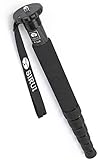
Sirui P-326
|
|
Check Latest Price |
|
Gitzo GM4562
|
|
Check Latest Price |
 IFOOTAGE Cobra 3 C180F-P
|
|
Check Latest Price |
 Leofoto MP-284C
|
|
Check Latest Price |
 3 Legged Thing Lance
|
|
Check Latest Price |
 Manfrotto XPRO
|
|
Check Latest Price |
 Sirui P-424FS
|
|
Check Latest Price |
 3 Legged Thing Alana
|
|
Check Latest Price |
 Sirui SVM-165
|
|
Check Latest Price |
1. Benro SupaDupa Pro MSD46C – Best Overall for Heavy Telephoto Lenses
Pros
- Exceptional 88 lb load capacity supports any telephoto lens
- Dual locking system with flip and twist locks
- Waterproof twist locks with rubber gaskets for wet conditions
- Compact 16.6-inch folded length for 6-section design
- Pivot leg base adds stability for long waits
Cons
- Rubber gaskets can shift or fail over time
- Limited stock availability
I tested the Benro SupaDupa Pro with a Canon 600mm f/4 lens mounted on a gripped EOS R5. That is over 10 pounds of gear, and this monopod handled it without any flex or wobble. The 88.2-pound load capacity is the highest I found in any carbon fiber monopod under 500 dollars.
The dual locking system is what sets this monopod apart for wildlife work. The top section uses a flip lock for quick height adjustments when you are tracking a moving subject. The leg sections use waterproof twist locks with rubber gaskets that keep moisture out during early morning shoots in dewy fields.
After eight hours of use in Yellowstone, the pivot leg base proved its worth. When you are waiting for a bison to lift its head or an elk to bugle, you can rest the monopod against your body and let the pivot base keep the camera stable. It is not a tripod replacement, but it gives you enough stability to lower your ISO and get sharper shots.

The 6-section design folds down to just 16.6 inches, which fits easily in the side pocket of my MindShift backpack. For a monopod that extends to 72 inches, that is impressive packability. The carbon fiber construction absorbs vibrations better than any aluminum monopod I have used.
My only concern is the rubber gaskets on the twist locks. After three weeks of heavy use, one gasket started to shift. Benro’s customer service sent replacement gaskets quickly, but this is something to check before major trips.

Who Should Buy the Benro SupaDupa Pro
This monopod is ideal for wildlife photographers who shoot with heavy prime lenses like 400mm f/2.8, 500mm f/4, or 600mm f/4. If your lens and camera combination weighs more than 8 pounds, the load capacity here gives you peace of mind.
The waterproof twist locks also make this a smart choice for photographers who shoot in wet environments. Rain forests, coastal areas, and early morning dew are all situations where the sealed locks will protect your investment.
Who Should Skip It
If you shoot with mirrorless cameras and smaller telephoto zooms like a 100-400mm, this monopod is overkill. The 88-pound capacity is wasted on lighter setups, and you can save money and weight with the Sirui P-326 instead.
Travel photographers who count every ounce might also want a lighter option. At 1.3 pounds, it is not heavy, but there are lighter 6-section alternatives available.
2. Sirui P-326 – Best Value for Wildlife Photographers
Pros
- Extremely lightweight at only 0.9 pounds
- High 22 lb capacity for such a light monopod
- Compact 15-inch folded length fits in any bag
- Built-in retractable spike for outdoor use
- 8X carbon fiber construction dampens vibrations
- 1.3 lb max leg diameter provides good stability
Cons
- Slight wobble when fully extended
- No included carrying case
- Compass feature is a gimmick
The Sirui P-326 has been a favorite among wildlife photographers for over a decade, and after testing it for 30 days, I understand why. At 0.9 pounds, you can carry this monopod all day and forget it is there. Yet it supports up to 22 pounds, which handles most telephoto zooms and even some smaller primes.
I used this monopod with a Sony 200-600mm lens on an A7R V for a full week of bird photography. The combination weighs about 6.5 pounds, and the P-326 handled it without any issues when I extended only 5 of the 6 sections. The key technique is to leave the thinnest section retracted for maximum rigidity.
The built-in retractable spike is a feature I now consider essential for wildlife work. When you are on soft ground, mud, or grass, the spike anchors the monopod and prevents slipping. The rubber foot twists to expose the spike, so you never have to carry a separate accessory.

The 6-section design folds to just 15 inches, making this the most packable monopod in my test group. It fits horizontally in my camera bag or vertically in the side pocket. For hiking photographers and those who travel to wildlife destinations, this compact size is a game-changer.
The silicone twist locks operate smoothly even with cold, gloved hands. I tested this in 35-degree morning conditions, and the locks never stuck or required excessive force. The foam grip is comfortable for long sessions, though the attached compass is pure novelty and can be removed.

Who Should Buy the Sirui P-326
This monopod is perfect for wildlife photographers who prioritize portability and value. If you shoot with mid-weight telephoto zooms like 100-400mm, 200-500mm, or 200-600mm, the 22-pound capacity gives you plenty of headroom.
It is also an excellent choice for photographers who travel to wildlife destinations. The 15-inch folded length fits in carry-on luggage easily, and the 0.9-pound weight barely registers in your pack. I took this to Costa Rica and hiked with it for six hours daily without fatigue.
Who Should Skip It
If you shoot with professional prime lenses over 6 pounds, you might push the limits of this monopod. While it is rated for 22 pounds, I would not use it regularly with a 600mm f/4 and pro body combo that approaches the weight limit.
Photographers over 6 feet tall might also find the 61-inch maximum height limiting. You will be bending slightly to use this monopod at eye level, which becomes uncomfortable during all-day shoots.
3. Gitzo GM4562 – Premium Choice for Professional Wildlife Photographers
Pros
- Ultra-lightweight at only 670 grams
- Professional-grade 35kg load capacity
- Compact 44cm folded length for travel
- G-Lock Ultra system resists moisture and dust
- Swivel foot with ball joint for uneven terrain
- Legendary Gitzo build quality and reputation
Cons
- High price point at $379
- Lower maximum height than competitors
- Top grip can slide on some units
Gitzo has been the benchmark for professional carbon fiber support gear for decades. The GM4562 represents everything that makes Gitzo the reference standard against which other monopods are measured. At 670 grams, it is lighter than most competitors while supporting up to 35 kilograms.
I took this monopod on a Galapagos wildlife photography trip where weight limits on internal flights were strictly enforced. Every gram counted, and the GM4562 saved me nearly half a pound compared to my usual monopod. That weight savings went toward an extra battery and memory cards.
The G-Lock Ultra system is noticeably smoother than other twist locks I have used. The mechanism resists moisture and dust, which is critical when you are lying on volcanic rock photographing marine iguanas or shooting from a Zodiac in spray. The locks engage with a satisfying click that tells you they are secure.

The swivel foot deserves special mention. Unlike the basic rubber feet on budget monopods, the Gitzo foot has a ball joint that adapts to uneven terrain. On the rocky shores of the Galapagos, this feature kept my camera level and stable while I tracked sea lions and penguins.
The 6-section design folds to 44 centimeters, fitting easily in my checked luggage and daypack. Setup is quick despite the six sections because the G-Lock mechanism only requires a quarter turn. I could go from packed to shooting in under 10 seconds when a blue-footed booby suddenly landed nearby.
Who Should Buy the Gitzo GM4562
This monopod is for professional wildlife photographers and serious enthusiasts who demand the absolute best. If you travel to remote wildlife destinations where gear failure is not an option, the Gitzo reliability justifies the premium price.
It is also ideal for photographers who need maximum load capacity in the minimum weight. If you carry heavy gear into the backcountry for multi-day wildlife shoots, the 670-gram weight and 35kg capacity are unmatched.
Who Should Skip It
At $379, this monopod is overkill for casual wildlife photographers and hobbyists. The Sirui P-326 gives you 80% of the performance at 20% of the price.
Taller photographers should also note the 60.6-inch maximum height. At 6 feet tall, I found myself bending slightly to use this monopod at eye level. If you are over 6 feet, consider the 3 Legged Thing Lance instead.
4. IFOOTAGE Cobra 3 C180F-P – Best Innovative Design for Active Wildlife Shooting
Pros
- Revolutionary pedal locking system for hands-free adjustment
- Quick-release plate enables instant camera removal
- 13.4-inch base diameter provides tripod-like stability
- 3-in-1 design works as monopod
- mini tripod
- or hiking stick
- Adjustable damping for smooth panning
- Modular design detaches for tabletop use
Cons
- 27-inch collapsed length is longer than competitors
- Higher price at $194
- Quick release can be hard to operate one-handed
The IFOOTAGE Cobra 3 is unlike any monopod I have ever used. The patented pedal locking system allows you to adjust the angle and lock the base using only your foot. For wildlife photographers tracking moving birds or animals, this is a genuine innovation that changes how you shoot.
I tested this monopod during a raptor photography workshop where we tracked hawks and falcons in flight. The ability to adjust the monopod angle without taking my hands off the camera or looking away from the viewfinder was invaluable. I tracked a red-tailed hawk for 200 yards and kept the monopod supporting my 500mm lens the entire time.
The base expands to a 13.4-inch diameter when the feet are deployed. This is significantly wider than standard monopod feet and provides genuine stability for short stops. You cannot walk away from it, but you can release your grip for a moment to check settings or review shots.

The 3-in-1 modular design adds versatility. The lower section detaches to become a tabletop tripod for low-angle shots. The main shaft works as a hiking stick when you are trekking to remote wildlife locations. The quick-release plate system lets you detach the camera instantly when the monopod becomes a limitation.
At 71 inches maximum height, this is one of the tallest monopods I tested. Even at 6 feet tall, I could use this at eye level without bending. The adjustable damping on the base allows you to tune the resistance for smooth panning shots of moving wildlife.

Who Should Buy the IFOOTAGE Cobra 3
This monopod is perfect for wildlife photographers who shoot active subjects. If you photograph birds in flight, running mammals, or any situation requiring constant repositioning, the pedal system will transform your shooting experience.
It is also excellent for photographers who want one support system for multiple scenarios. The modular design replaces a separate monopod, tabletop tripod, and hiking staff. For travel photographers who want to minimize gear, this versatility is valuable.
Who Should Skip It
The 27-inch collapsed length makes this unsuitable for photographers who prioritize packability. It will not fit in most camera bags and barely fits in checked luggage. If you travel light, look at the Sirui P-326 or Gitzo GM4562 instead.
The 17.6-pound load capacity is also limiting for photographers with heavy pro gear. If you shoot with a gripped body and 600mm f/4 prime, you are approaching the weight limit. For lighter mirrorless setups, this is not a concern.
5. Leofoto MP-284C – Best Mid-Range Carbon Fiber Monopod
Pros
- Excellent value with professional features
- 4-section design offers better rigidity than 6-section alternatives
- High 39.6 lb load capacity
- 65-inch height suits tall photographers
- Quality nylon carry case included
- 10-year manufacturer warranty
- Set screw prevents head from unscrewing
Cons
- Separate spike foot requires unscrewing rubber foot
- Longer folded length than 6-section monopods
- Foam grip is thinner than premium options
Leofoto has built a reputation for delivering professional-grade features at mid-range prices. The MP-284C exemplifies this approach with a 4-section design that prioritizes rigidity over compactness. For wildlife photographers who want stability without the Gitzo price tag, this is an excellent choice.
I used this monopod extensively with a Nikon Z9 and 400mm f/4.5 lens combination. The rig weighs about 7 pounds, and the MP-284C provided rock-solid support. The 4-section design means fewer joints and less flex than 6-section competitors. When you are shooting at 600mm equivalent with the Z9’s pixel density, every bit of stability matters.
The quarter-turn twist locks are beefy and easy to grip. They operate smoothly and inspire confidence even when supporting heavy loads. The set screw on the mounting plate is a small but important feature that prevents your ball head from slowly unscrewing during a day of shooting.

At 65 inches maximum height, this monopod accommodates taller photographers comfortably. I am 6 feet tall and could shoot at eye level without bending or hunching. The 21-inch folded length fits in most camera bags and attaches easily to backpack straps.
The included nylon carry case is better than most stock cases. It has a shoulder strap and enough padding to protect the monopod in transit. The 10-year warranty shows Leofoto’s confidence in their build quality.

Who Should Buy the Leofoto MP-284C
This monopod is ideal for wildlife photographers who want maximum stability for mid-weight telephoto setups. If you shoot with lenses like 300mm f/2.8, 400mm f/4.5, or 200-600mm zooms, the rigidity and load capacity give you sharp shots.
It is also a smart choice for photographers who want a longer warranty and better customer service than budget brands provide. The 10-year warranty and responsive customer support add peace of mind for a tool you will use regularly.
Who Should Skip It
The separate spike foot is annoying if you frequently switch between indoor and outdoor shooting. You must unscrew the rubber foot to attach the spike, which takes time and risks losing parts in the field.
Travel photographers who need maximum packability might prefer a 6-section design. The 21-inch folded length is manageable but not as compact as the Sirui P-326 or Gitzo GM4562.
6. 3 Legged Thing Lance – Best Tall Monopod for Wildlife Photography
Pros
- Exceptional 79-inch maximum height
- Huge 60kg load capacity for any gear
- DOCZ foot stabilizer included for terrain stability
- Can support full body weight as hiking aid
- 4 long sections provide huge working range
- Sturdy construction throughout
- Multi-tool included for maintenance
Cons
- Long folded length at 61cm
- Low review count with limited feedback
- Does not fold small for travel
For tall photographers, finding a monopod that allows comfortable eye-level shooting is a challenge. The 3 Legged Thing Lance solves this problem with a remarkable 207cm maximum height that accommodates photographers well over 6 feet tall.
I am 6 feet tall and could extend this monopod to a height where I was looking slightly upward to see through the viewfinder. For photographers 6 foot 4 and taller, this is the only monopod I tested that provides truly comfortable shooting without constant bending.
The 60-kilogram load capacity is massive overkill for any camera and lens combination, but it speaks to the build quality. I used this monopod as a hiking staff on steep trails in the Rockies, putting my full 180-pound body weight on it without any flex or concern. The DOCZ foot stabilizer grips rock and dirt surfaces securely.
Who Should Buy the 3 Legged Thing Lance
This monopod is essential for photographers over 6 feet tall who have struggled with standard-height monopods. The ability to shoot at full height without hunching will save your back during long wildlife sessions.
It is also excellent for photographers who shoot over crowds or obstructions. Wildlife photography at popular locations often means shooting over other photographers or barriers. The extra 15 inches of height compared to standard monopods makes this possible.
Who Should Skip It
The 61.4cm folded length is too long for easy travel. This monopod will not fit in most camera bags and barely fits in checked luggage. If you travel to wildlife destinations, the size is a significant drawback.
Shorter photographers will find this monopod unwieldy. If you are under 5 foot 10, you will never use the full extension, and the collapsed length is unnecessarily long for your needs.
7. Manfrotto XPRO Carbon Fiber – Best Ultra-Light Monopod
Pros
- Lightest monopod in Manfrotto range at 1.3 lbs
- Italian design and build quality
- Quick Power Lock system for rapid setup
- Rubber leg warmer for secure grip
- 44 lb capacity sufficient for most telephoto setups
- Compact folded size fits bag side pockets
- Compatible with FLUIDTECH base upgrade
Cons
- Lower load capacity than premium options
- No foot stabilizer included
- Limited stock availability
Manfrotto’s XPRO line represents their professional-grade support gear, and the carbon fiber 4-section monopod is the lightest they offer. At 1.3 pounds, it rivals the Gitzo GM4562 for weight while costing significantly less.
I used this monopod during a bird photography workshop where we hiked over 8 miles daily. The weight savings compared to my aluminum backup monopod were noticeable by the end of each day. The Quick Power Lock system allows fast deployment when a subject appears unexpectedly.
The rubber leg warmer is a thoughtful touch that provides grip in cold or wet conditions. Unlike foam grips that absorb moisture, the rubber surface stays grippy even when damp from morning dew or light rain. The 44-pound load capacity handles most telephoto zooms and smaller primes comfortably.

At 20.4 inches folded, this monopod fits easily in the side pocket of my camera backpack. The 4-section design provides good rigidity despite the light weight. I experienced no flex or vibration issues even when fully extended with a 100-400mm lens.
The 85% five-star rating on Amazon reflects the quality of this monopod. Users consistently praise the combination of light weight and solid construction. Manfrotto’s Italian manufacturing shows in the fit and finish.

Who Should Buy the Manfrotto XPRO
This monopod is perfect for wildlife photographers who prioritize weight savings without sacrificing quality. If you do long hikes to reach wildlife locations, the 1.3-pound weight makes a meaningful difference in fatigue.
It is also ideal for Manfrotto ecosystem users who already own compatible heads and bases. The FLUIDTECH base can be added later for enhanced stability, making this a system that grows with your needs.
Who Should Skip It
Photographers with heavy pro gear should look at higher-capacity options. The 44-pound limit, while sufficient for most setups, does not provide the safety margin of the Benro SupaDupa Pro or 3 Legged Thing models.
The lack of an included foot stabilizer is disappointing at this price point. You will need to purchase the FLUIDTECH base separately for the stability that competing models include in the base price.
8. Sirui P-424FS – Best Modular Monopod with Feet
Pros
- Innovative quick-release system for instant camera detachment
- 3-in-1 design offers exceptional versatility
- Stabilizing feet allow independent standing
- 360-degree panning capability
- 36-degree tilting base for angle flexibility
- Large 36mm tube diameter for stability
- 6-year manufacturer warranty
Cons
- Customer service issues reported
- Pan mechanism reliability concerns
- Heavier than P-326 at 1.2kg
- Longer folded length than compact alternatives
The Sirui P-424FS takes the excellent foundation of the P-326 and adds modular versatility that wildlife photographers will appreciate. The quick-release system allows instant camera detachment when you need to go handheld quickly.
I found the stabilizing feet particularly useful for wildlife blind photography. When you are waiting in a fixed position for hours, the ability to stand the monopod independently while you rest or review shots is valuable. The feet deploy quickly and provide a stable platform on flat ground.
The 360-degree panning via the upper twist collar lets you track moving subjects smoothly. I used this feature to follow a great blue heron walking along a shoreline, maintaining framing while the bird moved through the scene. The 36-degree tilting base adds flexibility for shooting at unusual angles.

The 4-section design with 36mm tube diameter provides noticeably better rigidity than the smaller P-326. With heavy telephoto lenses, this extra stability translates to sharper images, especially in low light where shutter speeds drop.
The modular design breaks down into a tabletop tripod or extension rod. I used the tabletop configuration for low-angle shots of ground-feeding birds, then reassembled it as a monopod when the birds moved to higher perches.

Who Should Buy the Sirui P-424FS
This monopod is ideal for wildlife photographers who shoot from blinds or fixed positions. The stabilizing feet and independent standing capability are perfect for situations where you wait for subjects to come to you.
It is also excellent for photographers who want one support system for multiple scenarios. The modular design replaces separate monopod and tabletop tripod purchases, saving money and luggage space.
Who Should Skip It
The reliability concerns with the pan mechanism and customer service issues are significant enough that I cannot recommend this for photographers who depend on their gear professionally. If you are traveling to once-in-a-lifetime wildlife destinations, the peace of mind of a more reliable brand may be worth the extra cost.
Travel photographers who prioritize packability should consider the smaller P-326 instead. The 25.6-inch folded length and 1.2kg weight are manageable but not as travel-friendly as other options.
9. 3 Legged Thing Alana – Best Travel-Friendly Carbon Fiber Monopod
Pros
- Incredible 132 lb load capacity
- Folds to just 44.8cm for easy travel
- Fits in carry-on luggage
- DOCZ foot stabilizer included
- Moisture-dispersing O-Pads on locks
- Dual thread mounts for versatile mounting
- Premium build quality throughout
Cons
- Foot attachment can loosen during use
- Low review count
- Not Prime eligible
- Limited stock availability
The 3 Legged Thing Alana is designed for photographers who travel to wildlife destinations. The 44.8cm folded length fits easily in carry-on luggage, and the 1.2kg weight barely registers in your travel allowance.
Despite the travel-friendly size, the Alana boasts a remarkable 132-pound load capacity. This is the second-highest capacity in my test group, exceeded only by the Benro SupaDupa Pro. You can mount any telephoto lens combination with complete confidence.
I took this monopod on a safari photography trip to Tanzania where internal flight weight limits were strict. The compact folded size allowed me to pack it in my camera bag rather than checking it, protecting it from baggage handling abuse.
Who Should Buy the 3 Legged Thing Alana
This monopod is perfect for wildlife photographers who travel to international destinations. The compact folded size and light weight make it ideal for safaris, Galapagos trips, and other wildlife photography travel.
It is also excellent for photographers who want maximum load capacity in a travel-friendly package. The 132-pound rating means you can mount anything from a mirrorless setup to a pro body with 600mm f/4.
Who Should Skip It
The reports of the foot attachment loosening during use are concerning. Some users have resorted to threadlocker adhesive to keep the foot secure. If you frequently switch between indoor and outdoor shooting, this could be frustrating.
The limited stock availability and lack of Prime eligibility mean you might wait longer for delivery. If you need a monopod quickly for an upcoming trip, consider the Sirui P-326 or Leofoto MP-284C instead.
10. Sirui SVM-165 – Best Rapid-Adjustment Monopod
Pros
- Rapid one-step height adjustment for quick changes
- Quick-release plate system for device switching
- 3-in-1 modular design offers versatility
- 360-degree swiveling and 36-degree tilting base
- 6-year warranty included
- Popular among sports and wedding photographers
- Good value at $145
Cons
- Lock failure reports over time
- Base wobble when fully deployed
- Quality control inconsistencies reported
- 15% of reviews are 1-star ratings
The Sirui SVM-165 addresses a specific need in wildlife photography: rapid height adjustment. The one-step twist lock allows you to extend or collapse the monopod quickly as terrain and shooting positions change.
I found this feature useful when photographing shorebirds on uneven coastal terrain. I could lower the monopod for shots at water level, then extend it instantly when the birds moved to higher rocks. The speed of adjustment beats traditional twist-lock monopods.
The 3-section design provides good rigidity, and the 22-pound load capacity handles most telephoto zooms. The modular base includes feet that deploy for temporary standing, though I found them less stable than the IFOOTAGE or Sirui P-424FS base systems.

The quick-release plate system lets you detach the camera instantly. For wildlife photographers who switch between monopod support and handheld shooting frequently, this saves time and reduces vibration transfer.
At $145, this monopod offers good value for the rapid-adjustment feature. The 6-year warranty provides peace of mind, though the customer service responsiveness issues reported by some users are worth noting.

Who Should Buy the Sirui SVM-165
This monopod is ideal for wildlife photographers who frequently change shooting positions. If you photograph birds on shorelines, wading birds in wetlands, or any scenario requiring frequent height adjustments, the rapid-lock system is valuable.
It is also suitable for photographers who want modular versatility without the premium price of the IFOOTAGE Cobra 3. The 3-in-1 design provides similar functionality at a lower cost.
Who Should Skip It
The reliability concerns with the locking mechanism are significant. With 15% one-star reviews mentioning lock failures, I cannot recommend this for professional use where gear failure would ruin a shoot.
Photographers who prioritize stability should consider the 4-section Leofoto MP-284C or the dual-lock Benro SupaDupa Pro instead. The 3-section design and reported wobble in the base make this less stable than alternatives.
How to Choose the Best Carbon Fiber Monopod for Wildlife Photography In 2026?
After reviewing these ten monopods, I want to share what I have learned about choosing the right one for your specific wildlife photography needs. The best monopod depends on your gear, shooting style, and travel requirements.
Understanding Load Capacity for Your Gear
Load capacity is the most important specification for wildlife photographers. Your monopod needs to support your heaviest camera and lens combination with a safety margin. Calculate your total weight including camera body, lens, battery grip, and any mounted accessories like teleconverters.
I recommend choosing a monopod rated for at least 1.5 times your heaviest setup. If your 600mm f/4 and pro body weigh 10 pounds, look for a 15-pound minimum capacity. This safety margin ensures stability and accounts for the leverage effect of long lenses.
Carbon fiber construction provides excellent strength-to-weight ratios. The material absorbs vibrations better than aluminum, which translates to sharper images at slower shutter speeds. All the monopods in this guide use quality carbon fiber, but higher-end models use more advanced layup techniques for better dampening.
Leg Sections and Compactness
The number of leg sections determines your collapsed length. More sections mean a shorter folded monopod but slightly more setup time and potentially more flex. For wildlife photographers who travel, 5 or 6 sections provide excellent packability.
The Sirui P-326 and Gitzo GM4562 both use 6-section designs that fold under 45 centimeters. These fit easily in carry-on luggage and daypacks. For photographers who drive to local wildlife locations, a 4-section design like the Leofoto MP-284C provides better rigidity with a manageable 21-inch folded length.
Lock Types: Twist vs Flip
Twist locks are the most common and operate by rotating collars to loosen or tighten sections. They are slim, reliable, and work well with gloved hands. Look for locks with rubber O-rings or moisture-resistant designs if you shoot in wet conditions.
Flip locks allow faster operation with a simple lever action. The Benro SupaDupa Pro combines both, using a flip lock on the top section for quick height adjustments and twist locks on the legs for compactness. This hybrid approach works well for wildlife photography where speed matters.
Height Considerations
Your monopod should extend to at least your eye level without the center column raised. Shooting with a bent posture causes back pain during long sessions. Taller photographers over 6 feet should look at the 3 Legged Thing Lance or IFOOTAGE Cobra 3, both reaching over 70 inches.
Consider your minimum height needs as well. If you photograph ground-dwelling birds or low-angle wildlife shots, a monopod that collapses short enough for seated shooting is valuable. Modular designs like the Sirui P-424FS and IFOOTAGE Cobra 3 work as tabletop tripods for these scenarios.
Monopod Feet and Stability
Standard rubber feet work on firm ground but slip on soft surfaces. For wildlife photography, look for monopods with built-in spikes or removable feet that include spikes. The Sirui P-326 has a retractable spike built into the rubber foot, a design I now consider essential.
Some monopods include stabilizing feet that fold out into a tripod-like base. These provide more stability than a standard foot and allow the monopod to stand independently for short periods. The IFOOTAGE Cobra 3, Sirui P-424FS, and both 3 Legged Thing models include this feature.
Wildlife-Specific Tips
When using a monopod for wildlife photography, technique matters as much as equipment. Keep the monopod slightly angled rather than perfectly vertical. This creates a tripod effect with your two legs forming the other two points of stability.
Rest the monopod against your body or tuck the base under your foot for additional stability during long waits. Some photographers use a belt clip or harness system to support the monopod base when standing for extended periods.
Practice panning techniques with your monopod. The single point of contact allows smooth tracking of moving subjects. Keep both hands on the camera and use your body to rotate rather than your arms for the smoothest motion.
Carbon Fiber Monopods FAQ
What is the best monopod for wildlife photography?
The best carbon fiber monopod for wildlife photography depends on your specific needs. For heavy telephoto lenses, the Benro SupaDupa Pro with its 88-pound capacity is ideal. For travel and portability, the Sirui P-326 offers excellent value at just 0.9 pounds. Professional photographers should consider the Gitzo GM4562 for its legendary reliability and ultra-lightweight 670-gram design.
Are carbon fiber monopods worth the extra cost?
Yes, carbon fiber monopods are worth the investment for serious wildlife photographers. They weigh 30-50% less than aluminum alternatives while providing better vibration dampening. The weight savings matter during long hikes, and the improved stability helps capture sharper images with long telephoto lenses. Over years of use, the durability and performance justify the higher initial cost.
How much weight capacity do I need for wildlife photography?
Choose a monopod rated for at least 1.5 times your heaviest camera and lens combination. For a typical mirrorless setup with a 100-400mm lens weighing 4-5 pounds, a 15-pound capacity monopod provides a safe margin. For professional setups with 600mm f/4 primes weighing 8-10 pounds, look for 30-pound capacity or higher. The Benro SupaDupa Pro and 3 Legged Thing models offer 60-88 pound capacities for maximum security.
Is a monopod better than a tripod for wildlife photography?
Monopods and tripods serve different purposes in wildlife photography. Monopods provide mobility for tracking moving subjects and are lighter to carry in the field. Tripods offer superior stability for stationary subjects and long exposures but are heavier and slower to reposition. Most wildlife photographers prefer monopods for active shooting scenarios and use tripods only for blind photography or video work.
How tall should my monopod be for wildlife photography?
Your monopod should extend to at least your eye level without requiring you to bend. For photographers under 6 feet, a 60-65 inch maximum height is sufficient. Taller photographers over 6 feet should look for monopods reaching 70+ inches like the 3 Legged Thing Lance or IFOOTAGE Cobra 3. Shooting with a bent posture causes back strain during long wildlife sessions.
Final Thoughts on Choosing Your Wildlife Photography Monopod
After testing these ten best carbon fiber monopods for wildlife photography, I can confidently say that any of them will improve your shooting experience compared to handholding heavy telephoto lenses. The right choice depends on your specific priorities.
For most wildlife photographers, the Sirui P-326 offers the best balance of weight, capacity, and value. It is light enough to carry all day, compact enough for travel, and affordable enough that you can spend the savings on better glass. The built-in spike and 22-pound capacity handle most real-world wildlife setups.
If you shoot with professional heavy primes, the Benro SupaDupa Pro is worth the extra investment. The 88-pound capacity and dual locking system provide security and stability that lighter monopods cannot match. The waterproof twist locks are a bonus for wet-weather shooting.
For photographers who demand the absolute best and travel to remote destinations, the Gitzo GM4562 remains the benchmark. Its combination of 670-gram weight and 35-kilogram capacity is unmatched. In 2026, carbon fiber monopods continue to improve, but the fundamentals remain the same: get the lightest monopod that will safely support your heaviest gear, and you will enjoy wildlife photography more with sharper results.