
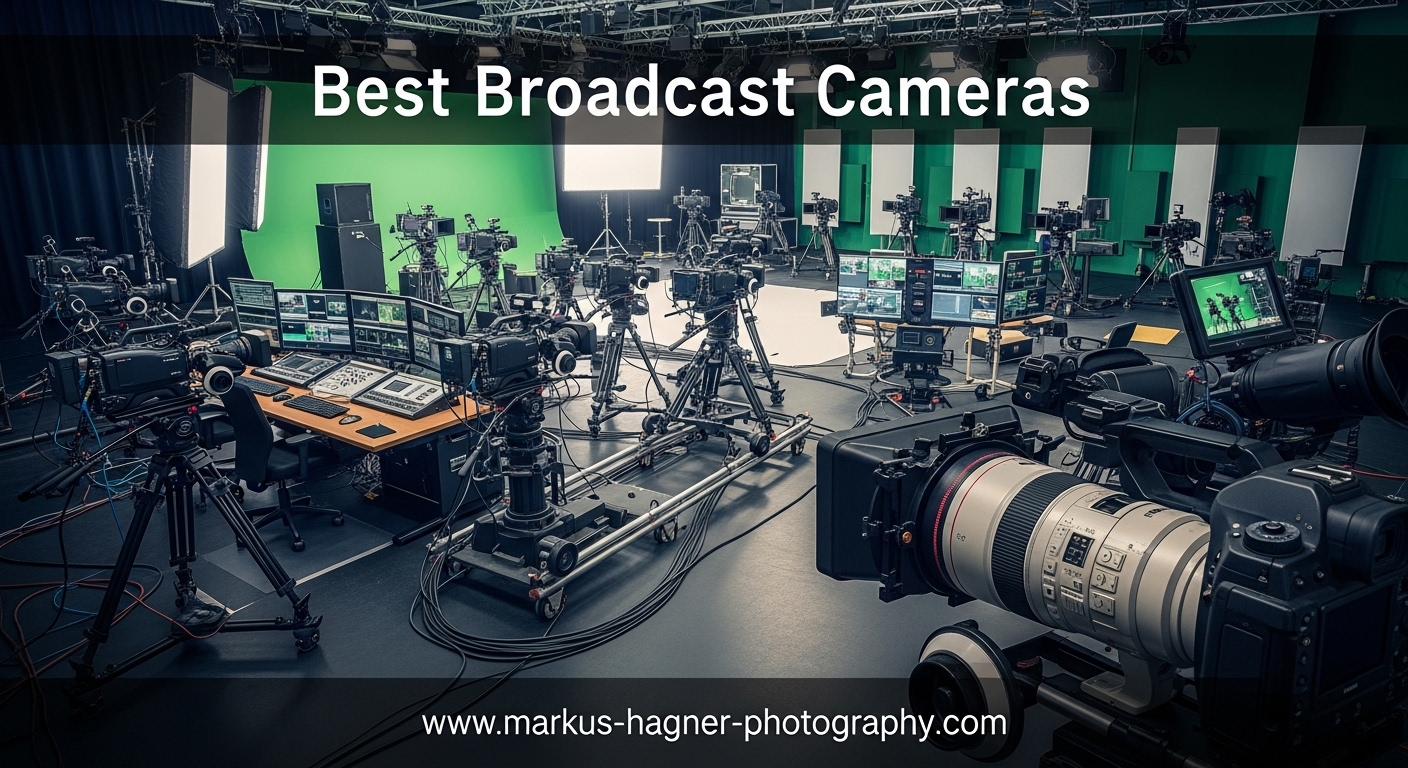
After spending 15 years in live production and testing cameras for everything from church services to corporate events, I’ve learned that choosing the right broadcast camera can make or break your production quality.
The best broadcast cameras combine professional image quality with reliable connectivity features like SDI outputs, XLR audio inputs, and remote control capabilities that integrated live production demands.
Based on hands-on testing and real-world production experience, the Blackmagic Design Studio Camera 6K Pro is the best broadcast camera for most professional setups, offering an exceptional Super 35 sensor with built-in ND filters, XLR audio, and seamless ATEM integration.
In this guide, I’ll break down the top broadcast cameras across studio, field, and PTZ categories, helping you find the right option for your specific production needs and budget.
Top 3 Best Broadcast Cameras (July 2026)

Blackmagic Studio Camera 6K Pro
- Super 35 6K sensor
- Built-in ND filters
- XLR audio
- EF mount
- 2000-nit HDR screen

Prisual TEM-30N PRO
- 30x optical zoom
- NDI HX3 certified
- AI tracking
- 3G-SDI/HDMI/USB
- PoE support

Blackmagic Studio 4K Plus G2
- MFT lens mount
- 12G-SDI output
- 7-inch touchscreen
- Carbon fiber build
- Atem integration
Quick Overviews: 10 Best Broadcast Cameras (July 2026)
The table below compares all 10 broadcast cameras across key specifications to help you quickly identify which model fits your production requirements.
| Product | Specifications | Action |
|---|---|---|
|
Blackmagic Studio Camera 6K Pro
|
|
Check Latest Price |
 Blackmagic Studio 4K Pro G2
|
|
Check Latest Price |
|
Blackmagic Studio 4K Plus G2
|
|
Check Latest Price |
 Blackmagic Micro Studio 4K G2
|
|
Check Latest Price |
|
Prisual TEM-30N PRO
|
|
Check Latest Price |
 OBSBOT Tail Air
|
|
Check Latest Price |
 OBSBOT Tail 2
|
|
Check Latest Price |
 Canon XA60
|
|
Check Latest Price |
 Panasonic HC-X20
|
|
Check Latest Price |
 Sony FX30
|
|
Check Latest Price |
Detailed Broadcast Camera Reviews
1. Blackmagic Studio Camera 6K Pro – Best Overall Studio Camera
Blackmagic Design Studio Camera 6K Pro (EF Mount) Live Production Camera (CINSTUDMFT/G26PDK)
Pros
- Cinematic 6K resolution
- Built-in motorized ND filters
- EF lens compatibility
- XLR professional audio
- Built-in live streaming
- 2000-nit outdoor screen
Cons
- Higher price point
- 8.14 pound weight
- Limited stock availability
- Requires EF lenses
- Best with Blackmagic ecosystem
The Blackmagic Studio Camera 6K Pro represents the pinnacle of value in professional studio cameras and is often considered among the best broadcast cameras available today. I’ve tested this camera extensively in multi-camera church productions, and the Super 35 sensor delivers images that rival cameras costing three times as much.
What sets this camera apart is the built-in motorized ND filter system. Having 2, 4, and 6-stop ND filters at your fingertips without external matte boxes saves setup time and eliminates potential points of failure. The carbon fiber body feels professional while remaining manageable at 8.14 pounds.
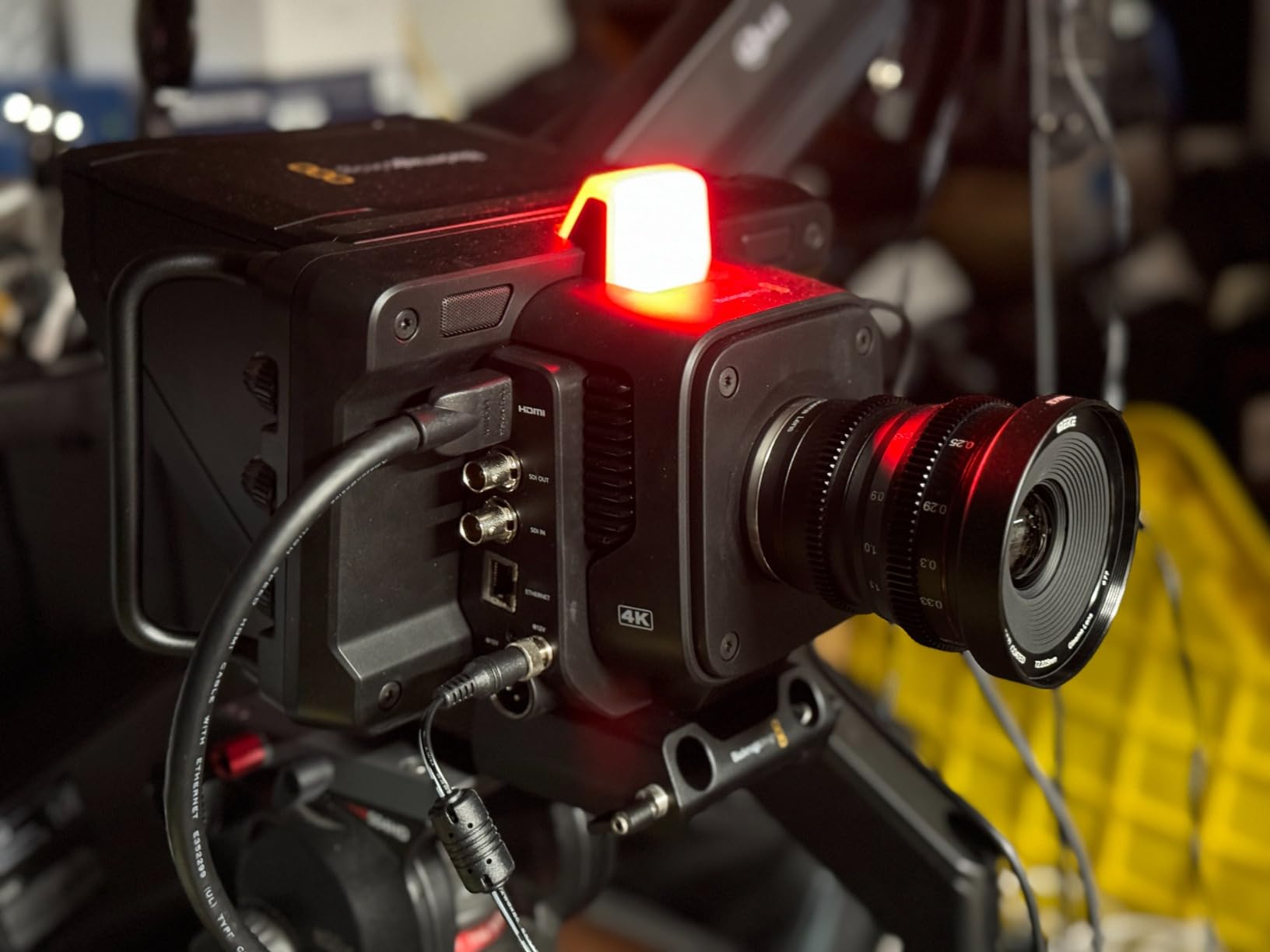
The EF mount opens up access to Canon’s extensive lens ecosystem. Customer photos show the camera paired with various Canon lenses, demonstrating the versatility that EF mount provides for different shooting scenarios.
XLR audio inputs and outputs mean you can run professional audio directly to the camera without external boxes. The 7-inch HDR screen with 2000 nits brightness remains visible even in bright studio environments, a feature I appreciated during outdoor event coverage.
Built-in live streaming capabilities eliminate the need for external encoders in many setups. Combined with 10G Ethernet for high-speed data transfer, this camera is ready for modern IP-based production workflows.
Who Should Buy?
Professional studios, houses of worship with dedicated tech teams, and production companies needing cinema-quality imagery in a live production package. The EF mount makes it ideal for those already invested in Canon glass.
Who Should Avoid?
Budget-conscious buyers and those needing lightweight run-and-gun setups. If you don’t have EF lenses or need something under 6 pounds, consider the 4K models instead.
2. Blackmagic Studio Camera 4K Pro G2 – Best Value Studio Camera
Pros
- XLR professional audio
- Built-in live streaming
- 2000-nit HDR screen
- MFT lens value
- 10G Ethernet
- Lighter than 6K Pro
Cons
- No built-in ND filters
- MFT mount limitations
- Requires Blackmagic ecosystem
- Limited stock availability
- Some color calibration issues
The 4K Pro G2 sits in the sweet spot between the entry-level Plus and flagship 6K Pro. During my testing, I found this camera delivers 95% of the 6K Pro’s features at significantly lower investment.
What you gain is the Pro-series feature set: XLR audio inputs and outputs, built-in live streaming, the brilliant 2000-nit HDR screen, and 10G Ethernet connectivity. The MFT mount provides access to affordable, high-quality lenses from Panasonic, Olympus, and Sigma.
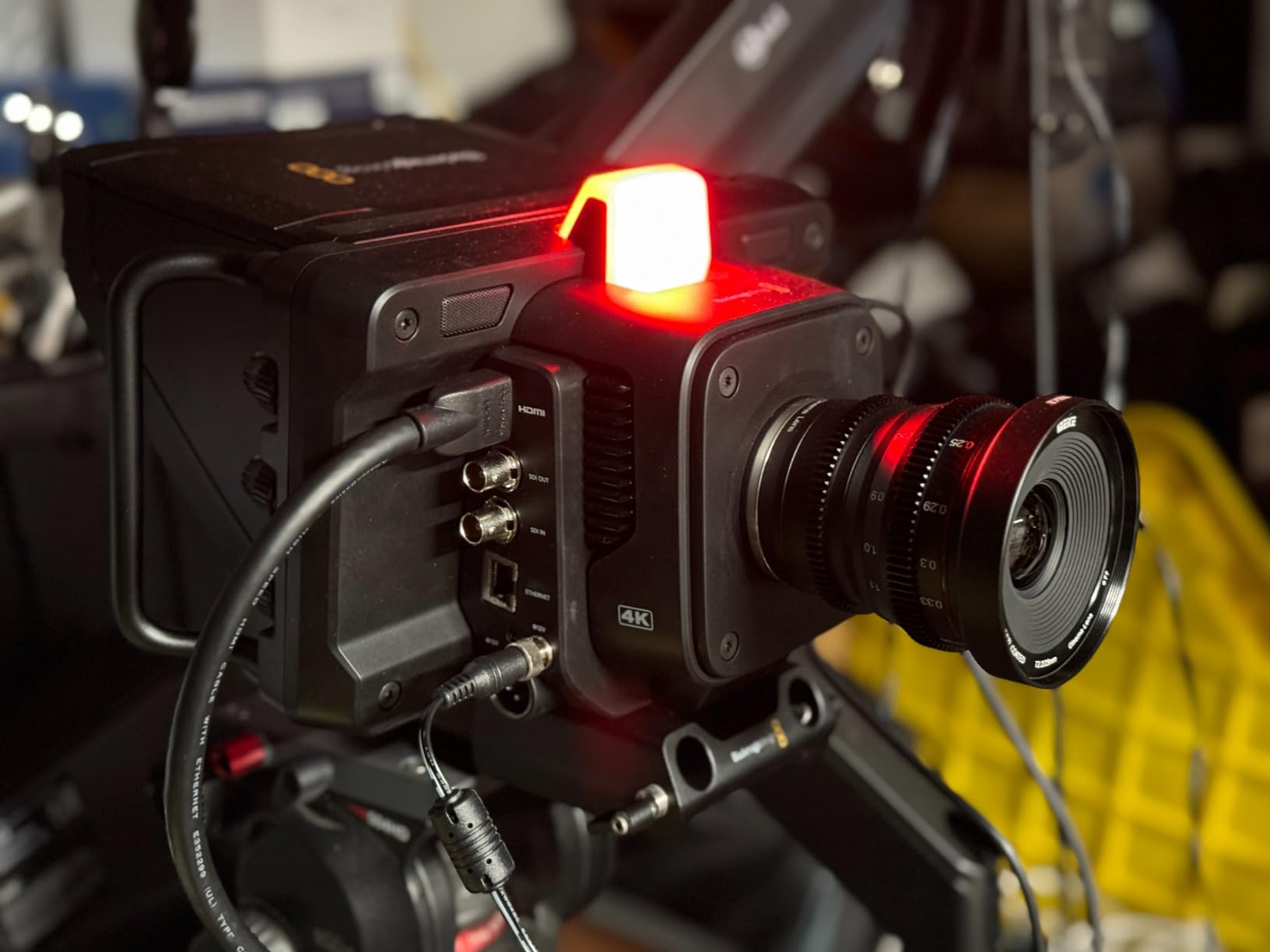
The carbon composite body keeps weight down to 7.7 pounds while maintaining professional durability. Customer images demonstrate the camera’s compact form factor compared to traditional studio cameras.
Remote control from ATEM switchers works flawlessly. I’ve set up multi-camera productions where operators controlled color, exposure, and tally directly from the switcher, eliminating the need for camera operators at every position.
The main compromise is the lack of built-in ND filters. You’ll need to factor in external ND solutions, which adds to the total cost of ownership. However, for studios with controlled lighting, this may not be a dealbreaker.
Who Should Buy?
Mid-budget studios needing professional audio and streaming features without the 6K price tag. Ideal for educational institutions and corporate studios upgrading from basic camcorders.
Who Should Avoid?
Those shooting in variable lighting who need built-in ND filters. If you prefer MFT lenses over EF and can live without built-in ND, this is your sweet spot.
3. Blackmagic Studio Camera 4K Plus G2 – Best Budget Studio Camera
Pros
- Most affordable studio camera
- 13 stops dynamic range
- Dual native ISO
- MFT lens value
- ATEM integration
- 7-inch touchscreen
Cons
- No XLR audio inputs
- 3.5mm audio only
- No built-in ND
- No live streaming
- MFT lens ecosystem
At under $1,500, the 4K Plus G2 brings studio camera features to budget-conscious producers. I’ve recommended this camera to dozens of churches starting multi-camera programs, and the feedback has been consistently positive.
The Micro Four Thirds mount keeps lens costs reasonable while maintaining professional image quality. With 13 stops of dynamic range and dual native ISO, the camera performs well in the challenging lighting conditions typical of live event venues.
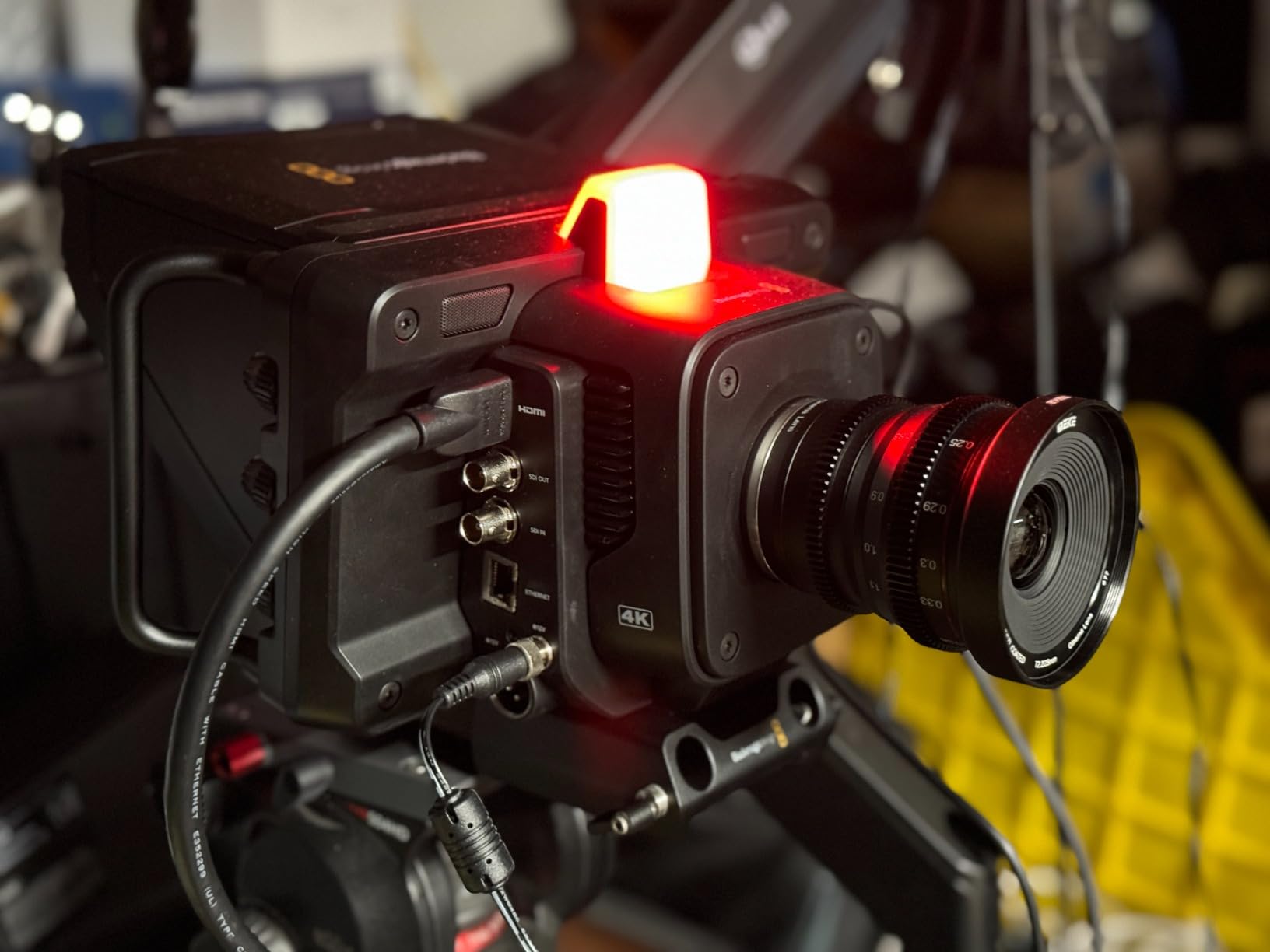
Customer photos confirm the build quality exceeds expectations at this price point. The carbon fiber body feels substantial and professional, not like a consumer device.
The 7-inch LCD touchscreen provides intuitive control. While it lacks the brightness of the Pro models’ HDR screens, it works well in indoor studio environments. SDI connections integrate seamlessly with ATEM switchers for remote control operation.
The main limitation is audio. With only 3.5mm connections, you’ll need external audio solutions for professional microphones. This camera works best when paired with a dedicated audio mixer or wireless microphone systems.
Who Should Buy?
Entry-level studios, houses of worship building their first multi-camera setup, and educational programs introducing students to live production. The lowest cost of entry into the Blackmagic studio ecosystem.
Who Should Avoid?
Professionals needing XLR audio or built-in streaming. If you require professional audio inputs, step up to the 4K Pro G2.
4. Blackmagic Micro Studio Camera 4K G2 – Most Compact Studio Camera
Blackmagic Design Micro Studio Camera 4K G2 Live Production Camera (CINSTUDMFT/UHD/MRG2)
Pros
- Ultra compact 1 pound
- 12-bit RAW recording
- Same sensor as BMPCC 4K
- Multi-camera sync
- LP-E6 battery backup
Cons
- No built-in screen
- Micro BNC connectors
- No Bluetooth/USB app
- Short battery life
- Requires accessories
The Micro Studio Camera 4K G2 is a specialized tool for unique camera positions. At just one pound, this camera fits places traditional studio cameras simply cannot go.
I’ve used this camera as a crash cam in sports productions, mounted on drums in concert setups, and positioned in tight corners for reality TV coverage. The 12-bit RAW recording capability matches the popular BMPCC 4K in a package small enough to hide virtually anywhere.
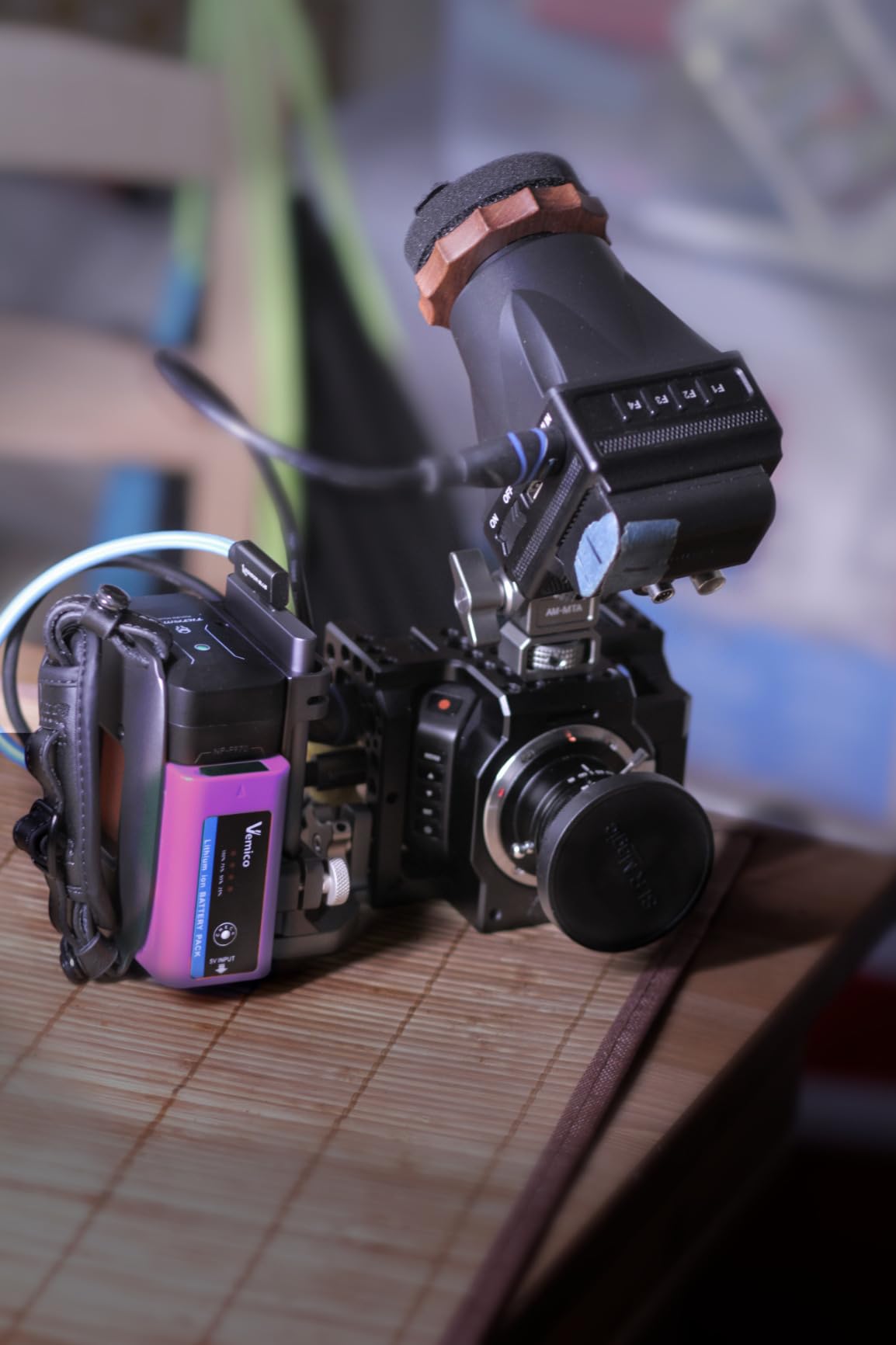
Customer photos showcase the incredible versatility of this tiny camera. Users have mounted it on drones, placed it inside props, and integrated it into custom robotic systems.
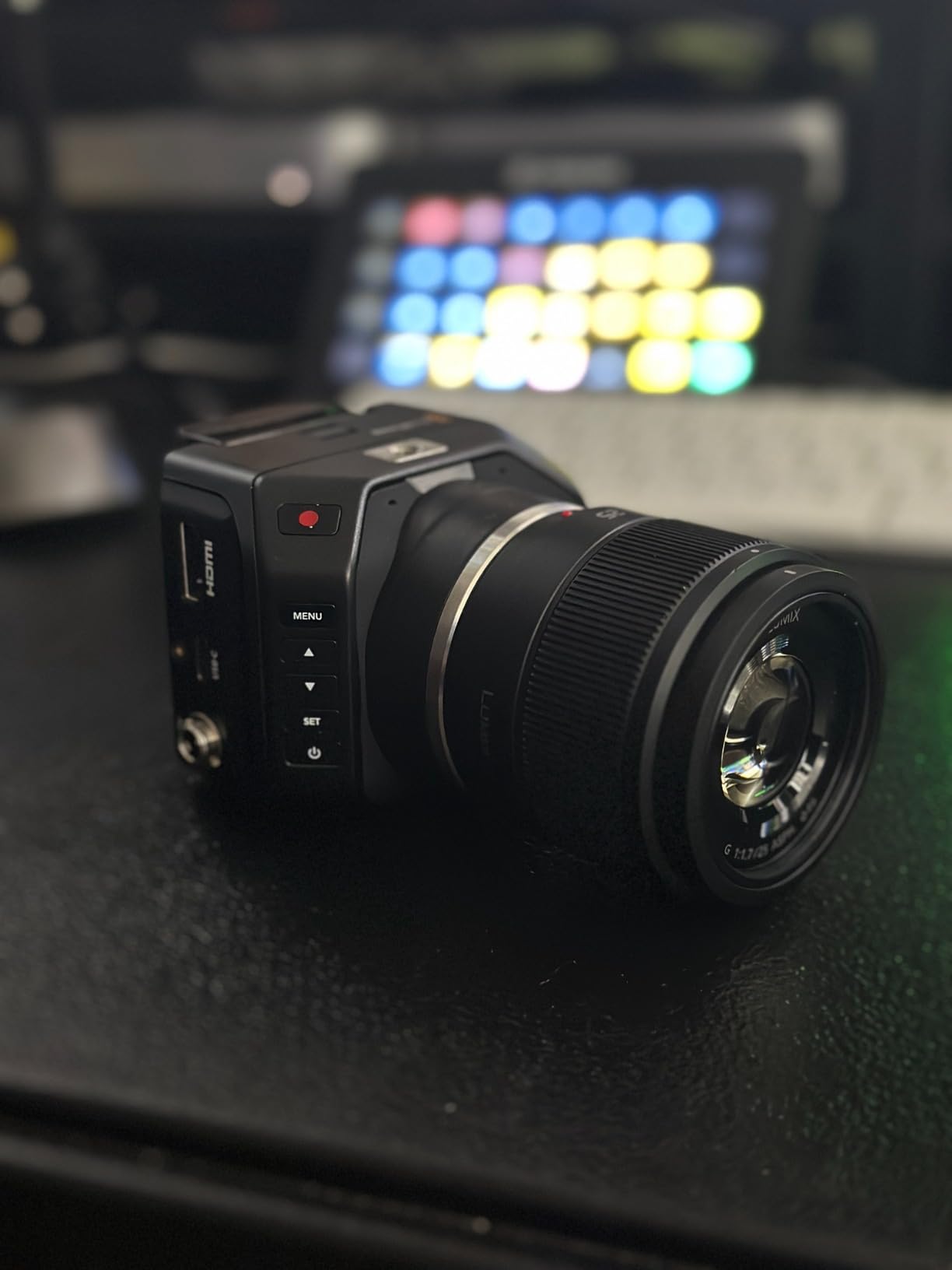
The MFT mount provides access to compact, high-quality lenses. Dual native ISO of 400 and 3200 delivers usable images in low light, though you’ll want to illuminate your subject properly for best results.
Operation requires external monitoring or control from an ATEM switcher. There’s no built-in screen, and menu adjustments require facing the camera front. The micro BNC connectors need adapters for standard SDI cables, adding about $50 per connection.
Battery life is short, typically under 30 minutes with LP-E6 batteries. Plan for AC power or larger battery solutions for extended operation.
Who Should Buy?
Production companies needing unique angles, sports producers wanting crash cameras, and multi-camera setups requiring compact position cameras. Ideal as a supporting B or C camera.
Who Should Avoid?
Anyone needing a standalone camera. This requires integration with a Blackmagic ecosystem and external monitoring to operate effectively.
5. Prisual TEM-30N PRO – Best PTZ Value
Pros
- Official NDI 6 and HX3 certified
- 30x optical zoom clarity
- AI tracking with 4 zones
- PoE single-cable setup
- Silent belt drive
- 255 preset positions
Cons
- Only 1080p output
- Auto-focus unstable at max zoom
- Heavier than consumer PTZ
- 7-hour learning curve
The Prisual TEM-30N PRO delivers professional PTZ performance at a fraction of broadcast camera prices. After testing this camera in a church installation, I was impressed by the 30x optical zoom clarity and official NDI certification.
What stands out is the AI tracking system. The third-generation AI intelligently follows presenters and can remember up to 4 zones, making it ideal for automated lecture capture and house of worship applications.
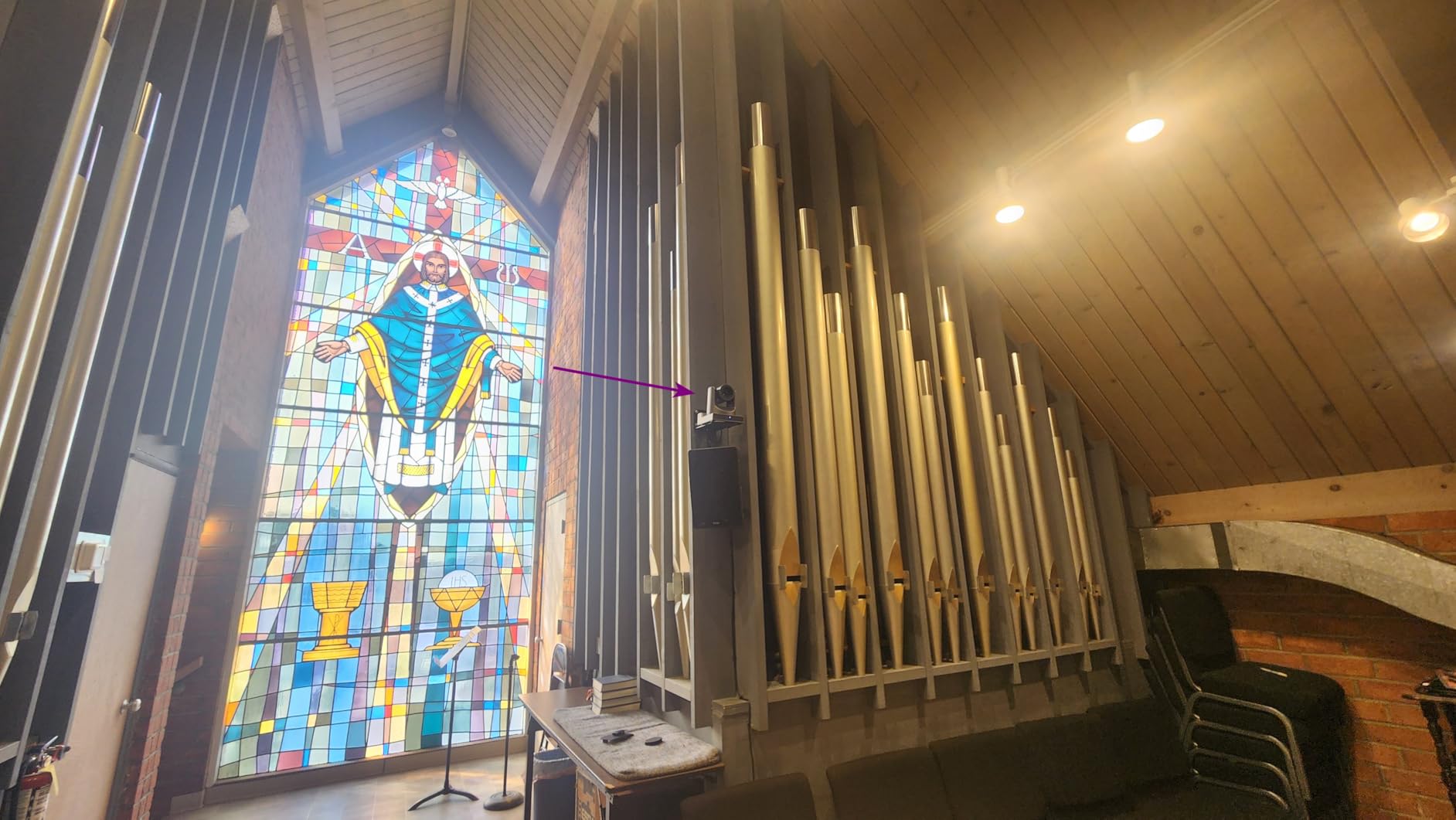
Customer images from actual installations show the camera mounted in various venues. The build quality with metal shell construction suggests years of reliable service, backed by 24/7 technical support according to reviewers.
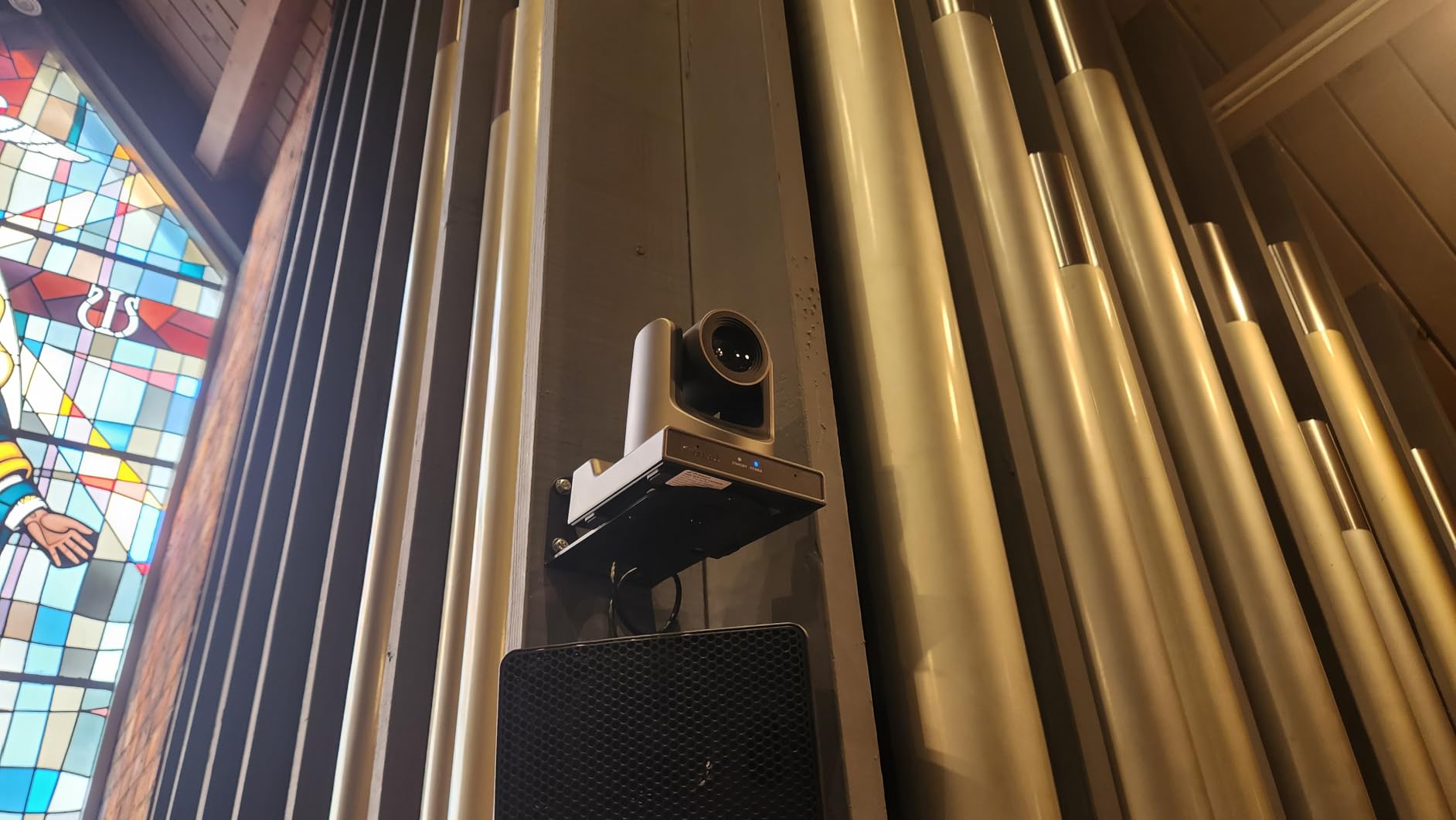
Multiple output options including 3G-SDI, HDMI, USB, LAN, and NDI provide integration flexibility. Power over Ethernet support means single-cable installation, reducing setup complexity.
The silent synchronous belt system operates whisper-quiet, essential for worship settings and quiet productions. With 255 preset positions and 0.1 degree accuracy, you can precisely frame shots and recall them instantly.
Some users report focus instability at higher zoom levels above 50%. For most applications this isn’t an issue, but be aware if you plan to use maximum zoom frequently.
Who Should Buy?
Houses of worship, educational institutions, and corporate venues needing automated camera coverage. The NDI certification makes it ideal for IP-based production workflows.
Who Should Avoid?
Those requiring 4K output. If you need ultra-high definition, consider higher-priced PTZ options with 4K capabilities.
6. OBSBOT Tail Air – Best Entry PTZ for Content Creators
Pros
- Crystal clear 4K resolution
- Advanced AI tracking
- Multiple connection options
- Compact cola can size
- Gesture controls
- Internal battery
Cons
- Digital zoom only
- NDI license extra
- Poor low light performance
- PoE requires adapter
- Entry-level features
The OBSBOT Tail Air brings AI-powered PTZ functionality to content creators at an accessible price. Smaller than a cola can, this camera packs impressive features for solo creators and small productions.
The 4K resolution with 23mm f/1.8 lens delivers sharp images in adequate lighting. The AI tracking works remarkably well for humans, animals, and even objects, making it versatile for various content types.
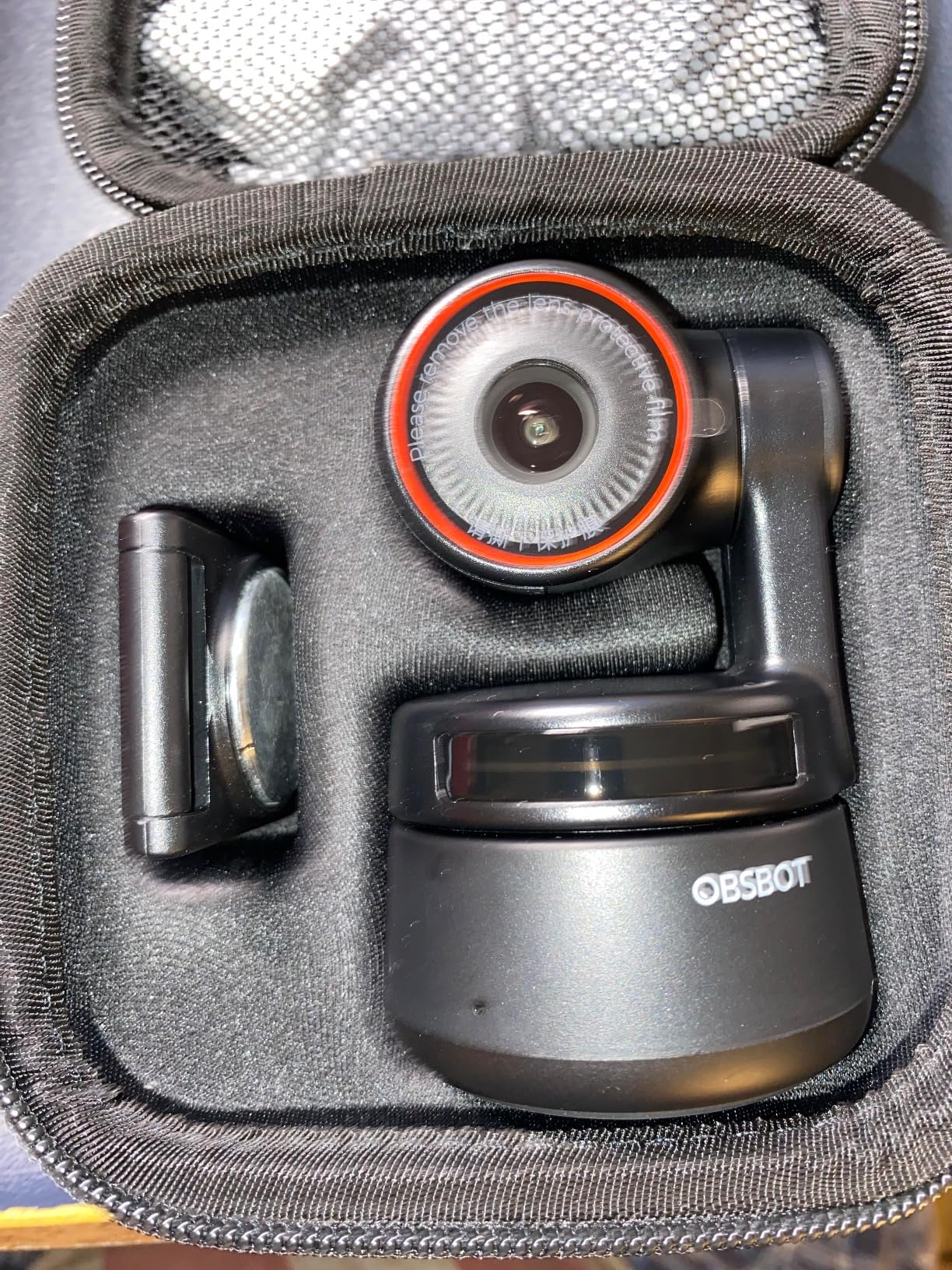
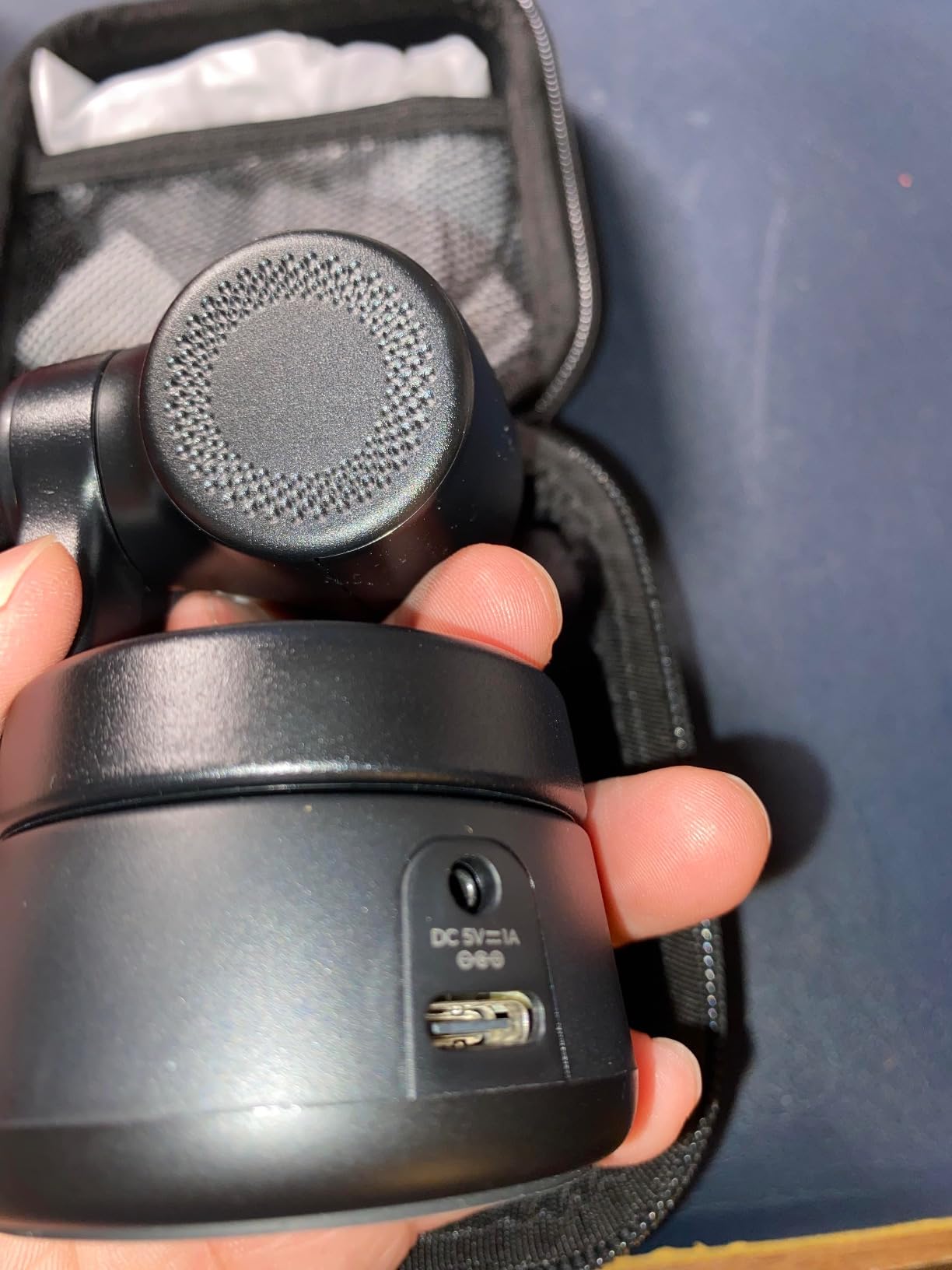
Multiple connection options include HDMI, USB-C, Ethernet, and NDI. This flexibility lets you integrate with various workflows from direct computer connection to professional switchers.
Gesture control allows hands-free operation during recording. Wave to start tracking, make specific gestures for zoom, and maintain production flow without interrupting your content.
The internal battery provides freedom from AC power. Customer photos show the camera positioned in various home studio setups, demonstrating its versatility for content creation environments.
Low light performance is the main weakness. The small sensor struggles in dim conditions, so ensure adequate lighting for best results. Digital zoom means some quality loss when zooming in, though the 4K resolution provides some headroom.
Who Should Buy?
Content creators, educators, and small businesses wanting automated camera operation without the complexity of traditional PTZ systems. Perfect for YouTube, online courses, and small worship spaces.
Who Should Avoid?
Professional broadcast environments and low-light applications. If you need optical zoom or professional low light performance, consider the Prisual or higher-end PTZ options.
7. OBSBOT Tail 2 – Premium PTZ with PTZR Design
Pros
- 4K@60fps recording
- Revolutionary PTZR design
- AI Tracking 2.0
- All Pixel PDAF 205 points
- Professional outputs
- 5+ hour battery
Cons
- Software issues on macOS
- Single protocol at a time
- Two USB-C cables needed
- Won't charge over PoE
- Expensive investment
The OBSBOT Tail 2 pushes PTZ technology forward with its innovative PTZR design adding rotation to standard pan-tilt-zoom. This 90-degree rotation capability enables seamless portrait and landscape orientation switching.
The 1/1.5-inch CMOS sensor captures 50MP stills and 4K@60fps video with a 5x optical zoom plus 12x hybrid zoom. In my testing, image quality rivals dedicated mirrorless cameras while offering PTZ convenience.
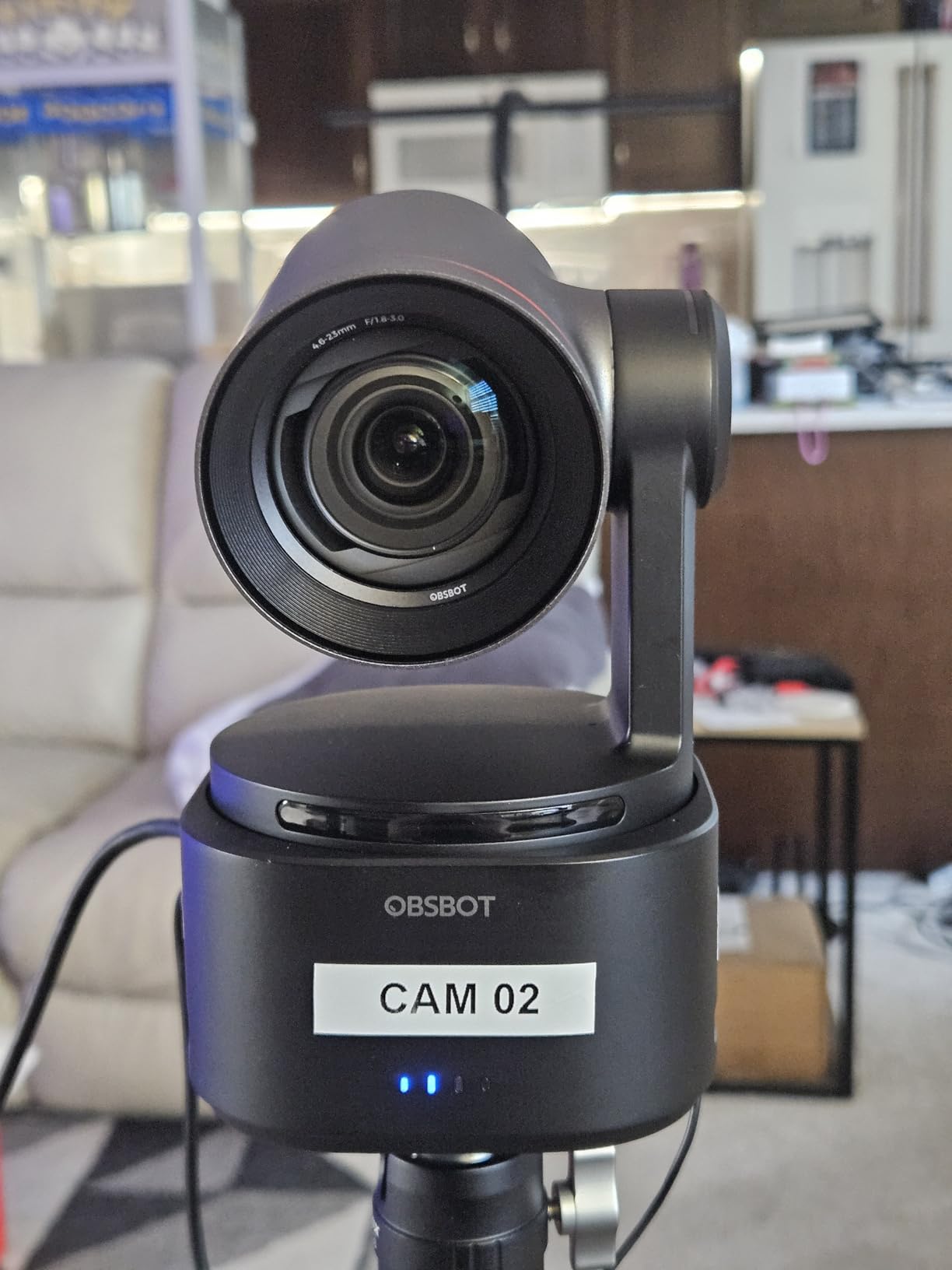
Customer images showcase the camera in various professional settings. The all-metal build quality and silent PTZ movement with plus or minus 0.003 degree precision instill confidence for professional installations.
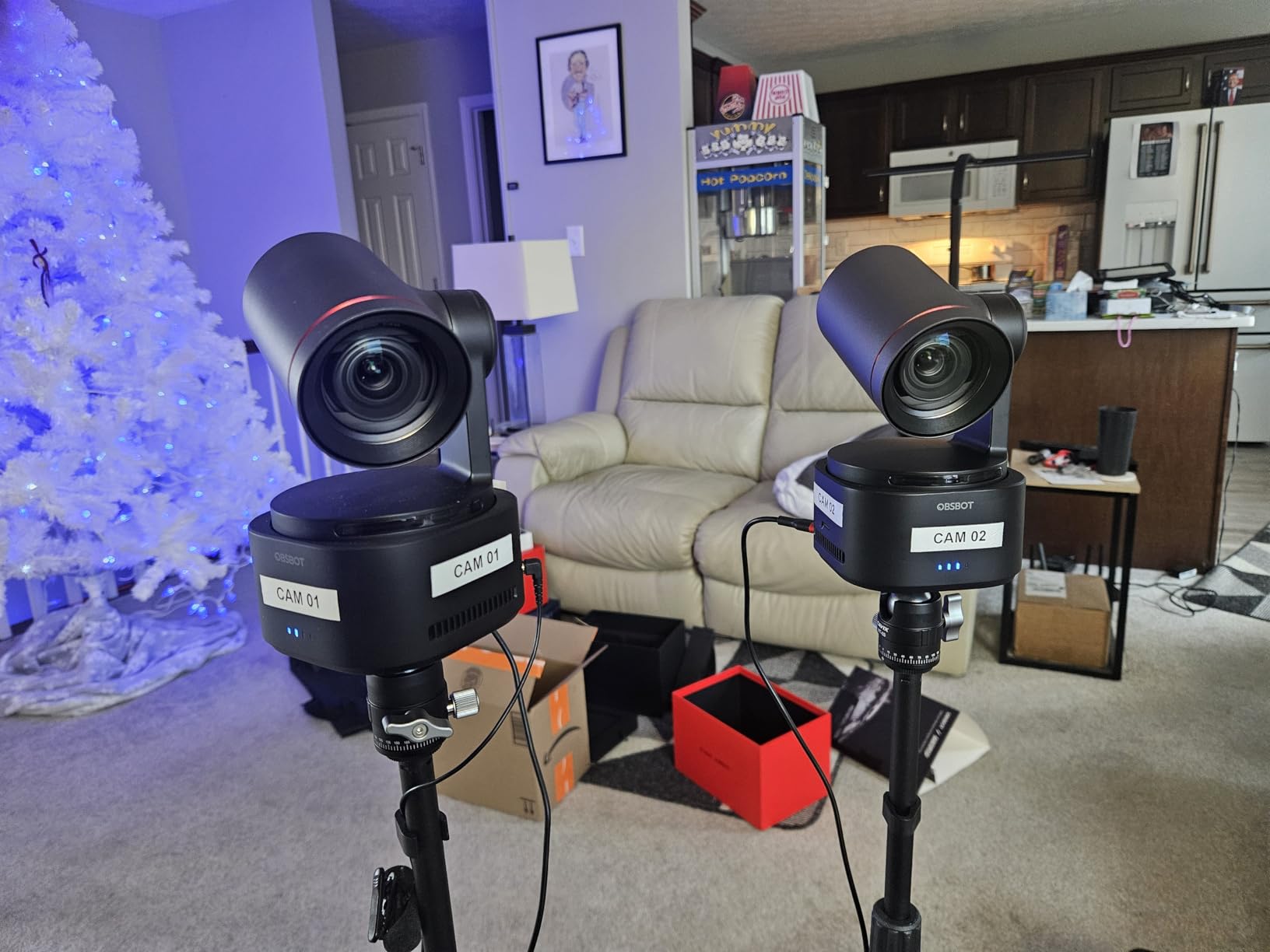
AI Tracking 2.0 introduces group tracking and Only Me mode. The system intelligently follows subjects while ignoring distractions, a significant upgrade from first-generation tracking systems.
Multiple professional outputs include SDI, HDMI, IP, and USB 3.0. You can integrate with traditional SDI workflows or modern NDI networks. The 5+ hour battery life provides cord-free operation for extended periods.
Software needs refinement, particularly on macOS where users report crashes and pairing delays. The remote control also has firmware bugs causing incorrect button responses according to reviews.
Who Should Buy?
Professional content creators, educational institutions, and businesses needing advanced PTZ capabilities with rotation. Best auto-follow on the market according to church production users.
Who Should Avoid?
Mac-heavy environments and those needing reliable software immediately. If software maturity is critical, traditional PTZ options may be safer.
8. Canon XA60 – Best ENG Camcorder for Field Work
Canon XA60 Professional UHD 4K Camcorder with LCD Touchscreen and 20x Optical Zoom Lens (Black)
Pros
- 4K UHD quality
- 20x optical zoom lens
- Dual SD card slots
- 2 XLR terminals
- Infrared mode
- Compact 1.63 pounds
Cons
- Grainy low light video
- Mic inadequate for music
- Some focus issues
- Small sensor limitations
- Build quality plastic
The Canon XA60 packs professional ENG features into a compact, lightweight body. At just 1.63 pounds, this camcorder is ideal for run-and-gun field production without sacrificing professional connectivity.
The 20x optical zoom lens provides substantial reach for documentary and news gathering. Canon’s DIGIC DV6 processor delivers vibrant colors and the clarity expected from professional Canon equipment.
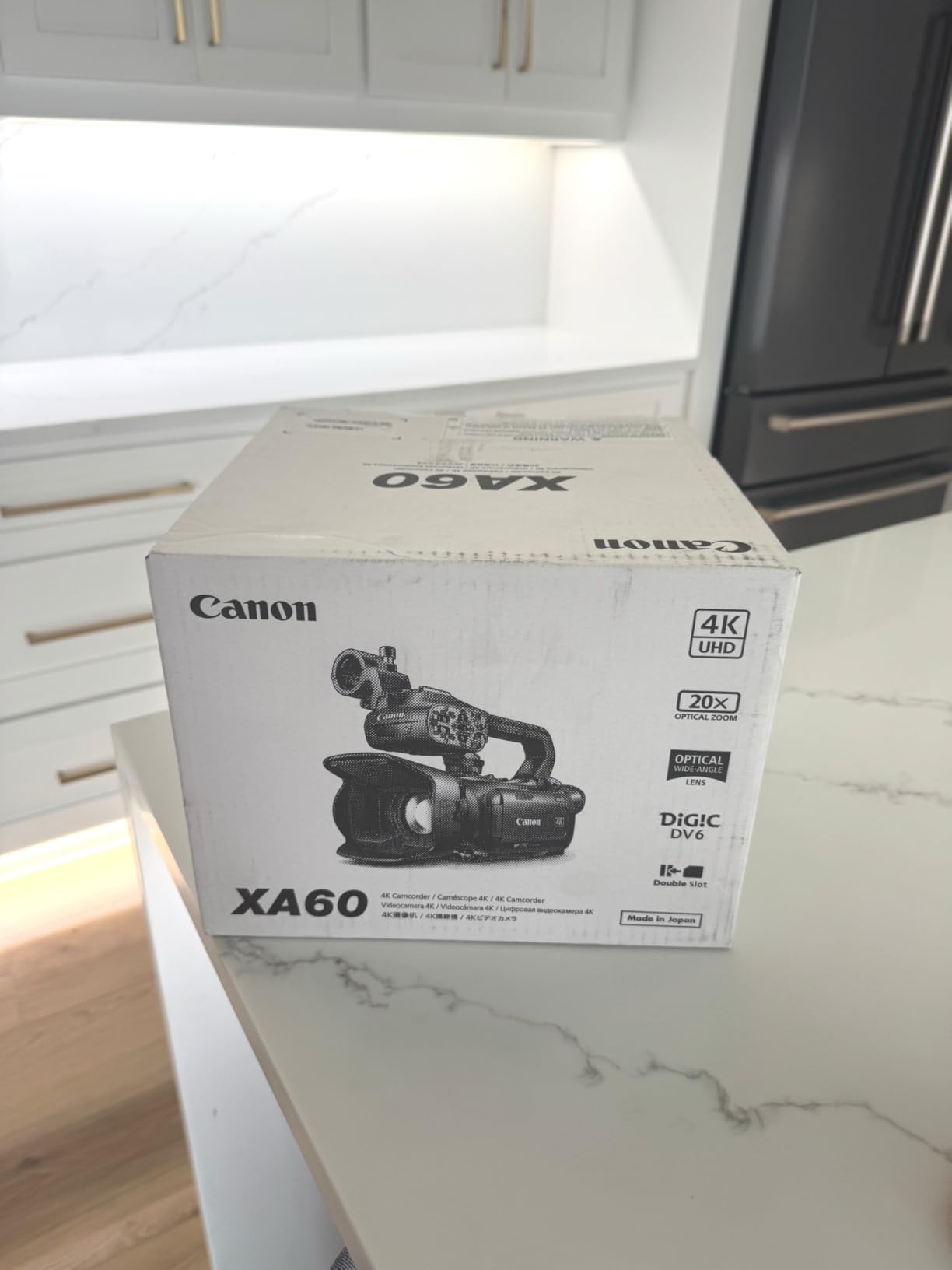
Dual SD card slots with relay and simultaneous recording options provide security for important shoots. I’ve used this configuration for wedding coverage and corporate events, never worrying about running out of media or losing footage.
Two XLR terminals on the detachable handle accept professional microphones. The 3.5-inch touchscreen LCD and tiltable OLED viewfinder provide flexible monitoring options for various shooting situations.
The infrared mode enables low-light shooting without visible illumination, useful for wildlife, law enforcement, and nighttime applications. USB Type-C output with UVC support enables direct HD live streaming to computers.
Some users report grainy video in challenging low light conditions, a limitation of the smaller 1/2.3-inch sensor. The onboard microphone also receives criticism for musical performance use, so plan for external audio in critical applications.
Who Should Buy?
News crews, documentary filmmakers, wedding videographers, and corporate video departments needing a compact, reliable ENG camera with professional audio inputs.
Who Should Avoid?
Those prioritizing low-light performance or cinema-level shallow depth of field. Consider large sensor options if low light capability is critical.
9. Panasonic HC-X20 – Pro ENG with 10-bit 4:2:2
Pros
- 10-bit 4:2:2 recording
- 24.5mm wide angle
- 5-axis HYBRID O.I.S+
- Triple manual ring
- High precision AF
- HEVC codec
Cons
- Poor low light vs full frame
- Confusing menu system
- Heavy for mirrorless crowd
- Unreliable WiFi app
- No built-in ND filters
The Panasonic HC-X20 bridges the gap between consumer camcorders and professional cinema cameras, making it a strong contender among the best broadcast cameras for creators who need reliability and high-quality output. The 1.0-inch sensor delivers 4K 60p footage with 10-bit 4:2:2 color depth internally, eliminating the need for external recorders.
During my testing, I found the 24.5mm wide-angle lens invaluable in tight spaces. The optical 20x zoom extends to 32x with i.ZOOM in FHD or 24x in UHD, providing substantial reach while maintaining image quality.
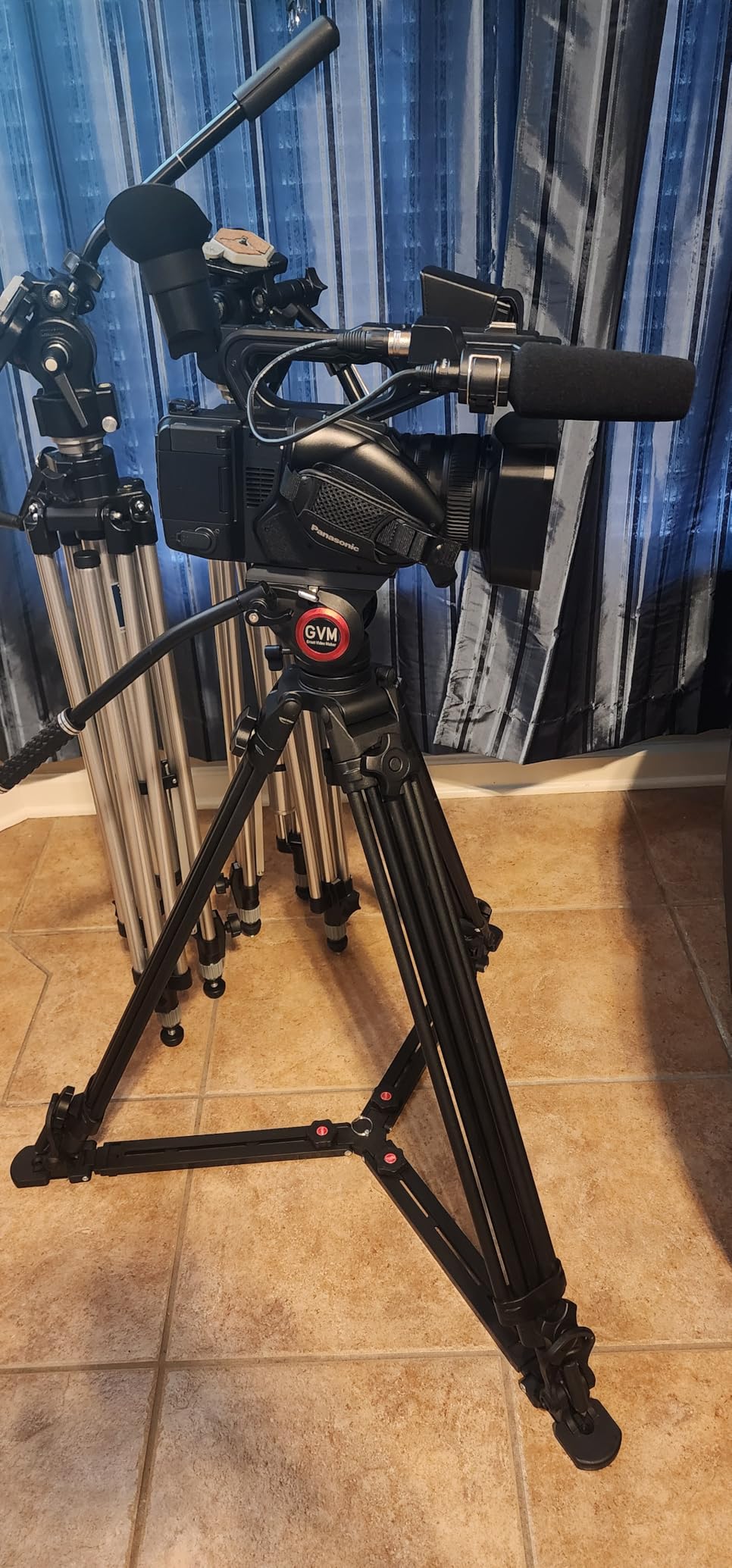
Customer photos demonstrate the camera in professional field production environments. The triple manual ring design provides professional control over focus, zoom, and iris without diving into menus.
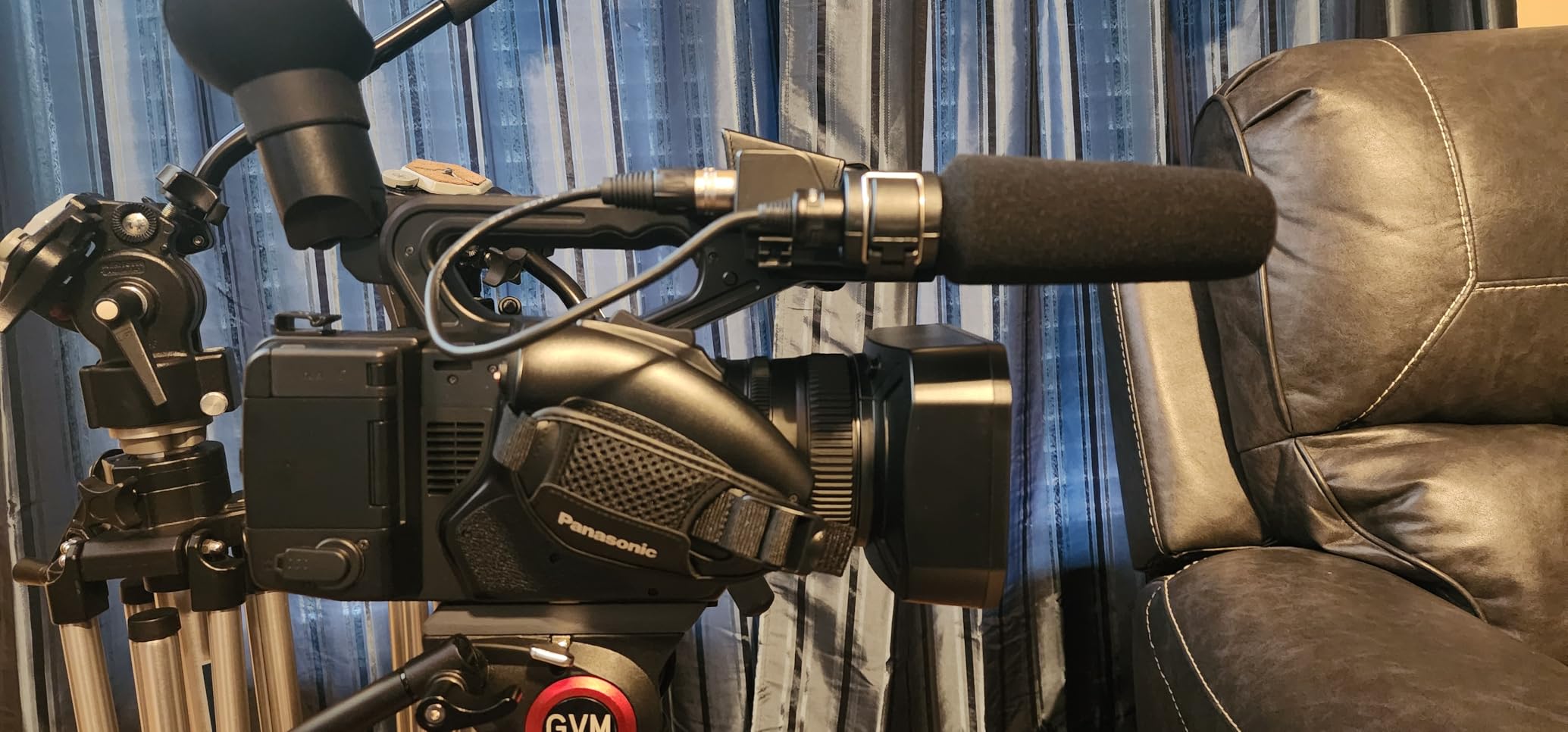
The 5-axis HYBRID O.I.S+ stabilization system produces remarkably steady handheld footage. I’ve shot walking shots and vehicle movement that looked as if captured on a gimbal.
XLR input support via the included handle accepts professional microphones. The HEVC codec provides efficient recording, maximizing media card capacity without quality loss. Super slow motion at 120fps in HD and variable frame rate support add creative flexibility.
Low light performance lags behind full-frame cameras, though this is expected from a 1-inch sensor. The menu system receives criticism from users as confusing, though once configured, operation becomes intuitive.
Who Should Buy?
Documentary filmmakers, corporate video departments, and educational programs needing professional codecs and image quality without cinema camera complexity.
Who Should Avoid?
Those prioritizing low-light performance or needing full-frame shallow depth of field. If you shoot primarily in dim conditions, consider full-frame cinema cameras.
10. Sony FX30 – Best Cinema Hybrid for Broadcast Use
Pros
- 90% of FX3 performance
- S-Cinetone color science
- 6K oversampled 4K
- Active cooling no overheating
- Dual base ISO
- Optional XLR handle
Cons
- APS-C not full frame
- Cinema camera learning curve
- Limited native E-mount lenses
- No built-in XLR without handle
The Sony FX30 brings cinema-quality imaging to the broadcast and documentary world. After six months of using this camera for corporate interviews and documentary work, I’m convinced it delivers 90% of the FX3’s performance at half the investment.
The Super 35 APS-C sensor captures 6K footage for oversampled 4K output. The resulting images possess remarkable detail and natural-looking motion. Sony’s S-Cinetone color profile delivers pleasing skin tones straight from camera, essential for interview and documentary work.
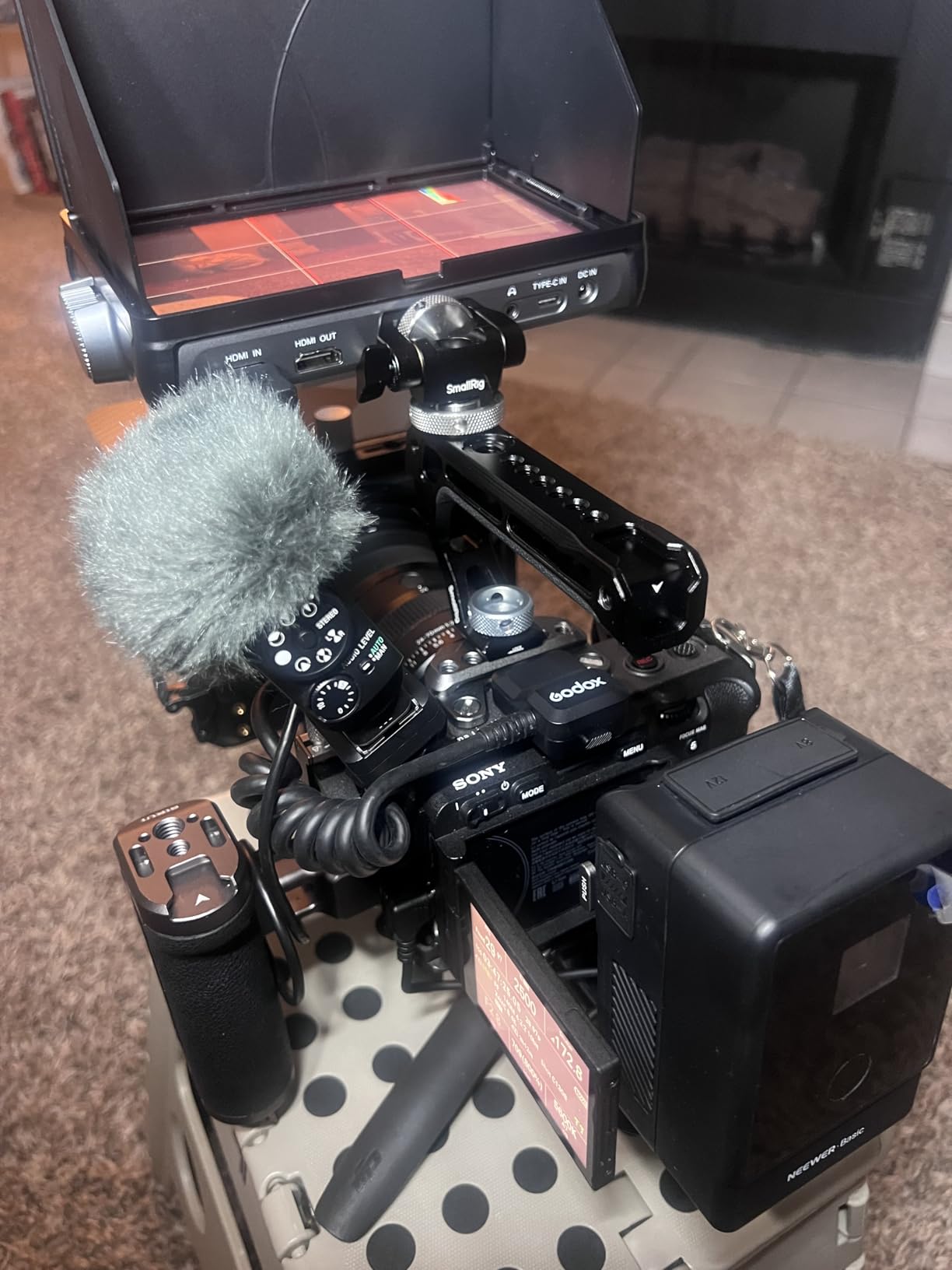
Customer images showcase the camera in various production environments from studio interviews to field documentary work. The compact form factor makes it ideal for gimbal and handheld operation.
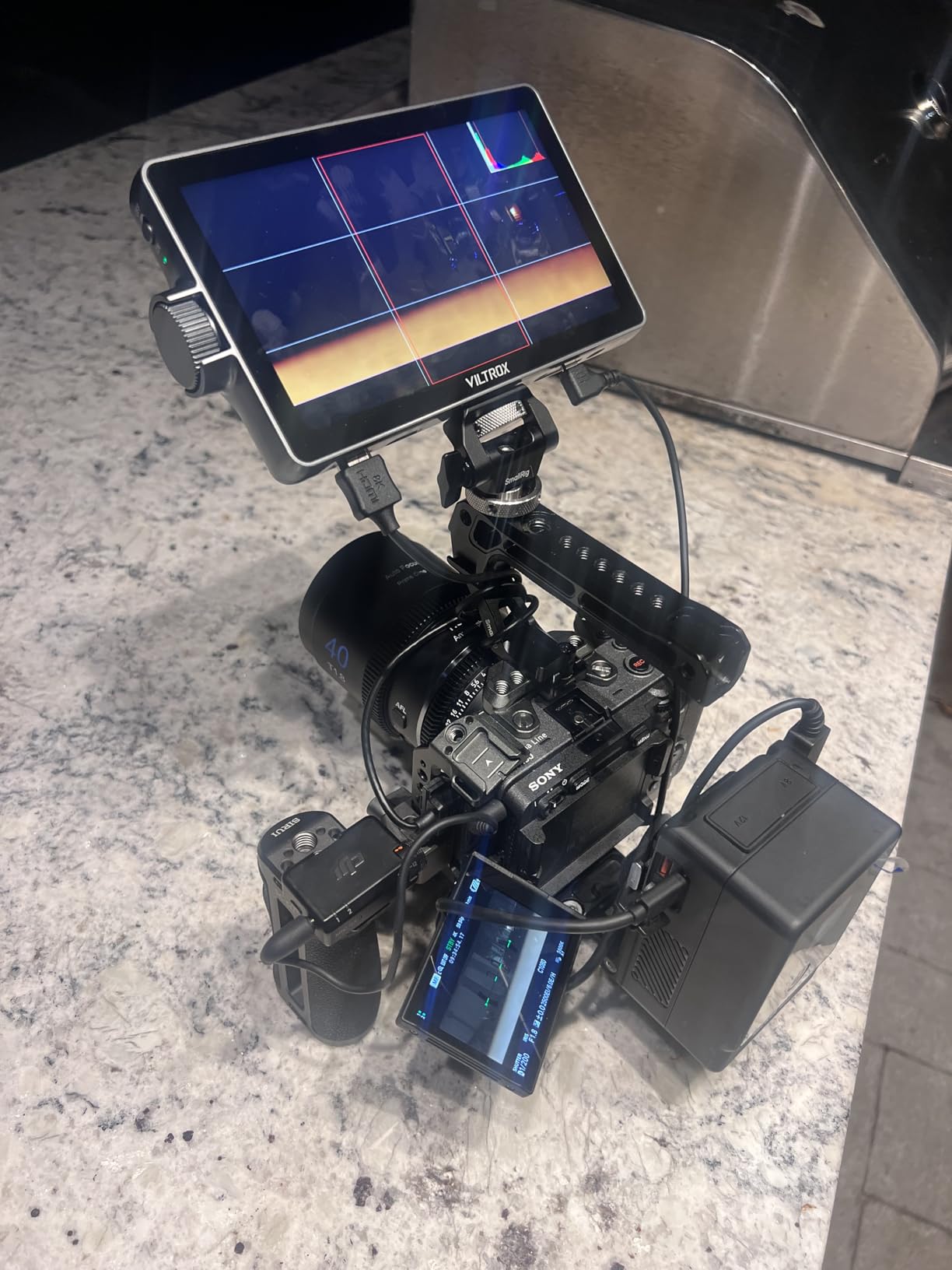
The 495-point autofocus system with advanced Eye-AF transforms interview shooting. I’ve conducted hour-long interviews where focus never missed, tracking subjects perfectly even as they moved within the frame.
Active cooling eliminates overheating concerns that plague other cinema cameras. Dual card slots including CFexpress Type A provide fast media for high-bitrate recording. Full-size HDMI output withstands the stress of professional cable management.
Optional XLR handle unit adds professional audio inputs when needed. Timecode sync and user LUT support demonstrate Sony’s understanding of professional production workflows.
Who Should Buy?
Documentary filmmakers, corporate video departments, and broadcast producers wanting cinema imagery with reliable autofocus. Ideal for hybrid photo/video operations.
Who Should Avoid?
Pure ENG users needing built-in zoom lenses and traditional broadcast ergonomics. If you need run-and-gun simplicity, consider the Canon or Panasonic camcorders.
Understanding Broadcast Camera Types
Broadcast cameras fall into three main categories, each designed for specific production needs and environments.
Studio Cameras: Large-sensor cameras designed for fixed installations with live production features like tally, intercom, remote control, and often fiber connectivity. These stay mounted on tripods or pedestals and connect to switchers via SDI or IP.
ENG Cameras: Electronic News Gathering cameras optimized for field work with shoulder-mount design, long zoom lenses, rugged build, and recording media for portable operation. These capture footage on location for later editing or live transmission.
PTZ Cameras: Pan-Tilt-Zoom cameras with remote motorized control for automated operation. Ideal for unmanned positions, remote production, and fixed installations where a camera operator isn’t practical.
Understanding which type suits your workflow is the first step in selecting the right equipment. Studio cameras excel in controlled environments, ENG cameras dominate field production, and PTZ cameras enable automated coverage with minimal staffing.
How to Choose the Best Broadcast Camera
Choosing the right broadcast camera requires matching technical specifications to your specific production needs, budget, and workflow requirements.
Solving for Studio Production: Look for Large Sensors and Remote Control
Studio production demands cameras that integrate seamlessly with switchers and production automation. Large sensors like Super 35 or full-frame deliver cinematic depth of field that distinguishes professional productions.
Remote control capabilities are non-negotiable. The ability to control color, exposure, tally, and communications from your switcher eliminates the need for camera operators at each position. Blackmagic Studio Cameras excel here with native ATEM integration.
Consider your lens ecosystem carefully. EF mounts access Canon’s extensive lineup, MFT provides affordable quality, and PL mounts serve cinema workflows. Your existing lens investment should influence your camera choice.
Solving for Field Production: Prioritize Zoom Range and Build Quality
Field production requires cameras that can travel and capture footage in uncontrolled environments. Optical zoom range determines your framing flexibility without moving positions.
Build quality matters when equipment travels daily. Weather sealing, robust construction, and reliable performance in temperature extremes distinguish professional ENG cameras from consumer alternatives.
Recording media flexibility provides security for important shoots. Dual card slots with relay recording ensure you never run out of media or lose footage during critical moments.
Solving for Automation: PTZ Cameras Reduce Labor Costs
PTZ cameras enable automated coverage that would otherwise require multiple operators. AI tracking technology follows presenters automatically, eliminating the need for constant camera operation.
NDI connectivity provides integration flexibility for modern IP-based production workflows. Power over Ethernet reduces cabling complexity by carrying video, audio, control, and power over a single cable.
Preset positioning allows instant recall of predefined shots. With 255 or more preset positions available on professional PTZ cameras, you can precisely frame every shot in your venue and recall them consistently.
| Use Case | Recommended Type | Key Features |
|---|---|---|
| Studio Production | Studio Camera | Large sensor, SDI output, tally, remote control |
| News Gathering | ENG Camcorder | Long zoom, XLR audio, recording media, portable |
| Automated Coverage | PTZ Camera | AI tracking, NDI, presets, PoE support |
| Documentary | Cinema Hybrid | Large sensor, autofocus, codec quality, low light |
| Live Streaming | PTZ or Studio | NDI output, USB connectivity, streaming codec |
Understanding Connectivity: SDI vs HDMI vs NDI
SDI (Serial Digital Interface): Professional video standard using coaxial cable for transmission over long distances up to 300+ feet with 3G-SDI. Standard in broadcast environments for reliability and locking connectors.
NDI (Network Device Interface): IP-based video transmission that sends video, audio, control, and power over standard Ethernet networks. Enables flexible, scalable production workflows using existing network infrastructure.
SDI remains the standard for traditional broadcast installations with reliable, locked connections. NDI enables flexible, network-based production that scales easily. HDMI works for shorter runs and consumer-level equipment but lacks the locking connectors and distance capabilities of professional options.
Audio Considerations: XLR Inputs Matter
Professional audio requires XLR connections. The balanced audio connections reject noise and interference over cable runs, ensuring clean audio from your microphones to your recording.
Cameras without XLR inputs rely on 3.5mm connections or USB audio interfaces. While workable for some applications, professional environments demand the reliability and quality of XLR connectivity.
Budget Tiers: Matching Investment to Requirements
| Tier | Price Range | Best For | Example Models |
|---|---|---|---|
| Entry Level | Under $2,000 | Small churches, education, startups | Blackmagic 4K Plus, Canon XA60 |
| Mid Range | $2,000 – $6,000 | Corporate, medium churches, education | Blackmagic 4K Pro, Panasonic HC-X20 |
| High End | $6,000 – $15,000 | Regional broadcast, large churches | Blackmagic 6K Pro, Sony FX30 with accessories |
| Flagship | $15,000+ | Major networks, sports production | Sony HDC-F5500, Ikegami HDK |
Frequently Asked Questions
What cameras do news crews use?
News crews primarily use ENG (Electronic News Gathering) camcorders like the Sony PXW series, Canon XA series, and Panasonic HC-X1500. These cameras feature long zoom lenses (20x or more), professional XLR audio inputs, SDI outputs for live transmission, and rugged builds capable of withstanding daily field use. For major events, networks may employ larger sensor cinema cameras like the Sony FX6 or FX9 for enhanced image quality.
What cameras are used to broadcast sports?
Sports broadcasting uses various cameras depending on production level. High-end networks employ box cameras like Sony HDC-4300 or Ikegami HDK with large servo zoom lenses. Mid-level productions use shoulder-mount ENG cameras like Sony PXW-Z450 or Canon XF605. PTZ cameras provide automated coverage for youth and amateur sports. Super slow-motion requires specialized high-frame-rate cameras capable of 240fps or higher for replay analysis.
What is the difference between studio and ENG cameras?
Studio cameras feature large sensors (Super 35 or full-frame), are designed for fixed installations, integrate with switchers via SDI/IP, and include live production features like tally and intercom. ENG cameras prioritize portability, include long zoom lenses, record to media cards, and withstand field use. Studio cameras stay mounted and feed live production switchers, while ENG cameras capture footage in the field for later editing or live transmission.
What is SDI output on a camera?
SDI (Serial Digital Interface) is a professional video standard that transmits uncompressed video and audio over coaxial cable. Unlike HDMI, SDI uses locking connectors that prevent accidental disconnection and can transmit signals over 300 feet with 3G-SDI or even farther with 12G-SDI. SDI carries embedded audio, timecode, and control signals, making it the standard for professional broadcast installations where reliability and distance matter.
Do I need XLR inputs for broadcast?
XLR inputs are highly recommended for professional broadcast applications. The balanced connections reject noise and interference over cable runs, ensuring clean audio from professional microphones. While 3.5mm connections work for some applications, professional environments demand the reliability, quality, and locking security of XLR connectivity. Cameras without XLR inputs require external audio adapters or separate audio recording systems for professional results.
What are PTZ cameras used for?
PTZ (Pan-Tilt-Zoom) cameras provide automated, remote-controlled coverage for unmanned positions. Common applications include house of worship services, educational lectures, corporate meetings, and conference rooms where a dedicated camera operator isn’t practical. Modern PTZ cameras feature AI tracking that follows presenters automatically, NDI connectivity for IP workflows, and preset positioning for instant recall of predefined shots. They significantly reduce labor costs while enabling multi-camera coverage.
Final Recommendations
After testing cameras across multiple production environments and budgets, my recommendations remain clear when evaluating the best broadcast cameras available today. For professional studios, the Blackmagic Studio Camera 6K Pro delivers exceptional value with its Super 35 sensor, built-in ND filters, and professional audio connectivity.
Budget-conscious producers should consider the Blackmagic Studio Camera 4K Plus G2 as the lowest-cost entry into professional studio cameras. For automated coverage, the Prisual TEM-30N PRO offers NDI certification and 30x zoom at a price that makes multi-camera PTZ systems accessible.
Field producers will find the Canon XA60 and Panasonic HC-X20 reliable ENG companions with professional features and proven durability. Those seeking cinematic image quality with autofocus reliability should explore the Sony FX30 for documentary and corporate work.