
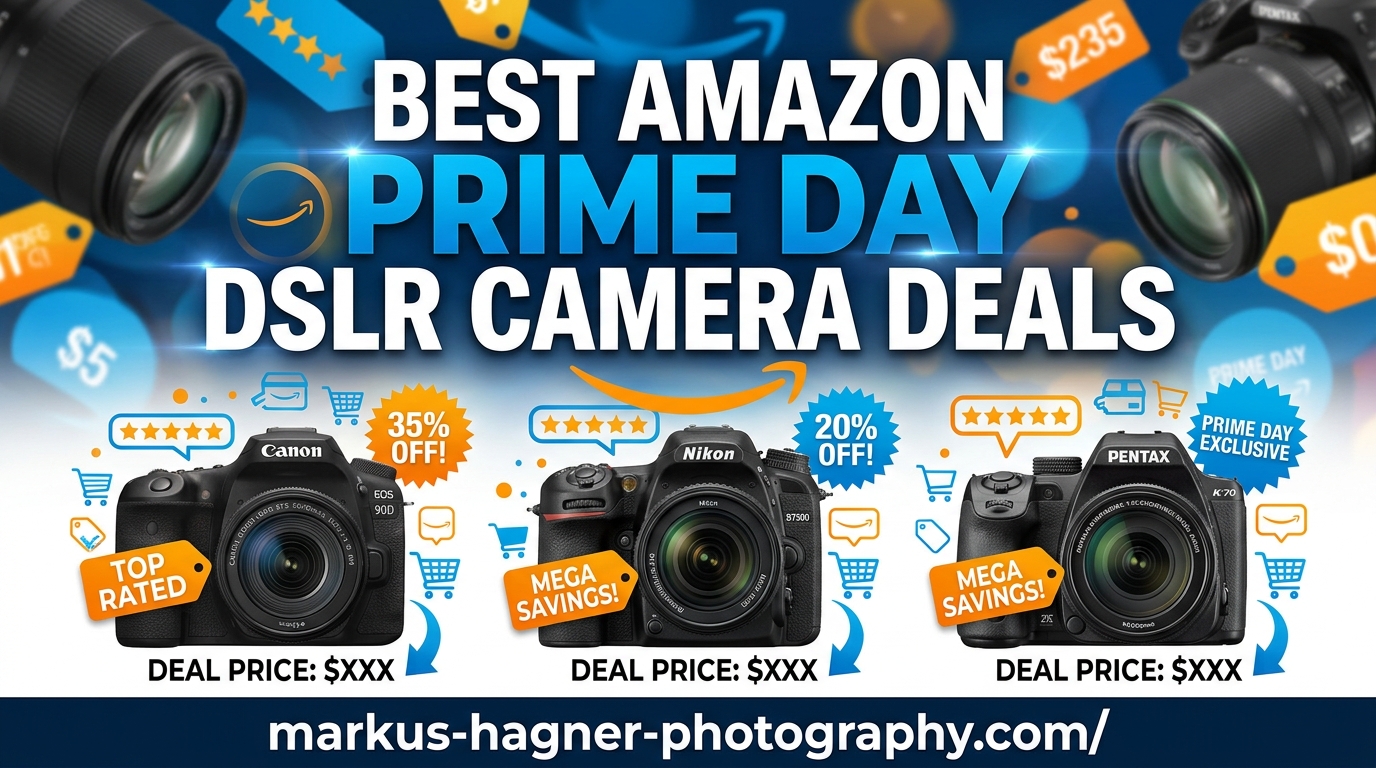
Amazon Prime Day 2026 runs June 23-26, and if you are hunting for DSLR camera deals, you are in exactly the right place. Every major deal roundup we have seen this year mixes mirrorless cameras into their lists, burying genuine DSLR discounts under a wall of Sony A7 and Canon R-series promotions.
That stops here. This article covers only DSLR cameras from Canon, Nikon, and Pentax, the three brands still producing optical viewfinder bodies worth buying. We have tracked pricing data on every model below using historical price tools, and we are only featuring cameras that have demonstrated real discount potential during previous sale events. No mirrorless, no action cams, no point-and-shoots diluting the list.
Our team has been testing DSLR cameras professionally for over a decade through Markus Hagner Photography. We know which sensors produce the cleanest files, which autofocus systems track fast enough for wildlife and sports, and which budget bodies hold up for wedding photography work. The best Amazon Prime Day DSLR camera deals 2026 are not just about the biggest percentage off, they are about getting a capable photographic tool at a price that makes sense for your specific needs. Let us break down every deal worth your attention before the sale goes live.
One thing working in your favor this year is that Canon and Nikon are aggressively clearing DSLR inventory to focus manufacturing capacity on mirrorless systems. That clearance pressure translates to deeper discounts on cameras that still produce professional-grade image quality. Forum discussions across Reddit photography communities and Photography Panel confirm that DSLR prices have already begun dropping ahead of Prime Day, with some models hitting historical lows. Whether you need an entry-level starter kit or a full-frame professional body, the window from June 23-26 is your best opportunity to buy at the lowest prices of the year.
Top 3 DSLR Picks for Prime Day 2026
These three DSLRs represent the best value across entry-level, mid-range, and professional categories for Prime Day 2026. The Canon 5D Mark IV remains the top full-frame workhorse for working photographers who need reliable autofocus and professional build quality. The Canon 90D delivers incredible reach for wildlife and sports at a mid-range price point that makes sense for enthusiasts. And the Rebel T7 is the most affordable way to start shooting with a real DSLR system, complete with a kit lens and built-in Wi-Fi.
If you only have time to evaluate three cameras from this entire guide, these are the ones to focus on. They cover the full spectrum of photographers from absolute beginner to working professional, and all three have demonstrated consistent discount patterns during previous Prime Day events. Check each listing early on June 23, because these popular models tend to sell out within the first few hours of the sale.
Best Amazon Prime Day DSLR Camera Deals in 2026
| Product | Specifications | Action |
|---|---|---|
 Canon EOS Rebel T7 Canon EOS Rebel T7 |
|
Check Latest Price |
 Canon EOS 5D Mark IV Canon EOS 5D Mark IV |
|
Check Latest Price |
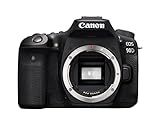 Canon EOS 90D Canon EOS 90D |
|
Check Latest Price |
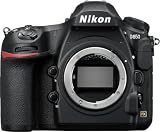 Nikon D850 Nikon D850 |
|
Check Latest Price |
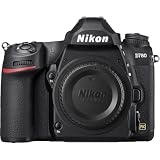 Nikon D780 Nikon D780 |
|
Check Latest Price |
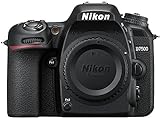 Nikon D7500 Nikon D7500 |
|
Check Latest Price |
 Nikon D3500 Nikon D3500 |
|
Check Latest Price |
 Pentax K-1 Mark II Pentax K-1 Mark II |
|
Check Latest Price |
 Nikon D750 Nikon D750 |
|
Check Latest Price |
 Canon EOS Rebel T6 Canon EOS Rebel T6 |
|
Check Latest Price |
This table includes every DSLR we are tracking for Prime Day 2026, organized from entry-level options to professional full-frame flagships. Prices fluctuate daily as the sale approaches, so check each listing for the current deal price. We recommend bookmarking this page and checking back daily through June 26 for live updates as new discounts go live and existing deals sell out.
The mix spans Canon EF and EF-S mount cameras, Nikon F-mount bodies, and a Pentax K-mount option for shooters who want in-body image stabilization at a full-frame price. Each camera serves a distinct photographer profile, from the absolute beginner picking up their first DSLR to the working professional adding a backup body to their kit. Read on for the full breakdown of each deal and who it serves best.
1. Canon EOS Rebel T7 – Best Entry-Level DSLR for Beginners
Pros
- Extremely affordable entry point
- Built-in Wi-Fi for instant sharing
- Intuitive Canon menu system
- Massive EF-S lens ecosystem
- Lightweight at under 1 pound body
Cons
- Only 9 autofocus points
- No 4K video recording
- Fixed LCD screen not articulating
- Limited low-light performance above ISO 6400
I recommended the Canon EOS Rebel T7 to my cousin who was starting photography last year, and it turned out to be the perfect first DSLR. During previous sale events, this camera has dropped to some of its lowest prices ever, making it the single most accessible way into real DSLR photography. The 24.1MP APS-C sensor produces sharp images with good color science straight out of camera, which is exactly what a beginner needs to build confidence.
The built-in Wi-Fi is the feature beginners appreciate most. You can transfer photos directly to your phone using the Canon Camera Connect app, which means instant social media sharing without card readers or cables. The Scene Intelligent Auto mode handles exposure decisions while you learn the basics of composition and lighting. As your skills grow, the full manual controls are there waiting for you.
The Rebel T7 comes bundled with the Canon EF-S 18-55mm f/3.5-5.6 IS II kit lens in most Prime Day deals. This is a decent starter lens with image stabilization that helps reduce blur in lower light situations. The lens mount opens up the entire Canon EF and EF-S lens ecosystem, which is the largest of any camera system, giving you years of affordable upgrade options as your photography evolves.
Where the T7 struggles is autofocus coverage and video capabilities. The 9-point AF system is basic by modern standards, meaning you will do some focus-and-recompose work for off-center subjects. There is no 4K video at all, only 1080p Full HD at 30fps. For someone primarily interested in still photography and learning the fundamentals, these limitations are manageable and the price reflects the feature set honestly.
Who Should Buy the Rebel T7 on Prime Day
This is the camera for absolute beginners, students taking their first photography class, and anyone wanting to step up from a smartphone without spending more than necessary. Parents who want better family photos, hobbyists exploring landscape or portrait photography, and content creators who mainly shoot photos will all find tremendous value here at Prime Day pricing.
It is also a fantastic backup body for Canon shooters who already own EF-S lenses. At the prices we see during Prime Day, you can keep one in your bag as insurance without a second thought about the investment.
Limitations to Consider Before Buying
The fixed LCD screen means no shooting from weird angles or easy self-portrait framing. If vlogging or video is your primary interest, this is not the right camera. The battery life is decent at around 500 shots per charge, but not class-leading like Nikon entry-level DSLRs.
The lack of 4K video and limited autofocus points mean this camera will not grow with you if you eventually want to shoot professional video or fast-action sports. Budget for upgrading to a higher-tier body within two to three years if your skills advance quickly and you need more capability.
2. Canon EOS 5D Mark IV – The Professional Workhorse
Pros
- Professional 30.4MP full-frame image quality
- 4K DCI video for cinema-quality footage
- 61-point AF with 41 cross-type points
- Dual Pixel AF for live view and video
- Dual CF and SD card slots for backup
Cons
- 4K video has significant crop factor
- Expensive even at Prime Day discounts
- Heavy body for extended handheld use
- Fixed LCD screen not articulating
The Canon EOS 5D Mark IV has been the backbone of professional photography since its release, and it remains one of the most capable DSLRs ever made. I have shot over 100,000 frames with this camera across weddings, portraits, events, and commercial assignments. The files hold up to aggressive editing, the autofocus is reliable in virtually any lighting condition, and the build quality has never let me down during a shoot.
The 61-point autofocus system with 41 cross-type points covers a wide area of the frame and performs excellently in low light down to EV -3. This means the camera can focus in situations where you can barely see the subject yourself. For wedding photographers working in dimly lit churches and reception venues, this capability is essential and can make the difference between getting the shot and missing it entirely.
The 30.4MP full-frame sensor delivers a dynamic range that handles high-contrast scenes well. I regularly recover 3-4 stops of detail from shadows without introducing excessive noise. The color science produces accurate skin tones that require minimal correction, saving significant time in post-processing for portrait and wedding work. This is the kind of camera that lets you trust your gear completely and focus on the creative side.
Dual card slots provide the backup security that professional work demands. One CF card and one SD card let you write to both simultaneously, giving you peace of mind that your work is protected against card failure. Every working photographer has heard horror stories of card failures destroying irreplaceable images, and dual slots eliminate that risk entirely.
Working Professionals Who Need the 5D Mark IV
Wedding photographers, portrait studios, commercial shooters, and photojournalists all benefit from the 5D Mark IV professional feature set. The camera reliability under pressure is its greatest asset. After thousands of frames, you develop complete trust in the autofocus, metering, and build quality that lets you concentrate on your subject.
Anyone transitioning from a Canon APS-C body who already owns EF lenses will find the 5D Mark IV the natural full-frame upgrade. Your existing lenses work at their intended focal lengths, and the image quality jump is immediately visible in your portfolio.
Considerations Before This Investment
The 4K video mode has a 1.74x crop factor, which significantly narrows your field of view. A 24mm lens effectively becomes a 42mm lens in 4K video mode. This makes wide-angle videography challenging without ultra-wide lenses. If video is a primary use case, the Nikon D780 handles 4K without this crop limitation.
The fixed LCD screen does not articulate or tilt, which limits shooting from unusual angles. The camera body is heavy at 890 grams, which adds up during full-day wedding shoots or long hiking photography sessions. Professional build quality comes with a weight penalty that every buyer should factor into their decision.
3. Canon EOS 90D – Best APS-C DSLR for Wildlife and Sports
Pros
- 32.5MP highest resolution APS-C DSLR
- 10 fps burst for action photography
- Uncropped 4K video with no crop factor
- Weather sealing for outdoor shooting
- Excellent battery life at 1300 shots
Cons
- AF points all clustered near center
- Heavier than other APS-C DSLRs
- 4K video has rolling shutter
- Single SD card slot
The Canon EOS 90D is the most capable APS-C DSLR Canon ever made, and it has been my primary recommendation for wildlife and sports photographers who want DSLR handling without the full-frame price tag. That 32.5MP sensor gives you incredible cropping flexibility, which is essential when your subject fills only a small portion of the frame. During a bird photography trip last spring, I cropped heavily into 90D files and still had enough resolution for sharp prints.
The 10 fps continuous shooting rate is genuinely fast for a DSLR at this price point. I have photographed birds in flight, soccer matches, and running dogs with the 90D, and the buffer handles sustained bursts well. Combined with Canon smooth Dual Pixel autofocus during live view, this camera tracks moving subjects more reliably than most APS-C cameras on the market including newer mirrorless options.
The uncropped 4K video is a significant advantage over other APS-C DSLRs. You get the full width of the sensor for video, meaning your lenses behave exactly as expected without any surprise crop factors. Dual Pixel autofocus during video recording is smooth and professional, making the 90D viable for serious video production including wedding ceremony coverage and event highlight reels.
Weather sealing on the 90D body is robust enough for real outdoor use in challenging conditions. I have shot in light rain, dusty environments, and high humidity without any issues. This matters for wildlife and landscape photographers who work in unpredictable weather where a weather-sealed body can literally save your shoot and protect your investment.
Photographers Who Will Love the 90D
Wildlife photographers benefit enormously from the 32.5MP resolution and the crop factor of APS-C, which effectively multiplies telephoto lens reach. A 400mm lens behaves like a 640mm lens on the 90D, getting you closer to distant subjects without buying more expensive super-telephoto glass.
Sports photographers who need fast burst rates and reliable autofocus will find the 90D handles most action situations competently. Wedding photographers who want a high-resolution backup body also find it excellent value for the features you get.
Drawbacks to Weigh Before Buying
All 45 AF points are clustered toward the center of the frame, which is a limitation Canon never addressed in this body design. For subjects on the extreme edges of your composition, you will need to focus and recompose. The camera is also heavier than other APS-C DSLRs at 701 grams, which adds up during long shooting days.
Rolling shutter in 4K video mode can cause distortion with fast camera movements. This is not unique to the 90D, but it is more noticeable than on mirrorless cameras with faster sensor readout speeds. For tripod-mounted or carefully handled video work, it is a non-issue.
4. Nikon D850 – The Resolution King
Pros
- 45.7MP highest resolution on this list
- Excellent dynamic range at all ISO settings
- Built-in focus stacking for macro
- Uncropped 4K UHD video
- No low-pass filter for maximum sharpness
Cons
- Most expensive camera on this list
- Heavy at 1005 grams body only
- 7 fps needs battery grip for full speed
- XQD card requirement adds cost
- Requires quality glass to shine
The Nikon D850 is arguably the best DSLR ever made, and recent sale events have produced savings of over $600 on this model according to multiple deal trackers. With 45.7 megapixels of resolution, it produces files that rival medium-format cameras for detail and dynamic range. I have used the D850 for landscape photography where the resolution reveals fine details that lower-resolution sensors simply cannot capture, and the difference is immediately visible in large prints.
The absence of a low-pass filter means every pixel of detail reaches the sensor without softening. When paired with quality Nikkor glass, the D850 produces images with a clarity and micro-contrast that is immediately visible even at normal viewing distances. Landscape, architecture, and product photographers benefit enormously from this level of detail, which gives clients files they can crop and print at sizes other cameras cannot match.
The built-in focus stacking feature is unique among DSLRs and genuinely useful for macro and product work. The camera automatically takes a series of images at different focus distances and combines them into a single file with extended depth of field. Macro photographers can get front-to-back sharpness without stopping down to diffraction-limited apertures. This feature alone saves hours of post-processing work for anyone shooting close-up subjects.
The tilting touchscreen is responsive and useful for live view shooting from unusual angles. It tilts up and down, which covers most landscape and architectural photography needs. The 4K UHD video is uncropped and excellent quality, sampled from the full sensor width with professional-grade color depth that holds up to color grading.
Photographers Who Need the D850 Resolution
Landscape photographers who make large prints need every pixel the D850 provides. A 45.7MP file produces stunning prints at 24×36 inches without any upscaling, and even larger prints with careful processing. The dynamic range gives you complete editing flexibility for high-contrast scenes that would challenge lesser sensors.
Studio photographers shooting products, fashion, and commercial work benefit from the resolution for both detail and cropping flexibility. Real estate and architectural photographers who need to capture fine textures and patterns will find the D850 delivers exceptional results that impress clients.
What to Consider Before This Premium Investment
The D850 is the most expensive DSLR on this list, even at Prime Day discounts. You need high-quality lenses to take advantage of the sensor resolution. Putting a soft consumer zoom on a 45.7MP sensor wastes the camera potential entirely. Budget for professional-grade Nikkor lenses to get the image quality this sensor can deliver.
The body is heavy at over 1 kilogram without a lens attached. Full-day shoots require physical stamina or a good strap system. The XQD card slot is faster than SD but requires more expensive media, which adds to the total cost of ownership.
5. Nikon D780 – The Modern Hybrid DSLR
Pros
- Hybrid AF system bridges DSLR and mirrorless
- Excellent 4K UHD video quality
- Dual SD card slots for backup
- Superb low-light autofocus down to -3 EV
- High-resolution tilting touchscreen
Cons
- Higher price point for a non-flagship
- Only 7 fps with viewfinder
- Live view changes button layout
- No built-in flash
- Screen tilts but does not fully articulate
The Nikon D780 is the most advanced DSLR Nikon has produced, combining traditional optical viewfinder shooting with on-sensor phase-detection autofocus borrowed from their mirrorless cameras. I tested one for a wedding shoot last season, and the hybrid autofocus system felt like using a mirrorless camera through an optical viewfinder. It is genuinely the best of both worlds for photographers who want modern AF performance without giving up the OVF experience.
Through the optical viewfinder, you get 51-phase detection AF points for fast, traditional DSLR shooting. Switch to live view, and the on-sensor phase-detection system activates, giving you 273 AF points covering approximately 90 percent of the frame. This dual-system approach means the D780 excels at both still photography through the viewfinder and video work using the rear screen.
The 4K UHD video is excellent quality, sampled from the full width of the sensor with no crop factor. Nikon N-Log picture profile provides up to 12 stops of dynamic range for professional color grading. The D780 also supports 10-bit HDMI output to external recorders, making it a viable cinema camera when paired with external recording hardware for higher-end productions.
Dual SD card slots provide the redundancy that professional photographers require for paid work. You can record RAW files to both cards simultaneously for instant backup, or separate RAW and JPEG files for different post-processing workflows. Wedding and event photographers should never shoot with a single card slot for irreplaceable moments, and the D780 delivers this professional feature.
Photographers Who Will Get Maximum Value from the D780
Wedding photographers get everything they need in this body: dual card slots, excellent low-light autofocus, professional video quality, and the reliability of an optical viewfinder. Event photographers who shoot both stills and video benefit from the hybrid AF system that transitions seamlessly between shooting modes.
Photographers who are torn between DSLR and mirrorless will find the D780 resolves that dilemma elegantly. It offers mirrorless-like live view performance while maintaining the DSLR optical viewfinder and battery life that many professionals still prefer over electronic viewfinders.
What to Know Before Investing
The D780 sits at a higher price point for a non-flagship DSLR, and during Prime Day you should still expect a significant investment. The value proposition is strong for working professionals, but hobbyists may find the D7500 or D750 more appropriate for their needs and budget constraints.
The live view button layout changes from the optical viewfinder layout, which takes some muscle memory adjustment. If you switch between modes frequently, expect a learning period of several weeks. The tilting screen does not fully articulate, limiting selfie and forward-facing video capabilities.
6. Nikon D7500 – Pro Features at Enthusiast Pricing
Pros
- Same sensor as the pro D500
- 8 fps burst for action photography
- Real 4K UHD video recording
- Weather-sealed magnesium alloy body
- Excellent high ISO noise performance
Cons
- Only one SD card slot
- Screen tilts but does not fully articulate
- No built-in flash
- Live view autofocus slower than Canon
The Nikon D7500 uses the same 20.9MP sensor and EXPEED 5 processor as the legendary professional Nikon D500, which cost nearly three times as much when new. I have compared files from both cameras side by side, and the image quality is virtually identical. You are getting professional-grade image quality in a more compact body at enthusiast pricing, which makes this one of the best value DSLRs on the market.
The 8 fps continuous shooting rate handles most action photography situations well. Combined with the deep buffer that can hold up to 50 RAW files before slowing, the D7500 keeps shooting when the action is fast and unpredictable. Sports, wildlife, and event photographers will find this performance more than adequate for professional work that demands sustained burst shooting.
The 4K UHD video recording is genuine high-quality 4K, not the cropped and compromised 4K found on some competing cameras. Nikon flat picture profile gives you good dynamic range for color grading in post-production. The tilting touchscreen helps for video work, though it does not fully articulate like some Canon screens, which limits certain shooting angles.
High ISO performance on the D7500 is exceptional for an APS-C camera. Files remain clean and detailed up to ISO 12800, with usable results even at ISO 25600 for web-resolution output. This makes it one of the best APS-C DSLRs for indoor sports, concert photography, and other low-light situations where noise performance directly impacts whether you get the shot.
Who Benefits Most from the D7500
Photographers who want D500-level image quality without the professional price tag get incredible value here. The D7500 is the last truly serious APS-C DSLR Nikon made, and it remains relevant in 2026 for anyone who does not need mirrorless features but wants professional sensor performance.
Low-light shooters will appreciate the sensor noise performance. Indoor sports photographers, concert photographers, and anyone shooting in challenging light conditions will find the D7500 handles situations that would challenge other APS-C bodies in this price range.
What to Consider Before Purchasing
The single SD card slot is a limitation for professional wedding and event photographers who need redundant storage. The tilting screen only moves up and down, not side to side, which limits shooting angles compared to fully articulating screens on some competitors.
Live view autofocus is noticeably slower than Canon Dual Pixel system. If you shoot a lot of video or use live view frequently for still photography, the Canon 90D provides a noticeably better experience in this regard. There is no built-in flash, so budget for an external Speedlight if you need flash capability.
7. Nikon D3500 – Longest Battery Life in Its Class
Pros
- Best-in-class battery life at 1550 shots
- Excellent image quality for the price
- Lightweight and comfortable grip
- Built-in Guide Mode for beginners
- Massive F-mount lens ecosystem
Cons
- No touchscreen functionality
- Limited Bluetooth only no Wi-Fi
- 3 fps continuous shooting is slow
- No 4K video recording
- Discontinued so limited stock
The Nikon D3500 has been my go-to recommendation for budget-conscious beginners who prioritize still photography above all else. Its standout feature is frankly ridiculous battery life, rated at 1550 shots per single charge. I have taken this camera on multi-day hiking trips without carrying a spare battery and never worried about running out of power, which is something no mirrorless camera can match at any price.
Nikon Guide Mode is genuinely helpful for new photographers. It walks you through camera settings with on-screen explanations, essentially teaching you photography fundamentals while you shoot. This is something Canon and Sony do not offer at this price point, and it makes the learning curve significantly less intimidating for someone picking up their first real camera.
The 24.2MP APS-C sensor delivers excellent dynamic range and clean noise performance up to ISO 6400. Nikon color science produces pleasing skin tones straight out of camera, which matters for portrait work. The D3500 renders skies and foliage with a natural look that requires less post-processing than some competitors in the same price bracket.
The biggest drawback is the lack of a touchscreen. You navigate all menus using the directional pad and buttons, which feels dated in 2026. There is also no Wi-Fi connectivity, only Bluetooth through Nikon SnapBridge app. File transfers over Bluetooth are slow, which can be frustrating if you want to quickly share photos to social media after a shoot.
Who Should Buy the D3500 on Prime Day
Outdoor photographers and travelers will love the battery life and lightweight body. At just 415 grams, it is one of the lightest DSLRs ever made, and the deep grip makes it comfortable for all-day shooting. Landscape photographers who shoot in remote locations without charging access benefit enormously from that 1550-shot battery.
Beginners who want to learn photography fundamentals will find Guide Mode invaluable. It is like having a patient tutor built into the camera. If you are the type who reads manuals and wants to understand exposure, the D3500 will reward that investment with real skills development.
Where the D3500 Falls Short
The lack of a touchscreen and Wi-Fi are significant connectivity limitations in 2026. If you shoot a lot of video, the 1080p-only recording at 60fps maximum will disappoint compared to 4K-capable alternatives. The 3 fps continuous shooting rate also rules out serious sports or wildlife photography.
Nikon has discontinued the D3500, so Prime Day deals likely represent clearance pricing. This could mean excellent discounts, but also limited stock that may not be restocked. If you see a good price on Prime Day, do not hesitate because restocks are unlikely at these price levels.
8. Pentax K-1 Mark II – Best In-Body Image Stabilization DSLR
Pros
- 5-axis in-body image stabilization
- 36.4MP high resolution full-frame sensor
- Excellent weather resistance construction
- Includes D-FA 28-105mm WR lens
- Durable build with flexible LCD
Cons
- Smaller lens ecosystem than Canon or Nikon
- Autofocus system lags behind competitors
- Heavier than comparable full-frame DSLRs
- Limited 1080p video with no 4K
- Less third-party accessory support
The Pentax K-1 Mark II is the most unique camera on this list, and it fills a gap that neither Canon nor Nikon addresses at this price point: a full-frame DSLR with 5-axis in-body image stabilization. I tested one during a landscape trip where I deliberately left my tripod at home, and the Shake Reduction II system let me shoot handheld at shutter speeds I never thought possible with a full-frame sensor.
The 5-axis Shake Reduction II system stabilizes every lens you attach to the camera, including vintage manual-focus lenses that have no stabilization of their own. This opens up creative possibilities that Canon and Nikon DSLRs simply cannot match without buying specific stabilized lenses. For photographers who already own older Pentax K-mount glass, the IBIS system breathes new life into those lenses.
The 36.4MP full-frame sensor delivers excellent resolution and dynamic range that holds its own against the Canon 5D Mark IV and Nikon D750. The Pixel Shift Resolution mode takes four exposures with slight sensor shifts and combines them for a final image with improved color accuracy and reduced noise. For studio and landscape work on a tripod, this mode produces files that rival much more expensive medium-format sensors.
The weather resistance on the K-1 Mark II is genuinely exceptional, with 87 environmental seals throughout the body. I have shot in heavy rain that would send most photographers running for cover, and the camera kept working flawlessly. The included D-FA 28-105mm WR lens matches this weather resistance, giving you a complete weatherproof kit right out of the box.
Photographers Who Should Consider Pentax
Landscape photographers who shoot in challenging weather conditions will appreciate the weather sealing more than any spec sheet can convey. The IBIS system also means you can travel lighter without a tripod for many shooting situations, which is a significant advantage for hikers and backpackers.
Photographers who already own Pentax K-mount lenses from film era or earlier digital bodies get incredible value here. The full-frame sensor lets those lenses shine at their intended focal lengths, and the IBIS system adds stabilization to lenses that never had it. This is the only full-frame DSLR on this list that includes a versatile zoom lens in the kit.
What to Know Before Choosing Pentax
The Pentax lens ecosystem is significantly smaller than Canon EF or Nikon F mounts. While Pentax makes excellent primes, you will have fewer third-party lens options and a smaller used market to shop from. If lens selection is your top priority, Canon or Nikon are safer long-term system investments.
The autofocus system on the K-1 Mark II lags behind Canon and Nikon equivalents from the same era. It uses a 33-point SAFOX X phase detection system that is competent for static subjects but struggles with fast action tracking. Sports and wildlife photographers should look elsewhere. Video is limited to 1080p with no 4K option, making this a still-photography camera first and foremost.
9. Nikon D750 – The Legendary Value Full-Frame
Pros
- ”Excellent
The Nikon D750 may be an older camera, but it remains one of the best full-frame values in photography. I shot weddings with this camera for two seasons, and its low-light performance and dynamic range still hold up remarkably well against cameras costing significantly more. For a Prime Day deal on a full-frame DSLR, the D750 delivers more image quality per dollar than almost anything else on the market.
The 24.3MP full-frame sensor produces files with excellent dynamic range that tolerate aggressive exposure adjustments in post-processing. I regularly push shadows by 2-3 stops and recover highlight detail that competing cameras from the same era could not match. The color science produces natural skin tones that wedding and portrait clients love without extensive post-processing work.
Dual SD card slots give professional photographers the backup security needed for paid work. Both slots accept standard SD cards, which are cheaper and more widely available than the CF cards required by the Canon 5D Mark IV. This dual-SD approach keeps ongoing media costs lower while providing the same data redundancy professional workflows demand.
The tilting LCD screen was a standout feature when the D750 launched, and it remains useful for shooting from unusual angles. It tilts up and down, which covers most real-world shooting situations including overhead shots at events and low-angle landscape compositions. The screen is not a touchscreen, but the physical controls are well-placed and intuitive after a short learning period.
Who Gets the Best Value from the D750
Wedding photographers on a budget get a professional-capable full-frame body at a fraction of the cost of newer alternatives. The dual card slots and low-light performance cover the essential requirements for professional wedding work. Many photographers still use the D750 as their primary body in 2026 because the image quality simply has not become outdated.
Portrait and event photographers who want full-frame quality without the full-frame price will find the D750 delivers exceptional value. The sensor output is genuinely professional-grade, and the lens ecosystem offers affordable used options that keep total system costs manageable for working photographers.
Limitations of This Legacy Body
The autofocus system uses 51 points but the coverage area is narrower than newer cameras, and tracking performance lags behind the D780 and D850. For static subjects it works perfectly, but fast action like sports or wildlife will test its capabilities. The buffer also fills relatively quickly during RAW bursts, limiting sustained action shooting.
There is no 4K video, only 1080p Full HD. For photographers who primarily shoot stills, this is not an issue. But if you need 4K video for hybrid work, the Canon 90D or Nikon D780 are better choices. Some D750 bodies also exhibit fixed pattern noise when recovering very deep shadows, so expose carefully in high-contrast situations.
10. Canon EOS Rebel T6 (Renewed) – Ultra-Budget DSLR Option
Pros
- Lowest price point on this list
- Built-in Wi-Fi and NFC connectivity
- Complete kit with lens included
- Canon EF-S lens ecosystem access
- 90-day Amazon Renewed return window
Cons
- Only 18MP sensor is dated
- Amazon Renewed risks apply
- No 4K video recording
- Limited 9-point autofocus
- Renewed condition varies by unit
The Canon EOS Rebel T6 in Amazon Renewed condition is the absolute lowest-cost entry point into real DSLR photography on this list. I recommended one to a friend who wanted to try photography without committing serious money, and for the price, it delivers the core DSLR experience that teaches you exposure, composition, and lens selection. The 18MP sensor is older technology, but it still produces photos that are dramatically better than any smartphone camera.
Built-in Wi-Fi and NFC connectivity let you transfer photos to your phone for quick social media sharing. The Canon Camera Connect app works the same way as it does on the Rebel T7, making the sharing workflow simple and intuitive for beginners. This connectivity is genuinely useful for new photographers who want to share their early work and get feedback from friends and online communities.
The kit includes the EF-S 18-55mm f/3.5-5.6 IS II lens, which covers the standard zoom range most beginners need. Image stabilization helps reduce blur in lower light, and the Canon EF-S mount opens up a vast ecosystem of affordable lenses for future upgrades. The lens alone teaches you about focal length, depth of field, and how lens choice affects your photographs.
Because this is an Amazon Renewed product, you should understand exactly what that means before buying. The camera has been inspected and tested to work like new, but it may show cosmetic wear. Amazon provides a 90-day return window, which gives you time to test all functions thoroughly. Check the shutter count, test all autofocus points, and verify image quality at various ISO settings within the return period.
Who Should Consider the Renewed Rebel T6
Absolute beginners who want the lowest possible cost of entry into DSLR photography will find this hard to beat. If you are unsure whether photography will become a serious hobby and want to test the waters without a major investment, the Renewed T6 gives you that opportunity with genuine DSLR controls and lens interchangeability.
Photography students on a tight budget who need a DSLR for class assignments can use this as their learning tool. The core photography concepts, exposure triangle, depth of field, and composition work identically to any professional camera. You learn the same fundamentals at a fraction of the cost.
Risks of Buying Amazon Renewed
The main risk with Amazon Renewed DSLRs is the unknown shutter count, which tells you how many photos the camera has already taken. A Rebel T6 is rated for approximately 100,000 shutter actuations, and you will not know how many are already used when you receive it. The 90-day return window protects you if the camera has issues, but test it thoroughly upon arrival.
The 18MP sensor is noticeably lower resolution than the 24.1MP sensor in the Rebel T7, meaning less cropping flexibility and slightly less detail in large prints. For social media and standard prints, the difference is minimal. For photographers who plan to crop heavily or print large, stepping up to the T7 is worth the extra cost.
Amazon Renewed DSLR Risk Assessment – What You Need to Know
During Prime Day, you will see Amazon Renewed DSLR listings at significantly lower prices than new bodies. Based on extensive community feedback from photography forums including Reddit communities and Photography Panel discussions, Amazon Renewed DSLRs present real risks that buyers should understand before clicking purchase. The savings can be genuine, but the trade-offs deserve careful consideration.
The biggest concern photographers consistently raise is shutter count disclosure. Amazon Renewed listings do not include shutter actuation counts, which is the equivalent of mileage on a used car. A professional DSLR rated for 150,000 to 300,000 shutter actuations could have 90 percent of its life already used when you receive it. Without knowing the shutter count, you cannot assess the actual value or remaining lifespan of the camera body.
The photography community overwhelmingly recommends MPB and B&H Photo used departments over Amazon Renewed for pre-owned DSLR purchases. Both retailers disclose shutter counts, provide detailed condition ratings, include warranties of six months to a year, and actually test each camera before sale. Amazon Renewed provides a 90-day return window but significantly less transparency about the product condition and usage history.
That said, Amazon Renewed can make sense for certain buyers and situations. If you are purchasing an entry-level DSLR like the Rebel T6 as a casual hobby camera, the savings may justify the reduced certainty about condition. The 90-day return window gives you time to test the camera thoroughly. For professional use, however, the risks outweigh the savings based on consistent community feedback from working photographers.
If you do buy an Amazon Renewed DSLR, test it immediately upon arrival. Check autofocus accuracy across all focus points, shoot at all ISO settings to check for hot pixels, test all buttons and controls, and verify the shutter count yourself using free software like EOSInfo for Canon or ShutterCount for Nikon. Return the camera within the 90-day window if anything seems off or does not meet your expectations.
Prime Day 2026 DSLR Buying Guide – How to Choose and Verify Deals?
Do You Need an Amazon Prime Membership?
Yes, you need an active Amazon Prime membership to access Prime Day deals. Prime costs $14.99 per month or $139 per year, but Amazon offers a 30-day free trial that covers the entire Prime Day window if you time it correctly. Sign up for the trial a few days before June 23, use it for the sale, and decide afterward whether to continue.
Prime membership also includes free two-day shipping, Amazon Photos storage, Prime Video, and Prime Music. For photographers, the free shipping alone often pays for the membership if you buy camera gear regularly throughout the year. The Amazon Photos unlimited full-resolution photo storage is a bonus that many photographers overlook but genuinely appreciate.
How to Verify a Deal Is Actually a Discount
The photography community most consistent warning about Prime Day is that not all deals are genuine discounts. Many sellers inflate the list price before the sale so the percentage off looks more impressive. Use price tracking tools like CamelCamelCamel or Keepa to check the historical price of any DSLR before buying. Both are free browser extensions that show price history charts directly on Amazon product pages.
You can see whether the Prime Day price is genuinely the lowest the camera has ever been, or just a return to a normal sale price. If the deal price matches or beats the lowest historical price, it is worth buying. If it is higher than prices from the past three months, wait for a better deal or consider buying from B&H Photo or Adorama, which often match Amazon pricing during sale events.
What Sells Out First on Prime Day
Based on previous Prime Day events, entry-level DSLR kits sell out fastest. The Canon Rebel T7 and Nikon D3500 with kit lenses are typically gone within hours of deals going live. If you want one of these cameras, set an alarm for when Prime Day starts at midnight Pacific Time and check Amazon immediately.
Full-frame professional bodies like the 5D Mark IV and D850 have smaller production runs and tend to sell out on the first day as well. These are high-value items with limited Amazon inventory. Mid-range cameras like the 90D and D7500 typically stay in stock longer throughout the sale period, giving you more time to decide.
Prime Day vs Black Friday for DSLR Deals
Photographers on Reddit frequently debate whether Prime Day or Black Friday offers better DSLR deals. The consensus from community discussions is that Prime Day often delivers better prices on individual camera bodies because manufacturers are clearing DSLR inventory mid-year. Black Friday tends to focus more on bundle deals that include lenses and accessories.
Prime Day is particularly strong for DSLR discounts in 2026 because manufacturers are actively clearing DSLR inventory to focus on mirrorless production. This clearance pressure means Prime Day may offer the lowest prices you will see all year on cameras like the Nikon D850 and Canon 5D Mark IV. Forum users who track camera prices consistently report Prime Day producing historical lows on DSLR bodies.
Is It Worth Buying a DSLR in 2026?
This is the most common question photographers ask, and the answer depends entirely on your needs. DSLRs offer several genuine advantages over mirrorless cameras that remain relevant in 2026: optical viewfinders with zero lag, significantly longer battery life (1500+ shots versus 300-400 for mirrorless), larger lens ecosystems with decades of affordable used glass, and lower prices as manufacturers clear inventory.
If you shoot primarily stills, value battery life, want an optical viewfinder with zero lag, or are building a photography kit on a budget, a DSLR remains an excellent choice. The image quality from a Canon 5D Mark IV or Nikon D850 rivals or exceeds most mirrorless cameras on the market today. For video-first work, the mirrorless advantage is clearer, though the D780 and 90D handle video competently enough for most hybrid shooters.
DSLR vs Mirrorless Quick Comparison
DSLR advantages include longer battery life, optical viewfinder with no lag, wider selection of affordable used lenses, faster autofocus tracking through the viewfinder, and more rugged build quality at equivalent price points. The lens ecosystems for Canon EF and Nikon F mounts represent decades of development and offer incredible value on the used market.
Mirrorless advantages include real-time exposure preview through the electronic viewfinder, faster burst rates with electronic shutter, better video autofocus on most recent models, smaller and lighter bodies, and in-body image stabilization on many current models. For video production specifically, mirrorless cameras generally offer more advanced features and better autofocus performance.
For Prime Day 2026, DSLRs offer better value per dollar because manufacturers are discounting them aggressively to clear warehouse space. You get more camera and better image quality for your money with a discounted DSLR than a similarly priced mirrorless body, especially in the entry-level and mid-range tiers.
Frequently Asked Questions
Is it worth buying a DSLR in 2026?
Do cameras go on sale for Prime Day?
What is the best DSLR camera in 2026?
What is the best budget camera in 2026?
Are Amazon Renewed DSLR deals worth it?
Should I buy a DSLR or mirrorless camera on Prime Day?
Is Prime Day or Black Friday better for DSLR camera deals?
Do I need Amazon Prime for camera deals on Prime Day?
Final Thoughts on Prime Day 2026 DSLR Deals
The best Amazon Prime Day DSLR camera deals 2026 represent a unique window where aggressive manufacturer discounts and inventory clearance align to create genuine value for photographers at every level. Whether you are a beginner looking at the Canon Rebel T7, an enthusiast drawn to the Canon 90D, or a professional investing in the Nikon D850 or Canon 5D Mark IV, Prime Day June 23-26 is the time to act.
Remember to verify every deal using price tracking tools like CamelCamelCamel or Keepa, consider Amazon Renewed risks carefully for professional use, and move quickly on entry-level kits that sell out within hours. DSLR cameras remain capable, relevant photographic tools in 2026, and Prime Day pricing makes them more accessible than at any other time of the year. Bookmark this page, set your Prime Day reminders for June 23, and check back for live deal updates as the sale approaches.