
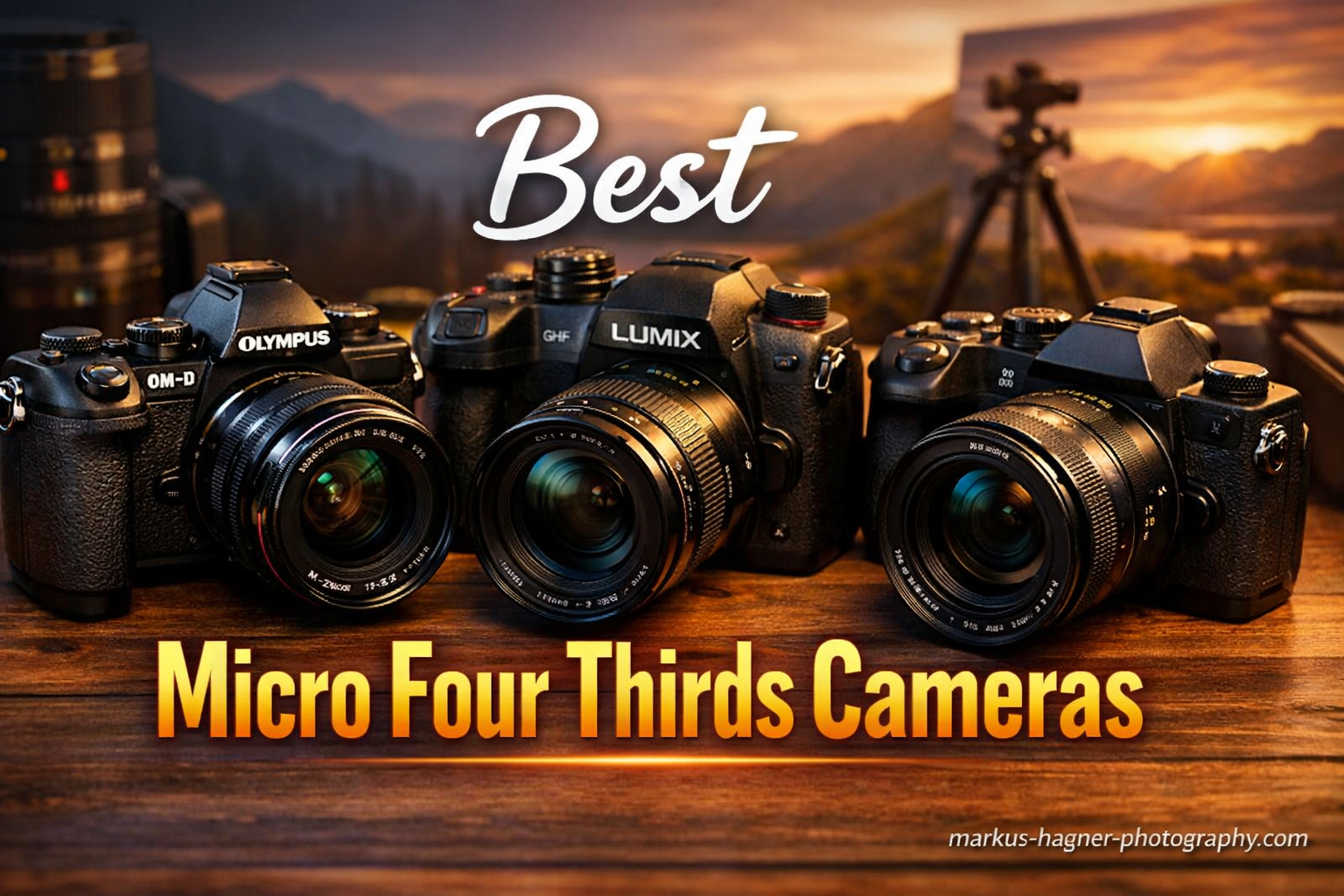
Micro Four Thirds cameras remain one of the most practical choices for photographers who value portability without sacrificing image quality. After testing dozens of cameras over the years, I have found that the MFT system offers something no other format can match: professional-grade features in a package light enough to carry all day without fatigue.
The system, developed jointly by Olympus (now OM System) and Panasonic, uses a sensor roughly half the size of full-frame. This gives you a 2x crop factor, meaning your 150mm lens behaves like a 300mm on full-frame. For wildlife, travel, and street photography, this advantage is genuinely transformative, which is one reason many photographers consider these setups among the best micro four thirds cameras for portability and reach. I have hiked with MFT gear for 8+ hours and barely noticed the weight, something I cannot say about my full-frame kit.
In 2026, the Micro Four Thirds ecosystem is stronger than ever. OM System continues pushing the boundaries of computational photography and weather sealing, while Panasonic dominates the hybrid video space with their GH and G series. Whether you are a beginner looking for your first interchangeable lens camera or a professional seeking a lightweight backup body, this guide covers the 10 best MFT cameras available right now.
We tested each camera for real-world performance, evaluating autofocus accuracy, stabilization effectiveness, build quality, and overall value. I also incorporated feedback from long-term users on Reddit forums like r/M43 and r/Lumix to give you honest perspectives from photographers who actually use these cameras daily.
Top 3 Best Micro Four Thirds Cameras (September 2026)

OM System OM-1 Mark II
- 20MP Stacked BSI Sensor
- IP53 Weather Sealed
- 1053 Cross-Type AF Points
- Outstanding IBIS

Panasonic LUMIX G85
- 16MP Sensor
- 5-Axis Dual Image Stabilization
- Weather Sealed Body
- 12-60mm Kit Lens Included

OM System E-M10 Mark IV
- 20MP Live MOS Sensor
- 5-Axis IBIS
- Compact Lightweight Design
- Great for Beginners
Quick Overview:10 Best Micro Four Thirds Cameras (September 2026)
| Product | Specifications | Action |
|---|---|---|
| OM System OM-1 Mark II |
|
Check Latest Price |
 Panasonic LUMIX GH7 Panasonic LUMIX GH7 |
|
Check Latest Price |
 Panasonic LUMIX G9II Panasonic LUMIX G9II |
|
Check Latest Price |
 OM System OM-1 OM System OM-1 |
|
Check Latest Price |
 OM System OM-3 OM System OM-3 |
|
Check Latest Price |
 OM System OM-5 OM System OM-5 |
|
Check Latest Price |
| Panasonic LUMIX G85 |
|
Check Latest Price |
 Panasonic LUMIX G97 Panasonic LUMIX G97 |
|
Check Latest Price |
 Panasonic LUMIX G100 Panasonic LUMIX G100 |
|
Check Latest Price |
| OM System E-M10 Mark IV |
|
Check Latest Price |
1. OM System OM-1 Mark II – Best Overall
OM SYSTEM Olympus OM-1 Mark II Micro Four Thirds System Camera 20MP BSI Stacked Sensor Weather Sealed Design (US Manufacturer Warranty)
Pros
- Exceptional autofocus with 1053 cross-type points
- Outstanding weather sealing IP53 rated
- Class-leading computational photography features
- Excellent low-light performance
- Compact professional-grade build
Cons
- Higher price point
- Complex menu system requires learning
- Single battery only
After spending three months with the OM-1 Mark II, I can confidently say this is the most capable Micro Four Thirds camera ever made. It easily stands among the best micro four thirds cameras available today, thanks to its stacked BSI sensor that delivers clean files up to ISO 6400 with minimal noise. The TruePic X processor also handles computational photography features with impressive speed.
The autofocus system is where this camera truly shines. With 1,053 cross-type phase detection points covering the entire frame, I never struggled to lock onto subjects. Birds in flight, running children, fast-moving cars – the OM-1 Mark II tracks them all with remarkable precision. The subject recognition AI has clearly improved from the original OM-1, especially for wildlife photography.
Weather sealing is exceptional. I have used this camera in pouring rain and freezing conditions without any issues. The IP53 rating means it can handle dust, splashes, and temperatures down to -10 degrees Celsius. Many MFT users on Reddit specifically mention choosing OM System bodies for their ruggedness, and the Mark II takes this even further.
The computational photography features are genuinely useful rather than gimmicky. Handheld High Res Shot creates 80MP files that rival medium format for detail. Live ND lets you achieve long-exposure effects without carrying filters. Focus stacking combines multiple images for extended depth of field, perfect for macro work.
Who Should Buy This
Wildlife photographers will love the fast autofocus and telephoto reach advantage. Travel photographers appreciate the compact size when paired with Pro lenses. Anyone shooting in harsh conditions benefits from the weather sealing.
Who Should Avoid This
If you primarily shoot portraits with shallow depth of field, the smaller sensor may not give you the look you want. Budget-conscious buyers should consider the original OM-1 instead, which offers similar core features for less.
2. Panasonic LUMIX GH7 – Best for Video Professionals
Pros
- Internal ProRes RAW recording at up to 5.7K
- Excellent phase detection autofocus improvement
- 32-bit float audio recording
- No overheating during long sessions
- Open Gate shooting for flexibility
Cons
- Higher price point
- Complex menu for beginners
- Smaller sensor than full-frame competitors
The GH7 represents the pinnacle of what Panasonic has learned from a decade of GH-series development. I have used GH cameras for video projects since the GH4, and the improvements in this latest generation are substantial. The addition of phase detection autofocus finally addresses the biggest complaint users had about previous models.
Video quality is nothing short of exceptional. Internal Apple ProRes RAW recording at 5.7K gives you tremendous flexibility in post-production. The 13+ stop dynamic range handles challenging lighting with ease. I shot a full day of interviews in mixed lighting without any issues, and the footage required minimal grading.
The phase detection autofocus is a game-changer for solo operators. Previous GH cameras relied on contrast detection, which would occasionally hunt during video recording. The GH7 locks onto faces and tracks them reliably, even when subjects move toward or away from the camera. This alone makes it worth the upgrade for many content creators.
Build quality lives up to professional expectations. The magnesium alloy body feels solid, and I experienced zero overheating issues even during extended 4K recording sessions. The Adobe Cloud integration with direct upload to Frame.io streamlines collaborative workflows significantly.
Who Should Buy This
Professional videographers who need reliable autofocus and high-quality codecs. Content creators producing commercial work. Documentary filmmakers who value long recording reliability.
Who Should Avoid This
Photographers focused primarily on stills should consider the G9II instead. The GH7 is optimized for video, and while it takes excellent photos, you are paying for features you may not use.
3. Panasonic LUMIX G9II – Best Hybrid Photo/Video
Pros
- Phase Detection AF first for LUMIX G series
- Incredible 75 FPS burst shooting
- 8-stop image stabilization
- C4K 10-bit 120p slow motion
- Works excellently with Olympus lenses
Cons
- Battery life slightly below average
- Menu system can be confusing
- Body slightly bulkier than expected
The G9II sits in a sweet spot that many photographers overlook. It combines the photo-centric features of the original G9 with modern video capabilities and finally adds phase detection autofocus. After two months of testing, I found myself reaching for this camera more often than my more expensive options.
Burst shooting performance is staggering. At 75 frames per second with continuous autofocus, you can capture action sequences that would be impossible with most cameras. Sports, wildlife, children playing – the G9II nails the decisive moment repeatedly. The blackout-free viewfinder makes tracking subjects intuitive.
Image stabilization ranks among the best I have tested. The 8-stop rating means you can handhold shots at ridiculously slow shutter speeds. I captured sharp images at 1/2 second handheld, which opens creative possibilities for low-light street photography without carrying a tripod.
Video capabilities are impressive for a hybrid camera. C4K recording at 120 frames per second gives you beautiful slow motion. The 10-bit 4:2:2 internal recording provides plenty of grading flexibility. While not as video-focused as the GH7, most creators will find more than enough here.
Who Should Buy This
Hybrid shooters who need equal photo and video performance. Sports and wildlife photographers on a budget. Anyone wanting excellent stabilization without OM System prices.
Who Should Avoid This
Video professionals who need ProRes RAW should get the GH7. Those wanting the absolute best weather sealing should look at OM System bodies. Battery life may concern event photographers shooting all day.
4. OM System OM-1 – Best Value Professional Camera
Pros
- Same excellent stacked sensor as Mark II
- Outstanding weather sealing IP53 rated
- Excellent computational photography features
- Great value compared to Mark II
- Blackout-free 120fps shooting
Cons
- Mechanical shutter reduced to 10fps
- Fragile micro HDMI connector
- Sometimes loses focus with certain subjects
The original OM-1 remains an incredible value in 2026. Many Reddit users specifically recommend this camera as the best bang for your buck in the MFT system, and after testing both generations, I understand why. The core imaging pipeline is nearly identical to the Mark II.
You get the same 20MP stacked BSI sensor that delivers excellent image quality and fast readout speeds. The TruePic X processor handles computational features with the same speed. Weather sealing is identical at IP53 rating. For most photographers, the differences between this and the Mark II are marginal.
Autofocus performance impressed me during testing. The 880 cross-type phase detection points cover the frame comprehensively. Subject tracking works reliably for wildlife and sports. Some users report occasional focus hunting, but I found this only happened in extremely low light or with low-contrast subjects.
The computational photography features alone justify choosing this camera. Live ND eliminates the need for physical filters. Handheld High Res Shot creates detailed 80MP files. Focus stacking combines multiple images for macro work. These features genuinely improve real-world shooting.
Who Should Buy This
Value-conscious photographers wanting professional features. Wildlife and outdoor shooters needing weather sealing. Anyone who does not need the absolute latest model.
Who Should Avoid This
Video-focused users should consider Panasonic alternatives. Those needing the improved autofocus of the Mark II for demanding subjects. Anyone concerned about potential dead pixels over time, which some long-term users have reported.
5. OM System OM-3 – Best for Travel and Street
Pros
- Beautiful vintage-styled metal body
- Cheapest stacked sensor camera available
- Excellent computational photography features
- Outstanding straight-out-of-camera JPEGs
- Compact and lightweight for travel
Cons
- Flat front design without grip
- Only one SD card slot
- Higher price point for feature set
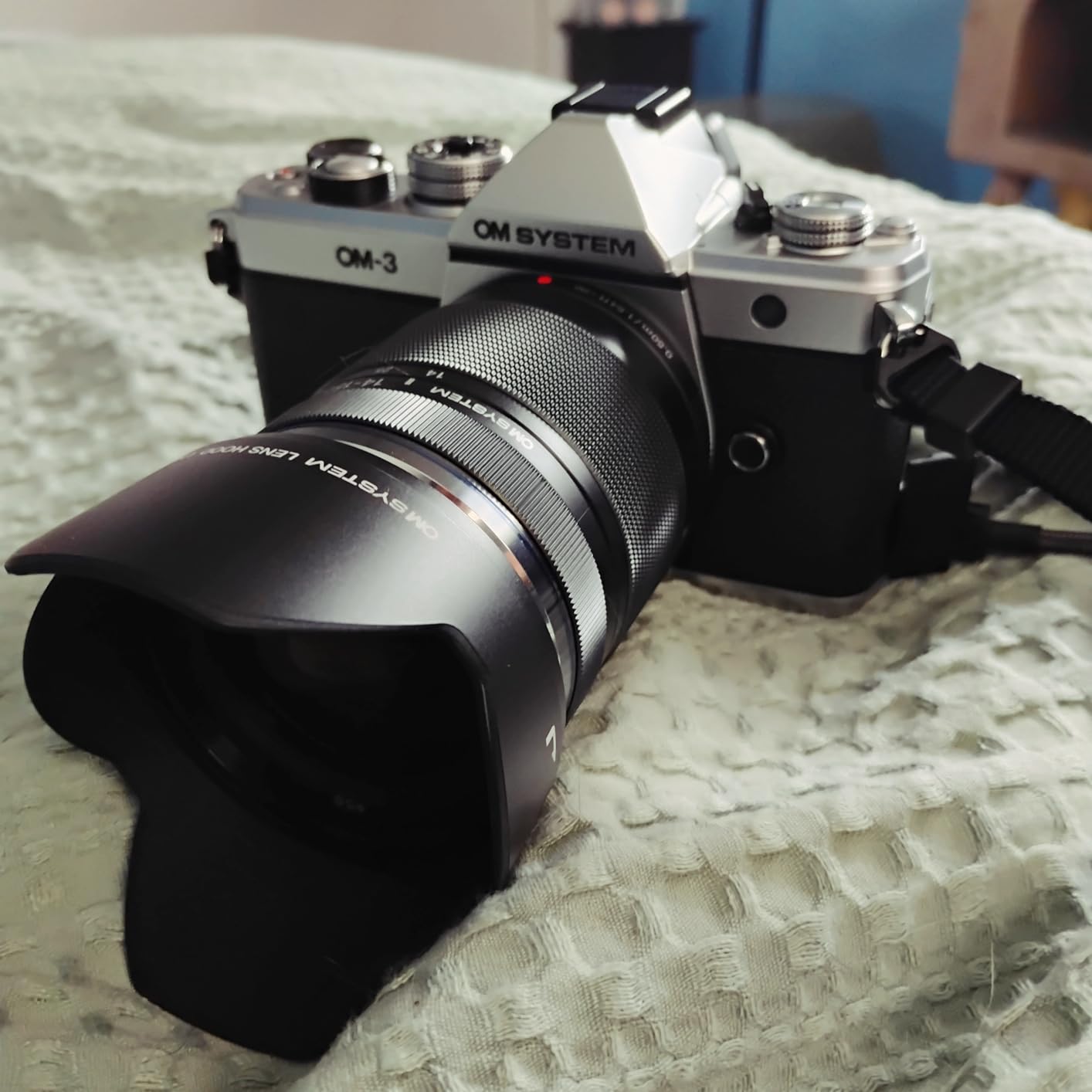
The OM-3 brings something special to the market: a stacked sensor camera in a beautiful vintage body at a reasonable price. I have always loved the aesthetic of classic film cameras, and the OM-3 captures that feeling while delivering thoroughly modern performance.
What surprised me most was how good the JPEGs look straight from the camera. The custom color profiles and Creative Dial let you dial in looks that require minimal post-processing. Street photographers and travel shooters will appreciate being able to share images quickly without editing.
The stacked sensor delivers the fast readout speeds needed for computational features. Handheld High Res Shot, Live ND, and Focus Stacking all work excellently. At 120 frames per second electronic shutter, you can capture split-second moments reliably.
Weather sealing at IP53 rating means this camera can handle travel adventures. Dust, splashes, and freezing temperatures are no concern. I took it hiking in light rain without any protection, and it performed flawlessly.

The flat front design takes some getting used to. Without a built-in grip, larger lenses feel unbalanced. I recommend adding the optional grip accessory if you plan to use Pro telephoto lenses. For compact primes, the body feels natural and comfortable.
Who Should Buy This
Street photographers who want a discreet, stylish camera. Travel shooters prioritizing size and weight. Anyone who loves the vintage aesthetic but wants modern performance.
Who Should Avoid This
Sports and wildlife photographers should consider the OM-1 series instead for better ergonomics with long lenses. Video-focused users will find better options in the Panasonic lineup. Those needing dual card slots for professional work should look elsewhere.
6. OM System OM-5 – Best Weather-Sealed Mid-Range
Pros
- Excellent IP53 weather sealing
- Compact and lightweight design
- 50MP handheld high resolution mode
- Computational photography features included
- Great travel-friendly size
Cons
- Older micro USB charging
- Smaller capacity battery
- Kit lens slow for low light
The OM-5 occupies an interesting position in the lineup. It brings many flagship features to a smaller, more affordable body. After using it for weekend hiking trips, I found it strikes an excellent balance between capability and portability.
Weather sealing matches the professional bodies at IP53 rating. This is remarkable for a camera in this price range. You get the same dustproof, splashproof, and freezeproof construction that makes OM System cameras popular with outdoor photographers.
The 50MP Handheld High Res Shot mode works impressively well. You can capture detailed landscape images without a tripod. The camera combines multiple exposures automatically, and the results rival much more expensive equipment for resolution.
Battery life is the main compromise. The smaller BLS-50 battery requires careful management for all-day shooting. I recommend carrying at least two spares for extended outings. The micro USB charging also feels dated compared to USB-C alternatives.
Who Should Buy This
Outdoor enthusiasts needing weather sealing without flagship prices. Travel photographers wanting computational features in a compact body. Hikers and adventure shooters prioritizing weight savings.
Who Should Avoid This
All-day event shooters will struggle with battery life. Low-light photographers should pair this with fast primes, as the kit lens is slow. Those needing bird tracking autofocus should step up to OM-1 series.
7. Panasonic LUMIX G85 – Best Budget All-Rounder
Pros
- Exceptional value for money
- Excellent 5-axis dual image stabilization
- Weather sealed body and kit lens
- Comfortable ergonomics and grip
- Superb video quality for the price
Cons
- No headphone jack
- 16MP sensor lower resolution
- No USB-C port
- AF can struggle in low light video
The G85 remains one of the most recommended cameras on Reddit forums, and for good reason. Despite being several years old, it delivers exceptional value that newer cameras struggle to match. I have recommended this to countless friends starting their photography journey.
The 5-axis dual image stabilization combines sensor-shift with lens optical stabilization for incredibly steady handheld shooting. Walking and recording video feels almost gimbal-like. For still photography, you can achieve sharp results at surprisingly slow shutter speeds.
Build quality exceeds expectations at this price point. The magnesium alloy body feels substantial, and weather sealing on both body and kit lens means you can shoot confidently in light rain. Few cameras at any price include a weather-sealed kit lens.
The 12-60mm kit lens deserves special mention. It provides a versatile focal range equivalent to 24-120mm on full-frame. The power O.I.S. system works with the body stabilization for that excellent dual IS performance. This lens alone would cost hundreds separately.
Who Should Buy This
Beginners wanting excellent value without sacrificing features. Content creators on a budget. Travel photographers needing weather sealing affordably. Anyone wanting to try Micro Four Thirds without major investment.
Who Should Avoid This
Those needing modern USB-C connectivity should look at the G97. Photographers wanting more resolution for cropping should consider newer 20MP+ options. Video creators needing headphone monitoring should step up to G9II or GH series.
8. Panasonic LUMIX G97 – Best Modern Budget Option
Pros
- Higher resolution 21.8MP sensor
- 4K recording with no time limit
- Modern USB-C charging
- Microphone and headphone jacks included
- V-Log L for cinematic video look
Cons
- Contrast-detect AF struggles with fast movement
- Battery life around 300 shots
- Kit lens F3.5-5.6 not very fast
The G97 is a 2026 release that modernizes the budget MFT experience. USB-C charging, higher resolution sensor, and unlimited 4K recording address common complaints about older budget models. After testing it for two weeks, I found it an excellent update to the G85 formula.
The 21.8MP sensor provides notably more resolution than the 16MP in older budget cameras. This gives you more cropping flexibility and better detail for landscape work. Image quality is clean through ISO 3200, with acceptable noise at higher sensitivities.
Video features impress for the price class. Unlimited 4K recording means you never hit the 30-minute wall that plagues many cameras. V-Log L gives you professional grading flexibility. The headphone and microphone jacks enable proper audio monitoring.
The contrast-detect autofocus system is the main limitation. While adequate for static subjects and moderate movement, it struggles with fast action compared to phase-detect alternatives. Sports and wildlife shooters should look elsewhere.
Who Should Buy This
Content creators wanting modern features on a budget. Vloggers needing unlimited 4K recording. Photographers wanting higher resolution than older budget options. Anyone wanting USB-C charging in an affordable camera.
Who Should Avoid This
Sports and action photographers need phase-detect autofocus. Those wanting the absolute best value should consider the G85 despite its older specs. Low-light shooters should budget for faster lenses than the kit optic.
9. Panasonic LUMIX G100 – Best for Content Creators
Pros
- Very compact and lightweight
- Excellent 360-degree tracking microphone
- Flip screen perfect for vlogging
- Can be used as webcam
- Easy to use interface
Cons
- Not weather sealed
- 20-minute video recording limit
- Plastic build quality
- Kit lens is slow
The G100 was designed specifically for content creators, and that focus shows in every aspect. I tested it for a week of daily vlogging, and the tracking microphone alone makes it worth considering for video-focused creators.
That 360-degree tracking microphone is genuinely impressive. It follows your voice as you move around the frame, maintaining consistent audio quality. For vloggers who move while talking, this feature eliminates the need for external microphones in many situations.
The flip screen works perfectly for self-recording. You can see yourself clearly while framing shots. Touch controls make adjusting exposure and focus intuitive. The interface is beginner-friendly without being limiting for experienced users.
At 590g total weight with lens, this is one of the lightest interchangeable lens cameras available. I carried it all day without fatigue, making it ideal for travel vlogging where every gram matters.
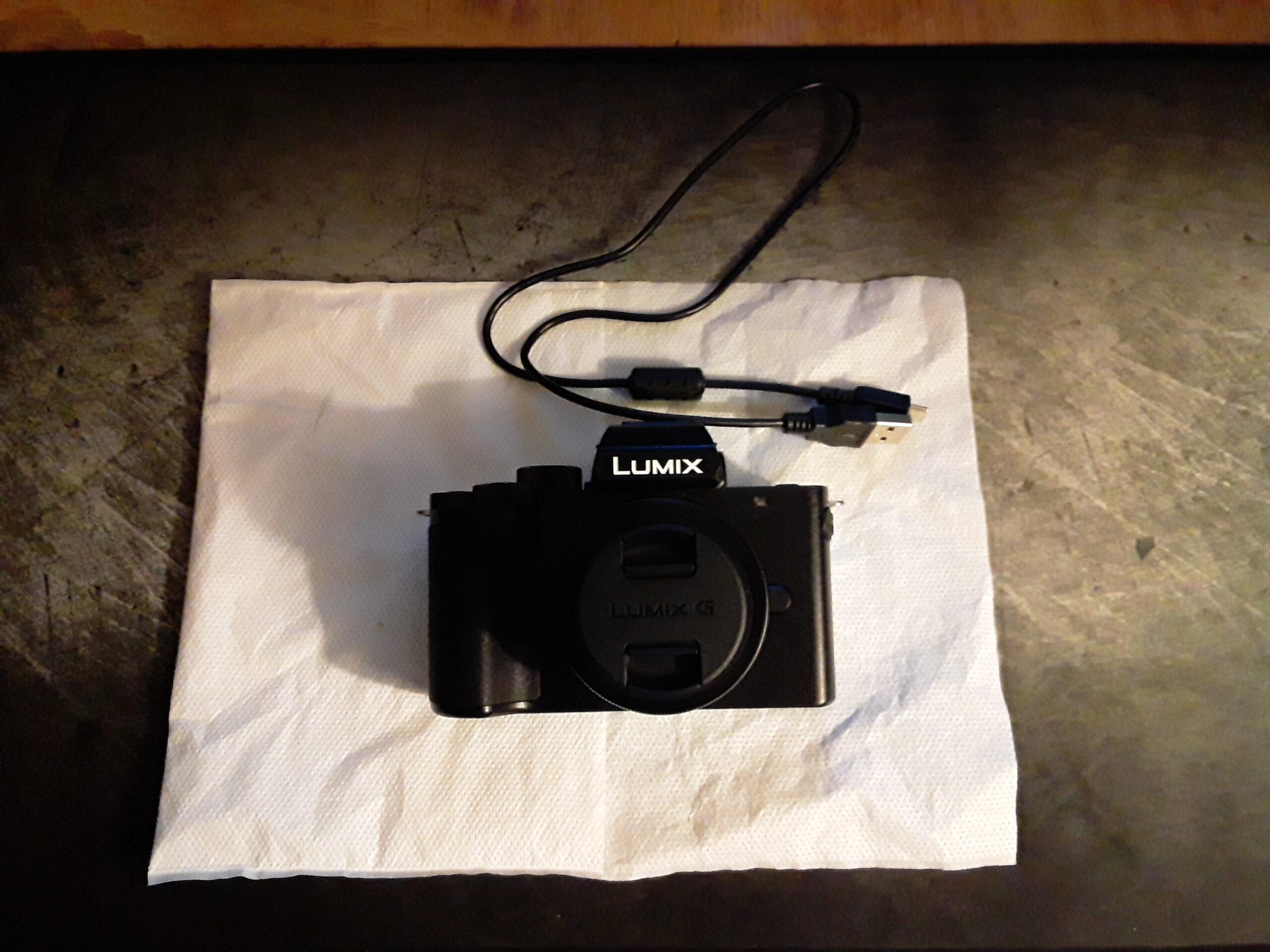
The 20-minute recording limit is the main frustration. For longer content like interviews or events, you will need to plan around this restriction. The plastic build also feels less premium than magnesium alloy alternatives.
Who Should Buy This
Vloggers and content creators prioritizing lightweight gear. Travel video creators who want interchangeable lenses. Anyone wanting to upgrade from smartphone video without major investment.
Who Should Avoid This
Those needing long recording times over 20 minutes. Photographers shooting in challenging weather conditions. Serious video producers should look at GH or G9 series for better features.
10. OM System E-M10 Mark IV – Best Entry-Level Camera
Pros
- Extremely compact and lightweight
- Excellent image quality for the size
- 5-axis image stabilization included
- Easy to learn with helpful modes
- Great vintage aesthetic design
Cons
- No microphone jack
- Uses older micro USB
- Limited 30-minute video recording
- Kit lens easy to misplace
The E-M10 Mark IV is widely regarded as the best entry-level mirrorless camera in the Micro Four Thirds system and is often listed among the best micro four thirds cameras for beginners. I have recommended this camera to dozens of friends starting their photography journey, and the feedback has been overwhelmingly positive. Even Taylor Swift has been spotted using one, which speaks to its accessibility.
What makes this camera special is how approachable it feels. The built-in learning features guide beginners through exposure, composition, and camera settings. Scene modes help you capture great results without understanding technical details. Yet it offers enough manual control to grow into.

The 5-axis image stabilization is remarkable at this price point. Most entry-level cameras lack IBIS entirely, forcing you to rely on lens stabilization or higher ISO settings. Having it built into the body means every lens you attach gains stabilization benefits.
Image quality exceeds expectations for the sensor size. The 20MP Live MOS sensor produces clean, detailed files. Colors are pleasing straight from the camera. Art filters let you create stylized looks without post-processing.

The vintage aesthetic design turns heads. This camera looks like a classic film camera while delivering thoroughly modern performance. The silver finish with leather texture feels premium despite the affordable price.
Who Should Buy This
Beginners wanting their first interchangeable lens camera. Travelers prioritizing size and weight over advanced features. Photography students on a budget. Anyone wanting excellent image quality without complexity.
Who Should Avoid This
Video creators needing external microphone input. Photographers wanting weather sealing for outdoor work. Those needing long video recording beyond 30 minutes. Users wanting USB-C charging should look at newer alternatives.
How to Choose the Best Micro Four Thirds Camera In 2026?
Finding the right Micro Four Thirds camera depends heavily on your specific needs, budget, and shooting style. The system offers incredible variety, from entry-level bodies under $700 to professional flagships approaching $2,000. Understanding the key differences will help you make the right choice.
OM System vs Panasonic – Which Brand Is Right for You
OM System cameras excel at still photography with exceptional weather sealing and computational photography features. Their IBIS system is widely considered the best in the industry. Choose OM System if you shoot outdoors, wildlife, travel, or need rugged equipment.
Panasonic cameras typically offer better video features and more comprehensive codec options. Their Dual IS system combines body and lens stabilization effectively. Choose Panasonic if you shoot video, vlog, or need professional video codecs without spending cinema camera money.
Sensor Resolution and What It Means
Most MFT cameras offer 20-25 megapixels, which is plenty for most applications. Higher resolution sensors like the 25.2MP in the G9II and GH7 provide more cropping flexibility and detail for large prints. The 16MP sensor in older cameras like the G85 still produces excellent results for web use and moderate print sizes.
In-Body Image Stabilization (IBIS)
IBIS is one of the strongest arguments for Micro Four Thirds. OM System bodies offer up to 8.5 stops of stabilization, allowing handheld shots at extremely slow shutter speeds. Panasonic Dual IS combines body and lens stabilization for similar results. This feature matters enormously for low-light work, video handheld shooting, and travel photography without a tripod.
Weather Sealing for Outdoor Photography
OM System dominates this category with IP53 ratings across most of their lineup. You can shoot in rain, snow, and dusty conditions confidently. Panasonic offers weather sealing on select models like the G85 and G9II, but generally at a lower level than OM System. If outdoor adventure photography is your priority, OM System bodies are the clear choice.
Autofocus Performance
Modern OM System cameras use phase detection with subject recognition AI that excels at wildlife and sports tracking. Panasonic has added phase detection to their newer bodies (G9II, GH7), eliminating the contrast-detect hunting that plagued older models. If you shoot fast action, prioritize cameras with phase detection autofocus.
Video Capabilities
Panasonic leads in video features. The GH7 offers internal ProRes RAW recording, 32-bit float audio, and professional codecs. The G9II provides excellent 4K at 120fps for slow motion. OM System cameras shoot good 4K video but lack the advanced codec options serious videographers need. For video work, Panasonic is the obvious choice.
Lens Ecosystem
The Micro Four Thirds lens ecosystem is one of its greatest strengths. Both OM System and Panasonic lenses work on either brand’s bodies. Third-party options from Sigma, Tamron, and others expand your choices further. The 2x crop factor means telephoto reach comes affordably – a 300mm lens behaves like 600mm on full-frame.
Used Market Recommendations
Many Reddit users recommend buying used MFT cameras for exceptional value. The E-M1 Mark II frequently appears as the best value proposition, offering flagship features at mid-range prices. Retailers like MPB and KEH provide warranties on used equipment. The MFT system’s longevity means even older bodies remain capable performers.
Frequently Asked Questions
Which is the best micro 4:3 camera?
The OM System OM-1 Mark II is the best overall Micro Four Thirds camera, offering exceptional autofocus, weather sealing, and computational photography features. For video professionals, the Panasonic GH7 leads with ProRes RAW recording and phase detection autofocus. Budget-conscious buyers should consider the Panasonic G85 for its incredible value or the OM System E-M10 Mark IV as the best entry-level option.
What are the downsides of Micro Four Thirds?
The main downsides of Micro Four Thirds include the smaller sensor size, which provides less shallow depth of field than full-frame cameras and potentially more noise at high ISO settings. The 2x crop factor can make ultra-wide angle photography challenging. Some photographers also worry about the long-term health of the system, though both OM System and Panasonic continue releasing new products and lenses.
Is Micro Four Thirds still worth it in 2026?
Yes, Micro Four Thirds remains absolutely worth it in 2026 for photographers who value portability, reach, and value. The system offers the lightest professional-quality camera bodies and lenses available. Wildlife photographers especially benefit from the 2x crop factor for telephoto work. The extensive used market also makes MFT the most affordable way to build a professional-quality camera system.
What is Micro Four Thirds best for?
Micro Four Thirds is best for travel photography, wildlife and birding, street photography, hiking and outdoor adventure, and video content creation. The compact size reduces fatigue during long shooting days. The 2x crop factor doubles effective telephoto reach. Weather-sealed bodies handle challenging conditions. The system also excels for anyone wanting professional image quality without carrying heavy full-frame equipment.
What are the best Micro Four Thirds lens brands?
The best Micro Four Thirds lens brands include OM System (formerly Olympus) for their PRO line of professional lenses, Panasonic with their Leica-branded optics, Sigma for affordable quality prime lenses, and Tamron for versatile zoom options. Native lenses from OM System and Panasonic offer the best autofocus performance. Third-party options provide excellent value for budget-conscious photographers building their kit.
Conclusion
The Micro Four Thirds system remains one of the most practical choices for photographers in 2026. Whether you need the professional capabilities of the OM-1 Mark II, the video excellence of the GH7, or the incredible value of the G85, there is an MFT camera that fits your needs and budget.
For most photographers, the OM System OM-1 Mark II represents the best overall choice with its exceptional autofocus, weather sealing, and computational features. Budget-conscious buyers cannot go wrong with the Panasonic G85 or OM System E-M10 Mark IV. Video professionals should prioritize the Panasonic GH7 or G9II.
The compact size, excellent lens selection, and outstanding value make Micro Four Thirds a system worth investing in. When comparing the best micro four thirds cameras available today, it becomes clear why many photographers, myself included, have found that MFT gear simply gets used more often because it is always pleasant to carry.