
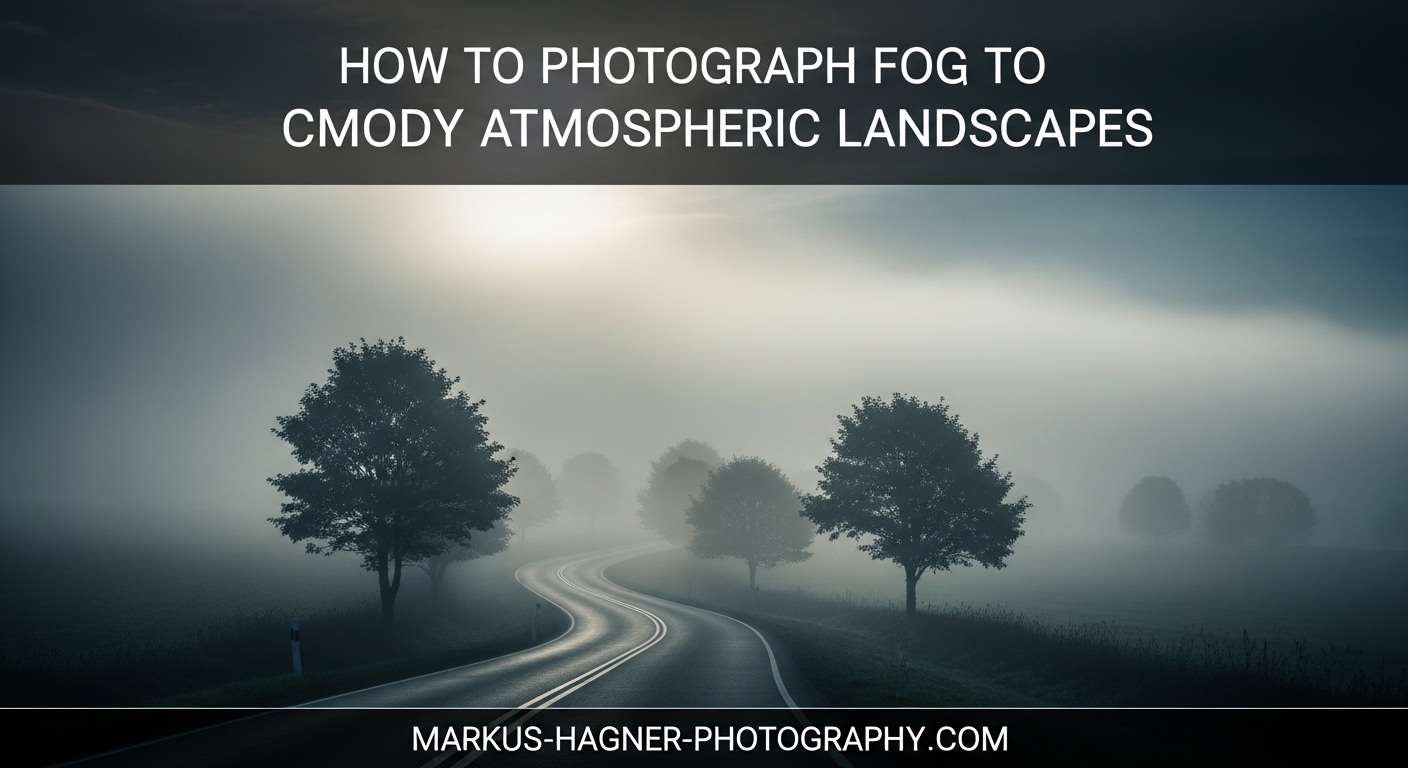
Learning how to photograph fog transformed my landscape photography more than any other technique I have explored. There is something magical about watching a familiar scene disappear into soft, billowing clouds that turn ordinary landscapes into cinematic masterpieces. Fog acts as nature’s diffuser, softening harsh light, hiding distracting backgrounds, and creating layers of depth that would otherwise require hours of post-processing to achieve.
In this guide, I will share everything I have learned about fog photography over years of chasing misty mornings across valleys, coastlines, and forests. You will discover the camera settings that actually work, composition techniques that create mood, and post-processing approaches that preserve rather than destroy the atmosphere you worked so hard to capture.
Fog photography rewards patience and preparation. The conditions can appear and disappear within minutes, so understanding when and where fog forms gives you a massive advantage. By the end of this article, you will know exactly how to predict fog, expose correctly in challenging low-contrast conditions, and compose shots that capture the ethereal mood that drew you to fog photography in the first place.
Why Fog Creates Mood and Atmosphere in Photography?
Fog transforms landscapes through a simple but powerful mechanism: water droplets suspended in the air scatter and soften light. This natural diffusion does three things that photographers spend years trying to achieve through other means.
First, fog reduces contrast across the entire scene. Harsh shadows disappear, highlights soften, and the entire image takes on a gentle, dreamlike quality. This low-contrast environment is exactly what makes fog so challenging to expose correctly but also what creates that moody atmosphere.
Second, fog hides distractions. A busy forest floor cluttered with fallen branches and debris suddenly becomes a clean, minimalist composition when shrouded in mist. Distant buildings, power lines, and other man-made elements vanish into the white void.
Third, and perhaps most importantly, fog creates natural separation between elements at different distances. Objects closer to you appear darker and more defined, while those further away fade progressively into the white. This atmospheric perspective adds incredible depth to your images without any special techniques.
The mood fog creates depends heavily on its density and the direction of light. Thin mist produces subtle, romantic images while thick fog can create mysterious, almost haunting scenes. Shooting toward a light source reveals dramatic god rays piercing through the droplets, while backlighting creates soft, ethereal silhouettes.
Types of Fog Every Photographer Should Know
Not all fog is created equal. Understanding the different types of fog helps you predict when and where to find the conditions you want, and each type creates distinctly different photographic opportunities.
Fog vs Mist: Understanding the Difference
The distinction is simple but important for photographers. Fog reduces visibility to less than 1 kilometer, while mist allows visibility beyond 1 kilometer. Practically speaking, fog engulfs you and your subject while mist hangs in the air around distant objects. Mist often creates more subtle, layered effects while thick fog can completely obscure backgrounds.
Radiation Fog
Radiation fog forms on clear, calm nights when the ground loses heat through radiation. As the ground cools, it cools the air directly above it to the dew point, causing condensation. This type of fog typically appears in valleys and low-lying areas during early morning hours.
Radiation fog is often the most photogenic because it tends to be patchy and localized. You might find a valley filled with fog while surrounding hills remain clear, creating stunning layering effects. The best time to photograph radiation fog is just after sunrise, when warm light begins to burn through the mist from above.
Advection Fog
Advection fog forms when warm, moist air moves horizontally over a cooler surface, such as a cold ocean current or snow-covered ground. This type of fog is common along coastlines and can persist for days under the right conditions.
Coastal advection fog creates incredible opportunities for seascape photography. Lighthouses, rocky shorelines, and fishing piers take on an entirely different character when surrounded by thick, rolling fog. Unlike radiation fog, advection fog can last throughout the day rather than burning off quickly.
Evaporation Fog and Sea Smoke
Evaporation fog, sometimes called steam fog or sea smoke, occurs when cold air moves over warmer water. The water vapor rising from the surface condenses as it meets the cold air, creating wispy, smoke-like plumes.
This type of fog produces some of the most dramatic images, especially over lakes, rivers, and ponds on cold autumn and winter mornings. The rising steam catches light beautifully and can create stunning silhouettes of trees, birds, or other subjects near the water.
Cloud Inversion
A cloud inversion occurs when a layer of warm air traps cooler air near the ground, preventing fog from rising and dissipating. From a high vantage point, you look down on a sea of clouds with mountain peaks and hills emerging like islands.
Cloud inversions create some of the most spectacular landscape photography opportunities. Mountain photographers specifically seek these conditions, which often occur after clear, cold nights in mountainous regions. Shooting from above the fog layer during sunrise or sunset can produce truly epic images.
Freezing Fog and Ice Fog
Freezing fog occurs when the water droplets in fog are supercooled, freezing on contact with surfaces. This creates beautiful rime ice formations on trees, fences, and other objects. Ice fog, more common in extremely cold climates, consists of tiny ice crystals suspended in the air rather than water droplets.
Both types create unique photographic opportunities, particularly for close-up and macro work. Trees coated in rime ice become sculptural subjects, and the soft light of foggy conditions prevents harsh reflections that would otherwise ruin these delicate details.
How to Photograph Fog: Camera Settings and Exposure Techniques
Getting the exposure right in fog is the single biggest challenge most photographers face. Your camera’s light meter wants to make everything middle gray, but fog should appear white and bright. Understanding this fundamental conflict is the key to successful fog photography.
The Exposure Compensation Rule
Fog is bright. Very bright. Yet your camera sees all that brightness and tries to compensate by underexposing the image. The result is gray, muddy fog instead of the white, ethereal mist you saw with your eyes.
The solution is positive exposure compensation. I typically start at +0.7 EV and adjust from there based on the density of the fog and the overall scene. In very thick fog, you may need +1.0 to +1.3 EV to keep the mist looking bright and white.
Here is a quick starting point for exposure compensation based on fog density: for thin mist with some visibility, try +0.3 to +0.7 EV. For moderate fog with limited visibility, use +0.7 to +1.0 EV. For thick fog that obscures everything, go with +1.0 to +1.3 EV.
Using Your Histogram
Your histogram becomes incredibly valuable in fog photography because the bright conditions can fool your eyes, especially when shooting outdoors in changing light. You want your histogram pushed toward the right side without actually clipping the highlights.
Aim to have the majority of your data in the right third of the histogram. If you see a spike against the far right edge, you are clipping highlights and losing detail in the brightest parts of the fog. Back off the exposure slightly. If the data clusters in the middle or left, your fog will look gray and underexposed.
Recommended Camera Settings for Fog Photography
Here are the settings I use as starting points for fog photography. These are guidelines, not rules, so adjust based on your specific situation.
For ISO, use your camera’s base ISO, typically 100 or 200, when shooting on a tripod. If handholding, increase ISO as needed to maintain a safe shutter speed, but try to stay below ISO 800 for best quality.
For aperture, use f/8 to f/11 for maximum depth of field in landscape scenes. In forests where you want separation between trees, try f/5.6 to f/8. For images with a specific subject and soft background, wider apertures work beautifully.
For shutter speed, use whatever speed your tripod allows. In very still conditions, I often shoot at base ISO with longer exposures. If the fog is moving quickly, longer exposures can create beautiful motion blur effects.
Shoot in RAW format without exception. Fog scenes often require significant adjustments in post-processing, and RAW files give you the flexibility to recover details and adjust white balance without quality loss.
White Balance for Mood
White balance dramatically affects the mood of fog photos, and this is one area where you have significant creative control. I typically avoid auto white balance in fog because the camera often overcompensates for the cool tones, removing the atmosphere you worked to capture.
For cool, moody images, try a Kelvin temperature between 4500K and 5000K. This enhances the blue tones naturally present in fog, especially during blue hour. For warmer, more ethereal images, try 5500K to 6000K, which works beautifully during golden hour when warm light filters through the mist.
How to Focus in Foggy Conditions?
Autofocus struggles in fog for the same reason it struggles in low light: there is not enough contrast for the system to lock onto. The low-contrast environment that creates beautiful images also makes focusing challenging.
When autofocus hunts or fails, switch to manual focus. Look for high-contrast edges within the fog, such as tree trunks, branches, or building outlines. Focus on these defined edges rather than trying to focus on the fog itself.
Focus peaking, available on many mirrorless cameras, can be incredibly helpful in fog. It highlights in-focus areas with a colored overlay, making it much easier to confirm your focus point in low-contrast conditions.
For landscape scenes where you want front-to-back sharpness, use hyperfocal distance focusing. Focus about one-third of the way into the scene at f/8 to f/11, and you will get acceptable sharpness from foreground to infinity. This technique works particularly well in fog because the reduced contrast naturally softens distant details anyway.
Another approach is to focus on your foreground subject. In foggy scenes, the foreground is typically the most important element because it provides the anchor point for the viewer. Distant elements fade into the mist regardless of how sharp they are.
Composition Techniques for Foggy Landscapes
Fog simplifies composition by hiding distractions, but you still need to create strong, engaging images. These composition techniques specifically address the unique properties of foggy conditions.
Creating Depth Through Layering
Fog naturally creates layers because objects at different distances appear with different levels of contrast and brightness. You can enhance this effect by including multiple distinct elements at varying distances from your camera.
In a forest, position yourself so trees at different depths create overlapping layers. The closest trees will appear dark and defined, while those further back progressively fade into the white mist. This layering is what gives fog photos their incredible sense of depth.
Look for opportunities to stack three or more layers. A foreground element like a rock or tree, a midground subject, and background elements fading into fog create a powerful sense of three-dimensional space on a two-dimensional image.
Using Silhouettes for Drama
Silhouettes work exceptionally well in fog because the bright, even background makes subjects stand out clearly. Position yourself so your subject is backlit, either by the rising sun or simply by the brighter fog behind it.
Trees, people, birds, and architectural elements all make excellent silhouette subjects in fog. The key is to find subjects with strong, recognizable shapes. A lone tree on a hill or a person walking through mist tells a story that would be lost with a less distinct subject.
Expose for the fog, not the subject. This means using positive exposure compensation to keep the fog bright and letting your subject fall into complete shadow. Check your histogram to ensure you are not clipping highlights in the brightest fog areas.
Embracing Negative Space
Fog creates natural negative space, and leaning into this minimalist approach can produce striking images. Instead of trying to fill the frame with detail, allow large areas of your composition to be simple, empty white or gray.
Negative space works powerfully with small, isolated subjects. A single tree emerging from fog, a person walking along an empty path, or a boat drifting on still water all benefit from the breathing room that foggy negative space provides.
When composing with negative space, pay attention to where you place your subject. Position it using the rule of thirds or other compositional guides, but give it plenty of room to breathe. The emptiness is as important as the subject itself.
Finding Foreground Interest
While fog hides backgrounds, it cannot hide what is right in front of your lens. Strong foreground elements become even more important in fog photography because they provide the visual anchor that distant subjects cannot.
Look for textured rocks, fallen logs, wildflowers, or interesting patterns in the ground. These foreground elements give viewers something concrete to focus on while the foggy background creates atmosphere and mood.
Get low and close to your foreground. Using a wide-angle lens and positioning your camera near the ground exaggerates the foreground while pushing the foggy background further away, enhancing the sense of depth.
Shooting Toward Light
One of the most dramatic effects in fog photography occurs when you shoot toward a light source. The water droplets in fog catch and scatter the light, creating visible light beams called god rays or crepuscular rays.
Position yourself so the sun is partially obscured by trees, clouds, or the horizon. The light rays become visible as they stream through gaps in the obstruction and illuminate the fog. This effect is strongest when there is some contrast in the scene, so do not wait for completely uniform fog.
Golden hour and blue hour provide the best opportunities for god rays, but any time the sun breaks through can work. Watch the direction of light and move to position yourself looking toward it rather than away from it.
Finding and Forecasting Fog for Photography
Being in the right place at the right time is half the battle in fog photography. Understanding the weather conditions that create fog helps you predict when and where to shoot.
Weather Conditions That Create Fog
The most reliable fog forecast combines clear skies, calm winds, and recent rain or high humidity. Clear nights allow maximum heat loss from the ground, while calm conditions prevent the fog from mixing with drier air. Recent rain ensures plenty of moisture in the soil and air.
Temperature drops are crucial. Watch for nights where the temperature is expected to drop rapidly after sunset, especially if it approaches the dew point. The larger the temperature drop, the more likely fog will form.
Pay attention to humidity readings. When relative humidity approaches 100 percent, fog formation becomes very likely. Many weather apps provide dew point information, which is even more useful than relative humidity for predicting fog.
Best Times of Day for Fog Photography
Radiation fog typically forms during the night and is most photogenic during the first hour after sunrise. Arrive before dawn to capture the fog in blue hour conditions, then stay as the warm light of sunrise begins to filter through.
Fog often begins to lift and burn off as the sun warms the ground. This transition period can produce stunning images as the mist thins and light penetrates. Do not pack up when the fog starts to lift; some of the best shots happen during this changing phase.
Blue hour, the period before sunrise and after sunset, creates cool, moody fog images. The even, soft light during this time works beautifully with fog, and the blue tones enhance the atmospheric mood.
Prime Locations for Fog Photography
Valleys and low-lying areas collect fog like bowls collect water. Cold air drains downhill during the night, pooling in valleys where it cools further and condenses into fog. Look for elevated viewpoints overlooking valleys for the classic fog-filled landscape.
Bodies of water are fog magnets. Lakes, rivers, ponds, and wetlands often generate evaporation fog, especially during autumn and winter when the water is warmer than the air. Early morning is typically best for these locations.
Forests interact with fog in beautiful ways. The trees provide structure and vertical lines that create depth, while the fog softens harsh details and simplifies busy woodland scenes. Pine forests with their dark, vertical trunks work particularly well.
Weather Forecasting Tools
Several tools can help you predict fog conditions. Windy.com provides detailed weather forecasts with visualizations that show temperature, humidity, and dew point. Look for areas where the temperature and dew point converge, indicating high fog probability.
Local weather apps with hourly forecasts help you plan your timing. Check the overnight temperature drop and morning humidity predictions. Apps that show dew point are more useful than those showing only relative humidity.
Webcams in your target area can confirm fog presence before you travel. Many scenic areas have webcams that update regularly, allowing you to verify conditions before making the drive.
Post-Processing Fog Photos Without Losing the Mood
Post-processing fog photos requires restraint. The goal is to enhance the mood, not eliminate it by applying the same techniques you would use for normal landscape photos.
The Dehaze Trap
Here is the most important tip in this entire section: do not use the Dehaze slider in Lightroom or similar tools in other software. I know it is tempting. Fog photos look flat and low contrast, and Dehaze seems like the obvious solution. But Dehaze removes the very atmosphere you worked to capture.
When you apply Dehaze to a fog photo, you cut through the mist that creates the mood. The image might look technically better on paper, with more contrast and punch, but it loses the ethereal quality that makes fog photography special.
Instead of Dehaze, make subtle contrast adjustments. If your image needs more contrast, use a gentle S-curve or small adjustments to the contrast slider. The goal is to enhance the existing mood, not to remove the fog entirely.
Subtle Contrast Adjustments
Fog photos benefit from careful contrast control. Start by setting your black and white points carefully. Do not clip the blacks or you will lose the soft quality of the fog. Similarly, avoid clipping highlights in the brightest fog areas.
Local contrast adjustments often work better than global adjustments. Use the clarity slider very sparingly, perhaps just +5 to +10, and only on midtone areas. Avoid applying clarity to the fog itself.
The tone curve gives you precise control over contrast. A very gentle S-curve can add just enough pop without destroying the soft mood. Focus on the midtones rather than pushing the extremes.
Color Grading for Mood
Color grading significantly affects the mood of fog photos. Cool tones enhance the mysterious, moody feel, while warm tones create a more ethereal, dreamlike quality.
For moody images, try shifting the shadows slightly toward blue or teal. Split toning with cool shadows and neutral or slightly warm highlights creates depth and dimension. Keep the saturation subtle; heavy color grading quickly looks artificial.
For warmer, more romantic images, lean into the golden hour tones. Even small shifts toward yellow or orange in the highlights can create a completely different emotional response to the same image.
Black and White Fog Photography
Fog photos translate beautifully to black and white because the reduced color information emphasizes the tonal relationships that create mood. Without color to distract, the viewer focuses on the light, shapes, and atmosphere.
When converting to black and white, pay attention to the color channels. Darkening the blue channel can deepen shadows and add drama, while lightening the green channel can brighten foliage. Experiment with different combinations to find the mood you want.
Black and white also gives you more flexibility with contrast. You can push contrast further in a black and white fog image than in color without it looking artificial, because viewers have different expectations for monochrome images.
Equipment and Protecting Your Gear in Fog
Fog photography does not require specialized equipment, but a few items make the experience much easier and protect your investment in your camera gear.
A sturdy tripod is essential for fog photography. The low light conditions, especially during blue hour and early morning, often require longer exposures. A good tripod also allows you to use your lowest ISO for maximum image quality.
Bring multiple microfiber cloths. Fog condenses on your lens constantly, and you will need to wipe it frequently. I keep at least three or four cloths in my bag so I always have a dry one available. A wet cloth just smears the moisture around.
A circular polarizer can enhance fog effects in certain situations. When shooting at 90 degrees to the light source, a polarizer can increase contrast and saturation in the visible parts of the scene while leaving the fog unchanged. It can also help control reflections on wet surfaces.
Consider a rain cover for your camera in thick fog conditions. While fog is not as wet as rain, prolonged exposure can introduce moisture into your camera body. A simple cover provides insurance against damage.
Prevent condensation when moving between temperatures. If your camera is cold and you bring it into a warm, humid environment, condensation will form on the lens and internal elements. Seal your camera in a plastic bag before entering the warm space and let it equalize gradually.
Fog Photography with Your Smartphone
You do not need a professional camera to capture beautiful fog images. Modern smartphones can produce excellent fog photos if you understand their limitations and use a few specific techniques.
Exposure control is the most important adjustment. Most smartphone cameras will underexpose fog just like dedicated cameras. On iPhone, tap the screen to set focus, then slide your finger up to increase exposure. On Android, look for the exposure slider or use Pro mode for manual control.
Focus can be tricky in fog with a smartphone. Tap on a high-contrast area like a tree trunk or building edge rather than the fog itself. If your phone supports it, lock focus and exposure so you can recompose without the camera refocusing.
If your phone supports RAW capture, use it. iPhone ProRAW and Android RAW formats give you the same post-processing flexibility as dedicated cameras, which is especially valuable for adjusting white balance and exposure in fog photos.
Keep a microfiber cloth handy and wipe your phone lens frequently. Phone lenses are small and easily covered in condensation. A quick wipe before each shot keeps your images sharp.
Frequently Asked Questions About Fog Photography
How do you take good pictures in fog?
Use positive exposure compensation (+0.7 to +1.0 EV) to keep fog bright white instead of gray, shoot toward light sources for dramatic god rays, switch to manual focus when autofocus struggles, and always carry multiple microfiber cloths to keep your lens clear of condensation.
What camera settings work best for fog photography?
Use base ISO (100-200) with a tripod, aperture between f/8 and f/11 for depth of field, positive exposure compensation of +0.7 to +1.3 EV depending on fog density, and shoot in RAW format for maximum post-processing flexibility. Set white balance manually between 4500K and 6000K for mood control.
Why doesn’t fog show up in my photos?
Cameras underexpose bright fog because light meters are calibrated to produce middle gray results. The fog appears in your photo but looks gray and muddy instead of white and ethereal. Add positive exposure compensation to brighten the fog and match what your eyes see.
How do I make my fog photos look more moody and atmospheric?
Avoid the Dehaze slider in post-processing, use cooler white balance settings (4500K-5000K), embrace negative space in composition, shoot during blue hour for cool tones, and make only subtle contrast adjustments. The mood comes from preserving the soft, low-contrast quality of the fog.
Should I use a polarizer for fog photography?
A circular polarizer can enhance fog photos when shooting at 90 degrees to the light source by increasing contrast in visible elements. However, avoid using it when shooting toward the light as it may reduce the visibility of god rays and light beams through the fog.
Conclusion
Learning how to photograph fog has been one of the most rewarding journeys in my photography career. The conditions are challenging, the timing is unpredictable, and the technical hurdles are real. But when everything comes together, fog transforms ordinary scenes into extraordinary images that capture mood and atmosphere in ways no other conditions can match.
The key takeaways from this guide are straightforward: add positive exposure compensation to keep fog bright, use manual focus when autofocus fails, compose with layers and negative space to create depth, and resist the temptation to remove the mood during post-processing. Master these fundamentals, and you will consistently create fog images that capture the ethereal beauty that drew you to this type of photography.
Fog photography rewards patience and practice. Get out there, chase the mist, and embrace the unpredictable nature of this beautiful atmospheric phenomenon.