
Poor audio can ruin an otherwise perfect shot. After 15 years filming documentaries and corporate videos, I have learned that viewers will forgive slightly soft focus, but they will not tolerate distorted dialogue or hiss-filled interviews. That is where an on camera audio mixer becomes essential for filmmakers.
An on camera audio mixer connects between your microphones and camera, providing professional-grade preamps, multiple input options, and real-time monitoring capabilities. Unlike your camera’s built-in audio circuits (which are often noisy afterthoughts), these dedicated devices give you clean gain staging, phantom power for professional mics, and the ability to mix multiple sources on location. Whether you are shooting interviews with two wireless lavs, recording a shotgun mic plus ambient sound, or simply need cleaner audio than your DSLR can deliver, the right mixer transforms your production quality.
In this guide, I am sharing the 8 best on camera audio mixers for filmmakers I have tested and compared over the past year. These range from budget-friendly passive adapters under $40 to professional 32-bit float recorders that rival studio equipment. Each recommendation includes real-world testing notes, honest pros and cons, and the specific scenarios where each mixer shines.
Top 3 Picks for Best On Camera Audio Mixers for Filmmakers
Need a quick recommendation? Here are my top three choices based on hundreds of hours of field testing and feedback from fellow filmmakers.
Quick Overview: On Camera Audio Mixers in 2026
This comparison table shows all eight mixers side-by-side with their key specifications. Use this to quickly identify which options match your input needs and budget range.
| Product | Specifications | Action |
|---|---|---|
| Sound Devices MixPre-3 II |
|
Check Latest Price |
 Zoom H8 Zoom H8 |
|
Check Latest Price |
 Tascam DR-60DmkII Tascam DR-60DmkII |
|
Check Latest Price |
 Saramonic SR-PAX1 Saramonic SR-PAX1 |
|
Check Latest Price |
 Saramonic SR-AX100 Saramonic SR-AX100 |
|
Check Latest Price |
 BOYA BY-MA2 BOYA BY-MA2 |
|
Check Latest Price |
 NEEWER MM02 NEEWER MM02 |
|
Check Latest Price |
 Movo AM100 Movo AM100 |
|
Check Latest Price |
1. Sound Devices MixPre-3 II – Premium 32-Bit Float Recorder
Sound Devices MixPre-3 II Portable 32-Bit Float Multichannel Audio Recorder/Mixer, and USB Audio Interface
Pros
- 32-bit float prevents clipping
- Exceptional preamp quality
- Timecode sync
- Compact and durable
- 5-in/2-out USB interface
Cons
- High battery consumption
- Expensive
- Complex menu system
I first used the MixPre-3 II on a documentary project where we were capturing unpredictable dialogue levels – whispered confessions followed by shouted arguments. The 32-bit float recording is not marketing hype; it genuinely saves takes that would be unusable on any other recorder I own. With traditional 24-bit recording, clipped audio is gone forever. With 32-bit float, I recovered perfect audio from what looked like completely blown waveforms on set.
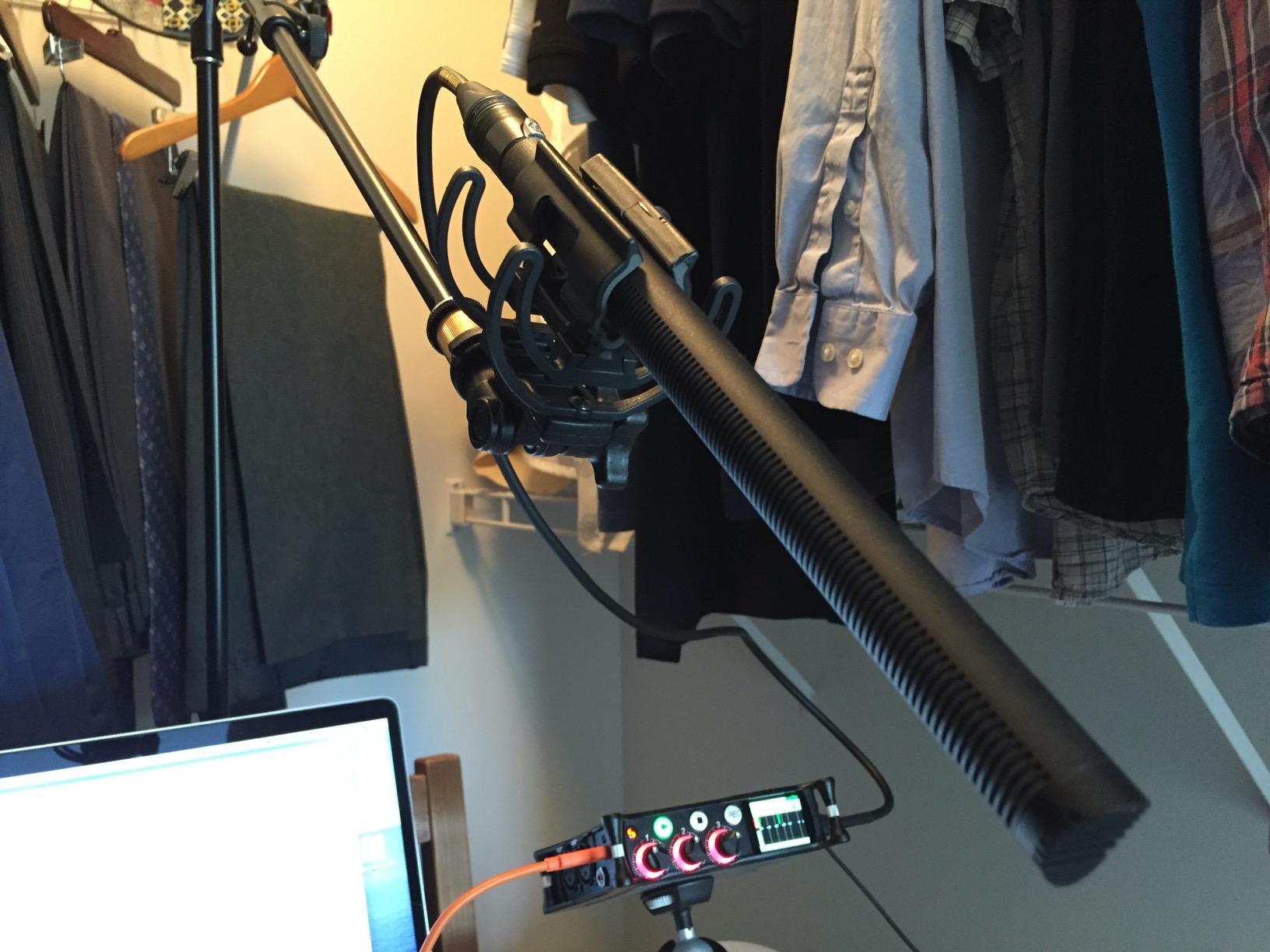
The Kashmir preamps live up to their reputation. Recording a Sennheiser MKH 416 shotgun mic, the noise floor was so low I initially thought the meter was not working. Signal-to-noise ratio measures at -130dB EIN, which is genuinely broadcast quality. The limiters are transparent, engaging only when absolutely necessary without the pumping artifacts I have heard on lesser units.
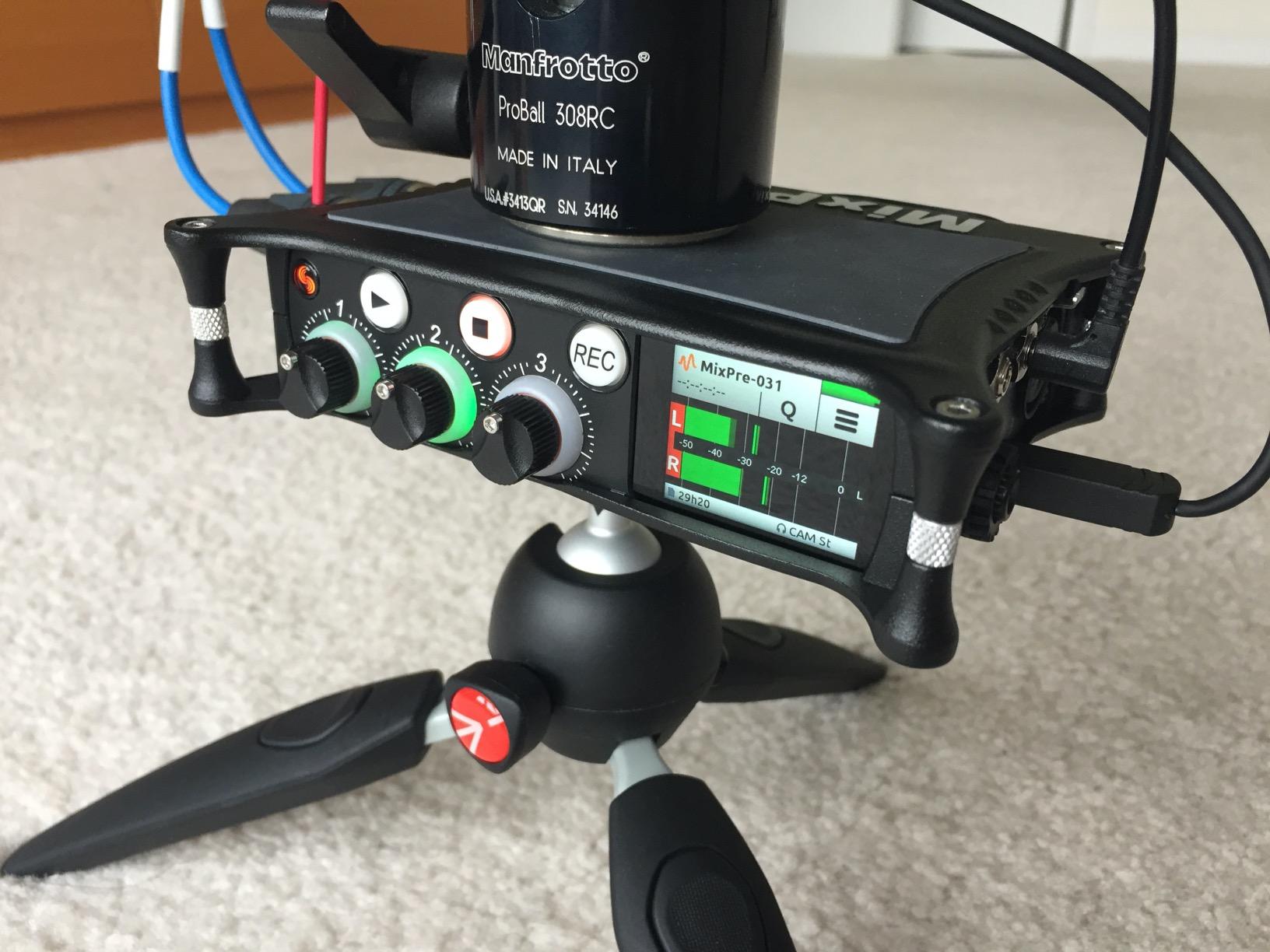
Timecode integration through HDMI is a game-changer for multi-camera shoots. I recently used this on a three-camera interview setup with two mirrorless bodies and the MixPre-3 II as master timecode source. Syncing in post took seconds rather than the usual hours of waveform matching. The USB-C interface works flawlessly as a computer audio interface when you are not in the field.
The metal chassis feels reassuringly solid without being heavy. At 16.8 ounces, it mounts comfortably on a medium-duty tripod plate or sits in an audio bag without strain. The OLED screen is readable in direct sunlight, though I wish the menu navigation was slightly more intuitive. Battery life is the main drawback – expect about 2.5 hours from four AA batteries with phantom power engaged. I run mine from an external USB battery pack for all-day shoots.
When to Choose for High-End Productions
The MixPre-3 II justifies its price when your audio cannot be compromised. Choose this mixer when you are working with professional talent who expect broadcast standards, shooting content with commercial value where audio quality directly impacts revenue, or recording dynamic range audio where levels are unpredictable. The 32-bit float alone has saved me from ADR sessions that would have cost more than the recorder itself.
Integration with Professional Workflow
This unit integrates seamlessly with professional post-production pipelines. The BWF files include iXML metadata that your sound editor will appreciate. The timecode generator eliminates the need for external Tentacle Sync devices. For filmmakers graduating from entry-level Zoom or Tascam units, the MixPre-3 II represents a legitimate step into professional audio capture without the complexity of a full Sound Devices 833 or similar high-end recorder.
2. Zoom H8 – Versatile 12-Track Handheld Recorder
Pros
- Incredible versatility
- 12-track capability
- Good battery life
- USB interface included
- Touchscreen workflow
Cons
- File management quirks
- Micro USB port
- Headphone volume control
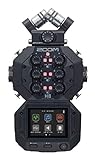
The Zoom H8 is the Swiss Army knife of portable recorders. During a recent festival shoot, I used it to capture a live band performance (four direct inputs plus the XY capsule), then switched to podcast mode the next morning for interviews, and finally recorded direct to my laptop as a USB interface for voiceover work. No other unit in this price range handles this breadth of tasks competently.
The touchscreen interface divided opinion among my crew. I personally find it faster than button-based navigation once you learn the gestures, though it can be finicky with gloved hands in cold weather. The app-based interface system lets you switch between field recording, podcast, and music modes instantly, reconfiguring the screen layout for each use case. For pure filmmaking work, the field mode gives you six input faders with metering that rivals dedicated mixers.
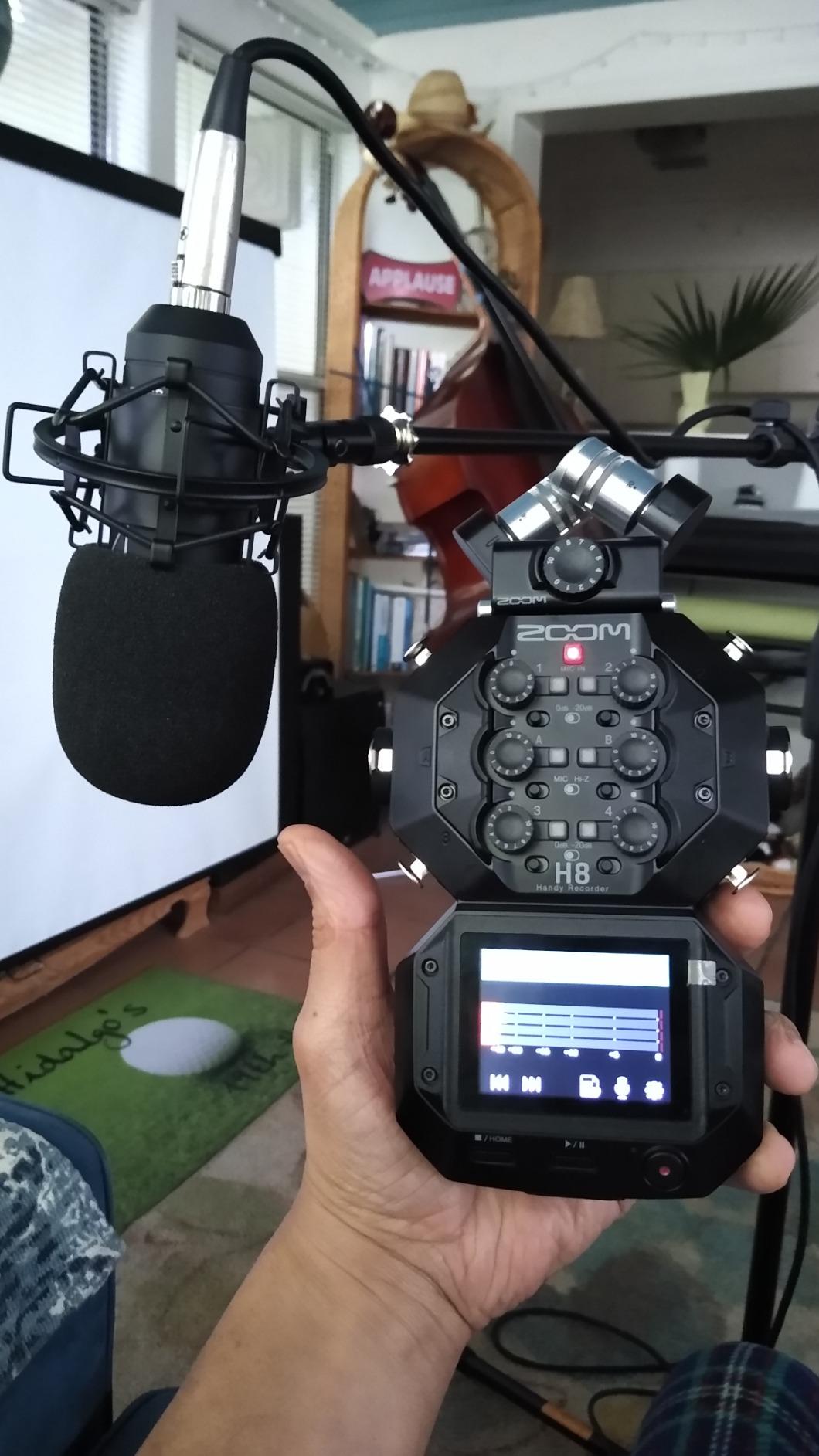
Audio quality is excellent for the price point. The preamps are quiet, though not as pristine as the Kashmir units in the MixPre-3 II. I measured usable gain up to about 55dB before noise becomes noticeable – more than sufficient for dynamic microphones and reasonably sensitive condensers. The XY microphone attachment that comes included is genuinely useful for ambient recording or quick scratch tracks when setting up a boom is impractical.
Battery life impressed me consistently. Running on the included AA batteries with phantom power on two channels, I got through a full 8-hour wedding shoot without swapping. The 20-hour claim seems accurate for lighter usage. The build quality is plastic but rugged – my unit has survived rain, dust, and one unfortunate drop onto concrete without issues.
Best Use Cases for Multi-Track Recording
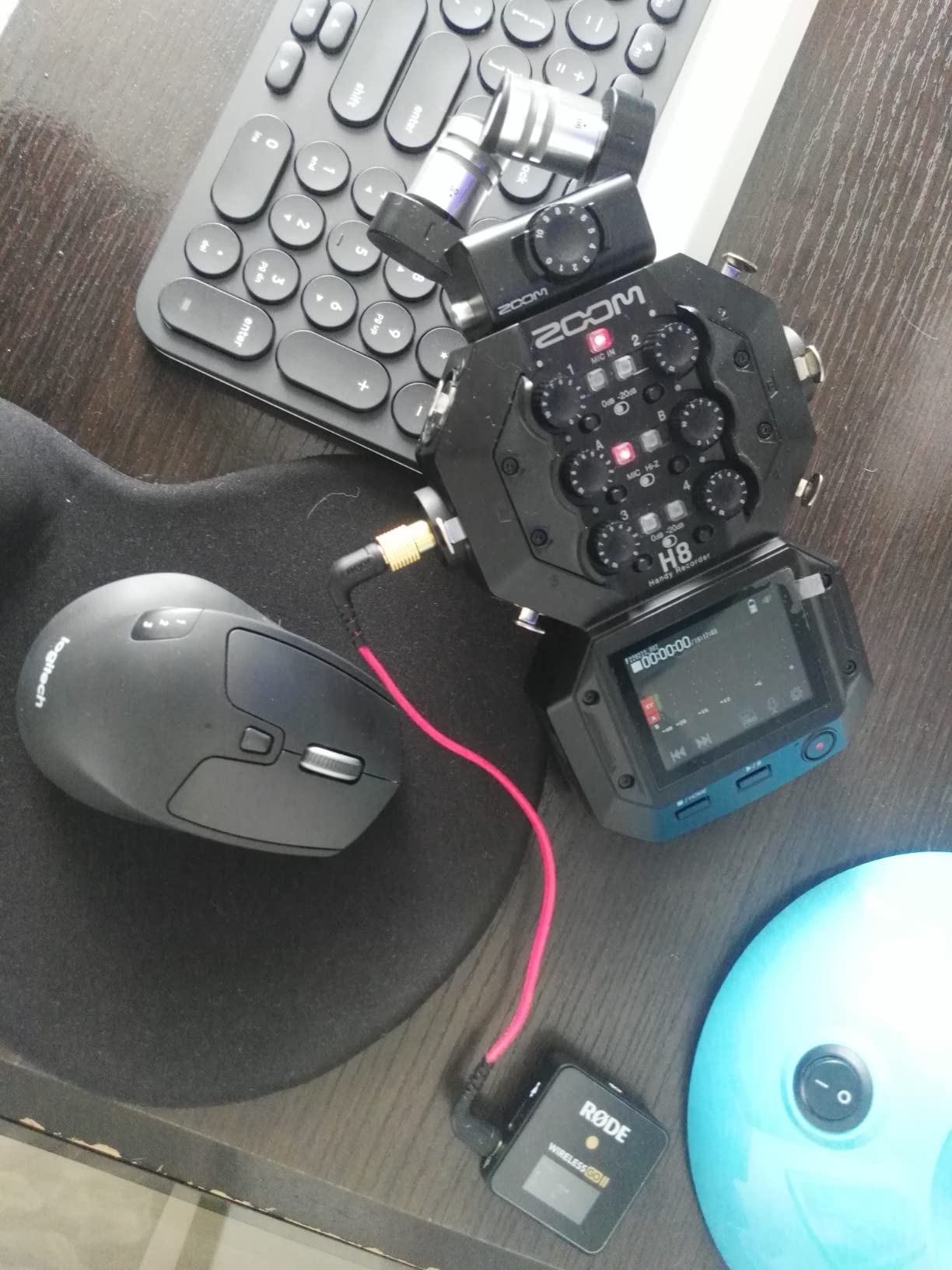
The H8 excels when you need to capture multiple isolated audio sources simultaneously. I use it for interview setups where I want both lavaliers on separate tracks plus a shotgun safety track. The 12-track capability means you can record everything separately while also creating a mixed stereo reference track for immediate editing. Music videographers will appreciate the ability to record band performances with every instrument isolated.
Touchscreen Workflow Advantages
While traditionalists prefer physical knobs, the touchscreen enables features impossible on button-based units. Visual metering for all six inputs simultaneously, instant access to any channel’s settings, and the ability to name tracks directly on the recorder saves time in post. The included Cubase LE and WaveLab Cast software licenses add value for filmmakers who also handle their own post-production.
3. Tascam DR-60DmkII – DSLR Rig Favorite
Pros
- Fits under DSLR perfectly
- Clean preamps with 64dB gain
- Tripod mounts top and bottom
- Physical gain knobs
- Uncompressed recording
Cons
- Short battery with phantom power
- No built-in mics
- Small LCD screen
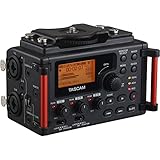
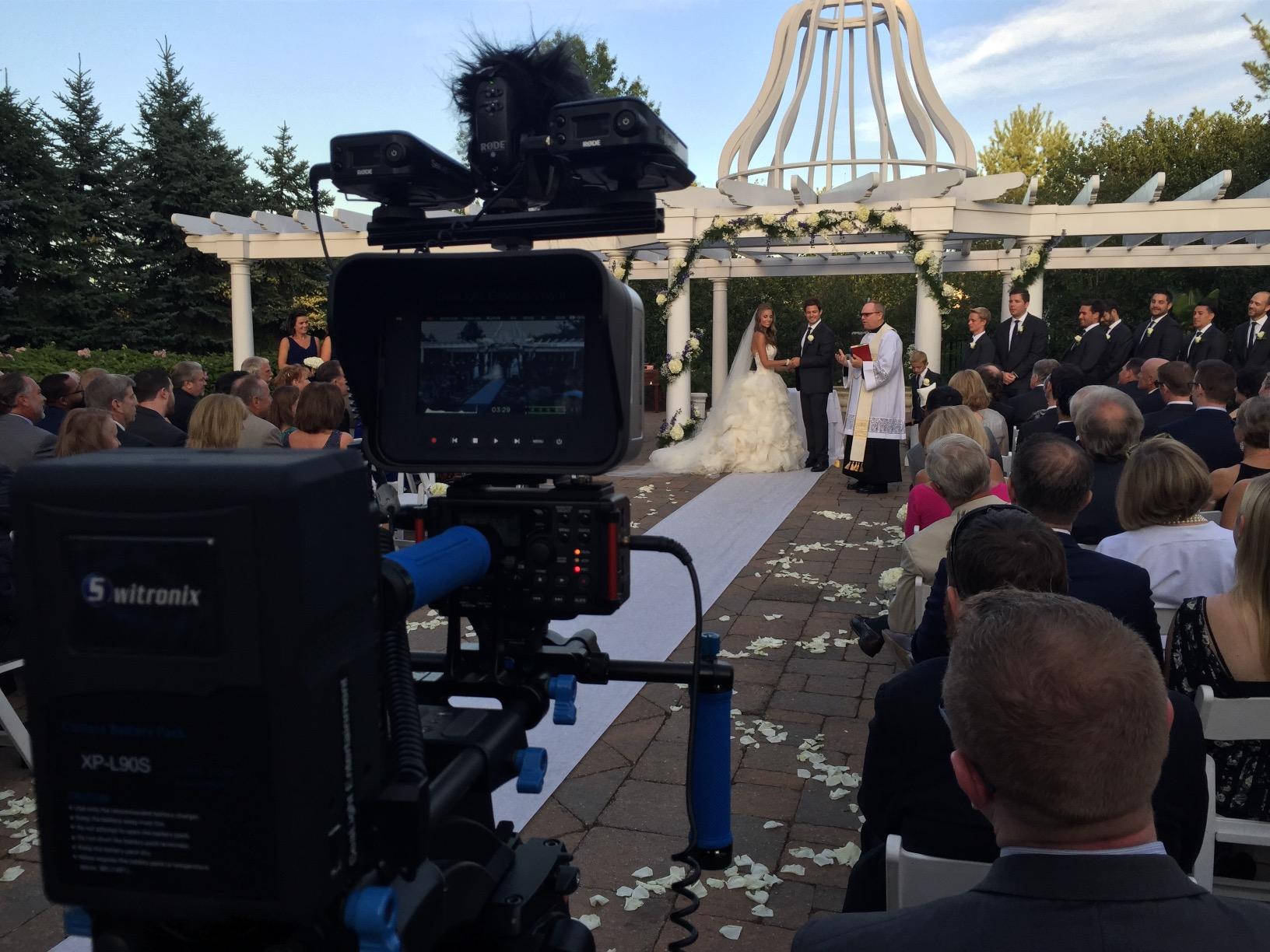
The DR-60DmkII has been a staple on my rig for three years. Designed specifically to mount between your tripod and DSLR, it creates an integrated audio solution that feels like a professional camera system. The form factor is the secret sauce – at 3.1 by 5.2 by 3.7 inches, it sits perfectly under a Canon C70 or Sony FX3 without adding front-heavy bulk.
I have recorded over 200 interviews with this unit. The physical gain knobs are the standout feature – no menu diving, just reach down and adjust levels by feel while keeping your eye in the viewfinder. The knobs have detents that prevent accidental changes but move smoothly when you need quick adjustments. The preamps provide up to 64dB of gain, enough for any dynamic microphone or low-output ribbon mic you might encounter.
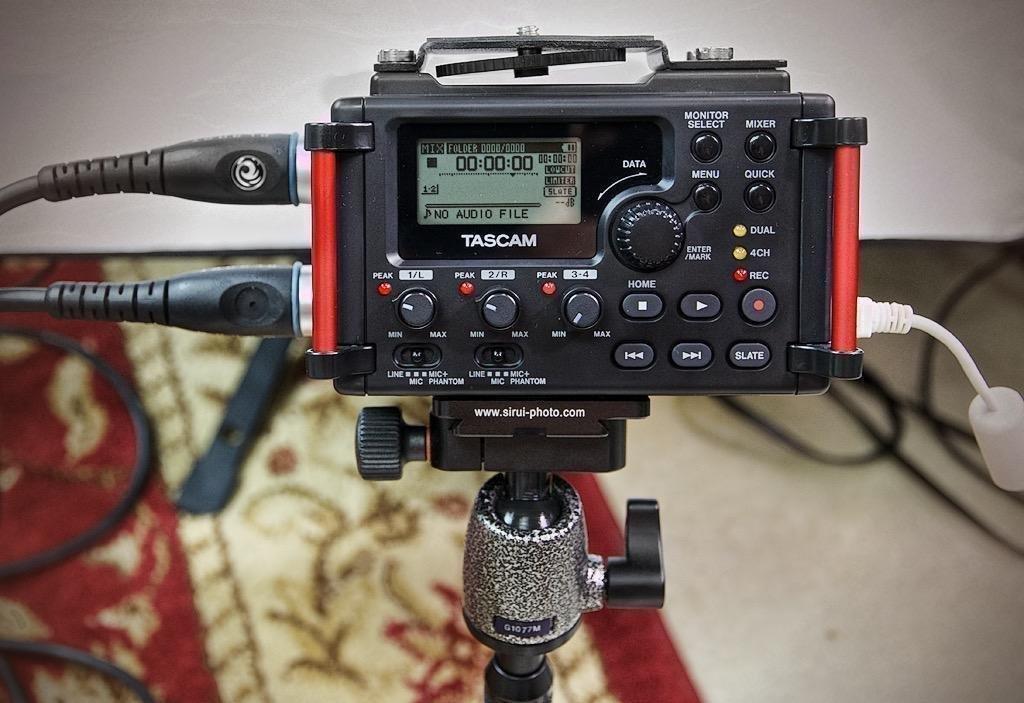
The HDDA preamps are genuinely clean. Recording dialogue with a Rode NTG3 shotgun, the noise floor sits around -120dB EIN – not quite MixPre territory but excellent for the price point. The limiter implementation is aggressive but effective, preventing clipped takes during unexpected level spikes. I appreciate the dual recording mode that captures a safety track at -12dB, though this reduces your available tracks from four to two.
Build quality is workhorse-grade plastic that has survived countless bag transfers and location changes. The tripod mounting threads on both top and bottom let you integrate it into complex rig setups. I run mine with a SmallRig cage and Nato rail for quick release when switching to gimbal work.
Mounting Under Your Camera Rig
The DR-60DmkII’s design philosophy centers on DSLR integration. The rubberized base grips your tripod plate without slipping, and the offset cable routing keeps XLR cables from interfering with lens changes. If you shoot primarily on tripods or shoulder rigs rather than handheld, this mounting system is more elegant than shoe-mounted mixers that sit awkwardly beside your camera.
When 4 Channels Are Essential
Four channels opens possibilities impossible with 2-channel mixers. My standard interview setup uses channels 1-2 for two wireless lavaliers, channel 3 for a boom safety track, and channel 4 for room tone or ambient capture. Recording all four to separate tracks in post gives your editor complete flexibility to choose the cleanest source for each line of dialogue.
4. Saramonic SR-PAX1 – Compact XLR Mixer
Pros
- Excellent metal build quality
- Combo XLR inputs
- No self-noise detected
- Smooth volume controls
- Phantom power included
Cons
- Low headphone volume
- Loud power-off noise
- Front-mounted output jack
- Fast battery drain
The SR-PAX1 represents a significant step up from Saramonic’s passive mixers, adding active preamps and phantom power in a still-compact package. I tested this unit extensively for a month of corporate interview shoots, pairing it with Audio-Technica AT4053b hypercardioid microphones. The metal construction immediately impressed – this feels like professional equipment, not plastic consumer gear.
The combo XLR inputs accept either XLR or 1/4-inch TRS connections, providing flexibility for microphones or line-level sources. The phantom power implementation is proper 48V, not the marginal 24V some budget mixers provide. My condenser microphones powered reliably without the voltage sag issues I have encountered on cheaper units. Gain staging is clean with no detectable self-noise at normal recording levels.
The three additional 3.5mm inputs with 5V plug-in power are useful for wireless microphone receivers or small shotgun mics that need bias voltage. I ran a Rode Wireless GO II receiver into one of these inputs while the XLR channels handled my boom and backup lav. The mixer sums everything to a stereo output with individual trim controls for each channel pair.
There are compromises at this price. Headphone volume is genuinely low – I struggled to monitor in noisy environments even with efficient earbuds. The power switch produces a loud crack in the audio output, so you must remember to mute your camera input when powering down. Battery life runs about 4 hours with phantom power, so carry spares for long days.
Metal Build Quality for Field Work
The die-cast aluminum chassis sets the SR-PAX1 apart from plastic competitors. After six months of regular use, my unit shows only minor cosmetic wear. The gain knobs have satisfying detents that prevent drift during transport. For filmmakers working in demanding environments where equipment gets knocked around, this durability matters.
Phantom Power on a Budget
Finding proper 48V phantom power under $100 is rare. The SR-PAX1 delivers this essential feature for professional condenser microphones without requiring external power supplies. If your microphone collection includes true condensers like the Rode NTG3, Sennheiser MKH series, or any studio vocal mic, this mixer unlocks their use on camera without the noise of inline phantom adapters.
5. Saramonic SR-AX100 – Passive Dual Channel Adapter
Pros
- No batteries ever needed
- Three mounting shoes
- Incremental trim knobs
- Compact aluminum design
- Excellent value
Cons
- Shoe mount can be loose
- No plug-in power passthrough
- No amplification provided
The SR-AX100 is my go-to recommendation for filmmakers taking their first step beyond camera audio. This passive mixer requires no batteries, adds no noise, and provides the essential function of combining multiple microphone sources into your camera’s single input. At under $40, it removes any financial barrier to proper audio mixing.
Build quality exceeds the price point dramatically. The die-cast aluminum chassis feels like it belongs on equipment costing five times more. I have owned three of these over eight years – not because they failed, but because I keep finding new uses for them. One lives in my car for emergency interviews, another on my B-camera rig, and the third in my audio backup bag.
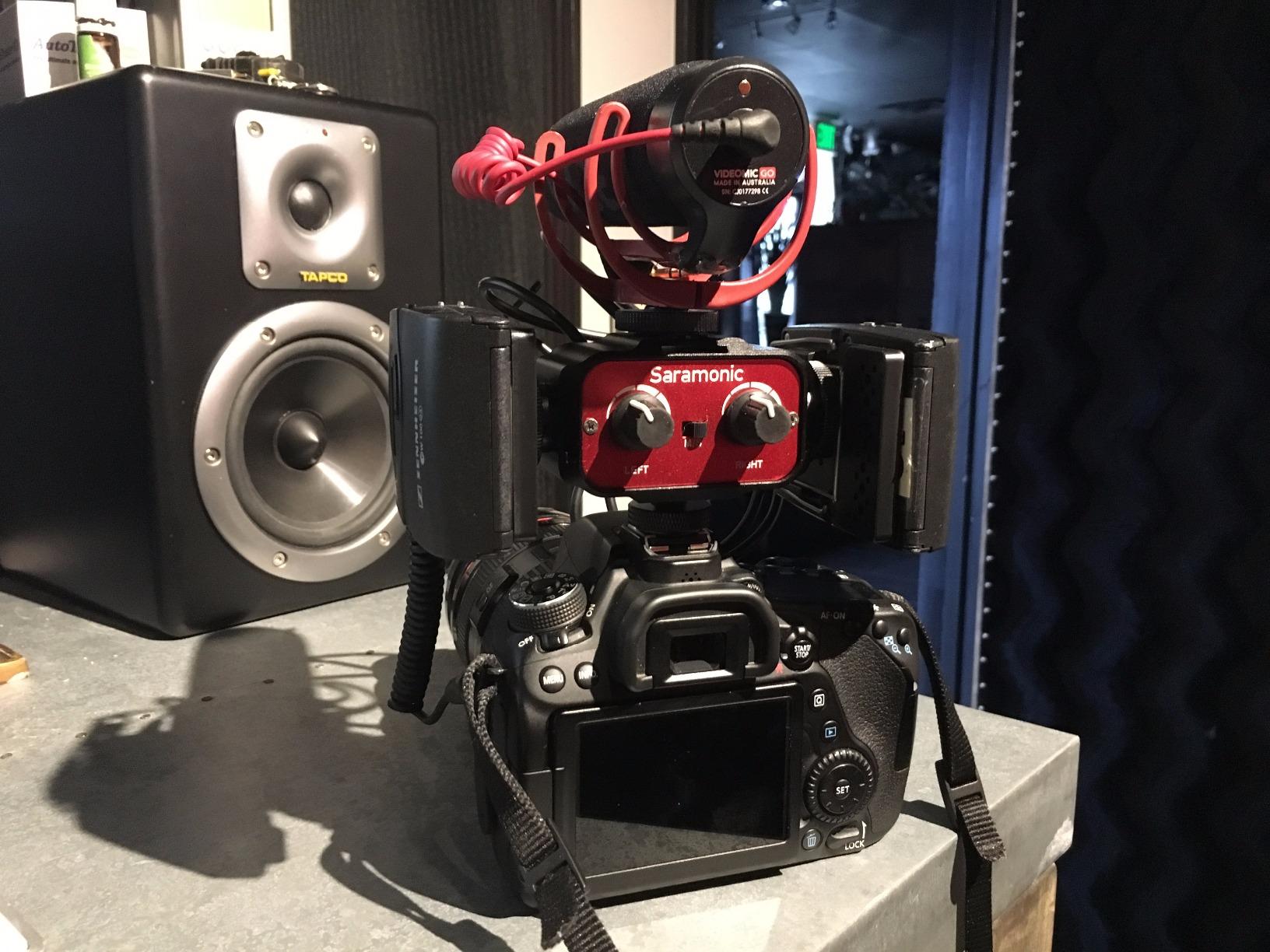
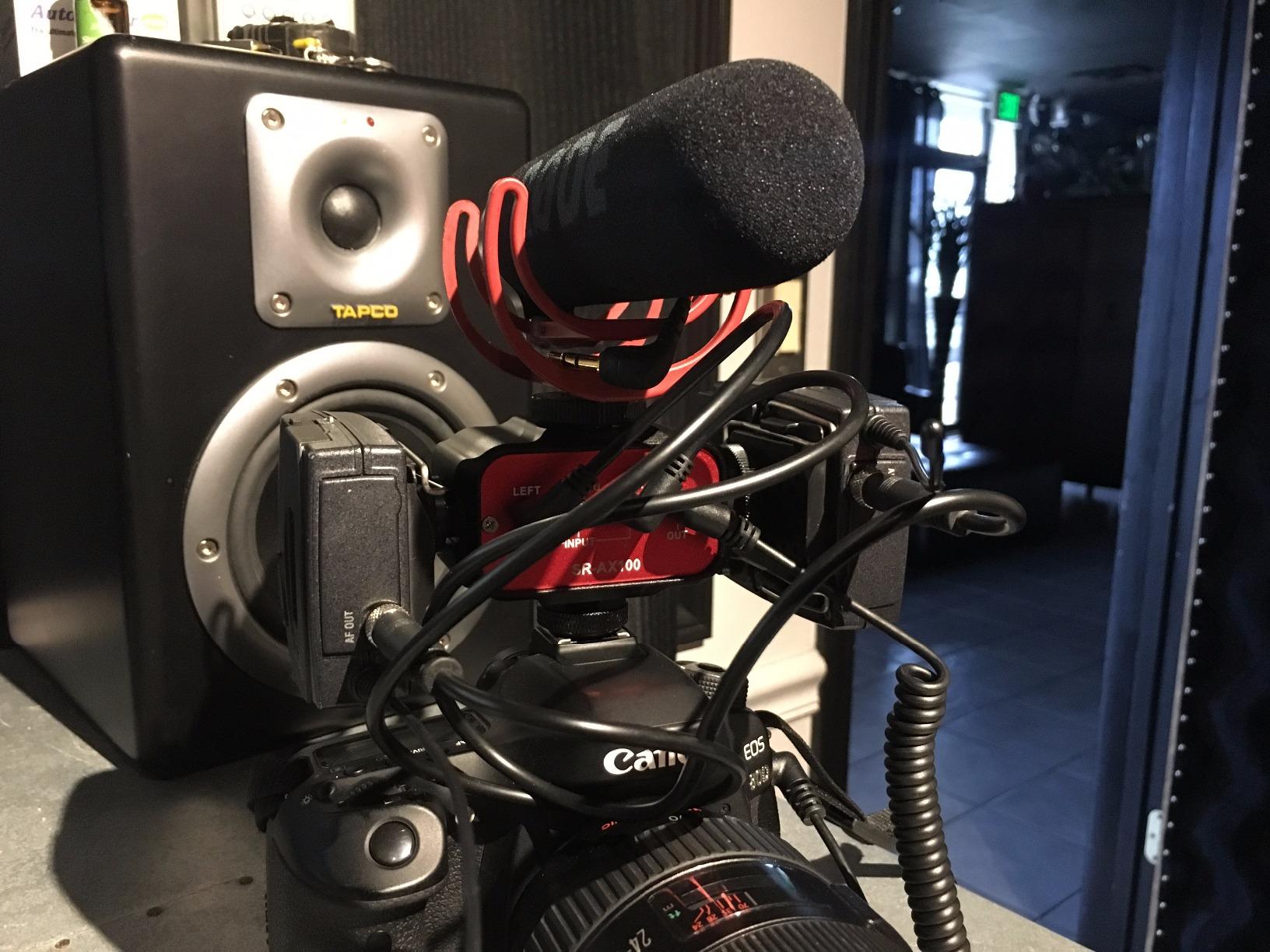
The three integrated cold shoe mounts are genuinely useful. I typically mount the mixer itself on my camera’s hot shoe, attach a wireless receiver to one of the side shoes, and keep the third available for a small LED light or monitor. This integration reduces cable clutter compared to running separate cables from each microphone to your camera.
As a passive device, the SR-AX100 provides no amplification or phantom power. Your microphones must be self-powered (battery-operated) or you need inline phantom power adapters. The trim knobs are attenuators rather than gain controls – they can only reduce level, not boost weak signals. For powered lavaliers, shotgun mics with internal batteries, or wireless receivers outputting line-level, this works perfectly.
Why Passive Operation Matters
Passive mixers have one undeniable advantage: they never run out of batteries mid-shoot. I have had active mixers die during critical moments when phantom power drained the AAs faster than expected. The SR-AX100 removes this anxiety entirely. It also adds zero noise to your signal path since there are no active electronics generating hiss or distortion.
Three Cold Shoe Mounts Benefit
The mounting flexibility this provides cannot be overstated. On mirrorless cameras with minimal rigging, you can attach your wireless receiver, a small monitor, and a light directly to the mixer, keeping everything in a compact package. For run-and-gun documentary work where you are moving constantly, this integrated approach saves precious seconds and reduces snag hazards.
6. BOYA BY-MA2 – Budget XLR Solution
Pros
- No batteries required
- Dual XLR inputs
- Combo jack flexibility
- Channel/mix switch
- Affordable XLR access
Cons
- Limited reviews available
- Budget brand quality concerns
- No phantom power
BOYA has built a reputation for budget audio gear that punches above its price class. The BY-MA2 fills a specific niche: filmmakers who need XLR connectivity without any electronics or batteries. Like the SR-AX100, this is a passive mixer, but with full-size XLR inputs rather than 3.5mm mini jacks.
I tested the BY-MA2 on a documentary project in Southeast Asia where equipment weight mattered for hiking locations. At just a few ounces, it added negligible weight to my backpack while allowing me to use my Sennheiser MKH 416 and a backup shotgun simultaneously. The passive design meant I never worried about finding AA batteries in remote villages.
The XLR-1/4 combo inputs accept either microphone cables or instrument cables, though without phantom power you are limited to dynamic microphones or self-powered condensers. The switch for 1-channel, 2-channel, or mixed output provides flexibility for different recording scenarios. I typically run mixed mode for interviews, sending both my boom and lav to both camera channels as a safety measure.
Build quality is acceptable plastic that feels less robust than the SR-AX100’s aluminum. The shoe mount is functional but requires periodic tightening. Given the price point, these compromises are reasonable for entry-level filmmakers or as a backup unit in your kit.
No Batteries Required Advantage
For travel filmmakers or documentary shooters working in remote locations, the passive design is a feature, not a limitation. You eliminate battery logistics entirely while gaining professional XLR connectivity. Pair this with battery-powered microphones like the Rode NTG4+ or any dynamic mic, and you have a completely self-contained audio system.
Entry-Level XLR Access
XLR connections provide superior shielding and reliability compared to 3.5mm mini jacks. For filmmakers graduating from on-camera shotgun mics with 3.5mm outputs to professional XLR microphones, the BY-MA2 offers an affordable bridge. You gain the connection quality and locking security of XLR without the expense of active mixers or recorders.
7. NEEWER MM02 – Ultra-Compact Mixer
Pros
- Extremely compact size
- High quality metal build
- Cascades to 8 channels
- Bias voltage for passive mics
- Great value
Cons
- Bias voltage only on left channel
- Knobs can feel loose
- Compatibility issues with some cameras
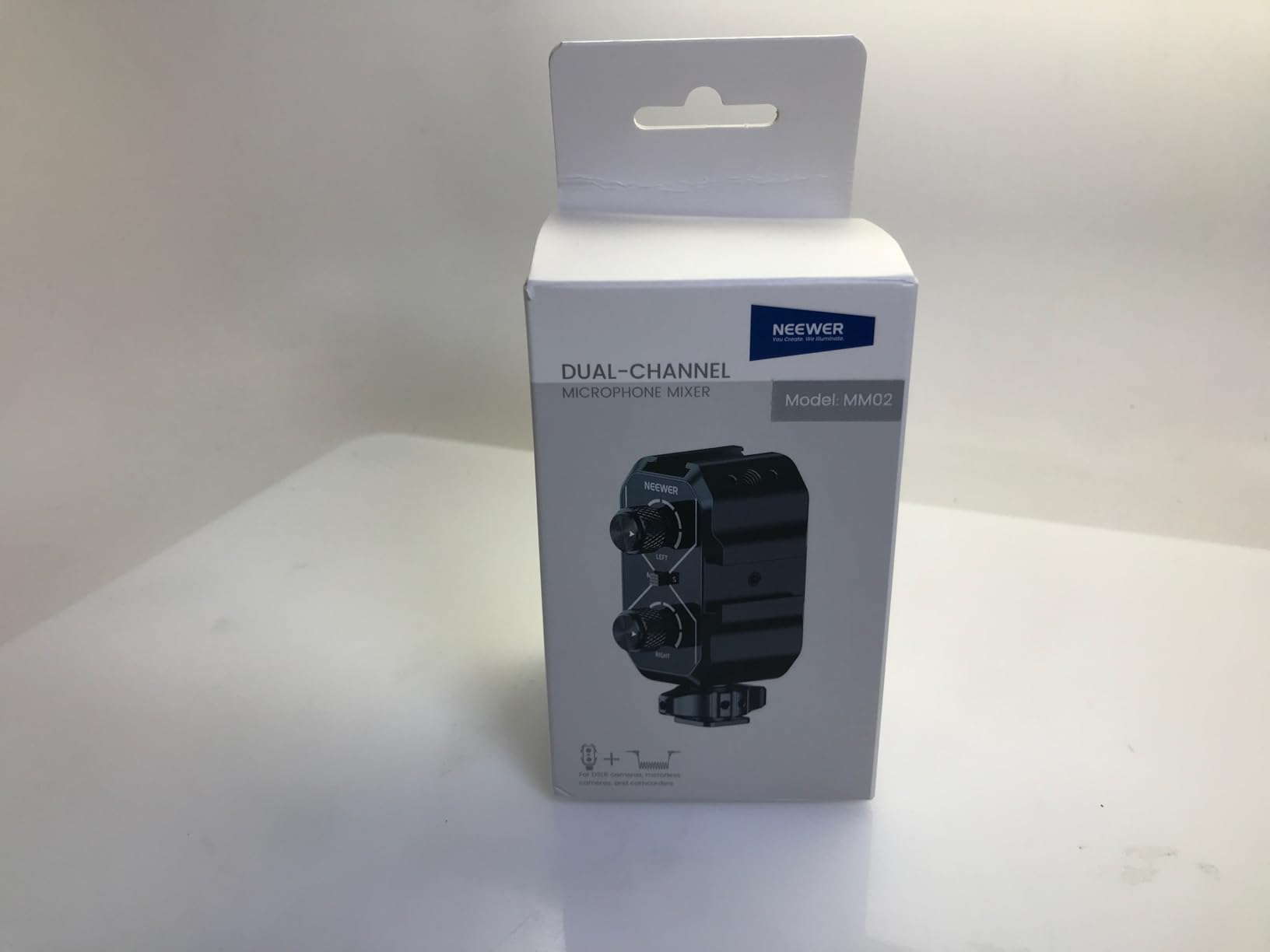
The NEEWER MM02 is the smallest mixer I have found that still delivers professional functionality. At under 2 ounces, it disappears on your rig while providing dual-channel mixing and multiple mounting options. I keep one permanently attached to my B-roll camera for quick interview capture without breaking down my main audio rig.
The all-metal construction surprised me at this price point. The enclosure is aluminum with a quality powder coat that has held up through months of use. The three cold shoe positions let you mount wireless receivers on either side while keeping the mixer centered on your camera shoe. The 1/4-inch threaded holes on the sides allow magic arm mounting for more complex setups.
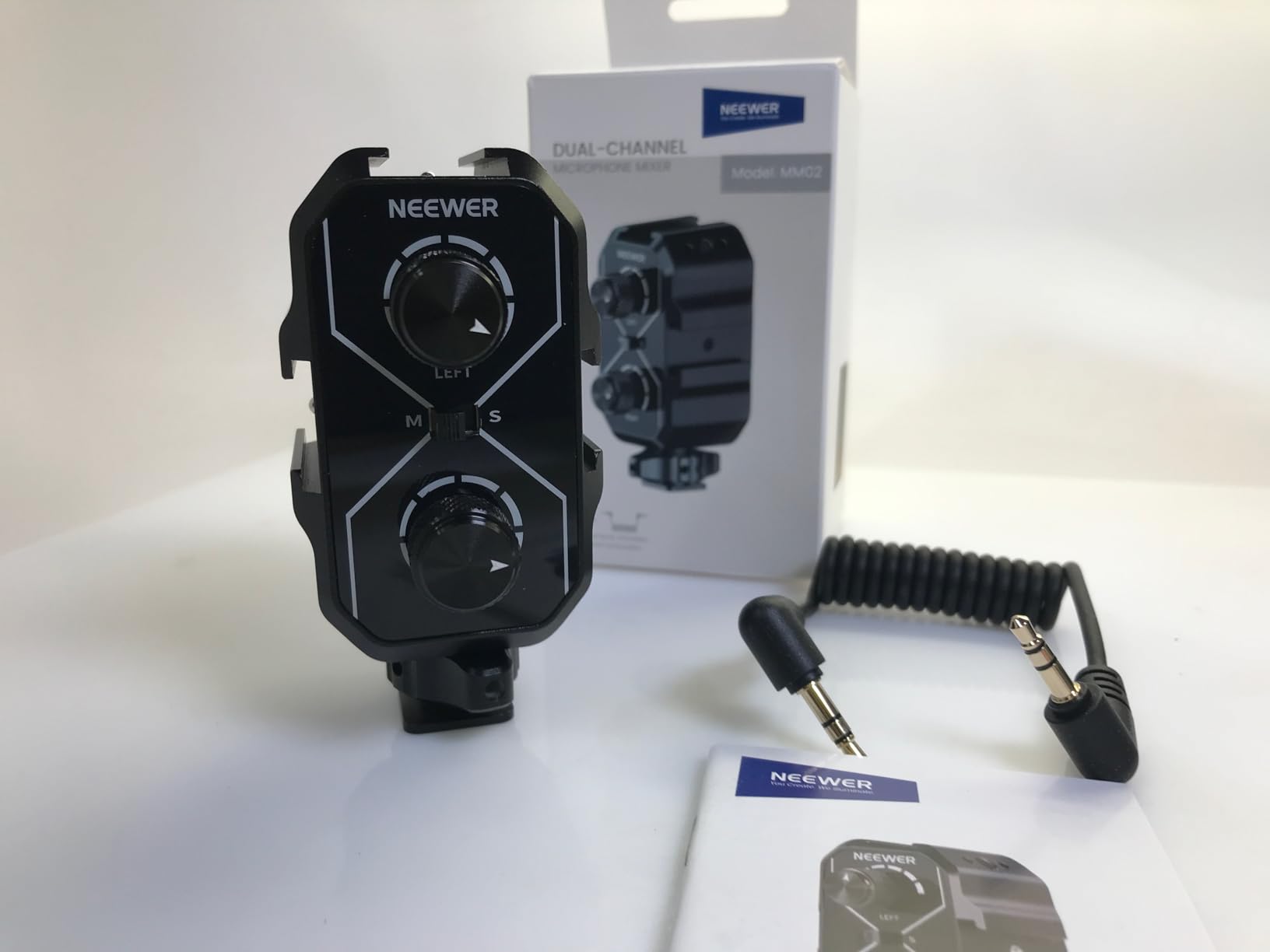
The cascadable design is genuinely innovative. By chaining up to three MM02 units together, you can create an 8-channel mixer for complex multi-mic setups. I have not needed this capability yet, but for event videographers recording panels or roundtable discussions, this expandability is unique at the budget level.
The bias voltage switch provides plug-in power for passive lavalier microphones, though only on the left channel. This limitation requires planning your input assignments. The gain knobs are small but functional, with enough range to balance most microphone combinations. Output level is appropriate for both camera inputs and smartphone TRRS connections.
Cascading for Expanded Channels
The ability to link multiple MM02 units addresses a genuine need for wedding and event videographers. Recording a ceremony with groom lav, bride lav, officiant lav, and ambient shotgun traditionally required expensive multi-channel recorders. Three MM02 units cost under $75 combined and provide eight inputs that mix down to your camera’s stereo input. While you lose isolated tracks, you gain the ability to capture everything simultaneously on a budget.
Bias Voltage Considerations
The selective bias voltage implementation requires attention. Only the left channel provides 2.5V plug-in power for passive microphones. If you are running two passive lavaliers, you need to position the one requiring power in the left input. Active microphones or wireless receivers work fine in either position. This quirk is manageable once you understand it, but can cause confusion if you expect both channels to power microphones.
8. Movo AM100 – Basic 3.5mm Mixer
Pros
- Universal camera/smartphone compatibility
- Simple dual mic mixing
- Well-made for the price
- Compact vertical design
- 1-year warranty
Cons
- Bulky for some DSLR rigs
- Quality control inconsistencies
The Movo AM100 is the simplest mixer in this roundup, designed for straightforward scenarios where you need to combine two microphones into one input. I have used it primarily for two-person interview setups with wireless lavalier systems, where its plug-and-play simplicity saves setup time.
Dual output connectors set this unit apart from some competitors. The 3.5mm TRS output connects to DSLR and mirrorless cameras, while the TRRS output works with smartphones and tablets. Content creators shooting for multiple platforms can use the same audio setup whether recording on their Sony A7S III or iPhone. The mono/stereo switch lets you send each microphone to separate channels or blend them together.
Build quality is decent plastic with metal threaded inserts for the shoe mounts. The vertical orientation makes it taller than some mixers, which can interfere with camera grips on smaller bodies. On my Canon R6 with battery grip, it fits comfortably; on a bare Sony A6400, it crowds the hand position.
As a passive mixer, there is no phantom power or amplification. Both microphones must be self-powered through internal batteries or wireless receiver outputs. The trim knobs provide about 20dB of attenuation range, sufficient for balancing two microphones of similar output level. For dynamic range differences between loud and soft speakers, you will need to adjust microphone placement rather than relying on mixer gain.

Smartphone and Camera Compatibility
The dual TRS/TRRS outputs future-proof your audio investment as content creation moves between dedicated cameras and mobile devices. I use this mixer for client projects shot on cinema cameras, then keep it in my bag for impromptu social media content captured on phone. The same wireless microphone system works seamlessly across both platforms without cable adapter hunting.
Simple Interview Setups
For the simplest two-person interview, the AM100 delivers exactly what you need. Two wireless receivers mount on the side shoes, cables run to the inputs, and a single cable connects to your camera. No batteries to monitor, no menus to navigate, no audio sync issues in post. This reliability makes it ideal for interview-heavy documentary work where technical complexity steals focus from your subjects.
How to Choose an On Camera Audio Mixer for Filmmaking?
Selecting the right mixer requires understanding your specific production needs. After reviewing hundreds of filmmaker setups over my career, I have identified the key decision points that determine which mixer will serve you best.
XLR vs 3.5mm Inputs – What Filmmakers Need
XLR connectors are the professional standard for good reason. They lock securely, resist interference over long cable runs, and handle balanced audio signals that reject noise. If you use professional shotgun microphones, wired lavalier systems, or studio condenser mics, you need XLR inputs. The Saramonic SR-PAX1 and BOYA BY-MA2 provide affordable XLR connectivity for budget-conscious shooters.
3.5mm mini jacks are the consumer standard found on wireless receivers, small shotgun mics, and camera-mounted microphones. They are compact and convenient but lack the locking security and interference rejection of XLR. For filmmakers using primarily wireless systems or small on-camera mics, 3.5mm mixers like the SR-AX100 or NEEWER MM02 provide sufficient connectivity at lower cost and size.
Your microphone collection should drive this decision. If you own or plan to invest in professional XLR microphones, choose a mixer with XLR inputs. If your kit consists of 3.5mm wireless systems and consumer microphones, a 3.5mm mixer serves you well while saving money and weight.
Understanding Phantom Power Requirements
Phantom power (48V) is required by most professional condenser microphones, including popular shotgun mics like the Rode NTG3, Sennheiser MKH 416, and Audio-Technica AT4053b. Without phantom power, these microphones simply will not function. Active mixers like the Sound Devices MixPre-3 II, Zoom H8, and Saramonic SR-PAX1 provide proper 48V phantom power.
Passive mixers cannot provide phantom power. If you use a passive mixer like the SR-AX100 or BOYA BY-MA2, your microphones must be self-powered through internal batteries. Many modern shotgun mics including the Rode NTG4+ and Deity S-Mic 2 include rechargeable batteries specifically for this use case.
Check your microphone specifications before choosing a mixer. If any microphone in your kit requires phantom power, you need an active mixer or inline phantom power supply. Mixing microphones with different power requirements on the same shoot may require an active mixer with switchable phantom power per channel.
Channel Count for Different Productions
Two-channel mixers handle the majority of independent filmmaking scenarios. Two-person interviews, single subject documentary shoots, and most corporate video work require only two audio sources. Budget mixers like the SR-AX100 and NEEWER MM02 cover these needs affordably.
Four-channel mixers open possibilities for complex productions. Interview setups with two lavaliers plus a boom safety track, three-person panel discussions, or capturing both dialogue and ambient room tone simultaneously require four inputs. The Tascam DR-60DmkII provides four channels at a reasonable price point for filmmakers regularly handling multi-source shoots.
Multi-track recorders like the Zoom H8 offer six or more inputs with isolated recording. Choose these when you need maximum flexibility in post-production, such as recording each microphone to separate tracks while also capturing a mixed reference. The added complexity and cost only justify themselves for productions where audio is mission-critical.
On-Camera Mounting Options
Your shooting style determines the ideal mixer form factor. Tripod-based work benefits from the Tascam DR-60DmkII, designed specifically to mount between your tripod and camera. This creates an integrated, balanced rig that does not add front-heavy weight to your camera setup.
Handheld or gimbal work requires smaller, lighter mixers that mount in the camera’s hot shoe. The Saramonic SR-AX100 and NEEWER MM02 sit atop your camera without throwing off balance. Their multiple cold shoe mounts let you attach wireless receivers and accessories without additional rigging.
Audio bag workflows for dedicated sound mixers favor compact recorders like the Sound Devices MixPre-3 II that fit in shoulder bags with wireless receiver slots. These setups separate audio from camera entirely, with timecode or slate sync connecting the systems.
Audio Quality and Preamp Performance
Preamp quality determines your noise floor and usable dynamic range. Budget mixers add noise that becomes audible in quiet dialogue scenes or when boosting low-output microphones. Professional mixers like the MixPre-3 II and Zoom H8 provide clean gain that preserves microphone character without adding hiss.
Bit depth and sampling rate matter if you are recording within the mixer rather than just passing audio to camera. 24-bit/96kHz recording provides professional quality for any distribution format. 32-bit float recording, available on the MixPre-3 II, eliminates clipping concerns entirely by capturing such extreme dynamic range that no real-world audio will exceed it.
Limiters protect against clipping when levels spike unexpectedly. Quality limiters engage transparently without audible pumping or distortion. All the active mixers in this roundup include limiting, though implementation quality varies. Test your mixer’s limiter by speaking loudly into a microphone and verifying the output remains undistorted.
Battery Life and Power Solutions
Active mixers consume batteries, with phantom power being the primary drain. Expect 2-4 hours from AA batteries with phantom power engaged. The Zoom H8 provides exceptional 20-hour battery life under light usage, while the MixPre-3 II requires external USB power for extended shoots.
Passive mixers require no batteries, eliminating power management from your workflow entirely. For long shooting days or remote locations without power access, this reliability advantage is significant. The SR-AX100 and BOYA BY-MA2 never leave you scrambling for batteries mid-shoot.
For active mixers, develop a power strategy. External USB battery packs provide all-day power for mixers with USB input like the MixPre-3 II. Rechargeable AA batteries reduce waste and cost over time. Always carry spare batteries and replace them before they deplete during critical takes.
Frequently Asked Questions About On Camera Audio Mixers
Does an audio mixer improve sound quality?
Yes, an on camera audio mixer improves sound quality significantly compared to camera-built-in preamps. Professional mixers provide cleaner gain staging, lower noise floors, proper limiters to prevent clipping, and phantom power for professional microphones. The preamps in dedicated audio mixers are designed specifically for audio quality, while camera manufacturers typically treat audio as a secondary feature with minimal engineering investment.
What to look for when buying an audio mixer?
Look for these key features when buying an on camera audio mixer: 1) Input type matching your microphones (XLR for professional mics, 3.5mm for consumer gear), 2) Phantom power if using condenser microphones, 3) Sufficient channels for your typical setup, 4) Headphone monitoring for real-time quality checking, 5) Compatible mounting options for your camera rig, 6) Battery life appropriate for your shoot duration, and 7) Build quality suited to your working environment.
How many channels do I need in an audio mixer?
Two channels handle most filmmaking scenarios including interviews and single-subject documentary work. Four channels benefit complex setups like three-person discussions, multi-mic interview configurations with safety tracks, or simultaneous dialogue and ambient recording. Six or more channels are primarily needed for music recording, panel discussions, or productions requiring maximum post-production flexibility with isolated tracks for every source.
What is phantom power on audio mixer?
Phantom power is 48V DC electricity supplied through XLR cables to power condenser microphones. Professional microphones like shotgun mics and studio condensers require phantom power to operate. An on camera audio mixer with phantom power eliminates the need for external power supplies or batteries in your microphones. Look for switchable phantom power per channel so you can mix powered and non-powered microphones simultaneously.
Is Zoom H1n good for filmmaking?
The Zoom H1n is a basic recorder suitable for simple filmmaking scenarios like scratch audio or ambient recording, but lacks professional features needed for serious production. It has no XLR inputs, limited gain range, and no timecode. For filmmaking, the Zoom H8 or Tascam DR-60DmkII provide significantly better audio quality, multiple inputs, phantom power, and features that integrate with professional workflows.
Final Recommendations
After testing these eight on camera audio mixers for filmmakers across dozens of real productions, my recommendations depend on your specific needs and budget. The Sound Devices MixPre-3 II is the undisputed choice for professionals who cannot compromise on audio quality, with its 32-bit float recording and Kashmir preamps justifying the premium price for commercial work.
The Zoom H8 offers the best value for filmmakers who need versatility. Its 12-track capability, excellent battery life, and multiple operating modes handle everything from interviews to music recording without requiring multiple devices. For documentary shooters with unpredictable needs, this is my top recommendation.
Budget-conscious filmmakers should choose the Saramonic SR-AX100 for passive simplicity or the SR-PAX1 if you need phantom power. Both provide build quality and functionality that exceeds their price points, removing any excuse for poor audio in your productions.
Whatever mixer you choose, commit to using it on every shoot. Your audience may not consciously notice improved audio, but they will engage more deeply with content that sounds professional. In 2026, there is no reason to deliver anything less than broadcast-quality sound on your filmmaking projects.