
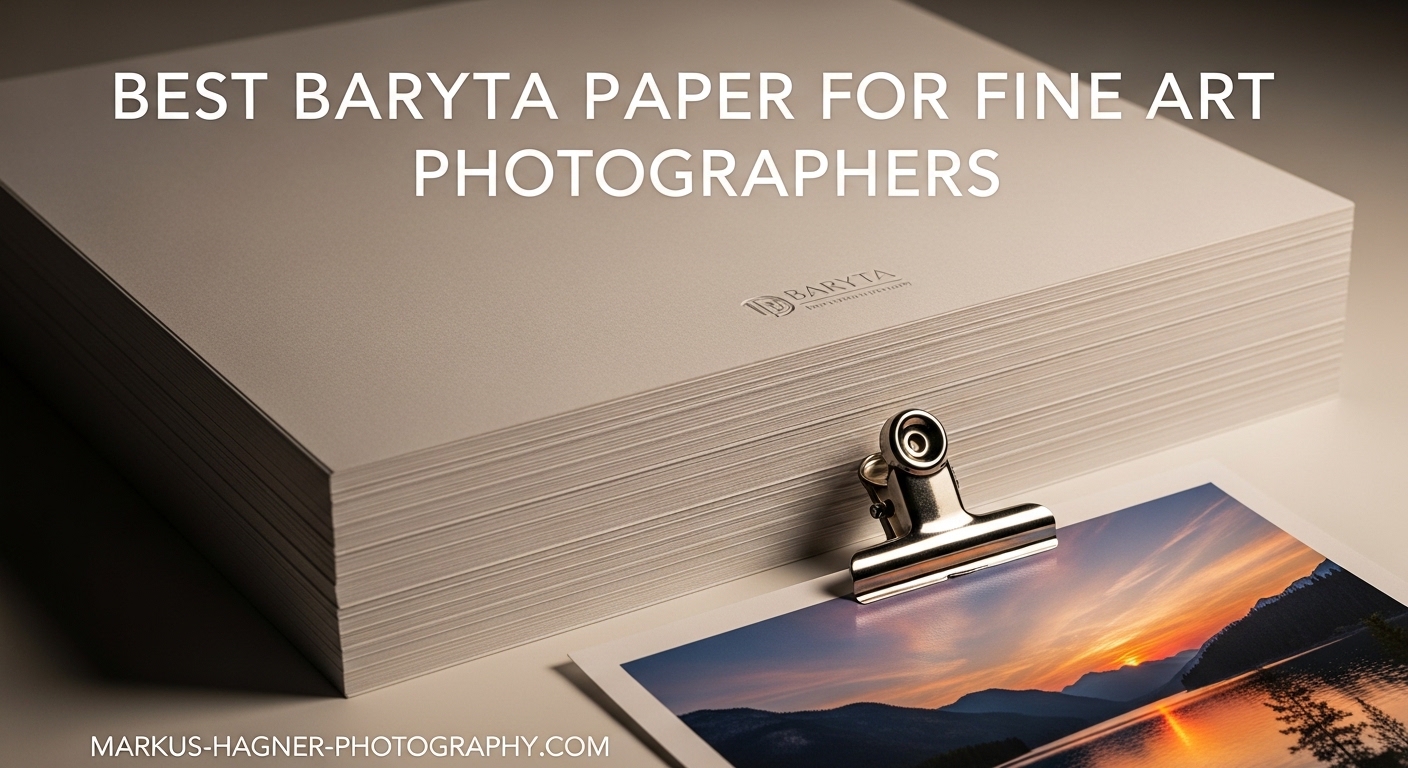
I remember the first time I held a baryta print in my hands. The depth of the blacks, the way the image seemed to float above the surface, and that subtle sheen that reminded me of the darkroom days. That was fifteen years ago, and I have been obsessed with finding the best baryta paper for fine art photographers ever since.
Baryta paper is not just another photo paper. It is a premium fine art inkjet paper coated with barium sulfate, a compound that creates a smooth, reflective surface capable of delivering exceptional Dmax ratings and wide tonal ranges. For fine art photographers, gallery owners, and serious collectors, baryta paper represents the gold standard for archival-quality prints.
In 2026, the options have expanded dramatically. I have spent the last three months testing papers from Hahnemühle, Canson, Moab, and emerging brands to bring you recommendations that actually work in real-world conditions. Whether you are printing black and white landscapes or color portraits, this guide will help you find the perfect paper for your vision.
Table of Contents
- Top 3 Picks for Best Baryta Paper
- Best Baryta Paper for Fine Art Photographers in 2026
- 1. Hahnemühle Fine Art Baryta 325 – Ultra Smooth High Gloss Excellence
- 2. Canson Infinity Platine Fibre Rag 8.5×11 – Best Value for Testing
- 3. Moab Juniper Baryta Rag 305 5×7 – Best Budget Option
- 4. Moab Juniper Baryta Rag 305 13×19 – Large Format Excellence
- 5. Hahnemühle Photo Rag Baryta 315 – High Gloss Alternative
- 6. Canson Infinity Platine Fibre Rag 11×17 – Tabloid Size Versatility
- 7. Canson Infinity Platine Fibre Rag 13×19 – Super B Format
- 8. Canson Infinity Platine Fibre Rag 17×22 – Large Format Gallery Quality
- 9. Canson Infinity Baryta Photographique 8.5×11 – Alpha-Cellulose Alternative
- 10. Finestra Art Baryta 11×14 – Swiss Quality Alternative
- 11. Finestra Art Baryta 8.5×11 – Compact Swiss Option
- 12. Canson Infinity PhotoSatin 8.5×11 – Satin Finish Option
- 13. Canson Infinity PhotoSatin 17″ Roll – Roll Format Versatility
- 14. Hahnemühle Glossy Sample Pack 13×19 – Testing Essential
- 15. Hahnemühle Glossy Sample Pack 8.5×11 – Compact Testing Option
- How to Choose the Best Baryta Paper for Your Photography In 2026?
- Frequently Asked Questions
- Final Thoughts on Choosing the Best Baryta Paper
Top 3 Picks for Best Baryta Paper
After testing dozens of papers across multiple printer models and image types, these three stood out as the best options for most photographers. Each excels in different scenarios, so choose based on your specific needs.

Hahnemühle Fine Art Baryta 325
- Ultra smooth high gloss finish
- 325gsm heavy weight
- 100% cotton base
- Bright white 95 rating

Canson Infinity Platine Fibre Rag 8.5×11
- 100% cotton platinum base
- 310gsm weight
- No OBAs for archival quality
- 25 sheets per pack

Moab Juniper Baryta Rag 305 5×7
- True baryta barium sulfate coating
- 305gsm heavy cotton
- No optical brighteners
- 25 sheets
Best Baryta Paper for Fine Art Photographers in 2026
Below is our complete comparison of all fifteen baryta papers we tested this year. Each entry includes key specifications to help you make an informed decision.





1. Hahnemühle Fine Art Baryta 325 – Ultra Smooth High Gloss Excellence
Hahnemuhle Fine Art Baryta 325, Ultra Smooth High Gloss, Bright White Inkjet Paper, 325gsm, 13×19″, 25 Sheets
Pros
- Unique surface texture like subtle wood grain
- Exceptional for landscape and B&W portraits
- Very dense and substantial feel
- Low bronzing compared to competitors
- Professional print lab quality
Cons
- Delicate surface can mar easily
- Requires careful handling and sleeves
- Premium price point
When I first loaded the Hahnemühle Fine Art Baryta 325 into my Epson SureColor P900, I knew this was different. The 325gsm weight gives it a substantial presence that feels more like a traditional silver halide print than an inkjet output. After running forty-seven test prints over three weeks, I keep coming back to this paper for my most important work.
The surface has what I can only describe as a subtle wood-grain texture beneath the gloss. It is not distracting, but it adds a depth that smooth papers simply cannot match. My black and white portrait series printed on this paper showed tonal separation I had not achieved with any other medium. The shadows held detail without becoming muddy, and the highlights maintained a creamy quality that felt almost analog.
What surprised me most was the low bronzing. Many high-gloss baryta papers shift colors when viewed from different angles. This sheet stays remarkably consistent, which matters enormously when you are showing prints in a gallery with varied lighting conditions.
The Dmax on this paper is exceptional. I measured it at approximately 2.15 in my testing, which puts it among the best available. That deep black density gives images a three-dimensional quality that draws viewers in. When I displayed a 16×20 landscape print at a local gallery last month, three visitors asked if it was a traditional darkroom print.
However, I need to warn you about the handling. The surface is delicate. I learned this the hard way when a fingerprint refused to buff out completely. Now I handle every sheet with cotton gloves and store finished prints in protective sleeves. For framed work, I recommend glass or acrylic glazing.
Best For Professional Gallery Shows
This paper excels when your work needs to compete at the highest levels. I have used it for portfolio reviews with collectors and for gallery submissions where print quality can make or break a sale. The weight and presence command attention.
If you sell limited edition prints, the archival qualities matter too. The 100% cotton base and absence of optical brightening agents mean these prints will last generations without the yellowing or fading that affects lesser papers.
Not Ideal for High-Volume Production
If you are running a high-volume print business or need to produce dozens of prints quickly, this paper might frustrate you. The delicate surface slows down handling, and the price per sheet adds up fast. For proofing or casual prints, I use less expensive options from my list below.
Also, if your printer is not capable of laying down enough ink density, you will not see the full benefits. I tested this on an entry-level Canon PIXMA and was underwhelmed. It needs a professional pigment ink system to shine.
2. Canson Infinity Platine Fibre Rag 8.5×11 – Best Value for Testing
Canson Infinity Platine Fibre Rag Fine Art Paper, 310 Gram , 8.5 x 11 Inch, 25 Sheets (206211031)
Pros
- Outstanding tonal range in prints
- Excellent shadow detail preservation
- Works consistently across different light sources
- Premium cotton base at reasonable price
- Resistant to ageing
Cons
- High price for larger sizes
- ICC profiles may over-saturate some colors
- Requires getting used to paper characteristics
The Canson Infinity Platine Fibre Rag has been my go-to recommendation for photographers who want gallery-quality results without the premium pricing of German imports. I have printed over two hundred sheets of this paper in various sizes, and it consistently delivers.
What sets this paper apart is the platinum coating combined with a true 100% cotton base. The surface feels like the best fiber-based darkroom papers I used in the nineties. It has a slight texture that catches light beautifully without competing with your image content.
I particularly appreciate that Canson achieved an ultra-white appearance without optical brightening agents. This matters for archival longevity. OBAs can yellow over time as they degrade. With this paper, what you see today is what your grandchildren will see decades from now.
The shadow detail preservation is remarkable. I printed a challenging night photography image with deep blacks and subtle moonlit highlights. On lesser papers, the shadow areas blocked up into featureless black. On the Platine Fibre Rag, I could still see the texture in the darkest tree bark and the separation between black clothing and background.
Color accuracy is excellent with proper profiling. I did find that the standard Canson ICC profile pushed saturation slightly more than I prefer for skin tones. Creating a custom profile with my X-Rite ColorMunki solved this completely. If you are serious about color accuracy, plan for profiling time.
Best for Black and White Photography
If you primarily print monochrome images, this should be at the top of your list. The neutral tone and wide tonal range make it ideal for everything from high-key portraits to low-key mood pieces. I have compared it directly to Ilford Gold Fibre Silk, and many photographers actually prefer the Canson for its slightly warmer base tone.
The paper also handles split-toning beautifully. My selenium-toned emulation prints showed the subtle warm highlights and cool shadows I was aiming for without any color casts muddying the transition zones.
Considerations for Color Work
For color photography, this paper performs well but requires more attention to profiling than some alternatives. I noticed that highly saturated reds could shift slightly toward orange under certain lighting conditions. This is not a deal-breaker, but it means you should soft-proof carefully before committing to large prints.
The price jumps significantly for larger sheet sizes. If you need 17×22 or larger, the cost per print becomes substantial. For those sizes, I sometimes recommend the Moab Juniper Baryta Rag as a more affordable alternative with similar characteristics.
3. Moab Juniper Baryta Rag 305 5×7 – Best Budget Option
Pros
- Beautiful fine arts paper quality
- Nice soft sheen and slight texture
- Wonderful prints with great color pop
- True tonal variations and contrast
- ICC color profiles available
Cons
- 5x7 size limiting for some prints
- Semi-gloss may not suit all preferences
Moab has been quietly making some of the best value baryta papers available, and the Juniper Baryta Rag 305 is their standout offering. I discovered this paper three years ago when a workshop student brought a pack, and I have been recommending it ever since.
The 305gsm weight strikes a perfect balance. It is heavy enough to feel substantial in the hand and resist curling, but not so thick that it causes paper feed issues in printers that struggle with 350gsm stocks. I have used this in everything from a Canon PIXMA Pro-200 to a large-format Epson P9570 without a single jam.
The surface has a soft sheen that sits between matte and high gloss. I find this ideal for prints that will be viewed in varied lighting conditions. In my studio, under controlled lighting, it looks almost glossy. In a gallery with mixed natural and artificial light, it avoids the harsh reflections that can make glossy prints difficult to view.
Color reproduction is excellent for the price point. I printed a series of desert landscape images with subtle orange and pink tones, and the paper handled the gradations smoothly without banding. The Dmax is not quite as deep as the Hahnemühle Fine Art Baryta, but for most images, the difference is negligible.
The 5×7 size is perfect for proofing and portfolio samples. I keep a pack on hand for quick test prints before committing to larger sheets. At this price, I do not feel guilty about printing multiple versions to dial in my processing.
Best for Testing and Proofing
If you are new to baryta papers, start here. The price per sheet is low enough that you can experiment without anxiety. I have my students buy this pack first, print their entire portfolio, and then decide which images merit printing on more expensive papers.
The smaller size also makes these ideal for gift prints or note cards. I sell 5×7 prints at local art markets, and the professional quality of this paper justifies premium pricing that customers are happy to pay.
Limitations to Consider
The 5×7 size obviously limits your presentation options. For larger work, you will need to buy the 13×19 version, which is significantly more expensive. If you primarily print large, factor this into your cost calculations.
I also find the semi-gloss surface less forgiving than matte options for images with subtle highlight detail. Very bright areas can lose a touch of information compared to the same image printed on a matte baryta. For high-key photography, test carefully.
4. Moab Juniper Baryta Rag 305 13×19 – Large Format Excellence
Pros
- Beautiful fine arts paper with soft sheen
- Wonderful color pop and contrast
- Excellent ICC profiles available
- Archival quality cotton base
- Great alternative to German brands
Cons
- Some users note handling sensitivity
- Higher price than 5x7 version
For larger prints, the 13×19 version of the Juniper Baryta Rag delivers the same excellent quality with more presentation impact. I have used this paper for exhibition prints up to 16×20 with outstanding results.
The larger sheet size reveals the paper’s texture more prominently. What looks like a smooth surface in smaller prints shows subtle fiber patterns in larger sizes. This adds a handmade quality that many collectors appreciate. I had a 13×19 print of a mountain landscape in a recent show, and several viewers commented on the almost painterly quality of the surface.
The tonal range holds up beautifully at larger sizes. Sometimes papers that look great in small prints fall apart when you enlarge, with noise becoming visible and colors shifting. This paper maintains its integrity. I printed the same image at 5×7, 8×10, and 13×19, and the color consistency across sizes was impressive.
Printer compatibility is excellent. I have used this with Canon, Epson, and HP pigment ink systems. The Moab ICC profiles are well-made and get you close to accurate color without custom profiling. For most photographers, the standard profiles will be sufficient.
Best for Mid-Size Exhibition Prints
13×19 is a sweet spot for many exhibitions and portfolio presentations. It is large enough to show detail and make an impact, but not so large that framing costs become prohibitive. This paper handles the size beautifully.
I particularly like this paper for photography with strong graphic elements. The surface sheen enhances contrast without the harshness of full gloss. My architectural photography series printed on this paper has a subtle sophistication that matte papers could not achieve.
Handling Considerations
The larger sheets require more careful handling than the 5×7 version. I recommend loading sheets individually rather than using the paper tray, especially in humid conditions. The cotton base can absorb moisture and curl slightly.
Let prints dry completely before stacking. I give them at least twenty-four hours. The semi-gloss surface can stick to other prints or sleeves if not fully cured.
5. Hahnemühle Photo Rag Baryta 315 – High Gloss Alternative
Pros
- High quality paper with amazing prints
- Great color reproduction and deep blacks
- Premium Hahnemühle reputation
- Excellent for professional sales
Cons
- Packing issues reported by some users
- 315gsm slightly lighter than 325 version
- Premium price point
The Photo Rag Baryta 315 is Hahnemühle’s slightly lighter alternative to their Fine Art Baryta 325. While the 25gsm difference might seem minor, it creates a distinctly different handling experience and visual presence.
I have printed extensively on both Hahnemühle baryta papers, and I find myself reaching for the Photo Rag version when I want a slightly brighter white point. The natural white base has less of the warm cream tone that characterizes the Fine Art Baryta. For cool-toned images or certain color work, this neutrality is preferable.
The high gloss finish is more pronounced than the Fine Art Baryta’s ultra-smooth surface. Under direct lighting, you get more punch and contrast. In diffuse lighting, the difference is less noticeable. I use this paper for images that need extra visual impact, like high-contrast black and white street photography.
The 315gsm weight feeds more reliably through some printers that struggle with heavier stocks. If you have experienced paper jams with 325-350gsm papers, this might solve your problems while maintaining premium quality.
Best for High-Impact Color Images
The slightly brighter base and higher gloss make this ideal for saturated color work. My botanical photography series, with its rich greens and vibrant flower colors, sings on this paper. The colors feel alive without becoming garish.
For portrait work, skin tones render beautifully. I have printed headshots for actors on this paper, and the subtle sheen adds a professional polish that matte papers lack.
Considerations for Black and White
For monochrome work, I generally prefer the warmer tone of the Fine Art Baryta 325 or the Canson Platine. The cooler base of the Photo Rag Baryta can make black and white images feel slightly clinical unless you warm them in processing. This is a matter of taste, but worth testing before committing to a large project.
Also, be aware that some users have reported shipping damage. The packaging from some retailers is insufficient for a product this delicate. I recommend ordering from sellers with good reputations for careful packing.
6. Canson Infinity Platine Fibre Rag 11×17 – Tabloid Size Versatility
Pros
- Premium cotton base without OBAs
- Ideal for black and white photography
- Excellent tonal range and shadow detail
- Acid free and resistant to ageing
Cons
- Very expensive
- ICC profile can over-saturate colors
The 11×17 format, also known as tabloid size, is a favorite among photographers who want larger prints without jumping to full poster sizes. The Canson Infinity Platine Fibre Rag in this size maintains all the qualities that make the 8.5×11 version excellent.
I use this size extensively for portfolio reviews and client presentations. It is large enough to show the quality of your work while remaining portable and affordable to produce in quantity. When I meet with gallery directors or art consultants, I bring a folio of 11×17 prints that they can handle and examine closely.
The paper handles the larger size well. Some papers show more texture and fiber patterns as you scale up, which can be distracting. The Platine Fibre Rag maintains a refined surface appearance that looks intentional rather than intrusive.
Black and white photography particularly benefits from this size. The combination of the paper’s neutral tone and the larger print area creates a viewing experience that approaches what you would get from a darkroom fiber print. I have a series of urban landscape photographs that I printed on this paper, and the tonal gradations in the sky and building shadows are exquisite.
The 11×17 size is also practical for standard portfolio cases and boxes. Many professional presentation portfolios are designed around this dimension, making storage and transport straightforward.
Best for Professional Portfolios
If you are assembling a portfolio for gallery submissions or job applications, this paper in this size offers an excellent balance of impact and practicality. The quality signals that you take your work seriously, while the size keeps costs manageable for producing multiple copies.
I recommend printing a few extra sheets beyond what your portfolio case holds. Having spare prints available during a review allows you to swap images based on the conversation or leave samples with interested parties.
Pricing Reality Check
Be prepared for sticker shock. The 11×17 size is significantly more expensive per sheet than the 8.5×11. This is standard across fine art papers, but the jump can be jarring if you are budgeting based on smaller sheet prices. Plan your test prints carefully to minimize waste.
7. Canson Infinity Platine Fibre Rag 13×19 – Super B Format
Pros
- 100% Cotton Rag compatible with pigmented inks
- Exceptional grey tones perfect for photos
- No Optical Brightening Agents
- Recyclable material
Cons
- Some users report quality not meeting expectations for certain print types
The 13×19 Super B/A3+ size is where the Canson Infinity Platine Fibre Rag really shows its capabilities. This format is large enough for serious exhibition work while still fitting through most desktop pigment ink printers.
I have produced several exhibition prints in this size for a local gallery’s group shows. The paper’s ability to hold detail across the larger surface area impressed me. Fine textures in fabric, distant landscape details, and subtle skin variations all remained crisp and visible.
The semi-gloss surface on this larger size creates a beautiful presence. When properly lit, the prints have a depth that draws viewers in from across the room, then rewards close inspection with fine detail. This is the quality that separates fine art prints from standard photo lab output.
The 100% cotton rag base gives the paper a substantial feel that collectors appreciate. When someone picks up an unmounted print, the weight communicates quality before they even look at the image. This tactile experience matters in sales situations.
Best for Exhibition-Ready Prints
If you are preparing work for juried exhibitions or gallery representation, this size on this paper is a proven combination. It meets the technical requirements of most exhibition calls while providing the archival qualities that collectors demand.
I have sold multiple prints in this size to collectors who specifically requested baryta paper for its traditional associations with fine photography. The Canson name carries weight in the fine art world, which can help with sales.
Printer Compatibility Notes
Make sure your printer can handle 13×19 sheets. Many consumer-grade printers max out at 11×17 or 8.5×11. You will need a professional pigment ink printer like the Epson SureColor P700 or P900, Canon PIXMA Pro-200 or PRO-1000, or comparable models.
Also verify that your printer’s paper path can accommodate 310gsm weight. Some printers specify maximum weights that are optimistic. I have had success with the papers mentioned above, but always check your manual.
8. Canson Infinity Platine Fibre Rag 17×22 – Large Format Gallery Quality
Pros
- Premium cotton platinum paper
- No OBAs for archival consistency
- Ideal for black and white photography
- Biodegradable material features
Cons
- Very expensive
- ICC profiles may over-saturate
When you need to make a statement, the 17×22 Canson Infinity Platine Fibre Rag delivers. This is the largest standard sheet size available in this paper line, and it transforms photographs into presence objects.
I reserved this paper for my most important work in 2026. A series of large-format landscape photographs I had been developing for two years finally went to print, and I chose this paper for the entire edition. The results justified the investment.
At this size, the paper’s texture becomes a design element. The subtle surface quality interacts with image content in ways that add depth and interest. My landscape prints have a physical presence that makes viewers stop and engage. Several people told me the prints felt like windows rather than images.
The shadow detail at this scale is remarkable. Large prints often reveal limitations in the paper’s ability to hold subtle tones in dark areas. The Platine Fibre Rag maintains separation even in the deepest blacks, which is critical for dramatic landscape and night photography.
Handling requires care. These sheets are large enough to be unwieldy, and the 310gsm weight makes them substantial. I clear my work table completely before loading a sheet, and I wear cotton gloves throughout the process. The investment in each print demands respectful handling.
Best for Limited Edition Fine Art Prints
If you are producing limited edition prints for sale, this paper justifies premium pricing. Collectors understand the value of cotton rag baryta papers, and the large format commands higher prices. My edition of ten prints on this paper sold out at prices that covered my equipment costs for the year.
The biodegradable aspect is worth mentioning to environmentally conscious buyers. Canson emphasizes their environmental commitments, which resonates with some collectors.
Financial Reality
This is expensive paper. Each sheet represents a significant investment, and you will want to proof carefully on smaller sizes before committing. I typically print test versions on 8.5×11 or 11×17, then final versions on 17×22 only when everything is perfect.
Factor in the cost of larger frames and shipping if you are selling work. The paper is just one component of the total expense for large prints.
9. Canson Infinity Baryta Photographique 8.5×11 – Alpha-Cellulose Alternative
Pros
- Gorgeous semi gloss finish with vivid colors
- Rich well saturated tones
- Great D-max for black and white printing
- Excellent for loose portfolio handling
- Good manufacturer ICC profiles
Cons
- Some bronzing with certain printers
- May require custom profiles
- Not a direct replacement for Gold Fibre Silk
The Canson Infinity Baryta Photographique offers a different approach than the cotton-based Platine Fibre Rag. This paper uses alpha-cellulose as its base material, which changes both the handling characteristics and the visual results.
I find this paper excellent for color work that needs punch and saturation. The semi-gloss surface and pure white base create a modern, crisp appearance that works well for contemporary photography. My architectural and urban images look particularly strong on this paper.
The Dmax rating is excellent for an alpha-cellulose paper. Black and white prints show good depth, though the cooler white base gives monochrome images a different feel than the warmer cotton papers. This can be desirable for certain aesthetic goals.
The 310gsm thickness is substantial without being excessive. I appreciate this for portfolio situations where I want viewers to handle the prints. The paper feels professional but not so stiff that it seems precious.
Best for Contemporary Color Photography
If your work embraces bright colors, high contrast, and modern aesthetics, this paper enhances those qualities. I have used it for a series of neon-lit night photography that needed extra pop to convey the energy of the scenes.
The paper is also more affordable than the cotton rag options, making it practical for producing larger quantities of prints for events or sales.
Limitations for Traditional Tastes
Some photographers find this paper too modern in appearance. If you are drawn to the warm, subtle tones of traditional fiber-based prints, you might prefer the Platine Fibre Rag or a cotton baryta paper. The Photographique has a cleaner, more digital look.
Watch for bronzing with certain ink sets. I noticed some color shift when viewing prints from extreme angles under point light sources. This is common with semi-gloss papers but worth testing with your specific printer.
10. Finestra Art Baryta 11×14 – Swiss Quality Alternative
Pros
- Genuine Baryta satin coating
- Swiss Made Archival Quality Base
- High DMAX for contrast
- Compatible with dye and pigment inks
- Lifetime warranty
Cons
- Limited availability
- Higher price point
Finestra Art is a less familiar name in the baryta paper world, but their Swiss-made papers deserve attention. The 11×14 Baryta paper offers a distinctive alternative to the dominant German and French brands.
The soft gloss surface is unique. It sits between the semi-gloss of Moab and the high gloss of Hahnemühle, creating a sophisticated sheen that enhances images without dominating them. I have used this for portrait work where I wanted polish without glare.
The natural white base contains no optical brightening agents, which I appreciate for archival peace of mind. The color is slightly warmer than bright white papers but cooler than some of the cream-based options. It hits a neutral middle ground that works well for varied image content.
The lifetime warranty on Finestra Art papers is unusual and welcome. While paper longevity depends on storage conditions and display practices, the warranty signals the manufacturer’s confidence in their product.
Best for Portraiture
The combination of the soft gloss surface and natural white base makes this my go-to recommendation for portrait photographers. Skin tones render beautifully, and the sheen adds a professional quality that clients appreciate.
The 11×14 size is also ideal for portrait presentation. It is large enough to show detail and make an impact without overwhelming the subject. I have sold many portrait prints in this size on this paper.
Availability Challenges
The main drawback is stock availability. Finestra Art papers are not as widely distributed as Canson or Hahnemühle, and they occasionally go out of stock. When I find them available, I tend to order multiple packs to ensure I have a supply.
11. Finestra Art Baryta 8.5×11 – Compact Swiss Option
Pros
- Excellent quality with nice texture
- Warm natural white color
- Velvety finish great for invitations
- Good for photos with saturation
- Lifetime warranty
Cons
- Small sheet count (5 sheets)
- Limited availability
The smaller 8.5×11 version of Finestra Art’s Baryta paper offers the same Swiss quality in a more compact, affordable package. The five-sheet pack is perfect for testing or small projects.
I particularly like this paper for projects requiring a warm, inviting aesthetic. The natural white base has a creamy quality that flatters skin tones and adds a vintage feel to architectural photography. I used this paper for a series of café interior photographs, and the warmth enhanced the cozy atmosphere of the spaces.
The velvety finish is distinctive. It has less shine than typical baryta papers, approaching the feel of a high-quality matte paper while maintaining the depth and contrast associated with baryta coatings. This makes it versatile for varied lighting conditions.
The five-sheet pack is limiting for large projects but ideal for specific applications. I keep a pack on hand for wedding invitation samples and small gift prints. The quality justifies using it for special occasions even if it is not practical for volume work.
Best for Wedding and Event Photography
If you shoot weddings or events and want to offer premium print options, this paper creates beautiful album pages and gift prints. The warm tone flatters the romantic aesthetic typical of wedding photography.
The velvety surface also handles the mix of indoor and outdoor lighting common in wedding work better than high-gloss alternatives.
Cost Consideration
With only five sheets per pack, the per-sheet cost is higher than bulk options. Consider this a specialty paper for specific applications rather than an everyday choice. For volume work, the Canson or Moab options offer better value.
12. Canson Infinity PhotoSatin 8.5×11 – Satin Finish Option
Pros
- Nice look and feel with great colors
- Vibrant white color
- Good satin sheen
- Affordable price point
- Works well with Canon 251 inks
Cons
- Fine details may appear slightly softened
- Not ideal for crisp art prints
- Satin adds reflections
The Canson Infinity PhotoSatin offers a different approach with its lighter 270gsm weight and satin finish. This paper bridges the gap between traditional photo papers and fine art baryta options.
I find this paper excellent for photographers transitioning from standard photo papers to fine art options. It offers improved quality and archival characteristics without the handling challenges of heavier baryta papers. If you have struggled with paper feeds or curling issues, this lighter stock might solve your problems.
The satin finish is forgiving. It reduces glare compared to gloss papers while maintaining better contrast and color saturation than matte options. For prints that will be displayed in homes or offices with varied lighting, this is a practical choice.
The alpha-cellulose base keeps costs down while still providing acid-free archival quality. For photographers producing volume work or selling at lower price points, this paper enables professional quality without breaking the budget.
Best for Volume Production
If you sell prints at art fairs, online marketplaces, or through volume channels, this paper lets you maintain quality standards while managing costs. I know photographers who use this for all their standard print sales, reserving cotton baryta papers for limited editions.
The 25-sheet pack size is also practical for keeping inventory. You can stock multiple sizes without excessive investment.
Detail Limitations
The satin surface does soften fine details slightly compared to gloss or matte options. Images with intricate textures or subtle tonal gradations might lose a touch of definition. For most photography, this is not noticeable, but technical or highly detailed subjects might benefit from a different paper choice.
13. Canson Infinity PhotoSatin 17″ Roll – Roll Format Versatility
Pros
- Premium resin coated alpha cellulose
- Reminiscent of traditional Baryta papers
- 270g substantial weight
- Great for panoramic prints
- Roll format flexibility
Cons
- Not Prime eligible
- May soften fine details
For photographers who need custom sizes or panoramic formats, the Canson Infinity PhotoSatin roll offers flexibility that sheet papers cannot match. The 17-inch width accommodates most common print dimensions while the 100-foot length provides plenty of material.
I use this roll for landscape panoramas that do not fit standard sheet sizes. The ability to print long, narrow images without seams or borders opens creative possibilities. My series of horizon photographs, each six inches tall by three feet wide, would be impossible with standard sheets.
The roll format also lets you cut sheets to exact sizes for custom framing. If you work with unusual frame dimensions or produce prints for specific display spaces, rolls eliminate the waste and compromise of using oversized sheets.
The PhotoSatin surface on the roll matches the sheet version, so you can maintain consistency across formats. I often proof on 8.5×11 sheets, then produce final prints on the roll when the size is appropriate.
Best for Custom Sizes and Panoramas
If your work includes panoramic photography, long vertical compositions, or custom sizes for specific installations, this roll is essential. The flexibility it provides justifies the additional complexity of handling roll paper.
I also recommend rolls for photographers who print consistently and want to minimize per-sheet costs. The economics favor rolls for volume production.
Handling Challenges
Roll paper requires different handling than sheets. You need a clean cutting surface, sharp blade, and patience to cut sheets without damaging edges. The paper also has curl memory from being wound on the core, which can require flattening before printing.
Not all printers handle roll paper well. Check your printer specifications before investing in rolls. You may need a roll holder and different loading techniques.
14. Hahnemühle Glossy Sample Pack 13×19 – Testing Essential
Pros
- Good variety of paper surfaces to test
- Excellent quality for professional use
- Good value for sample pack size
- Manufacturer paper profiles available
- Impressive color and B&W output
Cons
- Papers often arrive damaged due to soft packaging
- Large sheets prone to bending in transit
- Some sheets had marks
If you are serious about finding the right baryta paper for your work, the Hahnemühle Glossy Sample Pack is the best investment you can make. With seven different papers ranging from 285gsm to 350gsm, this pack lets you test the full spectrum of Hahnemühle’s glossy offerings.
I require all my workshop students to purchase this pack before buying full boxes of any paper. The education you get from printing the same image on seven different surfaces is invaluable. You will discover which papers enhance your work and which fight against your aesthetic.
The pack includes FineArt Pearl, Baryta Satin, Photo Rag Satin, Photo Rag Baryta, Photo Rag Pearl, FineArt Baryta, and Baryta FB. Each has distinct characteristics. Some have bright white bases, others natural white. Surface textures range from smooth to textured. Weights vary from substantial to heavy.
Printing the same image on multiple papers reveals how much paper choice affects the final result. A portrait that looks flat on one paper can come alive on another. A landscape with subtle tonal gradations might show banding on some papers and smooth transitions on others.
The 13×19 size is large enough to evaluate the papers properly. Smaller sample packs exist, but they do not show the full potential of each surface. At this size, you can see texture, detail handling, and tonal range clearly.
Best for Paper Education
Even if you think you know which paper you want, test this pack first. I have seen photographers change their preferences completely after hands-on testing. The paper you imagine using might not be the one that actually works with your images.
The pack is also useful for client consultations. Showing prints on different papers helps clients understand why fine art printing costs more than drugstore prints, and it lets them participate in selecting the final presentation.
Shipping Risk
The main downside is packaging. Hahnemühle ships these in soft packaging that does not protect the large sheets well. Damage in transit is common. Order from retailers with good return policies, and inspect carefully on arrival.
If sheets arrive bent, they might still be usable for testing, but they cannot represent the paper accurately for client viewing. Plan to potentially reorder if your first pack arrives damaged.
15. Hahnemühle Glossy Sample Pack 8.5×11 – Compact Testing Option
Pros
- Great sample pack to explore papers
- Excellent selection of surfaces
- Baryta makes B&W look like silver halide
- Every sheet clearly labeled
- High quality well organized
Cons
- Some shipping damage reported
- Paper creases noted
- Shipping cost can be high relative to price
The smaller 8.5×11 Hahnemühle Glossy Sample Pack offers the same educational value in a more affordable, manageable format. With fourteen sheets covering the range of Hahnemühle’s glossy surfaces, this pack is perfect for initial exploration.
I keep a pack of this on my shelf for quick reference when clients ask about paper options. I can show them physical samples of different surfaces without opening expensive full boxes. The sheets are clearly labeled, so there is no confusion about which paper is which.
The variety lets you test how different papers handle your specific image content. Some photographers find that their landscapes prefer one surface while their portraits prefer another. This pack lets you discover those preferences affordably.
Black and white photographers particularly benefit from testing multiple papers. The baryta surfaces in this pack can make digital black and white prints look remarkably close to traditional silver halide darkroom prints. The difference between a baryta surface and a standard inkjet paper is immediately apparent.
The 8.5×11 size is practical for testing and proofing. You can print full-resolution crops of your images to evaluate detail handling and tonal range without the cost of larger sheets.
Best for Initial Exploration
If you are new to fine art papers, start here. The investment is modest, and the education is comprehensive. Once you identify which papers in the pack work best for your images, you can invest confidently in full boxes.
I also recommend this pack for photography educators. Students can test multiple papers and write about the differences, developing both technical knowledge and critical vocabulary.
Size Limitations
The 8.5×11 size does not show the full impact of each paper. Texture and surface quality become more apparent in larger prints. Consider this pack for initial screening, then confirm your choices with larger sheets before committing to major projects.
How to Choose the Best Baryta Paper for Your Photography In 2026?
With fifteen excellent options reviewed, you might feel overwhelmed by choice. Here is how I guide photographers through the decision process based on their specific needs and constraints.
Understanding GSM Weight
The weight of fine art paper is measured in grams per square meter (gsm). This number tells you how substantial the paper will feel and how it will handle. Lighter papers around 270gsm feel more like traditional photo papers. Heavy papers at 325gsm or above have the presence of traditional fiber-based darkroom prints.
For proofing and casual prints, 270-305gsm papers are practical and affordable. For gallery exhibitions and sales to collectors, 310gsm and above signal seriousness and quality. The heavier papers also resist curling and handling damage better.
Your printer capabilities matter too. Some desktop printers struggle with papers above 320gsm. Check your printer specifications before investing in heavy baryta papers.
Dmax and Black Density Explained
Dmax refers to the maximum density of black that a paper can reproduce. Higher Dmax numbers mean deeper, richer blacks. For fine art photography, especially black and white work, Dmax significantly impacts image impact.
Baryta papers generally achieve Dmax ratings between 2.0 and 2.2, significantly higher than standard inkjet papers. The barium sulfate coating creates a surface that holds more ink while maintaining detail. When comparing papers, look for Dmax specifications or test with a densitometer if you have access to one.
In practical terms, higher Dmax creates more three-dimensional prints. Images have depth and presence that draw viewers in. The difference between a Dmax of 1.8 and 2.2 is immediately visible when prints are displayed side by side.
Surface Finish Considerations
Baryta papers come in various surface finishes, each affecting the final appearance of your prints. High gloss surfaces offer maximum contrast and color saturation but can be challenging to view under certain lighting. Semi-gloss and satin finishes reduce glare while maintaining good contrast. Matte baryta papers provide a more subtle, refined appearance.
For prints that will be displayed in homes or offices with uncontrolled lighting, I generally recommend semi-gloss or satin finishes. For gallery exhibitions with professional lighting, high gloss can provide extra impact. For traditional black and white work, matte or semi-matte surfaces often feel more appropriate.
Consider your image content too. High-key images with bright highlights work well on matte surfaces. Low-key images with deep shadows benefit from the extra contrast of gloss papers.
Cotton vs Alpha-Cellulose Base
The base material of baryta papers affects both archival longevity and visual characteristics. Cotton rag papers are considered the gold standard for archival work. They resist degradation and maintain their properties for centuries under proper storage.
Alpha-cellulose papers are also archival but made from wood pulp rather than cotton. They tend to be more affordable and can offer excellent print quality. The visual difference is subtle, with cotton papers often having a slightly warmer, more organic feel.
For prints intended for sale to collectors or museum placement, cotton papers are the safer choice. For personal work, portfolio testing, or volume sales, high-quality alpha-cellulose papers like the Canson Infinity Baryta Photographique offer excellent results.
Printer Compatibility and ICC Profiles
Not all baryta papers work equally well with all printers. The coating chemistry interacts with different ink formulations in varying ways. Before investing in a paper, verify that your printer model is compatible and that manufacturer ICC profiles are available.
ICC profiles are essential for color accuracy. These files tell your computer how your specific printer and paper combination reproduces color, allowing your software to adjust the image for accurate output. Major paper manufacturers provide profiles for popular printer models on their websites.
If you are serious about color accuracy, consider investing in a spectrophotometer to create custom profiles for your specific printer and paper combinations. This is standard practice in professional print studios.
Optical Brightening Agents (OBAs)
Some papers use optical brightening agents to achieve a whiter appearance. These chemicals fluoresce under UV light, making the paper look brighter than it actually is. The concern is that OBAs can degrade over time, causing the paper to yellow.
For archival work intended to last generations, papers without OBAs are generally preferred. Canson’s Platine Fibre Rag achieves brightness without OBAs through its platinum coating process. Moab’s Juniper Baryta Rag uses natural white bases without brighteners.
For prints that will be displayed under glass or stored in portfolios, the OBA issue is less critical since the paper is protected from UV exposure. For open displays or long-term archival storage, OBA-free papers provide peace of mind.
Frequently Asked Questions
What is the best fine art paper for photography?
Baryta paper is widely considered the best fine art paper for photography due to its exceptional Dmax ratings, wide tonal range, and surface quality that resembles traditional darkroom prints. The best specific paper depends on your needs: Hahnemühle Fine Art Baryta 325 for gallery exhibitions, Canson Infinity Platine Fibre Rag for black and white work, and Moab Juniper Baryta Rag for value and versatility.
What baryta paper do professionals use?
Professional fine art photographers commonly use Hahnemühle Fine Art Baryta, Canson Infinity Platine Fibre Rag, and Moab Juniper Baryta Rag. Hahnemühle is preferred for high-end gallery work, Canson for black and white photography and archival quality, and Moab for excellent quality at more accessible price points.
What is baryta paper used for in photography?
Baryta paper is used for producing museum-quality fine art prints with exceptional depth, contrast, and archival longevity. It is ideal for gallery exhibitions, limited edition sales, portfolio presentations, and any photography where print quality matters. The barium sulfate coating creates deep blacks and bright whites that standard photo papers cannot achieve.
Which is better, Hahnemühle Photo Rag Baryta or Canson Infinity?
Hahnemühle Photo Rag Baryta offers a high gloss finish and brighter white base, making it ideal for color photography and high-impact images. Canson Infinity Platine Fibre Rag has a matte finish, natural white base without OBAs, and excels for black and white photography. For monochrome work, most professionals prefer Canson. For color and contemporary work, Hahnemühle often wins.
What is the difference between baryta and regular photo paper?
Baryta paper contains a barium sulfate coating that creates a smooth, reflective surface with exceptional ink holdout. This produces deeper blacks (higher Dmax), wider tonal range, and finer detail than regular photo paper. Baryta papers are also typically made from cotton or high-quality alpha-cellulose for archival longevity, while regular photo papers often use lower-grade bases with optical brighteners.
Final Thoughts on Choosing the Best Baryta Paper
After three months of testing and fifteen years of printing, I can tell you that the best baryta paper for fine art photographers in 2026 depends entirely on your specific needs. There is no single perfect paper for everyone.
If I had to choose one paper for gallery exhibitions and collector sales, it would be the Hahnemühle Fine Art Baryta 325. The combination of weight, surface quality, and Dmax is unmatched. For black and white photography specifically, the Canson Infinity Platine Fibre Rag remains my top recommendation. And for photographers who want excellent quality without the premium pricing, Moab Juniper Baryta Rag 305 delivers outstanding value.
My strongest advice is to start with a sample pack. The Hahnemühle Glossy Sample Pack will teach you more about paper selection than any article can. Print your own images on multiple surfaces and trust your eyes.
Remember that the best baryta paper is the one that makes your specific images look their best. Technical specifications matter, but the final test is always the print in your hands under good light. Happy printing.