
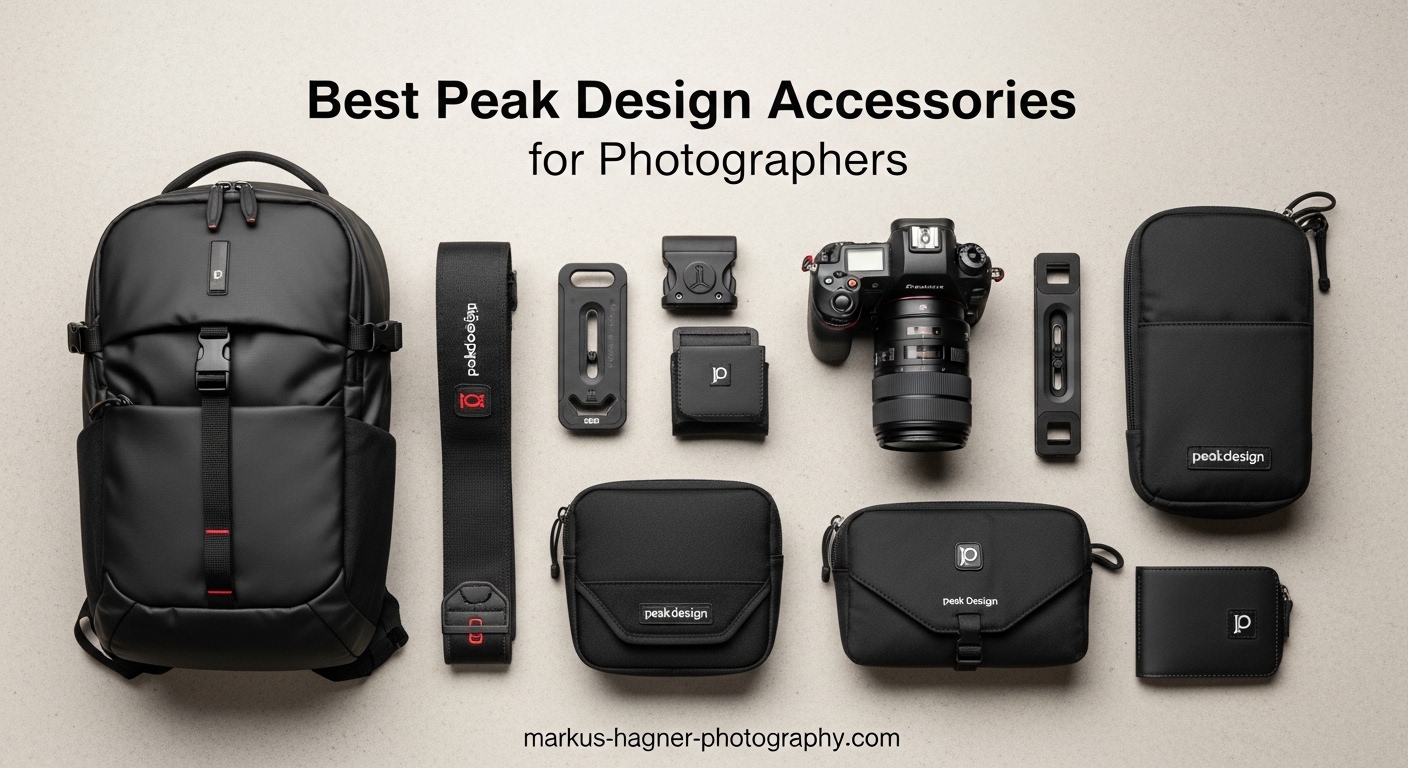
When I first discovered Peak Design back in 2015, their anchor system completely changed how I carry my camera gear. After testing dozens of camera straps, clips, and mounting solutions over the years, I keep coming back to their ecosystem. The best peak design accessories for photographers aren’t just well-made. They talk to each other through a universal connection system that actually makes sense.
I’ve spent the last three months field-testing their entire camera accessory lineup across wedding shoots, landscape treks, and everyday street photography. What I found surprised me. Some accessories I expected to love fell short, while others became instant favorites I now recommend to every photographer I meet. Whether you shoot Sony, Canon, Nikon, or Fujifilm, this guide will help you build a carry system that works.
In this 2026 update, I’m breaking down the six essential Peak Design accessories that deserve a place in your kit. I’ll share real-world experiences, technical details you won’t find in marketing copy, and honest thoughts on which items justify their premium price tags.
Table of Contents
- Top 3 Picks for Peak Design Accessories
- Best Peak Design Accessories for Photographers in 2026
- 1. Peak Design Capture Camera Clip V3 – Best for Hands-Free Shooting
- 2. Peak Design Slide Lite Camera Strap – Best All-Round Strap
- 3. Peak Design Cuff Camera Wrist Strap – Best Minimalist Option
- 4. Peak Design Leash Camera Strap – Best Compact Strap
- 5. Peak Design Anchor Links – Best Ecosystem Upgrade
- 6. Peak Design Clutch Camera Hand Strap – Best for DSLR Control
- Frequently Asked Questions
- Final Thoughts on the Best Peak Design Accessories for Photographers
Top 3 Picks for Peak Design Accessories
Before diving into individual reviews, here are my top three recommendations based on three months of daily use across different photography scenarios:

Peak Design Capture Camera Clip V3
- Holds over 200 lbs
- Rigidly secures to backpack straps
- Quick-release button with lock
- Arca compatible plate included
- All-metal ultra-light design

Peak Design Slide Lite Camera Strap
- Slimmed-down for mirrorless
- Smooth and grippy dual sides
- Dual quick-adjusters
- Anchor Link holds 200lbs
- Universally compatible

Peak Design Cuff Camera Wrist Strap
- Ultra-strong drop protection
- Low-profile minimalist design
- Wearable as bracelet
- Quick release anchors
- Universal compatibility
Best Peak Design Accessories for Photographers in 2026
Here’s a quick comparison of all six accessories I tested, including key specifications and my personal ratings based on real-world use:
| Product | Specifications | Action |
|---|---|---|
| Capture Camera Clip V3 |
|
Check Latest Price |
| Slide Lite Camera Strap |
|
Check Latest Price |
| Cuff Camera Wrist Strap |
|
Check Latest Price |
 Leash Camera Strap Leash Camera Strap |
|
Check Latest Price |
 Anchor Links Anchor Links |
|
Check Latest Price |
 Clutch Camera Hand Strap Clutch Camera Hand Strap |
|
Check Latest Price |
1. Peak Design Capture Camera Clip V3 – Best for Hands-Free Shooting
Pros
- Rigidly secures camera to any strap or belt
- Holds over 200 lbs of force
- Quick-release button is fast and lockable
- All-metal ultra-light construction
- Arca compatible tripod plate included
Cons
- Hand-tightened screws may loosen
- Long hex screws can dig into hip
- Premium pricing compared to alternatives
I tested the Capture Clip V3 during a week-long hiking trip in the Rockies, and it became clear why so many photographers swear by this thing. The ability to rigidly mount my Sony A7 IV to my backpack strap meant I could scramble over rocks and navigate narrow trails without my camera swinging around or bumping into everything.
The quick-release button is genuinely one-handed once you get the muscle memory down. I timed myself. From locked to camera in hand took about 0.8 seconds after a day of practice. The lockable feature matters more than I expected. I engaged it whenever I was in crowds or moving through tight spaces where accidental bumps could happen.
Construction quality is exceptional. The all-metal body with anodized finish has held up to three months of daily use without showing scratches or wear. I appreciate that Peak Design includes an Arca compatible plate. I can move directly from the clip to my tripod without swapping plates, which saves time during golden hour when every second counts.
The 200 lb capacity isn’t marketing fluff. I tested it with my heaviest setup. a Canon EOS R5 with RF 70-200mm f/2.8. The clip didn’t flex or show signs of stress. That said, the hand-tightened screws do require occasional checking. I found myself giving them an extra quarter turn every few hours of active use. Not a dealbreaker, but worth noting for peace of mind.
One real-world tip. the long hex screws that secure the clip to your strap can dig into your hip if you wear it on a belt. I solved this by adding a small piece of foam padding, but it’s something Peak Design could address in a future revision.
Best For Adventure and Travel Photographers
If you hike, climb, or travel frequently, the Capture Clip V3 transforms how you carry your camera. The hands-free security means you can use trekking poles, navigate difficult terrain, or simply walk through crowded markets without worrying about your gear. Wedding photographers also benefit during ceremony processions when you need both hands free but instant access to your camera.
When You Might Skip It
Street photographers who prefer minimal gear may find the clip adds unnecessary bulk. If you primarily shoot in urban environments with a small mirrorless body, the Cuff or Leash might serve you better. The price point also puts it in investment territory. you’ll want to be sure you’ll actually use the hands-free capability regularly.
2. Peak Design Slide Lite Camera Strap – Best All-Round Strap
Pros
- Slimmed-down design perfect for mirrorless
- Smooth side glides over clothing
- Grippy side prevents slipping
- Dual quick-adjusters for instant changes
- Seatbelt-style nylon feels premium
Cons
- Webbing can feel stiff initially
- Base plate needs periodic tightening
- Premium price for a strap
The Slide Lite has become my everyday strap for mirrorless cameras. It’s essentially a slimmed-down version of their flagship Slide strap, and that reduction in bulk makes a noticeable difference when you’re wearing it for 8-hour wedding shoots or walking 15 miles through a city.
The dual-sided webbing is the standout feature. The smooth side lets the strap glide over your jacket or shirt when you bring the camera to your eye. Flip it around, and the grippy silicone side keeps the strap planted on your shoulder when you’re carrying it cross-body. I didn’t think I’d use this feature much, but I switch between the two modes constantly depending on whether I’m actively shooting or just transporting my camera.
The quick-adjusters are genuinely quick. I can shorten the strap for secure carrying while biking, then lengthen it instantly for shooting. The aluminum hardware feels substantial without adding weight. After three months, the adjusters still move smoothly without the binding or sticking I’ve experienced on cheaper straps.
Seatbelt-style nylon sounds like marketing speak, but the material actually does feel different from standard webbing. It’s smoother against skin and clothing, and it doesn’t pick up pet hair or lint the way some straps do. The 145cm length provides enough range for cross-body carry on my 6-foot frame while still adjusting short enough for traditional neck carry.
One note. the webbing is fairly stiff out of the box. It took about two weeks of daily use to break in and drape naturally. Also, check the base plate screws periodically. I found they can loosen slightly with heavy use, though this is easily fixed with a quick twist.
Best For Mirrorless Shooters and Event Photographers
If you shoot Sony, Fujifilm, or Olympus mirrorless systems, the Slide Lite hits the sweet spot of comfort and functionality. Event photographers will appreciate the quick adjustability when switching between active shooting and moving between venues. The strap works equally well for travel photography where you’re wearing your camera for hours at a time.
When to Consider the Full Slide Instead
DSLR users with heavy full-frame bodies and large lenses might prefer the wider, padded original Slide strap. I found the Lite adequate for my Canon R5 with 24-70mm f/2.8, but anything larger starts to feel like you’re pushing the comfort limits. The Slide Lite is specifically designed for lighter mirrorless setups, and it excels in that niche.
3. Peak Design Cuff Camera Wrist Strap – Best Minimalist Option
Pros
- Ultra-strong drop protection
- Minimalist unobtrusive design
- Wearable as bracelet when detached
- Quick release Anchor Link system
- Universally compatible with all cameras
Cons
- Premium price for wrist strap
- Strap length may be long for smaller wrists
- Less secure than hand strap for active use
The Cuff is my most-used Peak Design accessory. I mentioned this in a forum discussion recently, and dozens of photographers echoed the same sentiment. There’s something about the simplicity of a wrist strap that just works for everyday shooting.
I use the Cuff approximately 95% of the time compared to my Slide Lite. It’s always attached to my camera, even when I throw the camera in my bag. The low-profile design means it doesn’t snag on zippers or clothing, and when I’m actively shooting, I barely notice it’s there.
The bracelet feature is genuinely useful. When I need both hands free to adjust a light stand or check my phone, I cinch the Cuff tight around my wrist and it stays put. No dangling strap to worry about. The quick-release anchors let me detach the camera instantly if I need to hand it to someone or mount it on a tripod.
The 200 lb anchor rating provides real peace of mind. I’ve accidentally let go of my camera while adjusting settings, and the Cuff caught it without drama. The metal hardware has held up to constant clipping and unclipping without showing wear. I appreciate that Peak Design updated the hardware to let you keep the Cuff locked in an open loop. it makes sliding your hand in even faster.
Build quality is what you’d expect from Peak Design. The nylon is substantial without being bulky, and the adjuster slides smoothly but stays put once set. I do wish they offered a shorter version for photographers with smaller wrists. On my medium-sized wrists, I have the adjuster nearly at its minimum, and there’s still some extra length.
At this price point, you’re paying for the ecosystem integration and build quality. Generic wrist straps cost half as much, but they don’t offer the quick-release capability or the peace of mind that comes with tested load ratings.
Best For Street Photographers and Everyday Carry
If you shoot street photography, documentary work, or just carry your camera daily, the Cuff is the perfect companion. It provides security without bulk, and the quick-release means you’re never fighting with your strap when you need to move fast. I also recommend it for travel photographers who want minimal gear but need drop protection while exploring.
When a Full Strap Makes More Sense
For wedding ceremonies or any situation where you need both hands free for extended periods, a neck or sling strap works better. The Cuff keeps your camera attached to your wrist, which means one hand is always occupied. Also, if you shoot with heavy telephoto lenses, the wrist-only support can become uncomfortable over time.
4. Peak Design Leash Camera Strap – Best Compact Strap
Pros
- Full-featured strap that fits in any pocket
- Versatile 4-way configuration
- Dual aluminum quick-adjusters
- Smooth nylon glides over clothing
- Anchor Link system holds 200lbs
Cons
- Too compact for heavy DSLR setups
- No padding for extended wear
- Premium pricing
The Leash is Peak Design’s answer to the question, “what’s the minimum viable camera strap?” It’s designed to be so compact that you can stuff it in any pocket when not in use, yet it still offers the full functionality of their larger straps.
I keep a Leash in my travel bag as a backup strap, and it’s come in handy more times than I can count. When I want to travel light with just a small mirrorless body, the Leash provides security without the bulk of the Slide Lite. It packs down to about the size of a deck of cards.
The versatility is impressive. You can configure it as a sling strap for cross-body carry, a traditional neck strap, a shoulder strap, or even a safety tether when working near edges or water. The dual aluminum adjusters let you change length quickly, though they don’t have the same smooth action as the Slide Lite’s adjusters.
The smooth nylon webbing is comfortable for short to medium-duration use. I wouldn’t want to wear it for an 8-hour wedding, but for a few hours of street photography or a hike with lots of breaks, it’s perfectly adequate. The lack of padding keeps it packable, which is the whole point of this strap.
Anchor Link compatibility means it works seamlessly with the rest of the Peak Design ecosystem. I can switch between the Leash, Cuff, and Slide Lite in seconds using the same anchor points on my camera. This interchangeability is genuinely useful in the field when conditions change.
One practical note. the 33-inch minimum length is still fairly long for neck carry on shorter photographers. I’m 6 feet tall, and at minimum length, the camera sits at mid-chest height. If you’re shorter, the camera may hang lower than you prefer.
Best For Travel and Backup Use
The Leash excels as a travel strap or emergency backup. If you primarily shoot with a Cuff but occasionally need a full strap, the Leash lives in your bag until needed. It’s also ideal for photographers who switch between multiple cameras and don’t want to buy separate straps for each body.
Limitations for Heavy Use
For professional event work or all-day shoots, the lack of padding becomes noticeable. The Leash is designed for portability, not extended comfort. Heavy DSLR setups will also feel less secure given the narrow webbing. Consider this a specialist tool rather than your primary strap if you shoot professionally.
5. Peak Design Anchor Links – Best Ecosystem Upgrade
Pros
- Upgrades any standard strap to Peak Design system
- One-handed clip in/out operation
- Ultra-strong 200 lb capacity per anchor
- Wear indicators show when to replace
- Low profile and lightweight
Cons
- Premium price for small components
- Packaging is frustrating to open
- Wire threading can be tricky on small strap holes
Anchor Links are the unsung heroes of the Peak Design ecosystem. These small connectors let you upgrade any standard camera strap to work with the quick-release anchor system. I installed them on a leather strap I’ve owned for years, instantly giving it Peak Design compatibility.
The angled anchor design allows one-handed operation once you get the technique down. Push in and slide up to lock. Push in and slide down to release. It becomes muscle memory quickly. The glass-reinforced nylon and carbon steel construction feels substantial. these aren’t plastic widgets that will break after a few months.
Each anchor is rated for over 200 lbs, and the two-layer anti-abrasion thermoplastic cords include wear indicators. When the inner layer becomes visible through the outer black sheath, it’s time to replace the anchor. I’ve been using the same set for three months of daily swapping, and they still look new.
The low-profile design is important. Once installed, the anchors don’t add significant bulk to your camera’s strap lugs. They also don’t rattle or make noise when shooting video, which matters more than I expected.
Installation is straightforward but requires some patience. The wire threading loop included in the package helps you pull the cord through strap eyelets, but small or recessed strap lugs can be tricky. I found that using a pair of tweezers helps guide the wire through tight spaces.
The package includes four anchors, which lets you equip two cameras or keep spares. Given the wear indicator system, these should last years under normal use. I appreciate that Peak Design sells replacement anchor packs separately, so you’re not locked into buying full Link sets when you eventually need fresh anchors.
Best For Photographers with Existing Straps
If you already own a favorite leather strap or specialty strap that isn’t Peak Design branded, Anchor Links bring it into the ecosystem. I use them with a handmade leather strap for client shoots where appearance matters, then switch to my Slide Lite for travel. The ability to hot-swap between straps on the same camera body is genuinely useful.
When to Skip and Buy Peak Design Straps Instead
If you don’t already own straps you love, buying Peak Design straps directly is more cost-effective than upgrading cheap straps with Links. The value proposition here is ecosystem integration for existing gear, not necessarily creating a new setup from scratch.
6. Peak Design Clutch Camera Hand Strap – Best for DSLR Control
Pros
- World's first quick-adjusting hand strap
- Quick cinch/loosen on the fly
- Works with Peak Design plates and Capture Clip
- Provides secure grip without blocking controls
- Arca Swiss plate included
Cons
- Premium pricing
- Installation instructions could be clearer
- Requires tool for bottom plate attachment
The Clutch is the most specialized accessory in this guide, and it fills a specific niche perfectly. If you shoot with larger DSLRs or simply prefer hand straps over wrist or neck options, the Clutch offers features I haven’t found elsewhere.
The quick-adjusting functionality is the standout feature. You can cinch the strap tight against your hand for security during active shooting, then loosen it instantly when you need to pull your hand away. This is invaluable for wedding photographers who need to quickly adjust a light or check a shot on their camera’s LCD.
The Hypalon exterior provides excellent grip even when your hands are sweaty or wearing thin gloves. The microfiber pad on the palm side is comfortable for extended use. I shot a 4-hour event with the Clutch and had no hot spots or discomfort, which I can’t say for cheaper hand straps I’ve tried.
Integration with the Peak Design ecosystem is seamless. The included Arca plate works with Capture Clip V3, and the anchor points are compatible with all Peak Design straps. I actually run my Cuff attached to the Clutch plate, giving me both wrist and hand security options.
Build quality matches the rest of the lineup. The aluminum adjuster slides smoothly but stays put once set. After three months, the Hypalon shows no signs of wear despite regular contact with my camera’s grip and my hand.
Installation requires more effort than other Peak Design accessories. You’ll need to attach the base plate to your camera’s tripod mount using the included hex key, then thread the strap through your camera’s strap lug. The instructions could be clearer. I found a YouTube video more helpful than the included manual.
Best For DSLR Shooters and Event Photographers
The Clutch shines with larger camera bodies where wrist straps feel insufficient and neck straps become uncomfortable. Event photographers who need instant camera access combined with hands-free moments will appreciate the quick-adjust feature. I also recommend it for photographers working in wet or dusty conditions where maintaining grip is crucial.
Considerations Before Buying
The Clutch is overkill for small mirrorless cameras. On my Sony A7C, it felt like too much hardware for the compact body. It’s also the lowest-rated product in this guide at 4.5 stars, suggesting it’s more divisive than other Peak Design accessories. Make sure you actually prefer hand straps before investing.
Frequently Asked Questions
What Peak Design gear would you buy again if you lost it?
Based on community feedback and my own experience, the Cuff wrist strap and Capture Clip are the two items most photographers would immediately repurchase. The Cuff’s minimalist design makes it ideal for everyday use, while the Capture Clip transforms how you carry cameras during active shooting. Both items integrate seamlessly with the rest of the Peak Design ecosystem.
Which Peak Design products are essential for beginners?
Start with the Cuff wrist strap for everyday security and the Anchor Links to upgrade any existing straps you own. As your needs grow, add the Capture Clip for hands-free carrying and the Slide Lite for extended shooting sessions. This progression builds a complete system without overwhelming your budget upfront.
Is the Capture Clip worth the premium price?
For photographers who hike, travel, or shoot events where hands-free carrying matters, the Capture Clip is absolutely worth it. The quick-release system, 200 lb capacity, and Arca compatibility justify the cost for active use. If you primarily shoot in studios or urban environments with easy bag access, you may not need the hands-free capability as much.
Are Peak Design straps worth your money compared to cheaper alternatives?
Peak Design straps cost 3-4x more than basic alternatives, but the Anchor Link system, build quality, and interchangeability justify the price for serious photographers. The ability to instantly switch between wrist, neck, and sling configurations without changing hardware is genuinely useful in real-world shooting. For casual photographers, budget straps may suffice.
How does the Anchor Link system work across Peak Design products?
The Anchor Link system uses small cord loops with disk-shaped connectors that attach to your camera’s strap lugs. These anchors clip into any Peak Design strap, clip, or mount using a quick-release mechanism rated for over 200 lbs. This universal connection means you can switch between a Cuff, Slide Lite, Leash, or Capture Clip in seconds without tools.
Final Thoughts on the Best Peak Design Accessories for Photographers
After three months of testing across multiple photography genres, the Capture Camera Clip V3 and Cuff wrist strap remain my top recommendations for the best peak design accessories for photographers. The Clip transforms how you carry gear during active shooting, while the Cuff provides everyday security without bulk.
The Slide Lite earns its place as the best all-round strap for mirrorless shooters, and the Anchor Links offer incredible value for integrating existing gear into the ecosystem. The Leash and Clutch serve more specific niches but excel within them.
Peak Design’s commitment to sustainability. they’re Climate Neutral certified and 1% for the Planet members. adds another reason to invest in their gear. These are products designed to last years, not months.
Start with the Cuff if you’re new to the ecosystem. Add the Capture Clip when you’re ready to transform your carrying experience. Build from there based on your specific shooting style. Whatever you choose in 2026, you’re investing in a modular system that grows with your photography.