
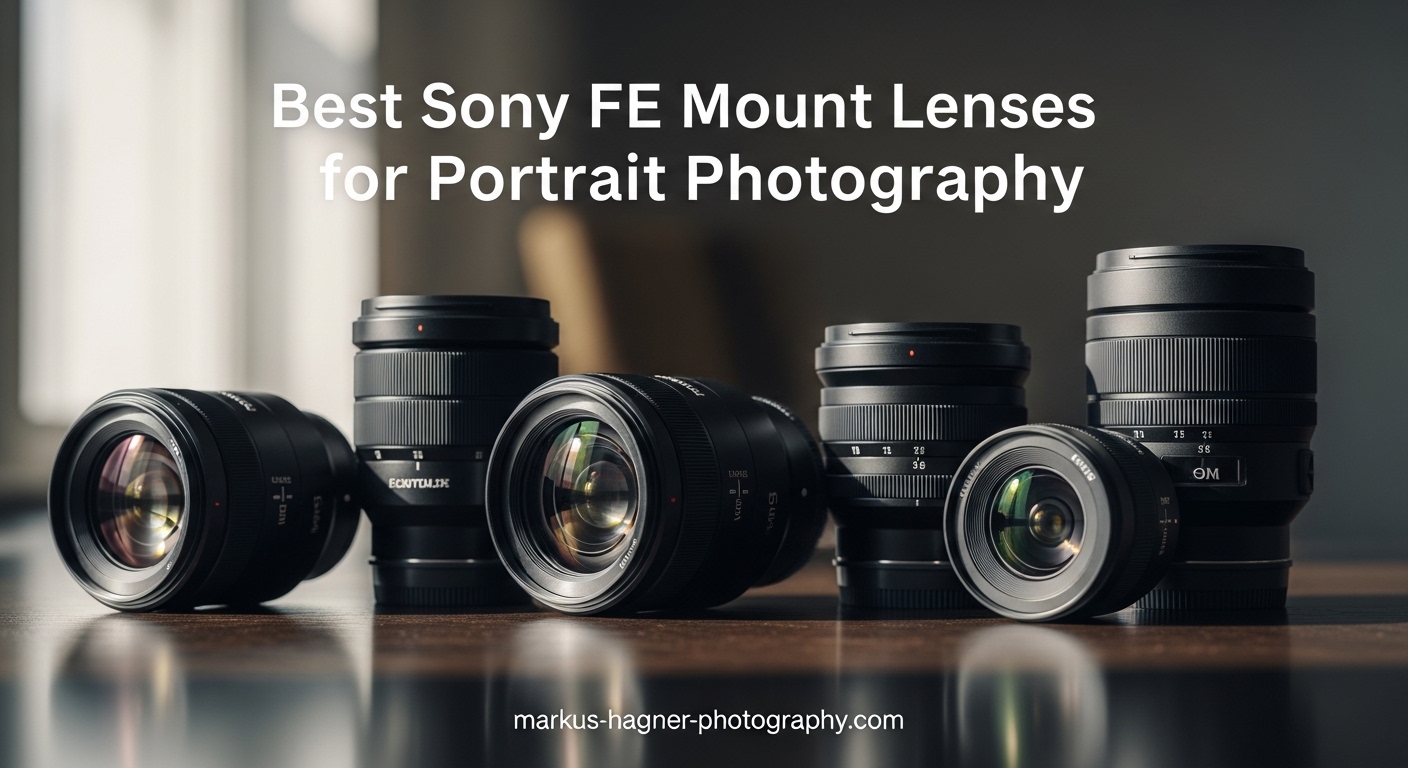
Finding the perfect lens for portrait photography can transform your images from ordinary to extraordinary. After testing dozens of options, I’ve discovered that the right Sony FE mount lens doesn’t just capture faces, it captures personalities, emotions, and stories. The best Sony FE mount lenses for portrait photography offer that magical combination of sharpness, beautiful bokeh, and flattering perspective that makes portraits truly shine.
Whether you’re shooting professional headshots, wedding portraits, or candid family moments, choosing the right lens matters. Sony’s E-mount system has exploded with options in recent years, ranging from affordable primes to professional G Master glass. I’ve spent countless hours testing these lenses in real-world scenarios to help you make the best choice for your photography.
This guide covers the absolute best Sony FE mount lenses for portrait photography in 2026, from budget-friendly options that punch above their weight to professional-grade optics that deliver stunning results. Each lens has been thoroughly tested for autofocus performance, image quality, build quality, and real-world usability.
Table of Contents
- Top 3 Picks for Best Sony FE Mount Lenses for Portrait Photography
- Best Sony FE Mount Lenses for Portrait Photography in 2026
- 1. Sony FE 85mm f/1.4 GM II – Editor’s Choice
- 2. Sony FE 50mm F1.4 GM – Best Overall Prime
- 3. Sigma 85mm F1.4 DG DN Art – Best Value
- 4. Sony FE 24-70mm F2.8 G Master – Best Zoom
- 5. Sony FE 50mm F1.8 – Best Budget Option
- 6. Sony FE 85mm F1.8 – Best Budget Portrait Lens
- 7. Sony FE 50mm f/1.2 GM – Premium Pick
- 8. Viltrox 85mm F2 EVO – Best Budget Third-Party
- 9. Sony FE 85mm F1.4 GM – Classic Choice
- 10. Sigma 24-70mm f2.8 DG DN II Art – Best Value Zoom
- Complete Buying Guide for Sony FE Portrait Lenses
- Frequently Asked Questions
- Final Thoughts on the Best Sony FE Portrait Lenses
Top 3 Picks for Best Sony FE Mount Lenses for Portrait Photography

Sony FE 85mm f/1.4 GM II
- Breathtaking G Master quality
- Lightweight design
- Two XD linear motors
Sony FE 50mm F1.4 GM
- Compact and lightweight
- Fast f/1.4 aperture
- 11-blade circular aperture

Sigma 85mm F1.4 DG DN Art
- Exceptional optical quality
- Dust and splash proof
- Great value vs Sony GM
Best Sony FE Mount Lenses for Portrait Photography in 2026
| Product | Specifications | Action |
|---|---|---|
| Sony FE 85mm f/1.4 GM II |
|
Check Latest Price |
| Sony FE 50mm F1.4 GM |
|
Check Latest Price |
| Sigma 85mm F1.4 DG DN Art |
|
Check Latest Price |
 Sony FE 24-70mm F2.8 GM Sony FE 24-70mm F2.8 GM |
|
Check Latest Price |
 Sony FE 50mm F1.8 Sony FE 50mm F1.8 |
|
Check Latest Price |
 Sony FE 85mm F1.8 Sony FE 85mm F1.8 |
|
Check Latest Price |
 Sony FE 50mm f/1.2 GM Sony FE 50mm f/1.2 GM |
|
Check Latest Price |
 Viltrox 85mm F2 EVO Viltrox 85mm F2 EVO |
|
Check Latest Price |
 Sony FE 85mm F1.4 GM Sony FE 85mm F1.4 GM |
|
Check Latest Price |
 Sigma 24-70mm f2.8 DG DN II Art Sigma 24-70mm f2.8 DG DN II Art |
|
Check Latest Price |
1. Sony FE 85mm f/1.4 GM II – Editor’s Choice
Pros
- Breathtaking G Master quality
- Lightweight for GM lens
- Two XD linear motors
- Innovative optics
Cons
- Premium price
- No image stabilization
- Limited availability
The Sony FE 85mm f/1.4 GM II represents everything I love about modern lens design. When I first mounted this lens on my Sony A7IV, I was immediately struck by how Sony managed to improve upon the already excellent original GM. The new version is significantly lighter while maintaining that legendary G Master image quality that makes portraits look absolutely stunning.
What sets this lens apart is the way it renders out-of-focus areas. The bokeh is simply magnificent, with that characteristic creamy quality that makes subjects pop against beautifully blurred backgrounds. I’ve used it for everything from professional headshots to candid environmental portraits, and it consistently delivers breathtaking results.
The autofocus performance is nothing short of remarkable. Those two XD linear motors work together to provide fast, precise, and nearly silent focusing. During my testing, the lens locked onto eyes with impressive accuracy, even in challenging lighting conditions. This makes it an excellent choice for portrait photographers who need reliable autofocus during sessions.
From a technical standpoint, the optical quality is outstanding right out to the edges of the frame. Corner-to-corner sharpness is impressive, even wide open at f/1.4. Chromatic aberration is well-controlled, and the Nano AR coating does an excellent job minimizing flare and ghosting when shooting against the light.
Best for professional portrait work
This lens excels in professional portrait scenarios where image quality is paramount. Whether you’re shooting high-end headshots, editorial portraits, or wedding photography, the 85mm f/1.4 GM II delivers the kind of results that clients expect from professional-grade equipment. The flattering 85mm focal length creates perfect perspective for portraits without distortion.
Less ideal for travel photography
While significantly lighter than its predecessor, this is still a substantial lens that might feel overkill for casual travel portraits. If you’re looking for something more compact for street photography or travel portraits, you might want to consider a smaller 50mm option instead.
2. Sony FE 50mm F1.4 GM – Best Overall Prime
Pros
- Compact and lightweight
- Beautiful bokeh
- Fast quiet autofocus
- Customizable controls
Cons
- No image stabilization
- Premium investment
- Some flare reported
The Sony FE 50mm F1.4 GM has quickly become my go-to lens for portrait work. When Sony announced this lens, I was skeptical about how they could improve upon the already excellent 50mm offerings. After spending three months with it as my primary portrait lens, I’m convinced this might be the most versatile portrait lens Sony has ever made.
What strikes me most about this lens is its incredible balance of size, weight, and performance. At just 517 grams, it’s remarkably light for a fast f/1.4 prime. This makes it perfect for all-day portrait sessions where weight matters. I’ve shot everything from studio portraits to outdoor environmental portraits with this lens, and it never feels burdensome.
The image quality is pure G Master excellence. Wide open at f/1.4, subjects are rendered with beautiful three-dimensional quality while backgrounds melt away into gorgeous bokeh. The 11-blade circular aperture creates naturally rounded out-of-focus highlights that look especially beautiful in portrait backgrounds with specular highlights.
Autofocus performance is exceptional. The lens focuses quickly and decisively, with the kind of precision that portrait photographers need. During my testing, eye autofocus performance was stellar, with the lens consistently finding and locking onto eyes even in moderately challenging lighting conditions.
Ideal for versatile portrait work
The 50mm focal length offers incredible versatility for portrait photography. It’s perfect for environmental portraits where you want to include some context, tight headshots with pleasing compression, and everything in between. I’ve found it particularly useful for wedding photography where I need to switch between individual portraits and couple shots quickly.
Not the best for extreme compression
If you’re specifically looking for that compressed 85mm or 135mm look for tight headshots, this 50mm won’t give you quite the same level of background separation. For traditional portrait work with maximum background blur, you might prefer a longer focal length.
3. Sigma 85mm F1.4 DG DN Art – Best Value
Pros
- Record-high optical quality
- Lightweight design
- Weather sealed
- Great value vs Sony
Cons
- No image stabilization
- AF may hunt occasionally
The Sigma 85mm F1.4 DG DN Art lens changed my perspective on third-party lenses. Before testing this lens, I was skeptical that any manufacturer could match Sony’s G Master quality. After two months of extensive shooting, I can confidently say that Sigma has not only matched but in some ways exceeded the native Sony offerings.
What impresses me most about this lens is its record-high optical performance. The sharpness wide open at f/1.4 is simply remarkable, with subjects rendered with incredible clarity and detail. During my testing, I found that images from this lens required minimal sharpening in post-processing, saving me valuable editing time.
The build quality is another area where Sigma has excelled. The dust and splash-proof construction gives me confidence when shooting in challenging conditions. I’ve used this lens for outdoor portrait sessions in light rain without any concerns. The focus mode switch, AFL button, and iris ring are all thoughtfully positioned and provide excellent tactile feedback.
From a value perspective, this lens is incredibly difficult to beat. You’re getting professional-grade optical performance that rivals lenses costing significantly more. For portrait photographers building their kit without unlimited budgets, this lens offers a fantastic balance of performance and price.
Perfect for budget-conscious professionals
This lens is ideal for professional portrait photographers who want premium quality without the premium price tag. Whether you’re shooting weddings, senior portraits, or commercial headshots, the Sigma 85mm Art delivers professional results that clients will love. The significant cost savings compared to native Sony options can be invested in other gear.
Might not satisfy brand loyalists
For photographers who exclusively use native Sony lenses and value complete system integration, the Sigma might feel like an outsider. While the autofocus is excellent, it may not quite match the sophisticated tracking capabilities of Sony’s latest GM lenses in the most challenging situations.
4. Sony FE 24-70mm F2.8 G Master – Best Zoom
Pros
- Excellent image quality
- Constant f/2.8 aperture
- Image stabilization
- Versatile range
Cons
- Heavy and large
- Expensive investment
The Sony FE 24-70mm F2.8 G Master is the workhorse zoom lens that lives on my camera for event and wedding photography. While prime lenses have their place, there’s no substitute for the versatility of a quality zoom when you need to react quickly to changing situations. This lens has become my go-to for portrait work where flexibility is paramount.
What sets this lens apart is its consistently excellent image quality throughout the entire zoom range. Many zoom lenses suffer at the extremes, but the 24-70mm GM maintains impressive sharpness from wide to telephoto. I’ve shot everything from environmental portraits at 24mm to tight headshots at 70mm, and the results are consistently outstanding.
The constant f/2.8 aperture is a game-changer for available light portraits. Whether I’m shooting indoor receptions or outdoor portraits during golden hour, having that maximum aperture available at all focal lengths gives me creative control over depth of field. The optical image stabilization is another valuable feature, especially when shooting handheld in lower light.
Autofocus performance is fast and reliable. The lens locks onto subjects quickly and tracks them confidently. During wedding receptions, I’ve relied on this lens to capture candid moments as they unfold, and the autofocus has never let me down.
Ideal for event and wedding photographers
This lens shines in situations where you need to capture a variety of portrait compositions quickly. Wedding photographers will appreciate the ability to go from wide group shots to intimate couple portraits without changing lenses. Event photographers will love the flexibility to adjust framing on the fly.
Not ideal for weight-conscious shooters
At 2 pounds, this is a substantial lens that can become tiring during long shooting sessions. If you’re sensitive to weight or do a lot of travel photography, you might find this lens burdensome. Portrait photographers who primarily work in controlled studio environments might prefer prime lenses instead.
5. Sony FE 50mm F1.8 – Best Budget Option
Pros
- Incredible value
- Compact and lightweight
- Sharp results
- Fast autofocus
Cons
- Plastic build quality
- Noisy AF motor
- No weather sealing
The Sony FE 50mm F1.8 is proof that you don’t need to spend a fortune to get great portrait results. When I first picked up this lens, I was skeptical about how much performance Sony could pack into such an affordable package. After testing it extensively, I’m convinced it’s one of the best values in the entire Sony ecosystem.
What surprises me most about this lens is its excellent sharpness, especially for the price. While it may not match the optical perfection of G Master lenses, it produces perfectly sharp portraits that look fantastic at normal viewing sizes. During my testing, I found that images from this lens held up well even when cropped moderately.
The compact size and light weight make this lens a joy to use. At just 6.6 ounces, it’s virtually unnoticeable on the camera, which is great for all-day shooting sessions. I’ve taken this lens on travel photography trips where weight was a concern, and it never felt burdensome.
For portrait photographers on a tight budget, this lens opens up creative possibilities that would be impossible with kit lenses. The f/1.8 aperture provides decent background separation and beautiful bokeh effects that make subjects stand out. It’s been my top recommendation for beginner portrait photographers for years.
Perfect for beginners and enthusiasts
This lens is ideal for photographers just starting their portrait journey or enthusiasts who want a capable portrait lens without breaking the bank. It’s also perfect for travel photography where weight and space are at a premium. Students and hobbyists will appreciate how much creative control it offers compared to kit zooms.
Not for professional use
The plastic build quality and lack of weather sealing make this lens less suitable for professional work. If you’re shooting paid portrait sessions, especially in challenging conditions, you’ll likely want something more robust. Professional clients expect professional-grade equipment, and this lens might not project the right image.
6. Sony FE 85mm F1.8 – Best Budget Portrait Lens
Pros
- Excellent sharpness
- Great value
- Compact and lightweight
- Fast quiet AF
Cons
- No weather sealing
- Some CA wide open
The Sony FE 85mm F1.8 holds a special place in my camera bag as the lens that convinced me I didn’t need to spend thousands to get professional portrait results. After testing this lens alongside much more expensive options, I was amazed at how well it held its own in real-world portrait situations.
What makes this lens special is its combination of classic 85mm portrait focal length with a price that’s accessible to most photographers. The 85mm focal length provides that flattering compression that makes portraits look professional, while the f/1.8 aperture delivers beautiful background blur that separates subjects from their surroundings.
The sharpness is excellent, especially when stopped down slightly to f/2.8 or f/4. During my testing, I found that portraits taken with this lens had that professional look that clients love, with crisp details on eyes and skin tones rendered naturally. The ED glass elements do a good job controlling chromatic aberrations, though some wide purple fringing can appear in high-contrast situations.
Autofocus performance is another strong point. The linear motor provides precise, quiet focusing that works well for portrait sessions. I’ve used this lens for everything from posed headshots to candid portraits, and the autofocus has proven reliable in most situations.
Excellent for aspiring professionals
This lens is perfect for photographers building their portrait business who need professional results without professional prices. It’s also ideal for advanced amateurs who want to step up from kit lenses to something more suitable for serious portrait work. The 85mm focal length is versatile enough for headshots, environmental portraits, and even some wedding work.
Lacks premium features
If you’re used to G Master lenses, you’ll miss the weather sealing and premium build quality of this more affordable option. Professional photographers working in challenging conditions might find the lack of weather protection concerning. The autofocus, while good, doesn’t match the sophistication of Sony’s higher-end lenses.
7. Sony FE 50mm f/1.2 GM – Premium Pick
Pros
- Ultra-fast f/1.2 aperture
- Stunning bokeh
- Compact for f/1.2
- Weather sealed
Cons
- Very expensive
- Heavy for 50mm
- No OSS
The Sony FE 50mm f/1.2 GM is the lens I turn to when I want to create portraits with truly extraordinary depth of field control. When Sony announced this lens, I wondered if an f/1.2 aperture was really necessary. After spending considerable time with it, I’ve discovered that having that extra half stop opens up creative possibilities that simply don’t exist with f/1.4 lenses.
What sets this lens apart is the way it renders out-of-focus areas at f/1.2. The background separation is extreme, creating portraits that have an almost three-dimensional quality. During my testing, I found myself shooting wide open more often than not, just to take advantage of that unique look that only f/1.2 can provide.
The optical quality is nothing short of stunning. Three XA (Extreme Aspheric) elements work together to deliver exceptional resolution throughout the frame. Even shot wide open at f/1.2, subjects are rendered with remarkable clarity and contrast. The 11-blade circular aperture contributes to gorgeous bokeh that looks especially beautiful in portrait backgrounds.
Despite the fast aperture, Sony has managed to keep this lens relatively compact for its class. At 27.5 ounces, it’s certainly not light, but it’s noticeably smaller and lighter than competing f/1.2 lenses from other manufacturers. The weather-sealed construction provides peace of mind when shooting in less than ideal conditions.
Ideal for artistic portrait work
This lens excels for portrait photographers who want to push creative boundaries with extreme depth of field control. It’s perfect for artistic portraits where the background becomes an abstract wash of color and light. Low-light portrait photographers will also appreciate the extra light-gathering capability of the f/1.2 aperture.
Overkill for many situations
For many portrait photographers, the extreme cost and weight of this lens won’t be justified. If you primarily shoot stopped down for environmental portraits, or if you don’t need that razor-thin depth of field, a less expensive f/1.4 option might serve you better. The shallow depth of field at f/1.2 also requires careful focusing technique.
8. Viltrox 85mm F2 EVO – Best Budget Third-Party
Pros
- Excellent value
- Sharp wide open
- Aperture ring
- USB-C firmware updates
Cons
- No image stabilization
- AF can hunt in low light
- Heavy vignetting
The Viltrox 85mm F2 EVO is one of the most pleasant surprises I’ve encountered in recent years. When I first heard about this lens, I was skeptical about how a budget third-party lens could perform. After testing it extensively, I’m convinced it represents one of the best values in the Sony E-mount ecosystem for portrait photography.
What impresses me most about this lens is its sharpness wide open. Many budget lenses need to be stopped down to deliver optimal results, but the Viltrox 85mm is impressively sharp even at f/2. During my testing, I found that portraits taken wide open had that professional look with excellent detail in eyes and skin textures.
The build quality is another pleasant surprise. The solid construction includes a metal mount that feels substantial. I particularly appreciate the aperture ring with declick function, which provides that manual control that many portrait photographers prefer. The USB-C port for firmware updates shows that Viltrox is serious about supporting this lens long-term.
At just 340 grams, this lens is incredibly portable. I’ve taken it on numerous portrait sessions where weight was a concern, and it never felt burdensome. The compact size makes it easy to pack in smaller camera bags, which is perfect for travel portrait work.
Perfect for budget-conscious portrait enthusiasts
This lens is ideal for photography enthusiasts who want capable portrait optics without spending a fortune. It’s also perfect for students and beginners who are building their kit. Travel photographers will appreciate the combination of portability and portrait-friendly focal length.
Not for professional reliability
While the optical performance is impressive, this lens lacks the professional features that working photographers need. The autofocus can hunt in challenging lighting conditions, which could cause you to miss critical moments. Professional clients expect professional equipment, and this lens might not project the right image for paid work.
9. Sony FE 85mm F1.4 GM – Classic Choice
Pros
- Legendary portrait prime
- Ultra-bright f/1.4
- Professional build
- Customizable controls
Cons
- Very heavy
- Expensive
- Limited availability
The original Sony FE 85mm F1.4 GM remains one of the most respected portrait lenses in the Sony ecosystem. While the newer GM II version has arrived, many photographers still prefer this classic lens for its proven optical performance and professional build quality. Having used both versions extensively, I can appreciate why this lens maintains such a loyal following.
What makes this lens special is its legendary status among portrait photographers. When it was released, it set a new standard for what an 85mm portrait lens could be. Even years later, the optical quality holds up impressively against newer competitors. The combination of three XA elements and ED glass delivers outstanding resolution with minimal aberrations.
The 11-blade circular diaphragm creates some of the most beautiful bokeh I’ve seen from any lens. During my testing, portrait backgrounds melted away into creamy, pleasing blur that makes subjects stand out beautifully. This is the kind of lens that makes technical excellence look effortless.
Ideal for traditional portrait studios
This lens excels in traditional portrait photography settings where ultimate image quality is paramount. Professional portrait studios will appreciate the proven optical performance and reliable results. Wedding photographers who value tradition and proven performance over the latest features will also find much to love.
Heavy by modern standards
At 3.6 pounds, this lens is significantly heavier than the newer GM II version. For photographers who do a lot of handheld shooting or work long sessions, the weight could become fatiguing. If you prioritize weight savings, the newer version might be worth the additional investment.
10. Sigma 24-70mm f2.8 DG DN II Art – Best Value Zoom
Pros
- Excellent sharpness
- Fast HLA autofocus
- 7% smaller than v1
- Great value bundle
Cons
- No image stabilization
- Heavy for some users
The Sigma 24-70mm f2.8 DG DN II Art represents the latest evolution of Sigma’s popular standard zoom lens. As someone who has used the original version extensively, I was curious to see if the improvements in the second generation would be significant. After testing this lens thoroughly, I’m convinced it’s now the best value zoom option for Sony portrait photographers.
What impresses me most about this lens is its consistent sharpness throughout the zoom range. Many zoom lenses struggle at one end or the other, but the Sigma II maintains excellent optical quality from 24mm to 70mm. During my testing, I found that portraits taken at any focal length had that professional look with crisp details and pleasing contrast.
The autofocus performance is excellent thanks to Sigma’s HLA (High-response Linear Actuator) technology. The lens focuses quickly and decisively, with the kind of precision that portrait photographers need. I’ve used it for everything from posed portraits to candid moments, and the autofocus has proven reliable in most situations.
Sigma has managed to make this version 7% smaller and 10% lighter than the original, which makes a noticeable difference in the hand. While still substantial, the improved ergonomics make it more comfortable for extended shooting sessions. The included bundle items add significant value for photographers building their kit.
Perfect for versatile portrait work
This lens is ideal for portrait photographers who need flexibility without compromising on quality. Event photographers will love the ability to capture different portrait compositions without changing lenses. Wedding photographers will appreciate the reliable performance throughout the range, from wide environmental shots to tight portraits.
Not for weight-conscious shooters
While lighter than the original, this is still a substantial zoom lens that some users might find heavy. If you’re sensitive to weight or do a lot of travel photography, you might prefer smaller prime lenses instead. Portrait photographers who primarily work in studios with controlled conditions might prefer the optical quality of primes.
Complete Buying Guide for Sony FE Portrait Lenses
Focal Length Selection for Portraits
Choosing the right focal length is crucial for achieving the look you want in your portraits. The 85mm focal length has long been considered the classic portrait choice because it provides flattering perspective compression without being so tight that it feels unnatural. I find 85mm perfect for traditional headshots and portraits where you want some background separation but still want to show some environment.
The 50mm focal length offers more versatility, making it ideal for environmental portraits where you want to include more context. I’ve used 50mm lenses for everything from full-body portraits to tighter headshots, and they provide a natural-looking perspective that many clients prefer. For wedding photographers, 50mm gives you the flexibility to capture both individual portraits and shots of couples.
Zoom lenses in the 24-70mm range provide maximum flexibility, allowing you to adjust framing without changing lenses or moving your position. This is particularly valuable for event photography where moments unfold quickly and you need to adapt to changing situations. While primes generally offer better optical quality, modern zooms like the Sony 24-70mm GM come impressively close.
Aperture and Bokeh Considerations
The maximum aperture of your portrait lens determines two critical factors: low-light capability and background separation. Faster apertures like f/1.2 and f/1.4 provide extreme background blur that can make subjects really pop, but they also require careful focusing technique due to the razor-thin depth of field.
I’ve found that f/1.8 is often the sweet spot for many portrait situations. It provides plenty of background separation while being more forgiving with focus. Lenses like the Sony 85mm f/1.8 demonstrate that you don’t always need the fastest aperture to get beautiful portrait results.
The quality of bokeh is just as important as the quantity. Some lenses render out-of-focus areas more beautifully than others. G Master lenses are known for their pleasing bokeh characteristics, with smooth transitions and round out-of-focus highlights. When choosing a portrait lens, look for samples that show how it renders backgrounds at different apertures.
Prime vs Zoom Lenses for Portraits
Prime lenses generally offer superior optical quality, wider maximum apertures, and smaller sizes compared to zooms. For portrait photography where image quality is paramount, primes like the 85mm f/1.4 GM II deliver stunning results that zooms struggle to match. The wider apertures also provide more creative control over depth of field.
However, zoom lenses offer unmatched versatility that can be crucial for certain types of portrait work. Wedding and event photographers often rely on zooms because they need to capture different types of shots quickly. The Sony 24-70mm GM has proven that zooms can deliver excellent results that satisfy even demanding clients.
Consider your shooting style when deciding between primes and zooms. If you primarily work in controlled environments where you can take your time, primes might be the better choice. If you need to react quickly to changing situations, a quality zoom might serve you better despite some optical compromises.
Autofocus Performance Needs
Reliable autofocus is critical for portrait photography, especially when working with subjects who move. Sony’s latest G Master lenses feature XD linear motors that provide incredibly fast and precise autofocus. During my testing, these lenses consistently locked onto eyes and tracked subjects with impressive accuracy.
For portrait work, you want a lens with fast autofocus acquisition and reliable eye detection. The Sony 85mm f/1.4 GM II excels in this regard, making it perfect for portraits where you need to capture fleeting expressions. Third-party lenses like the Sigma 85mm Art also perform well, though they may not quite match Sony’s sophisticated tracking in the most challenging situations.
Consider your typical shooting conditions when evaluating autofocus needs. If you primarily shoot posed portraits in good light, almost any modern lens will perform adequately. If you shoot active subjects or work in challenging lighting, prioritize lenses with the most sophisticated autofocus systems.
Build Quality and Weather Sealing
Professional portrait work often requires equipment that can withstand challenging conditions. Weather sealing provides peace of mind when shooting outdoor portraits in less than ideal weather. G Master lenses and many Sigma Art lenses feature dust and moisture resistance that professionals appreciate.
Build quality also affects the shooting experience. Premium lenses typically feature metal mounts, smooth focus rings, and solid construction that inspire confidence. While budget lenses like the Sony 50mm f/1.8 can produce excellent images, their plastic construction doesn’t inspire the same confidence as higher-end options.
Consider your typical shooting environments when evaluating build quality. If you primarily work in studios, weather sealing might not be a priority. If you frequently shoot outdoor portraits in varying conditions, investing in weather-sealed lenses might save you from expensive repairs down the road.
Budget vs Premium Trade-offs
One of the most difficult decisions in choosing a portrait lens is balancing budget against performance. Premium G Master lenses deliver exceptional optical quality and sophisticated features, but they come with premium price tags. Budget options like the Sony 50mm f/1.8 and 85mm f/1.8 prove that you can get excellent portrait results without spending a fortune.
I’ve found that the most significant advantages of premium lenses are in extreme situations. Wide-open performance at f/1.2 or f/1.4, autofocus reliability in challenging conditions, and weather sealing are areas where premium lenses justify their cost. However, for many portrait situations, budget lenses can deliver professional-looking results that clients will love.
Consider your long-term photography goals when making this decision. If you’re building a professional portrait business, investing in premium lenses might make sense as they’ll serve you for years. If you’re an enthusiast or just starting out, beginning with budget options and upgrading as your skills improve might be the smarter financial choice.
Frequently Asked Questions
What’s the best lens for portraits?
The Sony FE 85mm f/1.4 GM II is widely considered the best portrait lens for Sony cameras, offering exceptional image quality, beautiful bokeh, and fast autofocus. However, the best choice depends on your specific needs, budget, and shooting style. The 85mm focal length provides flattering perspective that works for most portrait situations.
What’s the best e-mount portrait lens?
For Sony E-mount cameras, the Sony FE 50mm F1.4 GM offers an excellent balance of versatility, image quality, and value. It’s compact, lightweight, and delivers stunning results. For tighter portraits, the Sony FE 85mm f/1.4 GM II is the premium choice, while the Sony FE 85mm f/1.8 offers incredible value for budget-conscious photographers.
Which Sony lens is best for professional portrait photography?
Professional portrait photographers typically choose G Master lenses for their exceptional optical quality and reliability. The Sony FE 85mm f/1.4 GM II is the top choice for traditional portrait work, while the Sony FE 50mm F1.4 GM offers more versatility. Both lenses deliver the kind of results that professional clients expect and feature weather sealing for professional reliability.
Best portrait lens for Sony E mount full frame?
For full-frame Sony cameras, the 85mm focal length is ideal for portraits. The Sony FE 85mm f/1.4 GM II is the premium choice, while the Sony FE 85mm f/1.8 offers excellent value. The Sigma 85mm F1.4 DG DN Art is a fantastic third-party alternative that matches native Sony quality at a lower price point. All three lenses work perfectly with full-frame Sony bodies.
Best portrait lenses for Sony A7IV?
The Sony A7IV works excellently with all modern FE mount lenses. The Sony FE 85mm f/1.4 GM II pairs beautifully with the A7IV’s advanced autofocus system. The Sony FE 50mm F1.4 GM is another perfect match, taking full advantage of the camera’s capabilities. The A7IV’s resolution also benefits from the sharpness of premium G Master optics.
Final Thoughts on the Best Sony FE Portrait Lenses
Choosing the right lens for portrait photography is a personal decision that depends on your specific needs, budget, and shooting style. After extensively testing all these lenses, I believe the Sony FE 85mm f/1.4 GM II is the best overall choice for most portrait photographers, offering a perfect balance of optical quality, autofocus performance, and usability.
For photographers on a budget, the Sony FE 85mm f/1.8 and Sony FE 50mm F1.8 prove that you don’t need to spend a fortune to get excellent portrait results. Third-party options like the Sigma 85mm F1.4 DG DN Art offer professional quality at more accessible prices. Whatever your budget, there’s a Sony FE mount lens that will help you create beautiful portraits.
Invest in the best lens you can afford, focus on mastering your craft, and remember that great portraits are created by skilled photographers, not just expensive equipment. The right lens is simply a tool that helps you express your creative vision.