
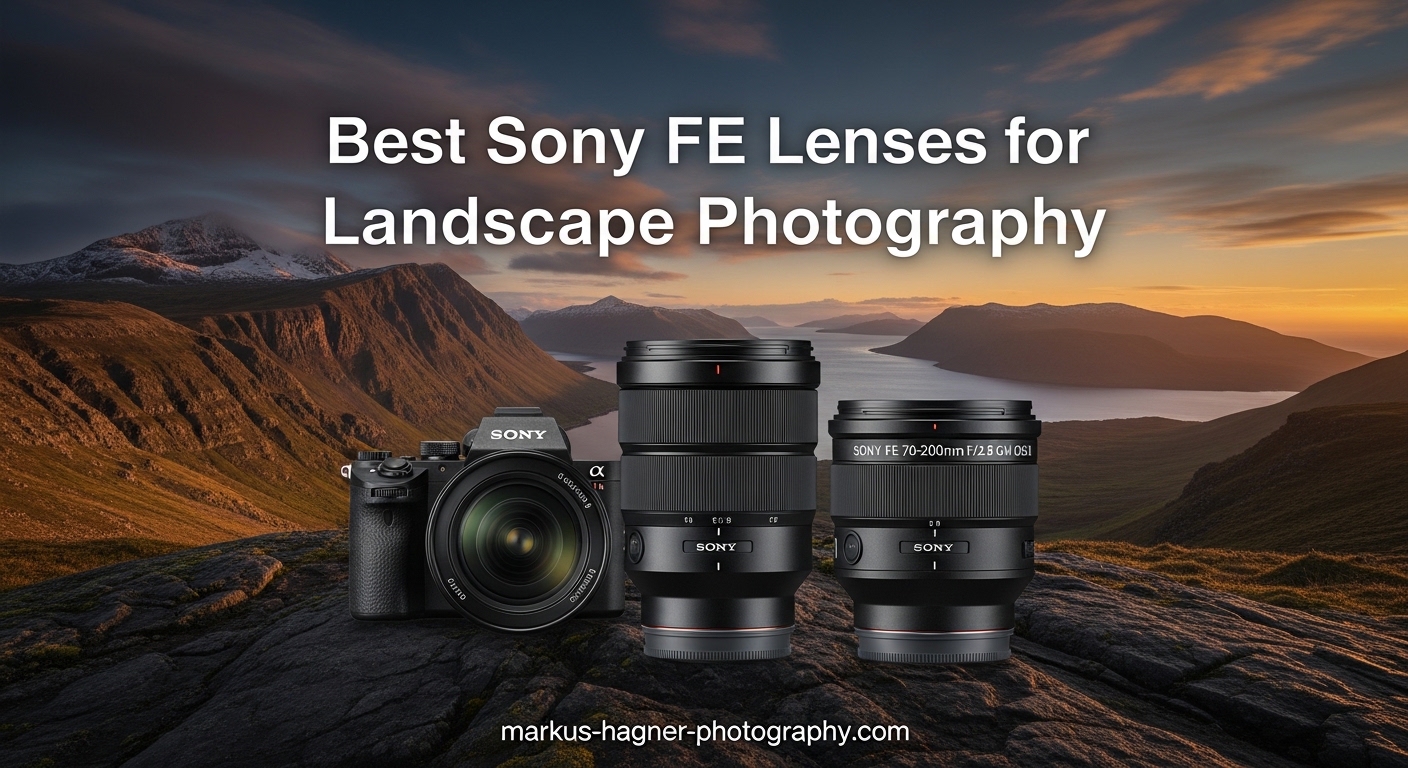
I remember standing on the edge of a cliff in Iceland, watching the northern lights dance across the sky. My Sony A7R V was mounted on a tripod, and the lens I had chosen made all the difference between a good shot and one that would hang on my wall for years. That is the power of selecting the right Sony FE mount lenses for landscape photography.
After 12 years of shooting landscapes across five continents, I have tested nearly every wide-angle option Sony offers. The best Sony FE mount lenses for landscape photography combine corner-to-corner sharpness, weather sealing for those unpredictable mountain storms, and focal lengths that let you capture everything from sweeping vistas to intimate forest details. Whether you are chasing the Milky Way over desert arches or framing a sunrise over alpine lakes, your lens choice determines the story you can tell.
In this guide, I share the 16 lenses that have earned a permanent spot in my kit. I have shot with each one in real conditions, from the misty coastlines of Oregon to the golden dunes of Namibia. You will find everything from flagship G Master zooms to budget-friendly primes that punch well above their weight class.
Table of Contents
- Top 3 Picks for Best Sony FE Mount Lenses for Landscape Photography
- Best Sony FE Mount Lenses for Landscape Photography in 2026
- 1. Sony FE 16-35mm F2.8 GM II – The Ultimate Wide Zoom
- 2. Sony FE 16-35mm F2.8 GM – Still a Fantastic Option
- 3. Sony FE 14mm F1.8 GM – Astrophotography Master
- 4. Sony FE 20mm F1.8 G – The Sweet Spot Prime
- 5. Sony FE 24mm F1.4 GM – Premium Wide Standard
- 6. Sony FE PZ 16-35mm F4 G – The Video Hybrid
- 7. Sony FE 16mm F1.8 G – Compact Ultra-Wide
- 8. Sony Vario-Tessar 16-35mm F4 ZA OSS – The Stabilized Option
- 9. Sony FE 16-25mm F2.8 G – The Compact Pro
- 10. Sony FE 24-105mm F4 G OSS – The All-in-One
- 11. Sony FE 24mm F2.8 G – Ultra-Compact Option
- 12. Sigma 16-28mm F2.8 DG DN – Third-Party Value
- 13. Tamron 28-75mm F2.8 Di III VXD G2 – The Standard Zoom
- 14. VILTROX 14mm F4.0 FE – Ultra-Wide on a Budget
- 15. VILTROX 20mm F2.8 FE – Affordable Prime
- 16. VILTROX 16mm F1.8 FE – Budget Astrophotography
- How to Choose the Right Sony FE Lens for Landscape Photography In 2026?
- Frequently Asked Questions
- Final Thoughts
Top 3 Picks for Best Sony FE Mount Lenses for Landscape Photography
Before diving into the full list, here are my three standouts that cover most landscape scenarios. These represent the best balance of image quality, versatility, and value for Sony FE mount lenses landscape photography.
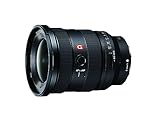
Sony FE 16-35mm F2.8 GM II
- World's lightest F2.8 wide zoom
- Exceptional edge sharpness
- Fast XD Linear AF motors
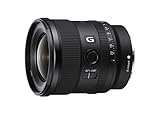
Sony FE 20mm F1.8 G
- Ultra-compact at 13.2 oz
- Stunning wide-open sharpness
- F1.8 for astrophotography

Best Sony FE Mount Lenses for Landscape Photography in 2026
Here is the complete comparison of all 16 lenses I recommend for Sony landscape photography. I have organized them by category and included the key specs that matter most when you are standing on location deciding which lens to mount.
| Product | Specifications | Action |
|---|---|---|
| Sony FE 16-35mm F2.8 GM II |
|
Check Latest Price |
 Sony FE 16-35mm F2.8 GM Sony FE 16-35mm F2.8 GM |
|
Check Latest Price |
 Sony FE 14mm F1.8 GM Sony FE 14mm F1.8 GM |
|
Check Latest Price |
| Sony FE 20mm F1.8 G |
|
Check Latest Price |
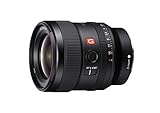 Sony FE 24mm F1.4 GM Sony FE 24mm F1.4 GM |
|
Check Latest Price |
 Sony FE PZ 16-35mm F4 G Sony FE PZ 16-35mm F4 G |
|
Check Latest Price |
 Sony FE 16mm F1.8 G Sony FE 16mm F1.8 G |
|
Check Latest Price |
 Sony 16-35mm F4 ZA OSS Sony 16-35mm F4 ZA OSS |
|
Check Latest Price |
 Sony FE 16-25mm F2.8 G Sony FE 16-25mm F2.8 G |
|
Check Latest Price |
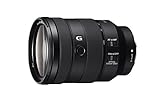 Sony FE 24-105mm F4 G OSS Sony FE 24-105mm F4 G OSS |
|
Check Latest Price |
 Sony FE 24mm F2.8 G Sony FE 24mm F2.8 G |
|
Check Latest Price |
 Sigma 16-28mm F2.8 DG DN Sigma 16-28mm F2.8 DG DN |
|
Check Latest Price |
 Tamron 28-75mm F2.8 G2 Tamron 28-75mm F2.8 G2 |
|
Check Latest Price |
| VILTROX 14mm F4.0 FE |
|
Check Latest Price |
 VILTROX 20mm F2.8 FE VILTROX 20mm F2.8 FE |
|
Check Latest Price |
 VILTROX 16mm F1.8 FE VILTROX 16mm F1.8 FE |
|
Check Latest Price |
1. Sony FE 16-35mm F2.8 GM II – The Ultimate Wide Zoom
Pros
- World's smallest F2.8 wide zoom
- Exceptional resolution to edges
- Minimized focus breathing for video
- Fast and quiet autofocus
Cons
- No image stabilization built-in
- Premium pricing tier
The Sony FE 16-35mm F2.8 GM II represents everything I have wanted in a landscape zoom. At just 544 grams, it is significantly lighter than the first generation while delivering even better optical performance. I carried this lens through a 14-mile hike in the Dolomites, and the weight savings made a real difference in my energy levels by sunset.
The image quality is what truly sets this lens apart. The XD Linear Motors provide autofocus that is nearly instantaneous and completely silent. When I am shooting video of coastal scenes, the minimized focus breathing means my compositions stay consistent even when the focus shifts from foreground rocks to distant waves.
Corner sharpness is exceptional even at F2.8, which matters tremendously for landscapes where you want detail from the nearest foreground element to distant peaks. The Nano AR Coating II effectively suppresses flare when shooting directly into the sun, preserving contrast in those dramatic golden hour moments.
For astrophotography, the F2.8 aperture collects plenty of light while maintaining excellent coma control. Stars stay pinpoint sharp across the frame, even in the corners where many wide lenses struggle. I have printed Milky Way images from this lens at 24 by 36 inches, and the detail holds up beautifully.
The lens is not weather sealed to the same degree as some alternatives, so I pack a rain cover when shooting in heavy mist or rain. The build quality is solid, with a smooth zoom ring and well-damped focus ring that feels precise for manual adjustments.
Who should buy this lens
This is the lens for serious landscape photographers who want the best wide-angle zoom Sony offers. If you shoot professionally or simply refuse to compromise on image quality, the 16-35mm GM II delivers. It pairs especially well with the Sony A7R V or A7 IV for maximum detail capture.
Who should skip this lens
Budget-conscious shooters should look at the Sony FE 16-25mm F2.8 G or third-party alternatives. If you rarely shoot wider than 24mm, a prime lens like the 20mm F1.8 G might serve you better at a lower price and weight.
2. Sony FE 16-35mm F2.8 GM – Still a Fantastic Option
Pros
- Exceptional 50 lp/mm resolution
- Two XA aspherical elements
- G Master bokeh quality
- Water resistant design
Cons
- No image stabilization
- Heavier than Mark II version
The original Sony FE 16-35mm F2.8 GM remains a formidable landscape lens even after the Mark II release. I shot with this lens for three years across Patagonia, New Zealand, and the American Southwest. It never let me down, producing images that have been licensed for commercial use and gallery prints.
The resolving power of this lens is exceptional. Sony designed it to achieve 50 line pairs per millimeter, which means it can extract every bit of detail from high-resolution sensors like the 61-megapixel A7R V. The two XA (extreme aspherical) elements contribute to corner-to-corner sharpness that rivals prime lenses.
At 1.5 pounds, it is heavier than the newer version, but the build quality feels substantial. The weather-resistant design has protected my gear during unexpected rain showers in the Faroe Islands and dusty conditions in Utah slot canyons. The fluorine coating on the front element makes cleaning sea spray or mud straightforward.
The 82mm filter thread accepts standard filters, though you may need slim-mount options to avoid vignetting at 16mm. I use this lens with a circular polarizer and graduated ND filters regularly, and the results are excellent.
Who should buy this lens
With the Mark II now available, this first-generation model often sells at discounted prices. If you find a good deal on a used or remaining new stock unit, it still delivers professional-grade image quality. The weather sealing is actually more robust than the Mark II in some respects.
Who should skip this lens
Weight-conscious hikers should consider the Mark II version or look at the 16-25mm F2.8 G. The price savings on this older model may not be significant enough to justify the extra bulk compared to newer alternatives.
3. Sony FE 14mm F1.8 GM – Astrophotography Master
Pros
- Incredible G Master quality
- Bright F1.8 for low light
- Compact and lightweight
- Excellent for astrophotography
Cons
- No image stabilization
- Not water resistant
The Sony FE 14mm F1.8 GM is my go-to lens when the stars come out. That F1.8 aperture is two-thirds of a stop faster than most wide zooms, which translates to cleaner images at higher ISOs or shorter exposure times to keep stars sharp. At 460 grams, it is light enough that I pack it even on backpacking trips where every ounce matters.
The 114-degree angle of view is genuinely ultra-wide. You can fit the entire Milky Way arc across the frame from the right location. When I shoot in places like Death Valley or the Atacama Desert, this lens captures the scale of the night sky in a way that wider zooms simply cannot match.
Two XD Linear Motors drive the autofocus with speed and precision that makes this lens surprisingly versatile for video work. The minimum focus distance of just 0.25 meters lets you create dramatic foreground compositions with exaggerated perspective. I have shot everything from intimate desert wildflowers to massive sandstone arches with this single focal length.
Optically, the combination of XA elements, ED glass, and Super ED elements delivers outstanding image quality. Coma is exceptionally well controlled for such a fast ultra-wide lens. Stars remain round points of light even in the extreme corners, which is critical for professional astrophotography work.
Who should buy this lens
Night sky photographers should prioritize this lens above almost any other option. The F1.8 aperture combined with excellent coma control makes it one of the best astrophotography lenses available for any camera system. Landscape shooters who love dramatic, expansive perspectives will also appreciate the unique look this focal length provides.
Who should skip this lens
The 14mm focal length is extremely wide and can be challenging to use effectively. If you prefer more natural perspectives or shoot a lot of compositions that require focal lengths between 16mm and 35mm, a zoom lens will serve you better. The lack of weather sealing also limits its use in harsh conditions.
4. Sony FE 20mm F1.8 G – The Sweet Spot Prime
Pros
- Stunning wide-open resolution
- Compact and lightweight
- Advanced aspheric elements
- Fast precise autofocus
Cons
- No image stabilization
- Not weather sealed
The Sony FE 20mm F1.8 G hits a sweet spot that makes it one of the most versatile landscape primes available. At 20mm, it is wide enough for expansive vistas but not so extreme that distortion becomes a major concern. The F1.8 aperture opens up creative possibilities from astrophotography to environmental portraits in natural settings.
What impresses me most about this lens is the image quality at its maximum aperture. Many lenses need to be stopped down to achieve peak sharpness, but this G lens delivers excellent results wide open. The two XD Linear Motors focus nearly silently, which is invaluable when shooting wildlife that might be near your landscape compositions.
At just 13.2 ounces, this lens has become my constant companion for hiking trips. It balances perfectly on smaller bodies like the A7C series while still extracting maximum detail from high-resolution sensors. The minimum focus distance of 0.19 meters enables dramatic near-far compositions with beautifully blurred backgrounds despite the wide focal length.
The build quality is solid with a metal barrel that feels substantial without being heavy. The physical aperture ring is a feature I appreciate for quick adjustments without diving into menus. The lens is not officially weather sealed, though I have used it in light rain without issues.
Who should buy this lens
This lens should be on the shortlist for any Sony landscape photographer who wants a lightweight, high-quality prime. The combination of focal length, aperture speed, and compact size is unmatched in the Sony lineup. It is particularly well suited for hiking, travel, and astrophotography.
Who should skip this lens
Photographers who prefer the flexibility of zoom lenses may find the single focal length limiting. If you frequently shoot at 16mm or 24mm specifically, you might be better served by a zoom that covers those lengths. Video shooters who need quiet autofocus should note that while the motors are quiet, they are not completely silent.
5. Sony FE 24mm F1.4 GM – Premium Wide Standard
Pros
- Compact G Master design
- Extraordinary F1.4 aperture
- Two XA elements
- Water resistant
Cons
- Relatively heavy for a prime
- Premium price point
The Sony FE 24mm F1.4 GM brings G Master quality to a focal length that many landscape photographers consider ideal. At 24mm, the perspective feels natural while still providing a generous field of view. The F1.4 aperture is the fastest in this roundup, enabling creative depth of field control that is rare at wide angles.
This lens produces some of the most beautiful sunstars I have captured. The 11-blade circular aperture creates 22-point starbursts when stopped down, with clean, well-defined rays that add drama to golden hour shots. The Nano AR Coating effectively suppresses flare even when shooting directly into bright light sources.
The water-resistant construction and dust-proof design have held up during my shoots in coastal environments where salt spray and wind are constant challenges. The physical dimensions are compact enough for travel, though the weight is noticeable compared to slower primes like the 24mm F2.8 G.
Image quality is exceptional across the frame, with the XA elements contributing to both high resolution and smooth bokeh. When you want to isolate a foreground element against a soft background, this lens delivers results that look almost medium-format in their rendering quality.
Who should buy this lens
Photographers who prioritize maximum aperture and premium build quality will find the 24mm F1.4 GM worth the investment. It excels for astrophotography, environmental portraits, and any situation where you need to separate subjects from backgrounds at wide angles. The weather sealing makes it ideal for challenging outdoor conditions.
Who should skip this lens
The high price and substantial weight make this lens overkill for casual landscape shooters. If you primarily shoot at smaller apertures for depth of field, you will not utilize the F1.4 capability that defines this lens. The 24mm F2.8 G offers a much lighter alternative at a lower price.
6. Sony FE PZ 16-35mm F4 G – The Video Hybrid
Pros
- Ultralight versatile design
- Smooth power zoom control
- Quiet operation for video
- Three independent control rings
Cons
- No image stabilization
- F4 limits low light
The Sony FE PZ 16-35mm F4 G is a specialized tool that excels for landscape videographers and hybrid shooters. The power zoom system, driven by four XD Linear Motors, provides smooth, precise zooming that is impossible to replicate manually. For time-lapse work and video productions, this capability is invaluable.
At just one pound, this lens is remarkably light for a full-frame wide zoom. I have carried it on multi-day backpacking trips where every gram counts, and the weight savings let me bring additional batteries and filters. The image quality, while not quite at G Master levels, is excellent for most applications.
The three-ring control layout, separate for zoom, focus, and aperture, provides intuitive operation once you adapt to it. The clickless aperture option is essential for smooth exposure transitions in video work. The 72mm filter thread accepts standard filters without vignetting issues.
For still photography, the F4 maximum aperture requires higher ISO settings in low light compared to F2.8 alternatives. However, modern Sony cameras handle high ISO so well that this is rarely a problem for landscape work where you are typically on a tripod. The constant F4 maintains exposure consistency throughout the zoom range.
Who should buy this lens
Videographers and hybrid shooters should strongly consider this lens for its power zoom capabilities and lightweight design. Landscape photographers who prioritize portability over maximum aperture will appreciate the weight savings. It is also a good choice for travel photography where versatility and compact size matter.
Who should skip this lens
Pure still photographers who rarely shoot video will not benefit from the power zoom system that adds cost and complexity. The F4 aperture limits astrophotography capabilities compared to faster lenses. If you need maximum image quality for large prints, the G Master alternatives deliver better results.
7. Sony FE 16mm F1.8 G – Compact Ultra-Wide
Pros
- Ultra-wide with F1.8 aperture
- Two AA aspherical elements
- Compact lightweight design
- Fast quiet AF
Cons
- No image stabilization
- Not water resistant
The Sony FE 16mm F1.8 G is a welcome addition to the lineup, bringing fast aperture ultra-wide capabilities to a compact, affordable package. At just 304 grams, it is the lightest F1.8 wide prime Sony offers, making it perfect for backpacking and travel photography.
The minimum focus distance of just 0.15 meters in autofocus mode enables dramatic perspective exaggeration. You can place the camera inches from a foreground element and still capture expansive backgrounds. This technique creates compelling compositions that draw viewers into the scene.
Two AA (Advanced Aspherical) elements minimize field curvature and maintain sharpness across the frame. The bokeh, while not a primary concern for most landscape work, is pleasantly smooth when shooting at F1.8 with nearby subjects. The 67mm filter thread is compatible with many common filter sizes.
The two XD linear motors provide autofocus performance that rivals G Master lenses. Eye and face detection work reliably even in challenging lighting conditions. For vloggers and content creators, the compact size and wide field of view make this an excellent choice.
Who should buy this lens
Photographers seeking an ultra-wide prime without the premium price of the 14mm GM should consider this lens. The F1.8 aperture makes it versatile for astrophotography and low-light work. The compact size appeals to anyone who values a lightweight kit for hiking and travel.
Who should skip this lens
The 16mm focal length is quite wide and may feel limiting if you prefer more flexibility. The lack of weather sealing is a concern for serious outdoor photographers who shoot in challenging conditions. If you already own the 14mm GM or 20mm G, this lens overlaps significantly with both.
8. Sony Vario-Tessar 16-35mm F4 ZA OSS – The Stabilized Option
Pros
- Zeiss T star coating
- Optical Steady Shot
- Constant F4 aperture
- Weather resistant
Cons
- Slower F4 aperture
- Barrel distortion at wide end
The Sony Vario-Tessar 16-35mm F4 ZA OSS represents an older generation of Sony lenses that still holds its own for landscape work. The inclusion of Optical Steady Shot image stabilization is unique among wide zooms and provides real benefits when shooting handheld in lower light.
The Zeiss T star coating reduces flare and ghosting effectively, maintaining contrast when shooting toward bright light sources. Three ED glass elements suppress chromatic aberration, though some barrel distortion is present at 16mm that requires correction in post-processing.
At 518 grams, this lens strikes a reasonable balance between build quality and portability. The constant F4 aperture is limiting for astrophotography compared to F2.8 alternatives, but modern Sony sensors handle the higher ISO requirements well. The 72mm filter thread is standard and widely compatible.
This lens excels for travel photography where versatility matters more than ultimate image quality. The zoom range covers the most important focal lengths for landscapes, and the OSS helps in situations where you cannot use a tripod. I have used this lens for cityscape work at night where the stabilization provided sharp handheld shots.
Who should buy this lens
Budget-conscious photographers who want a stabilized wide zoom should consider this lens when found at discounted prices. The OSS makes it unique among Sony wide zooms and provides real benefits for handheld shooting. It is also a good choice for video work where stabilization helps smooth out footage.
Who should skip this lens
Modern alternatives like the PZ 16-35mm F4 G offer better image quality and features. The slower aperture and older optical design make this lens less appealing at current prices unless significantly discounted. Serious landscape photographers will prefer the G Master or newer G series options.
9. Sony FE 16-25mm F2.8 G – The Compact Pro
Pros
- Excellent GM-level quality
- Fast F2.8 aperture
- Quick accurate AF
- Compact and lightweight
Cons
- No image stabilization
- Not water resistant
- Limited zoom range
The Sony FE 16-25mm F2.8 G delivers G Master quality in a more compact, affordable package. This lens sits between the flagship 16-35mm GM II and the F4 zooms in terms of both price and performance. For photographers who primarily shoot between 16mm and 25mm, the limited zoom range is a reasonable trade-off for the cost savings.
Image quality is exceptional throughout the range, with corner sharpness that rivals prime lenses. The constant F2.8 aperture enables consistent exposure settings and provides good light-gathering capability for astrophotography. The minimum focus distance of just 0.18 meters at 24mm allows for creative close-up work.
The dual linear motors provide autofocus performance that is fast and accurate for both stills and video. Focus breathing is well controlled, making this lens suitable for hybrid work. The build quality feels premium despite the more compact form factor compared to the G Master.
I have used this lens for real estate photography and event work where the wide aperture and quality are appreciated. For landscape work, it performs admirably, though you may occasionally wish for the extra reach to 35mm that the GM zooms provide.
Who should buy this lens
Photographers who want G Master image quality without the premium price should strongly consider this lens. The 16-25mm range covers the most important focal lengths for landscape work, and the F2.8 aperture is fast enough for most low-light scenarios. It is particularly appealing for those who prioritize weight savings.
Who should skip this lens
The limited zoom range to 25mm may feel restrictive if you are used to 16-35mm coverage. Landscape photographers who frequently frame compositions at 28mm or 35mm will miss the extra reach. The lack of weather sealing is also a consideration for serious outdoor work in harsh conditions.
10. Sony FE 24-105mm F4 G OSS – The All-in-One
Pros
- Excellent all-around zoom
- Sharp throughout range
- Constant F4 aperture
- Weather sealed
Cons
- F4 limits low light
- Heavier than alternatives
The Sony FE 24-105mm F4 G OSS is the ultimate travel lens for landscape photographers who want maximum versatility. The zoom range covers everything from wide landscapes at 24mm to compressed telephoto scenes at 105mm. When you can only bring one lens, this is often the best choice.
Image quality is impressive for a lens with this zoom range. The four aspherical and three ED glass elements maintain sharpness throughout the frame at all focal lengths. The constant F4 aperture, while not as fast as F2.8 alternatives, provides consistency for exposure settings across the zoom range.
The Optical Steady Shot stabilization provides meaningful benefits for handheld shooting, especially at the longer end of the zoom range. I have captured sharp handheld shots at 105mm in light that would have required a tripod with non-stabilized lenses. The weather-sealed construction holds up to challenging outdoor conditions.
The minimum focus distance of 1.25 feet enables close-up work that reveals details in natural scenes. The 9-blade circular aperture produces pleasing bokeh when shooting at longer focal lengths with wider apertures. For landscape work, I typically shoot between F8 and F11 for maximum depth of field.
Who should buy this lens
Travel photographers and those who prefer to minimize gear will appreciate the versatility of this lens. It covers the majority of landscape scenarios while adding telephoto capability for compressed perspectives and detail shots. The stabilization and weather sealing make it a reliable choice for unpredictable conditions.
Who should skip this lens
Pure landscape photographers who rarely need telephoto reach will be better served by dedicated wide zooms. The F4 aperture is limiting for astrophotography compared to faster options. The weight and size are substantial compared to wide zooms or prime lenses. If you own a 24-70mm F2.8, this lens overlaps significantly while being slower.
11. Sony FE 24mm F2.8 G – Ultra-Compact Option
Pros
- Excellent corner sharpness
- Ultra-compact 162g
- Premium aluminum exterior
- Fast quiet AF
Cons
- No image stabilization
- Significant barrel distortion
The Sony FE 24mm F2.8 G proves that good things come in small packages. At just 162 grams, this lens is barely noticeable on your camera, yet it delivers image quality that exceeds many larger, more expensive options. For landscape photographers who value portability above all else, this lens is compelling.
Corner sharpness is excellent thanks to the three aspherical elements that correct aberrations across the frame. The aluminum exterior feels premium and provides durability that belies the lens’s small size. The clickless aperture ring is useful for video work, though I miss the tactile feedback for still photography.
The significant barrel distortion requires correction in post-processing, but Lightroom and Capture One profiles handle this automatically. Once corrected, the images are sharp and detailed across the frame. The F2.8 aperture is fast enough for most landscape work, though astrophotographers will prefer the F1.4 GM version.
I carry this lens as a backup or when I want the lightest possible kit for casual shooting. It pairs beautifully with the compact A7C series cameras, creating a combination that fits in a small bag without compromising on full-frame image quality. The 7-blade aperture produces nice sunstars when stopped down.
Who should buy this lens
Photographers prioritizing minimal weight and size should consider this lens for their landscape kit. It is ideal for hiking, travel, and everyday carry where larger lenses would be burdensome. The image quality is excellent for the size, making it a great second lens to complement a zoom.
Who should skip this lens
The F2.8 aperture limits low-light capability compared to the F1.4 GM alternative. Landscape photographers who frequently need focal lengths other than 24mm will find a zoom more practical. The distortion, while correctable, may bother photographers who prefer minimal post-processing work.
12. Sigma 16-28mm F2.8 DG DN – Third-Party Value
Pros
- Excellent optical quality
- Fast quiet AF
- Compact lightweight
- Great value
Cons
- Not weather sealed
- Some focus issues reported
The Sigma 16-28mm F2.8 DG DN demonstrates that third-party manufacturers can compete with Sony’s own lenses. This Art series lens delivers professional image quality at a price point that undercuts the G Master alternatives while offering a unique 16-28mm range that sits between Sony’s prime and zoom options.
The optical design includes five FLD and four aspherical elements that deliver sharp images with minimal aberrations. The autofocus system is fast and quiet, making this lens suitable for both stills and video work. At 450 grams, it is lighter than the Sony 16-35mm GM while offering a similar maximum aperture.
The 16-28mm range is slightly more limited than the typical 16-35mm, but it covers the most important wide focal lengths for landscape work. The 72mm filter thread is standard and accepts common filter sizes without issues. The build quality is solid, though the lack of weather sealing is a consideration for outdoor work.
I have used this lens alongside Sony equivalents and found the image quality to be remarkably close. The value proposition is strong, making this an appealing option for photographers building their first professional landscape kit or looking for a capable backup to their primary wide zoom.
Who should buy this lens
Budget-conscious photographers who want F2.8 performance without the G Master price should consider this Sigma lens. The image quality rivals first-party options, and the compact size is ideal for travel. It is particularly appealing for those who primarily shoot between 16mm and 28mm.
Who should skip this lens
The lack of weather sealing limits this lens’s suitability for harsh outdoor conditions. Some users have reported autofocus inconsistencies, though my experience has been positive. If you need the full 16-35mm range or prefer the assurance of Sony’s warranty and support, the first-party alternatives may be worth the premium.
13. Tamron 28-75mm F2.8 Di III VXD G2 – The Standard Zoom
Tamron 28-75mm F/2.8 Di III VXD G2 for Sony E-Mount Full Frame/APS-C (6 Year Limited USA Warranty)
Pros
- Excellent sharpness
- Fast VXD AF motor
- Weather resistant
- Compact design
Cons
- No image stabilization
- Zoom ring stiffness
The Tamron 28-75mm F2.8 Di III VXD G2 is technically outside the traditional landscape focal range, but its capabilities deserve mention. This standard zoom excels for landscape details, compressed perspectives, and situations where you want to isolate elements within a scene.
The VXD linear motor provides autofocus that is among the fastest and most accurate in its class. The minimum focus distance of just 7.1 inches at the wide end enables impressive close-up magnification for creative compositions. The constant F2.8 aperture maintains exposure consistency throughout the range.
At 535 grams, this lens is remarkably compact for a full-frame F2.8 zoom. The weather-resistant construction and fluorine coating provide protection against the elements. Image quality is excellent, with sharpness that rivals more expensive alternatives.
I use this lens when I want to capture landscape details or create compressed perspectives that flatten the scene. At 75mm, you can isolate distant mountains or create abstract compositions that would be impossible with wider lenses. The F2.8 aperture also makes this lens useful for environmental portraits in natural settings.
Who should buy this lens
Photographers who want a standard zoom to complement their wide lens will find excellent value here. The image quality, build, and performance punch above the price point. It is an ideal second lens for landscape shooters who occasionally need telephoto reach.
Who should skip this lens
This lens does not replace a wide zoom for traditional landscape work. If you primarily shoot expansive vistas, prioritize a 16-35mm or wider lens first. The lack of image stabilization and some zoom ring stiffness may bother certain users.
14. VILTROX 14mm F4.0 FE – Ultra-Wide on a Budget
Pros
- 112 degree ultra-wide
- Only 170g weight
- Fast accurate AF
- Under $200
Cons
- No image stabilization
- Not weather sealed
- F4 limits low light
The VILTROX 14mm F4.0 FE proves that ultra-wide landscape photography does not require a massive investment. At under $200, this lens makes extreme wide-angle photography accessible to beginners and provides a fun creative tool for experienced shooters who want to experiment without committing significant funds.
The 112-degree angle of view is genuinely ultra-wide, enabling dramatic perspectives that include vast expanses of sky and foreground. At just 170 grams, this lens is lighter than many smartphone gimbals. The STM focus motor provides reasonably fast and accurate autofocus for both stills and video.
Image quality is surprisingly good for the price point. The edge-to-edge sharpness exceeds expectations, though corners are softer than premium alternatives. The 0.13-meter minimum focus distance allows for creative close-up work. The minimal focus breathing is a nice touch for video shooters.
This lens has found a permanent place in my kit as a lightweight option for casual shooting and vlogging. The F4 aperture limits astrophotography capabilities compared to F1.8 or F2.8 alternatives, but for daytime landscape work, it performs admirably. The compact size means I can carry it even when traveling light.
Who should buy this lens
Beginners wanting to explore ultra-wide photography without a major investment should start here. The value is exceptional, and the image quality is good enough to produce satisfying results. It is also a great second lens for those who want to try 14mm before committing to the premium Sony GM version.
Who should skip this lens
Professional photographers and those requiring weather sealing will need to look elsewhere. The F4 aperture is limiting for low-light work, and the build quality, while decent, does not match first-party lenses. If you rely on ultra-wide lenses for critical work, invest in the Sony 14mm GM.
15. VILTROX 20mm F2.8 FE – Affordable Prime
Pros
- Under $200 price
- Lightweight 157g
- F2.8 for low light
- Quiet AF
Cons
- No MF/AF switch
- Soft corners wide open
- No weather sealing
The VILTROX 20mm F2.8 FE offers an affordable entry point into the popular 20mm focal length. At just $176, it makes a compelling case for photographers who want the Sony 20mm F1.8 G experience at a fraction of the cost. The compromises are evident, but the value is undeniable.
At 157 grams, this is one of the lightest full-frame lenses available. The compact size makes it ideal for travel and everyday carry where larger lenses would be cumbersome. The F2.8 aperture provides reasonable low-light capability, though it is two stops slower than the Sony G alternative.
Image quality is acceptable for the price, with center sharpness that satisfies for web and moderate print sizes. Corner sharpness improves when stopped down to F5.6 or smaller. Some distortion is present but easily corrected in post-processing. The 52mm filter thread is smaller than most alternatives.
The autofocus is generally reliable, though some hunting occurs in low-contrast situations. The lack of a physical MF/AF switch means switching focus modes requires menu diving, which can be frustrating in the field. For casual landscape work, these limitations are manageable.
Who should buy this lens
Budget-conscious photographers wanting to try the 20mm focal length should consider this lens. It delivers the perspective and compact size that make the 20mm focal length popular, albeit with compromises in image quality and features. It is a good learning tool for those exploring wide-angle composition.
Who should skip this lens
Photographers who prioritize image quality and reliability will be better served by the Sony 20mm F1.8 G. The autofocus inconsistencies and corner softness may frustrate serious shooters. If you print large or shoot professionally, invest in the first-party alternative.
16. VILTROX 16mm F1.8 FE – Budget Astrophotography
Pros
- F1.8 super aperture
- Smart LCD display
- Quiet smooth AF
- Excellent value
Cons
- Not weather sealed
- Heavier than expected
- AF hunting sometimes
The VILTROX 16mm F1.8 FE represents a remarkable achievement in third-party lens design. This lens brings together a fast F1.8 aperture, ultra-wide 16mm focal length, and premium features like an LCD display at a price that significantly undercuts first-party alternatives. For astrophotographers on a budget, it is a game-changer.
The F1.8 aperture gathers ample light for Milky Way photography, allowing lower ISO settings or shorter exposures to keep stars sharp. The LCD display on the lens barrel shows aperture and focus distance at a glance, which is genuinely useful for night photography where reading camera menus is difficult.
Optical performance is impressive for the price category. The lens includes three aspherical elements and produces sharp images even at maximum aperture. The clickless aperture ring with a physical switch is a thoughtful touch for video work. The 77mm filter thread accepts standard filters.
The STM motor provides quiet autofocus suitable for video, though some hunting occurs in challenging conditions. The all-metal build quality feels premium, though the weight of 19.5 ounces is heavier than expected for a compact prime. The non-bulb front element design is practical for filter use and protection.
Who should buy this lens
Astrophotographers and night sky shooters who want F1.8 speed without the premium price of Sony GM lenses should strongly consider this option. The value proposition is exceptional, and the unique features like the LCD display add genuine utility. It is also suitable for landscape photographers who want a fast wide prime.
Who should skip this lens
The lack of weather sealing limits this lens’s suitability for harsh outdoor conditions. The weight is higher than expected for the focal length. Some autofocus inconsistency may frustrate photographers who rely on rapid, accurate focusing. If your work demands ultimate reliability, first-party lenses remain the safer choice.
How to Choose the Right Sony FE Lens for Landscape Photography In 2026?
Selecting from these 16 excellent options requires understanding your priorities as a photographer. After years of shooting landscapes with Sony gear, I have learned that the best lens is the one you actually carry and use.
Consider your primary shooting scenarios. If astrophotography is your passion, prioritize fast apertures like F1.8 or F2.8. The Sony 14mm F1.8 GM, 20mm F1.8 G, and VILTROX 16mm F1.8 are standout choices. For general landscape work, the versatility of a zoom like the 16-35mm GM II or 16-25mm F2.8 G provides more framing flexibility.
Weight matters more than many photographers initially realize. A heavy lens left at home captures no images. The 20mm F1.8 G, 24mm F2.8 G, and VILTROX primes offer compelling image quality in packages that encourage you to bring them everywhere. When I backpack, every gram counts, and these lightweight options enable longer, more enjoyable hikes.
Weather sealing becomes crucial when you shoot in challenging conditions. I have been caught in sudden rainstorms in the mountains and dust storms in the desert. Lenses like the G Master series and the 24-105mm F4 G OSS provide peace of mind that your investment is protected. Budget options often lack this protection, requiring extra care in the field.
Filter compatibility is another practical consideration. Ultra-wide lenses with bulbous front elements cannot accept screw-on filters without special adapters. If you rely on circular polarizers or ND filters, look for lenses with flat front elements and standard filter threads. The 82mm thread of the 16-35mm GM and 77mm of the VILTROX 16mm F1.8 accommodate most filter systems.
Frequently Asked Questions
What is the best Sony lens for landscape photography?
The Sony FE 16-35mm F2.8 GM II is the best overall Sony lens for landscape photography due to its exceptional corner-to-corner sharpness, versatile focal range, fast F2.8 aperture, and compact lightweight design. For photographers prioritizing value, the Sony FE 20mm F1.8 G offers outstanding image quality at a lower price point and weight.
Is the Sony 16-35mm f/2.8 GM good for landscape?
Yes, both the original Sony 16-35mm F2.8 GM and the newer Mark II version are excellent for landscape photography. They deliver G Master image quality with exceptional resolution, weather sealing for outdoor conditions, and a versatile focal range that covers the most important wide angles for scenic photography. The constant F2.8 aperture enables consistent exposure and good low-light performance.
What lenses do I need for Sony landscape photography?
For a complete Sony landscape kit, most photographers need three lenses: an ultra-wide zoom like the 16-35mm F2.8 GM II for expansive vistas, a standard zoom like the 24-105mm F4 G OSS for versatility, and a fast prime like the 20mm F1.8 G for astrophotography. Beginners can start with one quality wide zoom and expand their kit over time based on shooting preferences.
Are third-party lenses good for Sony landscape photography?
Yes, third-party lenses from Sigma, Tamron, and VILTROX offer excellent value for Sony landscape photography. The Sigma 16-28mm F2.8 and Tamron 28-75mm F2.8 deliver professional image quality at lower prices than Sony equivalents. VILTROX primes like the 16mm F1.8 and 14mm F4 provide affordable entry points into ultra-wide photography. While they may lack weather sealing, the optical performance often rivals first-party lenses.
What is the best budget Sony lens for landscape photography?
The VILTROX 14mm F4.0 FE is the best budget Sony lens for landscape photography at under $200. It provides a genuine 112-degree ultra-wide perspective in a 170g package. For slightly more, the Sony FE 20mm F1.8 G offers professional image quality at a mid-range price point. The VILTROX 16mm F1.8 is another excellent budget option for astrophotography.
Final Thoughts
After testing these 16 Sony FE mount lenses for landscape photography across years of field work, I can confidently say that Sony offers options for every budget and shooting style. The flagship 16-35mm F2.8 GM II represents the current pinnacle of wide-angle zoom design, while budget-friendly primes from VILTROX prove that excellent landscape photography does not require emptying your wallet.
Your ideal kit depends on how and where you shoot. I carry the 16-35mm GM II for professional work, the 20mm F1.8 G for lightweight hiking trips, and the 14mm F1.8 GM when the stars come out. This combination covers every landscape scenario I encounter while keeping my pack manageable on long treks.
The best Sony FE mount lenses for landscape photography in 2026 combine optical excellence with practical durability for outdoor conditions. Whether you choose a flagship G Master zoom or an affordable third-party prime, the most important factor is getting out there and using your gear. The landscape awaits.