
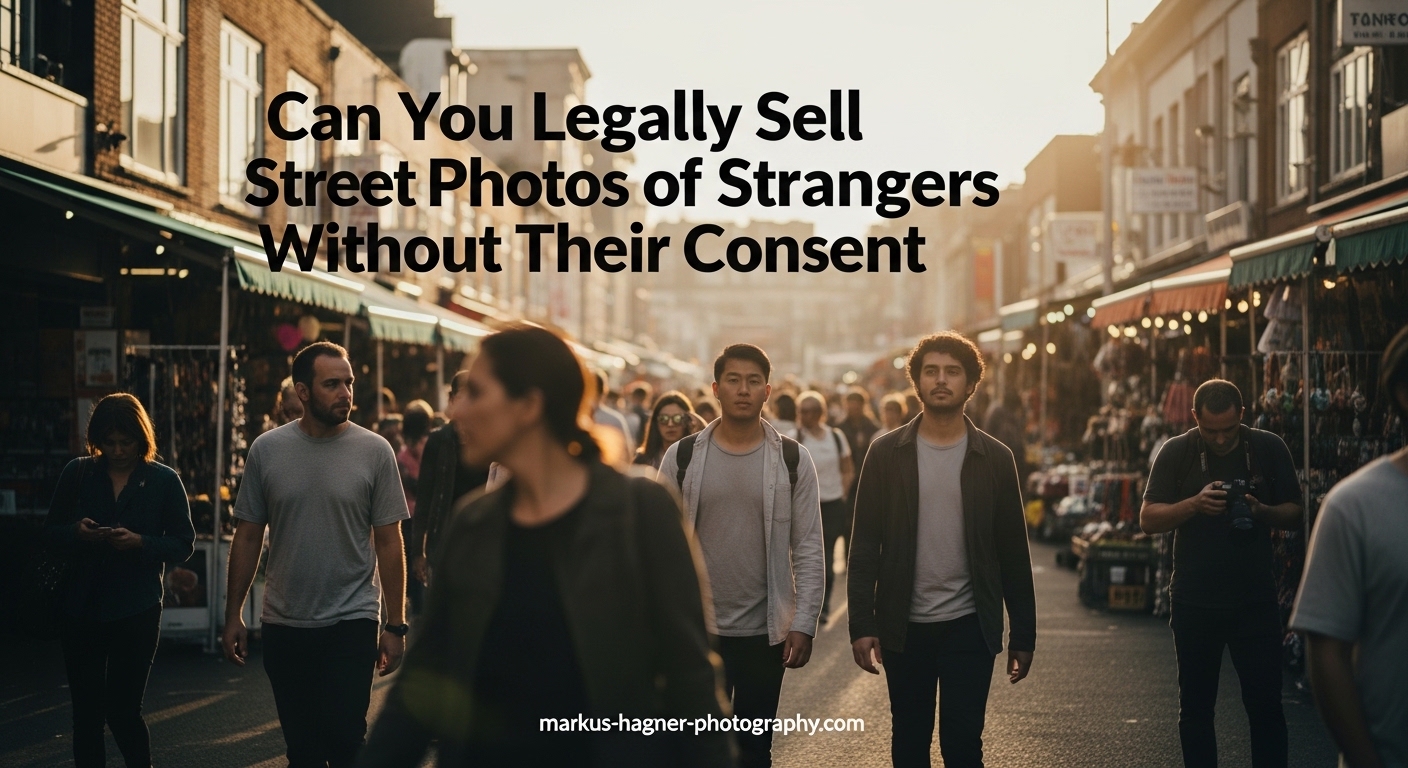
I have spent years shooting street photography in cities across North America and Europe, and one question comes up constantly from fellow photographers: can you actually sell those candid shots of strangers? It is a legitimate concern. You capture a stunning image of someone walking through Times Square or a contemplative figure on a London street, and you want to know if putting that image up for sale could land you in legal trouble.
The confusion is understandable. Photography laws vary dramatically between countries, and the line between legal rights and ethical considerations often blurs. After researching legal precedents, consulting with photographers who have been through legal challenges, and reviewing stock photography platform requirements, I can give you a clear answer. This guide covers what you need to know about street photography laws, model release requirements, and the critical distinction between commercial and editorial use.
The Short Answer
Yes, you can legally sell street photos of strangers taken in public spaces without their consent, with one major exception: you cannot use someone’s recognizable likeness for commercial purposes without a model release. Commercial use means advertising, product endorsement, or implying the person is promoting something. Editorial use, fine art sales, and documentary purposes generally do not require permission. The key factors are where you took the photo (public vs private space) and how you intend to use it (commercial vs editorial).
Public vs Private Places: Where the Law Draws the Line
The foundation of street photography law rests on one concept: reasonable expectation of privacy. In the United States, Canada, and most Western countries, people in public spaces have no reasonable expectation of privacy. This means you can legally photograph anyone visible from a public area, even if they do not know you are doing it.
Public spaces include streets, sidewalks, parks, beaches, and any area open to the general public. The legal principle is straightforward: if you can see it from a place where you have a right to be, you can photograph it. This applies even if someone is doing something embarrassing or private in public view.
Private property works differently. Malls, restaurants, stores, and private events operate under property owner rules. The owner can prohibit photography on their premises, and violating those restrictions can result in trespassing charges. However, photographing private property from a public space remains legal.
The gray area involves semi-public spaces. Subway systems, airports, and government buildings often have specific photography regulations. New York City allows subway photography, but Washington D.C. restricts it. Always check local regulations before shooting in transportation hubs or government facilities.
Commercial Use vs Editorial Use: The Critical Distinction
This distinction determines whether you need a model release. Most photographers who get into legal trouble do so because they misunderstand what counts as commercial use.
What Counts as Commercial Use
Commercial use occurs when you use someone’s likeness to sell a product, service, or idea, or to suggest endorsement. This exploits the person’s image for financial gain beyond simply selling the photograph itself.
Here is a practical checklist for identifying commercial use:
- Advertising campaigns: Using the photo in ads for any product or service
- Product endorsement: Implying the person supports or recommends something
- Marketing materials: Brochures, websites selling products, promotional content
- Merchandise: Putting the image on t-shirts, mugs, or other products for sale
- Corporate use: Using the image in company materials or annual reports
If any of these apply, you need a signed model release from every recognizable person in the frame.
What Counts as Editorial Use
Editorial use covers newsworthy, educational, or documentary purposes. The image informs rather than sells. This category includes newspapers, magazines illustrating stories, blogs discussing current events, and documentary films.
Fine art photography occupies an interesting middle ground. Selling prints of street photography as artwork generally does not constitute commercial use. The photograph itself is the product, not a tool to sell something else. Most court precedents in the United States have upheld this distinction, though the line can blur when art is licensed for commercial reproduction.
Stock Photography Special Rules
Stock photography platforms create their own requirements that go beyond legal minimums. Getty Images, Shutterstock, Adobe Stock, and Alamy typically require model releases for any recognizable person, regardless of intended use. They do this to protect themselves and their customers from liability.
Some platforms offer editorial licenses for unreleased images. These images sell at lower prices and have restricted usage rights. If you plan to sell through stock agencies, getting releases whenever possible maximizes your earning potential.
When Do You Need a Model Release Form?
A model release is a signed document giving you permission to use someone’s likeness commercially. It protects you legally and is essential for any commercial work.
You need a model release when:
- Selling images for advertising or promotional use
- Using photos in marketing materials for any business
- Creating merchandise featuring recognizable people
- Submitting to stock agencies for commercial licensing
- Entering photography contests that require releases
You generally do not need a release when:
- Selling prints as fine art through galleries or online
- Using images editorially in news or documentary contexts
- Posting on social media (though platform rules may apply)
- Creating personal portfolios or websites
- Selling through editorial stock channels
The practical reality is that most street photographers sell prints without releases and never face legal problems. The risk increases dramatically when images move into advertising territory or when the subject is a celebrity whose likeness has commercial value.
Can You Legally Sell Street Photos of Strangers in Different Countries?
Photography laws vary significantly around the world. What is perfectly legal in New York could get you fined in Paris.
United States
The United States has some of the most photographer-friendly laws globally. The First Amendment protects photography in public spaces, and right of publicity laws vary by state. California and New York have stronger protections for individuals, but fine art sales remain protected nationwide.
The key legal principle comes from the Nussenzweig v. DiCorcia case, where a photographer sold prints of a subject photographed without consent. The New York court ruled in favor of the photographer, establishing that fine art sales do not constitute commercial use requiring consent.
United Kingdom
UK law similarly permits street photography in public spaces. There is no general right to privacy in public areas. However, the UK has stricter harassment laws, and persistent photography of someone who objects could potentially constitute harassment.
Data protection regulations apply to photographs of identifiable individuals, but journalistic and artistic purposes typically qualify for exemptions.
European Union and GDPR
The General Data Protection Regulation (GDPR) complicates street photography in Europe. Photographs count as personal data when individuals are identifiable. However, GDPR includes exemptions for journalistic, artistic, and academic purposes.
Countries interpret GDPR differently. France has strict privacy laws that protect individuals from being photographed without consent, even in public. Germany allows street photography but restricts publishing images that expose people to ridicule or embarrassment. The practical advice is to research specific country laws before shooting in Europe.
Canada and Australia
Both countries follow similar principles to the United States and UK. Public photography is generally legal, and commercial use distinctions apply similarly. Australia has some variations between states regarding surveillance and privacy laws.
Countries with Strict Restrictions
Several countries have significantly stricter laws. Japan requires consent for publishing photographs of individuals in many contexts. South Korea has strong portrait rights protections. Some Middle Eastern countries restrict photography of people entirely, particularly women. Always research local laws before shooting internationally.
Selling Street Photography: What Actually Happens in Practice
Theory matters, but what happens when photographers actually sell street work? I have spoken with dozens of street photographers about their experiences, and the reality is reassuringly mundane.
Gallery sales of street photography prints rarely involve legal challenges. Most collectors buy for artistic appreciation, not commercial exploitation. The subjects in these photographs typically never discover their images are being sold, and even when they do, they rarely pursue legal action.
Online marketplaces like Etsy and Fine Art America host thousands of street photography listings. These platforms generally defer to copyright and trademark law rather than requiring releases for art prints. However, each platform has its own terms of service worth reviewing.
The stock photography route requires more caution. Editorial licenses exist for unreleased images, but they come with usage restrictions and lower payouts. Photographers serious about stock income typically approach street photography differently, seeking releases when possible or focusing on images where people are unrecognizable.
How to Handle Confrontations and Protect Yourself
Even when you are legally in the right, confrontations happen. Someone might object to being photographed, demand you delete the image, or threaten legal action. Knowing how to respond protects both your legal position and your personal safety.
First, stay calm and polite. Most confrontations de-escalate quickly with a friendly demeanor. Explain that you are a photographer documenting public life, and offer to show them the image. Many people become less concerned once they see the result is not embarrassing or unflattering.
Know your rights but avoid being confrontational about them. You are not legally required to delete images, but sometimes walking away is the wiser choice than escalating a dispute. Your safety matters more than any single photograph.
If someone threatens legal action, do not panic. Actual lawsuits over street photography are extremely rare, and plaintiffs bear the burden of proving damages. Most threats never materialize into legal proceedings.
Consider photographer liability insurance if you sell work professionally. Organizations like PPA (Professional Photographers of America) offer coverage that includes legal defense costs. This provides peace of mind for commercial photographers.
Finally, use common sense. Photographing children requires extra sensitivity. Avoid situations that could be perceived as stalking or harassment. Your legal rights exist alongside ethical responsibilities to your subjects.
Frequently Asked Questions
Do you need permission to sell photos of people?
Not always. You can sell photos of people taken in public spaces without permission for editorial use, fine art prints, and documentary purposes. However, you need a signed model release to use someone’s recognizable image for commercial purposes like advertising, product endorsement, or marketing materials.
Can you get sued for street photography?
Yes, you can be sued, though successful lawsuits are extremely rare. The most common claims involve right of publicity, invasion of privacy, or commercial misappropriation. As long as you photograph in public spaces and avoid using images for advertising without consent, your legal risk is minimal. Fine art and editorial uses are well-protected in most jurisdictions.
Is it illegal to take a picture of a stranger without their consent?
No, it is not illegal to photograph strangers in public spaces in the United States, Canada, UK, and most Western countries. People in public areas have no reasonable expectation of privacy. However, photographing people in private spaces where they expect privacy, such as bathrooms or dressing rooms, is illegal regardless of location.
Can you take photos of random people on the street?
Yes, you can legally take photos of random people on public streets, sidewalks, parks, and other public spaces. This is the foundation of street photography as an art form. The key is ensuring you are in a public place yourself, not trespassing on private property, and not harassing or stalking anyone. Laws vary by country, so research local regulations when traveling internationally.
Final Thoughts
Can you legally sell street photos of strangers? In most cases, yes. The law generally supports photographers who capture images in public spaces and sell them as artwork or use them editorially. The critical exceptions involve commercial advertising and endorsement uses, which require model releases. Understanding the distinction between commercial and editorial use, knowing your local laws, and exercising common sense will keep you shooting confidently.
Street photography documents our shared human experience. While respecting subjects and understanding legal boundaries matters, fear should not prevent you from creating meaningful work. Now get out there and shoot.
Disclaimer: This article provides general information about photography laws and should not be considered legal advice. Laws vary by jurisdiction and change over time. Consult a qualified attorney for advice about specific situations.