
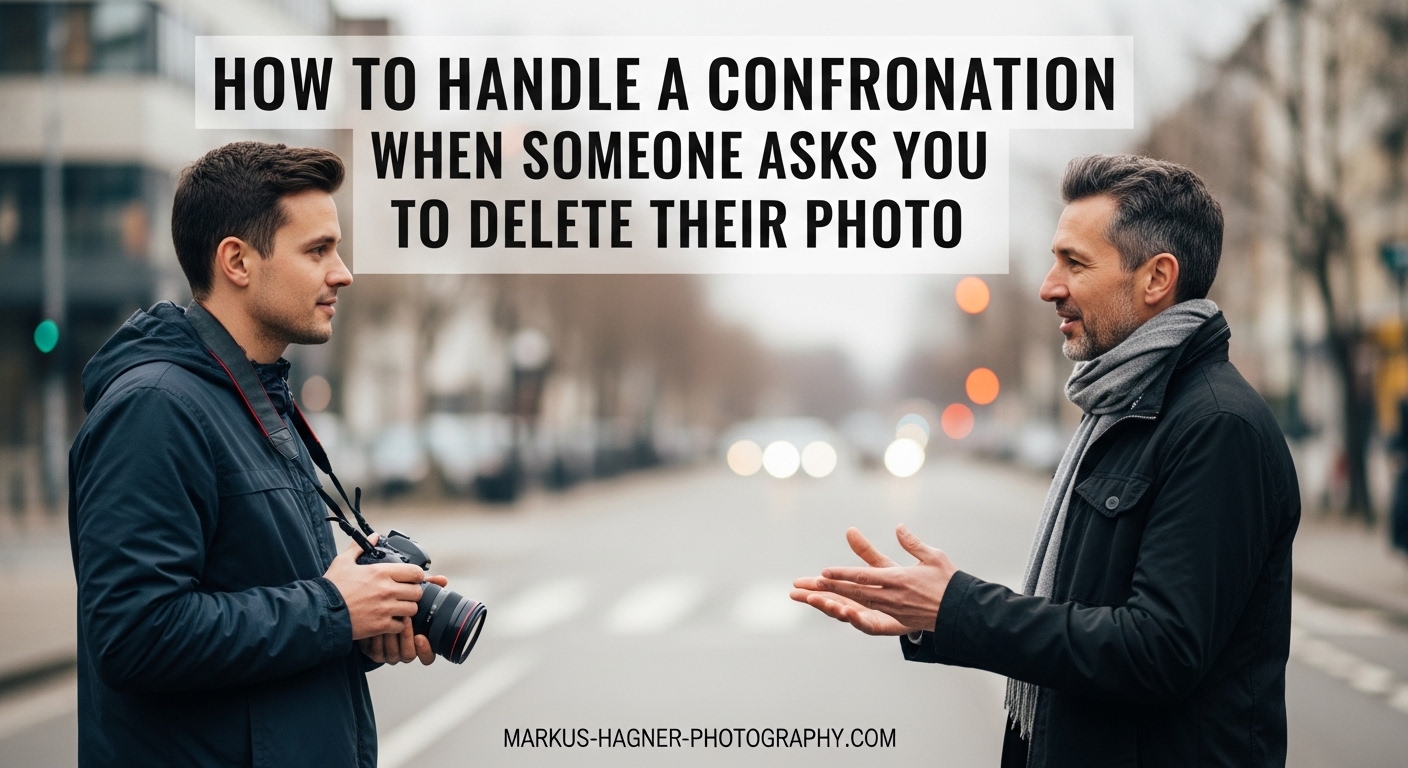
You are walking down the street with your camera, capturing the energy of the city around you. A moment later, someone taps your shoulder and demands you delete the photo you just took. Your heart races. What do you do?
This scenario happens to every street photographer eventually. Knowing how to handle a confrontation when someone asks you to delete their photo can mean the difference between a brief awkward exchange and a dangerous situation. In this guide, I will share practical steps, specific scripts, and decision frameworks that have helped me and other photographers navigate these moments safely and respectfully.
Understanding Why People Ask You to Delete Their Photo
Before we dive into de-escalation techniques, it helps to understand why someone might object to having their picture taken. Most people who confront photographers are not trying to be difficult. They have genuine concerns that deserve respect.
Some people fear their image will be mocked online or used to humiliate them. Others worry about their privacy in an age where photos spread instantly across social media. Cultural backgrounds, personal trauma, or simply a bad day can all influence how someone reacts to being photographed without consent.
I have found that approaching these situations with empathy rather than defensiveness makes all the difference. When you understand their perspective, de-escalating becomes much easier.
How to Handle a Confrontation When Someone Asks You to Delete Their Photo: Step-by-Step Protocol
When someone confronts you about a photo, your immediate response sets the tone for everything that follows. Here is the protocol I use, developed over years of street photography in busy urban environments.
Step 1: Stay Calm and Assess the Situation
Take a breath. Your body language matters more than your words in the first few seconds. Keep your hands visible, maintain a relaxed posture, and avoid crossing your arms or stepping back defensively.
Quickly assess the person’s demeanor. Are they simply annoyed, or are they genuinely angry? Is anyone with them? Is this a crowded public space or somewhere isolated? Your safety comes first, always.
Step 2: Acknowledge Their Request Respectfully
The first thing you say matters enormously. I recommend something simple and non-confrontational:
“I understand you are uncomfortable, and I apologize for that. Let me show you the photo.”
This response accomplishes several things at once. You acknowledge their feelings, you offer transparency, and you buy yourself a moment to think. Notice I did not immediately agree to delete or refuse. Keep your options open.
Step 3: Show Them the Photo
Most of the time, showing them the image on your camera back or phone helps defuse the situation. They can see exactly what you captured, which is often less intrusive than they imagined.
Sometimes, seeing the photo changes their mind entirely. They might realize the image is not about them specifically, or they might actually like how they look. Either way, transparency builds trust.
Step 4: Explain Your Intention Briefly
If they still want the photo deleted after seeing it, offer a brief, honest explanation of why you took it. Keep it short:
“I am working on a street photography project about city life. You looked really natural in this moment.”
Avoid getting defensive or lecturing them about your legal rights. That almost always escalates the situation. Focus on the human connection, not the legal argument.
Step 5: Make Your Decision
Now comes the critical moment. Do you delete the photo or not? I will cover the decision framework in detail in the next section, but here is the short version:
If they asked politely and the photo is not essential to your work, I strongly recommend deleting it. A photograph is never worth your safety or the reputation of photographers everywhere.
If you decide to delete, do it in front of them. Show them the deleted image on your camera so they see it is gone. This gesture of goodwill often transforms a tense moment into a neutral or even positive interaction.
Step 6: Exit Safely
After the interaction, move on. Do not linger in the area or continue shooting nearby immediately. Give the situation space to resolve completely.
If the person becomes threatening or you feel unsafe at any point, prioritize your safety above all else. Walk toward crowded areas, do not engage further, and call for help if necessary.
When to Delete vs. When to Stand Firm
This is the question I hear most often from photographers. Should you always delete when asked? Never? The answer lies somewhere in between.
Delete the Photo When:
The person asked politely and respectfully. Maintaining goodwill between photographers and the public matters more than any single image.
The photo is not particularly valuable to your work. Unless you captured something genuinely newsworthy or artistically exceptional, the conflict is rarely worth it.
You feel physically threatened. No photograph is worth your safety. I cannot emphasize this enough.
The person appears vulnerable or distressed. Someone experiencing homelessness, a medical episode, or clear emotional distress deserves extra consideration.
Consider Keeping the Photo When:
You are on an editorial assignment and the image is essential to your story. In this case, you can explain your professional obligation while still being respectful.
The event is clearly newsworthy and you are acting as a photojournalist. Protests, public events, and breaking news carry different expectations.
The photo has already been published or submitted. In this case, be honest about the situation rather than making promises you cannot keep.
The Dual Memory Card Question
Some photographers use cameras with dual memory cards and delete from one while keeping a copy on the other. I have done this myself in the past.
Here is my honest take: if you tell someone you deleted their photo while secretly keeping a copy, you are lying to them. Whatever your legal rights may be, the ethical issue is clear. I no longer do this, and I recommend against it.
Film Photography Considerations
If you shoot film, you genuinely cannot delete a photo in the moment. Be honest about this. Explain that the image is on film and cannot be erased, but offer to not publish or share it. Most people understand when you are transparent.
Legal Rights and Ethical Considerations
Understanding your legal rights as a photographer is important, but I want to be clear about something: knowing your rights and asserting them in a confrontation are very different things.
Public Photography Rights
In most countries, including the United States, you can legally photograph people in public spaces where there is no reasonable expectation of privacy. Streets, parks, and public events generally fall into this category.
However, laws vary significantly by country and even by region. In parts of Europe, GDPR regulations may affect how you can use photos of people commercially. Some countries have stricter portrait rights that require consent.
Expectation of Privacy
The concept of “expectation of privacy” is key to understanding photography laws. People generally have a reasonable expectation of privacy in bathrooms, changing rooms, medical facilities, and inside their homes. Public spaces are different.
That said, just because something is legal does not mean it is right. Ethical photography often goes beyond legal minimums.
Commercial vs. Editorial Use
Using a photo commercially, such as in advertising or product promotion, typically requires model releases. Editorial use for news, art, or documentary purposes usually does not, but this varies by jurisdiction.
Why Ethics Matter More Than Legal Rights
Here is the truth I have learned from years of street photography: you can be legally right and still be wrong. Asserting your legal rights in a heated confrontation rarely ends well. It escalates tension, damages the public perception of photographers, and can lead to physical danger.
I prioritize respect, empathy, and safety over legal arguments. If someone is genuinely distressed by my photo, I delete it regardless of what the law allows.
Special Scenarios and Challenging Situations
Some confrontations require extra caution. Here is how I handle the most common challenging scenarios.
Dealing With Drunk or Volatile People
Alcohol and unpredictable behavior do not mix well with photography confrontations. If someone appears intoxicated or emotionally unstable, I delete immediately and leave the area. No conversation needed. Your safety is not worth debating.
Security Guards and Private Property
Security guards often overstep their authority regarding photography in public spaces adjacent to private property. Know your rights, but also know when to walk away. Arguing with security rarely ends well, even if you are legally correct.
Photographing Minors
Photographing children in public is generally legal in most jurisdictions, but it raises significant ethical concerns. Parents may react strongly to perceived threats to their children. I avoid photographing minors unless I have explicit parental consent.
When Threats Become Physical
If someone threatens you physically or tries to grab your equipment, do not engage. Move toward other people, call for help, and prioritize getting to safety. Report the incident to authorities if necessary. Your camera can be replaced. You cannot.
How to Avoid Confrontations Before They Happen
The best confrontation is the one that never happens. Here are strategies I use to minimize negative encounters while shooting street photography.
Be selective about your subjects. I avoid photographing people who appear distressed, angry, or engaged in private conversations. There are infinite interesting scenes that do not involve people who might object.
Consider your body language. Confident, relaxed photographers attract less negative attention than those who appear furtive or nervous. Shoot openly rather than trying to hide what you are doing.
Have your explanation ready. When someone asks why you are taking photos, a clear, simple answer about your project or interest in street photography usually satisfies curiosity.
Know when to walk away. If a situation feels wrong, trust your instincts. There will always be another photo opportunity.
Frequently Asked Questions
Can you ask someone to delete a photo of you?
Yes, you can always ask. However, whether the photographer is legally required to delete it depends on where the photo was taken and local laws. In most public spaces in the United States, photographers are not legally obligated to delete photos even when asked. That said, many photographers will honor polite requests as a matter of respect and ethics.
Why would someone hate having their photo taken?
People object to photography for many reasons: fear of being mocked online, privacy concerns, cultural or religious beliefs, past trauma, or simply personal preference. Some people are camera-shy, while others worry about how their image might be used without their consent. Understanding these concerns helps photographers approach confrontations with empathy rather than defensiveness.
Is posting a picture of someone defamation?
Simply posting a non-doctored photo of someone in a public space is generally not defamation. Defamation requires false statements that harm someone’s reputation. However, using a photo in a misleading context, with defamatory captions, or in a way that falsely implies something negative about the person could potentially be defamatory. Laws vary by jurisdiction.
Do I have to delete photos if asked?
In most public spaces in the United States and many other countries, you are not legally required to delete photos when asked. However, you should consider the ethical implications, your safety, and the impact on photography’s public perception. Many experienced photographers recommend deleting when asked politely, unless the photo is genuinely newsworthy or essential to professional work.
Conclusion
Learning how to handle a confrontation when someone asks you to delete their photo is an essential skill for any street photographer. The key is staying calm, treating people with respect, and prioritizing safety over any single image.
Remember the protocol: acknowledge their feelings, show them the photo, explain briefly, and make a thoughtful decision. Most confrontations end peacefully when you lead with empathy rather than legal arguments.
Keep shooting, stay safe, and remember that the photography community’s reputation depends on how each of us handles these moments.