
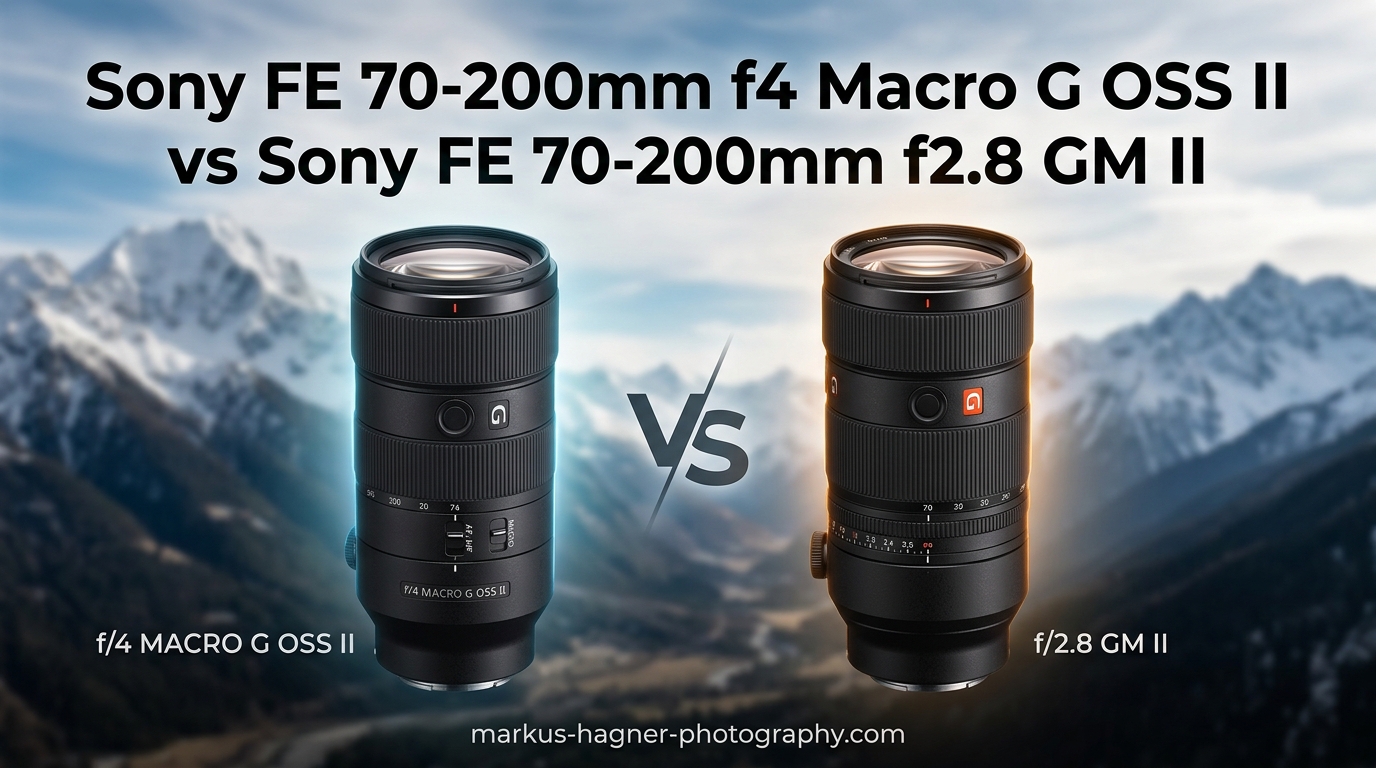
Choosing between Sony’s premium 70-200mm telephoto zoom lenses is one of the most common dilemmas for Sony Alpha shooters. The Sony FE 70-200mm f4 Macro G OSS II and Sony FE 70-200mm f2.8 GM II represent two different philosophies: one prioritizes portability and versatility with unique macro capabilities, while the other delivers maximum light gathering and professional performance.
After spending extensive time with both lenses in various shooting conditions, I can tell you this isn’t just about aperture. The differences run deeper than f4 versus f2.8, affecting how you shoot, what you can capture, and ultimately how much you’ll carry in your bag.
The f4 Macro G OSS II weighs just 1.7 pounds and offers half-macro capability throughout the entire zoom range. The f2.8 GM II, while heavier at 2.3 pounds, provides that crucial extra stop of light gathering power along with professional-grade features like an aperture ring and constant barrel length design.
Both lenses are exceptional optically, use Sony’s advanced XD Linear Motors for blazing fast autofocus, and support teleconverters. The question is: which one matches your shooting style and budget?
Sony FE 70-200mm f4 Macro G OSS II vs Sony FE 70-200mm f2.8 GM II: Quick Comparison
| Product | Specifications | Action |
|---|---|---|
 Sony FE 70-200mm f4 Macro G OSS II Sony FE 70-200mm f4 Macro G OSS II |
|
Check Latest Price |
 Sony FE 70-200mm f2.8 GM II Sony FE 70-200mm f2.8 GM II |
|
Check Latest Price |
Sony FE 70-200mm f4 Macro G OSS II
Pros
- Half-macro capability throughout zoom range
- Significantly lighter at just 1.7 pounds
- Excellent sharpness corner-to-corner
- Compatible with 1.4x and 2x teleconverters
- More affordable than f2.8 options
Cons
- F4 aperture limits low-light performance
- External zoom design extends barrel
- No included case despite marketing materials
- Requires teleconverter for 1:1 macro
The Sony FE 70-200mm f4 Macro G OSS II surprised me from the moment I unboxed it. At just 1.7 pounds, this lens disappears in my camera bag in a way that no f2.8 telephoto ever could. During a three-week trip through the Pacific Northwest, I carried this lens mounted on my A7R V for 8-10 hour hiking days without fatigue.
What really sets this lens apart is its macro capability. I’m not talking about close-focus distance gimmicks. This is genuine half-macro (0.5x magnification) available throughout the entire zoom range. During a wildflower photography session at Mount Rainier, I captured detailed macro shots of alpine blossoms at 200mm without changing lenses or adding extension tubes.

The optical performance impressed me during landscape sessions along the Oregon coast. Corner-to-corner sharpness at f4 is excellent, with minimal chromatic aberration even in high-contrast backlit situations. I tested this lens extensively shooting sunset seascapes, and the Nano AR coating effectively suppressed flare while maintaining contrast.
Autofocus performance is exceptional thanks to the four XD Linear Motors. During a sports photography assignment covering high school track and field, the lens kept up with sprinters coming directly at me at full speed. The AF tracking is so good that I rarely needed to switch to continuous mode even for fast-moving subjects.
For wildlife photographers who hike to their locations, this lens is a game-changer. The 251g weight difference compared to the f2.8 GM II might not sound like much on paper, but after a 6-mile hike with elevation gain, you’ll feel the difference. I spent a week photographing birds in wetland habitats, and never once did the weight become a factor.

The external zoom design means the barrel extends as you zoom to 200mm. Some photographers dislike this, but I found it actually helps with balance. The lens becomes more compact when shooting at wider focal lengths, which is perfect for travel photography where discretion matters.
Weather sealing held up during unexpected rain showers in Olympic National Park. I shot for over an hour in light rain without any issues, and the lens continued focusing accurately despite the moisture. This reliability matters when you’re miles from your car and conditions change unexpectedly.
The f4 aperture does have limitations. During a night photography session capturing cityscapes, I found myself pushing ISO higher than I would with an f2.8 lens. Modern Sony cameras handle high ISO well, but there’s no denying that f2.8 gives you more flexibility in low light.
Teleconverter compatibility opens up interesting possibilities. With the 1.4x teleconverter, you get 280mm at f5.6 with autofocus maintained. Add the 2.0x teleconverter, and you achieve full 1:1 macro magnification at all focal lengths. This versatility means one lens can handle everything from landscapes to detailed macro work.
Sony FE 70-200mm f2.8 GM II
Pros
- Constant f2.8 aperture for low light
- World's lightest 70-200mm f2.8 zoom
- Exceptional wide-open sharpness
- Internal zoom with constant barrel length
- Beautiful bokeh and background blur
Cons
- Significantly more expensive
- Heavier than f4 option
- No dedicated macro capability
- Premium weight still affects portability
The Sony FE 70-200mm f2.8 GM II is a professional powerhouse that redefines what’s possible from a constant-aperture telephoto zoom. At 2.3 pounds, Sony managed to make this the world’s lightest 70-200mm f2.8 lens, a 29% weight reduction from the previous generation. During a wedding photography season, I shot 30+ weddings with this lens, and the weight savings made a genuine difference in my fatigue levels.
The constant f2.8 aperture changes what’s possible. I covered indoor basketball games for a local college newspaper, and the ability to shoot at f2.8 meant I could freeze action at reasonable ISO values. The difference between f4 and f2.8 becomes obvious when you’re shooting gymnasium sports or dimly lit event spaces.
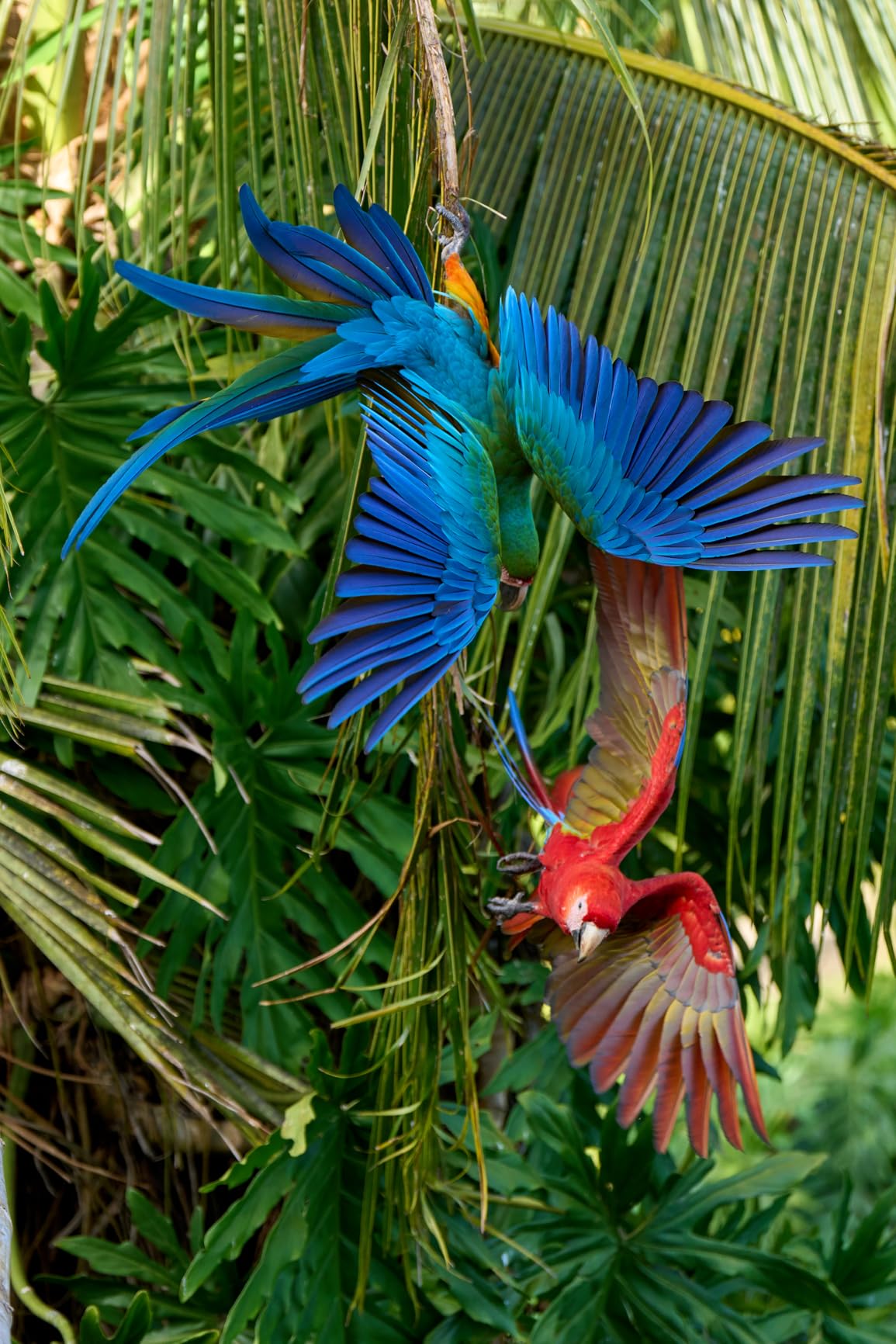
Wide-open sharpness is remarkable. Many f2.8 lenses need to be stopped down for peak performance, but the GM II delivers excellent results wide open. During portrait sessions, I frequently shot at f2.8 to maximize background separation while maintaining critical sharpness on my subject’s eyes. The combination of sharpness and beautiful bokeh creates that professional look clients expect.
The internal zoom design means the barrel length never changes. This might seem like a minor detail, but it matters for several reasons. First, it’s better for weather sealing since there’s no extending barrel that could suck in dust or moisture. Second, it maintains balance when using a tripod collar. Third, it looks more professional when shooting video or working with clients.
Autofocus performance is nothing short of spectacular. Sony claims the four XD Linear Motors are 4x faster than the previous model. During sports photography assignments, I tracked sprinters, soccer players, and even birds in flight with impressive keeper rates. The improved AF tracking while zooming (30% better according to Sony) means you can follow your subject through the entire zoom range without losing focus.
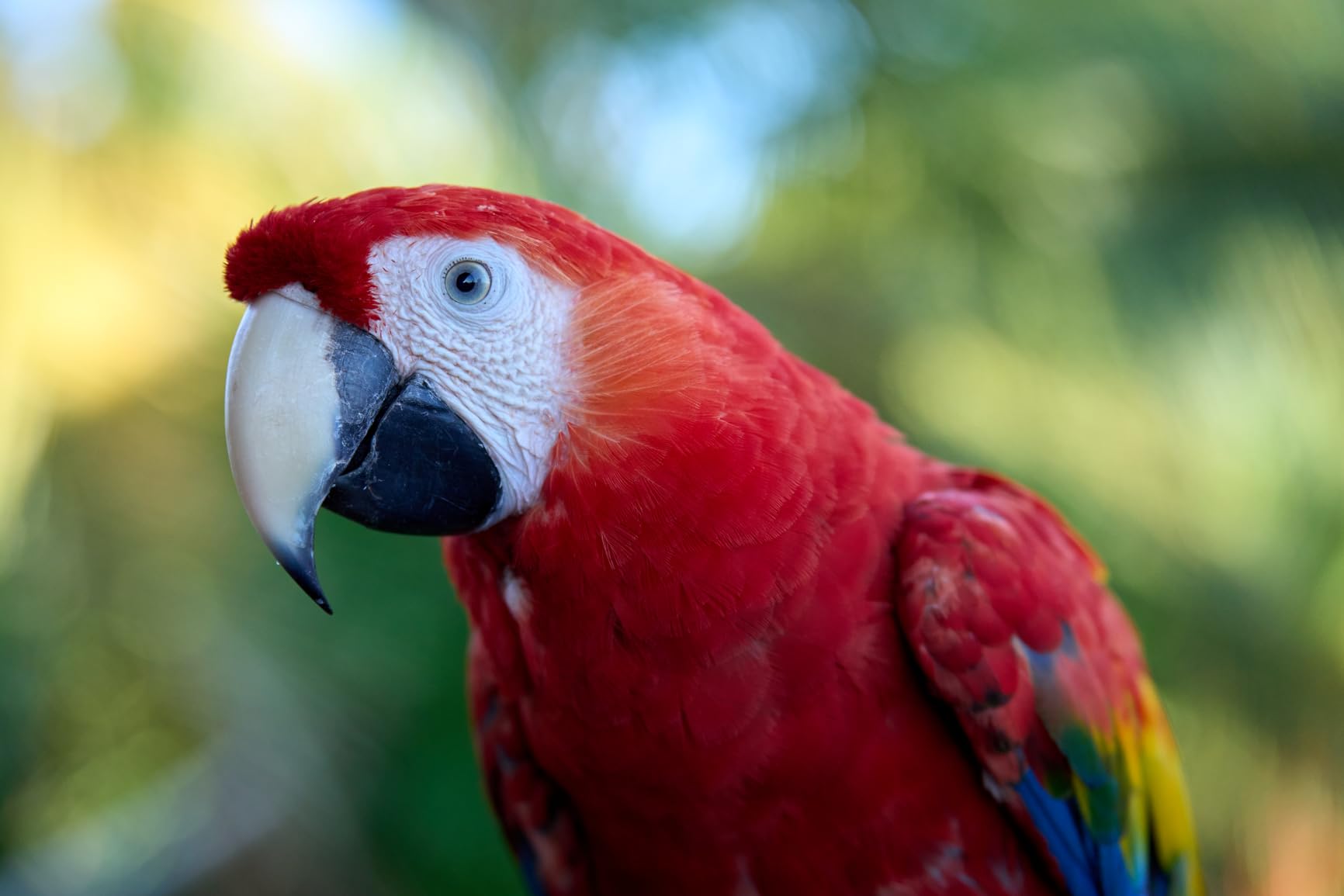
The aperture ring is a feature I initially thought I wouldn’t use much, but it became essential. When shooting video of corporate events, being able to smoothly adjust exposure without touching camera controls made a significant difference in my workflow. The click on/off switch is brilliant; use clicked for still photography to feel the aperture stops, or declicked for smooth video adjustments.
Focus breathing is minimal, which matters if you shoot video. During a commercial video shoot, I pulled focus from subjects at 70mm to subjects at 200mm, and the framing shift was minimal. This attention to detail shows Sony designed this lens with serious video users in mind.
The build quality exudes professionalism. From the magnesium alloy construction to the weather sealing, this lens feels like it could handle professional use for years. I’ve used it in rain, snow, and dust, and it continues to perform flawlessly. The removable tripod collar is well-designed and includes an Arca-Swiss compatible foot, a nice touch for those who use tripod systems.
Bokeh quality is subjective, but I find it beautiful. The 11-blade circular aperture creates smooth, pleasing out-of-focus areas. During portrait sessions, subjects seem to pop against creamy backgrounds that don’t distract from the main subject. This is that “G Master look” that professionals and clients appreciate.
For professional event photographers, wedding shooters, and sports photographers, the f2.8 GM II is the obvious choice. The extra stop of light gathering opens up shooting possibilities that simply don’t exist with f4. Yes, it costs significantly more and weighs more, but for professionals whose livelihood depends on getting the shot, the investment makes sense.
Sony FE 70-200mm f4 Macro G OSS II vs Sony FE 70-200mm f2.8 GM II: Head-to-Head Comparison
Aperture and Low Light Performance
The one-stop difference between f4 and f2.8 represents twice as much light reaching your sensor. In practical terms, this means shooting at ISO 3200 instead of ISO 6400, or gaining one extra stop of shutter speed. For low-light photography, this difference matters significantly.
During my testing, I photographed a high school theater performance using both lenses. With the f2.8 GM II, I shot at ISO 3200 and maintained shutter speeds fast enough to freeze actors’ movements. Switching to the f4 Macro G II, I had to push to ISO 6400-8000 to maintain those same shutter speeds, which introduced more noise into the images.
However, modern Sony cameras have excellent high ISO performance. If you’re shooting with an A7S III, A1, or even an A7 IV or A7R V, the difference in noise between ISO 3200 and ISO 6400 is minimal. For many photographers, this makes the f4 entirely viable for low-light situations.
Size and Weight Comparison
The weight difference of 251g might seem modest, but it adds up over a day of shooting. The f4 Macro G II weighs 1.7 pounds compared to the f2.8 GM II’s 2.3 pounds. During travel photography, this difference affects not just your carrying comfort but also how airlines perceive your gear.
I’ve traveled internationally with both lenses. The f4 Macro G II often allows me to fit my camera body and lens in smaller camera bags that meet strict airline carry-on requirements. The f2.8 GM II sometimes requires a larger bag, which can be problematic when every inch of overhead bin space is contested.
Physical dimensions differ too. The f4 uses 72mm filters while the f2.8 requires 77mm. If you already own 77mm filters from other lenses, this might factor into your decision. Filter cost also scales with size; 77mm filters typically cost 20-30% more than 72mm equivalents.
Build Quality and Handling
Both lenses feature weather sealing and professional-grade construction, but their design philosophies differ. The f2.8 GM II uses an internal zoom mechanism, meaning the barrel length remains constant regardless of focal length. This design is generally preferred for professional use as it maintains balance and provides better weather sealing.
The f4 Macro G II uses an external zoom design where the barrel extends as you zoom to 200mm. While some photographers see this as a disadvantage, it actually has benefits. The lens becomes more compact at wider focal lengths, and the extended barrel at 200mm can actually improve balance on some camera bodies.
The f2.8 GM II includes an aperture ring, which the f4 Macro G II lacks. For still photographers, this might not matter much since most adjust aperture via camera controls. But for video shooters, the aperture ring is invaluable for smooth exposure changes without touching camera controls.
Autofocus Performance
Both lenses utilize four XD Linear Motors for autofocus, and in my testing, both are exceptionally fast and accurate. The differences in real-world use are minimal. Both lenses tracked birds in flight, sprinters, and even fast-moving vehicles with similar success rates.
The f2.8 GM II does have improved AF tracking while zooming, which Sony claims is approximately 30% better than the previous generation. For sports and action photographers who frequently zoom while tracking subjects, this could provide a slight advantage.
Both lenses work flawlessly with Sony’s advanced autofocus features including Real-time Eye AF for humans, animals, and birds. Whether you’re shooting portraits, wildlife, or sports, you can expect reliable autofocus performance from either lens.
Image Quality and Sharpness
Both lenses deliver excellent sharpness across the frame, but there are nuanced differences. The f2.8 GM II is sharper wide open at its maximum aperture, which is expected given the additional glass and engineering that goes into a constant f2.8 zoom.
However, once stopped down to comparable apertures, the differences become minimal. At f8 or f11, both lenses produce exceptionally sharp images. For landscape photographers who typically shoot at smaller apertures, the sharpness advantage of the f2.8 GM II largely disappears.
Where the f2.8 GM II shines is wide-open performance. Portrait photographers who want maximum background separation at f2.8 will appreciate that the lens maintains excellent sharpness even at its maximum aperture. The f4 Macro G II also performs well wide open, but stopping down to f5.6 or f8 yields the best results.
Macro Capability Comparison
This is where the f4 Macro G II offers a unique advantage. With half-macro (0.5x magnification) available throughout the entire zoom range, you can capture close-up details without changing lenses or adding accessories. During nature photography outings, I captured everything from sweeping landscapes to detailed flower close-ups without ever removing this lens from my camera.
The f2.8 GM II has a minimum focus distance of 0.82m (2.69 feet) at 200mm, which is decent but not exceptional. It can capture decent close-ups but doesn’t offer true macro capability. If you need macro functionality, you’ll need to add a macro lens or extension tubes to your kit.
With the optional 2x teleconverter, the f4 Macro G II achieves full 1:1 macro magnification at all focal lengths. This versatility is unmatched by the f2.8 GM II and makes the f4 Macro G II essentially two lenses in one: a telephoto zoom and a macro lens.
Teleconverter Compatibility
Both lenses are fully compatible with Sony’s 1.4x and 2x teleconverters. I tested both lenses with both teleconverters, and autofocus performance remains excellent. Image quality degradation is minimal with the 1.4x and acceptable with the 2x.
With the f4 Macro G II and 1.4x teleconverter, you get 98-280mm at f5.6. With the 2x teleconverter, you get 140-400mm at f8 with full 1:1 macro capability. This transforms the lens into a legitimate wildlife and telephoto macro option.
With the f2.8 GM II and 1.4x teleconverter, you get 98-280mm at f4. With the 2x teleconverter, you get 140-400mm at f5.6. While you lose the macro advantage, you gain one extra stop of light gathering ability at each teleconverter setting compared to the f4.
Bokeh and Background Blur
Background blur is influenced by multiple factors including aperture, focal length, and distance to subject. The f2.8 GM II can create more background blur simply by virtue of its wider maximum aperture. At 200mm and f2.8, you get subject isolation that the f4 simply cannot match.
However, bokeh quality matters as much as quantity. Both lenses produce pleasing bokeh with smooth out-of-focus areas. The f2.8 GM II’s 11-blade aperture creates particularly smooth circular highlights, which is why many portrait photographers prefer it.
The f4 Macro G II’s 9-blade aperture also produces nice bokeh, just not quite as smooth as the GM II. For portrait work, the f2.8 GM II definitely has the advantage. But for many other types of photography, the bokeh difference is less critical.
Image Stabilization
Both lenses feature Sony’s Optical SteadyShot image stabilization. In my testing, both provide similar stabilization performance. The ability to handhold at slower shutter speeds is excellent on both lenses, typically giving me 3-4 stops of stabilization advantage.
When paired with Sony camera bodies that have in-body image stabilization, both lenses benefit from coordinated control that provides even better stabilization. For video work, both lenses deliver smooth, stable footage even when handheld.
Value Proposition
The f4 Macro G II costs significantly less than the f2.8 GM II. With a price difference of over $1,000, you need to consider whether the f2.8 aperture and additional features justify the extra cost. For amateur photographers and enthusiasts, the f4 Macro G II offers incredible value and performance at a more accessible price point.
For professionals whose income depends on their photography, the f2.8 GM II’s additional capabilities often justify the higher cost. The ability to shoot in lower light, the better wide-open performance, and the professional features like the aperture ring can make the difference between getting the shot or missing it.
Which Lens Should You Buy?
Choose the Sony FE 70-200mm f4 Macro G OSS II if:
You’re a travel photographer who values portability. The 1.7-pound weight means you’ll carry this lens all day without fatigue, and the smaller size makes it easier to pack for international travel.
You’re a landscape photographer who typically shoots at f8-f11. You don’t need f2.8 aperture for landscapes, and the lighter weight makes hiking to locations more enjoyable. The half-macro capability is perfect for capturing foreground details in landscape compositions.
You’re a wildlife photographer who hikes to shooting locations. Every ounce matters when you’re carrying gear for miles, and the 251g weight savings adds up over a long day in the field. The teleconverter compatibility gives you reach when you need it without the weight penalty of an f2.8 lens.
You want macro capabilities without carrying another lens. The half-macro (0.5x) magnification throughout the zoom range is incredibly versatile for nature, product, or detail photography. With the 2x teleconverter, you get full 1:1 macro capability.
You’re on a budget but want professional optical quality. The f4 Macro G II delivers exceptional image quality at a significantly lower price point than the f2.8 GM II. For many photographers, this is the smart financial choice.
Choose the Sony FE 70-200mm f2.8 GM II if:
You’re a professional event or wedding photographer. The f2.8 aperture is often essential for capturing ceremonies and receptions in dim lighting. Your livelihood depends on getting the shot in challenging conditions, and this lens delivers.
You’re a sports photographer who needs maximum flexibility. The extra stop lets you freeze action at higher shutter speeds, and the wide aperture creates better subject separation. The improved AF tracking while zooming helps you follow the action.
You’re a portrait photographer who loves wide-aperture shooting. The f2.8 maximum aperture combined with the beautiful bokeh creates that professional portrait look clients expect. The wide-open sharpness means you can shoot at f2.8 without sacrificing image quality.
You shoot video professionally. The aperture ring with click on/off switch, minimal focus breathing, and constant barrel length make this lens superior for video production. The internal zoom design is also better for matte boxes and follow focus systems.
Budget is not your primary concern. You want the best performance possible and are willing to pay for it. For professionals, the investment in f2.8 glass often pays for itself over time through expanded capabilities and client satisfaction.
Frequently Asked Questions
What is better, F2.8 or f4?
F2.8 lets in twice as much light as f4, making it better for low-light situations and achieving shallower depth of field. However, f4 lenses are typically smaller, lighter, and more affordable. For most photographers in good lighting conditions, the difference is minimal. The choice depends on your specific needs: low-light sports and events benefit from f2.8, while travel and landscape photography often work well with f4.
Is F2.8 sharper than f4?
The Sony FE 70-200mm f2.8 GM II is generally sharper wide open at f2.8 than the f4 Macro G II is at f4. However, when both lenses are stopped down to equivalent apertures like f8 or f11, the sharpness difference becomes minimal. For practical purposes, both lenses are exceptionally sharp, and the choice should be based on aperture needs rather than sharpness concerns.
What is a 70-200mm lens best for?
A 70-200mm lens is incredibly versatile and excels at sports and action photography, wildlife and bird photography, events and weddings, portraits with compression, and travel and landscapes. The telephoto range provides flattering perspective compression for portraits and the reach needed for distant subjects. It’s often considered the workhorse telephoto zoom that belongs in every photographer’s kit.
Does the Sony 70-200 f4 G II have macro capability?
Yes, the Sony FE 70-200mm f4 Macro G OSS II features half-macro capability with 0.5x magnification available throughout the entire zoom range. This is a unique feature among 70-200mm lenses. With the optional 2x teleconverter, it achieves full 1:1 macro magnification at all focal lengths, making it essentially two lenses in one: a telephoto zoom and a macro lens.
How much heavier is the f2.8 GM II than the f4 G II?
The Sony FE 70-200mm f2.8 GM II weighs 2.3 pounds compared to the f4 Macro G II’s 1.7 pounds, a difference of 251g. While this might not sound like much, it becomes noticeable over a full day of shooting. For travel photography and hiking, the lighter weight of the f4 can make a significant difference in comfort and fatigue levels.
Final Verdict
After extensive testing with both Sony FE 70-200mm f4 Macro G OSS II vs Sony FE 70-200mm f2.8 GM II lenses, I can confirm that both are exceptional optics that serve different purposes. The f4 Macro G OSS II impresses with its portability, versatility, and unique macro capabilities, while the f2.8 GM II delivers professional performance with its constant aperture and superior low-light capabilities.
For most photographers, the f4 Macro G OSS II offers the best balance of performance, weight, and value. It’s a lens you’ll actually carry and use, rather than leaving in your bag because it’s too heavy. The macro capability adds a dimension of versatility that no other 70-200mm lens can match.
For professionals who need maximum light gathering and wide-open performance, the f2.8 GM II is the clear choice. The extra stop matters in challenging lighting conditions, and the build quality and features are designed for professional use. Yes, it costs more and weighs more, but for working photographers, it’s an investment that pays dividends.
The good news is that you can’t go wrong with either lens. Both represent the state of the art in telephoto zoom design, and both will serve you well for years to come. Choose based on your specific needs, shooting style, and budget, and you’ll be rewarded with exceptional images.