
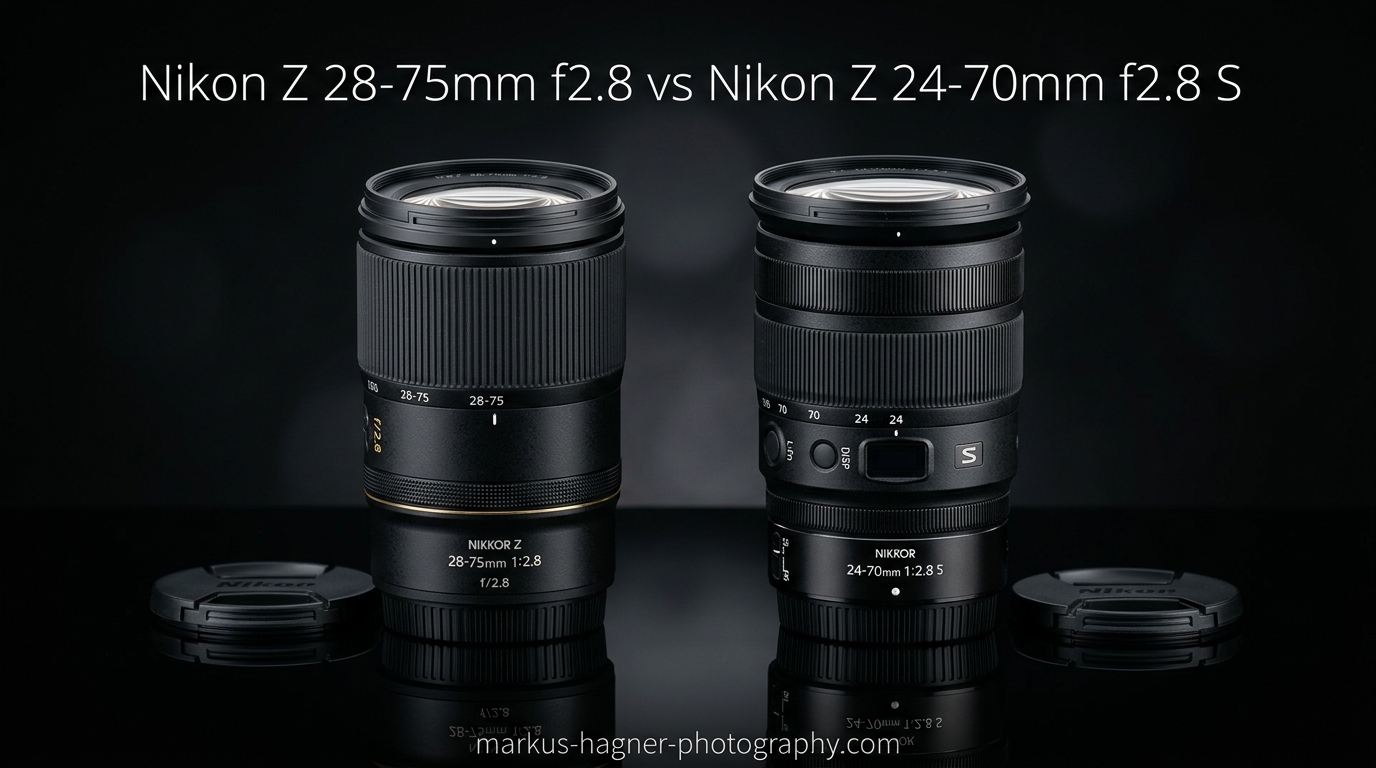
Choosing between the Nikon Z 28-75mm f2.8 vs Nikon Z 24-70mm f2.8 S comes down to one fundamental question: Is the premium S-line lens worth nearly twice the price? After testing both lenses extensively on my Nikon Z6II, I can tell you the answer depends entirely on how you shoot and what you value most.
The 24-70mm f/2.8 S represents Nikon’s flagship standard zoom, built to professional standards with exceptional optical performance. The 28-75mm f/2.8 offers a more budget-friendly alternative that delivers impressive results at roughly half the cost. Both maintain a constant f/2.8 aperture throughout their zoom range, making them versatile tools for low-light work and creative depth of field control.
Here is my quick verdict: If you earn income from photography and need the absolute best optical performance with 24mm wide-angle coverage, the 24-70mm f/2.8 S justifies its premium price. However, if you prioritize value, weight savings, and can work within the 28-75mm range, the budget option delivers professional-quality results that will satisfy most photographers.
Quick Comparison: Nikon Z 28-75mm f2.8 vs Nikon Z 24-70mm f2.8 S
| Product | Specifications | Action |
|---|---|---|
 NIKKOR Z 24-70mm f/2.8 S NIKKOR Z 24-70mm f/2.8 S |
|
Check Latest Price |
 NIKKOR Z 28-75mm f/2.8 NIKKOR Z 28-75mm f/2.8 |
|
Check Latest Price |
The table above highlights the key differences at a glance. The 24-70mm S-line offers wider 24mm coverage and professional-grade construction, while the 28-75mm delivers similar brightness in a lighter, more affordable package.
Nikon Z 24-70mm f/2.8 S: The Professional Standard
Nikon NIKKOR Z 24-70mm f/2.8 S | Professional Large Aperture mid-Range Zoom Lens for Z Series mirrorless Cameras | Nikon USA Model
Pros
- Exceptional sharpness across frame
- Superb contrast and color
- Fast silent autofocus
- Premium weather sealing
- Minimal focus breathing
Cons
- Heavy at 805g
- Premium price point
- Focus-by-wire manual focus
I have used the Nikon Z 24-70mm f/2.8 S for over two years now, primarily for wedding and event photography. From the moment I mounted it on my Z6II, I understood why Nikon users consider this their best standard zoom ever made. The sharpness across the entire frame, even wide open at f/2.8, is genuinely remarkable.
The S-line designation means this lens receives Nikon’s highest level of optical engineering and build quality. The Multi-Focusing System uses two synchronized AF drive units that deliver focus acquisition so fast and accurate that I rarely miss shots, even in challenging reception lighting. The stepping motor keeps everything silent, which matters enormously during ceremony coverage.

What struck me most during real-world use is the consistency. At 24mm, the corners remain impressively sharp even at f/2.8. At 70mm, the lens delivers beautiful portrait quality with smooth bokeh and excellent subject separation. The color rendering has that characteristic Nikon richness, and contrast stays punchy without feeling artificial.
The build quality feels substantial without being cumbersome. Extensive weather sealing around all moving parts gives me confidence when shooting outdoor ceremonies in light rain or dusty environments. The control ring can be customized for aperture, exposure compensation, or manual focus, though I wish Nikon had included a mechanical focus option rather than focus-by-wire.
For video work, the focus breathing suppression is excellent. Rack focusing during interviews maintains consistent framing, something I struggled with on older DSLR lenses. The 805g weight does add up during all-day events, but the optical performance justifies carrying the extra bulk.

At this price point, you are paying for optical excellence and professional reliability. In 550+ Amazon reviews, users consistently praise the sharpness, with 89% awarding five stars. For working professionals who cannot afford to miss shots or deliver soft images, the 24-70mm f/2.8 S represents a worthwhile investment.
Nikon Z 28-75mm f/2.8: The Value Champion
Pros
- Excellent value for money
- 30% lighter than 24-70mm
- Sharp image quality
- Fast autofocus
- Good weather sealing
Cons
- Build feels more plastic
- Lens extends when zooming
- Starts at 28mm not 24mm
The Nikon Z 28-75mm f/2.8 surprised me. When I first picked it up, the lighter weight (565g versus 805g) immediately caught my attention. Nearly 30% lighter makes a significant difference during long shooting days or travel assignments. The compact size when retracted also fits more easily in my camera bag.
This lens shares its optical design heritage with the Tamron 28-75mm Di III RXD, which explains both its excellent performance and attractive price point. Nikon has applied their coatings and quality control, resulting in a lens that delivers genuinely professional results at a consumer-friendly price.
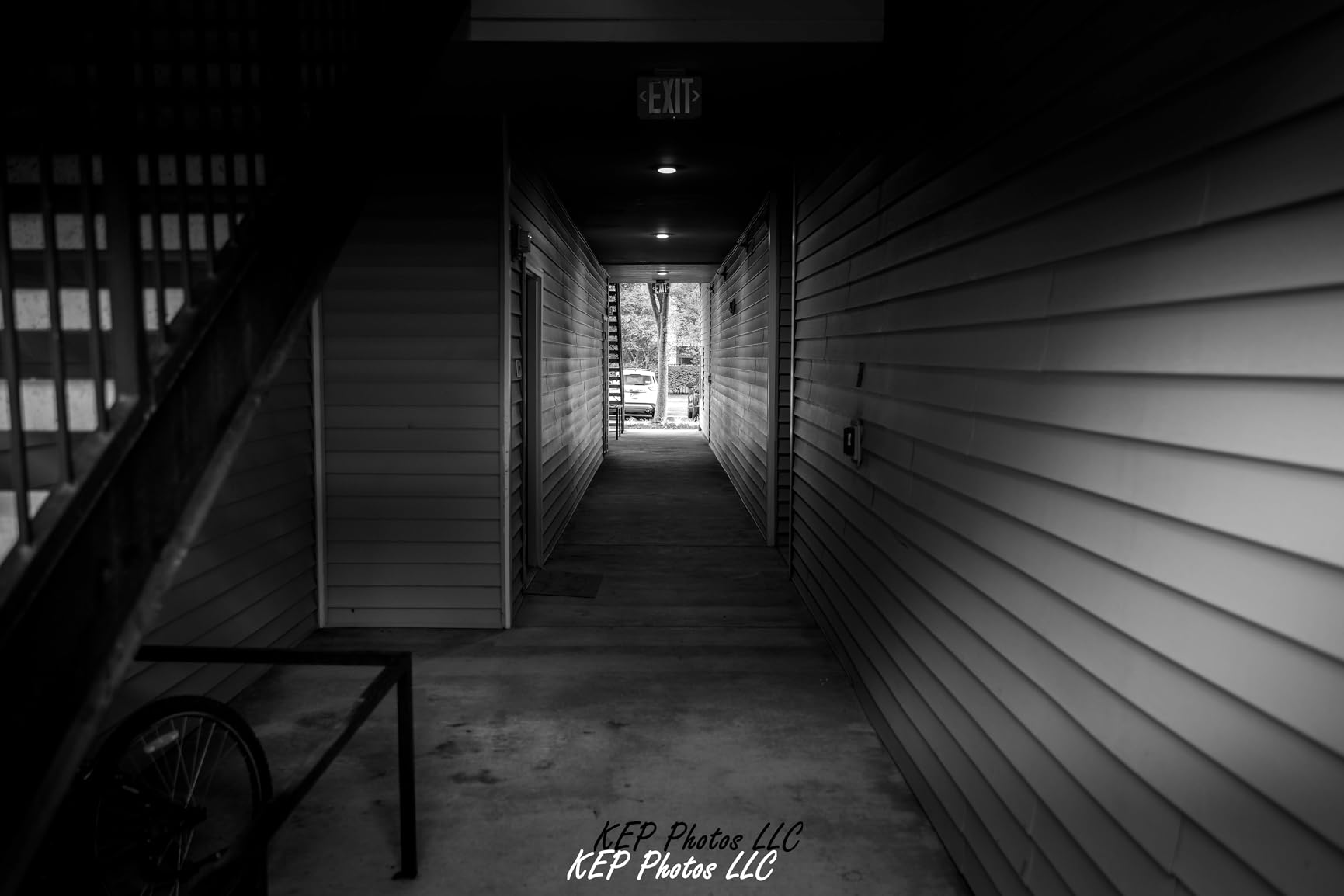
In my testing, the 28-75mm produced sharp images across most of the frame. The center sharpness at f/2.8 is excellent, and stopped down to f/4 or f/5.6, the lens delivers results nearly indistinguishable from the S-line option. One forum user noted that by f/8, both lenses basically look the same, and my testing confirms this observation.
The close focusing distance of 7.5 inches opens creative possibilities for detail shots at weddings or product photography. I captured ring shots and table details that would have required backing up significantly with the 24-70mm. The focus breathing suppression also makes this lens viable for video work.
Build quality is where the cost savings become apparent. The lens barrel extends when zooming, and the overall construction feels more plastic than the S-line’s premium materials. Weather sealing is present but not as comprehensive. The autofocus performs well in good light but can hunt slightly more in dim conditions compared to the 24-70mm S.

With 157 Amazon reviews and an average of 4.6 stars, users recognize this lens as an exceptional value. One photographer I spoke with suggested buying both the 28-75mm and an 85mm f/1.8 for roughly the same price as just the 24-70mm S. That combination gives you the standard zoom plus a dedicated portrait lens.
Nikon Z 28-75mm f2.8 vs Nikon Z 24-70mm f2.8 S: Head-to-Head Comparison
Focal Length: 24mm vs 28mm – Does It Matter?
The 4mm difference on the wide end matters more than you might expect. At 24mm, you capture approximately 84 degrees horizontally compared to 75 degrees at 28mm. For real estate interiors, group shots in tight spaces, or expansive landscapes, that extra width provides meaningful compositional flexibility.
Multiple forum users emphasized that you will notice 24mm versus 28mm far more than 70mm versus 75mm. I agree completely. When shooting wedding receptions in cramped venues or architectural details, having that 24mm option has saved me countless times. However, if you primarily shoot portraits or events where 28mm suffices, the difference becomes less critical.
Build Quality and Weather Sealing
The 24-70mm f/2.8 S clearly wins this category. Its S-line construction features extensive sealing around all moving parts, premium materials throughout, and a lens hood that reverses for storage. The lens feels built to withstand professional abuse over many years.
The 28-75mm includes weather sealing but at a more basic level. The extending barrel design inherently creates more potential entry points for dust and moisture. For outdoor photography in challenging conditions, the S-line provides greater peace of mind.
Image Quality: Sharpness, CA, Distortion, Vignetting
Both lenses deliver impressive optical performance, but the 24-70mm S maintains an edge in critical areas. Its corner sharpness at f/2.8 outperforms the 28-75mm, where corners can appear slightly soft wide open. By f/4, the gap narrows significantly, and at f/8, most users would struggle to distinguish images from either lens.
Chromatic aberration is well-controlled on both lenses thanks to modern optical designs and in-camera correction. The 24-70mm S shows slightly less distortion at 24mm (barrel) and 70mm (pincushion), but software correction handles both adequately. Vignetting at f/2.8 is present on both lenses, with the 28-75mm showing slightly more corner darkening that clears up by f/4.
Autofocus Performance
The 24-70mm S uses Nikon’s Multi-Focusing System with dual AF drive units, resulting in faster and more confident focus acquisition. In low-light situations like wedding receptions, I found it locked on targets more quickly and held focus better during continuous tracking.
The 28-75mm uses a single stepping motor that performs admirably in good light but occasionally hunts in dim conditions. Forum users reported that the 28-75mm can feel slow to focus compared to S-line lenses. For sports or fast-moving subjects, the 24-70mm S provides a noticeable advantage.
Weight and Handling
At 565g versus 805g, the 28-75mm offers a significant weight advantage that becomes apparent during long shooting days. The compact dimensions when retracted make it easier to pack for travel. Photographers who prioritize mobility will appreciate this difference.
The 24-70mm S feels more balanced on larger bodies like the Z8 or Z9, while the 28-75mm pairs nicely with the Z6II or Z7II without feeling front-heavy. Both feature customizable control rings, though only the S-line includes a dedicated function button on the barrel.
Value Proposition
This is where the comparison becomes genuinely interesting. The 28-75mm costs roughly half as much as the 24-70mm S while delivering perhaps 85-90% of the optical performance for most shooting scenarios. That represents exceptional value.
The 24-70mm S justifies its premium through superior corner sharpness, faster autofocus, better build quality, and that crucial 24mm wide-angle coverage. Working professionals who need maximum reliability and optical excellence will find the investment worthwhile.
Use Case Recommendations
Who Should Buy the Nikon Z 24-70mm f/2.8 S
Professional wedding and event photographers who need 24mm for tight spaces and group shots. Sports photographers requiring the fastest possible autofocus. Commercial photographers delivering large prints where corner-to-corner sharpness matters. Videographers who want minimal focus breathing and premium build reliability.
Who Should Buy the Nikon Z 28-75mm f/2.8
Enthusiasts and hobbyists wanting professional-quality results without the premium price tag. Travel photographers prioritizing weight savings. Portrait photographers who rarely need wider than 28mm. Content creators combining this lens with other primes using the money saved. Anyone building their lens kit on a budget.
Frequently Asked Questions
Is the Nikon Z 24-70mm f2.8 S worth twice the price of the 28-75mm?
For professional photographers who need maximum sharpness, faster autofocus, and 24mm wide-angle coverage, the 24-70mm f2.8 S justifies its premium price. However, enthusiasts and many working photographers will find the 28-75mm delivers excellent results at roughly half the cost, making it the better value for most users.
What is the difference between 24mm and 28mm focal length?
The 4mm difference on the wide end translates to approximately 84 degrees horizontal field of view at 24mm versus 75 degrees at 28mm. This matters significantly for interiors, group shots in tight spaces, and landscapes where the extra width provides more compositional flexibility.
Which lens is better for wedding photography?
The 24-70mm f2.8 S is generally preferred for weddings due to its 24mm coverage for tight ceremony spaces and group shots, faster low-light autofocus, and professional build reliability. However, budget-conscious wedding photographers can produce excellent work with the 28-75mm f2.8.
Does the Nikon Z 28-75mm have good image quality?
Yes, the 28-75mm delivers very good image quality with excellent center sharpness even at f2.8. Corners are slightly soft wide open but sharpen considerably by f4. By f8, image quality between the two lenses becomes nearly indistinguishable for most practical purposes.
What are the build quality differences between these lenses?
The 24-70mm f2.8 S features S-line premium construction with extensive weather sealing, a non-extending barrel design, and professional-grade materials. The 28-75mm has basic weather sealing, an extending barrel during zoom, and more plastic construction that saves weight but feels less premium.
Final Verdict
After extensively comparing the Nikon Z 28-75mm f2.8 vs Nikon Z 24-70mm f2.8 S, my recommendation comes down to your specific situation. For working professionals who bill clients for their work and need maximum optical performance, the 24-70mm f/2.8 S earns its premium price through exceptional sharpness, faster autofocus, and professional build quality.
For everyone else, the 28-75mm f/2.8 delivers outstanding value. You get constant f/2.8 aperture, good sharpness, weather sealing, and significant weight savings at roughly half the cost. Many photographers will never notice the differences that justify the S-line premium.