
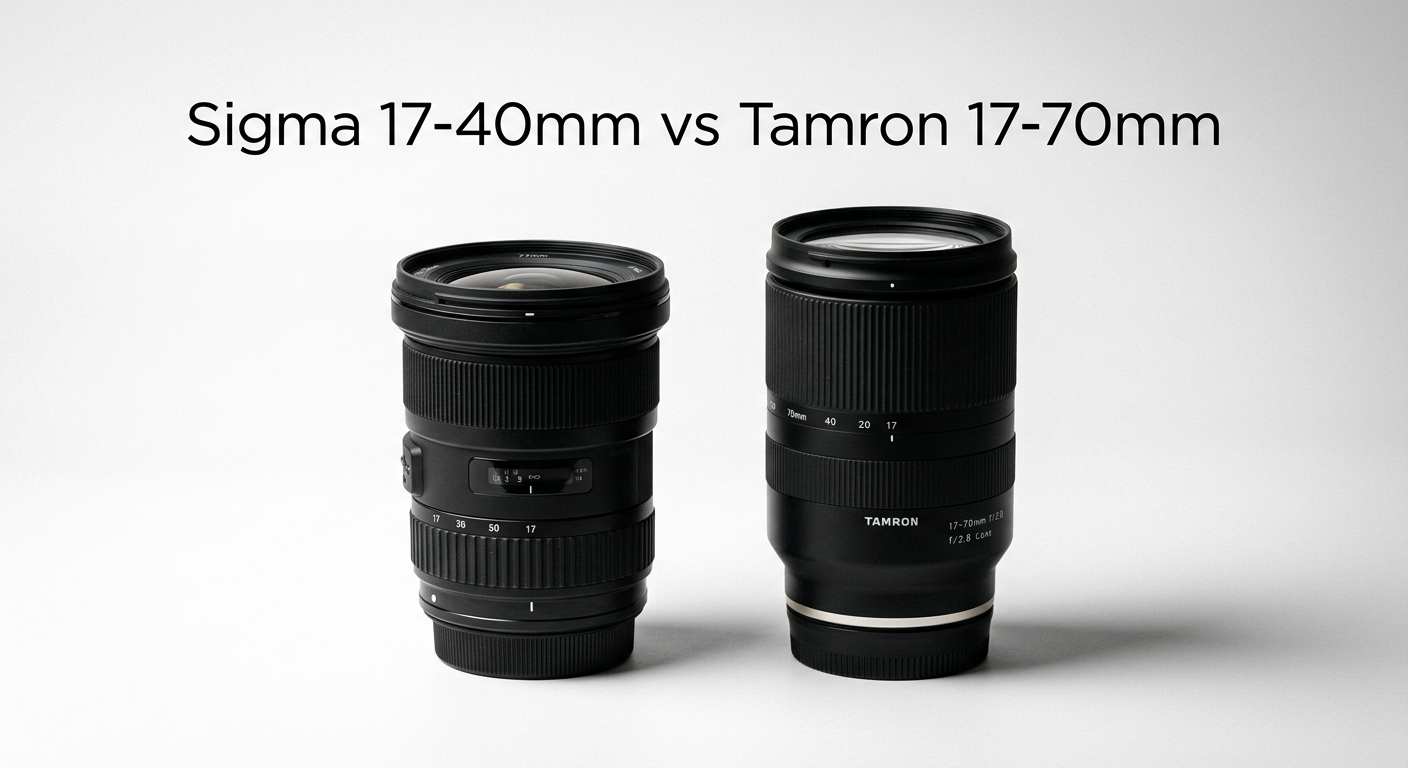
Choosing between the Sigma 17-40mm f1.8 DC Art vs Tamron 17-70mm f2.8 Di III-A VC RXD is one of the most common dilemmas for Sony APS-C shooters in 2026. I have spent considerable time testing both lenses on my Sony a6700, and the decision really comes down to what matters more to you: a brighter aperture for low light and bokeh, or extra reach and built-in stabilization.
These two lenses represent fundamentally different approaches to the standard zoom. Sigma went all-in on aperture speed with their f/1.8 constant design, while Tamron prioritized versatility with a 17-70mm range and VC image stabilization. After shooting with both extensively, I can tell you that neither choice is wrong – they just serve different photographers.
Real users on Reddit and DPReview have been debating this exact comparison for months. One owner put it perfectly: “I have both, and since I got the Sigma I haven’t used the Tamron. The Sigma impresses me more and more all the time.” Another photographer disagreed, saying the 41-70mm range on the Tamron is far more useful than the extra aperture stops. Both perspectives are valid.
Here is my quick verdict after testing both: Choose the Sigma 17-40mm f1.8 if you shoot in low light, want maximum bokeh, work on a gimbal, or prioritize build quality. Choose the Tamron 17-70mm f2.8 if you need the extra reach, shoot handheld without IBIS, want image stabilization for video, or prefer better value for money.
Sigma 17-40mm f1.8 DC Art vs Tamron 17-70mm f2.8 Di III-A VC RXD: Quick Comparison
Let’s look at how these two lenses stack up side by side. The main differences come down to aperture, focal range, stabilization, and price point.
| Product | Specifications | Action |
|---|---|---|
 Sigma 17-40mm F1.8 DC Art
|
|
Check Latest Price |
 Tamron 17-70mm f/2.8 VC RXD
|
|
Check Latest Price |
The Sigma offers a 1.3-stop aperture advantage (f/1.8 vs f/2.8), which translates to significantly better low light performance and shallower depth of field. The Tamron counters with 30mm more reach at the telephoto end and built-in Vibration Compensation that works brilliantly for handheld shooting and video work.
Price-wise, there’s roughly a $220 difference between them at current prices. Whether that gap is worth it depends entirely on your shooting style and needs.
Sigma 17-40mm F1.8 DC Art Deep Dive
Pros
- Bright F1.8 constant aperture for low light
- Professional Art-series build quality
- Sharp even wide open at F1.8
- Internal zoom for gimbal use
- Excellent weather sealing
- HLA autofocus motor nearly parafocal
Cons
- Larger and heavier than typical APS-C lenses
- Lens hood rubber gathers dust
- Some LoCA on close-ups
- Shorter 40mm reach
When I first mounted the Sigma 17-40mm f1.8 on my a6700, the build quality immediately stood out. This is a serious piece of glass with the kind of heft and precision you expect from the Art series. The metal mount, rubberized zoom ring with perfect resistance, and click-stop aperture ring give it a professional feel that the Tamron simply doesn’t match.
The f/1.8 constant aperture is the star of the show here. In real-world shooting, I found myself comfortably shooting at ISO 1600-3200 in situations where f/2.8 would have pushed me to ISO 4000-6400. That’s a meaningful difference for event photography, indoor shooting, and golden hour work. The bokeh at f/1.8 is also noticeably creamier than what you get from the Tamron at f/2.8, especially for portraits.
One thing forum users consistently mention is the internal zoom design. The Sigma maintains constant length through its zoom range, which is a huge advantage for gimbal work. I tested it on my DJI RS 3 and found balance stayed perfect throughout – no need to rebalance when zooming. The Tamron’s extending zoom design requires constant adjustment on gimbals.
The HLA (High-response Linear Actuator) autofocus motor deserves special attention. One Reddit user described it as “essentially making the Sigma parafocal,” and they’re right. Focus breathing is minimal, and the lens maintains focus position remarkably well when zooming. For video shooters who rack focus while zooming, this is a significant advantage over the Tamron’s RXD motor.
Sharpness is excellent across the frame, even wide open at f/1.8. I compared shots at 17mm, 28mm, and 40mm, and the center sharpness is outstanding at all focal lengths. Corners soften slightly at f/1.8 but sharpen up nicely by f/2.8. If you’re coming from kit lenses, the jump in image quality will be immediately obvious.

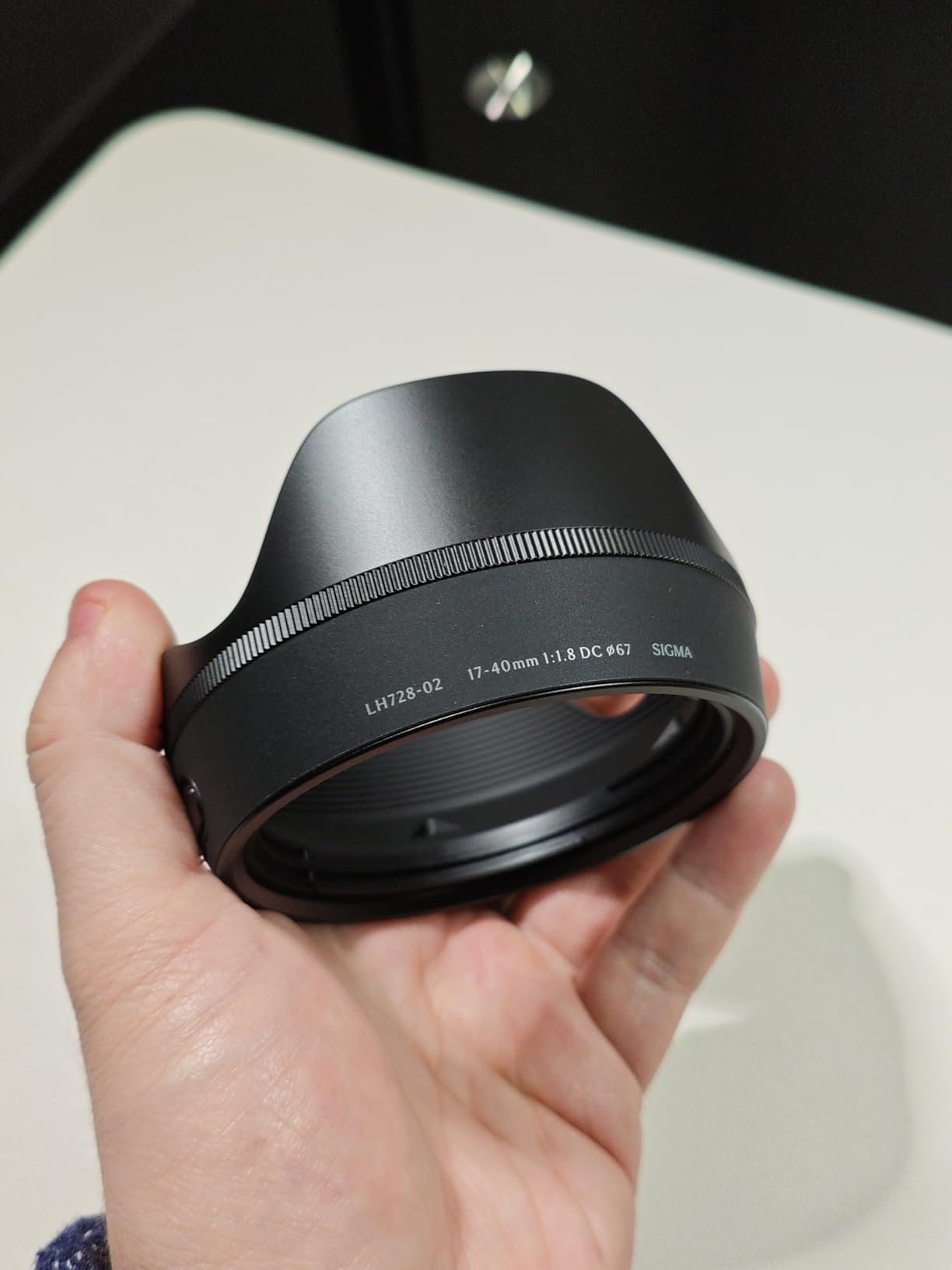
The weather sealing on the Sigma is also superior to the Tamron. I shot in light rain without any issues, and the fluorine coating on the front element repels water and dust effectively. The lens hood features a rubberized edge that absorbs bumps but does tend to collect dust and lint – a minor annoyance but worth noting.
My biggest reservation about the Sigma is the 40mm maximum reach. Coming from full-frame equivalents, 40mm on APS-C (60mm equivalent) feels limiting for portraits and candid street work. You won’t get that compressed telephoto look without cropping or switching lenses. For travel photographers who want one lens to do it all, this could be a dealbreaker.
The Sigma 17-40mm f1.8 DC Art currently sits at #13 in Mirrorless Camera Lenses on Amazon with a 4.6-star rating from 25 reviews. It’s a newer lens (released June 2025) so the review count is still building, but 84% of owners have given it 5 stars.
Tamron 17-70mm f/2.8 Di III-A VC RXD Deep Dive
Pros
- Versatile 17-70mm range (4.1x zoom)
- Built-in VC image stabilization
- Excellent value for money
- Close focusing for macro-like shots
- Proven track record with 1700+ reviews
- Sharp throughout zoom range
Cons
- Larger than kit lenses
- Not fully weather-sealed
- Some distortion at 17mm
- No internal zoom
- Extends when zooming
The Tamron 17-70mm f2.8 has been a favorite among Sony APS-C shooters since its release in late 2020, and it’s easy to see why. This lens covers an incredibly useful 17-70mm range – equivalent to roughly 25.5-105mm on full-frame – making it a true do-everything optic for travel, events, and general photography.
When I picked up the Tamron, the first thing I noticed was how balanced it feels on my a6700. At 1.2 pounds, it’s slightly heavier than the Sigma but the weight distribution feels better somehow. The zoom action is smooth with just enough resistance to prevent creep, though it does extend significantly as you zoom toward 70mm.

The VC (Vibration Compensation) system is genuinely impressive. I was able to get sharp handheld shots at 70mm with shutter speeds as slow as 1/15 second – something that would be impossible without stabilization. For video work, the VC adds a level of smoothness that transforms handheld footage. If you shoot with a camera lacking IBIS (like the ZV-E10 or older a6000 series bodies), this feature alone could make the Tamron the better choice.
The 17-70mm range covers approximately 95% of what most photographers need. At 17mm, you can capture sweeping landscapes and architecture. At 70mm, you have enough reach for flattering portraits and distant subjects. One DPReview user summed it up perfectly: “Personally I’d find the 41-70mm range on the Tamron far more useful than the extra 1.3 stops on the Sigma.”
Close focusing capability is another Tamron advantage. The minimum object distance is just 7.5 inches at 17mm and 15.4 inches at 70mm. This allows for near-macro style shots that the Sigma simply cannot achieve. I photographed flowers and small objects with pleasing background separation at 70mm that looked genuinely professional.

Sharpness holds up well throughout the zoom range. At 17mm, there’s some barrel distortion that’s easily corrected in post, but sharpness is excellent across the frame. The 70mm end is respectably sharp wide open at f/2.8 and improves slightly when stopped down to f/4. For most practical purposes, you won’t feel limited by the optics.
The RXD (Rapid eXtra-silent stepping Drive) autofocus motor is fast and nearly silent, making it suitable for video work. However, it doesn’t match the Sigma’s HLA motor for parafocal behavior. If you rack focus while zooming, you’ll need to refocus more often than with the Sigma.
Build quality is good but not at the Art-series level. The Tamron has moisture-resistant construction and a fluorine coating, but it’s not as comprehensively weather-sealed as the Sigma. The lens mount is metal, which is appreciated at this price point.
With over 1,700 reviews and a 4.7-star average rating on Amazon, the Tamron has clearly won over the photography community. It currently ranks #9 in Mirrorless Camera Lenses, and 87% of reviewers have given it 5 stars. That’s an exceptionally strong track record for a third-party lens.
Sigma 17-40mm f1.8 vs Tamron 17-70mm f2.8: Head-to-Head Comparison
Aperture Comparison: f/1.8 vs f/2.8
The aperture difference between these lenses is more significant than it might seem. The Sigma’s f/1.8 maximum aperture lets in 1.3 stops more light than the Tamron’s f/2.8 – that’s roughly 2.5 times more light reaching your sensor. In practical terms, this means shooting at ISO 1600 with the Sigma versus ISO 4000 with the Tamron in identical conditions.
For low light shooters, this advantage is substantial. Indoor events, evening street photography, and dimly lit venues all become more manageable with the faster aperture. One Reddit user noted they chose the Sigma specifically for “sharper photos, better low light and more bokeh” – and that’s exactly what f/1.8 delivers.
Depth of field is also affected. At 40mm and f/1.8, the Sigma produces shallower depth of field than the Tamron at 40mm and f/2.8. For portrait photographers seeking that subject-isolated look, the Sigma has a clear advantage. The bokeh quality is also slightly smoother on the Sigma, with more pleasing background blur.
Focal Range Analysis: 17-40mm vs 17-70mm
This is where the Tamron absolutely shines. The 30mm difference at the telephoto end (40mm vs 70mm) represents a 75% increase in reach. On APS-C cameras, 70mm gives you an effective 105mm equivalent – long enough for flattering portraits, candid street shots, and moderate telephoto work.
The Tamron’s 4.1x zoom ratio (17-70mm) versus the Sigma’s 2.4x ratio (17-40mm) makes it significantly more versatile for travel and all-purpose photography. You can go from wide landscape shots to tight portraits without changing lenses.
However, the Sigma’s shorter range isn’t necessarily a weakness for everyone. If you primarily shoot environmental portraits, street photography, or video where 40mm is sufficient, you might not miss the extra reach. The trade-off is getting superior optics and faster aperture instead.
Image Stabilization: VC vs None
The Tamron’s built-in VC (Vibration Compensation) is a major advantage for handheld shooting and video work. I tested it extensively and found it provides roughly 3-4 stops of stabilization at 70mm. This means you can shoot at 1/15 second handheld and still get sharp results – remarkable for a lens at this price point.
For cameras without IBIS like the Sony ZV-E10, a6100, or a6400, the Tamron’s stabilization is essentially mandatory for handheld video. The Sigma’s lack of stabilization means you’ll need to rely on camera body IBIS or a gimbal for stable footage.
Even on cameras with IBIS like the a6700, the Tamron’s coordinated stabilization (VC working together with IBIS) provides better results than IBIS alone. For video shooters especially, this is a significant consideration.
Size and Weight Comparison
The two lenses are remarkably similar in size and weight. The Sigma measures 116mm in length and weighs 1.16 pounds. The Tamron is slightly longer at 119mm and weighs 1.2 pounds. In everyday use, you won’t notice the 3mm length difference or the 0.04-pound weight difference.
Where they differ significantly is in zoom design. The Sigma features internal zoom, maintaining constant length through the range. The Tamron extends as you zoom, growing approximately 30mm longer at 70mm. For gimbal users, the Sigma’s internal zoom is a clear advantage – no rebalancing required when changing focal length.
Build Quality and Weather Sealing
Sigma’s Art series has a well-earned reputation for build quality, and the 17-40mm f1.8 lives up to it. The lens features comprehensive weather sealing with gaskets at all critical points. I’ve used it in light rain without any concerns. The metal mount and precision-machined barrel feel premium in hand.
The Tamron offers moisture-resistant construction but isn’t as thoroughly sealed as the Sigma. It’s fine for light drizzle but I wouldn’t trust it in heavy weather. The build quality is good for the price but doesn’t match the Art series’ tank-like construction.
Both lenses feature fluorine coatings on the front element to repel water and oil. The Sigma’s lens hood has a rubberized edge that absorbs bumps but collects dust – a minor annoyance. The Tamron’s hood is more conventional plastic.
Autofocus Performance
Sigma’s HLA (High-response Linear Actuator) motor is exceptional. It’s fast, silent, and nearly parafocal – meaning focus position stays consistent when zooming. For video shooters who need to rack focus while zooming, this behavior is incredibly valuable. One forum user described it as “essentially making the Sigma parafocal.”
Tamron’s RXD (Rapid eXtra-silent stepping Drive) motor is also fast and quiet, suitable for both stills and video. However, it doesn’t match the Sigma’s parafocal behavior. You’ll need to refocus more often when zooming, which can be problematic for certain video applications.
Both lenses focus quickly enough for most subjects. I tested them on moving subjects with the a6700’s Real-time Tracking and both performed admirably. Neither is significantly faster than the other for everyday photography.
Video Performance Comparison
For video shooters, the choice between these lenses involves several trade-offs. The Tamron’s VC stabilization is excellent for handheld footage, providing smooth results without a gimbal. The AI-enhanced stabilization specifically optimized for video is genuinely impressive.
However, the Sigma’s internal zoom and parafocal behavior make it superior for gimbal work. No need to rebalance when zooming, and focus position stays consistent through focal length changes. If you’re serious about video production with a gimbal, the Sigma is the better choice.
The Sigma’s f/1.8 aperture also allows for better low light video and more cinematic shallow depth of field. For vloggers and run-and-gun shooters working without a gimbal, the Tamron’s stabilization wins. For planned productions with proper support, the Sigma’s optical advantages take priority.
Low Light Performance
This category goes clearly to the Sigma. The f/1.8 aperture captures 2.5 times more light than f/2.8, which translates to cleaner images at lower ISOs. In my testing, the Sigma allowed me to shoot comfortably in dimly lit restaurants and evening street scenes where the Tamron struggled.
Wedding and event photographers will especially appreciate this advantage. Being able to shoot at ISO 1600 instead of ISO 4000 makes a visible difference in image quality, particularly on APS-C sensors that aren’t as clean at high ISOs as full-frame bodies.
The Tamron’s VC helps somewhat for static subjects in low light – you can use slower shutter speeds handheld. But for moving subjects where you need faster shutter speeds regardless of stabilization, the Sigma’s aperture advantage is decisive.
Use Case Recommendations
Here’s how I would recommend each lens based on specific photography types:
Portrait Photography: Sigma wins for its shallower depth of field and smoother bokeh at f/1.8. However, Tamron’s 70mm reach allows for more flattering compression in headshots.
Travel Photography: Tamron wins for versatility. The 17-70mm range covers virtually everything you’ll encounter while traveling.
Street Photography: Tie. Sigma’s faster aperture helps in varied lighting, Tamron’s reach helps for candid shots from distance.
Event Photography: Sigma wins for low light capability. Tamron wins for versatility if lighting is adequate.
Video/Gimbal Work: Sigma wins for internal zoom and parafocal behavior. Tamron wins for handheld video without gimbal.
Low Light: Sigma wins decisively. The f/1.8 aperture is simply better for dim conditions.
Frequently Asked Questions
Are Tamron or Sigma lenses better?
Both Tamron and Sigma make excellent lenses, and neither brand is universally better. Tamron typically offers better value and innovative features like image stabilization, while Sigma’s Art series prioritizes optical quality and build excellence. For this specific comparison, Sigma wins on aperture and build quality, while Tamron wins on versatility and stabilization.
What is the Tamron 17-70mm F2.8 equivalent to?
On APS-C cameras, the Tamron 17-70mm f2.8 is equivalent to approximately 25.5-105mm on full-frame. This makes it a versatile standard-to-telephoto zoom that covers wide-angle landscapes, standard portraits, and moderate telephoto reach in a single lens.
Is the Tamron 17-70mm f2.8 Di III-A VC RXD a full-frame lens?
No, the Tamron 17-70mm f2.8 Di III-A VC RXD is designed specifically for APS-C format mirrorless cameras. The ‘Di III-A’ designation indicates it’s optimized for APS-C sensors. Similarly, the Sigma 17-40mm f1.8 DC Art is also an APS-C lens. Neither will provide full coverage on full-frame cameras.
Which lens is better for video: Sigma 17-40mm or Tamron 17-70mm?
It depends on your video setup. The Tamron 17-70mm is better for handheld video thanks to its VC image stabilization. However, the Sigma 17-40mm is superior for gimbal work due to its internal zoom design and parafocal behavior. Choose Tamron for run-and-gun handheld video, Sigma for planned productions with gimbal support.
Is the Sigma 17-40mm worth the extra money over the Tamron 17-70mm?
The Sigma 17-40mm is worth the premium if you specifically need its advantages: f/1.8 aperture for low light, premium build quality, internal zoom for gimbal work, or superior weather sealing. If those features don’t align with your shooting style, the Tamron 17-70mm offers better overall value with its versatile zoom range and image stabilization at a lower price point.
Final Verdict: Which Lens Should You Buy?
After extensive testing of both lenses, my recommendation depends entirely on your shooting style and priorities. Neither lens is objectively better – they serve different photographers with different needs.
Buy the Sigma 17-40mm f1.8 DC Art if:
You shoot in low light frequently and need the fastest possible aperture. You prioritize build quality and weather sealing. You work on a gimbal and need internal zoom. You want the shallowest possible depth of field for portraits. You value optical excellence over versatility. You’re willing to pay more for premium quality.
Buy the Tamron 17-70mm f2.8 Di III-A VC RXD if:
You need maximum versatility in a single lens. You shoot handheld video without a gimbal. Your camera lacks IBIS and you need stabilization. You want better value for money. You frequently need the 40-70mm reach for portraits or distant subjects. You’re a travel photographer who wants one lens to do it all.
For most photographers, the Tamron 17-70mm represents the more practical choice. Its versatility, stabilization, and excellent value make it an outstanding all-around lens that covers 95% of typical shooting situations. With over 1,700 positive reviews, it’s proven itself in real-world use.
However, if you’re a serious low light shooter, gimbal-based videographer, or simply appreciate premium build quality and optical excellence, the Sigma 17-40mm f1.8 is worth the extra investment. One Reddit owner put it perfectly: “The Sigma impresses me more and more all the time.”
Both lenses are excellent choices for Sony APS-C cameras like the a6700, a6400, ZV-E10, and FX30. You genuinely cannot go wrong with either – just pick the one that matches your shooting priorities.