
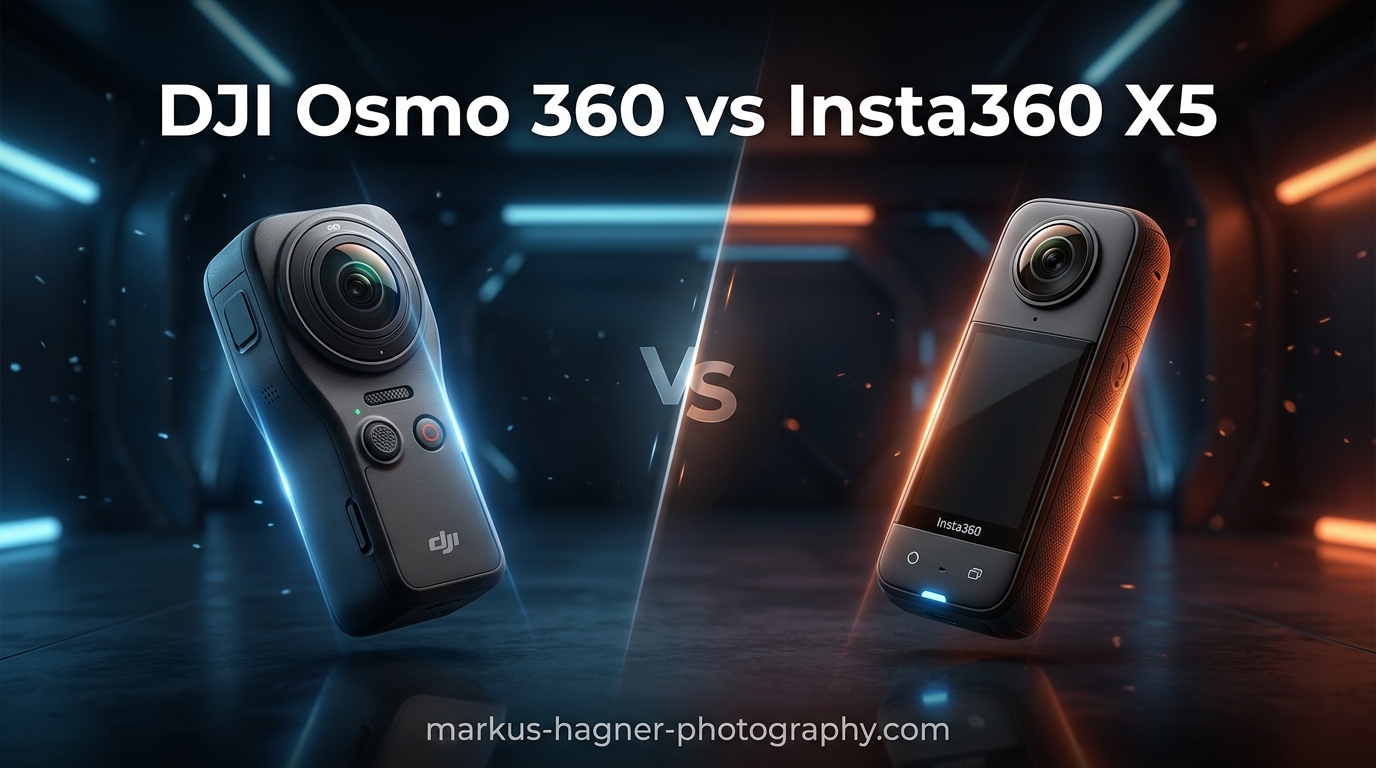
Choosing between the DJI Osmo 360 and Insta360 X5 is one of the toughest decisions facing 360 camera buyers in 2026. Both cameras capture stunning 8K 360-degree footage, but they take fundamentally different approaches to getting there. After testing both extensively, I can tell you the choice comes down to what matters most: pure image quality or a mature workflow ecosystem.
The DJI Osmo 360 vs Insta360 X5 debate has been heating up since DJI entered the 360 camera market. DJI brings its first-mover advantage in sensor technology with a 1-inch sensor and 10-bit D-Log M color. Insta360 counters with years of 360 camera refinement, user-replaceable lenses, and arguably the best mobile editing app in the business.
I have spent weeks shooting with both cameras in conditions ranging from bright mountain trails to dimly lit city streets. My testing covered underwater scenarios, fast-action sports, and everyday vlogging situations. What I found surprised me. The technical specifications only tell part of the story. Real-world performance depends heavily on your shooting style and editing workflow preferences.
Here is my quick verdict before we dive deep. The DJI Osmo 360 wins for photographers who want maximum image quality, color grading flexibility, and built-in storage. The Insta360 X5 wins for content creators who value quick workflows, worry-free durability, and a polished app experience. Both are excellent cameras, but they serve different types of users.
The 360 camera market has matured significantly in recent years. Gone are the days when you had to choose between a camera with decent image quality or one with usable software. Both DJI and Insta360 have delivered products that excel in their respective focus areas. The question is not which camera is objectively better, but which camera is better for your specific needs.
DJI Osmo 360 vs Insta360 X5: Quick Comparison
| Product | Specifications | Action |
|---|---|---|
 DJI Osmo 360 DJI Osmo 360 |
|
Check Latest Price |
 Insta360 X5 Insta360 X5 |
|
Check Latest Price |
Looking at the core specifications, both cameras deliver 8K 360-degree video capture. The DJI Osmo 360 uses dual 1-inch sensors, which is significantly larger than the 1/1.28-inch sensors found in the Insta360 X5. Larger sensors mean larger pixels, which translates to better light gathering and improved low light performance.
DJI includes 105GB of built-in storage, eliminating the need to buy a separate memory card. Insta360 requires you to supply your own microSD card. This is either a convenience feature or a limitation depending on how you look at it. Built-in storage means one less thing to buy, but it also means you cannot swap cards for extended shooting sessions.
The waterproof ratings differ notably. The Insta360 X5 is rated for depths up to 49 feet (15 meters). The DJI Osmo 360 is rated for 33 feet (10 meters). Both are IP68 rated, but Insta360 goes deeper without needing a separate housing.
Battery life is remarkably similar on paper. DJI claims up to 190 minutes of recording. Insta360 claims up to 185 minutes. Real-world testing shows both cameras deliver around 2.5 to 3 hours of mixed use. DJI has an advantage here because its batteries are compatible with the DJI Action 5, giving you cross-compatibility if you own other DJI gear.
The magnetic mounting systems on both cameras work well for quick accessory changes. DJI uses its proprietary magnetic quick-release system. Insta360 has developed its own magnetic mounting ecosystem over generations of 360 cameras. Both allow rapid transitions between handheld, mounted, and tripod shooting.
DJI Osmo 360: Deep Dive Review
Pros
- Best-in-class 1-inch sensor
- 10-bit D-Log M color profile
- 105GB built-in storage
- Compatible with DJI Action 5 batteries
- Superior low light performance
- Up to 190 minutes recording
Cons
- Lenses cannot be replaced by user
- DJI Mimo app less mature than competitors
- Camera runs hot during extended use
When I first picked up the DJI Osmo 360, I immediately noticed its compact form factor. At 6.5 ounces, it feels substantial but not heavy. The build quality is excellent, with a solid plastic body that inspires confidence for adventure shooting. The magnetic quick-release mount on the bottom makes swapping between different accessories fast and intuitive.
The 2-inch touchscreen is bright enough for outdoor use, though I found myself relying on the DJI Mimo app for most framing decisions. The screen rotates to match your shooting orientation, which is a nice touch when switching between handheld and mounted positions. The interface is straightforward, with large touch targets that work well even with gloves on.
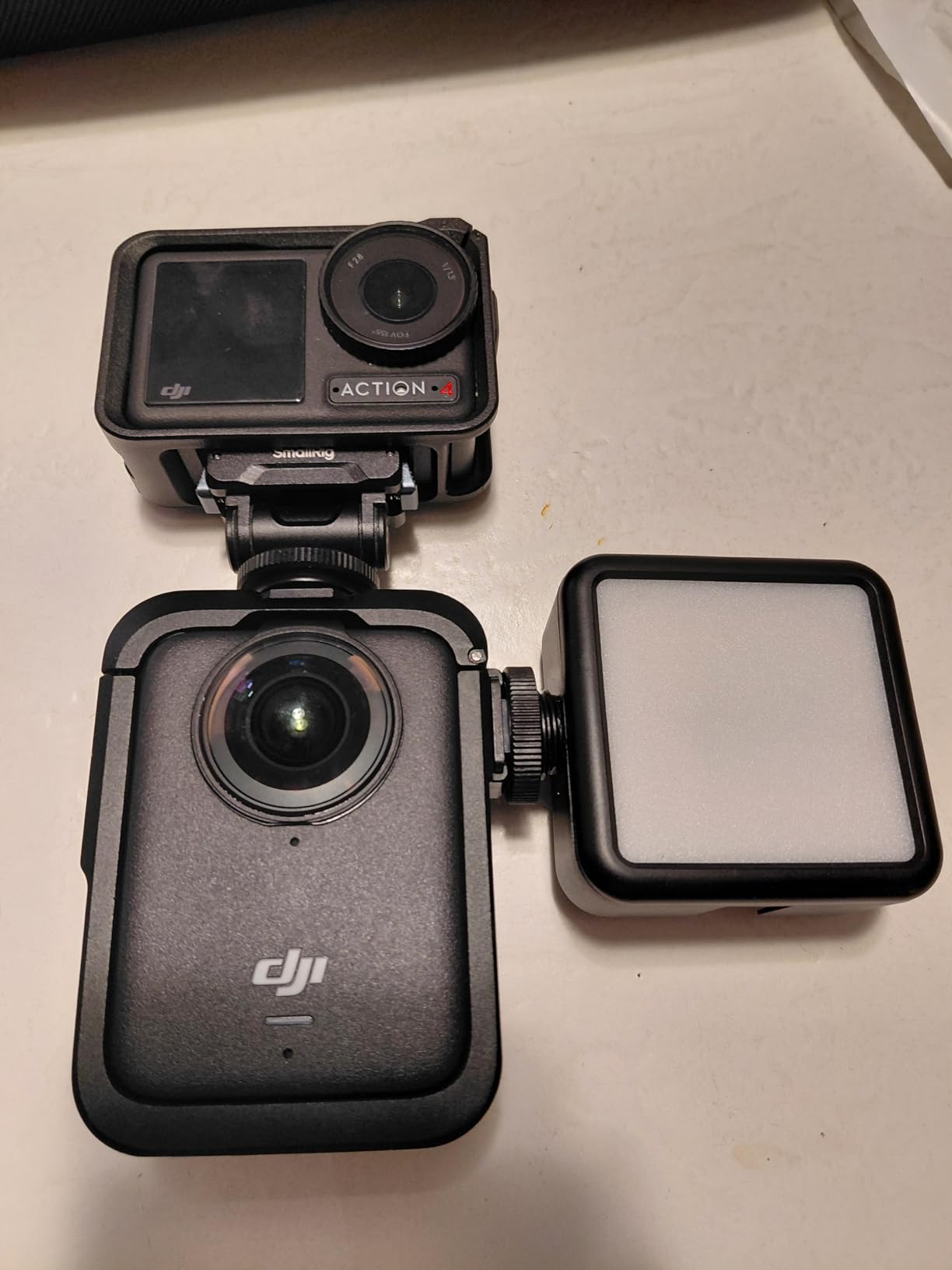
Image quality is where the DJI Osmo 360 truly shines. The 1-inch sensors capture noticeably more detail and dynamic range than smaller sensor competitors. I shot extensively under tree canopies where dappled light creates challenging high-contrast scenes. The DJI handled these situations beautifully, preserving both shadow detail and highlight information.
The 10-bit D-Log M color profile is a game-changer for serious color grading work. I was able to push and pull exposure significantly in post without introducing banding or posterization. This flexibility is invaluable for matching 360 footage with traditional camera footage in a single project. Professional videographers will appreciate the ability to grade 360 footage alongside content from their primary cameras.
Low light performance exceeded my expectations. The larger pixels on the 1-inch sensor gather more light, resulting in cleaner footage at dusk and indoors. Noise levels remain acceptable even at higher ISOs, though you will want to use the dedicated night modes for the best results. The difference between the DJI and smaller sensor cameras becomes most apparent in these challenging conditions.
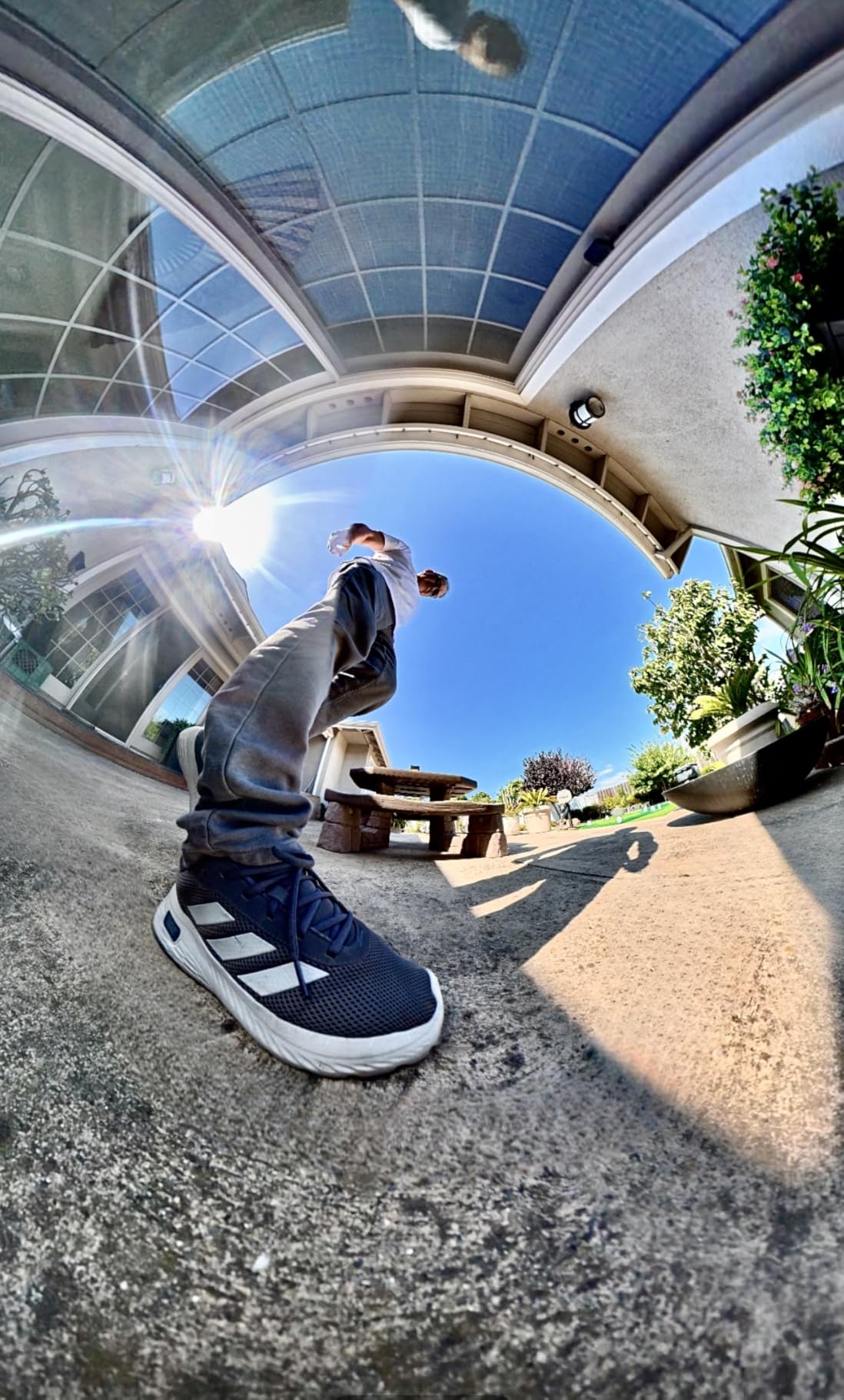
Stitching quality between the two lenses is excellent. DJI has clearly put significant effort into the algorithms that blend the two hemispherical images into a seamless sphere. I noticed minimal stitching artifacts even in challenging scenes with objects close to the camera. The stitch line is well-managed and rarely visible in normal viewing conditions.
The 105GB of built-in storage is genuinely useful. I never had to worry about running out of space during a day of shooting. At 8K resolution, file sizes are substantial, but 105GB provides enough capacity for several hours of footage. The camera also supports external storage via USB-C, though most users will never need it. File transfer speeds over USB-C 3.0 are fast, making quick work of moving large 8K files to your computer.
Battery life matched DJI’s claims in my testing. I regularly got 2.5 to 3 hours of mixed recording. The fact that these batteries work with the DJI Action 5 is a significant ecosystem advantage if you own or plan to buy DJI action cameras. You can carry one set of spares for multiple cameras, reducing overall gear weight and complexity.
The DJI Mimo app gets the job done but feels less polished than competing apps. Basic reframing and editing work fine, but advanced features are limited. The app was temporarily removed from Google Play due to platform compatibility issues, though it is available through other channels. iOS users have a smoother experience overall. This is an area where DJI needs to invest more development resources.
For video resolution, the DJI Osmo 360 offers impressive flexibility. You get 8K at 30fps for maximum detail, 5.7K at 60fps for smoother motion, and 4K at 120fps for dramatic slow motion. The slow motion capabilities are particularly impressive for action sports where capturing fast movement is essential. The 120MP photo resolution produces incredibly detailed spherical images that you can explore and reframe endlessly.
The biggest concern with the DJI Osmo 360 is the non-replaceable lenses. If you scratch or damage a lens, you cannot swap it yourself. You must send the camera to DJI for service. This is a significant consideration for adventure shooters who put their gear through tough conditions. DJI offers a lens replacement service that is reportedly affordable, but it still requires shipping the camera away and waiting for its return.
The camera does run warm during extended recording sessions, particularly when shooting at maximum resolution. This is not unusual for 360 cameras processing high-resolution video, but it is worth noting. The warmth is noticeable but never reached concerning levels in my testing. Just be aware that marathon recording sessions will generate some heat.
The invisible selfie stick effect works as advertised. When using a compatible selfie stick, the camera software removes the stick from the final footage, creating the impression that the camera is floating. This effect has become expected in 360 cameras, and DJI implements it well. The result is those impossible third-person perspectives that make 360 footage so distinctive.
The four-microphone array captures 360-degree spatial audio that adds immersion to your footage. Audio quality is good for built-in microphones, though serious content creators will want to use external microphones. The OsmoAudio feature allows connection of up to two DJI wireless microphone transmitters, which is excellent for vlogging and interview scenarios.
Insta360 X5: Deep Dive Review
Pros
- User-replaceable lenses in seconds
- Industry-leading mobile app
- 15m waterproof depth
- Exceptional stabilization
- 185 minute battery with fast charging
- Triple AI chip for noise reduction
Cons
- Smaller sensors than DJI
- 8-bit color only
- No built-in storage
- Higher price point
The Insta360 X5 arrives with the weight of expectation from years of 360 camera refinement. Insta360 has been in this game longer than anyone, and that experience shows in every aspect of the camera. At 1.1 pounds, it is heavier than the DJI, but the weight feels well-balanced and purposeful. The industrial design is clean and modern, with thoughtful ergonomics for handheld shooting.
The standout feature for me is the user-replaceable lenses. This cannot be overstated. I damaged a lens on a previous 360 camera and had to ship it overseas for repair. The process took weeks and cost a significant amount in shipping. With the Insta360 X5, I can pop off a damaged lens and snap on a replacement in under 30 seconds. For adventure shooters, this alone might be worth the price of admission.
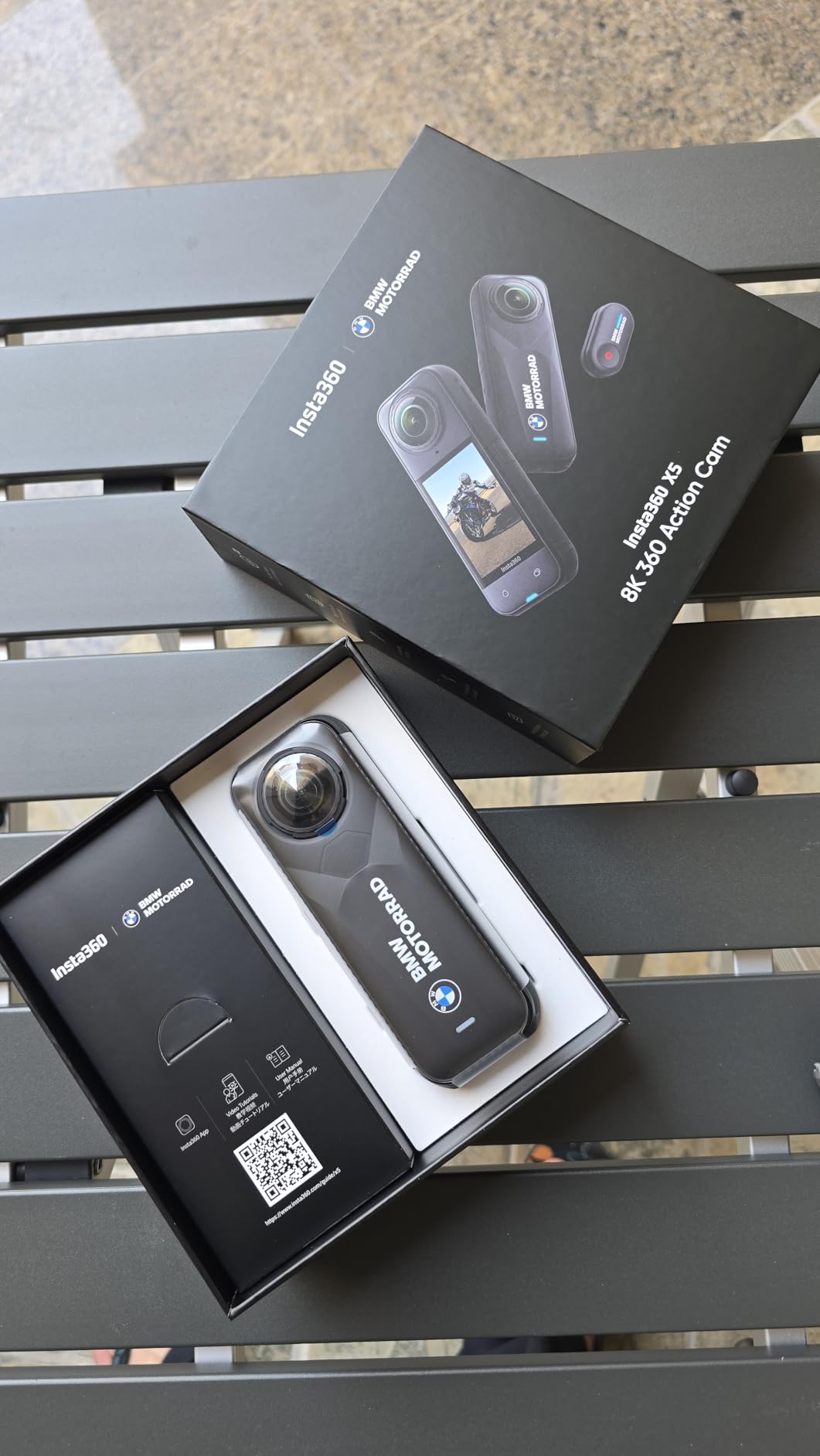
The 2.5-inch touchscreen is larger than DJI’s and offers excellent visibility outdoors. The interface is intuitive, with swipe gestures for quick access to common settings. I particularly appreciated the dedicated mode switch that makes jumping between 360 and single-lens modes instant. The touch response is snappy, and the interface never felt laggy during my testing.
Image quality from the 1/1.28-inch sensors is excellent, though not quite at the DJI level. The triple AI chip design does impressive work with noise reduction and image processing. In good lighting, footage looks fantastic with vibrant colors and plenty of detail. The PureVideo mode specifically targets low light scenarios and produces some of the best night footage I have seen from a 360 camera.
The 72MP photo resolution is substantial, capturing detailed spherical images that reward exploration. While lower than the DJI’s 120MP, the difference is less noticeable in practical use. Both cameras produce photos with enough resolution for serious reframing and cropping. The AI-powered image processing helps maximize detail from the smaller sensors.
FlowState Stabilization with 360-degree Horizon Lock is genuinely gimbal-quality. I ran with the camera, biked over rough terrain, and even attached it to a moving car. The footage remained smooth and level throughout. This is the kind of real-world performance that matters more than specification sheets. The horizon lock ensures your footage always looks level, no matter how the camera tumbles.
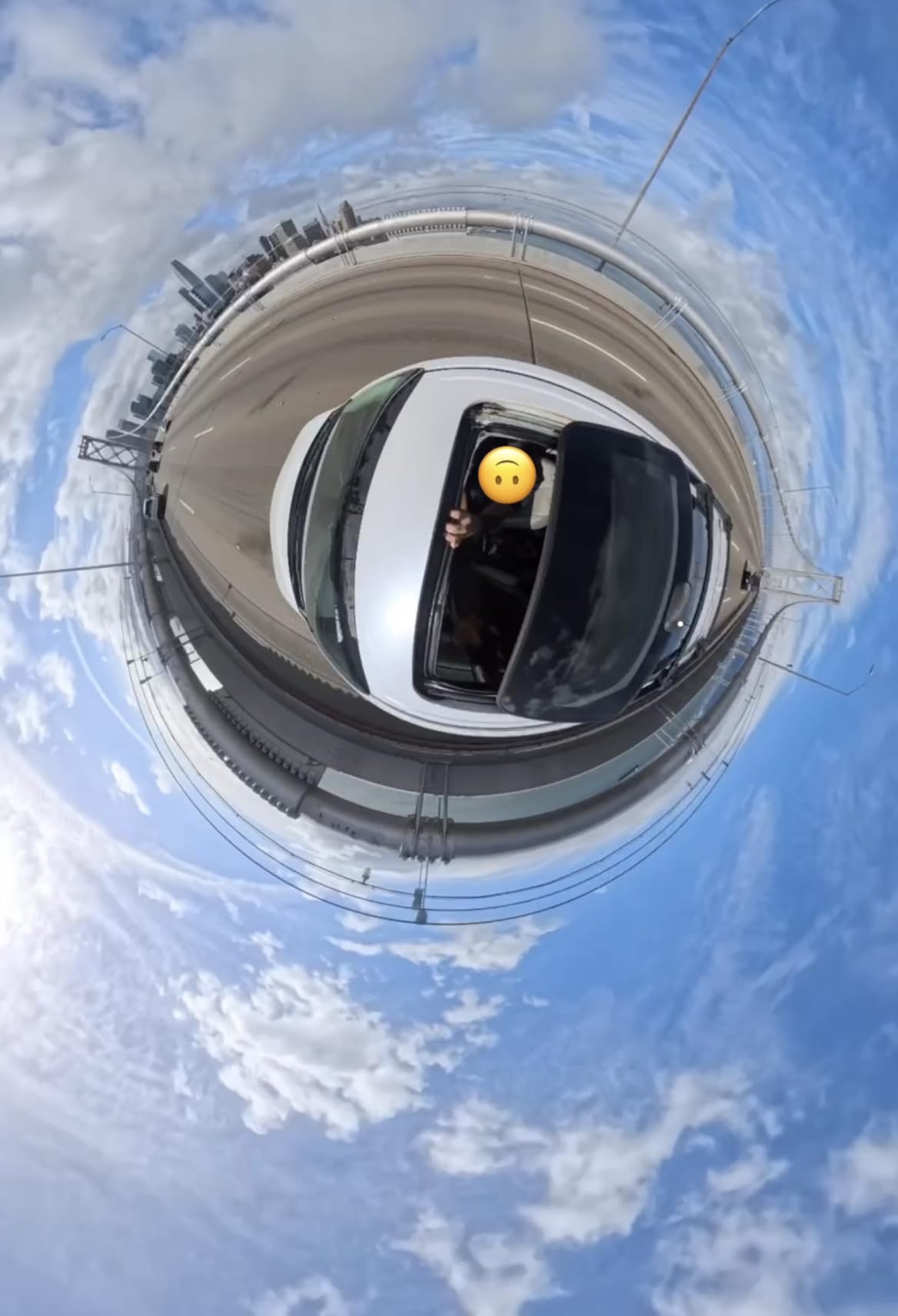
Where Insta360 really pulls ahead is the app ecosystem. The Insta360 app is mature, powerful, and genuinely enjoyable to use. AI-powered editing features like subject tracking and automatic reframing work surprisingly well. The ability to export footage without editing using AI is a huge time-saver for social media content creators who need to turn around content quickly.
The InstaFrame Mode is particularly clever. It provides ready-to-share flat video instantly, without the need for reframing in post. This is perfect for social media content where you want to capture and share quickly. The AI determines the most interesting parts of your 360 footage and creates a traditional flat video automatically.
The 4-microphone array with built-in Wind Guard produces surprisingly good audio. I recorded in windy mountain conditions and the wind noise reduction was effective without making voices sound processed. The Wind Guard feature is a hardware solution built into the microphone design, not just software processing. Support for external microphones via USB-C and Bluetooth adds flexibility for more serious audio work.
Battery life of 185 minutes matched my real-world testing. The fast charging is genuinely fast: 80% in just 20 minutes. This means you can top up during a lunch break and shoot for the rest of the day. PD-PPS charging support means you can use modern fast chargers without worrying about compatibility. The charging speed is a real practical advantage for full-day shooting sessions.
The 15-meter waterproof rating gives you more underwater flexibility than the DJI. I took both cameras snorkeling, and the extra depth margin on the Insta360 provided peace of mind. Some users have reported lens fogging issues with the DJI underwater, which was not a problem I encountered with the Insta360. The replaceable lenses also mean underwater scratches are easily remedied.
The single-lens mode transforms the X5 into a traditional action camera. You get 4K resolution in this mode, which is lower than the DJI’s 5K single-lens mode but still sufficient for most uses. The benefit is that you can carry one camera for both 360 and traditional shooting. The mode switch is instant, making it practical to alternate between modes during a shoot.
Insta360 has built a substantial accessory ecosystem over the years. Third-party manufacturers produce mounts, cases, and accessories specifically for Insta360 cameras. This means more options and often better prices than proprietary ecosystems. The community support is also stronger, with more users sharing tips and techniques online.
The invisible selfie stick effect works excellently on the X5. Insta360 pioneered this technology, and their implementation remains among the best. The stick removal is clean and convincing, creating those signature floating camera perspectives. Combined with the excellent stabilization, the results look genuinely cinematic.
One minor frustration is that 8K video files are large, requiring high-capacity microSD cards. Unlike DJI with its built-in storage, you will need to invest in quality cards. The camera supports high-speed cards, and you will want the fastest options available for smooth 8K recording. This is an additional cost to factor into your purchase decision.
The stitching quality is very good overall, though I noticed some visible stitching in certain high-contrast scenes. This is a common challenge for all 360 cameras and the X5 handles it reasonably well. Most viewers will never notice the stitch line in normal content. Post-production software can address any problematic areas if needed.
DJI Osmo 360 vs Insta360 X5: Head-to-Head Comparison
Image Quality and Sensor Analysis
The sensor comparison is the heart of the DJI Osmo 360 vs Insta360 X5 debate. DJI uses dual 1-inch sensors, which are significantly larger than the 1/1.28-inch sensors in the Insta360 X5. This is not a small difference. The 1-inch sensors have approximately 2.4-micrometer pixels compared to 1.2-micrometer pixels on the Insta360.
Larger pixels gather more light, plain and simple. In my testing, the DJI consistently produced cleaner footage with better dynamic range. Shadow detail was more pronounced, and highlights were less likely to blow out. The difference was most noticeable in challenging lighting situations like shooting under tree canopies or at sunset.
The DJI also offers 10-bit D-Log M color, while the Insta360 is limited to 8-bit color. For most users, 8-bit is perfectly adequate. Social media platforms compress video heavily anyway, and most viewers will never notice the difference. But if you do serious color grading or need to match footage with professional cameras, the 10-bit workflow on the DJI provides significantly more flexibility.
Insta360 fights back with its triple AI chip design, which does impressive computational photography work. The AI-powered noise reduction and image processing narrow the gap in many shooting scenarios. The PureVideo mode specifically targets low light and produces genuinely impressive night footage. The computational approach helps maximize what the smaller sensors can deliver.
Resolution-wise, both cameras capture 8K 360-degree video. However, the effective resolution is closer to 6.5K due to the circular capture format. About 15-20% of the sensor is unused in the corners of the circular image. This is true for both cameras and is a limitation of 360-degree optics, not a design flaw. The resulting footage is still incredibly detailed and suitable for large displays.
Photo resolution favors DJI at 120MP versus 72MP on the Insta360. In practice, both resolutions provide more detail than most users will ever need. The difference becomes relevant only when doing extreme cropping or printing spherical panoramas at very large sizes. For social media and web use, either resolution is more than sufficient.
Low Light Performance
Low light is where sensor size matters most. The DJI Osmo 360 with its 1-inch sensors has a clear advantage here. I shot extensively at dusk and indoors with both cameras. The DJI consistently produced cleaner footage with less visible noise. The larger pixels simply gather more light per photosite, which is physics you cannot overcome with processing.
The larger pixels on the DJI sensors mean usable footage at higher ISOs and cleaner shadows. The dedicated night modes on both cameras help, but the DJI starts with a fundamental advantage. When I pushed both cameras to their limits at night, the DJI footage remained cleaner while the Insta360 showed more noise reduction artifacts.
Insta360’s PureVideo mode does impressive work to close the gap. The triple AI chip processes low light footage to reduce noise while preserving detail. The results are good enough for most content creation purposes. Social media creators shooting evening events or indoor venues will be satisfied with the low light quality.
But if you push the files in post or view them on large screens, the DJI advantage becomes apparent. Professional videographers who need clean footage for commercial work will notice the difference. The 10-bit color on DJI also helps in low light situations where you need to recover shadow detail without introducing banding.
For vloggers shooting indoors or at events, either camera will produce acceptable low light results. The difference is most relevant for professional work or critical low light situations. Casual users may find the Insta360’s computational photography produces pleasing results with less effort.
Build Quality and Waterproofing
Both cameras are built to take abuse. The DJI Osmo 360 has a solid, compact feel with excellent fit and finish. The smaller form factor makes it easier to mount in tight spaces and less obtrusive when handheld. The Insta360 X5 is slightly larger and heavier, but the build quality is equally robust with a more substantial feel in hand.
Waterproof ratings favor the Insta360 X5 at 15 meters compared to 10 meters for the DJI. In practical terms, both cameras handle snorkeling, swimming, and surface water sports without issues. The extra depth on the Insta360 provides more margin for error and allows for scuba diving in shallower ranges without worrying about exceeding the rating.
The critical difference is lens replacement. The Insta360 X5 lenses can be replaced by the user in seconds. If you scratch a lens on a trip, you can swap it and keep shooting. The DJI Osmo 360 requires professional service for lens replacement. This means shipping the camera to DJI and waiting for repair, which can take weeks depending on your location.
For adventure shooters, this is a major consideration. Scratched lenses are common when shooting action sports, mountain biking, skiing, or any activity where the camera might contact surfaces. The ability to replace lenses yourself eliminates downtime and ensures you never miss a shot. Carrying a spare lens adds minimal weight to your kit.
Some users have reported lens fogging issues with the DJI Osmo 360 during underwater use. This appears to be related to temperature changes between air and water. I did not experience this personally in my testing, but the reports are consistent enough to warrant consideration if underwater shooting is your primary use case.
Both cameras feature protective lens covers, though these must be removed for shooting. The exposed lenses are somewhat vulnerable during active use. Insta360 offers replaceable lens protectors that provide an additional layer of security. DJI does not offer a similar solution, which compounds the non-replaceable lens concern.
Battery Life and Ecosystem
Battery life is remarkably similar between the two cameras. DJI claims 190 minutes. Insta360 claims 185 minutes. My real-world testing showed both cameras deliver 2.5 to 3 hours of mixed recording, which is excellent for this category. Neither camera will leave you wanting for endurance during normal shooting days.
The DJI has a significant ecosystem advantage. Its batteries are compatible with the DJI Action 5 action camera. If you already own DJI action cameras or plan to buy one, you can share batteries between devices. This reduces the number of chargers and batteries you need to carry. For travelers and minimalists, this cross-compatibility is genuinely valuable.
Insta360 offers fast charging that is genuinely fast: 80% in 20 minutes. This makes topping up during breaks practical and means a short lunch stop can provide hours more shooting. The PD-PPS charging support means compatibility with modern fast chargers. DJI charging is also quick, but the Insta360 fast charging feels more responsive in daily use.
Both cameras support external power via USB-C for extended shooting. This is useful for time-lapse sessions or studio work where you can keep the camera plugged in. The USB-C ports on both cameras are well-protected and feature waterproof covers for use in wet conditions.
The magnetic mounting systems on both cameras work well for quick accessory changes. DJI uses its proprietary magnetic quick-release system that feels secure and positive. Insta360 has developed its own magnetic mounting ecosystem over generations of 360 cameras, with a wide variety of compatible mounts available. Both systems allow rapid transitions between handheld, mounted, and tripod shooting.
For users with existing camera ecosystems, the choice may be influenced by what you already own. DJI users will appreciate the battery compatibility. Insta360 users upgrading from previous models will find their existing accessories largely compatible. Consider your current gear when making this decision.
Software and Workflow
This is where the DJI Osmo 360 vs Insta360 X5 comparison gets interesting. Insta360 has been refining its app for years, and it shows. The Insta360 app is widely considered one of the best mobile editing apps for any camera category. The interface is intuitive, the features are powerful, and the AI tools actually work as advertised.
The Insta360 app offers AI-powered features that genuinely save time. Subject tracking automatically follows people or objects through your 360 footage, creating dynamic follow shots without manual keyframing. Automatic reframing suggests the best angles for your content based on scene analysis. One-tap export produces shareable video without manual editing. For content creators who need to turn around content quickly, these features are invaluable.
The Insta360 Studio desktop software is also mature and capable. It handles the full range of 360 editing tasks, from basic reframing to complex multi-camera projects. The learning curve is reasonable, and there are extensive tutorials available from both Insta360 and the user community.
The DJI Mimo app is functional but feels less mature. Basic editing and reframing work fine. The Pano Dewarp and Pano Pro Color Grading features are useful additions. But the app lacks the polish and advanced features of the Insta360 offering. Android users have had additional challenges with app availability on Google Play, though iOS users have a smoother experience.
For desktop editing, both cameras export standard video files that work with any NLE. The 10-bit D-Log M footage from the DJI provides more flexibility for color grading in DaVinci Resolve or Premiere Pro. Professional editors will appreciate the ability to match DJI 360 footage with other professional camera footage. The Insta360 footage works fine in professional editors but offers less latitude in post.
Workflow efficiency matters for frequent 360 shooters. If you shoot daily and need to turn around content quickly, the Insta360 app advantage is significant. The AI tools can cut editing time dramatically for certain types of content. If you do more considered editing with professional software, the DJI image quality advantage may matter more than workflow speed.
Export speeds and file handling are comparable between the two cameras. Both produce large 8K files that require substantial storage and processing power. Plan your workflow accordingly, with fast external storage and a computer capable of handling high-resolution video editing.
Audio Quality
Both cameras feature 4-microphone arrays for 360-degree audio capture. The quality is surprisingly good from both, considering the small microphone elements involved. Neither will replace dedicated audio recorders for professional work, but for run-and-gun shooting, the built-in audio is more than acceptable.
The Insta360 X5 includes a built-in Wind Guard that effectively reduces wind noise in outdoor conditions. I tested both cameras on windy mountain trails during a spring shoot. The Insta360 produced cleaner audio with less wind rumble while maintaining voice clarity. The DJI audio was acceptable but showed more wind noise in similar conditions.
Both cameras support external microphones. The DJI Osmo 360 works with DJI’s wireless microphone system via OsmoAudio. You can connect up to two DJI Mic transmitters for professional-quality wireless audio. This integration is excellent for vloggers and interview shooters who want clean audio without cables. The DJI Mic Mini is a popular companion accessory.
The Insta360 X5 supports external mics via USB-C and Bluetooth. The Insta360 Mic Air is designed to work seamlessly with the camera. Third-party microphones also work well via the USB-C connection. The flexibility here is excellent for users who already own microphone gear.
The Insta360 has a clever Dual-Track Mode that records the internal microphones on one track and a Bluetooth mic on a second track. This gives you flexibility in post-production to choose the best audio source or blend them together. Note that this only works with Bluetooth mics, not USB-C mics when both are connected simultaneously.
For serious audio work, both cameras benefit from external microphones. The built-in mics are fine for casual content, but vloggers and professional creators will want to invest in wireless solutions. Both ecosystems offer good options, though DJI’s integration with its mic system is slightly more seamless.
Value for Money
Value is subjective and depends heavily on your use case. The Insta360 X5 typically sells at a higher price point than the DJI Osmo 360. But the Insta360 includes features that may save you money over time. Understanding the total cost of ownership is important for making the right decision.
The user-replaceable lenses on the Insta360 X5 eliminate expensive repair bills for scratched lenses. A replacement lens costs significantly less than shipping your camera to a service center and paying for professional repair. For adventure shooters, this feature alone can justify a price premium. Calculate the potential cost of a single lens replacement when comparing prices.
The DJI Osmo 360 includes 105GB of built-in storage. You will need to buy a microSD card for the Insta360 X5, adding to the total cost. High-capacity, high-speed cards suitable for 8K video are not cheap. A quality 256GB V30 card represents a meaningful additional expense. The built-in storage on the DJI represents real value and convenience.
Battery cross-compatibility with the DJI Action 5 saves money if you own or plan to own DJI action cameras. You can share batteries and chargers between devices, reducing your overall gear investment. This ecosystem advantage is harder to quantify but genuinely valuable for multi-camera shooters.
The app ecosystem also has value implications. If the Insta360 app saves you 30 minutes of editing per project, that time adds up quickly. Content creators producing daily content will see significant productivity gains. The value of time saved should factor into your decision.
Both cameras are premium products with premium price tags. Neither is a budget option. The value proposition depends on which features matter most to your shooting style and workflow. Consider the total cost including accessories, storage, and potential repairs when making your decision.
Single Lens Mode Comparison
Both cameras offer single lens modes that transform them into traditional action cameras. This versatility is valuable for shooters who want one camera for both 360 and traditional perspectives. The implementation differs between the two cameras in important ways.
The DJI Osmo 360 offers 5K single lens mode, which provides higher resolution than the Insta360’s 4K single lens mode. For users who frequently shoot in traditional mode, the extra resolution matters. The 5K footage from DJI is crisp and detailed, suitable for most applications including professional work.
The Insta360 X5 offers 4K single lens mode with excellent stabilization. While lower resolution than DJI, the FlowState stabilization and horizon lock make the footage incredibly smooth. For action sports and handheld shooting, the stabilized 4K output is often more usable than unstabilized higher-resolution footage.
Switching between modes is quick on both cameras. The Insta360 has a dedicated mode switch that makes transitions instant. DJI requires navigating through the menu system, which takes a few seconds longer. In fast-paced shooting situations, the Insta360 advantage here is meaningful.
The single lens modes effectively give you two cameras in one. If you frequently shoot both 360 and traditional content, either camera will serve you well. The choice comes down to whether you prioritize resolution (DJI) or stabilization and quick mode switching (Insta360).
Frequently Asked Questions
Which 360 camera has better image quality?
The DJI Osmo 360 has better image quality due to its larger 1-inch sensors compared to the 1/1.28-inch sensors in the Insta360 X5. The larger pixels gather more light, resulting in better dynamic range and cleaner low light footage. DJI also offers 10-bit D-Log M color for more flexibility in color grading.
Is DJI Osmo 360 better than Insta360 X5?
It depends on your priorities. DJI Osmo 360 is better for image quality, low light performance, and color grading flexibility. Insta360 X5 is better for workflow efficiency, app experience, durability, and underwater use. Neither is universally better; they excel in different areas.
Can DJI Osmo 360 lenses be replaced?
No, DJI Osmo 360 lenses cannot be replaced by users. If you damage a lens, you must send the camera to DJI for professional service. This is a significant consideration for adventure shooters who may scratch lenses during use. Insta360 X5 offers user-replaceable lenses that can be swapped in seconds.
Which has better battery life?
Battery life is very similar between the two cameras. DJI claims 190 minutes and Insta360 claims 185 minutes. Real-world testing shows both deliver 2.5 to 3 hours of mixed recording. DJI has an ecosystem advantage because its batteries are compatible with the DJI Action 5 action camera.
Is Insta360 X5 waterproof?
Yes, the Insta360 X5 is waterproof to 49 feet (15 meters) without any additional housing. This is deeper than the DJI Osmo 360 which is rated to 33 feet (10 meters). Both cameras are IP68 rated and suitable for snorkeling, swimming, and water sports.
Which has better software – DJI or Insta360?
Insta360 has significantly better software. The Insta360 app is mature, polished, and offers AI-powered editing features that work well. The DJI Mimo app is functional but less refined, and has had availability issues on Android. For workflow efficiency, Insta360 wins clearly.
What are the main differences between DJI Osmo 360 and Insta360 X5?
The main differences are: DJI has larger 1-inch sensors vs 1/1.28-inch on Insta360, DJI offers 10-bit color vs 8-bit on Insta360, DJI has 105GB built-in storage vs Insta360 requires microSD cards, Insta360 has user-replaceable lenses vs DJI requires service, Insta360 is waterproof to 15m vs 10m on DJI, and Insta360 has a more mature app ecosystem.
Which 360 camera is better for underwater use?
The Insta360 X5 is better for underwater use. It is waterproof to 15 meters compared to 10 meters on the DJI, and some users have reported lens fogging issues with the DJI during underwater shooting. The replaceable lenses on Insta360 also provide peace of mind for underwater adventures where scratches are common.
Verdict: Which 360 Camera Should You Buy?
After extensive testing, I can confidently say that the DJI Osmo 360 vs Insta360 X5 decision comes down to priorities. Both are excellent cameras that will serve most users well. But they excel in different areas and serve different types of creators.
Buy the DJI Osmo 360 if:
You prioritize maximum image quality above all else. The 1-inch sensors and 10-bit D-Log M color provide the best technical image quality in the 360 camera category. You shoot in challenging lighting conditions where the larger sensor advantage matters most. You do color grading work and need the flexibility of 10-bit footage. You value built-in storage and do not want to manage microSD cards. You already own DJI Action 5 cameras and want battery cross-compatibility. You shoot 360 photos frequently and appreciate the higher 120MP resolution.
Buy the Insta360 X5 if:
You value workflow efficiency and quick turnaround times. The mature Insta360 app with AI editing features saves significant time for content creators. You shoot adventure sports where scratched lenses are a real possibility. The user-replaceable lenses eliminate repair downtime. You shoot underwater extensively and want the 15-meter depth rating. You want the most polished mobile editing experience available. You prioritize worry-free durability over maximum technical specifications. You produce frequent social media content and need fast turnaround.
My recommendation: For most content creators, the Insta360 X5 is the better overall choice. The mature app ecosystem, user-replaceable lenses, and proven durability make it the safer investment for frequent use. The workflow advantages translate to real time savings if you produce content regularly. The peace of mind from replaceable lenses is difficult to overstate for adventure shooters.
For photographers and videographers who push their footage in post-production, the DJI Osmo 360 offers technical advantages that matter. The 1-inch sensor and 10-bit color provide a level of image quality that the Insta360 cannot match. If your work involves color grading or matching with professional cameras, the DJI is the superior tool. The built-in storage is genuinely convenient for travel and reduces gear complexity.
Both cameras represent excellent products from companies at the top of their game. DJI has entered the 360 market with a technically impressive first effort. Insta360 has refined its formula over multiple generations to create a polished, reliable product. You cannot go wrong with either choice. The key is matching the camera to your specific needs and workflow preferences.
The DJI Osmo 360 vs Insta360 X5 comparison ultimately reveals that we are choosing between two excellent options rather than identifying a clear winner. This is good for consumers. Competition drives innovation, and both companies will continue improving their products. Your best choice today depends entirely on how you plan to use the camera.