
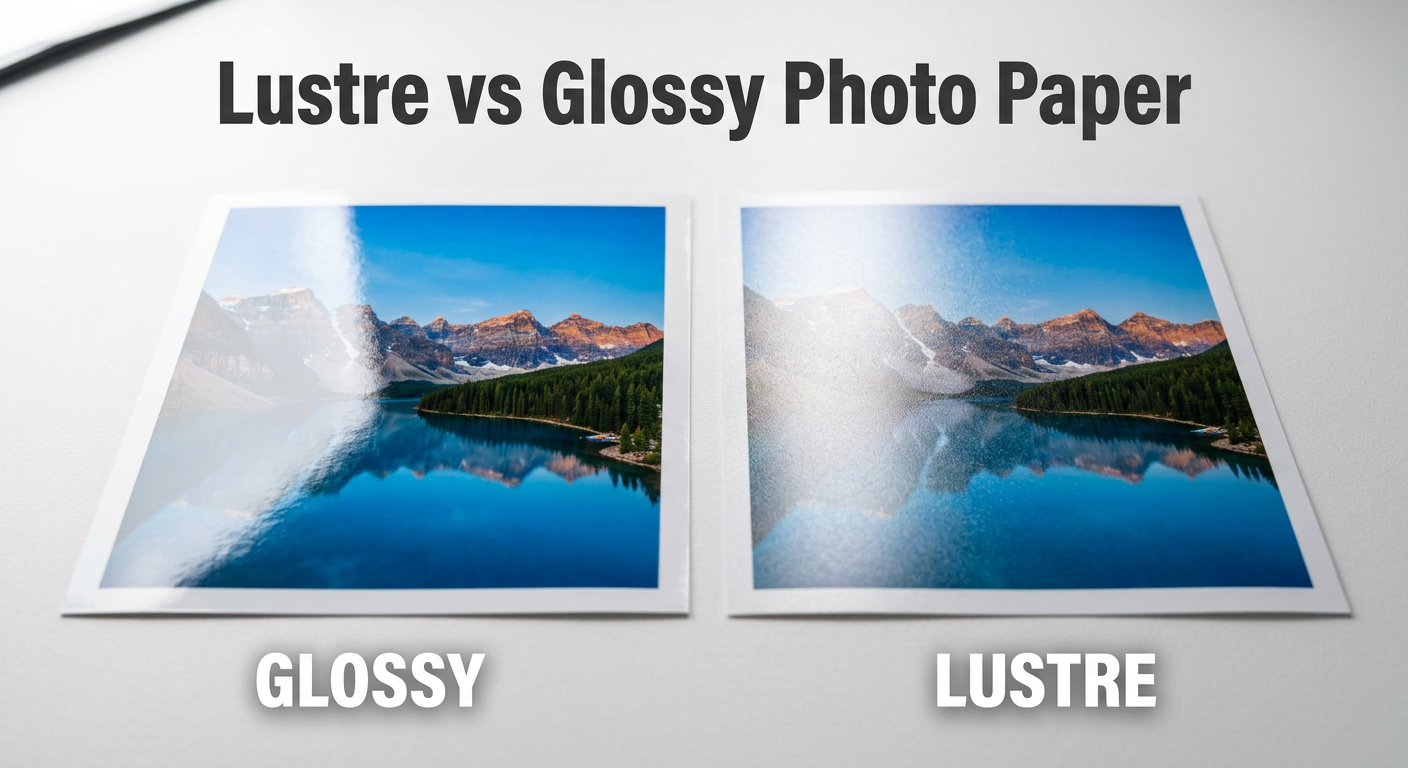
When I first started delivering prints to clients, I spent hours agonizing over paper choices. The decision between lustre vs glossy photo paper felt overwhelming because I knew it would shape how clients perceived my work. After years of testing both finishes across hundreds of client orders, I’ve developed a clear framework for making this choice.
Both paper types have distinct advantages. Glossy delivers maximum color pop and sharpness but fights you with glare and fingerprints. Lustre offers the professional handling most clients expect while maintaining rich colors. For most client deliverables, lustre wins—but glossy has its place.
In this guide, I’ll break down exactly when to use each finish based on photography type, client expectations, and viewing conditions. You’ll walk away with a clear decision framework for your next client project.
What is Glossy Photo Paper?
Glossy photo paper features a high-shine, smooth surface that maximizes color saturation and contrast. The reflective coating creates vibrant prints with deep blacks and punchy colors that jump off the page. This finish excels at showing fine detail because nothing obscures the image—what you see is exactly what you printed.
The ultra-smooth surface means light passes through cleanly without diffusion. Your prints achieve maximum sharpness and clarity, making glossy ideal for images where detail matters most. Wildlife shots, product photography, and action scenes all benefit from this crisp reproduction.
Advantages of Glossy Photo Paper
Maximum color vibrancy: Glossy paper makes colors appear more saturated and punchy. Reds look redder, blues deeper, and the overall image has more visual impact.
Superior sharpness: The smooth surface shows every detail your camera captured. Fine textures, small elements, and subtle gradients all render with precision.
High contrast: Deep blacks and bright highlights create dynamic range that gives images a dramatic, eye-catching quality.
Affordable and widely available: Glossy paper costs less than specialty finishes and works with virtually any printer.
Disadvantages of Glossy Photo Paper
Fingerprints and smudges: The smooth surface shows every touch. Clients handling prints will leave visible marks that distract from the image. One forum photographer noted, “Glossy paper shows fingerprints and smudges easily.”
Glare under bright light: Direct sunlight or overhead lighting creates reflections that obscure the image. If you can’t control where clients display their prints, this becomes a real problem.
Unnatural appearance: Some clients find glossy prints look “too shiny” or artificial compared to traditional photographic prints.
Difficult to view from angles: The reflective surface means optimal viewing only happens from certain positions. Move slightly, and glare can wash out parts of the image.
What is Lustre Photo Paper?
Lustre photo paper (also spelled “luster”) sits between glossy and matte finishes, combining the best qualities of both. The semi-gloss surface features a subtle pebbled texture that diffuses light reflections while maintaining rich color saturation. Think of it as glossy with better manners.
This finish has become the industry standard for professional client work because it handles beautifully and views well in any lighting. The texture resists fingerprints and reduces glare without sacrificing the color pop that makes images sing. Professional photographers consistently choose lustre for wedding albums, portraits, and gallery displays.
Advantages of Lustre Photo Paper
Fingerprint and smudge resistance: The textured surface hides handling marks that would ruin glossy prints. Clients can pass photos around without leaving visible evidence.
Reduced glare: Light diffuses across the subtle texture, eliminating harsh reflections. Prints view well from multiple angles and under various lighting conditions.
True-to-life skin tones: Lustre reproduces flesh tones more accurately than glossy, which can oversaturate and create unnatural warmth in portraits.
Professional appearance: The finish looks polished and refined—exactly what clients expect from a professional photographer. As one experienced photographer shared, “Luster seems more professional or what you would get from a photo studio for school portraits.”
Versatile viewing: Whether displayed in bright galleries or dim home environments, lustre prints maintain consistent appearance without the viewing angle limitations of glossy.
Disadvantages of Lustre Photo Paper
Higher cost: Lustre paper typically costs more than standard glossy options. For photographers printing in volume, this adds up.
Slightly less sharp: The surface texture can obscure the finest details. One photographer noted, “The texture of lustre paper obscures minor detail on the print.”
Less dramatic color pop: While still vibrant, lustre doesn’t achieve the same saturation extremes as glossy. Images requiring maximum visual punch may benefit from glossy instead.
Lustre vs Glossy Photo Paper: Head-to-Head Comparison
Let me break down how these finishes compare across the factors that matter most for client deliverables.
| Feature | Glossy | Lustre |
|---|---|---|
| Surface | Smooth, high-shine | Textured, semi-gloss |
| Color Vibrancy | Maximum saturation | Rich but natural |
| Sharpness | Highest detail | Slightly softened |
| Glare | High reflection | Diffused, minimal |
| Fingerprints | Shows every mark | Resistant to marks |
| Viewing Angles | Limited optimal positions | Consistent from all angles |
| Skin Tones | Can appear oversaturated | Accurate, natural |
| Cost | Lower | Higher |
| Professional Perception | Consumer look | Professional standard |
Glare and Viewing Conditions
Glossy prints require careful lighting control. Under direct sunlight or bright overhead fixtures, the reflective surface creates hotspots that obscure the image. This becomes problematic when you can’t predict where clients will display their prints.
Lustre handles variable lighting gracefully. The textured surface diffuses reflections, allowing prints to remain visible even under challenging conditions. As one photographer put it, “If you don’t have control over how your prints will be lighted, it’s safer to go with lustre.”
Color and Contrast Performance
Glossy wins on pure visual impact. Colors appear more saturated, blacks deeper, and contrast more dramatic. For images where you want maximum “wow factor,” glossy delivers.
Lustre takes a more balanced approach. Colors remain vibrant but natural, avoiding the oversaturation that can make skin tones look artificial. This matters enormously for portrait and wedding work where clients expect realistic representation.
Handling and Durability
Every fingerprint on glossy shows. Clients passing prints around at family gatherings or displaying them in high-traffic areas will quickly accumulate visible marks. The smooth surface also scratches more easily during handling.
Lustre’s texture hides minor handling damage. Prints survive being passed around, stored in albums, and displayed in busy homes without showing wear. For client deliverables that need to look good long-term, this matters tremendously.
Best Use Cases for Client Deliverables
Different photography genres call for different paper choices. Here’s how I approach each type of client work.
Wedding Photography
For wedding albums and prints, lustre is the clear winner. Wedding photos get handled extensively—passed among family members, displayed at various events, and viewed in unpredictable lighting. The fingerprint resistance and glare reduction make lustre the practical choice.
Skin tone accuracy also matters enormously for wedding work. Brides and grooms want to see themselves represented naturally, not with oversaturated warmth that glossy can produce. Lustre delivers the accurate, flattering tones wedding clients expect.
Portrait Photography
Family portraits, senior photos, and headshots all benefit from lustre’s professional appearance. Clients expect these images to look polished and refined—qualities that glossy sometimes lacks due to its consumer-oriented associations.
The skin tone reproduction of lustre makes it ideal for portraits. Faces appear natural rather than artificially enhanced, which builds client trust and satisfaction.
Commercial and Product Photography
Here’s where glossy often wins. Product shots benefit from maximum detail reproduction and color vibrancy. The sharpness of glossy shows products at their best, making features and textures pop.
However, if clients plan to display commercial prints in bright retail environments with challenging lighting, lustre may still be preferable for its glare resistance.
Photo Albums and Books
Lustre dominates album work. Pages get handled repeatedly, and the fingerprint resistance proves invaluable. Albums also get viewed in various lighting conditions at different events, making glare reduction essential.
Most professional album companies default to lustre or similar semi-gloss finishes because they understand these practical considerations.
Wall Art and Framed Prints
For large displayed prints, consider the viewing environment. Gallery settings with controlled lighting can showcase glossy beautifully. Home environments with windows and mixed lighting favor lustre.
Framing also matters. Glass adds its own reflections, which compound with glossy paper’s glare. Lustre prints under glass remain more viewable than glossy prints under glass.
Portfolio Presentations
Professional portfolios demand consistency and polish. Lustre’s professional appearance aligns with client expectations for paid work. The handling durability ensures your portfolio looks fresh through repeated viewings.
How to Choose: Decision Framework for Client Work
Here’s the framework I use when deciding between lustre vs glossy photo paper for client deliverables.
Ask These Questions First
Where will clients display these prints? If you can’t control the lighting environment, choose lustre. Glossy only works reliably in controlled settings.
How much will prints be handled? High-traffic situations—family sharing, events, albums—demand lustre’s fingerprint resistance.
What matters more: impact or versatility? Glossy delivers maximum visual punch. Lustre provides reliable viewing across conditions.
What’s the photography genre? Portraits and weddings favor lustre. Products and dramatic landscapes may benefit from glossy.
Client Preference Considerations
Some clients have strong opinions about paper finish. Others don’t know the difference exists. I’ve found that educating clients about options builds trust and leads to better outcomes.
Explain the trade-offs clearly: “Glossy gives maximum color pop but shows fingerprints and can glare. Lustre handles beautifully and views well anywhere, with natural colors. Most of my clients choose lustre for wedding work.”
Creating Sample Kits for Client Presentations
The most effective way to help clients choose is showing actual samples. Create a small kit with identical prints on both papers. Let clients hold them, view them under different lighting, and feel the difference.
Include notes about each finish’s characteristics. Most clients will immediately understand why lustre costs more when they experience the handling difference firsthand.
Pricing Considerations
Lustre paper costs more, but the price difference is small compared to your overall service pricing. Don’t let a few dollars per print dictate client satisfaction. Build the cost into your packages and deliver the finish that serves clients best.
Professional Photographer Preferences
What do working photographers actually use for client work? The consensus is clear: lustre dominates professional client deliverables.
One forum contributor summarized it well: “I always preferred Luster for my work simply because it’s less sensitive to dust and fingerprints compared to glossy.” Another added, “Lustre would be the standard, especially for portraiture.”
Professional labs report that lustre (or equivalent semi-gloss finishes) outsells glossy significantly for client work. Photographers prioritize handling durability and versatile viewing over maximum color saturation.
Frequently Asked Questions
Is luster photo paper better than glossy photo paper?
For most client deliverables, luster photo paper is better than glossy. Luster resists fingerprints, reduces glare, and reproduces skin tones more accurately. Glossy offers maximum color vibrancy and sharpness but shows handling marks and requires controlled lighting. Professional photographers overwhelmingly prefer luster for portraits, weddings, and album work.
What kind of photo paper do professional photographers use?
Professional photographers most commonly use lustre (luster) photo paper for client deliverables. This semi-gloss finish balances color vibrancy with practical handling benefits. For gallery displays and fine art work, some professionals choose matte or specialized fine art papers. Glossy is less common for professional client work due to fingerprint and glare issues.
What are the disadvantages of glossy paper printing?
Glossy paper shows fingerprints and smudges easily, creates glare under bright lighting, requires specific viewing angles for optimal appearance, and can look less professional than alternative finishes. The smooth surface also scratches more easily during handling. These factors make glossy challenging for client deliverables that will be handled or displayed in variable conditions.
Do professional photographers use matte or glossy?
Most professional photographers use neither pure matte nor glossy for standard client work—they prefer lustre, which sits between the two. Lustre combines the handling benefits of matte with the color vibrancy of glossy. Pure matte works for fine art prints and gallery displays. Glossy sees limited professional use due to practical handling issues.
What looks more professional, matte or glossy?
For client deliverables, lustre (semi-gloss) looks most professional because it combines refined appearance with practical benefits. Pure matte can appear flat and lacks color depth. Glossy often looks consumer-grade due to its association with drugstore prints. Lustre’s balanced finish signals professional quality while handling beautifully in real-world conditions.
What does luster mean in photo paper?
Luster (or lustre) refers to a semi-gloss photo paper finish with a subtle pebbled texture. This surface diffuses light reflections while maintaining rich color saturation. The texture resists fingerprints and allows viewing from multiple angles without glare. Luster combines the color vibrancy of glossy with the practical handling of matte, making it the preferred choice for professional client work.
Verdict: Lustre vs Glossy Photo Paper for Client Deliverables
After years of delivering client work in both finishes, here’s my recommendation.
Choose lustre for: Wedding photography, portraits, family sessions, albums, and any work where clients will handle prints or display them in variable lighting. Lustre is the professional standard for good reason—it handles beautifully and looks great anywhere.
Choose glossy for: Product photography, dramatic landscapes, artistic prints with controlled display environments, and situations where maximum visual impact outweighs handling concerns.
For most client deliverables, lustre photo paper wins. The combination of fingerprint resistance, glare reduction, accurate skin tones, and professional appearance makes it the reliable choice that serves both photographers and their clients well.