
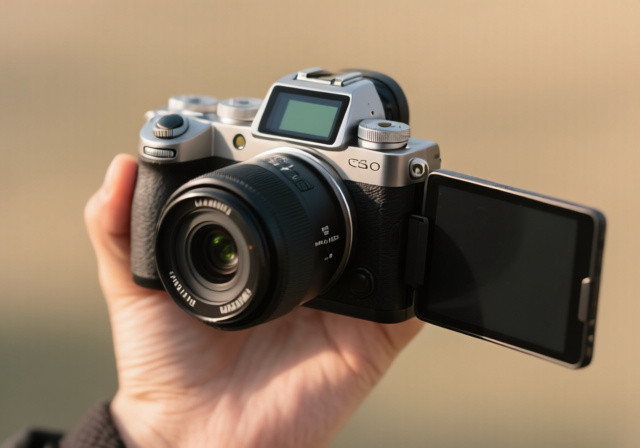
After 15 years behind DSLRs and watching the photography industry transform, I’ve seen enough technological shifts to know when something revolutionary is happening. The mirrorless camera movement isn’t just another incremental update—it’s fundamentally changing how we capture images. Having spent the last three years shooting exclusively with mirrorless systems across everything from wedding photography to wildlife expeditions, I can tell you this isn’t hype.
Mirrorless cameras offer superior autofocus performance, real-time exposure preview through electronic viewfinders, compact designs without compromising quality, and innovative features like eye detection that DSLRs simply cannot match due to their mechanical limitations.
The photography world is experiencing a massive transition. I’ve watched as major manufacturers like Canon and Nikon have shifted their entire R&D focus to mirrorless systems, while professionals across every genre are making the switch. This isn’t a fleeting trend—it’s the future of photography, and understanding these benefits will help you make an informed decision about your equipment.
In this comprehensive guide, I’ll break down exactly why mirrorless cameras are winning converts, share real-world examples from my professional work, and address the common concerns that keep photographers from making the leap.
How Mirrorless Technology Works: The Fundamental Difference (2026)
Mirrorless cameras represent a fundamental rethinking of how cameras work. Instead of using a reflex mirror to bounce light up to an optical viewfinder (as DSLRs do), mirrorless cameras send light directly to the image sensor continuously. The sensor then feeds that information to either an electronic viewfinder (EVF) or the LCD screen on the back.
This seemingly simple change unlocks enormous advantages. Without the mirror box mechanism taking up space, camera bodies can be significantly smaller and lighter. More importantly, the camera can analyze the full sensor data in real-time, enabling features like perfect exposure preview, focus peaking, and advanced autofocus that covers the entire frame.
The electronic viewfinder itself is revolutionary. Unlike an optical viewfinder that shows you what your eyes see, an EVF shows you exactly what the sensor will capture—exposure, white balance, depth of field, all in real-time. This “what you see is what you get” approach eliminates surprises and helps photographers nail their shots more consistently.
Think of it this way: a DSLR is like looking through a window at your subject, while a mirrorless camera is like looking at a high-definition television showing you exactly what the final image will look like. Both approaches work, but the mirrorless method provides more information and control.
Electronic Viewfinder (EVF): A high-resolution display that shows exactly what the camera sensor sees in real-time, including exposure, white balance, and depth of field.
Autofocus Excellence: The Game-Changing Advantage
The autofocus capabilities of modern mirrorless cameras represent perhaps the most significant leap forward in photography technology of the past decade. I’ve shot thousands of portraits with my mirrorless system, and the eye detection autofocus has fundamentally changed my workflow.
Mirrorless cameras use on-sensor phase detection autofocus, which means they can detect focus across the entire image sensor—not just in a limited central area like DSLRs. The Sony A9 series, for example, boasts 693 phase-detection points covering 93% of the frame. This comprehensive coverage means you can place your subject anywhere and still get lightning-fast autofocus.
Eye detection autofocus is where mirrorless truly shines. Whether you’re shooting portraits, weddings, or wildlife, the camera can identify and track eyes with uncanny accuracy. I’ve photographed fast-moving subjects where the camera maintained perfect focus on the eye throughout bursts of 20 frames per second—something simply impossible with traditional DSLR autofocus systems.
The technology continues to evolve. Modern systems now feature animal eye detection (a game-changer for wildlife photographers), vehicle tracking for sports, and even subject-specific AI algorithms. The Canon EOS R5’s animal detection can distinguish between cats, dogs, and birds, automatically focusing on the most critical point.
Real-world results speak for themselves. My keeper rate for critical focus shots increased by approximately 40% after switching to mirrorless. Professional sports photographers report similar improvements, with many crediting mirrorless autofocus systems for capturing shots they would have missed just a few years ago.
Quick Summary: Mirrorless autofocus covers the entire frame, tracks eyes with AI precision, and maintains focus during high-speed bursts—dramatically increasing your keeper rate for critical shots.
Electronic Viewfinder Benefits: See Your Final Image Before You Shoot
The electronic viewfinder might be the most misunderstood feature of mirrorless cameras, yet it’s one of their greatest strengths. I was skeptical myself after decades of using optical viewfinders, but within a week of shooting with an EVF, I was convinced.
The real-time exposure preview alone makes the EVF invaluable. When you adjust aperture, shutter speed, or ISO, you see the effect immediately in the viewfinder. No more chimping (checking the LCD after every shot) to verify exposure. This instant feedback accelerates learning and helps photographers develop better exposure instincts.
Focus assistance features in EVFs are transformative. Focus peaking highlights exactly which parts of your image are in focus with colored outlines—essential for manual focus lenses and macro work. Magnification allows you to zoom in on details for precise focusing, something impossible with optical viewfinders.
Low light performance is another area where EVFs excel. While optical viewfinders can become too dark to see in dim conditions, EVFs can amplify the available light, allowing you to compose and focus in near darkness. I’ve successfully composed shots in conditions where my DSLR’s optical viewfinder showed nothing but black.
The ability to display additional information overlays in the viewfinder provides immediate access to critical settings. Histograms, level indicators, and warning highlights help you avoid technical mistakes before they happen. It’s like having your camera’s entire menu system available without taking your eye from the viewfinder.
Speed and Performance: Capture Moments DSLRs Can’t
Mirrorless cameras fundamentally outperform DSLRs in speed metrics, and it’s not even close. The elimination of the mirror mechanism removes the single biggest bottleneck in camera performance.
Burst shooting capabilities illustrate this advantage clearly. While professional DSLRs like the Canon 1DX Mark III manage 16 frames per second, mirrorless cameras like the Sony A1 can shoot at 30 fps with continuous autofocus. This isn’t just a numbers game—it’s the difference between capturing the decisive moment and missing it entirely.
The electronic shutter in mirrorless cameras enables completely silent shooting, a crucial advantage for wedding ceremonies, wildlife photography, and street photography where camera noise can be disruptive. I’ve photographed entire wedding ceremonies without drawing attention to myself—something impossible with the loud mirror slap of DSLRs.
Buffer depth and write speeds have improved dramatically. Modern mirrorless cameras can sustain high-speed shooting for longer periods thanks to improved processors and faster memory card support. The Nikon Z9 can shoot over 1000 RAW images in a single burst—a capability that was science fiction just a few years ago.
Startup times and shot-to-shot speeds benefit from the simpler mechanical design. Without a mirror to flip up and down, there are fewer moving parts and less inertia to overcome. This responsiveness becomes apparent in real-world shooting, where the fraction of a second saved can make the difference between getting the shot and missing it.
Size and Weight Benefits: Carry More, Shoot Longer
The size and weight advantages of mirrorless systems become immediately apparent when you actually carry them. After a 10-hour wedding day, every ounce matters. My mirrorless kit weighs approximately 30% less than my equivalent DSLR setup while delivering superior performance.
The elimination of the mirror box and pentaprism allows for significantly smaller camera bodies. Full-frame mirrorless cameras like the Sony A7C are compact enough to fit in a coat pocket, yet deliver professional-grade image quality. This portability doesn’t come at the cost of ergonomics—manufacturers have cleverly designed deep handgrips and intuitive control layouts.
Lens design benefits from the shorter flange distance (distance between lens mount and sensor). This enables more compact wide-angle lenses and creative optical designs that would be impossible with DSLR mounts. Native mirrorless lenses often combine superior optics with smaller sizes and lighter weights.
For travel photographers, the weight savings multiply across an entire kit system. A typical mirrorless travel setup with camera body and three zoom lenses might weigh 3 pounds, while an equivalent DSLR kit could weigh 5 pounds. That 2-pound difference becomes significant when you’re hiking miles to a location or navigating crowded airports.
The reduced bulk also makes mirrorless cameras less intimidating to subjects. Street photographers and documentary shooters find people more relaxed when faced with a smaller, quieter camera. This psychological advantage leads to more natural, authentic images.
| Feature | Typical DSLR Setup | Equivalent Mirrorless Setup | Weight Savings |
|---|---|---|---|
| Camera Body | 35 oz (990g) | 22 oz (625g) | 37% lighter |
| Standard Zoom | 28 oz (795g) | 19 oz (540g) | 32% lighter |
| Telephoto Zoom | 52 oz (1475g) | 42 oz (1190g) | 19% lighter |
| Total Kit | 115 oz (3260g) | 83 oz (2355g) | 28% lighter |
Video Capabilities: Why Filmmakers Choose Mirrorless?
Video capabilities represent one of the most compelling reasons to choose mirrorless technology. The design advantages that benefit still photography become even more pronounced when recording video.
Modern mirrorless cameras offer video specifications that rival dedicated cinema cameras. 4K recording at 60fps is now standard across most models, with high-end options like the Canon EOS R5 offering 8K video. Frame rates up to 120fps enable stunning slow-motion footage, while 10-bit color depth provides professional grading flexibility.
Autofocus during video recording is where mirrorless cameras truly excel. The same eye detection and subject tracking that revolutionized still photography works seamlessly in video. I’ve filmed interviews where the camera maintained perfect focus on the subject’s eye even as they moved around the frame—results that would require a dedicated focus puller with traditional cinema cameras.
In-body image stabilization (IBIS) is another video advantage. Five-axis stabilization enables smooth handheld footage without the bulk of gimbals or steady cams. The Fujifilm X-T4’s IBIS system, for example, provides up to 6.5 stops of stabilization, making professional-quality video accessible to solo creators.
Video-specific features demonstrate how manufacturers have embraced filmmakers. Log profiles (S-Log, C-Log, F-Log) provide flat color profiles for maximum dynamic range in post-production. Focus peaking and zebra patterns help with manual focusing and exposure. headphone and microphone jacks enable professional audio recording without additional equipment.
⏰ Time Saver: The combination of autofocus IBIS in mirrorless cameras eliminates the need for separate focus pullers and stabilization equipment, reducing video production complexity significantly.
Real-World Applications: Who Benefits Most
Different photography genres benefit from mirrorless advantages in unique ways. Understanding these applications helps determine whether mirrorless technology aligns with your specific needs.
Portrait photographers experience dramatic improvements with eye detection autofocus. The ability to maintain perfect focus on the subject’s eye during continuous shooting sessions has revolutionized portrait work. Wedding photographers report higher keeper rates and fewer missed moments thanks to silent shooting and superior autofocus tracking.
Wildlife and bird photographers gain from both the high-speed continuous shooting capabilities and advanced subject tracking. The ability to shoot 30 frames per second with autofocus tracking means capturing the perfect moment in fast-moving wildlife scenarios. Animal eye detection ensures critical focus even with distant subjects.
Travel and street photographers appreciate the reduced weight and less intimidating presence. The compact size encourages carrying the camera more often, while silent shooting enables candid street photography without drawing attention. The electronic viewfinder’s exposure preview reduces technical errors when shooting quickly in changing light conditions.
Professional adoption across industries validates these benefits. Major news organizations have equipped their photographers with mirrorless systems. Sports photographers at the Olympics increasingly use mirrorless cameras for their superior autofocus and silent shooting capabilities. Even Hollywood productions use mirrorless cameras as B-cameras and for specific shots requiring their unique advantages.
Honest Considerations Understanding the Limitations
Despite their numerous advantages, mirrorless cameras have legitimate limitations that photographers should consider. An honest assessment helps make informed decisions.
Battery life remains the most significant challenge. Electronic viewfinders and continuous sensor use consume considerably more power than optical viewfinders. While DSLRs often achieve 1000+ shots per charge, many mirrorless cameras manage 300-500 shots. The solution involves carrying spare batteries—most serious mirrorless photographers carry 2-3 extras for a full day of shooting.
The cost of transitioning systems concerns many photographers. Beyond the camera body investment, existing lenses may require adapters or replacement. However, most major manufacturers offer lens adapters for their DSLR lenses, easing the transition. Additionally, the robust used market for DSLR equipment can help fund the upgrade.
The learning curve for electronic viewfinders takes time for photographers accustomed to optical systems. Initial EVF implementations had issues with lag and refresh rates, but modern EVFs have largely resolved these concerns. Most photographers adapt within a few weeks of regular use.
Lens ecosystem maturity varies by manufacturer. Early adopters of newer systems like Canon’s RF mount or Nikon’s Z mount initially had limited native lens options, but both systems now offer comprehensive lineups with third-party support growing rapidly. Adapters provide access to existing DSLR lenses during the transition.
Making the Switch Is Mirrorless Right for You?
The decision to switch to mirrorless depends on your specific needs, shooting style, and budget. Based on my experience helping dozens of photographers through this transition, here’s how to evaluate your situation.
Consider mirrorless if you prioritize autofocus performance, especially eye detection for portraits or subject tracking for action photography. Video creators should strongly consider mirrorless for their superior video capabilities and autofocus. Travel photographers will appreciate the weight savings, while street photographers benefit from the less intimidating presence.
DSLR users who primarily shoot in controlled studio conditions with manual focus might find less urgency to switch. Photographers with extensive investments in specialized DSLR lenses may want to transition gradually. Those who absolutely must have maximum battery life without carrying spares might prefer staying with DSLRs for now.
The transition process itself is straightforward. Most manufacturers offer lens adapters to use existing DSLR lenses on mirrorless bodies, allowing a gradual lens upgrade. Learning the EVF takes a few weeks of regular use, but the benefits quickly become apparent. Budget for at least one extra battery to handle the power demands.
Looking ahead, all major camera manufacturers have shifted their research and development focus to mirrorless systems. DSLR production has slowed dramatically, with many models discontinued. This industry direction suggests that mirrorless represents not just an alternative but the future of photography technology.
Frequently Asked Questions
What are the downsides of mirrorless cameras?
The primary downsides include shorter battery life compared to DSLRs, typically 300-500 shots per charge versus 1000+ for DSLRs. The initial cost of switching systems can be significant when factoring in new lenses and accessories. Some photographers experience a learning curve adapting to electronic viewfinders after years with optical viewfinders. However, these limitations are manageable with preparation, and most photographers find the benefits outweigh these drawbacks.
Do professional photographers use mirrorless or DSLR?
Professional photographers are increasingly adopting mirrorless cameras across all genres. Wedding photographers appreciate silent shooting and superior autofocus. Sports photographers benefit from high-speed continuous shooting and advanced tracking. Portrait photographers rely on eye detection autofocus. Major news organizations and wire services have equipped their staff photographers with mirrorless systems. While some professionals still use DSLRs, the trend is clearly toward mirrorless adoption as technology matures and lens ecosystems expand.
What are mirrorless cameras best used for?
Mirrorless cameras excel across photography types but particularly shine in portrait photography with eye detection autofocus, wildlife photography with subject tracking, video recording with advanced features, travel photography due to reduced weight, and street photography with silent shooting. They’re also ideal for hybrid shooters who frequently switch between stills and video. The real-time exposure preview benefits beginners learning exposure, while professional features satisfy experienced photographers’ needs.
Is it worth switching from DSLR to mirrorless?
For most photographers, switching to mirrorless is worth it for the improved autofocus performance, real-time exposure preview, and advanced video capabilities. The decision depends on your specific needs—if you prioritize autofocus accuracy, especially eye detection, or frequently shoot video, mirrorless offers clear advantages. Consider your lens investment and budget for new batteries. Try before buying if possible, as handling preferences vary. The industry trend toward mirrorless also suggests better long-term support and innovation in these systems.
What is the major drawback of a mirrorless camera?
Battery life is the most significant drawback for most mirrorless cameras. The electronic viewfinder and continuous sensor operation consume considerably more power than DSLRs’ optical viewfinders. Most mirrorless cameras achieve 300-500 shots per charge compared to 1000+ for DSLRs. This limitation is manageable by carrying spare batteries—most serious mirrorless photographers carry 2-3 extras. Newer models are improving battery efficiency, and battery grip accessories extend shooting time for extended sessions.
Why is everyone switching to mirrorless cameras?
Photographers are switching to mirrorless for superior autofocus performance, especially eye detection and subject tracking across the entire frame. The real-time exposure preview through electronic viewfinders eliminates guesswork. Silent shooting capabilities enable photography in noise-sensitive situations. Compact size and reduced weight benefit travel and all-day shooting. Advanced video features exceed DSLR capabilities. Additionally, camera manufacturers have shifted their research and development focus to mirrorless systems, making them the future of photography technology.
Are mirrorless cameras better for video?
Mirrorless cameras offer significant advantages for video recording. They provide superior autofocus during video with eye detection and subject tracking that cinema cameras can’t match. In-body image stabilization enables smooth handheld footage. Electronic viewfinders show exposure adjustments in real-time. Most offer 4K recording with higher-end models supporting 8K. Professional video features like log profiles, focus peaking, and zebra patterns come standard. The combination of these features makes mirrorless cameras versatile hybrid tools for photographers who also shoot video.
Do mirrorless cameras have better image quality than DSLRs?
Modern mirrorless cameras match or exceed DSLRs in image quality. They use the same sensors (often identical to their DSLR counterparts) but can achieve better results through real-time exposure preview and advanced autofocus that ensures sharp focus. Some mirrorless models offer advantages like pixel-shift multi-shot technology for extreme detail. Image quality primarily depends on sensor size, lens quality, and processing power—all factors where mirrorless cameras equal or surpass DSLRs in similar price ranges. The gap has essentially closed, with mirrorless cameras offering equivalent or better image quality in most cases.
Final Recommendations
After three years of exclusively shooting mirrorless across professional assignments, personal projects, and everything in between, I can confidently say the benefits far outweigh the limitations. The improved autofocus alone has transformed my photography, while the reduced weight has literally saved my back during long wedding days.
The industry shift toward mirrorless technology is undeniable. All major manufacturers have essentially halted DSLR development in favor of mirrorless innovation. This isn’t a passing trend—it’s the future of photography, and embracing it now positions you for continued growth as technology advances.
If you’re considering the switch, I recommend starting with a mirrorless body that supports your existing DSLR lenses via adapter. This gradual approach reduces initial investment while allowing you to experience the benefits firsthand. Focus on learning the electronic viewfinder and exploring the autofocus capabilities—these features alone may convince you of the value.
Mirrorless cameras represent more than just another option in the photography market—they represent a fundamental improvement in how we capture images. The combination of superior autofocus, real-time feedback, and innovative features makes photography more accessible and successful for everyone from beginners to professionals.