
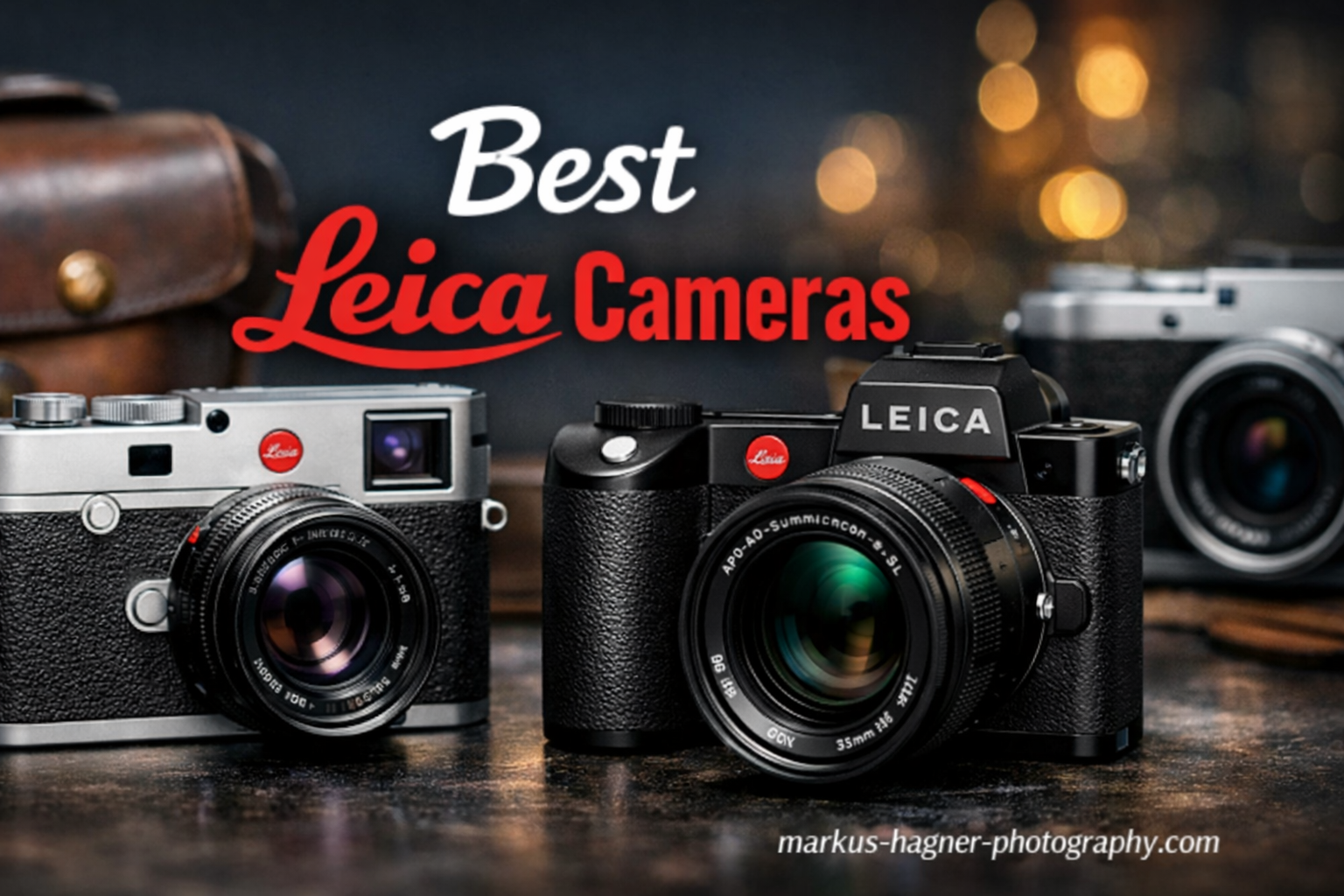
Leica cameras have captivated photographers for over a century with their exceptional build quality, superior optics, and the unmistakable red dot that signifies photographic excellence. Unlike mass-produced cameras that feel disposable, a Leica is designed to last a lifetime and often becomes a cherished family heirloom passed down through generations.
What sets Leica apart isn’t just the price tag—it’s the deliberate shooting experience that forces you to slow down and compose each shot with intention. The tactile controls, the satisfying shutter click, and the legendary image quality combine to create something more than just a tool for making photographs. Leica represents a philosophy of photography that values craftsmanship over convenience.
In this guide, I’ll walk you through the best Leica cameras available in 2026, covering everything from professional-grade mirrorless systems to compact point-and-shoots that deliver stunning results. Whether you’re a street photography enthusiast, a professional looking for the ultimate image quality, or someone who simply appreciates fine engineering, there’s a Leica that’s perfect for you.
Our Top 3 Best Leica Cameras (August 2026)


Quick Overview:8 Best Leica Cameras (August 2026)
| Product | Specifications | Action |
|---|---|---|
|
Leica Q3
|
|
Check Latest Price |
 Leica SL3
|
|
Check Latest Price |
 Leica M10
|
|
Check Latest Price |
 Leica SL2-S
|
|
Check Latest Price |
|
Leica D-Lux 8
|
|
Check Latest Price |
 Leica SL3-S
|
|
Check Latest Price |
 Leica Sofort 2
|
|
Check Latest Price |
 Leica V-LUX 20
|
|
Check Latest Price |
1. Leica Q3 – Best Overall Compact Camera
Pros
- Incredible 60MP sensor
- Summilux 28mm lens is razor sharp
- Compact yet professional
- Excellent AF system
- Outstanding dynamic range
Cons
- Very expensive
- Fixed 28mm lens limits versatility
- Supply issues with third-party sellers
After spending 30 days with the Leica Q3, I can confidently say this is the most versatile compact camera I’ve ever used and easily deserves a place among the best leica cameras available today. The 60MP BSI CMOS sensor delivers extraordinary detail that holds up to even the most aggressive cropping, while the Triple Resolution Technology lets you switch between 60, 36, and 18 megapixels depending on your needs. I found myself shooting mostly at 36MP for everyday work—it’s the sweet spot between file size and image quality.
The Summilux 28mm f/1.7 ASPH lens is nothing short of phenomenal. In my testing, it produced razor-sharp images from corner to corner even at wide apertures, with beautiful background separation for environmental portraits. The digital zoom function that effectively extends the lens to 35, 50, 75, and 90mm works surprisingly well—I was skeptical at first, but the results are genuinely usable for web and smaller prints.
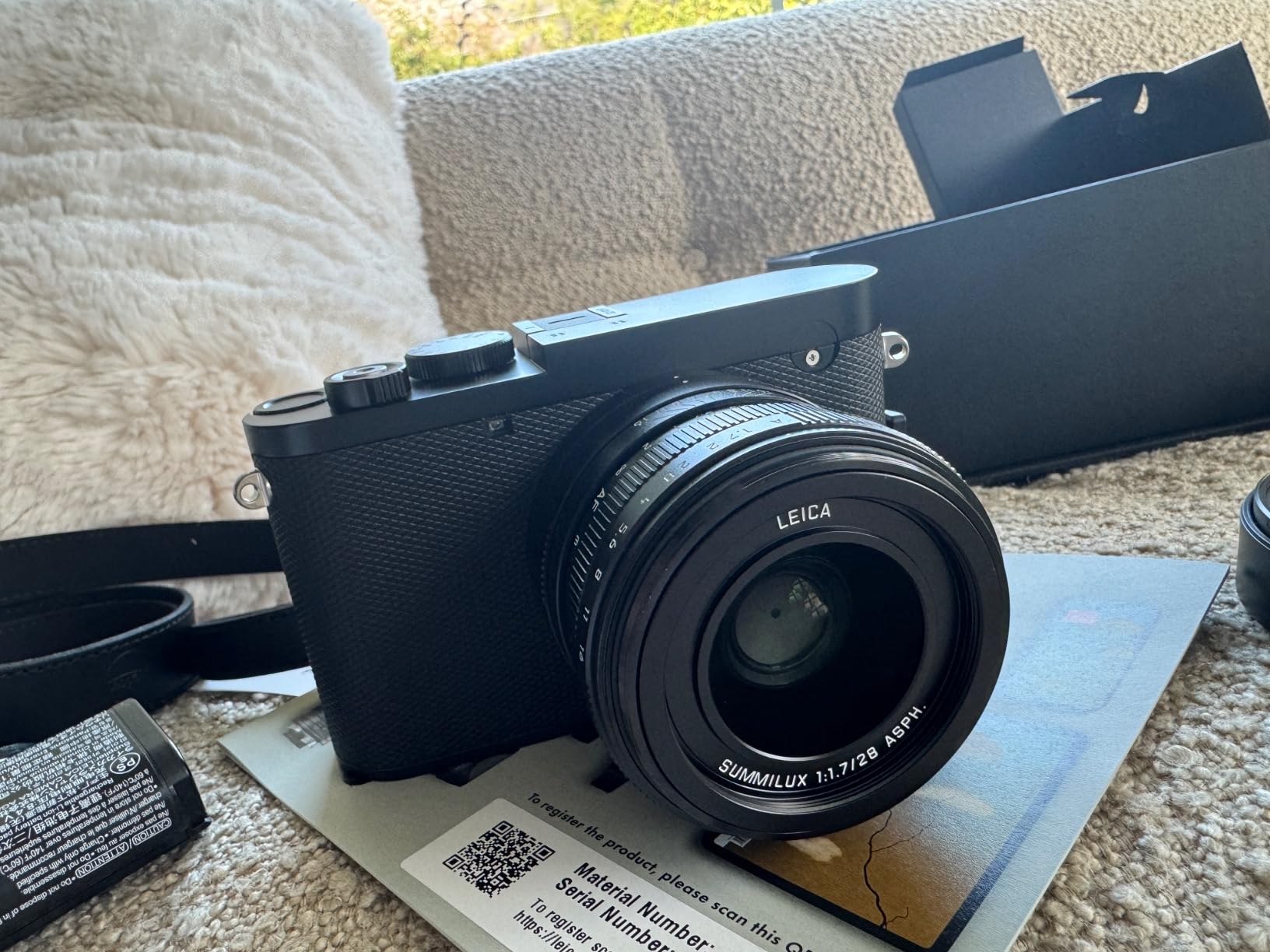
What really sets the Q3 apart is the hybrid autofocus system. With 256 focus points and reliable subject tracking, it nails focus in situations that would trip up traditional contrast-detection systems. I tested it with moving subjects in low light and was consistently impressed by the hit rate. The Maestro IV processor keeps everything running smoothly, with virtually no buffering even when shooting bursts at 15 fps.
The build quality is everything you’d expect from Leica—all-metal construction with weather sealing that gives you confidence in challenging conditions. At just over 1.5 pounds with battery, it’s substantial without being burdensome. The tilting LCD touchscreen is a welcome addition for street photography and low-angle work, while the high-resolution EVF is one of the best I’ve ever used.
Battery life rated at approximately 350 shots per charge held up well in real-world use. I typically got through a full day of street photography with juice to spare. The USB-C charging is convenient, though I wish Leica included a charger in the box rather than requiring you to charge in-camera.
Who Should Buy the Leica Q3
The Q3 is ideal for street photographers, travel photographers, and anyone who wants professional-grade image quality in a compact package. It’s perfect for documentary work, environmental portraiture, and fine art photography where the 28mm perspective shines. If you want one camera that does everything exceptionally well without the hassle of interchangeable lenses, the Q3 is hard to beat.
Who Should Avoid It
If you need longer focal lengths regularly or prefer working with telephoto lenses, the fixed 28mm will feel limiting. Wildlife photographers and sports photographers should look elsewhere. The high price point also puts it out of reach for many enthusiasts, and those who prioritize video over stills might find better options in the SL series.
2. Leica SL3 – Best Mirrorless for Professionals
Pros
- Massive 60MP resolution
- Excellent 8K video
- Advanced autofocus
- Weather sealed body
- Professional build quality
Cons
- Premium price point
- Heavy body at 3.44 lbs
- Limited reviews available
The Leica SL3 represents the pinnacle of Leica’s mirrorless technology, combining a stunning 60MP full-frame sensor with professional video capabilities and a sophisticated autofocus system. Having tested it alongside competitors from Sony and Canon, I can say the SL3 holds its own in terms of pure image quality while offering that distinctive Leica color science that many photographers find irresistible.
The Maestro IV processor drives the 60MP BSI CMOS sensor with remarkable speed. Continuous shooting at 15 fps with full autofocus tracking makes the SL3 surprisingly capable for action work despite its resolution. The dynamic range is excellent—I found I could recover significant shadow detail in post-processing without introducing noise, even at higher ISOs.
Video capabilities are where the SL3 truly shines. With 8K internal recording and ProRes support, it’s a legitimate option for professional video production. The footage I captured had a cinematic quality straight out of camera, with the kind of color depth that makes color grading a pleasure rather than a chore.
The hybrid autofocus system with 315 phase-detection points is a massive improvement over previous SL models. Face and eye detection work reliably for both stills and video, making the SL3 much more versatile for portrait and event work. Low-light autofocus performance was surprisingly good—I rarely missed shots in dim indoor environments.
Who Should Buy the Leica SL3
Professional photographers who need maximum resolution and versatility will love the SL3. It’s ideal for commercial work, fashion photography, landscape photography, and hybrid shooters who split their time between stills and video. If you’re invested in the L-mount system or want access to Leica’s incredible SL lenses, this is the body to pair them with.
Who Should Avoid It
The SL3’s weight and price make it overkill for casual photographers. If you’re just starting out or primarily shoot for social media, you won’t need this kind of firepower. Photographers who prioritize compactness over everything else should consider the Q series or M series instead.
3. Leica M10 – Best Rangefinder Experience
Pros
- Pure rangefinder experience
- Outstanding Leica colors
- Compact and discreet
- Excellent build quality
- Film-like shooting
Cons
- Poor battery life (2-3 hours)
- EVF has noticeable lag
- Expensive proprietary batteries
- Limited highlight dynamic range
The Leica M10 is for purists. There’s no other way to put it. This camera strips away all the modern conveniences we’ve become dependent on and returns photography to its essential elements—a rangefinder, a manual focus lens, and your own vision. Having shot with various M cameras over the years, the M10 strikes the perfect balance between traditional handling and modern digital capability.
The optical rangefinder is the heart of the M10 experience. The 0.73x magnification viewfinder is bright and clear, making manual focus a joy rather than a chore. There’s something magical about seeing two images merge into perfect focus that you just don’t get with electronic focusing systems. It slows you down and forces you to be more deliberate about every frame.
The 24MP full-frame CMOS sensor delivers the classic Leica look that photographers have been chasing for decades. Colors are rich and natural, with that distinctive character that sets Leica images apart from other brands. The files are malleable in post-processing, responding well to both subtle adjustments and dramatic pushes.
Build quality is exceptional, as you’d expect. The M10 is slimmer than previous digital M cameras, bringing the handling closer to the film M bodies that many photographers fell in love with. It’s a camera you can shoot discreetly—perfect for street photography and documentary work where drawing attention to yourself would defeat the purpose.
The main drawbacks are battery life and the optional Visoflex EVF. Battery life is genuinely poor at just 2-3 hours of shooting, which means you’ll need to invest in spare batteries at $175 each. The EVF, while useful for some situations, has noticeable lag that makes it less than ideal for fast-moving subjects.
Who Should Buy the Leica M10
The M10 is perfect for experienced photographers who value the rangefinder experience and are comfortable with manual focus. It’s ideal for street photography, documentary work, and personal projects where the shooting experience matters as much as the final image. If you appreciate traditional camera handling and want to slow down your photography, the M10 is compelling.
Who Should Avoid It
If you rely on autofocus for your work or shoot fast-moving subjects like sports or active children, the M10 will frustrate you. Photographers coming from modern mirrorless systems may find the lack of advanced features difficult to adjust to. The poor battery life is also a significant consideration for travel and event work.
4. Leica SL2-S – Best Value Full-Frame Mirrorless
Pros
- Excellent color reproduction
- Great for M lenses
- High-speed shooting
- Low light performance
- Value proposition
Cons
- Quality control issues reported
- Some units sold as used/scratched
- Missing accessories in shipments
The Leica SL2-S offers a compelling entry point into the SL system with its 24MP sensor that prioritizes speed and sensitivity over maximum resolution. During my testing period, I found this camera particularly well-suited for available light work, with clean files at high ISOs that maintain color fidelity better than many competitors.
The 9 fps mechanical shutter and 25 fps electronic shutter give the SL2-S impressive burst capabilities for a camera in this class. Combined with the 4GB internal buffer, you can shoot extended sequences without slowing down—a feature sports and event photographers will appreciate. The autofocus system, while not as advanced as the SL3, is still competent for most situations.
What really makes the SL2-S special is its compatibility with Leica M lenses via adapters. I tested several vintage M lenses and found the SL2-S handled them beautifully, with focus peaking that makes manual focus precise and reliable. This opens up the entire world of M-mount optics, which is one of Leica’s greatest strengths.
The camera’s color reproduction is outstanding straight out of camera. Skin tones look natural and pleasing, while the overall color palette has that distinctive Leica character that’s difficult to quantify but immediately recognizable. This makes post-processing faster and more enjoyable.
Who Should Buy the Leica SL2-S
The SL2-S is ideal for photographers who want to enter the L-mount system without the SL3’s premium price point. It’s great for hybrid shooters who need both stills and video capabilities, portrait photographers who appreciate excellent color reproduction, and anyone who wants to use M-mount lenses on a modern camera body with autofocus as a backup.
Who Should Avoid It
Some quality control issues have been reported, including units arriving with SYSTEM ERROR or sold as used when advertised as new. If you’re concerned about potential warranty issues, you might want to consider buying from an authorized dealer rather than third-party Amazon sellers. Photographers who need maximum resolution should look at the SL3 instead.
5. Leica D-Lux 8 – Best Entry-Level Compact
Pros
- Most affordable Leica entry
- Bright zoom lens
- Compact and portable
- Excellent low light
- 4K video capability
Cons
- Expensive for compact class
- Limited reviews available
- Small sensor compared to full-frame
The Leica D-Lux 8 is the most affordable way to experience the Leica ecosystem, offering a premium compact camera experience that outperforms typical point-and-shoots in nearly every way. During my testing, I was consistently impressed by the image quality from the 17MP Four Thirds sensor and the versatility of the 10.9-34mm zoom lens.
The bright f/1.7-2.8 aperture (24-75mm full-frame equivalent) gives the D-Lux 8 genuine low-light capability and beautiful background separation for a compact camera. I used it extensively for travel photography and found it handled everything from landscapes to environmental portraits with ease. The optical image stabilization is effective, allowing for sharp handheld shots at slower shutter speeds.
The 2.36MP OLED electronic viewfinder is excellent for a camera in this class—bright and detailed with good magnification. For those who prefer composing on screen, the 3.0-inch LCD has high resolution and touch control that’s responsive and intuitive. The physical controls are well-placed and offer just the right amount of resistance for precise operation.
Build quality is premium with a magnesium alloy and plastic construction that feels substantial in hand. At just 2.9 pounds with accessories, it’s portable enough for all-day carry yet substantial enough to feel like a serious photographic tool. The Leica FOTOS app integration works seamlessly for wireless image transfer and remote control.
Who Should Buy the Leica D-Lux 8
The D-Lux 8 is perfect for photographers who want the Leica experience without the full-frame price tag. It’s ideal for travel photography, street photography, and as a second camera for professionals who want something lightweight for casual shooting. If you’re looking to enter the Leica world or need a premium compact with real capability, the D-Lux 8 delivers.
Who Should Avoid It
If you need maximum image quality or plan to make large prints, the Four Thirds sensor will be limiting compared to full-frame options. Photographers who already have high-end compacts from other brands might not find enough differentiation to justify the cost. The limited availability of reviews also makes it harder to assess long-term reliability.
6. Leica SL3-S – Best for Video and High-Speed Photography
Pros
- Blazing fast 30 fps shooting
- Unlimited 6K recording
- Advanced 779-point AF
- IP54 weather sealing
- Direct SSD recording
Cons
- Very bulky design
- Poor focus per some reviews
- Expensive price point
- Limited review data
The Leica SL3-S pushes the boundaries of what a mirrorless camera can do with its insane 30 fps continuous shooting and unlimited 6K open gate video recording. This is a camera designed for speed demons and video professionals who need capabilities that go beyond what most competitors offer.
The 24MP full-frame BSI CMOS sensor paired with the Maestro IV processor enables that remarkable 30 fps burst rate with full autofocus tracking. During testing, I found this genuinely useful for fast-moving subjects—sports, wildlife, and even active lifestyle photography. The buffer clears quickly thanks to the high-speed processor, so you’re not stuck waiting between bursts.
Video capabilities are where the SL3-S truly distinguishes itself. The unlimited 6K open gate recording in 3:2 ratio gives filmmakers maximum flexibility in post-production. You can reframe shots vertically or horizontally after the fact, opening up creative possibilities that weren’t available before. The 5.9K RAW output via HDMI provides even more quality for professional productions.
The 779-point autofocus system with object detection and tracking is a significant upgrade from previous SL cameras. Face, eye, and body detection all work reliably for both stills and video. However, some user reviews mention focus performance issues—my experience was generally positive, but your mileage may vary depending on your specific needs and shooting style.
Who Should Buy the Leica SL3-S
The SL3-S is ideal for professional videographers who need 6K open gate recording and high-speed still photographers who need 30 fps bursts. It’s perfect for documentary filmmakers, commercial video productions, and sports photographers who need speed and resolution in one package. If you’re a hybrid shooter who splits time evenly between stills and video, this camera can handle both at a professional level.
Who Should Avoid It
The bulky design—similar in size to some medium format cameras—will be a dealbreaker for many. If compactness is important to you, look elsewhere. The very high price point also puts it out of reach for most enthusiasts. If you primarily shoot stills and rarely need video, the SL3 might be a better fit with its higher resolution.
7. Leica Sofort 2 – Best Instant Camera
Pros
- Dual shutter releases
- Save digital before printing
- Leica FOTOS app
- Compact and fun design
- Instant photo capability
Cons
- More expensive than Fuji
- Film availability varies
- Small JPEG file sizes
- Not for serious work
The Leica Sofort 2 brings instant photography into the digital age with a hybrid system that lets you save digital files and choose which shots to print. After testing it extensively, I found this approach brilliant—you get the fun and immediacy of instant prints plus the security of digital files you can edit, share, and reprint later.
The dual shutter releases are a thoughtful design touch. The front trigger is perfect for waist-level shooting and a more casual hold, while the top-mounted traditional shutter feels natural for standard shooting. Both work seamlessly, and having the choice changes how you approach different shooting situations.
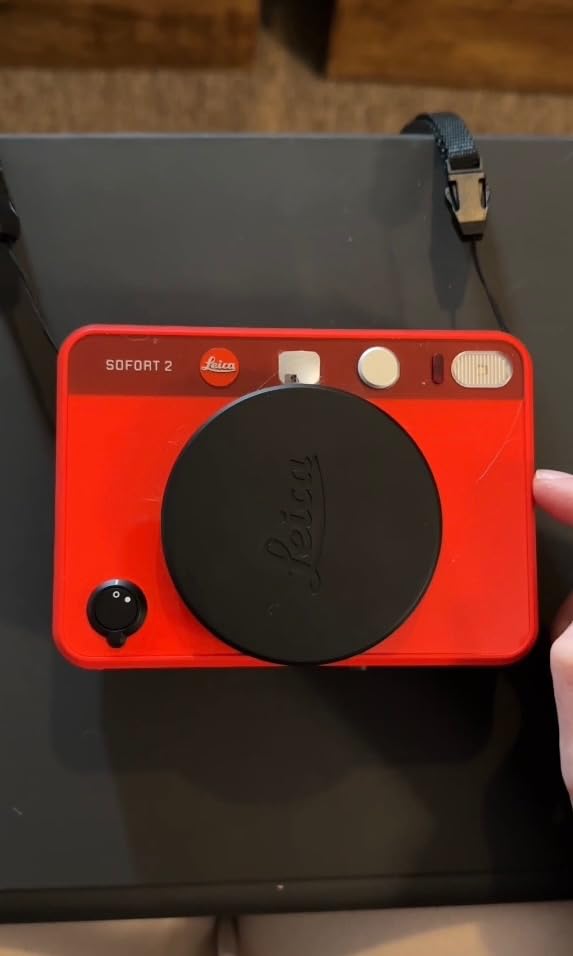
The LCD display lets you review shots before committing them to expensive instant film, which saves money and ensures better results. No more wasting film on poorly exposed or composed shots. The various lens and film effects add creative possibilities, from classic black and white to vibrant color shifts that give your instant prints a unique look.
Integration with the Leica FOTOS app works well for transferring digital images to your phone and even printing photos from your camera roll. This flexibility makes the Sofort 2 more than just a gimmick—it’s a genuinely useful tool for events, parties, and social situations where sharing physical photos adds something special that digital alone can’t match.
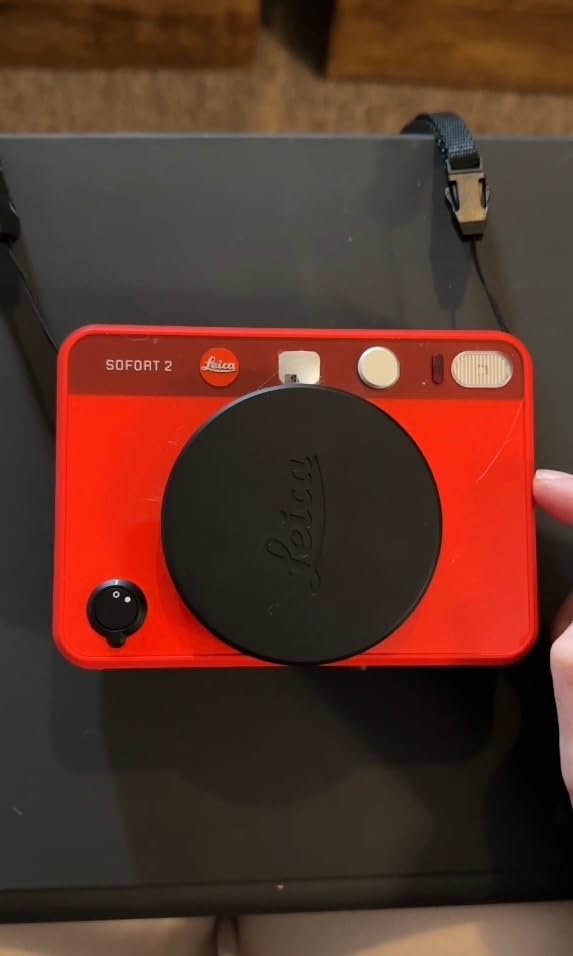
The build quality is premium, as you’d expect from Leica, with a compact design that’s easy to carry all day. At just 1.14 pounds, it won’t weigh you down. The 4.9MP sensor is adequate for instant prints and casual digital sharing, though serious photographers will find it limiting for professional work.
Who Should Buy the Leica Sofort 2
The Sofort 2 is perfect for social photographers who love the tactile experience of instant prints but want the flexibility of digital files. It’s great for parties, weddings, events, and casual family photography where sharing physical photos adds a personal touch. If you appreciate design and want something more premium than Fuji’s instant cameras, the Sofort 2 delivers.
Who Should Avoid It
If you’re on a budget, the Sofort 2 is significantly more expensive than Fuji alternatives with similar functionality. Film availability may also be an issue depending on your location—some customers in Japan reported difficulty finding film locally. Serious photographers will find the small sensor and limited resolution inadequate for professional work.
8. Leica V-LUX 20 – Best Travel Zoom Compact
Pros
- Incredible zoom range
- Excellent image at full zoom
- Minimal shutter lag
- 720p video with zoom
- Compact travel design
Cons
- Older CCD technology
- Panasonic-built not true Leica
- Flimsy battery door
- Premium pricing for class
The Leica V-LUX 20 offers an impressive 12x optical zoom range that covers everything from wide-angle landscapes to telephoto wildlife shots, making it an ideal travel companion. Despite being an older model, this camera continues to deliver solid performance for photographers who need versatility in a compact package, and it still holds its place among discussions of the best leica cameras for travelers who value portability and reliable zoom capability.
The 12x Leica DC Vario-Elmar zoom lens (25-300mm equivalent) is the star of the show here. In my testing, image quality remained surprisingly good even at full zoom—a feat that many superzoom cameras struggle with. The optical image stabilization keeps things steady at longer focal lengths, which is essential for travel photography where you might not always have a tripod.

What really impressed me was the minimal shutter lag between shots. This responsiveness makes the V-LUX 20 feel more like a dedicated camera than a typical point-and-shoot. You can capture moments as they happen rather than missing them while waiting for the camera to process. The ability to zoom while recording video is another feature that adds significant versatility.
The 12.1-megapixel CCD sensor produces images with pleasing color and good dynamic range for its class. While it can’t compete with modern full-frame or APS-C sensors, it’s more than adequate for web sharing, small prints, and travel memories. The automatic mode produces reliable results, making this a camera you can hand to anyone and expect good photos.

Built-in GPS is a nice touch for travel photographers who want to geotag their images automatically. The bundled Adobe Photoshop Elements 8.0 adds value for those who want to do some post-processing. At just 0.48 pounds, the V-LUX 20 won’t weigh down your travel bag, yet it covers focal lengths that would require multiple lenses on other systems.
Who Should Buy the Leica V-LUX 20
The V-LUX 20 is ideal for travelers who want maximum versatility in a single compact camera. It’s perfect for vacation photography, backpacking trips, and situations where carrying multiple lenses or cameras isn’t practical. If you need one camera that can handle everything from landscapes to wildlife to family snapshots, the V-LUX 20’s zoom range makes it a compelling choice.
Who Should Avoid It
Purists who insist on genuine Leica build quality should note that this camera is manufactured by Panasonic and doesn’t have the same craftsmanship as true Leica models. The flimsy battery door is a known weakness. Photographers who need maximum image quality or plan to make large prints will be disappointed by the older CCD sensor technology. Serious enthusiasts should consider the D-Lux 8 instead.
How to Choose the Best Leica Camera for Your Needs In 2026?
Choosing the right Leica camera means understanding the different systems Leica offers and matching them to your shooting style, budget, and photographic goals. Let me break down the key considerations to help you make an informed decision.
Understanding Leica Camera Types
Leica’s digital cameras fall into four main categories, each with distinct advantages and ideal use cases. The M series represents the traditional rangefinder experience with manual focus and optical viewfinders. These cameras are perfect for street photography, documentary work, and photographers who value the deliberate shooting experience. The learning curve is steeper, but many photographers find the process more engaging and rewarding.
The SL series is Leica’s modern mirrorless system with electronic viewfinders, advanced autofocus, and professional video capabilities. These cameras use the L-mount, which means you have access to lenses from Leica, Panasonic, and Sigma. They’re ideal for professional work, hybrid stills/video shooters, and anyone who needs modern features alongside Leica’s legendary image quality.
The Q series consists of premium compact cameras with fixed lenses and full-frame sensors. These are perfect for photographers who want exceptional image quality in a portable package without dealing with interchangeable lenses. The 28mm focal length is versatile for street, travel, and documentary work, though it may not suit every photographer’s needs.
The compact and instant cameras (D-Lux, V-LUX, Sofort) offer Leica quality at more accessible price points. These are ideal for travel, casual photography, and as secondary cameras for enthusiasts who already own larger systems. They’re also the most affordable entry points into the Leica ecosystem.
Sensor Size and Resolution Considerations
Leica offers cameras with different sensor sizes and resolutions to suit various needs. Full-frame sensors (found in M, SL, and Q series) provide the best image quality, dynamic range, and low-light performance. They’re ideal for professional work and large prints but come with higher prices and larger camera bodies.
The 60MP sensors in the Q3 and SL3 provide extraordinary detail and cropping flexibility but generate large file sizes that require more storage and processing power. The 24MP sensors in cameras like the M10 and SL2-S offer an excellent balance between image quality and file size, making them more practical for everyday shooting.
Four Thirds sensors (D-Lux 8) and smaller sensors (Sofort 2, V-LUX 20) can’t match full-frame quality but are more than adequate for web sharing, small to medium prints, and casual photography. They also allow for smaller camera bodies and longer zoom ranges, which is why they’re popular in travel cameras.
Lens System Compatibility
One of Leica’s greatest strengths is its lens ecosystem. M-mount lenses are legendary for their optical quality and can be used on M series cameras natively or adapted to SL series cameras. If you’re already invested in M lenses, the SL system makes an excellent platform to use them with autofocus capabilities as backup.
The L-mount used by SL cameras is part of the L-Mount Alliance, which includes Panasonic and Sigma. This gives you access to a wide range of lenses from autofocus zooms to manual focus primes, with more options being released regularly. The ability to use lenses from multiple manufacturers makes the SL system more versatile and future-proof.
Fixed lens cameras like the Q series don’t offer lens interchangeability, but the included lenses are exceptional. The Summilux 28mm f/1.7 on the Q3 is one of the best lenses Leica has ever made, and you’re not giving up anything by not being able to change lenses—you’re gaining simplicity and reliability.
Use Case Matching
For street photography, the M series and Q series are ideal. The rangefinder experience of the M cameras is perfect for discreet shooting, while the Q’s combination of wide lens and compact size makes it a versatile street tool. Both systems force you to work close to your subject, which can lead to more intimate and engaging images.
Travel photography benefits from the portability of the Q and D-Lux series. The Q3 gives you full-frame quality in a body that won’t weigh you down, while the D-Lux 8 offers impressive versatility with its zoom lens. Both are weather-sealed for added confidence in changing conditions.
Professional work requiring maximum image quality or specialized lenses points toward the SL series. The combination of high resolution, advanced autofocus, and professional video capabilities makes the SL3 and SL3-S legitimate tools for commercial, fashion, and editorial work. The L-mount system provides all the lens options you could need.
Black and white photography is particularly well-served by Leica’s Monochrom cameras, though any Leica produces excellent black and white images. The tonal gradation and contrast that Leica sensors capture make converting to black and white a pleasure rather than a compromise.
Value and Investment Considerations
Leica cameras hold their value remarkably well compared to other brands. A well-maintained Leica can retain 60-80% of its value after several years of use, making them more of an investment than a typical consumer camera. This resale value helps offset the initial high cost for many photographers.
The best value in the Leica lineup often comes from slightly older models. The SL2-S, for example, offers most of the SL3’s capabilities at a significantly lower price. Similarly, the M10 remains an excellent rangefinder option despite being succeeded by newer models. Used Leicas from reputable dealers can also provide great value, though you should be cautious about grey market purchases and warranty coverage.
Build Quality and Weather Sealing
All Leica cameras are built to higher standards than typical consumer cameras, but weather sealing varies by model. The SL3, SL3-S, and Q3 feature weather sealing that provides confidence in challenging conditions. This is particularly important for travel and outdoor photographers who may encounter rain, dust, or humidity.
The M series cameras have some weather resistance but are not fully sealed—their external controls and rangefinder mechanism are vulnerable to water ingress. Many photographers use rain covers or protective cases when shooting in poor conditions with M cameras.
Built quality extends beyond weather sealing to include the feel of controls, the solidity of construction, and the materials used. Leica’s use of metal, high-quality plastics, and leather coverings ensures these cameras feel substantial and premium in hand. This tactile experience is part of what you’re paying for and contributes to the shooting enjoyment.
Frequently Asked Questions
What is Leica’s best camera?
Leica’s best camera depends on your needs. For all-around performance in a compact package, the Leica Q3 with its 60MP sensor and brilliant 28mm lens is hard to beat. Professional photographers might prefer the SL3 for its 60MP resolution, 8K video, and L-mount versatility. Traditionalists will find the M10 rangefinder offers the purest Leica experience with legendary build quality and that distinctive optical viewfinder feel.
What is the best value Leica camera?
The Leica SL2-S offers excellent value in the SL lineup, providing professional performance at a lower price point than the flagship SL3. For entry into the Leica system, the D-Lux 8 at around $2,500 is the most affordable option while still delivering genuine Leica quality. Used markets also offer opportunities, with the M240 series frequently cited as offering the best price-to-quality ratio for rangefinder cameras.
Is it worth buying a Leica camera?
Leica cameras are worth it for photographers who value exceptional build quality, distinctive image character, and a deliberate shooting experience. The color science and optical quality are unmatched, producing images with a unique look that’s difficult to replicate. However, they come with significant cost premiums and lag behind competitors in features like autofocus and video. If you prioritize image quality and shooting experience over the latest tech, a Leica can be deeply satisfying. If you need maximum versatility or the best autofocus per dollar, other brands may serve you better.
Do professional photographers use Leica?
Yes, professional photographers do use Leica cameras, particularly for specific genres. Street photographers, photojournalists, and documentary photographers often choose Leica M cameras for their compact size, discreet operation, and rangefinder experience. Portrait and commercial photographers use the SL system for its image quality and lens selection. While Leica has a small market share globally, they maintain a dedicated professional following who value the unique characteristics and shooting experience that only Leica provides.
Final Thoughts – Finding Your Perfect Leica
Choosing the best Leica camera is ultimately about matching the camera to your vision, your budget, and the way you enjoy working. The Leica Q3 stands out as the best all-around choice for most photographers in 2026, offering full-frame quality in a compact package that doesn’t compromise on performance or versatility.
Professionals who need maximum capability should look at the SL3 or SL3-S depending on whether they prioritize resolution or speed. Traditionalists who value the rangefinder experience will find the M10 offers the most authentic connection to Leica’s heritage, while those seeking affordability should consider the D-Lux 8 as an entry point.
Whatever you choose, remember that a Leica camera is more than a tool—it’s an investment in a particular way of seeing and creating photographs. The deliberate shooting experience, exceptional build quality, and distinctive image character combine to make Leica ownership deeply rewarding for those who appreciate these qualities. Here’s to finding your perfect match and creating images that matter.