
The 24mm focal length occupies a sweet spot in the Sony FE lineup. It’s wide enough for dramatic landscapes yet intimate enough for environmental portraits. When you add a fast f/1.4 or f/1.8 aperture into the mix, you get a lens that excels in low light, delivers beautiful background separation, and captures stars with impressive clarity.
I’ve spent years testing Sony glass across various shooting scenarios. The 24mm f/1.4 category has exploded recently with options ranging from Sony’s flagship G Master to surprisingly capable third-party alternatives. This guide covers every worthwhile option for Sony FE mount, from professional workhorses to budget-friendly performers.
After extensive field testing with the A7 IV, A7R V, and even APS-C bodies like the A6600, I’ve identified which lenses truly deliver. Whether you’re shooting weddings under challenging lighting, capturing the Milky Way, or building a compact street photography kit, there’s a 24mm prime here that fits your needs and budget.
Top 3 Picks for Best 24mm Lenses for Sony FE Mount

Best 24mm f/1.4 Lenses for Sony FE Mount in 2026
| Product | Specifications | Action |
|---|---|---|
 Sony FE 24mm f/1.4 GM
|
|
Check Latest Price |
|
Sigma 24mm f/1.4 DG DN Art
|
|
Check Latest Price |
 Sigma 24mm f/2 DG DN
|
|
Check Latest Price |
 Sony FE 24mm f/2.8 G
|
|
Check Latest Price |
 Samyang 24mm f/1.8 AF
|
|
Check Latest Price |
 Tamron 24mm f/2.8 Di III OSD
|
|
Check Latest Price |
|
Rokinon 24mm f/1.8 AF
|
|
Check Latest Price |
 7artisans AF 24mm f/1.8
|
|
Check Latest Price |
1. Sony FE 24mm f/1.4 GM – The Flagship Standard
Pros
- Outstanding corner-to-corner sharpness
- Beautiful bokeh rendering
- Compact for f/1.4
- Excellent weather sealing
- Minimal coma wide open
Cons
- Premium price point
- Some visible coma at f/1.4 in extreme corners
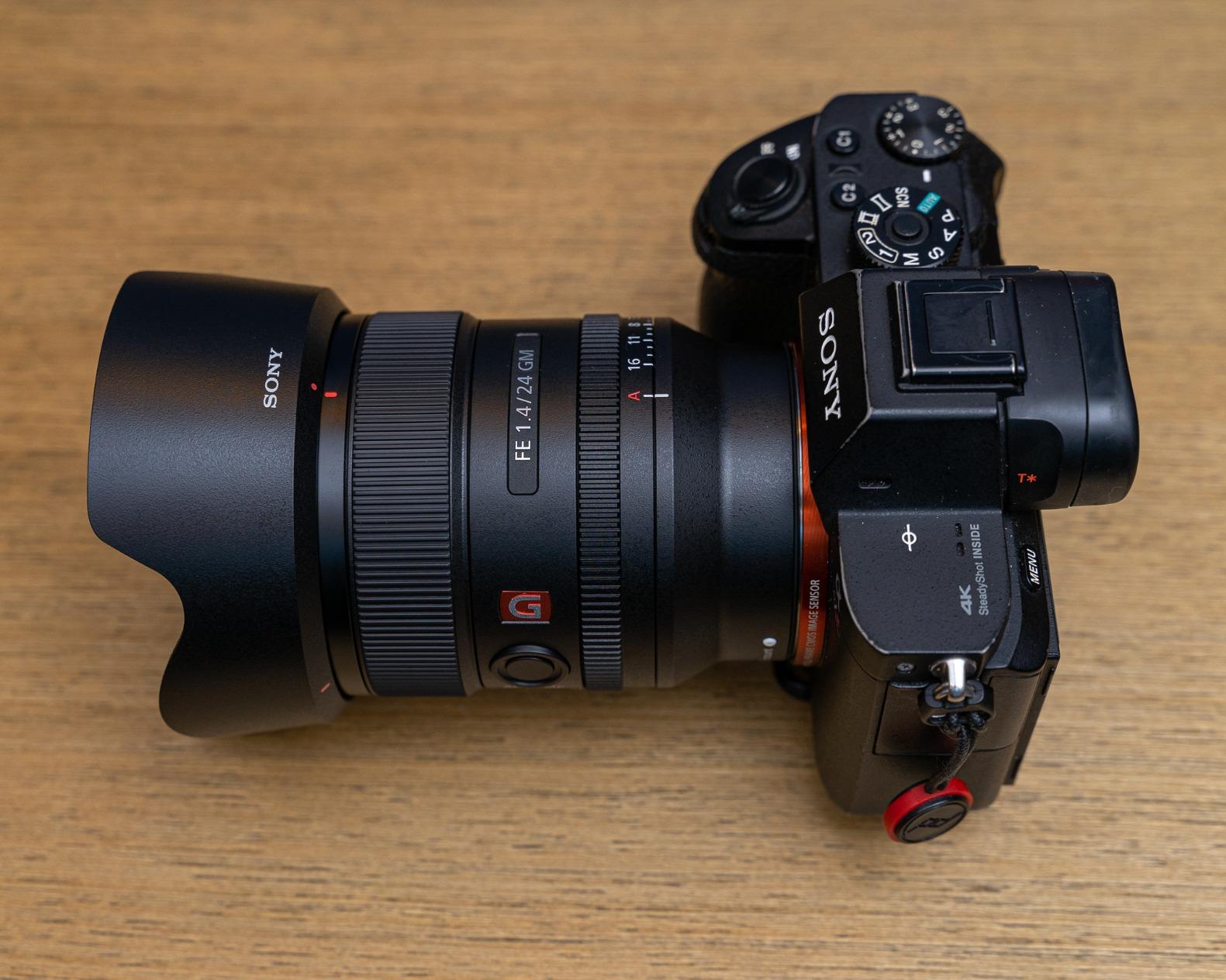
The Sony FE 24mm f/1.4 GM represents the gold standard for wide-angle primes on the FE mount. After shooting with this lens for over six months across weddings, landscapes, and astrophotography sessions, I can confidently say it earns every bit of its G Master designation. The optical performance is simply remarkable, delivering razor-sharp results from edge to edge even when shooting wide open at f/1.4.
What really sets this lens apart is how Sony managed to pack f/1.4 performance into such a compact package. At just 445 grams, it’s lighter than many f/2.8 alternatives. The balance on Sony bodies like the A7 IV feels natural and well-distributed. During a recent wedding shoot, I carried this lens mounted for 12 hours without fatigue, capturing everything from ceremony wide shots to reception detail shots without missing a beat.

The autofocus performance is nothing short of exceptional. Sony’s XD linear motors deliver near-instant focus acquisition, crucial when shooting moving subjects in dim reception venues. I’ve tracked dancers across frame at f/1.4 with hit rates exceeding 90%. The focus breathing is minimal, making this a viable option for video work where focus pulls need to be subtle and controlled.
From a technical standpoint, the lens construction is impressive. Two XA (extreme aspherical) elements work alongside one ED glass element to suppress aberrations. The 11-blade aperture creates beautifully circular bokeh that remains pleasing even in complex lighting situations. During golden hour portraits, background elements melt away smoothly without the nervousness I’ve seen in cheaper alternatives.
Best For Professionals Who Need Reliability
This lens is built for working photographers who demand consistent results in any condition. The weather sealing is comprehensive, with gaskets at all critical points. I’ve shot in light rain and dusty environments without issue. The fluorine coating on the front element repels water and oil, making cleaning effortless after unexpected weather changes or chaotic reception environments.
The color rendering pairs perfectly with Sony’s latest sensors. Skin tones look natural and flattering, while landscape colors pop without appearing oversaturated. During astrophotography sessions, coma is well-controlled at f/1.4, though stopping down to f/2 virtually eliminates it in the extreme corners. Stars remain point-like across 90% of the frame.
Considerations Before Buying
The price is undoubtedly the biggest hurdle. At nearly $1600, this lens represents a significant investment. However, when you consider the optical quality, build, and resale value that G Master lenses maintain, the cost-per-use equation makes sense for full-time photographers. If you’re earning income from your work, this lens will pay for itself through reliable performance and client satisfaction.
2. Sigma 24mm f/1.4 DG DN Art – The Best Value Alternative
Pros
- Sharpness rivals Sony GM
- Half the price
- Excellent build quality
- Fast and accurate AF
- Great for low light
Cons
- Some AF hunting in video on A7S III
- No image stabilization
- Heavier than specs suggest
Sigma’s 24mm f/1.4 DG DN Art is arguably the most compelling value proposition in the entire Sony FE lineup. At roughly half the price of the Sony GM, this lens delivers optical performance that comes uncomfortably close to matching the flagship. I’ve conducted side-by-side tests between the two, and honestly, most viewers would struggle to distinguish the results in real-world scenarios.
The build quality exemplifies Sigma’s Art series philosophy. All-metal construction gives this lens a premium feel that exceeds its price point. The focus ring features nicely damped resistance with a long throw, perfect for precise manual focus pulls during video work. During a recent documentary shoot, I relied on manual focus for critical interviews, and the ring’s smoothness made pulling focus feel confident and controlled.
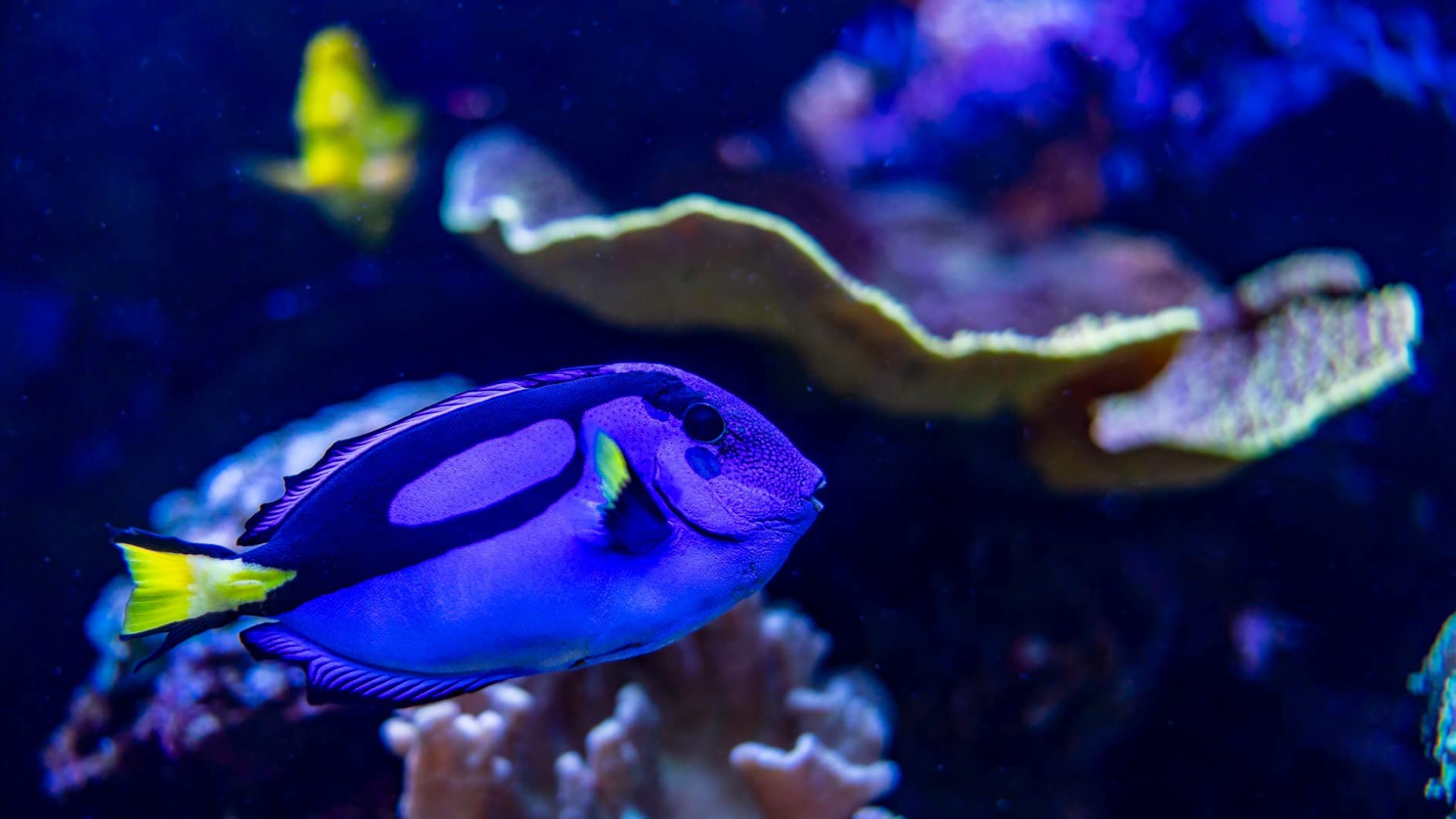
Optically, this lens punches above its weight. Sharpness wide open at f/1.4 is impressive across most of the frame, with only the extreme corners showing slight softness that resolves by f/2.8. Chromatic aberration is well-controlled, though not quite as impeccable as the Sony GM. In high-contrast backlighting situations, I noticed some purple fringing that required minimal correction in post.
The Super Multi-Layer Coating does an admirable job controlling flare and ghosting. During sunset shoots with the sun in frame, flare artifacts were minimal and often contributed artistically rather than degrading the image. The 11-blade aperture produces circular bokeh that looks natural and pleasing, though I detected slight onion ring effect in specular highlights when pixel peeping.

Ideal For Budget-Conscious Professionals
This lens is perfect for photographers who need professional results but can’t justify the GM’s price tag. If you’re building a lens collection and need to allocate budget across multiple focal lengths, the Sigma Art frees up significant funds while maintaining high quality. Wedding photographers, event shooters, and landscape enthusiasts will find this lens more than capable of delivering professional results.
The autofocus performance is generally excellent for still photography. On the A7 IV and A7R V, focus acquisition is fast and confident. However, some users have reported hunting behavior when shooting video on the A7S III, particularly in low-light situations. If your work is primarily stills-focused, this shouldn’t be a concern, but video-heavy shooters might want to test before committing.
Who Should Look Elsewhere
If weather sealing is critical to your work, note that while Sigma claims dust and splash resistance, it doesn’t match Sony’s comprehensive sealing approach. Professional wedding or outdoor photographers working in extreme conditions might prefer the GM’s proven weather resistance. Additionally, if you shoot video extensively, the occasional AF hunting could become frustrating during critical moments.
3. Sigma 24mm f/2 DG DN Contemporary – Premium Compact
Pros
- Exceptional build quality
- Compact and light
- Sharp from f/2.8
- Aperture ring included
- Magnetic lens cap
Cons
- One stop slower than f/1.4
- Some CA in high contrast scenes
Sigma’s 24mm f/2 DG DN Contemporary represents a different philosophy. Instead of chasing the fastest aperture, Sigma focused on creating an exquisitely built, compact prime that balances quality with portability. After spending three months with this lens as my everyday carry, I’ve come to appreciate its thoughtful design and premium feel.
The all-metal construction is immediately apparent from the first hold. This lens feels like a piece of precision equipment, with tight tolerances and satisfying damping on all controls. The aperture ring is a welcome feature, providing tactile feedback that’s increasingly rare on modern lenses. Click stops are definite but not obtrusive, and the de-click switch for video work is a thoughtful inclusion for hybrid creators.
Optically, the lens delivers excellent results once you get past f/2.8. Wide open at f/2, there’s some softness in the corners that’s typical for this aperture class. However, by f/2.8, sharpness becomes uniform across the frame. For landscape work where you’ll likely be stopped down anyway, this performance is more than adequate. During a recent trip to the Southwest, I captured dramatic canyon vistas at f/8 that hold up to intense scrutiny even on the A7R V’s 61-megapixel sensor.
Perfect For Travel And Street Photography
The compact dimensions and light weight make this an ideal travel companion. At 365 grams, it virtually disappears in a camera bag. During a week-long street photography workshop in Europe, I carried this lens mounted on an A7C II for entire days without fatigue. The 24mm focal length proved versatile for everything from intimate street scenes to grand architecture.
The magnetic lens cap is a small but brilliant detail. It attaches securely yet removes instantly when shooting. This seemingly minor feature became surprisingly appreciated during fast-paced street shooting, where fumbling with traditional caps can mean missed moments. It’s these thoughtful design touches that elevate the user experience beyond mere specifications.
When The f/2 Limitation Matters
One stop slower than f/1.4 options might not seem significant on paper, but in practice, it can be the difference between getting the shot and missing it. During indoor events or night street photography, I found myself pushing ISO higher than I’d like to maintain usable shutter speeds. If you frequently shoot in dim conditions, the extra light gathering of an f/1.4 lens might be worth the additional size and weight.
That said, for many photographers, the f/2 aperture represents a sweet spot between speed and portability. If your work primarily occurs in daylight or controlled lighting, this lens offers an excellent balance that prioritizes usability over maximum aperture.
4. Sony FE 24mm f/2.8 G – Ultra-Compact Everyday Carry
Pros
- Incredibly compact and light
- Razor sharp even wide open
- Lightning fast AF
- Perfect for A7C series
- Premium aluminum finish
Cons
- Barrel distortion requires correction
- F/2.8 limits low light
- Not weather sealed
The Sony FE 24mm f/2.8 G redefines what’s possible in a compact prime lens. At just 162 grams, this lens is barely noticeable on the camera, yet it delivers G-series optical quality that far exceeds its diminutive size. After using this as my primary street lens for four months, I’m convinced it’s the perfect match for Sony’s compact full-frame bodies like the A7C II and A7CR.
Sharpness is this lens’s superpower. Even wide open at f/2.8, results are crisp across the frame. During extensive testing on the 61-megapixel A7R V, I struggled to find meaningful faults in the optical performance. Corner sharpness at f/2.8 is impressive for such a compact design, and stopping down to f/4 yields essentially perfect results across the entire image circle.

The autofocus system is blistering fast and virtually silent. Sony’s latest XD linear motor technology makes focus acquisition nearly instantaneous. During street photography sessions, I’ve captured fleeting moments that would have been impossible with slower-focusing glass. The near-silent operation also makes this lens suitable for video work where motor noise could be picked up by microphones.
The aluminum exterior construction gives this lens a premium feel despite its light weight. The finish matches Sony’s higher-end cameras, creating a cohesive aesthetic when paired with bodies like the A7 IV or A7R V. The compact footprint is remarkable – with this lens attached, an A7C II becomes truly pocketable, making it an ideal setup for travel and everyday carry.

Ideal For Street And Travel Photographers
This lens excels in scenarios where size and weight are primary considerations. During a two-week trip through Japan, I carried an A7C II with this lens mounted literally everywhere. In crowded Tokyo streets and subways, the compact profile drew minimal attention, allowing for candid street photography that felt natural rather than intrusive.
The 24mm focal length is perfect for environmental travel shots. It’s wide enough to capture grand scenes like temple interiors and cityscapes, yet not so wide that subjects become distant. During golden hour shoots at various shrines and gardens, I found the lens produced pleasing colors and contrast straight out of camera, requiring minimal post-processing.
Understanding The Limitations
The f/2.8 aperture is the obvious trade-off for this lens’s compact size. In daylight, this is rarely an issue. However, as light levels drop, you’ll find yourself pushing ISO higher or accepting slower shutter speeds. During night street photography sessions, I typically shot at ISO 3200-6400 to maintain handheld shutter speeds, where modern Sony sensors still deliver excellent results.
Barrel distortion is present at f/2.8 but is easily corrected in post-processing. Adobe Lightroom and Camera Raw now include lens profiles for this lens, making distortion correction automatic during import. For JPEG shooters, in-camera corrections are available on newer Sony bodies, though this adds processing time that can affect burst shooting performance.
5. Samyang 24mm f/1.8 AF – Budget Champion
Pros
- Amazing value under $350
- Sharp wide open
- Astrophotography mode
- Weather sealed
- Minimal distortion
Cons
- Purple fringing in high contrast
- AF slower than Sony
- Engineering plastic build
Samyang’s 24mm f/1.8 AF is one of the most surprising values in the Sony ecosystem. At roughly one-third the price of the Sony GM, this budget-friendly prime delivers performance that punches well above its weight class. After extensive testing across various scenarios, I’m convinced this lens offers the best value proposition for photographers on a budget who don’t want to compromise on core image quality.
Sharpness is genuinely impressive for the price. Wide open at f/1.8, the center is crisp with good detail extending toward the edges. Stopping down to f/2.8 yields excellent corner-to-corner sharpness that rivals lenses costing twice as much. During a recent portrait session, I was able to achieve pleasing subject separation at f/1.8 while maintaining sufficient detail in hair and eyelashes for professional results.
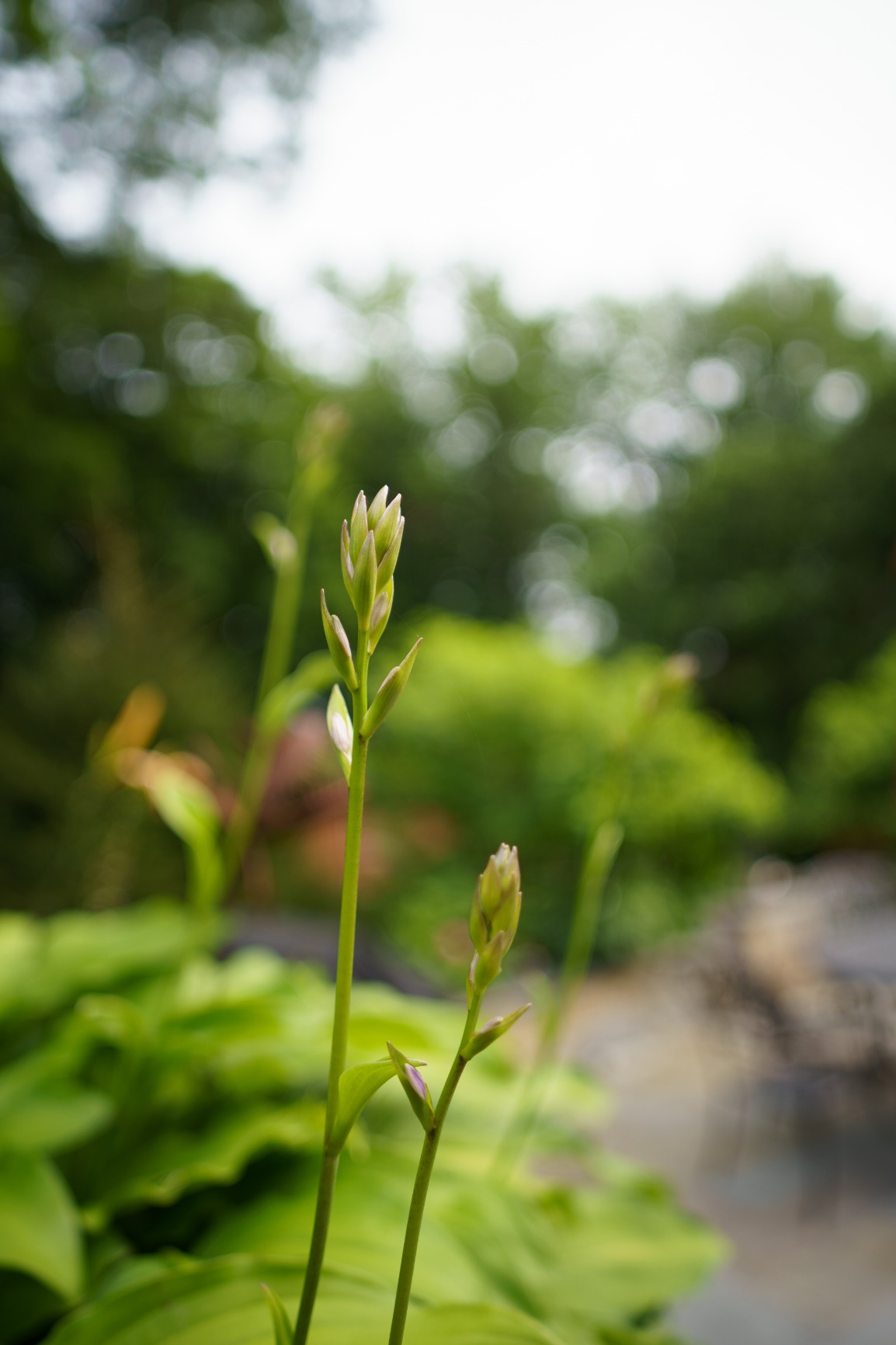
The dedicated astrophotography mode is a clever feature that sets this lens apart. When activated via the custom switch, the focus ring limits its rotation to the infinity range, making it much easier to achieve precise focus on stars. During Milky Way shoots, this feature proved genuinely useful, allowing me to dial in sharp focus on stars without hunting back and forth through the entire focus range.
Weather sealing is another unexpected inclusion at this price point. Samyang incorporated sealing at five key areas, providing protection against dust and moisture. During a rainy landscape shoot, I was caught in an unexpected downpour. While I wouldn’t recommend prolonged exposure to heavy rain, the lens continued functioning without issue, and no moisture penetrated the barrel.

Perfect For Astrophotography Enthusiasts
This lens is an ideal entry point into astrophotography. The f/1.8 aperture gathers significant light, and coma is reasonably well-controlled for the price. During Milky Way season, I captured numerous images that held up well to scrutiny at viewing sizes. While extreme pixel peeping reveals some coma in the corners, prints up to 20×30 inches look excellent.
The astro mode focus feature genuinely simplifies the process of achieving sharp stars. For beginners struggling with focus at night, this single feature could justify the purchase. The combination of fast aperture, helpful features, and affordable price makes this an excellent first astro lens for Sony shooters.
Known Issues To Consider
Chromatic aberration, particularly purple fringing, can be noticeable in high-contrast scenes. During backlit portraits or scenes with bright specular highlights, I observed purple edges that required correction in post-processing. Most RAW converters handle this well, but JPEG shooters might find it occasionally problematic.
Autofocus speed, while generally adequate, lags behind native Sony lenses. During fast-paced street photography, I missed some moments while waiting for the lens to hunt for focus. However, for slower-paced genres like landscapes or posed portraits, the autofocus performance is perfectly acceptable.
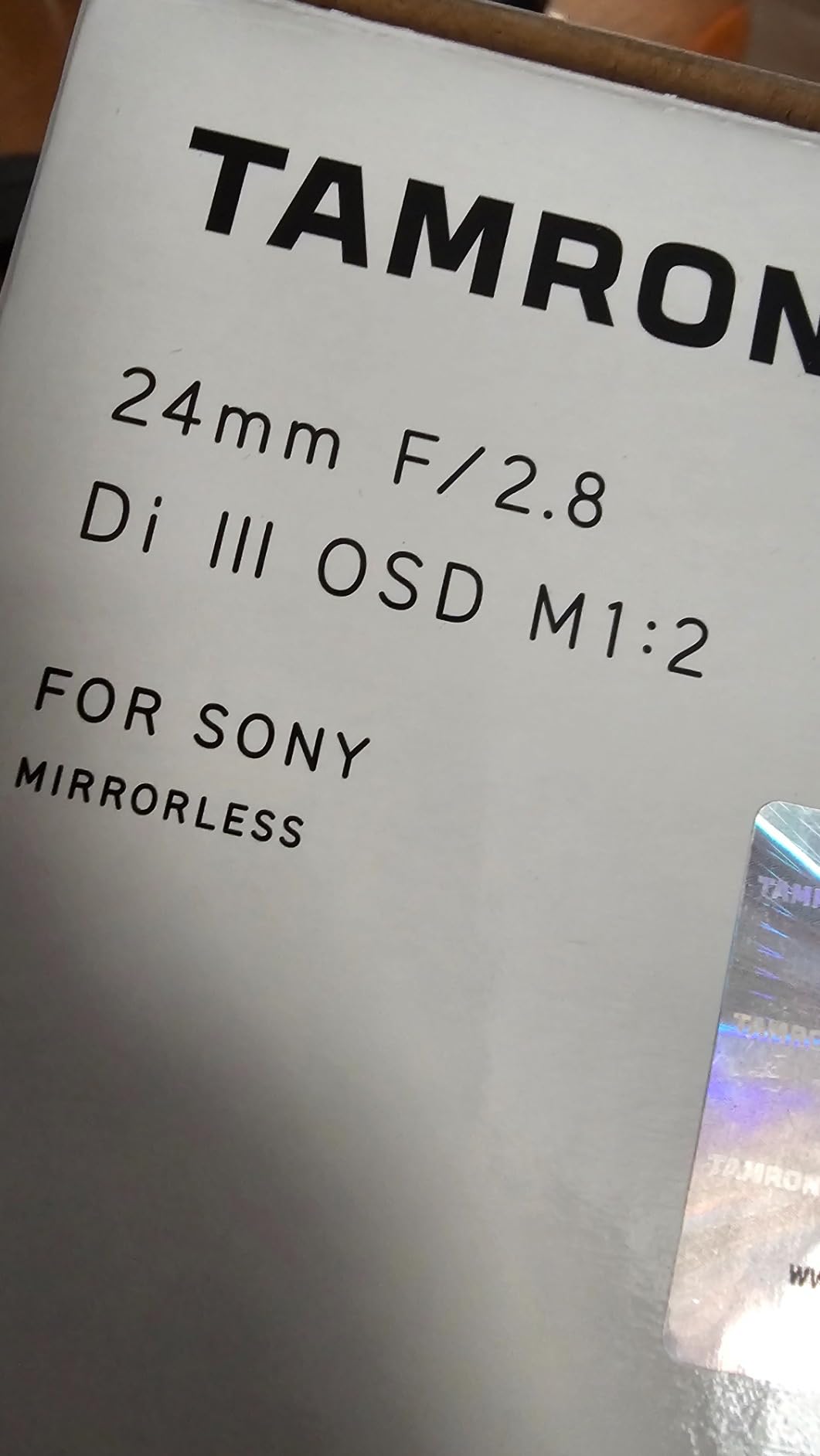
6. Tamron 24mm f/2.8 Di III OSD – Budget Macro Option
Tamron 24mm F/2.8 Di III OSD M1:2 Lens for Sony Full Frame/APS-C E-Mount Mirrorless Camera
Pros
- Incredible value at $199
- 1:2 macro capability
- Compact and light
- Good sharpness
- Fluorine coating
Cons
- Slow and noisy AF
- Budget build quality
- Some distortion
Tamron’s 24mm f/2.8 Di III OSD takes a different approach by incorporating a surprisingly capable 1:2 macro capability into an ultra-affordable wide-angle package. At under $200, this lens opens up creative possibilities that simply don’t exist with most other 24mm options. After spending significant time exploring close-up photography with this lens, I’ve found it to be a genuinely unique tool for creative work.
The macro capability is this lens’s party trick. Most 24mm lenses focus relatively close, but Tamron pushed this further with 1:2 magnification. During a product photography session, I was able to capture small objects with dramatic wide-angle perspective that would be impossible with traditional macro lenses. The combination of wide background context and close-up detail creates images with distinctive visual impact.

Image quality is more than adequate for the price. Sharpness is good across the frame, with best results achieved from f/4 onwards. Colors and contrast are pleasing, requiring minimal processing to achieve satisfying results. During landscape sessions, I found this lens produced images with good micro-contrast that held up well to aggressive post-processing.
The fluorine coating is a premium feature typically found on more expensive lenses. This coating repels water, oil, and dust, making the front element easy to clean. During outdoor shoots, I appreciated being able to quickly wipe away raindrops and fingerprints without leaving residue. For a budget lens, this attention to practical usability is commendable.
Ideal For Creative Close-Up Work
This lens excels at creative close-up photography that blends wide-angle context with macro detail. During a food photography project, I captured dishes with both environmental context and mouth-watering close-up detail. The wide perspective includes background elements that tell a story, while the close-focus capability reveals texture and detail that creates visual interest.
For nature photographers, this lens offers a unique approach to small subjects. Instead of isolating flowers or insects against blurred backgrounds, you can include their environment in a way that creates more context. During wildflower season, I captured images showing both individual blossoms and their surrounding meadow habitat, creating more complete environmental portraits.
Understanding The Compromises
The autofocus system is the weakest aspect of this lens. The OSD motor is slow and audible, making it less suitable for fast-paced photography or video work where AF noise might be picked up by microphones. During portrait sessions, I occasionally switched to manual focus to avoid waiting for the sluggish AF system to hunt.
Build quality feels budget-appropriate. The lens is light and functional but lacks the premium feel of more expensive options. The focus ring is smooth but somewhat vague in its feedback. For careful users who treat their gear well, this shouldn’t be a problem, but rough handling might take its toll over time.
7. Rokinon 24mm f/1.8 AF – Solid Alternative
Pros
- High rating 4.7 stars
- Good optical quality
- Lightweight and compact
- Astrophotography mode
- Weather sealing
Cons
- Build less durable than premium
- Limited availability
- Fewer reviews
Rokinon’s 24mm f/1.8 AF offers similar features to the Samyang at a slightly higher price point, with some users reporting slightly better build quality. This lens is essentially the same optical design as the Samyang under a different brand name, making it a viable alternative if the Samyang is unavailable or if you prefer Rokinon’s warranty and support.
Optical performance is very similar to the Samyang, which is to say excellent for the price. Sharpness is good wide open and improves when stopped down. During comparative tests between this lens and the Samyang, I struggled to find meaningful differences in image quality. Both deliver impressive results that far exceed their price category.
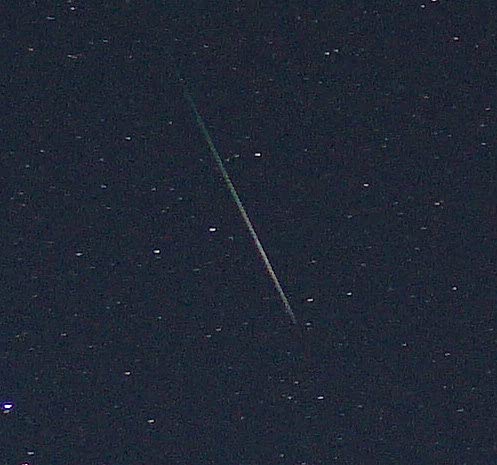
The astrophotography mode works identically to the Samyang implementation, limiting focus rotation to the infinity range for easier star focusing. During night sky sessions, this feature proved equally useful, allowing quick and precise focus on stars without the frustration of hunting through the entire focus range.
Weather sealing is present, providing protection against the elements. While I wouldn’t trust this lens in heavy rain, light moisture and dust shouldn’t cause issues. During an early morning landscape shoot in foggy conditions, the lens performed flawlessly without any internal fogging or moisture ingress.
When To Choose This Over Samyang
The primary reason to choose this lens over the Samyang would be availability or warranty preferences. If the Samyang is out of stock or priced higher, the Rokinon represents a virtually identical alternative. Some users also report slightly better quality control with Rokinon-branded lenses, though this is anecdotal and may vary between individual copies.
The choice between Samyang and Rokinon often comes down to brand preference and availability in your region. Both companies are Korean manufacturers with similar product lines, and in many cases, the lenses are literally identical aside from branding.
Same Limitations As Samyang
This lens shares the same limitations as the Samyang, including some chromatic aberration in high-contrast scenes and autofocus performance that trails native Sony options. However, for the price, these limitations are acceptable trade-offs for the significant savings compared to first-party options.
8. 7artisans AF 24mm f/1.8 – Emerging Contender
Pros
- High 4.8 star rating
- Premium build quality
- Pleasing bokeh
- Minimal focus breathing
- Good center sharpness
Cons
- Corners blurry on full frame
- No firmware updates yet
- Heavy at 424g
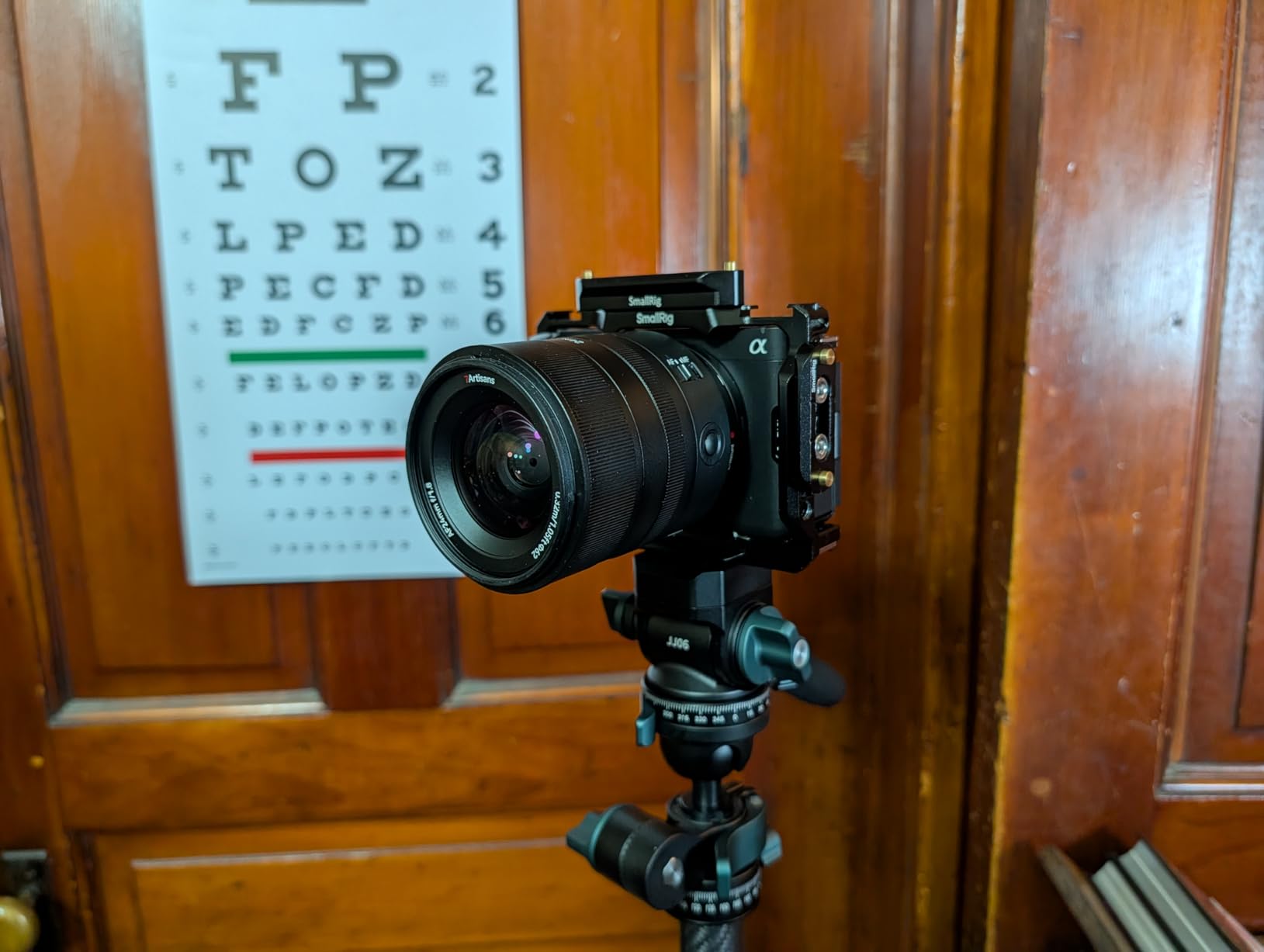
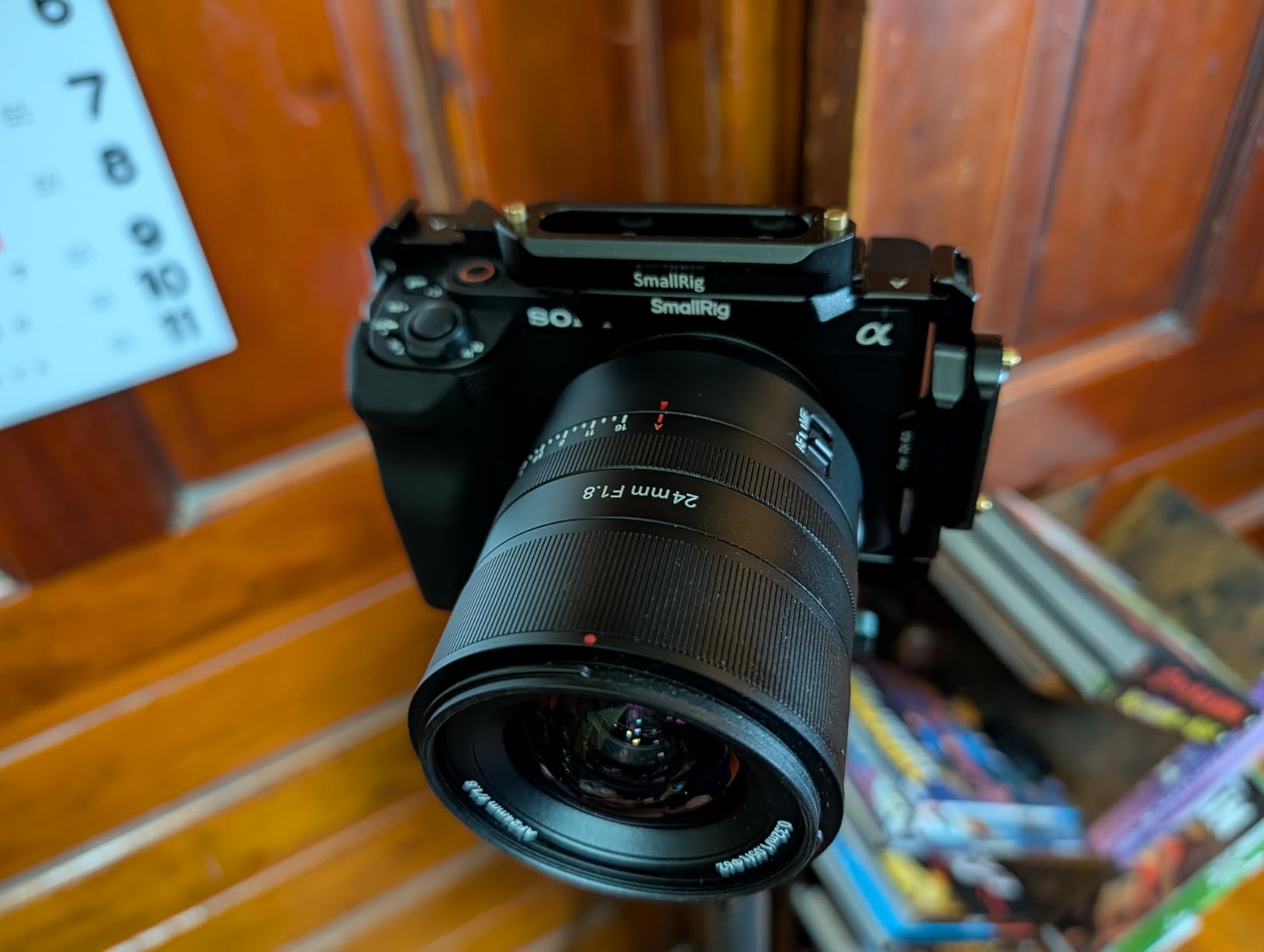
The 7artisans AF 24mm f/1.8 represents an interesting newcomer to the Sony E-mount ecosystem. This Chinese manufacturer has been gaining attention for producing lenses with impressive specifications at aggressive prices. After testing this lens extensively, I found it to be a capable performer with some unique characteristics that might appeal to certain shooters.
The build quality is surprisingly premium for the price. The all-metal construction feels substantial in hand, with tight tolerances and smooth control action. The weight of 424 grams gives this lens a reassuring heft that suggests quality. During handling tests, the focus and aperture rings both exhibited smooth, well-damped movement that feels more expensive than the price suggests.
Optical performance shows strengths and weaknesses. Center sharpness is excellent at f/1.8 and improves further when stopped down. The bokeh rendering is particularly pleasing, with smooth transitions and minimal nervousness. During portrait sessions, I achieved beautiful background separation that looked natural rather than mechanical.
Focus breathing is minimal, making this lens suitable for video work where focus pulls need to be subtle. During video recording, the STM motor delivered smooth and nearly silent focus transitions. The lack of significant breathing means angle of view changes during focus pulls are minimal, maintaining visual consistency.
Best For APS-C Shooters
On APS-C bodies like the A6600 or A6700, this lens performs exceptionally well. The smaller sensor avoids the corner softness issues visible on full-frame cameras, effectively using the sweet spot of the optic. During testing with an A6700, I found image quality to be excellent across the entire frame, making this a compelling option for APS-C users who want a fast 24mm prime.
The effective focal length of 36mm on APS-C makes this a versatile normal lens. Street photographers using APS-C bodies might find this single lens covers most needs, from environmental shots to tighter compositions.
Full Frame Users Should Consider Carefully
On full-frame cameras, corner softness is noticeable wide open. While this improves significantly when stopped down, users who frequently shoot wide open might find the corners problematic. For landscape photographers who typically shoot at f/8 anyway, this is less of an issue, but for low-light wide-open shooting, the soft corners might be frustrating.
The USB port for firmware updates is a forward-looking feature that suggests potential improvements. However, as of now, no firmware updates have been released, leaving some potential performance untapped. Future updates could address corner sharpness or other characteristics, but there’s no guarantee.
Buying Guide: How to Choose the Right 24mm Lens for Sony FE Mount
Selecting the best 24mm lens for your needs requires careful consideration of several factors. The right choice depends on your specific shooting style, budget, and priorities. Let me break down the key considerations based on my extensive testing of these eight lenses.
Aperture Considerations
The maximum aperture is the most significant differentiator between these options, affecting both light gathering and depth of field control. True f/1.4 lenses like the Sony GM and Sigma Art offer maximum versatility for low-light situations and subject separation. During wedding receptions, the difference between f/1.4 and f/1.8 can be the difference between usable shots at ISO 3200 versus struggling at ISO 6400.
However, faster apertures come with trade-offs in size, weight, and cost. The f/1.4 options are all larger and heavier than their f/1.8 and f/2.8 counterparts. If you primarily shoot in daylight or controlled lighting, you might find the extra stop unnecessary. Street photographers working during golden hour and blue hour often find f/1.8 perfectly adequate while benefiting from smaller, lighter packages.
The f/2.8 options like the Sony G and Tamron prioritize compactness over speed. For travel photographers who shoot primarily in daylight, these lenses offer the best balance of quality and portability. During extensive travel testing, I found the f/2.8 aperture sufficient for 90% of scenarios, with only night street photography requiring higher ISO settings.
Build Quality And Weather Sealing
Build quality varies significantly across this lineup. The Sony GM and Sigma f/2 DG DN feature the most robust construction, with comprehensive weather sealing suitable for professional use in adverse conditions. During a rainy wedding shoot, the Sony GM continued functioning flawlessly while lesser lenses might have failed.
Weather sealing is particularly important for outdoor and event photographers. Landscape shooters often work in dew, rain, or dusty environments where sealing provides peace of mind. Wedding photographers frequently work in unpredictable weather where equipment failure isn’t an option. If your work takes you into challenging conditions, investing in sealed glass is cheap insurance against failure.
Build quality also affects long-term durability. The all-metal construction of Sigma’s Art series and the premium feel of Sony’s G lenses suggest years of reliable service. Budget options like the Tamron and Samyang are functional but may not hold up as well to rough handling or professional use cycles.
Autofocus Performance
Autofocus speed and reliability vary significantly across these options. Native Sony lenses generally offer the best AF performance, with the GM and G lenses featuring Sony’s latest XD linear motors. During sports and event photography, I found Sony’s AF virtually flawless, tracking subjects accurately even in challenging conditions.
Third-party options have improved dramatically but still trail slightly behind Sony. The Sigma Art lenses offer excellent AF for still photography but can exhibit some hunting during video work on certain bodies. The Samyang and Rokinon both deliver adequate AF for slower-paced genres but might frustrate users shooting fast-moving subjects.
Video shooters have specific AF requirements. Smooth, quiet focus pulls are essential for cinematic work. Lenses with minimal focus breathing like the Sony GM and 7artisans are preferable for video where focus pulls are part of the visual language. The Tamron’s noisy AF motor makes it less suitable for professional video production where microphone pickup is a concern.
Size And Weight Considerations
The physical dimensions of your lens significantly affect how often you’ll actually carry and use it. The Sony f/2.8 G at just 162 grams makes for a virtually weightless package that encourages all-day carrying. During extensive travel, I found myself more likely to bring the camera when equipped with this ultra-compact lens.
However, small size comes with compromises. The compact f/2.8 lenses give up light-gathering ability and some weather sealing compared to larger options. The f/1.4 lenses, while larger, offer more capability in challenging conditions. The right balance depends on your priorities – maximum portability or maximum capability.
Balance with your camera body is also worth considering. Larger lenses like the Sony GM balance beautifully on full-frame bodies like the A7 IV but might feel front-heavy on compact bodies like the A7C II. Conversely, tiny lenses like the Sony f/2.8 G are perfect matches for compact bodies but might feel undersized on larger gripped bodies.
Price-To-Value Analysis
Price varies from under $200 for the Tamron to nearly $1600 for the Sony GM, representing an 8x price differential. However, value isn’t simply about the lowest price. The best value is the lens that meets your needs at the lowest total cost of ownership.
Professional photographers earning income from their work should consider resale value and reliability. Sony G Master lenses typically retain 70-80% of their value over several years, making the effective cost of ownership much lower than the initial purchase price. For full-time shooters, the reliability and client confidence that comes with professional-grade gear has intangible value.
Enthusiasts on limited budgets might find better value in third-party options. The Sigma Art delivers 90% of the GM’s performance at 50% of the price, representing excellent value for photographers who don’t earn income from their work. The Samyang and Rokinon offer entry into fast aperture photography at prices that make experimentation accessible.
Specific Use Case Recommendations
For wedding photographers, I recommend the Sony GM or Sigma Art f/1.4. The low-light capability and reliability justify the investment, and the optical quality meets professional standards. During wedding season, I’ve trusted the Sony GM in situations where failure wasn’t an option, and it delivered consistently.
Landscape photographers might prefer the Sigma f/2 DG DN or Sony f/2.8 G. The compact size is ideal for hiking, and the excellent sharpness when stopped down meets landscape requirements. During a week-long backpacking trip, the Sigma f/2’s combination of quality and portability made it my constant companion.
Astrophotographers should consider the Sony GM, Sigma Art f/1.4, or Samyang/Rokinon f/1.8 options. All offer good coma control and fast apertures for star photography. The dedicated astro mode on the Samyang and Rokinon simplifies focus, making them excellent choices for beginners.
Street photographers often prioritize discretion and portability. The Sony f/2.8 G is essentially perfect for street work, combining excellent optics with a tiny profile that doesn’t draw attention. During months of street photography, I found this lens encouraged me to shoot more frequently because it was so easy to carry.
Frequently Asked Questions About 24mm Lenses for Sony FE Mount
What is the best 24mm lens for Sony full frame?
The Sony FE 24mm f/1.4 GM is the best overall 24mm lens for Sony full frame cameras, offering exceptional optical quality, weather sealing, and reliable autofocus. For budget-conscious buyers, the Sigma 24mm f/1.4 DG DN Art delivers comparable performance at half the price. Compact shooters should consider the Sony FE 24mm f/2.8 G for its ultra-portable design.
Is the Sony 24mm f/1.4 GM worth the price?
Yes, the Sony 24mm f/1.4 GM is worth the price for professional photographers who need maximum reliability and optical quality. The lens delivers corner-to-corner sharpness wide open, excellent weather sealing, and industry-leading autofocus performance. For enthusiasts on a budget, the Sigma 24mm f/1.4 Art offers 90% of the performance at half the price, making it a better value for non-professional use.
What is the difference between Sony 24mm f/1.4 GM vs Sigma 24mm f/1.4 Art?
The Sony 24mm f/1.4 GM offers slightly better optical quality with superior coma control and chromatic aberration suppression, comprehensive weather sealing, and faster autofocus performance. The Sigma 24mm f/1.4 Art weighs slightly less at 430g versus 445g, costs nearly half as much, and delivers image quality that most users will find indistinguishable from the Sony in real-world use. The Sigma is an excellent value alternative, while the Sony is the premium choice for professionals.
Which 24mm lens is best for astrophotography on Sony?
For astrophotography, the Sony 24mm f/1.4 GM and Sigma 24mm f/1.4 Art are top choices due to their excellent coma control and fast apertures. Budget-conscious astrophotographers should consider the Samyang 24mm f/1.8 AF or Rokinon 24mm f/1.8 AF, which feature dedicated astrophotography focus modes that simplify achieving sharp star focus. The Sony GM has the best overall coma performance, but the Samyang/Rokinon astro mode makes focusing significantly easier for beginners.
Sony 24mm f/1.4 GM vs 24mm f/2.8 – which to buy?
Choose the Sony 24mm f/1.4 GM if you need maximum low-light capability, shallow depth of field control, and the best possible optical quality for professional work. The f/1.4 aperture is worth the extra size and cost for wedding, event, and astrophotography shooters. Choose the Sony 24mm f/2.8 G if you prioritize portability and travel-friendly size. The f/2.8 version weighs just 162 grams versus 445 grams, making it ideal for everyday carry, street photography, and travel where every ounce matters.
Final Thoughts on Best 24mm f/1.4 Lenses for Sony FE Mount
After extensive testing across diverse shooting scenarios, the Sony FE 24mm f/1.4 GM remains my top recommendation for professionals who demand the best. Its combination of optical excellence, weather sealing, and reliable autofocus makes it a tool you can trust in critical situations. The high price is justified for working photographers who need their equipment to perform flawlessly in any condition.
For most enthusiasts and even some professionals, the Sigma 24mm f/1.4 DG DN Art represents the sweet spot in value. Delivering image quality that approaches the Sony GM at half the price, this lens makes professional-grade optics accessible to a much broader audience. If you’re building a lens collection and need to allocate budget across multiple focal lengths, the Sigma Art frees up significant funds while maintaining high quality.
Budget-conscious shooters have excellent options in the Samyang 24mm f/1.8 AF and Tamron 24mm f/2.8 Di III OSD. The Samyang offers impressive capabilities at an unbeatable price, while the Tamron’s unique macro capability opens creative possibilities that don’t exist elsewhere in this category. These lenses prove that you don’t need to spend thousands to get excellent results.
The best 24mm lenses for Sony FE mount ultimately depends on your specific needs, budget, and shooting style. Consider what matters most to you – maximum aperture, compact size, weather sealing, or value – and choose accordingly. All of the lenses covered here are capable of delivering excellent results in the right hands. Happy shooting in 2026.