
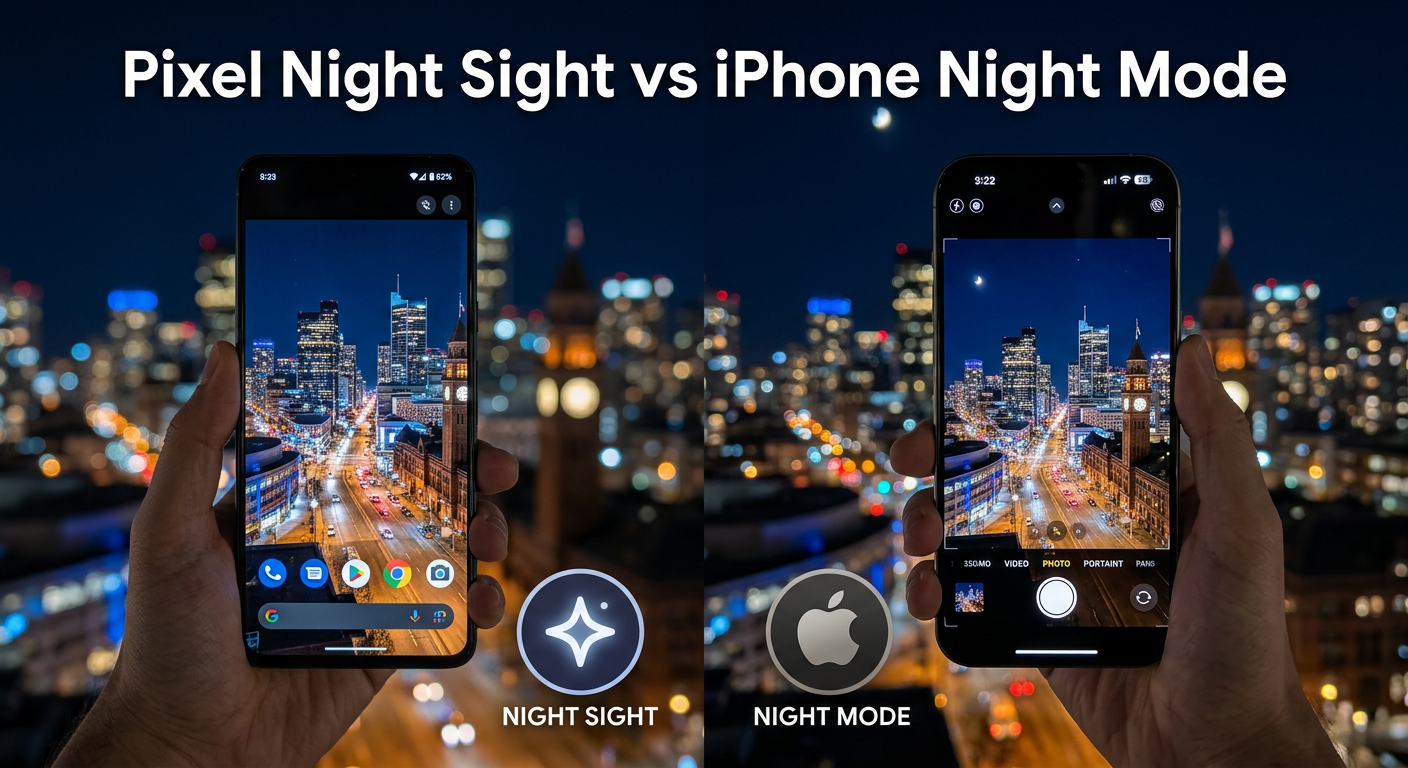
Taking photos after dark used to mean grainy, dark, disappointing images. That changed when Google and Apple introduced their computational photography solutions. Google Pixel Night Sight vs iPhone Night Mode for low light photography has become one of the most debated topics among smartphone photographers.
I have spent countless nights testing both systems in restaurants, city streets, and even under starlit skies. Each takes a distinctly different approach to solving the same problem. Pixel pushes for maximum brightness and vibrant colors while iPhone prioritizes natural-looking results that match what your eyes actually see.
After extensive hands-on testing with the latest Pixel 10 Pro and iPhone 17 Pro Max, I can tell you that neither is universally better. The winner depends entirely on what you value more: dramatic, share-worthy shots or realistic, true-to-life images. Let me break down exactly how each system works and help you decide which fits your photography style.
Quick Comparison: Pixel 10 Pro vs iPhone 17 Pro Max
| Product | Specifications | Action |
|---|---|---|
 Google Pixel 10 Pro Google Pixel 10 Pro |
|
Check Latest Price |
 Apple iPhone 17 Pro Max Apple iPhone 17 Pro Max |
|
Check Latest Price |
Google Pixel 10 Pro: Night Sight Deep Dive
Pros
- Exceptional Night Sight brightness
- Unique astrophotography mode
- Vibrant color reproduction
- 100x Pro Res Zoom
- 7 years software updates
Cons
- Longer processing time
- Images can look over-processed
- Heavier software approach
Night Sight on the Pixel 10 Pro represents Google’s philosophy of using AI to transform dark scenes into bright, detailed images. The system captures multiple frames over several seconds, then uses machine learning to align and merge them while reducing noise and boosting brightness. The result is often dramatic. Scenes that appear nearly pitch-black to your eyes become bright, colorful photographs.
What sets Night Sight apart is its willingness to push boundaries. Google’s algorithms prioritize creating an image that looks impressive rather than necessarily accurate. Colors pop with vibrancy. Shadows reveal details you might not have noticed with your own eyes. This approach makes Night Sight particularly effective for social media where striking images get attention.
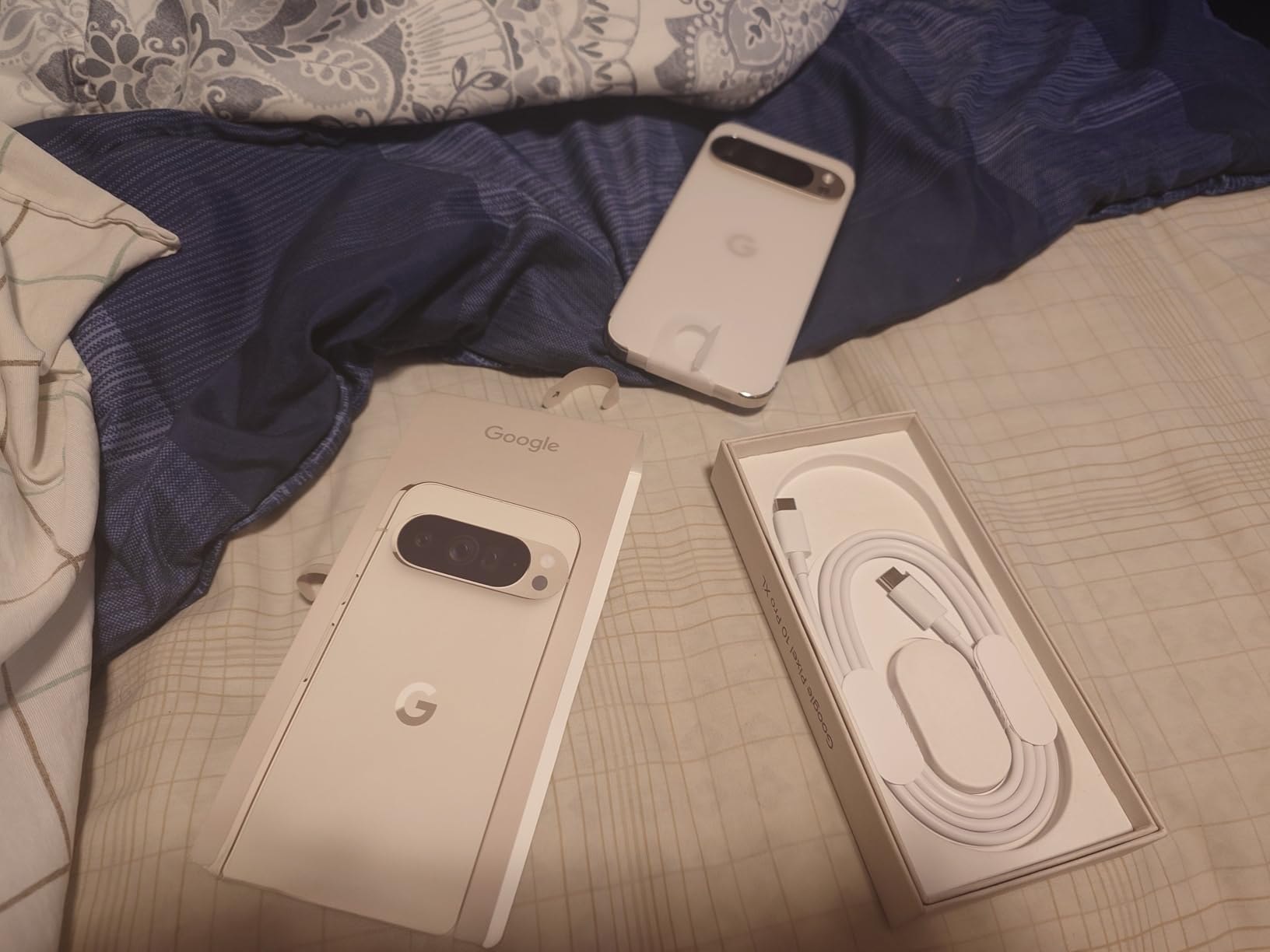
The Pixel 10 Pro also features a dedicated astrophotography mode that automatically activates when the phone detects it is mounted on a tripod and pointed at the night sky. This mode takes long exposures of up to several minutes, capturing stars, the Milky Way, and other celestial objects. It is a feature iPhone simply does not offer, and it makes the Pixel the clear choice for anyone interested in night sky photography.
However, this aggressive processing comes with trade-offs. Night Sight typically takes 2-3 times longer to capture than iPhone Night Mode. Where iPhone might take 2 seconds, Pixel could take 4-6 seconds or more. You need steady hands or a stable surface. Some users also find the results look artificial compared to the actual scene.
For night portraits, Night Sight excels at illuminating faces while maintaining background ambiance. The AI-powered skin tone processing works well across diverse subjects. The 50MP main sensor captures impressive detail, and the 100x Pro Res Zoom can pull off surprisingly good results even in challenging light, though quality degrades at extreme zoom levels.
Apple iPhone 17 Pro Max: Night Mode Deep Dive
Apple iPhone 17 Pro Max, US Version, 512GB, eSIM, Deep Blue- Unlocked (Renewed)
Pros
- Natural color reproduction
- Faster capture speed
- Consistent results
- Excellent low-light video
- Intuitive auto activation
Cons
- More conservative brightness
- Less dramatic results
- No astrophotography mode
- Variable quality on renewed units
iPhone Night Mode takes a fundamentally different approach. Apple prioritizes natural color reproduction and realistic results that match what you see with your eyes. Rather than dramatically brightening scenes, Night Mode lifts shadows and reduces noise while maintaining the authentic feel of low-light environments. The results feel less processed and more true to life.
The capture process on iPhone is noticeably faster. Apple captures a series of frames before and after you press the shutter, then combines them intelligently. This means you spend less time holding still, making it easier to capture spontaneous moments. In my testing, iPhone consistently captures night photos 2-3 times faster than Pixel.
Color science is where iPhone truly shines in low light. The white balance system handles mixed lighting exceptionally well, avoiding the yellowish or orange casts that can plague night photos. Skin tones remain accurate even under challenging restaurant lighting or street lamps. If your priority is documenting memories as they actually looked, iPhone delivers more faithful results.
Video performance in low light is another iPhone strength. While both phones offer night mode for still photos, iPhone generally produces superior low-light video with better stabilization and less noise. For content creators who shoot video after dark, this advantage is significant.
The trade-off is that Night Mode images can sometimes feel conservative. If you want that dramatic, eye-popping look that stops the scroll on social media, iPhone might leave you wanting more. Some users also find the auto-activation aggressive, with Night Mode engaging even in moderately lit conditions where it is not strictly necessary.
Google Pixel Night Sight vs iPhone Night Mode: Head-to-Head Comparison
Image Quality in Low Light
Both systems produce impressive results, but they optimize for different outcomes. Pixel Night Sight produces brighter, more detailed images in extreme low light. The aggressive processing pulls detail from shadows that iPhone leaves dark. iPhone Night Mode produces more balanced images that retain the mood of dimly lit scenes.
In near-darkness, Pixel has the advantage. Its longer exposures and more aggressive AI processing create usable images from situations where iPhone might struggle. However, in moderately low light, iPhone often produces more pleasing results that feel less artificial.
Color Accuracy and Science
This is the starkest difference between the two systems. Pixel prioritizes vibrant, punchy colors that make images pop. iPhone prioritizes accurate colors that represent the actual scene. Neither approach is wrong. They simply serve different purposes.
For social media and sharing, Pixel’s vibrant output often wins. Images immediately look impressive without editing. For documentary photography, memories, or professional work where accuracy matters, iPhone’s natural processing is superior. Many photographers appreciate that iPhone images provide a better starting point for post-processing.
Noise Performance and Detail
Both phones use computational photography to reduce noise while preserving detail. Pixel’s longer exposures allow more light gathering, which helps with noise reduction. However, the longer capture time means more opportunity for hand shake to introduce blur.
iPhone’s faster capture reduces shake-related issues, and its noise reduction algorithms are excellent. In my testing, both phones produce clean images at normal viewing sizes. Pixel benefits appear more at 100% crops, where its 50MP sensor shows impressive detail in well-executed shots.
Processing Speed and User Experience
Here is where iPhone clearly wins. Night Mode captures typically take 1-3 seconds on iPhone. Night Sight often requires 4-6 seconds or longer. That difference matters in real-world use. With iPhone, you can capture spontaneous moments. With Pixel, you need to anticipate and prepare.
The user interface also differs. iPhone Night Mode activates automatically when light is low, with a simple indicator showing estimated capture time. You can adjust the duration manually if desired. Pixel provides more information during capture but requires more patience. For casual users, iPhone’s approach feels more seamless.
Real-World Scenarios
For cityscapes and street photography at night, both excel. Pixel produces brighter, more dramatic results. iPhone captures more atmospheric, moody images. Your preference depends on whether you want your city night shots to look electric or authentic.
For indoor low light like restaurants and bars, iPhone often produces more flattering results. The natural color processing handles mixed lighting better, and skin tones remain accurate. Pixel can make indoor scenes look brighter than they actually were, which some users prefer but others find unnatural.
For astrophotography, Pixel wins hands down. The dedicated astrophotography mode captures stars, the Milky Way, and other celestial objects. iPhone simply cannot match this capability. If night sky photography interests you, Pixel is the only choice.
For night portraits, both work well. Pixel’s AI processing handles skin tones across diverse subjects effectively. iPhone’s natural approach produces more flattering, less processed-looking portraits. Both offer portrait mode with background blur that works in low light.
Frequently Asked Questions
Is Google Pixel Night Sight better than iPhone Night Mode?
Neither is universally better. Pixel Night Sight produces brighter, more vibrant images and offers unique astrophotography capabilities. iPhone Night Mode produces more natural, realistic results with faster capture times. The better choice depends on whether you prefer dramatic or authentic-looking photos.
Why does Pixel take longer to capture night photos?
Pixel Night Sight uses longer exposure times, often 4-6 seconds compared to iPhone’s 1-3 seconds. This extended capture allows more light to reach the sensor, enabling brighter results in extreme low light. The trade-off is that you need steadier hands or a stable surface to avoid blur.
Which phone is better for astrophotography?
Google Pixel is significantly better for astrophotography. It features a dedicated astrophotography mode that automatically activates when the phone detects a tripod and dark sky. This mode can capture stars, the Milky Way, and other celestial objects. iPhone does not have an equivalent feature.
Does Night Mode work on video?
iPhone offers better low-light video performance with effective noise reduction and stabilization. Pixel can capture video in low light but generally produces inferior results compared to iPhone. For content creators who shoot video after dark, iPhone is the stronger choice.
Verdict: Which Should You Choose?
The Google Pixel Night Sight vs iPhone Night Mode for low light photography debate does not have a single winner. Both systems excel in different areas. Your choice depends on what you value most in your night photography.
Choose Google Pixel 10 Pro with Night Sight if you want the brightest possible low-light images, unique astrophotography capabilities, vibrant colors that pop on social media, and do not mind longer capture times. It is the better choice for photographers who want dramatic results and are willing to be patient.
Choose iPhone 17 Pro Max with Night Mode if you prioritize natural color accuracy, faster capture for spontaneous moments, consistent results across various lighting conditions, and superior low-light video. It is the better choice for documentary photographers, content creators, and anyone who values realism over drama.
For most casual users, iPhone’s faster capture and natural results provide a better everyday experience. For enthusiasts who enjoy the process of creating striking night images or want to photograph the night sky, Pixel’s capabilities are unmatched.