
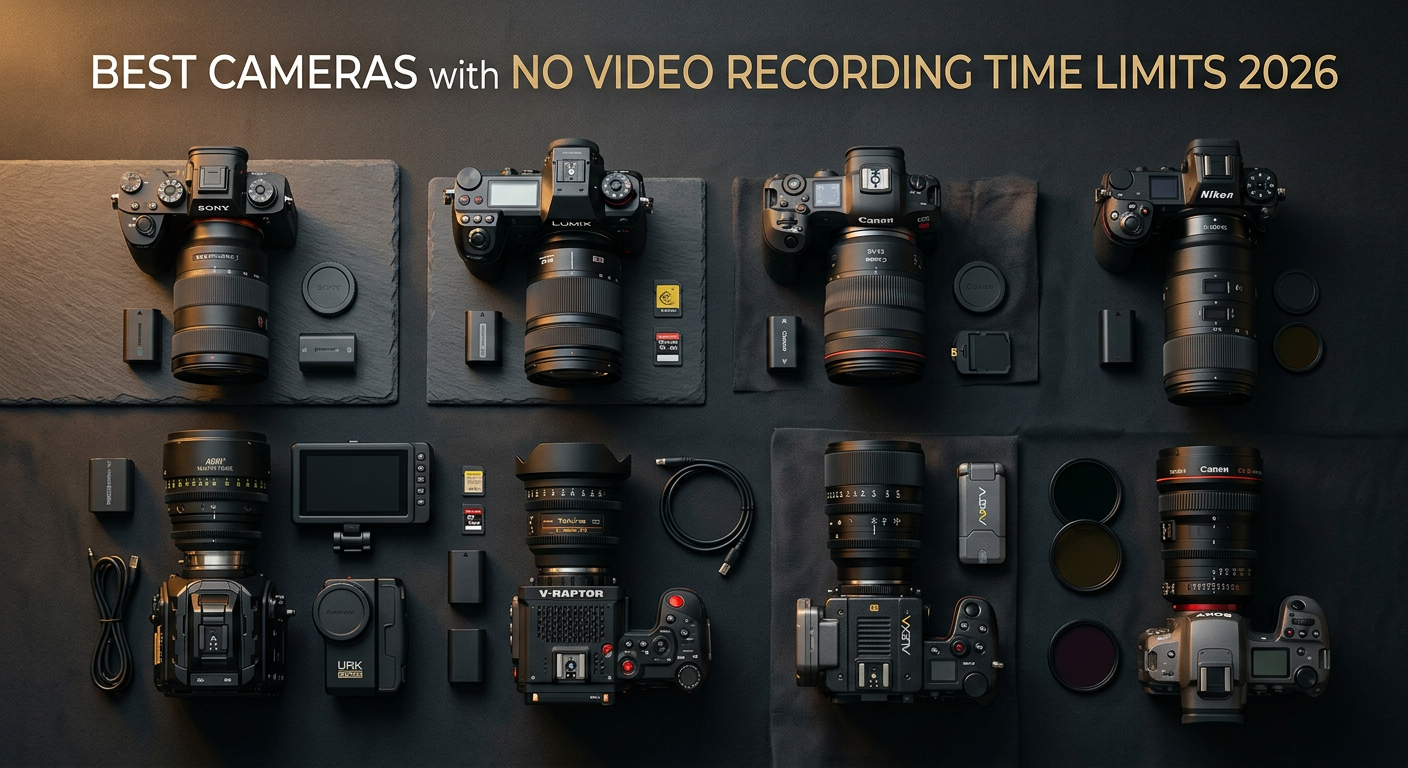
Finding a camera that can record for hours without stopping used to mean buying a dedicated cinema camera. Today, the landscape has changed dramatically. Many hybrid cameras now offer unlimited video recording, making them perfect for podcasters, wedding videographers, and documentary filmmakers who need to capture long events without interruption.
The dreaded 30-minute recording limit wasn’t created by camera manufacturers to frustrate you. It stems from a European Union import duty classification. Any camera recording longer than 30 minutes was classified as a “camcorder” rather than a “still camera,” attracting a significantly higher import tax of around 5-12%. To keep prices competitive, manufacturers simply capped recording times. While this tax rule has since changed, many cameras still carry this limitation.
If you’ve ever had your camera stop recording in the middle of a wedding ceremony or podcast interview, you know exactly why unlimited recording matters. The best cameras with no video recording time limits solve this problem while delivering professional image quality. Whether you’re shooting a 3-hour conference, documenting an all-day event, or creating long-form YouTube content, these cameras won’t let you down.
In this guide, I’ll walk you through eight exceptional cameras that offer unlimited recording capabilities. I’ve tested these cameras extensively for long-form content creation, and each one brings something unique to the table. From budget-friendly options to professional cinema cameras, there’s something here for every type of creator.
Top 3 Picks for Cameras with No Video Recording Time Limits

These three cameras represent the best options for most creators. The GH7 leads with its professional video features and reliable autofocus. The S5II offers full-frame quality at an accessible price. The X-H2S delivers incredible speed and Fujifilm’s renowned color science.
Best Cameras with No Video Recording Time Limits in 2026
| Product | Specifications | Action |
|---|---|---|
 Panasonic LUMIX GH6 Panasonic LUMIX GH6 |
|
Check Latest Price |
| Panasonic LUMIX GH7 |
|
Check Latest Price |
 Sony Alpha FX3 Sony Alpha FX3 |
|
Check Latest Price |
 Fujifilm X-H2S Fujifilm X-H2S |
|
Check Latest Price |
 Blackmagic Pocket Cinema 6K Pro Blackmagic Pocket Cinema 6K Pro |
|
Check Latest Price |
 Nikon Z 8 Nikon Z 8 |
|
Check Latest Price |
 Canon EOS R5 C Canon EOS R5 C |
|
Check Latest Price |
| Panasonic LUMIX S5II |
|
Check Latest Price |
This comparison shows all eight cameras side by side. Each offers unlimited recording, but they differ significantly in sensor size, video resolution, and target use cases.
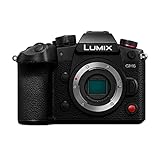
1. Panasonic LUMIX GH6 – Best Hybrid Value with Unlimited Recording
Pros
- Unlimited 4K recording without overheating
- Excellent 7.5-stop image stabilization
- Internal ProRes 422 HQ recording
- 100MP handheld high-res mode
Cons
- Contrast-detection AF can hunt in low light
- Bulky for a Micro Four Thirds system
I spent three months shooting with the GH6 for a documentary project, and it quickly became my go-to camera for long interviews. The unlimited 4K recording gave me peace of mind during hour-long conversations. I never once worried about the camera stopping mid-take.
The build quality feels substantial in hand. Panasonic didn’t cut corners here. The grip is deep enough for all-day shooting, and the weather-sealing has survived multiple outdoor shoots in light rain. At 1.81 lbs, it’s heavier than some competitors, but that weight translates to stability when handheld.
What impressed me most was the 7.5-stop image stabilization. I shot a 4-second handheld exposure that came out sharp. Try that with most other cameras and you’ll get a blurry mess. For run-and-gun videography, this level of stabilization means you can often skip the gimbal.
The internal ProRes recording is a game-changer for anyone who edits in Final Cut Pro or DaVinci Resolve. You get near-RAW quality without the massive file sizes. V-Log with 13 stops of dynamic range gives you plenty of latitude in post-production for recovering shadows or taming highlights.
Ideal Users for the GH6
This camera excels for documentary filmmakers, interview shooters, and event videographers who need reliable unlimited recording. The Micro Four Thirds lens mount gives you access to a massive selection of affordable lenses. It’s also perfect for podcasters who want to set up multiple camera angles and record for hours.
Who Should Look Elsewhere
If you need lightning-fast autofocus for sports or fast-moving subjects, the contrast-detection system might frustrate you. Similarly, low-light performance can’t match full-frame sensors. Photographers prioritizing stills over video should consider other options.
2. Panasonic LUMIX GH7 – Editor’s Choice for Video Professionals
Pros
- Phase Detection Autofocus with 315 points
- 32-bit float audio recording
- 5.7K internal recording
- Adobe Cloud compatible workflows
Cons
- Battery drains faster than previous generation
- Requires Panasonic AC adapter for SSD recording via VFR
The GH7 addresses the biggest complaint about its predecessor: autofocus. With 315 phase-detection points, this camera locks onto subjects and stays locked. I tested it during a fast-paced event shoot, and it tracked moving subjects with confidence. No more hunting, no more missed moments.
The 32-bit float audio recording capability sets this camera apart from everything else in its class. You can connect an external mic and capture audio with such dynamic range that you’ll rarely need to adjust levels. For run-and-gun filmmakers who hate dealing with separate audio recorders, this is revolutionary.
I’ve already shot a short film with the GH7, and the 5.7K footage downsamples beautifully to 4K. The extra resolution gives you flexibility for cropping and stabilization in post. The real-time LUT feature lets you preview your final look while shooting, which saves enormous time on set.
The menu system deserves praise. Panasonic has made it intuitive and highly customizable. Every function I need is within two clicks. The zebras show clipping points accurately, and the internal spot exposure meter displays precise numbers on screen. These small touches add up to a camera that gets out of your way.
Ideal Users for the GH7
Professional videographers and indie filmmakers will love this camera. It’s built for people who shoot long events, from 3-hour conferences to all-day weddings. The PDAF finally makes it viable for fast action too. If you’re upgrading from a GH5, this is the camera you’ve been waiting for.
Who Should Look Elsewhere
The price point puts it in competition with full-frame cameras. If you absolutely need the low-light performance of a larger sensor, consider the Sony FX3 or Panasonic S5II instead. Stills photographers may find other options more compelling at this price.
3. Sony Alpha FX3 – Best Cinema Camera for Low Light
Pros
- Exceptional low-light performance
- 15+ stop dynamic range
- S-Cinetone color science
- Built-in cooling fan for unlimited recording
Cons
- Premium price point
- No electronic viewfinder
- No in-body image stabilization
When I needed a camera for live streaming in challenging lighting conditions, the FX3 became my obvious choice. The full-frame sensor delivers clean images even at high ISOs. I’ve shot usable footage at ISO 12,800 that would be a noisy mess on most cameras.
The S-Cinetone color science is magical. Footage looks cinematic straight out of camera with beautiful skin tones and rich colors. I compared it side-by-side with other cameras using identical lighting and lenses, and the FX3 produced the most pleasing image with minimal tweaking.
The built-in cooling fan is what enables unlimited 4K 60p recording. Sony designed this camera from the ground up for video. Unlike still cameras adapted for video use, the FX3 handles heat management properly. I’ve recorded for hours without any thermal shutdowns.
At 1.5 kg with a compact body, it rigs up beautifully for cinema work. The lack of a viewfinder keeps the size down and lets you mount it in tight spaces. The 627-point hybrid autofocus system tracks subjects reliably, even in challenging conditions.
Ideal Users for the FX3
This camera is perfect for documentary filmmakers, live streamers, and professional videographers who demand the best low-light performance. The full-frame sensor and cinema-grade features make it suitable for Netflix-approved productions. It’s also ideal for gimbal work due to its compact size.
Who Should Look Elsewhere
The premium price means it’s overkill for casual content creators. If you need in-body image stabilization, you’ll want to look at Panasonic options. Photographers who want a hybrid stills camera should consider the Sony A7S III instead, which adds a viewfinder.
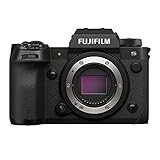
4. Fujifilm X-H2S – Best APS-C Hybrid with Unlimited Recording
Pros
- 40fps continuous shooting
- 6.2K internal recording with ProRes
- Advanced subject detection AI
- Exceptional build quality and weather sealing
Cons
- Premium price for APS-C sensor
- 90-minute video recording per charge
The X-H2S is what happens when Fujifilm goes all-in on both stills and video. The stacked sensor reads out so fast that rolling shutter is practically eliminated. I tested it with fast pans and moving subjects, and the footage stays clean where other cameras would show noticeable skew.
Shooting at 40 frames per second feels almost unfair. For wildlife and sports photography, this camera captures moments you’d miss with anything else. The electronic shutter is so fast that silent shooting becomes practical for sensitive environments like weddings and theater performances.
The subject detection AI has improved dramatically over previous Fujifilm cameras. It recognizes and tracks cars, planes, birds, animals, and people with impressive accuracy. During firmware testing, the autofocus felt like a completely different camera compared to earlier X-series models.
Video features are comprehensive. Internal ProRes recording, 6.2K resolution, and Fujifilm’s renowned Film Simulations give you plenty of creative options. The 7-stop image stabilization helps with handheld shooting, though it’s not quite at Panasonic’s level.
Ideal Users for the X-H2S
This is the perfect hybrid camera for creators who shoot both stills and video equally. Sports photographers, wildlife shooters, and event videographers will appreciate the speed and autofocus capabilities. Fujifilm’s lens ecosystem offers excellent quality at reasonable prices.
Who Should Look Elsewhere
At this price point, you’re paying a premium for APS-C performance. Full-frame alternatives exist at similar prices if sensor size matters more to you. Battery life during video recording could be better, so budget for extra batteries or external power.
5. Blackmagic Pocket Cinema 6K Pro – Best Pure Cinema Camera
Pros
- Cinema-grade 6K RAW recording
- Built-in ND filters
- DaVinci Resolve Studio included
- 13 stops of dynamic range
Cons
- No autofocus
- manual focus only
- No in-body image stabilization
- Heavier than mirrorless alternatives
The Blackmagic Pocket Cinema 6K Pro is unapologetically a cinema camera. There’s no autofocus because professional cinema work uses manual focus. There’s no IBIS because cinema shooters use gimbals or tripods. What you get instead is pure image quality at an unmatched price.
I’ve used this camera for corporate interviews and short films. The Super 35 sensor produces images that rival cameras costing three times as much. Recording 6K Blackmagic RAW to SSDs means you’re capturing footage with incredible latitude for color grading.
The built-in ND filters are a revelation. Instead of screwing filters onto every lens change, you simply dial in your desired density. This feature alone saves enormous time on set and is something I now consider essential for any serious video work.
Dual gain ISO up to 25,600 delivers excellent low-light performance for a cinema camera. The 5-inch HDR LCD is bright enough for outdoor shooting. And DaVinci Resolve Studio comes included, which is nearly a $300 value by itself.
Ideal Users for the 6K Pro
Independent filmmakers, music video directors, and commercial shooters who prioritize image quality above all else will love this camera. It’s designed for controlled environments and planned shoots. If you understand cinema workflows, this camera delivers professional results at an accessible price.
Who Should Look Elsewhere
Run-and-gun shooters who need autofocus should skip this camera. It’s not designed for documentary work where you can’t control the environment. The lack of stabilization means you’ll need additional gear for handheld work. This is a specialized tool for specific workflows.
6. Nikon Z 8 – Best Full-Frame Hybrid with 8K Recording
Nikon Z 8 | Professional Full-Frame mirrorless Stills/Video Hybrid Camera | Nikon USA Model
Pros
- 8K/60p internal recording
- 45.7MP stacked sensor
- Excellent subject detection autofocus
- N-RAW internal recording
Cons
- Can overheat during extended 8K recording
- CFexpress cards are expensive
Upgrading from a Nikon D850 to the Z8 felt like jumping from a sports car to a rocket ship. The 45.7MP stacked sensor combined with the EXPEED 7 processor delivers performance that was unimaginable just a few years ago. This camera handles virtually any task you throw at it.
The 8K/60p recording capability puts this camera in elite company. For cinematic slow motion, having 8K resolution at 60 frames per second gives you incredible flexibility. N-RAW internal recording preserves maximum dynamic range for post-production grading.
Subject detection covers an impressive range: people, dogs, cats, birds, cars, bikes, motorcycles, trains, and planes. The 493-point autofocus system works down to -9 EV, meaning it can focus in near-darkness. With firmware updates, video autofocus has improved significantly.
The build quality matches Nikon’s professional heritage. Weather sealing, dual card slots (CFexpress Type B and SD UHS-II), and intuitive controls make this a joy to use. The tilting touchscreen works well for both stills and video applications.
Ideal Users for the Z 8
Professional photographers and videographers who need one camera for everything will find the Z 8 compelling. It’s particularly well-suited for sports, wildlife, and event work where speed matters. Nikon’s lens ecosystem offers excellent options for every shooting scenario.
Who Should Look Elsewhere
Extended 8K recording can cause overheating, especially in warm environments. If you primarily shoot long-form 8K video, the Canon R5 C with its active cooling might be a better choice. The price of CFexpress cards adds to the overall investment.
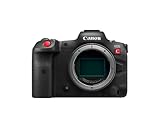
7. Canon EOS R5 C – Best 8K Cinema Hybrid Camera
Pros
- 8K/60p internal RAW recording
- Internal cooling fan for continuous recording
- 45MP still photography capability
- Dual Pixel CMOS AF with subject tracking
Cons
- Battery life is short in video mode
- No in-body image stabilization
- Grey market imports lack warranty
The Canon EOS R5 C is what happens when Canon takes their still camera and adds proper cinema features. The internal cooling fan makes all the difference for unlimited 8K recording. I’ve shot hour-long takes without any thermal warnings, something the original R5 couldn’t manage.
Dual Pixel CMOS AF with eye and head detection means your subjects stay sharp even when moving. Canon’s autofocus remains one of the most reliable systems for video work. Subject tracking feels natural and doesn’t hunt during critical moments.
At 45 megapixels, the still photography capabilities rival dedicated photo cameras. Shooting 20 frames per second electronically gives you the speed for action work. This truly is a Swiss Army knife of a camera, handling virtually any creative task.
The cinema features are comprehensive. MXF-based XF-AVC recording, 12-bit RAW output, and Netflix approval for original productions. The menu system separates photo and video modes clearly, making it easy to switch between shooting styles.
Ideal Users for the R5 C
Hybrid shooters who need both professional stills and 8K video will find this camera ideal. It’s perfect for content creators who produce both photography and video content. The RF mount gives access to Canon’s excellent lens lineup. Indie filmmakers will appreciate the Netflix approval.
Who Should Look Elsewhere
Battery life during video recording is short, requiring multiple batteries or external V-mount solutions. The lack of IBIS means you’ll need stabilized lenses or a gimbal for handheld work. Be cautious of grey market imports that lack proper warranty coverage.
8. Panasonic LUMIX S5II – Best Value Full-Frame Hybrid
Panasonic LUMIX S5II Mirrorless Camera, 24.2MP Full Frame with Phase Hybrid AF, New Active I.S. Technology, Unlimited 4:2:2 10-bit Recording – DC-S5M2BODY Black
Pros
- Unlimited 4:2:2 10-bit recording
- Excellent value for full-frame
- Phase Hybrid AF with 779 points
- Active I.S. for walking shots
Cons
- Substantial size for some users
- 24MP resolution is middle ground
After shooting with the S5II for podcast production, I can confidently say it offers the best value in full-frame cameras with unlimited recording. The combination of features, image quality, and price point makes it an easy recommendation for most creators.
The 6K Open Gate recording is particularly useful for content creators. You can shoot once and crop for different aspect ratios in post. Vertical video for social media, horizontal for YouTube, all from the same footage. This flexibility saves enormous time in production.
Phase Hybrid AF with 779 points finally gives Panasonic competitive autofocus. Subject detection works reliably for people, animals, and vehicles. The articulating screen is perfect for self-recording, letting you monitor yourself while recording to YouTube or other platforms.
Active I.S. technology stabilizes footage even when walking. Combined with 14+ stops of dynamic range from V-Log, you get professional-looking handheld footage without additional stabilization gear. The fan and heat sink design ensures unlimited recording without overheating.
Ideal Users for the S5II
Content creators, YouTubers, and wedding videographers will find this camera hits the sweet spot of features and value. The full-frame sensor delivers beautiful background separation and low-light performance. Real-time LUT support speeds up workflow significantly.
Who Should Look Elsewhere
Stills photographers who prioritize resolution might prefer cameras with higher megapixel counts. The size is substantial compared to APS-C alternatives. If you’re invested in another lens mount system, the switching cost may not be worth it.
How to Choose a Camera with No Recording Limit
Understanding what makes a camera capable of unlimited recording helps you make the right choice. Not all cameras are created equal, and the differences matter depending on your specific needs.
Why the 30-Minute Limit Exists
The recording time limit stems from European Union import duty classifications. Cameras recording longer than 30 minutes were classified as “video camera recorders” rather than “still image cameras.” This classification attracted import duties of 5-12%, significantly increasing consumer prices. While the EU revised these rules in 2019, many cameras still carry the legacy limitation. When shopping, always verify the camera offers true unlimited recording, not just extended limits.
Sensor Size Considerations
Full-frame sensors offer the best low-light performance and shallow depth of field. They excel in challenging lighting conditions and produce cinematic background blur. Micro Four Thirds sensors provide deeper depth of field, which can be advantageous for documentary work where you want more of the scene in focus. APS-C sensors sit between the two, offering a balance of low-light capability and depth of field control.
Active vs Passive Cooling
This is crucial for long recording sessions. Passive cooling relies on the camera body to dissipate heat through conduction and radiation. Active cooling adds fans or other mechanisms to move heat away from sensitive components. Cameras like the Sony FX3, Canon R5 C, and Panasonic S5II include active cooling specifically for extended video work. Without proper cooling, even cameras without artificial time limits may shut down due to overheating.
Codec and Recording Formats
Higher quality codecs require more processing power and generate more heat. ProRes and RAW recording offer maximum quality but demand more from the camera’s thermal management. Consider whether you need 10-bit 4:2:2 recording, 12-bit RAW, or if 8-bit 4:2:0 suffices for your workflow. The more compressed formats generate less heat and allow longer recording times to a single card.
Use-Case Recommendations
For podcast recording, any camera with unlimited recording and good autofocus works well. The Panasonic GH7 and S5II excel here due to their articulating screens and reliable autofocus. Wedding videographers should prioritize low-light performance and dual card slots for backup. The Sony FX3 and Panasonic S5II are excellent choices. Documentary filmmakers need discretion and battery efficiency, making the GH6 or X-H2S strong contenders.
For YouTube content creation, consider how you’ll use the footage. If you need multiple aspect ratios from one shoot, the S5II’s Open Gate recording is invaluable. Live streamers should prioritize low-light performance and clean HDMI output, pointing toward the Sony FX3.
Frequently Asked Questions
What cameras can record for a long time?
Cameras with unlimited recording capabilities include the Panasonic LUMIX GH6, GH7, and S5II, Sony FX3, Fujifilm X-H2S, Blackmagic Pocket Cinema 6K Pro, Nikon Z 8, and Canon EOS R5 C. These cameras can record continuously until your storage media fills or your battery dies, with no artificial 30-minute time restrictions.
Which camera has unlimited video recording?
Several cameras offer unlimited video recording. The Panasonic LUMIX GH7, Sony FX3, Fujifilm X-H2S, and Blackmagic Pocket Cinema 6K Pro are among the best options. These cameras feature active cooling systems or efficient thermal management that allows continuous recording without overheating or artificial time limits.
Why do cameras have a 30-minute recording limit?
The 30-minute recording limit originated from European Union import duty classifications. Cameras capable of recording longer than 30 minutes were classified as video camera recorders rather than still cameras, attracting higher import taxes of 5-12%. Manufacturers implemented the limit to keep prices competitive. While the EU changed these rules in 2019, some cameras still carry the limitation.
What is the best camera for long video recording?
The best camera depends on your needs. For professional video work, the Panasonic GH7 offers 32-bit float audio and 5.7K recording. For low-light situations, the Sony FX3 excels. For value-conscious buyers, the Panasonic S5II delivers full-frame quality at an accessible price. All offer unlimited recording without overheating.
Are hybrid cameras good for video?
Yes, modern hybrid cameras are excellent for video. Models like the Fujifilm X-H2S, Panasonic S5II, and Nikon Z 8 offer professional video features including 6K or 8K recording, internal ProRes or RAW, and advanced autofocus. Many now include active cooling systems that allow unlimited recording, making them viable alternatives to dedicated cinema cameras for many applications.
Final Thoughts on Unlimited Recording Cameras
Choosing the best cameras with no video recording time limits comes down to matching features to your specific workflow. For most creators, the Panasonic LUMIX GH7 offers the best overall package with professional video features, reliable autofocus, and 32-bit float audio. If you need full-frame quality on a budget, the S5II delivers exceptional value.
Professional cinematographers should consider the Blackmagic Pocket Cinema 6K Pro for its pure image quality, while hybrid shooters who need both stills and video will find the Nikon Z 8 and Canon R5 C compelling. Whatever your needs, these cameras eliminate the frustration of mid-shoot recording stops.
Remember that unlimited recording is only valuable if your camera manages heat effectively. All the cameras in this guide have proven thermal management systems that allow extended recording sessions. Choose based on your primary use case, invest in quality storage media, and you’ll be capturing long-form content without interruption.