
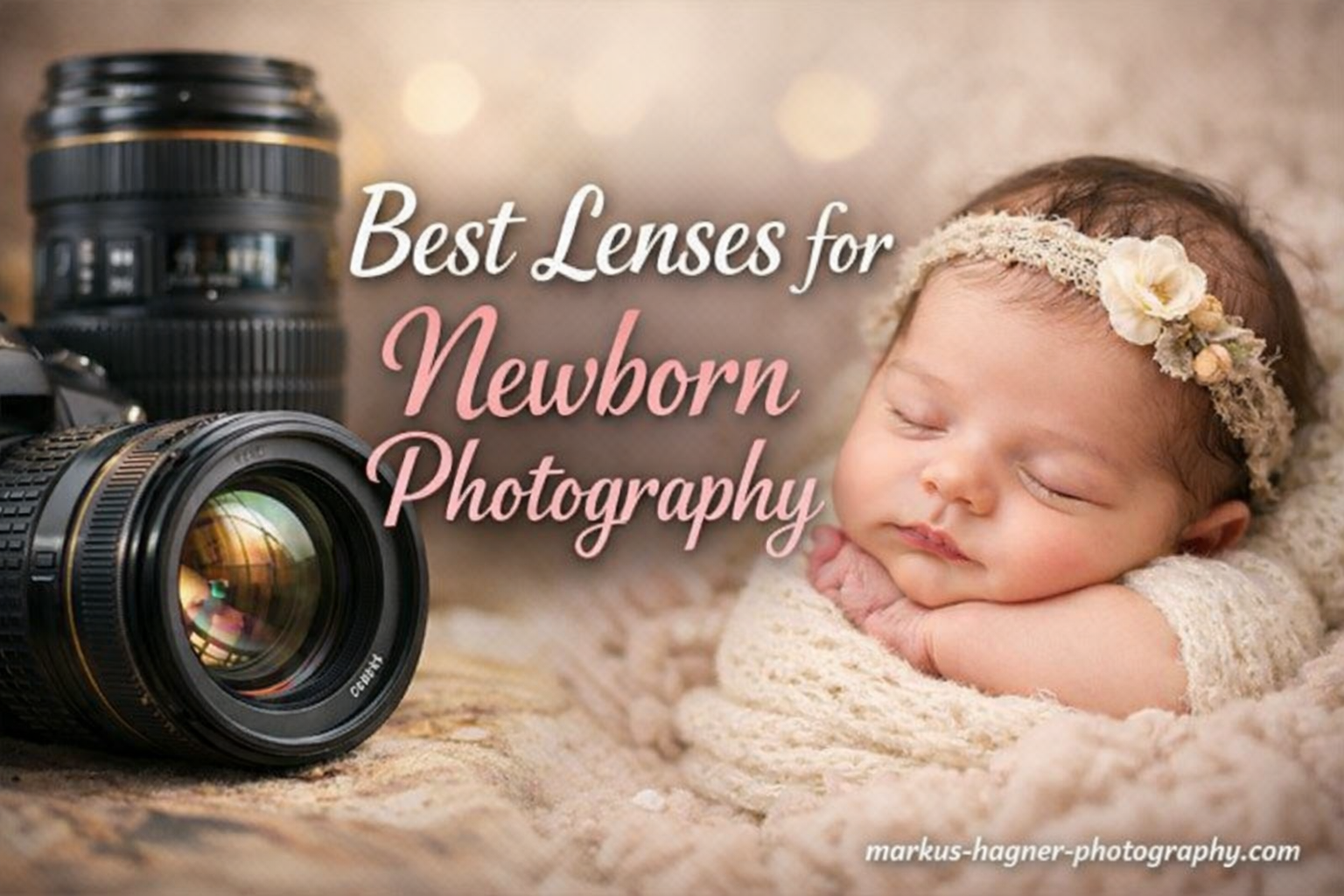
Finding the best lenses for newborn photography changed everything about how I capture those fleeting first days. After spending countless sessions in dimly lit nurseries and cramped home studios, I learned that the right glass makes all the difference between a snapshot and a heirloom image.
Newborn photography demands something unique from your equipment. You need lenses that work beautifully in low light without flash (because nobody wants to disturb a sleeping baby), let you stay within arm’s reach for safety, and still deliver that dreamy, professional look parents expect. Wide apertures, versatile focal lengths, and reliable autofocus become non-negotiable.
In this guide, I will walk you through 8 excellent lenses for newborn photography in 2026, covering options for Canon, Nikon, and Sony shooters at every budget level. Whether you are just starting your newborn photography journey or looking to upgrade your current kit, you will find practical recommendations based on real shooting experience.
Top 3 Picks for Newborn Photography


Best Lenses for Newborn Photography In 2026
| Product | Specifications | Action |
|---|---|---|
|
Canon RF50mm F1.8 STM
|
|
Check Latest Price |
|
Canon EF 50mm f/1.8 STM
|
|
Check Latest Price |
|
Nikon NIKKOR Z 50mm f/1.8 S
|
|
Check Latest Price |
 Sony FE 50mm F1.8
|
|
Check Latest Price |
 Nikon NIKKOR Z 85mm f/1.8 S
|
|
Check Latest Price |
 Canon RF 85mm F2 Macro IS STM
|
|
Check Latest Price |
|
|
|
Check Latest Price |
|
|
|
Check Latest Price |
1. Canon RF50mm F1.8 STM – Best Overall for Canon Mirrorless
Pros
- Compact and lightweight design
- Excellent sharpness for the price
- Smooth and quiet STM autofocus
- Beautiful background blur at f/1.8
- Great for low-light newborn sessions
Cons
- Plastic build quality
- No image stabilization
- Can feel tight on APS-C cameras
When Canon released the RF50mm F1.8 STM, I knew it would become a go-to lens for newborn photographers using the EOS R system. This little prime delivers remarkable image quality at a price point that makes it accessible to photographers at any stage of their business.
I have used this lens extensively during newborn sessions, and the f/1.8 aperture handles those dim nursery conditions beautifully. The stepping motor autofocus runs silently, which matters enormously when you are trying not to wake a sleeping baby. You can focus smoothly during video recording without any motor noise ruining your audio.

The compact size surprised me at first. At just 5.6 ounces, it barely adds any weight to your camera bag. During long newborn sessions where you might be shooting for hours, that lightweight design saves your arms and back from fatigue. The control ring lets you adjust settings on the fly without taking your eye off the viewfinder.
Image quality impresses consistently. The lens produces sharp results with pleasant color rendering straight out of camera. At f/1.8, you get that creamy background separation parents love in newborn portraits. Stop down to f/2.8 or f/4, and the sharpness extends across the entire frame, making it versatile for both tight detail shots and wider compositions.

Who Should Choose This Lens
Canon EOS R series shooters looking for an affordable, high-quality prime lens will love this option. It works beautifully for both professional newborn photographers and parents wanting better baby photos. The natural 50mm focal length on full-frame cameras provides the perspective most flattering for newborn portraits.
Potential Drawbacks
The plastic construction feels less premium than L-series glass, though this keeps weight and cost down. Photographers working with crop-sensor Canon cameras (like the EOS R7) will find the effective 80mm focal length tighter than ideal for small spaces. Also, the lack of image stabilization means you need steady hands or slightly faster shutter speeds in very low light.
2. Canon EF 50mm f/1.8 STM – Best Budget Option
Pros
- Exceptional value for money
- Sharp focus and beautiful bokeh
- Smooth STM autofocus
- Metal lens mount
- Works on both DSLR and mirrorless
Cons
- No image stabilization
- Plastic build quality
- Fixed focal length requires movement
The Canon EF 50mm f/1.8 STM earned its nickname as the “nifty fifty” for good reason. This lens has introduced countless photographers to the magic of wide apertures and shallow depth of field. For newborn photography on a budget, it remains one of the smartest investments you can make.
Having tested this lens across numerous newborn sessions, I can confirm the image quality punches far above its weight class. The f/1.8 aperture creates that dreamy background blur parents expect from professional newborn portraits. Seven rounded aperture blades produce smooth, pleasing bokeh that makes your subject pop against soft backgrounds.

The STM motor represents a significant upgrade over earlier versions. Autofocus runs smoothly and quietly, essential when working with sleeping newborns. I appreciate the metal mount that replaces the plastic mount found on previous generations. It inspires more confidence during lens changes and daily use.
What makes this lens special for newborn work is its versatility. The 50mm focal length works for posed beanbag shots, detail captures of tiny fingers and toes, and even environmental portraits showing baby in context. You can use it on Canon DSLRs or adapt it to RF mount mirrorless cameras with full functionality.

Who Should Choose This Lens
Anyone starting their newborn photography journey without a large budget should start here. Canon DSLR users get tremendous value, and those who have switched to mirrorless can still use this lens with an adapter. It is also perfect for parent photographers wanting professional-looking baby photos without professional-level investment.
Potential Drawbacks
The plastic body does not feel as substantial as premium lenses, though it handles daily use without issues. Indoor sessions in very tight spaces can feel restrictive with a 50mm focal length on crop-sensor cameras. And like most affordable primes, you will need to move your feet rather than zoom to frame your shots.
3. Nikon NIKKOR Z 50mm f/1.8 S – Premium Quality for Nikon Z
Pros
- Exceptional edge-to-edge sharpness
- Virtually zero distortion
- Whisper-quiet autofocus
- Beautiful bokeh quality
- Compact unibody design
Cons
- Higher price than typical 50mm
- No built-in VR
- Some cat's eye bokeh at edges
Nikon set a new standard for 50mm lenses when they released the NIKKOR Z 50mm f/1.8 S. This is not your typical “nifty fifty” but rather a premium optic that rivals lenses costing twice as much. For newborn photographers using Nikon Z cameras, it represents the sweet spot between performance and value.
The sharpness of this lens genuinely surprised me the first time I reviewed files from a newborn session. Edge-to-edge clarity remains outstanding even wide open at f/1.8. Those tiny eyelashes and wisps of baby hair render with remarkable detail. For photographers who crop heavily or make large prints, this level of optical quality matters.

Distortion control impressed me during posed newborn sessions. Some wider lenses introduce unwanted stretching at frame edges, but this Z 50mm maintains natural proportions throughout. The ultra-quiet stepping motor never disturbs sleeping babies, and the customizable control ring lets me adjust aperture or exposure compensation without fumbling through menus.
Low light performance stands out as a key advantage for newborn photography. The combination of f/1.8 aperture and Nikon’s excellent high-ISO performance in Z bodies means you can work in naturally lit rooms without flash. Background separation at wide apertures produces that creamy, professional look clients expect.

Who Should Choose This Lens
Nikon Z series photographers who prioritize image quality above all else will find this lens essential. It suits professional newborn photographers who need reliable, consistent results session after session. The premium optics also benefit those printing large albums or canvas wraps for clients.
Potential Drawbacks
The price sits higher than typical 50mm f/1.8 lenses from other brands, though the optical performance justifies the investment. Photographers expecting built-in VR will need to rely on their camera’s IBIS instead. Some users notice slight cat’s eye bokeh shape towards frame edges when shooting wide open.
4. Sony FE 50mm F1.8 – Great Value for Sony Full-Frame
Pros
- Sharp center performance at f/1.8
- Beautiful circular bokeh
- Compact and lightweight
- Fast accurate autofocus
- Excellent value
Cons
- Plastic build quality
- Noisy autofocus motor
- Not weather sealed
Sony FE 50mm F1.8 brings affordable prime lens performance to the full-frame E-mount system. For newborn photographers shooting with Sony Alpha cameras, this lens provides an accessible entry point into professional-quality baby photography without breaking the bank.
My experience with this lens during newborn sessions has been consistently positive. The center sharpness at f/1.8 delivers crisp focus on baby’s face and features. Stopping down slightly to f/2.2 or f/2.5 improves edge performance while maintaining beautiful background separation. The 7-blade circular aperture creates smooth, rounded bokeh that flatters newborn portraits.

The compact design fits perfectly on Sony’s smaller full-frame bodies like the A7 series. At just 6.6 ounces, it adds minimal bulk to your kit bag. During long newborn sessions, that weight savings adds up. The double-gauss optical design controls distortion well, which matters for posed newborn work where proportions must look natural.
Autofocus performance on Sony bodies proves fast and accurate for most newborn situations. Eye autofocus works reliably, locking onto baby’s eyes even in dim room lighting. For lifestyle newborn sessions where baby might be moving slightly, this responsiveness helps you capture fleeting expressions.

Who Should Choose This Lens
Sony full-frame camera owners wanting an affordable prime lens for newborn work will find this an excellent starting point. It suits parent photographers capturing their own baby’s first days and professionals building their Sony kit. The compact size also appeals to photographers who travel to client homes.
Potential Drawbacks
The autofocus motor produces noticeable noise compared to premium Sony lenses, which could potentially disturb very sensitive sleepers. The plastic construction lacks the premium feel of GM lenses. Also, there is no weather sealing, so extra care is needed in humid environments or outdoor sessions.
5. Nikon NIKKOR Z 85mm f/1.8 S – Premium Portrait Compression
Pros
- Exceptional sharpness throughout frame
- Smooth creamy bokeh
- Fast accurate autofocus
- Dust and drip resistant
- No purple fringing
Cons
- Requires more working distance
- Not ideal for tight indoor spaces
- Minimum focus distance could be closer
The Nikon NIKKOR Z 85mm f/1.8 S delivers portrait-quality results that elevate newborn photography to gallery-worthy status. This focal length provides flattering compression that makes faces look their best while isolating subjects against beautifully blurred backgrounds.
Using this lens for newborn portraits, I noticed immediately how the 85mm focal length flatters baby’s features. The slight compression effect is particularly pleasing for parent-and-baby shots, creating intimate compositions with professional separation from backgrounds. The 9-blade diaphragm produces bokeh so smooth it almost looks painted.

Sharpness across the frame impressed me during detailed review sessions. Two ED glass elements and Nano Crystal coating deliver lifelike color accuracy and minimal chromatic aberration. For newborn photographers selling large prints or albums, this optical quality translates directly to client satisfaction.
The dust and drip resistant construction provides peace of mind during newborn sessions. While we typically work indoors, having weather sealing means unexpected situations will not ruin your gear. The customizable control ring lets you adjust settings without removing your eye from the viewfinder, maintaining connection with your subject.

Who Should Choose This Lens
Nikon Z photographers who want premium portrait results for newborn sessions will find this lens essential. It works particularly well for studio-based newborn photography where you have adequate working distance. The compression and bokeh quality also make it perfect for family portraits with newborns.
Potential Drawbacks
The 85mm focal length requires more working distance than 50mm options, making it challenging in small home nurseries. Minimum focus distance of about 2.6 feet limits how close you can get for detail shots. Some newborn photographers prefer to stay within arm’s reach of baby, which this focal length sometimes prevents.
6. Canon RF 85mm F2 Macro IS STM – Versatile Macro and Portrait
Canon RF 85mm F2 Macro is STM, Compact Medium-Telephoto Lens, Black, Compatible with EOS R Series Mirrorless Cameras
Pros
- Built-in image stabilization
- Macro capability for details
- Sharp wide open at f/2
- Compact lightweight design
- Close focusing distance
Cons
- Noisy focus motor
- Slower autofocus than L-series
- No lens hood included
The Canon RF 85mm F2 Macro IS STM solves a common problem for newborn photographers: carrying multiple lenses for different shot types. This single optic handles both flattering portraits and close-up detail work, making it a versatile addition to any Canon mirrorless kit.
I found the macro capability genuinely useful during newborn sessions. The 0.5x magnification and 1.15-foot minimum focus distance let you capture those precious details, tiny toes, wispy eyelashes, little fingers gripping a parent’s thumb, without changing lenses. For photographers who work quickly during short newborn sessions, this versatility saves precious time.

The built-in image stabilization deserves special mention for newborn photography. Up to 5 stops of shake correction means you can handhold at slower shutter speeds in dim nurseries without motion blur. Hybrid IS compensates for both angular and shift movement, particularly helpful during macro work where small movements magnify.
Image quality at f/2 delivers excellent sharpness and contrast. The background blur at this focal length and aperture combination creates professional-looking separation. Colors render naturally, important for accurately capturing baby’s skin tones without extensive post-processing.

Who Should Choose This Lens
Canon RF mount photographers who want one lens for both portraits and detail shots will appreciate this versatility. It suits traveling newborn photographers who need to minimize kit weight. The image stabilization also benefits photographers who frequently work in challenging lighting conditions without flash.
Potential Drawbacks
The STM focus motor produces more noise than premium USM motors, which could potentially disturb sleeping babies in very quiet rooms. Autofocus speed lags behind L-series lenses, though it remains adequate for most newborn situations. Canon does not include a lens hood, requiring a separate purchase.
7. Sony SEL85F18 85mm F/1.8 – Fast Portrait Lens for Sony
Pros
- Sharp edge to edge at f/1.8
- Fast silent Double Linear motor
- Beautiful creamy bokeh
- Weather-resistant construction
- Lightweight portable design
Cons
- Minimum focus distance not ideal for macro
- Some chromatic aberration wide open
- Can be tight for indoor APS-C
Sony SEL85F18 brings professional portrait performance to the E-mount system at a mid-range price point. This 85mm prime delivers the compression and background separation newborn photographers crave while maintaining fast, reliable autofocus for capturing fleeting baby expressions.
The Double Linear motor system in this lens impressed me with its speed and silence. For newborn photography where moments happen quickly, fast autofocus makes the difference between capturing a smile and missing it entirely. The motor runs virtually silent, never disturbing sleeping subjects during quiet sessions.

Sharpness across the frame at f/1.8 gives you confidence to shoot wide open. The ED glass element controls aberrations well, producing clean results even at maximum aperture. For newborn portraits where you want that dreamy background but need baby’s face tack-sharp, this lens delivers consistently.
Weather-resistant construction adds durability for photographers who work in various environments. While most newborn sessions happen indoors, the sealing protects against humidity and unexpected situations. The 67mm filter diameter uses common, affordable filters, keeping accessory costs reasonable.

Who Should Choose This Lens
Sony photographers wanting 85mm portrait performance without GM lens pricing will find this an excellent choice. It suits professionals who need reliable results session after session. The weather sealing and build quality also appeal to photographers who travel to client homes in various conditions.
Potential Drawbacks
The minimum focus distance of about 2.3 feet limits close-up detail work compared to dedicated macro lenses. Some chromatic aberration appears when shooting wide open in high-contrast situations. On APS-C Sony bodies, the effective 127.5mm focal length can feel quite tight for indoor newborn sessions.
8. VILTROX 85mm F2 EVO FE – Budget 85mm for Sony
Pros
- Exceptional sharpness wide open
- Beautiful creamy bokeh
- Fast reliable STM autofocus
- Extremely lightweight compact
- Outstanding value for money
Cons
- Heavy vignetting below f/4
- Low light autofocus can struggle
- Aperture delay from sleep mode
The VILTROX 85mm F2 EVO FE represents the growing quality of third-party lens options for Sony E-mount. This affordable 85mm prime delivers remarkable optical performance at a price point that makes portrait-quality newborn photography accessible to photographers on tight budgets.
Testing this lens during newborn sessions, I was genuinely surprised by the sharpness at f/2. Ten elements in 8 groups with ED and HR glass produce crisp results that rival more expensive options. For photographers who need professional results without professional pricing, Viltrox has created something special here.

The STM autofocus motor performs well in most situations, locking onto baby’s eyes with reasonable speed. Eye detect autofocus works reliably with Sony cameras, making it easier to capture sharp images even when baby moves slightly. The 340g weight keeps your kit light during long sessions.
Background blur quality at f/2 creates that professional separation newborn clients expect. The 9-blade aperture produces smooth, pleasing bokeh that draws attention to your subject. For photographers building their first portrait kit or adding an 85mm on a budget, this lens punches well above its weight class.

Who Should Choose This Lens
Sony photographers seeking 85mm performance at budget pricing will find this lens remarkably capable. It suits those starting their newborn photography business or adding focal length variety without major investment. The compact size also appeals to photographers who value portability.
Potential Drawbacks
Heavy vignetting appears at wider apertures, requiring stopping down to f/4 for more even illumination. Low light autofocus can struggle compared to first-party Sony lenses. Some users report aperture response delays when cameras wake from sleep mode, which could cause missed shots during quiet waiting periods.
Buying Guide: Choosing the Best Lens for Newborn Photography
Selecting the right lens for newborn photography involves understanding how different characteristics affect your images and workflow. Let me break down the key factors that matter most for capturing beautiful baby photos.
Focal Length: 35mm vs 50mm vs 85mm
The focal length you choose dramatically impacts your newborn photography. 35mm lenses offer the widest field of view, perfect for environmental shots showing baby in context with props and surroundings. You can stay close to your subject while capturing more of the scene, which also means staying within arm’s reach for safety.
50mm represents the most versatile choice for most newborn photographers. This focal length provides natural perspective without distortion, works well in small spaces, and handles everything from posed shots to parent interactions. On full-frame cameras, 50mm matches roughly what your eyes see naturally.
85mm delivers flattering compression that makes faces look their best. The narrower field of view isolates subjects against creamy backgrounds, creating that high-end portrait look. However, you need more working distance, which can be challenging in small home studios or nurseries.
Aperture: Why Wide Matters for Newborns
Wide apertures (f/1.4, f/1.8, f/2) serve three crucial purposes in newborn photography. First, they let in more light, enabling faster shutter speeds in dim indoor environments without flash. Second, they create shallow depth of field that separates baby from backgrounds, producing professional-looking results. Third, the bokeh quality at wide apertures adds that dreamy aesthetic parents love.
I recommend f/1.8 as the sweet spot for most newborn photographers. Lenses at this aperture balance cost, size, and performance perfectly. Faster f/1.4 or f/1.2 lenses cost significantly more and add weight without dramatically improving newborn photos for most applications.
Prime vs Zoom Lenses
Prime lenses (fixed focal length) offer several advantages for newborn photography. They typically provide sharper images, wider maximum apertures, and lighter weight compared to zooms covering the same focal length. Many professional newborn photographers prefer primes for their optical quality and the creative discipline of working with one perspective.
Zoom lenses like 24-70mm f/2.8 offer convenience when you need multiple focal lengths without changing lenses. They work well for photographers who shoot quickly or work in situations where lens changes might disturb the session. However, zooms typically have smaller maximum apertures and weigh more than equivalent primes.
Camera Mount Compatibility
Matching lenses to your camera system matters more than ever with mirrorless cameras. Native mount lenses typically offer the best autofocus performance and full feature compatibility. Canon RF lenses work only on RF mount cameras, Nikon Z lenses on Z mount bodies, and Sony FE lenses on E-mount cameras.
DSLR lenses can adapt to mirrorless cameras with full functionality in most cases. If you own Canon EF or Nikon F lenses from a DSLR system, adapters let you continue using them on newer mirrorless bodies. This can be a cost-effective way to build a newborn photography kit while transitioning systems.
Budget Considerations
Newborn photography lenses span a wide price range. Budget options under $300 like the Canon EF 50mm f/1.8 STM deliver remarkable value for beginning photographers. Mid-range lenses between $300-800 offer improved build quality and optical performance for growing businesses. Premium options above $800 provide maximum sharpness and features for established professionals.
I generally recommend starting with an affordable 50mm prime and upgrading only after you have outgrown its capabilities. The fundamentals of newborn photography, lighting, posing, and safety, matter far more than having the most expensive glass.
Frequently Asked Questions
Is a 50mm lens good for newborn photography?
Yes, a 50mm lens is excellent for newborn photography. This focal length provides a natural perspective that flatters baby features without distortion. The wide f/1.8 aperture common in 50mm primes lets you work in low light without flash and creates beautiful background blur. 50mm lenses are also typically affordable, lightweight, and versatile enough for posed shots, parent interactions, and environmental portraits.
Is 50mm or 85mm better for family photos with newborns?
50mm works better for family photos in small spaces and includes more environment around subjects. It lets you stay closer to the family while capturing interactions. 85mm provides more flattering compression and background separation, ideal for individual portraits or couples. For cramped indoor sessions, 50mm offers more flexibility. For outdoor family sessions with space, 85mm delivers more professional-looking results.
Which lens type is best suited for infants?
Fast prime lenses with wide apertures (f/1.4 to f/2.8) work best for infant photography. 35mm and 50mm focal lengths offer versatility for posed and lifestyle shots while letting you stay within arm’s reach for safety. A 100mm macro lens complements these by capturing tiny details like eyelashes and toes. The combination of one standard prime and one macro covers most newborn photography needs.
Do I need a macro lens for newborn photography?
A macro lens is helpful but not essential for newborn photography. It captures close-up details like eyelashes, fingers, and toes with stunning clarity. Many newborn photographers use a 100mm macro as a second lens alongside their main 35mm or 50mm prime. However, you can photograph newborns successfully with just a standard prime lens if budget constraints prevent buying both.
What aperture should I use for newborn photography?
For newborn photography, apertures between f/1.8 and f/2.8 work best. Wide apertures let in more light for indoor sessions without flash and create creamy background blur that makes babies pop. For posed solo shots, f/1.8 to f/2 provides beautiful separation. For family shots where multiple faces need to stay in focus, stop down to f/2.8 or f/4. Avoid apertures smaller than f/5.6 as they bring too much background into focus.
Conclusion
Choosing the best lenses for newborn photography ultimately depends on your camera system, budget, and shooting style. For most photographers, a 50mm f/1.8 prime offers the perfect balance of versatility, low-light performance, and value. Canon RF50mm F1.8 STM stands out for mirrorless Canon users, while the EF 50mm f/1.8 STM remains unbeatable for budget-conscious DSLR photographers.
Nikon Z shooters get exceptional quality from the NIKKOR Z 50mm f/1.8 S, and Sony users find great value in both the FE 50mm F1.8 and SEL85F18 depending on their preferred focal length. For those wanting both portrait and macro capabilities, the Canon RF 85mm F2 Macro IS STM provides unmatched versatility in one lens.
Remember that newborn photography prioritizes safety above all else. Stay within arm’s reach of baby at all times, work quietly to avoid disturbing sleep, and never compromise safety for a shot. The right lens helps you capture beautiful images while maintaining these essential standards. Happy shooting in 2026.