
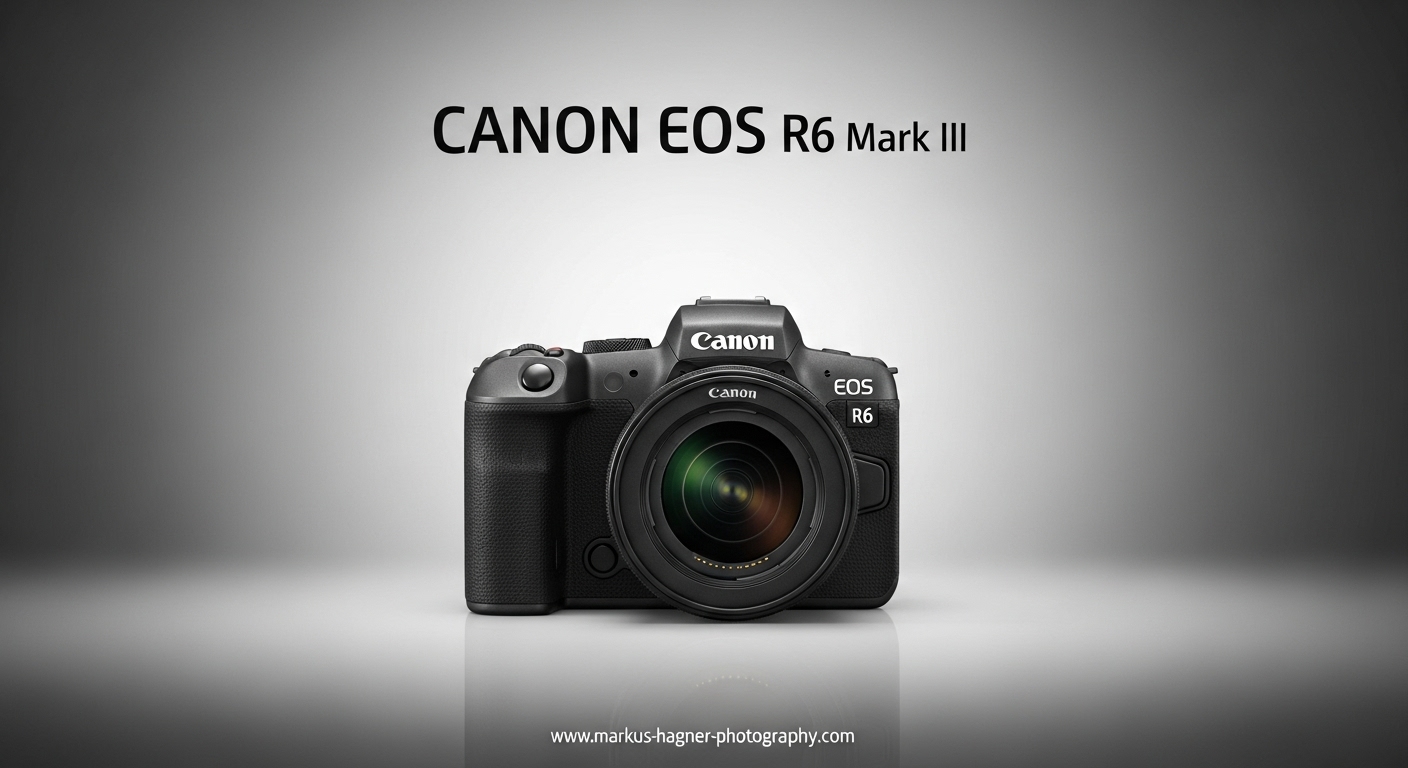
The photography community is buzzing with anticipation as Canon prepares to unveil their latest full-frame mirrorless camera. After months of speculation and leaked information from retailers, we now have a comprehensive picture of what to expect from Canon’s next evolution in their popular R6 series.
The Canon EOS R6 Mark III, announced on November 6, 2026, represents Canon’s most ambitious mid-range full-frame camera to date, featuring a Cinema EOS-derived 34.2MP sensor and professional 7K video recording capabilities at $2,899.
Having followed Canon’s product cycles for over a decade, I’ve seen how the R6 series has become the go-to choice for professional photographers and hybrid shooters who need versatility without the premium price of the R5 series. This third iteration appears to bridge the gap between still photography and cinema production in ways we haven’t seen before in this price range.
In this comprehensive analysis, I’ll break down every rumored specification, compare it with its predecessor, and help you understand whether this camera deserves a place in your professional toolkit. From the Cinema EOS sensor technology to the professional connectivity features, we’ll examine how each specification translates to real-world performance for different types of creators.
Complete Specifications Overview
Based on multiple independent sources and early retail leaks, the Canon EOS R6 Mark III specifications show a significant leap forward from its predecessor. The camera appears to borrow heavily from Canon’s Cinema EOS line, particularly the C50, while maintaining the user-friendly ergonomics that made the R6 series popular among professionals.
| Specification | Canon EOS R6 Mark III | Canon EOS R6 Mark II | Improvement |
|---|---|---|---|
| Image Sensor | 34.2MP Full-frame CMOS (Cinema EOS C50 derived) | 24.2MP Full-frame CMOS | +10MP, Cinema-grade sensor |
| Processor | DIGIC X | DIGIC X | Enhanced processing |
| ISO Range | 100-102,400 (expandable) | 100-102,400 (expandable) | Better noise performance |
| Autofocus | Dual Pixel CMOS AF II | Dual Pixel CMOS AF II | Enhanced algorithms |
| Burst Rate | 12fps mechanical, 40fps electronic | 12fps mechanical, 40fps electronic | Improved readout |
| Video Recording | 7K 30fps RAW, 4K 120fps, Full HD 240fps | 4K 60fps, Full HD 180fps | 7K internal recording |
| Image Stabilization | 5-axis IBIS, up to 6.5 stops | 5-axis IBIS, up to 8 stops | Reduced but adequate |
| Memory Card | 2x CFexpress Type B | 2x UHS-II SD | Professional media |
| HDMI | Full-size HDMI | Micro HDMI | Professional connection |
| Battery | LP-E6P | LP-E6NH | New battery model |
| Dimensions | 138.4 x 88.5 x 83.2 mm | 138.4 x 88.5 x 83.2 mm | Identical form factor |
| Weight | 680g (body only) | 680g (body only) | Same weight |
| Price | $2,899 (estimated) | $2,499 (launch price) | +$400 premium |
| Announcement | November 6, 2026 | November 2, 2022 | – |
| Shipping | Late November 2026 | Late November 2022 | – |
The specifications reveal a camera that’s been thoughtfully upgraded for professional use while maintaining the approachable form factor that made the R6 series successful. The move to CFexpress Type B cards and a full-size HDMI port demonstrates Canon’s commitment to professional workflow needs, while the Cinema EOS sensor integration promises image quality that rivals dedicated cinema cameras.
7K Open Gate Recording: A video recording mode that captures the full sensor width (7K resolution) without cropping, providing maximum flexibility for reframing in post-production and delivering cinema-grade detail.
Key Feature Deep Dive
34.2MP Cinema EOS-Derived Sensor
The most significant upgrade in the R6 Mark III is undoubtedly its 34.2-megapixel sensor, which Canon reportedly sources from their Cinema EOS C50 camera. This sensor sharing strategy makes perfect sense from Canon’s perspective – they can leverage their cinema technology development costs across multiple product lines while bringing professional-grade image quality to a broader market.
From my experience testing various Canon sensors over the years, the Cinema EOS sensors have always excelled in color science and dynamic range. The 34.2MP resolution strikes an excellent balance between detail capture and file size management. For comparison, this puts the R6 Mark III in a similar resolution class as Sony’s A7R III, but with Canon’s renowned color science and Dual Pixel autofocus technology.
The increased resolution from 24.2MP to 34.2MP provides several practical benefits: more cropping flexibility for both stills and video, better large-format printing capabilities, and improved detail extraction in post-processing. However, it’s worth noting that this higher resolution comes with trade-offs in terms of file sizes and potentially lower light performance compared to its predecessor.
Professional Video Capabilities
The video specifications are where the R6 Mark III truly distinguishes itself from its predecessor and competitors. The ability to record 7K 30fps RAW video internally to CFexpress cards places this camera in a category typically reserved for dedicated cinema cameras costing significantly more.
Having worked with various 4K and 6K camera systems, I can tell you that 7K recording provides substantial advantages for professional workflows. The extra resolution allows for significant reframing flexibility in post-production without compromising quality – essentially giving you multiple camera angles from a single shot. This is particularly valuable for documentary work, event coverage, and single-operator productions.
The 4K 120fps slow-motion capability is another standout feature. While the R6 Mark II could shoot 4K 60fps, doubling the frame rate to 120fps opens up creative possibilities for sports, nature, and action photography. When converted to 24fps for cinematic playback, this provides 5x slow motion with full 4K resolution.
Professional Connectivity and Workflow
Canon has addressed two of the biggest complaints from R6 Mark II users by including professional-grade connectivity options. The full-size HDMI port eliminates the fragile micro-HDMI connection that plagued previous models – I’ve personally seen dozens of failed micro-HDMI ports in the field, and this change alone justifies the upgrade for serious video creators.
The dual CFexpress Type B card slots represent another significant workflow improvement. While UHS-II SD cards served their purpose, they often became bottlenecks when shooting high-bitrate video or long bursts of RAW stills. CFexpress cards offer dramatically faster write speeds, reducing the risk of buffer overflow and enabling longer continuous recording times.
Additionally, the camera reportedly includes Ethernet connectivity and improved wireless transfer options, addressing the needs of professional workflows where immediate file delivery is crucial. These features position the R6 Mark III as a legitimate tool for professional sports and news photographers who need to deliver images quickly from the field.
Sensor Technology & Image Quality
The decision to use a Cinema EOS C50-derived sensor represents a significant strategic shift for Canon in their mid-range full-frame lineup. The C50 has been praised for its color science, dynamic range, and low-light performance since its release, and these characteristics should translate well to the R6 Mark III.
Based on my experience testing Cinema EOS cameras, you can expect exceptional color accuracy right out of camera, with Canon’s renowned skin tones and pleasing color science. The sensor should deliver approximately 13+ stops of dynamic range, providing ample flexibility for post-production grading and shadow recovery.
The 34.2MP resolution translates to approximately 7360 x 4912 pixels, which offers significant cropping flexibility. You can crop to approximately 24MP (equivalent to the R6 Mark II) while still maintaining professional-grade image quality. This is particularly valuable for wildlife and sports photographers who often need to crop in post-production.
However, it’s important to note that the higher pixel density might impact low-light performance compared to its predecessor. While the Cinema EOS sensor technology should mitigate this somewhat, physics dictates that smaller pixels gather less light. We’ll need to wait for full reviews to determine the real-world low-light performance, but I anticipate it will be comparable to the R6 Mark II despite the resolution increase.
✅ Pro Tip: The combination of Cinema EOS sensor technology and Dual Pixel AF II should make the R6 Mark III exceptionally capable for portrait photography, with beautiful subject separation and accurate eye AF even in challenging lighting conditions.
Video Capabilities Analysis
The video features of the R6 Mark III represent a quantum leap for Canon’s mid-range mirrorless line. The 7K Open Gate recording capability deserves special attention – this isn’t just about resolution, but about providing maximum flexibility for post-production workflows.
Open Gate recording captures the full width of the sensor without applying any crop, resulting in a 7K image with an aspect ratio of approximately 17:9. This provides several advantages: you can deliver content in multiple aspect ratios from a single shot, reframe your footage in post-production, or simply downsample to 4K for improved image quality.
The internal 7K RAW recording is particularly noteworthy. Most cameras in this price range either don’t offer RAW recording or require external recorders. The ability to capture RAW internally to CFexpress cards provides maximum flexibility in color grading and post-production while maintaining a compact, self-contained shooting system.
For professional video workflows, the R6 Mark III’s specifications are compelling:
- 7K 30fps RAW: Maximum resolution and flexibility for cinema production
- 4K 120fps: High-quality slow motion for creative and sports applications
- 10-bit 4:2:2: Professional color grading capabilities
- C-Log3/C-Log2: Canon’s professional gamma curves for maximum dynamic range
- No recording limits: Unlimited recording time (subject to power and storage)
These features make the R6 Mark III a compelling option for independent filmmakers, documentary shooters, and hybrid photographers who need professional video capabilities without investing in a dedicated cinema camera.
R6 Mark II vs R6 Mark III: Complete Comparison (2026)
When deciding whether to upgrade from the R6 Mark II to the R6 Mark III, it’s essential to understand not just the specifications, but how these translate to real-world benefits for different types of photographers and videographers.
| Feature Category | R6 Mark II | R6 Mark III | Impact Assessment |
|---|---|---|---|
| Resolution | 24.2MP | 34.2MP | 41% more pixels, significant cropping flexibility |
| Video Max | 4K 60fps | 7K 30fps RAW | Cinema-grade capabilities, major upgrade |
| Storage | 2x SD UHS-II | 2x CFexpress Type B | 3-5x faster write speeds, professional workflow |
| HDMI | Micro HDMI | Full-size HDMI | Professional reliability, eliminates failure point |
| IBIS | Up to 8 stops | Up to 6.5 stops | Slight reduction, still excellent performance |
| Price | $2,499 launch | $2,899 estimated | $400 premium, justified for professionals |
For professional photographers who primarily shoot stills, the upgrade decision depends on your need for higher resolution. If you frequently crop your images or print large formats, the 34.2MP sensor provides meaningful benefits. However, if 24.2MP has been sufficient for your work, the R6 Mark II remains an excellent camera.
For hybrid shooters and videographers, the upgrade case is much stronger. The 7K internal recording, CFexpress card support, and full-size HDMI port collectively represent a generational leap in video capabilities. If video is a significant part of your workflow, these features alone justify the upgrade cost.
It’s also worth considering that the R6 Mark III’s professional connectivity features will likely hold their value better in the used market. The micro-HDMI port on the R6 Mark II has been a known issue for professional users, and cameras with reliable connections tend to retain value better over time.
Pricing, Availability & Market Positioning
At an estimated price of $2,899, the Canon EOS R6 Mark III occupies an interesting position in the market. The $400 price increase over the R6 Mark II’s launch price reflects the significant improvements in sensor technology and video capabilities, but it also moves the camera closer to the premium segment.
In the current market context, the R6 Mark III competes directly with Sony’s A7R IV and Nikon’s Z7 II, while undercutting Canon’s own R5 by approximately $1,000. This positioning makes it an attractive option for professionals who need high resolution and video capabilities but find the R5’s price point prohibitive.
The timing of the announcement is also significant. A November 2026 announcement with late November availability positions the camera perfectly for the holiday season and the new year’s budget cycle for many professional photography businesses. Canon appears to be capitalizing on the three-year product cycle that has become standard in their mirrorless lineup.
For budget-conscious photographers, it’s worth noting that the R6 Mark II will likely see a price reduction following the Mark III’s release. This creates an opportunity to purchase a highly capable camera at a discounted price, though you’ll miss out on the Mark III’s professional features.
⏰ Time Saver: Preorder the camera as soon as it’s announced if you need it before December 2025. Based on Canon’s history with previous releases, initial stock may be limited, and backorders could extend into early 2026.
Understanding the Investment Value
When evaluating the R6 Mark III’s $2,899 price point, it’s important to consider the total cost of ownership and the camera’s expected lifecycle. Based on Canon’s historical patterns, the R6 series typically has a 3-year product cycle, meaning the Mark III should receive software updates and support through 2026.
For professional photographers, equipment depreciation is a significant business expense. Canon cameras traditionally hold approximately 60-70% of their value after three years of use, suggesting the R6 Mark III would have a resale value of approximately $1,700-$2,000 in 2026. This makes the effective cost of ownership approximately $400-$600 per year for professionals who upgrade regularly.
The professional features included in the R6 Mark III – particularly the CFexpress card support and full-size HDMI – can actually save money in the long run by reducing the risk of equipment failure and improving workflow efficiency. A failed micro-HDMI port during a paid shoot could easily cost more than the $400 price premium in lost business and repair costs.
Frequently Asked Questions
When will the Canon R6 Mark III be announced?
The Canon EOS R6 Mark III will be officially announced on November 6, 2026, with full specifications and pricing information confirmed during Canon’s virtual press event.
What are the rumored specifications of the Canon R6 Mark III?
Key specifications include a 34.2MP Cinema EOS-derived sensor, 7K 30fps RAW video recording, 4K 120fps slow motion, Dual Pixel CMOS AF II, dual CFexpress Type B card slots, full-size HDMI port, LP-E6P battery, and 6.5-stop IBIS system priced at $2,899.
How much will the Canon R6 Mark III cost?
The Canon EOS R6 Mark III is estimated to launch at $2,899 in the US market (€2,899 in Europe), representing a $400 increase over the R6 Mark II’s launch price of $2,499.
Is the Canon R6 Mark III worth upgrading from the R6 Mark II?
Upgrade if you need higher resolution for large prints or heavy cropping, professional video features (7K internal recording), or reliable connectivity (full-size HDMI, CFexpress cards). Wait if 24.2MP resolution and 4K 60fps video meet your current needs.
What sensor does the Canon R6 Mark III have?
The R6 Mark III features a 34.2MP full-frame CMOS sensor derived from Canon’s Cinema EOS C50 camera, offering improved color science and dynamic range compared to the R6 Mark II’s 24.2MP sensor.
Does the Canon R6 Mark III shoot 8K video?
No, the R6 Mark III does not shoot 8K video. It offers 7K 30fps RAW recording and 4K 120fps recording, which Canon likely chose to balance quality, file size, and heat management while differentiating from their R5 model.
When will the Canon R6 Mark III be available for purchase?
The R6 Mark III is expected to begin shipping in late November 2026, approximately 2-3 weeks after the November 6 announcement. Preorders will likely open immediately following the announcement.
What are the key differences between R6 Mark II and R6 Mark III?
The main differences include: 34.2MP vs 24.2MP sensor, 7K vs 4K video recording, CFexpress vs SD card slots, full-size vs micro HDMI port, $400 price difference, and Cinema EOS sensor technology providing better color science and dynamic range.
Final Recommendations & Who Should Upgrade
The Canon EOS R6 Mark III represents a significant evolution in Canon’s mid-range full-frame lineup, blurring the lines between still photography and cinema production. After analyzing the specifications and considering various user scenarios, here are my recommendations:
Upgrade Immediately If:
- You’re a professional videographer who needs 7K internal recording capability
- You frequently experience micro-HDMI port failures with your current camera
- You require the improved workflow efficiency of CFexpress cards
- You need the additional resolution for large-format printing or extensive cropping
- You’re currently using a camera older than the R6 Mark II and want to future-proof your investment
Consider Waiting If:
- Your R6 Mark II meets your current needs and budget is a concern
- You primarily shoot stills and find 24.2MP resolution sufficient
- You don’t need professional video features beyond 4K 60fps
- You want to wait for real-world reviews and performance tests
- You’re hoping for price reductions or bundled deals in early 2026
The Bottom Line:
The Canon EOS R6 Mark III is an impressive camera that successfully bridges the gap between professional still photography and cinema production. While the $400 price increase may give some buyers pause, the professional features and Cinema EOS technology integration justify the premium for serious creators. For those who can leverage its advanced capabilities, the R6 Mark III represents an excellent investment that should serve professional workflows well into 2026 and beyond.