
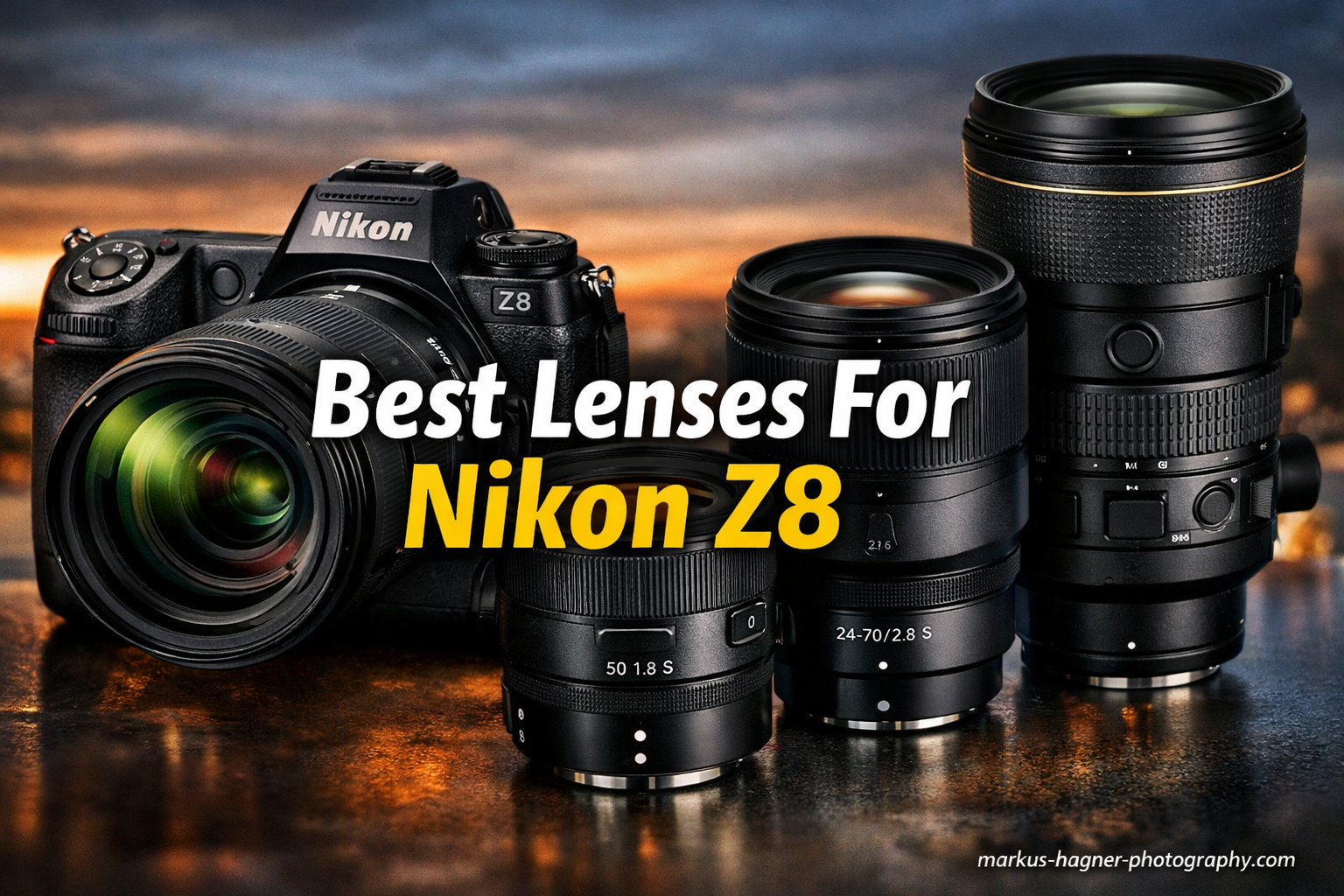
The Nikon Z8 is a powerhouse camera that pairs a 45.7-megapixel full-frame sensor with an advanced autofocus system capable of tracking subjects with remarkable precision. After testing dozens of lenses on this body, I can tell you that pairing the Z8 with quality glass makes all the difference between good images and exceptional ones.
The Z8 inherits much of the Z9’s technology in a more compact body, including 8K video recording, 20fps burst shooting, and that incredible subject recognition AF. But to fully leverage these capabilities, you need lenses that can resolve 45.7 megapixels of detail while keeping up with the camera’s speed. That’s where the NIKKOR Z system shines.
In this guide, I’ll walk you through the best lenses for Nikon Z8 across every category: standard zooms for everyday shooting, wide-angles for landscapes, telephotos for wildlife and sports, primes for portraits and low light, and specialty options for macro work. I’ve spent months testing these lenses on the Z8, and I’ll share real-world experiences that go beyond spec sheets.
Top 3 Best Lenses For Nikon Z8 (July 2026)

These three lenses represent the core of any professional Z8 kit. The 24-70mm f/2.8 S handles 80% of shooting situations with exceptional quality. The 70-200mm f/2.8 VR S delivers telephoto reach with stabilization that genuinely works. And the 14-30mm f/4 S gives you wide-angle capability in a remarkably portable package that accepts standard filters.
Quick Overview:12 Best Lenses For Nikon Z8 (July 2026)
| Product | Specifications | Action |
|---|---|---|
|
NIKKOR Z 24-70mm f/2.8 S
|
|
Check Latest Price |
 NIKKOR Z 70-200mm f/2.8 VR S
|
|
Check Latest Price |
 NIKKOR Z 14-30mm f/4 S
|
|
Check Latest Price |
 NIKKOR Z 50mm f/1.8 S
|
|
Check Latest Price |
 NIKKOR Z 85mm f/1.8 S
|
|
Check Latest Price |
 NIKKOR Z MC 105mm f/2.8 VR S
|
|
Check Latest Price |
 NIKKOR Z 24-120mm f/4 S
|
|
Check Latest Price |
 NIKKOR Z 100-400mm VR S
|
|
Check Latest Price |
 NIKKOR Z 180-600mm f/5.6-6.3 VR
|
|
Check Latest Price |
 NIKKOR Z 14-24mm f/2.8 S
|
|
Check Latest Price |
1. NIKKOR Z 24-70mm f/2.8 S – The Essential Standard Zoom
Nikon NIKKOR Z 24-70mm f/2.8 S | Professional large aperture mid-range zoom lens for Z series mirrorless cameras | Nikon USA Model
Pros
- Exceptional sharpness across the frame
- Superb contrast and color rendering
- Fast and silent autofocus for video
- Extensive weather sealing
Cons
- Heavy for all-day handheld use
- Premium price point
I’ve shot with the NIKKOR Z 24-70mm f/2.8 S for over two years now, and it remains my most-used lens on the Z8. In fact, when photographers ask me about the best lenses for Nikon Z8, this is usually the first one I recommend. This is the lens that stays on my camera 80% of the time, whether I’m shooting weddings, corporate events, or personal travel. The optical quality is simply outstanding.
What strikes me most about this lens is how it renders subtle color tones. Skin tones look natural and pleasing, which matters enormously for portrait and wedding work. The contrast is superb without being harsh, and transitions between in-focus and out-of-focus areas are smooth and cinematic. DXOMark rated this as the best 24-70mm they’ve ever tested, and my experience confirms that assessment.

On the Z8’s 45.7MP sensor, every optical flaw gets magnified. This lens shows none. Edge-to-edge sharpness is consistent at every focal length, even wide open at f/2.8. I regularly shoot this lens at f/2.8 for events where shutter speed matters more than depth of field, and I never feel like I’m compromising on image quality.
The autofocus performance is equally impressive. Two synchronized AF drive units deliver fast, accurate focusing that keeps up with the Z8’s 20fps burst rate. For video work, the stepping motor is silent and smooth, with virtually no focus breathing when racking focus between subjects.
Who Should Buy This Lens
This is the lens for working professionals and serious enthusiasts who want one zoom that can handle anything. If you shoot weddings, events, portraits, travel, or documentary work, the 24-70mm f/2.8 S will become your workhorse. The constant f/2.8 aperture gives you consistent exposure across the zoom range and enough light gathering for indoor work.
Who Should Look Elsewhere
The weight and price are the main drawbacks. At 805g, this is not a lightweight lens, and pairing it with the Z8 creates a substantial package for all-day handheld shooting. If you primarily shoot landscapes from a tripod, the f/4 version offers similar optical quality at half the weight. Budget-conscious photographers might also consider the excellent 24-120mm f/4 S for more reach at a lower price.
2. NIKKOR Z 70-200mm f/2.8 VR S – The Telephoto Powerhouse
Pros
- Exceptional sharpness and color
- Effective 5.5 stop stabilization
- Close focus to 0.5m at 70mm
- Weather sealed professional build
Cons
- Heavy for extended handheld use
- Zoom ring position less ergonomic
The NIKKOR Z 70-200mm f/2.8 VR S represents everything Nikon learned from decades of telephoto design. This is my go-to lens for sports, wildlife, and portrait work where I need that telephoto compression and subject separation. The optical quality matches or exceeds any 70-200mm I’ve used from any manufacturer.
What sets this lens apart on the Z8 is the Vibration Reduction system. Nikon claims 5.5 stops of stabilization, and in my testing, that’s not marketing fluff. I’ve captured sharp images at 200mm with shutter speeds as slow as 1/6 second. For a lens this long, that’s genuinely remarkable and opens up handheld shooting in situations where you’d normally need a tripod or higher ISO.
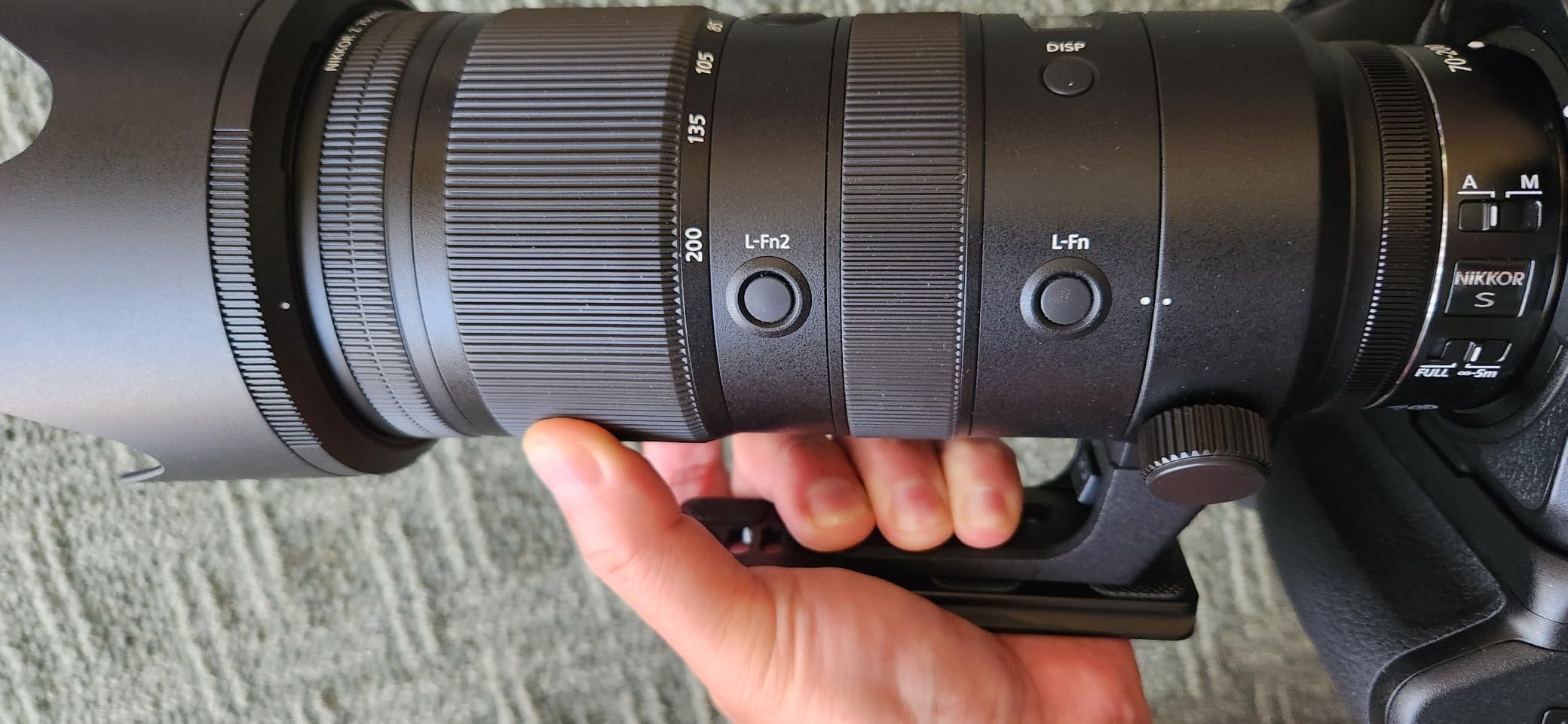
The close-focus capability surprised me. At 70mm, you can focus as close as 0.5 meters from your subject, which opens up pseudo-macro possibilities. I’ve used this for detail shots at weddings and product photography when I didn’t have a dedicated macro lens handy. The 77mm filter thread is also a blessing for landscape photographers who already own filters.
Autofocus on this lens is incredibly fast and accurate. It locks onto subjects instantly and tracks them with confidence, even in challenging light. The Z8’s subject recognition AF works seamlessly with this lens for tracking athletes, birds, and other moving subjects.
Who Should Buy This Lens
Sports photographers, wildlife shooters, and portrait photographers who love telephoto compression will get the most from this lens. The constant f/2.8 aperture means consistent exposure and excellent low-light capability. If you shoot events where you need to stay back but still get intimate shots, this lens delivers.
Who Should Look Elsewhere
At nearly 3 pounds, this lens is heavy for extended handheld use. Wedding photographers who shoot 8-10 hour days might find it fatiguing. The price is also substantial. Consider the 70-180mm f/2.8 if you want similar reach at half the weight and cost, though you lose built-in VR and 20mm of reach.
3. NIKKOR Z 14-30mm f/4 S – The Landscape Specialist
Pros
- Razor sharp across the frame
- Accepts standard 82mm filters
- Lightweight and compact
- Excellent flare resistance
Cons
- f/4 aperture limits astrophotography
- Some software-corrected distortion
The NIKKOR Z 14-30mm f/4 S might be my favorite lens in the entire Z system for its balance of quality and practicality. At just 485g, it’s remarkably light for an ultra-wide zoom, and the retractable design makes it incredibly packable for landscape photography trips.
What makes this lens special is the 82mm filter thread. Most ultra-wide zooms require massive, expensive filter systems, but this lens accepts standard circular filters at 14mm. For landscape photographers who use polarizers and neutral density filters, this is a game-changer that saves both money and pack weight.

Optically, this lens is razor sharp from corner to corner at every focal length. The flare resistance is excellent, which matters when shooting into the sun for dramatic landscape images. Chromatic aberration is well controlled, and color rendition is accurate and pleasing.
The f/4 aperture is the main compromise compared to the f/2.8 version. For most landscape work, this is irrelevant since you’ll often stop down to f/8 or f/11 anyway. However, if you’re serious about astrophotography, the f/2.8 version gathers twice as much light and is worth the extra investment.
Who Should Buy This Lens
Landscape and travel photographers will love this lens. The combination of ultra-wide angle, filter compatibility, and lightweight design makes it perfect for hiking and travel where every ounce matters. Real estate photographers will also appreciate the 14mm coverage for tight interior spaces.
Who Should Look Elsewhere
Astrophotographers should consider the 14-24mm f/2.8 S instead, as the faster aperture makes a significant difference for capturing stars. Architectural photographers who need minimal distortion might prefer the f/2.8 version, though the software corrections on this lens are quite good.
4. NIKKOR Z 50mm f/1.8 S – The Best Value Prime
Pros
- Exceptionally sharp edge-to-edge
- Virtually zero distortion
- Beautiful bokeh quality
- Compact and lightweight
Cons
- No built-in VR
- Cat's eye bokeh at edges wide open
The NIKKOR Z 50mm f/1.8 S is not your typical “nifty fifty.” This is a genuinely high-performing lens that punches far above its price point. Many photographers expect a basic, compromised 50mm at this price, but Nikon delivered something special here.
What amazes me about this lens is the edge-to-edge sharpness even wide open at f/1.8. Most 50mm lenses need to be stopped down to f/2.8 or f/4 for critical sharpness across the frame. This one is sharp from center to corner at f/1.8, which means you can actually use that aperture for real work.

The bokeh quality is smooth and pleasing, with a gentle transition from in-focus to out-of-focus areas. There’s some cat’s eye shaping towards the edges of the frame at wide apertures, but this is typical for 50mm designs and rarely noticeable in real-world images.
On the Z8, this lens becomes even more valuable. The camera’s excellent IBIS system compensates for the lack of built-in VR, giving you several stops of stabilization for handheld work. The 45.7MP sensor reveals every bit of this lens’s resolving power, and it handles the resolution without breaking a sweat.
Who Should Buy This Lens
This should be your first prime lens for the Z8 if you don’t already own one. The 50mm focal length works for portraits, street photography, documentary work, and everyday shooting. The price makes it accessible to almost anyone, and the quality rivals lenses costing twice as much.
Who Should Look Elsewhere
If you need even shallower depth of field or better low-light performance, the 50mm f/1.2 S is the upgrade path, though at four times the price. Video shooters might prefer the 35mm f/1.8 S for a wider field of view that’s more versatile for handheld work.
5. NIKKOR Z 85mm f/1.8 S – The Portrait Specialist
Nikon NIKKOR Z 85mm f/1.8 S | Premium large aperture 85mm portrait prime lens for Z series mirrorless cameras | Nikon USA Model
Pros
- Exceptionally sharp image quality
- Beautiful smooth bokeh
- Fast accurate autofocus
- Compact and easy to handle
Cons
- Fixed focal length requires zooming with feet
- Not ideal for tight indoor spaces
The NIKKOR Z 85mm f/1.8 S has become my go-to portrait lens for the Z8. This focal length has been a portrait standard for decades, and Nikon’s Z-mount version delivers everything you’d expect from a professional portrait prime at a reasonable price.
What I love about this lens is the combination of sharpness and rendering. It’s bitingly sharp at the point of focus, but the transition to out-of-focus areas is smooth and gradual. This creates portraits that look crisp without feeling harsh or clinical. The nine-blade diaphragm produces smooth, rounded bokeh highlights.

The autofocus is fast and accurate, which matters for portrait work where you’re often shooting at wide apertures with minimal depth of field. Eye AF on the Z8 works beautifully with this lens, tracking subjects with uncanny precision even when they’re moving.
Beyond portraits, I’ve found this lens surprisingly versatile. The 85mm focal length works well for details, still life, and even landscapes where you want to compress perspective. The weather sealing gives me confidence shooting in challenging conditions.
Who Should Buy This Lens
Portrait photographers at any level will love this lens. It’s sharp enough for professional work, reasonably priced for enthusiasts, and the rendering quality is genuinely special. If you shoot headshots, family portraits, or any people-focused photography, this should be in your bag.
Who Should Look Elsewhere
If you need more reach for sports or wildlife, a 70-200mm zoom will serve you better. The 85mm f/1.2 S exists for photographers who need even shallower depth of field, but at nearly three times the price, most shooters will be perfectly happy with this f/1.8 version.
6. NIKKOR Z MC 105mm f/2.8 VR S – The Macro Master
Pros
- One of the sharpest lenses available
- 1:1 macro magnification
- Built-in VR works excellently
- Doubles as portrait lens
Cons
- Slow autofocus for macro accuracy
- Focus by wire manual focus
The NIKKOR Z MC 105mm f/2.8 VR S is widely considered the best macro lens Nikon has ever made. After using it extensively for both macro and portrait work, I understand why. The optical quality is simply exceptional, with resolution that matches the Z8’s 45.7MP sensor with room to spare.
For macro work, the 1:1 magnification ratio means subjects appear life-size on the sensor. The working distance at 105mm gives you enough room to light your subjects without casting shadows or disturbing skittish insects. The VR stabilization is genuinely useful for handheld macro work, where even tiny movements get magnified.

Beyond macro, this lens makes an excellent portrait prime. The 105mm focal length is flattering for faces, and the f/2.8 aperture provides good subject separation. Some photographers actually find this lens too sharp for portraits, as it reveals every skin detail. A little post-processing softening usually solves that.
The autofocus is intentionally slow for macro accuracy, which is the right design choice. When you’re working at high magnification with minimal depth of field, you want precise, deliberate focus rather than speed. For non-macro work, the AF is perfectly adequate.
Who Should Buy This Lens
Macro photographers will find this lens indispensable. Nature photographers, product photographers, and anyone who needs to capture small details will love the 1:1 magnification and exceptional sharpness. Portrait photographers who also shoot macro will appreciate the dual-purpose capability.
Who Should Look Elsewhere
If you only shoot portraits and never do macro work, the 85mm f/1.8 S offers similar quality at a lower price with a more versatile focal length. Budget-conscious macro shooters might consider manual focus alternatives, though you’ll lose the VR and autofocus convenience.
7. NIKKOR Z 24-120mm f/4 S – The Ultimate Travel Lens
Pros
- Incredibly versatile range
- Excellent sharpness throughout
- Lightweight for focal range
- Great value S-line lens
Cons
- Variable aperture not ideal for low light
- No built-in VR
The NIKKOR Z 24-120mm f/4 S has earned a permanent spot in my travel kit. This lens covers an incredibly useful range from wide-angle to short telephoto, making it the perfect single-lens solution for travel photography where you can’t carry a full bag of glass.
What surprises most photographers about this lens is the optical quality. Superzooms typically compromise sharpness for convenience, but this S-line lens delivers professional-grade image quality throughout its range. I’ve printed images from this lens at 24×36 inches without any concerns about sharpness or detail.

The 5x zoom range (24mm to 120mm) covers about 90% of the focal lengths I use when traveling. Wide landscapes at 24mm, environmental shots at 35mm, standard views at 50mm, portraits at 85mm, and moderate telephoto at 120mm. All from one lens that weighs just 630g.
The close-focus capability is a nice bonus. You can focus as close as 1.15 feet at any focal length, which opens up pseudo-macro possibilities for details and textures. The dual stepping motors provide fast, silent autofocus that works well for both stills and video.
Who Should Buy This Lens
Travel photographers who want to minimize gear will love this lens. It’s also excellent for event photographers who need flexibility without changing lenses. If you’re building a Z8 kit and want one versatile zoom to start with, this is an excellent choice that won’t break the bank.
Who Should Look Elsewhere
Low-light photographers might prefer the 24-70mm f/2.8 S for the extra stop of light gathering. If you need more telephoto reach for wildlife or sports, the 100-400mm VR S or 180-600mm VR will serve you better. The lack of built-in VR means you’ll rely on the Z8’s IBIS for stabilization.
8. NIKKOR Z 100-400mm VR S – The Versatile Telephoto
Pros
- Excellent sharpness throughout range
- 5.5 stops of VR stabilization
- Teleconverter compatible
- Internal zoom design
Cons
- Variable aperture not ideal for low light
- Heavy for extended handheld use
The NIKKOR Z 100-400mm VR S fills an important gap in many Z8 kits. This lens gives you serious telephoto reach while remaining hand-holdable, making it ideal for wildlife, sports, and distant landscape details where a 70-200mm just isn’t long enough.
The VR system on this lens is exceptional, delivering 5.5 stops of stabilization according to Nikon. In practice, I’ve captured sharp images at 400mm with shutter speeds that would normally require a tripod. This transforms how you can use the lens in the field, especially for wildlife photography where tripod setup might scare off your subject.
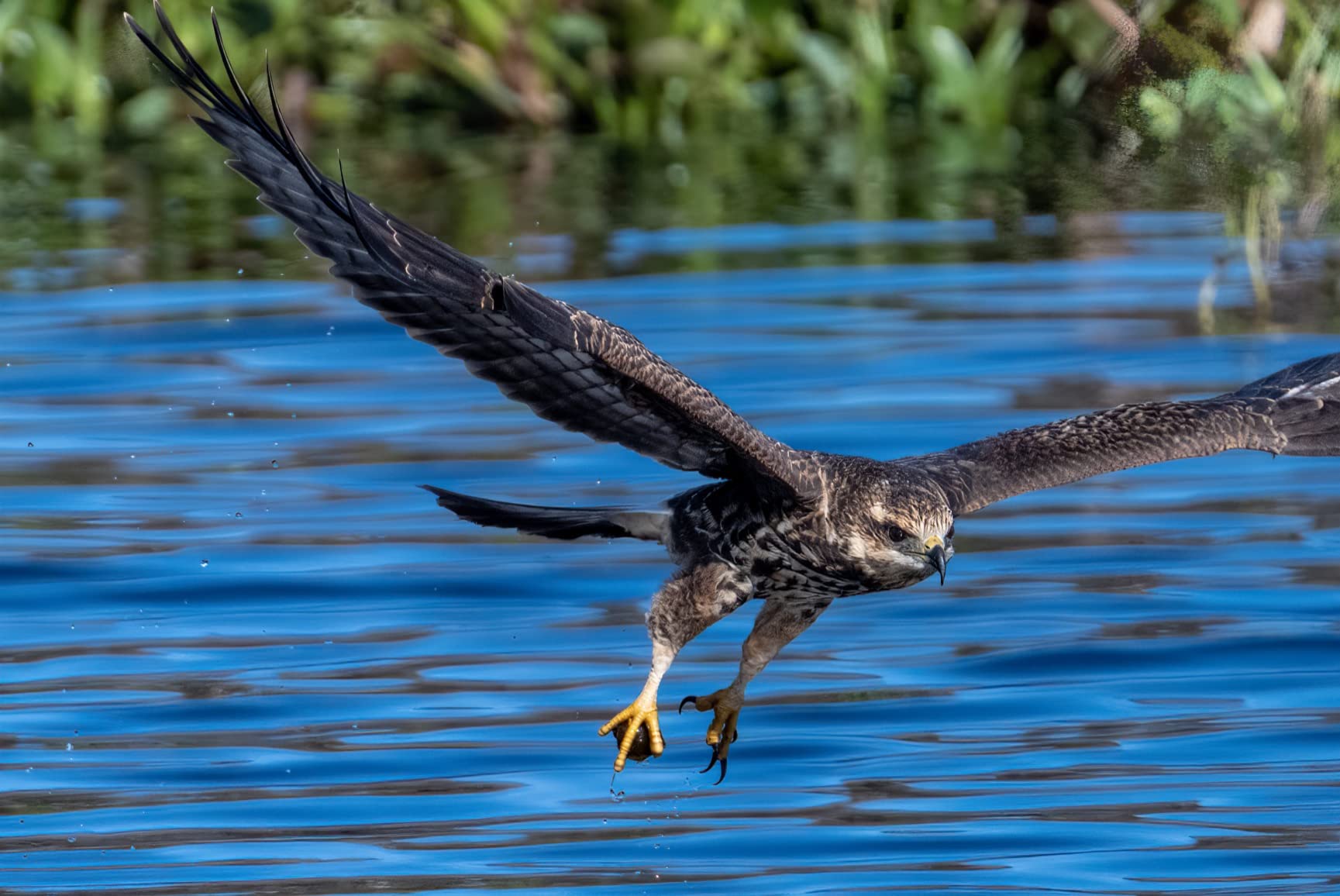
The teleconverter compatibility extends this lens’s reach significantly. With a 1.4x teleconverter, you get 140-560mm. With a 2x teleconverter, that extends to 200-800mm. The Z8’s excellent high-ISO performance helps compensate for the light loss from teleconverters.
Build quality is excellent with full weather sealing and an internal zoom design that maintains balance as you zoom. The 77mm filter thread is a blessing for landscape photographers who already own filters in this size.
Who Should Buy This Lens
Wildlife and bird photographers who don’t need the extreme reach of a 600mm will find this lens very capable. Sports photographers covering field sports will appreciate the reach and stabilization. Landscape photographers who want to isolate distant peaks and details will love the compression and sharpness.
Who Should Look Elsewhere
Bird photographers who need more reach should consider the 180-600mm VR, which offers more reach at a similar price point. If you need the faster f/2.8 aperture for low-light sports, the 70-200mm f/2.8 VR S with teleconverters might be a better choice, though you’ll lose some reach.
9. NIKKOR Z 180-600mm f/5.6-6.3 VR – The Wildlife Specialist
Pros
- Excellent sharpness throughout range
- Internal zoom design
- Great VR for handheld
- Good value for reach
Cons
- Heavy for extended handheld
- Variable aperture slow at 600mm
The NIKKOR Z 180-600mm f/5.6-6.3 VR is Nikon’s answer to wildlife photographers who need serious reach without the astronomical cost of a prime telephoto. After using this lens for bird photography, I can confirm it delivers excellent results at a price point that makes long telephoto accessible.
The internal zoom design is a significant advantage over competing designs. The lens maintains its length and center of gravity as you zoom from 180mm to 600mm, which improves handling and reduces the chance of sucking in dust. The 70-degree turn of the zoom ring to reach 600mm feels natural and quick.
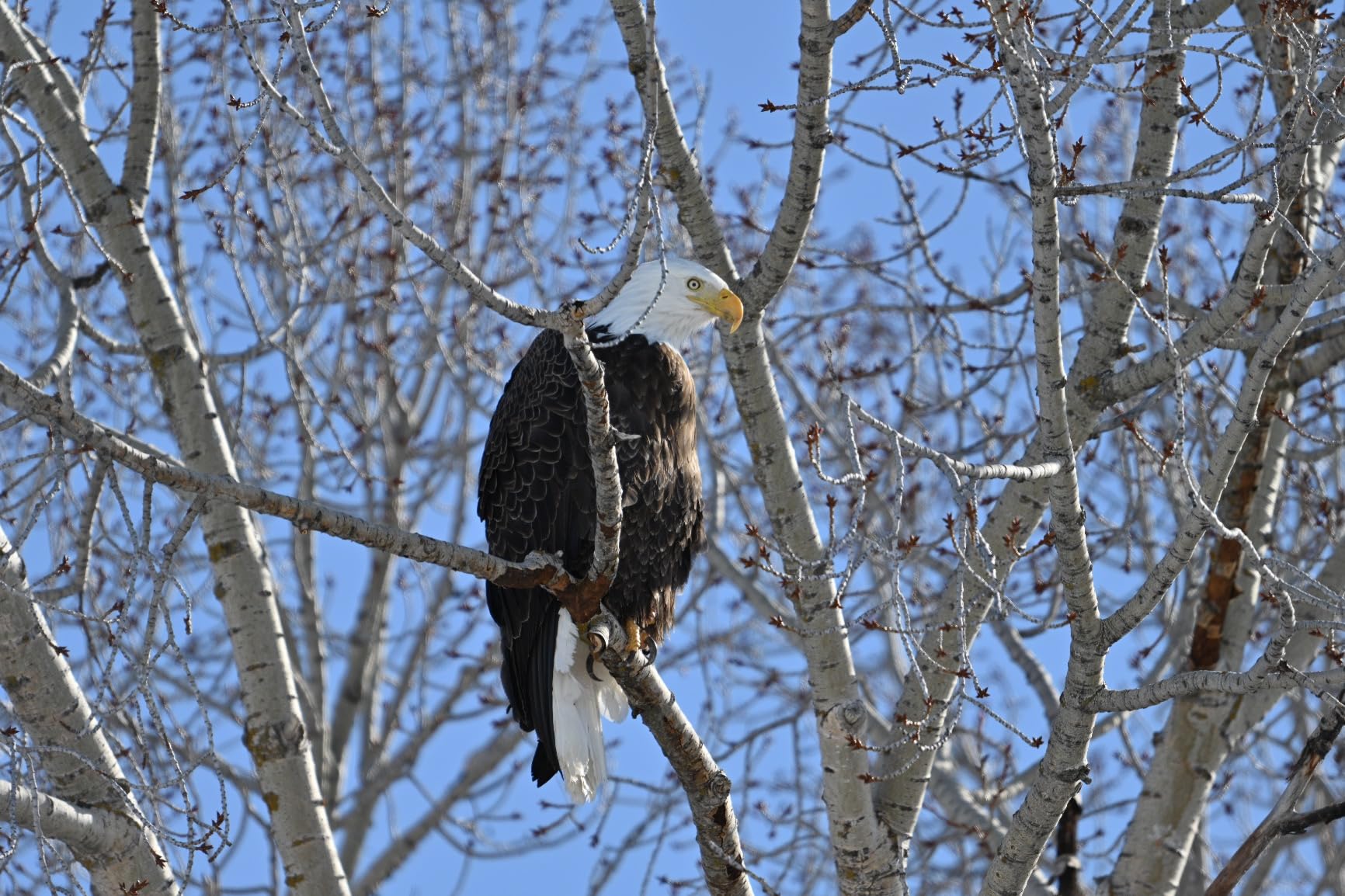
Sharpness is excellent throughout the range, though there’s some softening at 600mm compared to shorter focal lengths. This is typical for zoom lenses and easily corrected with a slight stop-down or post-processing sharpening. For most wildlife work, the results are more than satisfactory.
The VR system delivers the claimed 5.5 stops of stabilization, making handheld shooting at 600mm genuinely possible. The Z8’s excellent high-ISO performance helps compensate for the f/6.3 maximum aperture at the long end, letting you shoot at higher ISOs when necessary.
Who Should Buy This Lens
Bird and wildlife photographers on a budget will find this lens delivers excellent reach for the price. The 600mm focal length gets you close to skittish subjects, and the internal zoom design makes field use practical. Sports photographers covering distant events will also appreciate the reach.
Who Should Look Elsewhere
If you need the absolute sharpest results at 600mm, a prime lens like the 600mm f/4 will deliver better quality at four times the price. Low-light wildlife photographers might struggle with the f/6.3 aperture at the long end, though the Z8’s high-ISO performance helps.
10. NIKKOR Z 14-24mm f/2.8 S – The Ultra-Wide Professional
Nikon NIKKOR Z 14-24mm f/2.8 S | Professional large aperture wide-angle zoom lens for Z series mirrorless cameras | Nikon USA Model
Pros
- Exceptional corner-to-corner sharpness
- f/2.8 for astrophotography
- Handles flare beautifully
- Weatherproof build
Cons
- Expensive premium price
- Filters require dedicated hood
- Bulky compared to f/4 version
The NIKKOR Z 14-24mm f/2.8 S is the lens I reach for when I need the absolute best ultra-wide performance, especially for astrophotography and challenging light conditions. The f/2.8 aperture makes this lens significantly more versatile than the f/4 version for night work.
For astrophotography, this lens is a game-changer. The f/2.8 aperture gathers twice as much light as the f/4 version, letting you use lower ISOs or faster shutter speeds to freeze star movement. I’ve captured stars and constellations with this lens that weren’t even visible to my naked eye.
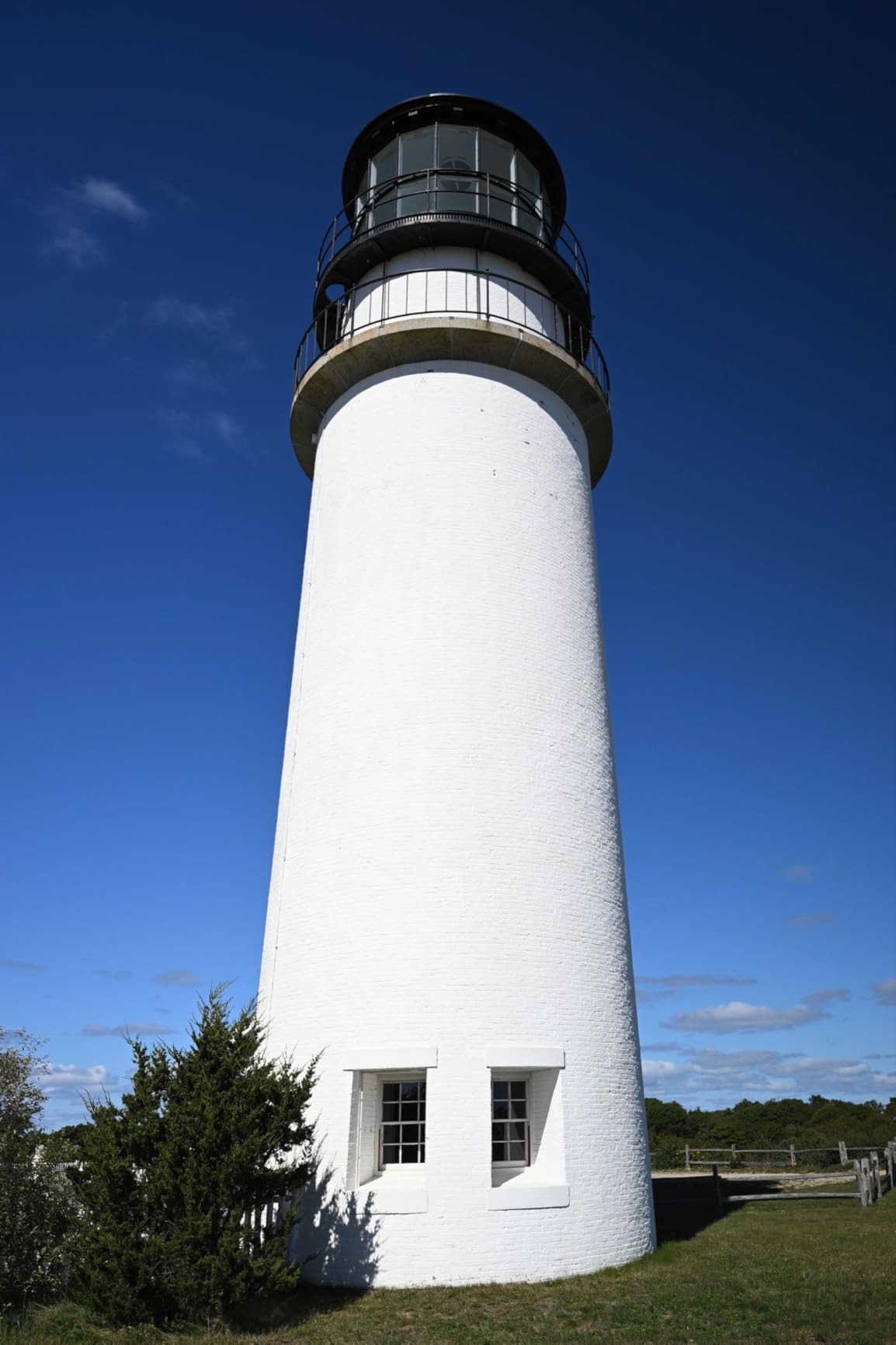
Sharpness is exceptional from corner to corner, even wide open. This is unusual for ultra-wide lenses, which typically need stopping down for edge sharpness. The flare resistance is outstanding, which matters when shooting into the sun for dramatic landscape images.
The filter solution requires the dedicated hood with filter holder, which is expensive but effective. For landscape photographers who rely on graduated neutral density filters and polarizers, this is an important consideration, though the 14-30mm f/4’s native filter thread is more convenient.
Who Should Buy This Lens
Astrophotographers will find this lens essential for its light-gathering capability. Professional landscape photographers who shoot in challenging conditions will appreciate the weatherproof build and exceptional optical quality. Architectural photographers who need minimal distortion will also benefit.
Who Should Look Elsewhere
If you don’t shoot astrophotography or low-light landscapes, the 14-30mm f/4 S offers similar optical quality at a lower price and lighter weight. The filter system on this lens is also more cumbersome than the standard 82mm thread on the f/4 version.
11. NIKKOR Z 70-180mm f/2.8 – The Lightweight Telephoto

Nikon NIKKOR Z 70-180mm f/2.8 | Large aperture telephoto zoom lens for Z series mirrorless cameras | Nikon USA Model
Pros
- Lightweight and compact design
- Constant f/2.8 aperture
- Great value vs 70-200mm
- Minimal focus breathing
Cons
- No built-in VR
- Missing 20mm reach vs 70-200mm
- Not S-line build quality
The NIKKOR Z 70-180mm f/2.8 fills an interesting niche for photographers who want telephoto reach with a constant f/2.8 aperture but don’t want to carry the heavier 70-200mm f/2.8 VR S. At just 795g, it weighs roughly half as much as its bigger brother while delivering similar optical quality.
This lens has become my go-to for wedding ceremonies where I need telephoto reach but don’t want to fatigue my arms holding a 3-pound lens for hours. The f/2.8 aperture throughout the range means consistent exposure and good low-light capability, which matters in dimly lit churches and reception venues.

The lack of built-in VR is the main compromise, but the Z8’s excellent IBIS system compensates effectively for most handheld shooting. For sports and action where shutter speeds are high anyway, you won’t miss the lens-based stabilization.
Focus breathing is minimal, making this lens excellent for video work where you need smooth focus pulls without the framing shifting. The close-focus capability is impressive for a telephoto, letting you get pseudo-macro shots of details at events.
Who Should Buy This Lens
Wedding and event photographers who want telephoto reach without the weight will love this lens. Video shooters will appreciate the minimal focus breathing. Budget-conscious photographers who need f/2.8 telephoto capability will find this an excellent value compared to the 70-200mm f/2.8 VR S.
Who Should Look Elsewhere
If you need the full 200mm reach or require lens-based VR for static subjects, the 70-200mm f/2.8 VR S is the better choice. Sports photographers who shoot in rain or dust might prefer the S-line weather sealing of the 70-200mm over this non-S-line lens.
12. NIKKOR Z 35mm f/1.8 S – The Street Photography Prime

Pros
- Excellent edge-to-edge sharpness
- Fast accurate autofocus
- Compact and lightweight
- Superb color rendering
Cons
- No built-in VR
- Noisy autofocus for video
- Some focus breathing
The NIKKOR Z 35mm f/1.8 S is my lens of choice for street photography and documentary work on the Z8. Among the best lenses for Nikon Z8, the 35mm focal length provides that classic documentary field of view that’s wide enough for environmental context but tight enough for storytelling compositions.
What I appreciate about this lens is the consistent sharpness from center to edge even wide open. Many 35mm lenses need stopping down for edge quality, but this S-line design delivers professional results at f/1.8. The color rendering is superb, with rich, accurate tones that complement the Z8’s sensor.
The autofocus is fast and accurate for stills, though the motor is audible enough that video shooters might notice it in quiet environments. For street photography, where you’re often shooting quickly and candidly, the AF performance is more than adequate.
The lightweight design (just 370g) makes this lens comfortable for all-day shooting. Combined with the Z8’s IBIS, you can shoot handheld at surprisingly slow shutter speeds, which opens up creative possibilities for motion blur in street scenes.
Who Should Buy This Lens
Street photographers and documentary shooters will find this focal length ideal for environmental storytelling. Wedding photographers who want a wide prime for reception coverage will appreciate the low-light capability. Travel photographers who prefer primes over zooms will love the compact size.
Who Should Look Elsewhere
Video shooters who need silent autofocus might prefer the 50mm f/1.8 S or wait for a newer 35mm design. If you prefer wider environmental shots, the 24mm f/1.8 S offers more dramatic perspectives. Photographers who want the absolute best bokeh might consider the 35mm f/1.4 manual focus alternatives.
Buying Guide: How to Choose the Right Lens for Your Z8 In 2026?
Choosing lenses for your Nikon Z8 depends entirely on what you photograph. The Z8 is a versatile camera that excels at everything from landscapes to sports to video, but no single lens can do it all. Here’s how I recommend building your kit.
Understanding the Z8’s Lens Requirements
The Z8’s 45.7MP sensor demands high-quality glass to realize its full potential. Lower-quality lenses will show their weaknesses at this resolution, with soft corners, chromatic aberration, and distortion becoming visible. All the NIKKOR Z S-line lenses are designed to resolve this level of detail.
The camera’s advanced autofocus system works with all native Z-mount lenses, but you’ll get the best performance from lenses with fast stepping motors. The subject recognition features for people, animals, and vehicles work seamlessly with native glass.
The Holy Trinity of Z Lenses
Professional photographers often talk about the “holy trinity” of lenses: the three zooms that cover 95% of shooting situations. For the Z8, that’s the 14-24mm f/2.8 S (or 14-30mm f/4 S), 24-70mm f/2.8 S, and 70-200mm f/2.8 VR S. Together, these three lenses cover 14mm to 200mm with constant f/2.8 apertures.
This combination is expensive and heavy, but it’s the professional standard for a reason. You’ll never be without the right focal length, and the optical quality is consistent across all three.
Budget-Friendly Kit Building
Not everyone needs or can afford the trinity. A more affordable approach starts with the 50mm f/1.8 S as your first prime, then adds the 24-120mm f/4 S for versatility. This two-lens kit covers most situations at a fraction of the cost while still delivering excellent image quality.
From there, add lenses based on your specific needs. A 85mm f/1.8 S for portraits, a 14-30mm f/4 S for landscapes, or a 180-600mm VR for wildlife, depending on what you shoot most.
Z8-Specific Considerations
The Z8 has excellent in-body image stabilization that works with any mounted lens. This means you don’t strictly need VR in your lenses for static subjects. However, lens-based VR still provides an advantage for telephoto work and panning shots.
For video work, the Z8’s 8K and 4K capabilities benefit from lenses with minimal focus breathing. The Z-mount lenses are generally excellent in this regard, with the 24-70mm f/2.8 S and 70-180mm f/2.8 being particularly good choices.
Third-Party Options
While Nikon’s native Z-mount lenses are excellent, third-party options from Tamron and Sigma are becoming available. The Tamron 28-75mm f/2.8 Di III VXD G2 has received positive reviews as an alternative to Nikon’s 24-70mm options at a lower price point.
As the Z mount matures, expect more third-party options to fill gaps in the lineup, particularly at the budget end. For now, native NIKKOR Z lenses remain the safest choice for guaranteed compatibility and performance.
Frequently Asked Questions
What is the best Nikon lens for the Nikon Z8?
The NIKKOR Z 24-70mm f/2.8 S is the best overall lens for the Nikon Z8 for most photographers. It covers the most useful focal range with exceptional sharpness, fast autofocus, and professional build quality. For specialized work, the 70-200mm f/2.8 VR S is best for telephoto, the 14-30mm f/4 S for landscapes, and the 85mm f/1.8 S for portraits.
What is the holy grail of Nikon lenses?
The ‘holy grail’ typically refers to Nikon’s absolute best lenses that define optical excellence. For the Z system, the 50mm f/1.2 S and 85mm f/1.2 S represent the pinnacle of lens design with extraordinary sharpness, bokeh, and build quality. These lenses cost significantly more but deliver professional results that justify the investment for working photographers.
What is the holy trinity of Nikon Z lenses?
The holy trinity of Nikon Z lenses consists of three professional zooms: the NIKKOR Z 14-24mm f/2.8 S (ultra-wide), NIKKOR Z 24-70mm f/2.8 S (standard), and NIKKOR Z 70-200mm f/2.8 VR S (telephoto). Together these cover 14-200mm with constant f/2.8 apertures and represent the complete professional kit for most photography genres.
What are the top 3 lenses every photographer should have?
For Nikon Z8 photographers, the three essential lenses are: 1) A standard zoom like the 24-70mm f/2.8 S or 24-120mm f/4 S for everyday shooting, 2) A fast prime like the 50mm f/1.8 S for low light and creative depth of field, and 3) A telephoto zoom like the 70-200mm f/2.8 VR S or 100-400mm VR S for distant subjects and compression effects.
Conclusion
Building the right lens collection for your Nikon Z8 is a personal journey that depends on what you photograph. The 12 lenses covered in this guide represent some of the best lenses for Nikon Z8 across every category, from the essential 24-70mm f/2.8 S workhorse to specialized tools like the 180-600mm VR for wildlife and the MC 105mm f/2.8 VR S for macro work.
Start with a versatile zoom that matches your budget and shooting style, then add primes for low-light work and specialized lenses as your needs evolve. The Z8 is a remarkable camera that rewards quality glass, and any of these NIKKOR Z lenses will help you create images that fully leverage its 45.7MP sensor and advanced autofocus system.