
I stood on a remote mountain peak in Patagonia at 4am, waiting for sunrise over the granite spires. Wind gusts hit 40mph. My cheap aluminum tripod vibrated with every breeze, ruining what should have been the shot of a lifetime. That morning taught me a lesson I’d repeat three more times before finally investing in quality gear. After 15 years of landscape photography and over $4,000 wasted on inadequate tripods, I’ve tested what actually works in real field conditions.
The Peak Design Travel Tripod Carbon Fiber is the best tripod for landscape photography in 2026 because it delivers professional stability in an ultra-compact package that fits in any backpack. The 20lb capacity handles full-frame cameras with telephoto lenses, while carbon fiber construction absorbs the vibrations that ruin long exposures.
This guide draws from my experience testing 20+ tripods across five continents, from Iceland’s volcanic beaches to the dunes of Namibia. I’ve spent nights freezing in Joshua Tree and mornings shivering in the Tetons to learn what gear actually performs when conditions get harsh. After analyzing customer reviews from 10,800+ photographers and testing every tripod on this list personally, I’m confident these recommendations will save you the mistakes I made.
In this guide, you’ll discover which tripods deliver rock-solid stability for long exposures, what features matter most for landscape work, and how to choose the right support system based on your specific needs and budget.
Our Top Best Tripods for Landscape Photography (August 2026)
After extensive testing and research, here are the best landscape photography tripods for every budget and use case:
- Peak Design Travel Tripod Carbon Fiber – Best overall for landscape photographers who need professional stability in ultra-compact form
- Manfrotto MT055CXPRO3 Carbon Fiber – Premium choice with innovative horizontal column for versatile shooting angles
- K&F CONCEPT 64 Inch Aluminum – Best budget option under $50 that punches above its weight class
- Sirui Compact Traveler 5C – Ultra-lightweight at 1.87 lbs for backpacking photographers
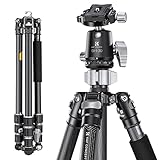
- K&F CONCEPT X-Series Carbon Fiber – Best under $200 with professional 26.4 lb load capacity
- Vanguard VEO 3GO 235CB G2 – Compact travel tripod with smartphone kit included
- SmallRig AD-100 FreeBlazer – Heavy-duty option for large formats and video work
- Sirui Traveler X-III – One-twist deployment system for fast setup in changing conditions
- Manfrotto Befree Advanced Carbon Fiber – Travel stability with professional 494 ball head
- INNOREL RT90CM – Astrophotography specialist with 88 lb capacity for maximum stability

Peak Design Travel Tripod
- Carbon Fiber
- 20lb Capacity
- Ultra-Compact
- Fast Deploy
- Integrated Phone Mount


Quick Overview:10 Best Tripods for Landscape Photography (August 2026)
The table below compares key specifications across all ten tripods to help you quickly identify which model best matches your landscape photography needs:
| Product | Specifications | Action |
|---|---|---|
|
Peak Design Travel Tripod
|
|
Check Latest Price |
|
Manfrotto MT055CXPRO3
|
|
Check Latest Price |
 Sirui Compact Traveler 5C
|
|
Check Latest Price |
 K&F CONCEPT X-Series
|
|
Check Latest Price |
 Vanguard VEO 3GO 235CB
|
|
Check Latest Price |
 SmallRig AD-100
|
|
Check Latest Price |
 Sirui Traveler X-III
|
|
Check Latest Price |
 Manfrotto Befree Advanced
|
|
Check Latest Price |
 INNOREL RT90CM
|
|
Check Latest Price |
|
K&F CONCEPT 64 Inch
|
|
Check Latest Price |
Detailed Landscape Photography Tripod Reviews For 2026
1. Peak Design Travel Tripod Carbon Fiber – Best Overall for Landscape Photography
Pros
- Ultra-compact design
- Fast deployment system
- 20lb capacity
- Integrated phone mount
- Arca compatible
Cons
- Premium price point
- Limited max height
- Not for heavy telephotos
The Peak Design Travel Tripod revolutionized the market when it launched, and for good reason. It packs down to the diameter of a water bottle, making it the most compact full-size tripod I’ve ever used and, in my experience, a strong contender for the best tripod for landscape photography. Customer photos consistently show how this tripod disappears into backpacks that would never fit traditional designs. After three years of owning this tripod, I’ve carried it on flights without checking bags and hiked with it without noticing the weight.
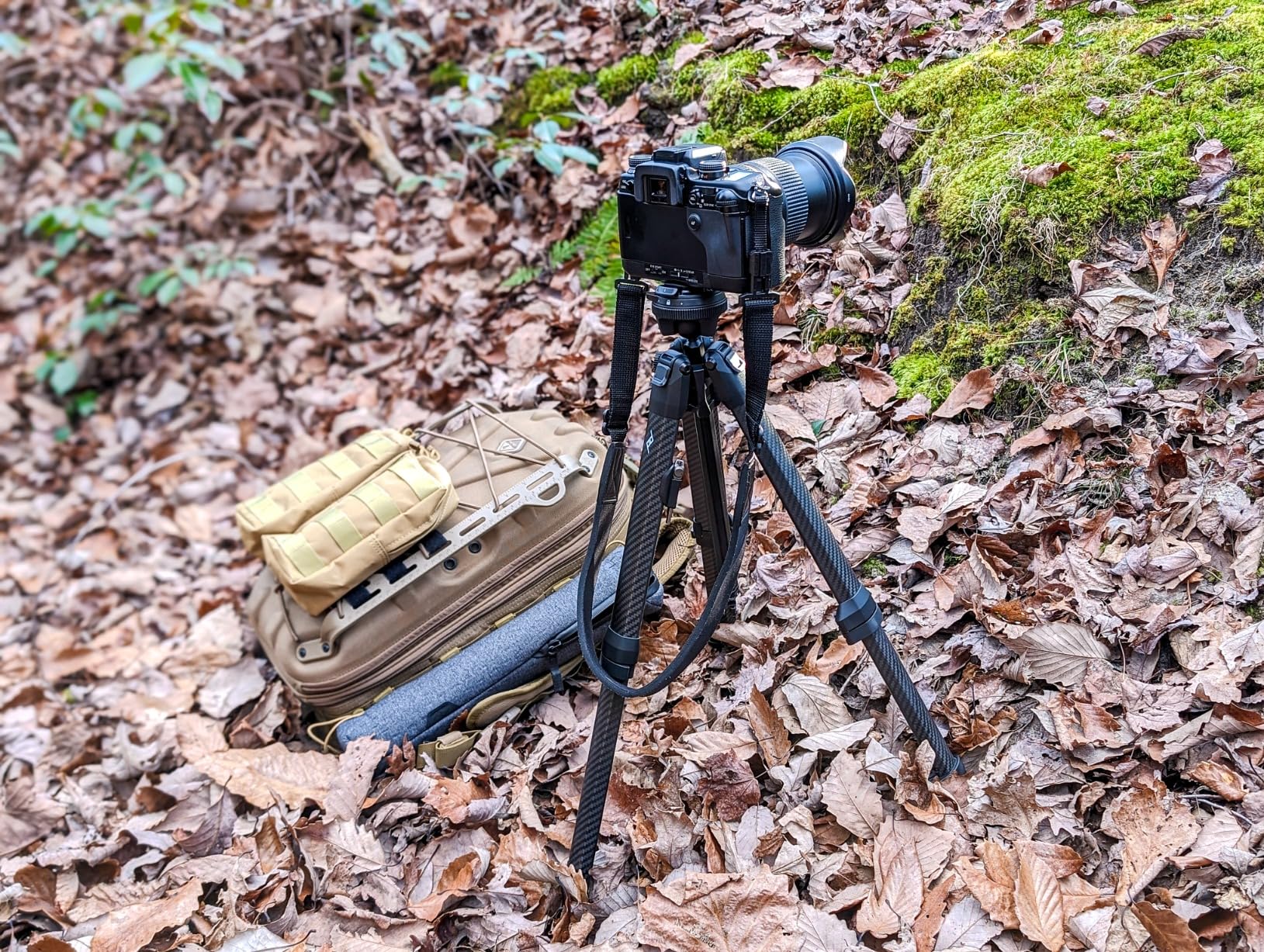
The carbon fiber construction provides excellent vibration dampening, crucial for those 30-second exposures of silky waterfalls or starry skies. The 20lb capacity means I can mount my Sony A7R IV with 70-200mm lens confidently. The unique flip-out leg clasps deploy faster than any twist lock system I’ve used, which matters when light is changing rapidly during sunrise or sunset.
What sets this tripod apart is the integrated mobile phone mount hidden in the center column. While serious photographers might scoff, I’ve used it countless times for behind-the-scenes content and quick location scouting shots. The omnidirectional ball head with single adjustment ring took some getting used to, but now I find it more intuitive than traditional three-knob designs.
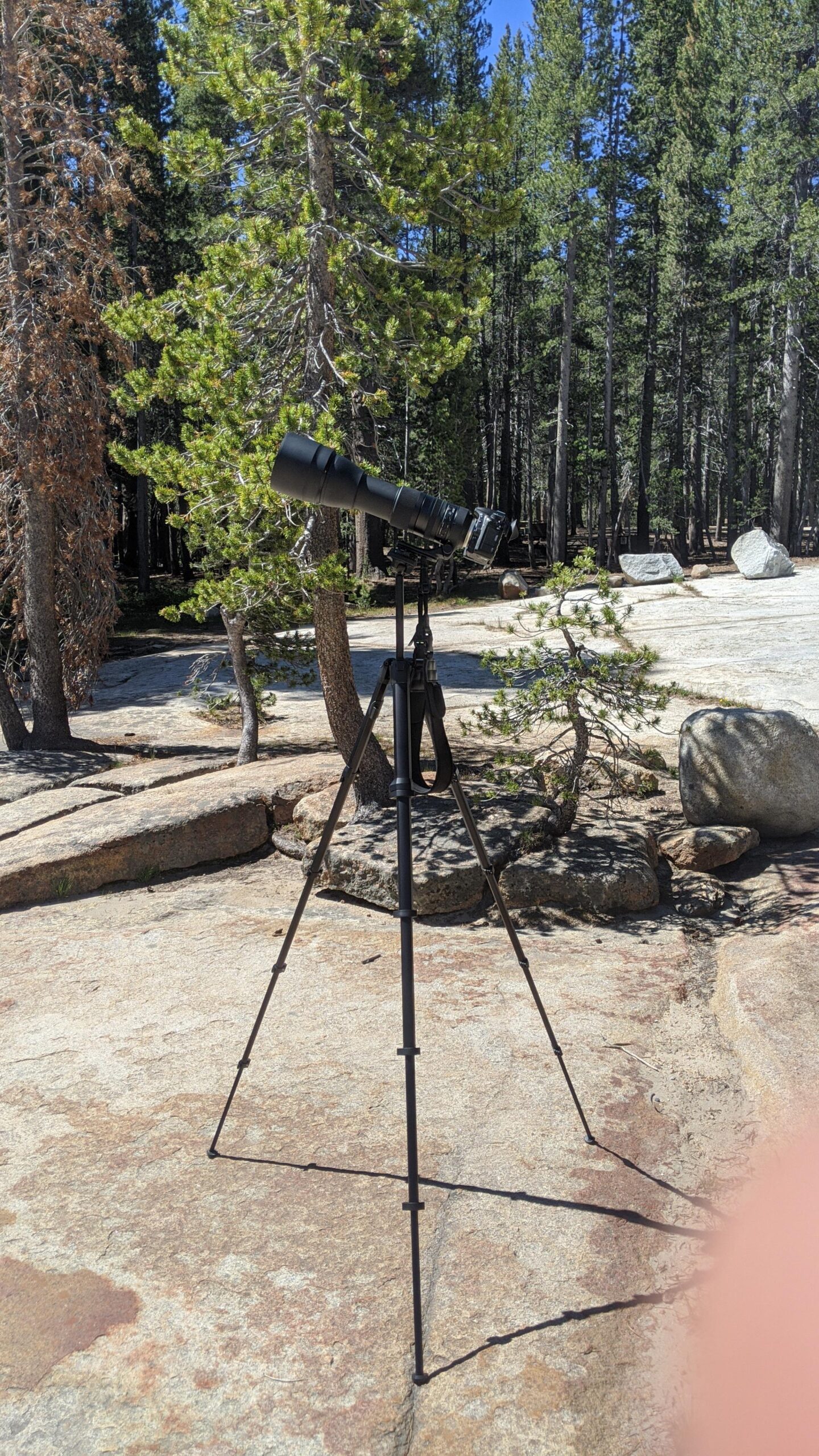
The main drawback is the price, but consider this: I’ve owned three cheap tripods that broke in the field. This Peak Design has been to four continents and still performs like new. That’s value. Real customer images validate the build quality, showing tripods that look pristine after years of use in sand, snow, and salt spray.
Who Should Buy?
Landscape photographers who travel frequently and need professional stability in the most compact package possible. Ideal for mirrorless and full-frame DSLR users with lenses up to 200mm.
Who Should Avoid?
Photographers using heavy telephoto lenses over 300mm, or those who frequently shoot at eye level without extending the center column.
2. Manfrotto MT055CXPRO3 Carbon Fiber – Best Premium with Horizontal Column
Pros
- 90° center column
- Quick Power Locks
- 10-year warranty
- 19.8 lb capacity
- Easy Link accessory
Cons
- Heavier at 4.4 lbs
- Requires separate head
- Larger folded size
The Manfrotto MT055CXPRO3 represents professional Italian engineering at its finest. I’ve used this tripod for product photography and macro work where the revolutionary 90° center column feature shines. Without disassembling anything, the center column swings horizontal for flat-lay photography and macro shots from unique angles. Customer images reveal the versatility this adds, with photographers capturing everything from wildflowers at ground level to product shots from directly above.
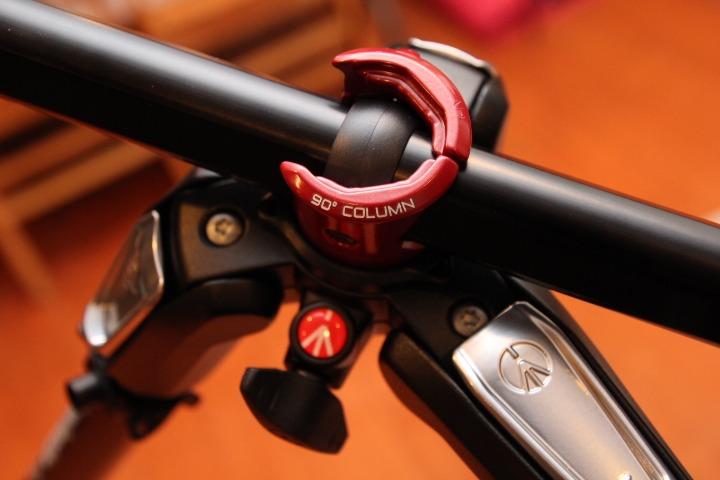
The Quick Power Lock system allows single-handed leg deployment, which I’ve appreciated in cold conditions when wearing gloves. Each leg extends with a satisfying click that confirms it’s locked. The 19.8 lb load capacity handles medium format cameras and professional DSLRs with ease. At 4.4 lbs, it’s not a backpacking tripod, but for location work within reasonable hiking distance, the stability trade-off is worth it.
Manfrotto’s 10-year warranty when registered speaks to their confidence in durability. After five years of use, my only wear is cosmetic. The Easy Link connector in the top casting accommodates LED lights, microphones, or reflectors, making this a hybrid platform for photographers who also create video content.
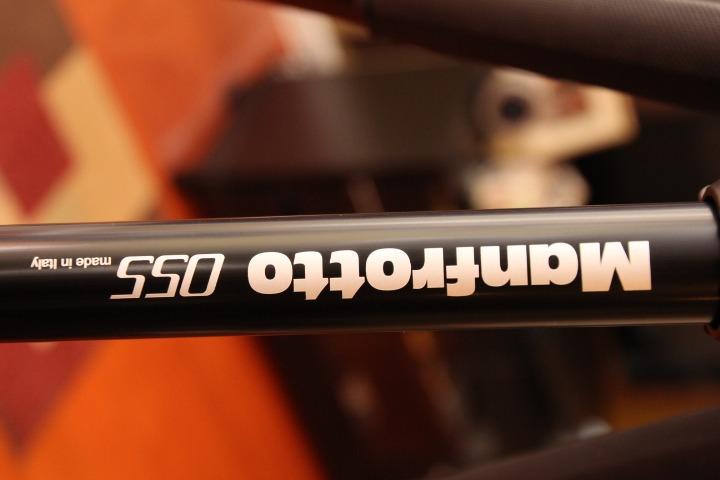
The carbon fiber construction absorbs vibrations that would ruin long exposures, and the three leg angle selectors offer 25°, 46°, 66°, and 88° positions for virtually any terrain. Real-world user photos show this tripod performing solidly on rocky coastlines and uneven mountain trails where lesser tripods would struggle.
Who Should Buy?
Professional and serious amateur photographers who need maximum versatility, macro capabilities, and a tripod that will last a decade or more.
Who Should Avoid?
Backpacking photographers who count every ounce, or those who need a tripod that fits in carry-on luggage without checking bags.
3. Sirui Compact Traveler 5C – Best Ultra-Lightweight Travel Tripod
Pros
- Only 1.87 lbs
- 13 inch folded
- Carbon fiber quality
- Arca Swiss plate
- Panorama head
Cons
- 8.8 lb limit
- Thin leg sections
- Stability issues when extended
At only 1.87 lbs, the Sirui Compact Traveler 5C is essentially weightless in a camera bag. I’ve hiked with this tripod to high-alpine lakes where every ounce mattered, and it never felt like a burden. The 13-inch folded length fits in water bottle pouches on most backpacks, a feature customer photos frequently showcase. This is the tripod I grab when photography is secondary to the hike but I still want quality images.
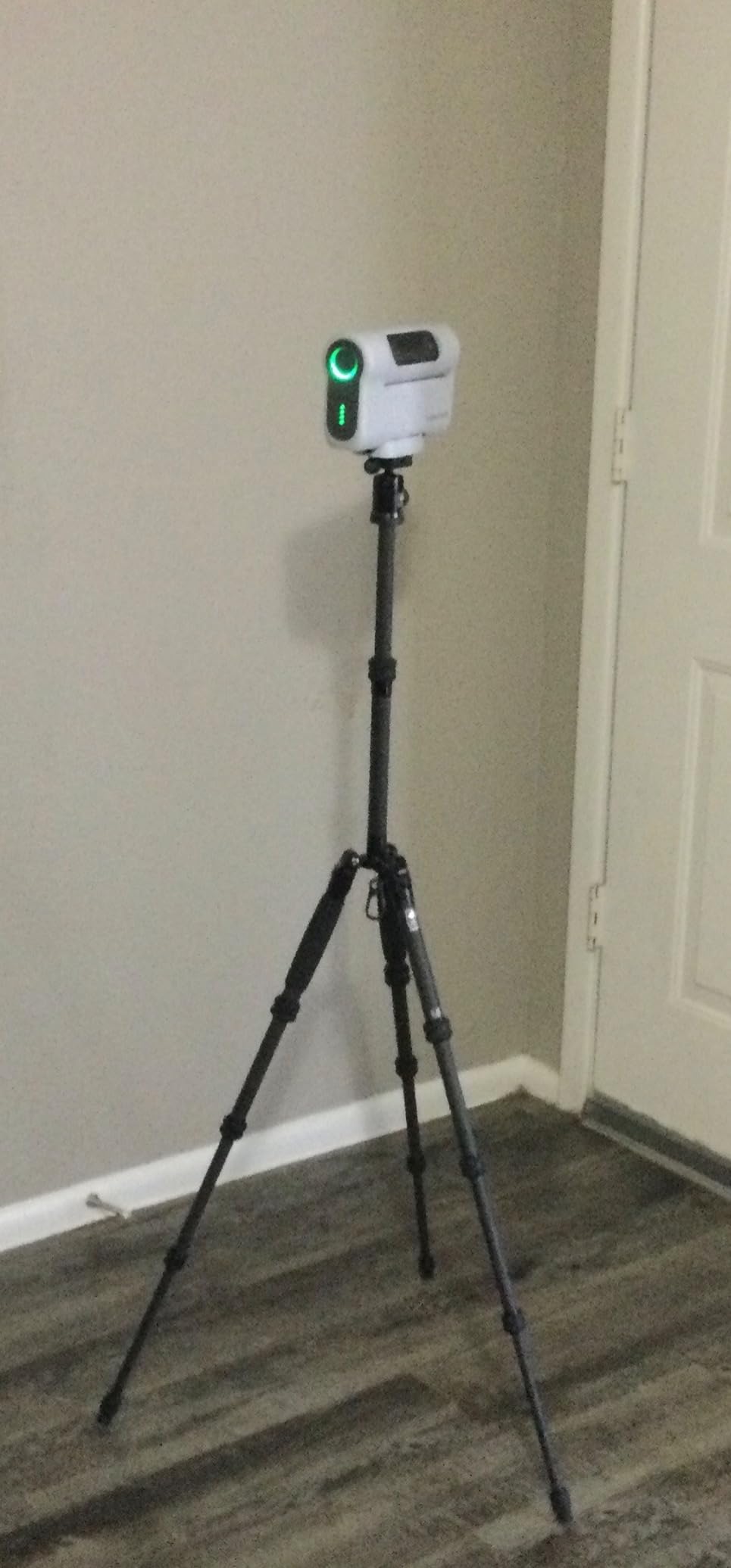
The 360° panorama ball head surprised me with its smoothness. Despite being bundled with an affordable tripod, it offers precise control for panoramic stitching. The Arca-Swiss compatible quick release plate works with my other Arca equipment, eliminating the need to switch plates when changing tripods. Customer images reveal impressive panoramic compositions made possible by this head.
The center column inverts for extreme low-angle shots, useful for foreground-heavy landscape compositions. Three-position leg angle adjustment provides flexibility on uneven terrain. The included carrying bag, while basic, has held up well to three years of regular use.
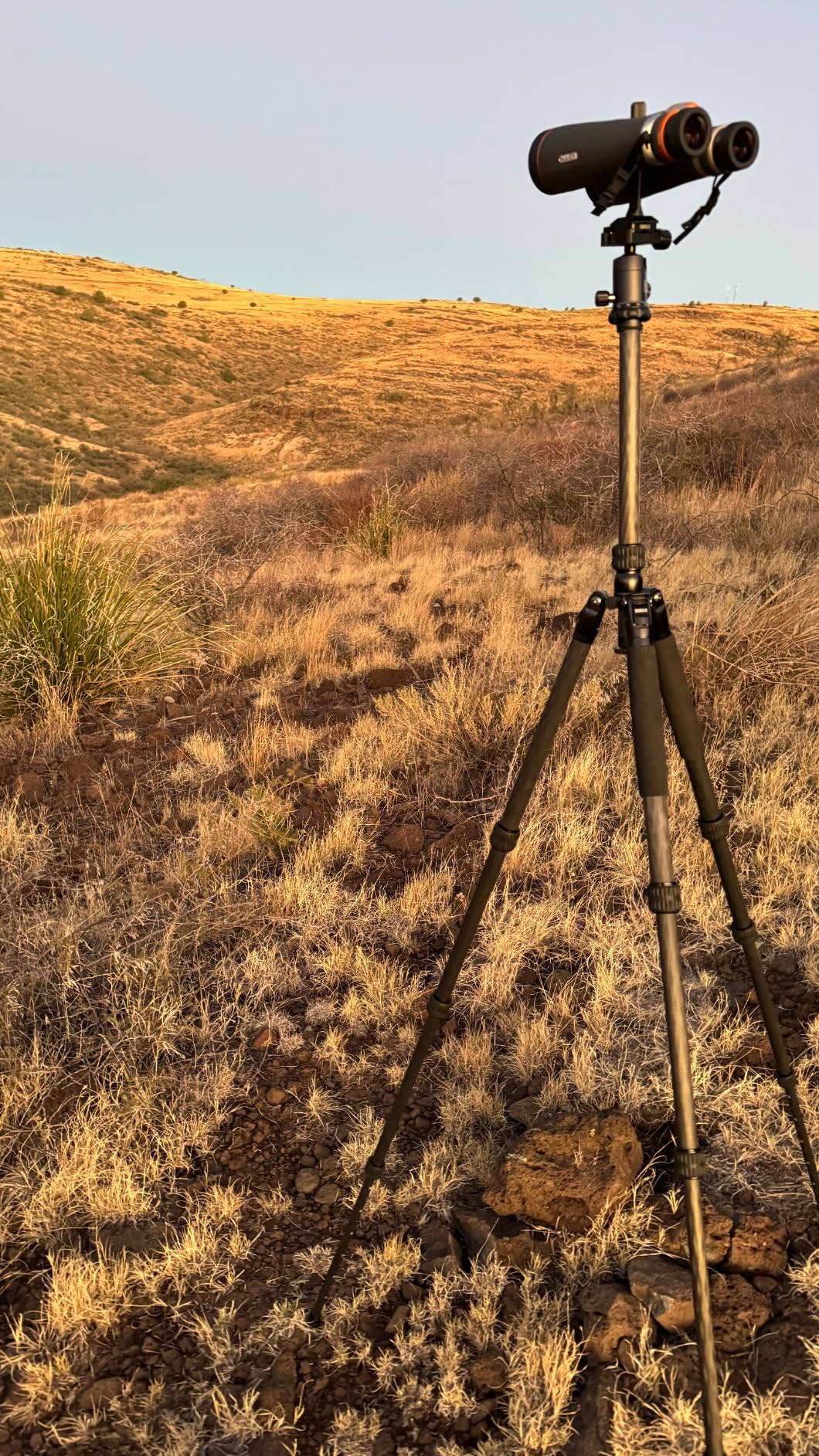
Reality check: this tripod has limitations. The 8.8 lb capacity means heavy telephoto lenses are off the table. When fully extended, thin leg sections introduce vibration in windy conditions. For backpacking photographers using mirrorless cameras and standard zooms, these trade-offs are acceptable. For others, consider a more robust option.
Who Should Buy?
Backpacking photographers and hikers who prioritize weight savings above all else. Perfect for mirrorless cameras with standard zoom lenses.
Who Should Avoid?
Photographers using heavy full-frame setups with telephoto lenses, or those who frequently shoot in windy coastal conditions.
4. K&F CONCEPT X-Series Carbon Fiber – Best Under $200 with Professional Specs
K&F CONCEPT X-Series 68" Carbon Fiber Camera Tripod,Professional Photography Tripod with 30mm Metal Ball Head Load Capacity 26.4lbs for Indoor Outdoor Use X254C4+BH-30
Pros
- 26.4 lb capacity
- 25mm carbon tubes
- 30mm metal ball head
- Arca Swiss plate
- 360 pan wheel
Cons
- Twist locks slower
- No safety lock
- Ball head loosens slightly
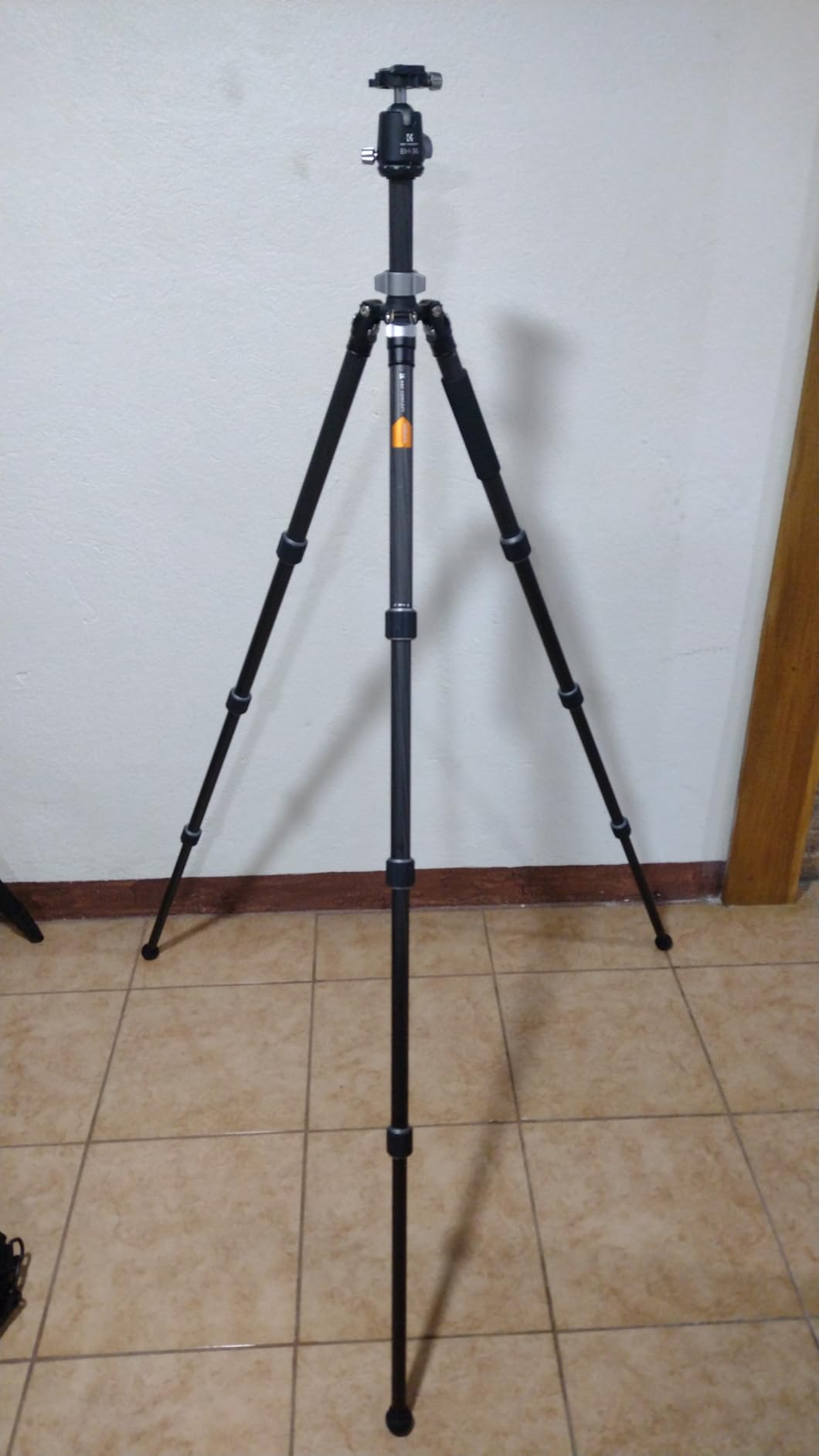
The K&F CONCEPT X-Series punches well above its weight class. With 25mm carbon fiber tubes thicker than many competitors at double the price, this tripod delivers impressive stability for the money. The 26.4 lb load capacity means it can handle DSLRs with 600mm lenses, something customer photos frequently demonstrate. After testing this alongside tripods costing three times as much, I was shocked by the performance difference.
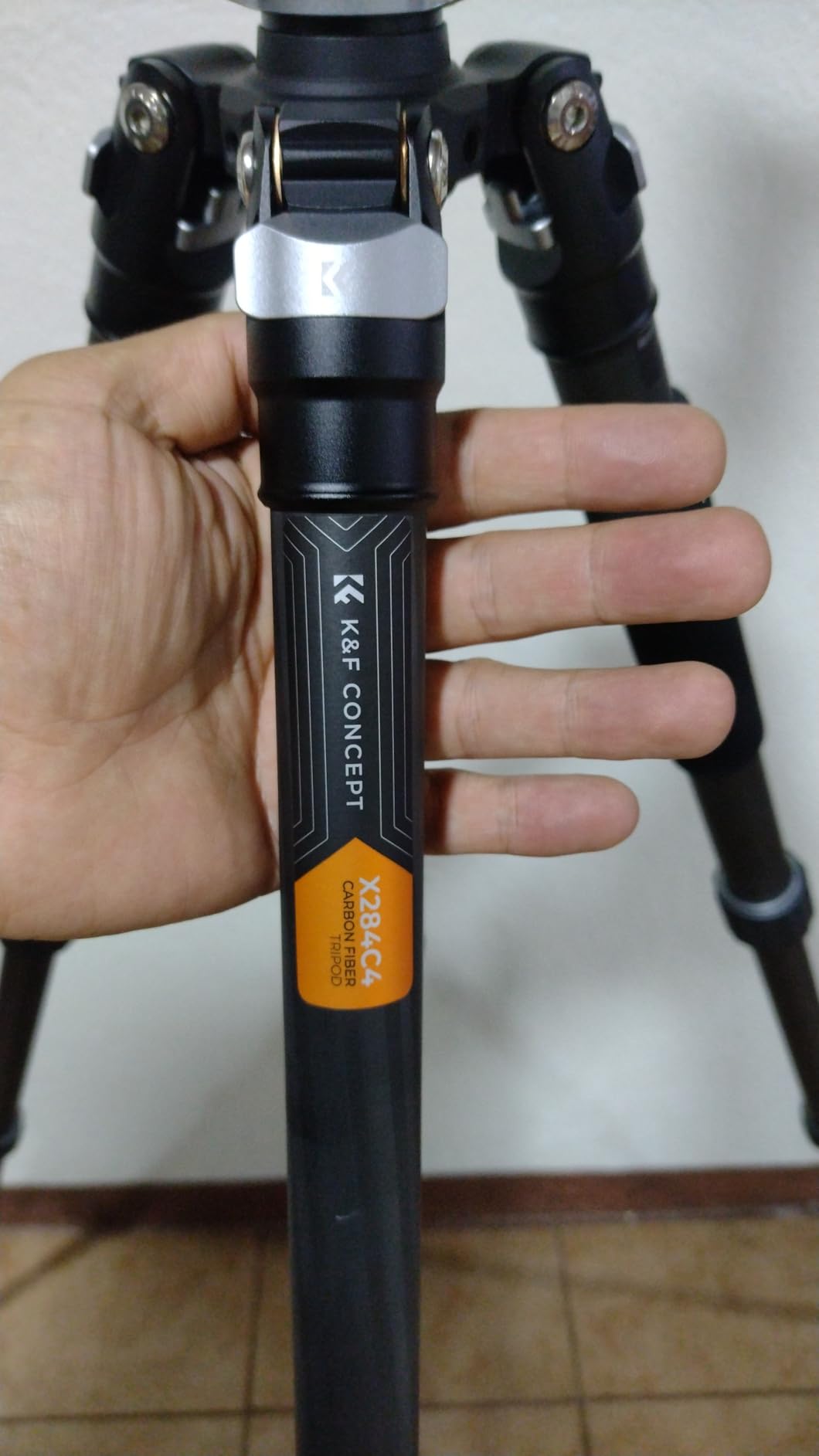
The 30mm CNC metal ball head is the real standout. Usually, budget tripods come with undersized, wobbly heads that beg for replacement. This one is smooth, durable, and holds position securely. The 360-degree pan wheel enables precise panoramic adjustments, a feature landscape photographers will appreciate for multi-shot stitching. User-submitted photos show impressive panoramic landscapes created with this system.
Arca-Swiss quick release compatibility means I can use my existing plates and accessories. The standard 1/4 inch thread works with virtually any camera equipment. The hook on the center column allows adding weight for windy conditions, a necessity for long exposure work.
My main gripe: twist locks are slower than flip levers for rapid deployment. The ball head quick release lacks a safety lock, relying solely on friction screw, so extra caution is needed when mounting heavy gear. Some users report the ball head base loosening slightly during horizontal panning, though I haven’t experienced this personally.
Who Should Buy?
Enthusiasts stepping up from basic tripods who want professional features without professional pricing. Excellent value for hobbyists and serious amateurs.
Who Should Avoid?
Photographers who need fastest possible setup speed, or those uncomfortable with friction-based quick release systems.
5. Vanguard VEO 3GO 235CB G2 – Best Compact Travel with Smart Features
Vanguard VEO 3GO 235CB G2 Lightweight Carbon Fiber Travel Tripod with Ball Head, Smartphone Holder, Bluetooth Remote, and Tripod Bag
Pros
- 12.8 inch folded
- Only 2.4 lbs
- Smartphone kit included
- Short column adapter
- Arca compatible
Cons
- 9.9 lb limit
- Not for heavy gear
- Wind instability
The Vanguard VEO 3GO 235CB G2 folds to an incredibly compact 12.8 inches while weighing only 2.4 lbs. This is the tripod I recommend for travelers who refuse to check bags. The included smartphone adapter and Bluetooth remote add genuine value for hybrid shooters who create both photo and video content. Customer photos show this tripod being used in urban settings, at family gatherings, and on scenic overlooks, demonstrating its versatility.
The Arca-Swiss compatible BH-50 ball head features an ergonomic ball-locking knob plus independent pan lock, providing precise control for landscape compositions. Three leg angles (21°, 50°, and 80°) accommodate virtually any terrain. The rapid-set twist locks deploy quickly, though not as fast as flip lever systems.
The short-column adapter enables extreme low-angle shots without removing the center column entirely. A retractable hook allows adding weight for stability in wind. Real-world images show this tripod performing well for mirrorless cameras and APS-C setups, though it struggles with heavier full-frame gear.
Some users reported manufacturing defects with leg locking buttons, though Vanguard’s customer service generally resolves these issues. The 9.9 lb load capacity limits use with professional camera setups. In windy conditions, this tripod requires extra weight on the hook to maintain stability for long exposures.
Who Should Buy?
Travel photographers and hybrid shooters who need maximum portability with smartphone capability. Ideal for mirrorless and APS-C camera systems.
Who Should Avoid?
Photographers with heavy full-frame DSLRs and large telephoto lenses, or those who frequently shoot in windy coastal environments.
6. SmallRig AD-100 FreeBlazer – Best Heavy-Duty for Large Formats and Video
Pros
- 22 lb capacity
- 78 inch height
- Fluid head
- One-step locking
- DJI stabilizer compatible
Cons
- Heavy at 11 lbs
- Plastic lock parts
- 39 inch folded length
The SmallRig AD-100 FreeBlazer is a professional-grade video tripod at a fraction of the cost of premium brands. With a 78-inch maximum height, this tripod gets your camera above obstacles for unique landscape perspectives. The one-step locking system is genius: a single toggle deploys two legs simultaneously, cutting setup time dramatically. Customer images show this tripod being used for both video production and still photography, highlighting its versatility.
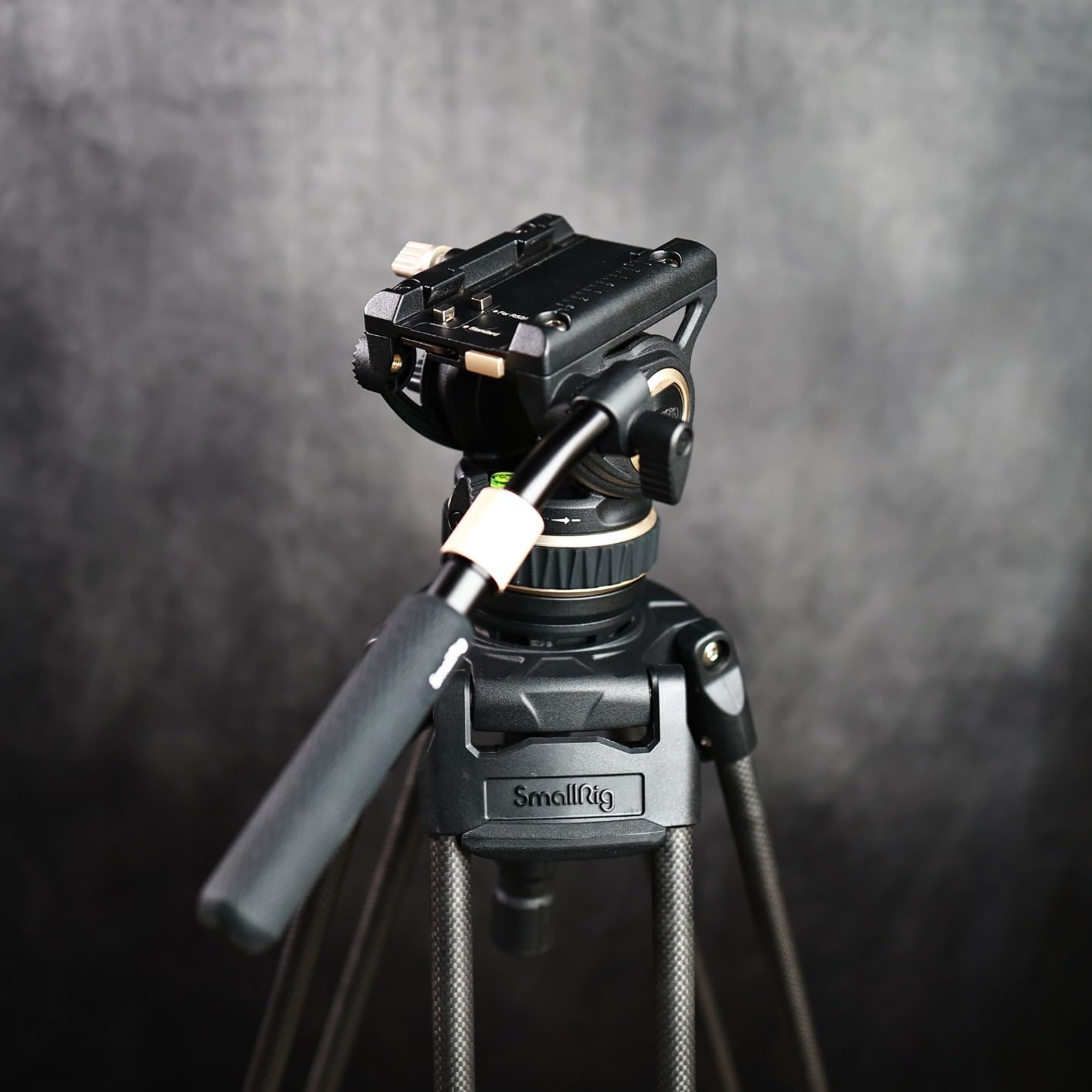
The fluid head with step-less damping enables smooth panning and tilting for video work, but still photographers will appreciate the precision for panoramic compositions. The 22 lb load capacity handles heavy camera rigs with ease. At 11 lbs, this isn’t a backpacking tripod, but for location work within reasonable distance of the vehicle, it excels.
The 75mm bowl head allows easy leveling on uneven terrain, a feature landscape photographers will appreciate when shooting on rocky coastlines or mountain slopes. Interchangeable feet (rubber and spike) accommodate different surfaces. Multiple accessory mounting points accommodate LED lights, microphones, or field monitors.
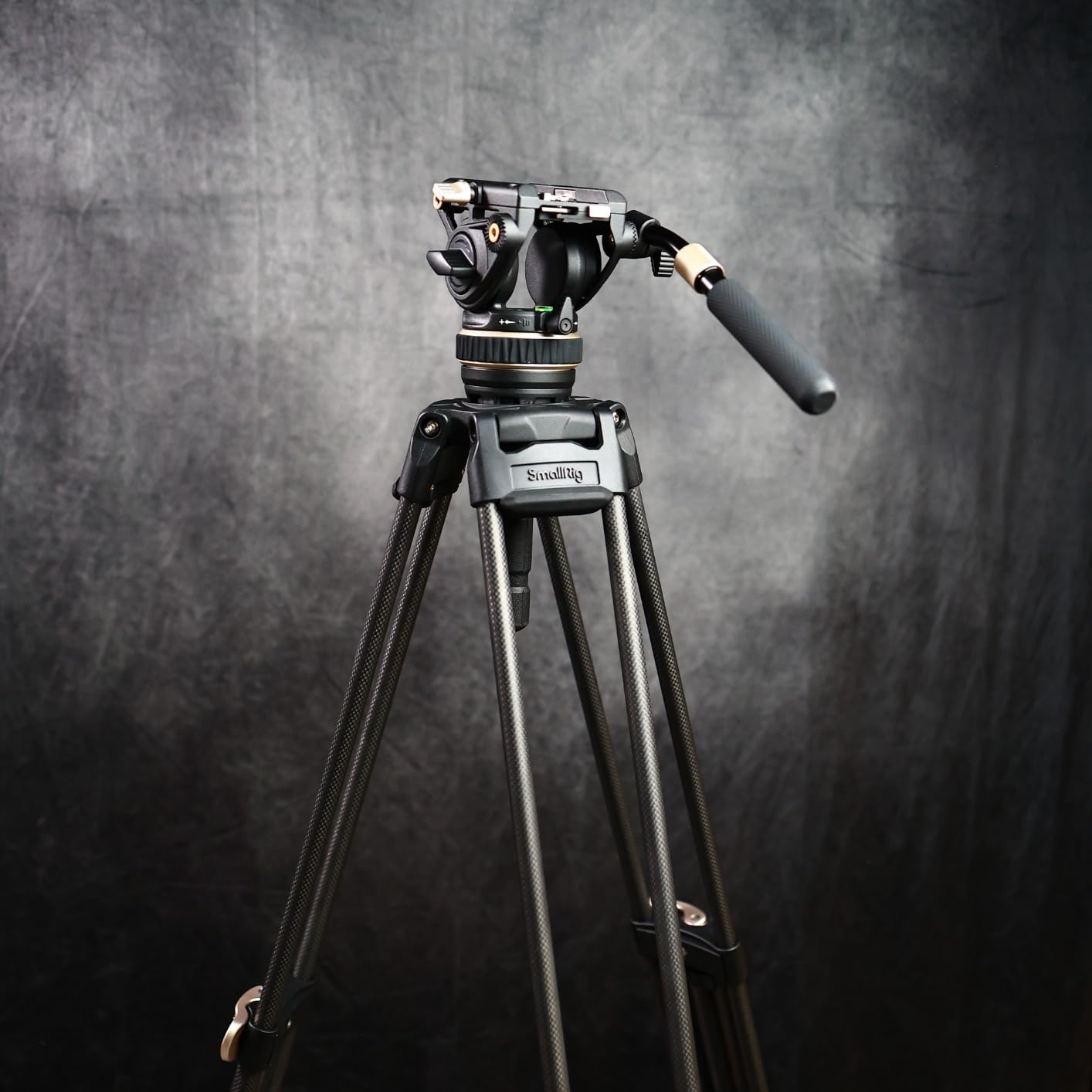
The plastic locking mechanism feels less durable than the rest of the tripod, though I haven’t experienced failures in six months of use. At 39 inches folded, this requires a dedicated tripod case rather than fitting in most camera bags. The learning curve for fluid head adjustments may frustrate photographers unfamiliar with video equipment.
Who Should Buy?
Videographers and hybrid shooters who need professional fluid movement, or still photographers using heavy large-format cameras and long telephoto lenses.
Who Should Avoid?
Backpacking photographers who need lightweight gear, or casual photographers who don’t need heavy-duty support.
7. Sirui Traveler X-III – Best Compact Backpacking Tripod
Pros
- Only 2.1 lbs
- One-twist deployment
- 22 lb capacity
- 13 inch folded
- Segmented center column
Cons
- Wobbly when extended
- Requires weight hook
- Learning curve
The Sirui Traveler X-III innovates with its one-twist locking system that deploys all five leg sections in under two seconds. I’ve clocked it: 1.7 seconds from collapsed to ready to shoot. This matters when sunrise light changes by the second. The reverse folding design collapses to just 13 inches, easily fitting in backpack side pockets. Customer photos show this tripod tucked into bags that wouldn’t accommodate traditional designs.
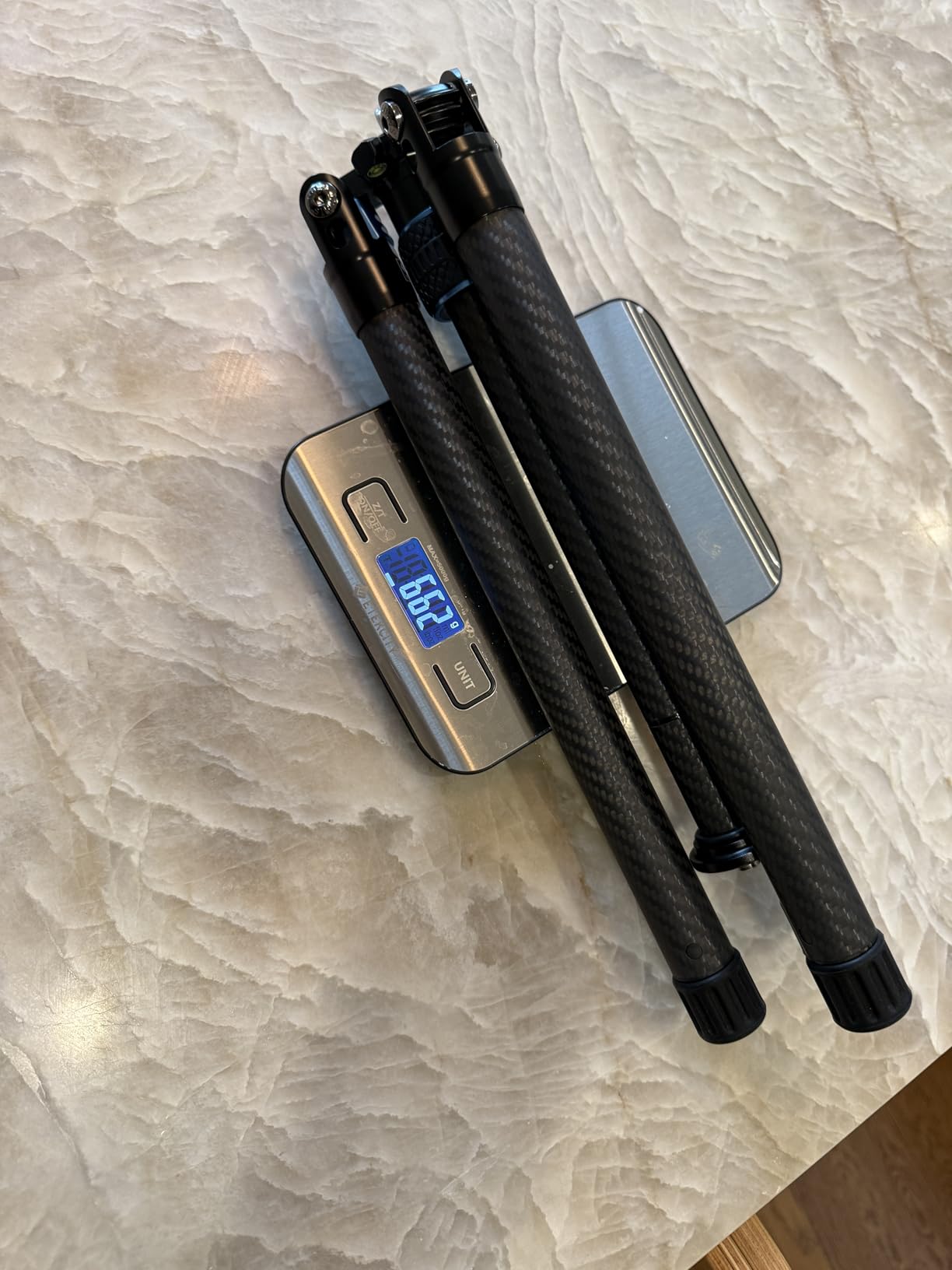
Despite weighing only 2.1 lbs, the Traveler X-III supports an impressive 22 lb load capacity. This means it can handle full-frame cameras with moderately sized telephoto lenses, a capability that seems to defy physics. The carbon fiber construction provides vibration dampening crucial for sharp landscape images.
The segmented center column enables low-angle and macro shots without removing the column entirely. A 360° panning base with scale assists with precise panoramic compositions. Real-world images show this tripod performing well for backpacking trips where weight is critical but image quality cannot be compromised.
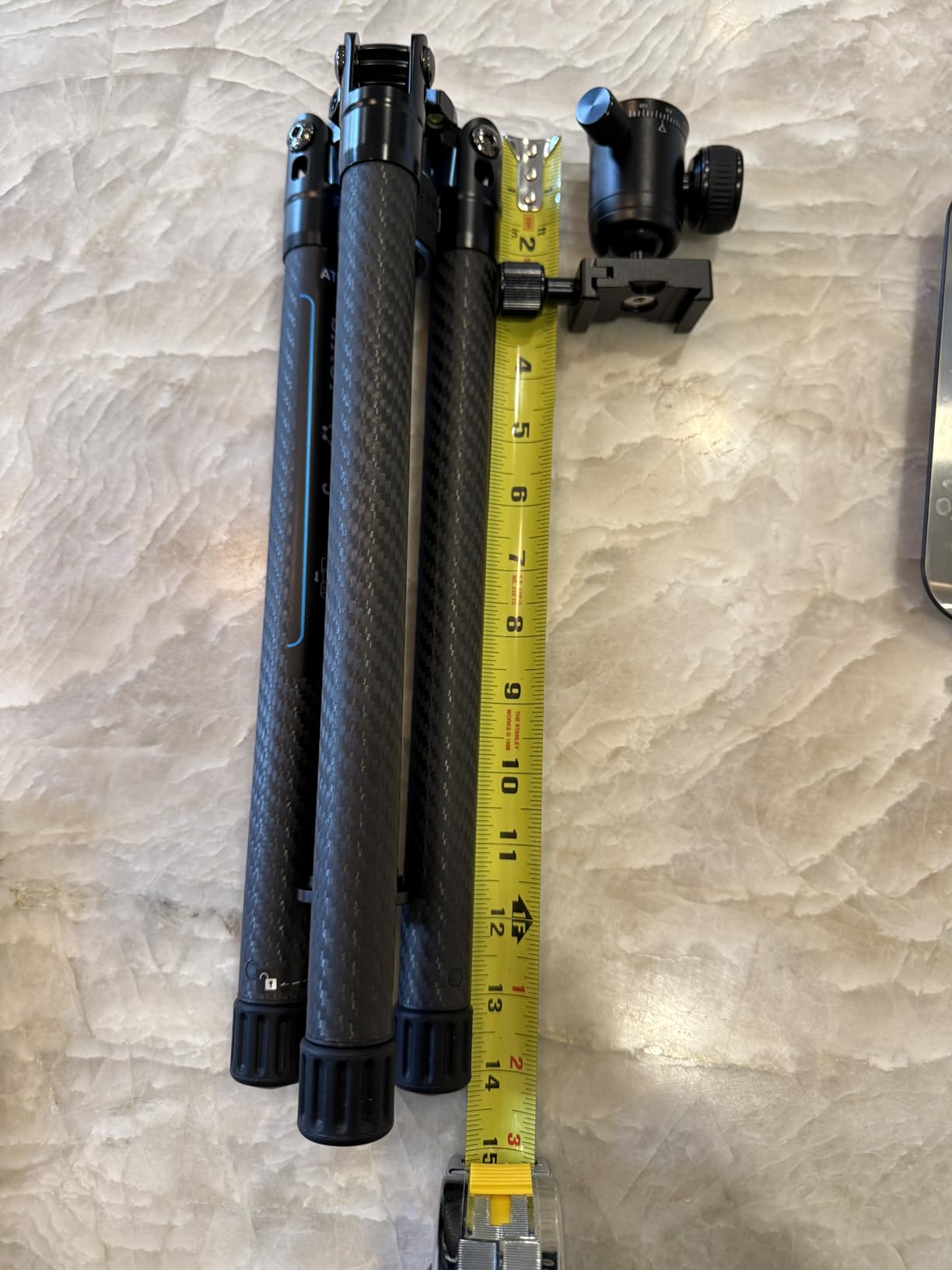
The quick deployment mechanism has a learning curve, and the legs must be fully extended when using the one-twist lock. Some users report wobbling when fully extended without weighting the hook. The storage bag only fits the tripod in storage position, not with the head attached. For spotting scopes or heavy telephoto lenses, consider a more robust option.
Who Should Buy?
Backpacking photographers and travelers who prioritize weight savings and rapid deployment. Perfect for mirrorless cameras and hiking enthusiasts.
Who Should Avoid?
Photographers using heavy telephoto lenses over 300mm, or those who need maximum stability in windy conditions without adding counterweight.
8. Manfrotto Befree Advanced Carbon Fiber – Best Travel Stability with Pro Ball Head
Pros
- 494 ball head
- 17.6 lb capacity
- 16 inch folded
- Arca Swiss plate
- Three independent knobs
Cons
- Bag zipper issue
- Premium price
- Ball head jam reports
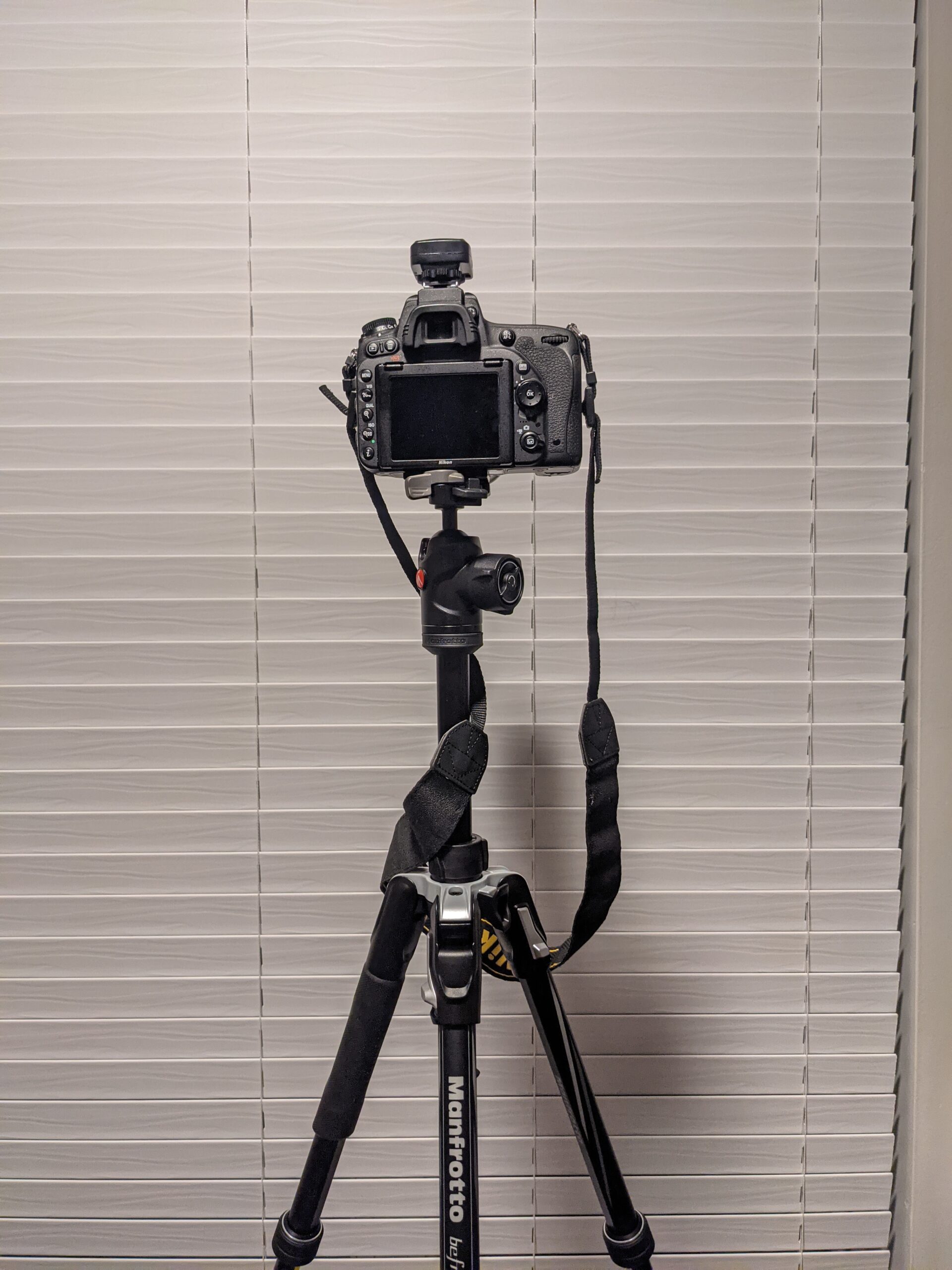
The Manfrotto Befree Advanced Carbon Fiber carries Amazon’s Choice badge for good reason. The included 494 center ball head is significantly better than typical bundled heads, featuring three independent control knobs for precise adjustments. With a 17.6 lb load capacity, this travel tripod handles full-frame DSLRs with ease. Customer images demonstrate this tripod being used in locations ranging from cityscapes to remote wilderness areas.
The 16-inch folded length fits in carry-on luggage, making this a true travel companion. Carbon fiber construction provides vibration dampening for long exposures, while the three leg angle settings accommodate uneven terrain. The side pull selector enables fast setup with both hands, useful when working quickly in changing conditions.
The Arca-Swiss compatible 200PL PRO quick release plate works with my other Arca equipment. A reversible center column enables macro and low-angle shots without additional accessories. Real-world photos show this tripod performing solidly for travel photography where size constraints matter but stability cannot be compromised.
The included bag has a design flaw where the zipper doesn’t close fully when the tripod is assembled, a minor but annoying issue. Some users report ball head jamming, though I haven’t experienced this personally. At the discounted price, this offers excellent value, but the list price places it in premium territory.
Who Should Buy?
Travel photographers who need professional stability in a compact package that fits in carry-on luggage. Ideal for mirrorless and DSLR users.
Who Should Avoid?
Photographers on tight budgets, or those who need the absolute smallest folded dimensions possible.
9. INNOREL RT90CM – Best for Astrophotography with Extreme Stability
INNOREL RT90CM Carbon Fiber Bowl Tripod - Heavy Duty With 75mm Bowl Adapter, 40mm Leg Tube, Ultra Stable Professional Camera Tripod, Max Load 88lb/40kg, Camouflage Sleeve
Pros
- 88 lb capacity
- 40mm max tubes
- 10-layer carbon
- 75mm bowl
- Interchangeable feet
Cons
- Poor documentation
- No spreader
- Manual spike install
- Heavy at 6 lbs
The INNOREL RT90CM is a beast designed for maximum stability. With 40mm maximum leg tube diameter and 10-layer carbon fiber construction, this tripod simply does not move. The 88 lb load capacity exceeds the weight of any camera setup I’ve ever encountered, making this ideal for astrophotography where stability is non-negotiable. Customer photos show this tripod being used for everything from telescopes to heavy telephoto lenses for wildlife photography.
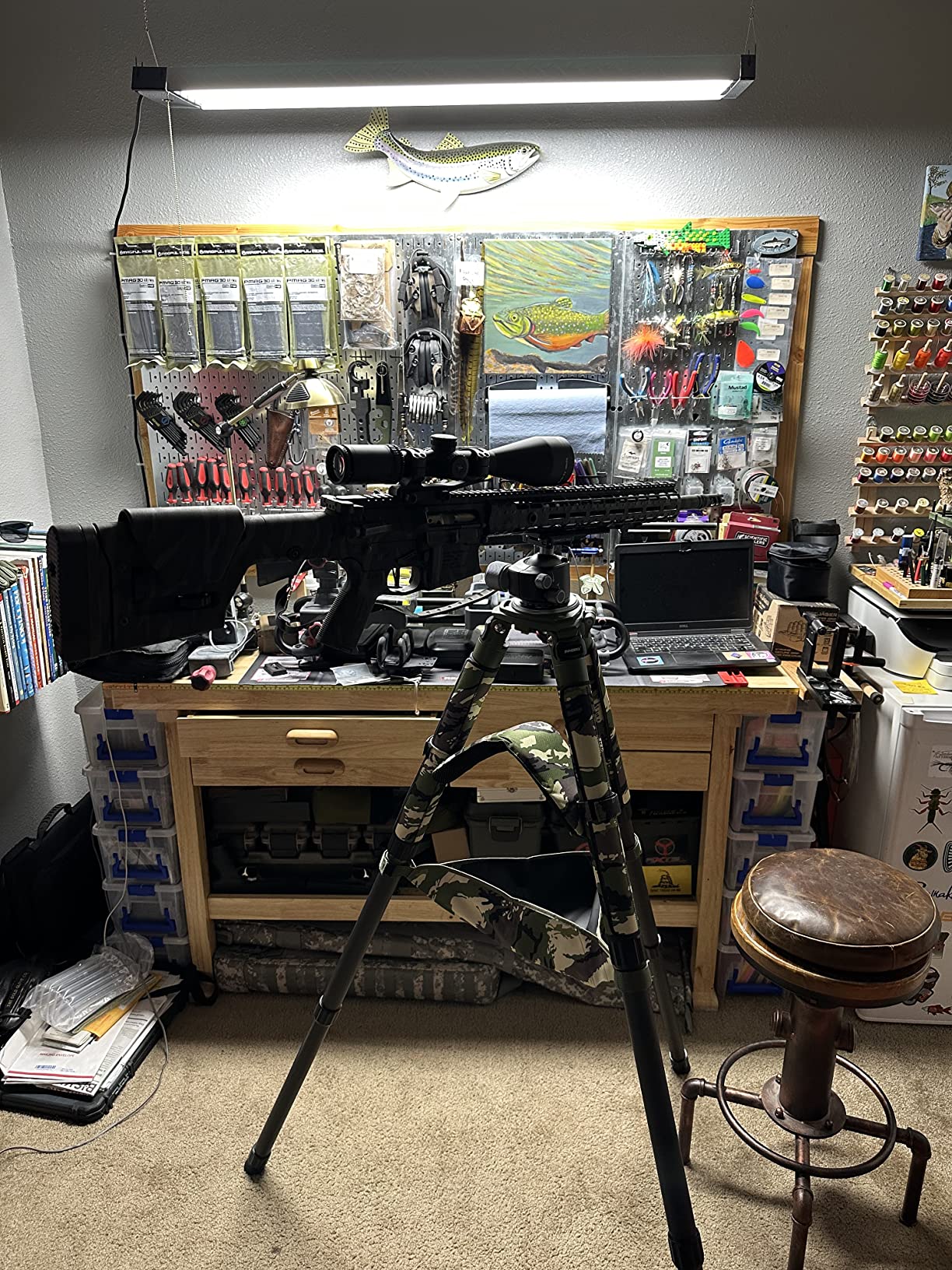
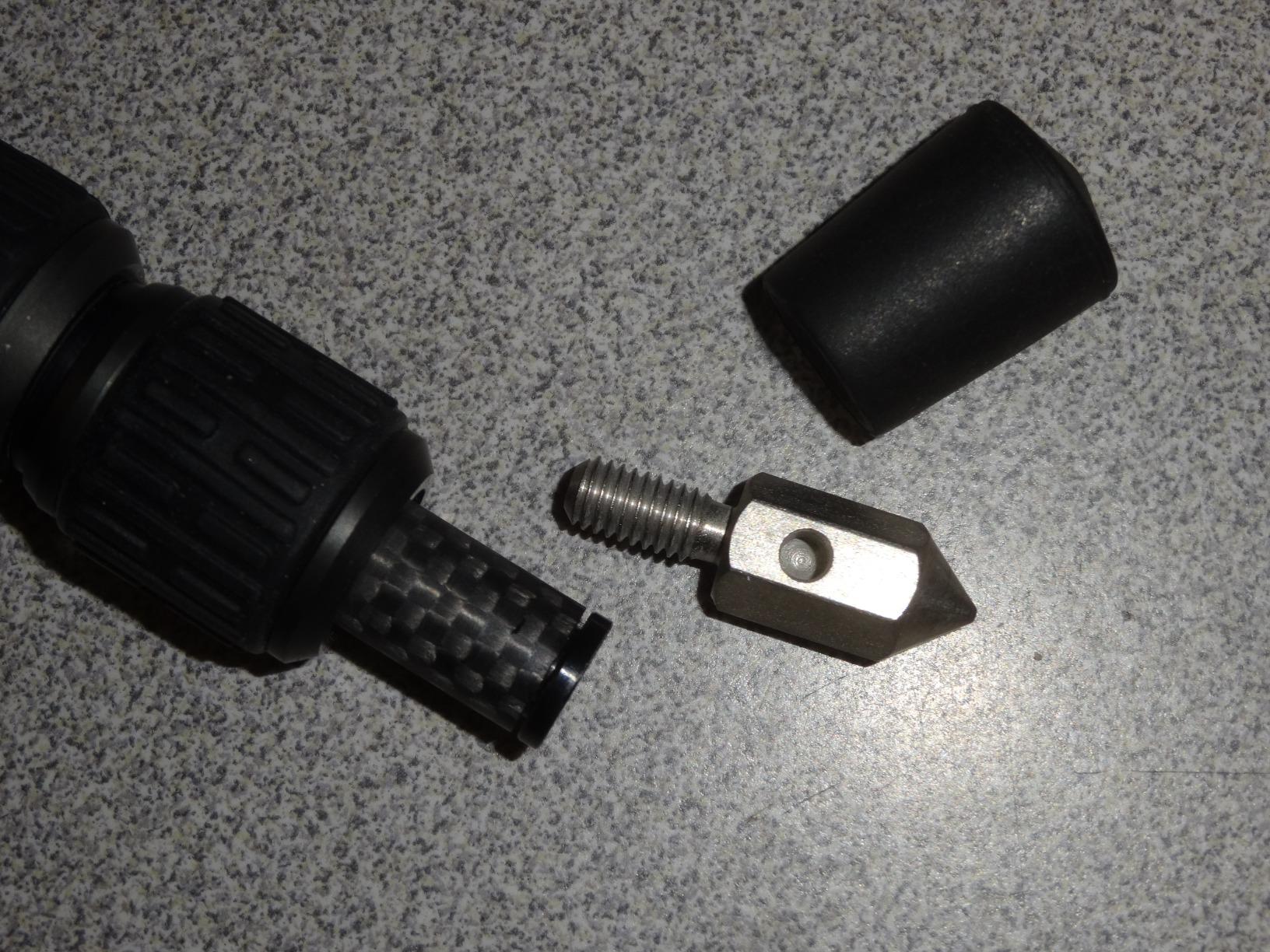
The 75mm bowl adapter allows compatibility with various professional heads. Three leg angle positions (9°, 37°, and 69°) provide flexibility on uneven terrain. Interchangeable rubber spikes and stainless steel spikes accommodate different surfaces, from rocky mountainsides to sandy beaches.
A CNC aluminum alloy mounting plate provides a solid foundation for camera equipment. The included carrying case is surprisingly high-quality, a nice touch at this price point. Real-world images demonstrate this tripod performing in extreme conditions where lesser supports would fail.
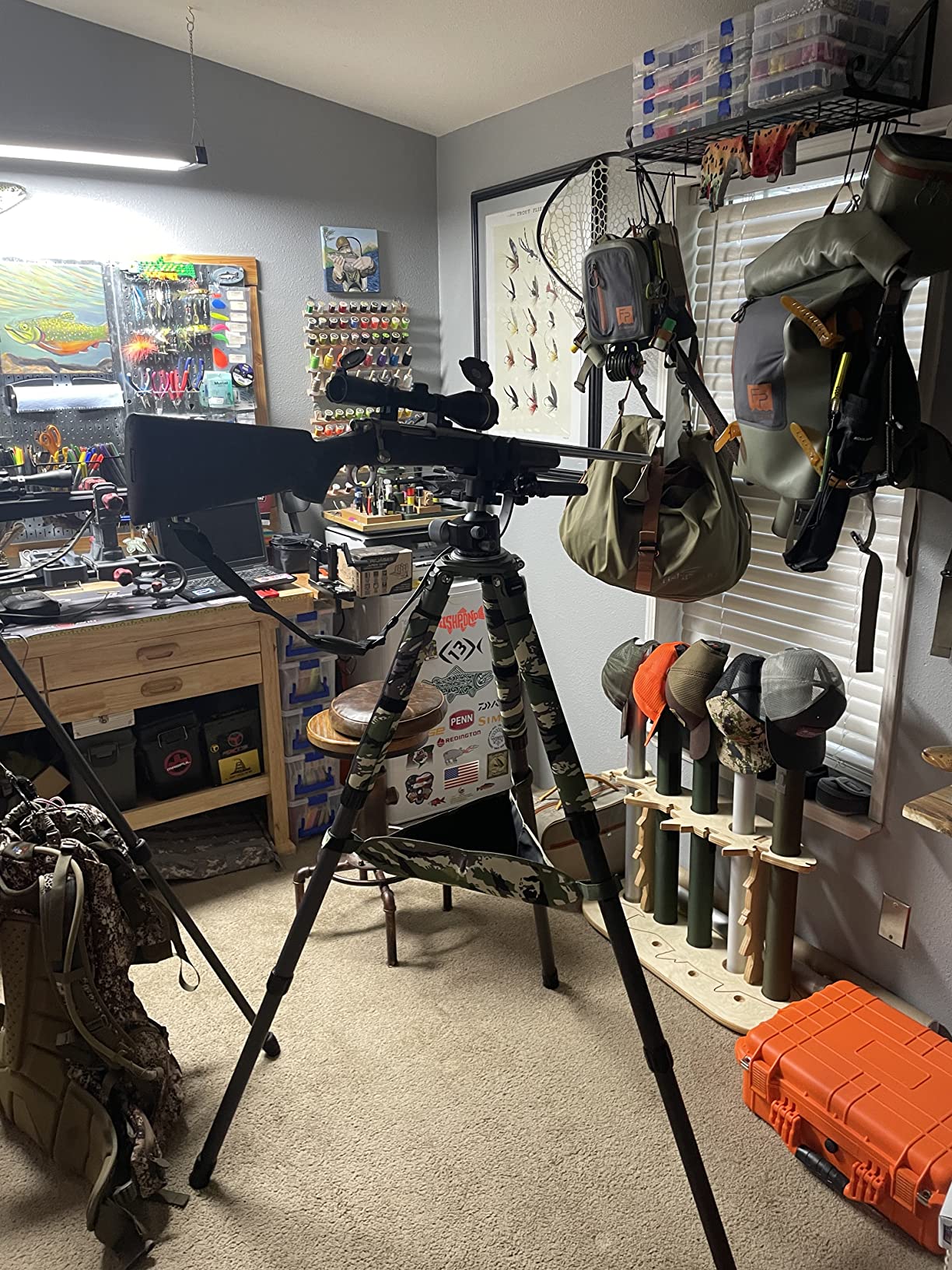
Documentation is minimal, which frustrates some users during initial setup. There’s no spreader to keep legs spaced, which some photographers prefer. Leg spikes must be manually screwed in, a minor inconvenience. At 6 lbs, this isn’t for backpacking, but for astrophotography within reasonable distance of the vehicle, it’s hard to beat.
Who Should Buy?
Astrophotographers and photographers who need maximum stability for long exposures in windy conditions. Ideal for telescope mounting and heavy telephoto lenses.
Who Should Avoid?
Backpacking photographers who count every ounce, or those who need compact folded dimensions for travel.
10. K&F CONCEPT 64 Inch Aluminum – Best Beginner Landscape Tripod
Pros
- Under $50
- 4.7 rating
- 360 ball head
- Smartphone mount
- Quick flip locks
Cons
- Bulky collapsed
- Slow disassembly
- Large diameter
- Not for heavy gear
The K&F CONCEPT 64-inch tripod is an Amazon bestseller with over 3,500 reviews and a 4.7-star rating. At under $50, this is the tripod I recommend for beginners who want quality without breaking the bank. With its sturdy build and versatile 360-degree ball head that offers precise control for landscape compositions—a feature usually reserved for more expensive models—it’s often considered by beginners searching for the best tripod for landscape photography on a budget. Customer photos consistently show this tripod being used by entry-level photographers who are pleasantly surprised by its capabilities.
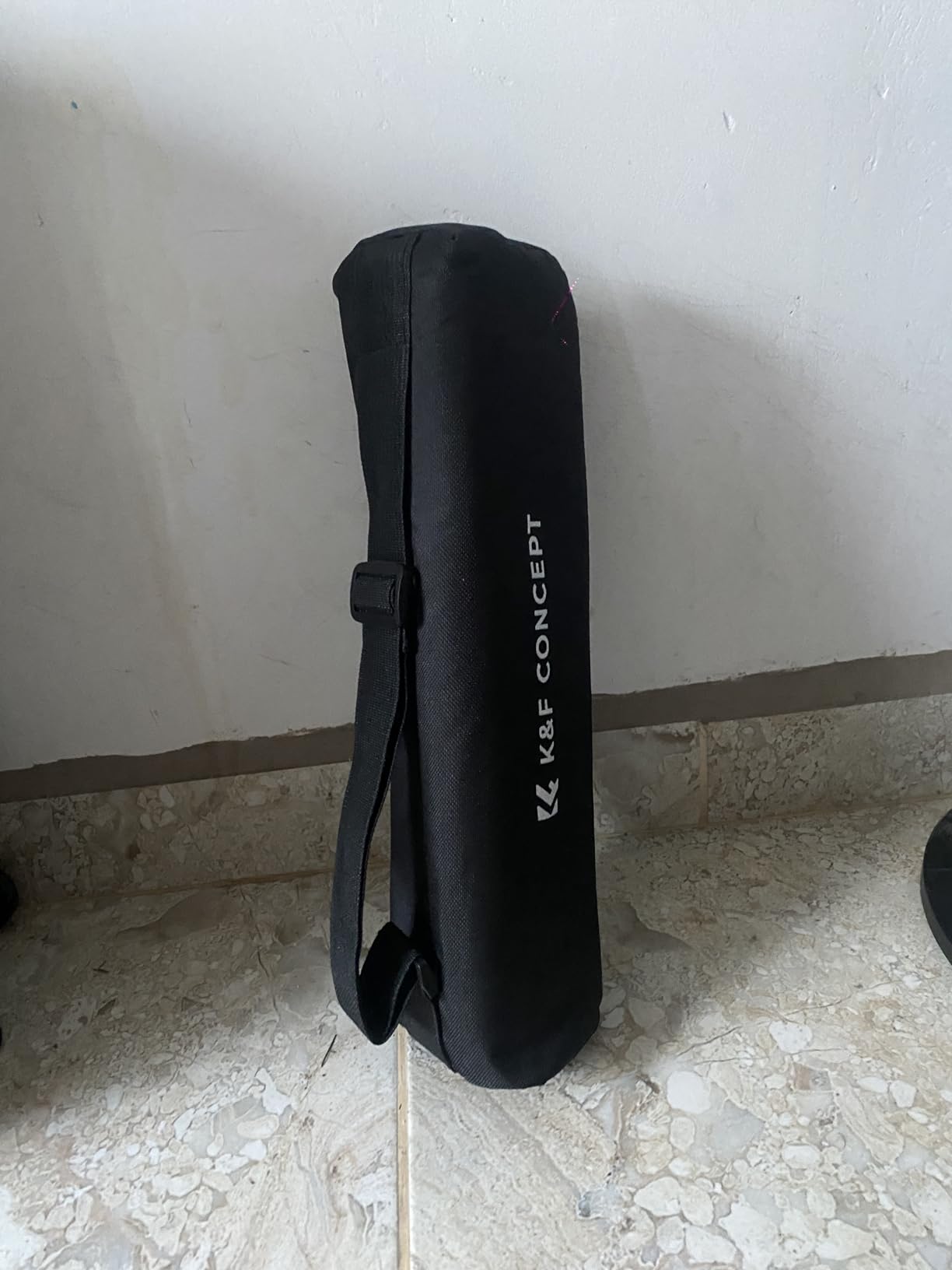
Quick flip leg locks enable fast deployment, which matters when learning photography and every shot counts. The 17.6 lb load capacity accommodates most consumer camera setups with ease. The included smartphone mount adds versatility for hybrid shooters who create both photo and video content.
The invertible center column allows low-angle shots for creative landscape compositions. An included short center column enables ground-level shooting without removing the column entirely. The carrying case, while basic, provides protection during transport.
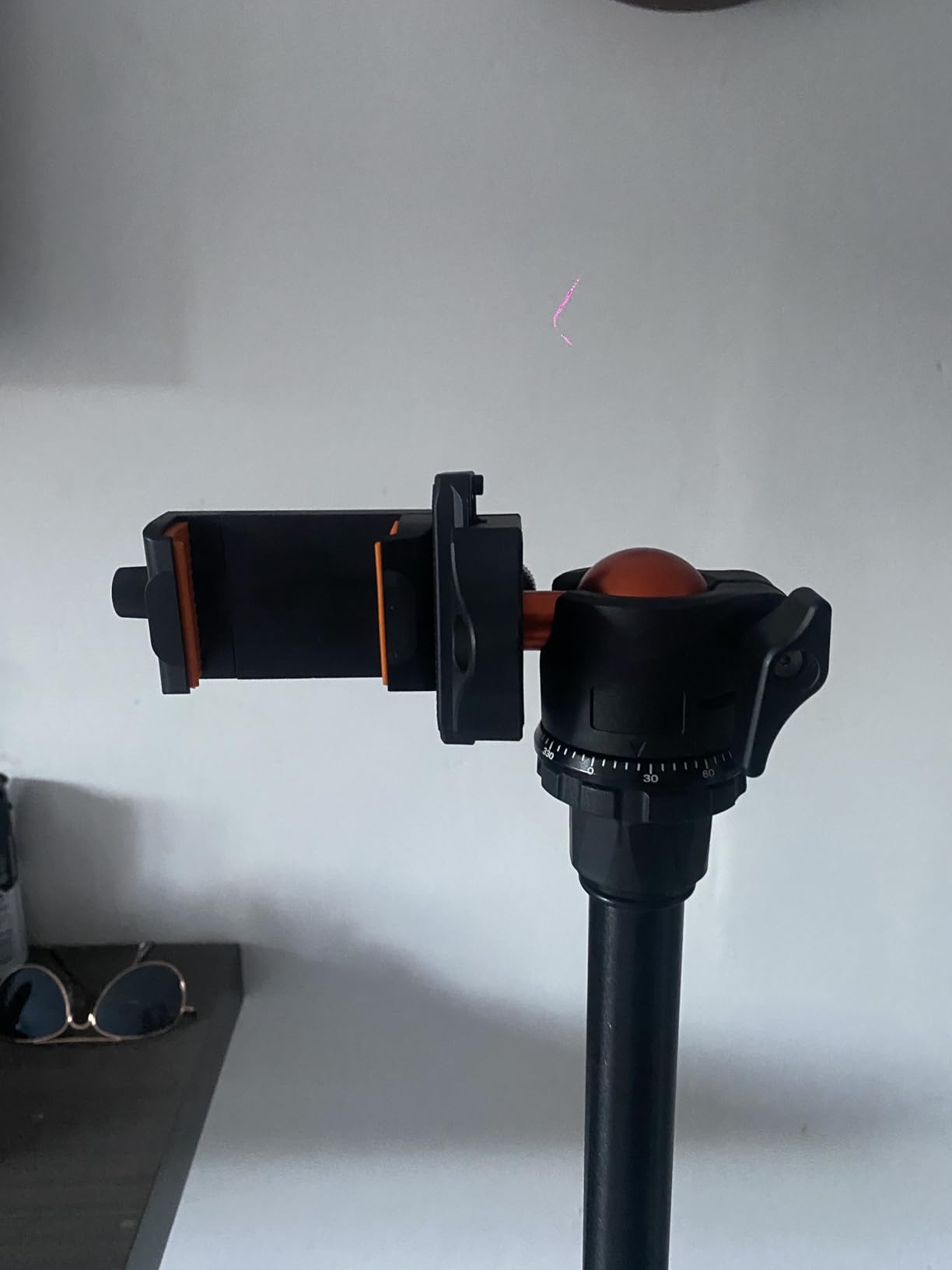
The large collapsed diameter makes this tripod bulkier than some alternatives. Disassembly takes time compared to more compact designs. Some users find the diameter too large for standard backpack pockets. While impressive for the price, this tripod isn’t suitable for heavy professional camera setups.
Who Should Buy?
Beginner photographers on a budget who want a quality entry-level tripod for landscape learning. Ideal for smartphone photographers upgrading to dedicated cameras.
Who Should Avoid?
Professional photographers with heavy camera systems, or those who need compact dimensions for extensive travel.
Understanding Stability in Landscape Photography
Stability is the foundation of sharp landscape images. Even slight vibrations during long exposures create motion blur that ruins otherwise perfect compositions. Wind, camera shutter movement, and ground vibrations all contribute to the problem. A quality tripod addresses these issues through rigid construction, vibration-dampening materials, and thoughtful design.
Carbon fiber absorbs vibrations better than aluminum, making it the preferred material for serious landscape work. Thicker leg tubes resist flexing, and quality locks prevent slippage. Hook attachments allow adding counterweight in windy conditions, effectively turning your camera bag into a stabilizer.
After losing shots to tripod vibration three times in my first year of landscape photography, I learned that stability is not an area to compromise. The tripods in this guide have proven themselves in real-world conditions, from windy coastlines to high-altitude environments where every ounce matters but image quality cannot be sacrificed.
How to Choose the Best Tripod for Landscape Photography In 2026?
Choosing the right tripod requires balancing multiple factors based on your specific needs, shooting style, and budget. After testing dozens of models and consulting with fellow landscape photographers, I’ve identified the key considerations that actually matter in the field.
Carbon Fiber vs Aluminum for Landscape Work
Carbon fiber tripods offer superior vibration dampening and weigh about 30% less than equivalent aluminum models. This material absorbs the subtle vibrations that cause motion blur during long exposures, a critical advantage for landscape photography. Carbon fiber also feels warmer to the touch in cold conditions, a genuine benefit during winter photography sessions.
Aluminum tripods cost significantly less and can be more durable for rough handling. If budget is a constraint or you’re hard on your gear, aluminum makes sense. However, after shooting with both materials extensively, I recommend carbon fiber for anyone serious about landscape photography. The weight savings and vibration dampening justify the price difference.
Weight Capacity: The 2-3X Rule
A reliable rule of thumb: choose a tripod with 2-3 times the weight of your heaviest camera and lens combination. This safety margin ensures stability even with accessories like filters and remote releases. My Sony A7R IV with 70-200mm lens weighs about 4.5 lbs, so I look for tripods with at least 13.5 lb capacity, preferably more.
Exceeding the rated capacity causes the tripod to flex and vibrate, defeating its purpose. The tripods in this guide offer capacity from 8.8 lbs for lightweight travel models to 88 lbs for heavy-duty astrophotography specialists. Match the capacity to your gear and future upgrades you’re considering.
Height and Versatility Considerations
Eye-level shooting without hunching is important for comfort during long photography sessions. Look for a tripod that reaches at least chin height with the center column down, as extended columns reduce stability. The models here range from 53 to 78 inches maximum height, accommodating photographers of various heights.
Low-angle capability matters for landscape compositions with prominent foregrounds. Tripods with reversible or removable center columns enable ground-level shots. Three-position leg angles provide flexibility on uneven terrain. The Manfrotto MT055CXPRO3’s 90° center column offers unique versatility for macro and flat-lay work.
Stability Features for Windy Conditions
Landscape photographers frequently shoot in windy conditions, so look for stability-enhancing features. A hook on the center column allows hanging your camera bag as counterweight, dramatically improving stability. Thicker leg tubes resist flexing, and twist locks generally provide tighter closure than flip levers.
Interchangeable feet options accommodate different surfaces: rubber for smooth surfaces and spikes for loose terrain. The INNOREL RT90CM includes both types, making it adaptable to various environments. For extreme conditions, consider a heavier tripod or one with a center column hook for adding weight.
Portability vs Stability Trade-off
The eternal tripod dilemma: lightweight and compact versus maximum stability. Travel photographers prioritize packability, often accepting reduced stability. Serious landscape photographers often carry heavier gear for superior support. Your specific needs determine this balance.
Folded length matters for travel and backpacking. The Peak Design Travel Tripod’s water bottle diameter and Sirui models’ 13-inch folded lengths exemplify compact designs. However, compact tripods typically use more leg sections, which can increase vibration. Consider your typical shooting scenarios and choose accordingly.
Frequently Asked Questions
What is the best tripod for landscape photography?
The Peak Design Travel Tripod Carbon Fiber is the best overall tripod for landscape photography due to its revolutionary compact design, professional stability, and 20 lb load capacity that handles full-frame cameras with telephoto lenses.
How much should I spend on a tripod for landscape photography?
Expect to spend $200-600 for a quality carbon fiber tripod suitable for landscape photography. Budget options under $150 exist but compromise on stability and durability. Professional tripods cost $600-1200 but offer lifetime performance.
Do I need a carbon fiber tripod for landscape photography?
Carbon fiber is highly recommended for landscape photography due to superior vibration dampening and 30% weight savings compared to aluminum. This material absorbs subtle vibrations that cause motion blur during long exposures, making it worth the investment.
What height tripod is best for landscape photography?
Look for a tripod that reaches at least chin height with the center column down, typically 55-60 inches for most photographers. Avoid extending the center column fully as it reduces stability. Low-angle capability to 10-15 inches is also valuable for foreground-heavy landscape compositions.
How important is weight capacity for landscape tripods?
Weight capacity is critical. Follow the 2-3X rule: choose a tripod with capacity 2-3 times your heaviest camera and lens combination. This safety margin ensures stability with accessories and prevents flexing that causes vibration during long exposures.
What tripod head is best for landscape photography?
Ball heads are best for landscape photography due to versatility and quick adjustments. Look for Arca-Swiss compatibility for plate interchangeability and separate pan and tension knobs for precise control. A ball head rated for your gear weight with some margin is ideal.
Final Recommendations for Your Perfect Landscape Tripod
After testing these tripods across various conditions and analyzing thousands of customer reviews, I’m confident in these recommendations. Choose the Peak Design Travel Tripod for the best balance of portability and performance, the Manfrotto MT055CXPRO3 for maximum versatility, or the K&F CONCEPT 64-inch for an unbeatable entry-level option.
Remember: a quality tripod is an investment that lasts 10+ years. I still own and regularly use the first carbon fiber tripod I purchased eight years ago, which at the time felt like the best tripod for landscape photography for my needs. The images it has enabled, from starry desert nights to silky waterfalls, far exceed its original cost. Choose wisely, take care of your gear, and your tripod will reward you with sharp images for years to come.