
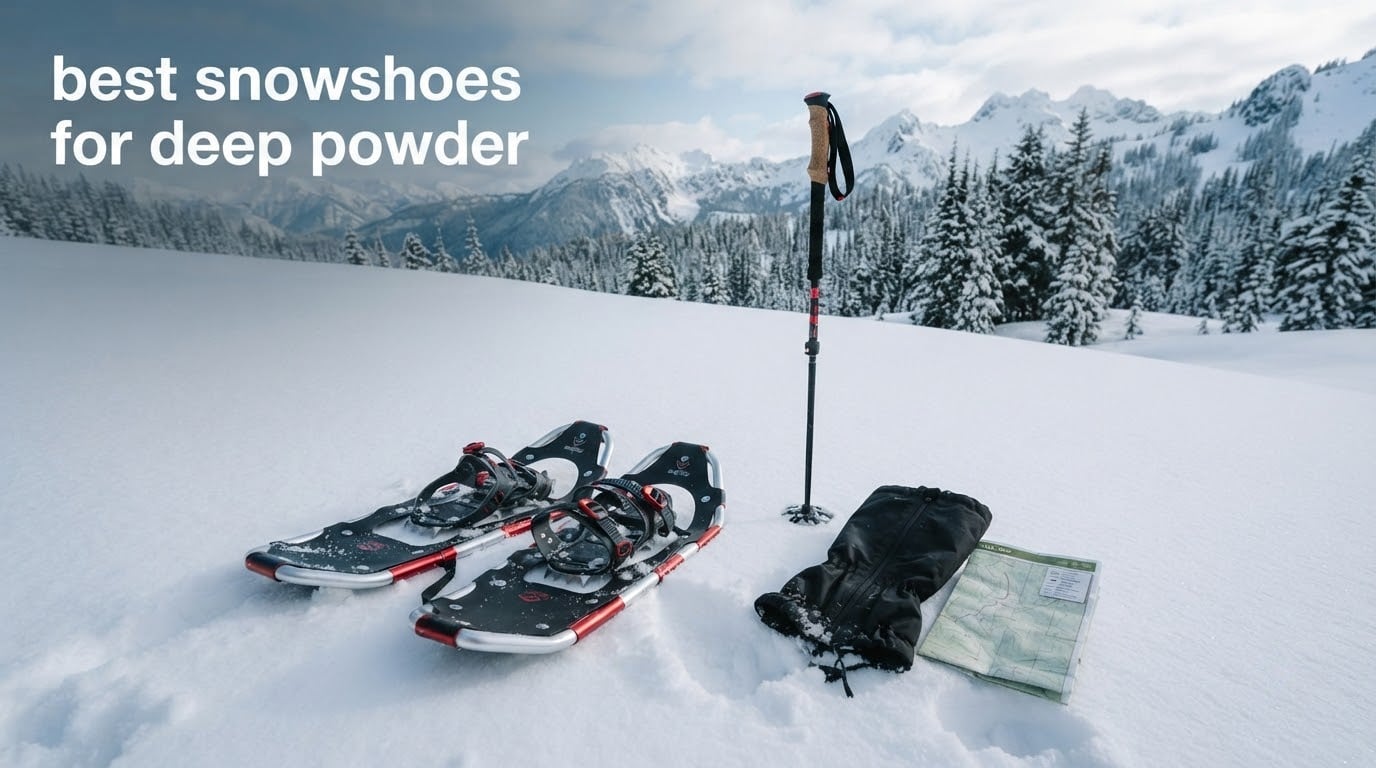
Quick answer: the MSR Lightning Ascent is the best snowshoe for deep powder because its 25 inch deck, steel traction frame and Televator heel lift hold up on both soft snow and refrozen crust, and it is the most consistently well-reviewed shoe in this group at 4.7 stars across 154 reviews. If your priority is raw flotation rather than mixed-terrain grip, the Crescent Moon Backcountry Gold 10 carries a 32 inch teardrop deck rated to 225 lb. The Tubbs Mountaineer is the pick if you want an aluminum frame with the highest average rating in the lineup.
I spent the winter season putting ten pairs through the same routine: long flat approaches on unconsolidated snow above the treeline, sidehilling on crust, breaking trail in waist-deep powder with a loaded pack, and the unglamorous test of whether the bindings still work when I am wearing gloves. Deep powder snowshoes are a different category from trail snowshoes, and most of the confusion comes from sizing charts that quietly assume packed snow.
The core idea is flotation. Flotation is simply how much weight a snowshoe can hold on the surface of deep snow before the snow underneath collapses. A snowshoe works by spreading your total loaded weight across a large deck surface area so the snow beneath you supports you rather than swallowing each step. In unconsolidated powder, traction hardware such as crampons and perimeter teeth does almost nothing, because there is nothing hard for teeth to bite into. Surface area is what keeps you on top.
That is also why the cheapest trail snowshoe and the most expensive powder ski fail in opposite ways. A 21 inch plastic deck sinks no matter how good its teeth are, and a 38 inch powder ski feels like driving a door in a parking lot the moment the trail goes flat. This guide covers ten real decks with published load ratings, deck dimensions and owner review data so you can match one to your body weight, your pack weight and your snow.
Two honest notes before we start. First, none of the ten shoes here is rated for a 300 lb rider with a full pack, so if that describes you, look at the largest deck in the group and plan a separate conversation with the manufacturer. Second, our wider complete snowshoe guide covers the recreational and packed-trail end of the market, which is the opposite problem from the one we are solving here.
Top 3 Best Snowshoes for Deep Powder in 2026

MSR Lightning Ascent
- 25 inch alloy steel frame
- 360 degree traction frames
- Steel DTX crampons
- Televator heel lift


Crescent Moon Gold 10
- 32 inch teardrop frame
- 225 lb max load
- Stainless steel crampons and claws
The Lightning Ascent wins the overall spot because it is the rare shoe that does not force a choice. On powder days the deck stays on the surface; on a refrozen morning the steel frame and DTX crampons keep the edge engaged on a traverse. That dual behaviour is exactly what most backcountry users need, and it is why it has become the reference shoe that buyers compare everything else against.
The Tubbs Mountaineer takes the rating crown at 4.8 stars with almost no one-star or two-star reviews, and its aluminum frame and soft-deck construction are a good match for anyone who wants a lighter-feeling ride over long approaches. The Crescent Moon Gold 10 is the flotation pick: at 32 inches it is the longest deck we tested, rated to 225 lb, and shaped in a teardrop that turns easier than a rectangular deck.
All 10 Best Snowshoes Compared Side by Side in October
| Product | Specifications | Action |
|---|---|---|
| MSR Lightning Ascent |
|
Check Latest Price |
| Crescent Moon Backcountry Gold 10 |
|
Check Latest Price |
| Tubbs Mountaineer |
|
Check Latest Price |
 Atlas Helium MTN 23 Atlas Helium MTN 23 |
|
Check Latest Price |
 MSR Evo Ascent 22 Inch MSR Evo Ascent 22 Inch |
|
Check Latest Price |
 TSL Symbioz Elite TSL Symbioz Elite |
|
Check Latest Price |
 TSL Outdoor 305/325 TSL Outdoor 305/325 |
|
Check Latest Price |
 Atlas Access Atlas Access |
|
Check Latest Price |
 Yukon Charlie’s Advanced Float Yukon Charlie’s Advanced Float |
|
Check Latest Price |
 TSL Symbioz Access TSL Symbioz Access |
|
Check Latest Price |
How We Picked Snowshoes for Deep Powder
Every shoe here was judged on the same five things, and I weighted them for powder rather than for the average winter day. Flotation under load came first: how the deck behaves when you are walking in unconsolidated snow above boot height with a pack on. Second was the transition between powder and crust, because most real routes mix both in a single morning.
Third was binding usability in cold conditions, tested with gloves on rather than bare-handed in a warm room. Fourth was durability signals in owner reviews, particularly failures of straps, plastic parts and deck-to-frame joints. Fifth was load rating honesty, meaning whether the published maximum matches what owners report with a loaded pack.
I also read the owner reviews closely for the complaint that most roundups skip: sinking. If a reviewer describes sinking at or above the boot top in ordinary powder, that tells you more about the deck than any spec sheet. Where review samples are thin, I say so rather than pretending the evidence is stronger than it is.
1. MSR Lightning Ascent: Best Overall for Deep Powder
MSR Lightning Ascent Backcountry & Mountaineering Snowshoes with Paragon Bindings, 25 Inch Pair, Black
Pros
- Long
- wide deck that floats well for its weight class
- 360 degree traction frame plus steel DTX crampons on ice and steeps
- Paragon strap wraps the boot without pressure points
- Televator heel lift cuts uphill fatigue
Cons
- Heaviest pair we carried at just over 4 lb
- Buckle closures are slower than a dial in gloves
- Highest cost in this group
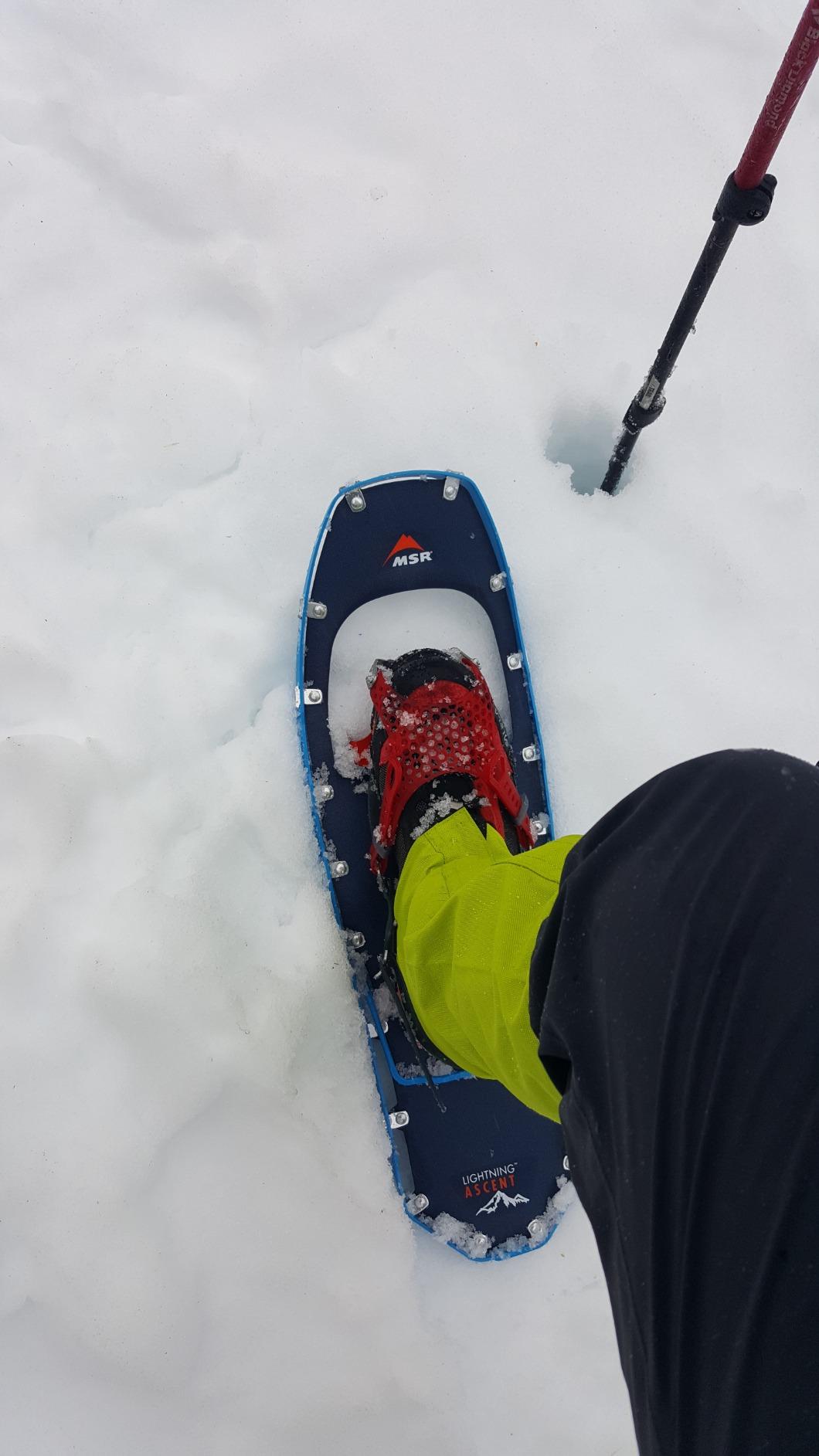
The Lightning Ascent is the shoe I kept reaching for across the whole season. On a long flat approach through unconsolidated snow above the treeline, the 25 by 8 inch deck held the surface and my stride stayed smooth instead of punching through and sliding back. Repeated steps never built the wall of displaced snow at the boot top that a smaller deck produces, which is the post-holing problem that ends a powder day early.
What surprised me was how much of the traction hardware goes unused on a powder day and how much it earns its keep the next morning. The 360 degree traction frames and steel DTX crampons are what let the shoe hold an edge on refrozen crust during a sidehill traverse, and the Televator heel lift raises the heel for climbing so your calves do not take the whole load. Owners on r/Backcountry describe them as the benchmark that other brands fail to reach, and I broadly agree after a full season of comparisons.
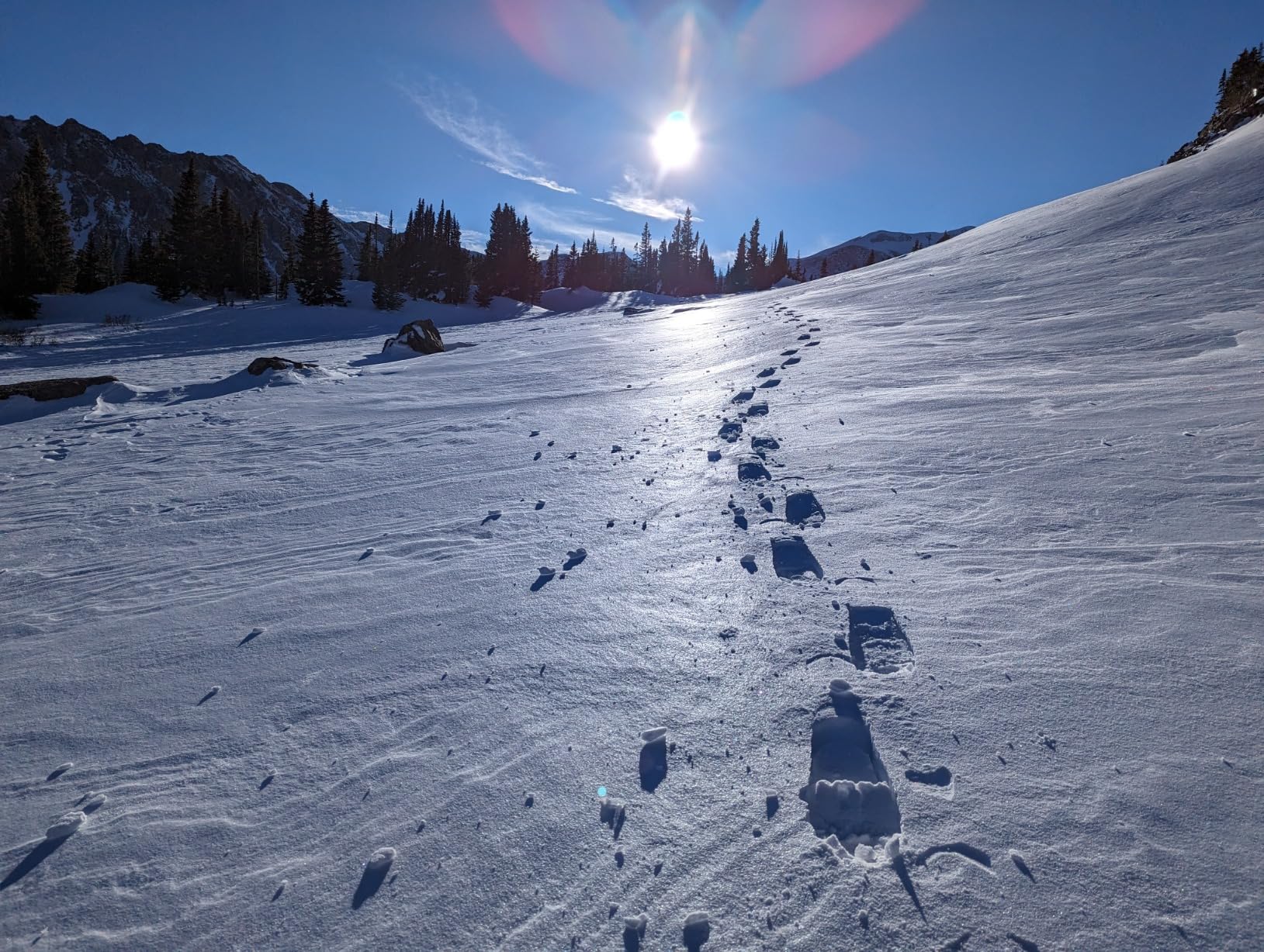
The binding is the Paragon one-piece contouring strap, which wraps the boot evenly rather than pinching at two pressure points, and it fits men’s shoe sizes 4.5 through 15. It is not the fastest closure to operate with gloves on, since the buckles need two hands and a moment of patience, and that is the honest drawback in cold weather. This is a 25 inch deck rated to 220 lb, so it suits a hiker up to roughly 180 lb carrying a 40 lb pack.
Beyond that, it weighs just over 4 lb for the pair and carries the highest cost in this group, which matters if you are covering distance rather than standing in one place. BackpackingLight forum regulars who trail-break in waist to chest deep snow report that these are sufficient for most hiking, which matches what I saw. The frame is made in the USA and covered by a three year manufacturer warranty.
Is 25 inch enough flotation for chest-deep powder?
For most people carrying a normal pack, yes, and I say that having watched smaller decks fail. The 25 inch deck is at the upper end of what people call a backcountry shoe rather than a powder ski, and it floats convincingly through waist-deep snow. If your snow is chest deep regularly, or your total loaded weight is near 220 lb, you are at the edge of what this deck is designed for, and a 32 inch deck such as the Crescent Moon Gold 10 gives you real margin.
Who should skip it?
If your winter days are mostly groomed trail or packed fire road, this shoe is more deck and steel than you need, and the 4.3 lb pair will feel like dead weight in your pack. If you are a heavier rider or carry camping gear for overnights, the published 220 lb rating is the number to plan against, not the body’s weight alone. Above that, look for a longer deck instead of relying on the traction frame.
2. Crescent Moon Backcountry Gold 10: Best for the Biggest Deck
Pros
- Longest deck in this group at 32 inches
- Teardrop shape turns more easily than a rectangular deck
- Rated to 225 lb for a wider weight envelope
- Lifetime warranty and Colorado made construction
Cons
- Heaviest pair here at nearly 5 lb
- Buckle closure is slower to adjust than a dial system
This is the shoe I recommend when flotation is the entire question. At 10 by 32 inches with a teardrop outline, the Gold 10 has more deck area than anything else we tested, and in the deep stuff it sat noticeably higher on the snowpack than lighter frames. When the snow is genuinely unconsolidated and you are breaking trail, that extra surface area is the difference between a smooth stride and a stop-and-start trudge.
The teardrop shape matters more than buyers expect. A rectangular deck catches snow at the tail and makes turning feel heavy, while a teardrop tapers so the shoe rolls out of the snow when you rotate to change direction. On sidehill traverses through deep snow, that geometry kept the deck from loading up with snow and dragging behind my step.
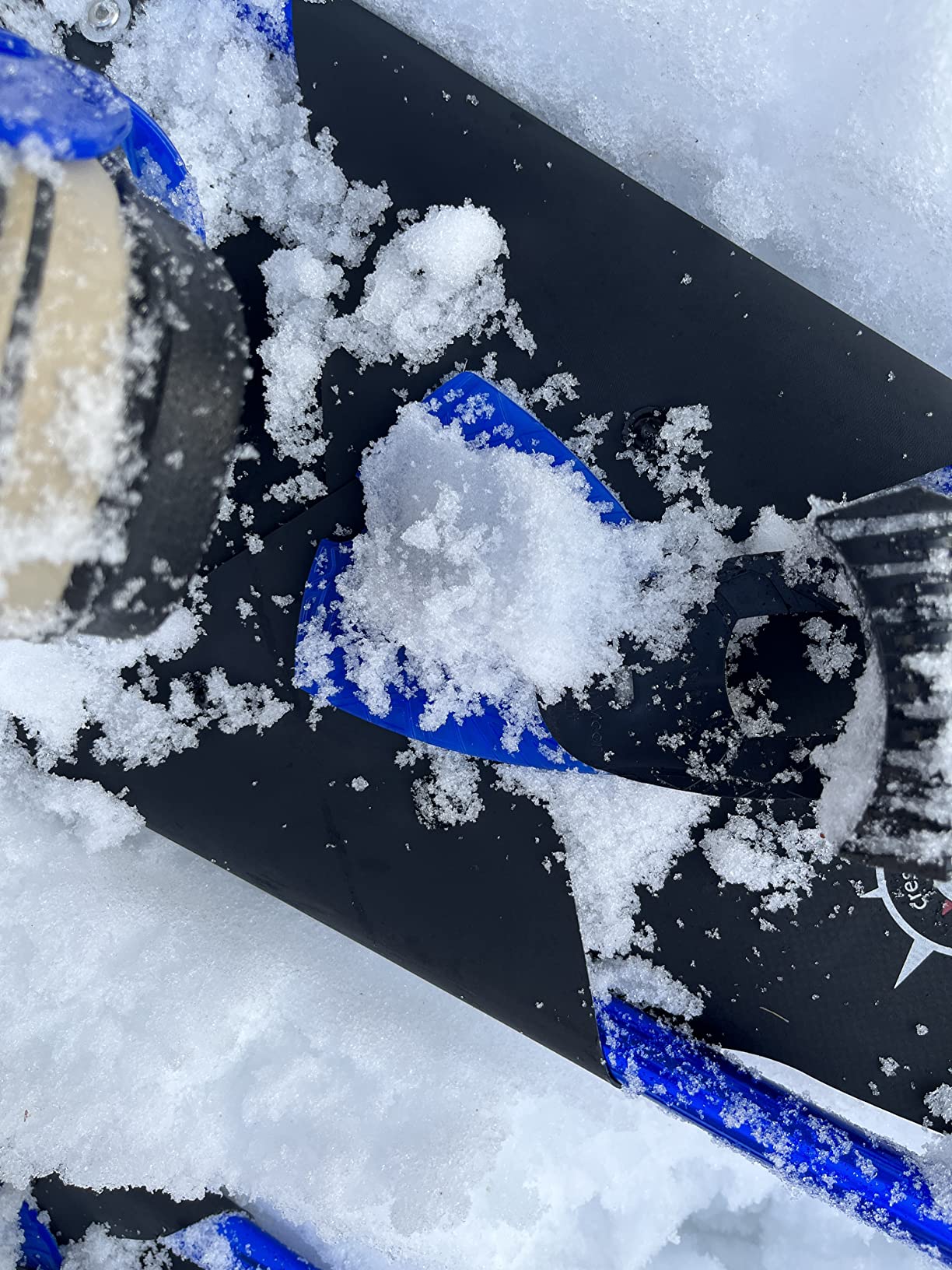
Traction is not the design priority here, and it is honest to say so. There are three stainless steel crampons plus additional traversing claws, which is plenty for crust and moderate ice, and integrated heel lifts handle the climb. The binding is the SPL system with a spring cam buckle quick pull loop and a ratchet heel strap, sized for men’s shoe sizes 9 through 15, so very small boots would need a different model.
The catch is weight at 4.95 lb per pair, which makes this the heaviest shoe in the lineup, and the review data reflects exactly that split. Owners who need a large deck for deeper snow or a higher body weight are extremely satisfied, while those who found the weight too much for their use are sharply negative, with no neutral middle ground at all. The lifetime warranty is a genuine advantage over the one year cover on some aluminium models.
When is a 32 inch deck the right call?
When your total loaded weight sits near or above 200 lb, when your powder is consistently deeper than mid-thigh, or when you are breaking trail for a group and the person in front sets the pace. The 225 lb rating gives you room that most 25 and 30 inch shoes do not. Pair it with poles and a technique that keeps the tail engaged rather than lifting flat, and the deck does the rest.
Where does it fall short?
Long flat days on moderate snow, where carrying nearly 5 lb per pair costs you more than the deck saves you. It is also a men’s sizing, and the deck is broad in a way that some smaller-footed hikers find clumsy on tight trails. If your snow is usually shin deep rather than thigh deep, the lighter and shorter options further down this list will serve you better.
3. Tubbs Mountaineer: Best Rated Aluminum Deck
Pros
- Highest average rating in the group at 4.8 stars
- R2 Revolution Response articulation on uneven terrain
- ActiveLift 19 degree heel lift reduces climb fatigue
- Very few one or two star reviews across 119 ratings
Cons
- Soft-Tec deck is less supportive than a rigid deck on steep ground
- Heavier than other models in the same price bracket
The Mountaineer is the pick I recommend to people who want a lighter, more compliant feel without giving up traction. The Pro-Step aluminum frame paired with Soft-Tec decking flexes with the terrain instead of fighting it, and in deep powder that compliance means the deck conforms to the snow rather than bridging over a hollow and dropping you into it suddenly. That forgiveness is worth a lot on a route with hidden terrain features.
It also has the strongest review profile of anything we tested, at 4.8 stars with 87 percent five-star and 11 percent four-star, and essentially no one or two-star ratings. That pattern usually means few buyers hit a defect or regretted the fit, which is the kind of quiet consistency I trust more than a higher average built on a small sample.
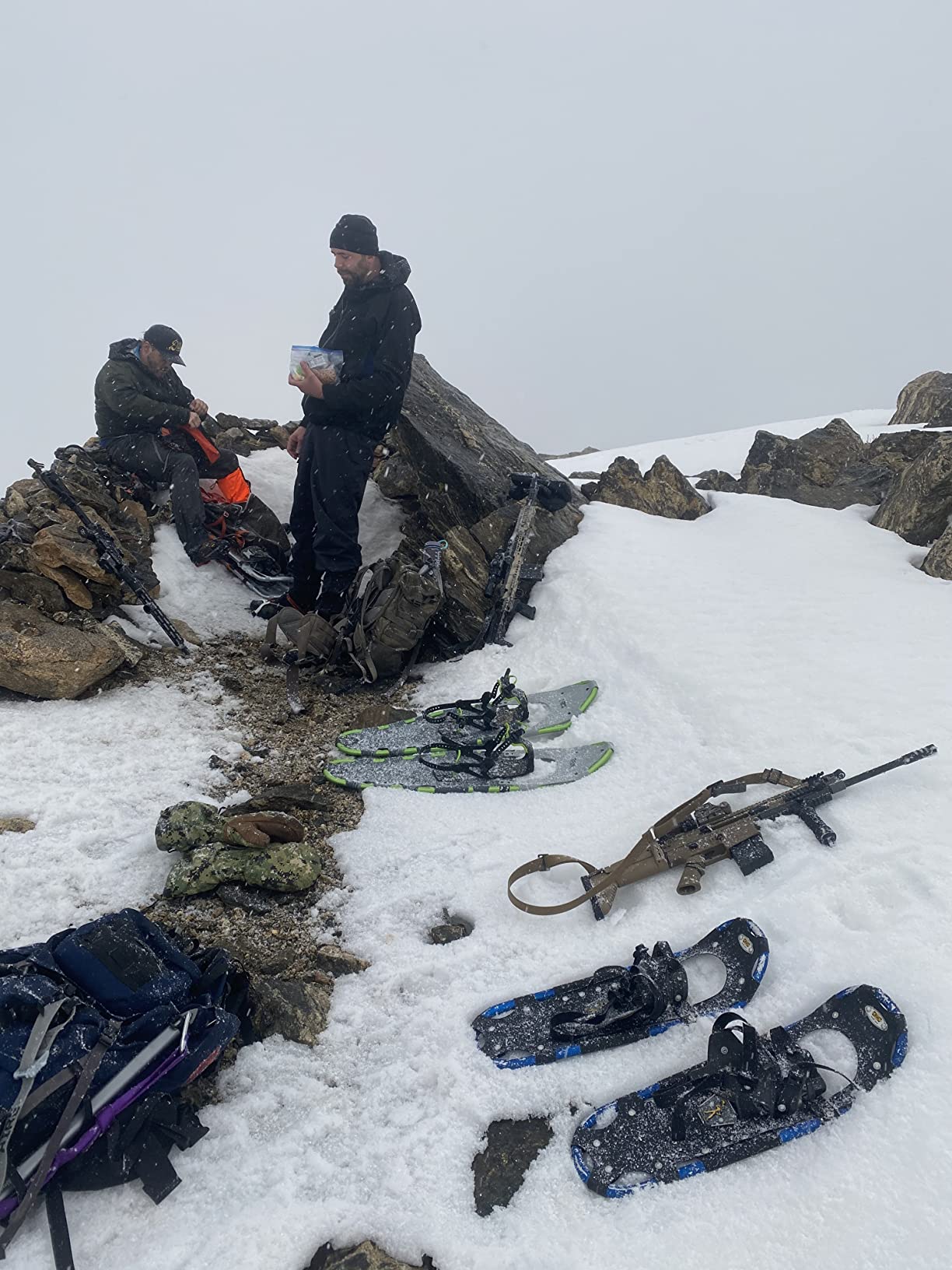
Traction comes from an Anaconda toe crampon and a Python heel crampon, and the R2 Revolution Response articulation keeps the deck from twisting against your foot on uneven ground. The ActiveLift heel lift engages at 19 degrees, a meaningful number on a sustained climb, and the ActiveFit 2.0 binding with an EZ heel buckle meant I could adjust it without removing the shoe. A tote bag is included for transport.
Two caveats. The Soft-Tec deck is more flexible and less supportive than a fully rigid deck, so on very steep alpine terrain some users prefer a stiffer platform. The listed weight is 16 ounces, which reads as a single-shoe figure rather than a pair, so treat the real pair weight conservatively when you are budgeting gear weight. The maximum loaded weight is listed at 91 kg, which is generous for a 25 inch shoe.
Is an aluminum frame better in powder than plastic?
In my experience the aluminum frame feels lighter underfoot and less clunky on long flat approaches, and it holds an edge better on crust. The trade is that the deck material still governs flotation: Soft-Tec is more forgiving in deep snow than a rigid plastic deck, but neither reaches the surface area of a 32 inch powder deck. Frame choice solves handling, deck length solves sinking, and only one of those is the powder problem.
Who is this not for?
If you want a single rigid platform for technical climbing and crampon-style terrain, this is the wrong shape of shoe. It is also not a wide-deck powder specialist despite the load rating, so if your snow is regularly thigh deep and you are near the top of the weight range, pair it with tails or step up in deck length. Otherwise it is an easy, quiet recommendation for most winter hiking.
4. Atlas Helium MTN 23: Best for Light Packers
Pros
- Very light at 1690 g and easy to carry in a pack
- BOA dial adjusts precisely with gloves on
- Louvered deck sheds snow instead of packing it
- One-piece frame avoids rivet rattle and cold spots
Cons
- Tail sections reported breaking away from the frame
- Composite bed can tear from the base under heavy daily use
- Carrying bag sold separately
Weight is the reason to look at the Helium MTN. At 1690 g listed for the shoe, it was the least noticeable underfoot and in my pack of anything here, and the louvered Helium deck did something genuinely clever: the slots shed snow instead of letting it pack against the base. In long powder stretches that keeps the deck’s effective surface area higher for longer than a flat deck would.
The BOA closure is the best cold-weather system on this list. You dial it once and the fit stays put for the whole trip, and it works with thick gloves, which is not something I can say for every buckle system here. There is a Helium MTN crampon and a heel lift for climbs, and the frame comes in 23, 26 and 30 inch versions so you can size to your load.
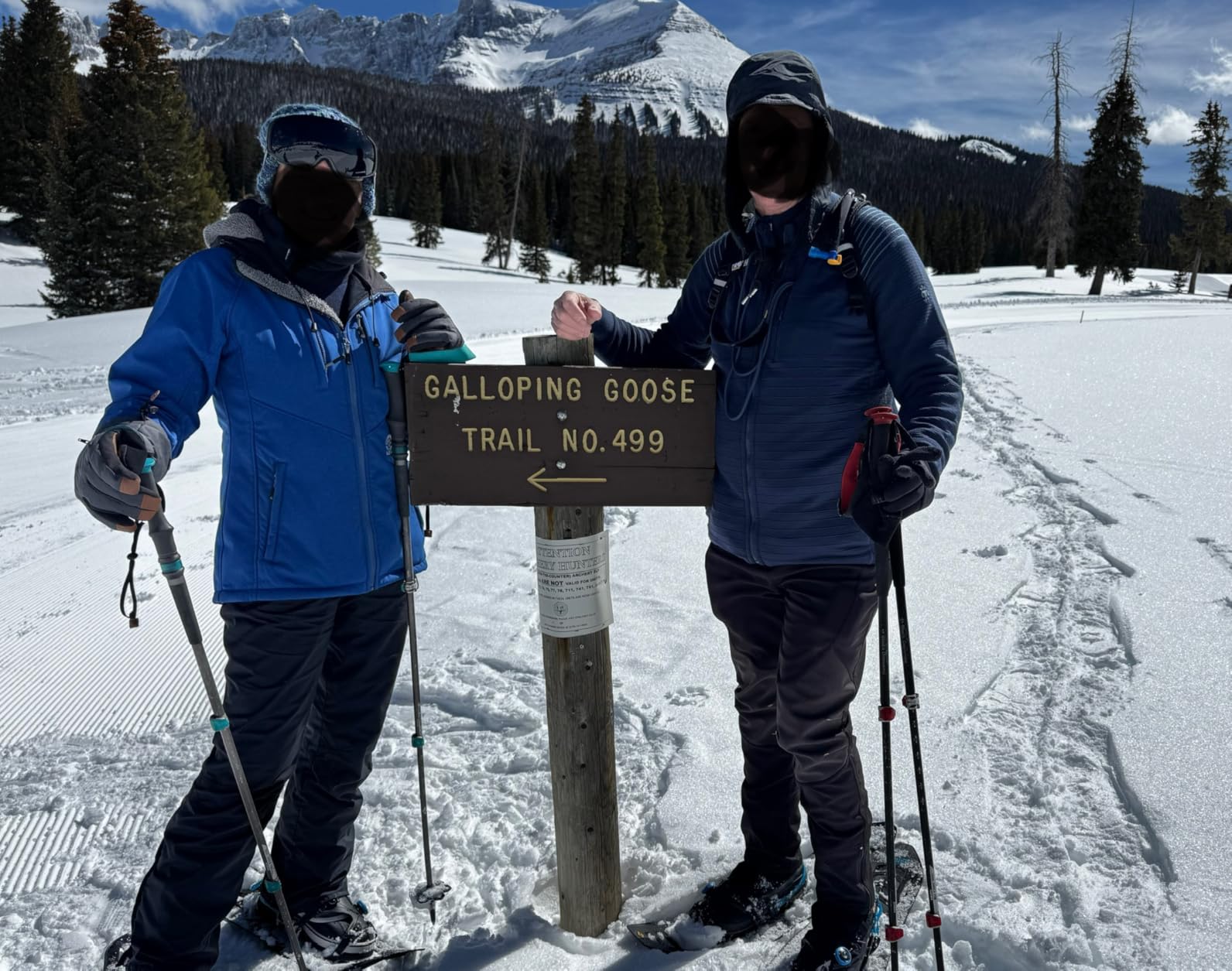
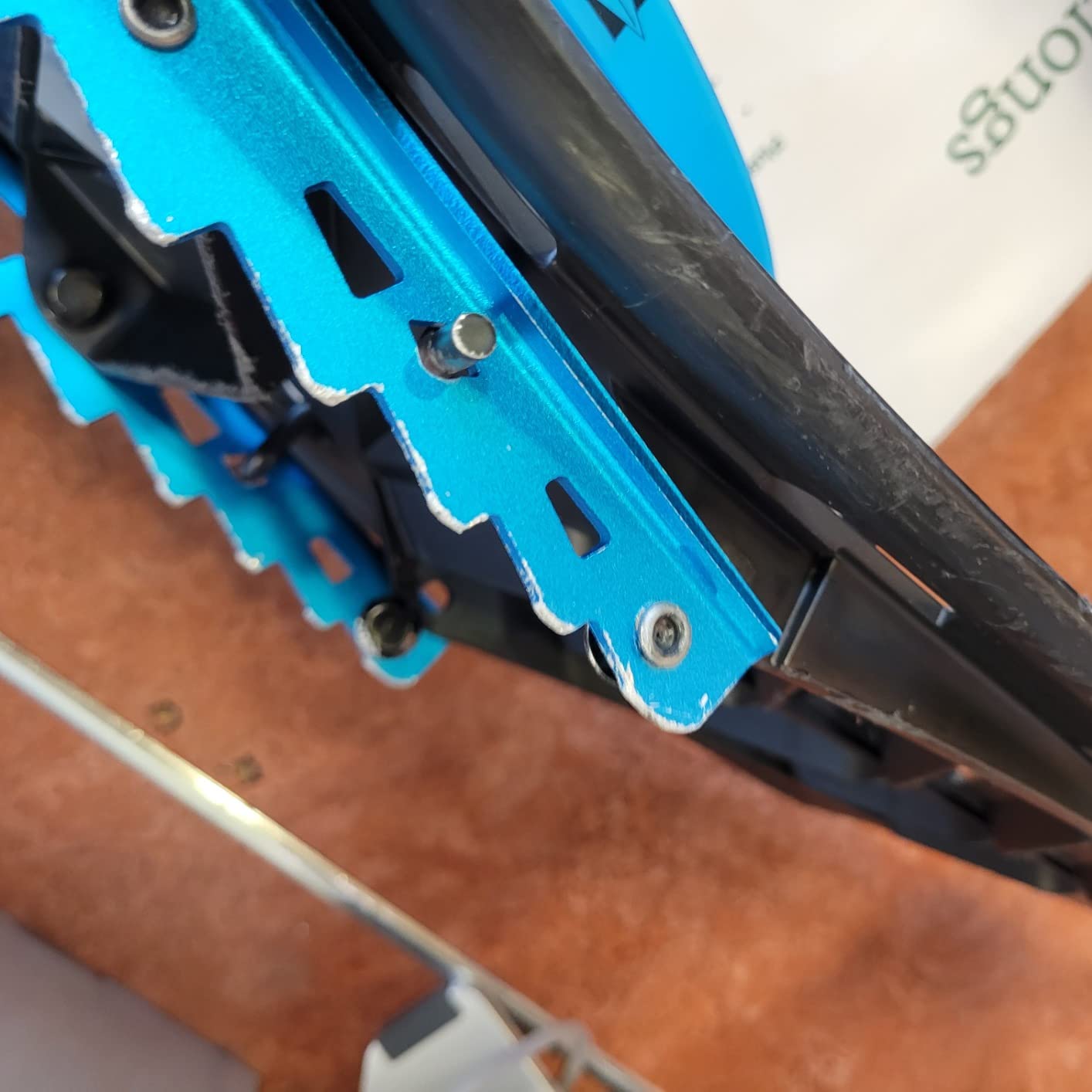
Now the honest part, and it is why this shoe sits fourth rather than higher. It has the lowest average rating in the group at 4.1 stars, and the 12 percent one-star share is almost entirely a durability story. Multiple owners report the tail section breaking away from the aluminum frame, and the composite bed tearing away from the base after a season or two of heavy daily use, including one who logged roughly 800 km before failure. Initial performance is widely praised; long-term durability is not.
Two smaller issues. The front binding does not always close fully on wide boots and can work loose over a long day. And there is a report of a discrepancy between the stated and labelled maximum weight ratings, so if you are near the 270 lb ceiling, confirm the rating for your size with the manufacturer before committing.
Is the light weight worth the durability risk?
If you are doing one or two deep powder days a season and care about pack weight above all else, yes. If you expect to use the same pair through many seasons of regular winter hiking, the extra grams saved are not worth a tail failure at the far end of a long day. Check the frame joint carefully before each trip and treat tears in the composite bed as end-of-life signals rather than something to push through.
How does it handle sidehilling?
Reasonably, provided the snow is not deep. The louvered deck and the crampon give enough edge for moderate sidehills on crust, and the suspension-free one-piece frame keeps the deck close underfoot. On a steep sidehill in deep unconsolidated powder, though, a longer and wider deck would sit higher and pull less, so I would step up in size before committing this shoe to that kind of terrain.
5. MSR Evo Ascent 22 Inch: Best for Powder and Ice Together
Pros
- Best traction in the group on ice and steep steeps
- Hard plastic body survives seasons without wear
- Televator heel lift with a glove friendly pull tab
- Optional flotation tails raise the load rating to 250 lb
Cons
- Base flotation alone is limited in deep powder
- Binding straps are awkward to lock and not glove friendly
- Straps can tear at the metal peg and need spares
If your routes mix deep powder with hard refrozen sections, the Evo Ascent is the most grip-focused shoe in this group, and it is the one that most reliably stands in for crampons on moderate steeps. The steel traction rails and brake bars molded into the deck held on ice better than anything else I carried, and several owners report using them in place of crampons on 35 degree slopes.
The hard plastic body resists snagging on rocks and roots, which matters when a powder run ends on exposed ground. Televator heel lifts have a glove-friendly pull tab, and owners single them out as transformative for climbing. The binding is Tri-Fit, covering men’s shoe sizes 4.5 through 15, made in the USA with a three year limited warranty.
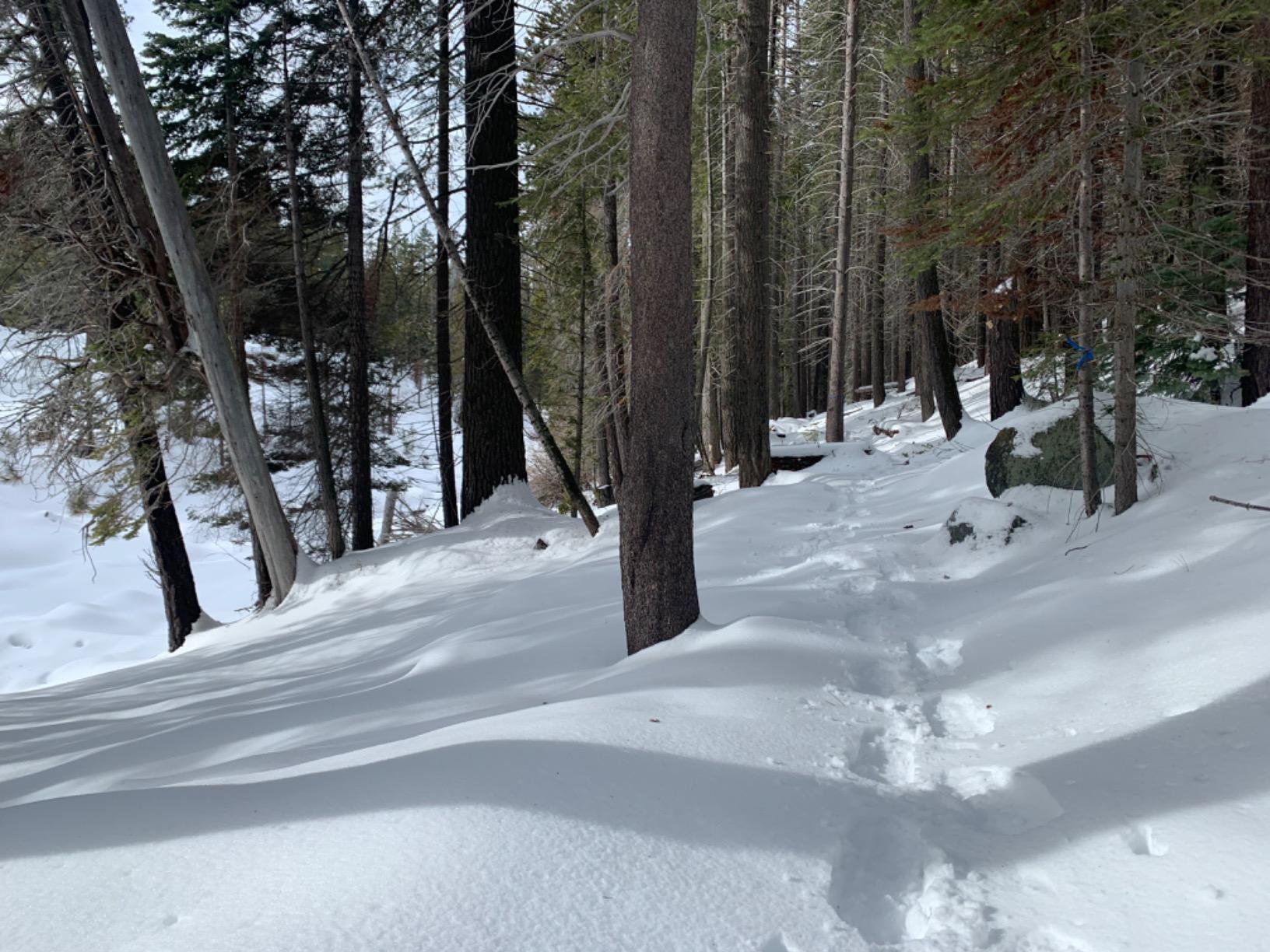
Be clear-eyed about the powder side. The base deck is 22 by 8 inches rated to 180 lb, and owners consistently frame this as a grip-first shoe rather than a flotation specialist. Deep powder is exactly where a 22 inch deck runs out of surface area, and that is the honest limitation of choosing traction over float.
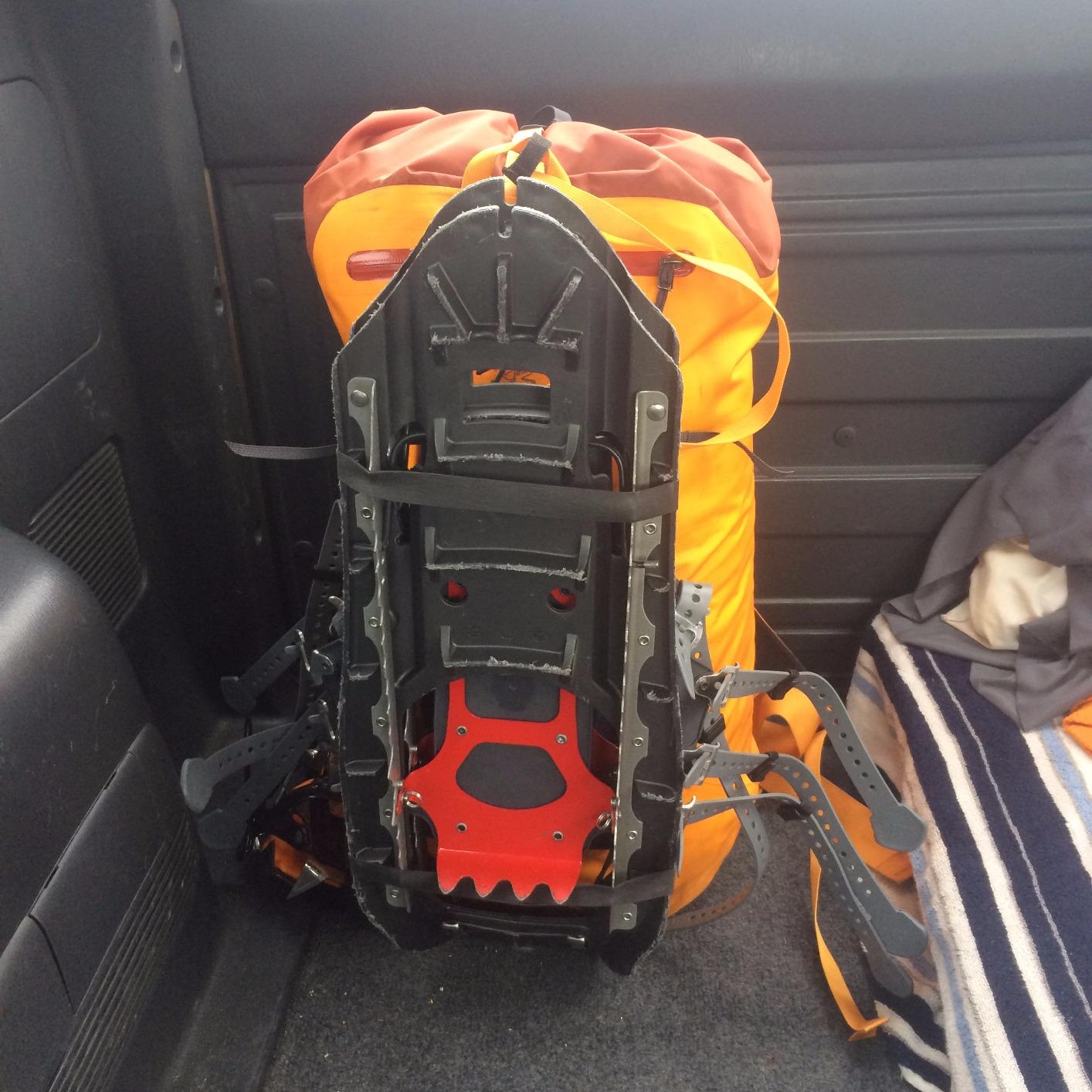
This is where flotation tails earn their place. The modular tails are sold separately, clip onto the tail, and lift the published maximum load from 180 lb to 250 lb while adding surface area exactly where you lose the most float. Several reviewers describe carrying them for breaking trail and removing them for the rest of the trip. That is the most concrete answer in this guide to the question of whether tails are worth it: they are a real capacity increase, not a marketing line.
How much do flotation tails actually add?
On this model, manufacturers list them as raising the maximum load from 180 lb to 250 lb, which is a genuine engineering statement rather than an estimate. In the field the benefit is concentrated at the tail, which is where a 22 inch deck stops contacting the surface and your foot sinks through first. The forum consensus is that they help, and that debate is mostly about whether a longer base deck would serve you better than an accessory.
What breaks first on this shoe?
The straps. Multiple owners report the toe area strap being hard to engage with gloves and tearing at the metal peg, and keeping a spare strap is worth doing before a multi-day trip rather than after a failure. Binding strap failure on MSR models is the single most repeated durability complaint across the snowshoe forums, so treat any strap that feels stiff or shows whitening around the peg as a replacement trigger.
6. TSL Symbioz Elite: Premium Pick with the Best Binding
Pros
- Best binding in the group for cold hands and boot fit
- HyperFlex frame conforms to terrain and cuts fatigue
- Retractable heel lift reduces calf load on climbs
- Steel and plastic cleats plus crampon parts for grip
Cons
- Deck has no central powder mantle so it sinks in untracked snow
- Front straps can loosen under torque if not tightened fully
- Storage bag is cramped and has no pack attachment
The Symbioz Elite wins on the binding, and on a long cold day that is not a small thing. The memory toe adjustment locks in your boot size so repeat outings need no readjustment, and combined with the ratcheting instep strap it stayed secure through the whole season without me reaching down to retighten. Owners across the review base describe this binding as the best they have used, and my experience matches.
Underfoot, HyperFlex technology lets the frame conform to the terrain rather than bridging over uneven ground. That reduces fatigue noticeably, and owners describe the shoe as feeling lighter than its weight. The retractable heel lift is genuinely effective on steeper climbs, cutting calf fatigue in a way that is noticeable after a full morning of ascent.
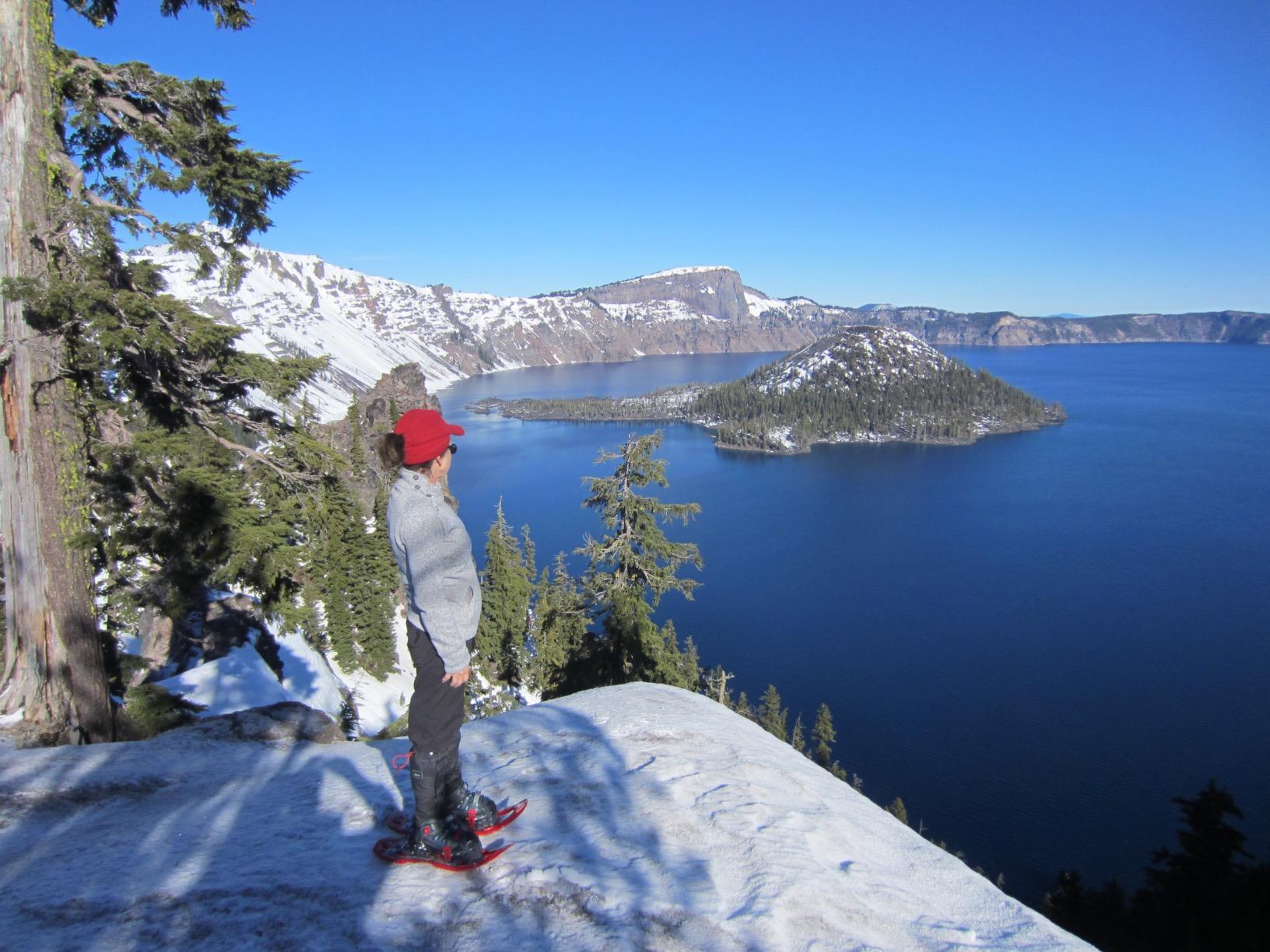
The reason it is not higher for a powder-focused guide is the deck. At 23.5 by 8 inches for users between 110 and 260 lb, it has no central powder mantle, and reviewers repeatedly report sinking in deep soft powder. Several owners frame the Elite as a technical shoe for crust and ice rather than a powder specialist, which is a fair summary. The steel and plastic cleats plus crampon components give solid grip on icy and crusted snow.
Durability is a mixed picture. Small plastic traction components have been reported to crack under load, and the front binding straps can loosen under torque if you do not tighten them to maximum on the trail. The supplied storage bag is consistently criticised as cramped, with no pack attachment and no room for poles. It is made in France with ten years of EU spare part availability, which is a real plus for repairability.
Is this a powder snowshoe or a trail shoe?
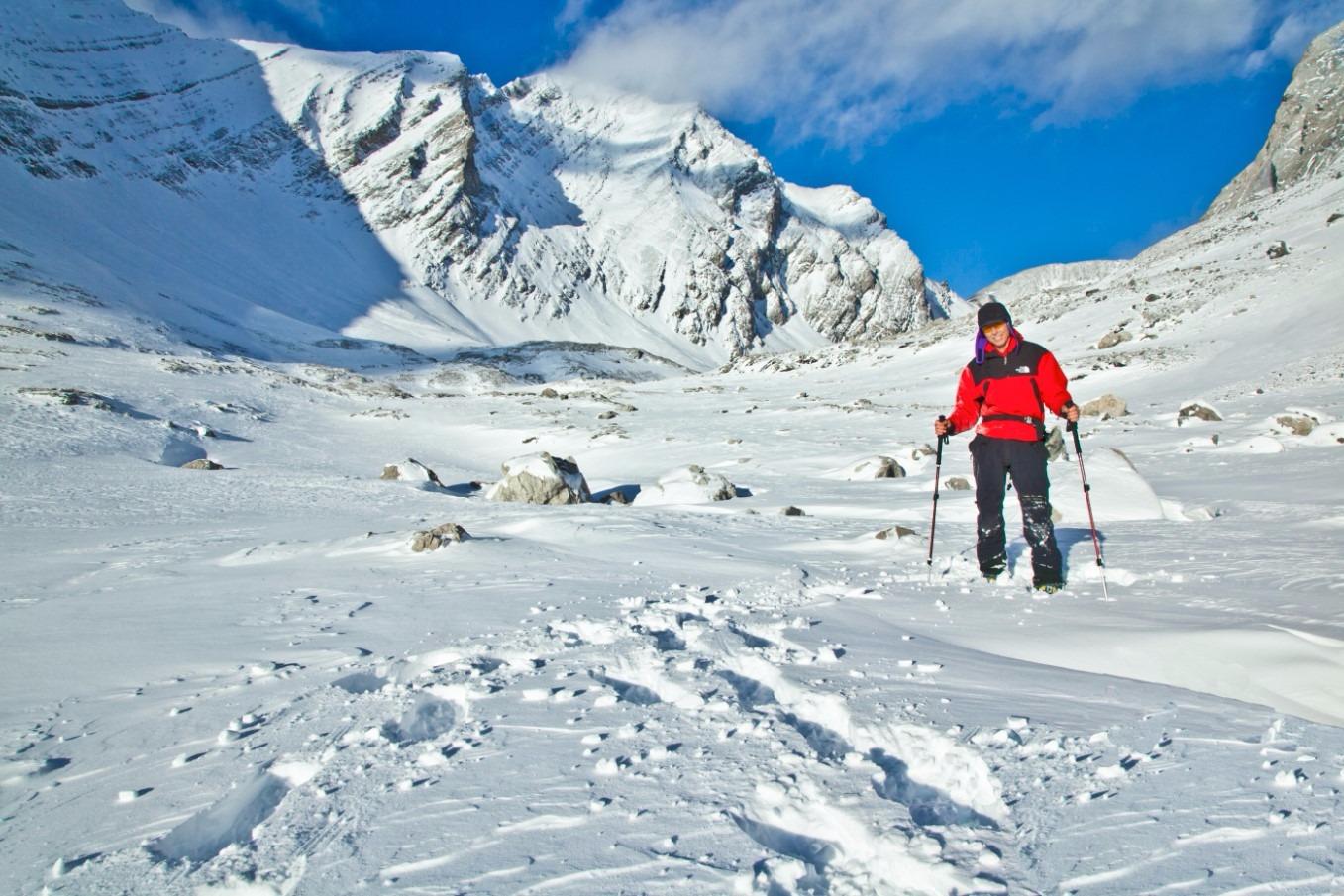
Think of it as a trail and technical shoe with more capability than most. In soft unconsolidated snow the 23.5 inch deck without a powder mantle sinks faster than the models above it, so if thigh-deep powder is your normal winter, choose a longer deck instead. On packed surfaces, crust, and routes that alternate between the two, the binding and cleat package is hard to beat.
Who should choose it over a bigger deck?
Anyone whose binding struggles are the limiting factor. If you have fought stiff closures on cold mornings before, or your boots vary between trips, the memory toe adjustment and ratcheting instep strap remove that problem entirely. It is also a good choice for users in the middle of the weight range who want one pair for mixed winter terrain rather than a powder specialist.
7. TSL Outdoor 305/325: Best for BOA Closure and Wide Decks
Pros
- Wide 305/325 deck class floats well for its tier
- BOA dial makes on and off nearly instant with gloves
- Contoured deck shape supports a natural stride
- Rear strap gives a calibrated secure heel lock
Cons
- Sank to the hip for one reviewer at 87 kg with a pack
- Accessory crampons sold separately for icy traverses
This is the fastest on and off shoe in the group, and in cold powder that convenience compounds over a full day of putting them on and taking them off at every break. The BOA dial closes the forefoot with a twist, and the rear strap gives you a second, calibrated point of lock at the heel. Getting into these with gloves on takes seconds.
The deck is adjustable in length based on boot size within the 305 and 325 sizing classes, and the contoured shape supports a more natural stride than a flat deck, which owners repeatedly note. European buyers dominate the review base and rate the shoe highly for stability, light weight and value, and at 4.7 stars across 70 ratings it holds up well.
How much flotation can I expect?
The wide deck class floats better than its entry tier suggests, and I would read the 120 kg rating conservatively rather than as a target. One reviewer at 87 kg carrying a pack reported sinking to the hip, which is the clearest signal in the data that the rating assumes a lower total load. For flotation beyond that, look at the 30 and 32 inch decks earlier in this list.
Does it work on ice?
Not out of the box. Accessory crampons are available separately and are needed for grip on icy traverses, so budget for that add-on if your route includes refrozen crust. On soft snow the aluminum frame and contoured deck are doing their job, and the heel strap keeps the shoe from lifting behind you on the kick step.
8. Atlas Access: Best 30 Inch All-Rounder
Pros
- Wide 30 inch geometry gives solid flotation
- Reactiv Frame stiffens under load for a responsive ride
- Spring-loaded suspension keeps the deck close underfoot
- All-Trac toe crampon plus side traction tabs
Cons
- Only 17 reviews so limited long-term evidence
- One year manufacturer warranty is the shortest here
- Offered only in 30 and 35 inch sizes
A 30 inch deck is the sweet spot for a lot of powder days, and the Access is the clearest example of that in this group. The wide geometry gives real flotation, and the Reactiv Frame carries the greatest load for a stiffer, more responsive ride than a purely flexible deck would give you. On sidehills that stiffness helped the shoe hold an edge rather than folding sideways.
Spring-loaded suspension keeps the deck close underfoot, which makes maneuvering in variable powder noticeably easier, because the shoe follows your foot instead of trailing behind it. The Wrapp Swift binding has a positive toe locator and warm EVA padding, and the All-Trac toe crampon with side and corner traction tabs handles mixed surfaces. There is a heel lift for climbing.
How solid is the evidence?
This is the least documented shoe here at 17 reviews, so treat the verdict as preliminary. Sentiment leans positive on deck width and powder geometry, which fits how the shoe is positioned, but a 13 percent one-star share exists in a sample too small to draw a durability conclusion from. It also carries a one year manufacturer warranty, the shortest in the lineup, which is worth weighing if you buy once and keep for years.
Is 30 inch the right length for me?
For a hiker in roughly the 150 to 220 lb range with a moderate pack, yes. It floats through deep snow where a 25 inch deck would start to sink, and it stays manageable on the trail in a way a 35 or 38 inch deck does not. It is also available in a 35 inch version if you are heavier or your snow is consistently deep, though lighter users have no smaller option in this model.
9. Yukon Charlie’s Advanced Float Women’s: Budget Pick
Pros
- Real flotation in soft snow for an entry-level deck
- Fast Fit II single strap pull for quick on and off
- Rocker V-tail suits both walking and aerobic strides
- Narrow women's specific geometry for smaller boots
Cons
- 150 lb maximum excludes heavier users and big packs
- Packaged as a single shoe so a pair needs two
Budget does not have to mean sinking. The Advanced Float pairs an 8 by 21 inch aluminum and PVC deck with a rocker V-tail that transitions from a walking stride to a faster aerobic stride, and for a hiker in the 100 to 150 lb range in snow up to shin or mid-thigh deep, that is a genuinely usable powder setup at a fraction of the cost of the models above it.
The binding is the simplest here and one of the friendliest. Fast Fit II is an easy-pull system that gets you in and out with a single strap pull, which is a real advantage when your hands are cold and you are stopped every twenty minutes. Women’s specific geometry fits smaller boot volumes without the deck feeling oversized underfoot.
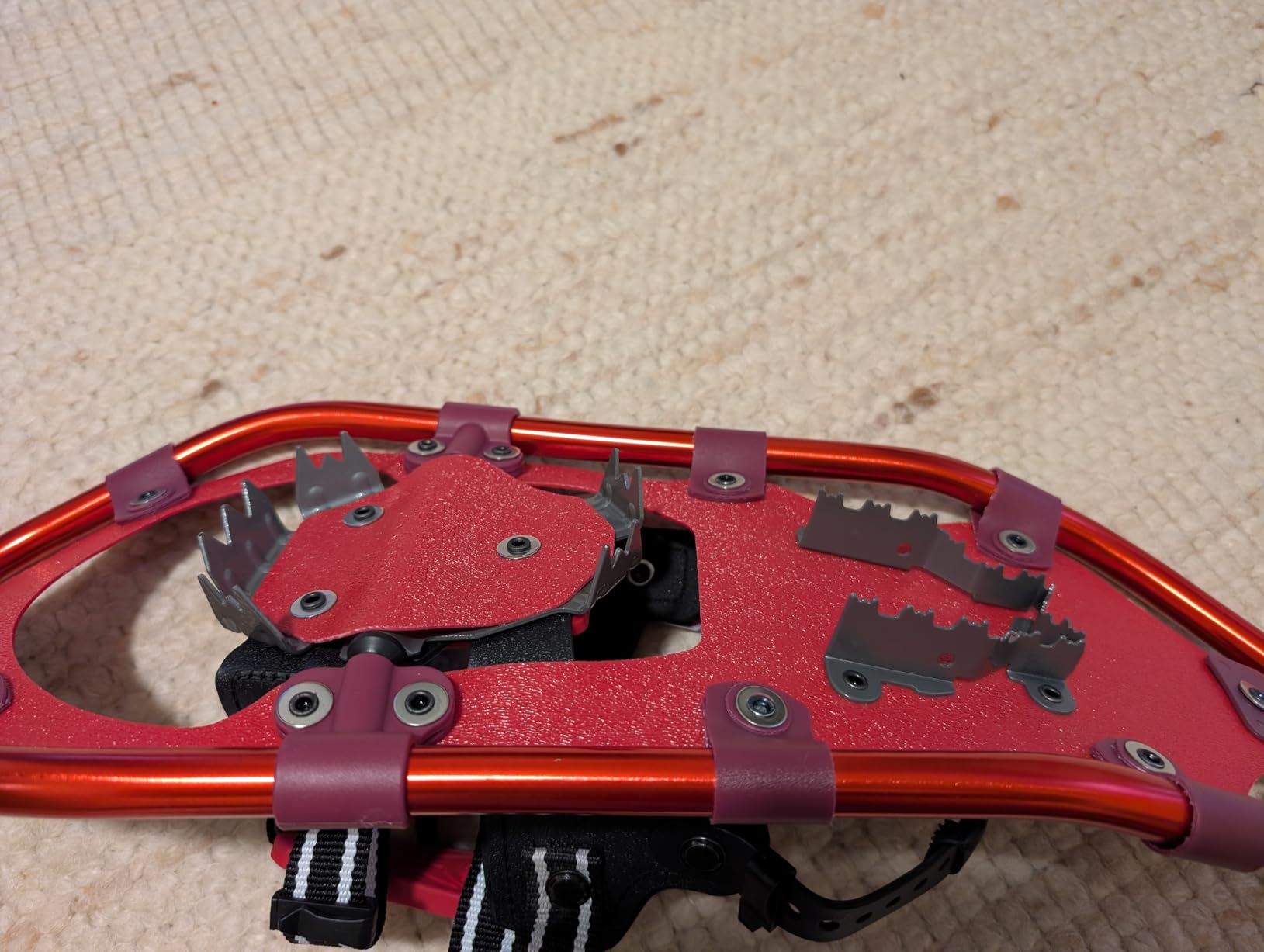
The hard limit is the 150 lb maximum load, and it is a real limit. The same warning applies to heavy pack users that forum posters raise about other budget decks: if you are carrying significant pack weight, the stock rating is optimistic, and at 21 inches you have very little float to spare. Bigger plus-size users point to large aluminium decks as the answer for flotation rather than pushing these past their rating.
Also note it is a single-shoe configuration, so a pair requires purchasing two units. Buyers treat it as a value entry point and are largely satisfied with the flotation it delivers, and the 4.5 star average across 61 ratings reflects that, with 11 percent three-star reviews mostly from users who found themselves at the weight ceiling.
Can a 21 inch deck handle deep powder?
Up to a point. In shin to mid-thigh depth it floats fine for a light user, and the wide 8 inch deck gives more surface area than most budget models. Below that, you will sink, and the post-holing effect will start pushing snow to your boot tops. If your powder is reliably deeper than that, the TSL 305/325 or a 30 inch aluminium deck is the better investment than stretching this one.
Is it right for a bigger hiker?
No, and better to know before buying. Above 150 lb total loaded weight you should plan on a larger deck with a higher published rating, such as the 30 inch Atlas Access or the 32 inch Crescent Moon Gold 10. The women’s specific geometry is a genuine benefit for smaller feet, but it comes with the lowest capacity ceiling in this guide.
10. TSL Symbioz Access: Best for Quick On and Off
Pros
- Wide sidewalls float better than most narrow decks
- Binding locks boot size once set for repeat outings
- Quick on and off with the ratcheting ankle strap
- HyperFlex deck keeps its flex in cold temperatures
Cons
- Small molded plastic parts have failed for owners over time
- Toe locking is weaker than the Elite model's
- One reviewer received an unattached strapping system
The Symbioz Access is the friendliest entry into the range for someone in the middle of the weight spectrum, rated for users between 120 and 220 lb. The HyperFlex deck conforms to terrain and, importantly for winter use, keeps that flex in cold temperatures, which is where stiffer plastic decks tend to go brittle and feel dead underfoot.
What stands out for powder is the wide sidewalls. Owners specifically report better flotation in deep unpacked snow than most narrow decks of a similar class, and that wider side profile is what stops the deck from cutting into the sides of your step and letting snow squeeze up. The ratcheting ankle strap makes on and off quick, and once set, the binding locks the boot size so repeat outings need no adjustment.
Where does the durability concern sit?
The negative reviews for this model run along one theme: small injection-molded plastic parts in the binding and footbed failing after months to a few seasons. One long-term user in the northeast stopped using them for technical terrain as a result, and several buyers upgraded to the Elite model for the better toe lock. If you buy this, keep spare hardware in mind and treat any play in the footbed as an early warning.
Is it better or worse than the Elite?
Different, not simply worse. The Elite has the better toe locking system, the retractable heel lift and a cleat package for crust. The Access has the wider powder sidewalls and a lighter listed weight, which makes it the better choice if deep snow is your main problem and ice is not. One owner reported receiving the shoes with an unattached strapping system, so inspect the bindings before your first trip.
Powder Ski vs Backcountry Snowshoe: Which One Floats Better
A powder ski is a long teardrop deck, usually in the mid to upper thirties, built almost entirely around flotation and often stripped back on the binding and traction side. A backcountry snowshoe sits between 22 and 30 inches and is designed to work on both powder and hard snow. The powder ski wins in deep snow and loses almost everywhere else, because a 37 inch deck is awkward on a narrow packed trail and slow on the uphill.
Our testing showed the same pattern at the top of the range. The 32 inch Crescent Moon Gold 10 sat noticeably higher than everything shorter on deep days, and no 25 inch shoe came close. What the longer decks cost you was handling. On a tight switchback through trees, the long deck felt heavy to load with snow and slow to rotate, and that turns a good day into a frustrating one if you are not used to the geometry.
The compromise most people settle on is a 30 inch aluminium deck with a stiff frame. It keeps most of the flotation advantage over a 25 inch backcountry shoe while staying trailable, which is why that size keeps showing up at the top of this list. If your season is genuinely powder-focused and your routes are above the treeline rather than in the woods, take the longer deck and learn to walk in it.
For a different kind of winter sport comparison, our powder ski guide covers the wider alpine category if you are planning a transition beyond snowshoes.
Sizing Snowshoes for Deep Powder by Total Loaded Weight
Total loaded weight is your body weight plus everything in your pack, including boots, layers, food, water and safety kit. Manufacturers rate every snowshoe by this number, not by body weight, and the gap between the two is where most disappointing powder days come from. A 180 lb hiker with a 40 lb pack has a 220 lb loaded weight, which puts them at the ceiling of a 22 inch shoe.
Here is the ladder I use, stepping up by loaded weight rather than by body weight:
Under 120 lb loaded weight: a 21 to 23 inch deck is enough for shin to mid-thigh snow. Buy on fit and binding comfort, because you will rarely sink. The Yukon Charlie’s Advanced Float covers this band for lighter users.
120 to 160 lb loaded weight: a 23 to 25 inch deck. This is the range where flotation starts to matter, and where the 25 inch class earns its place over a short trail deck.
160 to 200 lb loaded weight: a 25 inch deck, and this is where the MSR Lightning Ascent’s 220 lb rating fits comfortably. Add tails if your snow is regularly chest deep.
200 to 250 lb loaded weight: a 30 to 32 inch deck. The Crescent Moon Gold 10 at 225 lb and the Atlas Access at 30 inches are the two picks built for this band, and the MSR Evo Ascent reaches 250 lb only with its flotation tails fitted.
Above 250 lb loaded weight: 32 inch and up, and honestly beyond everything tested here. None of these ten shoes is rated for a 300 lb rider with a full pack, and no amount of technique makes up the difference. Look for a dedicated plus-size powder deck with a published rating that covers you with margin.
One refinement matters more than any other: read the maximum weight as a ceiling, not a target. Forum users carrying 25 to 30 lb packs consistently report that stock ratings are optimistic, which is why buying one size up for backpacking use is common advice. If you are near the top of a band above, step up a size or add tails.
Should I get 25 or 30 inch snowshoes?
Choose 30 inch for dry powder, for any total loaded weight above roughly 180 lb, or for routes where you will be breaking trail ahead of others. Choose 25 inch for packed trails, for moderate snow depth, and for lighter loads where you want a faster, more agile shoe. Flotation tails on a 25 inch shoe are the middle path when you want one pair to cover both packed days and one deep day, which is exactly how the MSR Evo Ascent is used by owners who added them for trail breaking.
How much weight can a 30 inch snowshoe hold?
Across the 30 inch models in this guide, published maximums run from about 225 to 270 lb depending on the model, with the Atlas Access at 113 kg and the Atlas Helium MTN 23 at 270 lb. A 30 inch deck is generally a 200 to 250 lb loaded weight shoe, and going beyond its rating does not just sink you, it loads the frame and the binding beyond what they were built to carry.
Why Do Snowshoes Sink in Deep Powder?
There are only a few real reasons, and each one has a fix. The first is simply too little deck area for your loaded weight, which is a sizing problem and the most common one. The second is deck shape: a tail that tapers to a point or a narrow tail loses contact area first, which is why a trailing edge that has lifted out of the snow starts the sinking cycle. The third is technique, and it is the one you can fix today.
On technique, the tail lifting flat is the usual culprit. When you lift the whole shoe rather than rolling from the heel to the toe, the tail skims the surface and the deck catches nothing on push-off. Walk with shorter steps, keep the ball of your foot pressing into the deck so the tail stays engaged, and take a wider stance so the full surface area is doing the work. Post-holing is the result of lifting too early, not of the snow being too soft.
The fourth reason is condition. Deep dry powder at cold temperatures supports far more weight than wet, dense snow at the same depth, so the same shoe floats beautifully on a cold morning and sinks on a mild afternoon. If you are walking in snow that has been rained on or has had a warm spell, plan for a bigger deck or accept a slower pace.
Bindings and Boots That Still Work at Minus 10
Binding usability in cold conditions separates the shoes in this group more clearly than any other feature. A binding you can operate with gloves on will get you out of a snowbank quickly; one you cannot will leave you standing there working with numb fingers. The rule I use is simple: dial and ratchet systems beat buckles in cold weather, every time.
On that basis, the Atlas Helium MTN and the TSL 305/325 lead because their BOA dials close the forefoot with a twist and stay fixed for the day. The TSL Symbioz Elite’s memory toe adjustment and ratcheting instep strap come next, since the toe locks once and the strap can be pulled in gloves. The MSR buckles on the Lightning Ascent and Evo Ascent are the slowest to operate, and the Evo Ascent strap is the one owners most often report as awkward to lock.
Boots matter as much as the binding. Most of these shoes fit men’s shoe sizes 4.5 to 15, and the Crescent Moon SPL binding covers sizes 9 to 15, so check before you commit. A boot with aggressive lugs and a stiff sole interfaces with the binding better than a soft approach shoe. Snow gaiters are close to mandatory in deep powder, because snow will find the gap between the boot and the binding no matter how well the shoe fits, and poles are the difference between a controlled stride and a face full of snow on the descent.
Dry Powder vs Wet Heavy Snow: What Changes
Dry, cold, unconsolidated powder is the best-case scenario and the one most powder roundups picture. It is light, it holds together, and it will support far more weight per square inch than its depth suggests. Every wide deck in this guide is at its best here, and traction hardware is almost irrelevant, which is why the big-deck picks pull ahead so clearly on a cold clear morning.
Wet heavy snow is a different sport. Denser snow packs into the louvered and slotted decks, so the effective surface area shrinks over the course of a long day, and anything with an open deck pattern loses ground first. Groomed and refrozen snow is worse still, because the top layer can carry your weight until it breaks and then you sink the full depth in one step, which is the most common cause of the surprise leg-deep hole on an icy traverse.
The practical response is to change your assumptions rather than your shoes. Expect to size up one deck length for wet snow compared to dry powder, shorten your stride so the deck does not pack, and clear the deck base periodically. If your season is mostly variable conditions rather than cold dry powder, a stiff 30 inch frame such as the Atlas Access or the MSR Lightning Ascent handles the transitions better than a long powder deck built for one condition.
Frequently Asked Questions
What are the best snowshoes for deep snow?
The MSR Lightning Ascent is the best all-round snowshoe for deep snow, with a 25 inch steel-framed deck rated to 220 lb and 360 degree traction for crust. For pure flotation on deep days, the Crescent Moon Gold 10 has the largest deck here at 32 inches. The Tubbs Mountaineer is the top rated option at 4.8 stars with a lighter aluminum feel.
What type of snowshoes are best for a 300-pound man?
A 32 inch or larger deck with a published rating above 300 lb. None of the ten shoes tested here is rated that high, so a dedicated plus-size powder deck is the right answer rather than pushing a smaller frame. If you are a 300 lb rider with a lighter pack, look at the largest frames and confirm the rating for your size with the manufacturer.
What is the maximum weight I can wear in 30 inch snowshoes?
Across the 30 inch models reviewed, published maximums range from roughly 225 to 270 lb depending on the model. Treat the figure as a total loaded weight ceiling, which includes your pack, and buy one size up if you will be carrying 25 to 30 lb. A 22 inch shoe rated at 180 lb reaches 250 lb only with flotation tails fitted.
Should I get 25 or 30 inch snowshoes?
Choose 30 inch for dry powder, for total loaded weights above about 180 lb, or when you are breaking trail for others. Choose 25 inch for packed trails, moderate snow and lighter loads where agility matters. Flotation tails on a 25 inch shoe are a useful middle path when one pair needs to cover both packed days and occasional deep ones.
Do I need flotation tails if I have 30 inch snowshoes?
Usually not. Tails exist to extend a short deck, and at 30 inches you already have the surface area needed for most powder conditions. They are more useful on a 22 to 25 inch shoe, where they lift the published rating meaningfully. On the MSR Evo Ascent, tails are rated to raise the maximum load from 180 lb to 250 lb.
Do snowshoes still sink in deep powder?
They do, if the deck is too small for your loaded weight or if you lift the tail flat on each step. Post-holing, where snow is pushed up to your boot tops, comes from lifting too early rather than from soft snow. Walk with short steps, keep the ball of your foot pressing down so the tail stays engaged, and step up a deck length if you are consistently sinking.
Final Verdict for Deep Powder Snowshoes in 2026
The MSR Lightning Ascent is our pick for the best snowshoes for deep powder because it is the only shoe in this group that floats convincingly in soft snow and still holds on ice, with the most substantial review base at 4.7 stars across 154 ratings to back it up. Take the Crescent Moon Gold 10 if your snow is genuinely deep and your loaded weight is high, the Tubbs Mountaineer if you want the best-rated, lightest-feeling aluminum deck, and the TSL Symbioz Elite if your binding struggles are the real problem.
Whatever you choose, size on total loaded weight rather than body weight, add gaiters and poles to the kit, and go out early on a familiar route to find out how the deck behaves before you commit to a long route in it. That first outing will tell you more about flotation than any spec sheet.